
Cryptoreach
617 Posts

Cryptoreach
Activateur Web3 | Builder d’écosystèmes décentralisés | Tokenisation & Adoption RWA
1.2K+ Following
672 Followers
866 Liked
Posts
All
Quotes
Videos
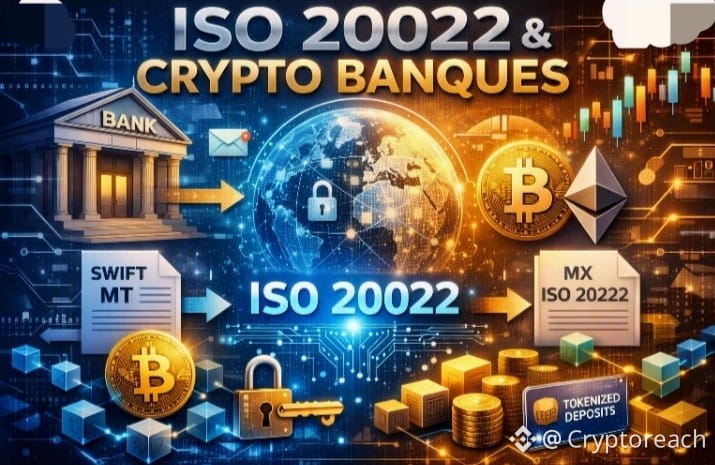
Global banks are accelerating the ISO‑20022 transition and post‑quantum cryptography.
Objective: prepare clients for key reinitialization and the integration of a new hybrid monetary system, where tokenized deposits and certified blockchains become the norm.
Key points:
- Migration from SWIFT MT to MX ISO 20022 in November 2026.
- Adoption of NIST post‑quantum standards to secure payments.
- Interoperability between banking rails and crypto.
- Opportunity for Africa: tokenized deposits and programmable liquidity.
#ISO20022 #CryptoAgility #PostQuantum #DigitalBanks #Tokenization $NVDAB $AAPLB $MSFTB
Objective: prepare clients for key reinitialization and the integration of a new hybrid monetary system, where tokenized deposits and certified blockchains become the norm.
Key points:
- Migration from SWIFT MT to MX ISO 20022 in November 2026.
- Adoption of NIST post‑quantum standards to secure payments.
- Interoperability between banking rails and crypto.
- Opportunity for Africa: tokenized deposits and programmable liquidity.
#ISO20022 #CryptoAgility #PostQuantum #DigitalBanks #Tokenization $NVDAB $AAPLB $MSFTB
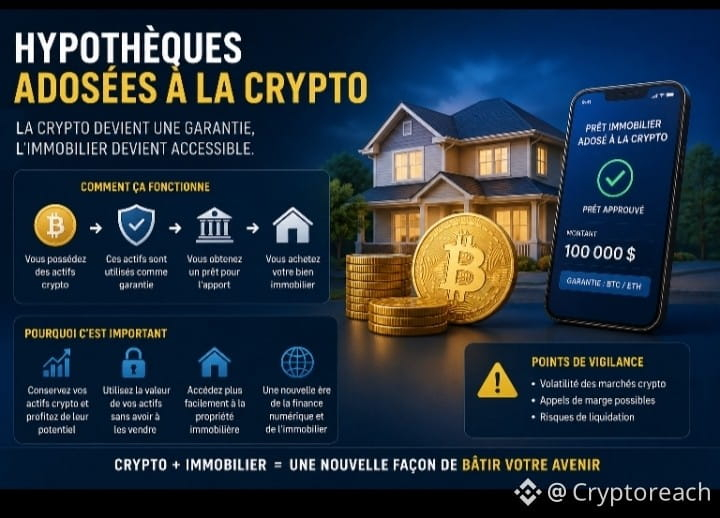
Cryptocurrency-backed mortgages
The crypto market reaches a new stage: Bitcoin and stablecoins are beginning to become collateral to access mortgage credit.
In 2026, Better Mortgage and Coinbase launched in the United States a model that allows certain buyers to finance their down payment with a loan backed by their crypto assets, without having to sell their Bitcoin.
How does it work?
A buyer can, for example:
$250,000 worth of BTC → used as collateral → $100,000 of financing for the down payment → purchase of the property.
The setup is based on two loans:
a traditional home loan backed by the house;
a separate loan backed by the Bitcoin.
In the Better/Coinbase model, the BTC must represent at least 250% of the amount of the loan intended for the down payment.
Why is it important for crypto?
This is a paradigm shift:
Before:
Crypto → sale → fiat currency → real estate purchase.
Tomorrow:
Crypto → collateral → credit → real estate.
So the investor can keep exposure to Bitcoin while using its value as financial leverage.
But the risk is real
The owner takes on debt while putting a highly volatile asset as collateral. A significant drop in Bitcoin can make the structure much riskier, depending on the contract terms. Other crypto-loan models may also include margin calls or liquidations.
And for Africa?
Imagine tomorrow in Côte d’Ivoire, Nigeria, Kenya, or Ghana:
BTC/ETH/Stablecoins → digital collateral → mortgage credit → land or a house.
Crypto would then no longer be only a means of payment or an investment: it would become a new form of financial collateral.
So the real question for African banks is no longer: “Should we accept cryptocurrencies?” but rather: “How can we legally and prudently turn digital assets into collateral to finance the real economy?”
$AMZNB $MSFTB $AAPLB
The crypto market reaches a new stage: Bitcoin and stablecoins are beginning to become collateral to access mortgage credit.
In 2026, Better Mortgage and Coinbase launched in the United States a model that allows certain buyers to finance their down payment with a loan backed by their crypto assets, without having to sell their Bitcoin.
How does it work?
A buyer can, for example:
$250,000 worth of BTC → used as collateral → $100,000 of financing for the down payment → purchase of the property.
The setup is based on two loans:
a traditional home loan backed by the house;
a separate loan backed by the Bitcoin.
In the Better/Coinbase model, the BTC must represent at least 250% of the amount of the loan intended for the down payment.
Why is it important for crypto?
This is a paradigm shift:
Before:
Crypto → sale → fiat currency → real estate purchase.
Tomorrow:
Crypto → collateral → credit → real estate.
So the investor can keep exposure to Bitcoin while using its value as financial leverage.
But the risk is real
The owner takes on debt while putting a highly volatile asset as collateral. A significant drop in Bitcoin can make the structure much riskier, depending on the contract terms. Other crypto-loan models may also include margin calls or liquidations.
And for Africa?
Imagine tomorrow in Côte d’Ivoire, Nigeria, Kenya, or Ghana:
BTC/ETH/Stablecoins → digital collateral → mortgage credit → land or a house.
Crypto would then no longer be only a means of payment or an investment: it would become a new form of financial collateral.
So the real question for African banks is no longer: “Should we accept cryptocurrencies?” but rather: “How can we legally and prudently turn digital assets into collateral to finance the real economy?”
$AMZNB $MSFTB $AAPLB
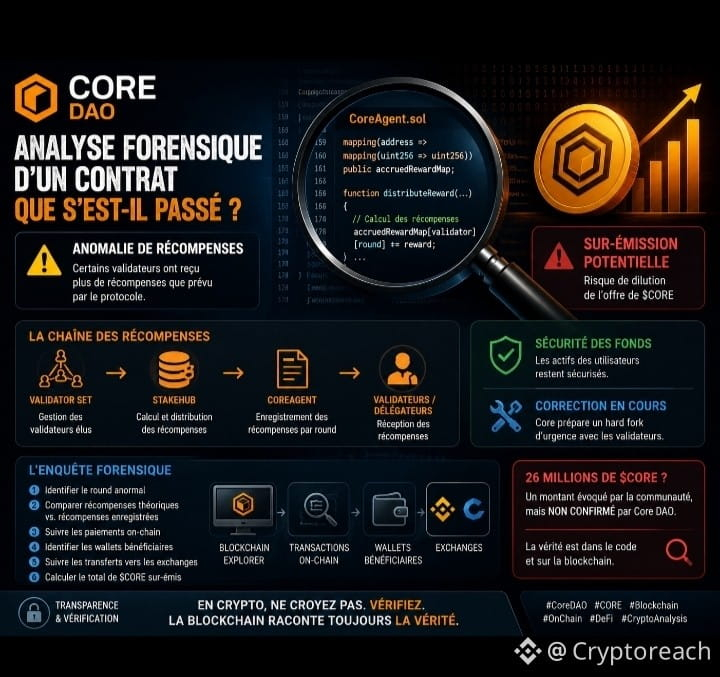
FORENSIC ANALYSIS OF A SMART CONTRACT
The Core DAO case shows why on-chain analysis is essential.
An anomaly allowed certain validators to accumulate rewards higher than the amount originally issued. Core is preparing an emergency hard fork to fix the problem.
The investigation must follow the entire chain:
Code → contract → rewards → wallets → transfers → exchanges → impact on the supply.
The 26 million CORE mentioned by some community sources remains unconfirmed at this stage.
So the real question is: how many CORE were actually over-issued, and where are they today?
In crypto, a suspicious transaction is only the beginning of the investigation. The code and the blockchain tell the whole story.$AAPLB $MSFTB $AMZNB
#Crypto #CoreDAO #CORE #Blockchain #OnChain #SmartContract #DeFi #Web3 #CryptoAnalysis #Forensics
The Core DAO case shows why on-chain analysis is essential.
An anomaly allowed certain validators to accumulate rewards higher than the amount originally issued. Core is preparing an emergency hard fork to fix the problem.
The investigation must follow the entire chain:
Code → contract → rewards → wallets → transfers → exchanges → impact on the supply.
The 26 million CORE mentioned by some community sources remains unconfirmed at this stage.
So the real question is: how many CORE were actually over-issued, and where are they today?
In crypto, a suspicious transaction is only the beginning of the investigation. The code and the blockchain tell the whole story.$AAPLB $MSFTB $AMZNB
#Crypto #CoreDAO #CORE #Blockchain #OnChain #SmartContract #DeFi #Web3 #CryptoAnalysis #Forensics
very easy to understand
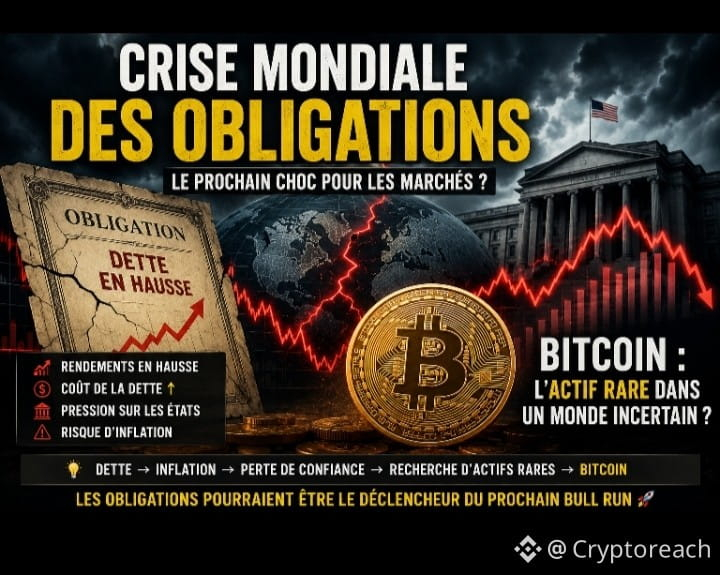
GLOBAL DEBT CRISIS: THE NEXT SHOCK?
Governments are heavily indebted and investors are demanding higher returns.
Bond yields
Cost of debt
Pressure on banks and governments
Risk of inflation and a liquidity crisis
And what about Bitcoin in all this?
If confidence in currencies and sovereign debt deteriorates, BTC could strengthen its role as a rare, decentralized asset.
But a liquidity crisis can first trigger a sharp correction.
The real question: will bonds be the trigger for the next major crypto move?
#Bitcoin #BTC #Crypto #Finance #Fed #Inflation #Debt #Web3 $NVDAB $AAPLB $AMZNB
Governments are heavily indebted and investors are demanding higher returns.
Bond yields
Cost of debt
Pressure on banks and governments
Risk of inflation and a liquidity crisis
And what about Bitcoin in all this?
If confidence in currencies and sovereign debt deteriorates, BTC could strengthen its role as a rare, decentralized asset.
But a liquidity crisis can first trigger a sharp correction.
The real question: will bonds be the trigger for the next major crypto move?
#Bitcoin #BTC #Crypto #Finance #Fed #Inflation #Debt #Web3 $NVDAB $AAPLB $AMZNB
GLOBAL FINANCIAL RESET
Sovereignty against bankers
The global financial system is undergoing a major transformation.
Banks are adopting blockchain, stablecoins, and tokenization.
Bitcoin offers a decentralized alternative, without control by a central bank.
Stablecoins could speed up digital payments, but also strengthen the dollar’s dominance.
Africa must meet a challenge: to benefit from this revolution without losing financial sovereignty.
The next crypto revolution may not be simply Bitcoin versus banks.
It could be:
Banks + central banks + stablecoins + CBDC + tokenization + Bitcoin
within a new global financial architecture.
The real battle then will be over sovereignty, ownership of data, control of infrastructure, and the issuance of money.
Question of the day:
In this new economy, do you prefer a currency controlled by central banks, a private currency like stablecoins, or a decentralized currency like Bitcoin?
The real question is no longer just “banks or crypto?”
Who will control the money of tomorrow?
$TSMB $AMZNB $AAPLB
#Crypto #Bitcoin #Blockchain #Stablecoins #Web3 #Africa #Sovereignty #DeFi #CotedIvoire
Sovereignty against bankers
The global financial system is undergoing a major transformation.
Banks are adopting blockchain, stablecoins, and tokenization.
Bitcoin offers a decentralized alternative, without control by a central bank.
Stablecoins could speed up digital payments, but also strengthen the dollar’s dominance.
Africa must meet a challenge: to benefit from this revolution without losing financial sovereignty.
The next crypto revolution may not be simply Bitcoin versus banks.
It could be:
Banks + central banks + stablecoins + CBDC + tokenization + Bitcoin
within a new global financial architecture.
The real battle then will be over sovereignty, ownership of data, control of infrastructure, and the issuance of money.
Question of the day:
In this new economy, do you prefer a currency controlled by central banks, a private currency like stablecoins, or a decentralized currency like Bitcoin?
The real question is no longer just “banks or crypto?”
Who will control the money of tomorrow?
$TSMB $AMZNB $AAPLB
#Crypto #Bitcoin #Blockchain #Stablecoins #Web3 #Africa #Sovereignty #DeFi #CotedIvoire
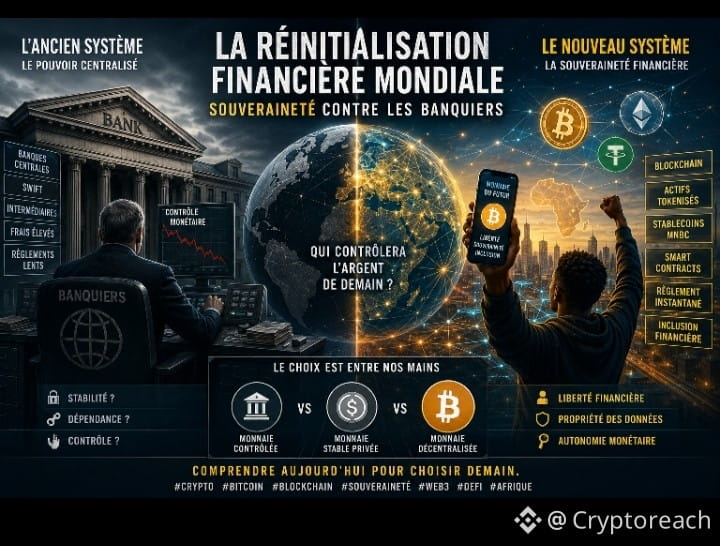
THE OLD ECONOMY CHANGES FACE
To everyone who built their career in the old economy: banks, traditional finance, commerce, insurance, industry…
It’s not too late to retrain.
Blockchain, stablecoins, tokenization, and digital payments are no longer just replacing certain systems: traditional players are starting to adopt them themselves.
The question is no longer: “Will crypto disappear?”
The real question is:
“Will I be ready when my profession integrates blockchain?”
Train now.
Understand the new models.
Adapt your skills.
The next economy won’t necessarily erase your skills. It will require new skills built around the old ones.
Good to know for knowledge-keepers.
$NVDAB $AAPLB $MSFTB
UniversitéFélixHouphouëtBoigny #UNA #UniversitéNanguiAbrogoua #UniversitéAlassaneOuattara #UniversitéPéléforoGbonCoulibaly #UniversitéJeanLorougnonGuédé #UniversitédeKorhogo
Private universities & grandes écoles #UMECI #UniversitéMéthodiste #UCAO #UniversitéCatholique #ESATIC #INPHB #ENSEA #ESCAE #PigierCôteDIvoire #HECAbidjan #ISTCPolytechnique #CERAP
Education & the new economy
#Students #HigherEducation #GrandesÉcoles #University #Training #Blockchain #Crypto #Web3 #Fintech #Stablecoins #Tokenization #DigitalFinance #Innovation #Jobs #CareerChange #CôteIvoire #Abidjan #Africa
#CoteIvoire #Abidjan #University #Students #GrandesÉcoles #Blockchain #Crypto #Web3 #Fintech #Stablecoins #Tokenization #DigitalFinance #CareerChange #Innovation #Africa
#Crypto #Blockchain #Web3 #Stablecoins #Tokenization #Fintech #Finance #Banking #CareerChange #FutureOfFinance #Africa
To everyone who built their career in the old economy: banks, traditional finance, commerce, insurance, industry…
It’s not too late to retrain.
Blockchain, stablecoins, tokenization, and digital payments are no longer just replacing certain systems: traditional players are starting to adopt them themselves.
The question is no longer: “Will crypto disappear?”
The real question is:
“Will I be ready when my profession integrates blockchain?”
Train now.
Understand the new models.
Adapt your skills.
The next economy won’t necessarily erase your skills. It will require new skills built around the old ones.
Good to know for knowledge-keepers.
$NVDAB $AAPLB $MSFTB
UniversitéFélixHouphouëtBoigny #UNA #UniversitéNanguiAbrogoua #UniversitéAlassaneOuattara #UniversitéPéléforoGbonCoulibaly #UniversitéJeanLorougnonGuédé #UniversitédeKorhogo
Private universities & grandes écoles #UMECI #UniversitéMéthodiste #UCAO #UniversitéCatholique #ESATIC #INPHB #ENSEA #ESCAE #PigierCôteDIvoire #HECAbidjan #ISTCPolytechnique #CERAP
Education & the new economy
#Students #HigherEducation #GrandesÉcoles #University #Training #Blockchain #Crypto #Web3 #Fintech #Stablecoins #Tokenization #DigitalFinance #Innovation #Jobs #CareerChange #CôteIvoire #Abidjan #Africa
#CoteIvoire #Abidjan #University #Students #GrandesÉcoles #Blockchain #Crypto #Web3 #Fintech #Stablecoins #Tokenization #DigitalFinance #CareerChange #Innovation #Africa
#Crypto #Blockchain #Web3 #Stablecoins #Tokenization #Fintech #Finance #Banking #CareerChange #FutureOfFinance #Africa
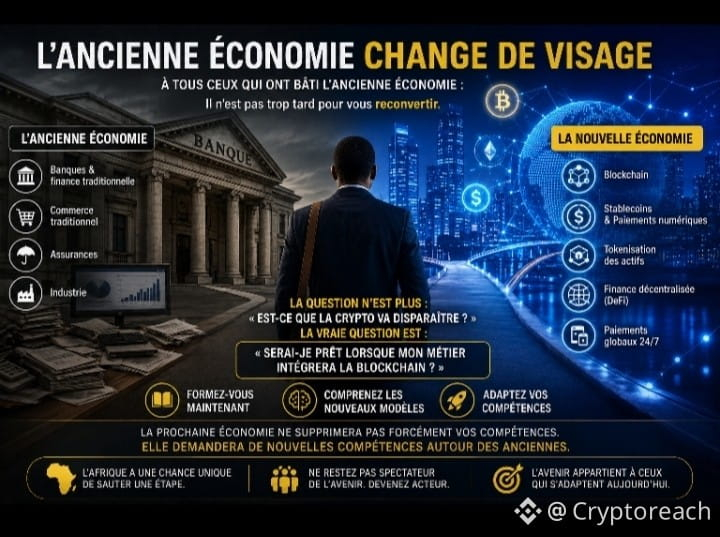
Little by little, we have it—something impossible at the start, a reminder: we are no longer fools, but realists.
Banks are moving into crypto payments
Change is accelerating: banks are no longer just trying to fight cryptocurrencies. They now want to use their infrastructure to move money on the blockchain.
In 2026, several signals are very strong:
* 37 European banks are working together within Qivalis to develop a euro stablecoin intended for payments and on-chain settlements.
* 17 banks from six continents are preparing cross-border transactions using tokenized deposits via SWIFT’s blockchain infrastructure.
* American banks are now exploring their own stablecoins, particularly for commercial payments.
* Mastercard is also developing settlement of transactions with regulated stablecoins, including 24/7 and on weekends.
* The UK even wants to set a specific objective for the Bank of England to promote innovation in digital payments and stablecoins.
- What this means
The real battle might no longer be:
Banks vs Crypto
but rather:
Banks + Blockchain + Stablecoins = a new payments infrastructure.
Bitcoin remains mainly a digital asset. But for everyday and international payments, stablecoins and tokenized deposits could become the bridge between the traditional banking system and the blockchain.
And for Africa, the stakes are huge: cheaper international transfers, 24/7 payments, and better interoperability could profoundly change cross-border payments.
Question: will banks ultimately become the biggest users of blockchain?
$AMZNB $MSFTB $AAPLB
#Crypto #Blockchain #Stablecoins #Bitcoin #Web3 #DeFi #Payments #Banking #Tokenisation #Fintech #Africa #CryptoAfrica
Banks are moving into crypto payments
Change is accelerating: banks are no longer just trying to fight cryptocurrencies. They now want to use their infrastructure to move money on the blockchain.
In 2026, several signals are very strong:
* 37 European banks are working together within Qivalis to develop a euro stablecoin intended for payments and on-chain settlements.
* 17 banks from six continents are preparing cross-border transactions using tokenized deposits via SWIFT’s blockchain infrastructure.
* American banks are now exploring their own stablecoins, particularly for commercial payments.
* Mastercard is also developing settlement of transactions with regulated stablecoins, including 24/7 and on weekends.
* The UK even wants to set a specific objective for the Bank of England to promote innovation in digital payments and stablecoins.
- What this means
The real battle might no longer be:
Banks vs Crypto
but rather:
Banks + Blockchain + Stablecoins = a new payments infrastructure.
Bitcoin remains mainly a digital asset. But for everyday and international payments, stablecoins and tokenized deposits could become the bridge between the traditional banking system and the blockchain.
And for Africa, the stakes are huge: cheaper international transfers, 24/7 payments, and better interoperability could profoundly change cross-border payments.
Question: will banks ultimately become the biggest users of blockchain?
$AMZNB $MSFTB $AAPLB
#Crypto #Blockchain #Stablecoins #Bitcoin #Web3 #DeFi #Payments #Banking #Tokenisation #Fintech #Africa #CryptoAfrica
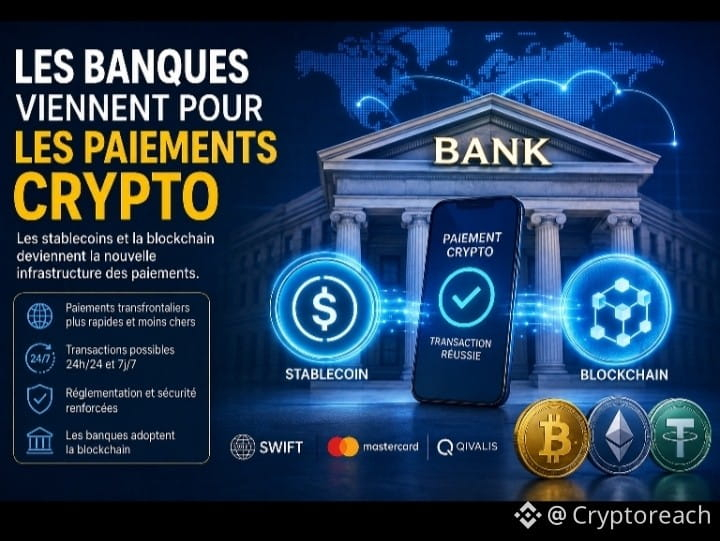
Jackson Hole under high tension
Kevin Warsh’s speech at Jackson Hole could strongly influence the markets.
A hawkish tone → higher rates for longer → reduced liquidity → pressure on BTC and risk assets.
A dovish tone → expectations of rate cuts → improved liquidity → potential rebound for Bitcoin and crypto.
August 28 could therefore be a key day for the crypto market.
Above all, watch the speech’s tone, US yields, and the dollar.$TSMB $MSFTB $AAPLB
#Bitcoin #BTC #Crypto #Cryptomonnaies #JacksonHole #Fed #FederalReserve #CryptoMarket #Altcoins #Trading
Kevin Warsh’s speech at Jackson Hole could strongly influence the markets.
A hawkish tone → higher rates for longer → reduced liquidity → pressure on BTC and risk assets.
A dovish tone → expectations of rate cuts → improved liquidity → potential rebound for Bitcoin and crypto.
August 28 could therefore be a key day for the crypto market.
Above all, watch the speech’s tone, US yields, and the dollar.$TSMB $MSFTB $AAPLB
#Bitcoin #BTC #Crypto #Cryptomonnaies #JacksonHole #Fed #FederalReserve #CryptoMarket #Altcoins #Trading
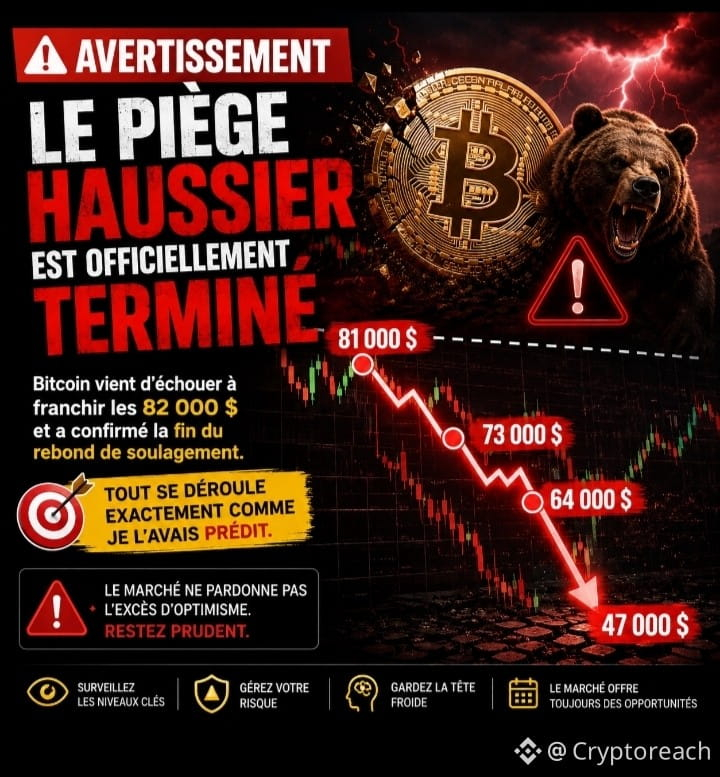
BITCOIN : IS THE BULLISH TRAP CLOSING?
BTC failed to break through 82,000$ on a sustained basis.
The relief bounce shows signs of losing momentum. If support gives way, the bearish scenario becomes:
81K → 73K → 64K → 47K
This is not certain, but a scenario to watch very closely.
Will the market confirm this path?
$TSMB $MSFTB $AAPLB
#Bitcoin #BTC #Crypto
BTC failed to break through 82,000$ on a sustained basis.
The relief bounce shows signs of losing momentum. If support gives way, the bearish scenario becomes:
81K → 73K → 64K → 47K
This is not certain, but a scenario to watch very closely.
Will the market confirm this path?
$TSMB $MSFTB $AAPLB
#Bitcoin #BTC #Crypto
DUE DILIGENCE
Before investing in a crypto project, don’t just rely on marketing or promises of returns. Verify!
* Team and identity
* Product and real adoption
* Smart contract & audit
* Tokenomics & distribution
* Liquidity
* On-chain activity
Red flags: guaranteed returns, pressure to invest, artificial volume, controlled liquidity, difficult withdrawals, etc..
Golden rule: don’t just ask “How much can I earn?”
Above all, ask: “What could make me lose 100%?”
#Crypto #Blockchain #Web3 #DueDiligence #Investissement #CryptoSafety $NVDAB $AAPLB $AMZNB
Before investing in a crypto project, don’t just rely on marketing or promises of returns. Verify!
* Team and identity
* Product and real adoption
* Smart contract & audit
* Tokenomics & distribution
* Liquidity
* On-chain activity
Red flags: guaranteed returns, pressure to invest, artificial volume, controlled liquidity, difficult withdrawals, etc..
Golden rule: don’t just ask “How much can I earn?”
Above all, ask: “What could make me lose 100%?”
#Crypto #Blockchain #Web3 #DueDiligence #Investissement #CryptoSafety $NVDAB $AAPLB $AMZNB
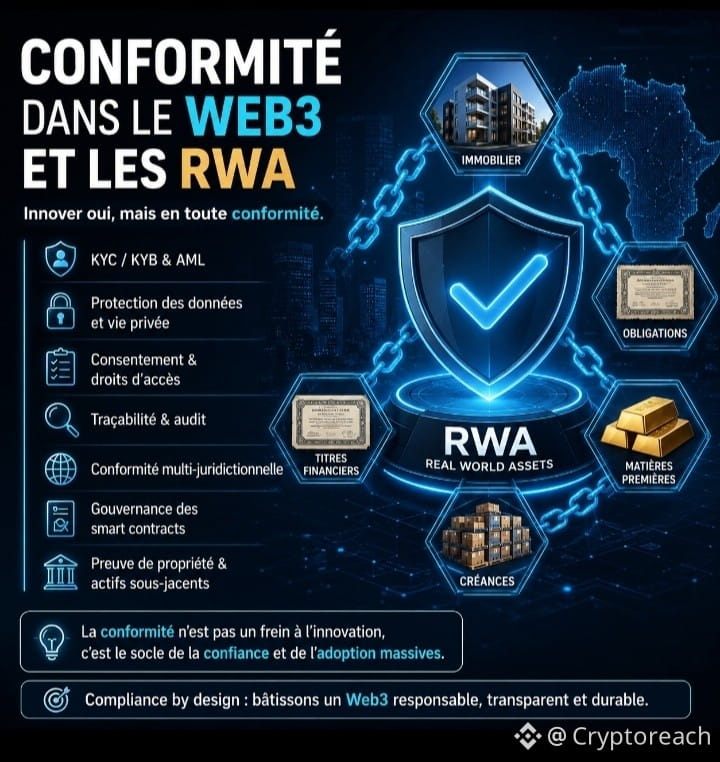
Compliance in Web3 and RWAs: innovation must no longer bypass regulation
Tokenization of real-world assets
— real estate, bonds, commodities, receivables, or financial securities — directly brings Web3 closer to traditional finance.
But one question becomes unavoidable: how can compliance be ensured when real-world assets are represented and traded on-chain?
Key challenges:
KYC/KYB and anti-money laundering (AML)
Data protection and confidentiality
Consent management and access rights
Transaction traceability
Digital identity and investor verification
Regulatory compliance across jurisdictions
Smart contract governance
Custody and proof of ownership of the underlying assets
The challenge, then, is to move from “compliance added after design” to “compliance built in from the start.”
In RWAs, blockchain can make assets more transparent and traceable, but it does not remove regulatory obligations.
Will tomorrow’s Web3 be “compliant by design,” or will it remain constrained by regulations created for traditional finance?
#Web3 #RWA #Tokenisation #Blockchain #Crypto #Compliance #DeFi #DigitalAssets #Afrique #Innovation $NVDAB $AAPLB $MSFTB
Tokenization of real-world assets
— real estate, bonds, commodities, receivables, or financial securities — directly brings Web3 closer to traditional finance.
But one question becomes unavoidable: how can compliance be ensured when real-world assets are represented and traded on-chain?
Key challenges:
KYC/KYB and anti-money laundering (AML)
Data protection and confidentiality
Consent management and access rights
Transaction traceability
Digital identity and investor verification
Regulatory compliance across jurisdictions
Smart contract governance
Custody and proof of ownership of the underlying assets
The challenge, then, is to move from “compliance added after design” to “compliance built in from the start.”
In RWAs, blockchain can make assets more transparent and traceable, but it does not remove regulatory obligations.
Will tomorrow’s Web3 be “compliant by design,” or will it remain constrained by regulations created for traditional finance?
#Web3 #RWA #Tokenisation #Blockchain #Crypto #Compliance #DeFi #DigitalAssets #Afrique #Innovation $NVDAB $AAPLB $MSFTB
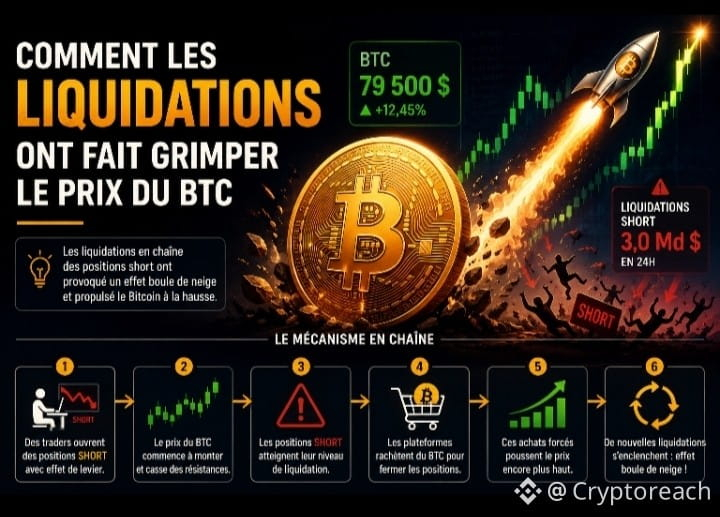
How have liquidations driven up Bitcoin?
The recent Bitcoin (BTC) rally is an excellent example of the domino effect of liquidations.
After several weeks around $60,000–$65,000, BTC has surged sharply to nearly $79,500. A significant portion of this rise was fueled by the liquidation of short positions.
How does it work?
Traders bet on a drop in BTC using leveraged short positions.
BTC eventually starts to rise and breaks through resistance levels.
Losing shorts reach their liquidation level.
Platforms automatically close these positions by buying BTC back.
These forced purchases push the price even higher.
The rally triggers further liquidations → a snowball effect, known as a short squeeze.
The phenomenon was particularly dramatic: about $3 billion worth of shorts were liquidated in 24 hours on August 20, including roughly $1.67 billion on BTC. The total shorts liquidated over two days exceeded $4 billion.
But an important nuance to remember: liquidations alone did not create the initial demand. Flows into Bitcoin ETFs and spot buying also contributed to the upswing. Recent data even shows an increase in spot demand while Open Interest declined, making the move different from a simple rally fueled by more leverage.
Takeaway for traders: when many short positions are concentrated above the price, a small bullish breakout can trigger a chain reaction and quickly turn a normal rise into a violent short squeeze.
#Bitcoin #BTC #Crypto #Liquidation #ShortSqueeze #Trading #CryptoMarkets #Blockchain
$NVDAB $AAPLB $MSFTB
The recent Bitcoin (BTC) rally is an excellent example of the domino effect of liquidations.
After several weeks around $60,000–$65,000, BTC has surged sharply to nearly $79,500. A significant portion of this rise was fueled by the liquidation of short positions.
How does it work?
Traders bet on a drop in BTC using leveraged short positions.
BTC eventually starts to rise and breaks through resistance levels.
Losing shorts reach their liquidation level.
Platforms automatically close these positions by buying BTC back.
These forced purchases push the price even higher.
The rally triggers further liquidations → a snowball effect, known as a short squeeze.
The phenomenon was particularly dramatic: about $3 billion worth of shorts were liquidated in 24 hours on August 20, including roughly $1.67 billion on BTC. The total shorts liquidated over two days exceeded $4 billion.
But an important nuance to remember: liquidations alone did not create the initial demand. Flows into Bitcoin ETFs and spot buying also contributed to the upswing. Recent data even shows an increase in spot demand while Open Interest declined, making the move different from a simple rally fueled by more leverage.
Takeaway for traders: when many short positions are concentrated above the price, a small bullish breakout can trigger a chain reaction and quickly turn a normal rise into a violent short squeeze.
#Bitcoin #BTC #Crypto #Liquidation #ShortSqueeze #Trading #CryptoMarkets #Blockchain
$NVDAB $AAPLB $MSFTB
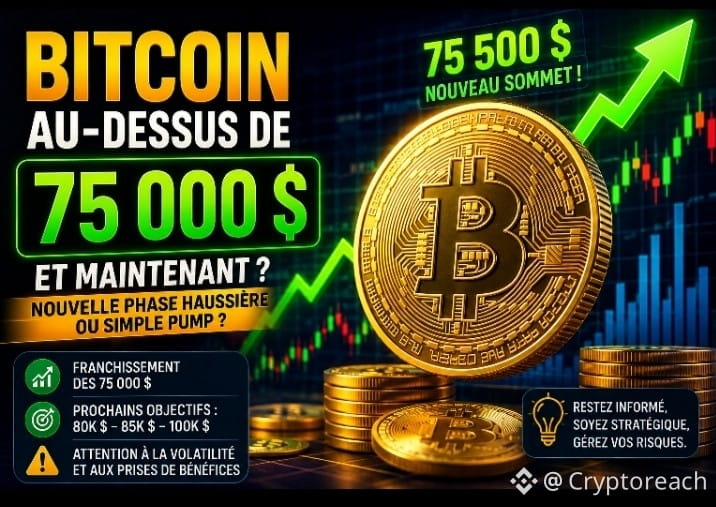
BITCOIN ABOVE $75,000… AND NOW WHAT?
Recently, Bitcoin broke through the $75,000 mark. Today, the real question isn’t any more “Can BTC reach 75K?” but:
Can it hold above this level and continue its upward move?
BTC has just regained a major technical zone after several weeks of consolidation.
But beware: a sharp rally can also trigger profit-taking and new volatility.
The next psychological levels will be closely watched:
75K → 80K → 85K $
What do you think: Is Bitcoin starting a new bullish wave, or should we expect a pullback before it resumes?$NVDAB $AAPLB $AMZNB
#Bitcoin #BTC #Crypto #Cryptocurrencies #Blockchain #Web3 #Trading #DeFi
Recently, Bitcoin broke through the $75,000 mark. Today, the real question isn’t any more “Can BTC reach 75K?” but:
Can it hold above this level and continue its upward move?
BTC has just regained a major technical zone after several weeks of consolidation.
But beware: a sharp rally can also trigger profit-taking and new volatility.
The next psychological levels will be closely watched:
75K → 80K → 85K $
What do you think: Is Bitcoin starting a new bullish wave, or should we expect a pullback before it resumes?$NVDAB $AAPLB $AMZNB
#Bitcoin #BTC #Crypto #Cryptocurrencies #Blockchain #Web3 #Trading #DeFi
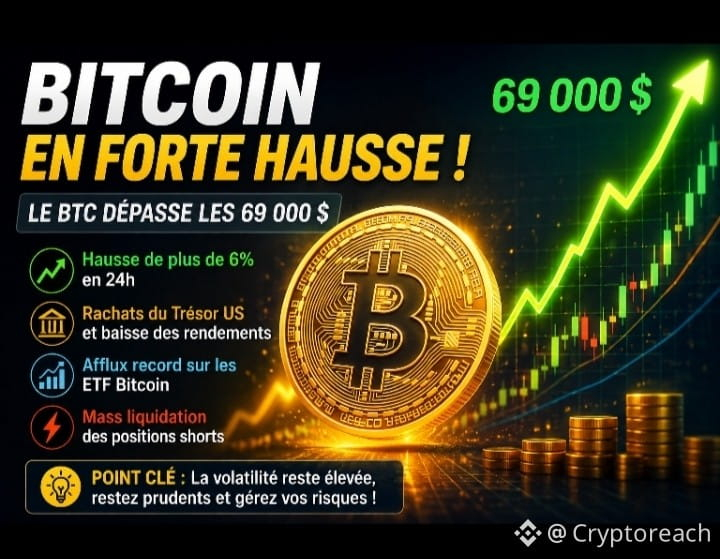
BITCOIN EXPLODES : WHAT HAPPENED YESTERDAY?
Bitcoin strongly rebounded yesterday, surpassing $69,000—its highest level in several months.
But why this sudden rise?
* The U.S. Treasury announced an increase in its long-term bond buybacks, lowering bond yields and improving liquidity conditions.
* Bitcoin ETFs recorded new inflows, a sign that institutional demand is still present.
* Shorts were massively liquidated: more than one billion dollars in short positions were forced to close, amplifying the rally.
Result: a powerful short squeeze that accelerated the upward move.
But beware: a sharp rise does not automatically mean the market will continue in the same direction.
Can Bitcoin break through and hold above $75,000, or will we see a correction?
#Bitcoin #BTC #Crypto #Cryptocurrencies #Blockchain #Trading #DeFi $NVDAB $AAPLB $MSFTB
Bitcoin strongly rebounded yesterday, surpassing $69,000—its highest level in several months.
But why this sudden rise?
* The U.S. Treasury announced an increase in its long-term bond buybacks, lowering bond yields and improving liquidity conditions.
* Bitcoin ETFs recorded new inflows, a sign that institutional demand is still present.
* Shorts were massively liquidated: more than one billion dollars in short positions were forced to close, amplifying the rally.
Result: a powerful short squeeze that accelerated the upward move.
But beware: a sharp rise does not automatically mean the market will continue in the same direction.
Can Bitcoin break through and hold above $75,000, or will we see a correction?
#Bitcoin #BTC #Crypto #Cryptocurrencies #Blockchain #Trading #DeFi $NVDAB $AAPLB $MSFTB
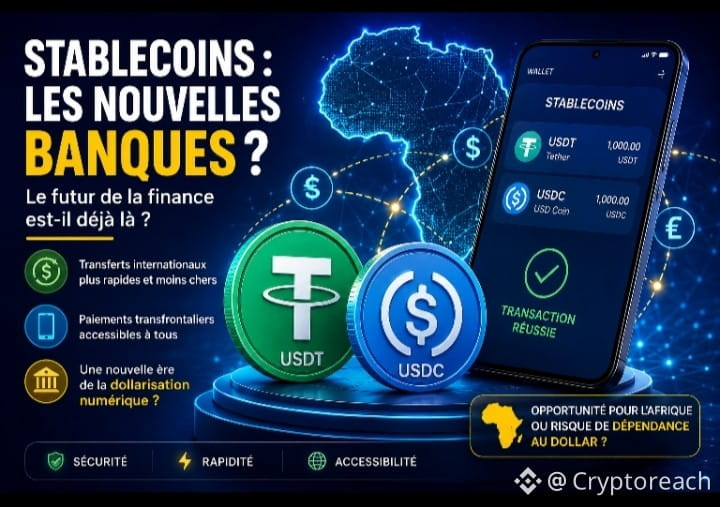
Are stablecoins becoming the new banks?
Stablecoins like USDT and USDC are no longer just used to trade cryptocurrencies.
They are gradually becoming instruments for payments, value transfers, and digital dollarization.
In the United States, regulation is evolving rapidly around stablecoins. The debate now focuses on their role in the future financial system.
For Africa, the question is crucial:
* Can stablecoins reduce the cost of international transfers?
* Can they facilitate cross-border payments?
* Or, on the contrary, will they accelerate dependence on the dollar?
The next crypto revolution may not be Bitcoin, but payments in stablecoins.
In your view, are stablecoins an opportunity for Africa, or a new form of digital dollarization?$AMZNB $NVDAB $AAPLB
#Crypto #Stablecoin #USDT #USDC #Blockchain #Web3 #Africa #CotedIvoire #Finance #Cryptocurrency
Stablecoins like USDT and USDC are no longer just used to trade cryptocurrencies.
They are gradually becoming instruments for payments, value transfers, and digital dollarization.
In the United States, regulation is evolving rapidly around stablecoins. The debate now focuses on their role in the future financial system.
For Africa, the question is crucial:
* Can stablecoins reduce the cost of international transfers?
* Can they facilitate cross-border payments?
* Or, on the contrary, will they accelerate dependence on the dollar?
The next crypto revolution may not be Bitcoin, but payments in stablecoins.
In your view, are stablecoins an opportunity for Africa, or a new form of digital dollarization?$AMZNB $NVDAB $AAPLB
#Crypto #Stablecoin #USDT #USDC #Blockchain #Web3 #Africa #CotedIvoire #Finance #Cryptocurrency
Côte d’Ivoire: a toll-free number to report crypto-related scams
In the face of the growing number of fraudulent financial offers on social media, the Monitoring Committee calls on the public to be extra vigilant.
📞 Toll-free number: 8000 10 10
The Committee invites citizens to report immediately any offer that promises high or fast gains and does not have authentic authorization from the financial authorities.
A few essential habits:
Never believe in “guaranteed” or excessively high returns;
Verify the existence of the organization and its authorization before making any investment;
Do not share your personal or banking information or your wallet codes;
Report any suspicious activity quickly.
Crypto is not a promise of quick enrichment. Before investing, always verify!
🇨🇮 In Côte d’Ivoire, when it comes to crypto scams: vigilance, verification, and reporting.
#Cryptocurrency #Crypto #CoteD'Ivoire #CryptoScam #Scam #Bitcoin #Blockchain #Web3 #CryptoSecurity #Investment
$NVDAB $AAPLB $MSFTB
In the face of the growing number of fraudulent financial offers on social media, the Monitoring Committee calls on the public to be extra vigilant.
📞 Toll-free number: 8000 10 10
The Committee invites citizens to report immediately any offer that promises high or fast gains and does not have authentic authorization from the financial authorities.
A few essential habits:
Never believe in “guaranteed” or excessively high returns;
Verify the existence of the organization and its authorization before making any investment;
Do not share your personal or banking information or your wallet codes;
Report any suspicious activity quickly.
Crypto is not a promise of quick enrichment. Before investing, always verify!
🇨🇮 In Côte d’Ivoire, when it comes to crypto scams: vigilance, verification, and reporting.
#Cryptocurrency #Crypto #CoteD'Ivoire #CryptoScam #Scam #Bitcoin #Blockchain #Web3 #CryptoSecurity #Investment
$NVDAB $AAPLB $MSFTB

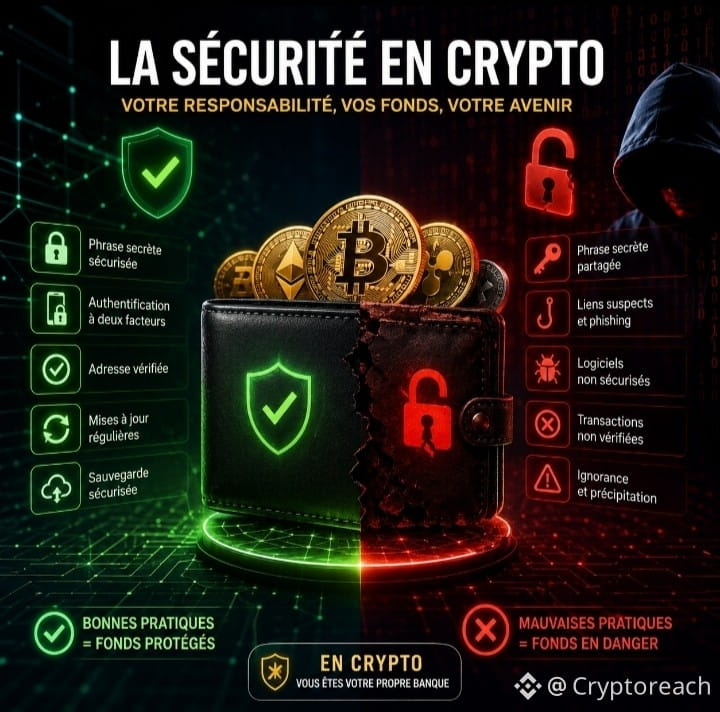
Your portfolio can be your own bank… but also your own trap
In crypto, owning your assets also means being responsible for their security.
One simple mistake is all it takes:
• wrong address
• fake link
• phishing
• signing a malicious transaction
• sharing your secret phrase
In 2026, understanding wallet security will be as important as understanding the market.
Not your keys, not your coins.
#Crypto #Bitcoin #Blockchain #Web3 #CryptoSecurity #DeFi #CotedIvoire $NVDAB $AAPLB $MSFTB
In crypto, owning your assets also means being responsible for their security.
One simple mistake is all it takes:
• wrong address
• fake link
• phishing
• signing a malicious transaction
• sharing your secret phrase
In 2026, understanding wallet security will be as important as understanding the market.
Not your keys, not your coins.
#Crypto #Bitcoin #Blockchain #Web3 #CryptoSecurity #DeFi #CotedIvoire $NVDAB $AAPLB $MSFTB
“Address Poisoning” (Address Poisoning). A victim recently lost about 100,000 USDT after copying a fraudulent address from their transaction history"
“Address poisoning, the invisible trap that can empty your wallet”
The principle is simple: the scammer creates an address that looks very similar to that of a regular recipient, then sends a small transaction to make this fake address appear in your history. Later, you copy the address from the history without checking every single character… and your crypto goes to the scammer.
This is far from rare: MetaMask indicates that its partner Blockaid detected 65.4 million address poisoning attacks between January 2025 and February 2026.
Golden rule: never copy an address just from your history. Verify the full address, and for a large amount, first make a small test transfer.
$MSFTB $AAPLB $AMZNB
#Crypto #Bitcoin #Ethereum #USDT #Blockchain #Security #Scam #Web3 #CryptoSafety
“Address poisoning, the invisible trap that can empty your wallet”
The principle is simple: the scammer creates an address that looks very similar to that of a regular recipient, then sends a small transaction to make this fake address appear in your history. Later, you copy the address from the history without checking every single character… and your crypto goes to the scammer.
This is far from rare: MetaMask indicates that its partner Blockaid detected 65.4 million address poisoning attacks between January 2025 and February 2026.
Golden rule: never copy an address just from your history. Verify the full address, and for a large amount, first make a small test transfer.
$MSFTB $AAPLB $AMZNB
#Crypto #Bitcoin #Ethereum #USDT #Blockchain #Security #Scam #Web3 #CryptoSafety

Log in to explore more content