

minamium
11.8k Paylaşımlar

minamium
Şikayət et
İstifadəçini blokla
1 İzlənilir
99 İzləyicilər
375 Bəyəndi
Postlar
·
--
Tərcüməyə bax
If you are still parking your $USDT into glossy high-yield investment schemes promising guaranteed daily returns, stop now.
Watching your hard-earned portfolio vanish into an unregulated black hole is the single worst feeling in web3, especially when greed clouds basic risk management. We keep chasing alpha in every corner, only to hand over our capital to sophisticated syndicates running fake trading dashboards and vanity metrics.
Greek authorities just dismantled a massive international fraud network, arresting 17 operators behind coordinated fake investment platforms. It feels eerily similar to the classic boiler-room operations we saw during the early ICO days and recent offshore wash-trading schemes, where sleek interfaces masked complete liquidity traps. While real utility flows across chains like $SOL and ecosystems like $ARB, bad actors continue exploiting the retail appetite for passive yields with textbook Ponzi mechanics.
The playbook never really changes, yet thousands still fall for the exact same traps every market cycle.
Why do you think smart traders still get caught in these high-yield traps despite all the warnings?
#GreekPoliceBustCryptoScamRingArrest17 #DriftHackVictimsBeginClaims
If you are still parking your $USDT into glossy high-yield investment schemes promising guaranteed daily returns, stop now.
Watching your hard-earned portfolio vanish into an unregulated black hole is the single worst feeling in web3, especially when greed clouds basic risk management. We keep chasing alpha in every corner, only to hand over our capital to sophisticated syndicates running fake trading dashboards and vanity metrics.
Greek authorities just dismantled a massive international fraud network, arresting 17 operators behind coordinated fake investment platforms. It feels eerily similar to the classic boiler-room operations we saw during the early ICO days and recent offshore wash-trading schemes, where sleek interfaces masked complete liquidity traps. While real utility flows across chains like $SOL and ecosystems like $ARB , bad actors continue exploiting the retail appetite for passive yields with textbook Ponzi mechanics.
The playbook never really changes, yet thousands still fall for the exact same traps every market cycle.
Why do you think smart traders still get caught in these high-yield traps despite all the warnings?
#GreekPoliceBustCryptoScamRingArrest17 #DriftHackVictimsBeginClaims
Watching your hard-earned portfolio vanish into an unregulated black hole is the single worst feeling in web3, especially when greed clouds basic risk management. We keep chasing alpha in every corner, only to hand over our capital to sophisticated syndicates running fake trading dashboards and vanity metrics.
Greek authorities just dismantled a massive international fraud network, arresting 17 operators behind coordinated fake investment platforms. It feels eerily similar to the classic boiler-room operations we saw during the early ICO days and recent offshore wash-trading schemes, where sleek interfaces masked complete liquidity traps. While real utility flows across chains like $SOL and ecosystems like $ARB , bad actors continue exploiting the retail appetite for passive yields with textbook Ponzi mechanics.
The playbook never really changes, yet thousands still fall for the exact same traps every market cycle.
Why do you think smart traders still get caught in these high-yield traps despite all the warnings?
#GreekPoliceBustCryptoScamRingArrest17 #DriftHackVictimsBeginClaims

·
--
Tərcüməyə bax
Here's what happened when they sold 10,000 $BTC in Q3 and then scooped up 11,000 more, finishing the quarter with a net 1,000 coin increase.
Too many traders sell into fear and buy back at peaks, locking in losses instead of stacking more. This event highlights how missing those re-entry points can leave you with fewer coins than you started with.
They didn't just dump and walk away. After selling 10,000 $BTC, they bought 11,000 back, netting an extra 1,000 by quarter's end. The timing suggests they used the sales to reposition during Q3's volatility, something we haven't always seen from similar large holders.
Compare this to past cycles where institutions sold $ETH or even $SOL during downturns and sat on the sidelines, missing recoveries. Last year several miners did exactly that and regretted it as prices rebounded. Competing projects often lack this agility, holding or dumping without the buyback.
What we can learn is that net accumulation after sales signals real conviction. It shows active treasury management rather than panic, a pattern that has rewarded those paying attention in previous $BTC bull runs.
Where do you think this kind of net buying leads from here?
#Bitcoin #CryptoStrategy #InstitutionalFlows
Here's what happened when they sold 10,000 $BTC in Q3 and then scooped up 11,000 more, finishing the quarter with a net 1,000 coin increase.
Too many traders sell into fear and buy back at peaks, locking in losses instead of stacking more. This event highlights how missing those re-entry points can leave you with fewer coins than you started with.
They didn't just dump and walk away. After selling 10,000 $BTC , they bought 11,000 back, netting an extra 1,000 by quarter's end. The timing suggests they used the sales to reposition during Q3's volatility, something we haven't always seen from similar large holders.
Compare this to past cycles where institutions sold $ETH or even $SOL during downturns and sat on the sidelines, missing recoveries. Last year several miners did exactly that and regretted it as prices rebounded. Competing projects often lack this agility, holding or dumping without the buyback.
What we can learn is that net accumulation after sales signals real conviction. It shows active treasury management rather than panic, a pattern that has rewarded those paying attention in previous $BTC bull runs.
Where do you think this kind of net buying leads from here?
#Bitcoin #CryptoStrategy #InstitutionalFlows
Too many traders sell into fear and buy back at peaks, locking in losses instead of stacking more. This event highlights how missing those re-entry points can leave you with fewer coins than you started with.
They didn't just dump and walk away. After selling 10,000 $BTC , they bought 11,000 back, netting an extra 1,000 by quarter's end. The timing suggests they used the sales to reposition during Q3's volatility, something we haven't always seen from similar large holders.
Compare this to past cycles where institutions sold $ETH or even $SOL during downturns and sat on the sidelines, missing recoveries. Last year several miners did exactly that and regretted it as prices rebounded. Competing projects often lack this agility, holding or dumping without the buyback.
What we can learn is that net accumulation after sales signals real conviction. It shows active treasury management rather than panic, a pattern that has rewarded those paying attention in previous $BTC bull runs.
Where do you think this kind of net buying leads from here?
#Bitcoin #CryptoStrategy #InstitutionalFlows

·
--
Tərcüməyə bax
Most retail traders treat major institutional sell-offs as the start of a bear market, but on-chain history shows that panic is usually just someone else's liquidity.
Most people panic-sell into those massive red candles, only to buy back higher when the market suddenly rebounds. It is the easiest way to bleed your portfolio dry without ever realizing you were just trading the chop.
Looking at recent quarterly flows, a major player offloaded roughly 10,000 $BTC into weakness, sparking a chain reaction of de-risking across $ETH and altcoins. While retail was busy hedging and expecting lower lows, the exact same entity quietly scooped 11,000 $BTC back onto their balance sheet before the quarter wrapped up.
That left them sitting on a net increase of 1,000 $BTC while late sellers effectively funded the entire round-trip. Trying to trade headline dumps without checking actual wallet balances usually ends with you providing cheap entries for players with much deeper pockets.
How do you usually manage risk when you see sudden large-scale treasury rotations like this?
#Bitcoin #CryptoTrading #OnChainAnalysis
Most retail traders treat major institutional sell-offs as the start of a bear market, but on-chain history shows that panic is usually just someone else's liquidity.
Most people panic-sell into those massive red candles, only to buy back higher when the market suddenly rebounds. It is the easiest way to bleed your portfolio dry without ever realizing you were just trading the chop.
Looking at recent quarterly flows, a major player offloaded roughly 10,000 $BTC into weakness, sparking a chain reaction of de-risking across $ETH and altcoins. While retail was busy hedging and expecting lower lows, the exact same entity quietly scooped 11,000 $BTC back onto their balance sheet before the quarter wrapped up.
That left them sitting on a net increase of 1,000 $BTC while late sellers effectively funded the entire round-trip. Trying to trade headline dumps without checking actual wallet balances usually ends with you providing cheap entries for players with much deeper pockets.
How do you usually manage risk when you see sudden large-scale treasury rotations like this?
#Bitcoin #CryptoTrading #OnChainAnalysis
Most people panic-sell into those massive red candles, only to buy back higher when the market suddenly rebounds. It is the easiest way to bleed your portfolio dry without ever realizing you were just trading the chop.
Looking at recent quarterly flows, a major player offloaded roughly 10,000 $BTC into weakness, sparking a chain reaction of de-risking across $ETH and altcoins. While retail was busy hedging and expecting lower lows, the exact same entity quietly scooped 11,000 $BTC back onto their balance sheet before the quarter wrapped up.
That left them sitting on a net increase of 1,000 $BTC while late sellers effectively funded the entire round-trip. Trying to trade headline dumps without checking actual wallet balances usually ends with you providing cheap entries for players with much deeper pockets.
How do you usually manage risk when you see sudden large-scale treasury rotations like this?
#Bitcoin #CryptoTrading #OnChainAnalysis

1
·
--
Tərcüməyə bax
Have you noticed nobody is talking about how the Drift claims process could leave victims shortchanged again?
Too many traders already lost funds in the hack. They're now rushing into the claims window without verifying the numbers, which is how you miss the real recovery.
The official story is that it's straightforward and you'll get your money. I see it differently. These Solana protocols like Drift frequently have incomplete snapshots that ignore certain $SOL perpetual trades.
You have to independently audit your on-chain activity and push back on any mismatches immediately. With the Fear and Greed Index at 68, most are too busy scanning $USDT and $ARB to bother with the details.
Keep records of submissions and avoid new positions until the claim clears.
Where do you think this goes from here?
#DriftHackVictimsBeginClaims #SolanaTokenizedStockVolumeTops
Have you noticed nobody is talking about how the Drift claims process could leave victims shortchanged again?
Too many traders already lost funds in the hack. They're now rushing into the claims window without verifying the numbers, which is how you miss the real recovery.
The official story is that it's straightforward and you'll get your money. I see it differently. These Solana protocols like Drift frequently have incomplete snapshots that ignore certain $SOL perpetual trades.
You have to independently audit your on-chain activity and push back on any mismatches immediately. With the Fear and Greed Index at 68, most are too busy scanning $USDT and $ARB to bother with the details.
Keep records of submissions and avoid new positions until the claim clears.
Where do you think this goes from here?
#DriftHackVictimsBeginClaims #SolanaTokenizedStockVolumeTops
Too many traders already lost funds in the hack. They're now rushing into the claims window without verifying the numbers, which is how you miss the real recovery.
The official story is that it's straightforward and you'll get your money. I see it differently. These Solana protocols like Drift frequently have incomplete snapshots that ignore certain $SOL perpetual trades.
You have to independently audit your on-chain activity and push back on any mismatches immediately. With the Fear and Greed Index at 68, most are too busy scanning $USDT and $ARB to bother with the details.
Keep records of submissions and avoid new positions until the claim clears.
Where do you think this goes from here?
#DriftHackVictimsBeginClaims #SolanaTokenizedStockVolumeTops

·
--
Tərcüməyə bax
Holding key support is actually when most retail traders get completely wiped out, not when price breaks down.
Most people see a line on a chart defend itself twice and immediately rush in with heavy leverage, completely ignoring that liquidity is usually thinning out beneath it. When you get chopped up by false bounces only to get stopped out right before the real move happens, this is usually why.
Everyone looks at $BTC defending its macro floor and assumes the structure is bulletproof. But order book depth tells a much messier story. When spot volume starts drying up on every retest while open interest climbs on $ETH, that support level is no longer acting as a springboard. It is becoming a liquidation magnet.
Once market makers see enough clustered stops sitting just below that floor, they rarely let it hold without sweeping it first. We saw the exact same pattern play out across $SOL before its last major flush.
Are you bidding the current support retest here, or waiting for the sweep below first?
#CryptoTrading #TechnicalAnalysis #OnChainAnalysis
Holding key support is actually when most retail traders get completely wiped out, not when price breaks down.
Most people see a line on a chart defend itself twice and immediately rush in with heavy leverage, completely ignoring that liquidity is usually thinning out beneath it. When you get chopped up by false bounces only to get stopped out right before the real move happens, this is usually why.
Everyone looks at $BTC defending its macro floor and assumes the structure is bulletproof. But order book depth tells a much messier story. When spot volume starts drying up on every retest while open interest climbs on $ETH , that support level is no longer acting as a springboard. It is becoming a liquidation magnet.
Once market makers see enough clustered stops sitting just below that floor, they rarely let it hold without sweeping it first. We saw the exact same pattern play out across $SOL before its last major flush.
Are you bidding the current support retest here, or waiting for the sweep below first?
#CryptoTrading #TechnicalAnalysis #OnChainAnalysis
Most people see a line on a chart defend itself twice and immediately rush in with heavy leverage, completely ignoring that liquidity is usually thinning out beneath it. When you get chopped up by false bounces only to get stopped out right before the real move happens, this is usually why.
Everyone looks at $BTC defending its macro floor and assumes the structure is bulletproof. But order book depth tells a much messier story. When spot volume starts drying up on every retest while open interest climbs on $ETH , that support level is no longer acting as a springboard. It is becoming a liquidation magnet.
Once market makers see enough clustered stops sitting just below that floor, they rarely let it hold without sweeping it first. We saw the exact same pattern play out across $SOL before its last major flush.
Are you bidding the current support retest here, or waiting for the sweep below first?
#CryptoTrading #TechnicalAnalysis #OnChainAnalysis

1
·
--
Tərcüməyə bax
Here is what happened when late buyers jumped into a mid-cap altcoin last week after seeing a clean green candle. Most traders saw the sudden strength and immediately rushed in without checking whether liquidity was actually holding up the move, turning an easy setup into a textbook liquidity trap.
The asset managed to reclaim its $0.21 to $0.22 base and pushed up to around $0.26, leading many to assume an effortless run toward the $0.29 to $0.30 range or even $0.316. But reclaiming a level on low volume is very different from securing structural support, especially when broader market pairs like $BTC and $ETH are showing subtle exhaustion at resistance.
When price floats upward toward target levels without establishing higher lows, late entries become exit liquidity for the early accumulation range. If the buyers cannot defend the immediate structure above $0.22, the drop back down tends to be far more aggressive than the climb itself.
Are you treating this move as genuine strength, or just another fakeout before a deeper retest?
#CryptoAnalysis #RiskManagement #TradingStrategy
Here is what happened when late buyers jumped into a mid-cap altcoin last week after seeing a clean green candle. Most traders saw the sudden strength and immediately rushed in without checking whether liquidity was actually holding up the move, turning an easy setup into a textbook liquidity trap.
The asset managed to reclaim its $0.21 to $0.22 base and pushed up to around $0.26, leading many to assume an effortless run toward the $0.29 to $0.30 range or even $0.316. But reclaiming a level on low volume is very different from securing structural support, especially when broader market pairs like $BTC and $ETH are showing subtle exhaustion at resistance.
When price floats upward toward target levels without establishing higher lows, late entries become exit liquidity for the early accumulation range. If the buyers cannot defend the immediate structure above $0.22, the drop back down tends to be far more aggressive than the climb itself.
Are you treating this move as genuine strength, or just another fakeout before a deeper retest?
#CryptoAnalysis #RiskManagement #TradingStrategy
The asset managed to reclaim its $0.21 to $0.22 base and pushed up to around $0.26, leading many to assume an effortless run toward the $0.29 to $0.30 range or even $0.316. But reclaiming a level on low volume is very different from securing structural support, especially when broader market pairs like $BTC and $ETH are showing subtle exhaustion at resistance.
When price floats upward toward target levels without establishing higher lows, late entries become exit liquidity for the early accumulation range. If the buyers cannot defend the immediate structure above $0.22, the drop back down tends to be far more aggressive than the climb itself.
Are you treating this move as genuine strength, or just another fakeout before a deeper retest?
#CryptoAnalysis #RiskManagement #TradingStrategy

1
·
--
Tərcüməyə bax
If you are still shorting every mid-cap bounce without checking structural reclaim levels, you are setting yourself up for an expensive lesson.
Most traders keep losing money because they get caught fading strong momentum, only to end up FOMO buying back at the exact local top. Missing an entry hurts, but getting chopped up by ignoring confirmed support flips is what really drains a portfolio.
The bears will argue that $ENA is simply drifting into heavy overhead resistance around $0.294 to $0.30, making any long position around current $0.26 levels look like an aggressive gamble. They expect the rally to stall out just like previous relief bounces across the altcoin space.
However, the daily chart shows buyers firmly reclaiming the critical $0.21 to $0.22 support zone. As long as that floor holds, this structure favors continuation toward $0.30, with a clean breakout opening the path directly to $0.316. While broader market beta alongside $ETH remains relevant, betting against a textbook support-to-resistance flip here seems unnecessarily risky.
Do you expect a clean breakout toward $0.316 from here, or does the $0.30 resistance cap this move?
#ENA #CryptoTrading #TechnicalAnalysis
If you are still shorting every mid-cap bounce without checking structural reclaim levels, you are setting yourself up for an expensive lesson.
Most traders keep losing money because they get caught fading strong momentum, only to end up FOMO buying back at the exact local top. Missing an entry hurts, but getting chopped up by ignoring confirmed support flips is what really drains a portfolio.
The bears will argue that $ENA is simply drifting into heavy overhead resistance around $0.294 to $0.30, making any long position around current $0.26 levels look like an aggressive gamble. They expect the rally to stall out just like previous relief bounces across the altcoin space.
However, the daily chart shows buyers firmly reclaiming the critical $0.21 to $0.22 support zone. As long as that floor holds, this structure favors continuation toward $0.30, with a clean breakout opening the path directly to $0.316. While broader market beta alongside $ETH remains relevant, betting against a textbook support-to-resistance flip here seems unnecessarily risky.
Do you expect a clean breakout toward $0.316 from here, or does the $0.30 resistance cap this move?
#ENA #CryptoTrading #TechnicalAnalysis
Most traders keep losing money because they get caught fading strong momentum, only to end up FOMO buying back at the exact local top. Missing an entry hurts, but getting chopped up by ignoring confirmed support flips is what really drains a portfolio.
The bears will argue that $ENA is simply drifting into heavy overhead resistance around $0.294 to $0.30, making any long position around current $0.26 levels look like an aggressive gamble. They expect the rally to stall out just like previous relief bounces across the altcoin space.
However, the daily chart shows buyers firmly reclaiming the critical $0.21 to $0.22 support zone. As long as that floor holds, this structure favors continuation toward $0.30, with a clean breakout opening the path directly to $0.316. While broader market beta alongside $ETH remains relevant, betting against a textbook support-to-resistance flip here seems unnecessarily risky.
Do you expect a clean breakout toward $0.316 from here, or does the $0.30 resistance cap this move?
#ENA #CryptoTrading #TechnicalAnalysis

3
·
--
Tərcüməyə bax
everyone thinks catching a pump mid-flight is how you print, but actually chasing green candles on a breakout is the easiest way to become someone else's exit liquidity.
most traders keep fomoing right into major resistance levels after missing the bottom entry, only to end up holding heavy bags when the chart inevitably pulls back.
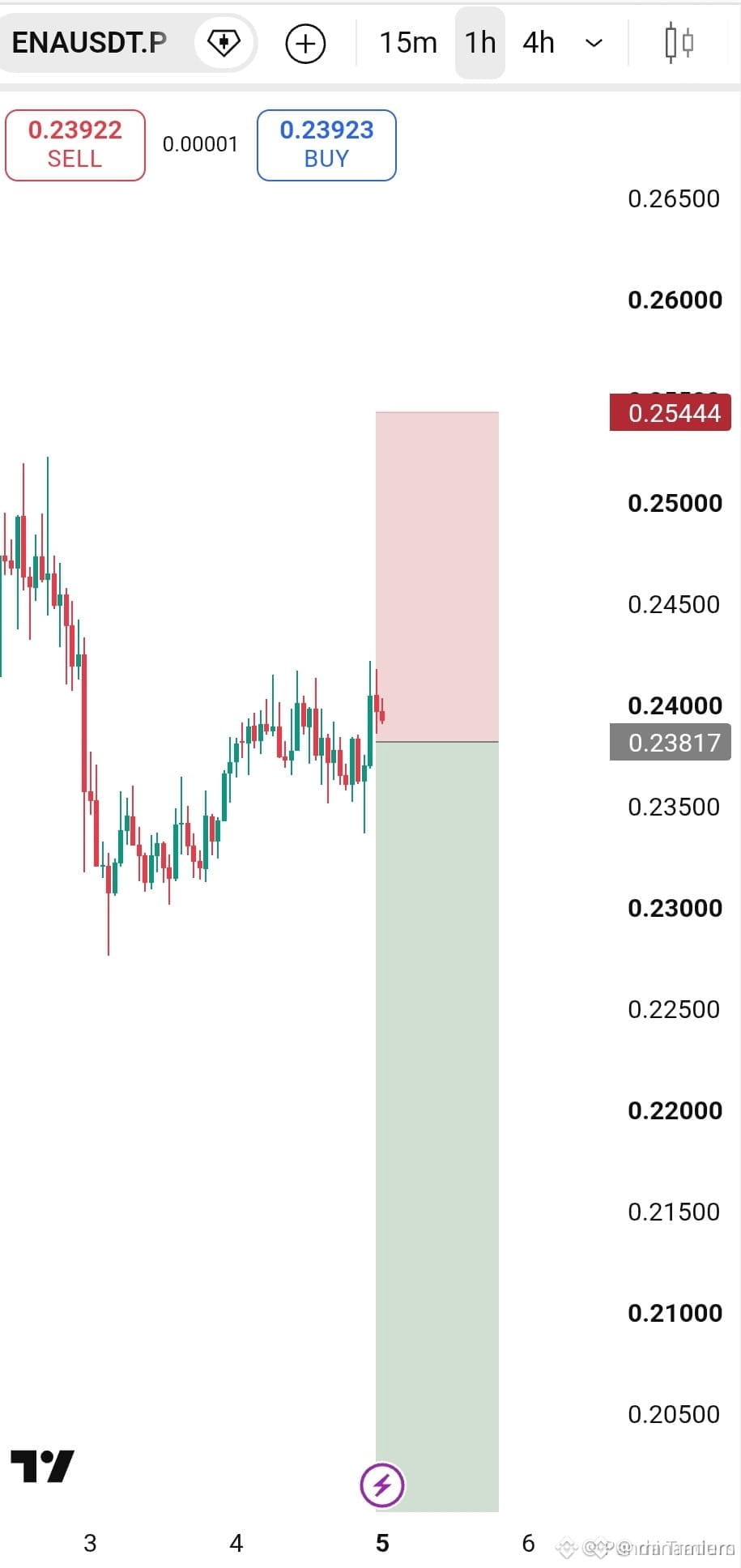
take a look at this $ENA setup as a classic case study. the bounce off the reclaimed $0.21,$0.22 support looks solid, pushing price up around $0.26 right now. on paper it feels like easy money watching momentum build alongside broader $ETH market strength, but entering here without a plan is risky business.
the trap is buying blind into overhead supply. $ENA is heading straight into a heavy resistance block between $0.294 and $0.30. sure, clearing that zone could unlock a run toward $0.316, but longing right under major resistance without waiting for confirmation leaves you exposed if price rejects back toward support.
are you locking in profits into $0.30 or betting on a clean breakout higher?
#ENA #CryptoTrading #Altcoins
everyone thinks catching a pump mid-flight is how you print, but actually chasing green candles on a breakout is the easiest way to become someone else's exit liquidity.
most traders keep fomoing right into major resistance levels after missing the bottom entry, only to end up holding heavy bags when the chart inevitably pulls back.
take a look at this $ENA setup as a classic case study. the bounce off the reclaimed $0.21,$0.22 support looks solid, pushing price up around $0.26 right now. on paper it feels like easy money watching momentum build alongside broader $ETH market strength, but entering here without a plan is risky business.
the trap is buying blind into overhead supply. $ENA is heading straight into a heavy resistance block between $0.294 and $0.30. sure, clearing that zone could unlock a run toward $0.316, but longing right under major resistance without waiting for confirmation leaves you exposed if price rejects back toward support.
are you locking in profits into $0.30 or betting on a clean breakout higher?
#ENA #CryptoTrading #Altcoins
most traders keep fomoing right into major resistance levels after missing the bottom entry, only to end up holding heavy bags when the chart inevitably pulls back.
take a look at this $ENA setup as a classic case study. the bounce off the reclaimed $0.21,$0.22 support looks solid, pushing price up around $0.26 right now. on paper it feels like easy money watching momentum build alongside broader $ETH market strength, but entering here without a plan is risky business.
the trap is buying blind into overhead supply. $ENA is heading straight into a heavy resistance block between $0.294 and $0.30. sure, clearing that zone could unlock a run toward $0.316, but longing right under major resistance without waiting for confirmation leaves you exposed if price rejects back toward support.
are you locking in profits into $0.30 or betting on a clean breakout higher?
#ENA #CryptoTrading #Altcoins
2
·
--
Tərcüməyə bax
The traders posting the highest profits over the last 30 days didn't use leverage on a single trade.
You've felt that gut punch of getting liquidated just as the market starts to move, watching your account reset to zero while others ride the wave. The FOMO hits hard after, pushing you into even riskier spots next time.
Looking back at 2017 with $BTC and 2021 with $ETH, the same pattern played out. Those who held through without a liquidation price on their books made it to the other side.
Now with $AIN up 1.57 percent, the smart money from those top traders is adding to positions that can never get liquidated and just sitting on them. Hold them dead steady.
The pump groups might lift it or they might not. Either way you're still in the game instead of starting over. I've seen too many cycles where greed for the next rave wiped people out.
What's your take on this approach with $AIN?
#AIN #CryptoCycles #TradingWisdom
The traders posting the highest profits over the last 30 days didn't use leverage on a single trade.
You've felt that gut punch of getting liquidated just as the market starts to move, watching your account reset to zero while others ride the wave. The FOMO hits hard after, pushing you into even riskier spots next time.
Looking back at 2017 with $BTC and 2021 with $ETH , the same pattern played out. Those who held through without a liquidation price on their books made it to the other side.
Now with $AIN up 1.57 percent, the smart money from those top traders is adding to positions that can never get liquidated and just sitting on them. Hold them dead steady.
The pump groups might lift it or they might not. Either way you're still in the game instead of starting over. I've seen too many cycles where greed for the next rave wiped people out.
What's your take on this approach with $AIN ?
#AIN #CryptoCycles #TradingWisdom
You've felt that gut punch of getting liquidated just as the market starts to move, watching your account reset to zero while others ride the wave. The FOMO hits hard after, pushing you into even riskier spots next time.
Looking back at 2017 with $BTC and 2021 with $ETH , the same pattern played out. Those who held through without a liquidation price on their books made it to the other side.
Now with $AIN up 1.57 percent, the smart money from those top traders is adding to positions that can never get liquidated and just sitting on them. Hold them dead steady.
The pump groups might lift it or they might not. Either way you're still in the game instead of starting over. I've seen too many cycles where greed for the next rave wiped people out.
What's your take on this approach with $AIN ?
#AIN #CryptoCycles #TradingWisdom

1
·
--
Tərcüməyə bax
Have you noticed that the loudest green-candle calls usually come from traders already sitting on a winner?
Copying a top volume trader feels like a shortcut until you realize you bought their exit. You miss the real move, chase the +4%, and then freeze when it reverses because you never had an invalidation.
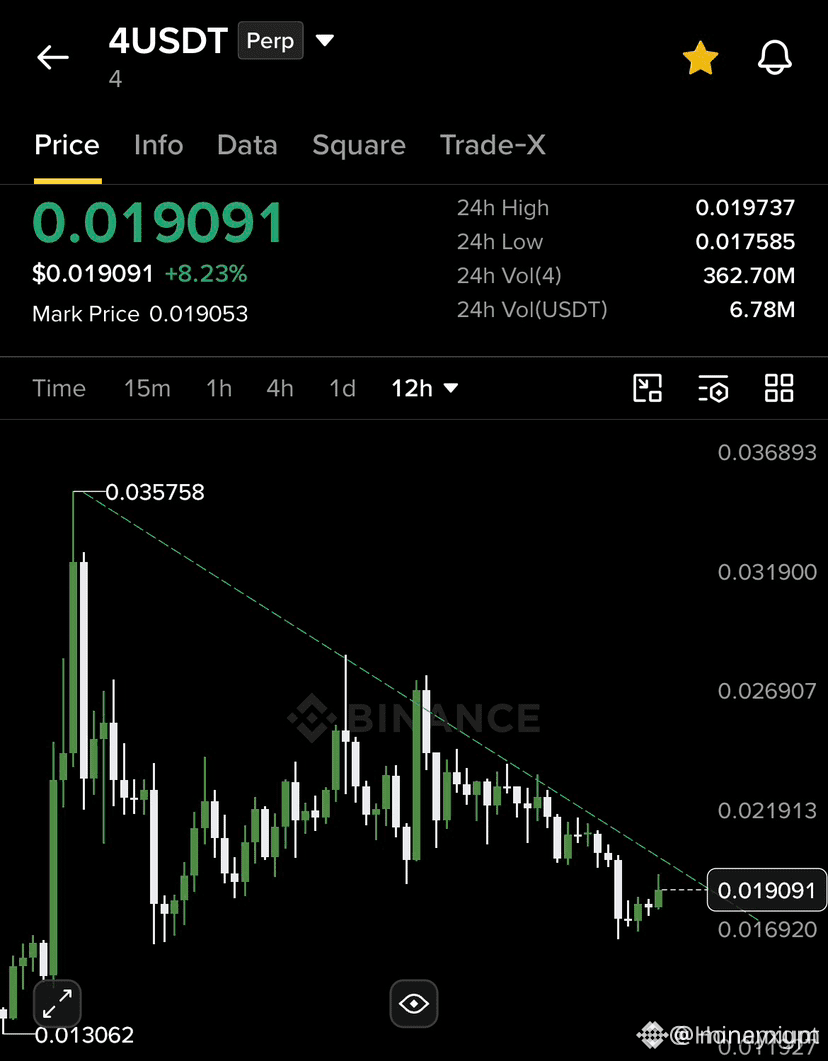
Here's a live case. Someone ranked in the top 30-day traders by volume just posted that their setup is about to print the craziest green candle in a couple of hours. The position is already +4.33%. That's not a prediction. That's a public fill. On $BTC this kind of post often precedes a liquidity grab, not a clean continuation. Same pattern shows up in $ETH and even $BNB pairs when volume leaders start talking. The crowd piles in, the original size comes off, and the "craziest candle" turns into a wick.
The data is right there if you look past the confidence. High 30-day volume means they trade a lot. It does not mean their next two-hour call is gospel.
Where do you think these high-volume setups actually go once the replies start flooding in?
#CryptoTrading #BinanceFutures #Volume
Have you noticed that the loudest green-candle calls usually come from traders already sitting on a winner?
Copying a top volume trader feels like a shortcut until you realize you bought their exit. You miss the real move, chase the +4%, and then freeze when it reverses because you never had an invalidation.
Here's a live case. Someone ranked in the top 30-day traders by volume just posted that their setup is about to print the craziest green candle in a couple of hours. The position is already +4.33%. That's not a prediction. That's a public fill. On $BTC this kind of post often precedes a liquidity grab, not a clean continuation. Same pattern shows up in $ETH and even $BNB pairs when volume leaders start talking. The crowd piles in, the original size comes off, and the "craziest candle" turns into a wick.
The data is right there if you look past the confidence. High 30-day volume means they trade a lot. It does not mean their next two-hour call is gospel.
Where do you think these high-volume setups actually go once the replies start flooding in?
#CryptoTrading #BinanceFutures #Volume
Copying a top volume trader feels like a shortcut until you realize you bought their exit. You miss the real move, chase the +4%, and then freeze when it reverses because you never had an invalidation.
Here's a live case. Someone ranked in the top 30-day traders by volume just posted that their setup is about to print the craziest green candle in a couple of hours. The position is already +4.33%. That's not a prediction. That's a public fill. On $BTC this kind of post often precedes a liquidity grab, not a clean continuation. Same pattern shows up in $ETH and even $BNB pairs when volume leaders start talking. The crowd piles in, the original size comes off, and the "craziest candle" turns into a wick.
The data is right there if you look past the confidence. High 30-day volume means they trade a lot. It does not mean their next two-hour call is gospel.
Where do you think these high-volume setups actually go once the replies start flooding in?
#CryptoTrading #BinanceFutures #Volume
6
·
--
Tərcüməyə bax
Why is nobody talking about the psychological trap waiting for exploit victims in the latest recovery rollout?
Getting exploited hurts, but having to gamble on whether to take pennies on the dollar or wait years for full restitution is a whole different level of pain. Most people just want their capital back, yet the mechanism forces them into high-stakes game theory.
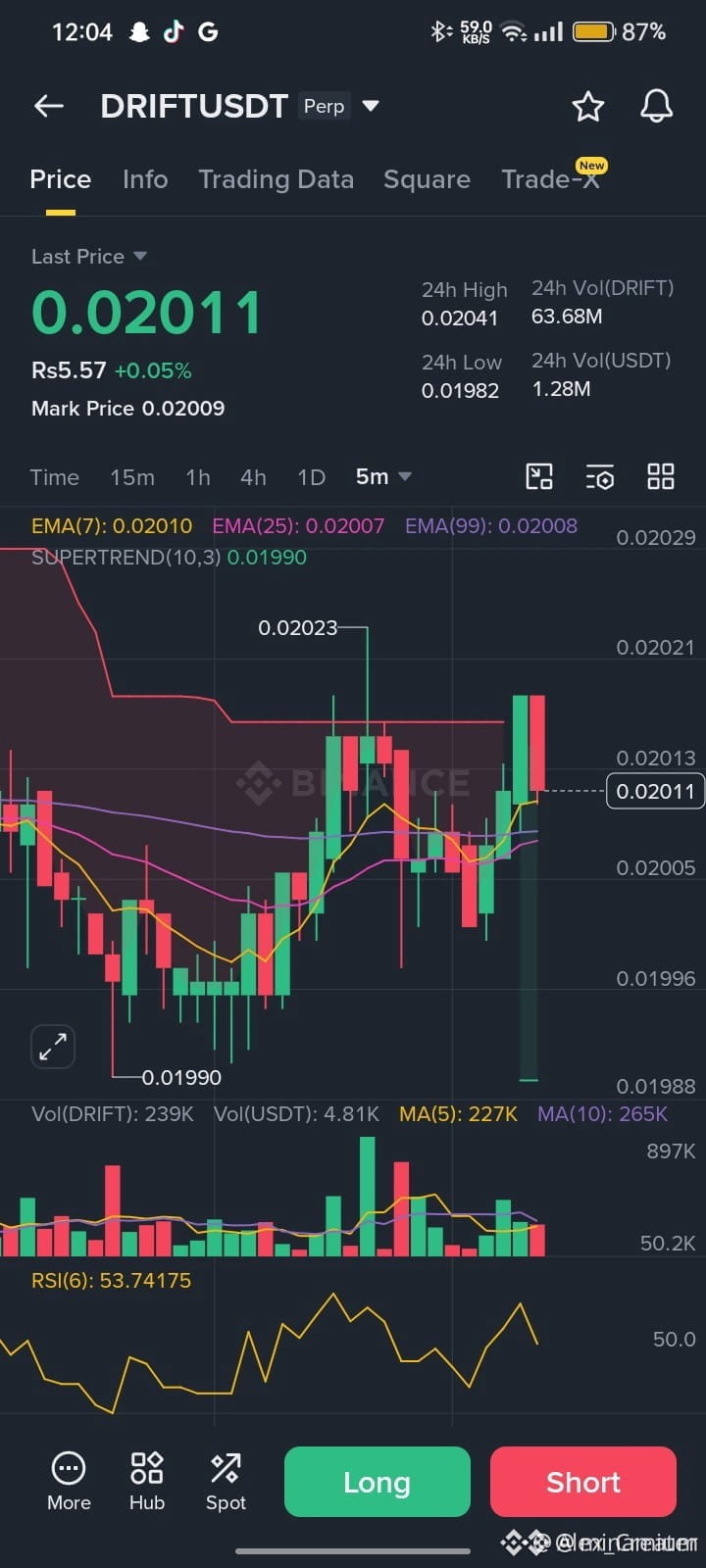
The current claim framework for $DRIFT victims on $SOL provides a fascinating case study in post-exploit mechanics. Affected users holding DFX now face an irreversible choice: redeem immediately for available funds, sell on the open market, or hold their tokens in hopes that additional recovery capital enters the pool later.
Here is the catch that changes the entire risk equation. Redeeming today permanently burns the underlying DFX, completely disqualifying those tokens from any future recovery distributions. Cashing out right away locks in a guaranteed loss, while holding leaves capital tied up in limbo with no guaranteed timeline.
If you were caught in this position, would you take immediate liquidity today or hold your claim for future payouts?
#CryptoSecurity #DeFi #Solana
Why is nobody talking about the psychological trap waiting for exploit victims in the latest recovery rollout?
Getting exploited hurts, but having to gamble on whether to take pennies on the dollar or wait years for full restitution is a whole different level of pain. Most people just want their capital back, yet the mechanism forces them into high-stakes game theory.
The current claim framework for $DRIFT victims on $SOL provides a fascinating case study in post-exploit mechanics. Affected users holding DFX now face an irreversible choice: redeem immediately for available funds, sell on the open market, or hold their tokens in hopes that additional recovery capital enters the pool later.
Here is the catch that changes the entire risk equation. Redeeming today permanently burns the underlying DFX, completely disqualifying those tokens from any future recovery distributions. Cashing out right away locks in a guaranteed loss, while holding leaves capital tied up in limbo with no guaranteed timeline.
If you were caught in this position, would you take immediate liquidity today or hold your claim for future payouts?
#CryptoSecurity #DeFi #Solana
Getting exploited hurts, but having to gamble on whether to take pennies on the dollar or wait years for full restitution is a whole different level of pain. Most people just want their capital back, yet the mechanism forces them into high-stakes game theory.
The current claim framework for $DRIFT victims on $SOL provides a fascinating case study in post-exploit mechanics. Affected users holding DFX now face an irreversible choice: redeem immediately for available funds, sell on the open market, or hold their tokens in hopes that additional recovery capital enters the pool later.
Here is the catch that changes the entire risk equation. Redeeming today permanently burns the underlying DFX, completely disqualifying those tokens from any future recovery distributions. Cashing out right away locks in a guaranteed loss, while holding leaves capital tied up in limbo with no guaranteed timeline.
If you were caught in this position, would you take immediate liquidity today or hold your claim for future payouts?
#CryptoSecurity #DeFi #Solana
·
--
Tərcüməyə bax
Most traders lose their edge not because their analysis is wrong, but because they enter winning setups at the absolute worst possible moment. We have all felt that painful urge to chase a green candle after sitting on the sidelines, only to watch a pullback wipe out the position before the real move even starts.
Looking at the top performers over the last 30 days, you notice a clear pattern in how high-conviction positions are built. While retail waits for massive breakouts to confirm momentum, seasoned accounts often scale early into assets like $WLD when price action begins heating up. The recent open long sitting at +14,495.72 USDT in unrealized PNL on WLDUSDT Perp reflects that patience, capitalizing on modest initial percentage moves of +0.59% rather than desperate breakout chasing.
In past market cycles, the traders who consistently survived and built real equity were never the ones hunting every quick spike. They aligned their entries with established momentum in leaders like $BTC and rotating altcoins such as $FET, letting position size and structure do the heavy lifting while managing downside risk strictly.
How do you usually balance waiting for breakout confirmation against the risk of getting a late entry?
#TradingStrategy #CryptoInsights #RiskManagement
Most traders lose their edge not because their analysis is wrong, but because they enter winning setups at the absolute worst possible moment. We have all felt that painful urge to chase a green candle after sitting on the sidelines, only to watch a pullback wipe out the position before the real move even starts.
Looking at the top performers over the last 30 days, you notice a clear pattern in how high-conviction positions are built. While retail waits for massive breakouts to confirm momentum, seasoned accounts often scale early into assets like $WLD when price action begins heating up. The recent open long sitting at +14,495.72 USDT in unrealized PNL on WLDUSDT Perp reflects that patience, capitalizing on modest initial percentage moves of +0.59% rather than desperate breakout chasing.
In past market cycles, the traders who consistently survived and built real equity were never the ones hunting every quick spike. They aligned their entries with established momentum in leaders like $BTC and rotating altcoins such as $FET , letting position size and structure do the heavy lifting while managing downside risk strictly.
How do you usually balance waiting for breakout confirmation against the risk of getting a late entry?
#TradingStrategy #CryptoInsights #RiskManagement
Looking at the top performers over the last 30 days, you notice a clear pattern in how high-conviction positions are built. While retail waits for massive breakouts to confirm momentum, seasoned accounts often scale early into assets like $WLD when price action begins heating up. The recent open long sitting at +14,495.72 USDT in unrealized PNL on WLDUSDT Perp reflects that patience, capitalizing on modest initial percentage moves of +0.59% rather than desperate breakout chasing.
In past market cycles, the traders who consistently survived and built real equity were never the ones hunting every quick spike. They aligned their entries with established momentum in leaders like $BTC and rotating altcoins such as $FET , letting position size and structure do the heavy lifting while managing downside risk strictly.
How do you usually balance waiting for breakout confirmation against the risk of getting a late entry?
#TradingStrategy #CryptoInsights #RiskManagement

2
·
--
Tərcüməyə bax
Picture this: you are staring at five different charting tabs and on-chain monitors, trying to figure out where liquidity is rotating before a breakout happens.
Most traders lose money not because of bad luck, but because the sheer volume of fragmented data makes finding clean signals nearly impossible in real time. We saw a similar bottleneck when early analytics platforms tried bolting on third-party bots, leaving retail investors constantly lagging behind automated desks.
That friction is why native intelligence layers are becoming the next standard for trading infrastructure. The upcoming Binance Intelligence launch livestream on Oct 5 at 12:00 UTC marks a direct push to bring real-time financial reasoning into the core trading environment. While decentralized protocols like $FET explored standalone computation layers, embedding native intelligence right where $BNB liquidity lives creates a far tighter execution loop for active market participants.
Beyond the initial product reveal, the community is already dissecting practical use cases, with 5 winners being selected for a 20 $USDC reward simply for mapping out how they plan to utilize the tool. Looking back at how automated routing transformed order books years ago, integrating native intelligence into everyday trading feels like the natural evolution of market access.
Where do you think native exchange intelligence will create the biggest edge for everyday traders?
#CryptoAI #Binance #TradingStrategy
Picture this: you are staring at five different charting tabs and on-chain monitors, trying to figure out where liquidity is rotating before a breakout happens.
Most traders lose money not because of bad luck, but because the sheer volume of fragmented data makes finding clean signals nearly impossible in real time. We saw a similar bottleneck when early analytics platforms tried bolting on third-party bots, leaving retail investors constantly lagging behind automated desks.
That friction is why native intelligence layers are becoming the next standard for trading infrastructure. The upcoming Binance Intelligence launch livestream on Oct 5 at 12:00 UTC marks a direct push to bring real-time financial reasoning into the core trading environment. While decentralized protocols like $FET explored standalone computation layers, embedding native intelligence right where $BNB liquidity lives creates a far tighter execution loop for active market participants.
Beyond the initial product reveal, the community is already dissecting practical use cases, with 5 winners being selected for a 20 $USDC reward simply for mapping out how they plan to utilize the tool. Looking back at how automated routing transformed order books years ago, integrating native intelligence into everyday trading feels like the natural evolution of market access.
Where do you think native exchange intelligence will create the biggest edge for everyday traders?
#CryptoAI #Binance #TradingStrategy
Most traders lose money not because of bad luck, but because the sheer volume of fragmented data makes finding clean signals nearly impossible in real time. We saw a similar bottleneck when early analytics platforms tried bolting on third-party bots, leaving retail investors constantly lagging behind automated desks.
That friction is why native intelligence layers are becoming the next standard for trading infrastructure. The upcoming Binance Intelligence launch livestream on Oct 5 at 12:00 UTC marks a direct push to bring real-time financial reasoning into the core trading environment. While decentralized protocols like $FET explored standalone computation layers, embedding native intelligence right where $BNB liquidity lives creates a far tighter execution loop for active market participants.
Beyond the initial product reveal, the community is already dissecting practical use cases, with 5 winners being selected for a 20 $USDC reward simply for mapping out how they plan to utilize the tool. Looking back at how automated routing transformed order books years ago, integrating native intelligence into everyday trading feels like the natural evolution of market access.
Where do you think native exchange intelligence will create the biggest edge for everyday traders?
#CryptoAI #Binance #TradingStrategy
10
·
--
Tərcüməyə bax
If you are still fading sovereign adoption headlines thinking legacy institutions will never bend, stop now.
Most traders get trapped reacting to outdated narratives, watching macro shifts happen in plain sight while sitting on the sidelines in $USDT waiting for permission from the old guard.
Remember back in 2021 when the IMF warned that El Salvador adopting $BTC was an economic catastrophe waiting to happen. Fast forward through years of relentless doomer headlines, and the tone has quietly shifted from outright hostility to pragmatic compromise.
It mirrors how Wall Street dismissed sovereign crypto holdings right up until balance sheets and reserve strategies proved resilient. When international lenders adapt to the reality on the ground rather than fighting it, the blueprint for smaller nations changes permanently.
Do you see other emerging economies quietly taking notes, or is this still an isolated experiment?
#IMFApprovesElSalvador #BitcoinSpotETFsDraw
If you are still fading sovereign adoption headlines thinking legacy institutions will never bend, stop now.
Most traders get trapped reacting to outdated narratives, watching macro shifts happen in plain sight while sitting on the sidelines in $USDT waiting for permission from the old guard.
Remember back in 2021 when the IMF warned that El Salvador adopting $BTC was an economic catastrophe waiting to happen. Fast forward through years of relentless doomer headlines, and the tone has quietly shifted from outright hostility to pragmatic compromise.
It mirrors how Wall Street dismissed sovereign crypto holdings right up until balance sheets and reserve strategies proved resilient. When international lenders adapt to the reality on the ground rather than fighting it, the blueprint for smaller nations changes permanently.
Do you see other emerging economies quietly taking notes, or is this still an isolated experiment?
#IMFApprovesElSalvador #BitcoinSpotETFsDraw
Most traders get trapped reacting to outdated narratives, watching macro shifts happen in plain sight while sitting on the sidelines in $USDT waiting for permission from the old guard.
Remember back in 2021 when the IMF warned that El Salvador adopting $BTC was an economic catastrophe waiting to happen. Fast forward through years of relentless doomer headlines, and the tone has quietly shifted from outright hostility to pragmatic compromise.
It mirrors how Wall Street dismissed sovereign crypto holdings right up until balance sheets and reserve strategies proved resilient. When international lenders adapt to the reality on the ground rather than fighting it, the blueprint for smaller nations changes permanently.
Do you see other emerging economies quietly taking notes, or is this still an isolated experiment?
#IMFApprovesElSalvador #BitcoinSpotETFsDraw

·
--
Tərcüməyə bax
Everyone thinks a rising validator exit queue means an immediate market crash, but actually, it reveals a much deeper shift in capital flow.
Most traders panic sell their $ETH at the worst possible moment because they confuse validators unbonding with instant spot dumping. When you see numbers spiking, it is easy to let Fear & Greed metrics cloud your judgment and exit profitable positions prematurely.
Think of validator exits like a queue at an airport baggage claim rather than an emergency exit. Validators must wait their turn through an orderly protocol schedule before those coins even reach liquid wallets. Many large entities are simply reallocating assets into higher-yielding DeFi protocols or balancing books against stable assets like $USDT, not necessarily dumping on open order books.
1. Understand the exit timeline: unstaking takes days to weeks, meaning supply hits the market gradually rather than in a single shock wave.
2. Watch exchange inflows: unstaked coins only impact price action if they actually move onto spot exchanges to sell.
3. Track validator churn limits: the network is designed to limit how much capital leaves per epoch, protecting overall consensus stability.
What is your strategy when you see sudden shifts in on-chain validator metrics?
#EthereumValidatorExitQueueJumps392 #BitcoinRejectedAt
Everyone thinks a rising validator exit queue means an immediate market crash, but actually, it reveals a much deeper shift in capital flow.
Most traders panic sell their $ETH at the worst possible moment because they confuse validators unbonding with instant spot dumping. When you see numbers spiking, it is easy to let Fear & Greed metrics cloud your judgment and exit profitable positions prematurely.
Think of validator exits like a queue at an airport baggage claim rather than an emergency exit. Validators must wait their turn through an orderly protocol schedule before those coins even reach liquid wallets. Many large entities are simply reallocating assets into higher-yielding DeFi protocols or balancing books against stable assets like $USDT, not necessarily dumping on open order books.
1. Understand the exit timeline: unstaking takes days to weeks, meaning supply hits the market gradually rather than in a single shock wave.
2. Watch exchange inflows: unstaked coins only impact price action if they actually move onto spot exchanges to sell.
3. Track validator churn limits: the network is designed to limit how much capital leaves per epoch, protecting overall consensus stability.
What is your strategy when you see sudden shifts in on-chain validator metrics?
#EthereumValidatorExitQueueJumps392 #BitcoinRejectedAt
Most traders panic sell their $ETH at the worst possible moment because they confuse validators unbonding with instant spot dumping. When you see numbers spiking, it is easy to let Fear & Greed metrics cloud your judgment and exit profitable positions prematurely.
Think of validator exits like a queue at an airport baggage claim rather than an emergency exit. Validators must wait their turn through an orderly protocol schedule before those coins even reach liquid wallets. Many large entities are simply reallocating assets into higher-yielding DeFi protocols or balancing books against stable assets like $USDT, not necessarily dumping on open order books.
1. Understand the exit timeline: unstaking takes days to weeks, meaning supply hits the market gradually rather than in a single shock wave.
2. Watch exchange inflows: unstaked coins only impact price action if they actually move onto spot exchanges to sell.
3. Track validator churn limits: the network is designed to limit how much capital leaves per epoch, protecting overall consensus stability.
What is your strategy when you see sudden shifts in on-chain validator metrics?
#EthereumValidatorExitQueueJumps392 #BitcoinRejectedAt

·
--
Tərcüməyə bax
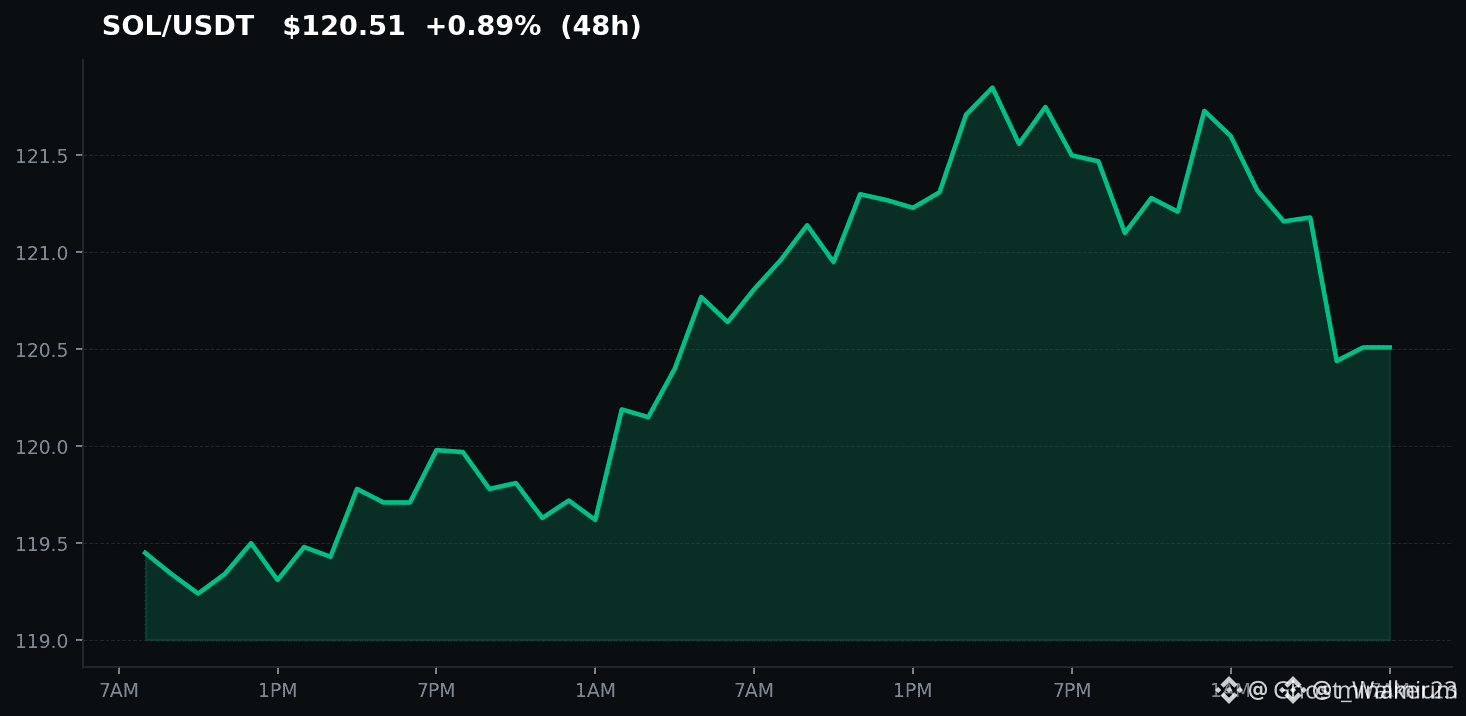
Have you noticed how Solana tokenized stock volume is topping out right as greed hits 69 and everyone suddenly pretends on-chain stocks are the new default?
Traders keep FOMO-buying these products after the volume spike, then sit underwater when the narrative cools and they have no idea when to actually exit.
The mainstream loves calling this the future of finance, with $SOL supposedly eating TradFi lunch. I see it differently. High volume in a greedy tape like this usually marks late retail chasing, not the start of real adoption. Most of that flow is speculative rotation, not people using tokenized stocks as actual ownership. Compare it to $BTC spot ETFs, which had actual institutional plumbing. This looks more like a liquidity event than a structural shift.
Treat it as a trade, not a thesis. Watch whether price holds when volume starts rolling over. Scale out of related $SOL exposure into $USDT instead of hoping the story lasts. Only add back if you see genuine user activity, not just another volume print. Regulatory noise around tokenized assets is not going away, and greed markets punish the last ones in.
Where do you think this Solana tokenized stock volume goes once the initial rush fades?
#SolanaTokenizedStockVolumeTops #BitcoinSpotETFsDraw #SECHaltsCryptoETFReviewsAmidFundingLapse
Have you noticed how Solana tokenized stock volume is topping out right as greed hits 69 and everyone suddenly pretends on-chain stocks are the new default?
Traders keep FOMO-buying these products after the volume spike, then sit underwater when the narrative cools and they have no idea when to actually exit.
The mainstream loves calling this the future of finance, with $SOL supposedly eating TradFi lunch. I see it differently. High volume in a greedy tape like this usually marks late retail chasing, not the start of real adoption. Most of that flow is speculative rotation, not people using tokenized stocks as actual ownership. Compare it to $BTC spot ETFs, which had actual institutional plumbing. This looks more like a liquidity event than a structural shift.
Treat it as a trade, not a thesis. Watch whether price holds when volume starts rolling over. Scale out of related $SOL exposure into $USDT instead of hoping the story lasts. Only add back if you see genuine user activity, not just another volume print. Regulatory noise around tokenized assets is not going away, and greed markets punish the last ones in.
Where do you think this Solana tokenized stock volume goes once the initial rush fades?
#SolanaTokenizedStockVolumeTops #BitcoinSpotETFsDraw #SECHaltsCryptoETFReviewsAmidFundingLapse
Traders keep FOMO-buying these products after the volume spike, then sit underwater when the narrative cools and they have no idea when to actually exit.
The mainstream loves calling this the future of finance, with $SOL supposedly eating TradFi lunch. I see it differently. High volume in a greedy tape like this usually marks late retail chasing, not the start of real adoption. Most of that flow is speculative rotation, not people using tokenized stocks as actual ownership. Compare it to $BTC spot ETFs, which had actual institutional plumbing. This looks more like a liquidity event than a structural shift.
Treat it as a trade, not a thesis. Watch whether price holds when volume starts rolling over. Scale out of related $SOL exposure into $USDT instead of hoping the story lasts. Only add back if you see genuine user activity, not just another volume print. Regulatory noise around tokenized assets is not going away, and greed markets punish the last ones in.
Where do you think this Solana tokenized stock volume goes once the initial rush fades?
#SolanaTokenizedStockVolumeTops #BitcoinSpotETFsDraw #SECHaltsCryptoETFReviewsAmidFundingLapse
·
--
Tərcüməyə bax
Tether now holds more US Treasury bills than entire sovereign nations like Germany and Australia, but most people still treat it like a simple digital dollar without checking where the yield actually flows.
Most traders happily park their dry powder in $USDT during market downturns, completely oblivious to how centralized custodial risk compounds when liquidity gets locked up behind opaque balance sheets. You think you are sitting in cash safely waiting for the next dip, yet your capital is effectively lending against traditional paper collateral you cannot audit in real time.
When Paolo Ardoino dropped his famous phrase about reserves coming home, it pointed directly to Tether consolidating its backing into short-term US paper and hard assets like $BTC. That shift made the issuer wildly profitable, generating billions in risk-free interest while ordinary holders absorb the counterparty risk for zero yield. If regulatory pressure forces abrupt offshore liquidations or banking freezes, the exit door will not be wide enough for everyone at once.
Are we leaning too heavily on a single issuer for market stability, or do you trust the current backing?
#USDT #Stablecoins #CryptoRisk
Tether now holds more US Treasury bills than entire sovereign nations like Germany and Australia, but most people still treat it like a simple digital dollar without checking where the yield actually flows.
Most traders happily park their dry powder in $USDT during market downturns, completely oblivious to how centralized custodial risk compounds when liquidity gets locked up behind opaque balance sheets. You think you are sitting in cash safely waiting for the next dip, yet your capital is effectively lending against traditional paper collateral you cannot audit in real time.
When Paolo Ardoino dropped his famous phrase about reserves coming home, it pointed directly to Tether consolidating its backing into short-term US paper and hard assets like $BTC . That shift made the issuer wildly profitable, generating billions in risk-free interest while ordinary holders absorb the counterparty risk for zero yield. If regulatory pressure forces abrupt offshore liquidations or banking freezes, the exit door will not be wide enough for everyone at once.
Are we leaning too heavily on a single issuer for market stability, or do you trust the current backing?
#USDT #Stablecoins #CryptoRisk
Most traders happily park their dry powder in $USDT during market downturns, completely oblivious to how centralized custodial risk compounds when liquidity gets locked up behind opaque balance sheets. You think you are sitting in cash safely waiting for the next dip, yet your capital is effectively lending against traditional paper collateral you cannot audit in real time.
When Paolo Ardoino dropped his famous phrase about reserves coming home, it pointed directly to Tether consolidating its backing into short-term US paper and hard assets like $BTC . That shift made the issuer wildly profitable, generating billions in risk-free interest while ordinary holders absorb the counterparty risk for zero yield. If regulatory pressure forces abrupt offshore liquidations or banking freezes, the exit door will not be wide enough for everyone at once.
Are we leaning too heavily on a single issuer for market stability, or do you trust the current backing?
#USDT #Stablecoins #CryptoRisk

·
--
Tərcüməyə bax
Have you noticed how liquidity quietly rotates before the crowd even realizes the cycle has shifted?
Most traders spend months chasing high-beta altcoins only to get trapped when liquidity dries up overnight. We keep watching portfolios bleed simply because we ignore where the actual capital settlement layer is anchoring.
Look at the case of $USDT migrating back toward the $BTC network layer. Years ago, Tether practically had to migrate volume out of early Bitcoin layers to low-fee smart contract chains just to survive network congestion and rising transaction fees. That forced exit created a fragmented ecosystem where capital was scattered across multiple layer-1 chains.
Now, with modern scaling solutions and RGB protocols maturing, tethering stablecoin volume directly onto Bitcoin infrastructure is reversing that historical migration. Bringing deep liquidity back to the base layer fundamentally changes network fee models and capital stickiness. When settlement security starts mattering more than cheap transactions, the entire velocity of $ETH and alternative chains faces a quiet structural test.
Where do you think this capital migration leaves competing smart contract platforms over the next year?
#Bitcoin #USDT #CryptoAnalysis
Have you noticed how liquidity quietly rotates before the crowd even realizes the cycle has shifted?
Most traders spend months chasing high-beta altcoins only to get trapped when liquidity dries up overnight. We keep watching portfolios bleed simply because we ignore where the actual capital settlement layer is anchoring.
Look at the case of $USDT migrating back toward the $BTC network layer. Years ago, Tether practically had to migrate volume out of early Bitcoin layers to low-fee smart contract chains just to survive network congestion and rising transaction fees. That forced exit created a fragmented ecosystem where capital was scattered across multiple layer-1 chains.
Now, with modern scaling solutions and RGB protocols maturing, tethering stablecoin volume directly onto Bitcoin infrastructure is reversing that historical migration. Bringing deep liquidity back to the base layer fundamentally changes network fee models and capital stickiness. When settlement security starts mattering more than cheap transactions, the entire velocity of $ETH and alternative chains faces a quiet structural test.
Where do you think this capital migration leaves competing smart contract platforms over the next year?
#Bitcoin #USDT #CryptoAnalysis
Most traders spend months chasing high-beta altcoins only to get trapped when liquidity dries up overnight. We keep watching portfolios bleed simply because we ignore where the actual capital settlement layer is anchoring.
Look at the case of $USDT migrating back toward the $BTC network layer. Years ago, Tether practically had to migrate volume out of early Bitcoin layers to low-fee smart contract chains just to survive network congestion and rising transaction fees. That forced exit created a fragmented ecosystem where capital was scattered across multiple layer-1 chains.
Now, with modern scaling solutions and RGB protocols maturing, tethering stablecoin volume directly onto Bitcoin infrastructure is reversing that historical migration. Bringing deep liquidity back to the base layer fundamentally changes network fee models and capital stickiness. When settlement security starts mattering more than cheap transactions, the entire velocity of $ETH and alternative chains faces a quiet structural test.
Where do you think this capital migration leaves competing smart contract platforms over the next year?
#Bitcoin #USDT #CryptoAnalysis
1
·
--
Tərcüməyə bax
If you are still ignoring stablecoin liquidity migration patterns, you are setting yourself up for unnecessary losses. Most traders get trapped in low-liquidity altcoins while completely missing where the actual base capital is flowing, only to realize the rotation happened weeks after the fact.
Tether is officially preparing to bring $USDT back to the native Bitcoin ecosystem via the RGB and Lightning rails, reversing the shift that forced it away from Omni years ago. When high fees and slow confirmations pushed Tether onto chains like Ethereum and Tron, $BTC lost its claim as the primary settlement hub for stablecoin volume.
The immediate bull case argues that this move anchors true capital velocity back to Bitcoin native infrastructure without relying on centralized wrapped assets. Critics point out that EVM ecosystems already control deep DeFi liquidity and network effects that cannot be easily displaced. However, bringing native $USDT liquidity back to layered Bitcoin rails offers an undeniable foundation for non-custodial finance that alt-L1s simply cannot replicate.
Do you think Bitcoin layers can realistically capture meaningful stablecoin volume back from EVM chains, or is liquidity already too entrenched elsewhere?
#Bitcoin #Tether #CryptoMarket
If you are still ignoring stablecoin liquidity migration patterns, you are setting yourself up for unnecessary losses. Most traders get trapped in low-liquidity altcoins while completely missing where the actual base capital is flowing, only to realize the rotation happened weeks after the fact.
Tether is officially preparing to bring $USDT back to the native Bitcoin ecosystem via the RGB and Lightning rails, reversing the shift that forced it away from Omni years ago. When high fees and slow confirmations pushed Tether onto chains like Ethereum and Tron, $BTC lost its claim as the primary settlement hub for stablecoin volume.
The immediate bull case argues that this move anchors true capital velocity back to Bitcoin native infrastructure without relying on centralized wrapped assets. Critics point out that EVM ecosystems already control deep DeFi liquidity and network effects that cannot be easily displaced. However, bringing native $USDT liquidity back to layered Bitcoin rails offers an undeniable foundation for non-custodial finance that alt-L1s simply cannot replicate.
Do you think Bitcoin layers can realistically capture meaningful stablecoin volume back from EVM chains, or is liquidity already too entrenched elsewhere?
#Bitcoin #Tether #CryptoMarket
Tether is officially preparing to bring $USDT back to the native Bitcoin ecosystem via the RGB and Lightning rails, reversing the shift that forced it away from Omni years ago. When high fees and slow confirmations pushed Tether onto chains like Ethereum and Tron, $BTC lost its claim as the primary settlement hub for stablecoin volume.
The immediate bull case argues that this move anchors true capital velocity back to Bitcoin native infrastructure without relying on centralized wrapped assets. Critics point out that EVM ecosystems already control deep DeFi liquidity and network effects that cannot be easily displaced. However, bringing native $USDT liquidity back to layered Bitcoin rails offers an undeniable foundation for non-custodial finance that alt-L1s simply cannot replicate.
Do you think Bitcoin layers can realistically capture meaningful stablecoin volume back from EVM chains, or is liquidity already too entrenched elsewhere?
#Bitcoin #Tether #CryptoMarket
·
--
Herkes tetherin həmişəlik ucuz zəncirlərdə olacağını düşünür, amma əslində bütün stablecoin oyunu səssizcə geriyə—hər şeyin başladığı yerə—dönür.
əksər treyderlər sadəcə komissiya üçün qəpik tapılan hansı şəbəkə varsa, onun üzərindən pul göndərməyə kor-koranə davam edir, altında baş verən struktur dəyişikliklərini likvidliyimizə qədər görmürlər; gec olana qədər və körpülərdə çatlar görünənə qədər.
ngl hamımız bu filmi əvvəlcədən izləyib. 2014-cü ildə $USDT faktiki olaraq $BTC vasitəsilə omni layer üzərində işə salındı. sonra yavaş təsdiqlər və pik komissiyalar 2017–2019 aralığında $ETH istiqamətinə köç etməyə məcbur etdi, bundan əvvəl isə tron demək olar ki, gündəlik transfer magistralını ələ keçirdi. 2023-ə gələndə tether omni dəstəyini düz “sunset” etdi və hamı bitcoin üzərində stablecoinləri ölü elan etdi.
indi utexo rəsmən bitcoin üzərində rgb protokolu ilə lisenziyalı tether emissiyasını yaymağa başlayır. ən təhlükəsiz bazis layerdə natif likvidlik işlətmək risk profilini tamamilə dəyişir—xüsusən də əksər degens hələ də bitkoinin yalnız “saxlamaq” üçün yaxşı olduğunu düşünəndə.
siz evm relslərinə yapışırsınız, yoxsa stable likvidliyinizi bazis layerdəki bitkoinə qaytarırsınız?
#Bitcoin #USDT #CryptoAlpha
Herkes tetherin həmişəlik ucuz zəncirlərdə olacağını düşünür, amma əslində bütün stablecoin oyunu səssizcə geriyə—hər şeyin başladığı yerə—dönür.
əksər treyderlər sadəcə komissiya üçün qəpik tapılan hansı şəbəkə varsa, onun üzərindən pul göndərməyə kor-koranə davam edir, altında baş verən struktur dəyişikliklərini likvidliyimizə qədər görmürlər; gec olana qədər və körpülərdə çatlar görünənə qədər.
ngl hamımız bu filmi əvvəlcədən izləyib. 2014-cü ildə $USDT faktiki olaraq $BTC vasitəsilə omni layer üzərində işə salındı. sonra yavaş təsdiqlər və pik komissiyalar 2017–2019 aralığında $ETH istiqamətinə köç etməyə məcbur etdi, bundan əvvəl isə tron demək olar ki, gündəlik transfer magistralını ələ keçirdi. 2023-ə gələndə tether omni dəstəyini düz “sunset” etdi və hamı bitcoin üzərində stablecoinləri ölü elan etdi.
indi utexo rəsmən bitcoin üzərində rgb protokolu ilə lisenziyalı tether emissiyasını yaymağa başlayır. ən təhlükəsiz bazis layerdə natif likvidlik işlətmək risk profilini tamamilə dəyişir—xüsusən də əksər degens hələ də bitkoinin yalnız “saxlamaq” üçün yaxşı olduğunu düşünəndə.
siz evm relslərinə yapışırsınız, yoxsa stable likvidliyinizi bazis layerdəki bitkoinə qaytarırsınız?
#Bitcoin #USDT #CryptoAlpha
əksər treyderlər sadəcə komissiya üçün qəpik tapılan hansı şəbəkə varsa, onun üzərindən pul göndərməyə kor-koranə davam edir, altında baş verən struktur dəyişikliklərini likvidliyimizə qədər görmürlər; gec olana qədər və körpülərdə çatlar görünənə qədər.
ngl hamımız bu filmi əvvəlcədən izləyib. 2014-cü ildə $USDT faktiki olaraq $BTC vasitəsilə omni layer üzərində işə salındı. sonra yavaş təsdiqlər və pik komissiyalar 2017–2019 aralığında $ETH istiqamətinə köç etməyə məcbur etdi, bundan əvvəl isə tron demək olar ki, gündəlik transfer magistralını ələ keçirdi. 2023-ə gələndə tether omni dəstəyini düz “sunset” etdi və hamı bitcoin üzərində stablecoinləri ölü elan etdi.
indi utexo rəsmən bitcoin üzərində rgb protokolu ilə lisenziyalı tether emissiyasını yaymağa başlayır. ən təhlükəsiz bazis layerdə natif likvidlik işlətmək risk profilini tamamilə dəyişir—xüsusən də əksər degens hələ də bitkoinin yalnız “saxlamaq” üçün yaxşı olduğunu düşünəndə.
siz evm relslərinə yapışırsınız, yoxsa stable likvidliyinizi bazis layerdəki bitkoinə qaytarırsınız?
#Bitcoin #USDT #CryptoAlpha

2
Daha çox kontent araşdırmaq üçün daxil olun
Binance Square-də qlobal kriptovalyuta istifadəçilərinə qoşulun
⚡️ Kriptovalyuta haqqında ən son və faydalı məlumatları əldə edin.
💬 Dünyanın ən böyük kriptovalyuta birjası tərəfindən etibar edilir.
👍 Doğrulanmış yaradıcılardan gələn real məlumatları kəşf edin.
E-poçt/Telefon nömrəsi
Trenddə olan mövzular
ADAGains10%Above$0.27
415 baxış
Müzakirə edir: 34
🚨 $ADA YENİCƏ OYANDI — +10% VƏ YENİDƏN $0.27-DAN YUXARIDA.
Cardano nəhayət yenidən real yüksəliş impulsu göstərir.
ADA təxminən $0.27-yə yüksəldi — artım təqribən 10–11% oldu — və son 90 günün ən yüksək səviyyəsini yenilədi. Ticarət həcmi də son 30 günün median göstəricisinin təxminən 2 mislinə çatdı. Bu isə yüksəlişin təsadüfi yaşıl şamdan ibarət olmadığını göstərir.
Texniki mənzərə də getdikcə aydınlaşır:
$0.258–$0.260 qısamüddətli əsas dəstək zonasına çevrilib, öküzlərin növbəti hədəfi isə $0.28–$0.30 aralığıdır.
⚡ TİCARƏT PLANI
Giriş: $0.264–$0.270
TP1: $0.280
TP2: $0.292
TP3: $0.300–$0.305
SL: $0.255
Siqnal:
$0.26 səviyyəsini saxlayarsa → yüksəliş strukturu qüvvədə qalır.
Həcmlə $0.28-i keçərsə → yüksəlişin davamı ssenarisi xeyli güclənir.
$0.255-dən aşağı düşərsə → yüksəliş impulsu tezisi qüvvədən düşür.
Ən maraqlısı nədir?
ADA aylarla heç bir hərəkət etmədi.
Adətən treyderlər məhz belə vaxtlarda izləməyi dayandırırlar.
İndi isə həcm qayıdıb, müqavimət qırılır və bazar yenidən diqqətini ADA-ya yönəldir. 👀
#ADAGains10%Above$0.27 #ETHUp70%InQ3ButLiquidityFalls #EthStakingExitQueueHits2026High #FedOctoberHoldOdds82.3% #Nikkei225Jumps2.5%ToThreeMonthHigh
KimHotbae
·0 bəyənmə
·233 baxış
ETHUp70%InQ3ButLiquidityFalls
6,853 baxış
Müzakirə edir: 170
EthStakingExitQueueHits2026High
3,261 baxış
Müzakirə edir: 213