
Esthol
4 貼文

Esthol
舉報
封鎖用戶
I am a Web3 content creator
0 關注
10 粉絲
19 點讚數
貼文
·
--
文章
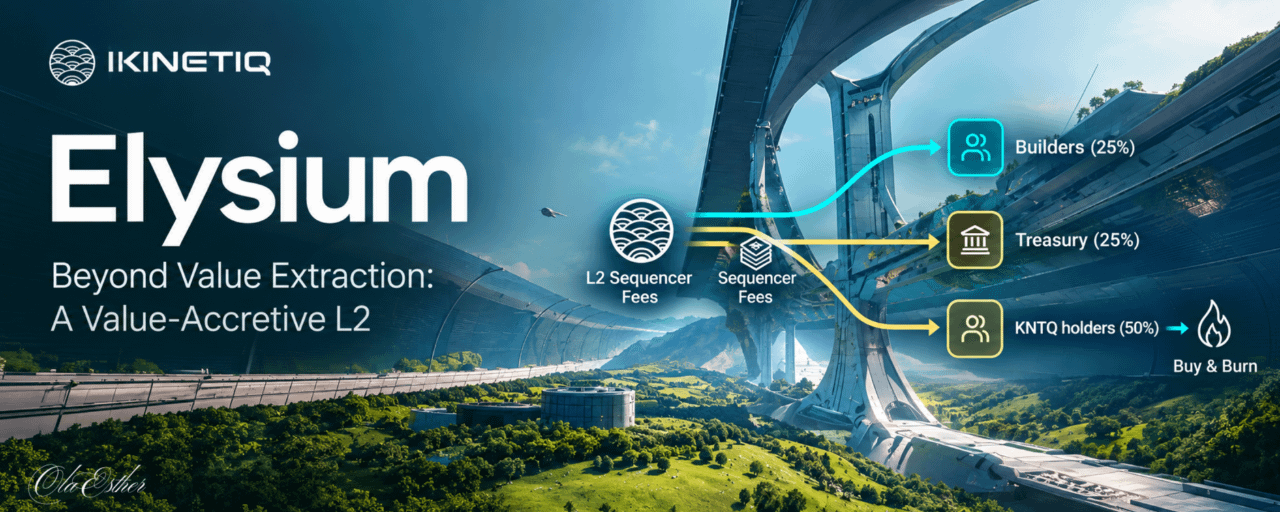
Elysium:超越價值攫取——爲什麼 Hyperliquid 的首個 L2 重定義鏈上資本效率數月以來,圍繞 #Web3 的二層擴容爭論始終牽涉到一個令人不適的現實:許多 L2 都可能帶來新的流動性碎片化、執行開銷以及代幣激勵,但卻未必能與其底層第一層(Layer 1)形成緊密的經濟關聯。
在 #Hyperliquid 生態系統中,Kinetiq Research 正在採取不同的策略。
作爲生態系統中的主要流動性質押協議,Kinetiq 正在推出 Elysium——一款專爲滿足需求而打造的 L2。它並非旨在與 Hyperliquid 競爭,而是爲了在連接執行活動與生態系統價值增值的同時,擴展 HyperCore 的能力。
Elysium:超越價值攫取——爲什麼 Hyperliquid 的首個 L2 重定義鏈上資本效率
數月以來,圍繞 #Web3 的二層擴容爭論始終牽涉到一個令人不適的現實:許多 L2 都可能帶來新的流動性碎片化、執行開銷以及代幣激勵,但卻未必能與其底層第一層(Layer 1)形成緊密的經濟關聯。
在 #Hyperliquid 生態系統中,Kinetiq Research 正在採取不同的策略。
作爲生態系統中的主要流動性質押協議,Kinetiq 正在推出 Elysium——一款專爲滿足需求而打造的 L2。它並非旨在與 Hyperliquid 競爭,而是爲了在連接執行活動與生態系統價值增值的同時,擴展 HyperCore 的能力。
在 #Hyperliquid 生態系統中,Kinetiq Research 正在採取不同的策略。
作爲生態系統中的主要流動性質押協議,Kinetiq 正在推出 Elysium——一款專爲滿足需求而打造的 L2。它並非旨在與 Hyperliquid 競爭,而是爲了在連接執行活動與生態系統價值增值的同時,擴展 HyperCore 的能力。
1
108
·
--
文章
查看翻譯
The Architecture of Autonomous AI: Inside IronClaw 1.0 and NEAR’s Decentralized EcosystemAs autonomous AI agents evolve from experimental scripts into always-on enterprise assistants, traditional software frameworks face a critical bottleneck: safety and continuity. When an agent possesses unrestrained authority to query databases, write code, or execute financial transactions, a single flaw in reasoning can lead to catastrophic execution errors.
To solve this, @NEAR_Protocol is redefining autonomous execution with the launch of IronClaw 1.0, an open-source agent framework engineered to separate cognitive decision-making from physical execution.
IronClaw 1.0: Separating Thinking from Acting
At the core of #IronClaw 1.0 is a fundamental structural rethink: the component that decides what to do is strictly separated from the component that performs the action.
[ Cognitive Layer (Thinking) ] ──► [ Guard Layer (Checkpoint) ] ──► [ Execution Layer (Acting) ]
Positioned between reasoning and execution sits the "Guard" layer—a centralized, deterministic coordination checkpoint. Every proposed action must pass through this single security choke point before taking effect.
A single checkpoint in front of every action is the kind of design people assume costs capability... Instead, it yields a system that is safer by default without sacrificing operational velocity.
By routing all intent through a unified Guard, IronClaw prevents agents from executing unvetted API calls, leaked credentials, or rogue commands.
Benchmark Dominance across Enterprise Workloads
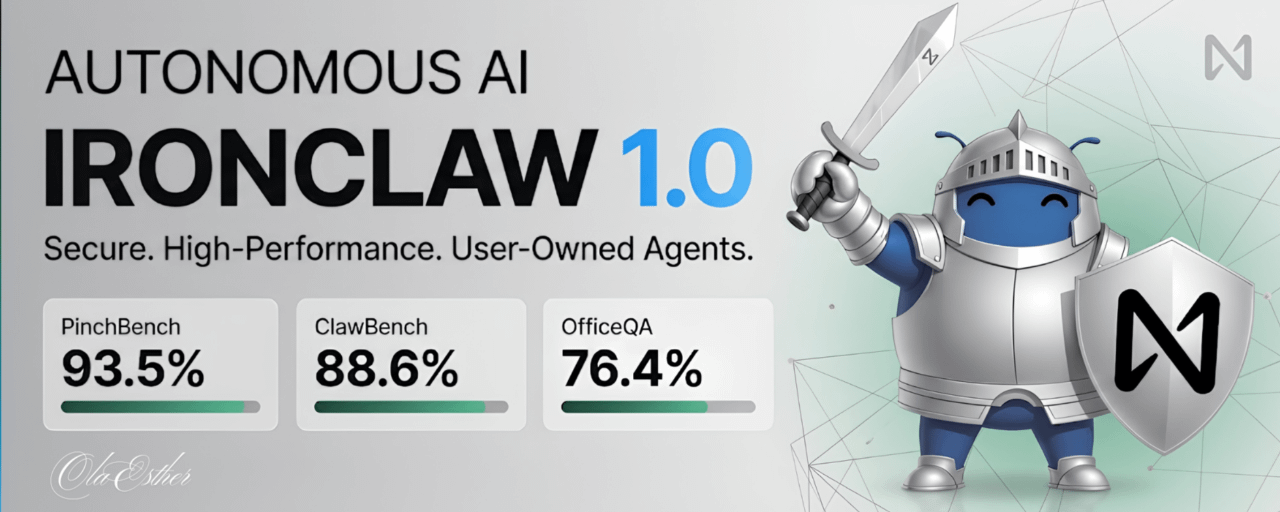
To validate this architecture, IronClaw 1.0 was evaluated alongside competing frameworks using the deepseek-v4-flash base model. The results demonstrate that strict security gating enhances rather than hinders agentic performance:
● PinchBench (93.5%): Outperformed top competing agent harnesses on 147 complex real-world tasks, including schedule planning, email triage, code generation, and multi-step research.
● ClawBench (88.6%): Ranked #1 across 140+ production web environments, leading the field average by 5.3 percentage points on multi-step browser navigation.
● OfficeQA (76.4%): Set the industry benchmark for grounded reasoning and document parsing across massive enterprise data silos.
Core Pillars: Built for Enterprise Continuity
Beyond static benchmarks, IronClaw addresses the practical operational challenges of enterprise deployments:
1. Safer by Design: Requires explicit human-in-the-loop approvals for sensitive state changes. Secrets, API keys, and credentials are single-use by default and automatically scrubbed from logs and reports.
2. Persistent State Checkpointing: Traditional agents lose context if interrupted. IronClaw continuously writes state checkpoints, allowing tasks paused for permissions or system restarts to resume immediately without losing progress.
3. Omni-Channel Memory: Integrates across CLI, Web, Slack, and Telegram as a single unified assistant. Cross-channel interactions preserve identical safety rules, preferences, and long-term memory.
4. Team & Workspace Isolation: Supports both multi-tenant team environments—where shared tools accelerate workflow discovery—and strict single-tenant isolation for compliance-heavy enterprise requirements.
The Infrastructure Backbone: NEARAI and Staking
An agent framework is only as reliable as the underlying network powering it. As #NEARAI advances toward next-generation agent rollouts like OpenClaw, the broader NEAR Protocol ecosystem provides the necessary decentralized, user-owned compute layer.
Within this framework, Staking on NEAR extends far beyond generating validation yield. Staked capital provides the economic security and Sybil resistance required to validate hardware-enforced Trusted Execution Environments (TEEs) and zero-knowledge inference nodes.
Staking acts as the foundational economic guarantee securing the decentralized cloud—ensuring that when autonomous AI agents negotiate, hold state, or process financial primitives on behalf of users, the underlying infrastructure remains censorship-resistant, verifiable, and user-owned.
By pairing IronClaw's safe execution harness with NEAR’s economically secured consensus layer, Web3 is establishing the blueprint for the emerging agentic economy.
The Architecture of Autonomous AI: Inside IronClaw 1.0 and NEAR’s Decentralized Ecosystem
As autonomous AI agents evolve from experimental scripts into always-on enterprise assistants, traditional software frameworks face a critical bottleneck: safety and continuity. When an agent possesses unrestrained authority to query databases, write code, or execute financial transactions, a single flaw in reasoning can lead to catastrophic execution errors.
To solve this, @NEAR Protocol is redefining autonomous execution with the launch of IronClaw 1.0, an open-source agent framework engineered to separate cognitive decision-making from physical execution.
IronClaw 1.0: Separating Thinking from Acting
At the core of #IronClaw 1.0 is a fundamental structural rethink: the component that decides what to do is strictly separated from the component that performs the action.
[ Cognitive Layer (Thinking) ] ──► [ Guard Layer (Checkpoint) ] ──► [ Execution Layer (Acting) ]
Positioned between reasoning and execution sits the "Guard" layer—a centralized, deterministic coordination checkpoint. Every proposed action must pass through this single security choke point before taking effect.
A single checkpoint in front of every action is the kind of design people assume costs capability... Instead, it yields a system that is safer by default without sacrificing operational velocity.
By routing all intent through a unified Guard, IronClaw prevents agents from executing unvetted API calls, leaked credentials, or rogue commands.
Benchmark Dominance across Enterprise Workloads
To validate this architecture, IronClaw 1.0 was evaluated alongside competing frameworks using the deepseek-v4-flash base model. The results demonstrate that strict security gating enhances rather than hinders agentic performance:
● PinchBench (93.5%): Outperformed top competing agent harnesses on 147 complex real-world tasks, including schedule planning, email triage, code generation, and multi-step research.
● ClawBench (88.6%): Ranked #1 across 140+ production web environments, leading the field average by 5.3 percentage points on multi-step browser navigation.
● OfficeQA (76.4%): Set the industry benchmark for grounded reasoning and document parsing across massive enterprise data silos.
Core Pillars: Built for Enterprise Continuity
Beyond static benchmarks, IronClaw addresses the practical operational challenges of enterprise deployments:
1. Safer by Design: Requires explicit human-in-the-loop approvals for sensitive state changes. Secrets, API keys, and credentials are single-use by default and automatically scrubbed from logs and reports.
2. Persistent State Checkpointing: Traditional agents lose context if interrupted. IronClaw continuously writes state checkpoints, allowing tasks paused for permissions or system restarts to resume immediately without losing progress.
3. Omni-Channel Memory: Integrates across CLI, Web, Slack, and Telegram as a single unified assistant. Cross-channel interactions preserve identical safety rules, preferences, and long-term memory.
4. Team & Workspace Isolation: Supports both multi-tenant team environments—where shared tools accelerate workflow discovery—and strict single-tenant isolation for compliance-heavy enterprise requirements.
The Infrastructure Backbone: NEARAI and Staking
An agent framework is only as reliable as the underlying network powering it. As #NEARAI advances toward next-generation agent rollouts like OpenClaw, the broader NEAR Protocol ecosystem provides the necessary decentralized, user-owned compute layer.
Within this framework, Staking on NEAR extends far beyond generating validation yield. Staked capital provides the economic security and Sybil resistance required to validate hardware-enforced Trusted Execution Environments (TEEs) and zero-knowledge inference nodes.
Staking acts as the foundational economic guarantee securing the decentralized cloud—ensuring that when autonomous AI agents negotiate, hold state, or process financial primitives on behalf of users, the underlying infrastructure remains censorship-resistant, verifiable, and user-owned.
By pairing IronClaw's safe execution harness with NEAR’s economically secured consensus layer, Web3 is establishing the blueprint for the emerging agentic economy.
To solve this, @NEAR Protocol is redefining autonomous execution with the launch of IronClaw 1.0, an open-source agent framework engineered to separate cognitive decision-making from physical execution.
IronClaw 1.0: Separating Thinking from Acting
At the core of #IronClaw 1.0 is a fundamental structural rethink: the component that decides what to do is strictly separated from the component that performs the action.
[ Cognitive Layer (Thinking) ] ──► [ Guard Layer (Checkpoint) ] ──► [ Execution Layer (Acting) ]
Positioned between reasoning and execution sits the "Guard" layer—a centralized, deterministic coordination checkpoint. Every proposed action must pass through this single security choke point before taking effect.
A single checkpoint in front of every action is the kind of design people assume costs capability... Instead, it yields a system that is safer by default without sacrificing operational velocity.
By routing all intent through a unified Guard, IronClaw prevents agents from executing unvetted API calls, leaked credentials, or rogue commands.
Benchmark Dominance across Enterprise Workloads
To validate this architecture, IronClaw 1.0 was evaluated alongside competing frameworks using the deepseek-v4-flash base model. The results demonstrate that strict security gating enhances rather than hinders agentic performance:
● PinchBench (93.5%): Outperformed top competing agent harnesses on 147 complex real-world tasks, including schedule planning, email triage, code generation, and multi-step research.
● ClawBench (88.6%): Ranked #1 across 140+ production web environments, leading the field average by 5.3 percentage points on multi-step browser navigation.
● OfficeQA (76.4%): Set the industry benchmark for grounded reasoning and document parsing across massive enterprise data silos.
Core Pillars: Built for Enterprise Continuity
Beyond static benchmarks, IronClaw addresses the practical operational challenges of enterprise deployments:
1. Safer by Design: Requires explicit human-in-the-loop approvals for sensitive state changes. Secrets, API keys, and credentials are single-use by default and automatically scrubbed from logs and reports.
2. Persistent State Checkpointing: Traditional agents lose context if interrupted. IronClaw continuously writes state checkpoints, allowing tasks paused for permissions or system restarts to resume immediately without losing progress.
3. Omni-Channel Memory: Integrates across CLI, Web, Slack, and Telegram as a single unified assistant. Cross-channel interactions preserve identical safety rules, preferences, and long-term memory.
4. Team & Workspace Isolation: Supports both multi-tenant team environments—where shared tools accelerate workflow discovery—and strict single-tenant isolation for compliance-heavy enterprise requirements.
The Infrastructure Backbone: NEARAI and Staking
An agent framework is only as reliable as the underlying network powering it. As #NEARAI advances toward next-generation agent rollouts like OpenClaw, the broader NEAR Protocol ecosystem provides the necessary decentralized, user-owned compute layer.
Within this framework, Staking on NEAR extends far beyond generating validation yield. Staked capital provides the economic security and Sybil resistance required to validate hardware-enforced Trusted Execution Environments (TEEs) and zero-knowledge inference nodes.
Staking acts as the foundational economic guarantee securing the decentralized cloud—ensuring that when autonomous AI agents negotiate, hold state, or process financial primitives on behalf of users, the underlying infrastructure remains censorship-resistant, verifiable, and user-owned.
By pairing IronClaw's safe execution harness with NEAR’s economically secured consensus layer, Web3 is establishing the blueprint for the emerging agentic economy.
1
94
登入以探索更多內容
加入幣安廣場中的全球加密貨幣用戶
⚡️ 獲取加密貨幣的最新和實用資訊。
💬 受到全球最大加密貨幣交易所的信任。
👍 發掘來自經過驗證創作者的真實見解。
電子郵件 / 電話號碼
熱門話題
MichaelSaylor暗示增持BTC
19.7M 次瀏覽
26,079 討論中
#MichaelSaylor暗示增持BTC
說真的,Saylor這老哥現在發一張“橙點圖”,幣圈都知道他想幹嘛了。
這次更直接,四個字:再來點橙色。
翻譯成人話就是:$BTC ,我可能又要買了。
有意思的是,現在的市場環境一點都不輕鬆。美聯儲剛加息,政策預期偏鷹,CLARITY法案推進也碰了釘子,但Saylor還是一副“你們聊你們的,我繼續囤”的態度。
我覺得這纔是這條消息真正值得看的地方。
普通人買$BTC ,跌10%可能就開始懷疑人生;Saylor的玩法卻一直很粗暴:把比特幣當公司資產負債表的核心倉位,價格波動只是噪音。
當然,別因爲他一句話就直接無腦衝。
畢竟“暗示增持”和“真金白銀已經買入”是兩回事,最終還得看Strategy後續披露。
但這種時候,大戶如果還敢繼續往裏塞錢,至少說明一件事:8萬美元附近,他未必覺得貴。
市場最有意思的地方就在這。
有人盯着K線怕回調,有人盯着宏觀等機會,而Saylor盯着的可能只有一個東西——還能買多少$BTC 。
#BTC #比特币 #MichaelSaylor #Strategy
倾听视野
·1 人按讚
·1.8k 次瀏覽
日本央行加息至31年高位
736,198 次瀏覽
2,014 討論中
巴菲特卸任伯克希尔董事长
124,471 次瀏覽
344 討論中