
Sunny3555
32 Bài đăng

Sunny3555
Báo cáo
Chặn người dùng
Giao dịch mở

Người nắm giữ BNB
Trader tần suất thấp
{thời gian} năm
5 Đang theo dõi
29 Người theo dõi
43 Đã thích
Bài đăng
Danh mục đầu tư
Tất cả
Trích dẫn
·
--
Giảm giá
#CanBTCReboundAfterFallingBelow60K? $BTC #CanGTA6'sLaunchLiftTTWOShares?
Có thể chỉ có một trò chơi thôi sao? Hay BTC sẽ tăng? Bối rối quá về những thay đổi thời gian.
#CanBTCReboundAfterFallingBelow60K? $BTC #CanGTA6'sLaunchLiftTTWOShares?
Có thể chỉ có một trò chơi thôi sao? Hay BTC sẽ tăng? Bối rối quá về những thay đổi thời gian.
Có thể chỉ có một trò chơi thôi sao? Hay BTC sẽ tăng? Bối rối quá về những thay đổi thời gian.
45
·
--

Bài viết
Trên thị trường#XPL $XPL
@Plasma hôm nay tôi không muốn viết gì cả vì tôi bị kẹt từ tối qua để xem những thăng trầm của thị trường và bất chợt nhận ra Rủi ro và may mắn làm cho bạn mạnh mẽ hơn và có vị trí của chúng và là một phần của cuộc sống bạn ở giữa chúng cũng như một điều còn lại đó là một chiến lược một người suy nghĩ và lập kế hoạch và hành động đó là nền tảng của kiến thức của anh ta và thời gian chờ đợi trong giai đoạn này anh ta phải đối mặt với hai điều này được gọi là Rủi ro và may mắn khi những điều này kết hợp lại và anh ta nhận được kết quả cho tôi hỏi một câu hỏi ai thắng may mắn Rủi ro hay kế hoạch ? Vì vậy đó là suy nghĩ của tôi tôi chia sẻ với bạn. Vui lòng cho tôi biết ý kiến của bạn. $XPL $XRP @Plasma
Trên thị trường
#XPL $XPL
@Plasma hôm nay tôi không muốn viết gì cả vì tôi bị kẹt từ tối qua để xem những thăng trầm của thị trường và bất chợt nhận ra Rủi ro và may mắn làm cho bạn mạnh mẽ hơn và có vị trí của chúng và là một phần của cuộc sống bạn ở giữa chúng cũng như một điều còn lại đó là một chiến lược một người suy nghĩ và lập kế hoạch và hành động đó là nền tảng của kiến thức của anh ta và thời gian chờ đợi trong giai đoạn này anh ta phải đối mặt với hai điều này được gọi là Rủi ro và may mắn khi những điều này kết hợp lại và anh ta nhận được kết quả cho tôi hỏi một câu hỏi ai thắng may mắn Rủi ro hay kế hoạch ? Vì vậy đó là suy nghĩ của tôi tôi chia sẻ với bạn. Vui lòng cho tôi biết ý kiến của bạn. $XPL $XRP @Plasma
@Plasma hôm nay tôi không muốn viết gì cả vì tôi bị kẹt từ tối qua để xem những thăng trầm của thị trường và bất chợt nhận ra Rủi ro và may mắn làm cho bạn mạnh mẽ hơn và có vị trí của chúng và là một phần của cuộc sống bạn ở giữa chúng cũng như một điều còn lại đó là một chiến lược một người suy nghĩ và lập kế hoạch và hành động đó là nền tảng của kiến thức của anh ta và thời gian chờ đợi trong giai đoạn này anh ta phải đối mặt với hai điều này được gọi là Rủi ro và may mắn khi những điều này kết hợp lại và anh ta nhận được kết quả cho tôi hỏi một câu hỏi ai thắng may mắn Rủi ro hay kế hoạch ? Vì vậy đó là suy nghĩ của tôi tôi chia sẻ với bạn. Vui lòng cho tôi biết ý kiến của bạn. $XPL $XRP @Plasma
41
·
--
#plasma $XPL @Plasma
Hôm nay tôi cảm thấy vui mừng về sự phục hồi #XPL tối qua là giá thấp nhất và bây giờ nó đang tăng trưởng bạn có thể thấy nhưng đây là điểm cho những ai biết cách quản lý rủi ro vì vậy hãy theo dõi thị trường và mở ra chân trời mới để đưa ra quyết định cho doanh nghiệp tốt hơn của bạn $XPL
Hôm nay tôi cảm thấy vui mừng về sự phục hồi #XPL tối qua là giá thấp nhất và bây giờ nó đang tăng trưởng bạn có thể thấy nhưng đây là điểm cho những ai biết cách quản lý rủi ro vì vậy hãy theo dõi thị trường và mở ra chân trời mới để đưa ra quyết định cho doanh nghiệp tốt hơn của bạn $XPL

1
31
·
--
Bài viết
Tin tức làm tôi bối rối@Plasma #plasm $XPL
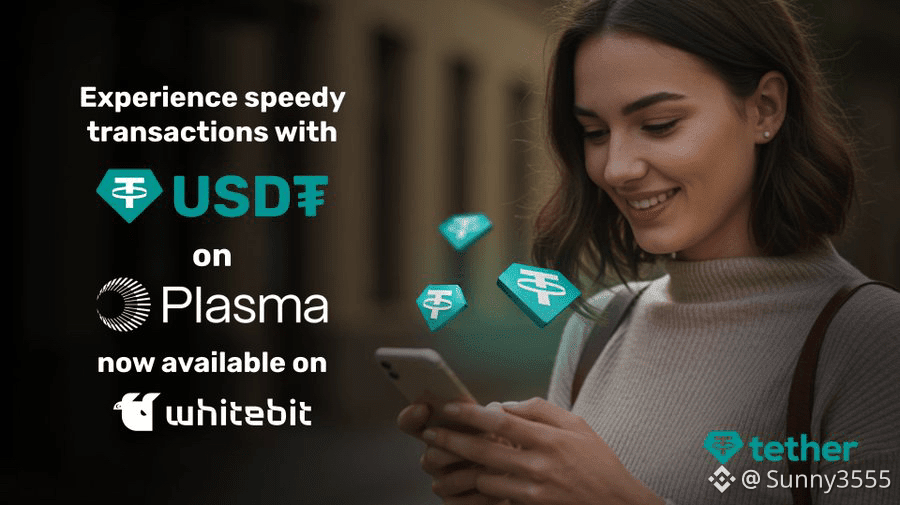
Hệ thống tài chính toàn cầu mới đang ở đây. Khi tôi theo dõi và trải nghiệm trong hành trình thương mại của mình theo thời gian, tôi nhận ra nó có thể vui vẻ hoặc đau đớn, tất cả phụ thuộc vào khả năng hoặc kỹ năng của bạn. Nếu bạn có thể kiểm soát cảm xúc của mình hoặc đưa ra quyết định vào thời điểm đúng, bạn sẽ trở thành anh hùng trong tương lai. Tất nhiên, vận may tồn tại nhưng công việc chăm chỉ cũng có vị trí riêng, vì vậy đừng lo lắng. Hãy đưa ra quyết định của bạn và tin vào bản thân, và có được kiến thức đúng vào thời điểm đúng, bạn sẽ không bao giờ thua. $XPL #Plasma @Plasma Cuối cùng, tôi muốn chia sẻ cách giao dịch của mình, tôi không phải là một chuyên gia, chỉ có một chút cảm nhận mà Allah đã ban cho tôi. Tôi cũng không biết tôi sử dụng nó đúng hay sai, vì vậy hãy nắm bắt điều đó. Tôi bắt đầu với plasma, đây là một số điểm.
Tin tức làm tôi bối rối
@Plasma #plasm $XPL
Hệ thống tài chính toàn cầu mới đang ở đây. Khi tôi theo dõi và trải nghiệm trong hành trình thương mại của mình theo thời gian, tôi nhận ra nó có thể vui vẻ hoặc đau đớn, tất cả phụ thuộc vào khả năng hoặc kỹ năng của bạn. Nếu bạn có thể kiểm soát cảm xúc của mình hoặc đưa ra quyết định vào thời điểm đúng, bạn sẽ trở thành anh hùng trong tương lai. Tất nhiên, vận may tồn tại nhưng công việc chăm chỉ cũng có vị trí riêng, vì vậy đừng lo lắng. Hãy đưa ra quyết định của bạn và tin vào bản thân, và có được kiến thức đúng vào thời điểm đúng, bạn sẽ không bao giờ thua. $XPL #Plasma @Plasma Cuối cùng, tôi muốn chia sẻ cách giao dịch của mình, tôi không phải là một chuyên gia, chỉ có một chút cảm nhận mà Allah đã ban cho tôi. Tôi cũng không biết tôi sử dụng nó đúng hay sai, vì vậy hãy nắm bắt điều đó. Tôi bắt đầu với plasma, đây là một số điểm.
Hệ thống tài chính toàn cầu mới đang ở đây. Khi tôi theo dõi và trải nghiệm trong hành trình thương mại của mình theo thời gian, tôi nhận ra nó có thể vui vẻ hoặc đau đớn, tất cả phụ thuộc vào khả năng hoặc kỹ năng của bạn. Nếu bạn có thể kiểm soát cảm xúc của mình hoặc đưa ra quyết định vào thời điểm đúng, bạn sẽ trở thành anh hùng trong tương lai. Tất nhiên, vận may tồn tại nhưng công việc chăm chỉ cũng có vị trí riêng, vì vậy đừng lo lắng. Hãy đưa ra quyết định của bạn và tin vào bản thân, và có được kiến thức đúng vào thời điểm đúng, bạn sẽ không bao giờ thua. $XPL #Plasma @Plasma Cuối cùng, tôi muốn chia sẻ cách giao dịch của mình, tôi không phải là một chuyên gia, chỉ có một chút cảm nhận mà Allah đã ban cho tôi. Tôi cũng không biết tôi sử dụng nó đúng hay sai, vì vậy hãy nắm bắt điều đó. Tôi bắt đầu với plasma, đây là một số điểm.
1
22
·
--
Xem bản dịch
@Plasma #BinanceSquareTalks it was a good decision give me your opinion i am the new one thanks
@Plasma #BinanceSquareTalks it was a good decision give me your opinion i am the new one thanks
20
·
--
Bài viết
Xem bản dịch
Is it Future?Ask yourself@Plasma #Plasma $XPL
Deep stablecoin liquidity is what every payments business, card issuer, and fintech needs.
People and businesses holding dollars on gain access to institutional grade arbitrage returns on the same rails that move their money.Deep liquidity is the backbone of real payments.
When stablecoins move easily and reliably, builders can focus on creating great products instead of fighting rails.
That’s the kind of foundation I think aligned with scalable, efficient, and built for real-world usage.This is what real product market fit looks like in DeFi.
6 days to $1B market size, $1.9B all-time volume, and Fluid already driving ~64.8% of Plasma DEX volume. That is not a “campaign”, that’s a liquidity engine powering real payments rails.
The next step is making this kind of scale safe and boring for fintech. Controlled execution beats vibes, every time. @Plasma #Plasma $XPL
Is it Future?Ask yourself
@Plasma #Plasma $XPL
Deep stablecoin liquidity is what every payments business, card issuer, and fintech needs.
People and businesses holding dollars on gain access to institutional grade arbitrage returns on the same rails that move their money.Deep liquidity is the backbone of real payments.
When stablecoins move easily and reliably, builders can focus on creating great products instead of fighting rails.
That’s the kind of foundation I think aligned with scalable, efficient, and built for real-world usage.This is what real product market fit looks like in DeFi.
6 days to $1B market size, $1.9B all-time volume, and Fluid already driving ~64.8% of Plasma DEX volume. That is not a “campaign”, that’s a liquidity engine powering real payments rails.
The next step is making this kind of scale safe and boring for fintech. Controlled execution beats vibes, every time. @Plasma #Plasma $XPL
19
·
--
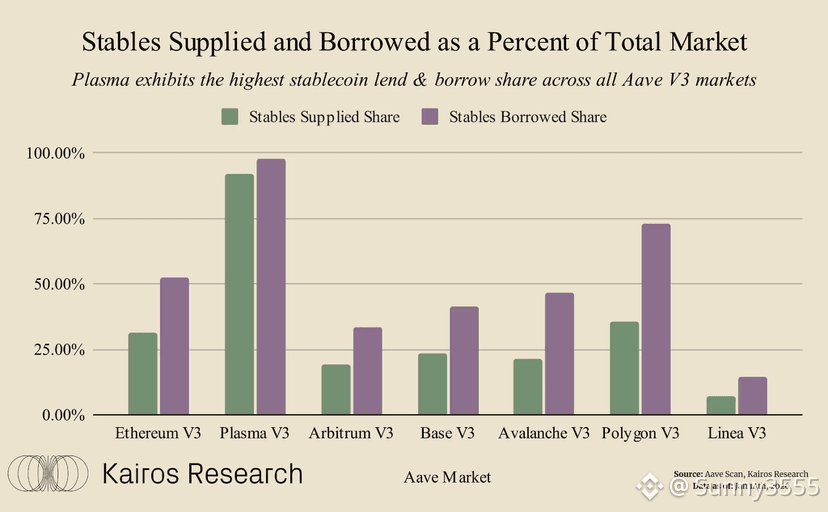
@Plasma #plasma $XPL Bạn có phải là một nhà sáng tạo đang tìm kiếm phần thưởng cho nội dung của bạn? …..$XPL #Plasma Tính thanh khoản sâu là nền tảng của các khoản thanh toán thực.
Khi các đồng stablecoin di chuyển dễ dàng và đáng tin cậy, các nhà xây dựng có thể tập trung vào việc tạo ra những sản phẩm tuyệt vời thay vì phải chiến đấu với các hệ thống thanh toán.
Đó là loại nền tảng mà chúng tôi đồng hành cùng, có thể mở rộng, hiệu quả và được xây dựng cho việc sử dụng trong thế giới thực.
27
·
--
@LorenzoProtocol $BANK đã đến lúc nắm giữ đồng tiền cho tương lai bạn sẽ nhận được phần thưởng sớm thôi nên hãy đưa ra quyết định khôn ngoan☺️
@Lorenzo Protocol $BANK đã đến lúc nắm giữ đồng tiền cho tương lai bạn sẽ nhận được phần thưởng sớm thôi nên hãy đưa ra quyết định khôn ngoan☺️

2
331
·
--

Bài viết
Xem bản dịch
The Future.@WalrusProtocol $WAL #Walrus
{spot}(WALUSDT)
The digital world is heavy. Every day, humanity generates roughly 328.77 million terabytes of data. We are no longer just sending text emails; we are training massive Artificial Intelligence (AI) models, streaming 4K video, and building complex 3D metaverses.For the last decade, the solution to this data explosion has been simple but flawed: The Cloud. We handed our digital lives over to Amazon (AWS), Google, and Microsoft. While convenient, this centralization has created a fragile internet. These tech giants act as gatekeepers—they can censor content, raise prices unilaterally, and introduce single points of failure.Web3 promised a better way: decentralized storage. Networks like Filecoin and Arweave showed us that a distributed network of hard drives could work. However, they struggled with the "Blockchain Trilemma," often sacrificing speed or low costs to achieve decentralization.Now, a new contender has emerged to solve these legacy issues. Built on the blazing-fast Sui blockchain, the Walrus Protocol is redefining what it means to store data on-chain. It is not just a "Dropbox for crypto"; it is a programmable, cryptographically secure data layer designed for the AI era.The Architecture of Efficiency: Understanding "Red Stuff"To understand why Walrus is a game-changer, you have to look at the math. Traditional decentralized storage often relies on "full replication." If you want to store a 1GB file securely on a legacy network, that network might copy your file 50 to 100 times across different nodes. This is secure, but it is incredibly wasteful and expensive.Walrus takes a different approach. It utilizes a novel implementation of 2D erasure coding affectionately named "Red Stuff" (based on RaptorQ fountain codes).When a user uploads a "Blob" (Binary Large Object) to Walrus, the protocol does not store the file in one piece. Instead, it breaks the file into a mathematical grid of "slivers." These slivers are then distributed across a vast network of storage nodes. Efficiency: Because of this advanced math, Walrus achieves extreme durability with a replication factor of only 4x to 5x. This means storing 1GB of data only uses about 4GB of network capacity, compared to the hundreds of gigabytes required by older competitors. Robustness: The network is "Byzantine Fault Tolerant." Even if a significant portion of the nodes go offline or turn malicious, the original file can be perfectly reconstructed from the remaining slivers.The Sui Advantage: Speed Meets StorageWalrus is unique because it separates the "Control Plane" from the "Data Plane."Most blockchains try to do everything at once—process transactions and store data—which leads to congestion and high fees. Walrus uses the Sui blockchain strictly for management. The metadata (who owns the file, how big it is, and the proof that it exists) lives on Sui. The actual heavy data lives on the specialized Walrus nodes.This synergy allows Walrus to inherit the lightning-fast speed of Sui. Managing your storage, transferring ownership of a dataset, or updating permissions feels instant. It transforms storage from a static "hard drive" into a dynamic, programmable asset that can interact with smart contracts in real-time.The $WAL Token EconomyA decentralized network is only as strong as its incentives. The Walrus economy is designed to align the interests of users, storage providers, and token holders using the native $WAL token. Storage Payments: To store data, users must pay in $WAL. This creates a direct correlation between the network's adoption and the demand for the token. Staking and Security: Storage nodes operate on a Delegated Proof-of-Stake (DPoS) model. They must stake WAL to participate. If they lose data or go offline, they face slashing penalties. This financial stake ensures that providers are motivated to keep their servers running 24/7. * The Storage Fund: Perhaps the most innovative feature is the "Storage Fund." When a user pays for storage (e.g., for 5 years), the WAL tokens are not paid to the provider all at once. Instead, they are locked in a smart contract and released slowly over time. This mechanism guarantees that providers have a long-term incentive to host the data, while also removing tokens from the circulating supply, creating deflationary pressure as the network grows.Use Cases: Why the World Needs WalrusWalrus is not building technology for technology's sake. It is solving critical problems for the next generation of the internet.1. The AI Data CrisisTraining Large Language Models (LLMs) requires petabytes of text and imagery. Storing this on AWS is prohibitively expensive for open-source researchers. Walrus provides a decentralized "Data Lake" where researchers can store massive datasets cheaply. Because the metadata is on-chain, data can be cryptographically signed, proving its origin—a crucial feature in an era of deepfakes and AI-generated misinformation.2. Unstoppable "Walrus Sites"One of the most exciting developer tools is "Walrus Sites." Currently, most Decentralized Applications (dApps) still rely on centralized servers (like Vercel or AWS) for their frontend websites. If those servers go down, the dApp is inaccessible. Walrus allows developers to host their entire website—HTML, CSS, and JavaScript—directly on the decentralized network. This creates truly "unstoppable applications" that are resistant to censorship and platform de-risking.3. Dynamic NFTsThe NFT market has a dirty secret: many high-value digital collectibles are just links pointing to a centralized server. If the startup behind the project goes bankrupt, the image disappears. Walrus solves this by storing the actual media asset on-chain. Furthermore, because Walrus integrates with Sui Move, these assets can be dynamic. Imagine a gaming sword that changes its appearance as you use it in-game, with the visual updates permanently written to the storage layer.ConclusionWe are witnessing the transition from the "Cloud Era" to the "Fog Era." The centralized cloud served us well, but its limitations in privacy, cost, and censorship resistance are becoming undeniable.The Walrus Protocol represents the maturation of decentralized storage. By solving the efficiency problems of the past with "Red Stuff" and leveraging the speed of Sui, it offers a solution that is finally ready for mass adoption. It is cheaper than the competition, faster than the legacy chains, and more secure than the centralized giants.As we build a world of autonomous AI agents, censorship-resistant media, and true digital ownership, we need a foundation that can hold the weight of our digital future. Walrus is that foundation.@Walrus 🦭/acc $WAL #walrus
The Future.
@Walrus 🦭/acc $WAL #Walrus
The digital world is heavy. Every day, humanity generates roughly 328.77 million terabytes of data. We are no longer just sending text emails; we are training massive Artificial Intelligence (AI) models, streaming 4K video, and building complex 3D metaverses.For the last decade, the solution to this data explosion has been simple but flawed: The Cloud. We handed our digital lives over to Amazon (AWS), Google, and Microsoft. While convenient, this centralization has created a fragile internet. These tech giants act as gatekeepers—they can censor content, raise prices unilaterally, and introduce single points of failure.Web3 promised a better way: decentralized storage. Networks like Filecoin and Arweave showed us that a distributed network of hard drives could work. However, they struggled with the "Blockchain Trilemma," often sacrificing speed or low costs to achieve decentralization.Now, a new contender has emerged to solve these legacy issues. Built on the blazing-fast Sui blockchain, the Walrus Protocol is redefining what it means to store data on-chain. It is not just a "Dropbox for crypto"; it is a programmable, cryptographically secure data layer designed for the AI era.The Architecture of Efficiency: Understanding "Red Stuff"To understand why Walrus is a game-changer, you have to look at the math. Traditional decentralized storage often relies on "full replication." If you want to store a 1GB file securely on a legacy network, that network might copy your file 50 to 100 times across different nodes. This is secure, but it is incredibly wasteful and expensive.Walrus takes a different approach. It utilizes a novel implementation of 2D erasure coding affectionately named "Red Stuff" (based on RaptorQ fountain codes).When a user uploads a "Blob" (Binary Large Object) to Walrus, the protocol does not store the file in one piece. Instead, it breaks the file into a mathematical grid of "slivers." These slivers are then distributed across a vast network of storage nodes. Efficiency: Because of this advanced math, Walrus achieves extreme durability with a replication factor of only 4x to 5x. This means storing 1GB of data only uses about 4GB of network capacity, compared to the hundreds of gigabytes required by older competitors. Robustness: The network is "Byzantine Fault Tolerant." Even if a significant portion of the nodes go offline or turn malicious, the original file can be perfectly reconstructed from the remaining slivers.The Sui Advantage: Speed Meets StorageWalrus is unique because it separates the "Control Plane" from the "Data Plane."Most blockchains try to do everything at once—process transactions and store data—which leads to congestion and high fees. Walrus uses the Sui blockchain strictly for management. The metadata (who owns the file, how big it is, and the proof that it exists) lives on Sui. The actual heavy data lives on the specialized Walrus nodes.This synergy allows Walrus to inherit the lightning-fast speed of Sui. Managing your storage, transferring ownership of a dataset, or updating permissions feels instant. It transforms storage from a static "hard drive" into a dynamic, programmable asset that can interact with smart contracts in real-time.The $WAL Token EconomyA decentralized network is only as strong as its incentives. The Walrus economy is designed to align the interests of users, storage providers, and token holders using the native $WAL token. Storage Payments: To store data, users must pay in $WAL . This creates a direct correlation between the network's adoption and the demand for the token. Staking and Security: Storage nodes operate on a Delegated Proof-of-Stake (DPoS) model. They must stake WAL to participate. If they lose data or go offline, they face slashing penalties. This financial stake ensures that providers are motivated to keep their servers running 24/7. * The Storage Fund: Perhaps the most innovative feature is the "Storage Fund." When a user pays for storage (e.g., for 5 years), the WAL tokens are not paid to the provider all at once. Instead, they are locked in a smart contract and released slowly over time. This mechanism guarantees that providers have a long-term incentive to host the data, while also removing tokens from the circulating supply, creating deflationary pressure as the network grows.Use Cases: Why the World Needs WalrusWalrus is not building technology for technology's sake. It is solving critical problems for the next generation of the internet.1. The AI Data CrisisTraining Large Language Models (LLMs) requires petabytes of text and imagery. Storing this on AWS is prohibitively expensive for open-source researchers. Walrus provides a decentralized "Data Lake" where researchers can store massive datasets cheaply. Because the metadata is on-chain, data can be cryptographically signed, proving its origin—a crucial feature in an era of deepfakes and AI-generated misinformation.2. Unstoppable "Walrus Sites"One of the most exciting developer tools is "Walrus Sites." Currently, most Decentralized Applications (dApps) still rely on centralized servers (like Vercel or AWS) for their frontend websites. If those servers go down, the dApp is inaccessible. Walrus allows developers to host their entire website—HTML, CSS, and JavaScript—directly on the decentralized network. This creates truly "unstoppable applications" that are resistant to censorship and platform de-risking.3. Dynamic NFTsThe NFT market has a dirty secret: many high-value digital collectibles are just links pointing to a centralized server. If the startup behind the project goes bankrupt, the image disappears. Walrus solves this by storing the actual media asset on-chain. Furthermore, because Walrus integrates with Sui Move, these assets can be dynamic. Imagine a gaming sword that changes its appearance as you use it in-game, with the visual updates permanently written to the storage layer.ConclusionWe are witnessing the transition from the "Cloud Era" to the "Fog Era." The centralized cloud served us well, but its limitations in privacy, cost, and censorship resistance are becoming undeniable.The Walrus Protocol represents the maturation of decentralized storage. By solving the efficiency problems of the past with "Red Stuff" and leveraging the speed of Sui, it offers a solution that is finally ready for mass adoption. It is cheaper than the competition, faster than the legacy chains, and more secure than the centralized giants.As we build a world of autonomous AI agents, censorship-resistant media, and true digital ownership, we need a foundation that can hold the weight of our digital future. Walrus is that foundation.@Walrus 🦭/acc $WAL #walrus
The digital world is heavy. Every day, humanity generates roughly 328.77 million terabytes of data. We are no longer just sending text emails; we are training massive Artificial Intelligence (AI) models, streaming 4K video, and building complex 3D metaverses.For the last decade, the solution to this data explosion has been simple but flawed: The Cloud. We handed our digital lives over to Amazon (AWS), Google, and Microsoft. While convenient, this centralization has created a fragile internet. These tech giants act as gatekeepers—they can censor content, raise prices unilaterally, and introduce single points of failure.Web3 promised a better way: decentralized storage. Networks like Filecoin and Arweave showed us that a distributed network of hard drives could work. However, they struggled with the "Blockchain Trilemma," often sacrificing speed or low costs to achieve decentralization.Now, a new contender has emerged to solve these legacy issues. Built on the blazing-fast Sui blockchain, the Walrus Protocol is redefining what it means to store data on-chain. It is not just a "Dropbox for crypto"; it is a programmable, cryptographically secure data layer designed for the AI era.The Architecture of Efficiency: Understanding "Red Stuff"To understand why Walrus is a game-changer, you have to look at the math. Traditional decentralized storage often relies on "full replication." If you want to store a 1GB file securely on a legacy network, that network might copy your file 50 to 100 times across different nodes. This is secure, but it is incredibly wasteful and expensive.Walrus takes a different approach. It utilizes a novel implementation of 2D erasure coding affectionately named "Red Stuff" (based on RaptorQ fountain codes).When a user uploads a "Blob" (Binary Large Object) to Walrus, the protocol does not store the file in one piece. Instead, it breaks the file into a mathematical grid of "slivers." These slivers are then distributed across a vast network of storage nodes. Efficiency: Because of this advanced math, Walrus achieves extreme durability with a replication factor of only 4x to 5x. This means storing 1GB of data only uses about 4GB of network capacity, compared to the hundreds of gigabytes required by older competitors. Robustness: The network is "Byzantine Fault Tolerant." Even if a significant portion of the nodes go offline or turn malicious, the original file can be perfectly reconstructed from the remaining slivers.The Sui Advantage: Speed Meets StorageWalrus is unique because it separates the "Control Plane" from the "Data Plane."Most blockchains try to do everything at once—process transactions and store data—which leads to congestion and high fees. Walrus uses the Sui blockchain strictly for management. The metadata (who owns the file, how big it is, and the proof that it exists) lives on Sui. The actual heavy data lives on the specialized Walrus nodes.This synergy allows Walrus to inherit the lightning-fast speed of Sui. Managing your storage, transferring ownership of a dataset, or updating permissions feels instant. It transforms storage from a static "hard drive" into a dynamic, programmable asset that can interact with smart contracts in real-time.The $WAL Token EconomyA decentralized network is only as strong as its incentives. The Walrus economy is designed to align the interests of users, storage providers, and token holders using the native $WAL token. Storage Payments: To store data, users must pay in $WAL . This creates a direct correlation between the network's adoption and the demand for the token. Staking and Security: Storage nodes operate on a Delegated Proof-of-Stake (DPoS) model. They must stake WAL to participate. If they lose data or go offline, they face slashing penalties. This financial stake ensures that providers are motivated to keep their servers running 24/7. * The Storage Fund: Perhaps the most innovative feature is the "Storage Fund." When a user pays for storage (e.g., for 5 years), the WAL tokens are not paid to the provider all at once. Instead, they are locked in a smart contract and released slowly over time. This mechanism guarantees that providers have a long-term incentive to host the data, while also removing tokens from the circulating supply, creating deflationary pressure as the network grows.Use Cases: Why the World Needs WalrusWalrus is not building technology for technology's sake. It is solving critical problems for the next generation of the internet.1. The AI Data CrisisTraining Large Language Models (LLMs) requires petabytes of text and imagery. Storing this on AWS is prohibitively expensive for open-source researchers. Walrus provides a decentralized "Data Lake" where researchers can store massive datasets cheaply. Because the metadata is on-chain, data can be cryptographically signed, proving its origin—a crucial feature in an era of deepfakes and AI-generated misinformation.2. Unstoppable "Walrus Sites"One of the most exciting developer tools is "Walrus Sites." Currently, most Decentralized Applications (dApps) still rely on centralized servers (like Vercel or AWS) for their frontend websites. If those servers go down, the dApp is inaccessible. Walrus allows developers to host their entire website—HTML, CSS, and JavaScript—directly on the decentralized network. This creates truly "unstoppable applications" that are resistant to censorship and platform de-risking.3. Dynamic NFTsThe NFT market has a dirty secret: many high-value digital collectibles are just links pointing to a centralized server. If the startup behind the project goes bankrupt, the image disappears. Walrus solves this by storing the actual media asset on-chain. Furthermore, because Walrus integrates with Sui Move, these assets can be dynamic. Imagine a gaming sword that changes its appearance as you use it in-game, with the visual updates permanently written to the storage layer.ConclusionWe are witnessing the transition from the "Cloud Era" to the "Fog Era." The centralized cloud served us well, but its limitations in privacy, cost, and censorship resistance are becoming undeniable.The Walrus Protocol represents the maturation of decentralized storage. By solving the efficiency problems of the past with "Red Stuff" and leveraging the speed of Sui, it offers a solution that is finally ready for mass adoption. It is cheaper than the competition, faster than the legacy chains, and more secure than the centralized giants.As we build a world of autonomous AI agents, censorship-resistant media, and true digital ownership, we need a foundation that can hold the weight of our digital future. Walrus is that foundation.@Walrus 🦭/acc $WAL #walrus
·
--

Bài viết
Xem bản dịch
FutureThe digital world is heavy. Every day, humanity generates roughly 328.77 million terabytes of data. We are no longer just sending text emails; we are training massive Artificial Intelligence (AI) models, streaming 4K video, and building complex 3D metaverses.For the last decade, the solution to this data explosion has been simple but flawed: The Cloud. We handed our digital lives over to Amazon (AWS), Google, and Microsoft. While convenient, this centralization has created a fragile internet. These tech giants act as gatekeepers—they can censor content, raise prices unilaterally, and introduce single points of failure.Web3 promised a better way: decentralized storage. Networks like Filecoin and Arweave showed us that a distributed network of hard drives could work. However, they struggled with the "Blockchain Trilemma," often sacrificing speed or low costs to achieve decentralization.Now, a new contender has emerged to solve these legacy issues. Built on the blazing-fast Sui blockchain, the Walrus Protocol is redefining what it means to store data on-chain. It is not just a "Dropbox for crypto"; it is a programmable, cryptographically secure data layer designed for the AI era.The Architecture of Efficiency: Understanding "Red Stuff"To understand why Walrus is a game-changer, you have to look at the math. Traditional decentralized storage often relies on "full replication." If you want to store a 1GB file securely on a legacy network, that network might copy your file 50 to 100 times across different nodes. This is secure, but it is incredibly wasteful and expensive.Walrus takes a different approach. It utilizes a novel implementation of 2D erasure coding affectionately named "Red Stuff" (based on RaptorQ fountain codes).When a user uploads a "Blob" (Binary Large Object) to Walrus, the protocol does not store the file in one piece. Instead, it breaks the file into a mathematical grid of "slivers." These slivers are then distributed across a vast network of storage nodes. Efficiency: Because of this advanced math, Walrus achieves extreme durability with a replication factor of only 4x to 5x. This means storing 1GB of data only uses about 4GB of network capacity, compared to the hundreds of gigabytes required by older competitors. Robustness: The network is "Byzantine Fault Tolerant." Even if a significant portion of the nodes go offline or turn malicious, the original file can be perfectly reconstructed from the remaining slivers.The Sui Advantage: Speed Meets StorageWalrus is unique because it separates the "Control Plane" from the "Data Plane."Most blockchains try to do everything at once—process transactions and store data—which leads to congestion and high fees. Walrus uses the Sui blockchain strictly for management. The metadata (who owns the file, how big it is, and the proof that it exists) lives on Sui. The actual heavy data lives on the specialized Walrus nodes.This synergy allows Walrus to inherit the lightning-fast speed of Sui. Managing your storage, transferring ownership of a dataset, or updating permissions feels instant. It transforms storage from a static "hard drive" into a dynamic, programmable asset that can interact with smart contracts in real-time.The $WAL Token EconomyA decentralized network is only as strong as its incentives. The Walrus economy is designed to align the interests of users, storage providers, and token holders using the native $WAL token. Storage Payments: To store data, users must pay in $WAL. This creates a direct correlation between the network's adoption and the demand for the token. Staking and Security: Storage nodes operate on a Delegated Proof-of-Stake (DPoS) model. They must stake WAL to participate. If they lose data or go offline, they face slashing penalties. This financial stake ensures that providers are motivated to keep their servers running 24/7. * The Storage Fund: Perhaps the most innovative feature is the "Storage Fund." When a user pays for storage (e.g., for 5 years), the WAL tokens are not paid to the provider all at once. Instead, they are locked in a smart contract and released slowly over time. This mechanism guarantees that providers have a long-term incentive to host the data, while also removing tokens from the circulating supply, creating deflationary pressure as the network grows.Use Cases: Why the World Needs WalrusWalrus is not building technology for technology's sake. It is solving critical problems for the next generation of the internet.1. The AI Data CrisisTraining Large Language Models (LLMs) requires petabytes of text and imagery. Storing this on AWS is prohibitively expensive for open-source researchers. Walrus provides a decentralized "Data Lake" where researchers can store massive datasets cheaply. Because the metadata is on-chain, data can be cryptographically signed, proving its origin—a crucial feature in an era of deepfakes and AI-generated misinformation.2. Unstoppable "Walrus Sites"One of the most exciting developer tools is "Walrus Sites." Currently, most Decentralized Applications (dApps) still rely on centralized servers (like Vercel or AWS) for their frontend websites. If those servers go down, the dApp is inaccessible. Walrus allows developers to host their entire website—HTML, CSS, and JavaScript—directly on the decentralized network. This creates truly "unstoppable applications" that are resistant to censorship and platform de-risking.3. Dynamic NFTsThe NFT market has a dirty secret: many high-value digital collectibles are just links pointing to a centralized server. If the startup behind the project goes bankrupt, the image disappears. Walrus solves this by storing the actual media asset on-chain. Furthermore, because Walrus integrates with Sui Move, these assets can be dynamic. Imagine a gaming sword that changes its appearance as you use it in-game, with the visual updates permanently written to the storage layer.ConclusionWe are witnessing the transition from the "Cloud Era" to the "Fog Era." The centralized cloud served us well, but its limitations in privacy, cost, and censorship resistance are becoming undeniable.The Walrus Protocol represents the maturation of decentralized storage. By solving the efficiency problems of the past with "Red Stuff" and leveraging the speed of Sui, it offers a solution that is finally ready for mass adoption. It is cheaper than the competition, faster than the legacy chains, and more secure than the centralized giants.As we build a world of autonomous AI agents, censorship-resistant media, and true digital ownership, we need a foundation that can hold the weight of our digital future. Walrus is that foundation.@Walrus 🦭/acc $WAL @WalrusProtocol #Walrus
Future
The digital world is heavy. Every day, humanity generates roughly 328.77 million terabytes of data. We are no longer just sending text emails; we are training massive Artificial Intelligence (AI) models, streaming 4K video, and building complex 3D metaverses.For the last decade, the solution to this data explosion has been simple but flawed: The Cloud. We handed our digital lives over to Amazon (AWS), Google, and Microsoft. While convenient, this centralization has created a fragile internet. These tech giants act as gatekeepers—they can censor content, raise prices unilaterally, and introduce single points of failure.Web3 promised a better way: decentralized storage. Networks like Filecoin and Arweave showed us that a distributed network of hard drives could work. However, they struggled with the "Blockchain Trilemma," often sacrificing speed or low costs to achieve decentralization.Now, a new contender has emerged to solve these legacy issues. Built on the blazing-fast Sui blockchain, the Walrus Protocol is redefining what it means to store data on-chain. It is not just a "Dropbox for crypto"; it is a programmable, cryptographically secure data layer designed for the AI era.The Architecture of Efficiency: Understanding "Red Stuff"To understand why Walrus is a game-changer, you have to look at the math. Traditional decentralized storage often relies on "full replication." If you want to store a 1GB file securely on a legacy network, that network might copy your file 50 to 100 times across different nodes. This is secure, but it is incredibly wasteful and expensive.Walrus takes a different approach. It utilizes a novel implementation of 2D erasure coding affectionately named "Red Stuff" (based on RaptorQ fountain codes).When a user uploads a "Blob" (Binary Large Object) to Walrus, the protocol does not store the file in one piece. Instead, it breaks the file into a mathematical grid of "slivers." These slivers are then distributed across a vast network of storage nodes. Efficiency: Because of this advanced math, Walrus achieves extreme durability with a replication factor of only 4x to 5x. This means storing 1GB of data only uses about 4GB of network capacity, compared to the hundreds of gigabytes required by older competitors. Robustness: The network is "Byzantine Fault Tolerant." Even if a significant portion of the nodes go offline or turn malicious, the original file can be perfectly reconstructed from the remaining slivers.The Sui Advantage: Speed Meets StorageWalrus is unique because it separates the "Control Plane" from the "Data Plane."Most blockchains try to do everything at once—process transactions and store data—which leads to congestion and high fees. Walrus uses the Sui blockchain strictly for management. The metadata (who owns the file, how big it is, and the proof that it exists) lives on Sui. The actual heavy data lives on the specialized Walrus nodes.This synergy allows Walrus to inherit the lightning-fast speed of Sui. Managing your storage, transferring ownership of a dataset, or updating permissions feels instant. It transforms storage from a static "hard drive" into a dynamic, programmable asset that can interact with smart contracts in real-time.The $WAL Token EconomyA decentralized network is only as strong as its incentives. The Walrus economy is designed to align the interests of users, storage providers, and token holders using the native $WAL token. Storage Payments: To store data, users must pay in $WAL . This creates a direct correlation between the network's adoption and the demand for the token. Staking and Security: Storage nodes operate on a Delegated Proof-of-Stake (DPoS) model. They must stake WAL to participate. If they lose data or go offline, they face slashing penalties. This financial stake ensures that providers are motivated to keep their servers running 24/7. * The Storage Fund: Perhaps the most innovative feature is the "Storage Fund." When a user pays for storage (e.g., for 5 years), the WAL tokens are not paid to the provider all at once. Instead, they are locked in a smart contract and released slowly over time. This mechanism guarantees that providers have a long-term incentive to host the data, while also removing tokens from the circulating supply, creating deflationary pressure as the network grows.Use Cases: Why the World Needs WalrusWalrus is not building technology for technology's sake. It is solving critical problems for the next generation of the internet.1. The AI Data CrisisTraining Large Language Models (LLMs) requires petabytes of text and imagery. Storing this on AWS is prohibitively expensive for open-source researchers. Walrus provides a decentralized "Data Lake" where researchers can store massive datasets cheaply. Because the metadata is on-chain, data can be cryptographically signed, proving its origin—a crucial feature in an era of deepfakes and AI-generated misinformation.2. Unstoppable "Walrus Sites"One of the most exciting developer tools is "Walrus Sites." Currently, most Decentralized Applications (dApps) still rely on centralized servers (like Vercel or AWS) for their frontend websites. If those servers go down, the dApp is inaccessible. Walrus allows developers to host their entire website—HTML, CSS, and JavaScript—directly on the decentralized network. This creates truly "unstoppable applications" that are resistant to censorship and platform de-risking.3. Dynamic NFTsThe NFT market has a dirty secret: many high-value digital collectibles are just links pointing to a centralized server. If the startup behind the project goes bankrupt, the image disappears. Walrus solves this by storing the actual media asset on-chain. Furthermore, because Walrus integrates with Sui Move, these assets can be dynamic. Imagine a gaming sword that changes its appearance as you use it in-game, with the visual updates permanently written to the storage layer.ConclusionWe are witnessing the transition from the "Cloud Era" to the "Fog Era." The centralized cloud served us well, but its limitations in privacy, cost, and censorship resistance are becoming undeniable.The Walrus Protocol represents the maturation of decentralized storage. By solving the efficiency problems of the past with "Red Stuff" and leveraging the speed of Sui, it offers a solution that is finally ready for mass adoption. It is cheaper than the competition, faster than the legacy chains, and more secure than the centralized giants.As we build a world of autonomous AI agents, censorship-resistant media, and true digital ownership, we need a foundation that can hold the weight of our digital future. Walrus is that foundation.@Walrus 🦭/acc $WAL @Walrus 🦭/acc #Walrus
1
·
--

Bài viết
Xem bản dịch
what you SayThe digital world is heavy. Every day, humanity generates roughly 328.77 million terabytes of data. We are no longer just sending text emails; we are training massive Artificial Intelligence (AI) models, streaming 4K video, and building complex 3D metaverses.For the last decade, the solution to this data explosion has been simple but flawed: The Cloud. We handed our digital lives over to Amazon (AWS), Google, and Microsoft. While convenient, this centralization has created a fragile internet. These tech giants act as gatekeepers—they can censor content, raise prices unilaterally, and introduce single points of failure.Web3 promised a better way: decentralized storage. Networks like Filecoin and Arweave showed us that a distributed network of hard drives could work. However, they struggled with the "Blockchain Trilemma," often sacrificing speed or low costs to achieve decentralization.Now, a new contender has emerged to solve these legacy issues. Built on the blazing-fast Sui blockchain, the Walrus Protocol is redefining what it means to store data on-chain. It is not just a "Dropbox for crypto"; it is a programmable, cryptographically secure data layer designed for the AI era.The Architecture of Efficiency: Understanding "Red Stuff"To understand why Walrus is a game-changer, you have to look at the math. Traditional decentralized storage often relies on "full replication." If you want to store a 1GB file securely on a legacy network, that network might copy your file 50 to 100 times across different nodes. This is secure, but it is incredibly wasteful and expensive.Walrus takes a different approach. It utilizes a novel implementation of 2D erasure coding affectionately named "Red Stuff" (based on RaptorQ fountain codes).When a user uploads a "Blob" (Binary Large Object) to Walrus, the protocol does not store the file in one piece. Instead, it breaks the file into a mathematical grid of "slivers." These slivers are then distributed across a vast network of storage nodes. Efficiency: Because of this advanced math, Walrus achieves extreme durability with a replication factor of only 4x to 5x. This means storing 1GB of data only uses about 4GB of network capacity, compared to the hundreds of gigabytes required by older competitors. Robustness: The network is "Byzantine Fault Tolerant." Even if a significant portion of the nodes go offline or turn malicious, the original file can be perfectly reconstructed from the remaining slivers.The Sui Advantage: Speed Meets StorageWalrus is unique because it separates the "Control Plane" from the "Data Plane."Most blockchains try to do everything at once—process transactions and store data—which leads to congestion and high fees. Walrus uses the Sui blockchain strictly for management. The metadata (who owns the file, how big it is, and the proof that it exists) lives on Sui. The actual heavy data lives on the specialized Walrus nodes.This synergy allows Walrus to inherit the lightning-fast speed of Sui. Managing your storage, transferring ownership of a dataset, or updating permissions feels instant. It transforms storage from a static "hard drive" into a dynamic, programmable asset that can interact with smart contracts in real-time.The $WAL Token EconomyA decentralized network is only as strong as its incentives. The Walrus economy is designed to align the interests of users, storage providers, and token holders using the native $WAL token. Storage Payments: To store data, users must pay in $WAL. This creates a direct correlation between the network's adoption and the demand for the token. Staking and Security: Storage nodes operate on a Delegated Proof-of-Stake (DPoS) model. They must stake WAL to participate. If they lose data or go offline, they face slashing penalties. This financial stake ensures that providers are motivated to keep their servers running 24/7. * The Storage Fund: Perhaps the most innovative feature is the "Storage Fund." When a user pays for storage (e.g., for 5 years), the WAL tokens are not paid to the provider all at once. Instead, they are locked in a smart contract and released slowly over time. This mechanism guarantees that providers have a long-term incentive to host the data, while also removing tokens from the circulating supply, creating deflationary pressure as the network grows.Use Cases: Why the World Needs WalrusWalrus is not building technology for technology's sake. It is solving critical problems for the next generation of the internet.1. The AI Data CrisisTraining Large Language Models (LLMs) requires petabytes of text and imagery. Storing this on AWS is prohibitively expensive for open-source researchers. Walrus provides a decentralized "Data Lake" where researchers can store massive datasets cheaply. Because the metadata is on-chain, data can be cryptographically signed, proving its origin—a crucial feature in an era of deepfakes and AI-generated misinformation.2. Unstoppable "Walrus Sites"One of the most exciting developer tools is "Walrus Sites." Currently, most Decentralized Applications (dApps) still rely on centralized servers (like Vercel or AWS) for their frontend websites. If those servers go down, the dApp is inaccessible. Walrus allows developers to host their entire website—HTML, CSS, and JavaScript—directly on the decentralized network. This creates truly "unstoppable applications" that are resistant to censorship and platform de-risking.3. Dynamic NFTsThe NFT market has a dirty secret: many high-value digital collectibles are just links pointing to a centralized server. If the startup behind the project goes bankrupt, the image disappears. Walrus solves this by storing the actual media asset on-chain. Furthermore, because Walrus integrates with Sui Move, these assets can be dynamic. Imagine a gaming sword that changes its appearance as you use it in-game, with the visual updates permanently written to the storage layer.ConclusionWe are witnessing the transition from the "Cloud Era" to the "Fog Era." The centralized cloud served us well, but its limitations in privacy, cost, and censorship resistance are becoming undeniable.The Walrus Protocol represents the maturation of decentralized storage. By solving the efficiency problems of the past with "Red Stuff" and leveraging the speed of Sui, it offers a solution that is finally ready for mass adoption. It is cheaper than the competition, faster than the legacy chains, and more secure than the centralized giants.As we build a world of autonomous AI agents, censorship-resistant media, and true digital ownership, we need a foundation that can hold the weight of our digital future. Walrus is that foundation.@Walrus 🦭/acc $WAL #walrus
what you Say
The digital world is heavy. Every day, humanity generates roughly 328.77 million terabytes of data. We are no longer just sending text emails; we are training massive Artificial Intelligence (AI) models, streaming 4K video, and building complex 3D metaverses.For the last decade, the solution to this data explosion has been simple but flawed: The Cloud. We handed our digital lives over to Amazon (AWS), Google, and Microsoft. While convenient, this centralization has created a fragile internet. These tech giants act as gatekeepers—they can censor content, raise prices unilaterally, and introduce single points of failure.Web3 promised a better way: decentralized storage. Networks like Filecoin and Arweave showed us that a distributed network of hard drives could work. However, they struggled with the "Blockchain Trilemma," often sacrificing speed or low costs to achieve decentralization.Now, a new contender has emerged to solve these legacy issues. Built on the blazing-fast Sui blockchain, the Walrus Protocol is redefining what it means to store data on-chain. It is not just a "Dropbox for crypto"; it is a programmable, cryptographically secure data layer designed for the AI era.The Architecture of Efficiency: Understanding "Red Stuff"To understand why Walrus is a game-changer, you have to look at the math. Traditional decentralized storage often relies on "full replication." If you want to store a 1GB file securely on a legacy network, that network might copy your file 50 to 100 times across different nodes. This is secure, but it is incredibly wasteful and expensive.Walrus takes a different approach. It utilizes a novel implementation of 2D erasure coding affectionately named "Red Stuff" (based on RaptorQ fountain codes).When a user uploads a "Blob" (Binary Large Object) to Walrus, the protocol does not store the file in one piece. Instead, it breaks the file into a mathematical grid of "slivers." These slivers are then distributed across a vast network of storage nodes. Efficiency: Because of this advanced math, Walrus achieves extreme durability with a replication factor of only 4x to 5x. This means storing 1GB of data only uses about 4GB of network capacity, compared to the hundreds of gigabytes required by older competitors. Robustness: The network is "Byzantine Fault Tolerant." Even if a significant portion of the nodes go offline or turn malicious, the original file can be perfectly reconstructed from the remaining slivers.The Sui Advantage: Speed Meets StorageWalrus is unique because it separates the "Control Plane" from the "Data Plane."Most blockchains try to do everything at once—process transactions and store data—which leads to congestion and high fees. Walrus uses the Sui blockchain strictly for management. The metadata (who owns the file, how big it is, and the proof that it exists) lives on Sui. The actual heavy data lives on the specialized Walrus nodes.This synergy allows Walrus to inherit the lightning-fast speed of Sui. Managing your storage, transferring ownership of a dataset, or updating permissions feels instant. It transforms storage from a static "hard drive" into a dynamic, programmable asset that can interact with smart contracts in real-time.The $WAL Token EconomyA decentralized network is only as strong as its incentives. The Walrus economy is designed to align the interests of users, storage providers, and token holders using the native $WAL token. Storage Payments: To store data, users must pay in $WAL. This creates a direct correlation between the network's adoption and the demand for the token. Staking and Security: Storage nodes operate on a Delegated Proof-of-Stake (DPoS) model. They must stake WAL to participate. If they lose data or go offline, they face slashing penalties. This financial stake ensures that providers are motivated to keep their servers running 24/7. * The Storage Fund: Perhaps the most innovative feature is the "Storage Fund." When a user pays for storage (e.g., for 5 years), the WAL tokens are not paid to the provider all at once. Instead, they are locked in a smart contract and released slowly over time. This mechanism guarantees that providers have a long-term incentive to host the data, while also removing tokens from the circulating supply, creating deflationary pressure as the network grows.Use Cases: Why the World Needs WalrusWalrus is not building technology for technology's sake. It is solving critical problems for the next generation of the internet.1. The AI Data CrisisTraining Large Language Models (LLMs) requires petabytes of text and imagery. Storing this on AWS is prohibitively expensive for open-source researchers. Walrus provides a decentralized "Data Lake" where researchers can store massive datasets cheaply. Because the metadata is on-chain, data can be cryptographically signed, proving its origin—a crucial feature in an era of deepfakes and AI-generated misinformation.2. Unstoppable "Walrus Sites"One of the most exciting developer tools is "Walrus Sites." Currently, most Decentralized Applications (dApps) still rely on centralized servers (like Vercel or AWS) for their frontend websites. If those servers go down, the dApp is inaccessible. Walrus allows developers to host their entire website—HTML, CSS, and JavaScript—directly on the decentralized network. This creates truly "unstoppable applications" that are resistant to censorship and platform de-risking.3. Dynamic NFTsThe NFT market has a dirty secret: many high-value digital collectibles are just links pointing to a centralized server. If the startup behind the project goes bankrupt, the image disappears. Walrus solves this by storing the actual media asset on-chain. Furthermore, because Walrus integrates with Sui Move, these assets can be dynamic. Imagine a gaming sword that changes its appearance as you use it in-game, with the visual updates permanently written to the storage layer.ConclusionWe are witnessing the transition from the "Cloud Era" to the "Fog Era." The centralized cloud served us well, but its limitations in privacy, cost, and censorship resistance are becoming undeniable.The Walrus Protocol represents the maturation of decentralized storage. By solving the efficiency problems of the past with "Red Stuff" and leveraging the speed of Sui, it offers a solution that is finally ready for mass adoption. It is cheaper than the competition, faster than the legacy chains, and more secure than the centralized giants.As we build a world of autonomous AI agents, censorship-resistant media, and true digital ownership, we need a foundation that can hold the weight of our digital future. Walrus is that foundation.@Walrus 🦭/acc $WAL #walrus
25
·
--
Xem bản dịch
#walrus $WAL @WalrusProtocol hi everyone its the time to earn the points to join the walrus and complete its task and get the points Maybe it’s helpful in future for the trade or saving so please give me also ur best opinion thanks and good wishes for the best.
#walrus $WAL @Walrus 🦭/acc hi everyone its the time to earn the points to join the walrus and complete its task and get the points Maybe it’s helpful in future for the trade or saving so please give me also ur best opinion thanks and good wishes for the best.

1
2
18
·
--

Bài viết
Xem bản dịch
(WAL) what u think…?Walrus (WAL) is a native cryptocurrency token used within the Walrus protocol, a decentralized finance (DeFi) platform that focuses on secure and private blockchain-based interactions. The protocol supports private transactions and provides tools for users to engage with decentralized applications (dApps), governance, and staking activities. The Walrus protocol is designed to facilitate decentralized and privacy-preserving data storage and transactions. It operates on the Sui blockchain and utilizes a combination of erasure coding and blob storage to distribute large files across a decentralized network. This infrastructure is intended to offer cost-efficient, censorship-resistant storage suitable for applications, enterprises, and individuals seeking decentralized alternatives to traditional cloud solutions.
Event Period
2026-01-06 - 2026-02-09
Total participants
(WAL) what u think…?
Walrus (WAL) is a native cryptocurrency token used within the Walrus protocol, a decentralized finance (DeFi) platform that focuses on secure and private blockchain-based interactions. The protocol supports private transactions and provides tools for users to engage with decentralized applications (dApps), governance, and staking activities. The Walrus protocol is designed to facilitate decentralized and privacy-preserving data storage and transactions. It operates on the Sui blockchain and utilizes a combination of erasure coding and blob storage to distribute large files across a decentralized network. This infrastructure is intended to offer cost-efficient, censorship-resistant storage suitable for applications, enterprises, and individuals seeking decentralized alternatives to traditional cloud solutions.
Event Period
2026-01-06 - 2026-02-09
Total participants
Event Period
2026-01-06 - 2026-02-09
Total participants
·
--
Xem bản dịch
#walrus $WAL hi everyone is time to learn how we get the point
#walrus $WAL hi everyone is time to learn how we get the point


·
--

Bài viết
Xem bản dịch
is this project profitable?🔥 Mainnet went live. Developers started building. Privacy became programmable.
2025 was just the start.
is this project profitable?
🔥 Mainnet went live. Developers started building. Privacy became programmable.
2025 was just the start.
2025 was just the start.
1
124
·
--
#walrus $WAL 🔥 Mainnet đã chính thức hoạt động. Các nhà phát triển bắt đầu xây dựng. Tính riêng tư đã trở thành khả năng lập trình được.
2025 chỉ mới là khởi đầu.
#walrus $WAL 🔥 Mainnet đã chính thức hoạt động. Các nhà phát triển bắt đầu xây dựng. Tính riêng tư đã trở thành khả năng lập trình được.
2025 chỉ mới là khởi đầu.
2025 chỉ mới là khởi đầu.

1
36
·
--
Tăng giá
Xem bản dịch
https://stocks.apple.com/symbol/BANK36296-USD
https://stocks.apple.com/symbol/BANK36296-USD

1
·
--
Tăng giá
Xem bản dịch
$BNB $Lorenzo
$BNB $Lorenzo


Lorenzo Protocol
·
--
Năm 2025 đã là một năm đánh dấu nhiều cột mốc quan trọng cho Lorenzo Protocol $BANK .
Chúng tôi đã hoàn thành thành công Sự kiện Tạo Token (TGE) vào tháng 4, ra mắt $BANK qua @Binance Wallet , tiếp theo là niêm yết trên các sàn giao dịch hàng đầu bao gồm @Binance, @Bitget, @PancakeSwap , và nhiều hơn nữa — cung cấp thanh khoản tuyệt vời và khả năng tiếp cận toàn cầu.
Các cột mốc quan trọng bao gồm việc ra mắt dòng sản phẩm Quỹ Giao dịch Trên Chuỗi (OTF), do sUSD1+ OTF dẫn dắt — sản phẩm chính của chúng tôi sử dụng USD1 bởi @WorldLibertyFi làm tài sản thanh toán, đánh dấu sự khởi đầu của bộ sản phẩm OTF của Lorenzo, với nhiều OTF đa dạng hơn sẽ ra mắt sau, cùng với tiến bộ vững chắc trong cơ sở hạ tầng cốt lõi của chúng tôi, các chiến lược sinh lời thực và bền vững, và các quan hệ đối tác trong hệ sinh thái chiến lược.
Chiến lược của chúng tôi ưu tiên xây dựng có trọng tâm, có chủ đích với tư duy dài hạn.
Khi chúng tôi nhìn về phía năm 2026, cam kết của chúng tôi vẫn vững chắc: mở rộng quản lý tài sản trên chuỗi với tiêu chuẩn tổ chức và cung cấp các giải pháp sinh lời thực, bền vững giúp thúc đẩy việc áp dụng rộng rãi hơn trong không gian DeFi.
Xin chân thành cảm ơn các đối tác trong hệ sinh thái và cộng đồng tuyệt vời của chúng tôi vì sự tin tưởng và hỗ trợ liên tục của bạn. Hãy cùng nhau xây dựng tương lai. 🚀
Đăng nhập để khám phá thêm nội dung
Tham gia cùng người dùng tiền mã hóa toàn cầu trên Binance Square
⚡️ Nhận thông tin mới nhất và hữu ích về tiền mã hóa.
💬 Được tin cậy bởi sàn giao dịch tiền mã hóa lớn nhất thế giới.
👍 Khám phá những thông tin chuyên sâu thực tế từ những nhà sáng tạo đã xác minh.
Email / Số điện thoại
Chủ đề thịnh hành
TinFed
428,610 lượt xem
1,345 đang thảo luận
Biên bản cuộc họp Fed: Một số thành viên ủng hộ tăng lãi suất cho biết họ có thể đã chấp nhận giữ nguyên lãi suất nếu thị trường hiểu rõ rằng việc thắt chặt thêm là có khả năng xảy ra.
Fed cho rằng việc tăng lãi suất nhiều hơn 25 điểm cơ bản vào tháng 12 có thể là cần thiết.
Quả này chứng khoán Vàng $XAU bạc $XAG cụ $BTC còn thủng thế vùng hỗ trợ sẽ là bao nhiêu đây. Thôi cứ nhàn nhàn bắt đáy từ từ thôi nào kk. đòn bảy mà bắt vol to cẩn thận đứt tay kk
#TinFed #TheoDõiFOMC #CanNvidia’sDataCenterGrowthContinue? #fed
Mr_Startup
·3 lượt thích
·1.9k lượt xem
TheoDõiFOMC
363,899 lượt xem
1,566 đang thảo luận
CanBTCReboundAfterFallingBelow60K?
0 lượt xem
63 đang thảo luận