

Asadullah khan11
7 Bài đăng

Asadullah khan11
Báo cáo
Chặn người dùng
Giao dịch mở
5.1 tháng
11 Đang theo dõi
0 Người theo dõi
0 Đã thích
Bài đăng
Danh mục đầu tư
Giao dịch phi tập trung đang phát triển nhanh chóng. 📈
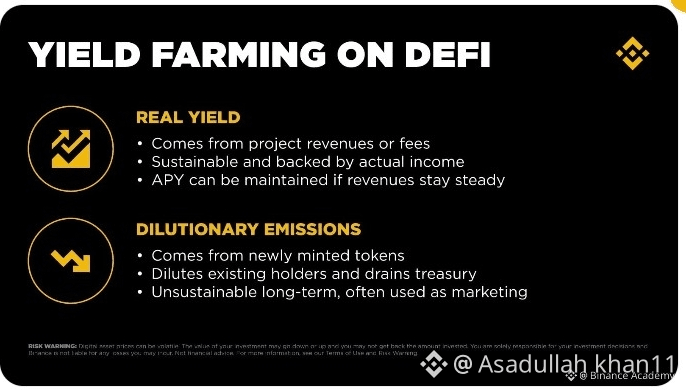
Giao dịch hợp đồng tương lai vĩnh viễn trên các sàn giao dịch phi tập trung (DEX) đã tăng 30% gần đây. Bằng cách cung cấp vốn cho các nền tảng này, người dùng nhận được phần thưởng Yield Farming dưới dạng phí giao dịch.
👉 Hiểu cơ chế tạo lợi nhuận.#DEXs $DEXE
{spot}(DEXEUSDT)
Giao dịch phi tập trung đang phát triển nhanh chóng. 📈
Giao dịch hợp đồng tương lai vĩnh viễn trên các sàn giao dịch phi tập trung (DEX) đã tăng 30% gần đây. Bằng cách cung cấp vốn cho các nền tảng này, người dùng nhận được phần thưởng Yield Farming dưới dạng phí giao dịch.
👉 Hiểu cơ chế tạo lợi nhuận.#DEXs $DEXE
Giao dịch hợp đồng tương lai vĩnh viễn trên các sàn giao dịch phi tập trung (DEX) đã tăng 30% gần đây. Bằng cách cung cấp vốn cho các nền tảng này, người dùng nhận được phần thưởng Yield Farming dưới dạng phí giao dịch.
👉 Hiểu cơ chế tạo lợi nhuận.#DEXs $DEXE
192
khi $TRUMP sẽ vượt qua $70... tôi sẽ mua chiếc xe mơ ước của mình... tôi sẽ làm điều đó sớm 🌈😁
#TrumpNFT $TRUMP
{spot}(TRUMPUSDT)
khi $TRUMP sẽ vượt qua $70... tôi sẽ mua chiếc xe mơ ước của mình... tôi sẽ làm điều đó sớm 🌈😁
#TrumpNFT $TRUMP
#TrumpNFT $TRUMP

25
·
--
Giảm giá
$SOL Nếu khu chính 106 chiếm diện tích, nếu thị trường không thể mở rộng thêm từ khu đó, giả sử 118-120 thì được. Nếu thất bại quanh 114-115 hoặc cao hơn một chút thì thị trường sẽ đi sâu xuống. $SOL
{spot}(SOLUSDT)
#SOLJumpsAbout10%
$SOL Nếu khu chính 106 chiếm diện tích, nếu thị trường không thể mở rộng thêm từ khu đó, giả sử 118-120 thì được. Nếu thất bại quanh 114-115 hoặc cao hơn một chút thì thị trường sẽ đi sâu xuống. $SOL
#SOLJumpsAbout10%
#SOLJumpsAbout10%
35
·
--
Giảm giá
$SOL
{spot}(SOLUSDT)
Cơ hội ngắn hạn nếu thị trường duy trì quanh 105.50 đến 106.50. đi ngang và đôi khi tăng nhẹ. nếu duy trì lâu như thế này thì đó là lúc kết thúc; nếu chỉ vài giờ rồi quay lại vùng 102-102, đây là nơi con bò bắt đầu. sau đó lại đẩy lên 108-111. do vị trí như bạn sẽ thấy, khung thời gian nhỏ hoàn toàn bearish, cảm giác giảm đột ngột “boom”. điều này đúng y như cấu trúc tương tự. vì vậy hãy để ý. #BOJRaisesRatesTo31YearHigh #BTCBreaks80K #shiba⚡
$SOL
Cơ hội ngắn hạn nếu thị trường duy trì quanh 105.50 đến 106.50. đi ngang và đôi khi tăng nhẹ. nếu duy trì lâu như thế này thì đó là lúc kết thúc; nếu chỉ vài giờ rồi quay lại vùng 102-102, đây là nơi con bò bắt đầu. sau đó lại đẩy lên 108-111. do vị trí như bạn sẽ thấy, khung thời gian nhỏ hoàn toàn bearish, cảm giác giảm đột ngột “boom”. điều này đúng y như cấu trúc tương tự. vì vậy hãy để ý. #BOJRaisesRatesTo31YearHigh #BTCBreaks80K #shiba⚡
Cơ hội ngắn hạn nếu thị trường duy trì quanh 105.50 đến 106.50. đi ngang và đôi khi tăng nhẹ. nếu duy trì lâu như thế này thì đó là lúc kết thúc; nếu chỉ vài giờ rồi quay lại vùng 102-102, đây là nơi con bò bắt đầu. sau đó lại đẩy lên 108-111. do vị trí như bạn sẽ thấy, khung thời gian nhỏ hoàn toàn bearish, cảm giác giảm đột ngột “boom”. điều này đúng y như cấu trúc tương tự. vì vậy hãy để ý. #BOJRaisesRatesTo31YearHigh #BTCBreaks80K #shiba⚡
45
·
--
Tăng giá
Xem bản dịch
🚨BREAKING: Solana just hit an ALL-TIME HIGH in onchain activity with 5.2 BILLION non-vote transactions in August.
That is 19% higher than July's previous record, excluding all consensus voting traffic.
Memecoin trading drove the surge, with weekly spot volume hitting $5.2 BILLION, the highest since November 2025.
$SOL #SOLJumpsAbout10% #BitcoinMarketCapTopsTesla #SOLJumpsAbout10%
🚨BREAKING: Solana just hit an ALL-TIME HIGH in onchain activity with 5.2 BILLION non-vote transactions in August.
That is 19% higher than July's previous record, excluding all consensus voting traffic.
Memecoin trading drove the surge, with weekly spot volume hitting $5.2 BILLION, the highest since November 2025.
$SOL #SOLJumpsAbout10% #BitcoinMarketCapTopsTesla #SOLJumpsAbout10%
That is 19% higher than July's previous record, excluding all consensus voting traffic.
Memecoin trading drove the surge, with weekly spot volume hitting $5.2 BILLION, the highest since November 2025.
$SOL #SOLJumpsAbout10% #BitcoinMarketCapTopsTesla #SOLJumpsAbout10%
69
Xem bản dịch
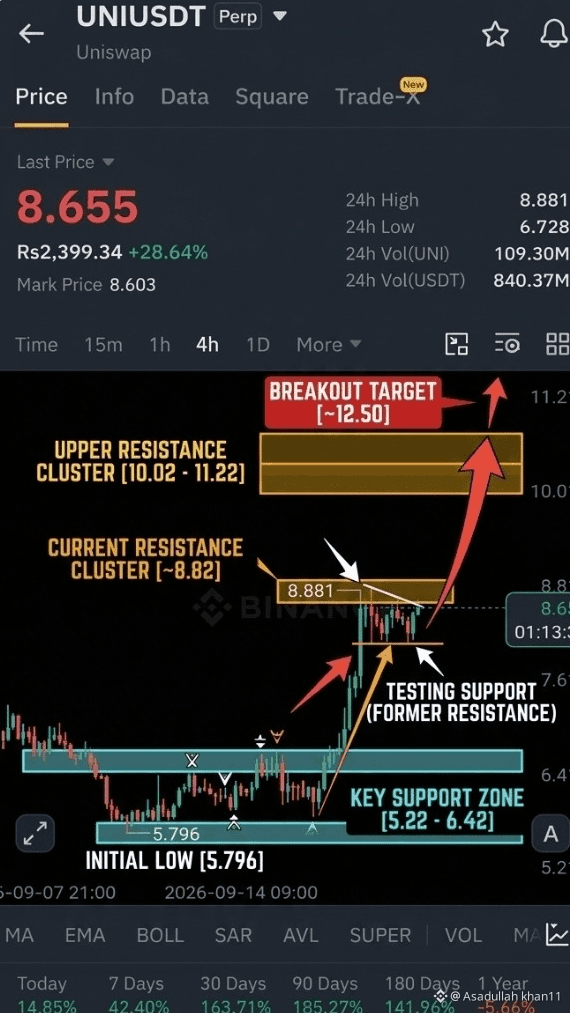
🚨 $UNI NEXT TARGET UPDATE 👀🔥
Guys… UNI just made a strong move from the $5.22–$6.42 demand zone and already pushed to $8.88. Now price is consolidating near $8.65, and this is where I’m watching the next move.
UNIUSDT
Perp
8.619
-3.32%
🔥 Entry zone: $8.00–$8.50
🚀 Breakout: $8.82+
🎯 TP1: $10.00
🎯 TP2: $11.20
🎯 TP3: $12.50
🛡️ SL: $7.60
If buyers clear $8.82 with strong volume, UNI could open the door toward the higher resistance zones.
I’m watching the breakout — are you? 👀🔥#XRPExchangeReservesHitSevenYearLow #HKCompletesFirstHKDStablecoinUseCase
🚨 $UNI NEXT TARGET UPDATE 👀🔥
Guys… UNI just made a strong move from the $5.22–$6.42 demand zone and already pushed to $8.88. Now price is consolidating near $8.65, and this is where I’m watching the next move.
UNIUSDT
Perp
8.619
-3.32%
🔥 Entry zone: $8.00–$8.50
🚀 Breakout: $8.82+
🎯 TP1: $10.00
🎯 TP2: $11.20
🎯 TP3: $12.50
🛡️ SL: $7.60
If buyers clear $8.82 with strong volume, UNI could open the door toward the higher resistance zones.
I’m watching the breakout — are you? 👀🔥#XRPExchangeReservesHitSevenYearLow #HKCompletesFirstHKDStablecoinUseCase
Guys… UNI just made a strong move from the $5.22–$6.42 demand zone and already pushed to $8.88. Now price is consolidating near $8.65, and this is where I’m watching the next move.
UNIUSDT
Perp
8.619
-3.32%
🔥 Entry zone: $8.00–$8.50
🚀 Breakout: $8.82+
🎯 TP1: $10.00
🎯 TP2: $11.20
🎯 TP3: $12.50
🛡️ SL: $7.60
If buyers clear $8.82 with strong volume, UNI could open the door toward the higher resistance zones.
I’m watching the breakout — are you? 👀🔥#XRPExchangeReservesHitSevenYearLow #HKCompletesFirstHKDStablecoinUseCase
81
Bài viết
Xem bản dịch
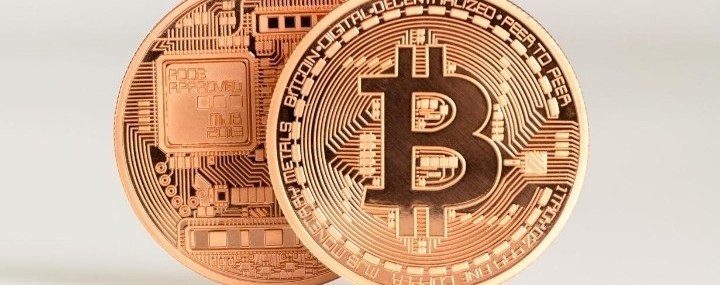
Complete Guide and Detailed Article What Is Bitcoin?1. What Is Bitcoin?
Bitcoin (BTC) is a decentralized digital currency and payment network. Unlike traditional currencies such as the U.S. dollar or Pakistani rupee, Bitcoin is not issued or controlled by a central bank. Transactions are recorded on a public blockchain, and the network is maintained by participants around the world. �
bitcoin.org +1
Bitcoin was introduced by the pseudonymous Satoshi Nakamoto. The Bitcoin whitepaper was published in 2008, and the network launched in 2009. Satoshi later left the project without publicly revealing their identity. �
bitcoin.org
2. How Does Bitcoin Work?
Bitcoin combines several technologies:
Blockchain — a public record of transactions.
Cryptography — protects transactions and ownership.
Peer-to-peer networking — computers communicate directly without a central intermediary.
Proof of Work — miners use computing power to secure the network and add blocks.
Consensus rules — network participants independently verify that transactions follow Bitcoin's rules.
When someone sends Bitcoin, the transaction is broadcast to the network. Miners collect transactions into blocks and compete to produce a valid proof of work. Once accepted, the block becomes part of the blockchain. �
bitcoin.org +1
3. What Is the Bitcoin Blockchain?
A blockchain is essentially a chronological chain of transaction blocks.
Each block contains information that connects it to the previous block. Because changing an older block would require redoing the associated proof of work and subsequent blocks, altering historical transactions becomes increasingly difficult as additional blocks are added. �
Bitcoin Developer Documentation
This gives Bitcoin an important characteristic: users do not need to rely on a single company or bank to maintain the transaction history.
4. What Is Bitcoin Mining?
Bitcoin mining is the process used to process transactions and secure the Bitcoin network.
Miners use specialized computers called ASICs to perform enormous numbers of calculations. They compete to find a valid solution to a mathematical problem. The successful miner can add a block to the blockchain and receive the applicable block reward plus transaction fees. �
bitcoin.org
Bitcoin's protocol adjusts mining difficulty so that blocks are produced, on average, approximately every 10 minutes. �
bitcoin.org
Mining therefore serves two major purposes:
Securing the network.
Issuing new bitcoins according to predetermined rules.
5. Bitcoin's 21 Million Supply Limit
One of Bitcoin's defining characteristics is its predetermined maximum supply.
The Bitcoin protocol is designed so that there will never be more than 21 million BTC. New bitcoins enter circulation through mining, but the rate of issuance decreases over time. �
GitHub +1
Bitcoin Halving
Approximately every 210,000 blocks, or roughly four years, the number of new bitcoins awarded to miners per block is cut in half. This event is known as the halving. �
GitHub
The purpose is to make Bitcoin's new supply increasingly scarce and predictable.
6. What Is a Bitcoin Wallet?
A Bitcoin wallet is software or hardware that allows a user to manage Bitcoin addresses and authorize transactions.
There are several major wallet types:
Hot Wallet
Connected to the internet.
Advantages:
Convenient
Easy for frequent transactions
Risks:
Greater exposure to online attacks
Hardware Wallet
A dedicated physical device designed to keep private keys isolated from normal internet-connected environments.
Advantages:
Strong security for long-term storage
Private keys can remain offline
Paper/Offline Backup
Information needed to recover a wallet can be stored offline, although users must protect it carefully from loss, theft, fire, or unauthorized access.
7. Private Keys and Seed Phrases
A private key is extremely important because it provides the ability to authorize Bitcoin transactions.
Many wallets use a seed phrase to recover the wallet.
The basic rule is:
Never give your seed phrase or private key to another person.
A legitimate exchange, wallet company, or support representative should not need your seed phrase to "unlock" your Bitcoin.
If somebody obtains your private keys or recovery phrase, they may be able to control the associated funds.
8. How Do People Buy Bitcoin?
People generally obtain Bitcoin through:
Cryptocurrency exchanges
Peer-to-peer marketplaces
Bitcoin ATMs in some countries
Direct transactions
Certain financial products or services
The exact availability, taxation, and legality of cryptocurrency services depend on the country.
Before purchasing, users should understand:
Trading fees
Withdrawal fees
Wallet security
Identity-verification requirements
Local regulations
Tax obligations
The possibility of losing money
9. Why Does Bitcoin Have Value?
Bitcoin's market value is determined by supply and demand.
People may value Bitcoin because of characteristics such as:
Limited programmed supply
Decentralized network
Global accessibility
Transferability
Divisibility
Resistance to changes by a single central authority
Ability to hold and transfer value without requiring a traditional bank account
However, Bitcoin does not have a guaranteed price or guaranteed return. Its market price can move substantially in either direction.
10. Bitcoin Price and Current Market Situation
Bitcoin remains a highly volatile asset.
As of September 17, 2026, CoinGecko's historical data showed Bitcoin's market capitalization at approximately $1.53 trillion, while its September 16 closing price was about $76,147. �
CoinGecko
Recent reporting also shows that Bitcoin has been responding to developments involving interest rates, regulation, institutional demand, and broader financial-market conditions. For example, Reuters reported that Bitcoin fell about 4% on September 15 after the U.S. Senate failed to advance a major cryptocurrency regulatory bill. �
Reuters
Because Bitcoin's price changes continuously, a price mentioned in an article can become outdated quickly.
11. Advantages of Bitcoin
Decentralization
Bitcoin does not depend on a single central bank or company.
Global Accessibility
Bitcoin can potentially be transferred internationally without using the traditional banking system.
Transparent Blockchain
The Bitcoin blockchain is publicly verifiable.
Limited Supply
The protocol establishes a maximum supply of 21 million BTC. �
GitHub
Divisibility
Bitcoin can be divided into very small units called satoshis.
Programmable Monetary Policy
Bitcoin's issuance schedule is determined by protocol rules rather than decisions made by a central monetary authority.
12. Risks and Disadvantages
Bitcoin also has significant risks.
Price Volatility
The price can rise or fall dramatically.
Security Responsibility
If users lose their private keys or seed phrases, recovering funds can be extremely difficult or impossible.
Scams
Cryptocurrency markets attract phishing attacks, fake investment schemes, impersonation scams and fraudulent websites.
Regulatory Uncertainty
Rules concerning Bitcoin differ between countries and can change over time.
Mining Energy Use
Bitcoin's Proof-of-Work system requires substantial computing power and therefore consumes electricity.
Irreversible Transactions
Bitcoin transactions generally cannot simply be reversed like a conventional card payment.
13. Bitcoin vs Traditional Money
Feature
Bitcoin
Traditional Currency
Central authority
No single central authority
Usually central bank/government
Physical form
Digital
Digital + physical in many countries
Supply
Protocol-defined
Monetary authorities influence supply
Transactions
Blockchain-based
Banking/payment networks
Global access
Internet-based
Depends on banking/payment access
Price stability
Highly variable
Generally more stable
Transaction reversal
Generally difficult
Often possible through institutions
Custody
Can be self-custodied
Usually bank/payment-provider custody
14. Bitcoin vs Other Cryptocurrencies
Bitcoin was the first widely implemented cryptocurrency and remains distinct from many later blockchain projects.
Other cryptocurrencies may introduce different features, such as:
Smart contracts
Faster block confirmation
Different consensus mechanisms
Stable-value tokens
Decentralized applications
Alternative monetary policies
Therefore, "cryptocurrency" and "Bitcoin" are not interchangeable terms. Bitcoin is one cryptocurrency within the broader digital-asset ecosystem.
15. Bitcoin as an Investment
Some people purchase Bitcoin as an investment or speculative asset.
Potential reasons include:
Exposure to a digital asset
Belief that adoption may increase
Interest in Bitcoin's limited supply
Portfolio diversification
Long-term speculation on demand
But Bitcoin should not be treated as a guaranteed investment.
Its historical performance does not guarantee future performance. Investors can lose part or all of their investment, particularly when using leverage or purchasing during periods of extreme price volatility.
16. Bitcoin Security Tips
If you use Bitcoin, basic security practices are extremely important:
Never share your seed phrase.
Use strong, unique passwords.
Enable two-factor authentication where available.
Verify website addresses before entering credentials.
Be suspicious of messages promising guaranteed profits.
Do not send Bitcoin to someone simply because they claim to be "support."
Consider using a hardware wallet for significant long-term holdings.
Keep secure backups of recovery information.
Test a small transaction before sending a large amount.
Understand the transaction before confirming it.
17. The Future of Bitcoin
Bitcoin's future depends on many factors, including:
User adoption
Institutional participation
Regulation
Mining economics
Network development
Competition from other digital assets
Global monetary conditions
Technological developments
Public perception
Recent market reporting shows that regulation and macroeconomic policy remain important sources of Bitcoin volatility, while institutional participation continues to be closely watched. �
Reuters +1
It is therefore more accurate to discuss Bitcoin's future in terms of possible developments and risks rather than assuming a particular future price.
18. Important Bitcoin Terms
BTC — Bitcoin's ticker symbol.
Blockchain — The distributed public ledger recording Bitcoin transactions.
Satoshi — The smallest Bitcoin unit; 1 BTC = 100,000,000 satoshis.
Wallet — Software or hardware used to manage Bitcoin keys and transactions.
Private Key — Cryptographic information used to authorize spending.
Seed Phrase — A recovery phrase used by many wallets.
Mining — The Proof-of-Work process used to secure Bitcoin and add blocks.
Miner — A participant operating mining hardware.
Block — A collection of Bitcoin transactions added to the blockchain.
Halving — The periodic reduction in the new-Bitcoin block subsidy.
Node — A computer running Bitcoin software that verifies network rules and transactions.
Exchange — A service where users can buy, sell, or trade Bitcoin and other assets.
Satoshi Nakamoto — The pseudonymous creator of Bitcoin.
Conclusion
Bitcoin represents a fundamentally different approach to digital money: instead of relying on a central institution to maintain the system and issue currency, it uses cryptography, a distributed network, blockchain technology, and Proof of Work to coordinate participants. �
bitcoin.org +1
Its 21-million-BTC supply limit, decentralized architecture, global accessibility, and transparent blockchain are among its defining characteristics. At the same time, Bitcoin carries substantial risks, particularly price volatility, security responsibilities, regulatory uncertainty, and energy consumption.
For anyone considering Bitcoin, understanding how the technology works, how wallets and private keys work, the risks involved, and the rules in their own country is more important than simply following short-term price movements.
#BitcoinSurpasses$77000 #BitcoinETFsShed$450M
Complete Guide and Detailed Article What Is Bitcoin?
1. What Is Bitcoin?
Bitcoin (BTC) is a decentralized digital currency and payment network. Unlike traditional currencies such as the U.S. dollar or Pakistani rupee, Bitcoin is not issued or controlled by a central bank. Transactions are recorded on a public blockchain, and the network is maintained by participants around the world. �
bitcoin.org +1
Bitcoin was introduced by the pseudonymous Satoshi Nakamoto. The Bitcoin whitepaper was published in 2008, and the network launched in 2009. Satoshi later left the project without publicly revealing their identity. �
bitcoin.org
2. How Does Bitcoin Work?
Bitcoin combines several technologies:
Blockchain — a public record of transactions.
Cryptography — protects transactions and ownership.
Peer-to-peer networking — computers communicate directly without a central intermediary.
Proof of Work — miners use computing power to secure the network and add blocks.
Consensus rules — network participants independently verify that transactions follow Bitcoin's rules.
When someone sends Bitcoin, the transaction is broadcast to the network. Miners collect transactions into blocks and compete to produce a valid proof of work. Once accepted, the block becomes part of the blockchain. �
bitcoin.org +1
3. What Is the Bitcoin Blockchain?
A blockchain is essentially a chronological chain of transaction blocks.
Each block contains information that connects it to the previous block. Because changing an older block would require redoing the associated proof of work and subsequent blocks, altering historical transactions becomes increasingly difficult as additional blocks are added. �
Bitcoin Developer Documentation
This gives Bitcoin an important characteristic: users do not need to rely on a single company or bank to maintain the transaction history.
4. What Is Bitcoin Mining?
Bitcoin mining is the process used to process transactions and secure the Bitcoin network.
Miners use specialized computers called ASICs to perform enormous numbers of calculations. They compete to find a valid solution to a mathematical problem. The successful miner can add a block to the blockchain and receive the applicable block reward plus transaction fees. �
bitcoin.org
Bitcoin's protocol adjusts mining difficulty so that blocks are produced, on average, approximately every 10 minutes. �
bitcoin.org
Mining therefore serves two major purposes:
Securing the network.
Issuing new bitcoins according to predetermined rules.
5. Bitcoin's 21 Million Supply Limit
One of Bitcoin's defining characteristics is its predetermined maximum supply.
The Bitcoin protocol is designed so that there will never be more than 21 million BTC. New bitcoins enter circulation through mining, but the rate of issuance decreases over time. �
GitHub +1
Bitcoin Halving
Approximately every 210,000 blocks, or roughly four years, the number of new bitcoins awarded to miners per block is cut in half. This event is known as the halving. �
GitHub
The purpose is to make Bitcoin's new supply increasingly scarce and predictable.
6. What Is a Bitcoin Wallet?
A Bitcoin wallet is software or hardware that allows a user to manage Bitcoin addresses and authorize transactions.
There are several major wallet types:
Hot Wallet
Connected to the internet.
Advantages:
Convenient
Easy for frequent transactions
Risks:
Greater exposure to online attacks
Hardware Wallet
A dedicated physical device designed to keep private keys isolated from normal internet-connected environments.
Advantages:
Strong security for long-term storage
Private keys can remain offline
Paper/Offline Backup
Information needed to recover a wallet can be stored offline, although users must protect it carefully from loss, theft, fire, or unauthorized access.
7. Private Keys and Seed Phrases
A private key is extremely important because it provides the ability to authorize Bitcoin transactions.
Many wallets use a seed phrase to recover the wallet.
The basic rule is:
Never give your seed phrase or private key to another person.
A legitimate exchange, wallet company, or support representative should not need your seed phrase to "unlock" your Bitcoin.
If somebody obtains your private keys or recovery phrase, they may be able to control the associated funds.
8. How Do People Buy Bitcoin?
People generally obtain Bitcoin through:
Cryptocurrency exchanges
Peer-to-peer marketplaces
Bitcoin ATMs in some countries
Direct transactions
Certain financial products or services
The exact availability, taxation, and legality of cryptocurrency services depend on the country.
Before purchasing, users should understand:
Trading fees
Withdrawal fees
Wallet security
Identity-verification requirements
Local regulations
Tax obligations
The possibility of losing money
9. Why Does Bitcoin Have Value?
Bitcoin's market value is determined by supply and demand.
People may value Bitcoin because of characteristics such as:
Limited programmed supply
Decentralized network
Global accessibility
Transferability
Divisibility
Resistance to changes by a single central authority
Ability to hold and transfer value without requiring a traditional bank account
However, Bitcoin does not have a guaranteed price or guaranteed return. Its market price can move substantially in either direction.
10. Bitcoin Price and Current Market Situation
Bitcoin remains a highly volatile asset.
As of September 17, 2026, CoinGecko's historical data showed Bitcoin's market capitalization at approximately $1.53 trillion, while its September 16 closing price was about $76,147. �
CoinGecko
Recent reporting also shows that Bitcoin has been responding to developments involving interest rates, regulation, institutional demand, and broader financial-market conditions. For example, Reuters reported that Bitcoin fell about 4% on September 15 after the U.S. Senate failed to advance a major cryptocurrency regulatory bill. �
Reuters
Because Bitcoin's price changes continuously, a price mentioned in an article can become outdated quickly.
11. Advantages of Bitcoin
Decentralization
Bitcoin does not depend on a single central bank or company.
Global Accessibility
Bitcoin can potentially be transferred internationally without using the traditional banking system.
Transparent Blockchain
The Bitcoin blockchain is publicly verifiable.
Limited Supply
The protocol establishes a maximum supply of 21 million BTC. �
GitHub
Divisibility
Bitcoin can be divided into very small units called satoshis.
Programmable Monetary Policy
Bitcoin's issuance schedule is determined by protocol rules rather than decisions made by a central monetary authority.
12. Risks and Disadvantages
Bitcoin also has significant risks.
Price Volatility
The price can rise or fall dramatically.
Security Responsibility
If users lose their private keys or seed phrases, recovering funds can be extremely difficult or impossible.
Scams
Cryptocurrency markets attract phishing attacks, fake investment schemes, impersonation scams and fraudulent websites.
Regulatory Uncertainty
Rules concerning Bitcoin differ between countries and can change over time.
Mining Energy Use
Bitcoin's Proof-of-Work system requires substantial computing power and therefore consumes electricity.
Irreversible Transactions
Bitcoin transactions generally cannot simply be reversed like a conventional card payment.
13. Bitcoin vs Traditional Money
Feature
Bitcoin
Traditional Currency
Central authority
No single central authority
Usually central bank/government
Physical form
Digital
Digital + physical in many countries
Supply
Protocol-defined
Monetary authorities influence supply
Transactions
Blockchain-based
Banking/payment networks
Global access
Internet-based
Depends on banking/payment access
Price stability
Highly variable
Generally more stable
Transaction reversal
Generally difficult
Often possible through institutions
Custody
Can be self-custodied
Usually bank/payment-provider custody
14. Bitcoin vs Other Cryptocurrencies
Bitcoin was the first widely implemented cryptocurrency and remains distinct from many later blockchain projects.
Other cryptocurrencies may introduce different features, such as:
Smart contracts
Faster block confirmation
Different consensus mechanisms
Stable-value tokens
Decentralized applications
Alternative monetary policies
Therefore, "cryptocurrency" and "Bitcoin" are not interchangeable terms. Bitcoin is one cryptocurrency within the broader digital-asset ecosystem.
15. Bitcoin as an Investment
Some people purchase Bitcoin as an investment or speculative asset.
Potential reasons include:
Exposure to a digital asset
Belief that adoption may increase
Interest in Bitcoin's limited supply
Portfolio diversification
Long-term speculation on demand
But Bitcoin should not be treated as a guaranteed investment.
Its historical performance does not guarantee future performance. Investors can lose part or all of their investment, particularly when using leverage or purchasing during periods of extreme price volatility.
16. Bitcoin Security Tips
If you use Bitcoin, basic security practices are extremely important:
Never share your seed phrase.
Use strong, unique passwords.
Enable two-factor authentication where available.
Verify website addresses before entering credentials.
Be suspicious of messages promising guaranteed profits.
Do not send Bitcoin to someone simply because they claim to be "support."
Consider using a hardware wallet for significant long-term holdings.
Keep secure backups of recovery information.
Test a small transaction before sending a large amount.
Understand the transaction before confirming it.
17. The Future of Bitcoin
Bitcoin's future depends on many factors, including:
User adoption
Institutional participation
Regulation
Mining economics
Network development
Competition from other digital assets
Global monetary conditions
Technological developments
Public perception
Recent market reporting shows that regulation and macroeconomic policy remain important sources of Bitcoin volatility, while institutional participation continues to be closely watched. �
Reuters +1
It is therefore more accurate to discuss Bitcoin's future in terms of possible developments and risks rather than assuming a particular future price.
18. Important Bitcoin Terms
BTC — Bitcoin's ticker symbol.
Blockchain — The distributed public ledger recording Bitcoin transactions.
Satoshi — The smallest Bitcoin unit; 1 BTC = 100,000,000 satoshis.
Wallet — Software or hardware used to manage Bitcoin keys and transactions.
Private Key — Cryptographic information used to authorize spending.
Seed Phrase — A recovery phrase used by many wallets.
Mining — The Proof-of-Work process used to secure Bitcoin and add blocks.
Miner — A participant operating mining hardware.
Block — A collection of Bitcoin transactions added to the blockchain.
Halving — The periodic reduction in the new-Bitcoin block subsidy.
Node — A computer running Bitcoin software that verifies network rules and transactions.
Exchange — A service where users can buy, sell, or trade Bitcoin and other assets.
Satoshi Nakamoto — The pseudonymous creator of Bitcoin.
Conclusion
Bitcoin represents a fundamentally different approach to digital money: instead of relying on a central institution to maintain the system and issue currency, it uses cryptography, a distributed network, blockchain technology, and Proof of Work to coordinate participants. �
bitcoin.org +1
Its 21-million-BTC supply limit, decentralized architecture, global accessibility, and transparent blockchain are among its defining characteristics. At the same time, Bitcoin carries substantial risks, particularly price volatility, security responsibilities, regulatory uncertainty, and energy consumption.
For anyone considering Bitcoin, understanding how the technology works, how wallets and private keys work, the risks involved, and the rules in their own country is more important than simply following short-term price movements.
#BitcoinSurpasses$77000 #BitcoinETFsShed$450M
Bitcoin (BTC) is a decentralized digital currency and payment network. Unlike traditional currencies such as the U.S. dollar or Pakistani rupee, Bitcoin is not issued or controlled by a central bank. Transactions are recorded on a public blockchain, and the network is maintained by participants around the world. �
bitcoin.org +1
Bitcoin was introduced by the pseudonymous Satoshi Nakamoto. The Bitcoin whitepaper was published in 2008, and the network launched in 2009. Satoshi later left the project without publicly revealing their identity. �
bitcoin.org
2. How Does Bitcoin Work?
Bitcoin combines several technologies:
Blockchain — a public record of transactions.
Cryptography — protects transactions and ownership.
Peer-to-peer networking — computers communicate directly without a central intermediary.
Proof of Work — miners use computing power to secure the network and add blocks.
Consensus rules — network participants independently verify that transactions follow Bitcoin's rules.
When someone sends Bitcoin, the transaction is broadcast to the network. Miners collect transactions into blocks and compete to produce a valid proof of work. Once accepted, the block becomes part of the blockchain. �
bitcoin.org +1
3. What Is the Bitcoin Blockchain?
A blockchain is essentially a chronological chain of transaction blocks.
Each block contains information that connects it to the previous block. Because changing an older block would require redoing the associated proof of work and subsequent blocks, altering historical transactions becomes increasingly difficult as additional blocks are added. �
Bitcoin Developer Documentation
This gives Bitcoin an important characteristic: users do not need to rely on a single company or bank to maintain the transaction history.
4. What Is Bitcoin Mining?
Bitcoin mining is the process used to process transactions and secure the Bitcoin network.
Miners use specialized computers called ASICs to perform enormous numbers of calculations. They compete to find a valid solution to a mathematical problem. The successful miner can add a block to the blockchain and receive the applicable block reward plus transaction fees. �
bitcoin.org
Bitcoin's protocol adjusts mining difficulty so that blocks are produced, on average, approximately every 10 minutes. �
bitcoin.org
Mining therefore serves two major purposes:
Securing the network.
Issuing new bitcoins according to predetermined rules.
5. Bitcoin's 21 Million Supply Limit
One of Bitcoin's defining characteristics is its predetermined maximum supply.
The Bitcoin protocol is designed so that there will never be more than 21 million BTC. New bitcoins enter circulation through mining, but the rate of issuance decreases over time. �
GitHub +1
Bitcoin Halving
Approximately every 210,000 blocks, or roughly four years, the number of new bitcoins awarded to miners per block is cut in half. This event is known as the halving. �
GitHub
The purpose is to make Bitcoin's new supply increasingly scarce and predictable.
6. What Is a Bitcoin Wallet?
A Bitcoin wallet is software or hardware that allows a user to manage Bitcoin addresses and authorize transactions.
There are several major wallet types:
Hot Wallet
Connected to the internet.
Advantages:
Convenient
Easy for frequent transactions
Risks:
Greater exposure to online attacks
Hardware Wallet
A dedicated physical device designed to keep private keys isolated from normal internet-connected environments.
Advantages:
Strong security for long-term storage
Private keys can remain offline
Paper/Offline Backup
Information needed to recover a wallet can be stored offline, although users must protect it carefully from loss, theft, fire, or unauthorized access.
7. Private Keys and Seed Phrases
A private key is extremely important because it provides the ability to authorize Bitcoin transactions.
Many wallets use a seed phrase to recover the wallet.
The basic rule is:
Never give your seed phrase or private key to another person.
A legitimate exchange, wallet company, or support representative should not need your seed phrase to "unlock" your Bitcoin.
If somebody obtains your private keys or recovery phrase, they may be able to control the associated funds.
8. How Do People Buy Bitcoin?
People generally obtain Bitcoin through:
Cryptocurrency exchanges
Peer-to-peer marketplaces
Bitcoin ATMs in some countries
Direct transactions
Certain financial products or services
The exact availability, taxation, and legality of cryptocurrency services depend on the country.
Before purchasing, users should understand:
Trading fees
Withdrawal fees
Wallet security
Identity-verification requirements
Local regulations
Tax obligations
The possibility of losing money
9. Why Does Bitcoin Have Value?
Bitcoin's market value is determined by supply and demand.
People may value Bitcoin because of characteristics such as:
Limited programmed supply
Decentralized network
Global accessibility
Transferability
Divisibility
Resistance to changes by a single central authority
Ability to hold and transfer value without requiring a traditional bank account
However, Bitcoin does not have a guaranteed price or guaranteed return. Its market price can move substantially in either direction.
10. Bitcoin Price and Current Market Situation
Bitcoin remains a highly volatile asset.
As of September 17, 2026, CoinGecko's historical data showed Bitcoin's market capitalization at approximately $1.53 trillion, while its September 16 closing price was about $76,147. �
CoinGecko
Recent reporting also shows that Bitcoin has been responding to developments involving interest rates, regulation, institutional demand, and broader financial-market conditions. For example, Reuters reported that Bitcoin fell about 4% on September 15 after the U.S. Senate failed to advance a major cryptocurrency regulatory bill. �
Reuters
Because Bitcoin's price changes continuously, a price mentioned in an article can become outdated quickly.
11. Advantages of Bitcoin
Decentralization
Bitcoin does not depend on a single central bank or company.
Global Accessibility
Bitcoin can potentially be transferred internationally without using the traditional banking system.
Transparent Blockchain
The Bitcoin blockchain is publicly verifiable.
Limited Supply
The protocol establishes a maximum supply of 21 million BTC. �
GitHub
Divisibility
Bitcoin can be divided into very small units called satoshis.
Programmable Monetary Policy
Bitcoin's issuance schedule is determined by protocol rules rather than decisions made by a central monetary authority.
12. Risks and Disadvantages
Bitcoin also has significant risks.
Price Volatility
The price can rise or fall dramatically.
Security Responsibility
If users lose their private keys or seed phrases, recovering funds can be extremely difficult or impossible.
Scams
Cryptocurrency markets attract phishing attacks, fake investment schemes, impersonation scams and fraudulent websites.
Regulatory Uncertainty
Rules concerning Bitcoin differ between countries and can change over time.
Mining Energy Use
Bitcoin's Proof-of-Work system requires substantial computing power and therefore consumes electricity.
Irreversible Transactions
Bitcoin transactions generally cannot simply be reversed like a conventional card payment.
13. Bitcoin vs Traditional Money
Feature
Bitcoin
Traditional Currency
Central authority
No single central authority
Usually central bank/government
Physical form
Digital
Digital + physical in many countries
Supply
Protocol-defined
Monetary authorities influence supply
Transactions
Blockchain-based
Banking/payment networks
Global access
Internet-based
Depends on banking/payment access
Price stability
Highly variable
Generally more stable
Transaction reversal
Generally difficult
Often possible through institutions
Custody
Can be self-custodied
Usually bank/payment-provider custody
14. Bitcoin vs Other Cryptocurrencies
Bitcoin was the first widely implemented cryptocurrency and remains distinct from many later blockchain projects.
Other cryptocurrencies may introduce different features, such as:
Smart contracts
Faster block confirmation
Different consensus mechanisms
Stable-value tokens
Decentralized applications
Alternative monetary policies
Therefore, "cryptocurrency" and "Bitcoin" are not interchangeable terms. Bitcoin is one cryptocurrency within the broader digital-asset ecosystem.
15. Bitcoin as an Investment
Some people purchase Bitcoin as an investment or speculative asset.
Potential reasons include:
Exposure to a digital asset
Belief that adoption may increase
Interest in Bitcoin's limited supply
Portfolio diversification
Long-term speculation on demand
But Bitcoin should not be treated as a guaranteed investment.
Its historical performance does not guarantee future performance. Investors can lose part or all of their investment, particularly when using leverage or purchasing during periods of extreme price volatility.
16. Bitcoin Security Tips
If you use Bitcoin, basic security practices are extremely important:
Never share your seed phrase.
Use strong, unique passwords.
Enable two-factor authentication where available.
Verify website addresses before entering credentials.
Be suspicious of messages promising guaranteed profits.
Do not send Bitcoin to someone simply because they claim to be "support."
Consider using a hardware wallet for significant long-term holdings.
Keep secure backups of recovery information.
Test a small transaction before sending a large amount.
Understand the transaction before confirming it.
17. The Future of Bitcoin
Bitcoin's future depends on many factors, including:
User adoption
Institutional participation
Regulation
Mining economics
Network development
Competition from other digital assets
Global monetary conditions
Technological developments
Public perception
Recent market reporting shows that regulation and macroeconomic policy remain important sources of Bitcoin volatility, while institutional participation continues to be closely watched. �
Reuters +1
It is therefore more accurate to discuss Bitcoin's future in terms of possible developments and risks rather than assuming a particular future price.
18. Important Bitcoin Terms
BTC — Bitcoin's ticker symbol.
Blockchain — The distributed public ledger recording Bitcoin transactions.
Satoshi — The smallest Bitcoin unit; 1 BTC = 100,000,000 satoshis.
Wallet — Software or hardware used to manage Bitcoin keys and transactions.
Private Key — Cryptographic information used to authorize spending.
Seed Phrase — A recovery phrase used by many wallets.
Mining — The Proof-of-Work process used to secure Bitcoin and add blocks.
Miner — A participant operating mining hardware.
Block — A collection of Bitcoin transactions added to the blockchain.
Halving — The periodic reduction in the new-Bitcoin block subsidy.
Node — A computer running Bitcoin software that verifies network rules and transactions.
Exchange — A service where users can buy, sell, or trade Bitcoin and other assets.
Satoshi Nakamoto — The pseudonymous creator of Bitcoin.
Conclusion
Bitcoin represents a fundamentally different approach to digital money: instead of relying on a central institution to maintain the system and issue currency, it uses cryptography, a distributed network, blockchain technology, and Proof of Work to coordinate participants. �
bitcoin.org +1
Its 21-million-BTC supply limit, decentralized architecture, global accessibility, and transparent blockchain are among its defining characteristics. At the same time, Bitcoin carries substantial risks, particularly price volatility, security responsibilities, regulatory uncertainty, and energy consumption.
For anyone considering Bitcoin, understanding how the technology works, how wallets and private keys work, the risks involved, and the rules in their own country is more important than simply following short-term price movements.
#BitcoinSurpasses$77000 #BitcoinETFsShed$450M
114
Đăng nhập để khám phá thêm nội dung
Tham gia cùng người dùng tiền mã hóa toàn cầu trên Binance Square
⚡️ Nhận thông tin mới nhất và hữu ích về tiền mã hóa.
💬 Được tin cậy bởi sàn giao dịch tiền mã hóa lớn nhất thế giới.
👍 Khám phá những thông tin chuyên sâu thực tế từ những nhà sáng tạo đã xác minh.
Email / Số điện thoại
Chủ đề thịnh hành
45NgayTuDoTaiChinh
936,452 lượt xem
3,252 đang thảo luận
Ngày 6/45: DCA là thói quen, không phải canh bạc
Chào bạn, hôm nay là ngày 6 trong hành trình 45 ngày của mình. Bitcoin hôm nay tăng hơn 1.8%, một ngày khá dễ chịu sau những biến động vừa qua.
Như mọi ngày, mình vẫn đều đặn bỏ 50u để mua thêm Bitcoin. Cứ thế, bất kể thị trường xanh hay đỏ, việc này giờ đây giống như một thói quen ăn uống, tập thể dục vậy. Nó không còn là một quyết định cân nhắc quá nhiều, hay một pha ‘đánh bạc’ hy vọng thắng lớn nữa.
Mình nghĩ, chính việc coi DCA như một phần của lối sống, một thói quen tự chủ tài chính lành mạnh, đã giúp mình giữ được sự bình tĩnh. Không còn cảm giác FOMO khi giá lên hay hoảng loạn khi giá xuống. Mình chỉ đơn giản là đang vun đắp cho một tương lai dài hạn.
Bạn thì sao? Bạn đã xây dựng được thói quen kỷ luật nào cho mình chưa?
Thông tin tham khảo, không phải lời khuyên đầu tư. DYOR.
#45ngaytudotaichinh #AIStocksWhatNext $BTC
HotLike Team
·1 lượt thích
·289 lượt xem
TheoDõiFOMC
98,846 lượt xem
588 đang thảo luận
TinFed
83,524 lượt xem
395 đang thảo luận