$ARC scored 90/100 on the quick public-risk scan.
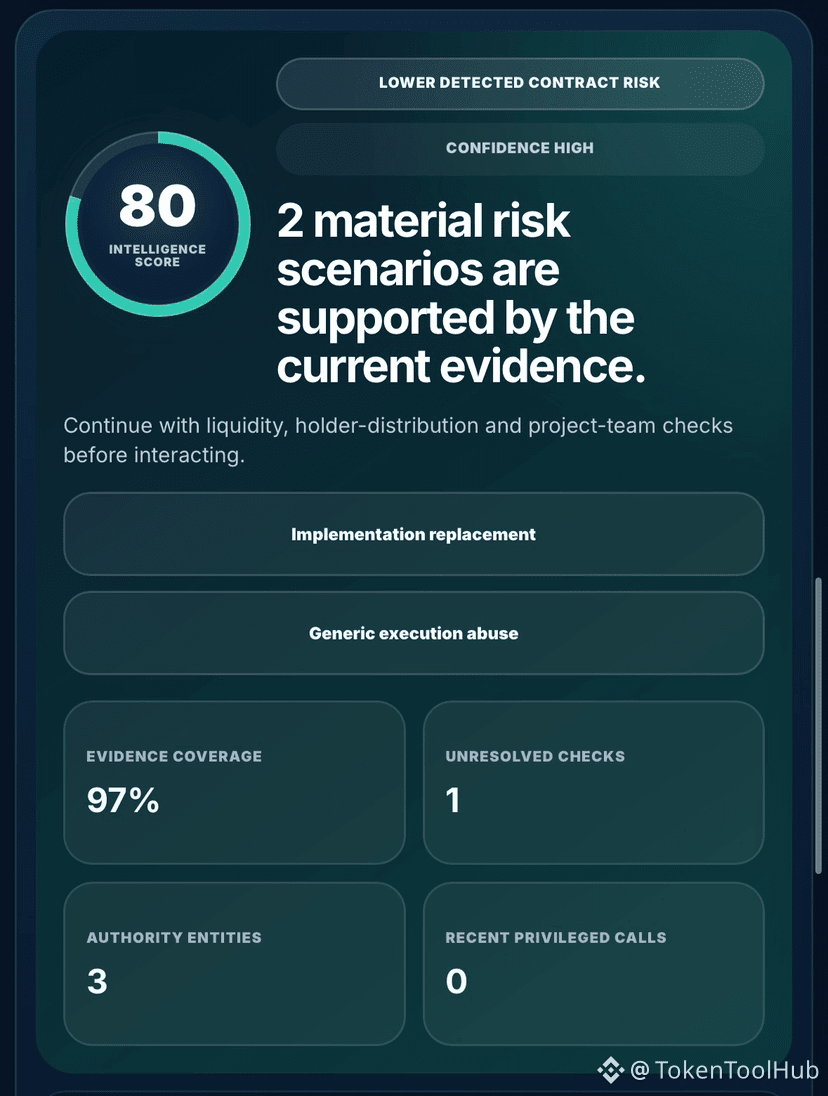
Deeper TokenToolHub contract intelligence returned 80/100.
Contract:
0x672fdBA7055bddFa8fD6bD45B1455cE5eB97f499
Network: Ethereum
Key findings:
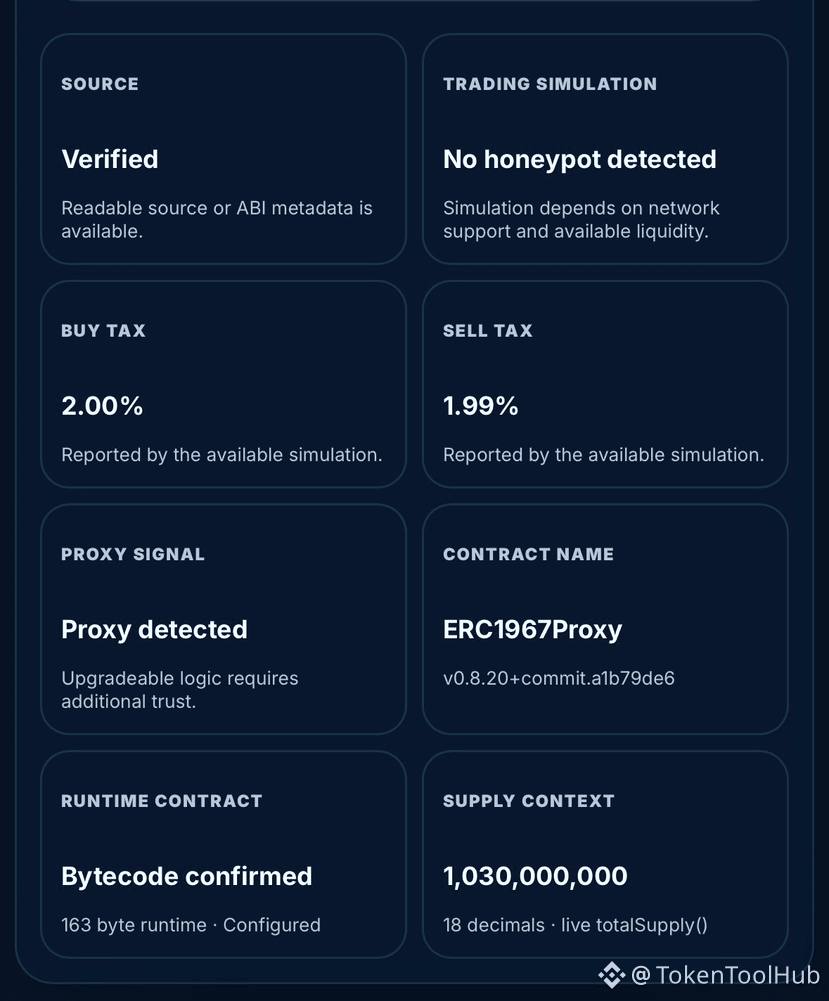
• Source verified
• Honeypot: Not detected
• Buy tax: 2.00%
• Sell tax: 1.99%
• Proxy: Detected
• Current supply: 1.03B $ARC
• Supply expansion: Not detected
• Mutable fees/taxes: Not detected
• Trading switches: Not detected
• Wallet restrictions: Not detected
• Transaction/wallet limits: Not detected
• Emergency pause: Not detected
• Asset recovery: Not detected
• Upgrade authority: Present
• Generic external execution: Present
Two material risk scenarios were identified:
• Possible implementation replacement
• Possible generic execution abuse
The main issue is the upgrade model.
Resolved implementation:
0x1deb6130be7ea1be68712c3a64bc9d98c31c3638
The proxy administrator was not resolved.
That means the contract logic can potentially be replaced, while the authority controlling that process remains unconfirmed.
Generic external execution adds another trust assumption because privileged call or delegate-call paths may expand what the contract can execute depending on authorization and target restrictions.
The rest of the available control surface is comparatively clean.
No mint-like capability was detected.
No mutable fee-setting path was detected.
No trading switch, blacklist, wallet-limit or emergency-pause control was detected.
Recent activity showed:
• 24 contract transactions
• 16 unique callers
• 60 token transfers
• 0 failed transactions
• 0 recognized privileged calls
• 0 recent mint events
• 0 recent burn events
So the main question is not current token mechanics.
It is who controls the upgrade path and how securely that authority is governed.
Full $ARC scan:
https://tokentoolhub.com/token-safety-checker/?net=eth&address=0x672fdBA7055bddFa8fD6bD45B1455cE5eB97f499
#Ethereum #crypto #Web3 #blockchain #CryptoSecurity
Deeper TokenToolHub contract intelligence returned 80/100.
Contract:
0x672fdBA7055bddFa8fD6bD45B1455cE5eB97f499
Network: Ethereum
Key findings:
• Source verified
• Honeypot: Not detected
• Buy tax: 2.00%
• Sell tax: 1.99%
• Proxy: Detected
• Current supply: 1.03B $ARC
• Supply expansion: Not detected
• Mutable fees/taxes: Not detected
• Trading switches: Not detected
• Wallet restrictions: Not detected
• Transaction/wallet limits: Not detected
• Emergency pause: Not detected
• Asset recovery: Not detected
• Upgrade authority: Present
• Generic external execution: Present
Two material risk scenarios were identified:
• Possible implementation replacement
• Possible generic execution abuse
The main issue is the upgrade model.
Resolved implementation:
0x1deb6130be7ea1be68712c3a64bc9d98c31c3638
The proxy administrator was not resolved.
That means the contract logic can potentially be replaced, while the authority controlling that process remains unconfirmed.
Generic external execution adds another trust assumption because privileged call or delegate-call paths may expand what the contract can execute depending on authorization and target restrictions.
The rest of the available control surface is comparatively clean.
No mint-like capability was detected.
No mutable fee-setting path was detected.
No trading switch, blacklist, wallet-limit or emergency-pause control was detected.
Recent activity showed:
• 24 contract transactions
• 16 unique callers
• 60 token transfers
• 0 failed transactions
• 0 recognized privileged calls
• 0 recent mint events
• 0 recent burn events
So the main question is not current token mechanics.
It is who controls the upgrade path and how securely that authority is governed.
Full $ARC scan:
https://tokentoolhub.com/token-safety-checker/?net=eth&address=0x672fdBA7055bddFa8fD6bD45B1455cE5eB97f499
#Ethereum #crypto #Web3 #blockchain #CryptoSecurity