
Bitcoin đạt mốc 80.000 USD nhưng không thể khôi phục $BTC phần thưởng kho bạc tại Strategy, Twenty One Capital hoặc Metaplanet
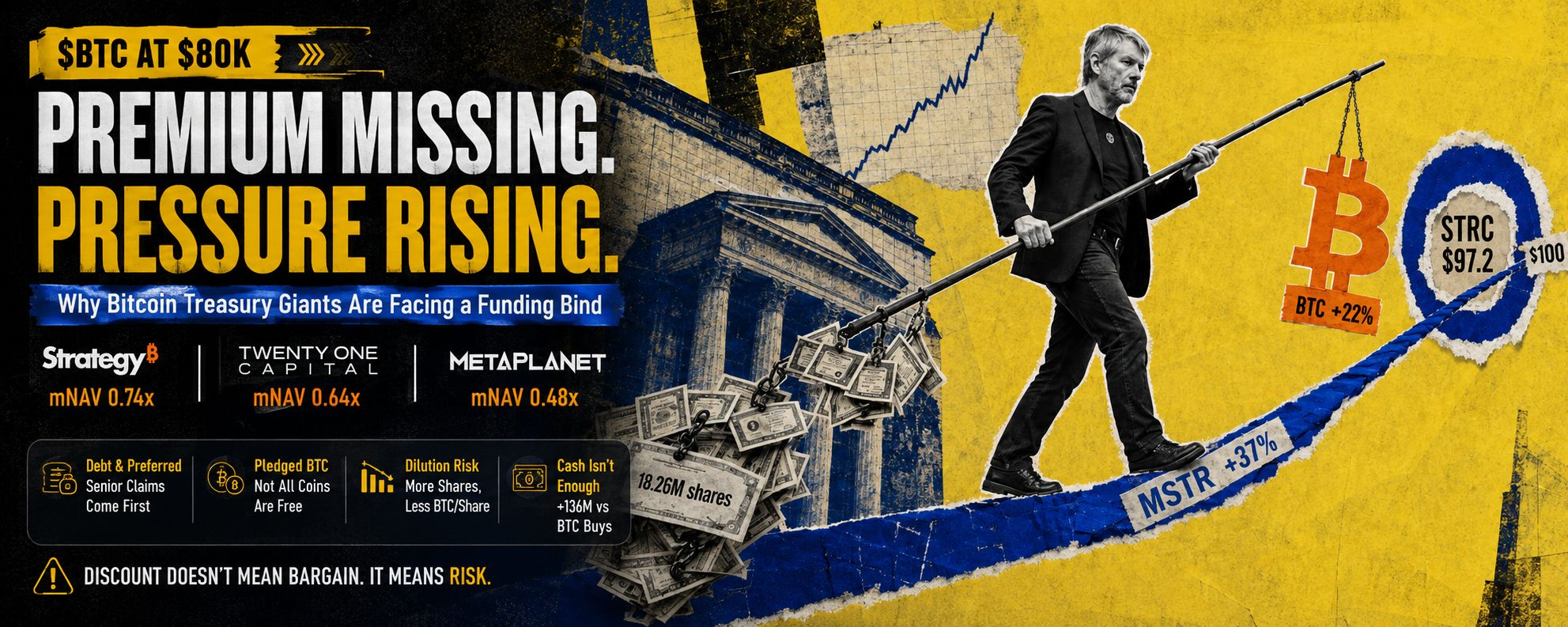
Strategy, Twenty One Capital và Metaplanet vẫn đang đối mặt với “khoảng trống” về vốn khi chiết khấu cổ phần phổ thông va chạm với nợ, các đồng tiền được thế chấp và sự pha loãng.
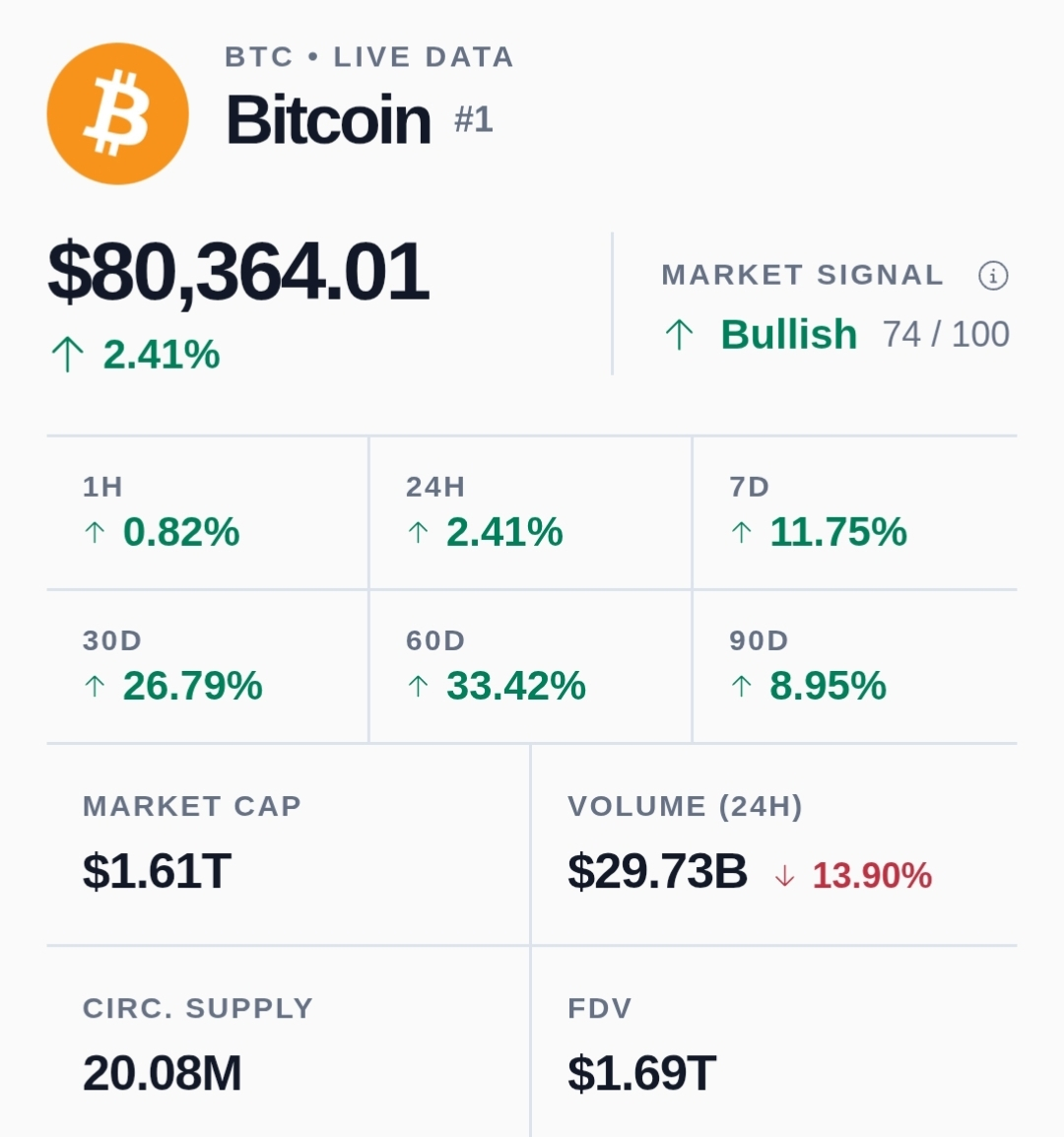
Giá Bitcoin đang giao dịch quanh 78.900 USD, đủ gần mức 80.000 USD để hồi sinh bản “chiêu” cũ liên quan đến công ty kho bạc trên giấy tờ: Bitcoin cao hơn sẽ kéo giá trị các khoản nắm giữ của doanh nghiệp lên, đưa cổ phiếu quay lại trên giá trị tài sản ròng, và mở lại việc phát hành cổ phiếu phổ thông như một nguồn cung cấp đồng xu mới.
Chuỗi hành động đó không “hoàn lại”. Ở Strategy, Twenty One Capital và Metaplanet—ba công ty niêm yết được xây dựng xoay quanh kho bạc Bitcoin của doanh nghiệp—thì vốn hóa thị trường phổ thông vẫn luôn thấp hơn đáng kể so với giá trị Bitcoin gộp trong các khoản nắm giữ được báo cáo. Tuy vậy, mức chiết khấu nhìn thấy được không đồng đều, và nó không tương đương với Bitcoin có thể được mua lại trực tiếp với giá rẻ. Nợ, cổ phiếu ưu đãi, các đồng tiền đã cầm cố, số dư tiền mặt, warrant và các quy ước tính số lượng cổ phiếu khác nhau đều thay đổi phần giá trị còn lại cho cổ đông phổ thông.
Kết quả là một bài toán huy động vốn, không chỉ là một câu đố định giá. Nếu cổ phiếu phổ thông không còn giao dịch ở mức premium đáng tin cậy, việc phát hành nó có thể làm loãng Bitcoin trên mỗi cổ phiếu. Nợ và cổ phiếu ưu đãi tránh pha loãng ngay lập tức đối với cổ đông phổ thông, nhưng lại dồn giá trị và rủi ro sang các yêu sách cấp cao hơn. Tiền mặt hoạt động giữ lại là con đường tái diễn duy nhất vừa không thêm gì—nhưng việc tạo tiền mặt mà Metaplanet đã công bố lại hoàn toàn không ở quy mô tương xứng với mức mua Bitcoin gần đây của họ.
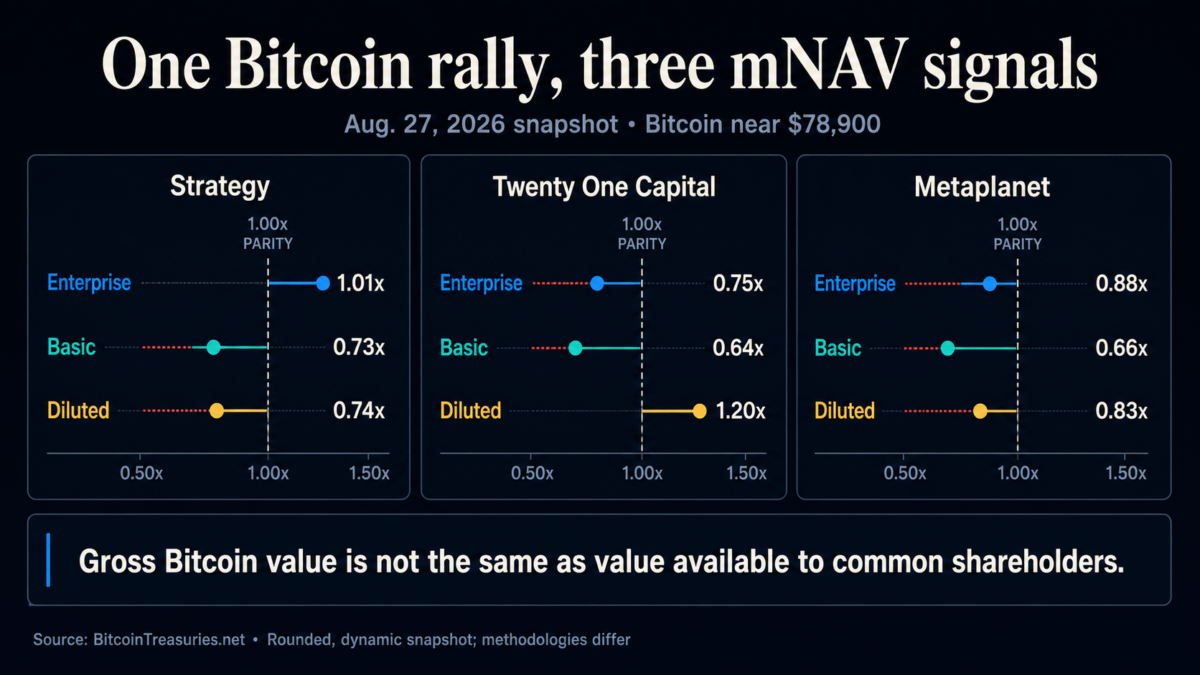
Ảnh chụp ngày 27/8 của BitcoinTreasuries định giá Bitcoin ở khoảng 78.900 USD và đưa ra so sánh làm tròn như sau. Các số liệu này là một ảnh chụp phân tích trong cùng ngày, không phải một lần đóng cửa thị trường đồng bộ hoàn hảo: các báo giá qua đêm của Mỹ và một báo giá Tokyo bị trễ được quan sát ở các thời điểm khác nhau, và bộ dữ liệu hiển thị ngày nắm giữ khác nhau cho các công ty.
Những tỷ lệ đó không thể thay thế cho nhau. mNAV cơ bản so sánh vốn hóa thị trường chung cơ bản với giá trị Bitcoin gộp. mNAV pha loãng mở rộng mẫu số của cổ phần. mNAV doanh nghiệp cộng nợ và cổ phiếu ưu đãi, rồi trừ tiền mặt trước khi so sánh giá trị doanh nghiệp với “đống” Bitcoin.
Đó là lý do tại sao “vốn hóa thị trường thấp hơn giá trị Bitcoin” là một nhận định chưa đầy đủ. Một cổ phiếu là quyền lợi còn lại trong một công ty, không phải là tấm vé rút tiền mặt tương ứng với số coin của công ty. Cổ đông phổ thông đứng sau chủ nợ và nhà đầu tư ưu đãi, phải gánh chịu việc pha loãng trong tương lai, và vẫn chịu rủi ro từ chi phí vận hành, thuế, các quyết định quản trị và các hạn chế đối với tài sản. Sự bất đồng ngay trong bảng dữ liệu là một cảnh báo: Twenty One giao dịch ở 0,64x theo mNAV cơ bản, nhưng 1,20x theo thước đo đã pha loãng của bộ dữ liệu.
Giao dịch bán 2 tỷ USD của Strategy đã mua tính thanh khoản, không phải mua Bitcoin
Strategy đưa ra bài kiểm tra rõ ràng nhất cho “cỗ máy xoay vốn cổ phần” cũ, vì giá trị doanh nghiệp của họ đã trở lại xấp xỉ ngang bằng với giá trị Bitcoin gộp, trong khi cả hai thước đo vốn chủ sở hữu phổ thông đều quanh mức 0,74x.
Tuy vậy, công ty vẫn bán 18,26 triệu cổ phiếu MSTR từ ngày 17/8 đến 23/8 với 2,0065 tỷ USD tiền thu ròng. Hồ sơ công bố ngày 24/8 của họ cho biết không có giao dịch mua Bitcoin trong tuần. Thay vào đó, Strategy phân bổ 136,4 triệu USD để mua lại cổ phiếu ưu đãi STRC, 300 triệu USD cho USD Reserve và phần còn lại cho USD Cash.
Đến ngày 23/8, Strategy báo cáo có 840.447 BTC, 5,10 tỷ USD USD Reserve và 1,59 tỷ USD USD Cash. Các con số tiền mặt bao gồm khoản tiền thu dự kiến từ các cổ phiếu đã bán nhưng chưa được thanh toán xong.
Lựa chọn đó quan trọng. Việc phát hành thêm cổ phiếu phổ thông không tự động làm tăng Bitcoin trên mỗi cổ phiếu của MSTR; nó củng cố thanh khoản và quản lý một chứng khoán cấp cao hơn. Hồ sơ quý 2 của Strategy cho thấy khoảng 6,75 tỷ USD nợ gốc, giá trị ghi sổ gần 6,71 tỷ USD. Khung tín dụng kỹ thuật số của họ ước tính khoảng 1,76 tỷ USD cổ tức ưu đãi và chi phí lãi nợ cộng lại hằng năm.
Khoản reserve giúp giảm áp lực ngắn hạn để tài trợ cho các nghĩa vụ đó từ việc bán Bitcoin, nhưng cũng giải thích vì sao các nhà đầu tư phổ thông không sở hữu “đống coin” gộp hoàn toàn không bị ràng buộc bởi các yêu sách. Strategy vẫn có thể bán cổ phiếu cho mục đích doanh nghiệp khi cổ phiếu phản ánh ở mức thấp hơn giá trị Bitcoin gộp. Nhưng tại mức giá đó, họ không thể giả định rằng mọi đô la huy động rồi chuyển thành Bitcoin đều sẽ làm tăng giá trị Bitcoin trên mỗi cổ phiếu phổ thông cũ.
Chỉ riêng việc phát hành thêm cổ phiếu phổ thông chỉ làm tăng Bitcoin trên mỗi cổ phiếu khi số đồng Bitcoin mua được trên mỗi cổ phiếu mới phát hành vượt quá tỷ lệ trước phát hành. Phí, tiền mặt giữ lại cho các nghĩa vụ và sự khác biệt giữa số cổ phiếu theo mốc cơ bản và theo mốc pha loãng đều làm tăng ngưỡng này.
Twenty One Capital có cấu trúc vốn khác. Họ báo cáo 43.514 BTC vào ngày 30/6 và 346,8 triệu cổ phiếu hạng A, bên cạnh 215,7 triệu cổ phiếu hạng B. mNAV cơ bản của họ thấp sâu dưới 1x trong ảnh chụp ngày 27/8, trong khi mNAV pha loãng lại cao hơn 1x.
#BTC走势分析 #BTC #Binance #crypto #BinanceSquareFamily