
KeyosS
576 Postlar
KeyosS
Shikoyat qilish
Foydalanuvchini bloklash
Passionate about technical analysis and a massive Michael Jordan fan. No FA, DYOR!
191 Kuzatilmoqda
67 Kuzatuvchilar
130 Yoqdi
Postlar
Barchasi
Iqtiboslar
Videolar
QADAB QO‘YILGAN
·
--
MJ eng zo'r!
MJ eng zo'r!


Binance Wallet
·
--
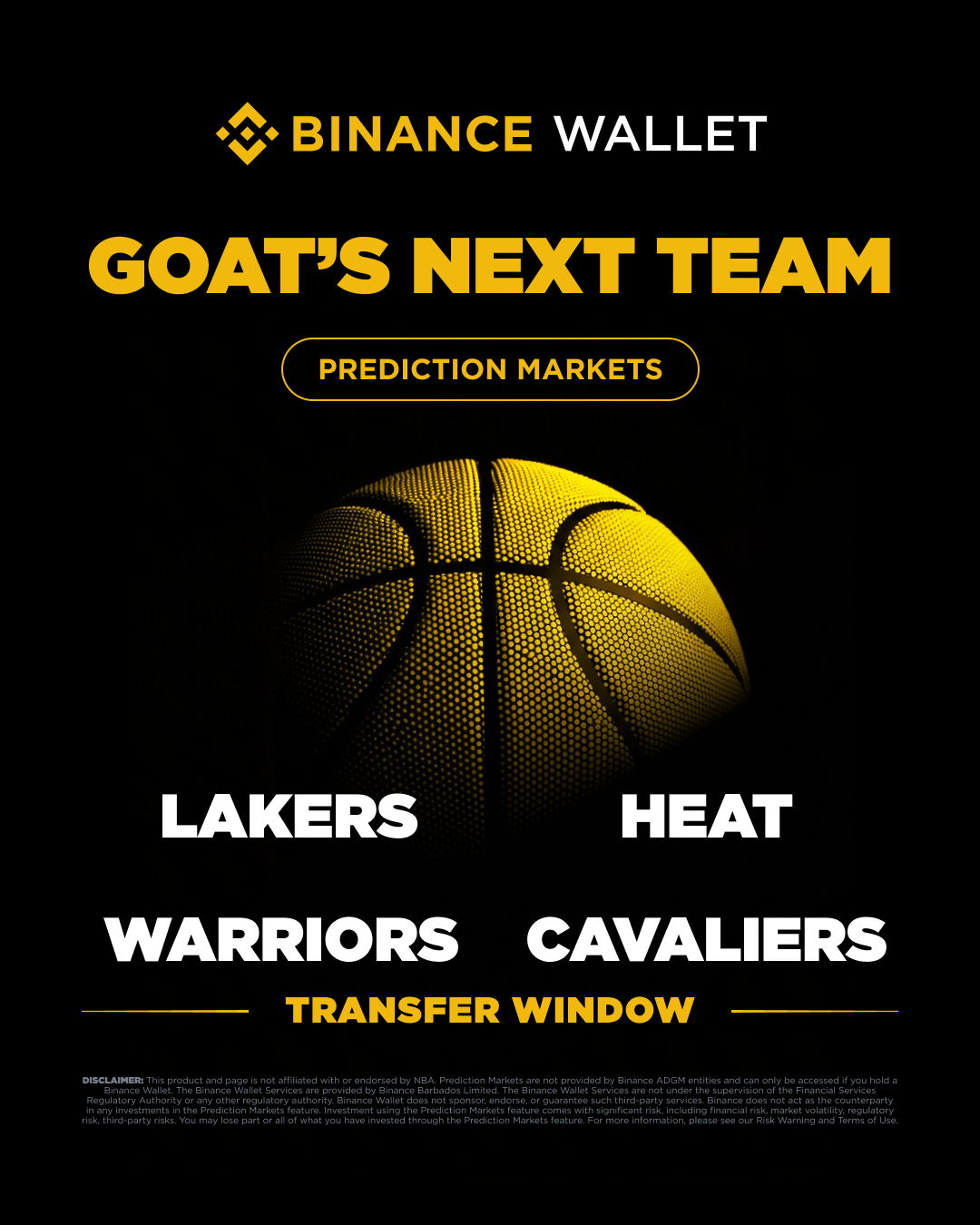
🐐 Afsona keyingi safar qayerga tushadi?
U binafsha va oltin rangdagi merosni davom ettiradimi, South Beach’da yana bir bob yozadimi, shon-shuhratni Bayga qaytaradimi yoki hammasi boshlangan joyga qaytadimi?
🏀 Lakers • Heat • Warriors • Cavaliers
Tomoningizni tanlang, tanlovingizni qo‘llab-quvvatlang.
👉 Join now and be part of the biggest transfer story of the year
U binafsha va oltin rangdagi merosni davom ettiradimi, South Beach’da yana bir bob yozadimi, shon-shuhratni Bayga qaytaradimi yoki hammasi boshlangan joyga qaytadimi?
🏀 Lakers • Heat • Warriors • Cavaliers
Tomoningizni tanlang, tanlovingizni qo‘llab-quvvatlang.
👉 Join now and be part of the biggest transfer story of the year
2
45
·
--
$NEAR Bu Elliott to‘lqinning ikkinchisi bo‘lishi kerak. Potensial maqsadlar 1.618, 2.618, 3.618 va 4.236 — bunda 4.236 yakuniy maqsad. Agar fib’ni qanday ishlatishni bilsangiz — savdo qiling ;)
$NEAR Bu Elliott to‘lqinning ikkinchisi bo‘lishi kerak. Potensial maqsadlar 1.618, 2.618, 3.618 va 4.236 — bunda 4.236 yakuniy maqsad. Agar fib’ni qanday ishlatishni bilsangiz — savdo qiling ;)
659
·
--
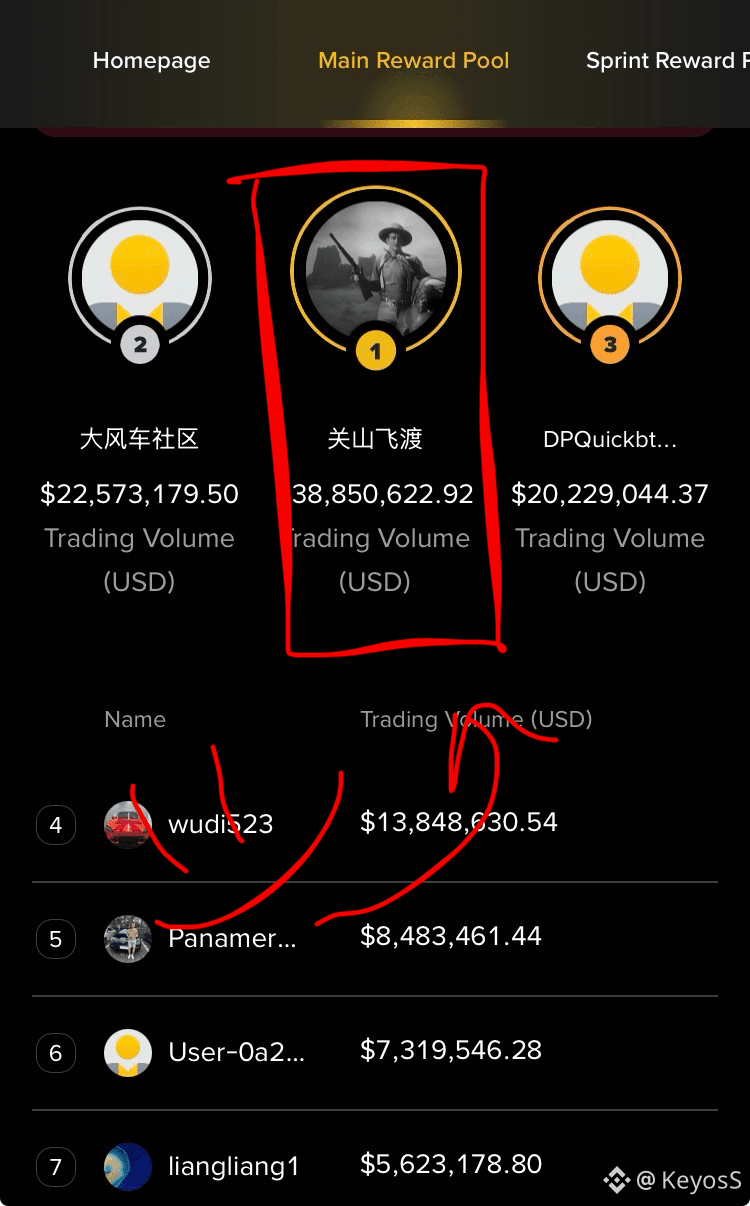
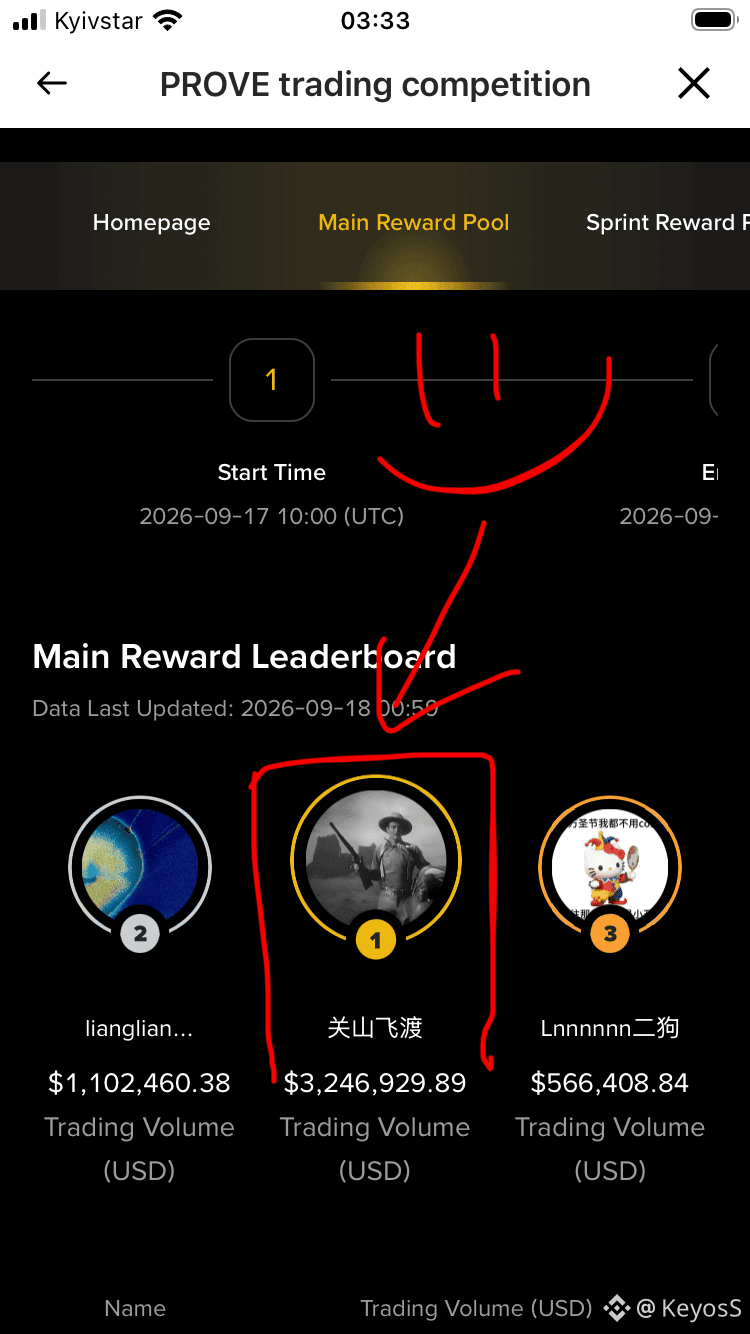
@Square-Creator-cef4db7202c7 Mate, sen qanday qilib bunday qilyapsan? Buni tushunish uchun menga informatika yoki matematika bo‘yicha PhD kerakmi? 😂 Hikoyangni ayt! ;)
Men bilaman, pul fanga oshiqadi, lekin ba’zan soya ortidan chiqib, aslida nima bo‘layotganini ko‘rsatgan yaxshi. 😏
$BTC $BNB $SOL
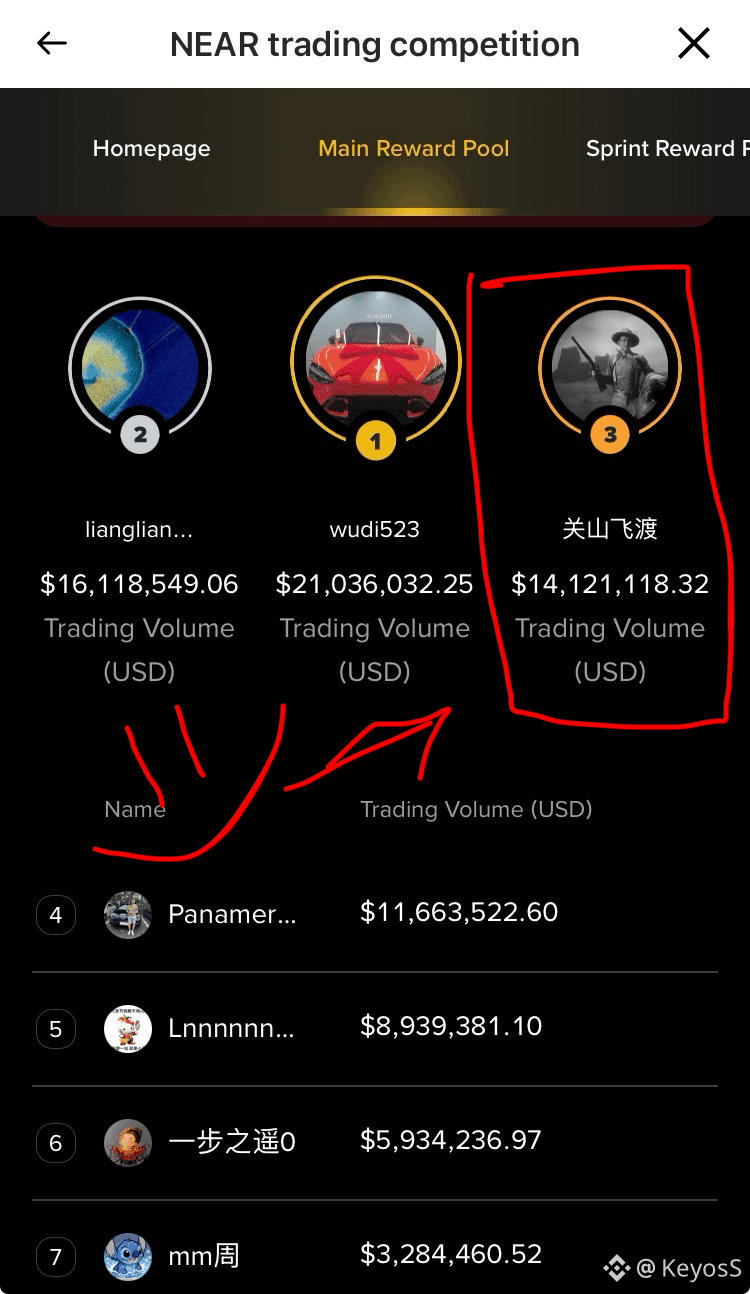
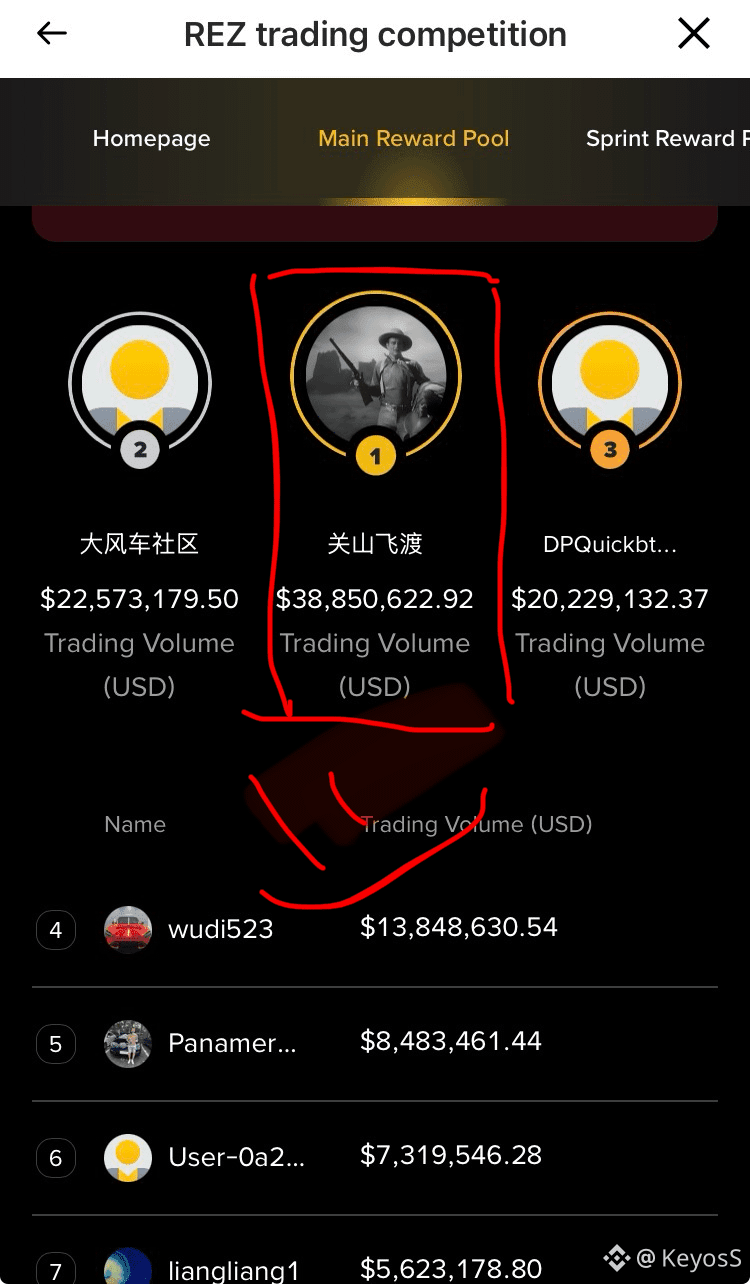
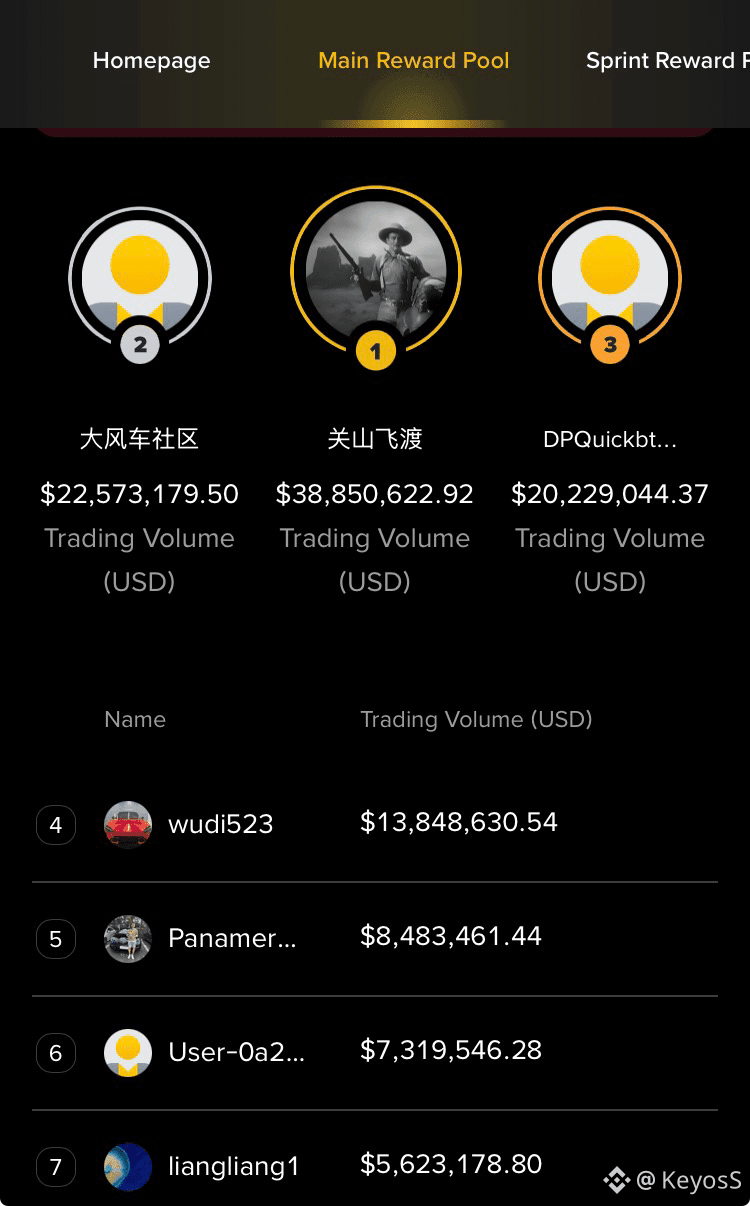
@关山飞渡 Mate, sen qanday qilib bunday qilyapsan? Buni tushunish uchun menga informatika yoki matematika bo‘yicha PhD kerakmi? 😂 Hikoyangni ayt! ;)
Men bilaman, pul fanga oshiqadi, lekin ba’zan soya ortidan chiqib, aslida nima bo‘layotganini ko‘rsatgan yaxshi. 😏
$BTC $BNB $SOL
Men bilaman, pul fanga oshiqadi, lekin ba’zan soya ortidan chiqib, aslida nima bo‘layotganini ko‘rsatgan yaxshi. 😏
$BTC $BNB $SOL
120
·
--
O‘suvchi
Men $THE [Binance Campaign](https://www.binance.com/en/activity/trading-competition/spot-altcoin-festival-wave-THE-R1/Main-Reward) ni 0 yo‘qotish bilan va 100% naqd pul xavfsizligi bilan qanday qilib dehqonchilik qilayapman 🤖
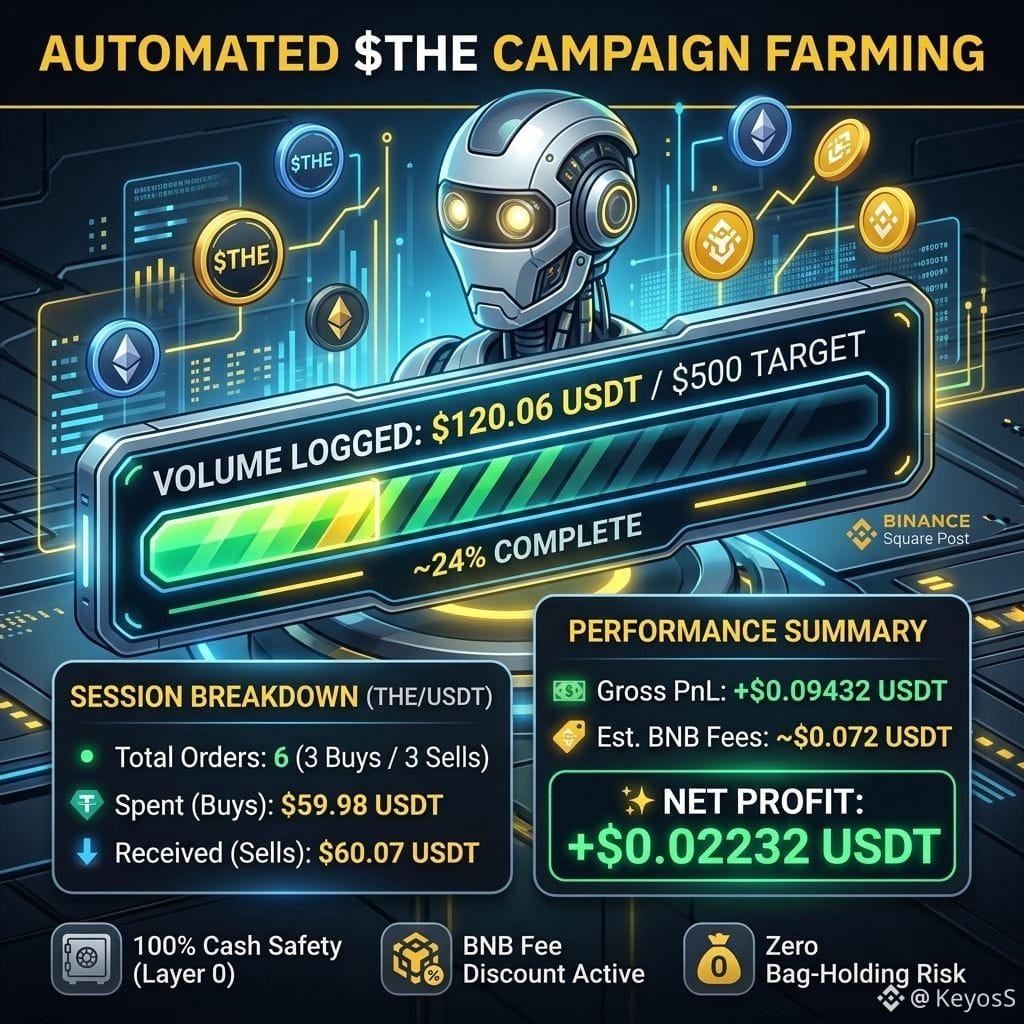
Binance Spot Altcoin Festival (Wave: THE - R1) uchun hajm maqsadlarini tozalash, birdan bozordagi tushishlarda kapitalingizni xavf ostiga qo‘yish degani emas. Mana mening avtomatlashtirilgan strategiyamning kampaniya hajmini qayd etgan holda sof foyda saqlab qolgan holdagi aniq natija taqsimoti:
📊 Sessiya bajarilish ko‘rsatkichlari:
🎯 Maqsad: $500+ Hajm (~24% Bajarildi)
🔄 Bajarilgan buyurtmalar: 6 (3 ta Xarid / 3 ta Sotish)
📈 Qayd etilgan hajm: $120.06 USDT
💰 Pul chiqimi / Pul kirimi: $59.98 / $60.07
🟢 Umumiy PnL: +$0.09432 USDT
🏷️ BNB to‘lov chegirmasi (taxm.): ~$0.072 USDT
✨ Sof foyda: +$0.02232 USDT
💡 Asosiy strategiya xulosalari:
🔹 100% naqd pul xavfsizligi: Strategiya bajarilgandan so‘ng darhol naqd pulga (Layer 0) qaytadi va keyingi vaziyatni kutayotganda zarar ko‘rish (drawdown) xavfini yo‘q qiladi.
🔹 To‘lov marjasini nazorat qilish: BNB bilan to‘lov qilish ijrodagi yalpi PnL ni bitimlar xarajatlaridan yuqori ushlab turish uchun muhim.
🔹 Nolinchi-sirpanish bilan “farming”: Kichik mikro-xaridlar va mikro-sotishlar kampaniya bosqichlariga yo‘naltirilgan “bag-holding” xavfisiz erishishga yordam beradi.
Spot Altcoin Festivalini farming qilyapsizmi?
Izohlarda joriy $THE hajm rivojlanishingizni yozib qoldiring! Real ma’lumotlar tahlilini yoqtirsangiz Like bosing va 100% kampaniya yakuniga qadar botning jonli yo‘lini kuzatish uchun Follow qiling! 🚀
Eslatma: Faqat ta’lim mazmuni. Moliyaviy maslahat emas. Har doim bot parametrlarini va savdo risklarini o‘zingizning strategiyangizga moslab sozlang.
Men $THE Binance Campaign ni 0 yo‘qotish bilan va 100% naqd pul xavfsizligi bilan qanday qilib dehqonchilik qilayapman 🤖
Binance Spot Altcoin Festival (Wave: THE - R1) uchun hajm maqsadlarini tozalash, birdan bozordagi tushishlarda kapitalingizni xavf ostiga qo‘yish degani emas. Mana mening avtomatlashtirilgan strategiyamning kampaniya hajmini qayd etgan holda sof foyda saqlab qolgan holdagi aniq natija taqsimoti:
📊 Sessiya bajarilish ko‘rsatkichlari:
🎯 Maqsad: $500+ Hajm (~24% Bajarildi)
🔄 Bajarilgan buyurtmalar: 6 (3 ta Xarid / 3 ta Sotish)
📈 Qayd etilgan hajm: $120.06 USDT
💰 Pul chiqimi / Pul kirimi: $59.98 / $60.07
🟢 Umumiy PnL: +$0.09432 USDT
🏷️ BNB to‘lov chegirmasi (taxm.): ~$0.072 USDT
✨ Sof foyda: +$0.02232 USDT
💡 Asosiy strategiya xulosalari:
🔹 100% naqd pul xavfsizligi: Strategiya bajarilgandan so‘ng darhol naqd pulga (Layer 0) qaytadi va keyingi vaziyatni kutayotganda zarar ko‘rish (drawdown) xavfini yo‘q qiladi.
🔹 To‘lov marjasini nazorat qilish: BNB bilan to‘lov qilish ijrodagi yalpi PnL ni bitimlar xarajatlaridan yuqori ushlab turish uchun muhim.
🔹 Nolinchi-sirpanish bilan “farming”: Kichik mikro-xaridlar va mikro-sotishlar kampaniya bosqichlariga yo‘naltirilgan “bag-holding” xavfisiz erishishga yordam beradi.
Spot Altcoin Festivalini farming qilyapsizmi?
Izohlarda joriy $THE hajm rivojlanishingizni yozib qoldiring! Real ma’lumotlar tahlilini yoqtirsangiz Like bosing va 100% kampaniya yakuniga qadar botning jonli yo‘lini kuzatish uchun Follow qiling! 🚀
Eslatma: Faqat ta’lim mazmuni. Moliyaviy maslahat emas. Har doim bot parametrlarini va savdo risklarini o‘zingizning strategiyangizga moslab sozlang.
Binance Spot Altcoin Festival (Wave: THE - R1) uchun hajm maqsadlarini tozalash, birdan bozordagi tushishlarda kapitalingizni xavf ostiga qo‘yish degani emas. Mana mening avtomatlashtirilgan strategiyamning kampaniya hajmini qayd etgan holda sof foyda saqlab qolgan holdagi aniq natija taqsimoti:
📊 Sessiya bajarilish ko‘rsatkichlari:
🎯 Maqsad: $500+ Hajm (~24% Bajarildi)
🔄 Bajarilgan buyurtmalar: 6 (3 ta Xarid / 3 ta Sotish)
📈 Qayd etilgan hajm: $120.06 USDT
💰 Pul chiqimi / Pul kirimi: $59.98 / $60.07
🟢 Umumiy PnL: +$0.09432 USDT
🏷️ BNB to‘lov chegirmasi (taxm.): ~$0.072 USDT
✨ Sof foyda: +$0.02232 USDT
💡 Asosiy strategiya xulosalari:
🔹 100% naqd pul xavfsizligi: Strategiya bajarilgandan so‘ng darhol naqd pulga (Layer 0) qaytadi va keyingi vaziyatni kutayotganda zarar ko‘rish (drawdown) xavfini yo‘q qiladi.
🔹 To‘lov marjasini nazorat qilish: BNB bilan to‘lov qilish ijrodagi yalpi PnL ni bitimlar xarajatlaridan yuqori ushlab turish uchun muhim.
🔹 Nolinchi-sirpanish bilan “farming”: Kichik mikro-xaridlar va mikro-sotishlar kampaniya bosqichlariga yo‘naltirilgan “bag-holding” xavfisiz erishishga yordam beradi.
Spot Altcoin Festivalini farming qilyapsizmi?
Izohlarda joriy $THE hajm rivojlanishingizni yozib qoldiring! Real ma’lumotlar tahlilini yoqtirsangiz Like bosing va 100% kampaniya yakuniga qadar botning jonli yo‘lini kuzatish uchun Follow qiling! 🚀
Eslatma: Faqat ta’lim mazmuni. Moliyaviy maslahat emas. Har doim bot parametrlarini va savdo risklarini o‘zingizning strategiyangizga moslab sozlang.
2
199
·
--
Maqola
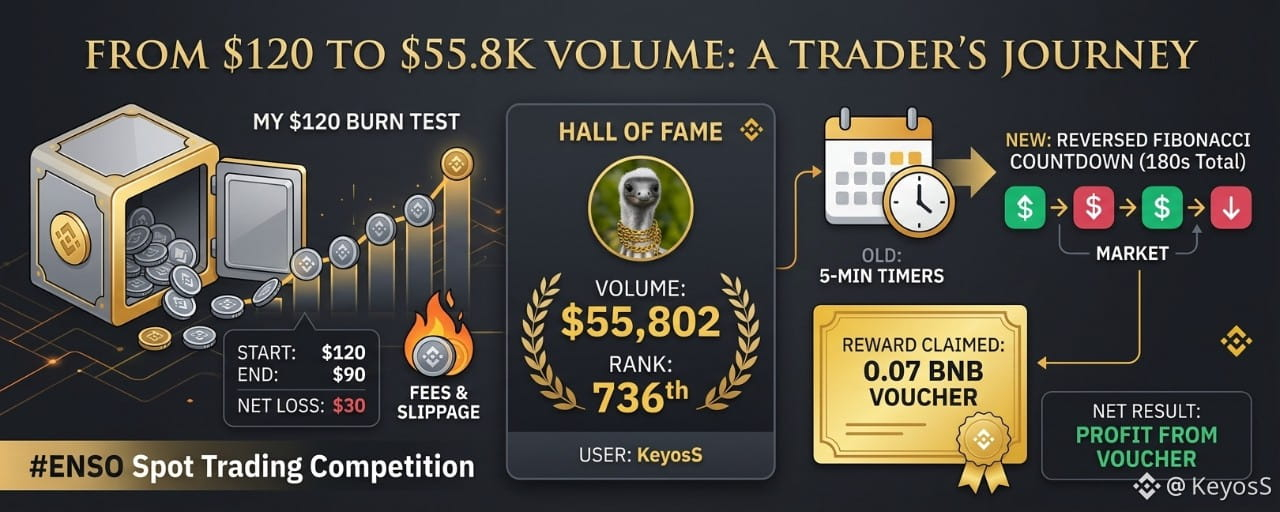
$120’ni $55.8K hajmga aylantirish: mening ENSO Spot musobaqam haqidagi hikoyam va o‘rganilgan qiyin saboqlarSavdo musobaqalari qog‘ozda juda osondek ko‘rinadi — hajmni (volume) to‘plang, reytingga kiring va sovrin jamg‘armasidan o‘z ulushingizni oling. Lekin strategiyani real vaqtda amalga oshirish esa butunlay boshqa hikoya. Mana men [ENSO Spot Trading Competition.](https://www.binance.com/activity/trading-competition/spot-altcoin-festival-wave-ENSO1) paytida bozor mexanikalarini sinab ko‘rgan tajribam.
1. Tayyorlov va dastlabki kuyish tajribasi
Boshlang‘ich balans: $120 USDT
Yakuniy balans: $90 USDT
Sof foyda / Xarajat: $30 USDT
Mukofot olindi: 0.07 BNB (~$38.50 USDT qiymati)
Yakuni natija: sof foyda bilan yakunlandi (~+$8.50), shu bilan birga reytingda 736-o‘rinni egallab, $55,802 hajmga (volume) erishdi.
$120’ni $55.8K hajmga aylantirish: mening ENSO Spot musobaqam haqidagi hikoyam va o‘rganilgan qiyin saboqlar
Savdo musobaqalari qog‘ozda juda osondek ko‘rinadi — hajmni (volume) to‘plang, reytingga kiring va sovrin jamg‘armasidan o‘z ulushingizni oling. Lekin strategiyani real vaqtda amalga oshirish esa butunlay boshqa hikoya. Mana men ENSO Spot Trading Competition. paytida bozor mexanikalarini sinab ko‘rgan tajribam.
1. Tayyorlov va dastlabki kuyish tajribasi
Boshlang‘ich balans: $120 USDT
Yakuniy balans: $90 USDT
Sof foyda / Xarajat: $30 USDT
Mukofot olindi: 0.07 BNB (~$38.50 USDT qiymati)
Yakuni natija: sof foyda bilan yakunlandi (~+$8.50), shu bilan birga reytingda 736-o‘rinni egallab, $55,802 hajmga (volume) erishdi.
1. Tayyorlov va dastlabki kuyish tajribasi
Boshlang‘ich balans: $120 USDT
Yakuniy balans: $90 USDT
Sof foyda / Xarajat: $30 USDT
Mukofot olindi: 0.07 BNB (~$38.50 USDT qiymati)
Yakuni natija: sof foyda bilan yakunlandi (~+$8.50), shu bilan birga reytingda 736-o‘rinni egallab, $55,802 hajmga (volume) erishdi.
1
227
·
--

Maqola
Kichik hisoblarda birja musobaqalarini o‘rganish: strategik kapitalni joylashtirishKatta hajmli birja musobaqalarida kichik garov bilan yetakchi pozitsiyalarni quvish — tizimli tarzda yutqazadigan o‘yin. Oldingi turnir urinishida qo‘lda savdo umumiy hajmda $55,000+ ni yaratdi, ammo -$24.76 sof zarar bilan yakunlandi. Yuqori chastotali institutsional algoritmlar bilan raqobatlashish uchun kichik kapitalni yuzlab marta aylantirish esa spread (tarqalish)dagi siljishlar, ijro kechikishi va jamlangan transaksion to‘lovlar orqali kapitalning yemirilishiga olib keladi.
Kapitalni himoya qilgan holda kampaniya mukofotlarini qo‘lga kiritish uchun ijro modeli HOLO va THE Binance Spot Altcoin Festivals bo‘ylab to‘liq avtomatlashtirilgan dual-bot strategiyasiga o‘tadi.
Kichik hisoblarda birja musobaqalarini o‘rganish: strategik kapitalni joylashtirish
Katta hajmli birja musobaqalarida kichik garov bilan yetakchi pozitsiyalarni quvish — tizimli tarzda yutqazadigan o‘yin. Oldingi turnir urinishida qo‘lda savdo umumiy hajmda $55,000+ ni yaratdi, ammo -$24.76 sof zarar bilan yakunlandi. Yuqori chastotali institutsional algoritmlar bilan raqobatlashish uchun kichik kapitalni yuzlab marta aylantirish esa spread (tarqalish)dagi siljishlar, ijro kechikishi va jamlangan transaksion to‘lovlar orqali kapitalning yemirilishiga olib keladi.
Kapitalni himoya qilgan holda kampaniya mukofotlarini qo‘lga kiritish uchun ijro modeli HOLO va THE Binance Spot Altcoin Festivals bo‘ylab to‘liq avtomatlashtirilgan dual-bot strategiyasiga o‘tadi.
Kapitalni himoya qilgan holda kampaniya mukofotlarini qo‘lga kiritish uchun ijro modeli HOLO va THE Binance Spot Altcoin Festivals bo‘ylab to‘liq avtomatlashtirilgan dual-bot strategiyasiga o‘tadi.
12
2
696
·
--
Maqola
Nega siz $100 hisob bilan Binance turnirlarini quvmang (va qanday qilib aslida foyda olish mumkin)💡 Nega siz $100 hisob bilan Binance turnirlarini quvmang (va qanday qilib aslida foyda olish mumkin)
Katta hajmli Binance treyding turnirida kichik boshlang‘ich balans bilan (masalan, $100) g‘alaba qozonish, agar siz reytingda HFT botlarini quvishga urinsangiz, matematik jihatdan sizga qarshi qo‘yilgan.
Mana nega reytingni to‘g‘ridan-to‘g‘ri quvish ishlamaydi, institutional hajm botlari qanday ishlashi va haqiqiy pul topish uchun aniq protokol:
🛑 Nega To‘g‘ridan-to‘g‘ri reytingni quvish muvaffaqiyatsiz bo‘ladi
Katta hajmli sprintda top-100 ga kirish uchun ko‘pincha jami hajmda $60,000+ kerak bo‘ladi.
Nega siz $100 hisob bilan Binance turnirlarini quvmang (va qanday qilib aslida foyda olish mumkin)
💡 Nega siz $100 hisob bilan Binance turnirlarini quvmang (va qanday qilib aslida foyda olish mumkin)
Katta hajmli Binance treyding turnirida kichik boshlang‘ich balans bilan (masalan, $100) g‘alaba qozonish, agar siz reytingda HFT botlarini quvishga urinsangiz, matematik jihatdan sizga qarshi qo‘yilgan.
Mana nega reytingni to‘g‘ridan-to‘g‘ri quvish ishlamaydi, institutional hajm botlari qanday ishlashi va haqiqiy pul topish uchun aniq protokol:
🛑 Nega To‘g‘ridan-to‘g‘ri reytingni quvish muvaffaqiyatsiz bo‘ladi
Katta hajmli sprintda top-100 ga kirish uchun ko‘pincha jami hajmda $60,000+ kerak bo‘ladi.
Katta hajmli Binance treyding turnirida kichik boshlang‘ich balans bilan (masalan, $100) g‘alaba qozonish, agar siz reytingda HFT botlarini quvishga urinsangiz, matematik jihatdan sizga qarshi qo‘yilgan.
Mana nega reytingni to‘g‘ridan-to‘g‘ri quvish ishlamaydi, institutional hajm botlari qanday ishlashi va haqiqiy pul topish uchun aniq protokol:
🛑 Nega To‘g‘ridan-to‘g‘ri reytingni quvish muvaffaqiyatsiz bo‘ladi
Katta hajmli sprintda top-100 ga kirish uchun ko‘pincha jami hajmda $60,000+ kerak bo‘ladi.
277
·
--
[ENSO Trading Tournament](https://www.binance.com/en/activity/trading-competition/spot-altcoin-festival-wave-ENSO1/Main-Reward) ga qo‘shiling ;) Oson pul! Sotib oling va soting... Ko‘p vaqt qolmadi. $ENSO $KITE $FIL
{spot}(FILUSDT)
{spot}(KITEUSDT)
{spot}(ENSOUSDT)
ENSO Trading Tournament ga qo‘shiling ;) Oson pul! Sotib oling va soting... Ko‘p vaqt qolmadi. $ENSO $KITE $FIL
1
1
526
·
--
"Keep rollin', rollin', rollin', rollin'!" 🎶🧢
$LA - [LA](https://www.binance.com/en/square/post/362425615135326) ni qo'shiling👈🥺😁
{spot}(LAUSDT)
{spot}(ADAUSDT)
{spot}(TUSDT)
---
🎵 Audio krediti va mualliflik huquqi:
Qo'shiq: Rollin' (Air Raid Vehicle)
Ijrochi: Limp Bizkit
Mualliflar: Fred Durst, Wes Borland, Sam Rivers, John Otto
Prodyuserlar: Terry Date, Limp Bizkit
Chiqarilgan yil: 2000
Huquqlar / Yorliq: ℗ Flip Records / Interscope Records
"Keep rollin', rollin', rollin', rollin'!" 🎶🧢
$LA - LA ni qo'shiling👈🥺😁
---
🎵 Audio krediti va mualliflik huquqi:
Qo'shiq: Rollin' (Air Raid Vehicle)
Ijrochi: Limp Bizkit
Mualliflar: Fred Durst, Wes Borland, Sam Rivers, John Otto
Prodyuserlar: Terry Date, Limp Bizkit
Chiqarilgan yil: 2000
Huquqlar / Yorliq: ℗ Flip Records / Interscope Records
$LA - LA ni qo'shiling👈🥺😁
---
🎵 Audio krediti va mualliflik huquqi:
Qo'shiq: Rollin' (Air Raid Vehicle)
Ijrochi: Limp Bizkit
Mualliflar: Fred Durst, Wes Borland, Sam Rivers, John Otto
Prodyuserlar: Terry Date, Limp Bizkit
Chiqarilgan yil: 2000
Huquqlar / Yorliq: ℗ Flip Records / Interscope Records
269
·
--
Belgilangan $120 USDT ajratmasi bilan o‘ta intizomli 5 daqiqalik siklni takroriy aylantirish. Har 5 daqiqada bozor/limit buyurtmalarni o‘zgartirish (qisqa muddatli narx tebranishlaridan qat’i nazar) — deadline oldidan umumiy turnir hajmini maksimal darajaga yetkazish uchun!
$ENSO
{spot}(ENSOUSDT)
Belgilangan $120 USDT ajratmasi bilan o‘ta intizomli 5 daqiqalik siklni takroriy aylantirish. Har 5 daqiqada bozor/limit buyurtmalarni o‘zgartirish (qisqa muddatli narx tebranishlaridan qat’i nazar) — deadline oldidan umumiy turnir hajmini maksimal darajaga yetkazish uchun!
$ENSO
$ENSO
84
2
1.3k
·
--
🚀 5 daqiqalik takroriy sikl strategiyasi: $ENSO hajmli sprintda yo‘nalish topish 📊
ENSO Trading Tournament’da 42 soatdan kamroq vaqt qolganida, men pastga tushish xavfini boshqarib, barqaror hajm to‘plashni saqlash uchun 5 daqiqalik takroriy limit-churn (buyurtmalarni almashtirish) strategiyasini bajaryapman. Hozirgi bozor sharoitlari va ijro mantiqining tezkor taqsimoti quyidagicha:
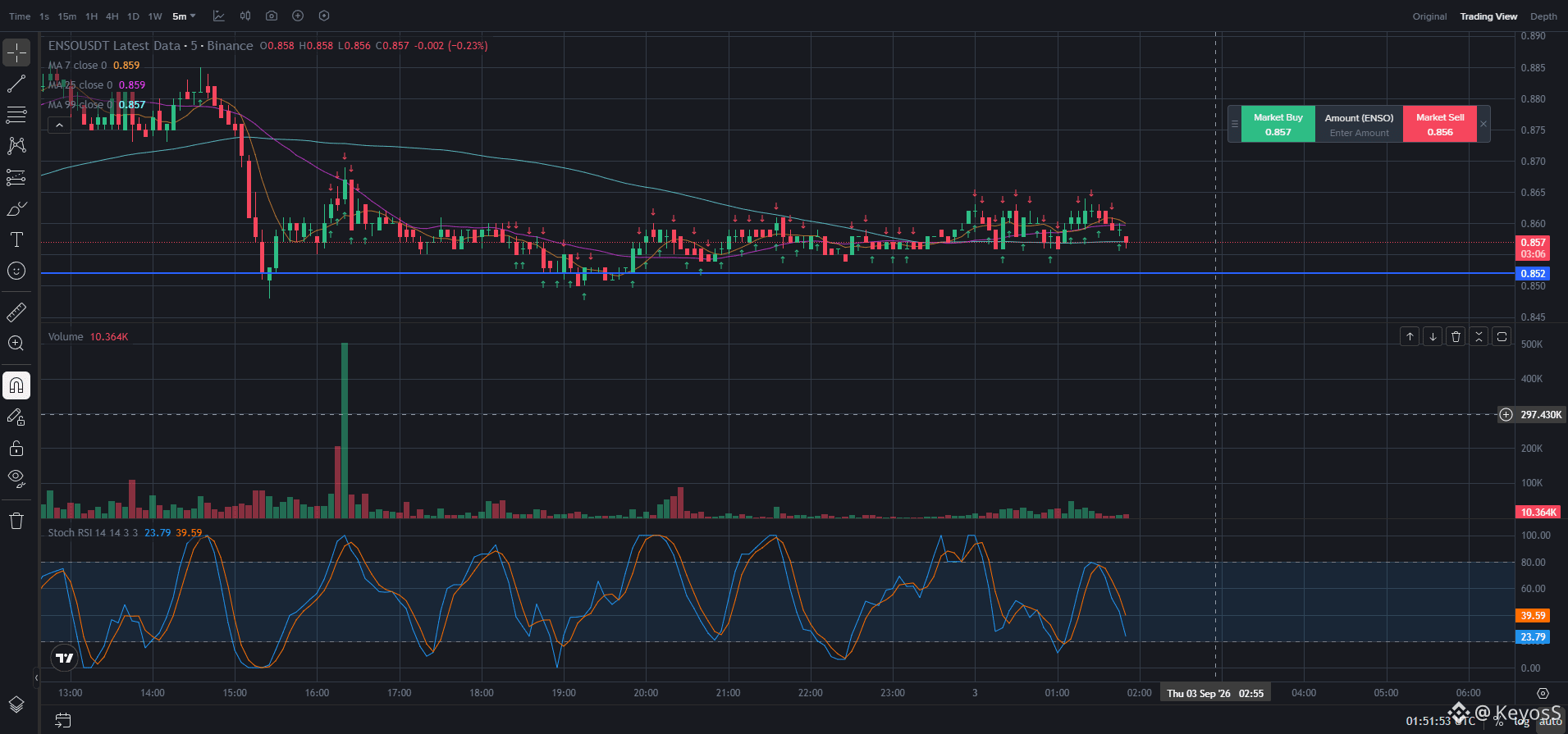
1️⃣ Order Book (buyurtmalar kitobi) va likvidlik mosligi Hozirgi order book chuqurligi $0.852 – $0.857 atrofida jamlangan bid (sotib olish) tayanchi borligini ko‘rsatadi va u tezkor likvidlik “yostiqchasi”ni beradi. $0.865 – $0.872 belgi atrofida esa og‘ir ask (sotish) klasterlari mahalliy qarshilik sifatida ko‘rinadi.
2️⃣ Strategik ijro Tuzilgan 5 daqiqalik takroriy buy/sell sikllarini ($120 USDT ajratma) bajarish orqali maqsad darhol tayanch atrofida ($0.857 kirish) va yuqori tick-lar ($0.859 - $0.860 sotish) tomonidagi mikrotebranishlarni tutib olish hamda BNB chegirmalari orqali to‘lovlarni qoplash.
3️⃣ Bozor istiqboli $0.855 ustida ushlab turish qisqa muddatli strukturani saqlab qoladi va $0.865+ tomon qayta sinovni qo‘llab-quvvatlaydi.
Turnir sprinti uchun qanday strategiya qo‘llayapsiz? Pastga yozib qoldiring! 👇
#ENSO #BinanceSquare #CryptoTrading #DeFi #TradingStrategy
🚀 5 daqiqalik takroriy sikl strategiyasi: $ENSO hajmli sprintda yo‘nalish topish 📊
ENSO Trading Tournament’da 42 soatdan kamroq vaqt qolganida, men pastga tushish xavfini boshqarib, barqaror hajm to‘plashni saqlash uchun 5 daqiqalik takroriy limit-churn (buyurtmalarni almashtirish) strategiyasini bajaryapman. Hozirgi bozor sharoitlari va ijro mantiqining tezkor taqsimoti quyidagicha:
1️⃣ Order Book (buyurtmalar kitobi) va likvidlik mosligi Hozirgi order book chuqurligi $0.852 – $0.857 atrofida jamlangan bid (sotib olish) tayanchi borligini ko‘rsatadi va u tezkor likvidlik “yostiqchasi”ni beradi. $0.865 – $0.872 belgi atrofida esa og‘ir ask (sotish) klasterlari mahalliy qarshilik sifatida ko‘rinadi.
2️⃣ Strategik ijro Tuzilgan 5 daqiqalik takroriy buy/sell sikllarini ($120 USDT ajratma) bajarish orqali maqsad darhol tayanch atrofida ($0.857 kirish) va yuqori tick-lar ($0.859 - $0.860 sotish) tomonidagi mikrotebranishlarni tutib olish hamda BNB chegirmalari orqali to‘lovlarni qoplash.
3️⃣ Bozor istiqboli $0.855 ustida ushlab turish qisqa muddatli strukturani saqlab qoladi va $0.865+ tomon qayta sinovni qo‘llab-quvvatlaydi.
Turnir sprinti uchun qanday strategiya qo‘llayapsiz? Pastga yozib qoldiring! 👇
#ENSO #BinanceSquare #CryptoTrading #DeFi #TradingStrategy
ENSO Trading Tournament’da 42 soatdan kamroq vaqt qolganida, men pastga tushish xavfini boshqarib, barqaror hajm to‘plashni saqlash uchun 5 daqiqalik takroriy limit-churn (buyurtmalarni almashtirish) strategiyasini bajaryapman. Hozirgi bozor sharoitlari va ijro mantiqining tezkor taqsimoti quyidagicha:
1️⃣ Order Book (buyurtmalar kitobi) va likvidlik mosligi Hozirgi order book chuqurligi $0.852 – $0.857 atrofida jamlangan bid (sotib olish) tayanchi borligini ko‘rsatadi va u tezkor likvidlik “yostiqchasi”ni beradi. $0.865 – $0.872 belgi atrofida esa og‘ir ask (sotish) klasterlari mahalliy qarshilik sifatida ko‘rinadi.
2️⃣ Strategik ijro Tuzilgan 5 daqiqalik takroriy buy/sell sikllarini ($120 USDT ajratma) bajarish orqali maqsad darhol tayanch atrofida ($0.857 kirish) va yuqori tick-lar ($0.859 - $0.860 sotish) tomonidagi mikrotebranishlarni tutib olish hamda BNB chegirmalari orqali to‘lovlarni qoplash.
3️⃣ Bozor istiqboli $0.855 ustida ushlab turish qisqa muddatli strukturani saqlab qoladi va $0.865+ tomon qayta sinovni qo‘llab-quvvatlaydi.
Turnir sprinti uchun qanday strategiya qo‘llayapsiz? Pastga yozib qoldiring! 👇
#ENSO #BinanceSquare #CryptoTrading #DeFi #TradingStrategy
156
·
--
1M+ foydalanuvchilar uchun masshtablanuvchi platformalar yaratish bo‘yicha tajribam menga bitta narsani o‘rgatdi: tizimlar har doim omaddan ustun keladi.
MBA ta’limimni texnik ijro bilan birlashtirib, Binance’dagi kundalik vazifalar bajarilishi, kapital riski va daromadlilik (yield) ko‘rsatkichlarini kuzatish uchun korporativ bir xil framework’larni qo‘llayman.
Agar siz {1} uchun ishonchli “dvigatel” yaratsangiz, uni kattalashtirish — bu sof ijro.
Siz kundalik Web3 faoliyatingizni qanday tashkil qilyapsiz?
Izohlarda o‘rnatishingiz (setup) yoki spreadsheet’ingizni ulashing;
Men shablonlar bilan almashishni xohlardim! 💬👇
#Binance #SystemsDesign #CryptoTrackers #ProductStrategy #CryptoHumor
1M+ foydalanuvchilar uchun masshtablanuvchi platformalar yaratish bo‘yicha tajribam menga bitta narsani o‘rgatdi: tizimlar har doim omaddan ustun keladi.
MBA ta’limimni texnik ijro bilan birlashtirib, Binance’dagi kundalik vazifalar bajarilishi, kapital riski va daromadlilik (yield) ko‘rsatkichlarini kuzatish uchun korporativ bir xil framework’larni qo‘llayman.
Agar siz {1} uchun ishonchli “dvigatel” yaratsangiz, uni kattalashtirish — bu sof ijro.
Siz kundalik Web3 faoliyatingizni qanday tashkil qilyapsiz?
Izohlarda o‘rnatishingiz (setup) yoki spreadsheet’ingizni ulashing;
Men shablonlar bilan almashishni xohlardim! 💬👇
#Binance #SystemsDesign #CryptoTrackers #ProductStrategy #CryptoHumor
MBA ta’limimni texnik ijro bilan birlashtirib, Binance’dagi kundalik vazifalar bajarilishi, kapital riski va daromadlilik (yield) ko‘rsatkichlarini kuzatish uchun korporativ bir xil framework’larni qo‘llayman.
Agar siz {1} uchun ishonchli “dvigatel” yaratsangiz, uni kattalashtirish — bu sof ijro.
Siz kundalik Web3 faoliyatingizni qanday tashkil qilyapsiz?
Izohlarda o‘rnatishingiz (setup) yoki spreadsheet’ingizni ulashing;
Men shablonlar bilan almashishni xohlardim! 💬👇
#Binance #SystemsDesign #CryptoTrackers #ProductStrategy #CryptoHumor
74
·
--
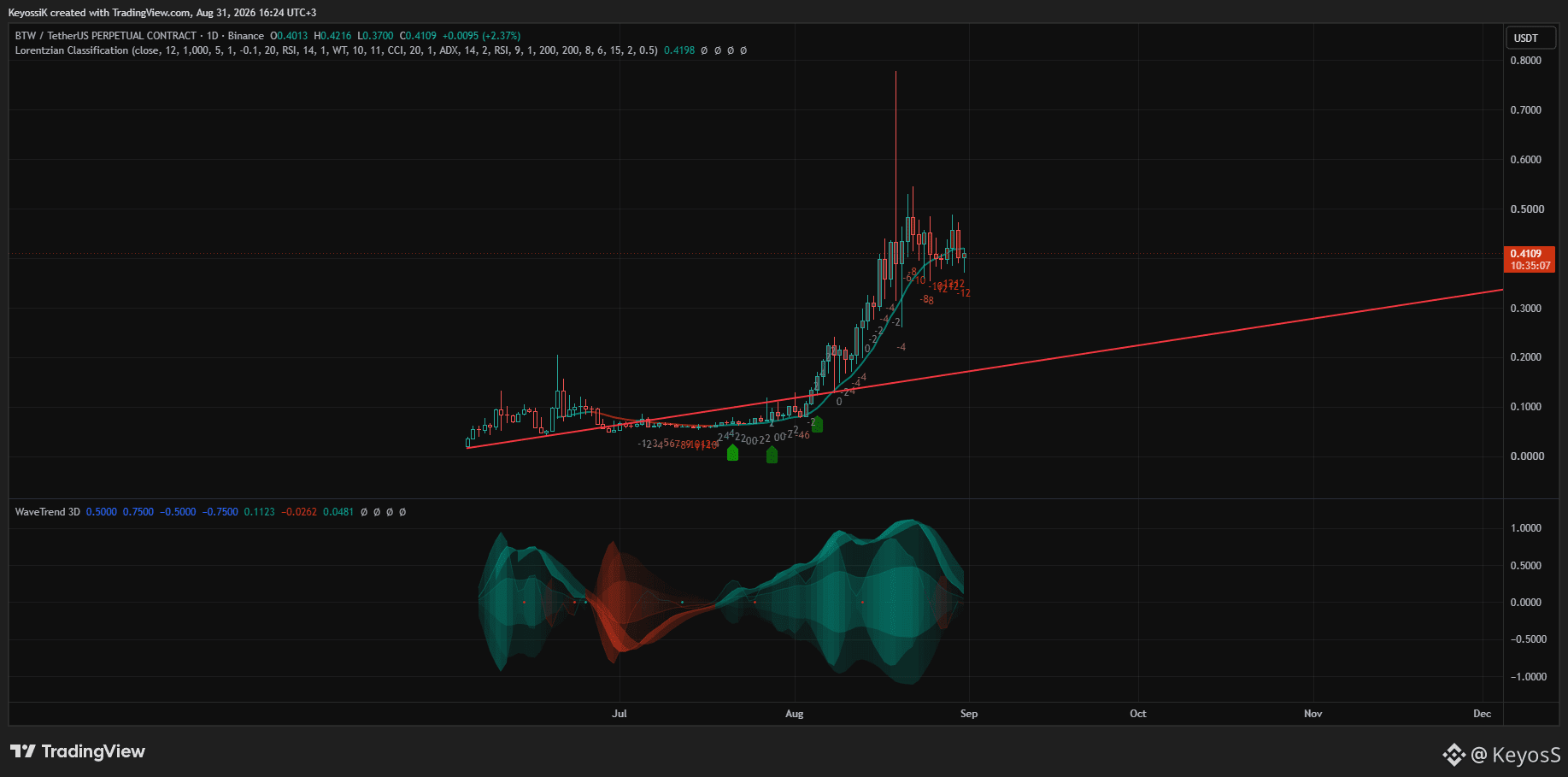
$BTW Sizda savdo imkoniyatlari ko‘ryaptimi?
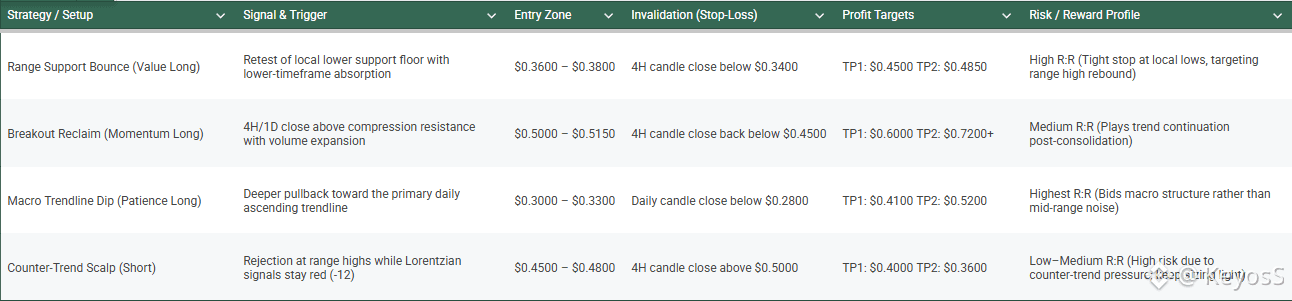
BTW $0.50 dagi qarshilik diapazoni bilan $0.36 lokal tayanch o‘rtasida taxminan $0.4096 atrofida siqilmoqda. Diapazon o‘rtasida pozitsiya egallashdan qochish juda muhim.
Yuqoridagi savdo setup matritsasini ko‘ring: momentum, value va makro ssenariolar bo‘yicha kirish nuqtalari, bekor qilish (invalidation) darajalari hamda foyda maqsadlari bo‘yicha batafsil bo‘linma!
$0.36 tayanchni “sweep” qilishga buyurtma berayapsizmi yoki $0.50 dan chiqqanini tasdiqlashni kutyapsizmi? Pastga fikrlaringizni baland ovozda qoldiring! 👇
{future}(BTWUSDT)
$BTW Sizda savdo imkoniyatlari ko‘ryaptimi?
BTW $0.50 dagi qarshilik diapazoni bilan $0.36 lokal tayanch o‘rtasida taxminan $0.4096 atrofida siqilmoqda. Diapazon o‘rtasida pozitsiya egallashdan qochish juda muhim.
Yuqoridagi savdo setup matritsasini ko‘ring: momentum, value va makro ssenariolar bo‘yicha kirish nuqtalari, bekor qilish (invalidation) darajalari hamda foyda maqsadlari bo‘yicha batafsil bo‘linma!
$0.36 tayanchni “sweep” qilishga buyurtma berayapsizmi yoki $0.50 dan chiqqanini tasdiqlashni kutyapsizmi? Pastga fikrlaringizni baland ovozda qoldiring! 👇
BTW $0.50 dagi qarshilik diapazoni bilan $0.36 lokal tayanch o‘rtasida taxminan $0.4096 atrofida siqilmoqda. Diapazon o‘rtasida pozitsiya egallashdan qochish juda muhim.
Yuqoridagi savdo setup matritsasini ko‘ring: momentum, value va makro ssenariolar bo‘yicha kirish nuqtalari, bekor qilish (invalidation) darajalari hamda foyda maqsadlari bo‘yicha batafsil bo‘linma!
$0.36 tayanchni “sweep” qilishga buyurtma berayapsizmi yoki $0.50 dan chiqqanini tasdiqlashni kutyapsizmi? Pastga fikrlaringizni baland ovozda qoldiring! 👇
311
·
--
$VELVET
{future}(VELVETUSDT)
Texnik tahlil: Tubga qaytish bazasi yoki “dead-cat bounce”?
Yuqoridan $0.90 atrofidan $0.1084 gacha bo‘lgan 75%+ keskin likvidatsiya tushishidan so‘ng, VELVET hozir past volatillik diapazonida yonlama harakat qilmoqda.
Mana vaqt oralig‘lari bo‘yicha texnik tahlil:
● Trеnd konteksti (1D): Narx $0.9126 va $1.2473 dagi makro qarshilik zonalaridan ancha pastda savdo qilmoqda. WaveTrend va Lorentsian indikatorlari kuchli ayanchli hududda saqlanib turibdi (-12 signal zichligi).
● Bozor tuzilishi (4H/1H): $0.1080 atrofida narxning “flatline” ko‘rinishidagi harakati yaqin orada vahimali sotuv to‘xtaganini ko‘rsatadi, lekin xarid hajmi deyarli yo‘q.
● Muhim tayanch daraja: $0.0900 ni himoya qilish yangi eng yuqori darajadagi minimumlar (all-time lows) bosib ketmasligi uchun juda muhim.
Savdo bahosi: Katta deleveraj hodisasidan keyin kuzatiladigan yonlama siljish ko‘pincha ilk “pastdan oluvchilar”ni aldab qo‘yadi. Barqaror tiklanish $0.20 strukturaviy darajasi yuqori hajm bilan qayta qo‘lga kiritilmaguncha va trend qaytganini tasdiqlamaguncha yetarli emas.
Siz $0.20 bo‘yicha tasdiqlangan breakoutni kutyapsizmi yoki $0.0900 tayanch poliga skeylp bidlarni joylayapsizmi? Savdo rejangizni pastga yozing! 👇
$CLO $NIL
{future}(NILUSDT)
{future}(CLOUSDT)
$VELVET
Texnik tahlil: Tubga qaytish bazasi yoki “dead-cat bounce”?
Yuqoridan $0.90 atrofidan $0.1084 gacha bo‘lgan 75%+ keskin likvidatsiya tushishidan so‘ng, VELVET hozir past volatillik diapazonida yonlama harakat qilmoqda.
Mana vaqt oralig‘lari bo‘yicha texnik tahlil:
● Trеnd konteksti (1D): Narx $0.9126 va $1.2473 dagi makro qarshilik zonalaridan ancha pastda savdo qilmoqda. WaveTrend va Lorentsian indikatorlari kuchli ayanchli hududda saqlanib turibdi (-12 signal zichligi).
● Bozor tuzilishi (4H/1H): $0.1080 atrofida narxning “flatline” ko‘rinishidagi harakati yaqin orada vahimali sotuv to‘xtaganini ko‘rsatadi, lekin xarid hajmi deyarli yo‘q.
● Muhim tayanch daraja: $0.0900 ni himoya qilish yangi eng yuqori darajadagi minimumlar (all-time lows) bosib ketmasligi uchun juda muhim.
Savdo bahosi: Katta deleveraj hodisasidan keyin kuzatiladigan yonlama siljish ko‘pincha ilk “pastdan oluvchilar”ni aldab qo‘yadi. Barqaror tiklanish $0.20 strukturaviy darajasi yuqori hajm bilan qayta qo‘lga kiritilmaguncha va trend qaytganini tasdiqlamaguncha yetarli emas.
Siz $0.20 bo‘yicha tasdiqlangan breakoutni kutyapsizmi yoki $0.0900 tayanch poliga skeylp bidlarni joylayapsizmi? Savdo rejangizni pastga yozing! 👇
$CLO $NIL
Texnik tahlil: Tubga qaytish bazasi yoki “dead-cat bounce”?
Yuqoridan $0.90 atrofidan $0.1084 gacha bo‘lgan 75%+ keskin likvidatsiya tushishidan so‘ng, VELVET hozir past volatillik diapazonida yonlama harakat qilmoqda.
Mana vaqt oralig‘lari bo‘yicha texnik tahlil:
● Trеnd konteksti (1D): Narx $0.9126 va $1.2473 dagi makro qarshilik zonalaridan ancha pastda savdo qilmoqda. WaveTrend va Lorentsian indikatorlari kuchli ayanchli hududda saqlanib turibdi (-12 signal zichligi).
● Bozor tuzilishi (4H/1H): $0.1080 atrofida narxning “flatline” ko‘rinishidagi harakati yaqin orada vahimali sotuv to‘xtaganini ko‘rsatadi, lekin xarid hajmi deyarli yo‘q.
● Muhim tayanch daraja: $0.0900 ni himoya qilish yangi eng yuqori darajadagi minimumlar (all-time lows) bosib ketmasligi uchun juda muhim.
Savdo bahosi: Katta deleveraj hodisasidan keyin kuzatiladigan yonlama siljish ko‘pincha ilk “pastdan oluvchilar”ni aldab qo‘yadi. Barqaror tiklanish $0.20 strukturaviy darajasi yuqori hajm bilan qayta qo‘lga kiritilmaguncha va trend qaytganini tasdiqlamaguncha yetarli emas.
Siz $0.20 bo‘yicha tasdiqlangan breakoutni kutyapsizmi yoki $0.0900 tayanch poliga skeylp bidlarni joylayapsizmi? Savdo rejangizni pastga yozing! 👇
$CLO $NIL
🔴 Bearish Continuation
12%
🟢 Bottom Fishing
77%
🟡 Waiting for Confirmation
11%
35 Ovozlar • Ovoz berish yopildi
1
1.9k
·
--
Maqola
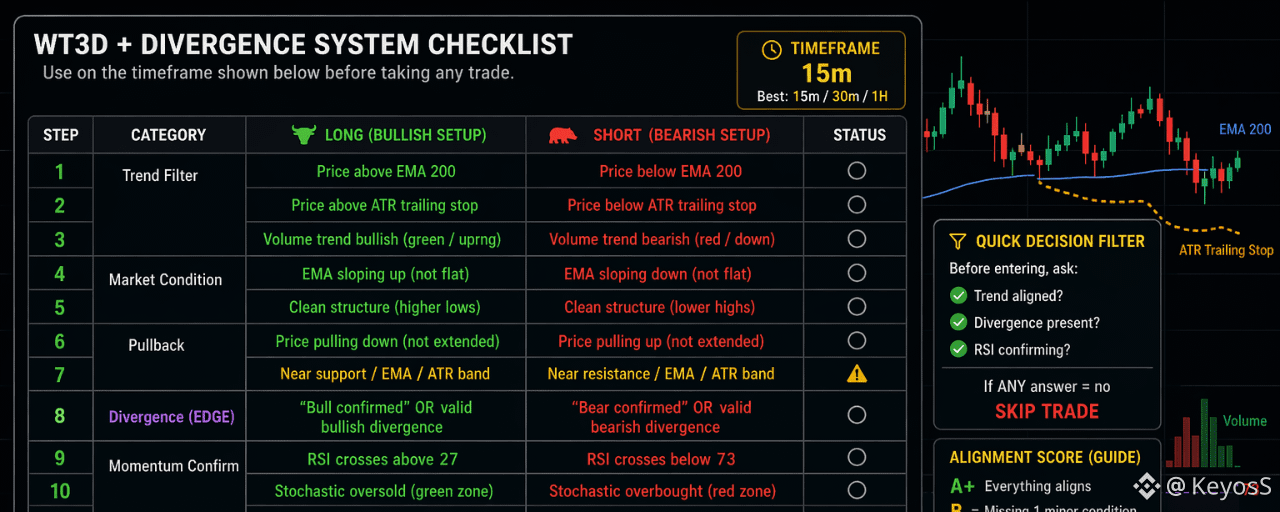
Yuqori ehtimolli kirishlarni o‘zlashtirish: Mening WT3D + Divergensiya chek-listimAgar siz qat’iy chek-list bo‘lmagan holda kichikroq timeframelarda savdo qilsangiz, aslida equity bilan qimor o‘ynayapsiz. Bozor shovqini sizni har safar aldaydi.
Savdoni sistemali ushlab turish uchun men pozitsiya olishdan oldin past ehtimolli setuplarni filtrlash uchun oddiy konfluens (moslik) frameworkidan foydalanaman. Mana 15m dan 1H gacha bo‘lgan chartlarda executionni qanday tuzaman:
1. Trend mosligi (1–5-bosqichlar)
Men kengroq momentumga qarshi savdo qilmayman. Kirish triggerini ko‘rib chiqishdan oldin yo‘nalish biasini tasdiqlayman:
Yuqori ehtimolli kirishlarni o‘zlashtirish: Mening WT3D + Divergensiya chek-listim
Agar siz qat’iy chek-list bo‘lmagan holda kichikroq timeframelarda savdo qilsangiz, aslida equity bilan qimor o‘ynayapsiz. Bozor shovqini sizni har safar aldaydi.
Savdoni sistemali ushlab turish uchun men pozitsiya olishdan oldin past ehtimolli setuplarni filtrlash uchun oddiy konfluens (moslik) frameworkidan foydalanaman. Mana 15m dan 1H gacha bo‘lgan chartlarda executionni qanday tuzaman:
1. Trend mosligi (1–5-bosqichlar)
Men kengroq momentumga qarshi savdo qilmayman. Kirish triggerini ko‘rib chiqishdan oldin yo‘nalish biasini tasdiqlayman:
Savdoni sistemali ushlab turish uchun men pozitsiya olishdan oldin past ehtimolli setuplarni filtrlash uchun oddiy konfluens (moslik) frameworkidan foydalanaman. Mana 15m dan 1H gacha bo‘lgan chartlarda executionni qanday tuzaman:
1. Trend mosligi (1–5-bosqichlar)
Men kengroq momentumga qarshi savdo qilmayman. Kirish triggerini ko‘rib chiqishdan oldin yo‘nalish biasini tasdiqlayman:
1
292
·
--
Tasdiqlangan
@Dusk_Foundation #dusk
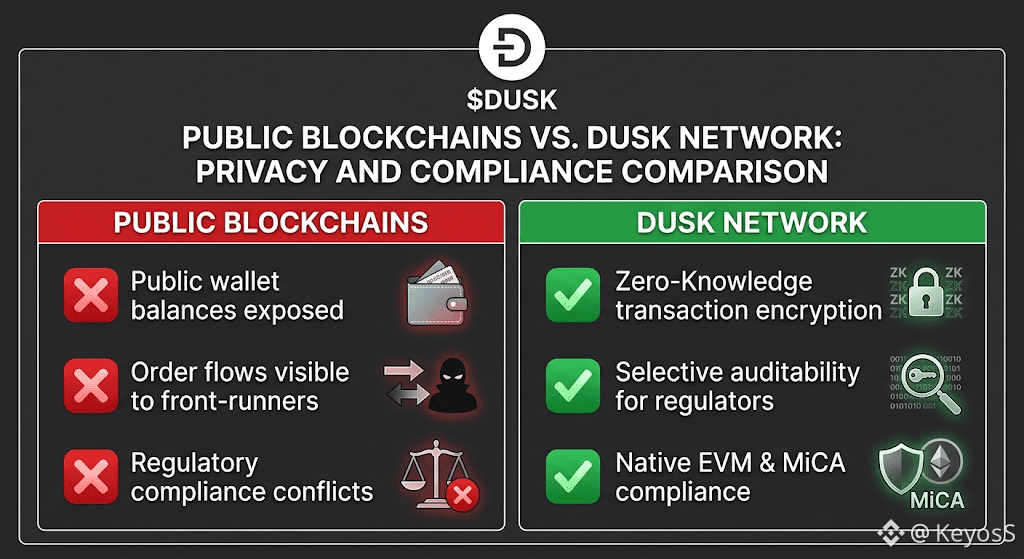
Nega sof shaffoflik institutsional real dunyo aktivlari (RWA) tokenizatsiyasi uchun katta bo‘g‘in (bottleneck) hisoblanadi?
Ochiq blok-eksplorērlar sezgir ijro narxlari, buyurtmalar oqimi va portfel balanslarini frontrannerlarga (oldindan ish ko‘ruvchilarga) oshkor qiladi. An’anaviy moliyaviy instrumentlarni boshqaradigan tartibga solingan kapital bozorlari uchun bunday to‘liq ko‘rinish qabul qilib bo‘lmaydigan holat.
@Dusk_Foundation ushbu infratuzilma bo‘shlig‘ini qanday hal qiladi:
🛡️ Nol bilimli maxfiylik: Sezgir balans yangilanishlari va savdo summalarini ommaviy tekshiruvdan mahalliy (native) primitivlar orqali himoya qiladi.
📑 Audit qilinadigan muvofiqlik: Regulyatorlar maxfiy ma’lumotlarni oshkor qilmasdan muvofiqlikni tekshirishi uchun nol bilimli isbotlarni (zero-knowledge proofs) yaratadi.
⚙️ Standart EVM vositalari: DuskEVM testnet jonli bo‘lgani sababli, Solidity ishlab chiquvchilari standart vositalar yordamida muvofiqlikka mos dApps yaratishi mumkin.
Protokol darajasidagi maxfiylikni muvofiqlik bilan birlashtirish Web3’ga zamonaviy kapital bozorlarini olib kirishning kalitidir.
$DUSK $STX $ONG
{future}(ONGUSDT)
{future}(STXUSDT)
{future}(DUSKUSDT)
@Dusk #dusk
Nega sof shaffoflik institutsional real dunyo aktivlari (RWA) tokenizatsiyasi uchun katta bo‘g‘in (bottleneck) hisoblanadi?
Ochiq blok-eksplorērlar sezgir ijro narxlari, buyurtmalar oqimi va portfel balanslarini frontrannerlarga (oldindan ish ko‘ruvchilarga) oshkor qiladi. An’anaviy moliyaviy instrumentlarni boshqaradigan tartibga solingan kapital bozorlari uchun bunday to‘liq ko‘rinish qabul qilib bo‘lmaydigan holat.
@Dusk ushbu infratuzilma bo‘shlig‘ini qanday hal qiladi:
🛡️ Nol bilimli maxfiylik: Sezgir balans yangilanishlari va savdo summalarini ommaviy tekshiruvdan mahalliy (native) primitivlar orqali himoya qiladi.
📑 Audit qilinadigan muvofiqlik: Regulyatorlar maxfiy ma’lumotlarni oshkor qilmasdan muvofiqlikni tekshirishi uchun nol bilimli isbotlarni (zero-knowledge proofs) yaratadi.
⚙️ Standart EVM vositalari: DuskEVM testnet jonli bo‘lgani sababli, Solidity ishlab chiquvchilari standart vositalar yordamida muvofiqlikka mos dApps yaratishi mumkin.
Protokol darajasidagi maxfiylikni muvofiqlik bilan birlashtirish Web3’ga zamonaviy kapital bozorlarini olib kirishning kalitidir.
$DUSK $STX $ONG
Nega sof shaffoflik institutsional real dunyo aktivlari (RWA) tokenizatsiyasi uchun katta bo‘g‘in (bottleneck) hisoblanadi?
Ochiq blok-eksplorērlar sezgir ijro narxlari, buyurtmalar oqimi va portfel balanslarini frontrannerlarga (oldindan ish ko‘ruvchilarga) oshkor qiladi. An’anaviy moliyaviy instrumentlarni boshqaradigan tartibga solingan kapital bozorlari uchun bunday to‘liq ko‘rinish qabul qilib bo‘lmaydigan holat.
@Dusk ushbu infratuzilma bo‘shlig‘ini qanday hal qiladi:
🛡️ Nol bilimli maxfiylik: Sezgir balans yangilanishlari va savdo summalarini ommaviy tekshiruvdan mahalliy (native) primitivlar orqali himoya qiladi.
📑 Audit qilinadigan muvofiqlik: Regulyatorlar maxfiy ma’lumotlarni oshkor qilmasdan muvofiqlikni tekshirishi uchun nol bilimli isbotlarni (zero-knowledge proofs) yaratadi.
⚙️ Standart EVM vositalari: DuskEVM testnet jonli bo‘lgani sababli, Solidity ishlab chiquvchilari standart vositalar yordamida muvofiqlikka mos dApps yaratishi mumkin.
Protokol darajasidagi maxfiylikni muvofiqlik bilan birlashtirish Web3’ga zamonaviy kapital bozorlarini olib kirishning kalitidir.
$DUSK $STX $ONG
🛡️ Zero-Knowledge Privacy
0%
📑 Auditable Compliance
50%
⚙️ Standard EVM
50%
2 Ovozlar • Ovoz berish yopildi
1
892
·
--
#dusk @Dusk_Foundation
Yillar davomida maxfiylikni saqlovchi blokcheynlar ishlab chiquvchilar uchun ishni qiyinlashtirgani sababli qiyinchilikka duch keldi: ular bunyodkorlardan maxsus, EVM bo‘lmagan tillarni o‘rganishni talab qilardi.
DuskEVM institutsional joylashtirish (deployment) narrativini o‘zgartiradi:
⚙️ Standart EVM vositalari: Dasturchilar standart Solidity ish jarayonlari asosida nol bilimli (zero-knowledge) aqlli shartnomalarni yozishi va joylashtirishi mumkin.
🛡️ O‘rnatilgan maxfiylik: Mahalliy maxfiylik mexanizmlari aqlli shartnoma darajasida tranzaksiya summalari va balanslarni himoya qiladi.
📑 Avtomatlashtirilgan muvofiqlik (XSC): O‘rnatilgan token standartlari onchain’da investorlarning layoqatliligi va transfer qoidalarini bevosita majburiy qiladi.
Zero-knowledge muvofiqlikni markazda saqlagan holda ishlab chiquvchilardagi ishqalanishni (friction) kamaytirish — DUSKning real dunyo aktivlarini tezroq qabul qilishga qanday yordam berishi.
$PROM $TUT $DUSK
{future}(DUSKUSDT)
{spot}(TUTUSDT)
{future}(PROMUSDT)
#dusk @Dusk
Yillar davomida maxfiylikni saqlovchi blokcheynlar ishlab chiquvchilar uchun ishni qiyinlashtirgani sababli qiyinchilikka duch keldi: ular bunyodkorlardan maxsus, EVM bo‘lmagan tillarni o‘rganishni talab qilardi.
DuskEVM institutsional joylashtirish (deployment) narrativini o‘zgartiradi:
⚙️ Standart EVM vositalari: Dasturchilar standart Solidity ish jarayonlari asosida nol bilimli (zero-knowledge) aqlli shartnomalarni yozishi va joylashtirishi mumkin.
🛡️ O‘rnatilgan maxfiylik: Mahalliy maxfiylik mexanizmlari aqlli shartnoma darajasida tranzaksiya summalari va balanslarni himoya qiladi.
📑 Avtomatlashtirilgan muvofiqlik (XSC): O‘rnatilgan token standartlari onchain’da investorlarning layoqatliligi va transfer qoidalarini bevosita majburiy qiladi.
Zero-knowledge muvofiqlikni markazda saqlagan holda ishlab chiquvchilardagi ishqalanishni (friction) kamaytirish — DUSKning real dunyo aktivlarini tezroq qabul qilishga qanday yordam berishi.
$PROM $TUT $DUSK
Yillar davomida maxfiylikni saqlovchi blokcheynlar ishlab chiquvchilar uchun ishni qiyinlashtirgani sababli qiyinchilikka duch keldi: ular bunyodkorlardan maxsus, EVM bo‘lmagan tillarni o‘rganishni talab qilardi.
DuskEVM institutsional joylashtirish (deployment) narrativini o‘zgartiradi:
⚙️ Standart EVM vositalari: Dasturchilar standart Solidity ish jarayonlari asosida nol bilimli (zero-knowledge) aqlli shartnomalarni yozishi va joylashtirishi mumkin.
🛡️ O‘rnatilgan maxfiylik: Mahalliy maxfiylik mexanizmlari aqlli shartnoma darajasida tranzaksiya summalari va balanslarni himoya qiladi.
📑 Avtomatlashtirilgan muvofiqlik (XSC): O‘rnatilgan token standartlari onchain’da investorlarning layoqatliligi va transfer qoidalarini bevosita majburiy qiladi.
Zero-knowledge muvofiqlikni markazda saqlagan holda ishlab chiquvchilardagi ishqalanishni (friction) kamaytirish — DUSKning real dunyo aktivlarini tezroq qabul qilishga qanday yordam berishi.
$PROM $TUT $DUSK
2
213
·
--
#dusk $DUSK @Dusk_Foundation
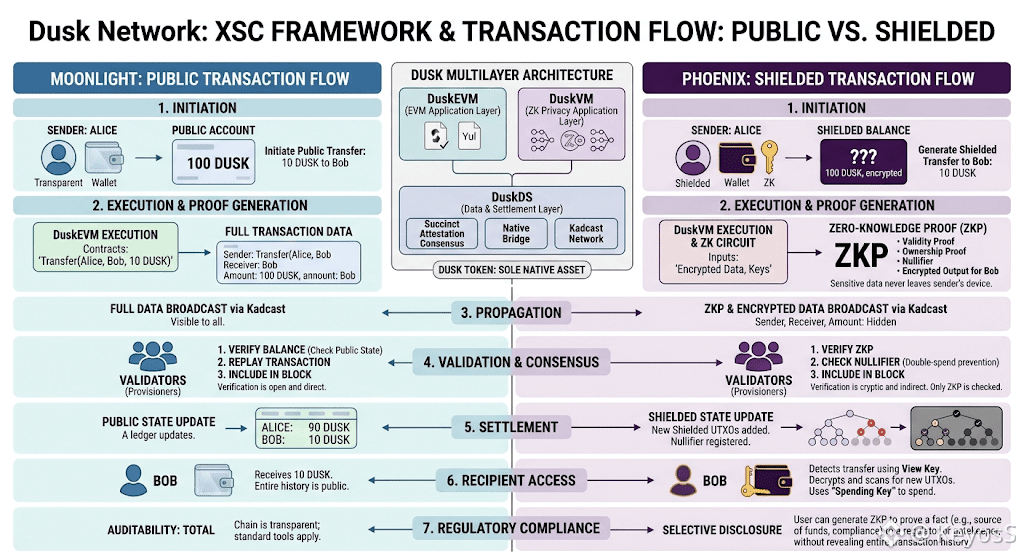
Nega klassik aktiv wrapper’lari institutsional qabul uchun yetarli emas?
An’anaviy moliyaviy institutlar Web3’ga qaraganda, ommaviy buyurtmalar oqimi va ochiq wallet balanslari “dealbreaker” bo‘ladi. Savdo strategiyalarini ommaviy blok-eksplorerlarga tarqatish esa ulkan front-running (oldindan ortidan yugurish) xavfini keltirib chiqaradi.
Dusk institutsional darajadagi RWA’larni qanday hal qiladi:
📊 Tanlab ko‘rsatish: Nolinchi bilimga oid isbotlar (Hedger orqali) order book’larni shifrlaydi, shu bilan birga regulyatorlarga muvofiqlik bo‘yicha bevosita kriptografik isbotni taqdim etadi.
📜 Tug‘ma yuridik mantiq: XSC standarti korporativ amaliyotlar va transfer cheklovlarini oflayn yuridik wrapper’larga tayanish o‘rniga bevosita on-chain bajaradi.
⚡ Deterministik hisob-kitob: Tezkor settlement yakuniyligi kontragent clearing risklarini bartaraf etadi.
Muvofiqlik bilan uyg‘unlashgan tanlab maxfiylik — kapital bozorlarining yetishmayotgan ko‘prigi.
#dusk $DUSK @Dusk
Nega klassik aktiv wrapper’lari institutsional qabul uchun yetarli emas?
An’anaviy moliyaviy institutlar Web3’ga qaraganda, ommaviy buyurtmalar oqimi va ochiq wallet balanslari “dealbreaker” bo‘ladi. Savdo strategiyalarini ommaviy blok-eksplorerlarga tarqatish esa ulkan front-running (oldindan ortidan yugurish) xavfini keltirib chiqaradi.
Dusk institutsional darajadagi RWA’larni qanday hal qiladi:
📊 Tanlab ko‘rsatish: Nolinchi bilimga oid isbotlar (Hedger orqali) order book’larni shifrlaydi, shu bilan birga regulyatorlarga muvofiqlik bo‘yicha bevosita kriptografik isbotni taqdim etadi.
📜 Tug‘ma yuridik mantiq: XSC standarti korporativ amaliyotlar va transfer cheklovlarini oflayn yuridik wrapper’larga tayanish o‘rniga bevosita on-chain bajaradi.
⚡ Deterministik hisob-kitob: Tezkor settlement yakuniyligi kontragent clearing risklarini bartaraf etadi.
Muvofiqlik bilan uyg‘unlashgan tanlab maxfiylik — kapital bozorlarining yetishmayotgan ko‘prigi.
Nega klassik aktiv wrapper’lari institutsional qabul uchun yetarli emas?
An’anaviy moliyaviy institutlar Web3’ga qaraganda, ommaviy buyurtmalar oqimi va ochiq wallet balanslari “dealbreaker” bo‘ladi. Savdo strategiyalarini ommaviy blok-eksplorerlarga tarqatish esa ulkan front-running (oldindan ortidan yugurish) xavfini keltirib chiqaradi.
Dusk institutsional darajadagi RWA’larni qanday hal qiladi:
📊 Tanlab ko‘rsatish: Nolinchi bilimga oid isbotlar (Hedger orqali) order book’larni shifrlaydi, shu bilan birga regulyatorlarga muvofiqlik bo‘yicha bevosita kriptografik isbotni taqdim etadi.
📜 Tug‘ma yuridik mantiq: XSC standarti korporativ amaliyotlar va transfer cheklovlarini oflayn yuridik wrapper’larga tayanish o‘rniga bevosita on-chain bajaradi.
⚡ Deterministik hisob-kitob: Tezkor settlement yakuniyligi kontragent clearing risklarini bartaraf etadi.
Muvofiqlik bilan uyg‘unlashgan tanlab maxfiylik — kapital bozorlarining yetishmayotgan ko‘prigi.
88
·
--
#dusk $DUSK @Dusk_Foundation
Maxfiy dApp’larni joylashtirish avval murakkab, EVM bo‘lmagan tillarni o‘rganishni talab qilardi. DuskEVM esa shu ishqalanishni olib tashlaydi.
Quruvchilar uchun asosiy afzalliklar:
🔹 Standart Solidity: Siz allaqachon biladigan vositalar, framework’lar va kod bazalari yordamida yarating.
🔹 O‘rnatilgan ZK maxfiylik: Hedger’ning native integratsiyasi orqali foydalanuvchi ma’lumotlarini avtomatik himoya qiling.
🔹 Deterministik yakuniylik: Tartibga solinadigan institutsional savdo uchun tezkor hisob-kitob talab qilinadi.
Nol-bilim (zero-knowledge) muvofiqligini tanish Web3 ishlab chiqish vositalariga olib kelish — $DUSK qanday qilib institutsional o‘sishni ta’minlayotgani.
#dusk $DUSK @Dusk
Maxfiy dApp’larni joylashtirish avval murakkab, EVM bo‘lmagan tillarni o‘rganishni talab qilardi. DuskEVM esa shu ishqalanishni olib tashlaydi.
Quruvchilar uchun asosiy afzalliklar:
🔹 Standart Solidity: Siz allaqachon biladigan vositalar, framework’lar va kod bazalari yordamida yarating.
🔹 O‘rnatilgan ZK maxfiylik: Hedger’ning native integratsiyasi orqali foydalanuvchi ma’lumotlarini avtomatik himoya qiling.
🔹 Deterministik yakuniylik: Tartibga solinadigan institutsional savdo uchun tezkor hisob-kitob talab qilinadi.
Nol-bilim (zero-knowledge) muvofiqligini tanish Web3 ishlab chiqish vositalariga olib kelish — $DUSK qanday qilib institutsional o‘sishni ta’minlayotgani.
Maxfiy dApp’larni joylashtirish avval murakkab, EVM bo‘lmagan tillarni o‘rganishni talab qilardi. DuskEVM esa shu ishqalanishni olib tashlaydi.
Quruvchilar uchun asosiy afzalliklar:
🔹 Standart Solidity: Siz allaqachon biladigan vositalar, framework’lar va kod bazalari yordamida yarating.
🔹 O‘rnatilgan ZK maxfiylik: Hedger’ning native integratsiyasi orqali foydalanuvchi ma’lumotlarini avtomatik himoya qiling.
🔹 Deterministik yakuniylik: Tartibga solinadigan institutsional savdo uchun tezkor hisob-kitob talab qilinadi.
Nol-bilim (zero-knowledge) muvofiqligini tanish Web3 ishlab chiqish vositalariga olib kelish — $DUSK qanday qilib institutsional o‘sishni ta’minlayotgani.
75
Ko‘proq kontentni ko‘rish uchun tizimga kiring
Binance Square'da global kriptovalyuta foydalanuvchilariga qo‘shiling
⚡️ Kriptovalyuta haqida eng so‘nggi va foydali ma’lumotlarni oling.
💬 Dunyoning eng yirik kriptovalyuta birjasi tomonidan ishonchli deb topilgan.
👍 Tasdiqlangan mualliflardan haqiqiy tahlillarni kashf eting.
Email / telefon raqami
Trenddagi mavzular
EthereumSurpasses$2700
382 marta koʻrilgan
32 muhokama qilmoqda
$XRP y $ETH van alkista sham chiroq yoqib olamiz, keling 2700$ va 1.6$ gacha kutamiz
Tenmyouji
·1 ta layk
·1.6k marta koʻrilgan
CanaryFilesSecondAmendmentForStakedSEIETF
1,290 marta koʻrilgan
62 muhokama qilmoqda
SaylorHintsStrategyBitcoinBuy
2.3M marta koʻrilgan
12,674 muhokama qilmoqda