
Aadi33
6.3k Postlar

Aadi33
Shikoyat qilish
Foydalanuvchini bloklash
Observe. Adapt. Execute. | Therapy Specialist at Vantive Healthcare.
Ochiq savdo
Yuqori chastotali treyder
5.6 yil
794 Kuzatilmoqda
8.2K+ Kuzatuvchilar
6.9K+ Yoqdi
Postlar
Portfel
Barchasi
Iqtiboslar
Jonli
·
--
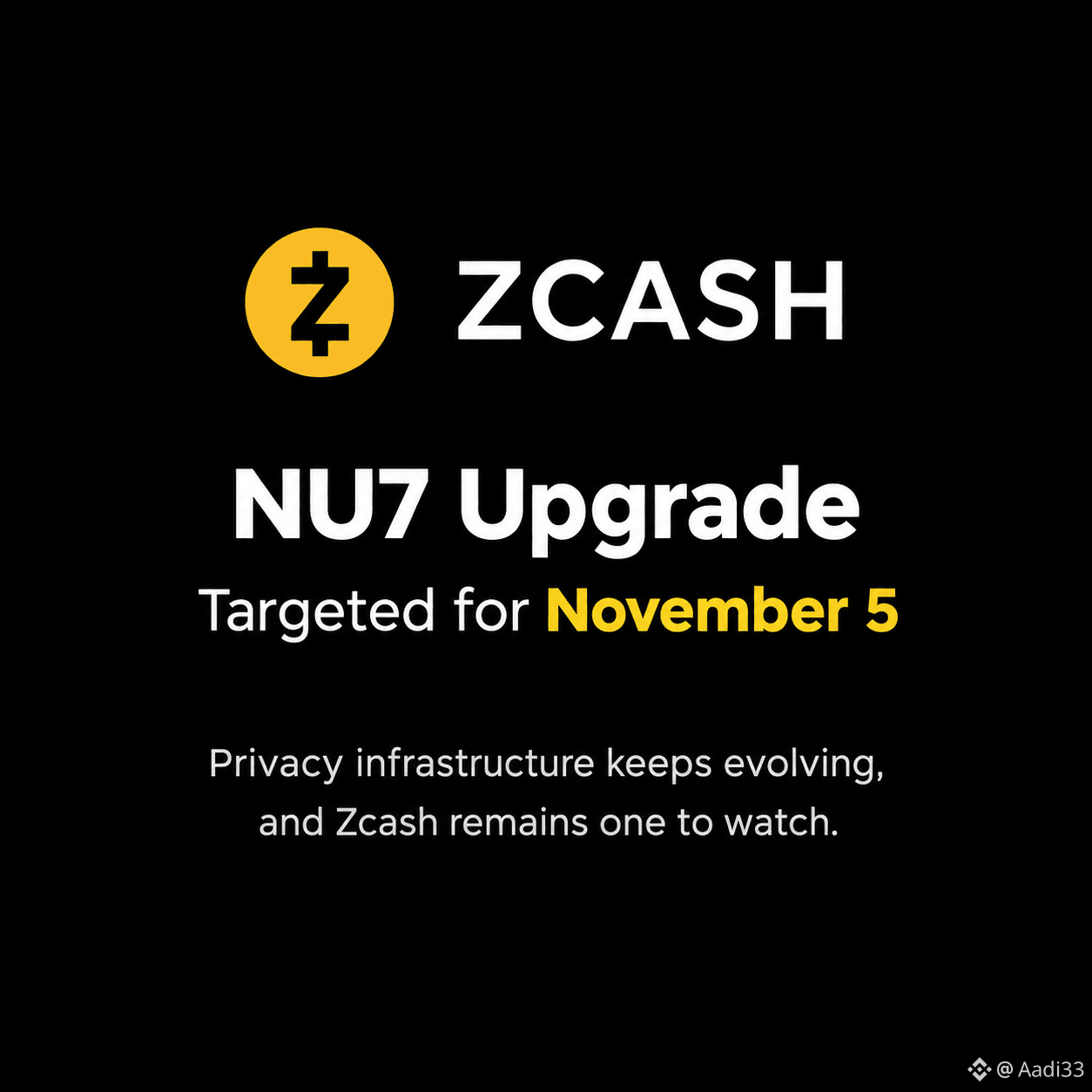
Zcash yana bir katta yangilanish tomon ketmoqda.
NU7 hozirda 5-noyabrga mo‘ljallangan bo‘lib, Zcash tarmog‘iga muhim o‘zgarishlar olib keladi.
Maxfiylik infratuzilmasi doim rivojlanib boryapti va Zcash diqqat bilan kuzatishga arzigulik loyihalardan biri bo‘lib qolmoqda.
$ZEC #zec
Zcash yana bir katta yangilanish tomon ketmoqda.
NU7 hozirda 5-noyabrga mo‘ljallangan bo‘lib, Zcash tarmog‘iga muhim o‘zgarishlar olib keladi.
Maxfiylik infratuzilmasi doim rivojlanib boryapti va Zcash diqqat bilan kuzatishga arzigulik loyihalardan biri bo‘lib qolmoqda.
$ZEC #zec
NU7 hozirda 5-noyabrga mo‘ljallangan bo‘lib, Zcash tarmog‘iga muhim o‘zgarishlar olib keladi.
Maxfiylik infratuzilmasi doim rivojlanib boryapti va Zcash diqqat bilan kuzatishga arzigulik loyihalardan biri bo‘lib qolmoqda.
$ZEC #zec
4
304
·
--
O‘suvchi
Tasdiqlangan
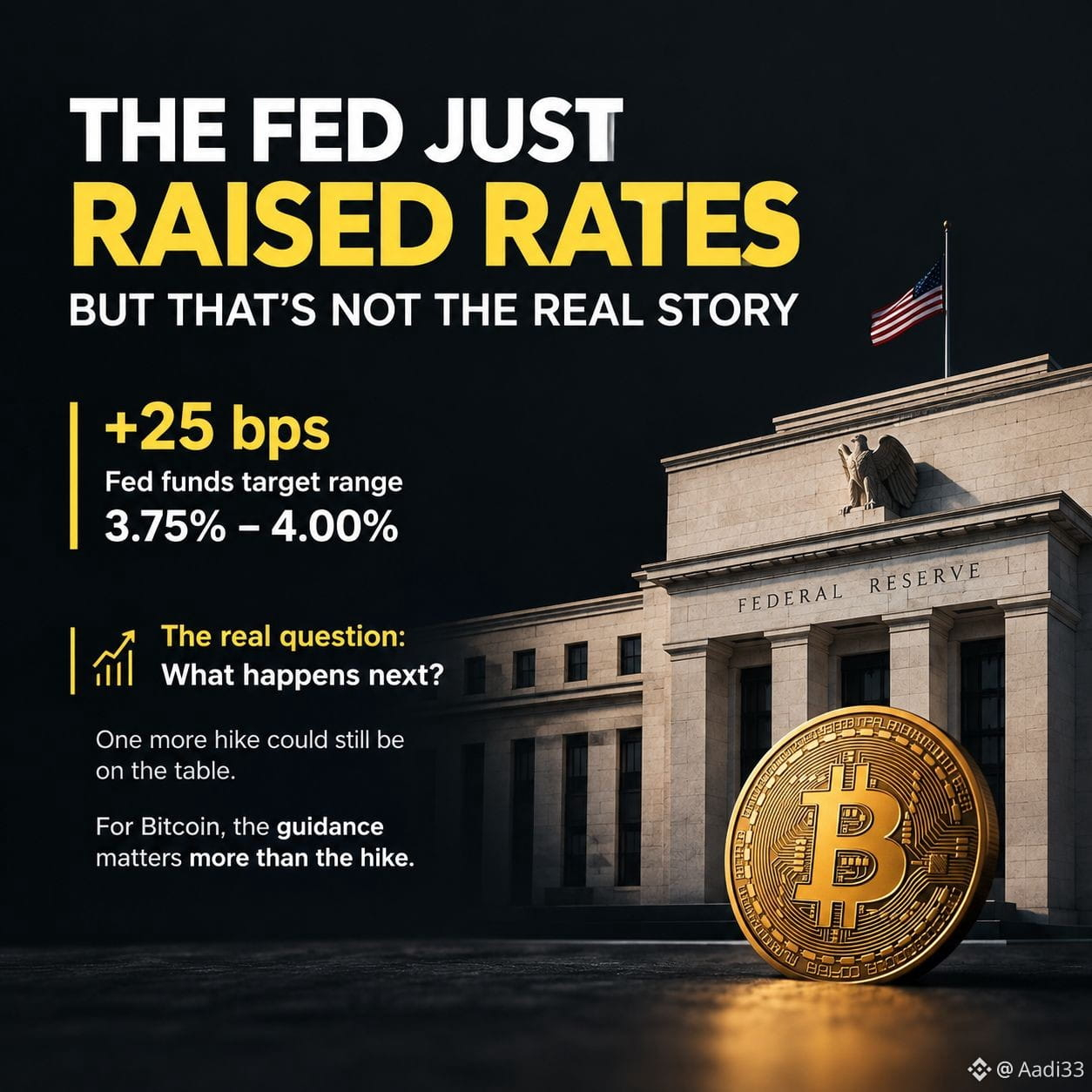
FED G`OYAT SUDRAB BO`YLANGAN STAVKALARNI OShIRDI — LEKIN ASOSIY QISSА BU EMAS
+25 bps.
Endi stavkalar 3.75%–4.00%.
Rostini aytsam, ko`tarishning o`zi ham kutilmagan bo`lmadi. Bozorlar buni oldindan kutib qo`ygan edi.
Asosiy signal Fedning keyingi qadam haqidagi gaplarida.
Yana bitta ko`tarish hali ham ko`rib chiqilayotgan bo`lishi mumkin.
Bitcoin uchun bu bozorlar yo`riqnomani qanday talqin qilishiga qarab juda boshqacha vaziyat yaratadi.
Stavka ko`tarilishi sirtqi tomondan ayanchli (bearish).
Lekin agar investorlar buni qattiqlashtirishning yakuniy bosqichi deb ko`rsa, reaksiya tezda o`zgarishi mumkin.
Sarlavhani kuzatmang.
Yo`lni kuzating.
U yerda haqiqiy keskinlik (volatillik) paydo bo`lishi mumkin.
$BTC $ETH $ZEC
#Fed
FED G`OYAT SUDRAB BO`YLANGAN STAVKALARNI OShIRDI — LEKIN ASOSIY QISSА BU EMAS
+25 bps.
Endi stavkalar 3.75%–4.00%.
Rostini aytsam, ko`tarishning o`zi ham kutilmagan bo`lmadi. Bozorlar buni oldindan kutib qo`ygan edi.
Asosiy signal Fedning keyingi qadam haqidagi gaplarida.
Yana bitta ko`tarish hali ham ko`rib chiqilayotgan bo`lishi mumkin.
Bitcoin uchun bu bozorlar yo`riqnomani qanday talqin qilishiga qarab juda boshqacha vaziyat yaratadi.
Stavka ko`tarilishi sirtqi tomondan ayanchli (bearish).
Lekin agar investorlar buni qattiqlashtirishning yakuniy bosqichi deb ko`rsa, reaksiya tezda o`zgarishi mumkin.
Sarlavhani kuzatmang.
Yo`lni kuzating.
U yerda haqiqiy keskinlik (volatillik) paydo bo`lishi mumkin.
$BTC $ETH $ZEC
#Fed
+25 bps.
Endi stavkalar 3.75%–4.00%.
Rostini aytsam, ko`tarishning o`zi ham kutilmagan bo`lmadi. Bozorlar buni oldindan kutib qo`ygan edi.
Asosiy signal Fedning keyingi qadam haqidagi gaplarida.
Yana bitta ko`tarish hali ham ko`rib chiqilayotgan bo`lishi mumkin.
Bitcoin uchun bu bozorlar yo`riqnomani qanday talqin qilishiga qarab juda boshqacha vaziyat yaratadi.
Stavka ko`tarilishi sirtqi tomondan ayanchli (bearish).
Lekin agar investorlar buni qattiqlashtirishning yakuniy bosqichi deb ko`rsa, reaksiya tezda o`zgarishi mumkin.
Sarlavhani kuzatmang.
Yo`lni kuzating.
U yerda haqiqiy keskinlik (volatillik) paydo bo`lishi mumkin.
$BTC $ETH $ZEC
#Fed
5
896
·
--
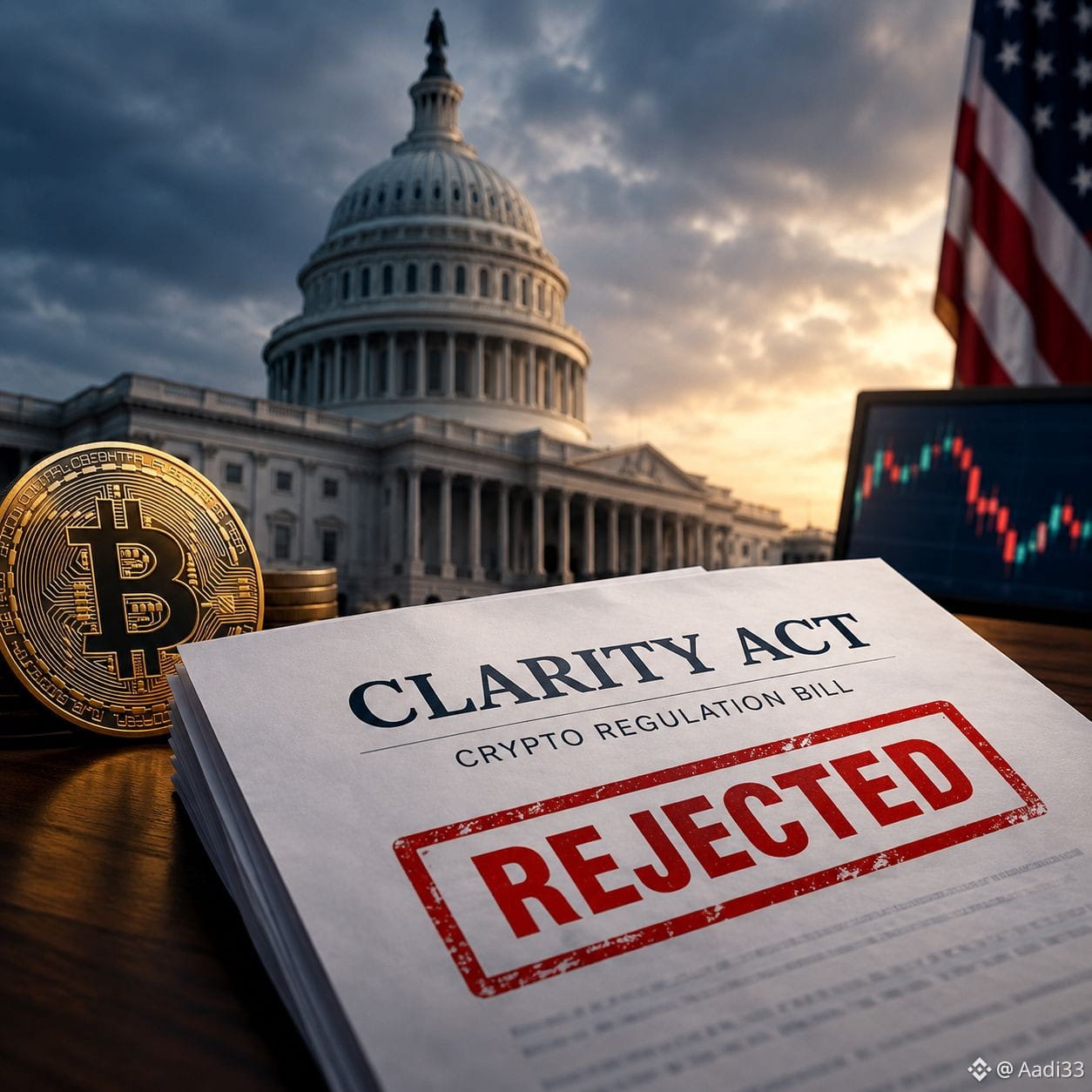
“CLARITY to‘g‘risidagi qonun” endi AQSh Senatida barbod bo‘ldi.
Ovoz berish 49–50 bo‘ldi.
Loyiha kripto bo‘yicha qoidalarni aniqroq qilish kerak edi.
Lekin qonun chiqaruvchilar qoidalar, axloqiy masalalar va kripto manfaatlari bo‘yicha kelisha olmadilar.
Qizig‘i shundaki?
“CLARITY” deb atalgan qonun kripto uchun yanada ko‘proq noaniqlik yaratdi.
Keyin nima bo‘ladi, deb o‘ylaysiz?
$BTC $ETH #Clarity
“CLARITY to‘g‘risidagi qonun” endi AQSh Senatida barbod bo‘ldi.
Ovoz berish 49–50 bo‘ldi.
Loyiha kripto bo‘yicha qoidalarni aniqroq qilish kerak edi.
Lekin qonun chiqaruvchilar qoidalar, axloqiy masalalar va kripto manfaatlari bo‘yicha kelisha olmadilar.
Qizig‘i shundaki?
“CLARITY” deb atalgan qonun kripto uchun yanada ko‘proq noaniqlik yaratdi.
Keyin nima bo‘ladi, deb o‘ylaysiz?
$BTC $ETH #Clarity
Ovoz berish 49–50 bo‘ldi.
Loyiha kripto bo‘yicha qoidalarni aniqroq qilish kerak edi.
Lekin qonun chiqaruvchilar qoidalar, axloqiy masalalar va kripto manfaatlari bo‘yicha kelisha olmadilar.
Qizig‘i shundaki?
“CLARITY” deb atalgan qonun kripto uchun yanada ko‘proq noaniqlik yaratdi.
Keyin nima bo‘ladi, deb o‘ylaysiz?
$BTC $ETH #Clarity
3
1
9
3.2k
·
--
Bugun Senat ovoz beryapti, lekin bu haqiqiy ovoz emas. Bu faqat ular qonun loyihasini palatada muhokama qilishni boshlashiga ruxsat beriladimi-yo‘qmi, degan ovoz.
Bu masala oylardan beri tiqilib qolgan. 2025-yilda Vakillar palatasidan o‘tgan. Senatda o‘tirib qolgan. Iyulda yana, avgustda yana kechiktirilgan. Hozir esa qaytib keldi, chunki respublikachilar dam olish kunlari (hafta oxiri) davomida 120+ ta o‘zgarish kiritishgan, asosan Trumpning kriptoga oid faoliyatlari bilan bog‘liq etika masalalari atrofida.
Bugun o‘tsa ham, hozircha hech narsa aslida o‘zgarmaydi. Baribir haqiqiy o‘tishi uchun 60 ta ovoz kerak, Vakillar palatasi versiyasiga mos kelishi ham kerak, imzo ham talab qilinadi. Vakillar palatasi esa bu haftada Oq saroy (DC)ni tark etadi va saylovlardan (midterms) keyingigacha qaytmaydi. Demak, bugungi g‘alaba ham 2026-yilda buni yakunlash uchun unchalik vaqt qolganini anglatmaydi.
Men bunday “katta yangilik” kunlarini yetarlicha ko‘rganman: bozor odatda sarlavhaga qarab reaksiyaga kirishadi, sarlavhaning aslida nimani anglatishiga emas. Bugun o‘tishi shuni anglatadiki, ular bu haqda gaplashishni davom ettirishga ruxsat olishadi, xolos.
$BTC $ETH $XRP
Bugun Senat ovoz beryapti, lekin bu haqiqiy ovoz emas. Bu faqat ular qonun loyihasini palatada muhokama qilishni boshlashiga ruxsat beriladimi-yo‘qmi, degan ovoz.
Bu masala oylardan beri tiqilib qolgan. 2025-yilda Vakillar palatasidan o‘tgan. Senatda o‘tirib qolgan. Iyulda yana, avgustda yana kechiktirilgan. Hozir esa qaytib keldi, chunki respublikachilar dam olish kunlari (hafta oxiri) davomida 120+ ta o‘zgarish kiritishgan, asosan Trumpning kriptoga oid faoliyatlari bilan bog‘liq etika masalalari atrofida.
Bugun o‘tsa ham, hozircha hech narsa aslida o‘zgarmaydi. Baribir haqiqiy o‘tishi uchun 60 ta ovoz kerak, Vakillar palatasi versiyasiga mos kelishi ham kerak, imzo ham talab qilinadi. Vakillar palatasi esa bu haftada Oq saroy (DC)ni tark etadi va saylovlardan (midterms) keyingigacha qaytmaydi. Demak, bugungi g‘alaba ham 2026-yilda buni yakunlash uchun unchalik vaqt qolganini anglatmaydi.
Men bunday “katta yangilik” kunlarini yetarlicha ko‘rganman: bozor odatda sarlavhaga qarab reaksiyaga kirishadi, sarlavhaning aslida nimani anglatishiga emas. Bugun o‘tishi shuni anglatadiki, ular bu haqda gaplashishni davom ettirishga ruxsat olishadi, xolos.
$BTC $ETH $XRP
Bu masala oylardan beri tiqilib qolgan. 2025-yilda Vakillar palatasidan o‘tgan. Senatda o‘tirib qolgan. Iyulda yana, avgustda yana kechiktirilgan. Hozir esa qaytib keldi, chunki respublikachilar dam olish kunlari (hafta oxiri) davomida 120+ ta o‘zgarish kiritishgan, asosan Trumpning kriptoga oid faoliyatlari bilan bog‘liq etika masalalari atrofida.
Bugun o‘tsa ham, hozircha hech narsa aslida o‘zgarmaydi. Baribir haqiqiy o‘tishi uchun 60 ta ovoz kerak, Vakillar palatasi versiyasiga mos kelishi ham kerak, imzo ham talab qilinadi. Vakillar palatasi esa bu haftada Oq saroy (DC)ni tark etadi va saylovlardan (midterms) keyingigacha qaytmaydi. Demak, bugungi g‘alaba ham 2026-yilda buni yakunlash uchun unchalik vaqt qolganini anglatmaydi.
Men bunday “katta yangilik” kunlarini yetarlicha ko‘rganman: bozor odatda sarlavhaga qarab reaksiyaga kirishadi, sarlavhaning aslida nimani anglatishiga emas. Bugun o‘tishi shuni anglatadiki, ular bu haqda gaplashishni davom ettirishga ruxsat olishadi, xolos.
$BTC $ETH $XRP
2
5
448
·
--
BTC bozorning sabrini sinayapti.
Kuchli qo‘llab-quvvatlash + likvidlik qaytishi keyingi katta harakatni tayyorlashi mumkin.
Men bu yerda BTC’ni diqqat bilan kuzatyapman.
Qizil paket biriktirilgan. Agar erta bo‘lsangiz, buni da’vo qiling.
$BTC
BTC bozorning sabrini sinayapti.
Kuchli qo‘llab-quvvatlash + likvidlik qaytishi keyingi katta harakatni tayyorlashi mumkin.
Men bu yerda BTC’ni diqqat bilan kuzatyapman.
Qizil paket biriktirilgan. Agar erta bo‘lsangiz, buni da’vo qiling.
$BTC
Kuchli qo‘llab-quvvatlash + likvidlik qaytishi keyingi katta harakatni tayyorlashi mumkin.
Men bu yerda BTC’ni diqqat bilan kuzatyapman.
Qizil paket biriktirilgan. Agar erta bo‘lsangiz, buni da’vo qiling.
$BTC
11
5
27
·
--
Pasayuvchi
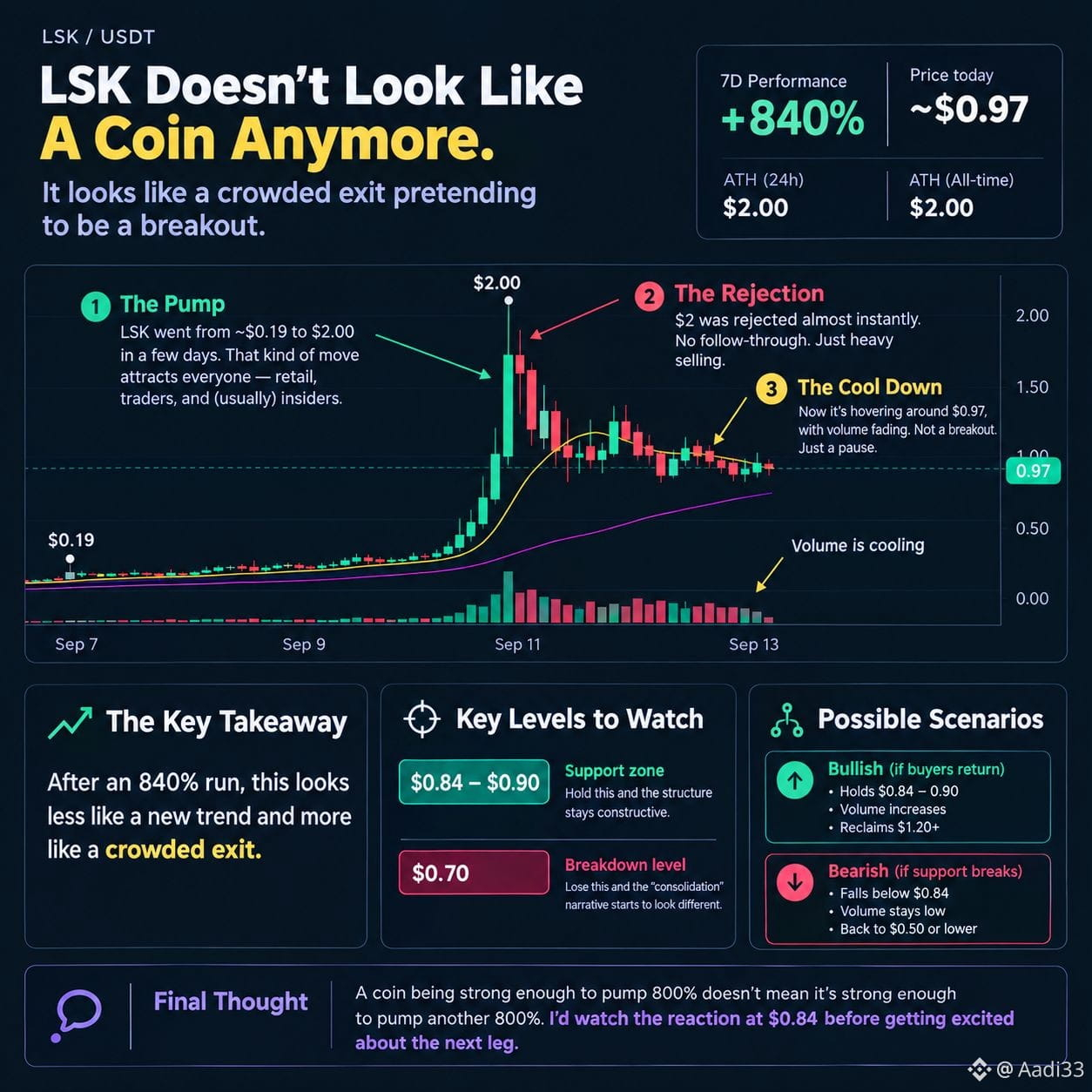
LSK endi tanga kabi ko‘rinmayapti.
U breakout bo‘lib ko‘rinishga urinayotgan gavjum chiqish yo‘lagiga o‘xshaydi.
$0.19 → $2.00.
Hozir esa ~ $0.97.
Qiziqarli savol “LSK yana $2 ga yetadimi?” emas.
Savol shunday:
Hamma bu voqeani allaqachon bilib bo‘lganidan keyin ham kim sotib olishda davom etyapti?
Mana shu joyda bu grafik xavfli bo‘lib qoladi.
$LSK #LSK #pumpingsoon
{future}(LSKUSDT)
LSK endi tanga kabi ko‘rinmayapti.
U breakout bo‘lib ko‘rinishga urinayotgan gavjum chiqish yo‘lagiga o‘xshaydi.
$0.19 → $2.00.
Hozir esa ~ $0.97.
Qiziqarli savol “LSK yana $2 ga yetadimi?” emas.
Savol shunday:
Hamma bu voqeani allaqachon bilib bo‘lganidan keyin ham kim sotib olishda davom etyapti?
Mana shu joyda bu grafik xavfli bo‘lib qoladi.
$LSK #LSK #pumpingsoon
U breakout bo‘lib ko‘rinishga urinayotgan gavjum chiqish yo‘lagiga o‘xshaydi.
$0.19 → $2.00.
Hozir esa ~ $0.97.
Qiziqarli savol “LSK yana $2 ga yetadimi?” emas.
Savol shunday:
Hamma bu voqeani allaqachon bilib bo‘lganidan keyin ham kim sotib olishda davom etyapti?
Mana shu joyda bu grafik xavfli bo‘lib qoladi.
$LSK #LSK #pumpingsoon
4
523
·
--
#CPIWatch
Hamma CPI ko‘tarilishi foiz stavkalarini oshiradimi, deb gapiryapti. Hech kim bozor buni bir necha hafta oldinning o‘zidayoq narxiga qo‘shib bo‘lgani haqida gapirmayapti.
Men doim qaytib keladigan eng muhim jihat mana shu. Raqam tushib ketguncha esa, odatda, odamlar kutgandan ko‘ra reaksiya kichikroq bo‘ladi, chunki bu endi yangi ma’lumot emas, balki tasdiq xolos.
Xulosa qilib aytsam, meningcha, real harakat CPI e’lonining o‘zida emas. Haqiqiy narsa — e’londan keyingi ilk 10 daqiqada, odamlar u kutilganiga mos kelganini anglab, hedjlarni bo‘shatib yuborganda bo‘ladi.
Men sarlavhadagi raqamga reaksya qilishdan ko‘ra, dastlabki keskin sakrashdan keyin nima bo‘lishini kuzatishni afzal ko‘raman.
#CPIWatch
#CPIWatch
Hamma CPI ko‘tarilishi foiz stavkalarini oshiradimi, deb gapiryapti. Hech kim bozor buni bir necha hafta oldinning o‘zidayoq narxiga qo‘shib bo‘lgani haqida gapirmayapti.
Men doim qaytib keladigan eng muhim jihat mana shu. Raqam tushib ketguncha esa, odatda, odamlar kutgandan ko‘ra reaksiya kichikroq bo‘ladi, chunki bu endi yangi ma’lumot emas, balki tasdiq xolos.
Xulosa qilib aytsam, meningcha, real harakat CPI e’lonining o‘zida emas. Haqiqiy narsa — e’londan keyingi ilk 10 daqiqada, odamlar u kutilganiga mos kelganini anglab, hedjlarni bo‘shatib yuborganda bo‘ladi.
Men sarlavhadagi raqamga reaksya qilishdan ko‘ra, dastlabki keskin sakrashdan keyin nima bo‘lishini kuzatishni afzal ko‘raman.
#CPIWatch
Hamma CPI ko‘tarilishi foiz stavkalarini oshiradimi, deb gapiryapti. Hech kim bozor buni bir necha hafta oldinning o‘zidayoq narxiga qo‘shib bo‘lgani haqida gapirmayapti.
Men doim qaytib keladigan eng muhim jihat mana shu. Raqam tushib ketguncha esa, odatda, odamlar kutgandan ko‘ra reaksiya kichikroq bo‘ladi, chunki bu endi yangi ma’lumot emas, balki tasdiq xolos.
Xulosa qilib aytsam, meningcha, real harakat CPI e’lonining o‘zida emas. Haqiqiy narsa — e’londan keyingi ilk 10 daqiqada, odamlar u kutilganiga mos kelganini anglab, hedjlarni bo‘shatib yuborganda bo‘ladi.
Men sarlavhadagi raqamga reaksya qilishdan ko‘ra, dastlabki keskin sakrashdan keyin nima bo‘lishini kuzatishni afzal ko‘raman.
#CPIWatch

2
11
244
·
--
O‘suvchi
ZEC LONG setup
ZEC $1,066 hududiga keskin likvidatsiya harakatidan keyin $1,075 atrofida joylashgan. 1H grafik hali ham pasayish kayfiyatida, ammo pastdan qaytish qisqa muddatli reversal (teskari) setup imkonini beradi.
Kirish: $1,065–$1,085
SL: $1,035
TP1: $1,130
TP2: $1,170
Muhim daraja: $1,095. Uni hajm (volume) bilan qayta qo‘lga kiritish long tezisini kuchaytiradi. $1,066 dan pastda setup sezilarli darajada zaiflashadi.
$ZEC #zec
ZEC LONG setup
ZEC $1,066 hududiga keskin likvidatsiya harakatidan keyin $1,075 atrofida joylashgan. 1H grafik hali ham pasayish kayfiyatida, ammo pastdan qaytish qisqa muddatli reversal (teskari) setup imkonini beradi.
Kirish: $1,065–$1,085
SL: $1,035
TP1: $1,130
TP2: $1,170
Muhim daraja: $1,095. Uni hajm (volume) bilan qayta qo‘lga kiritish long tezisini kuchaytiradi. $1,066 dan pastda setup sezilarli darajada zaiflashadi.
$ZEC #zec
ZEC $1,066 hududiga keskin likvidatsiya harakatidan keyin $1,075 atrofida joylashgan. 1H grafik hali ham pasayish kayfiyatida, ammo pastdan qaytish qisqa muddatli reversal (teskari) setup imkonini beradi.
Kirish: $1,065–$1,085
SL: $1,035
TP1: $1,130
TP2: $1,170
Muhim daraja: $1,095. Uni hajm (volume) bilan qayta qo‘lga kiritish long tezisini kuchaytiradi. $1,066 dan pastda setup sezilarli darajada zaiflashadi.
$ZEC #zec

1
7
211
·
--
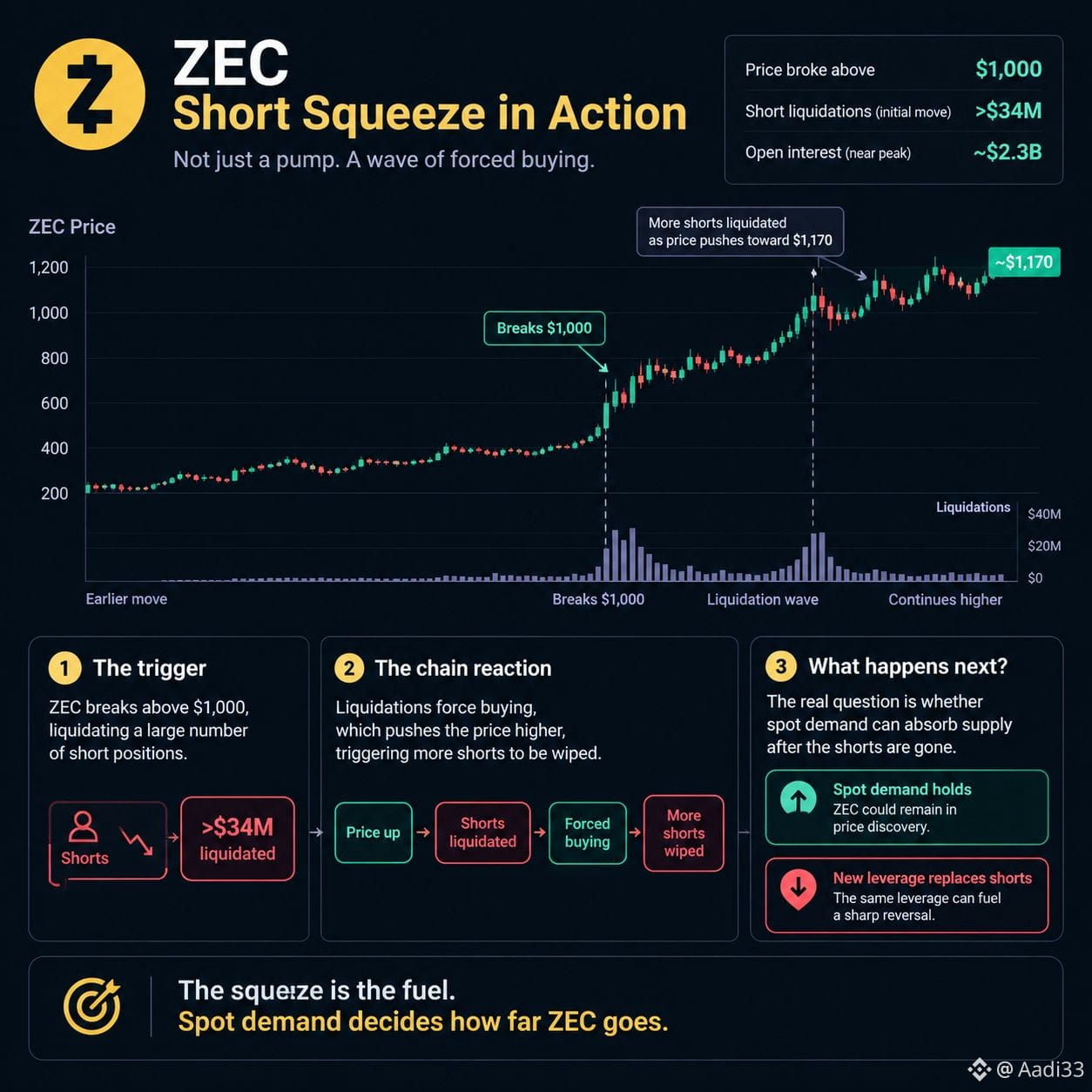
ZEC shunchaki “pompalayapti” emas.
U shortlarni yeb qo‘ymoqda.
ZEC $1,000 dan yuqoriga chiqqan va gavjum bo‘lgan ayanchli bearish savdoni majburiy xaridga aylantirgan. Dastlabki parvoz paytida $34M dan ortiq ZEC shortlari likvidatsiya qilindi, ochiq foiz esa $2,3B ga yaqinlashdi. Keyin ZEC $1,170 tomon surilganida yana bir likvidatsiya to‘lqini kuzatildi.
Mexanizm oddiy:
Narx ko‘tariladi → shortlar likvidatsiya qilinadi → majburiy xarid narxni yanada yuqoriga itaradi → ko‘proq shortlar yo‘q qilinadi.
Lekin eng qiziq qismi shundaki, siqish (squeeze) asl harakatning o‘zi bo‘lmagan. ZEC allaqachon leverage tezlashishidan oldin keskin ko‘tarilgan edi.
Endi esa haqiqiy sinov boshlanadi.
Agar spot talabi shortlar yo‘qolganidan keyin ham taklifni yutishda davom etsa, bu haqiqiy narxni kashf qilish (price discovery) bosqichi bo‘lib qolishi mumkin.
Agar yangi leverage shunchaki likvidatsiya qilingan shortlarni o‘rnini bosayotgan bo‘lsa, qaytish ham xuddi shunchalik keskin bo‘lishi mumkin.
Shuning uchun men sarlavhadagi narxdan ko‘ra ochiq foizga ko‘proq qarayapman.
Savol ZEC nega “pump” bo‘layotgani haqida emas.
Savol shuki, siqish uchun qolgan shortlar kamaysa, u yana qanchaga yuqoriga chiqishi mumkin?
$ZEC #ZECRally #ZECUSDT $ZEC
ZEC shunchaki “pompalayapti” emas.
U shortlarni yeb qo‘ymoqda.
ZEC $1,000 dan yuqoriga chiqqan va gavjum bo‘lgan ayanchli bearish savdoni majburiy xaridga aylantirgan. Dastlabki parvoz paytida $34M dan ortiq ZEC shortlari likvidatsiya qilindi, ochiq foiz esa $2,3B ga yaqinlashdi. Keyin ZEC $1,170 tomon surilganida yana bir likvidatsiya to‘lqini kuzatildi.
Mexanizm oddiy:
Narx ko‘tariladi → shortlar likvidatsiya qilinadi → majburiy xarid narxni yanada yuqoriga itaradi → ko‘proq shortlar yo‘q qilinadi.
Lekin eng qiziq qismi shundaki, siqish (squeeze) asl harakatning o‘zi bo‘lmagan. ZEC allaqachon leverage tezlashishidan oldin keskin ko‘tarilgan edi.
Endi esa haqiqiy sinov boshlanadi.
Agar spot talabi shortlar yo‘qolganidan keyin ham taklifni yutishda davom etsa, bu haqiqiy narxni kashf qilish (price discovery) bosqichi bo‘lib qolishi mumkin.
Agar yangi leverage shunchaki likvidatsiya qilingan shortlarni o‘rnini bosayotgan bo‘lsa, qaytish ham xuddi shunchalik keskin bo‘lishi mumkin.
Shuning uchun men sarlavhadagi narxdan ko‘ra ochiq foizga ko‘proq qarayapman.
Savol ZEC nega “pump” bo‘layotgani haqida emas.
Savol shuki, siqish uchun qolgan shortlar kamaysa, u yana qanchaga yuqoriga chiqishi mumkin?
$ZEC #ZECRally #ZECUSDT $ZEC
U shortlarni yeb qo‘ymoqda.
ZEC $1,000 dan yuqoriga chiqqan va gavjum bo‘lgan ayanchli bearish savdoni majburiy xaridga aylantirgan. Dastlabki parvoz paytida $34M dan ortiq ZEC shortlari likvidatsiya qilindi, ochiq foiz esa $2,3B ga yaqinlashdi. Keyin ZEC $1,170 tomon surilganida yana bir likvidatsiya to‘lqini kuzatildi.
Mexanizm oddiy:
Narx ko‘tariladi → shortlar likvidatsiya qilinadi → majburiy xarid narxni yanada yuqoriga itaradi → ko‘proq shortlar yo‘q qilinadi.
Lekin eng qiziq qismi shundaki, siqish (squeeze) asl harakatning o‘zi bo‘lmagan. ZEC allaqachon leverage tezlashishidan oldin keskin ko‘tarilgan edi.
Endi esa haqiqiy sinov boshlanadi.
Agar spot talabi shortlar yo‘qolganidan keyin ham taklifni yutishda davom etsa, bu haqiqiy narxni kashf qilish (price discovery) bosqichi bo‘lib qolishi mumkin.
Agar yangi leverage shunchaki likvidatsiya qilingan shortlarni o‘rnini bosayotgan bo‘lsa, qaytish ham xuddi shunchalik keskin bo‘lishi mumkin.
Shuning uchun men sarlavhadagi narxdan ko‘ra ochiq foizga ko‘proq qarayapman.
Savol ZEC nega “pump” bo‘layotgani haqida emas.
Savol shuki, siqish uchun qolgan shortlar kamaysa, u yana qanchaga yuqoriga chiqishi mumkin?
$ZEC #ZECRally #ZECUSDT $ZEC
1
4
456
·
--
Pasayuvchi
30K savdo $ZEC 2.3K USDT
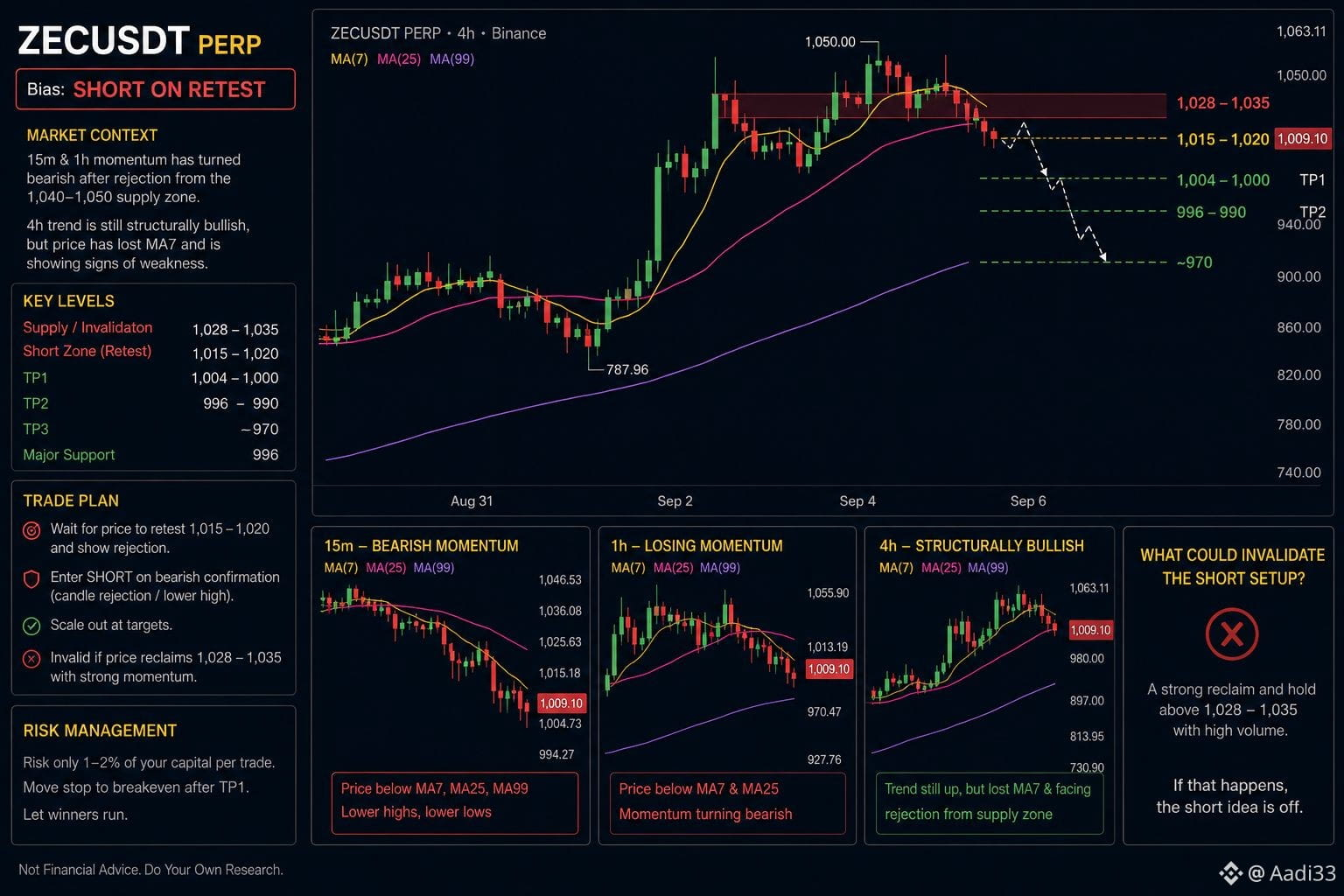
Hozircha ZEC qisqa muddat uchun ko‘proq qulay ko‘rinadi, lekin men 1009 da bu harakatni quvib ketmagan bo‘lardim.
15m diagramma aniq darajada ayiq (bearish) bo‘lib qoldi: narx MA7, MA25 va MA99 dan pastda. 1h esa momentumni yo‘qotmoqda, 4h struktura esa yaqinda bo‘lgan breakoutdan keyin texnik jihatdan hali ham bullish.
Shu sababli hozirgi zona murakkab.
Qayta sinov uchun 1015–1020 ni kuzatardim. Agar narx shu hududga yetib, rad etilsa, short setup yanada jozibaliroq bo‘ladi.
Short zona: 1015–1020
Bekor qilish (Invalidation): 1028–1035
Maqsadlar (Targets): 1004 → 996 → 970
Muhim daraja — 996. U yerdan pastga toza buzilish (clean breakdown) ko‘proq pastga harakatni sezilarli ochib berishi mumkin.
Agar ZEC 1028–1035 ni kuch bilan qaytarib olsa, men short g‘oyani majburan ushlab qolishdan ko‘ra uni bekor qilgan bo‘lardim.
Mening nuqtayi nazarimda, setup — rad etilishdagi SHORT, har qanday narxda SHORT emas.
$ZEC #zec
{future}(ZECUSDT)
Hozircha ZEC qisqa muddat uchun ko‘proq qulay ko‘rinadi, lekin men 1009 da bu harakatni quvib ketmagan bo‘lardim.
15m diagramma aniq darajada ayiq (bearish) bo‘lib qoldi: narx MA7, MA25 va MA99 dan pastda. 1h esa momentumni yo‘qotmoqda, 4h struktura esa yaqinda bo‘lgan breakoutdan keyin texnik jihatdan hali ham bullish.
Shu sababli hozirgi zona murakkab.
Qayta sinov uchun 1015–1020 ni kuzatardim. Agar narx shu hududga yetib, rad etilsa, short setup yanada jozibaliroq bo‘ladi.
Short zona: 1015–1020
Bekor qilish (Invalidation): 1028–1035
Maqsadlar (Targets): 1004 → 996 → 970
Muhim daraja — 996. U yerdan pastga toza buzilish (clean breakdown) ko‘proq pastga harakatni sezilarli ochib berishi mumkin.
Agar ZEC 1028–1035 ni kuch bilan qaytarib olsa, men short g‘oyani majburan ushlab qolishdan ko‘ra uni bekor qilgan bo‘lardim.
Mening nuqtayi nazarimda, setup — rad etilishdagi SHORT, har qanday narxda SHORT emas.
$ZEC #zec
15m diagramma aniq darajada ayiq (bearish) bo‘lib qoldi: narx MA7, MA25 va MA99 dan pastda. 1h esa momentumni yo‘qotmoqda, 4h struktura esa yaqinda bo‘lgan breakoutdan keyin texnik jihatdan hali ham bullish.
Shu sababli hozirgi zona murakkab.
Qayta sinov uchun 1015–1020 ni kuzatardim. Agar narx shu hududga yetib, rad etilsa, short setup yanada jozibaliroq bo‘ladi.
Short zona: 1015–1020
Bekor qilish (Invalidation): 1028–1035
Maqsadlar (Targets): 1004 → 996 → 970
Muhim daraja — 996. U yerdan pastga toza buzilish (clean breakdown) ko‘proq pastga harakatni sezilarli ochib berishi mumkin.
Agar ZEC 1028–1035 ni kuch bilan qaytarib olsa, men short g‘oyani majburan ushlab qolishdan ko‘ra uni bekor qilgan bo‘lardim.
Mening nuqtayi nazarimda, setup — rad etilishdagi SHORT, har qanday narxda SHORT emas.
$ZEC #zec
2
7
396
·
--
Nega Binance bu “shitcoin”larni itarayapti?
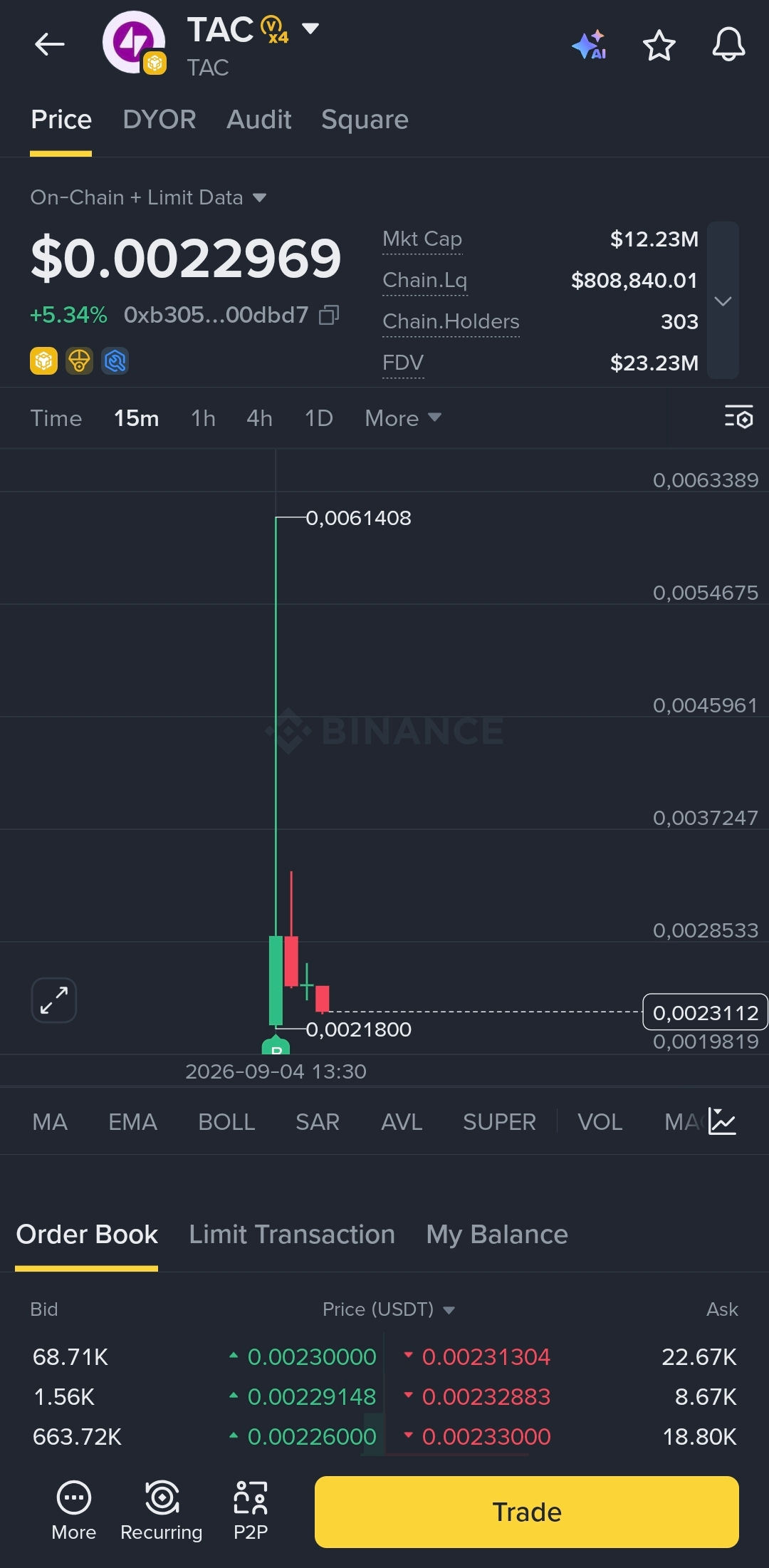
TAC atigi ~$820K likvidlik va 303 ta holder bilan $12.6M atrofida market cap’da turibdi, shunga qaramay Binance Alpha’da juda katta ko‘rinish olmoqda.
Bitta listing katta e’tibor va volatillikni keltirib chiqarishi mumkin, lekin e’tibor bu—adoption emas.
Bu platformalar ilk loyihalarni topishga yordam beryaptimi, yoki shunchaki retailga chiqib ketish uchun likvidlik beryaptimi?
$TAC
{future}(TACUSDT)
Nega Binance bu “shitcoin”larni itarayapti?
TAC atigi ~$820K likvidlik va 303 ta holder bilan $12.6M atrofida market cap’da turibdi, shunga qaramay Binance Alpha’da juda katta ko‘rinish olmoqda.
Bitta listing katta e’tibor va volatillikni keltirib chiqarishi mumkin, lekin e’tibor bu—adoption emas.
Bu platformalar ilk loyihalarni topishga yordam beryaptimi, yoki shunchaki retailga chiqib ketish uchun likvidlik beryaptimi?
$TAC
TAC atigi ~$820K likvidlik va 303 ta holder bilan $12.6M atrofida market cap’da turibdi, shunga qaramay Binance Alpha’da juda katta ko‘rinish olmoqda.
Bitta listing katta e’tibor va volatillikni keltirib chiqarishi mumkin, lekin e’tibor bu—adoption emas.
Bu platformalar ilk loyihalarni topishga yordam beryaptimi, yoki shunchaki retailga chiqib ketish uchun likvidlik beryaptimi?
$TAC
2
1
895
·
--
O‘suvchi
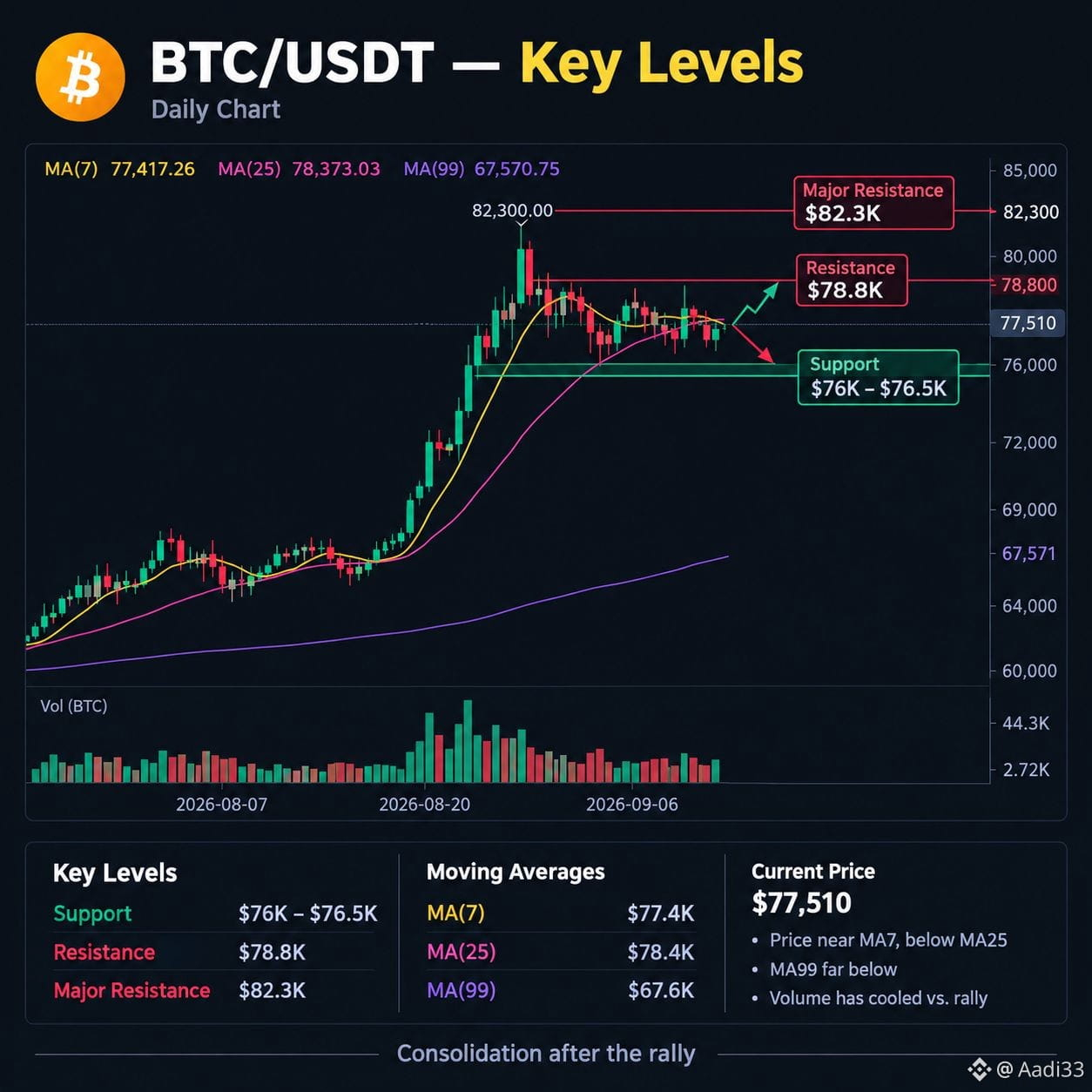
BTC $82K ga “taqillatib” kirdi. Keyingi nima bo‘lishi muhimroq.
Bitcoin hammaning kutgan harakatini qildi.
Lekin buni hali tasdiqlangan breakout deb aytmagan bo‘lardim.
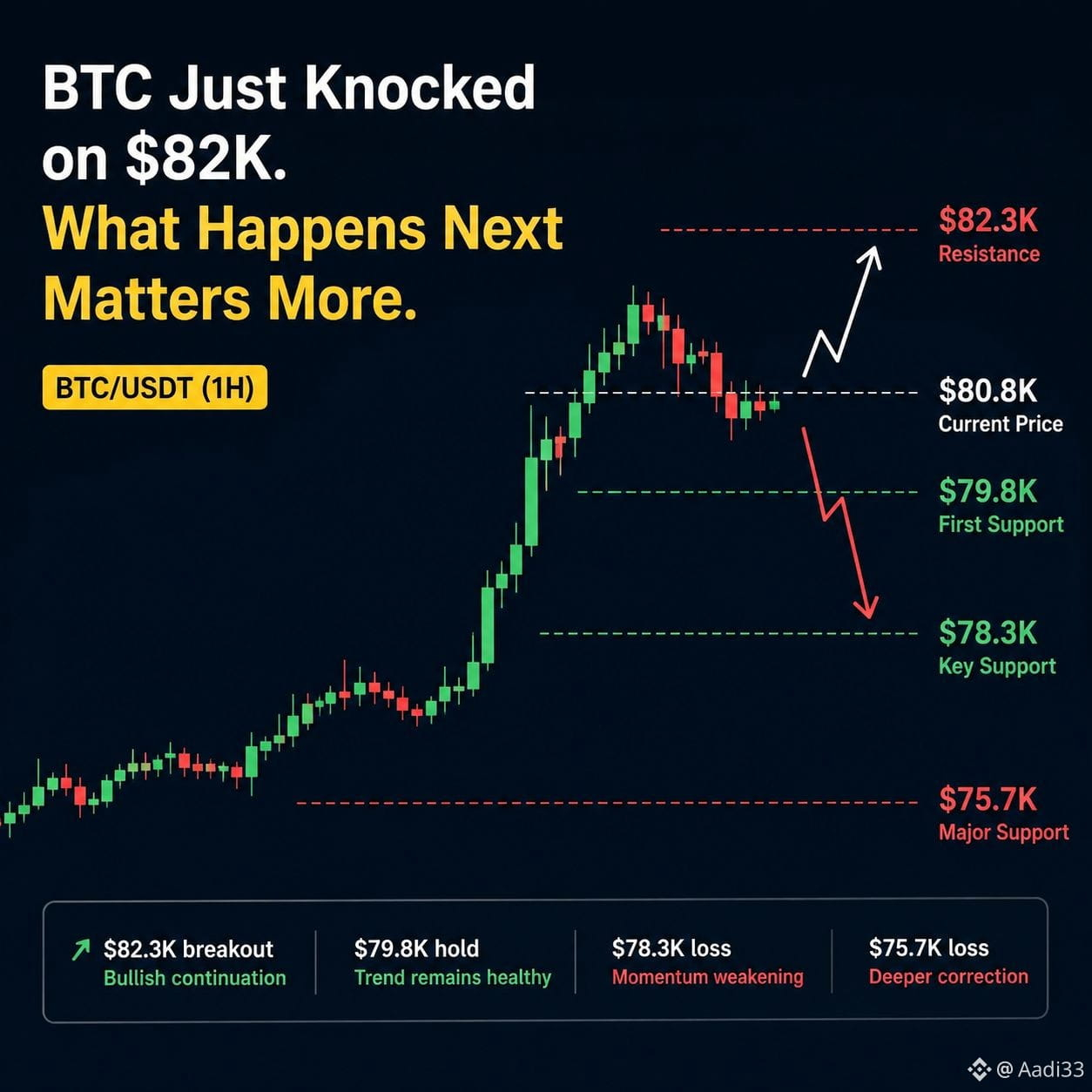
1H grafikda BTC $82.3K ga tegib o‘tgandan keyin taxminan $80.8K atrofida. Tuzilma hali ham konstruktiv:
MA(7): $80.98K
MA(25): $79.86K
MA(99): $78.35K
Bu menga qisqa muddatli trend bullish ekanini ko‘rsatadi, ammo vertikal harakatdan keyin momentum ham sekinlashib ulgurgan.
Muhim zona $81K dan $82.3K gacha.
Bu yerda sotuvchilar to‘liq ko‘rina boshlagan. $82.3K dan yuqorida 1H/4H bo‘yicha toza qabul (acceptance) tuzilmani ancha o‘zgartirib, $90K tomon yo‘l ochishi mumkin. Reuters shuningdek $82.8K atrofini asosiy qarshilik sifatida ham ko‘rsatadi.
Boshqa tomonda esa men kuzatadigan birinchi daraja $79.8K.
Agar uni yo‘qotsa, BTC bemalol $78.3K ga qaytishi mumkin — u yerda hozirda 99 MA turibdi.
Bugun e’tibordan chetda qoldirmaslik kerak bo‘lgan yana bir omil bor:
So‘nggi ralli obligatsiyalar daromadliligining pasayishi va Kristofer Uollerning izohlaridan keyin Fed siyosati haqidagi kutuvlarning yumshashi sababli kuchaydi. Lekin bugungi AQSh ish o‘rinlari bo‘yicha ma’lumotlar bu narrativni tezda o‘zgartirib yuborishi mumkin.
Shuning uchun mening BTC xaritam oddiy:
$82.3K breakout → bullish davomiylik
$79.8K ushlash → trend sog‘lom qoladi
$78.3K yo‘qotish → momentum zaiflashadi
$75.7K yo‘qotish → ancha chuqurroq koreksiya ehtimoli oshadi
Qiziq tomoni shundaki, BTC bu yerda yana boshqa katta-katta yashil shamga ham ehtiyoj yo‘q.
U $82K ustida o‘tirgan sotuvchilarni xaridorlar o‘zlashtira olishini isbotlashi kerak.
Bu short squeeze bilan haqiqiy trend reversal o‘rtasidagi farq.
Siz BTC darhol $82.3K ni buzishini ko‘rishni xohlaysizmi, yo avval $79K ga qaytib, keyin yanada mustahkam poydevor qurishini ma’qul ko‘rasizmi?
$BTC #BTC #bitcoin #BTCanalysis
{future}(BTCUSDT)
BTC $82K ga “taqillatib” kirdi. Keyingi nima bo‘lishi muhimroq.
Bitcoin hammaning kutgan harakatini qildi.
Lekin buni hali tasdiqlangan breakout deb aytmagan bo‘lardim.
1H grafikda BTC $82.3K ga tegib o‘tgandan keyin taxminan $80.8K atrofida. Tuzilma hali ham konstruktiv:
MA(7): $80.98K
MA(25): $79.86K
MA(99): $78.35K
Bu menga qisqa muddatli trend bullish ekanini ko‘rsatadi, ammo vertikal harakatdan keyin momentum ham sekinlashib ulgurgan.
Muhim zona $81K dan $82.3K gacha.
Bu yerda sotuvchilar to‘liq ko‘rina boshlagan. $82.3K dan yuqorida 1H/4H bo‘yicha toza qabul (acceptance) tuzilmani ancha o‘zgartirib, $90K tomon yo‘l ochishi mumkin. Reuters shuningdek $82.8K atrofini asosiy qarshilik sifatida ham ko‘rsatadi.
Boshqa tomonda esa men kuzatadigan birinchi daraja $79.8K.
Agar uni yo‘qotsa, BTC bemalol $78.3K ga qaytishi mumkin — u yerda hozirda 99 MA turibdi.
Bugun e’tibordan chetda qoldirmaslik kerak bo‘lgan yana bir omil bor:
So‘nggi ralli obligatsiyalar daromadliligining pasayishi va Kristofer Uollerning izohlaridan keyin Fed siyosati haqidagi kutuvlarning yumshashi sababli kuchaydi. Lekin bugungi AQSh ish o‘rinlari bo‘yicha ma’lumotlar bu narrativni tezda o‘zgartirib yuborishi mumkin.
Shuning uchun mening BTC xaritam oddiy:
$82.3K breakout → bullish davomiylik
$79.8K ushlash → trend sog‘lom qoladi
$78.3K yo‘qotish → momentum zaiflashadi
$75.7K yo‘qotish → ancha chuqurroq koreksiya ehtimoli oshadi
Qiziq tomoni shundaki, BTC bu yerda yana boshqa katta-katta yashil shamga ham ehtiyoj yo‘q.
U $82K ustida o‘tirgan sotuvchilarni xaridorlar o‘zlashtira olishini isbotlashi kerak.
Bu short squeeze bilan haqiqiy trend reversal o‘rtasidagi farq.
Siz BTC darhol $82.3K ni buzishini ko‘rishni xohlaysizmi, yo avval $79K ga qaytib, keyin yanada mustahkam poydevor qurishini ma’qul ko‘rasizmi?
$BTC #BTC #bitcoin #BTCanalysis
Bitcoin hammaning kutgan harakatini qildi.
Lekin buni hali tasdiqlangan breakout deb aytmagan bo‘lardim.
1H grafikda BTC $82.3K ga tegib o‘tgandan keyin taxminan $80.8K atrofida. Tuzilma hali ham konstruktiv:
MA(7): $80.98K
MA(25): $79.86K
MA(99): $78.35K
Bu menga qisqa muddatli trend bullish ekanini ko‘rsatadi, ammo vertikal harakatdan keyin momentum ham sekinlashib ulgurgan.
Muhim zona $81K dan $82.3K gacha.
Bu yerda sotuvchilar to‘liq ko‘rina boshlagan. $82.3K dan yuqorida 1H/4H bo‘yicha toza qabul (acceptance) tuzilmani ancha o‘zgartirib, $90K tomon yo‘l ochishi mumkin. Reuters shuningdek $82.8K atrofini asosiy qarshilik sifatida ham ko‘rsatadi.
Boshqa tomonda esa men kuzatadigan birinchi daraja $79.8K.
Agar uni yo‘qotsa, BTC bemalol $78.3K ga qaytishi mumkin — u yerda hozirda 99 MA turibdi.
Bugun e’tibordan chetda qoldirmaslik kerak bo‘lgan yana bir omil bor:
So‘nggi ralli obligatsiyalar daromadliligining pasayishi va Kristofer Uollerning izohlaridan keyin Fed siyosati haqidagi kutuvlarning yumshashi sababli kuchaydi. Lekin bugungi AQSh ish o‘rinlari bo‘yicha ma’lumotlar bu narrativni tezda o‘zgartirib yuborishi mumkin.
Shuning uchun mening BTC xaritam oddiy:
$82.3K breakout → bullish davomiylik
$79.8K ushlash → trend sog‘lom qoladi
$78.3K yo‘qotish → momentum zaiflashadi
$75.7K yo‘qotish → ancha chuqurroq koreksiya ehtimoli oshadi
Qiziq tomoni shundaki, BTC bu yerda yana boshqa katta-katta yashil shamga ham ehtiyoj yo‘q.
U $82K ustida o‘tirgan sotuvchilarni xaridorlar o‘zlashtira olishini isbotlashi kerak.
Bu short squeeze bilan haqiqiy trend reversal o‘rtasidagi farq.
Siz BTC darhol $82.3K ni buzishini ko‘rishni xohlaysizmi, yo avval $79K ga qaytib, keyin yanada mustahkam poydevor qurishini ma’qul ko‘rasizmi?
$BTC #BTC #bitcoin #BTCanalysis
2
115
·
--
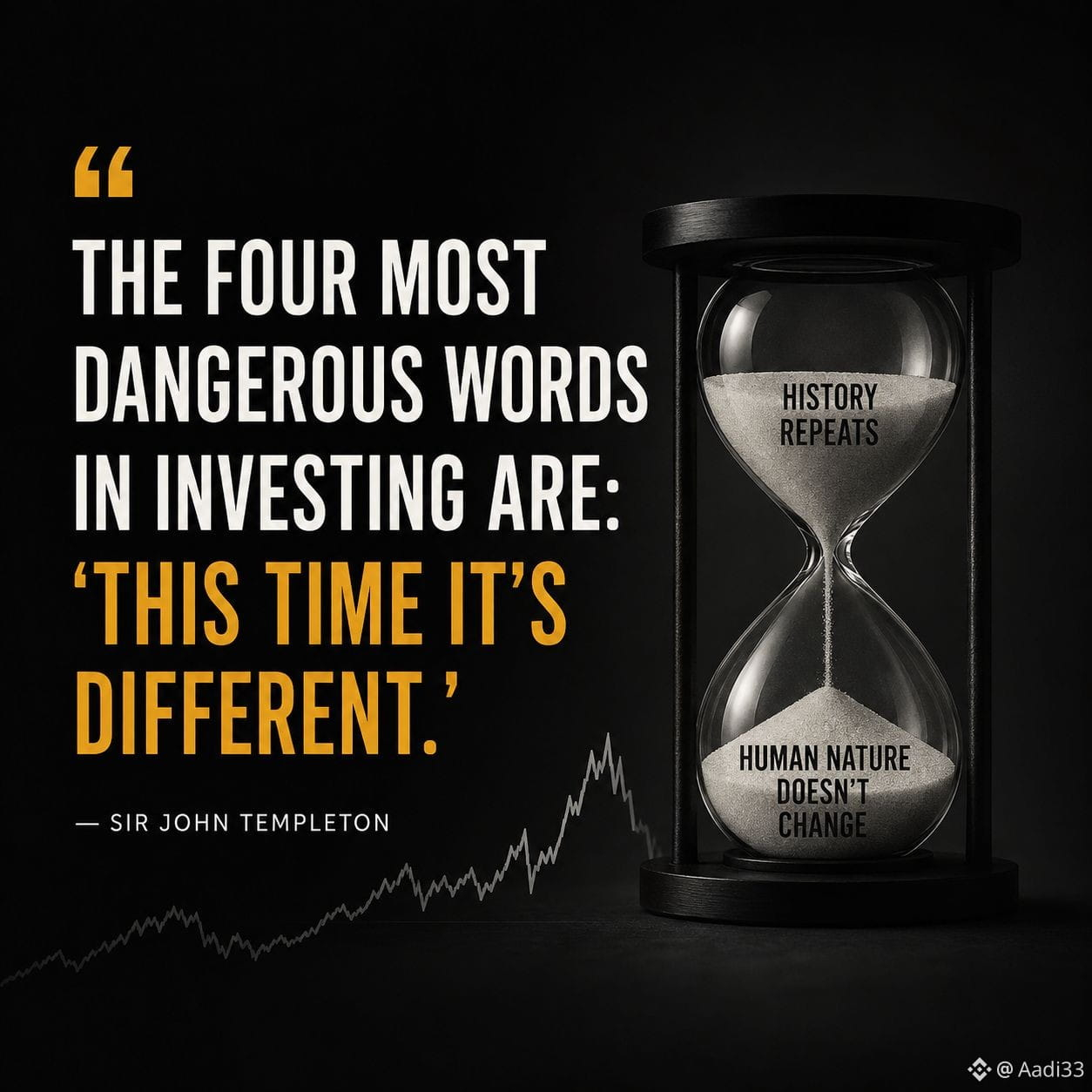
Investitsiyada eng xavfli to‘rtta so‘z: “Bu safar boshqacha.”
— Ser Jon Templeton
Bu ibora ayni paytda ayniqsa dolzarbdek tuyulyapti.
Har bir bozor sikli eski qoidalar endi qo‘llanilmayotganining yangi izohini keltiradi.
Bu safar — geosiyosiy risk.
Bu safar — inflyatsiya.
Bu safar — Fed.
Bu safar — Bitcoin yetildi.
Bu safar — institutlar har bir “dip”ni sotib olishda davom etadi.
Lekin bozorlarda shunday odat bor: o‘zgaruvchilar o‘zgarishini, ammo inson xulqi o‘zgarmasligini eslatib turadi.
Biz avgust oyida Bitcoin kuchli tiklanganini ko‘rdik, biroq sentabrga neft narxlari ko‘tarilgani, obligatsiya daromadliligi (yield) yuksalgani va qat’iyroq pul-kredit siyosati kutilmalari kuchaygani sababli yana bosim ostida kirib keldik. BTC 80 ming dollardan pastga qaytdi, aksiyalar va boshqa riskli aktivlar ham bosimni sezmoqda.
Muhim savol bu — bu yana bir yirik tuzatish boshlanishimi-yo‘qmi degan narsa emas.
Buni kimdir aniq bilmaydi.
Yaxshiroq savol shuki: bozor haqiqatan ham o‘zining asosiy qoidalarini o‘zgartirdimi yoki investorlar yana bir bor narxlarni ular o‘zlari ishongisi kelganidek oqlash uchun yangi hikoya topyaptimi.
Bu farq muhim.
Chunki “bu safar boshqacha” — tezis emas.
Bu — taxminlaringizni yanada ehtiyotkorroq tekshirish haqida ogohlantirish.
Bozorlar odatda odamlarni noaniq bo‘lgani uchun jazolamaydi.
Ular aynan juda noto‘g‘ri paytda ishonchga berilib ketganlarni jazolaydi.
$BTC $ETH $SOL #Marketpsychology
{future}(SOLUSDT)
{future}(ETHUSDT)
{future}(BTCUSDT)
Investitsiyada eng xavfli to‘rtta so‘z: “Bu safar boshqacha.”
— Ser Jon Templeton
Bu ibora ayni paytda ayniqsa dolzarbdek tuyulyapti.
Har bir bozor sikli eski qoidalar endi qo‘llanilmayotganining yangi izohini keltiradi.
Bu safar — geosiyosiy risk.
Bu safar — inflyatsiya.
Bu safar — Fed.
Bu safar — Bitcoin yetildi.
Bu safar — institutlar har bir “dip”ni sotib olishda davom etadi.
Lekin bozorlarda shunday odat bor: o‘zgaruvchilar o‘zgarishini, ammo inson xulqi o‘zgarmasligini eslatib turadi.
Biz avgust oyida Bitcoin kuchli tiklanganini ko‘rdik, biroq sentabrga neft narxlari ko‘tarilgani, obligatsiya daromadliligi (yield) yuksalgani va qat’iyroq pul-kredit siyosati kutilmalari kuchaygani sababli yana bosim ostida kirib keldik. BTC 80 ming dollardan pastga qaytdi, aksiyalar va boshqa riskli aktivlar ham bosimni sezmoqda.
Muhim savol bu — bu yana bir yirik tuzatish boshlanishimi-yo‘qmi degan narsa emas.
Buni kimdir aniq bilmaydi.
Yaxshiroq savol shuki: bozor haqiqatan ham o‘zining asosiy qoidalarini o‘zgartirdimi yoki investorlar yana bir bor narxlarni ular o‘zlari ishongisi kelganidek oqlash uchun yangi hikoya topyaptimi.
Bu farq muhim.
Chunki “bu safar boshqacha” — tezis emas.
Bu — taxminlaringizni yanada ehtiyotkorroq tekshirish haqida ogohlantirish.
Bozorlar odatda odamlarni noaniq bo‘lgani uchun jazolamaydi.
Ular aynan juda noto‘g‘ri paytda ishonchga berilib ketganlarni jazolaydi.
$BTC $ETH $SOL #Marketpsychology
— Ser Jon Templeton
Bu ibora ayni paytda ayniqsa dolzarbdek tuyulyapti.
Har bir bozor sikli eski qoidalar endi qo‘llanilmayotganining yangi izohini keltiradi.
Bu safar — geosiyosiy risk.
Bu safar — inflyatsiya.
Bu safar — Fed.
Bu safar — Bitcoin yetildi.
Bu safar — institutlar har bir “dip”ni sotib olishda davom etadi.
Lekin bozorlarda shunday odat bor: o‘zgaruvchilar o‘zgarishini, ammo inson xulqi o‘zgarmasligini eslatib turadi.
Biz avgust oyida Bitcoin kuchli tiklanganini ko‘rdik, biroq sentabrga neft narxlari ko‘tarilgani, obligatsiya daromadliligi (yield) yuksalgani va qat’iyroq pul-kredit siyosati kutilmalari kuchaygani sababli yana bosim ostida kirib keldik. BTC 80 ming dollardan pastga qaytdi, aksiyalar va boshqa riskli aktivlar ham bosimni sezmoqda.
Muhim savol bu — bu yana bir yirik tuzatish boshlanishimi-yo‘qmi degan narsa emas.
Buni kimdir aniq bilmaydi.
Yaxshiroq savol shuki: bozor haqiqatan ham o‘zining asosiy qoidalarini o‘zgartirdimi yoki investorlar yana bir bor narxlarni ular o‘zlari ishongisi kelganidek oqlash uchun yangi hikoya topyaptimi.
Bu farq muhim.
Chunki “bu safar boshqacha” — tezis emas.
Bu — taxminlaringizni yanada ehtiyotkorroq tekshirish haqida ogohlantirish.
Bozorlar odatda odamlarni noaniq bo‘lgani uchun jazolamaydi.
Ular aynan juda noto‘g‘ri paytda ishonchga berilib ketganlarni jazolaydi.
$BTC $ETH $SOL #Marketpsychology
3
4
461
·
--
Hech kim kuzatmayotgan BTC harakati hali...
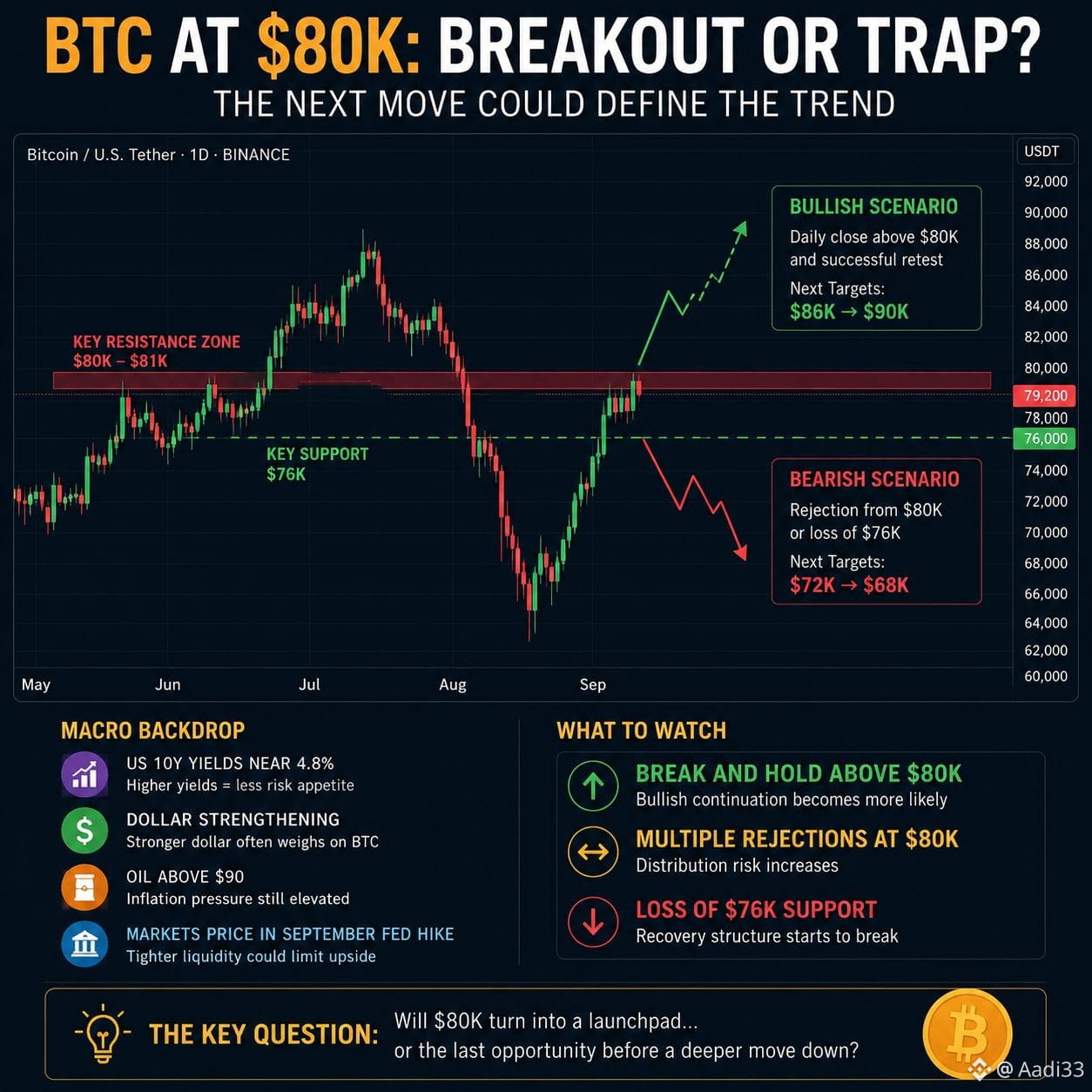
Bitcoin 80 ming dollarga tomon boryapti, biroq joriy tuzilmaning ostida qiziqarli narsa yashiringan.
$80K qayta tiklansa → $86K–$90K
$76K yo‘qotilsa → tiklanish tuzilmasi zaiflashadi
Keyin esa sentabr...
Yillar davomida BTC aynan shu oyda qayta-qayta qiynalib kelgan. So‘ng bu naqsh birdaniga o‘zgargan.
Tarix yana bir takrorlanishni sekin-asta tayyorlayaptimi yoki 2026 bu naqshni butunlay buzadimi?
Asl savol: birinchi bo‘lib kim tuzoqqa tushadi?
$BTC #BTC80K
{future}(BTCUSDT)
Hech kim kuzatmayotgan BTC harakati hali...
Bitcoin 80 ming dollarga tomon boryapti, biroq joriy tuzilmaning ostida qiziqarli narsa yashiringan.
$80K qayta tiklansa → $86K–$90K
$76K yo‘qotilsa → tiklanish tuzilmasi zaiflashadi
Keyin esa sentabr...
Yillar davomida BTC aynan shu oyda qayta-qayta qiynalib kelgan. So‘ng bu naqsh birdaniga o‘zgargan.
Tarix yana bir takrorlanishni sekin-asta tayyorlayaptimi yoki 2026 bu naqshni butunlay buzadimi?
Asl savol: birinchi bo‘lib kim tuzoqqa tushadi?
$BTC #BTC80K
Bitcoin 80 ming dollarga tomon boryapti, biroq joriy tuzilmaning ostida qiziqarli narsa yashiringan.
$80K qayta tiklansa → $86K–$90K
$76K yo‘qotilsa → tiklanish tuzilmasi zaiflashadi
Keyin esa sentabr...
Yillar davomida BTC aynan shu oyda qayta-qayta qiynalib kelgan. So‘ng bu naqsh birdaniga o‘zgargan.
Tarix yana bir takrorlanishni sekin-asta tayyorlayaptimi yoki 2026 bu naqshni butunlay buzadimi?
Asl savol: birinchi bo‘lib kim tuzoqqa tushadi?
$BTC #BTC80K
3
111
·
--
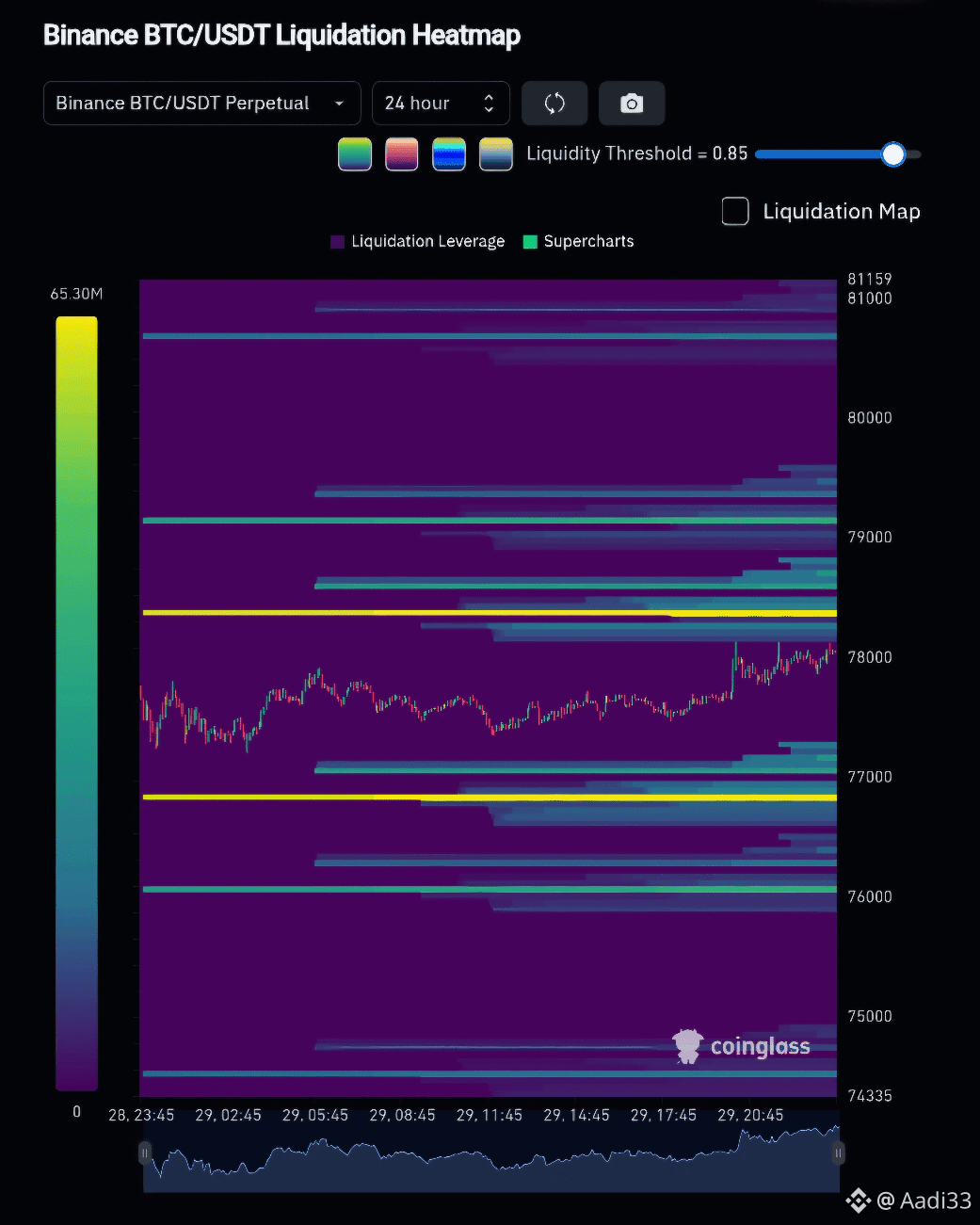
BTC likvidlik muhimroq bo‘lgan, grafiga oid hikoyadan ko‘ra ustunroq bo‘lgan zonada turibdi.
Likvidatsiya xaritalarida yuqorida $78.7K–$79K atrofida sezilarli klasterlar to‘planayotgani, pastroqda esa $76K–$77K yana bir muhim “cho‘ntak” ekani ko‘rinadi.
Bu esa oddiy ssenariyni beradi: har ikki yo‘nalishdagi harakat majburiy likvidatsiyalarni ishga tushirishi va keyingi bosqichni tezlashtirishi mumkin.
Lekin likvidatsiya darajalari kafolatlangan maqsad emas. Ular leveraj qayerda zaifligini ko‘rsatadi, narx qayerga albatta borishini emas.
Hozirgi eng muhim savol esa sodda:
Qaysi tomoni birinchi bo‘lib “süpiriladi”?
$BTC #BTC #BtcLiquidation
{future}(BTCUSDT)
BTC likvidlik muhimroq bo‘lgan, grafiga oid hikoyadan ko‘ra ustunroq bo‘lgan zonada turibdi.
Likvidatsiya xaritalarida yuqorida $78.7K–$79K atrofida sezilarli klasterlar to‘planayotgani, pastroqda esa $76K–$77K yana bir muhim “cho‘ntak” ekani ko‘rinadi.
Bu esa oddiy ssenariyni beradi: har ikki yo‘nalishdagi harakat majburiy likvidatsiyalarni ishga tushirishi va keyingi bosqichni tezlashtirishi mumkin.
Lekin likvidatsiya darajalari kafolatlangan maqsad emas. Ular leveraj qayerda zaifligini ko‘rsatadi, narx qayerga albatta borishini emas.
Hozirgi eng muhim savol esa sodda:
Qaysi tomoni birinchi bo‘lib “süpiriladi”?
$BTC #BTC #BtcLiquidation
Likvidatsiya xaritalarida yuqorida $78.7K–$79K atrofida sezilarli klasterlar to‘planayotgani, pastroqda esa $76K–$77K yana bir muhim “cho‘ntak” ekani ko‘rinadi.
Bu esa oddiy ssenariyni beradi: har ikki yo‘nalishdagi harakat majburiy likvidatsiyalarni ishga tushirishi va keyingi bosqichni tezlashtirishi mumkin.
Lekin likvidatsiya darajalari kafolatlangan maqsad emas. Ular leveraj qayerda zaifligini ko‘rsatadi, narx qayerga albatta borishini emas.
Hozirgi eng muhim savol esa sodda:
Qaysi tomoni birinchi bo‘lib “süpiriladi”?
$BTC #BTC #BtcLiquidation
4
450
·
--
O‘suvchi
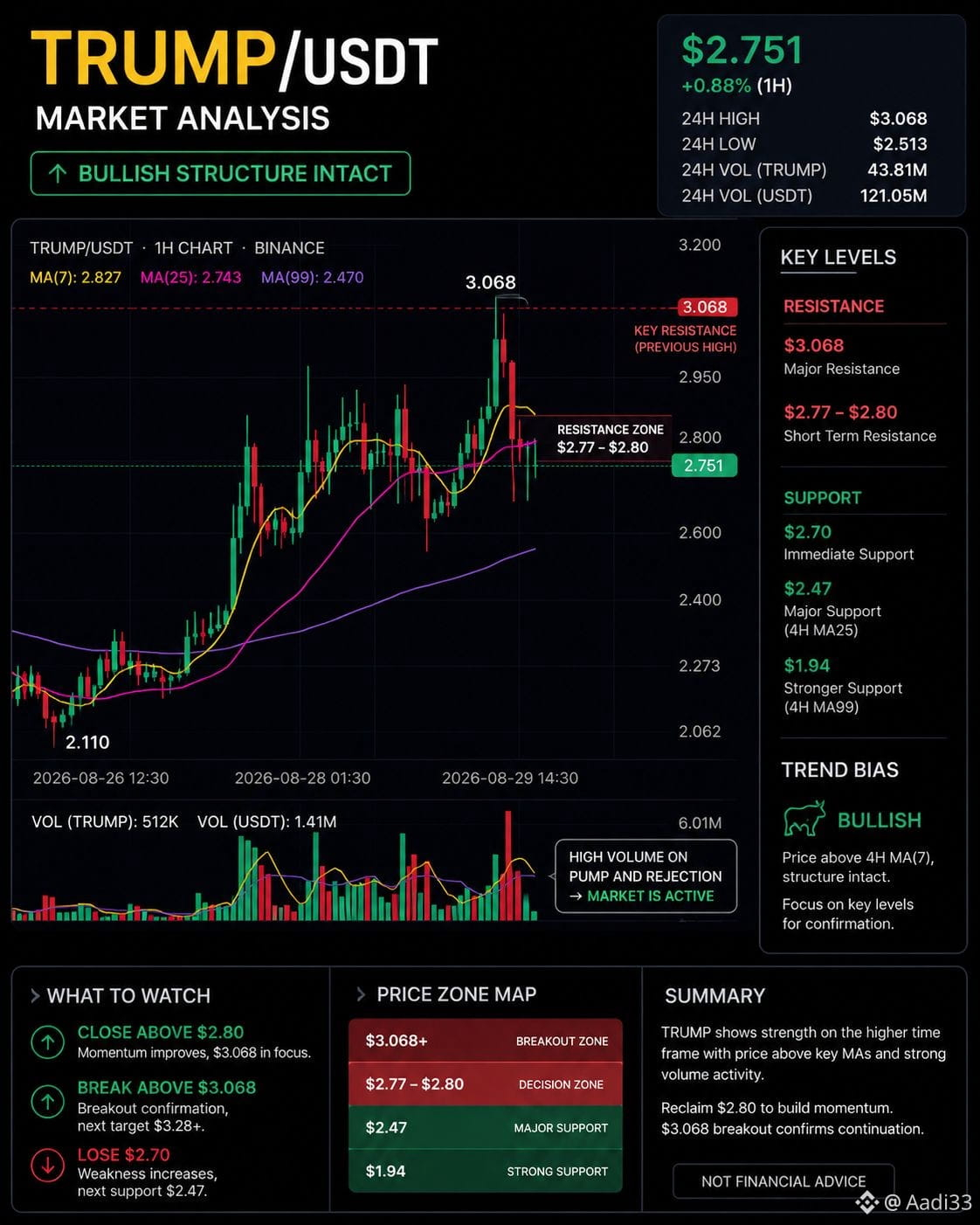
TRUMP buqa (bullish) tuzilmani ushlab turibdi, ammo keyingi harakat bitta asosiy zonaga bog‘liq.
Narx $2.75 atrofida, 4H MA(7) $2.735 va MA(25) esa $2.471.
Asosiy qarshilik $2.80. Agar u kuchli tarzda undan yuqorida yopilsa, $3.068 yana e’tiborga qaytishi mumkin.
Agar $2.70 buzilsa, keyingi muhim tayanch $2.47 atrofida.
Shuning uchun men uchun setup oddiy:
$2.80 dan yuqori → buqa momentum
$3.068 dan yuqori → breakout (tuzilma) tasdig‘i
$2.70 dan past → ehtiyot bo‘lish
Grafik buqa, ammo $2.80 avval qaytarib olinishi kerak.
$TRUMP #bullish #TrumpCrypto
{future}(TRUMPUSDT)
TRUMP buqa (bullish) tuzilmani ushlab turibdi, ammo keyingi harakat bitta asosiy zonaga bog‘liq.
Narx $2.75 atrofida, 4H MA(7) $2.735 va MA(25) esa $2.471.
Asosiy qarshilik $2.80. Agar u kuchli tarzda undan yuqorida yopilsa, $3.068 yana e’tiborga qaytishi mumkin.
Agar $2.70 buzilsa, keyingi muhim tayanch $2.47 atrofida.
Shuning uchun men uchun setup oddiy:
$2.80 dan yuqori → buqa momentum
$3.068 dan yuqori → breakout (tuzilma) tasdig‘i
$2.70 dan past → ehtiyot bo‘lish
Grafik buqa, ammo $2.80 avval qaytarib olinishi kerak.
$TRUMP #bullish #TrumpCrypto
Narx $2.75 atrofida, 4H MA(7) $2.735 va MA(25) esa $2.471.
Asosiy qarshilik $2.80. Agar u kuchli tarzda undan yuqorida yopilsa, $3.068 yana e’tiborga qaytishi mumkin.
Agar $2.70 buzilsa, keyingi muhim tayanch $2.47 atrofida.
Shuning uchun men uchun setup oddiy:
$2.80 dan yuqori → buqa momentum
$3.068 dan yuqori → breakout (tuzilma) tasdig‘i
$2.70 dan past → ehtiyot bo‘lish
Grafik buqa, ammo $2.80 avval qaytarib olinishi kerak.
$TRUMP #bullish #TrumpCrypto
2
185
·
--
O‘suvchi
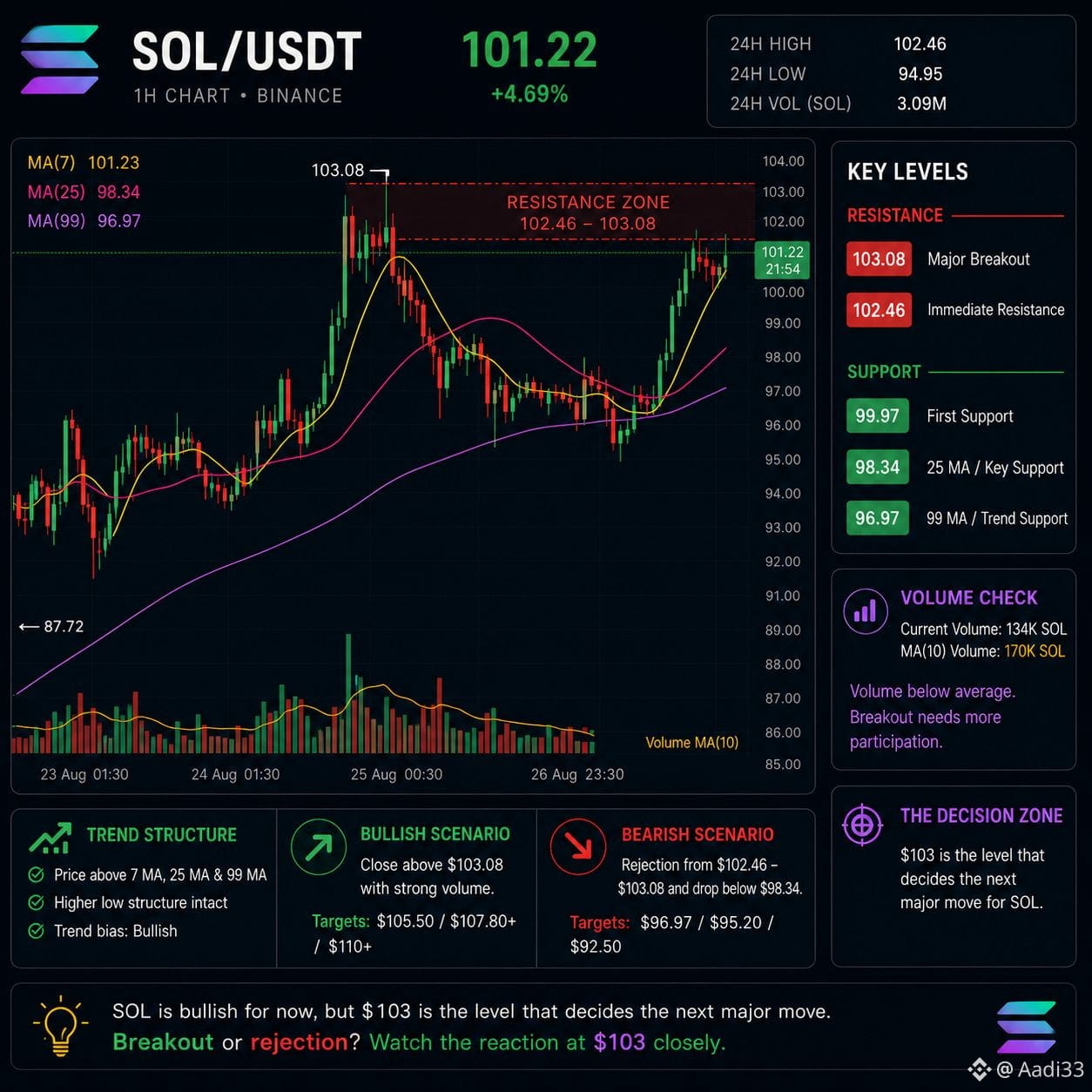
SOL qaror qabul qilish zonasida
SOL $100 dan yuqoriga qaytdi, lekin qiziq tomoni 4,7% harakat emas.
1H (1 soatlik) chartda strukturasi sezilarli yaxshilandi.
Narx $98.34 dagi 25 MA va $96.97 dagi 99 MA ustida ushlanib turibdi, qisqa muddatli 7 MA esa taxminan $101.23 atrofida. Bu hozircha trendni bullish tomonga ancha qat’iy qo‘ydi.
Lekin muammo bor.
Hozir SOL $102.46–$103.08 qarshilik zonasiga yaqinlashmoqda. Oldingi rad etish deyarli aynan shu zonadan bo‘lgan.
Joriy harakat ham biroz ehtiyotkorlikka loyiq. Narx yuqoriga chiqdi, ammo hajm (volume) 134K SOL atrofida, 10 davr hajm o‘rtachasi esa taxminan 170K. Hozirgacha, breakout urinishida hajm bo‘yicha kuchli tasdiq yetarli emas.
Mening darajalarim:
$103.08: asosiy breakout darajasi
$102.46: darhol qarshilik
$99.97: birinchi tayanch
$98.34: 25 MA va muhim qisqa muddatli tayanch
$96.97: 99 MA va yanada chuqurroq trend tayanchi
Agar SOL $103 dan ishonchli tarzda yopilsa va hajm kuchliroq bo‘lsa, yaqinda bo‘lgan diapazon yuqoriga yangi bosqichga o‘tishi mumkin.
Agar yana rad etilsa, avval $100 ni, keyin esa $98.34 ni kuzatardim. Ikkinchisi yo‘qolsa, hozirgi struktura sezilarli darajada zaiflashadi.
Sozlama bullish, lekin $103 — SOL buni isbotlashi kerak bo‘lgan joy.
Siz buni breakout sozlamasi deb hisoblaysizmi yoki yana bir rad etish yuz berishini kutish kerakmi?
$SOL #solonapumping
{future}(SOLUSDT)
SOL qaror qabul qilish zonasida
SOL $100 dan yuqoriga qaytdi, lekin qiziq tomoni 4,7% harakat emas.
1H (1 soatlik) chartda strukturasi sezilarli yaxshilandi.
Narx $98.34 dagi 25 MA va $96.97 dagi 99 MA ustida ushlanib turibdi, qisqa muddatli 7 MA esa taxminan $101.23 atrofida. Bu hozircha trendni bullish tomonga ancha qat’iy qo‘ydi.
Lekin muammo bor.
Hozir SOL $102.46–$103.08 qarshilik zonasiga yaqinlashmoqda. Oldingi rad etish deyarli aynan shu zonadan bo‘lgan.
Joriy harakat ham biroz ehtiyotkorlikka loyiq. Narx yuqoriga chiqdi, ammo hajm (volume) 134K SOL atrofida, 10 davr hajm o‘rtachasi esa taxminan 170K. Hozirgacha, breakout urinishida hajm bo‘yicha kuchli tasdiq yetarli emas.
Mening darajalarim:
$103.08: asosiy breakout darajasi
$102.46: darhol qarshilik
$99.97: birinchi tayanch
$98.34: 25 MA va muhim qisqa muddatli tayanch
$96.97: 99 MA va yanada chuqurroq trend tayanchi
Agar SOL $103 dan ishonchli tarzda yopilsa va hajm kuchliroq bo‘lsa, yaqinda bo‘lgan diapazon yuqoriga yangi bosqichga o‘tishi mumkin.
Agar yana rad etilsa, avval $100 ni, keyin esa $98.34 ni kuzatardim. Ikkinchisi yo‘qolsa, hozirgi struktura sezilarli darajada zaiflashadi.
Sozlama bullish, lekin $103 — SOL buni isbotlashi kerak bo‘lgan joy.
Siz buni breakout sozlamasi deb hisoblaysizmi yoki yana bir rad etish yuz berishini kutish kerakmi?
$SOL #solonapumping
SOL $100 dan yuqoriga qaytdi, lekin qiziq tomoni 4,7% harakat emas.
1H (1 soatlik) chartda strukturasi sezilarli yaxshilandi.
Narx $98.34 dagi 25 MA va $96.97 dagi 99 MA ustida ushlanib turibdi, qisqa muddatli 7 MA esa taxminan $101.23 atrofida. Bu hozircha trendni bullish tomonga ancha qat’iy qo‘ydi.
Lekin muammo bor.
Hozir SOL $102.46–$103.08 qarshilik zonasiga yaqinlashmoqda. Oldingi rad etish deyarli aynan shu zonadan bo‘lgan.
Joriy harakat ham biroz ehtiyotkorlikka loyiq. Narx yuqoriga chiqdi, ammo hajm (volume) 134K SOL atrofida, 10 davr hajm o‘rtachasi esa taxminan 170K. Hozirgacha, breakout urinishida hajm bo‘yicha kuchli tasdiq yetarli emas.
Mening darajalarim:
$103.08: asosiy breakout darajasi
$102.46: darhol qarshilik
$99.97: birinchi tayanch
$98.34: 25 MA va muhim qisqa muddatli tayanch
$96.97: 99 MA va yanada chuqurroq trend tayanchi
Agar SOL $103 dan ishonchli tarzda yopilsa va hajm kuchliroq bo‘lsa, yaqinda bo‘lgan diapazon yuqoriga yangi bosqichga o‘tishi mumkin.
Agar yana rad etilsa, avval $100 ni, keyin esa $98.34 ni kuzatardim. Ikkinchisi yo‘qolsa, hozirgi struktura sezilarli darajada zaiflashadi.
Sozlama bullish, lekin $103 — SOL buni isbotlashi kerak bo‘lgan joy.
Siz buni breakout sozlamasi deb hisoblaysizmi yoki yana bir rad etish yuz berishini kutish kerakmi?
$SOL #solonapumping
4
234
·
--
Tasdiqlangan
30K savdo $DUSK 26.4K USDT
#dusk $DUSK @Dusk_Foundation
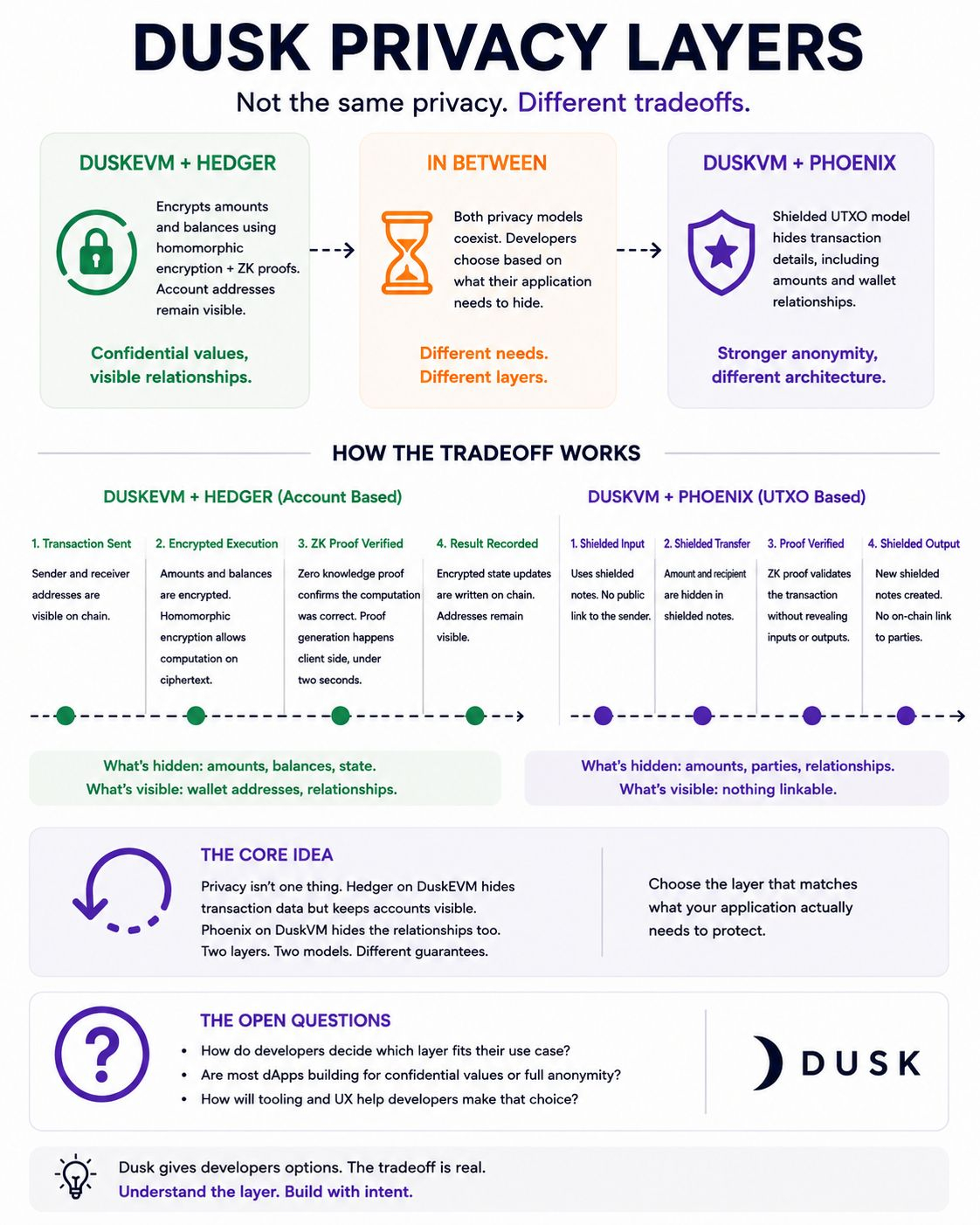
Men tranzaksiyani shifrlash degani butun narsani, jo'natuvchi, qabul qiluvchi, summa — hammasini yashirishni anglatadi deb o'ylagan edim. Ma'lum bo'lishicha, dusk'ning eng yangi maxfiylik dvigateli shulardan faqat bittasini yashiradi.
Men ilk bor Hedger'ni ko'rganimda, homomorfik shifrlash ularning eng kuchli maxfiylik vositasi ekan deb o'ylab yubordim. Aslida ochiq qoldiradigan tomoni — undan ham qiziqroq qism.
Mana nima uchun. Hedger duskEVM'ida ishlaydi, u to'liq EVM bilan mos, ya'ni Ethereum ishlab chiquvchilari o'z Solidity konturlarini o'z holicha olib kelishlari mumkin. Bu moslik akkauntga asoslangan bo'lib qolishdan keladi — Ethereum ishlatadigan model ham aynan shunday. Har bir akkauntda ko'rinadigan manzil bo'ladi, bu esa dusk'ning native UTXO arxitekturasidan farqli maxfiylik modelini yaratadi.
Shuning uchun Hedger o‘sha ko'rinib turganlik ichida nimalar sodir bo‘lishini shifrlaydi. u elliptik egri chiziqlardagi Elgamal asosida qurilgan homomorfik shifrlashdan foydalanadi: tarmoq hech qachon ularni parolini ochmasdan turib shifrlangan qiymatlar ustida hisob-kitob qila oladi, ustiga-ustak, o‘sha hisob-kitoblar to‘g‘ri bajarilganini tasdiqlash uchun nol bilimga asoslangan isbotlar ham bor. Balanslar va transfer summalari oxirigacha shifrlangan holda qoladi. Isbotni yaratish mijoz tomonda qilinadi, ikki soniyadan kamroq vaqtda.
Kutilmagani shuki, bu to‘liq anonimlikni bermaydi. Duskning o‘zi shuni aytadiki, akkauntga asoslangan EVM modeli Hedger bera oladigan anonimlik darajasini cheklaydi — shifrlangan Phoenix modeli esa boshqa tranzaksiya arxitekturasidan foydalanadi.
Hedger'ni tez, oson qabul qilinadigan va mavjud Ethereum ekotizimi vositalari bilan mos qiladigan xuddi shu dizayn aynan shu maxfiylik bo‘yicha murosani (tradeoff) ham yaratadi.
Men hali ham bilmayman: ishlab chiquvchilar qaysi qatlam ularning use-case’iga mos kelishini qanday aniqlaydi — Hedger bilan duskEVMmi, yoki Phoenix bilan native duskVMmi. Chunki ikkalasi ham bir xil “maxfiylik” so‘zi ostida ta’riflanadi, ammo ular ikkita haqiqatan ham turli maxfiylik modelini taqdim etadi.
$ONG $EDEN #Dusk/usdt✅ #BinanceSquareTalks
#dusk $DUSK @Dusk
Men tranzaksiyani shifrlash degani butun narsani, jo'natuvchi, qabul qiluvchi, summa — hammasini yashirishni anglatadi deb o'ylagan edim. Ma'lum bo'lishicha, dusk'ning eng yangi maxfiylik dvigateli shulardan faqat bittasini yashiradi.
Men ilk bor Hedger'ni ko'rganimda, homomorfik shifrlash ularning eng kuchli maxfiylik vositasi ekan deb o'ylab yubordim. Aslida ochiq qoldiradigan tomoni — undan ham qiziqroq qism.
Mana nima uchun. Hedger duskEVM'ida ishlaydi, u to'liq EVM bilan mos, ya'ni Ethereum ishlab chiquvchilari o'z Solidity konturlarini o'z holicha olib kelishlari mumkin. Bu moslik akkauntga asoslangan bo'lib qolishdan keladi — Ethereum ishlatadigan model ham aynan shunday. Har bir akkauntda ko'rinadigan manzil bo'ladi, bu esa dusk'ning native UTXO arxitekturasidan farqli maxfiylik modelini yaratadi.
Shuning uchun Hedger o‘sha ko'rinib turganlik ichida nimalar sodir bo‘lishini shifrlaydi. u elliptik egri chiziqlardagi Elgamal asosida qurilgan homomorfik shifrlashdan foydalanadi: tarmoq hech qachon ularni parolini ochmasdan turib shifrlangan qiymatlar ustida hisob-kitob qila oladi, ustiga-ustak, o‘sha hisob-kitoblar to‘g‘ri bajarilganini tasdiqlash uchun nol bilimga asoslangan isbotlar ham bor. Balanslar va transfer summalari oxirigacha shifrlangan holda qoladi. Isbotni yaratish mijoz tomonda qilinadi, ikki soniyadan kamroq vaqtda.
Kutilmagani shuki, bu to‘liq anonimlikni bermaydi. Duskning o‘zi shuni aytadiki, akkauntga asoslangan EVM modeli Hedger bera oladigan anonimlik darajasini cheklaydi — shifrlangan Phoenix modeli esa boshqa tranzaksiya arxitekturasidan foydalanadi.
Hedger'ni tez, oson qabul qilinadigan va mavjud Ethereum ekotizimi vositalari bilan mos qiladigan xuddi shu dizayn aynan shu maxfiylik bo‘yicha murosani (tradeoff) ham yaratadi.
Men hali ham bilmayman: ishlab chiquvchilar qaysi qatlam ularning use-case’iga mos kelishini qanday aniqlaydi — Hedger bilan duskEVMmi, yoki Phoenix bilan native duskVMmi. Chunki ikkalasi ham bir xil “maxfiylik” so‘zi ostida ta’riflanadi, ammo ular ikkita haqiqatan ham turli maxfiylik modelini taqdim etadi.
$ONG $EDEN #Dusk/usdt✅ #BinanceSquareTalks
Men tranzaksiyani shifrlash degani butun narsani, jo'natuvchi, qabul qiluvchi, summa — hammasini yashirishni anglatadi deb o'ylagan edim. Ma'lum bo'lishicha, dusk'ning eng yangi maxfiylik dvigateli shulardan faqat bittasini yashiradi.
Men ilk bor Hedger'ni ko'rganimda, homomorfik shifrlash ularning eng kuchli maxfiylik vositasi ekan deb o'ylab yubordim. Aslida ochiq qoldiradigan tomoni — undan ham qiziqroq qism.
Mana nima uchun. Hedger duskEVM'ida ishlaydi, u to'liq EVM bilan mos, ya'ni Ethereum ishlab chiquvchilari o'z Solidity konturlarini o'z holicha olib kelishlari mumkin. Bu moslik akkauntga asoslangan bo'lib qolishdan keladi — Ethereum ishlatadigan model ham aynan shunday. Har bir akkauntda ko'rinadigan manzil bo'ladi, bu esa dusk'ning native UTXO arxitekturasidan farqli maxfiylik modelini yaratadi.
Shuning uchun Hedger o‘sha ko'rinib turganlik ichida nimalar sodir bo‘lishini shifrlaydi. u elliptik egri chiziqlardagi Elgamal asosida qurilgan homomorfik shifrlashdan foydalanadi: tarmoq hech qachon ularni parolini ochmasdan turib shifrlangan qiymatlar ustida hisob-kitob qila oladi, ustiga-ustak, o‘sha hisob-kitoblar to‘g‘ri bajarilganini tasdiqlash uchun nol bilimga asoslangan isbotlar ham bor. Balanslar va transfer summalari oxirigacha shifrlangan holda qoladi. Isbotni yaratish mijoz tomonda qilinadi, ikki soniyadan kamroq vaqtda.
Kutilmagani shuki, bu to‘liq anonimlikni bermaydi. Duskning o‘zi shuni aytadiki, akkauntga asoslangan EVM modeli Hedger bera oladigan anonimlik darajasini cheklaydi — shifrlangan Phoenix modeli esa boshqa tranzaksiya arxitekturasidan foydalanadi.
Hedger'ni tez, oson qabul qilinadigan va mavjud Ethereum ekotizimi vositalari bilan mos qiladigan xuddi shu dizayn aynan shu maxfiylik bo‘yicha murosani (tradeoff) ham yaratadi.
Men hali ham bilmayman: ishlab chiquvchilar qaysi qatlam ularning use-case’iga mos kelishini qanday aniqlaydi — Hedger bilan duskEVMmi, yoki Phoenix bilan native duskVMmi. Chunki ikkalasi ham bir xil “maxfiylik” so‘zi ostida ta’riflanadi, ammo ular ikkita haqiqatan ham turli maxfiylik modelini taqdim etadi.
$ONG $EDEN #Dusk/usdt✅ #BinanceSquareTalks
4
6
323
·
--
🎙️ Kechki jonli savdo
Tugashi
04 soat 30 daqiqa 50 soniya
779
DUSKUSDT
Muddatsiz shartnoma
Limit/Long
0
0
Ko‘proq kontentni ko‘rish uchun tizimga kiring
Binance Square'da global kriptovalyuta foydalanuvchilariga qo‘shiling
⚡️ Kriptovalyuta haqida eng so‘nggi va foydali ma’lumotlarni oling.
💬 Dunyoning eng yirik kriptovalyuta birjasi tomonidan ishonchli deb topilgan.
👍 Tasdiqlangan mualliflardan haqiqiy tahlillarni kashf eting.
Email / telefon raqami
Trenddagi mavzular
SaylorHintsStrategyBitcoinBuy
2.2M marta koʻrilgan
12,289 muhokama qilmoqda
#saylorhintsstrategybitcoinbuy
🚨 SAYLOR YAKSHANBA $BTC ISHORASINI TASHLADI 👀
Maykl Saylor yana o‘zining odatiy Bitcoin grafigini qayta joyladi.
Agar tarix takrorlansa, u sariq nuqtalar boshqa Strategy BTC xarid kelayotganidan darak berishi mumkin. 🟠
Saylor sotib olganida esa bozor buni kuzatadi.
🐋 Katta miqdordagi BTC zaxiralari
💰 Akkumulyatsiya qilish bo‘yicha davomiy strategiya
📈 Qisqa muddatli kayfiyatga potensial ijobiy ta’sir
Lekin eng muhim joyi shunda:
Qayta joylash — xarid bo‘yicha tasdiq EMAS.
Haqiqiy signal Strategy rasmiy ravishda tranzaksiyani e’lon qilganda keladi.
🔥 Agar yana bir yirik BTC xarid e’lon qilinsa, bu safar bozor qanday reaksiya qiladi?
Yoki Saylor’ning to‘plashi shu qadar odatiy bo‘lib qoladiki, treyderlar endi deyarli sezmay qo‘yishadimi?
👀 E’longa qarang.
$MSTRB
#BTC #strategy #crypto #BitcoinNews
sdatta
·5 ta layk
·5.6k marta koʻrilgan
BOJRaisesRatesTo31YearHigh
238,027 marta koʻrilgan
3,197 muhokama qilmoqda
BuffettStepsDownAsBerkshireChairman
115,483 marta koʻrilgan
1,707 muhokama qilmoqda