

#skhyb
skhyb
40,878 views
924 Discussing
Hot
Latest


$SKHYB: SKHYB Volume Divergence
The core question for $SKHYB is how elevated volume pairs with downward pressure. The observed hourly direction is down, yet volume sits above the normal baseline. This specific combination suggests active participation rather than passive drift. When price falls while trading activity rises, it often reflects disagreement among market participants rather than a unified consensus.
Peer observations add context but limit conclusions. $BTC shows an hourly direction down with volume not above baseline. $LSK moves up hourly, also with volume at normal levels. These peers provide a different backdrop. They show that not all assets in the same venue move simultaneously with similar intensity. A shared directional move does not imply capital rotation or a common cause. It is merely a parallel observation at a specific moment.
This comparison cannot establish correlation or sector membership. The distinct volume profiles on $SKHYB versus its peers highlight the limits of simple direction matching. We must distinguish this current fact from broader market trends. The elevated volume on $SKHYB is a specific local feature. It does not prove a sustained trend. To assess the durability of this move, we need to see if the volume supports the price level or if the downward pressure exhausts itself. Watching how the move holds relative to the baseline is more informative than the initial direction alone.
Probabilistic market research, not a recommendation or guaranteed return.
The comparison to keep in mind: $BTC has hourly direction down and volume not above its baseline; $LSK has hourly direction up and volume not above its baseline. This alone does not establish correlation.
Which matters more in this comparison: direction or how the move holds?
#SKHYB
$SKHYB : SKHYB Volume Divergence
The core question for $SKHYB is how elevated volume pairs with downward pressure. The observed hourly direction is down, yet volume sits above the normal baseline. This specific combination suggests active participation rather than passive drift. When price falls while trading activity rises, it often reflects disagreement among market participants rather than a unified consensus.
Peer observations add context but limit conclusions. $BTC shows an hourly direction down with volume not above baseline. $LSK moves up hourly, also with volume at normal levels. These peers provide a different backdrop. They show that not all assets in the same venue move simultaneously with similar intensity. A shared directional move does not imply capital rotation or a common cause. It is merely a parallel observation at a specific moment.
This comparison cannot establish correlation or sector membership. The distinct volume profiles on $SKHYB versus its peers highlight the limits of simple direction matching. We must distinguish this current fact from broader market trends. The elevated volume on $SKHYB is a specific local feature. It does not prove a sustained trend. To assess the durability of this move, we need to see if the volume supports the price level or if the downward pressure exhausts itself. Watching how the move holds relative to the baseline is more informative than the initial direction alone.
Probabilistic market research, not a recommendation or guaranteed return.
The comparison to keep in mind: $BTC has hourly direction down and volume not above its baseline; $LSK has hourly direction up and volume not above its baseline. This alone does not establish correlation.
Which matters more in this comparison: direction or how the move holds?
#SKHYB
The core question for $SKHYB is how elevated volume pairs with downward pressure. The observed hourly direction is down, yet volume sits above the normal baseline. This specific combination suggests active participation rather than passive drift. When price falls while trading activity rises, it often reflects disagreement among market participants rather than a unified consensus.
Peer observations add context but limit conclusions. $BTC shows an hourly direction down with volume not above baseline. $LSK moves up hourly, also with volume at normal levels. These peers provide a different backdrop. They show that not all assets in the same venue move simultaneously with similar intensity. A shared directional move does not imply capital rotation or a common cause. It is merely a parallel observation at a specific moment.
This comparison cannot establish correlation or sector membership. The distinct volume profiles on $SKHYB versus its peers highlight the limits of simple direction matching. We must distinguish this current fact from broader market trends. The elevated volume on $SKHYB is a specific local feature. It does not prove a sustained trend. To assess the durability of this move, we need to see if the volume supports the price level or if the downward pressure exhausts itself. Watching how the move holds relative to the baseline is more informative than the initial direction alone.
Probabilistic market research, not a recommendation or guaranteed return.
The comparison to keep in mind: $BTC has hourly direction down and volume not above its baseline; $LSK has hourly direction up and volume not above its baseline. This alone does not establish correlation.
Which matters more in this comparison: direction or how the move holds?
#SKHYB
34

·
--
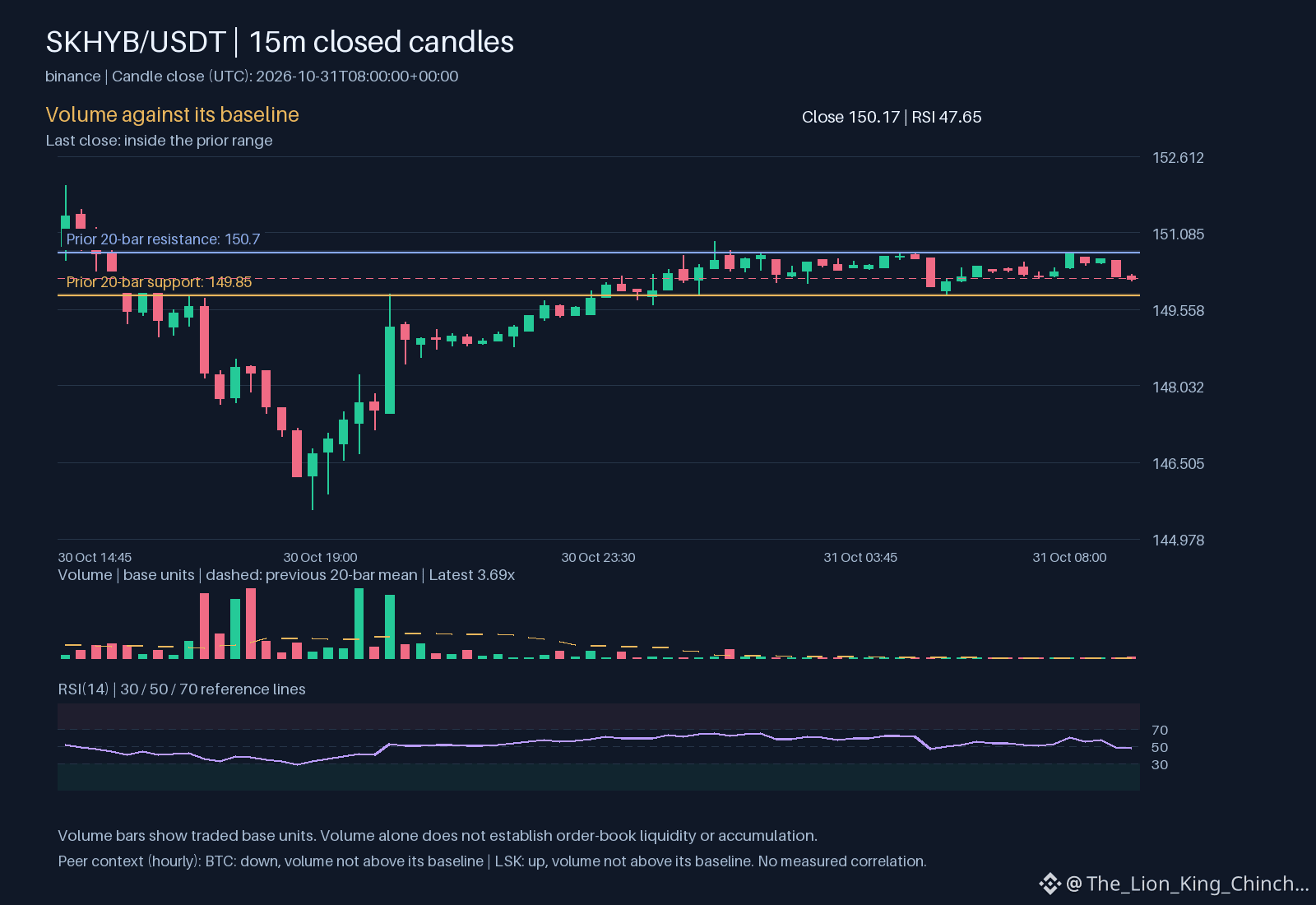
Volume spikes 1.38x above average as $SKHYB tests a 24h drop of -5.29%.
Current price sits at $148.74 after finding a range low near 145.56. Watch for stabilization above that low as a potential consolidation signal.
If buyers reclaim the 162.5 high, momentum could shift. Conversely, a sustained break below 145.56 invalidates the stabilization setup and exposes further downside risk. Manage your risk carefully.
Will you wait for a reclaim of the 162.5 high, or does a breakdown below 145.56 invalidate your setup?
Tap $SKHYB for the live chart. #SKHYB #BinanceSquare
Volume spikes 1.38x above average as $SKHYB tests a 24h drop of -5.29%.
Current price sits at $148.74 after finding a range low near 145.56. Watch for stabilization above that low as a potential consolidation signal.
If buyers reclaim the 162.5 high, momentum could shift. Conversely, a sustained break below 145.56 invalidates the stabilization setup and exposes further downside risk. Manage your risk carefully.
Will you wait for a reclaim of the 162.5 high, or does a breakdown below 145.56 invalidate your setup?
Tap $SKHYB for the live chart. #SKHYB #BinanceSquare
Current price sits at $148.74 after finding a range low near 145.56. Watch for stabilization above that low as a potential consolidation signal.
If buyers reclaim the 162.5 high, momentum could shift. Conversely, a sustained break below 145.56 invalidates the stabilization setup and exposes further downside risk. Manage your risk carefully.
Will you wait for a reclaim of the 162.5 high, or does a breakdown below 145.56 invalidate your setup?
Tap $SKHYB for the live chart. #SKHYB #BinanceSquare
3

·
--
$SKHYB
SHORT
Entry: 152.59
SL: 154.88
TP1: 149.15
TP2: 146.86
TP3: 144.57
⚖️ Risk:Reward (TP1) 1:1.50
Trigger: Price at 152.59 or immediate execution
Patience pays. Wait for your trigger.
#SKHYB #skhyb
$SKHYB
SHORT
Entry: 152.59
SL: 154.88
TP1: 149.15
TP2: 146.86
TP3: 144.57
⚖️ Risk:Reward (TP1) 1:1.50
Trigger: Price at 152.59 or immediate execution
Patience pays. Wait for your trigger.
#SKHYB #skhyb
SHORT
Entry: 152.59
SL: 154.88
TP1: 149.15
TP2: 146.86
TP3: 144.57
⚖️ Risk:Reward (TP1) 1:1.50
Trigger: Price at 152.59 or immediate execution
Patience pays. Wait for your trigger.
#SKHYB #skhyb
4

·
--
$SKHYB
🔻 $SKHYB SHORT SETUP 🔴
Sellers are stepping in — here's the setup. ⚡
$SKHYB is showing significant downward momentum with a 6.18% drop over the last 24 hours, currently hovering near the $153.03 level. With substantial quote volume backing this bearish move, $SKHYB appears to be under sustained selling pressure as it struggles to hold its ground.
📊 24h: -6.18% | Vol: $23,400,100.02
📉 TRADE PLAN
🔹 Entry: 153.00
🛑 Stop Loss: 156.40
🎯 TP1: 147.90
🎯 TP2: 146.00
🎯 TP3: 144.50
⚖️ Risk:Reward (TP1): 1:1.50
🔔 Trigger: A confirmed hourly candle close below the $152.00 support level would provide further conviction for this bearish move.
⚠️ Risk Note: High volatility is present; ensure tight risk management as the asset approaches its recent low.
Always wait for clear market confirmation before executing your trades.
Click below 👇🏻 to trade
$SKHYB
Follow @T4_TZX for more updates...
#SKHYB #CryptoTrading #MarketAnalysis #BinanceSquare
$SKHYB
🔻 $SKHYB SHORT SETUP 🔴
Sellers are stepping in — here's the setup. ⚡
$SKHYB is showing significant downward momentum with a 6.18% drop over the last 24 hours, currently hovering near the $153.03 level. With substantial quote volume backing this bearish move, $SKHYB appears to be under sustained selling pressure as it struggles to hold its ground.
📊 24h: -6.18% | Vol: $23,400,100.02
📉 TRADE PLAN
🔹 Entry: 153.00
🛑 Stop Loss: 156.40
🎯 TP1: 147.90
🎯 TP2: 146.00
🎯 TP3: 144.50
⚖️ Risk:Reward (TP1): 1:1.50
🔔 Trigger: A confirmed hourly candle close below the $152.00 support level would provide further conviction for this bearish move.
⚠️ Risk Note: High volatility is present; ensure tight risk management as the asset approaches its recent low.
Always wait for clear market confirmation before executing your trades.
Click below 👇🏻 to trade
$SKHYB
Follow @T4_TZX for more updates...
#SKHYB #CryptoTrading #MarketAnalysis #BinanceSquare
🔻 $SKHYB SHORT SETUP 🔴
Sellers are stepping in — here's the setup. ⚡
$SKHYB is showing significant downward momentum with a 6.18% drop over the last 24 hours, currently hovering near the $153.03 level. With substantial quote volume backing this bearish move, $SKHYB appears to be under sustained selling pressure as it struggles to hold its ground.
📊 24h: -6.18% | Vol: $23,400,100.02
📉 TRADE PLAN
🔹 Entry: 153.00
🛑 Stop Loss: 156.40
🎯 TP1: 147.90
🎯 TP2: 146.00
🎯 TP3: 144.50
⚖️ Risk:Reward (TP1): 1:1.50
🔔 Trigger: A confirmed hourly candle close below the $152.00 support level would provide further conviction for this bearish move.
⚠️ Risk Note: High volatility is present; ensure tight risk management as the asset approaches its recent low.
Always wait for clear market confirmation before executing your trades.
Click below 👇🏻 to trade
$SKHYB
Follow @T4_TZX for more updates...
#SKHYB #CryptoTrading #MarketAnalysis #BinanceSquare
2

·
--
🎯 Technical Trading Opportunity Analysis | $SKHYB ⚡ SKHYBUSDT
📊 Technical Pattern: Bullish breakout and support retest
📈 Expected Direction: Futures - Long (Futures LONG 🟢)
⏱️ Expected Timeframe: 24 - 48 hours (Swing)
💵 Current Price: $153.11
🔹 Suggested Entry Range: $152.34 - $153.88
🎯 First Target (TP1): $158.47 (+3.5%)
🎯 Second Target (TP2): $163.06 (+6.5%)
🎯 Third Target (TP3): $169.19 (+10.5%)
🛑 Stop Loss (SL): $149.28 (-2.5%)
⚖️ Risk-to-Reward Ratio (R:R): 1 : 2.6 (Target 2) | 1 : 4.2 (Target 3)
📌 Quick Project Overview:
• Sector: Stocks | Rank: #536
• Market Cap: $30.2M | Circulating Supply: 100.0% | Age: 115d
• All-Time High (ATH): $199.66 | All-Time Low (ATL): $113.91
🔍 Key Technical Drivers:
• Steady buying accumulation and ongoing liquidity absorption, with prices holding above key support levels.
• Trading volume is increasing as momentum indicators gradually improve on lower timeframes.
⚠️ This analysis is for educational and informational purposes only. Always practice sound capital management. #DYOR
#SKHYB
#BitcoinSurpasses$81K
━━━━━━━━━━━━━━
📌 Follow the main account for trade copying and live analysis: @tech4c
🎯 Technical Trading Opportunity Analysis | $SKHYB ⚡ SKHYBUSDT
📊 Technical Pattern: Bullish breakout and support retest
📈 Expected Direction: Futures - Long (Futures LONG 🟢)
⏱️ Expected Timeframe: 24 - 48 hours (Swing)
💵 Current Price: $153.11
🔹 Suggested Entry Range: $152.34 - $153.88
🎯 First Target (TP1): $158.47 (+3.5%)
🎯 Second Target (TP2): $163.06 (+6.5%)
🎯 Third Target (TP3): $169.19 (+10.5%)
🛑 Stop Loss (SL): $149.28 (-2.5%)
⚖️ Risk-to-Reward Ratio (R:R): 1 : 2.6 (Target 2) | 1 : 4.2 (Target 3)
📌 Quick Project Overview:
• Sector: Stocks | Rank: #536
• Market Cap: $30.2M | Circulating Supply: 100.0% | Age: 115d
• All-Time High (ATH): $199.66 | All-Time Low (ATL): $113.91
🔍 Key Technical Drivers:
• Steady buying accumulation and ongoing liquidity absorption, with prices holding above key support levels.
• Trading volume is increasing as momentum indicators gradually improve on lower timeframes.
⚠️ This analysis is for educational and informational purposes only. Always practice sound capital management. #DYOR
#SKHYB
#BitcoinSurpasses$81K
━━━━━━━━━━━━━━
📌 Follow the main account for trade copying and live analysis: @tech4c
📊 Technical Pattern: Bullish breakout and support retest
📈 Expected Direction: Futures - Long (Futures LONG 🟢)
⏱️ Expected Timeframe: 24 - 48 hours (Swing)
💵 Current Price: $153.11
🔹 Suggested Entry Range: $152.34 - $153.88
🎯 First Target (TP1): $158.47 (+3.5%)
🎯 Second Target (TP2): $163.06 (+6.5%)
🎯 Third Target (TP3): $169.19 (+10.5%)
🛑 Stop Loss (SL): $149.28 (-2.5%)
⚖️ Risk-to-Reward Ratio (R:R): 1 : 2.6 (Target 2) | 1 : 4.2 (Target 3)
📌 Quick Project Overview:
• Sector: Stocks | Rank: #536
• Market Cap: $30.2M | Circulating Supply: 100.0% | Age: 115d
• All-Time High (ATH): $199.66 | All-Time Low (ATL): $113.91
🔍 Key Technical Drivers:
• Steady buying accumulation and ongoing liquidity absorption, with prices holding above key support levels.
• Trading volume is increasing as momentum indicators gradually improve on lower timeframes.
⚠️ This analysis is for educational and informational purposes only. Always practice sound capital management. #DYOR
#SKHYB
#BitcoinSurpasses$81K
━━━━━━━━━━━━━━
📌 Follow the main account for trade copying and live analysis: @tech4c
76

South Korea’s buyback and disposal filings surged 467.33% year over year, while the KOSPI fell below 6,000. Put together, those two figures make for a dramatic story. But SKHYB’s perpetual order book barely reacted to the news. That’s not because the market failed to understand it; it’s simply that the cash-flow transmission was interrupted by the timing.
First, the mechanics. During the hours when the Korean stock market is closed, SKHYB has no spot-market anchor. Market makers quote on both sides, and the spread depends on their inventory and the cost of delta hedging—not on how much the company has bought back. Buyback funds go into the stock account and contribute to per-share cash flow; they don’t go into the token’s margin account. So the transmission path from that 467% figure to the token is “expectations → market-maker quote widths,” not “cash → buying.” Trying to push the price with a buyback headline during market closure is essentially a gamble against inventory management.
Next, look at what the figure includes. The headline refers to buyback and disposal filings; both types of filings are counted, and the 467.33% year-over-year growth rate combines them. A disposal could be a cancellation, a stock-based compensation settlement, or a sale by a major shareholder—the direction isn’t always net buying. Using that growth rate to conclude that “SKHYB is being supported by buybacks” is an overinterpretation. What actually affects per-share cash flow is the net buyback amount, and that figure isn’t included in the summary. Until that data gap is filled, the 467% figure can only be treated as a sentiment variable, not a valuation variable.
Third, the index falling below 6,000 while sell-side analysts continue to favor chip stocks suggests that investors are seeking beta within a defensive stance. SKHYB tracks the share-price sensitivity of SK Hynix, not the index. When the index is weak but chips are relatively strong, the token’s premium may hold, but trading volume can contract. Maintaining a premium and improving liquidity are two different things; don’t conflate them.
Fourth, there’s the derivatives side. During market closures, the order book is thin, so even small changes in funding rates and open interest are amplified. A single somewhat large market order can move the price. As market makers’ hedging costs rise, they widen the spread, which in turn reduces buying support and creates a self-reinforcing cycle of low liquidity and high volatility. This is also the main risk: if the buyback falls short of expectations after the Korean market opens, the token’s limited depth means its drawdown is likely to be greater than that of the underlying stock.
My view: the rally during market closure isn’t worth chasing. Wait for the Korean market to open and watch two things: whether the net buyback amount is disclosed, and whether market-maker spreads narrow. Until both are confirmed, the key variable for SKHYB is the liquidity window, not the buyback headline. With assets like this, slippage often affects the final outcome more than getting the direction right.
#SKHYB #Crypto
South Korea’s buyback and disposal filings surged 467.33% year over year, while the KOSPI fell below 6,000. Put together, those two figures make for a dramatic story. But SKHYB’s perpetual order book barely reacted to the news. That’s not because the market failed to understand it; it’s simply that the cash-flow transmission was interrupted by the timing.
First, the mechanics. During the hours when the Korean stock market is closed, SKHYB has no spot-market anchor. Market makers quote on both sides, and the spread depends on their inventory and the cost of delta hedging—not on how much the company has bought back. Buyback funds go into the stock account and contribute to per-share cash flow; they don’t go into the token’s margin account. So the transmission path from that 467% figure to the token is “expectations → market-maker quote widths,” not “cash → buying.” Trying to push the price with a buyback headline during market closure is essentially a gamble against inventory management.
Next, look at what the figure includes. The headline refers to buyback and disposal filings; both types of filings are counted, and the 467.33% year-over-year growth rate combines them. A disposal could be a cancellation, a stock-based compensation settlement, or a sale by a major shareholder—the direction isn’t always net buying. Using that growth rate to conclude that “SKHYB is being supported by buybacks” is an overinterpretation. What actually affects per-share cash flow is the net buyback amount, and that figure isn’t included in the summary. Until that data gap is filled, the 467% figure can only be treated as a sentiment variable, not a valuation variable.
Third, the index falling below 6,000 while sell-side analysts continue to favor chip stocks suggests that investors are seeking beta within a defensive stance. SKHYB tracks the share-price sensitivity of SK Hynix, not the index. When the index is weak but chips are relatively strong, the token’s premium may hold, but trading volume can contract. Maintaining a premium and improving liquidity are two different things; don’t conflate them.
Fourth, there’s the derivatives side. During market closures, the order book is thin, so even small changes in funding rates and open interest are amplified. A single somewhat large market order can move the price. As market makers’ hedging costs rise, they widen the spread, which in turn reduces buying support and creates a self-reinforcing cycle of low liquidity and high volatility. This is also the main risk: if the buyback falls short of expectations after the Korean market opens, the token’s limited depth means its drawdown is likely to be greater than that of the underlying stock.
My view: the rally during market closure isn’t worth chasing. Wait for the Korean market to open and watch two things: whether the net buyback amount is disclosed, and whether market-maker spreads narrow. Until both are confirmed, the key variable for SKHYB is the liquidity window, not the buyback headline. With assets like this, slippage often affects the final outcome more than getting the direction right.
#SKHYB #Crypto
First, the mechanics. During the hours when the Korean stock market is closed, SKHYB has no spot-market anchor. Market makers quote on both sides, and the spread depends on their inventory and the cost of delta hedging—not on how much the company has bought back. Buyback funds go into the stock account and contribute to per-share cash flow; they don’t go into the token’s margin account. So the transmission path from that 467% figure to the token is “expectations → market-maker quote widths,” not “cash → buying.” Trying to push the price with a buyback headline during market closure is essentially a gamble against inventory management.
Next, look at what the figure includes. The headline refers to buyback and disposal filings; both types of filings are counted, and the 467.33% year-over-year growth rate combines them. A disposal could be a cancellation, a stock-based compensation settlement, or a sale by a major shareholder—the direction isn’t always net buying. Using that growth rate to conclude that “SKHYB is being supported by buybacks” is an overinterpretation. What actually affects per-share cash flow is the net buyback amount, and that figure isn’t included in the summary. Until that data gap is filled, the 467% figure can only be treated as a sentiment variable, not a valuation variable.
Third, the index falling below 6,000 while sell-side analysts continue to favor chip stocks suggests that investors are seeking beta within a defensive stance. SKHYB tracks the share-price sensitivity of SK Hynix, not the index. When the index is weak but chips are relatively strong, the token’s premium may hold, but trading volume can contract. Maintaining a premium and improving liquidity are two different things; don’t conflate them.
Fourth, there’s the derivatives side. During market closures, the order book is thin, so even small changes in funding rates and open interest are amplified. A single somewhat large market order can move the price. As market makers’ hedging costs rise, they widen the spread, which in turn reduces buying support and creates a self-reinforcing cycle of low liquidity and high volatility. This is also the main risk: if the buyback falls short of expectations after the Korean market opens, the token’s limited depth means its drawdown is likely to be greater than that of the underlying stock.
My view: the rally during market closure isn’t worth chasing. Wait for the Korean market to open and watch two things: whether the net buyback amount is disclosed, and whether market-maker spreads narrow. Until both are confirmed, the key variable for SKHYB is the liquidity window, not the buyback headline. With assets like this, slippage often affects the final outcome more than getting the direction right.
#SKHYB #Crypto
14

·
--
$SKHYB
CRYPTO MARKET UPDATE: $SKHYB FUNDAMENTALS & ROADMAP
Fundamentals:
$SKHYB (Tokenized SK Hynix Asset) bridges traditional tech equity with Web3 liquidity, backed by rising global semiconductor demand. Robust on-chain volume and low circulating supply (~185K tokens) sustain solid valuation stability.
Roadmap:
• Q4: Expand CEX/DEX listings & cross-chain liquidity pools.
• Q1: Real-World Asset (RWA) staking incentives & yield farming protocols.
• Q2: Institutional custody partnerships & automated dividend distribution.
#SKHYB #cryptouniverseofficial #Binance #Square
{spot}(SKHYBUSDT)
$SKHYB
CRYPTO MARKET UPDATE: $SKHYB FUNDAMENTALS & ROADMAP
Fundamentals:
$SKHYB (Tokenized SK Hynix Asset) bridges traditional tech equity with Web3 liquidity, backed by rising global semiconductor demand. Robust on-chain volume and low circulating supply (~185K tokens) sustain solid valuation stability.
Roadmap:
• Q4: Expand CEX/DEX listings & cross-chain liquidity pools.
• Q1: Real-World Asset (RWA) staking incentives & yield farming protocols.
• Q2: Institutional custody partnerships & automated dividend distribution.
#SKHYB #cryptouniverseofficial #Binance #Square
CRYPTO MARKET UPDATE: $SKHYB FUNDAMENTALS & ROADMAP
Fundamentals:
$SKHYB (Tokenized SK Hynix Asset) bridges traditional tech equity with Web3 liquidity, backed by rising global semiconductor demand. Robust on-chain volume and low circulating supply (~185K tokens) sustain solid valuation stability.
Roadmap:
• Q4: Expand CEX/DEX listings & cross-chain liquidity pools.
• Q1: Real-World Asset (RWA) staking incentives & yield farming protocols.
• Q2: Institutional custody partnerships & automated dividend distribution.
#SKHYB #cryptouniverseofficial #Binance #Square
26
·
--
🚀 $SKHYB LONG SETUP 🟢
Buyers are stepping in on $SKHYB.
Trade Plan
Entry: 161.6
Stop Loss: 159.18
TP1: 164.02
TP2: 165.64
TP3: 168.06
⚖️ Risk:Reward (TP1) 1:1.00
Trigger: Confirmation of sustained buying pressure near current price
Risk Note: Trading cryptocurrencies involves substantial risk and is not suitable for all investors. Prices can be highly volatile. Only risk capital you are prepared to lose.
Protect your capital first, profits follow.
#SKHYB #skhyb
🚀 $SKHYB LONG SETUP 🟢
Buyers are stepping in on $SKHYB .
Trade Plan
Entry: 161.6
Stop Loss: 159.18
TP1: 164.02
TP2: 165.64
TP3: 168.06
⚖️ Risk:Reward (TP1) 1:1.00
Trigger: Confirmation of sustained buying pressure near current price
Risk Note: Trading cryptocurrencies involves substantial risk and is not suitable for all investors. Prices can be highly volatile. Only risk capital you are prepared to lose.
Protect your capital first, profits follow.
#SKHYB #skhyb
Buyers are stepping in on $SKHYB .
Trade Plan
Entry: 161.6
Stop Loss: 159.18
TP1: 164.02
TP2: 165.64
TP3: 168.06
⚖️ Risk:Reward (TP1) 1:1.00
Trigger: Confirmation of sustained buying pressure near current price
Risk Note: Trading cryptocurrencies involves substantial risk and is not suitable for all investors. Prices can be highly volatile. Only risk capital you are prepared to lose.
Protect your capital first, profits follow.
#SKHYB #skhyb
3

·
--
$SKHYB
🚀 $SKHYB LONG SETUP 🟢
$SKHYB is showing consistent strength today, climbing +3.46% as buyers push the price toward the upper range of its daily volatility. With over $21 million in trading volume, the momentum indicates strong interest in current price levels.
📊 24h: +3.46% | Vol: $21,494,043.36
📈 TRADE PLAN
🔹 Entry: 161.58
🛑 Stop Loss: 158.50
🎯 TP1: 166.20
🎯 TP2: 168.50
🎯 TP3: 171.00
⚖️ Risk:Reward (TP1): 1:1.50
🔔 Trigger: A clean break and hold above the 162.00 mark to confirm continuation of the bullish trend.
⚠️ Risk Note: Market volatility can cause rapid price swings; avoid over-leveraging.
Keep an eye on the volume trends and wait for a clear confirmation of strength.
Click below 👇🏻 to trade
$SKHYB
Follow @TZX_Crypto for more updates...
#SKHYB #CryptoTrading #MarketAnalysis #BinanceSquare
$SKHYB
🚀 $SKHYB LONG SETUP 🟢
$SKHYB is showing consistent strength today, climbing +3.46% as buyers push the price toward the upper range of its daily volatility. With over $21 million in trading volume, the momentum indicates strong interest in current price levels.
📊 24h: +3.46% | Vol: $21,494,043.36
📈 TRADE PLAN
🔹 Entry: 161.58
🛑 Stop Loss: 158.50
🎯 TP1: 166.20
🎯 TP2: 168.50
🎯 TP3: 171.00
⚖️ Risk:Reward (TP1): 1:1.50
🔔 Trigger: A clean break and hold above the 162.00 mark to confirm continuation of the bullish trend.
⚠️ Risk Note: Market volatility can cause rapid price swings; avoid over-leveraging.
Keep an eye on the volume trends and wait for a clear confirmation of strength.
Click below 👇🏻 to trade
$SKHYB
Follow @TZX_Crypto for more updates...
#SKHYB #CryptoTrading #MarketAnalysis #BinanceSquare
🚀 $SKHYB LONG SETUP 🟢
$SKHYB is showing consistent strength today, climbing +3.46% as buyers push the price toward the upper range of its daily volatility. With over $21 million in trading volume, the momentum indicates strong interest in current price levels.
📊 24h: +3.46% | Vol: $21,494,043.36
📈 TRADE PLAN
🔹 Entry: 161.58
🛑 Stop Loss: 158.50
🎯 TP1: 166.20
🎯 TP2: 168.50
🎯 TP3: 171.00
⚖️ Risk:Reward (TP1): 1:1.50
🔔 Trigger: A clean break and hold above the 162.00 mark to confirm continuation of the bullish trend.
⚠️ Risk Note: Market volatility can cause rapid price swings; avoid over-leveraging.
Keep an eye on the volume trends and wait for a clear confirmation of strength.
Click below 👇🏻 to trade
$SKHYB
Follow @TZX_Crypto for more updates...
#SKHYB #CryptoTrading #MarketAnalysis #BinanceSquare
3

·
--
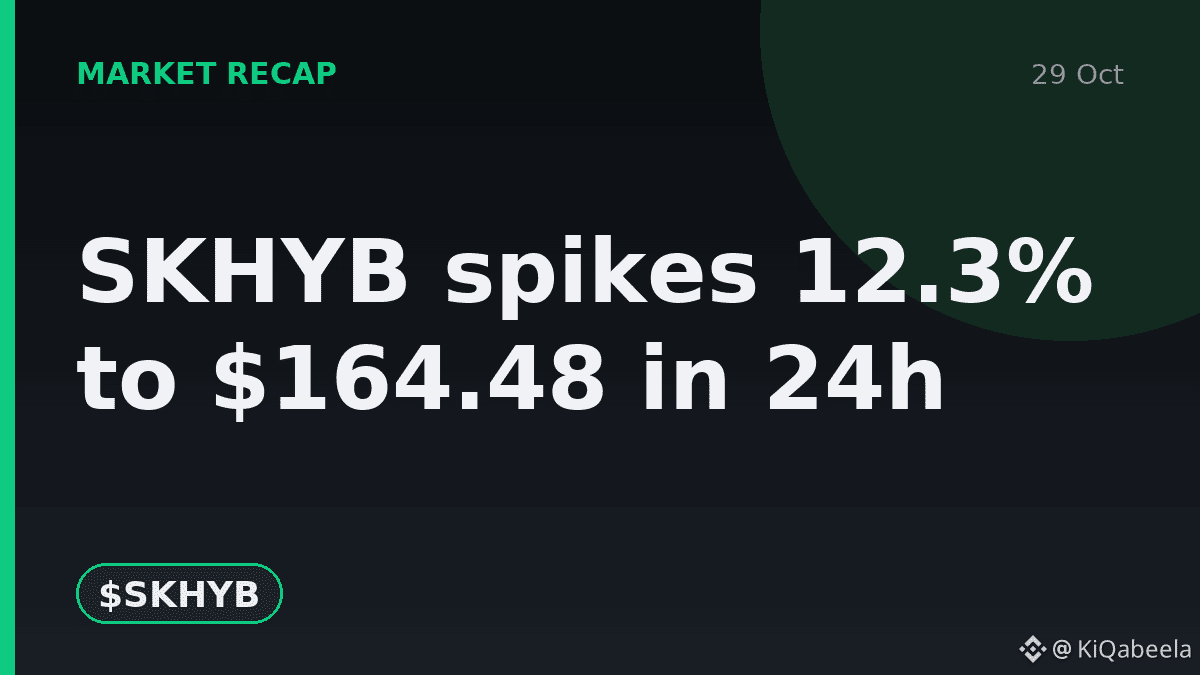
SKHYB spikes 12.3% to $164.48 in 24h
📊 By the numbers
• Price up 13.0% in 24h, showing strong buying pressure.
• 24h volume $21M, 2.6× its 7‑day average, indicating heightened trader interest.
• 7‑day gain +14% while Bitcoin fell –4%, meaning SKHYB outperformed the market.
🎯 Levels to watch
If price holds above $166 it could test the recent high; a slip back toward $145 may signal correction. Risk: the token is still 17% shy of its 30‑day peak, so upside could be limited.
Bullish, bearish or waiting? One word.
$SKHYB
#SKHYB #BinanceData
SKHYB spikes 12.3% to $164.48 in 24h
📊 By the numbers
• Price up 13.0% in 24h, showing strong buying pressure.
• 24h volume $21M, 2.6× its 7‑day average, indicating heightened trader interest.
• 7‑day gain +14% while Bitcoin fell –4%, meaning SKHYB outperformed the market.
🎯 Levels to watch
If price holds above $166 it could test the recent high; a slip back toward $145 may signal correction. Risk: the token is still 17% shy of its 30‑day peak, so upside could be limited.
Bullish, bearish or waiting? One word.
$SKHYB
#SKHYB #BinanceData
📊 By the numbers
• Price up 13.0% in 24h, showing strong buying pressure.
• 24h volume $21M, 2.6× its 7‑day average, indicating heightened trader interest.
• 7‑day gain +14% while Bitcoin fell –4%, meaning SKHYB outperformed the market.
🎯 Levels to watch
If price holds above $166 it could test the recent high; a slip back toward $145 may signal correction. Risk: the token is still 17% shy of its 30‑day peak, so upside could be limited.
Bullish, bearish or waiting? One word.
$SKHYB
#SKHYB #BinanceData
4

·
--
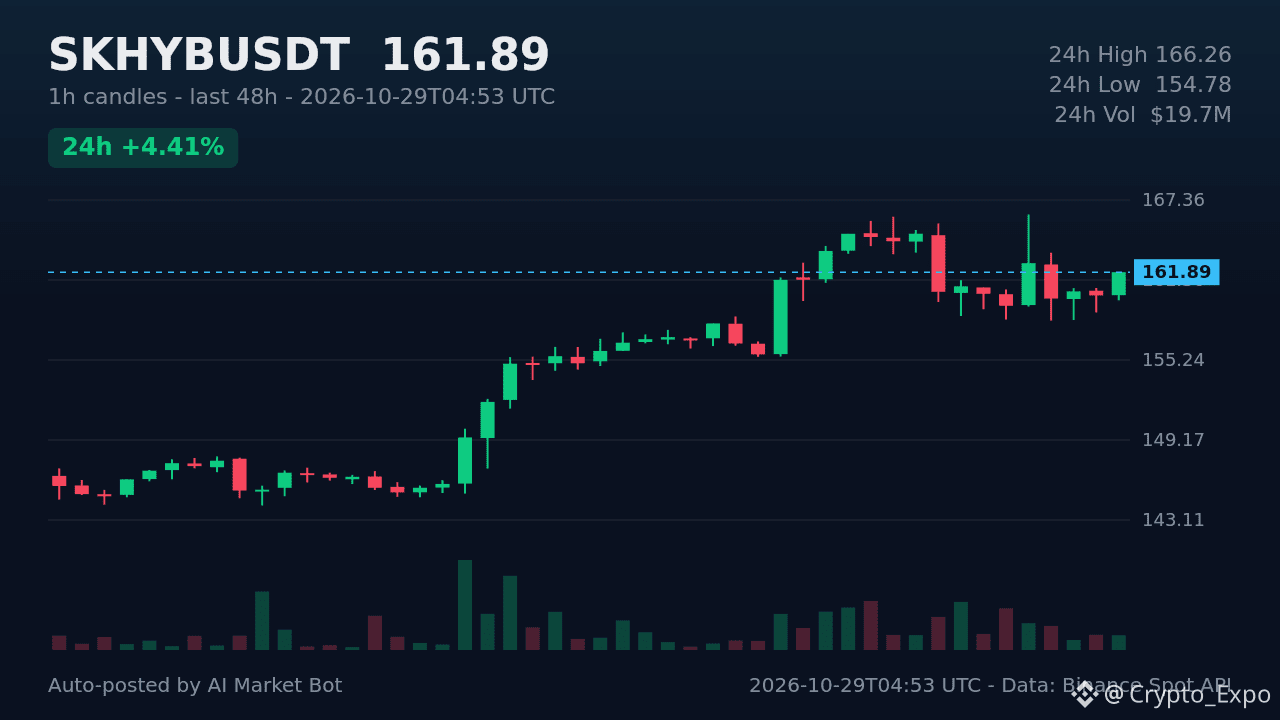
SKHYBUSDT jumps 4.4% to $161.89, outpacing all major coins in the last hour. The token, a meme‑driven altcoin, cracked the top‑gainer list with a 4.411% rise and $19.7 M of traded volume, catching attention amid a broader altcoin rally. It sits above its 24‑hour low of $154.78 and below the recent high of $166.26, with hourly candles showing immediate support near $158.22 and resistance around $166.26. How are traders positioning around these levels? #SKHYB# #Altcoins# #Binance#
SKHYBUSDT jumps 4.4% to $161.89, outpacing all major coins in the last hour. The token, a meme‑driven altcoin, cracked the top‑gainer list with a 4.411% rise and $19.7 M of traded volume, catching attention amid a broader altcoin rally. It sits above its 24‑hour low of $154.78 and below the recent high of $166.26, with hourly candles showing immediate support near $158.22 and resistance around $166.26. How are traders positioning around these levels? #SKHYB# #Altcoins# #Binance#
110
·
--
$SKHYB 🚀 $SKHYB LONG SETUP 🟢 Momentum is building for $SKHYB as it exhibits a strong 3.93% gain, showing clear buying interest in the current session. With solid volume backing the move, the price is positioning itself to potentially challenge recent local highs.
📊 24h: +3.93% | Vol: $21,559,588.04
📈 TRADE PLAN
🔹 Entry: 159.87
🛑 Stop Loss: 155.87
🎯 TP1: 165.87
🎯 TP2: 168.00
🎯 TP3: 171.00
⚖️ Risk:Reward (TP1): 1:1.50
🔔 Trigger: A sustained hourly close above the 160.00 psychological resistance level would confirm the bullish continuation.
⚠️ Risk Note: Crypto markets remain volatile; ensure proper position sizing to manage potential pullbacks.
Always wait for a clear confirmation of momentum before jumping into your $SKHYB positions.
Click below 👇🏻 to trade
$SKHYB
Follow @T4_TZX for more updates...
#SKHYB #CryptoTrading #MarketAnalysis #BinanceSquare
$SKHYB 🚀 $SKHYB LONG SETUP 🟢 Momentum is building for $SKHYB as it exhibits a strong 3.93% gain, showing clear buying interest in the current session. With solid volume backing the move, the price is positioning itself to potentially challenge recent local highs.
📊 24h: +3.93% | Vol: $21,559,588.04
📈 TRADE PLAN
🔹 Entry: 159.87
🛑 Stop Loss: 155.87
🎯 TP1: 165.87
🎯 TP2: 168.00
🎯 TP3: 171.00
⚖️ Risk:Reward (TP1): 1:1.50
🔔 Trigger: A sustained hourly close above the 160.00 psychological resistance level would confirm the bullish continuation.
⚠️ Risk Note: Crypto markets remain volatile; ensure proper position sizing to manage potential pullbacks.
Always wait for a clear confirmation of momentum before jumping into your $SKHYB positions.
Click below 👇🏻 to trade
$SKHYB
Follow @T4_TZX for more updates...
#SKHYB #CryptoTrading #MarketAnalysis #BinanceSquare
📊 24h: +3.93% | Vol: $21,559,588.04
📈 TRADE PLAN
🔹 Entry: 159.87
🛑 Stop Loss: 155.87
🎯 TP1: 165.87
🎯 TP2: 168.00
🎯 TP3: 171.00
⚖️ Risk:Reward (TP1): 1:1.50
🔔 Trigger: A sustained hourly close above the 160.00 psychological resistance level would confirm the bullish continuation.
⚠️ Risk Note: Crypto markets remain volatile; ensure proper position sizing to manage potential pullbacks.
Always wait for a clear confirmation of momentum before jumping into your $SKHYB positions.
Click below 👇🏻 to trade
$SKHYB
Follow @T4_TZX for more updates...
#SKHYB #CryptoTrading #MarketAnalysis #BinanceSquare
82
·
--
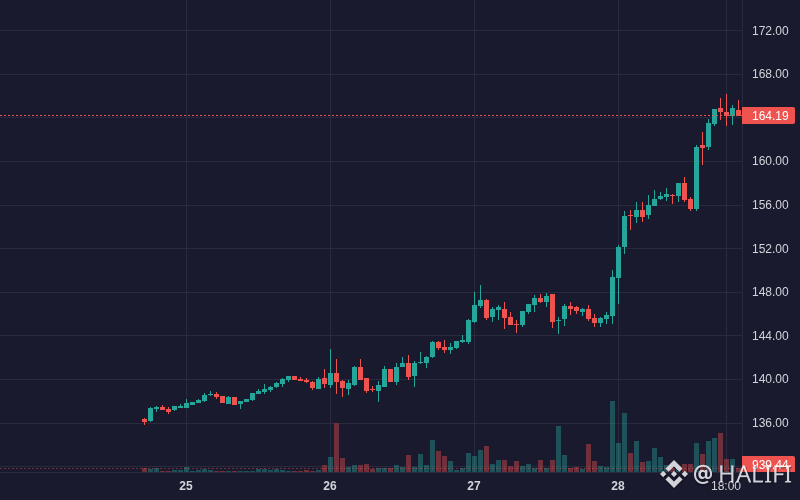
$SKHYB SKHYB is showing bullish movement: 13.25% (Crypto).
Volume: 21.56M | Last: $164.24
Key signals: strong momentum, high volatility, high trader activity.
Bias Daily: BULLISH 🟢 | Weekly: BULLISH 🟢
SKHYB gained 12.9% in 24h following record AI-driven corporate earnings and massive shareholder return announcements.
**Surging corporate fundamentals (High)**: SK Hynix reported record quarterly profits (>600% YoY surge) driven by strong AI hardware demand and committed HBM capacity through 2029 → boosted institutional demand
- **Aggressive capital returns (High)**: A planned 100 trillion won shareholder return program fueled massive buying pressure
- **Collateral integration (Medium)**: Listing bStocks assets as margin collateral broadened utility, driving trading volumes above 5.9M USDT
#SKHYB #FOMCWatch #CanGoogleDefindItsCore #fomcwatch #Crypto
$SKHYB SKHYB is showing bullish movement: 13.25% (Crypto).
Volume: 21.56M | Last: $164.24
Key signals: strong momentum, high volatility, high trader activity.
Bias Daily: BULLISH 🟢 | Weekly: BULLISH 🟢
SKHYB gained 12.9% in 24h following record AI-driven corporate earnings and massive shareholder return announcements.
**Surging corporate fundamentals (High)**: SK Hynix reported record quarterly profits (>600% YoY surge) driven by strong AI hardware demand and committed HBM capacity through 2029 → boosted institutional demand
- **Aggressive capital returns (High)**: A planned 100 trillion won shareholder return program fueled massive buying pressure
- **Collateral integration (Medium)**: Listing bStocks assets as margin collateral broadened utility, driving trading volumes above 5.9M USDT
#SKHYB #FOMCWatch #CanGoogleDefindItsCore #fomcwatch #Crypto
Volume: 21.56M | Last: $164.24
Key signals: strong momentum, high volatility, high trader activity.
Bias Daily: BULLISH 🟢 | Weekly: BULLISH 🟢
SKHYB gained 12.9% in 24h following record AI-driven corporate earnings and massive shareholder return announcements.
**Surging corporate fundamentals (High)**: SK Hynix reported record quarterly profits (>600% YoY surge) driven by strong AI hardware demand and committed HBM capacity through 2029 → boosted institutional demand
- **Aggressive capital returns (High)**: A planned 100 trillion won shareholder return program fueled massive buying pressure
- **Collateral integration (Medium)**: Listing bStocks assets as margin collateral broadened utility, driving trading volumes above 5.9M USDT
#SKHYB #FOMCWatch #CanGoogleDefindItsCore #fomcwatch #Crypto
1
10

·
--
$SKHYB +12.25% | $BANK -13.75% | $CHIP -9.97%
#SKHYB is at $164.25, up +12.25% with $22.2 M of volume. The price jump feels solid, and the sizable turnover suggests genuine buying interest.
#BANK trades around $0.0276, down ‑13.75% on $5.8 M of volume. The drop is notable, though the modest volume hints at limited pressure.
#CHIP sits at $0.0489, slipping ‑9.97% with $6.4 M of volume. A near‑10% decline paired with steady trading hints at a short‑term correction.
👀 Keep an eye on SKHYB’s volume relative to its rise; if it thins out, the rally could face resistance.
#Write2Earn #Binance
$SKHYB +12.25% | $BANK -13.75% | $CHIP -9.97%
#SKHYB is at $164.25, up +12.25% with $22.2 M of volume. The price jump feels solid, and the sizable turnover suggests genuine buying interest.
#BANK trades around $0.0276, down ‑13.75% on $5.8 M of volume. The drop is notable, though the modest volume hints at limited pressure.
#CHIP sits at $0.0489, slipping ‑9.97% with $6.4 M of volume. A near‑10% decline paired with steady trading hints at a short‑term correction.
👀 Keep an eye on SKHYB’s volume relative to its rise; if it thins out, the rally could face resistance.
#Write2Earn #Binance
#SKHYB is at $164.25, up +12.25% with $22.2 M of volume. The price jump feels solid, and the sizable turnover suggests genuine buying interest.
#BANK trades around $0.0276, down ‑13.75% on $5.8 M of volume. The drop is notable, though the modest volume hints at limited pressure.
#CHIP sits at $0.0489, slipping ‑9.97% with $6.4 M of volume. A near‑10% decline paired with steady trading hints at a short‑term correction.
👀 Keep an eye on SKHYB’s volume relative to its rise; if it thins out, the rally could face resistance.
#Write2Earn #Binance
1

·
--
$SKHYB +12.27% | $SHELL +12.05% | $AXTIB +11.75%
#SKHYB is sitting at $164.48, up +12.27% on $22.2 M of volume.
#SHELL trades at $0.0260, climbing +12.05% with $3.1 M moving hands. Its AI consumer layer lets anyone build, share, and own agents.
#AXTIB reached $64.49, gaining +11.75% on $1.3 M volume.
👀 The trio’s strong price moves are paired with modest volume spikes; whether that momentum can hold remains uncertain.
#Write2Earn #Binance
$SKHYB +12.27% | $SHELL +12.05% | $AXTIB +11.75%
#SKHYB is sitting at $164.48, up +12.27% on $22.2 M of volume.
#SHELL trades at $0.0260, climbing +12.05% with $3.1 M moving hands. Its AI consumer layer lets anyone build, share, and own agents.
#AXTIB reached $64.49, gaining +11.75% on $1.3 M volume.
👀 The trio’s strong price moves are paired with modest volume spikes; whether that momentum can hold remains uncertain.
#Write2Earn #Binance
#SKHYB is sitting at $164.48, up +12.27% on $22.2 M of volume.
#SHELL trades at $0.0260, climbing +12.05% with $3.1 M moving hands. Its AI consumer layer lets anyone build, share, and own agents.
#AXTIB reached $64.49, gaining +11.75% on $1.3 M volume.
👀 The trio’s strong price moves are paired with modest volume spikes; whether that momentum can hold remains uncertain.
#Write2Earn #Binance
8
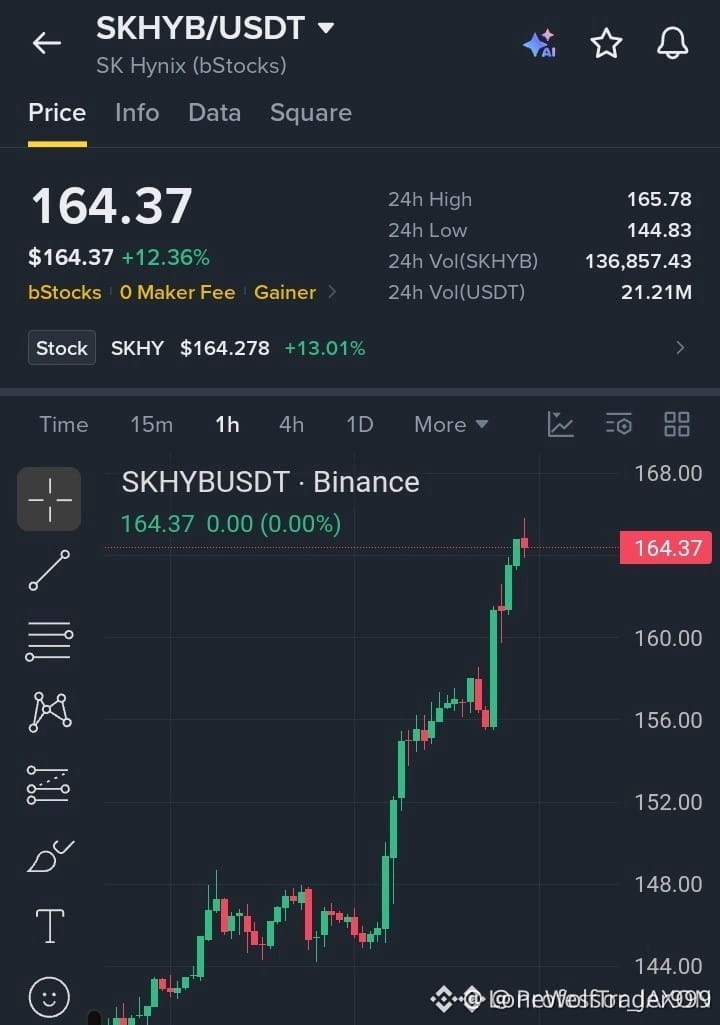
🚀 $SKHYB RACES TOWARD BREAKOUT AFTER POWERFUL RALLY! 🟢
Entry: 162.50-164.00 ⚡
Target: 166.00 🚀
Target: 168.00 🚀
Target: 170.00 🚀
Stop Loss: 159.80 ⚠️
Smart money is stacking bids as $SKHYB bursts out of the 145‑156 cradle, hammering the 162‑164 entry corridor. 📊 Volume spikes on the 4‑hour chart signal a liquidity sweep that’s feeding the bulls. ⚡
A clean break above 165.78 would light the fuse for a climb toward 166, 168 and 170 targets, while a dip under 162.50 warns of a momentum bleed. 🦈 Keep eyes on the order flow; the next candle could flip the script. 💬 Are you ready to ride this surge or waiting for the next liquidity test? 👇
⚠️ Not financial advice. Always manage your risk. 🛡️
🏷️ #SKHYB #LongSetup #Breakout #Crypto
🔥 💎
🚀 $SKHYB RACES TOWARD BREAKOUT AFTER POWERFUL RALLY! 🟢
Entry: 162.50-164.00 ⚡
Target: 166.00 🚀
Target: 168.00 🚀
Target: 170.00 🚀
Stop Loss: 159.80 ⚠️
Smart money is stacking bids as $SKHYB bursts out of the 145‑156 cradle, hammering the 162‑164 entry corridor. 📊 Volume spikes on the 4‑hour chart signal a liquidity sweep that’s feeding the bulls. ⚡
A clean break above 165.78 would light the fuse for a climb toward 166, 168 and 170 targets, while a dip under 162.50 warns of a momentum bleed. 🦈 Keep eyes on the order flow; the next candle could flip the script. 💬 Are you ready to ride this surge or waiting for the next liquidity test? 👇
⚠️ Not financial advice. Always manage your risk. 🛡️
🏷️ #SKHYB #LongSetup #Breakout #Crypto
🔥 💎
Entry: 162.50-164.00 ⚡
Target: 166.00 🚀
Target: 168.00 🚀
Target: 170.00 🚀
Stop Loss: 159.80 ⚠️
Smart money is stacking bids as $SKHYB bursts out of the 145‑156 cradle, hammering the 162‑164 entry corridor. 📊 Volume spikes on the 4‑hour chart signal a liquidity sweep that’s feeding the bulls. ⚡
A clean break above 165.78 would light the fuse for a climb toward 166, 168 and 170 targets, while a dip under 162.50 warns of a momentum bleed. 🦈 Keep eyes on the order flow; the next candle could flip the script. 💬 Are you ready to ride this surge or waiting for the next liquidity test? 👇
⚠️ Not financial advice. Always manage your risk. 🛡️
🏷️ #SKHYB #LongSetup #Breakout #Crypto
🔥 💎
·
--
🟢 $SKHYB LONG Setup
Buyers are stepping in on $SKHYB.
📊 SKHYBUSDT displays robust bullish sentiment, indicated by a significant double-digit percentage gain over the last 24 hours. This strong upward movement is corroborated by substantial trading volume, suggesting sustained buying pressure that could propel further price appreciation.
🎯 Trade Plan
Entry: 164.24
Stop Loss: 160.96
TP1: 167.52
TP2: 170.81
TP3: 174.09
⚖️ Risk:Reward (TP1) 1:1.00
⚡ Trigger: Confirmation of continued bullish momentum above current price.
⚠️ Risk Note: This trade setup carries inherent risks. Always manage your position size, respect your stop-loss, and understand that market conditions can change rapidly.
Trade the plan, not the emotion.
#SKHYB #skhyb
🟢 $SKHYB LONG Setup
Buyers are stepping in on $SKHYB .
📊 SKHYBUSDT displays robust bullish sentiment, indicated by a significant double-digit percentage gain over the last 24 hours. This strong upward movement is corroborated by substantial trading volume, suggesting sustained buying pressure that could propel further price appreciation.
🎯 Trade Plan
Entry: 164.24
Stop Loss: 160.96
TP1: 167.52
TP2: 170.81
TP3: 174.09
⚖️ Risk:Reward (TP1) 1:1.00
⚡ Trigger: Confirmation of continued bullish momentum above current price.
⚠️ Risk Note: This trade setup carries inherent risks. Always manage your position size, respect your stop-loss, and understand that market conditions can change rapidly.
Trade the plan, not the emotion.
#SKHYB #skhyb
Buyers are stepping in on $SKHYB .
📊 SKHYBUSDT displays robust bullish sentiment, indicated by a significant double-digit percentage gain over the last 24 hours. This strong upward movement is corroborated by substantial trading volume, suggesting sustained buying pressure that could propel further price appreciation.
🎯 Trade Plan
Entry: 164.24
Stop Loss: 160.96
TP1: 167.52
TP2: 170.81
TP3: 174.09
⚖️ Risk:Reward (TP1) 1:1.00
⚡ Trigger: Confirmation of continued bullish momentum above current price.
⚠️ Risk Note: This trade setup carries inherent risks. Always manage your position size, respect your stop-loss, and understand that market conditions can change rapidly.
Trade the plan, not the emotion.
#SKHYB #skhyb

·
--
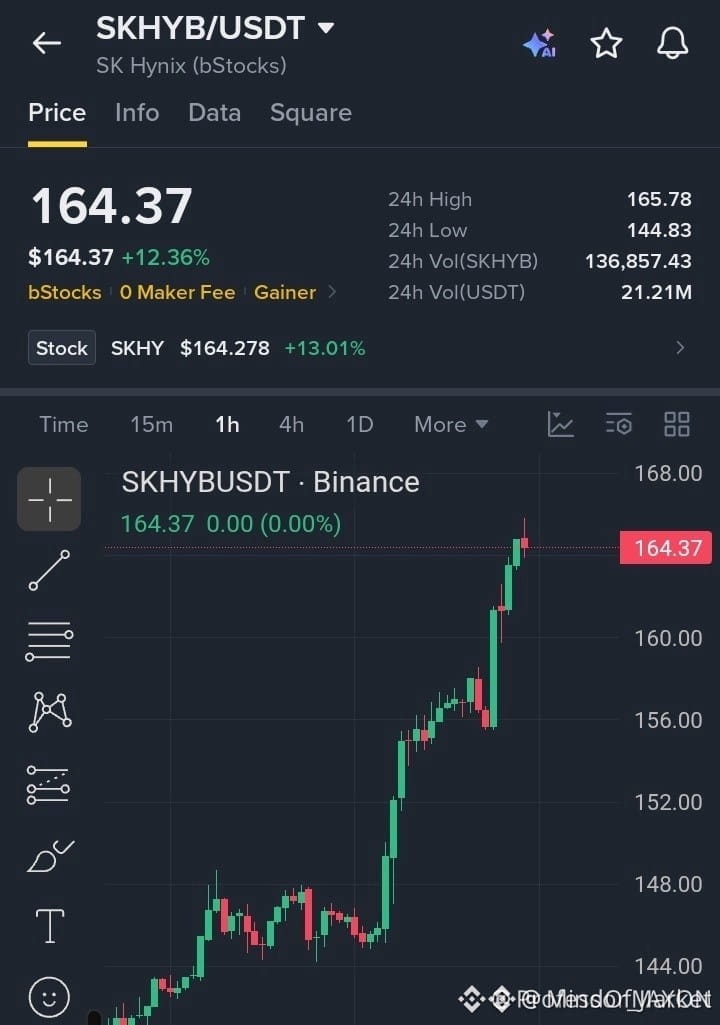
🚨 $SKHYB SURGES TOWARD BREAKOUT, LIQUIDITY SWEEP IN PLAY! 📈
Entry: 162.50-164.00 ⚡
Target: 166.00 🚀
Stop Loss: 159.80 ⚠️
📊 Strong buying pressure has lifted $SKHYB from the 145‑156 corridor, hammering the demand block near 162.50. A clean close above 165.78 would trigger a liquidity sweep, allowing smart money to chase the next leg. 🌊
⚡ The entry band offers a tight risk‑to‑reward, with the first target at 166.00 delivering a crisp 1:2.5 ratio. Hold the line at 159.80 to protect against a premature pullback. 🤔 Are you ready to ride this institutional thrust?
⚠️ Not financial advice. Always manage your risk. 🛡️
🏷️ #SKHYB #LongSetup #Breakout #Crypto
🔥 💎
🚨 $SKHYB SURGES TOWARD BREAKOUT, LIQUIDITY SWEEP IN PLAY! 📈
Entry: 162.50-164.00 ⚡
Target: 166.00 🚀
Stop Loss: 159.80 ⚠️
📊 Strong buying pressure has lifted $SKHYB from the 145‑156 corridor, hammering the demand block near 162.50. A clean close above 165.78 would trigger a liquidity sweep, allowing smart money to chase the next leg. 🌊
⚡ The entry band offers a tight risk‑to‑reward, with the first target at 166.00 delivering a crisp 1:2.5 ratio. Hold the line at 159.80 to protect against a premature pullback. 🤔 Are you ready to ride this institutional thrust?
⚠️ Not financial advice. Always manage your risk. 🛡️
🏷️ #SKHYB #LongSetup #Breakout #Crypto
🔥 💎
Entry: 162.50-164.00 ⚡
Target: 166.00 🚀
Stop Loss: 159.80 ⚠️
📊 Strong buying pressure has lifted $SKHYB from the 145‑156 corridor, hammering the demand block near 162.50. A clean close above 165.78 would trigger a liquidity sweep, allowing smart money to chase the next leg. 🌊
⚡ The entry band offers a tight risk‑to‑reward, with the first target at 166.00 delivering a crisp 1:2.5 ratio. Hold the line at 159.80 to protect against a premature pullback. 🤔 Are you ready to ride this institutional thrust?
⚠️ Not financial advice. Always manage your risk. 🛡️
🏷️ #SKHYB #LongSetup #Breakout #Crypto
🔥 💎
10

·
--
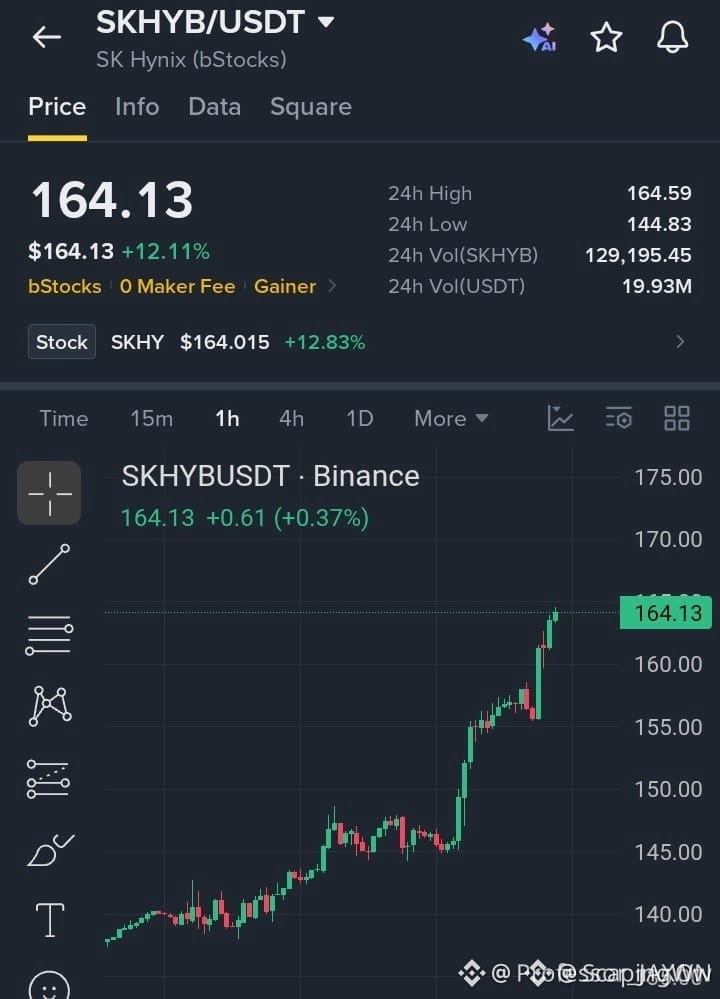
🔴 $SKHYB /USDT RALLY EXHAUSTION MAY TURN INTO QUICK PULLBACK 📉
Entry: 164.00‑164.50 ⚡
Target: 162.00 🚀
Stop Loss: 166.00 ⚠️
📊 The surge to the 164.50‑165.00 ceiling slammed into a wall of sell orders, a classic liquidity trap where 🦈 smart money unloads. Volume spiked, and the price stalled, hinting that the bulls are bruised and buyers are waiting for a pull.
💡 With the next support cluster at 162, the risk‑reward flips in favor of a short if the rejection holds. Keep an eye on the candle close below 164.50 before committing. 👇
⚠️ Not financial advice. Always manage your risk. 🛡️
🏷️ #SKHYB #ShortSetup #Pullback #Crypto
🦈 ⚡
🔴 $SKHYB /USDT RALLY EXHAUSTION MAY TURN INTO QUICK PULLBACK 📉
Entry: 164.00‑164.50 ⚡
Target: 162.00 🚀
Stop Loss: 166.00 ⚠️
📊 The surge to the 164.50‑165.00 ceiling slammed into a wall of sell orders, a classic liquidity trap where 🦈 smart money unloads. Volume spiked, and the price stalled, hinting that the bulls are bruised and buyers are waiting for a pull.
💡 With the next support cluster at 162, the risk‑reward flips in favor of a short if the rejection holds. Keep an eye on the candle close below 164.50 before committing. 👇
⚠️ Not financial advice. Always manage your risk. 🛡️
🏷️ #SKHYB #ShortSetup #Pullback #Crypto
🦈 ⚡
Entry: 164.00‑164.50 ⚡
Target: 162.00 🚀
Stop Loss: 166.00 ⚠️
📊 The surge to the 164.50‑165.00 ceiling slammed into a wall of sell orders, a classic liquidity trap where 🦈 smart money unloads. Volume spiked, and the price stalled, hinting that the bulls are bruised and buyers are waiting for a pull.
💡 With the next support cluster at 162, the risk‑reward flips in favor of a short if the rejection holds. Keep an eye on the candle close below 164.50 before committing. 👇
⚠️ Not financial advice. Always manage your risk. 🛡️
🏷️ #SKHYB #ShortSetup #Pullback #Crypto
🦈 ⚡
6

·
--
The buzz is one thing, but keep an eye on the numbers—indicator notes for $SKHYB : PRICE_CHANGE_24H recorded 152.47. The 24h rolling price change is -5.9930%, reaching the 5% observation threshold; no price direction is predicted.
📊 Data snapshot
· Indicator: PRICE_CHANGE_24H
· Reading: 152.47
· Basis: closed candlestick sequence
Seasoned traders know volume matters more than price—check the data before taking sides.
Are you watching? 👇
#市场观察 #SKHYB #Binance
The buzz is one thing, but keep an eye on the numbers—indicator notes for $SKHYB : PRICE_CHANGE_24H recorded 152.47. The 24h rolling price change is -5.9930%, reaching the 5% observation threshold; no price direction is predicted.
📊 Data snapshot
· Indicator: PRICE_CHANGE_24H
· Reading: 152.47
· Basis: closed candlestick sequence
Seasoned traders know volume matters more than price—check the data before taking sides.
Are you watching? 👇
#市场观察 #SKHYB #Binance
📊 Data snapshot
· Indicator: PRICE_CHANGE_24H
· Reading: 152.47
· Basis: closed candlestick sequence
Seasoned traders know volume matters more than price—check the data before taking sides.
Are you watching? 👇
#市场观察 #SKHYB #Binance

39
Log in to explore more content
Join global crypto users on Binance Square
⚡️ Get latest and useful information about crypto.
💬 Trusted by the world’s largest crypto exchange.
👍 Discover real insights from verified creators.
Email / Phone number
Trending Topics
1
#BinanceProcesses$4.65BWithdrawals
43,097 views
176 Discussing
2
#WithdrawalsBack: 15 networks live
9,889 views
146 Discussing
3
#SouthKoreanLawmakerProposesReviewOfAllListedDigitalAssets
59 views
6 Discussing
4
#BrazilVirtualAssetLicenseDeadlineDrawsAbout40Firms
4,494 views
123 Discussing
5
#BTCPayServerUrgesOperatorsToShutDownInstances
5,519 views
133 Discussing
6
#BankOfKoreaSurveysFinancialFirmsOnVirtualAssetRisks
260 views
12 Discussing
7
#BinanceUpdatesProofofReservesAddresses
167,640 views
1,822 Discussing
8
#BinanceToResumePhaseOneOfWithdrawals
200,929 views
1,827 Discussing
9
#StudyFindsCircleAIAgentWalletLimitsCanBeBypassed
1,073 views
75 Discussing
10
#BinanceHadAlreadyCovered$6BofHackLoss
12,700 views
145 Discussing