
#chamikametting
chamikametting
26,408 views
141 Discussing
Hot
Latest
#cboeseeks3xbitcoinandetheretfs
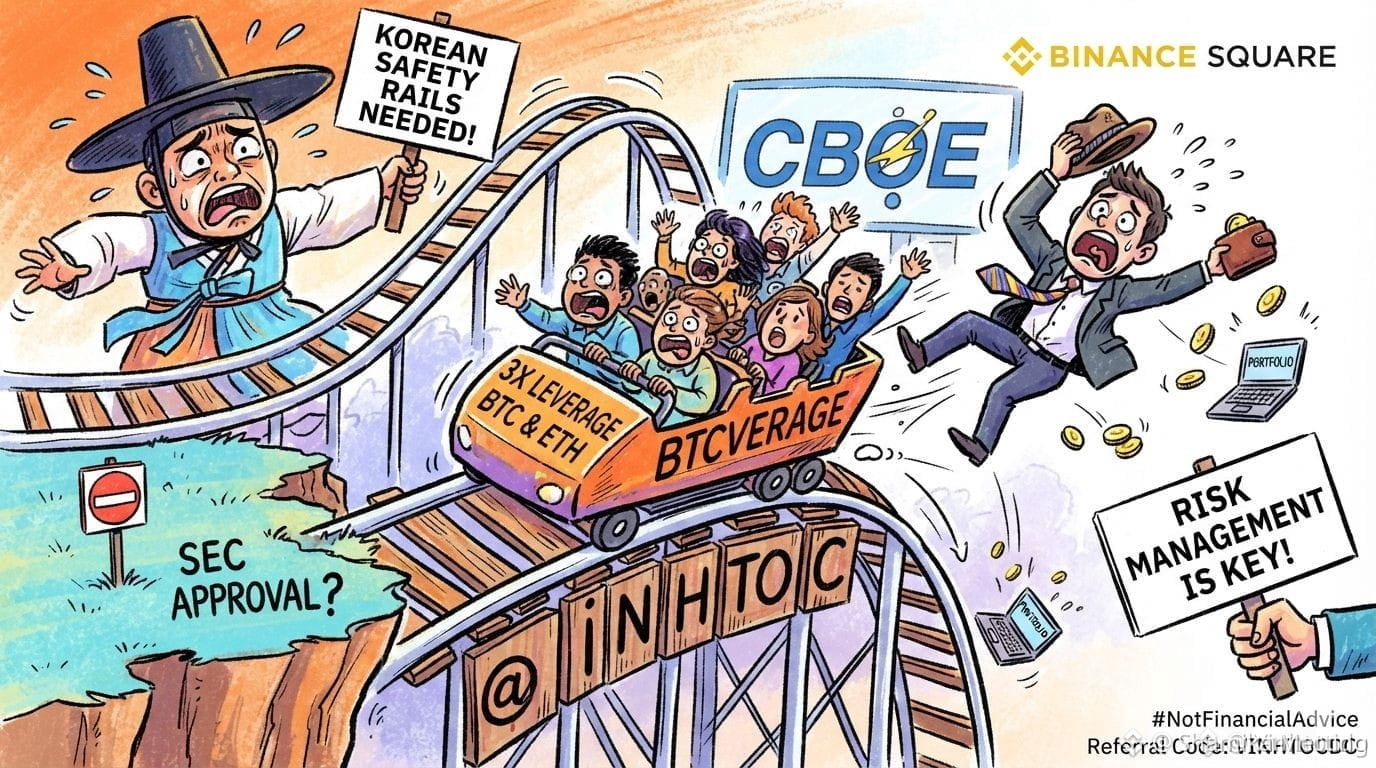
Cboe is pushing 3x leverage Bitcoin and Ether ETFs into the spotlight! 🔥
Wait, 3x leverage? 😱 Are we ready for this adrenaline-ride in the world of games, or do we first need some “safety rails” the South Korean way? 🇰🇷 South Korea has already stepped in to curb leveraged ETFs—if the United States doesn’t set some rules, our portfolios could get manipulated and disappear into thin air instead! 💸
So what should traders do? Get ready, turn and manage your risks like the pros—and maybe practice on a simulator before touching the real fire!
⚠️ Not financial advice. []
Please follow
Please follow
#SEC #BTC #ETF
$BTC #chamikametting
{future}(BTCUSDT)
#cboeseeks3xbitcoinandetheretfs
Cboe is pushing 3x leverage Bitcoin and Ether ETFs into the spotlight! 🔥
Wait, 3x leverage? 😱 Are we ready for this adrenaline-ride in the world of games, or do we first need some “safety rails” the South Korean way? 🇰🇷 South Korea has already stepped in to curb leveraged ETFs—if the United States doesn’t set some rules, our portfolios could get manipulated and disappear into thin air instead! 💸
So what should traders do? Get ready, turn and manage your risks like the pros—and maybe practice on a simulator before touching the real fire!
⚠️ Not financial advice. []
Please follow
Please follow
#SEC #BTC #ETF
$BTC #chamikametting
Cboe is pushing 3x leverage Bitcoin and Ether ETFs into the spotlight! 🔥
Wait, 3x leverage? 😱 Are we ready for this adrenaline-ride in the world of games, or do we first need some “safety rails” the South Korean way? 🇰🇷 South Korea has already stepped in to curb leveraged ETFs—if the United States doesn’t set some rules, our portfolios could get manipulated and disappear into thin air instead! 💸
So what should traders do? Get ready, turn and manage your risks like the pros—and maybe practice on a simulator before touching the real fire!
⚠️ Not financial advice. []
Please follow
Please follow
#SEC #BTC #ETF
$BTC #chamikametting
1
87
#sp500slipsfridaythirdstraightweeklygain
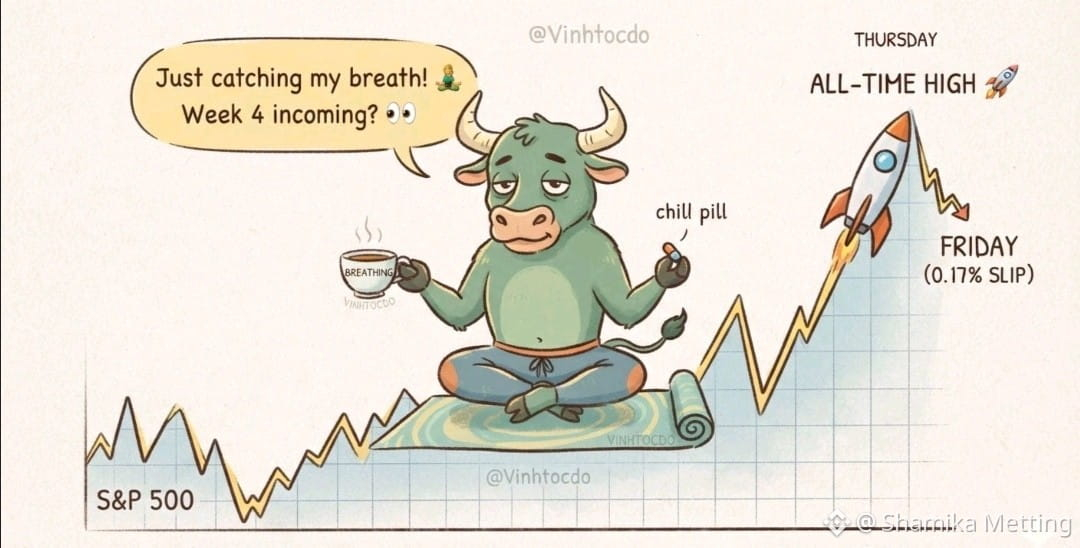
🎉 S&P 500 fell 0.17% on Friday, but don’t worry! It’s just a breather after hitting a massive all-time high on Thursday. 🚀
Wow! Consecutive weekly gains for 3 straight weeks on the record. Can you believe that?! Will we reach Week 4, or is a pullback coming? I’m very focused on tracking this! 👀
What should traders do? Stay calm, watch the charts, and don’t sell impulsively in a moment of calm! 🧘♂️
⚠️ NFA (not financial advice)!
Follow-up, please
#SP500 #USmarket #UsStocks #chamikametting $BTC
{future}(BTCUSDT)
$ETH
{future}(ETHUSDT)
$BNB
{future}(BNBUSDT)
#sp500slipsfridaythirdstraightweeklygain
🎉 S&P 500 fell 0.17% on Friday, but don’t worry! It’s just a breather after hitting a massive all-time high on Thursday. 🚀
Wow! Consecutive weekly gains for 3 straight weeks on the record. Can you believe that?! Will we reach Week 4, or is a pullback coming? I’m very focused on tracking this! 👀
What should traders do? Stay calm, watch the charts, and don’t sell impulsively in a moment of calm! 🧘♂️
⚠️ NFA (not financial advice)!
Follow-up, please
#SP500 #USmarket #UsStocks #chamikametting $BTC
$ETH
$BNB
🎉 S&P 500 fell 0.17% on Friday, but don’t worry! It’s just a breather after hitting a massive all-time high on Thursday. 🚀
Wow! Consecutive weekly gains for 3 straight weeks on the record. Can you believe that?! Will we reach Week 4, or is a pullback coming? I’m very focused on tracking this! 👀
What should traders do? Stay calm, watch the charts, and don’t sell impulsively in a moment of calm! 🧘♂️
⚠️ NFA (not financial advice)!
Follow-up, please
#SP500 #USmarket #UsStocks #chamikametting $BTC
$ETH
$BNB
1
67
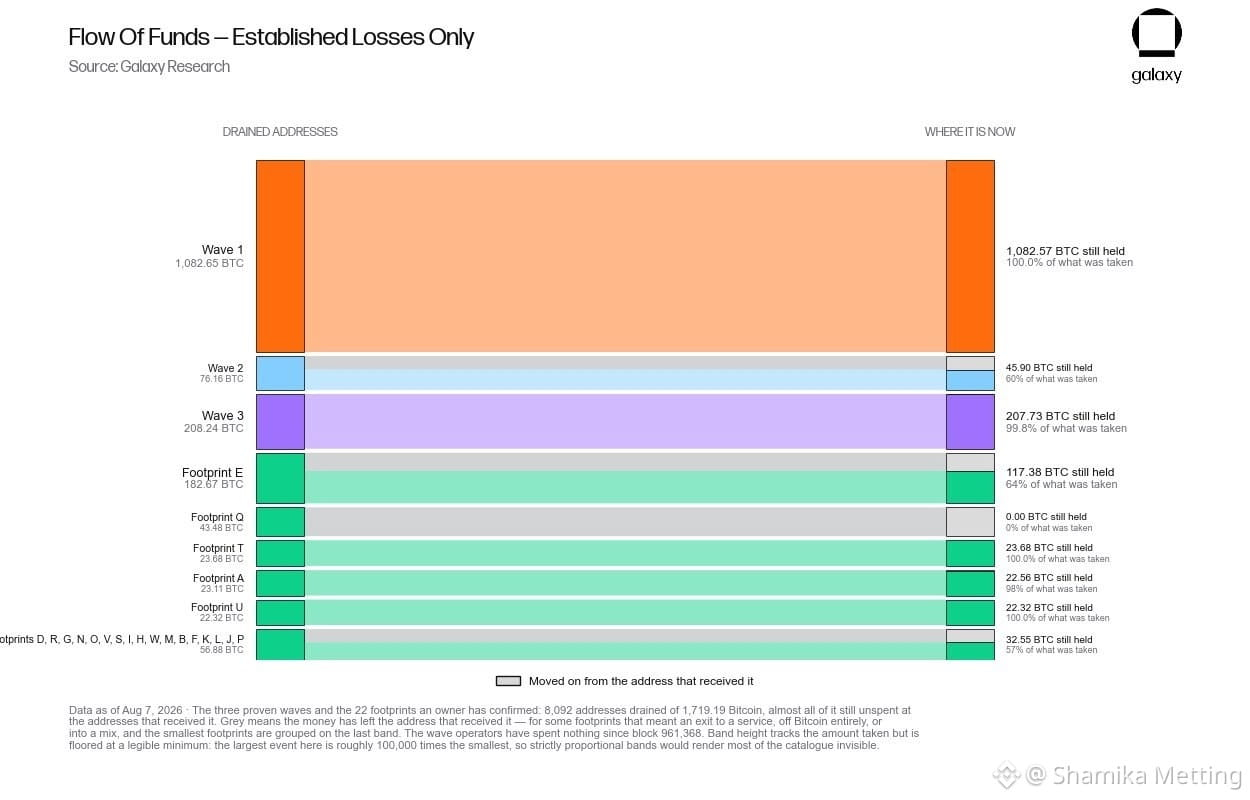
$BTC The hardware breach game for the ledger that enables gets billions of securities based on what it reaches to 1,432–1,816 bits of crypto (≈92–116 million dollars)
-
CryptoQuant confirmed a loss of 1,432 BTC linked to a firmware vulnerability within Coldcard device wallets, while Galaxy Research and TRM Labs estimate that total losses could reach 1,730–1,816 BTC stolen from more than 5,200 addresses across multiple waves since the end of July.
Please follow up
$BTC #chamikametting
{future}(BTCUSDT)
$BTC The hardware breach game for the ledger that enables gets billions of securities based on what it reaches to 1,432–1,816 bits of crypto (≈92–116 million dollars)
-
CryptoQuant confirmed a loss of 1,432 BTC linked to a firmware vulnerability within Coldcard device wallets, while Galaxy Research and TRM Labs estimate that total losses could reach 1,730–1,816 BTC stolen from more than 5,200 addresses across multiple waves since the end of July.
Please follow up
$BTC #chamikametting
-
CryptoQuant confirmed a loss of 1,432 BTC linked to a firmware vulnerability within Coldcard device wallets, while Galaxy Research and TRM Labs estimate that total losses could reach 1,730–1,816 BTC stolen from more than 5,200 addresses across multiple waves since the end of July.
Please follow up
$BTC #chamikametting
1
39
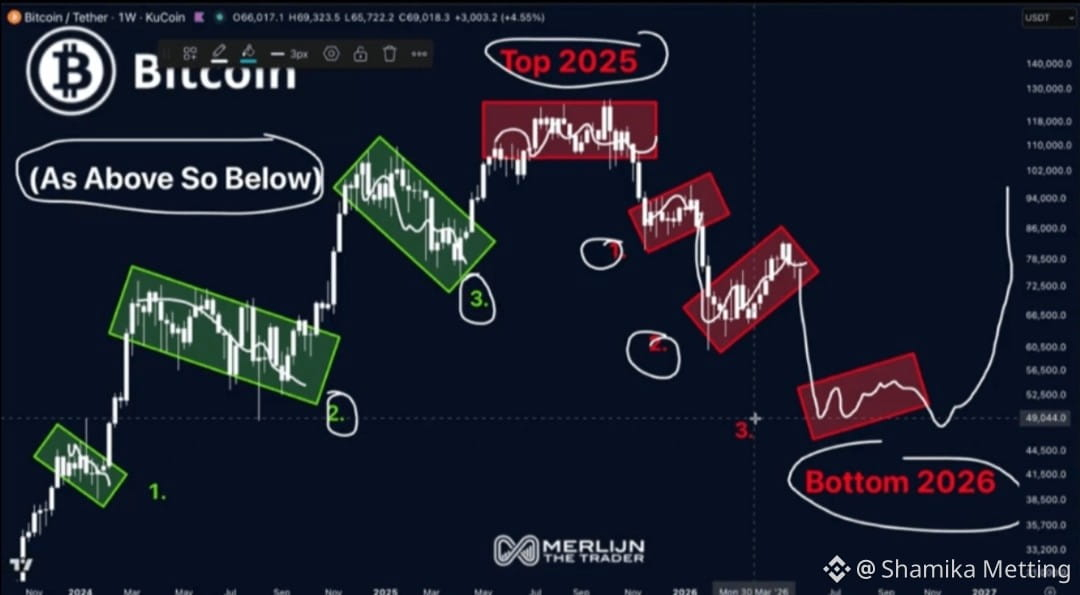
Bitcoin is reflecting itself.
Three bullish consolidation levels. The highest expected level in 2025 is at $126,000.
Three bearish consolidation levels. The lowest expected level in 2026 is approaching.
We're currently at the second level.
The recent dip before the cycle low: $50,000 - $55,000. As above, so below.
Please keep following
$BTC #BTC #chamikametting
{spot}(BTCUSDT)
Bitcoin is reflecting itself.
Three bullish consolidation levels. The highest expected level in 2025 is at $126,000.
Three bearish consolidation levels. The lowest expected level in 2026 is approaching.
We're currently at the second level.
The recent dip before the cycle low: $50,000 - $55,000. As above, so below.
Please keep following
$BTC #BTC #chamikametting
Three bullish consolidation levels. The highest expected level in 2025 is at $126,000.
Three bearish consolidation levels. The lowest expected level in 2026 is approaching.
We're currently at the second level.
The recent dip before the cycle low: $50,000 - $55,000. As above, so below.
Please keep following
$BTC #BTC #chamikametting
2
840
Verified
🚨 This guy will be chasing his losses for life!
Back in 1976, the co-founder of Apple sold his stake for just $800, fearing the project would flop...
Today, it's worth $454 billion 💀
Please follow up
$BTC #chamikametting #BTC
{spot}(BTCUSDT)
🚨 This guy will be chasing his losses for life!
Back in 1976, the co-founder of Apple sold his stake for just $800, fearing the project would flop...
Today, it's worth $454 billion 💀
Please follow up
$BTC #chamikametting #BTC
Back in 1976, the co-founder of Apple sold his stake for just $800, fearing the project would flop...
Today, it's worth $454 billion 💀
Please follow up
$BTC #chamikametting #BTC

1
679
Regarding the lockup rules for SpaceX, after reviewing the information, I wanted to break it down simply:
It’s not the traditional way of "after 180 days from listing, the lockup is released all at once"; instead, it's divided into several stages.
Step one, we need to wait for the first quarterly report post-listing, and some of the early employees and investors might sell a small portion of their shares, with a maximum cap of about 20%.
Step two, if the stock performs really strong after listing, say it rises about 30% from the offering price, an additional portion, around 10%, might be released.
As for the remaining shares, the lockup will continue to be released over time, not all at once.
Elon Musk himself has longer restrictions, roughly a full year.
After the actual listing, the report points, the stock price spikes, and the staggered lockup releases could all be short-term volatility points.
Please stay tuned
$ETH #chamikametting
{spot}(ETHUSDT)
Regarding the lockup rules for SpaceX, after reviewing the information, I wanted to break it down simply:
It’s not the traditional way of "after 180 days from listing, the lockup is released all at once"; instead, it's divided into several stages.
Step one, we need to wait for the first quarterly report post-listing, and some of the early employees and investors might sell a small portion of their shares, with a maximum cap of about 20%.
Step two, if the stock performs really strong after listing, say it rises about 30% from the offering price, an additional portion, around 10%, might be released.
As for the remaining shares, the lockup will continue to be released over time, not all at once.
Elon Musk himself has longer restrictions, roughly a full year.
After the actual listing, the report points, the stock price spikes, and the staggered lockup releases could all be short-term volatility points.
Please stay tuned
$ETH #chamikametting
It’s not the traditional way of "after 180 days from listing, the lockup is released all at once"; instead, it's divided into several stages.
Step one, we need to wait for the first quarterly report post-listing, and some of the early employees and investors might sell a small portion of their shares, with a maximum cap of about 20%.
Step two, if the stock performs really strong after listing, say it rises about 30% from the offering price, an additional portion, around 10%, might be released.
As for the remaining shares, the lockup will continue to be released over time, not all at once.
Elon Musk himself has longer restrictions, roughly a full year.
After the actual listing, the report points, the stock price spikes, and the staggered lockup releases could all be short-term volatility points.
Please stay tuned
$ETH #chamikametting

1
82
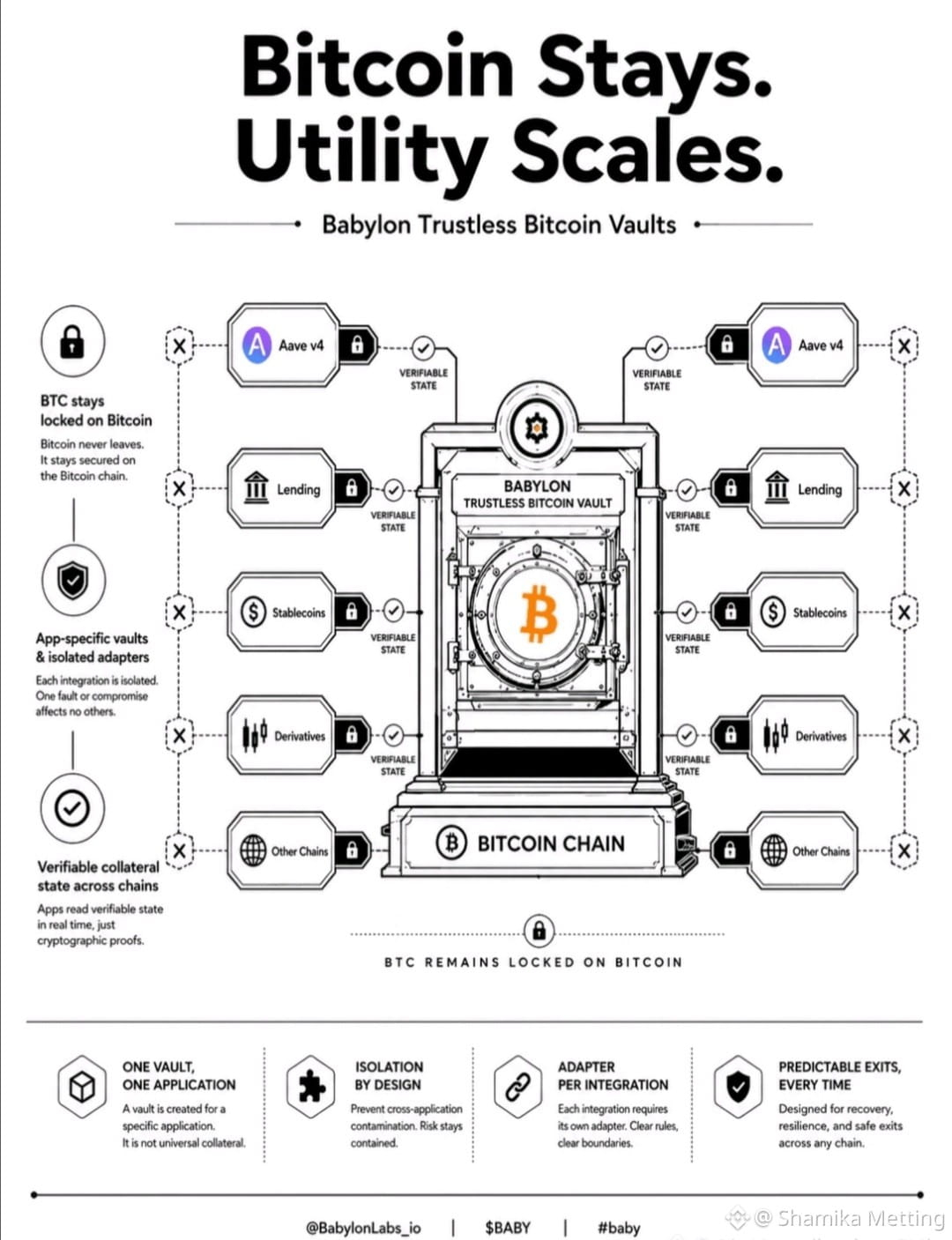
I kept thinking about “trustless Bitcoin vaults” as a Babylon product—multi-chain—but the feeling of “more chains” didn’t seem like a real achievement.
BTC doesn’t move. It remains locked to Bitcoin, while applications run on a verifiable guarantee state. It looks cleaner than wrappers or bridges, but every deployment introduces contracts, oracles, liquidation rules, and configurator risks.
What stood out to me is that Babylon doesn’t treat a single vault as a universal guarantee. A vault is created for a specific application, and each integration requires its own configurator. That may seem less flexible, but it prevents one broken application from quietly contaminating the others.
Aave v4 is the first integration. The biggest test comes later: can the original Bitcoin guarantee model itself scale across lending, stablecoins, derivatives, and different chains without the integration layer turning into a middleman?
This is where multi-chain scalability becomes more than just the number of partnerships.
It’s easy to connect protocols when everyone behaves correctly. The hard part is preserving isolation, recovery, and expected exits when one chain stops, an oracle fails, or an application’s rules change.
The fact is not that Babylon’s vaults are the strongest proof that Bitcoin can reach everywhere.
Rather, Bitcoin may not need to go anywhere.
Please continue
@babylonlabs_io $BABY #baby #chamikametting
I kept thinking about “trustless Bitcoin vaults” as a Babylon product—multi-chain—but the feeling of “more chains” didn’t seem like a real achievement.
BTC doesn’t move. It remains locked to Bitcoin, while applications run on a verifiable guarantee state. It looks cleaner than wrappers or bridges, but every deployment introduces contracts, oracles, liquidation rules, and configurator risks.
What stood out to me is that Babylon doesn’t treat a single vault as a universal guarantee. A vault is created for a specific application, and each integration requires its own configurator. That may seem less flexible, but it prevents one broken application from quietly contaminating the others.
Aave v4 is the first integration. The biggest test comes later: can the original Bitcoin guarantee model itself scale across lending, stablecoins, derivatives, and different chains without the integration layer turning into a middleman?
This is where multi-chain scalability becomes more than just the number of partnerships.
It’s easy to connect protocols when everyone behaves correctly. The hard part is preserving isolation, recovery, and expected exits when one chain stops, an oracle fails, or an application’s rules change.
The fact is not that Babylon’s vaults are the strongest proof that Bitcoin can reach everywhere.
Rather, Bitcoin may not need to go anywhere.
Please continue
@BabylonLabs_io $BABY #baby #chamikametting
BTC doesn’t move. It remains locked to Bitcoin, while applications run on a verifiable guarantee state. It looks cleaner than wrappers or bridges, but every deployment introduces contracts, oracles, liquidation rules, and configurator risks.
What stood out to me is that Babylon doesn’t treat a single vault as a universal guarantee. A vault is created for a specific application, and each integration requires its own configurator. That may seem less flexible, but it prevents one broken application from quietly contaminating the others.
Aave v4 is the first integration. The biggest test comes later: can the original Bitcoin guarantee model itself scale across lending, stablecoins, derivatives, and different chains without the integration layer turning into a middleman?
This is where multi-chain scalability becomes more than just the number of partnerships.
It’s easy to connect protocols when everyone behaves correctly. The hard part is preserving isolation, recovery, and expected exits when one chain stops, an oracle fails, or an application’s rules change.
The fact is not that Babylon’s vaults are the strongest proof that Bitcoin can reach everywhere.
Rather, Bitcoin may not need to go anywhere.
Please continue
@BabylonLabs_io $BABY #baby #chamikametting
1
1
68
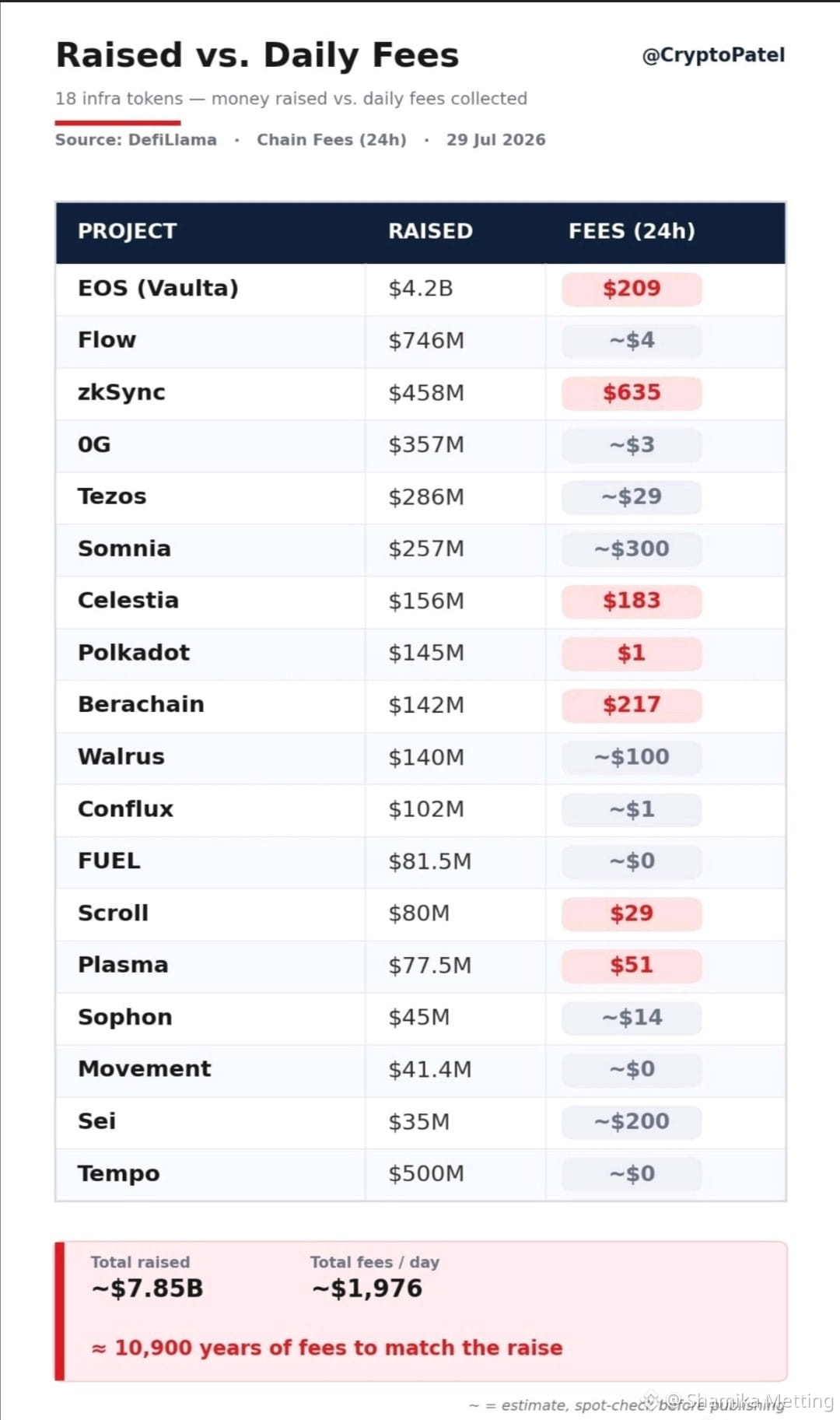
Infrara Chains 18. Billions collected, and little profits ✅
Total amount collected: $7.85 billion
Total fees in the last 24 hours: $1,976
~10,900 years to recoup it
$BTC #FOMCWatching #chamikametting
{future}(BTCUSDT)
Infrara Chains 18. Billions collected, and little profits ✅
Total amount collected: $7.85 billion
Total fees in the last 24 hours: $1,976
~10,900 years to recoup it
$BTC #FOMCWatching #chamikametting
Total amount collected: $7.85 billion
Total fees in the last 24 hours: $1,976
~10,900 years to recoup it
$BTC #FOMCWatching #chamikametting
1
49
Breaking News 🚨
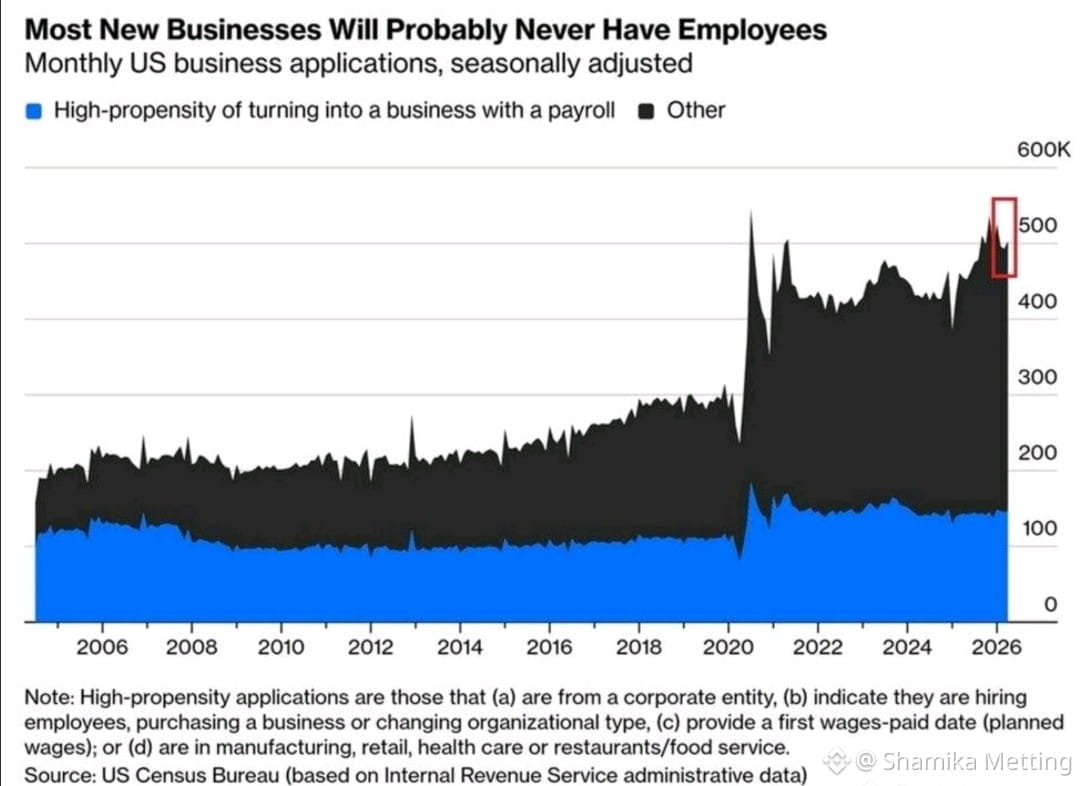
Monthly business applications in the U.S. are climbing to near-record levels, hitting ~500,000.
A significant shift is noted in the type of businesses being established.
It's likely that the businesses creating jobs now represent only ~30% of total applications, down from ~60% two decades ago 📊. Most new businesses are sole proprietorships, contributing little to employment or economic growth.
Stay tuned for updates ⚡.
Please follow up
$GMT , $NIL , $GRASS #chamikametting
{future}(GRASSUSDT)
Breaking News 🚨
Monthly business applications in the U.S. are climbing to near-record levels, hitting ~500,000.
A significant shift is noted in the type of businesses being established.
It's likely that the businesses creating jobs now represent only ~30% of total applications, down from ~60% two decades ago 📊. Most new businesses are sole proprietorships, contributing little to employment or economic growth.
Stay tuned for updates ⚡.
Please follow up
$GMT , $NIL , $GRASS #chamikametting
Monthly business applications in the U.S. are climbing to near-record levels, hitting ~500,000.
A significant shift is noted in the type of businesses being established.
It's likely that the businesses creating jobs now represent only ~30% of total applications, down from ~60% two decades ago 📊. Most new businesses are sole proprietorships, contributing little to employment or economic growth.
Stay tuned for updates ⚡.
Please follow up
$GMT , $NIL , $GRASS #chamikametting
1
102
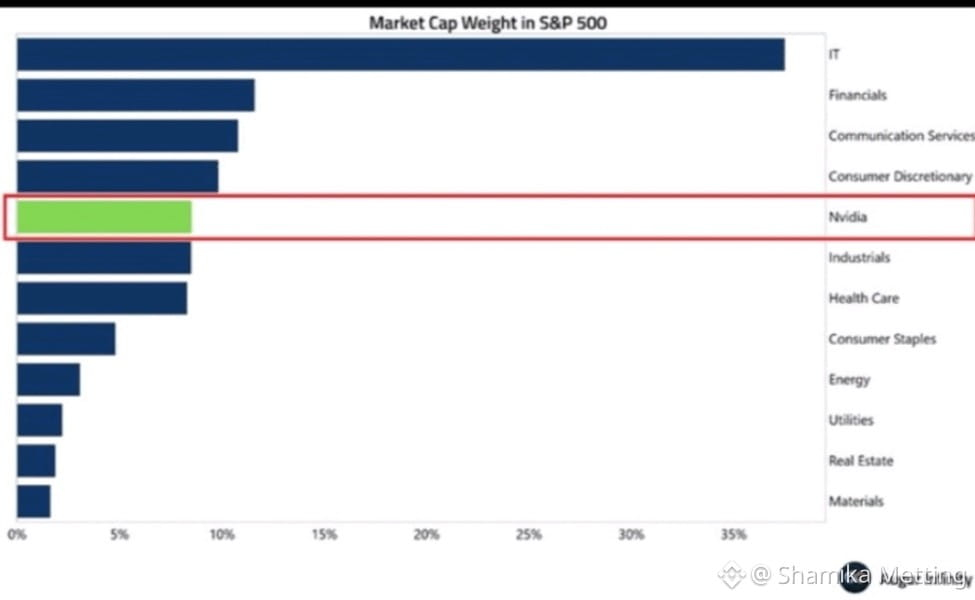
🚨New: Nvidia has now outperformed 7 out of 11 sectors in the S&P 500 index.
Nvidia represents a record 8% of the index.
Bigger than the utilities, real estate, and materials sectors combined.
Larger than the entire German economy.
Responsible for 20% of the S&P 500 gains since the start of the year. All from one giant in the semiconductor game.
Stay tuned
$BTC #chamikametting
{spot}(BTCUSDT)
🚨New: Nvidia has now outperformed 7 out of 11 sectors in the S&P 500 index.
Nvidia represents a record 8% of the index.
Bigger than the utilities, real estate, and materials sectors combined.
Larger than the entire German economy.
Responsible for 20% of the S&P 500 gains since the start of the year. All from one giant in the semiconductor game.
Stay tuned
$BTC #chamikametting
Nvidia represents a record 8% of the index.
Bigger than the utilities, real estate, and materials sectors combined.
Larger than the entire German economy.
Responsible for 20% of the S&P 500 gains since the start of the year. All from one giant in the semiconductor game.
Stay tuned
$BTC #chamikametting

1
100
Hyperliquid (HYPE) briefly surpasses Dogecoin - all-time high
Trade here $DOGE
{spot}(DOGEUSDT)
Hyperliquid (HYPE) briefly exceeded Dogecoin's market cap during Asian trading hours before pulling back, marking a significant milestone for the blockchain derivatives trading platform. Hyperliquid has consistently been one of the top performers in the market, driven by the platform's unique buyback mechanism, where around 99% of trading fees are allocated to a support fund used for token buybacks.
Current prices: Hyperliquid is down 4% to $59, while Dogecoin has dipped 0.8% to $0.1009. Despite today's pullback, Hyperliquid is still up 23.6% over the past week, thanks to SpaceX's ongoing hype surrounding Hyperliquid last week ahead of its public offering.
TRON (TRX) in the spotlight: TRON was the only winner among the top 10 cryptocurrencies, rising 2.6% to $0.3739 and 4.8% over the past week.
Stay tuned
$BTC #chamikametting
{spot}(BTCUSDT)
Hyperliquid (HYPE) briefly surpasses Dogecoin - all-time high
Trade here $DOGE
Hyperliquid (HYPE) briefly exceeded Dogecoin's market cap during Asian trading hours before pulling back, marking a significant milestone for the blockchain derivatives trading platform. Hyperliquid has consistently been one of the top performers in the market, driven by the platform's unique buyback mechanism, where around 99% of trading fees are allocated to a support fund used for token buybacks.
Current prices: Hyperliquid is down 4% to $59, while Dogecoin has dipped 0.8% to $0.1009. Despite today's pullback, Hyperliquid is still up 23.6% over the past week, thanks to SpaceX's ongoing hype surrounding Hyperliquid last week ahead of its public offering.
TRON (TRX) in the spotlight: TRON was the only winner among the top 10 cryptocurrencies, rising 2.6% to $0.3739 and 4.8% over the past week.
Stay tuned
$BTC #chamikametting
Trade here $DOGE
Hyperliquid (HYPE) briefly exceeded Dogecoin's market cap during Asian trading hours before pulling back, marking a significant milestone for the blockchain derivatives trading platform. Hyperliquid has consistently been one of the top performers in the market, driven by the platform's unique buyback mechanism, where around 99% of trading fees are allocated to a support fund used for token buybacks.
Current prices: Hyperliquid is down 4% to $59, while Dogecoin has dipped 0.8% to $0.1009. Despite today's pullback, Hyperliquid is still up 23.6% over the past week, thanks to SpaceX's ongoing hype surrounding Hyperliquid last week ahead of its public offering.
TRON (TRX) in the spotlight: TRON was the only winner among the top 10 cryptocurrencies, rising 2.6% to $0.3739 and 4.8% over the past week.
Stay tuned
$BTC #chamikametting

1
97
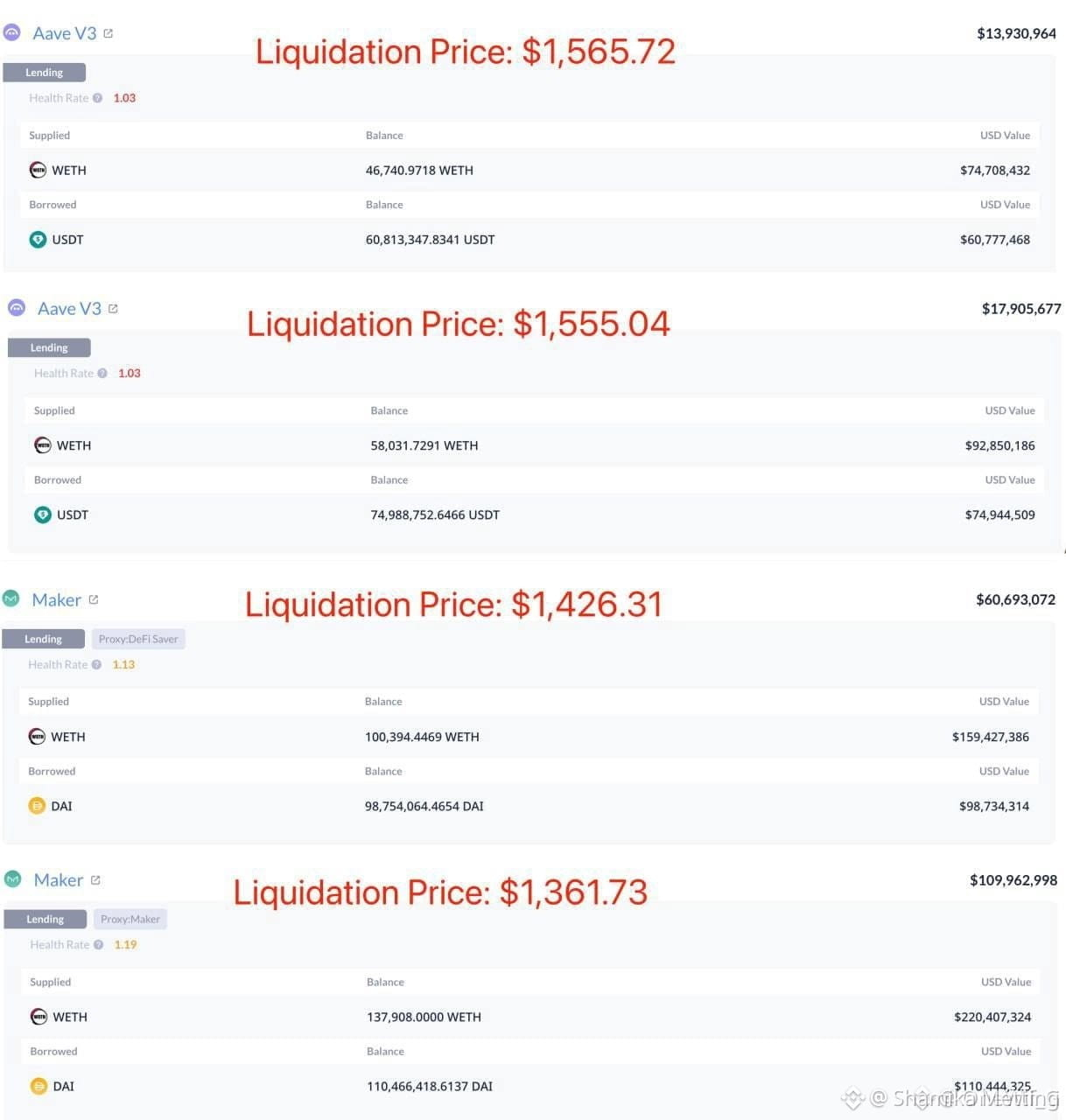
Notice that 343,075 Ethereum (547 million USD) in DeFi protocols is at risk of getting liquidated!
$ETH
{spot}(ETHUSDT)
46,741 Ethereum (74.71 million USD) got liquidated at a price of $1,565.72.
58,032 Ethereum (92.85 million USD) got liquidated at a price of $1,555.04.
100,394 Ethereum (159.43 million USD) is set to be liquidated at a price of $1,426.31.
137,908 Ethereum (220.41 million USD) is set to be liquidated at a price of $1,361.73.
Please follow up
$BTC #chamikametting #ETH🔥🔥🔥🔥🔥🔥
{spot}(BTCUSDT)
Notice that 343,075 Ethereum (547 million USD) in DeFi protocols is at risk of getting liquidated!
$ETH
46,741 Ethereum (74.71 million USD) got liquidated at a price of $1,565.72.
58,032 Ethereum (92.85 million USD) got liquidated at a price of $1,555.04.
100,394 Ethereum (159.43 million USD) is set to be liquidated at a price of $1,426.31.
137,908 Ethereum (220.41 million USD) is set to be liquidated at a price of $1,361.73.
Please follow up
$BTC #chamikametting #ETH🔥🔥🔥🔥🔥🔥
$ETH
46,741 Ethereum (74.71 million USD) got liquidated at a price of $1,565.72.
58,032 Ethereum (92.85 million USD) got liquidated at a price of $1,555.04.
100,394 Ethereum (159.43 million USD) is set to be liquidated at a price of $1,426.31.
137,908 Ethereum (220.41 million USD) is set to be liquidated at a price of $1,361.73.
Please follow up
$BTC #chamikametting #ETH🔥🔥🔥🔥🔥🔥
1
71
#morganstanleysolanaetfbeginstrading
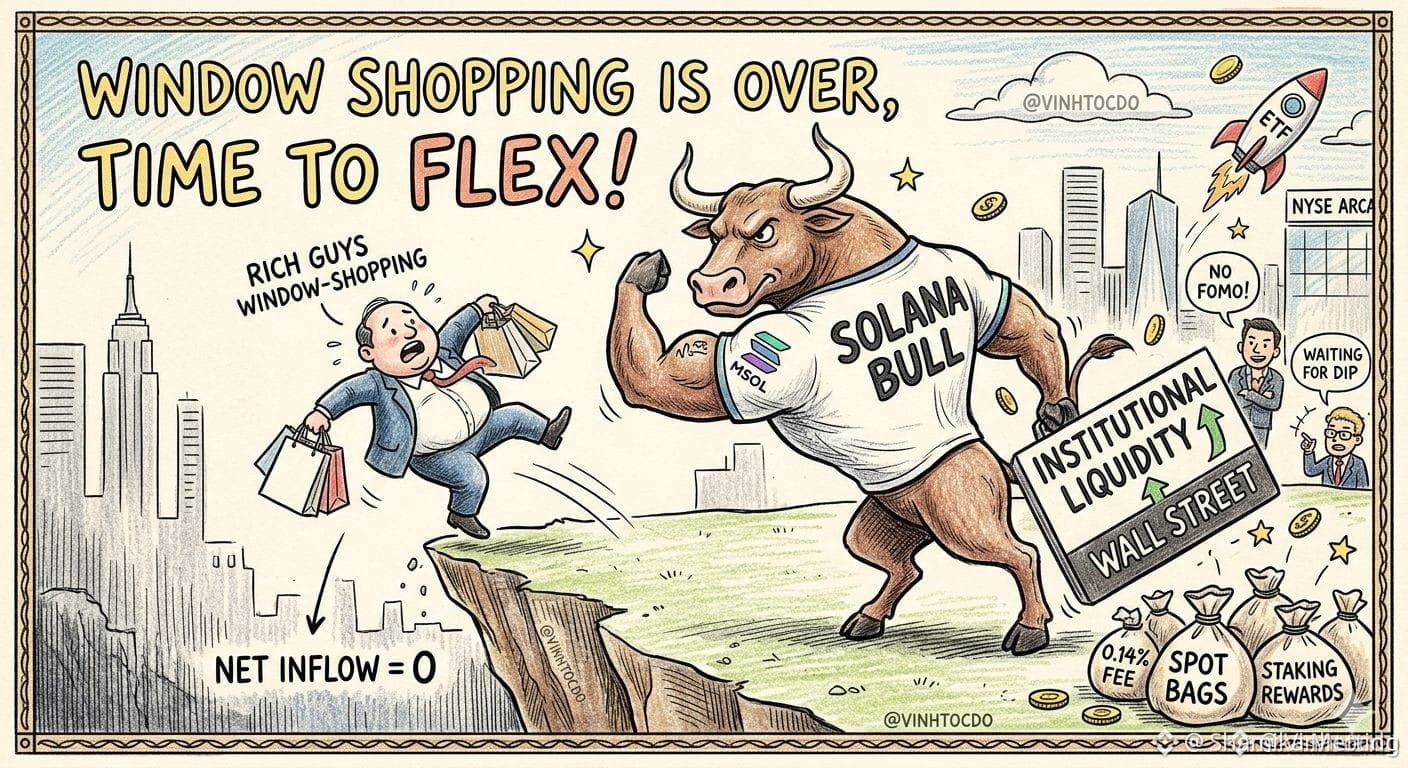
🚀 Hey everyone—Solana, start bragging! Another giant has been officially listed on the NYSE Arca exchange: Morgan Stanley (MSOL). The arena is getting fuller and the excitement is rising, with a total of 9 spot ETF funds on Solana ready to go!
Note that the first day saw a massive 0 figure in net inflows—classic: “The rich are window-shopping, but they haven’t withdrawn their wallets yet.” Still, with a small management fee of 0.14% and plans to support staking rewards, it’s only natural that the bulls are both worried and thrilled.
What should traders do now?
🎯 Don’t panic (FOMO) and don’t pump the price too hard.
🛒 Accumulate spot batches when a good dip happens.
🧘 Stay steady and wait until liquidity from Wall Street is actually activated.
Your follow-up, please
#SolanaETF #MorganStanley #SolanaStaking #chamikametting
$SOL
{spot}(SOLUSDT)
#morganstanleysolanaetfbeginstrading
🚀 Hey everyone—Solana, start bragging! Another giant has been officially listed on the NYSE Arca exchange: Morgan Stanley (MSOL). The arena is getting fuller and the excitement is rising, with a total of 9 spot ETF funds on Solana ready to go!
Note that the first day saw a massive 0 figure in net inflows—classic: “The rich are window-shopping, but they haven’t withdrawn their wallets yet.” Still, with a small management fee of 0.14% and plans to support staking rewards, it’s only natural that the bulls are both worried and thrilled.
What should traders do now?
🎯 Don’t panic (FOMO) and don’t pump the price too hard.
🛒 Accumulate spot batches when a good dip happens.
🧘 Stay steady and wait until liquidity from Wall Street is actually activated.
Your follow-up, please
#SolanaETF #MorganStanley #SolanaStaking #chamikametting
$SOL
🚀 Hey everyone—Solana, start bragging! Another giant has been officially listed on the NYSE Arca exchange: Morgan Stanley (MSOL). The arena is getting fuller and the excitement is rising, with a total of 9 spot ETF funds on Solana ready to go!
Note that the first day saw a massive 0 figure in net inflows—classic: “The rich are window-shopping, but they haven’t withdrawn their wallets yet.” Still, with a small management fee of 0.14% and plans to support staking rewards, it’s only natural that the bulls are both worried and thrilled.
What should traders do now?
🎯 Don’t panic (FOMO) and don’t pump the price too hard.
🛒 Accumulate spot batches when a good dip happens.
🧘 Stay steady and wait until liquidity from Wall Street is actually activated.
Your follow-up, please
#SolanaETF #MorganStanley #SolanaStaking #chamikametting
$SOL
1
103
#elilillyraises2026salesoutlook
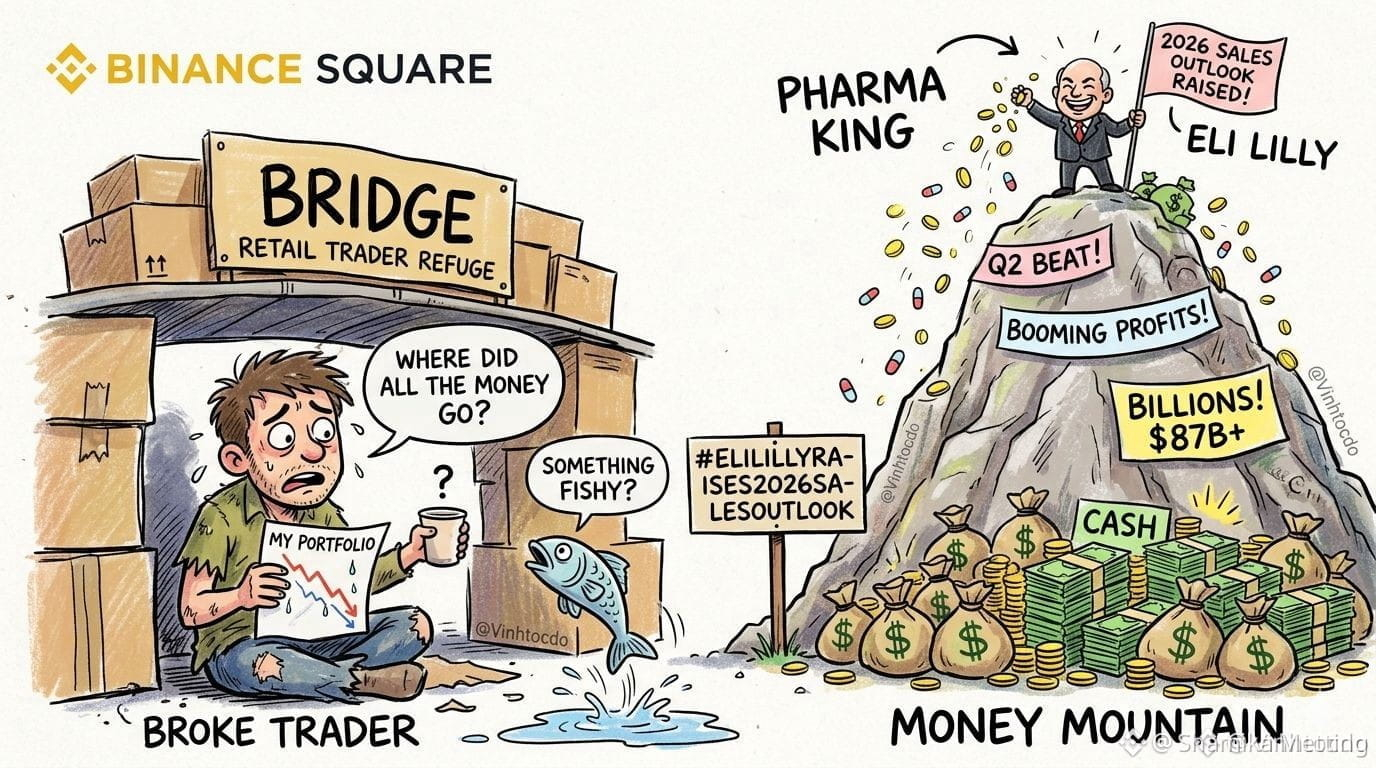
Another giant company raises its outlook for 2026! This time it’s the drug queen Eli Lilly (Eli Lilly), pumping out a massive $85–87 billion forecast after a strong performance in the second quarter. 🚀
Wait… does anyone else get a suspicious feeling here? 🧐 Traders are literally getting wiped out and living under a bridge, yet every big company prints historical revenues like it means nothing! Who actually wins in this game? 😅
What should individual traders do? Do they buy the drop in the healthcare/pharmaceutical sector, or stay safe and away from the arena?
⚠️ This is not financial advice.
Please follow.
#stocks #EliLilly #crypto #chamikametting
$BTC
{future}(BTCUSDT)
#elilillyraises2026salesoutlook
Another giant company raises its outlook for 2026! This time it’s the drug queen Eli Lilly (Eli Lilly), pumping out a massive $85–87 billion forecast after a strong performance in the second quarter. 🚀
Wait… does anyone else get a suspicious feeling here? 🧐 Traders are literally getting wiped out and living under a bridge, yet every big company prints historical revenues like it means nothing! Who actually wins in this game? 😅
What should individual traders do? Do they buy the drop in the healthcare/pharmaceutical sector, or stay safe and away from the arena?
⚠️ This is not financial advice.
Please follow.
#stocks #EliLilly #crypto #chamikametting
$BTC
Another giant company raises its outlook for 2026! This time it’s the drug queen Eli Lilly (Eli Lilly), pumping out a massive $85–87 billion forecast after a strong performance in the second quarter. 🚀
Wait… does anyone else get a suspicious feeling here? 🧐 Traders are literally getting wiped out and living under a bridge, yet every big company prints historical revenues like it means nothing! Who actually wins in this game? 😅
What should individual traders do? Do they buy the drop in the healthcare/pharmaceutical sector, or stay safe and away from the arena?
⚠️ This is not financial advice.
Please follow.
#stocks #EliLilly #crypto #chamikametting
$BTC
1
63
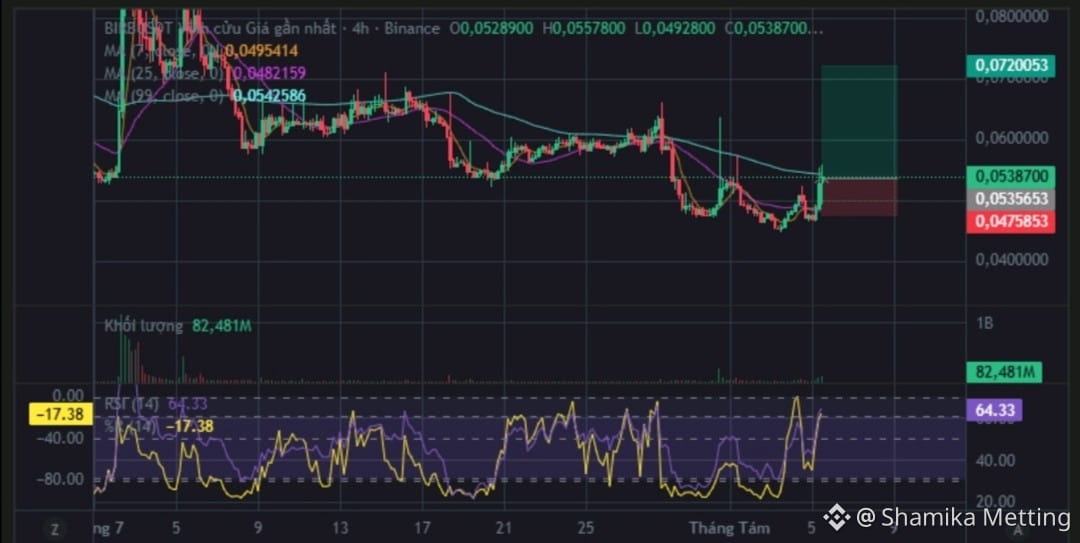
Pumping is in progress. #DYOR🟢 like $BLESS
Please trade below to support us, thank you 👇
$BIRB
{alpha}(CT_501G7vQWurMkMMm2dU3iZpXYFTHT9Biio4F4gZCrwFpKNwG)
#LONG ✅
Entry 0.053 -> 0.055
Stop Loss: 0.047
TP1 0.056
TP2 0.057
TP3 0.060
TP4 0.065
#chamikametting Monitoring continues $1000RATS
#KoreanStocksReboundOnForeignBuying #USMilitarySaysHormuzStraitOpen
Pumping is in progress. #DYOR🟢 like $BLESS
Please trade below to support us, thank you 👇
$BIRB
#LONG ✅
Entry 0.053 -> 0.055
Stop Loss: 0.047
TP1 0.056
TP2 0.057
TP3 0.060
TP4 0.065
#chamikametting Monitoring continues $1000RATS
#KoreanStocksReboundOnForeignBuying #USMilitarySaysHormuzStraitOpen
Please trade below to support us, thank you 👇
$BIRB
#LONG ✅
Entry 0.053 -> 0.055
Stop Loss: 0.047
TP1 0.056
TP2 0.057
TP3 0.060
TP4 0.065
#chamikametting Monitoring continues $1000RATS
#KoreanStocksReboundOnForeignBuying #USMilitarySaysHormuzStraitOpen
1
167
Urgent: Unrealized losses on holdings of local bonds at the largest 4 life insurance companies in Japan increased by +7% in the second quarter of 2026, reaching a record level of $96 billion.
All four companies—Nippon Life, Daiichi Life, Sumitomo Life, and Meiji Yasuda—reported an increase in paper losses.
This is the sixth
Please continue following
$BTC #chamikametting #BTC
{future}(BTCUSDT)
Urgent: Unrealized losses on holdings of local bonds at the largest 4 life insurance companies in Japan increased by +7% in the second quarter of 2026, reaching a record level of $96 billion.
All four companies—Nippon Life, Daiichi Life, Sumitomo Life, and Meiji Yasuda—reported an increase in paper losses.
This is the sixth
Please continue following
$BTC #chamikametting #BTC
All four companies—Nippon Life, Daiichi Life, Sumitomo Life, and Meiji Yasuda—reported an increase in paper losses.
This is the sixth
Please continue following
$BTC #chamikametting #BTC

1
16
The dollar is on the brink of collapse. 🇺🇸
This isn't just chatter from pessimistic economists; it's the official forecast from the U.S. government:
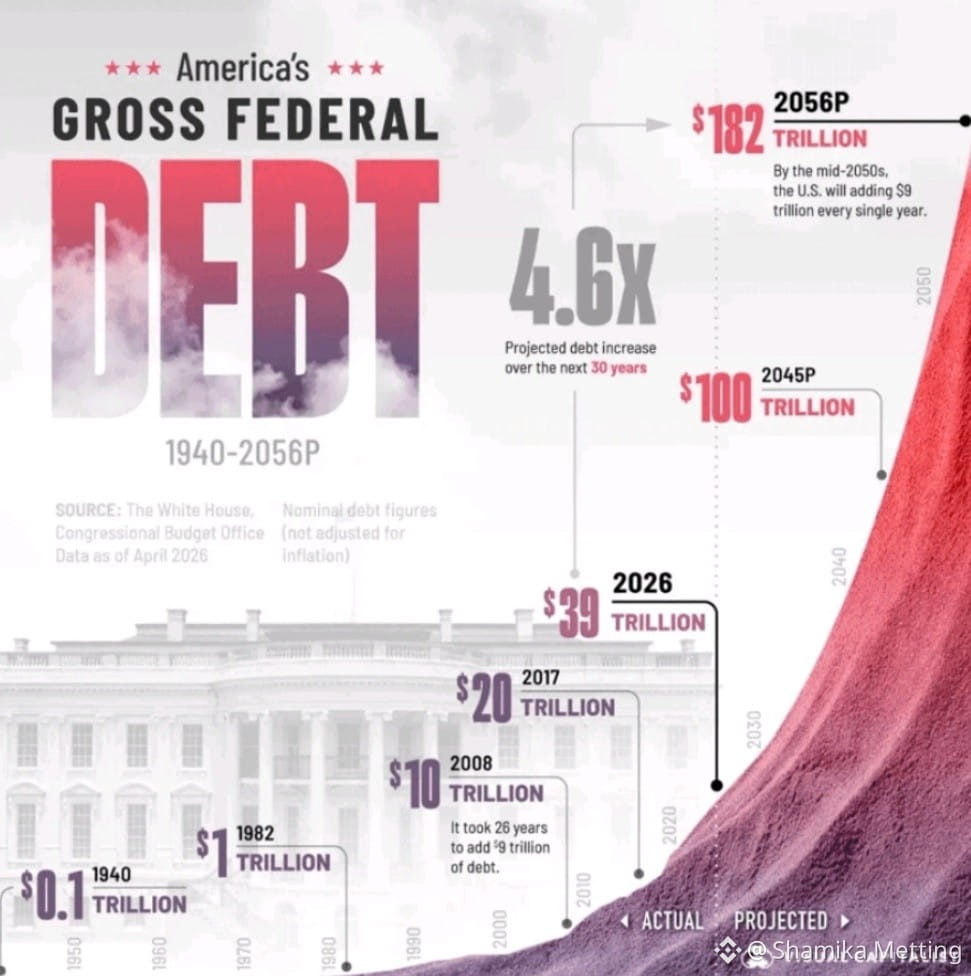
The American debt is set to soar from $39 trillion today to $182 trillion by 2056.
The staggering figure: It took the U.S. 70 years to rack up its first $10 trillion in debt. By the 2050s, the U.S. will be adding $10 trillion in debt every 12 to 24 months.
This means a debt increase of 4.6 times in just three decades, based on economic assumptions deemed "stable." Radical monetary reform isn't an option; it's a mathematical certainty.
Please stay tuned
$BTC #chamikametting #dollars
{spot}(BTCUSDT)
The dollar is on the brink of collapse. 🇺🇸
This isn't just chatter from pessimistic economists; it's the official forecast from the U.S. government:
The American debt is set to soar from $39 trillion today to $182 trillion by 2056.
The staggering figure: It took the U.S. 70 years to rack up its first $10 trillion in debt. By the 2050s, the U.S. will be adding $10 trillion in debt every 12 to 24 months.
This means a debt increase of 4.6 times in just three decades, based on economic assumptions deemed "stable." Radical monetary reform isn't an option; it's a mathematical certainty.
Please stay tuned
$BTC #chamikametting #dollars
This isn't just chatter from pessimistic economists; it's the official forecast from the U.S. government:
The American debt is set to soar from $39 trillion today to $182 trillion by 2056.
The staggering figure: It took the U.S. 70 years to rack up its first $10 trillion in debt. By the 2050s, the U.S. will be adding $10 trillion in debt every 12 to 24 months.
This means a debt increase of 4.6 times in just three decades, based on economic assumptions deemed "stable." Radical monetary reform isn't an option; it's a mathematical certainty.
Please stay tuned
$BTC #chamikametting #dollars
1
158
#bitcoinupdown
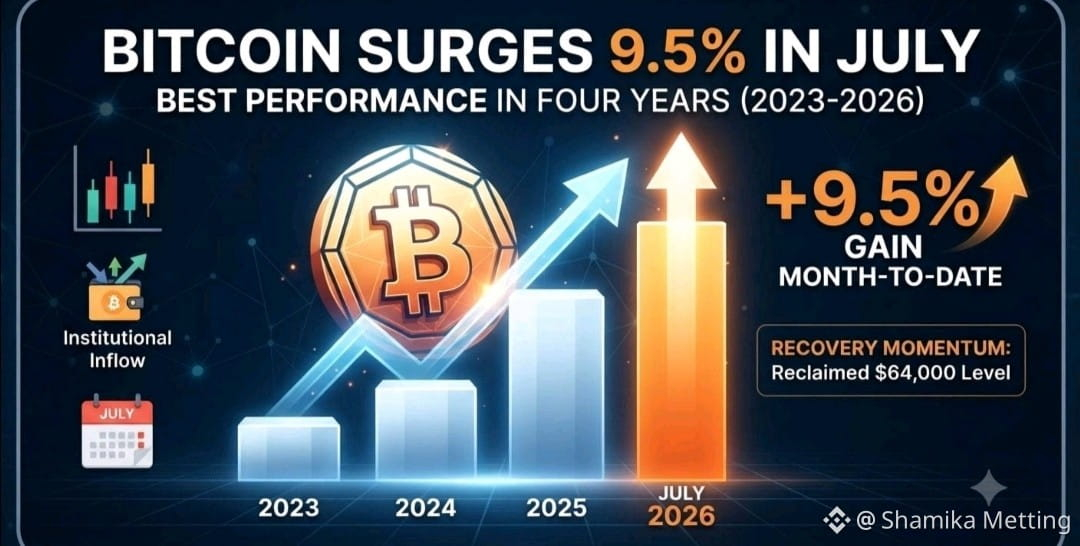
Bitcoin is witnessing a strong rebound in mid-year, having risen 9.5% so far in July 2026. This marks Bitcoin’s best monthly performance in July in four years, a notable turnaround after a difficult Q2 in which prices fell toward the $57,000 range.
This upswing is supported by the renewed return of U.S. institutional demand, as <spot $BTC ETFs> such as BlackRock’s IBIT and Fidelity’s FBTC recorded renewed daily net inflows. This institutional buying has effectively absorbed the selling pressure that had misled the market during May and June.
Beyond current inflows, market sentiment is also being reinforced by historical seasonal trends. Data shows that July has often been a positive month for Bitcoin—even during prior bear-market periods in 2018 and 2022. Analysts indicate that the sharp recovery above $64,000 reflects stabilization in demand, with on-chain data from CryptoQuant showing that the sharp contraction in activity observed in early June has finally begun to slow.
Although current momentum appears bullish, market participants remain cautious. Analysts suggest that while the seasonal response in July tends to continue the upward trend.
Please follow up
$BTC #chamikametting #BTC
{future}(BTCUSDT)
#bitcoinupdown
Bitcoin is witnessing a strong rebound in mid-year, having risen 9.5% so far in July 2026. This marks Bitcoin’s best monthly performance in July in four years, a notable turnaround after a difficult Q2 in which prices fell toward the $57,000 range.
This upswing is supported by the renewed return of U.S. institutional demand, as <spot $BTC ETFs> such as BlackRock’s IBIT and Fidelity’s FBTC recorded renewed daily net inflows. This institutional buying has effectively absorbed the selling pressure that had misled the market during May and June.
Beyond current inflows, market sentiment is also being reinforced by historical seasonal trends. Data shows that July has often been a positive month for Bitcoin—even during prior bear-market periods in 2018 and 2022. Analysts indicate that the sharp recovery above $64,000 reflects stabilization in demand, with on-chain data from CryptoQuant showing that the sharp contraction in activity observed in early June has finally begun to slow.
Although current momentum appears bullish, market participants remain cautious. Analysts suggest that while the seasonal response in July tends to continue the upward trend.
Please follow up
$BTC #chamikametting #BTC
Bitcoin is witnessing a strong rebound in mid-year, having risen 9.5% so far in July 2026. This marks Bitcoin’s best monthly performance in July in four years, a notable turnaround after a difficult Q2 in which prices fell toward the $57,000 range.
This upswing is supported by the renewed return of U.S. institutional demand, as <spot $BTC ETFs> such as BlackRock’s IBIT and Fidelity’s FBTC recorded renewed daily net inflows. This institutional buying has effectively absorbed the selling pressure that had misled the market during May and June.
Beyond current inflows, market sentiment is also being reinforced by historical seasonal trends. Data shows that July has often been a positive month for Bitcoin—even during prior bear-market periods in 2018 and 2022. Analysts indicate that the sharp recovery above $64,000 reflects stabilization in demand, with on-chain data from CryptoQuant showing that the sharp contraction in activity observed in early June has finally begun to slow.
Although current momentum appears bullish, market participants remain cautious. Analysts suggest that while the seasonal response in July tends to continue the upward trend.
Please follow up
$BTC #chamikametting #BTC
1
53
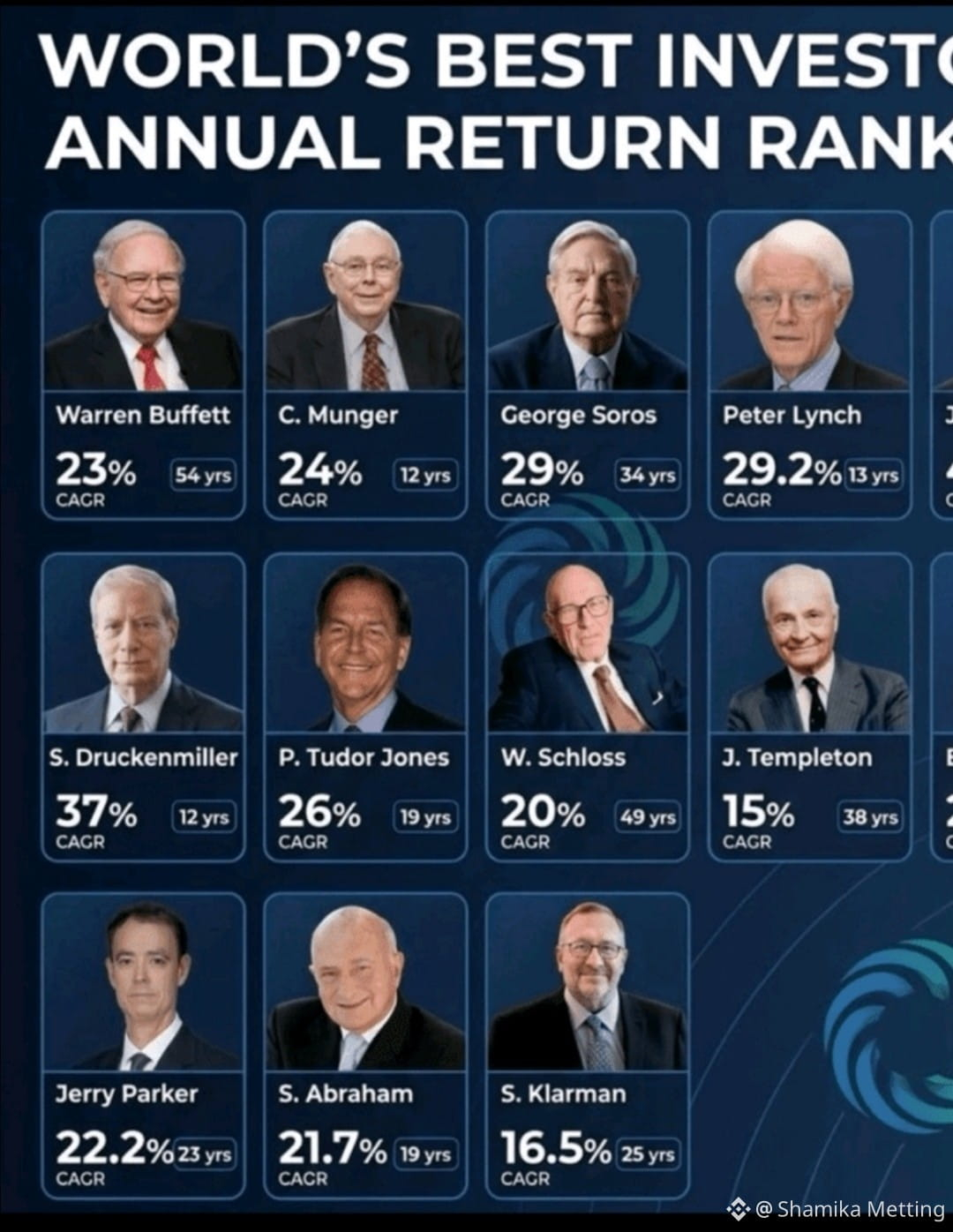
Not all top investors throughout history have followed the same playbook; some have focused on value investing, while others have zeroed in on macroeconomic trends, market momentum, or distressed assets.
But what most of them have in common is patience, discipline, and the ability to think strategically in the long run. The compounding of steady annual returns over decades is what built their legendary records.
It's also a reminder that consistency trumps the chase for quick wins in the market.
Stay tuned, please.
$BTC #chamikametting
{spot}(BTCUSDT)
Not all top investors throughout history have followed the same playbook; some have focused on value investing, while others have zeroed in on macroeconomic trends, market momentum, or distressed assets.
But what most of them have in common is patience, discipline, and the ability to think strategically in the long run. The compounding of steady annual returns over decades is what built their legendary records.
It's also a reminder that consistency trumps the chase for quick wins in the market.
Stay tuned, please.
$BTC #chamikametting
But what most of them have in common is patience, discipline, and the ability to think strategically in the long run. The compounding of steady annual returns over decades is what built their legendary records.
It's also a reminder that consistency trumps the chase for quick wins in the market.
Stay tuned, please.
$BTC #chamikametting
1
23
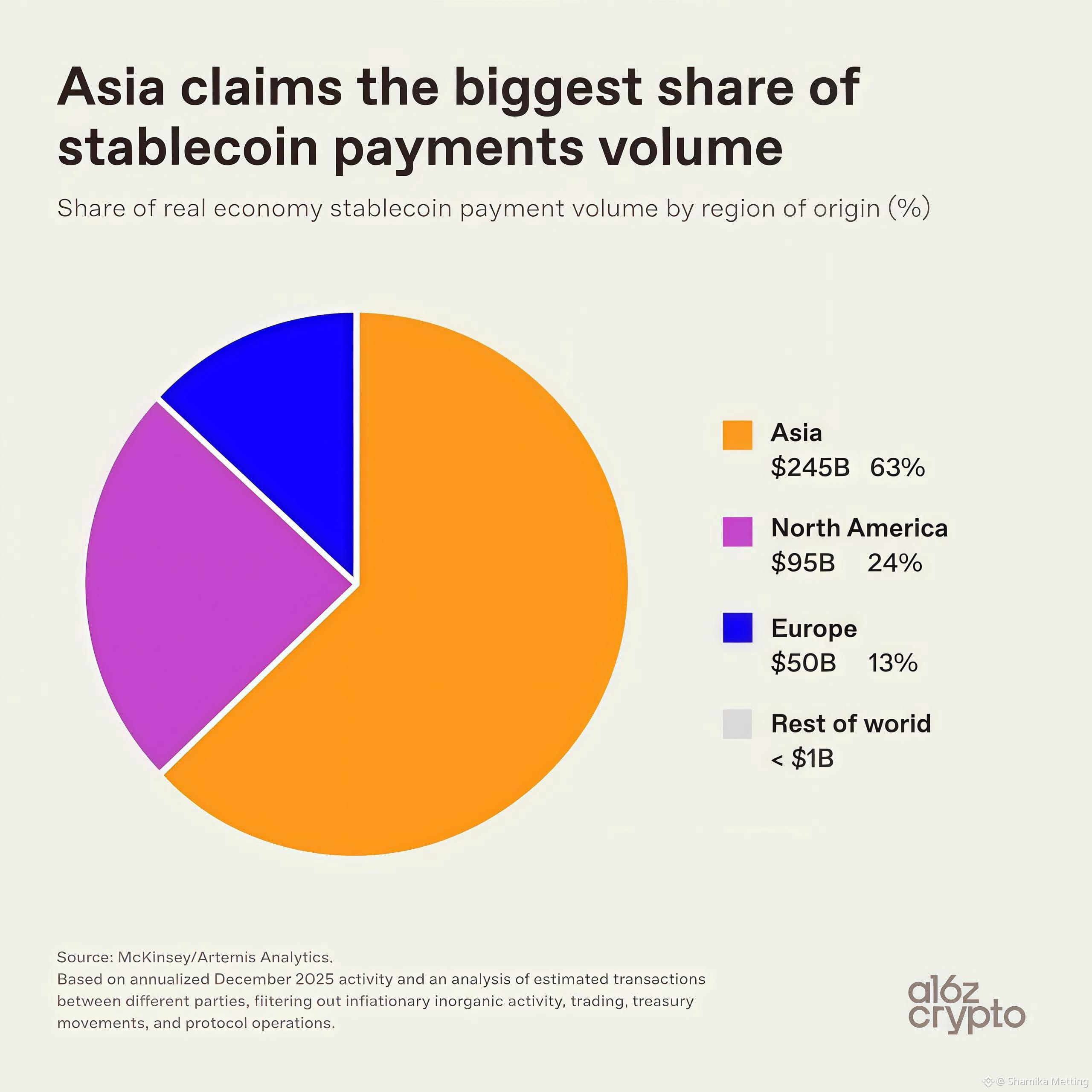
North America still accounts for about a quarter of the activity, but the balance of power is clearly shifting towards regions where access to the dollar, cross-border settlements, and local crypto payments are solving real-world issues.
Stablecoins are playing an increasingly significant role as financial infrastructure in Asia, rather than just being collateral for trading.
© Stacey Moore x A16zCrypto
Please follow up
$BTC #chamikametting
{spot}(BTCUSDT)
North America still accounts for about a quarter of the activity, but the balance of power is clearly shifting towards regions where access to the dollar, cross-border settlements, and local crypto payments are solving real-world issues.
Stablecoins are playing an increasingly significant role as financial infrastructure in Asia, rather than just being collateral for trading.
© Stacey Moore x A16zCrypto
Please follow up
$BTC #chamikametting
Stablecoins are playing an increasingly significant role as financial infrastructure in Asia, rather than just being collateral for trading.
© Stacey Moore x A16zCrypto
Please follow up
$BTC #chamikametting
1
19
Log in to explore more content
Join global crypto users on Binance Square
⚡️ Get latest and useful information about crypto.
💬 Trusted by the world’s largest crypto exchange.
👍 Discover real insights from verified creators.
Email / Phone number
Trending Topics
1
#FedRateWatch
644,540 views
3,006 Discussing
2
#EthereumFallsBelow$2400
127 views
25 Discussing
3
#USSenateBlocksClarityAct
910 views
59 Discussing
4
#BitcoinSlidesTo$76000
26,681 views
130 Discussing
5
#BitcoinReboundsTo$79K
63,759 views
408 Discussing
6
#StrategyMarketCapPassesFord
46,353 views
733 Discussing
7
#ClarityActOddsHalveOnPolymarket
75,045 views
622 Discussing
8
#US30YTreasuryYieldTops5.40%
39,800 views
410 Discussing
9
#BessentEndorsesFinalClarityActDraft
62,216 views
786 Discussing
10
#ZamaOpens16ConfidentialMorphoVaults
21,863 views
386 Discussing