
#blockspace
blockspace
2,341 views
10 Discussing
Hot
Latest

·
--
Block Space Is Limited, So Everyone Bids.
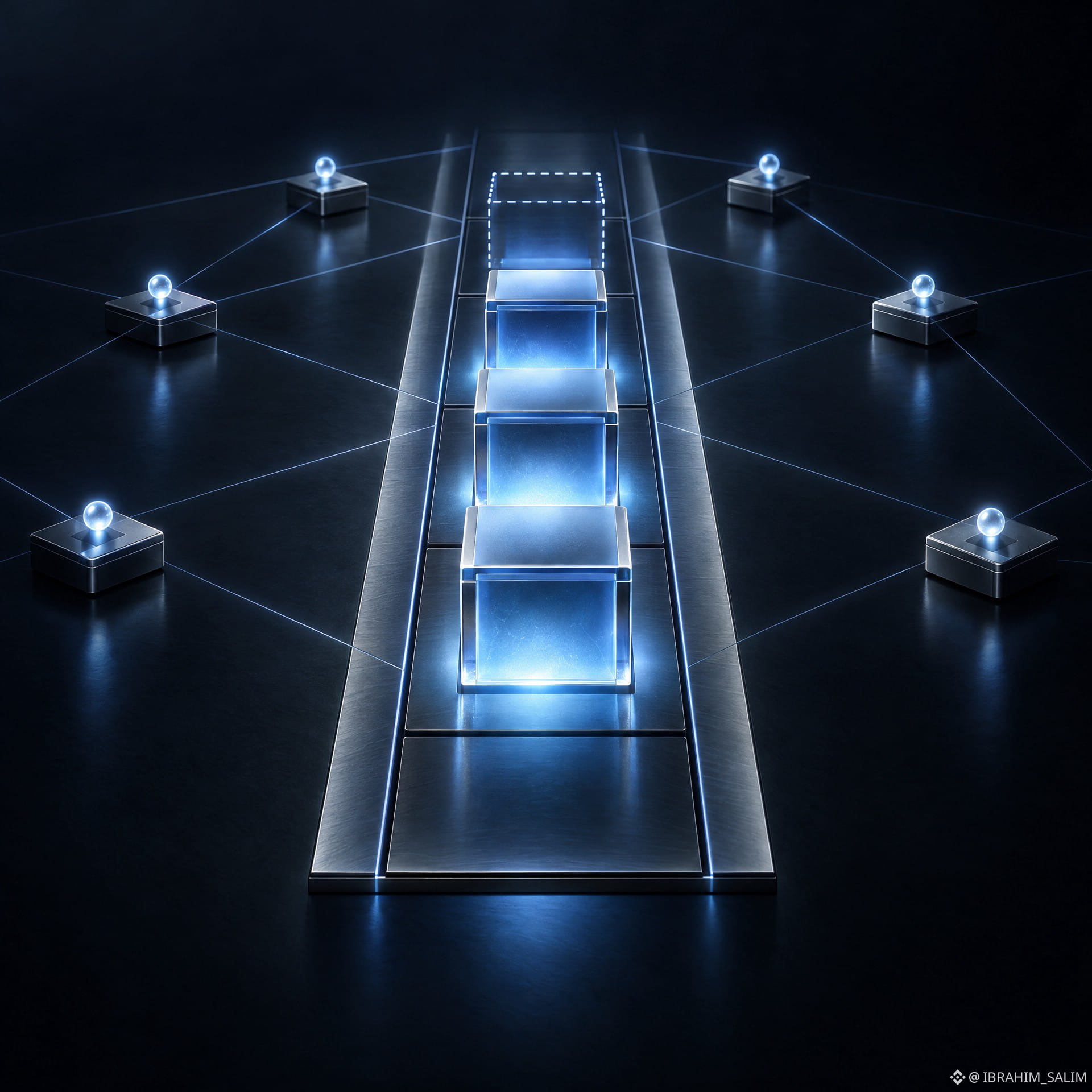
Every blockchain has a fixed amount of room in each block, and that room is the real product being sold. Bitcoin, for example, produces a block roughly every ten minutes, and each block can only hold so many transactions. Because of this, your transaction joins a waiting line called the mempool, where miners pick the highest bidders first.
As a result, fees are not a fixed price list but a live auction. When only a few people are transacting, the bidding is quiet and fees stay low. On the other hand, when a hype wave arrives, thousands of users bid against each other for the same limited seats, and the price of a seat climbs fast. Nobody planned it that way; it is simply supply and demand doing what it always does.
That is why adoption can feel like a double-edged sword. More users prove a network is valuable, yet more users also compete for the same scarce space. Instead of one smooth experience, you get cheap periods and painful periods depending on the crowd.
Understanding this auction helps you time your on-chain moves and choose the right network for the job. Want to trade smarter alongside a master copy trader? Join my Binance copy trading account here: [https://www.binance.com/en/copy-trading/lead-details/5293024773212277505?timeRange=365D](https://www.binance.com/en/copy-trading/lead-details/5293024773212277505?timeRange=365D)
Disclaimer: This is educational content, not financial advice. Crypto involves risk, so always do your own research.
Cashtags: $BTC $ETH
Hashtags: #bitcoin #blockspace #cryptoeducation #NetworkFees #BinanceSquare
Block Space Is Limited, So Everyone Bids.
Every blockchain has a fixed amount of room in each block, and that room is the real product being sold. Bitcoin, for example, produces a block roughly every ten minutes, and each block can only hold so many transactions. Because of this, your transaction joins a waiting line called the mempool, where miners pick the highest bidders first.
As a result, fees are not a fixed price list but a live auction. When only a few people are transacting, the bidding is quiet and fees stay low. On the other hand, when a hype wave arrives, thousands of users bid against each other for the same limited seats, and the price of a seat climbs fast. Nobody planned it that way; it is simply supply and demand doing what it always does.
That is why adoption can feel like a double-edged sword. More users prove a network is valuable, yet more users also compete for the same scarce space. Instead of one smooth experience, you get cheap periods and painful periods depending on the crowd.
Understanding this auction helps you time your on-chain moves and choose the right network for the job. Want to trade smarter alongside a master copy trader? Join my Binance copy trading account here: https://www.binance.com/en/copy-trading/lead-details/5293024773212277505?timeRange=365D
Disclaimer: This is educational content, not financial advice. Crypto involves risk, so always do your own research.
Cashtags: $BTC $ETH
Hashtags: #bitcoin #blockspace #cryptoeducation #NetworkFees #BinanceSquare
My Spot Portfolio
1 / 300
Minimum 10USDT
Public
7D PNL
(USDT)
-28.86
7D ROI
-5.56%
AUM
$590.90
Win Rate
12.50%
93

ETHGas is developing a service for institutions to reserve Ethereum blockspace in advance. In a Nov. 3 CoinDesk interview, founder Kevin Lepsoe said compensation for missed validator commitments is currently set at zero, and that qualified validators cover about 5% of Ethereum’s network. Neither Lepsoe nor a Delphi Digital report produced under a paid agreement with ETHGas identified a bank using the service in production.
This is a development-stage offering—not an Ethereum protocol change or a confirmed bank deployment. The 5% figure and zero-compensation term are attributed statements; Delphi’s cited wait-time estimates are a model, not live data, and the report was produced under a paid agreement with ETHGas.
Source: [CoinDesk, Nov. 3, 7:01 a.m. EST (12:01 UTC)](https://www.coindesk.com/business/2026/11/03/ethgas-courts-wall-street-with-ethereum-blockspace-but-compensation-for-missed-trades-is-zero).
Conclusion: $ETH — the service aims to make execution more predictable, but validator coverage and remedies for missed commitments remain open questions. [Binance ETH/USDT Spot chart](https://www.binance.com/en/trade/ETH_USDT). Check the chart for yourself, do your own research, and trade responsibly. #Ethereum #ETH #Blockspace #CryptoInfrastructure
35

🚨 $ETH ACTIVATES MULTI-PARTY BLOCK CONSTRUCTION TO DISMANTLE BUILDER MONOPOLIES ON MAINNET! ⚡
Ethereum mainnet has officially deployed Multi-Party Block Construction, disrupting the legacy winner-takes-all builder model. 🌊 By enabling concurrent transaction batching across multiple builders, this structural upgrade enhances blockspace efficiency while directly bolstering censorship resistance.
While validation proposers stand to capture improved execution yield, early operator concentration remains the key metric to monitor. 📊 As order flow dynamics shift toward distributed execution, Ethereum continues refining its underlying market architecture. 💬 Do you believe MPBC genuinely advances network decentralization, or will operator dependencies introduce a new intermediary layer? 👇
⚠️ Not financial advice. Always manage your risk. 🛡️
🏷️ #ETH #Ethereum #Layer1 #Crypto #Blockspace
⚡ 🧠
3
Log in to explore more content
Join global crypto users on Binance Square
⚡️ Get latest and useful information about crypto.
💬 Trusted by the world’s largest crypto exchange.
👍 Discover real insights from verified creators.
Email / Phone number
Trending Topics
1
#AnthropicBreaksBelowIPOPriceAmidAISlump
23,912 views
339 Discussing
2
#Bitcoin'sReboundFadesBelow$60K
72,722 views
327 Discussing
3
#WillMarketsStageAThanksgivingReliefRally?
513,618 views
3,314 Discussing
4
#EthereumFoundationPlansShiftToHashBasedSignaturesBy2028
2,865 views
87 Discussing
5
#ADPWeeklyPrivatePayrollsSlowTo21000
5,831 views
125 Discussing
6
#WillOctCorePCEShiftFedHikeExpectations?
204,300 views
1,741 Discussing
7
#USReportedlyPreparesNewTariffsOn16TradingPartners
7,257 views
101 Discussing
8
#SouthKoreaDigitalAssetBillProposes20%ShareholderCap
1,245 views
14 Discussing
9
#SouthKoreaProposesBanksHoldOver50%OfStablecoinIssuers
462 views
11 Discussing
10
#EvolveAtBinanceBlockchainWeek
358,970 views
2,102 Discussing