
#usd
usd
2.8M views
8,366 Discussing
Hot
Latest

·
--
💵 USD MARKET WATCH
The US Dollar remains an important factor for the global financial market.
Any major move in the USD can influence Bitcoin, crypto, gold, and other risk assets. 👀
I’m keeping an eye on dollar strength and how the market reacts around key economic data.
The next move could be interesting. 📊
#USD #DXY #Bitcoin #Crypto #BinanceFeed
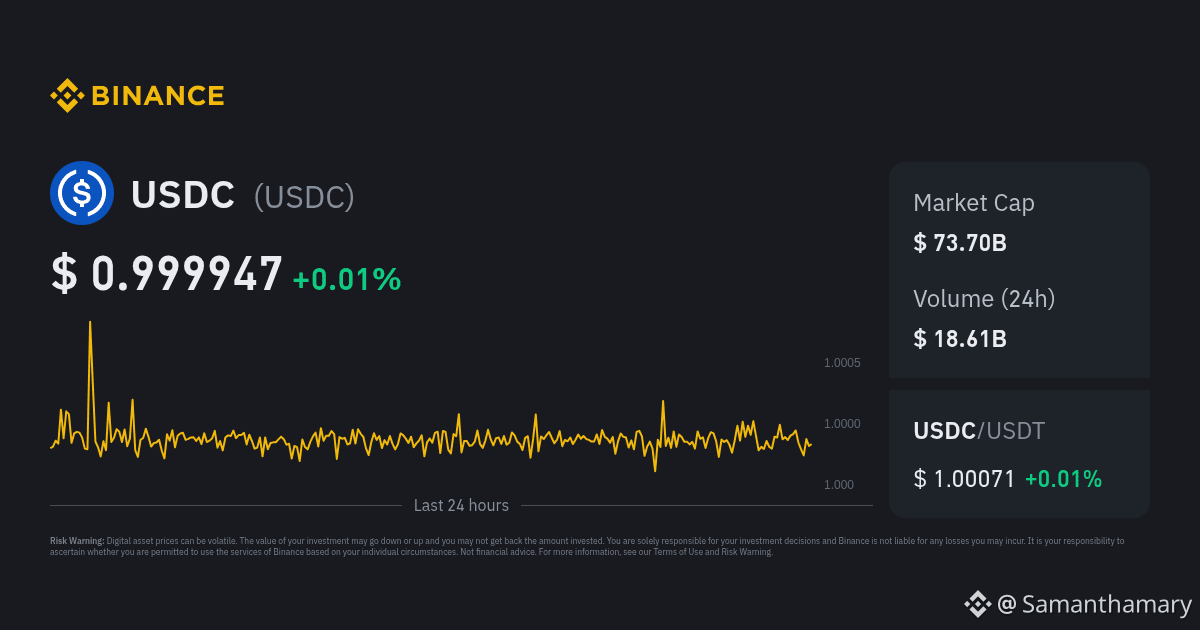
{spot}(USDCUSDT)
💵 USD MARKET WATCH
The US Dollar remains an important factor for the global financial market.
Any major move in the USD can influence Bitcoin, crypto, gold, and other risk assets. 👀
I’m keeping an eye on dollar strength and how the market reacts around key economic data.
The next move could be interesting. 📊
#USD #DXY #Bitcoin #Crypto #BinanceFeed
The US Dollar remains an important factor for the global financial market.
Any major move in the USD can influence Bitcoin, crypto, gold, and other risk assets. 👀
I’m keeping an eye on dollar strength and how the market reacts around key economic data.
The next move could be interesting. 📊
#USD #DXY #Bitcoin #Crypto #BinanceFeed
5

·
--
The U.S. Dollar Index (DXY) showed strong performance in the latest FX trading session, rising 0.49% intraday to 99.57. Most non-U.S. currencies were under broad pressure: the euro against the U.S. dollar (EUR/USD) fell 0.5% to 1.1536, the British pound against the U.S. dollar (GBP/USD) dropped 0.34% to 1.3480, while the U.S. dollar against the Japanese yen (USD/JPY) rose 0.68% to 154.517.
This FX move reflects a rebound in global investors’ demand for positioning in U.S. dollar assets amid macro uncertainty. As the DXY approaches the 100 level, it suggests investors are reassessing the Federal Reserve’s subsequent rate path and expectations for the interest-rate spread between the U.S. and Europe. Currencies in non-U.S. economies face period-specific exchange-rate pressure.
In traditional financial markets, a stronger dollar typically weighs on commodities priced in dollars, while also pushing up the liquidity cost for cross-border assets. Against the backdrop of the linkage between U.S. Treasury yields and exchange rates, short-term valuation models for global risk assets generally need to be recalibrated, and the market’s wait-and-see sentiment has intensified.
For the crypto market, $BTC and major coins often face liquidity pullback pressure during strong-dollar cycles. However, at present, market funds are also monitoring whether this dollar rebound is a short-term fluctuation or a longer-term trend. Overall crypto liquidity remains in a neutral, range-bound environment, and the next move will still depend on further signals from macro liquidity conditions.
#DXY #USD #Forex
The U.S. Dollar Index (DXY) showed strong performance in the latest FX trading session, rising 0.49% intraday to 99.57. Most non-U.S. currencies were under broad pressure: the euro against the U.S. dollar (EUR/USD) fell 0.5% to 1.1536, the British pound against the U.S. dollar (GBP/USD) dropped 0.34% to 1.3480, while the U.S. dollar against the Japanese yen (USD/JPY) rose 0.68% to 154.517.
This FX move reflects a rebound in global investors’ demand for positioning in U.S. dollar assets amid macro uncertainty. As the DXY approaches the 100 level, it suggests investors are reassessing the Federal Reserve’s subsequent rate path and expectations for the interest-rate spread between the U.S. and Europe. Currencies in non-U.S. economies face period-specific exchange-rate pressure.
In traditional financial markets, a stronger dollar typically weighs on commodities priced in dollars, while also pushing up the liquidity cost for cross-border assets. Against the backdrop of the linkage between U.S. Treasury yields and exchange rates, short-term valuation models for global risk assets generally need to be recalibrated, and the market’s wait-and-see sentiment has intensified.
For the crypto market, $BTC and major coins often face liquidity pullback pressure during strong-dollar cycles. However, at present, market funds are also monitoring whether this dollar rebound is a short-term fluctuation or a longer-term trend. Overall crypto liquidity remains in a neutral, range-bound environment, and the next move will still depend on further signals from macro liquidity conditions.
#DXY #USD #Forex
This FX move reflects a rebound in global investors’ demand for positioning in U.S. dollar assets amid macro uncertainty. As the DXY approaches the 100 level, it suggests investors are reassessing the Federal Reserve’s subsequent rate path and expectations for the interest-rate spread between the U.S. and Europe. Currencies in non-U.S. economies face period-specific exchange-rate pressure.
In traditional financial markets, a stronger dollar typically weighs on commodities priced in dollars, while also pushing up the liquidity cost for cross-border assets. Against the backdrop of the linkage between U.S. Treasury yields and exchange rates, short-term valuation models for global risk assets generally need to be recalibrated, and the market’s wait-and-see sentiment has intensified.
For the crypto market, $BTC and major coins often face liquidity pullback pressure during strong-dollar cycles. However, at present, market funds are also monitoring whether this dollar rebound is a short-term fluctuation or a longer-term trend. Overall crypto liquidity remains in a neutral, range-bound environment, and the next move will still depend on further signals from macro liquidity conditions.
#DXY #USD #Forex
5

·
--
Today’s overseas market saw a strong resurgence in the greenback as the DXY index rose 0.49% to 99.57. This uptick has put direct pressure on other key currencies, with EUR/USD down 0.5% to 1.1536, and GBP/USD down 0.34% to 1.3480, while the USD/JPY exchange rate jumped 0.68% to 154.517.
At the same time, the rapid recovery in the DXY suggests the market is reassessing expectations for monetary policy and the relative strength of the U.S. economy versus Europe and Japan. When currency flows broadly reflect weakening in the other direction, pressure to preserve capital in the U.S. dollar continues to build.
A strengthening USD will create significant headwinds for USD-priced assets such as gold, commodities, and global equity markets in the near term.
Specifically for the crypto market, the DXY strengthening at the highs is a not-so-positive signal for liquidity and investor sentiment. This pressure may cause $BTC and various altcoins to face difficulties in breaking through levels, requiring the market to find additional momentum to hold key support zones.
#DXY #USD #CryptoMarkets
Today’s overseas market saw a strong resurgence in the greenback as the DXY index rose 0.49% to 99.57. This uptick has put direct pressure on other key currencies, with EUR/USD down 0.5% to 1.1536, and GBP/USD down 0.34% to 1.3480, while the USD/JPY exchange rate jumped 0.68% to 154.517.
At the same time, the rapid recovery in the DXY suggests the market is reassessing expectations for monetary policy and the relative strength of the U.S. economy versus Europe and Japan. When currency flows broadly reflect weakening in the other direction, pressure to preserve capital in the U.S. dollar continues to build.
A strengthening USD will create significant headwinds for USD-priced assets such as gold, commodities, and global equity markets in the near term.
Specifically for the crypto market, the DXY strengthening at the highs is a not-so-positive signal for liquidity and investor sentiment. This pressure may cause $BTC and various altcoins to face difficulties in breaking through levels, requiring the market to find additional momentum to hold key support zones.
#DXY #USD #CryptoMarkets
At the same time, the rapid recovery in the DXY suggests the market is reassessing expectations for monetary policy and the relative strength of the U.S. economy versus Europe and Japan. When currency flows broadly reflect weakening in the other direction, pressure to preserve capital in the U.S. dollar continues to build.
A strengthening USD will create significant headwinds for USD-priced assets such as gold, commodities, and global equity markets in the near term.
Specifically for the crypto market, the DXY strengthening at the highs is a not-so-positive signal for liquidity and investor sentiment. This pressure may cause $BTC and various altcoins to face difficulties in breaking through levels, requiring the market to find additional momentum to hold key support zones.
#DXY #USD #CryptoMarkets
96

Ahead of the Federal Open Market Committee (FOMC) meeting this week, the latest assessments by economists at institutions including Barclays and Deutsche Bank indicate that the most recently released U.S. CPI inflation data is broadly in line with expectations. This has directly driven the market-implied probability of a 25-basis-point rate hike this week to jump sharply from 62% last Monday to 88%. Fueled by renewed hawkish rate-hike expectations, major Asian currencies came under pressure across the board in the early session. According to LSEG data, the U.S. dollar rose 0.3% to 1345.80 against the Korean won, and rose 0.3% to 154.06 against the Japanese yen. The Australian dollar also fell 0.2% to 0.7151 against the U.S. dollar.
The core contradiction in the current macro environment lies in the fragility of policy expectations. Previously, disagreements in the market over where the Fed’s rate-hike cycle would ultimately peak intensified. However, the resilience of inflation data has forced investors to reprice the tightening cycle. Barclays in particular noted that if the Fed were to unexpectedly hold rates steady this week, or if it were to deliver a mildly toned signal well below market expectations, the dollar could face a sharp pullback in the near term. But if the Fed firmly implements rate hikes and keeps interest rates high for longer, it will further reinforce the persistence of tight monetary conditions.
From a cross-asset perspective, the appeal of fixed-income assets denominated in U.S. dollars has surged, leading to global liquidity flowing back into dollar assets. U.S. Treasury yields and the U.S. Dollar Index have remained firm, while non-U.S. currencies are under broad pressure. This strong U.S. dollar backdrop is now exacerbating the passive tightening of global financial conditions, limiting room for valuation recovery in commodities and overall risk assets.
For the crypto market, the continuation of the high-rate environment alongside a contraction in U.S. dollar liquidity is an explicit negative. Before macro tightening is fully reflected in the real economy, institutional risk-aversion sentiment tends to rise, and incremental liquidity becomes constrained. If the Fed’s post-meeting statement is hawkish, digital assets led by $BTC will still face pullback risks driven by liquidity squeezes. Investors should be alert to downside volatility after sentiment becomes overly optimistic.
#Fed #InterestRates #USD
Ahead of the Federal Open Market Committee (FOMC) meeting this week, the latest assessments by economists at institutions including Barclays and Deutsche Bank indicate that the most recently released U.S. CPI inflation data is broadly in line with expectations. This has directly driven the market-implied probability of a 25-basis-point rate hike this week to jump sharply from 62% last Monday to 88%. Fueled by renewed hawkish rate-hike expectations, major Asian currencies came under pressure across the board in the early session. According to LSEG data, the U.S. dollar rose 0.3% to 1345.80 against the Korean won, and rose 0.3% to 154.06 against the Japanese yen. The Australian dollar also fell 0.2% to 0.7151 against the U.S. dollar.
The core contradiction in the current macro environment lies in the fragility of policy expectations. Previously, disagreements in the market over where the Fed’s rate-hike cycle would ultimately peak intensified. However, the resilience of inflation data has forced investors to reprice the tightening cycle. Barclays in particular noted that if the Fed were to unexpectedly hold rates steady this week, or if it were to deliver a mildly toned signal well below market expectations, the dollar could face a sharp pullback in the near term. But if the Fed firmly implements rate hikes and keeps interest rates high for longer, it will further reinforce the persistence of tight monetary conditions.
From a cross-asset perspective, the appeal of fixed-income assets denominated in U.S. dollars has surged, leading to global liquidity flowing back into dollar assets. U.S. Treasury yields and the U.S. Dollar Index have remained firm, while non-U.S. currencies are under broad pressure. This strong U.S. dollar backdrop is now exacerbating the passive tightening of global financial conditions, limiting room for valuation recovery in commodities and overall risk assets.
For the crypto market, the continuation of the high-rate environment alongside a contraction in U.S. dollar liquidity is an explicit negative. Before macro tightening is fully reflected in the real economy, institutional risk-aversion sentiment tends to rise, and incremental liquidity becomes constrained. If the Fed’s post-meeting statement is hawkish, digital assets led by $BTC will still face pullback risks driven by liquidity squeezes. Investors should be alert to downside volatility after sentiment becomes overly optimistic.
#Fed #InterestRates #USD
The core contradiction in the current macro environment lies in the fragility of policy expectations. Previously, disagreements in the market over where the Fed’s rate-hike cycle would ultimately peak intensified. However, the resilience of inflation data has forced investors to reprice the tightening cycle. Barclays in particular noted that if the Fed were to unexpectedly hold rates steady this week, or if it were to deliver a mildly toned signal well below market expectations, the dollar could face a sharp pullback in the near term. But if the Fed firmly implements rate hikes and keeps interest rates high for longer, it will further reinforce the persistence of tight monetary conditions.
From a cross-asset perspective, the appeal of fixed-income assets denominated in U.S. dollars has surged, leading to global liquidity flowing back into dollar assets. U.S. Treasury yields and the U.S. Dollar Index have remained firm, while non-U.S. currencies are under broad pressure. This strong U.S. dollar backdrop is now exacerbating the passive tightening of global financial conditions, limiting room for valuation recovery in commodities and overall risk assets.
For the crypto market, the continuation of the high-rate environment alongside a contraction in U.S. dollar liquidity is an explicit negative. Before macro tightening is fully reflected in the real economy, institutional risk-aversion sentiment tends to rise, and incremental liquidity becomes constrained. If the Fed’s post-meeting statement is hawkish, digital assets led by $BTC will still face pullback risks driven by liquidity squeezes. Investors should be alert to downside volatility after sentiment becomes overly optimistic.
#Fed #InterestRates #USD
37



·
--
Offer: Earn up to 6.33% APR by holding USD1.
Eligible Accounts: Spot, Funding, Margin, and Futures.
Call to Action: Deposit now to start earning.
#CPIWatch #usd #BaleiasdasCriptos #BDT #Binance
Offer: Earn up to 6.33% APR by holding USD1.
Eligible Accounts: Spot, Funding, Margin, and Futures.
Call to Action: Deposit now to start earning.
#CPIWatch #usd #BaleiasdasCriptos #BDT #Binance
Eligible Accounts: Spot, Funding, Margin, and Futures.
Call to Action: Deposit now to start earning.
#CPIWatch #usd #BaleiasdasCriptos #BDT #Binance

226

·
--
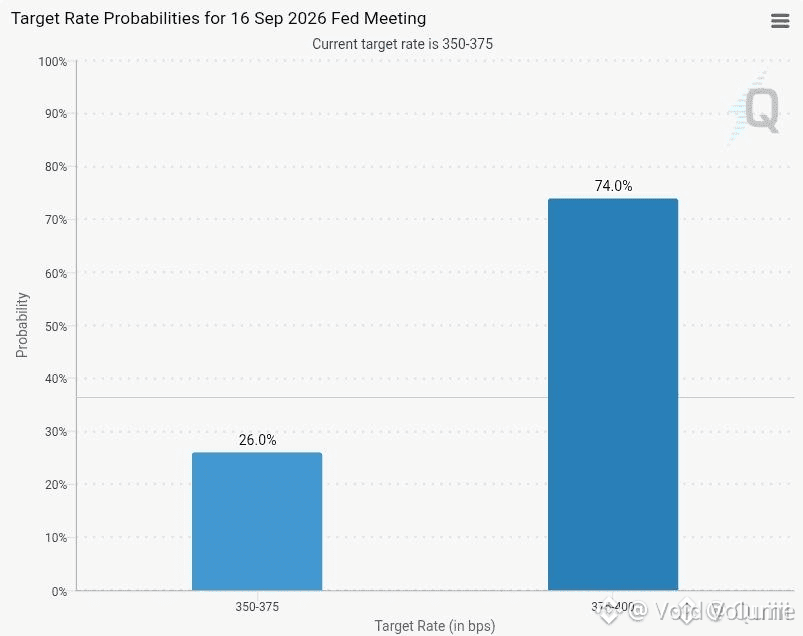
🚨 $USD FACES TRIPLE HAWKISH HITS FROM ECB, BOJ & FED 💥
📊 Global liquidity is poised for a sharp contraction as the ECB lifts rates by 25 bps and the BOJ readies its own hike. The Fed’s 74% probability of a move this month adds a third hawkish pressure point, forcing smart‑money to hunt for defensive liquidity pools. 🦈 Institutional balance sheets are already reallocating, favoring assets with strong cash flow resilience over risk‑on exposure. ⚡ Expect widening spreads and a potential short‑term pullback across risk assets as capital seeks safety.
💬 How are you positioning your portfolio ahead of this liquidity squeeze? 👇
⚠️ Not financial advice. Always manage your risk. 🛡️
🏷️ #USD #Macro #LiquiditySqueeze #HawkishPolicy #Crypto
🔥 💎
🚨 $USD FACES TRIPLE HAWKISH HITS FROM ECB, BOJ & FED 💥
📊 Global liquidity is poised for a sharp contraction as the ECB lifts rates by 25 bps and the BOJ readies its own hike. The Fed’s 74% probability of a move this month adds a third hawkish pressure point, forcing smart‑money to hunt for defensive liquidity pools. 🦈 Institutional balance sheets are already reallocating, favoring assets with strong cash flow resilience over risk‑on exposure. ⚡ Expect widening spreads and a potential short‑term pullback across risk assets as capital seeks safety.
💬 How are you positioning your portfolio ahead of this liquidity squeeze? 👇
⚠️ Not financial advice. Always manage your risk. 🛡️
🏷️ #USD #Macro #LiquiditySqueeze #HawkishPolicy #Crypto
🔥 💎
📊 Global liquidity is poised for a sharp contraction as the ECB lifts rates by 25 bps and the BOJ readies its own hike. The Fed’s 74% probability of a move this month adds a third hawkish pressure point, forcing smart‑money to hunt for defensive liquidity pools. 🦈 Institutional balance sheets are already reallocating, favoring assets with strong cash flow resilience over risk‑on exposure. ⚡ Expect widening spreads and a potential short‑term pullback across risk assets as capital seeks safety.
💬 How are you positioning your portfolio ahead of this liquidity squeeze? 👇
⚠️ Not financial advice. Always manage your risk. 🛡️
🏷️ #USD #Macro #LiquiditySqueeze #HawkishPolicy #Crypto
🔥 💎
18

US Treasury Secretary Scott Bessent has recently initiated a series of coordinated currency and yield management efforts, signaling that the Trump administration may be engineering a managed, gradual depreciation of the US dollar. Through coordinated interventions with Japan to bolster the yen, pressure on South Korea for similar currency measures, and tight control over US Treasury yields, Washington is actively addressing dollar overvaluation.
This shift marks a strategic pivot toward bilateral currency realignments—what currency manager Stephen Jen describes as a series of mini "Mar-a-Lago accords." Rather than risking market turbulence with a single aggressive devaluation, the administration is opting for a fragmented approach to ease the dollar lower without triggering sudden capital flight from US equities and bonds.
A weaker greenback alongside suppressed Treasury yields typically eases global financial conditions, providing immediate tailwinds for commodities like gold and easing liquidity pressures across emerging markets.
For crypto markets, a weaker dollar combined with controlled yields creates a highly favorable macro environment. As global fiat purchasing power softens, institutional liquidity tends to rotate toward scarce digital assets, setting up a constructive backdrop for $BTC and the broader risk-on ecosystem. 🌐
#USD #Treasury #Macro
US Treasury Secretary Scott Bessent has recently initiated a series of coordinated currency and yield management efforts, signaling that the Trump administration may be engineering a managed, gradual depreciation of the US dollar. Through coordinated interventions with Japan to bolster the yen, pressure on South Korea for similar currency measures, and tight control over US Treasury yields, Washington is actively addressing dollar overvaluation.
This shift marks a strategic pivot toward bilateral currency realignments—what currency manager Stephen Jen describes as a series of mini "Mar-a-Lago accords." Rather than risking market turbulence with a single aggressive devaluation, the administration is opting for a fragmented approach to ease the dollar lower without triggering sudden capital flight from US equities and bonds.
A weaker greenback alongside suppressed Treasury yields typically eases global financial conditions, providing immediate tailwinds for commodities like gold and easing liquidity pressures across emerging markets.
For crypto markets, a weaker dollar combined with controlled yields creates a highly favorable macro environment. As global fiat purchasing power softens, institutional liquidity tends to rotate toward scarce digital assets, setting up a constructive backdrop for $BTC and the broader risk-on ecosystem. 🌐
#USD #Treasury #Macro
This shift marks a strategic pivot toward bilateral currency realignments—what currency manager Stephen Jen describes as a series of mini "Mar-a-Lago accords." Rather than risking market turbulence with a single aggressive devaluation, the administration is opting for a fragmented approach to ease the dollar lower without triggering sudden capital flight from US equities and bonds.
A weaker greenback alongside suppressed Treasury yields typically eases global financial conditions, providing immediate tailwinds for commodities like gold and easing liquidity pressures across emerging markets.
For crypto markets, a weaker dollar combined with controlled yields creates a highly favorable macro environment. As global fiat purchasing power softens, institutional liquidity tends to rotate toward scarce digital assets, setting up a constructive backdrop for $BTC and the broader risk-on ecosystem. 🌐
#USD #Treasury #Macro
12

·
--
#URO #USD The EUR/USD pair is trading near 1.1630. The euro holds a mildly bullish near-term tone ahead of key central bank policy decisions and upcoming economic indicators.
Key Drivers & Market Focus
ECB Interest Rate Decision: Markets are focused on the European Central Bank's upcoming policy meeting, where a rate decision will set the tone for near-term euro momentum.
US Inflation Metrics: Investors are awaiting upcoming US inflation releases, including the Producer Price Index (PPI) and Consumer Price Index (CPI), to gauge the size and scope of potential US Federal Reserve rate adjustments.
Broad USD Dynamics: The US dollar faces modest downside pressure against major currencies amid evolving expectations around global central bank divergence.
Key Technical Levels
Resistance: 1.1700 (Upper Bollinger Band ceiling)
Pivot/Support: 1.1625 (20-day moving average/Bollinger middle band)
Secondary Support: 1.1560 (100-day simple moving average)
#URO #USD The EUR/USD pair is trading near 1.1630. The euro holds a mildly bullish near-term tone ahead of key central bank policy decisions and upcoming economic indicators.
Key Drivers & Market Focus
ECB Interest Rate Decision: Markets are focused on the European Central Bank's upcoming policy meeting, where a rate decision will set the tone for near-term euro momentum.
US Inflation Metrics: Investors are awaiting upcoming US inflation releases, including the Producer Price Index (PPI) and Consumer Price Index (CPI), to gauge the size and scope of potential US Federal Reserve rate adjustments.
Broad USD Dynamics: The US dollar faces modest downside pressure against major currencies amid evolving expectations around global central bank divergence.
Key Technical Levels
Resistance: 1.1700 (Upper Bollinger Band ceiling)
Pivot/Support: 1.1625 (20-day moving average/Bollinger middle band)
Secondary Support: 1.1560 (100-day simple moving average)
Key Drivers & Market Focus
ECB Interest Rate Decision: Markets are focused on the European Central Bank's upcoming policy meeting, where a rate decision will set the tone for near-term euro momentum.
US Inflation Metrics: Investors are awaiting upcoming US inflation releases, including the Producer Price Index (PPI) and Consumer Price Index (CPI), to gauge the size and scope of potential US Federal Reserve rate adjustments.
Broad USD Dynamics: The US dollar faces modest downside pressure against major currencies amid evolving expectations around global central bank divergence.
Key Technical Levels
Resistance: 1.1700 (Upper Bollinger Band ceiling)
Pivot/Support: 1.1625 (20-day moving average/Bollinger middle band)
Secondary Support: 1.1560 (100-day simple moving average)
97
·
--
U.S. Treasury Secretary Bessent has recently been taking frequent action, drawing intense market attention to the Trump administration’s exchange-rate policies. According to industry analysis, the U.S. Treasury is currently coordinating with Japan on a joint intervention in support of the yen, while also pushing South Korea to take similar measures, and working to rein in yields on U.S. government bonds. Coupled with 18 months of trade protection policies and multiple bilateral agreements, these moves appear to be paving the way for the U.S. dollar to gradually weaken.
Analysts at well-known currency fund manager Eurizon SLJ note that directly designing a comprehensive plan to suppress the dollar would be extremely difficult, as it could easily unsettle foreign investors holding massive assets in U.S. stocks and bonds. Therefore, U.S. authorities are more likely to adopt a “fragmented” strategy: negotiating separately with each major trading partner to establish multiple small bilateral exchange-rate coordination mechanisms. This would help avoid the formation of a sustained one-way depreciation expectation, while quietly steering the dollar back toward a reasonable valuation.
From the perspective of macro financial markets, this gradual weak-dollar strategy is a double-edged sword. On the one hand, controlling U.S. bond yields and guiding non-U.S. currencies to appreciate can help ease global liquidity pressure and reduce some emerging-market debt risks. On the other hand, if the pace of dollar weakening gets out of control, global capital’s willingness to allocate to U.S. assets—both bonds and equities—may be reshaped, bringing new volatility to asset prices.
For the crypto market, changes in dollar liquidity have long been a key factor affecting risk appetite. If a weak-dollar trend becomes gradually established, the global liquidity environment may improve at the margin, providing macro support for risk assets, including $BTC . But if bilateral exchange-rate bargaining intensifies market uncertainty, short-term funds may also fall into a wait-and-see mode. The subsequent outlook still depends on how macro policies are practically implemented.
#usd #美联储 #Macroeconomy
U.S. Treasury Secretary Bessent has recently been taking frequent action, drawing intense market attention to the Trump administration’s exchange-rate policies. According to industry analysis, the U.S. Treasury is currently coordinating with Japan on a joint intervention in support of the yen, while also pushing South Korea to take similar measures, and working to rein in yields on U.S. government bonds. Coupled with 18 months of trade protection policies and multiple bilateral agreements, these moves appear to be paving the way for the U.S. dollar to gradually weaken.
Analysts at well-known currency fund manager Eurizon SLJ note that directly designing a comprehensive plan to suppress the dollar would be extremely difficult, as it could easily unsettle foreign investors holding massive assets in U.S. stocks and bonds. Therefore, U.S. authorities are more likely to adopt a “fragmented” strategy: negotiating separately with each major trading partner to establish multiple small bilateral exchange-rate coordination mechanisms. This would help avoid the formation of a sustained one-way depreciation expectation, while quietly steering the dollar back toward a reasonable valuation.
From the perspective of macro financial markets, this gradual weak-dollar strategy is a double-edged sword. On the one hand, controlling U.S. bond yields and guiding non-U.S. currencies to appreciate can help ease global liquidity pressure and reduce some emerging-market debt risks. On the other hand, if the pace of dollar weakening gets out of control, global capital’s willingness to allocate to U.S. assets—both bonds and equities—may be reshaped, bringing new volatility to asset prices.
For the crypto market, changes in dollar liquidity have long been a key factor affecting risk appetite. If a weak-dollar trend becomes gradually established, the global liquidity environment may improve at the margin, providing macro support for risk assets, including $BTC . But if bilateral exchange-rate bargaining intensifies market uncertainty, short-term funds may also fall into a wait-and-see mode. The subsequent outlook still depends on how macro policies are practically implemented.
#usd #美联储 #Macroeconomy
Analysts at well-known currency fund manager Eurizon SLJ note that directly designing a comprehensive plan to suppress the dollar would be extremely difficult, as it could easily unsettle foreign investors holding massive assets in U.S. stocks and bonds. Therefore, U.S. authorities are more likely to adopt a “fragmented” strategy: negotiating separately with each major trading partner to establish multiple small bilateral exchange-rate coordination mechanisms. This would help avoid the formation of a sustained one-way depreciation expectation, while quietly steering the dollar back toward a reasonable valuation.
From the perspective of macro financial markets, this gradual weak-dollar strategy is a double-edged sword. On the one hand, controlling U.S. bond yields and guiding non-U.S. currencies to appreciate can help ease global liquidity pressure and reduce some emerging-market debt risks. On the other hand, if the pace of dollar weakening gets out of control, global capital’s willingness to allocate to U.S. assets—both bonds and equities—may be reshaped, bringing new volatility to asset prices.
For the crypto market, changes in dollar liquidity have long been a key factor affecting risk appetite. If a weak-dollar trend becomes gradually established, the global liquidity environment may improve at the margin, providing macro support for risk assets, including $BTC . But if bilateral exchange-rate bargaining intensifies market uncertainty, short-term funds may also fall into a wait-and-see mode. The subsequent outlook still depends on how macro policies are practically implemented.
#usd #美联储 #Macroeconomy
6
On Wednesday, the US Dollar Index dropped by 0.2%, nearing its lowest levels since February 18, pressured heavily by a 0.5% surge in the Japanese Yen and direct comments from US Treasury Secretary Janet Yellen regarding currency dynamics and the Treasury's debt buyback program.
This currency movement comes at a critical macro juncture as markets await key US inflation data and the Treasury's rollout of its expanded bond buyback operation. Analysts at Jefferies noted that a buyback operation exceeding $4 billion—and potentially reaching $8 to $10 billion—would be necessary to truly shift market liquidity dynamics, while JPMorgan remains skeptical that full caps will be disclosed early.
The simultaneous weakness in the greenback and heightened liquidity expectations are reshaping traditional asset pricing. As bond yields face downward pressure from anticipated Treasury operations, risk assets and commodities are gaining renewed traction, even as regional geopolitical tensions near UAE shipping routes add underlying volatility to energy markets.
For crypto markets, a structurally weaker dollar and expanding Treasury liquidity typically create a favorable tailwind for $BTC and high-beta digital assets. If upcoming inflation prints confirm easing price pressures alongside sustained bond buybacks, global liquidity expansion could trigger a decisive continuation of the broader crypto market rally. #usd #macroeconomics #liquidity
On Wednesday, the US Dollar Index dropped by 0.2%, nearing its lowest levels since February 18, pressured heavily by a 0.5% surge in the Japanese Yen and direct comments from US Treasury Secretary Janet Yellen regarding currency dynamics and the Treasury's debt buyback program.
This currency movement comes at a critical macro juncture as markets await key US inflation data and the Treasury's rollout of its expanded bond buyback operation. Analysts at Jefferies noted that a buyback operation exceeding $4 billion—and potentially reaching $8 to $10 billion—would be necessary to truly shift market liquidity dynamics, while JPMorgan remains skeptical that full caps will be disclosed early.
The simultaneous weakness in the greenback and heightened liquidity expectations are reshaping traditional asset pricing. As bond yields face downward pressure from anticipated Treasury operations, risk assets and commodities are gaining renewed traction, even as regional geopolitical tensions near UAE shipping routes add underlying volatility to energy markets.
For crypto markets, a structurally weaker dollar and expanding Treasury liquidity typically create a favorable tailwind for $BTC and high-beta digital assets. If upcoming inflation prints confirm easing price pressures alongside sustained bond buybacks, global liquidity expansion could trigger a decisive continuation of the broader crypto market rally. #usd #macroeconomics #liquidity
This currency movement comes at a critical macro juncture as markets await key US inflation data and the Treasury's rollout of its expanded bond buyback operation. Analysts at Jefferies noted that a buyback operation exceeding $4 billion—and potentially reaching $8 to $10 billion—would be necessary to truly shift market liquidity dynamics, while JPMorgan remains skeptical that full caps will be disclosed early.
The simultaneous weakness in the greenback and heightened liquidity expectations are reshaping traditional asset pricing. As bond yields face downward pressure from anticipated Treasury operations, risk assets and commodities are gaining renewed traction, even as regional geopolitical tensions near UAE shipping routes add underlying volatility to energy markets.
For crypto markets, a structurally weaker dollar and expanding Treasury liquidity typically create a favorable tailwind for $BTC and high-beta digital assets. If upcoming inflation prints confirm easing price pressures alongside sustained bond buybacks, global liquidity expansion could trigger a decisive continuation of the broader crypto market rally. #usd #macroeconomics #liquidity
7

🌍 US Dollar benefits from escalating geopolitical tensions and rising oil
The US dollar rose in global markets, supported by escalating geopolitical tensions in the Middle East and higher oil prices. Increased yields on US Treasury bonds also helped bolster the currency, indicating market expectations regarding the potential monetary policy of the Federal Reserve.
━━━━━━━━━━━━━━
📊 Impact: 📊 Moderate
🏷️ OTHER
#USD #GlobalEconomy #Geopolitics #OilPrices #MarketTrends
📰 Source: economictimes.indiatimes.com
🌍 US Dollar benefits from escalating geopolitical tensions and rising oil
The US dollar rose in global markets, supported by escalating geopolitical tensions in the Middle East and higher oil prices. Increased yields on US Treasury bonds also helped bolster the currency, indicating market expectations regarding the potential monetary policy of the Federal Reserve.
━━━━━━━━━━━━━━
📊 Impact: 📊 Moderate
🏷️ OTHER
#USD #GlobalEconomy #Geopolitics #OilPrices #MarketTrends
📰 Source: economictimes.indiatimes.com
The US dollar rose in global markets, supported by escalating geopolitical tensions in the Middle East and higher oil prices. Increased yields on US Treasury bonds also helped bolster the currency, indicating market expectations regarding the potential monetary policy of the Federal Reserve.
━━━━━━━━━━━━━━
📊 Impact: 📊 Moderate
🏷️ OTHER
#USD #GlobalEconomy #Geopolitics #OilPrices #MarketTrends
📰 Source: economictimes.indiatimes.com
6
·
--
On Wednesday, U.S. Treasury Secretary Janet Yellen made remarks publicly pressuring the FX market, compounded by the size of the upcoming Treasury repo operations and upcoming inflation data. The U.S. Dollar Index fell 0.2% intraday, approaching the seven-month low since February 18. The yen strengthened 0.5% versus the dollar, with its monthly gain widening to about 4%. Meanwhile, the U.S. Treasury will release the initial size of an expanded repo plan on Wednesday evening, and the market is highly focused on this key development.
Yellen’s comments directly intensified downward pressure on the dollar—an outcome that reflects rare and explicit market guidance from the Treasury. Industry analysis suggests that for the first tranche of Treasury repo to have a material impact on liquidity, it may need to exceed $4 billion, or even fall in the $8 billion to $10 billion range. However, some institutions note that at this stage, the authorities may not clearly set a repo cap, and expectations among market participants remain divided.
In traditional financial markets, as the dollar weakens, options data shows that traders still hold a bearish view of the dollar in the near term. Yet against the backdrop of persistently high energy prices, the dollar may still have some support relative to the euro and the pound. Overall, expectations for liquidity in the broader macro environment are undergoing subtle changes as the Treasury’s operations and the forthcoming inflation data come into play, and the range of fluctuations in asset prices is narrowing as it builds momentum.
For the crypto market, a soft dollar trend usually provides some breathing room for risk assets. The recent ability of funds to take in core assets such as $BTC is closely linked to macro liquidity. However, with inflation data about to be released, both bulls and bears are currently more cautious, and the next move will still depend on clearer signals from both the liquidity front and the policy front.💡
#usd #通胀 #Macroeconomics
On Wednesday, U.S. Treasury Secretary Janet Yellen made remarks publicly pressuring the FX market, compounded by the size of the upcoming Treasury repo operations and upcoming inflation data. The U.S. Dollar Index fell 0.2% intraday, approaching the seven-month low since February 18. The yen strengthened 0.5% versus the dollar, with its monthly gain widening to about 4%. Meanwhile, the U.S. Treasury will release the initial size of an expanded repo plan on Wednesday evening, and the market is highly focused on this key development.
Yellen’s comments directly intensified downward pressure on the dollar—an outcome that reflects rare and explicit market guidance from the Treasury. Industry analysis suggests that for the first tranche of Treasury repo to have a material impact on liquidity, it may need to exceed $4 billion, or even fall in the $8 billion to $10 billion range. However, some institutions note that at this stage, the authorities may not clearly set a repo cap, and expectations among market participants remain divided.
In traditional financial markets, as the dollar weakens, options data shows that traders still hold a bearish view of the dollar in the near term. Yet against the backdrop of persistently high energy prices, the dollar may still have some support relative to the euro and the pound. Overall, expectations for liquidity in the broader macro environment are undergoing subtle changes as the Treasury’s operations and the forthcoming inflation data come into play, and the range of fluctuations in asset prices is narrowing as it builds momentum.
For the crypto market, a soft dollar trend usually provides some breathing room for risk assets. The recent ability of funds to take in core assets such as $BTC is closely linked to macro liquidity. However, with inflation data about to be released, both bulls and bears are currently more cautious, and the next move will still depend on clearer signals from both the liquidity front and the policy front.💡
#usd #通胀 #Macroeconomics
Yellen’s comments directly intensified downward pressure on the dollar—an outcome that reflects rare and explicit market guidance from the Treasury. Industry analysis suggests that for the first tranche of Treasury repo to have a material impact on liquidity, it may need to exceed $4 billion, or even fall in the $8 billion to $10 billion range. However, some institutions note that at this stage, the authorities may not clearly set a repo cap, and expectations among market participants remain divided.
In traditional financial markets, as the dollar weakens, options data shows that traders still hold a bearish view of the dollar in the near term. Yet against the backdrop of persistently high energy prices, the dollar may still have some support relative to the euro and the pound. Overall, expectations for liquidity in the broader macro environment are undergoing subtle changes as the Treasury’s operations and the forthcoming inflation data come into play, and the range of fluctuations in asset prices is narrowing as it builds momentum.
For the crypto market, a soft dollar trend usually provides some breathing room for risk assets. The recent ability of funds to take in core assets such as $BTC is closely linked to macro liquidity. However, with inflation data about to be released, both bulls and bears are currently more cautious, and the next move will still depend on clearer signals from both the liquidity front and the policy front.💡
#usd #通胀 #Macroeconomics
62
On Wednesday, the US Dollar Index fell 0.2%, approaching the seven-month low last seen on February 18. US Treasury Secretary Janet Yellen made tough remarks on exchange rates, directly pressuring market traders, while the US Treasury plans to release the initial size of an expanded bond repurchase program on Wednesday evening, triggering sharp repricing across FX and bond markets.
The market is currently in a critical data window. In addition to the expected rollout of the Treasury repo size, key inflation data will also be released later this week. Yellen’s comments about boosting the yen intensified yen strength (the yen rose 0.5% against the dollar intraday, and its month-to-date gain reached 4%), directly weighing on the US dollar’s outlook. While analysts at Jefferies expect the initial repo tranche to exceed $4 billion, or even $8–10 billion, to effectively support liquidity, JPMorgan believes it will be difficult for the Treasury to set an overly high repo cap in the near term. Market optimism about liquidity injections may therefore be getting ahead of itself.
From a macro asset perspective, the ongoing weakness in the dollar and the temporary easing of expectations for US Treasury repo operations have, for now, relieved the tightening trend in global financial conditions. However, a geopolitical event has again surfaced in the Middle East waters: reports of an oil tanker being suspected of an attack and taking on water. Combined with potential energy-cost drag on European-currency assets, inflation persistence risks remain. After the US Treasury yields and the Dollar Index experienced a sharp pullback, both still face repeated back-and-forth adjustments driven by fundamental reassessments.
For crypto assets, although a looser dollar liquidity backdrop and dollar weakness typically benefit risk assets led by $BTC , investors need to stay highly alert to the potential for an expectation gap. If the repo size falls short of aggressive expectations, or if subsequently released inflation data rebounds again, the rate-cut narrative and liquidity tailwind could quickly cool, potentially leading to high-level range trading and the risk of liquidity retracement.
#usd #美联储 #inflation
On Wednesday, the US Dollar Index fell 0.2%, approaching the seven-month low last seen on February 18. US Treasury Secretary Janet Yellen made tough remarks on exchange rates, directly pressuring market traders, while the US Treasury plans to release the initial size of an expanded bond repurchase program on Wednesday evening, triggering sharp repricing across FX and bond markets.
The market is currently in a critical data window. In addition to the expected rollout of the Treasury repo size, key inflation data will also be released later this week. Yellen’s comments about boosting the yen intensified yen strength (the yen rose 0.5% against the dollar intraday, and its month-to-date gain reached 4%), directly weighing on the US dollar’s outlook. While analysts at Jefferies expect the initial repo tranche to exceed $4 billion, or even $8–10 billion, to effectively support liquidity, JPMorgan believes it will be difficult for the Treasury to set an overly high repo cap in the near term. Market optimism about liquidity injections may therefore be getting ahead of itself.
From a macro asset perspective, the ongoing weakness in the dollar and the temporary easing of expectations for US Treasury repo operations have, for now, relieved the tightening trend in global financial conditions. However, a geopolitical event has again surfaced in the Middle East waters: reports of an oil tanker being suspected of an attack and taking on water. Combined with potential energy-cost drag on European-currency assets, inflation persistence risks remain. After the US Treasury yields and the Dollar Index experienced a sharp pullback, both still face repeated back-and-forth adjustments driven by fundamental reassessments.
For crypto assets, although a looser dollar liquidity backdrop and dollar weakness typically benefit risk assets led by $BTC , investors need to stay highly alert to the potential for an expectation gap. If the repo size falls short of aggressive expectations, or if subsequently released inflation data rebounds again, the rate-cut narrative and liquidity tailwind could quickly cool, potentially leading to high-level range trading and the risk of liquidity retracement.
#usd #美联储 #inflation
The market is currently in a critical data window. In addition to the expected rollout of the Treasury repo size, key inflation data will also be released later this week. Yellen’s comments about boosting the yen intensified yen strength (the yen rose 0.5% against the dollar intraday, and its month-to-date gain reached 4%), directly weighing on the US dollar’s outlook. While analysts at Jefferies expect the initial repo tranche to exceed $4 billion, or even $8–10 billion, to effectively support liquidity, JPMorgan believes it will be difficult for the Treasury to set an overly high repo cap in the near term. Market optimism about liquidity injections may therefore be getting ahead of itself.
From a macro asset perspective, the ongoing weakness in the dollar and the temporary easing of expectations for US Treasury repo operations have, for now, relieved the tightening trend in global financial conditions. However, a geopolitical event has again surfaced in the Middle East waters: reports of an oil tanker being suspected of an attack and taking on water. Combined with potential energy-cost drag on European-currency assets, inflation persistence risks remain. After the US Treasury yields and the Dollar Index experienced a sharp pullback, both still face repeated back-and-forth adjustments driven by fundamental reassessments.
For crypto assets, although a looser dollar liquidity backdrop and dollar weakness typically benefit risk assets led by $BTC , investors need to stay highly alert to the potential for an expectation gap. If the repo size falls short of aggressive expectations, or if subsequently released inflation data rebounds again, the rate-cut narrative and liquidity tailwind could quickly cool, potentially leading to high-level range trading and the risk of liquidity retracement.
#usd #美联储 #inflation
57
·
--
On the third trading session of the week, U.S. Treasury Secretary Janet Yellen sparked sharp fluctuations in the money market with statements featuring direct interventionist implications, causing the USD index to fall 0.2% and move close to the lowest level in seven months since February 18. Meanwhile, the market is also putting all its attention on the plan to announce an expanded bond buyback program by the U.S. Treasury.
This move comes as the Japanese yen has rebounded strongly, rising 4% over the month, putting the USD under sustained downside pressure. Analysts at Jefferies believe the initial buyback size needs to exceed 4 billion USD, and even reach 8–10 billion USD to create clearly noticeable liquidity—especially with major inflation data set to be released by the end of the week.
Weakened USD performance, along with the outlook for the Treasury to inject liquidity through bond buybacks, is supporting risk-on sentiment broadly. Alongside rising geopolitical risk following an oil tanker incident attacked off the coast of the UAE, energy prices and hedging assets such as gold may gain additional momentum for growth.
For the crypto market, a weaker USD and continually supplemented USD liquidity are the ideal macro backdrop for $BTC and altcoins to break out. If the scale of the bond buyback exceeds expectations and inflation continues to cool, capital will quickly flow into high-risk asset channels to seek returns.
#usd #fed #kinh_te_vi_mo
On the third trading session of the week, U.S. Treasury Secretary Janet Yellen sparked sharp fluctuations in the money market with statements featuring direct interventionist implications, causing the USD index to fall 0.2% and move close to the lowest level in seven months since February 18. Meanwhile, the market is also putting all its attention on the plan to announce an expanded bond buyback program by the U.S. Treasury.
This move comes as the Japanese yen has rebounded strongly, rising 4% over the month, putting the USD under sustained downside pressure. Analysts at Jefferies believe the initial buyback size needs to exceed 4 billion USD, and even reach 8–10 billion USD to create clearly noticeable liquidity—especially with major inflation data set to be released by the end of the week.
Weakened USD performance, along with the outlook for the Treasury to inject liquidity through bond buybacks, is supporting risk-on sentiment broadly. Alongside rising geopolitical risk following an oil tanker incident attacked off the coast of the UAE, energy prices and hedging assets such as gold may gain additional momentum for growth.
For the crypto market, a weaker USD and continually supplemented USD liquidity are the ideal macro backdrop for $BTC and altcoins to break out. If the scale of the bond buyback exceeds expectations and inflation continues to cool, capital will quickly flow into high-risk asset channels to seek returns.
#usd #fed #kinh_te_vi_mo
This move comes as the Japanese yen has rebounded strongly, rising 4% over the month, putting the USD under sustained downside pressure. Analysts at Jefferies believe the initial buyback size needs to exceed 4 billion USD, and even reach 8–10 billion USD to create clearly noticeable liquidity—especially with major inflation data set to be released by the end of the week.
Weakened USD performance, along with the outlook for the Treasury to inject liquidity through bond buybacks, is supporting risk-on sentiment broadly. Alongside rising geopolitical risk following an oil tanker incident attacked off the coast of the UAE, energy prices and hedging assets such as gold may gain additional momentum for growth.
For the crypto market, a weaker USD and continually supplemented USD liquidity are the ideal macro backdrop for $BTC and altcoins to break out. If the scale of the bond buyback exceeds expectations and inflation continues to cool, capital will quickly flow into high-risk asset channels to seek returns.
#usd #fed #kinh_te_vi_mo
57


Verified
🚨 One OMR Buys More Than $2.50: But Is Its Strength About to Be Tested? 💵
The exchange screen barely moved as the Omani rial held its ground. One OMR still bought more than $2.50, looking almost untouchable. But calm markets often hide the biggest questions.
The Omani rial is not freely floating against the dollar. Oman maintains a fixed peg at approximately 1 OMR = $2.6008, a structure that has remained unchanged since 1986.
That stability is powerful, but it also creates an important connection: when the US dollar moves against other major currencies, Oman’s currency remains closely tied to the dollar’s direction.
So the real question is not simply whether OMR can cross another psychological level. It is how changing US monetary conditions, global liquidity, oil markets, and dollar strength could affect the wider Omani economy.
A stronger dollar can support the rial’s external value, but it can also make dollar-priced imports and global financial conditions more important for businesses and consumers.
For crypto traders, this macro link matters. Dollar liquidity and risk appetite can influence Bitcoin and other digital assets, even when currencies such as OMR appear remarkably stable.
The lesson is simple: currency stability does not mean macroeconomic risk disappears. It can simply move somewhere less visible.
When the dollar changes direction, the quietest currencies may reveal the strongest connections.
❓If the dollar enters a major new trend, would you expect OMR-linked stability to remain an advantage or become a pressure point?
Sometimes strength is not measured by movement, but by what happens when the world around it moves.
Disclaimer: Educational content only, not financial advice. Always conduct your own research.
#USD #Oman #Write2Earn #GrowWithSAC $CATI $SOPH $IOST
🚨 One OMR Buys More Than $2.50: But Is Its Strength About to Be Tested? 💵
The exchange screen barely moved as the Omani rial held its ground. One OMR still bought more than $2.50, looking almost untouchable. But calm markets often hide the biggest questions.
The Omani rial is not freely floating against the dollar. Oman maintains a fixed peg at approximately 1 OMR = $2.6008, a structure that has remained unchanged since 1986.
That stability is powerful, but it also creates an important connection: when the US dollar moves against other major currencies, Oman’s currency remains closely tied to the dollar’s direction.
So the real question is not simply whether OMR can cross another psychological level. It is how changing US monetary conditions, global liquidity, oil markets, and dollar strength could affect the wider Omani economy.
A stronger dollar can support the rial’s external value, but it can also make dollar-priced imports and global financial conditions more important for businesses and consumers.
For crypto traders, this macro link matters. Dollar liquidity and risk appetite can influence Bitcoin and other digital assets, even when currencies such as OMR appear remarkably stable.
The lesson is simple: currency stability does not mean macroeconomic risk disappears. It can simply move somewhere less visible.
When the dollar changes direction, the quietest currencies may reveal the strongest connections.
❓If the dollar enters a major new trend, would you expect OMR-linked stability to remain an advantage or become a pressure point?
Sometimes strength is not measured by movement, but by what happens when the world around it moves.
Disclaimer: Educational content only, not financial advice. Always conduct your own research.
#USD #Oman #Write2Earn #GrowWithSAC $CATI $SOPH $IOST
The exchange screen barely moved as the Omani rial held its ground. One OMR still bought more than $2.50, looking almost untouchable. But calm markets often hide the biggest questions.
The Omani rial is not freely floating against the dollar. Oman maintains a fixed peg at approximately 1 OMR = $2.6008, a structure that has remained unchanged since 1986.
That stability is powerful, but it also creates an important connection: when the US dollar moves against other major currencies, Oman’s currency remains closely tied to the dollar’s direction.
So the real question is not simply whether OMR can cross another psychological level. It is how changing US monetary conditions, global liquidity, oil markets, and dollar strength could affect the wider Omani economy.
A stronger dollar can support the rial’s external value, but it can also make dollar-priced imports and global financial conditions more important for businesses and consumers.
For crypto traders, this macro link matters. Dollar liquidity and risk appetite can influence Bitcoin and other digital assets, even when currencies such as OMR appear remarkably stable.
The lesson is simple: currency stability does not mean macroeconomic risk disappears. It can simply move somewhere less visible.
When the dollar changes direction, the quietest currencies may reveal the strongest connections.
❓If the dollar enters a major new trend, would you expect OMR-linked stability to remain an advantage or become a pressure point?
Sometimes strength is not measured by movement, but by what happens when the world around it moves.
Disclaimer: Educational content only, not financial advice. Always conduct your own research.
#USD #Oman #Write2Earn #GrowWithSAC $CATI $SOPH $IOST

135
Verified
🚨 AED Barely Moves: But What Happens If the Dollar Finally Turns? 🚨
One evening, the AED screen looked almost frozen. No dramatic candle, no sudden breakout, just quiet stability. But beneath that calm, one question kept getting louder: what happens when the force behind that stability starts moving?
The answer begins with the UAE dirham’s dollar peg. The Central Bank of the UAE maintains the AED at around 3.672 to 3.673 per US dollar through foreign-exchange operations.
That means AED/USD is not a normal free-floating currency pair where the dirham simply follows every shift in global FX sentiment.
But the dollar itself can still turn sharply against other major currencies. Today, the dollar is facing competing forces, including inflation expectations, oil-market pressure and changing central-bank expectations.
This is where the AED story becomes interesting. If the dollar strengthens broadly, the AED generally remains anchored to it, while the impact appears elsewhere through imported prices, global liquidity, commodities and cross-currency valuations.
For crypto traders, this matters because dollar strength can influence risk appetite. A stronger USD environment can create tighter financial conditions, while a weaker dollar can sometimes provide a friendlier backdrop for risk assets.
The key lesson is simple: a stable AED does not mean the global currency landscape is standing still.
Sometimes the quietest currency is connected to the loudest macro move.
❓If the US dollar enters a powerful new trend, which asset class do you think feels it first: crypto, gold, or oil?
Disclaimer: This article is for educational purposes only and is not financial advice.
#Crypto #USD #Write2Earn #GrowWithSAC $CATI $SOPH $IOST
🚨 AED Barely Moves: But What Happens If the Dollar Finally Turns? 🚨
One evening, the AED screen looked almost frozen. No dramatic candle, no sudden breakout, just quiet stability. But beneath that calm, one question kept getting louder: what happens when the force behind that stability starts moving?
The answer begins with the UAE dirham’s dollar peg. The Central Bank of the UAE maintains the AED at around 3.672 to 3.673 per US dollar through foreign-exchange operations.
That means AED/USD is not a normal free-floating currency pair where the dirham simply follows every shift in global FX sentiment.
But the dollar itself can still turn sharply against other major currencies. Today, the dollar is facing competing forces, including inflation expectations, oil-market pressure and changing central-bank expectations.
This is where the AED story becomes interesting. If the dollar strengthens broadly, the AED generally remains anchored to it, while the impact appears elsewhere through imported prices, global liquidity, commodities and cross-currency valuations.
For crypto traders, this matters because dollar strength can influence risk appetite. A stronger USD environment can create tighter financial conditions, while a weaker dollar can sometimes provide a friendlier backdrop for risk assets.
The key lesson is simple: a stable AED does not mean the global currency landscape is standing still.
Sometimes the quietest currency is connected to the loudest macro move.
❓If the US dollar enters a powerful new trend, which asset class do you think feels it first: crypto, gold, or oil?
Disclaimer: This article is for educational purposes only and is not financial advice.
#Crypto #USD #Write2Earn #GrowWithSAC $CATI $SOPH $IOST
One evening, the AED screen looked almost frozen. No dramatic candle, no sudden breakout, just quiet stability. But beneath that calm, one question kept getting louder: what happens when the force behind that stability starts moving?
The answer begins with the UAE dirham’s dollar peg. The Central Bank of the UAE maintains the AED at around 3.672 to 3.673 per US dollar through foreign-exchange operations.
That means AED/USD is not a normal free-floating currency pair where the dirham simply follows every shift in global FX sentiment.
But the dollar itself can still turn sharply against other major currencies. Today, the dollar is facing competing forces, including inflation expectations, oil-market pressure and changing central-bank expectations.
This is where the AED story becomes interesting. If the dollar strengthens broadly, the AED generally remains anchored to it, while the impact appears elsewhere through imported prices, global liquidity, commodities and cross-currency valuations.
For crypto traders, this matters because dollar strength can influence risk appetite. A stronger USD environment can create tighter financial conditions, while a weaker dollar can sometimes provide a friendlier backdrop for risk assets.
The key lesson is simple: a stable AED does not mean the global currency landscape is standing still.
Sometimes the quietest currency is connected to the loudest macro move.
❓If the US dollar enters a powerful new trend, which asset class do you think feels it first: crypto, gold, or oil?
Disclaimer: This article is for educational purposes only and is not financial advice.
#Crypto #USD #Write2Earn #GrowWithSAC $CATI $SOPH $IOST

218
·
--
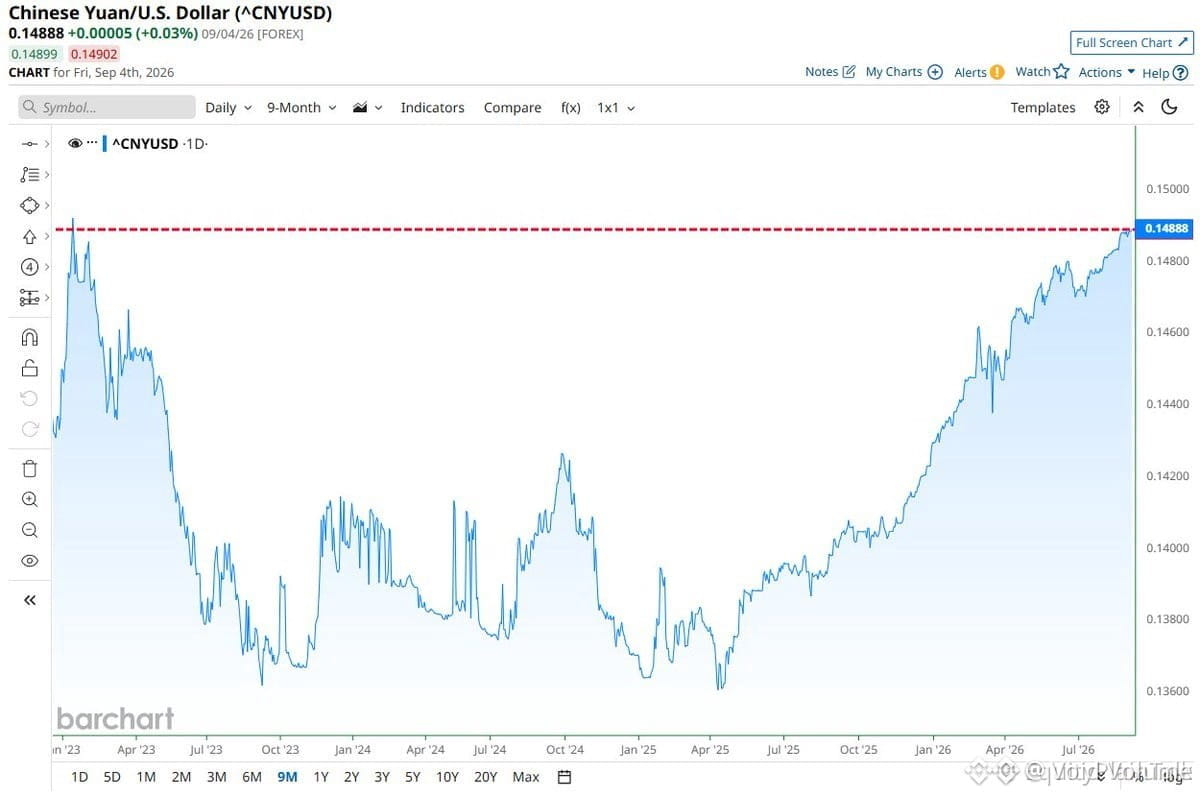
🚨 $USD FACES HEAVY LIQUIDITY SHIFT AS YUAN STRENGTHENS TO NEAR 2-YEAR HIGHS! ⚡
Institutional capital is shifting as global foreign exchange liquidity rebalances. The US Dollar is breaking down against the Yuan, reaching its weakest structural valuation since January 2023 as smart money reprices international order flow. 📊
This multi-month trend indicates persistent currency rebalancing, directly compressing USD purchasing power across cross-border settlement channels. 🔍 Market participants should closely track these macro structural pivots before executing high-volume transfers. 💡
🤔 How are you positioning your treasury exposure ahead of this ongoing FX structural shift? 👇
⚠️ Not financial advice. Always manage your risk. 🛡️
🏷️ #USD #Macro #Forex #Liquidity #USDT
🎯 👁️
🚨 $USD FACES HEAVY LIQUIDITY SHIFT AS YUAN STRENGTHENS TO NEAR 2-YEAR HIGHS! ⚡
Institutional capital is shifting as global foreign exchange liquidity rebalances. The US Dollar is breaking down against the Yuan, reaching its weakest structural valuation since January 2023 as smart money reprices international order flow. 📊
This multi-month trend indicates persistent currency rebalancing, directly compressing USD purchasing power across cross-border settlement channels. 🔍 Market participants should closely track these macro structural pivots before executing high-volume transfers. 💡
🤔 How are you positioning your treasury exposure ahead of this ongoing FX structural shift? 👇
⚠️ Not financial advice. Always manage your risk. 🛡️
🏷️ #USD #Macro #Forex #Liquidity #USDT
🎯 👁️
Institutional capital is shifting as global foreign exchange liquidity rebalances. The US Dollar is breaking down against the Yuan, reaching its weakest structural valuation since January 2023 as smart money reprices international order flow. 📊
This multi-month trend indicates persistent currency rebalancing, directly compressing USD purchasing power across cross-border settlement channels. 🔍 Market participants should closely track these macro structural pivots before executing high-volume transfers. 💡
🤔 How are you positioning your treasury exposure ahead of this ongoing FX structural shift? 👇
⚠️ Not financial advice. Always manage your risk. 🛡️
🏷️ #USD #Macro #Forex #Liquidity #USDT
🎯 👁️
95

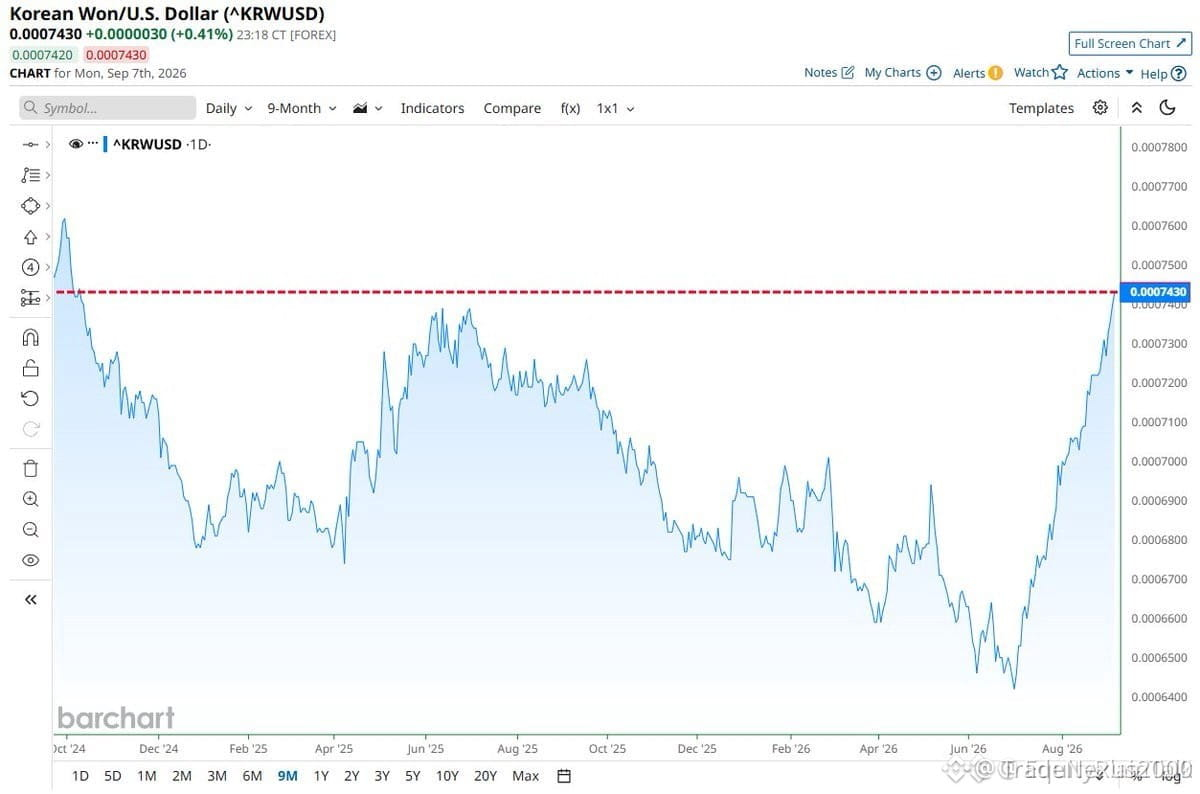
🚨 $USD WEAKNESS SPARKS 2-YEAR HIGH IN KOREAN WON AS ASIAN LIQUIDITY SHIFTS! ⚡
Institutional capital flows across Asia are signaling a massive structural pivot as the South Korean Won reclaims multi-year highs against the $USD . 📊 This broad dollar liquidity redistribution is squeezing export margins for manufacturing powerhouses while opening up major risk-on appetite across global markets.
🔍 Smart money is tracking these regional capital inflows closely, as currency strength of this magnitude rarely occurs without institutional macro rebalancing. 💡 Whether driven by interest rate differentials or trade balance shifts, systemic liquidity is rotating away from dollar dominance into regional assets. 💬 Do you expect this Asian capital injection to fuel the next broader market expansion? 👇
⚠️ Not financial advice. Always manage your risk. 🛡️
🏷️ #USD #Macro #Liquidity #CapitalFlows #RiskOn
🎯 🦈
🚨 $USD WEAKNESS SPARKS 2-YEAR HIGH IN KOREAN WON AS ASIAN LIQUIDITY SHIFTS! ⚡
Institutional capital flows across Asia are signaling a massive structural pivot as the South Korean Won reclaims multi-year highs against the $USD . 📊 This broad dollar liquidity redistribution is squeezing export margins for manufacturing powerhouses while opening up major risk-on appetite across global markets.
🔍 Smart money is tracking these regional capital inflows closely, as currency strength of this magnitude rarely occurs without institutional macro rebalancing. 💡 Whether driven by interest rate differentials or trade balance shifts, systemic liquidity is rotating away from dollar dominance into regional assets. 💬 Do you expect this Asian capital injection to fuel the next broader market expansion? 👇
⚠️ Not financial advice. Always manage your risk. 🛡️
🏷️ #USD #Macro #Liquidity #CapitalFlows #RiskOn
🎯 🦈
Institutional capital flows across Asia are signaling a massive structural pivot as the South Korean Won reclaims multi-year highs against the $USD . 📊 This broad dollar liquidity redistribution is squeezing export margins for manufacturing powerhouses while opening up major risk-on appetite across global markets.
🔍 Smart money is tracking these regional capital inflows closely, as currency strength of this magnitude rarely occurs without institutional macro rebalancing. 💡 Whether driven by interest rate differentials or trade balance shifts, systemic liquidity is rotating away from dollar dominance into regional assets. 💬 Do you expect this Asian capital injection to fuel the next broader market expansion? 👇
⚠️ Not financial advice. Always manage your risk. 🛡️
🏷️ #USD #Macro #Liquidity #CapitalFlows #RiskOn
🎯 🦈
2

·
--
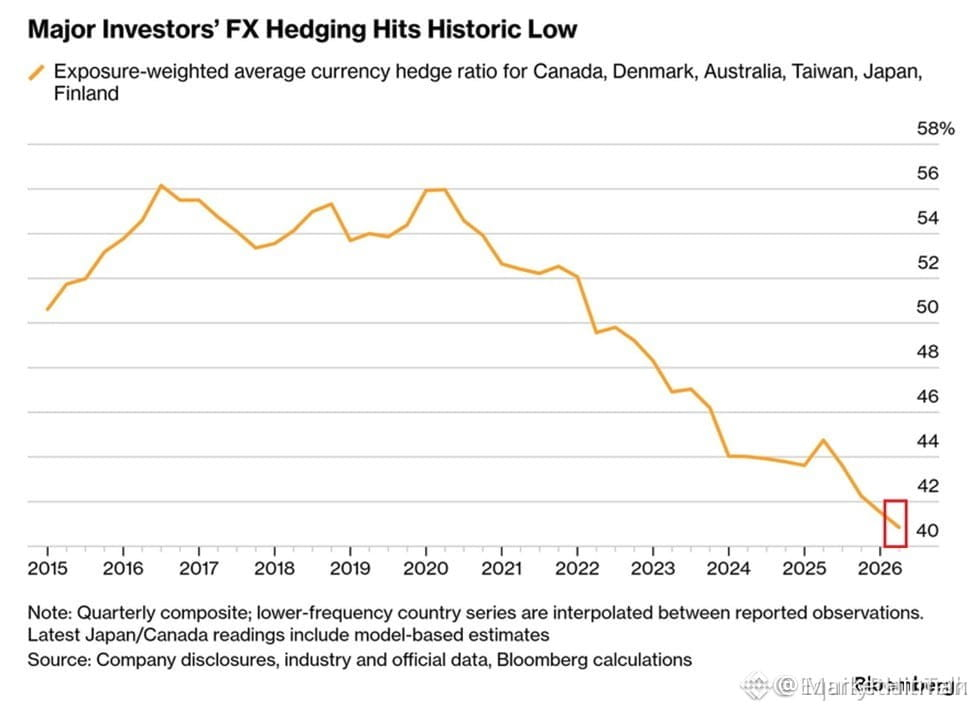
🚨 UNHEDGED TRILLIONS AT RISK AS $USD LIQUIDITY DRIFTS INTO DEBASEMENT ZONE 📊
Institutional exposure to US assets is sitting at a decade-low 41% hedge ratio despite tumbling hedging costs. 📊 Smart money is effectively holding an unhedged multi-trillion dollar position while traditional dollar safe-haven dynamics fracture under structural debasement.
If the dollar breaks key macro support, this unhedged foreign capital will be forced into a rapid structural rebalancing. 🔍 Liquidity naturally moves away from currency weakness toward hard collateral assets once institutional risk limits are breached.
💡 The macro footprint favors non-sovereign stores of value as global capital faces asymmetric downside risk in fiat paper. 💬 Do you expect foreign institutional capital to rotate into alternative hard assets when the dollar rolls over? 👇
⚠️ Not financial advice. Always manage your risk. 🛡️
🏷️ #USD #Macro #Liquidity #Crypto
🎯 🦈
🚨 UNHEDGED TRILLIONS AT RISK AS $USD LIQUIDITY DRIFTS INTO DEBASEMENT ZONE 📊
Institutional exposure to US assets is sitting at a decade-low 41% hedge ratio despite tumbling hedging costs. 📊 Smart money is effectively holding an unhedged multi-trillion dollar position while traditional dollar safe-haven dynamics fracture under structural debasement.
If the dollar breaks key macro support, this unhedged foreign capital will be forced into a rapid structural rebalancing. 🔍 Liquidity naturally moves away from currency weakness toward hard collateral assets once institutional risk limits are breached.
💡 The macro footprint favors non-sovereign stores of value as global capital faces asymmetric downside risk in fiat paper. 💬 Do you expect foreign institutional capital to rotate into alternative hard assets when the dollar rolls over? 👇
⚠️ Not financial advice. Always manage your risk. 🛡️
🏷️ #USD #Macro #Liquidity #Crypto
🎯 🦈
Institutional exposure to US assets is sitting at a decade-low 41% hedge ratio despite tumbling hedging costs. 📊 Smart money is effectively holding an unhedged multi-trillion dollar position while traditional dollar safe-haven dynamics fracture under structural debasement.
If the dollar breaks key macro support, this unhedged foreign capital will be forced into a rapid structural rebalancing. 🔍 Liquidity naturally moves away from currency weakness toward hard collateral assets once institutional risk limits are breached.
💡 The macro footprint favors non-sovereign stores of value as global capital faces asymmetric downside risk in fiat paper. 💬 Do you expect foreign institutional capital to rotate into alternative hard assets when the dollar rolls over? 👇
⚠️ Not financial advice. Always manage your risk. 🛡️
🏷️ #USD #Macro #Liquidity #Crypto
🎯 🦈
8
Log in to explore more content
Join global crypto users on Binance Square
⚡️ Get latest and useful information about crypto.
💬 Trusted by the world’s largest crypto exchange.
👍 Discover real insights from verified creators.
Email / Phone number
Trending Topics
1
#ChainlinkPowersBottomlinePaymentPlatform
3 views
9 Discussing
2
#StellarActivatesProtocol28At211TPS
6,631 views
214 Discussing
3
#SECGrantsInnovationExemptionForTokenizedStocks
5,374 views
186 Discussing
4
#XRPGains3%AsRippleAddsMPPSupport
3,926 views
134 Discussing
5
#SPGlobalToAcquireOpenZeppelin
2,506 views
106 Discussing
6
#WorldLaunchesSelfCustodyAppIn150Countries
573 views
35 Discussing
7
#BitcoinSurpasses$77000
20,531 views
243 Discussing
8
#ParadigmDisclosesZECHolding
88,195 views
1,216 Discussing
9
#BitcoinETFsShed$450M
28,797 views
224 Discussing
10
#USWeeklyJoblessClaimsFallTo196K
47,942 views
694 Discussing