
#us30ybondbidtocoverfallsto2
us30ybondbidtocoverfallsto2
113 views
12 Discussing
Hot
Latest

·
--
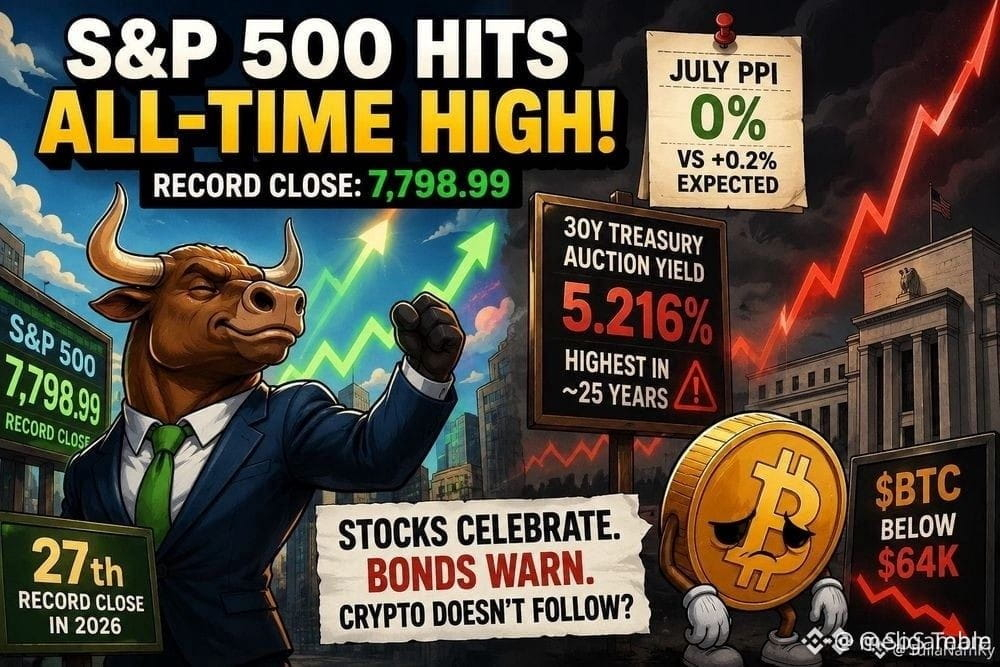
Everyone thinks a weak 30-year bond auction is “just TradFi noise,” but actually it can quietly change the price of your crypto entries.
The common mistake is buying every dip in $BTC or $ETH like the chart exists in a vacuum. When liquidity gets tighter, good setups can still fail because the whole market is suddenly paying attention to yields.
1. The bid-to-cover ratio falling near 2 basically means fewer buyers showed up for the long-bond “auction table.” Think of it like selling a house and realizing only two serious bidders came for every unit available. That does not mean panic, but it can mean the market wants higher yields to take the risk.
2. Higher long-term yields can pull money away from risk assets. Crypto feels this through thinner liquidity, sharper wicks, and traders hiding in $USDT while waiting for clearer signals. With the Fear & Greed Index around 37, the mood is already cautious, so macro surprises can hit harder than usual.
3. The warning: don’t treat “bond news” as irrelevant if you trade leverage or chase breakouts. A clean crypto chart can still reject if dollar strength and yields move against it. In markets like this, entries matter more than opinions.
Are you watching bond yields before your next crypto trade, or still trading only the chart? #US30YBondBidToCoverFallsTo2 #SP500ClosesAtRecordHigh #EthereumFoundationDropsPoseidonForL1
Everyone thinks a weak 30-year bond auction is “just TradFi noise,” but actually it can quietly change the price of your crypto entries.
The common mistake is buying every dip in $BTC or $ETH like the chart exists in a vacuum. When liquidity gets tighter, good setups can still fail because the whole market is suddenly paying attention to yields.
1. The bid-to-cover ratio falling near 2 basically means fewer buyers showed up for the long-bond “auction table.” Think of it like selling a house and realizing only two serious bidders came for every unit available. That does not mean panic, but it can mean the market wants higher yields to take the risk.
2. Higher long-term yields can pull money away from risk assets. Crypto feels this through thinner liquidity, sharper wicks, and traders hiding in $USDT while waiting for clearer signals. With the Fear & Greed Index around 37, the mood is already cautious, so macro surprises can hit harder than usual.
3. The warning: don’t treat “bond news” as irrelevant if you trade leverage or chase breakouts. A clean crypto chart can still reject if dollar strength and yields move against it. In markets like this, entries matter more than opinions.
Are you watching bond yields before your next crypto trade, or still trading only the chart? #US30YBondBidToCoverFallsTo2 #SP500ClosesAtRecordHigh #EthereumFoundationDropsPoseidonForL1
The common mistake is buying every dip in $BTC or $ETH like the chart exists in a vacuum. When liquidity gets tighter, good setups can still fail because the whole market is suddenly paying attention to yields.
1. The bid-to-cover ratio falling near 2 basically means fewer buyers showed up for the long-bond “auction table.” Think of it like selling a house and realizing only two serious bidders came for every unit available. That does not mean panic, but it can mean the market wants higher yields to take the risk.
2. Higher long-term yields can pull money away from risk assets. Crypto feels this through thinner liquidity, sharper wicks, and traders hiding in $USDT while waiting for clearer signals. With the Fear & Greed Index around 37, the mood is already cautious, so macro surprises can hit harder than usual.
3. The warning: don’t treat “bond news” as irrelevant if you trade leverage or chase breakouts. A clean crypto chart can still reject if dollar strength and yields move against it. In markets like this, entries matter more than opinions.
Are you watching bond yields before your next crypto trade, or still trading only the chart? #US30YBondBidToCoverFallsTo2 #SP500ClosesAtRecordHigh #EthereumFoundationDropsPoseidonForL1
15

·
--
A weak 30Y bond auction can hit your crypto bags faster than a bad token unlock.
A lot of traders watch $BTC and $ETH charts all day, but miss the macro pipe behind them. When long bonds struggle to find buyers, yields can jump, liquidity gets tighter, and risk assets usually feel it first.
Bid-to-cover is basically auction demand: if the US sells $1 of 30Y bonds and only gets around $2 of bids, that’s not panic, but it’s not strong either. For comparison, stronger auctions usually show deeper demand and give markets confidence that big debt issuance can be absorbed without forcing yields higher.
Why does this matter for crypto? Higher long-term yields make “safe” returns more attractive, which can pull capital away from volatile assets. It also pressures growth stocks, leverage, and anything priced on future liquidity. That’s why a boring bond metric can suddenly show up as red candles on $BTC, $ETH, and high-beta alts.
With Fear & Greed sitting in fear territory and people hiding in names like $USDT, I’d be careful chasing green candles right after weak bond demand. The risk is not just “price goes down,” it’s getting trapped in a move where macro traders are selling risk while crypto traders are still reacting to the chart.
Are you watching bond yields before entering crypto trades, or still treating this as background noise? #US30YBondBidToCoverFallsTo2 #SP500ClosesAtRecordHigh #EthereumFoundationDropsPoseidonForL1
A weak 30Y bond auction can hit your crypto bags faster than a bad token unlock.
A lot of traders watch $BTC and $ETH charts all day, but miss the macro pipe behind them. When long bonds struggle to find buyers, yields can jump, liquidity gets tighter, and risk assets usually feel it first.
Bid-to-cover is basically auction demand: if the US sells $1 of 30Y bonds and only gets around $2 of bids, that’s not panic, but it’s not strong either. For comparison, stronger auctions usually show deeper demand and give markets confidence that big debt issuance can be absorbed without forcing yields higher.
Why does this matter for crypto? Higher long-term yields make “safe” returns more attractive, which can pull capital away from volatile assets. It also pressures growth stocks, leverage, and anything priced on future liquidity. That’s why a boring bond metric can suddenly show up as red candles on $BTC , $ETH , and high-beta alts.
With Fear & Greed sitting in fear territory and people hiding in names like $USDT, I’d be careful chasing green candles right after weak bond demand. The risk is not just “price goes down,” it’s getting trapped in a move where macro traders are selling risk while crypto traders are still reacting to the chart.
Are you watching bond yields before entering crypto trades, or still treating this as background noise? #US30YBondBidToCoverFallsTo2 #SP500ClosesAtRecordHigh #EthereumFoundationDropsPoseidonForL1
A lot of traders watch $BTC and $ETH charts all day, but miss the macro pipe behind them. When long bonds struggle to find buyers, yields can jump, liquidity gets tighter, and risk assets usually feel it first.
Bid-to-cover is basically auction demand: if the US sells $1 of 30Y bonds and only gets around $2 of bids, that’s not panic, but it’s not strong either. For comparison, stronger auctions usually show deeper demand and give markets confidence that big debt issuance can be absorbed without forcing yields higher.
Why does this matter for crypto? Higher long-term yields make “safe” returns more attractive, which can pull capital away from volatile assets. It also pressures growth stocks, leverage, and anything priced on future liquidity. That’s why a boring bond metric can suddenly show up as red candles on $BTC , $ETH , and high-beta alts.
With Fear & Greed sitting in fear territory and people hiding in names like $USDT, I’d be careful chasing green candles right after weak bond demand. The risk is not just “price goes down,” it’s getting trapped in a move where macro traders are selling risk while crypto traders are still reacting to the chart.
Are you watching bond yields before entering crypto trades, or still treating this as background noise? #US30YBondBidToCoverFallsTo2 #SP500ClosesAtRecordHigh #EthereumFoundationDropsPoseidonForL1
15

·
--
If you’re still treating geopolitics like “background noise,” stop now.
This mistake cost traders millions in past oil-shock headlines, because crypto doesn’t trade in a vacuum when shipping lanes, energy prices, and dollar liquidity start shaking. FOMO buying the first candle on $BTC or panic-selling into a wick can both be expensive when the market is already sitting in Fear.
The Hormuz transit-permission story has that classic “weekend risk” smell: not purely crypto-native, but absolutely capable of moving crypto. We’ve seen this movie before with Middle East escalation headlines, Russia-Ukraine shocks, and even Fed liquidity scares. First reaction is usually volatility, second reaction is positioning, third reaction is everyone pretending they “saw it coming.”
What’s interesting is how different assets behave here. $USDT demand can spike as traders hide in stables, $BTC gets treated like both risk asset and hedge depending on the hour, and $ETH often follows liquidity more than narrative. Meanwhile equities are still flirting with record highs, which makes the whole setup feel weirdly fragile.
So is Hormuz a real macro catalyst for crypto, or just another headline traders will overprice for 48 hours? #IranRequiresPermissionToTransitHormuz #SP500ClosesAtRecordHigh #US30YBondBidToCoverFallsTo2
If you’re still treating geopolitics like “background noise,” stop now.
This mistake cost traders millions in past oil-shock headlines, because crypto doesn’t trade in a vacuum when shipping lanes, energy prices, and dollar liquidity start shaking. FOMO buying the first candle on $BTC or panic-selling into a wick can both be expensive when the market is already sitting in Fear.
The Hormuz transit-permission story has that classic “weekend risk” smell: not purely crypto-native, but absolutely capable of moving crypto. We’ve seen this movie before with Middle East escalation headlines, Russia-Ukraine shocks, and even Fed liquidity scares. First reaction is usually volatility, second reaction is positioning, third reaction is everyone pretending they “saw it coming.”
What’s interesting is how different assets behave here. $USDT demand can spike as traders hide in stables, $BTC gets treated like both risk asset and hedge depending on the hour, and $ETH often follows liquidity more than narrative. Meanwhile equities are still flirting with record highs, which makes the whole setup feel weirdly fragile.
So is Hormuz a real macro catalyst for crypto, or just another headline traders will overprice for 48 hours? #IranRequiresPermissionToTransitHormuz #SP500ClosesAtRecordHigh #US30YBondBidToCoverFallsTo2
This mistake cost traders millions in past oil-shock headlines, because crypto doesn’t trade in a vacuum when shipping lanes, energy prices, and dollar liquidity start shaking. FOMO buying the first candle on $BTC or panic-selling into a wick can both be expensive when the market is already sitting in Fear.
The Hormuz transit-permission story has that classic “weekend risk” smell: not purely crypto-native, but absolutely capable of moving crypto. We’ve seen this movie before with Middle East escalation headlines, Russia-Ukraine shocks, and even Fed liquidity scares. First reaction is usually volatility, second reaction is positioning, third reaction is everyone pretending they “saw it coming.”
What’s interesting is how different assets behave here. $USDT demand can spike as traders hide in stables, $BTC gets treated like both risk asset and hedge depending on the hour, and $ETH often follows liquidity more than narrative. Meanwhile equities are still flirting with record highs, which makes the whole setup feel weirdly fragile.
So is Hormuz a real macro catalyst for crypto, or just another headline traders will overprice for 48 hours? #IranRequiresPermissionToTransitHormuz #SP500ClosesAtRecordHigh #US30YBondBidToCoverFallsTo2

12
·
--
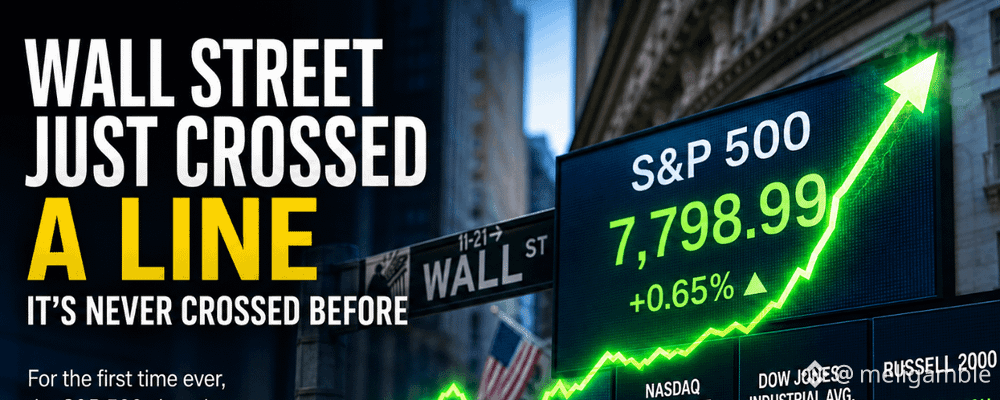
Why is nobody talking about how an S&P 500 record high can be both bullish for crypto and a trap for late buyers?
Most traders see “risk-on” and immediately chase green candles, then wonder why their $BTC entry gets punished two days later. The pain is not missing the move. The pain is buying the headline instead of the setup.
My hot take: the S&P pushing records while crypto sentiment still sits in fear is not a simple “buy everything” signal. It means capital is confident, but selective. Big money is rewarding liquidity, earnings, and structure first. Crypto usually benefits after that, not always at the same time.
So the guide is simple. Watch whether $BTC holds key support while equities stay strong. If it does, scale in slowly instead of going all-in. Keep some $USDT ready because record highs in stocks often create sudden pullbacks when bonds, yields, or macro data surprise the market. For $ETH, I’d rather see strength against BTC than just a dollar-price pump before calling it real rotation.
The mainstream narrative says record highs mean easy upside. I think they mean discipline matters more than ever.
Are you treating this as the start of crypto catch-up, or just another liquidity trap? #SP500ClosesAtRecordHigh #US30YBondBidToCoverFallsTo2 #EthereumFoundationDropsPoseidonForL1
Why is nobody talking about how an S&P 500 record high can be both bullish for crypto and a trap for late buyers?
Most traders see “risk-on” and immediately chase green candles, then wonder why their $BTC entry gets punished two days later. The pain is not missing the move. The pain is buying the headline instead of the setup.
My hot take: the S&P pushing records while crypto sentiment still sits in fear is not a simple “buy everything” signal. It means capital is confident, but selective. Big money is rewarding liquidity, earnings, and structure first. Crypto usually benefits after that, not always at the same time.
So the guide is simple. Watch whether $BTC holds key support while equities stay strong. If it does, scale in slowly instead of going all-in. Keep some $USDT ready because record highs in stocks often create sudden pullbacks when bonds, yields, or macro data surprise the market. For $ETH , I’d rather see strength against BTC than just a dollar-price pump before calling it real rotation.
The mainstream narrative says record highs mean easy upside. I think they mean discipline matters more than ever.
Are you treating this as the start of crypto catch-up, or just another liquidity trap? #SP500ClosesAtRecordHigh #US30YBondBidToCoverFallsTo2 #EthereumFoundationDropsPoseidonForL1
Most traders see “risk-on” and immediately chase green candles, then wonder why their $BTC entry gets punished two days later. The pain is not missing the move. The pain is buying the headline instead of the setup.
My hot take: the S&P pushing records while crypto sentiment still sits in fear is not a simple “buy everything” signal. It means capital is confident, but selective. Big money is rewarding liquidity, earnings, and structure first. Crypto usually benefits after that, not always at the same time.
So the guide is simple. Watch whether $BTC holds key support while equities stay strong. If it does, scale in slowly instead of going all-in. Keep some $USDT ready because record highs in stocks often create sudden pullbacks when bonds, yields, or macro data surprise the market. For $ETH , I’d rather see strength against BTC than just a dollar-price pump before calling it real rotation.
The mainstream narrative says record highs mean easy upside. I think they mean discipline matters more than ever.
Are you treating this as the start of crypto catch-up, or just another liquidity trap? #SP500ClosesAtRecordHigh #US30YBondBidToCoverFallsTo2 #EthereumFoundationDropsPoseidonForL1
13
·
--
Picture this: a single headline about ships needing permission to pass Hormuz, and suddenly crypto traders are staring at oil, the dollar, and $BTC like they’re all on the same chart.
The pain is that macro shocks rarely give clean entries. One minute you’re holding spot, the next you’re wondering if you should rotate to $USDT, hedge, or just stop touching leverage until the dust settles.
Here’s the case study: the Strait of Hormuz is not just another geopolitical headline. It’s one of the world’s most important energy choke points, so any hint of restricted transit can push oil risk higher, pressure inflation expectations, and make markets more defensive. That matters for crypto because when traders feel uncertain, liquidity usually runs toward safety first, not altcoin narratives.
We’ve seen versions of this before. During past Middle East tensions, $BTC sometimes sold off with risk assets first, then stabilized once the market understood whether the event was escalation or noise. Compare that with banking stress in 2023, where Bitcoin eventually acted more like a hedge against system risk. Same asset, different reaction, because the type of fear matters.
Right now the Fear & Greed Index sitting in Fear territory fits the mood. Searches around $USDT also make sense because traders don’t just want upside, they want optionality. The lesson isn’t “panic on every headline.” It’s to ask what kind of risk we’re pricing: energy shock, inflation shock, liquidity shock, or just headline volatility.
If Hormuz tension keeps building, do you think crypto trades like risk-off tech, digital gold, or just waits for liquidity to decide? #IranRequiresPermissionToTransitHormuz #SP500ClosesAtRecordHigh #US30YBondBidToCoverFallsTo2
Picture this: a single headline about ships needing permission to pass Hormuz, and suddenly crypto traders are staring at oil, the dollar, and $BTC like they’re all on the same chart.
The pain is that macro shocks rarely give clean entries. One minute you’re holding spot, the next you’re wondering if you should rotate to $USDT, hedge, or just stop touching leverage until the dust settles.
Here’s the case study: the Strait of Hormuz is not just another geopolitical headline. It’s one of the world’s most important energy choke points, so any hint of restricted transit can push oil risk higher, pressure inflation expectations, and make markets more defensive. That matters for crypto because when traders feel uncertain, liquidity usually runs toward safety first, not altcoin narratives.
We’ve seen versions of this before. During past Middle East tensions, $BTC sometimes sold off with risk assets first, then stabilized once the market understood whether the event was escalation or noise. Compare that with banking stress in 2023, where Bitcoin eventually acted more like a hedge against system risk. Same asset, different reaction, because the type of fear matters.
Right now the Fear & Greed Index sitting in Fear territory fits the mood. Searches around $USDT also make sense because traders don’t just want upside, they want optionality. The lesson isn’t “panic on every headline.” It’s to ask what kind of risk we’re pricing: energy shock, inflation shock, liquidity shock, or just headline volatility.
If Hormuz tension keeps building, do you think crypto trades like risk-off tech, digital gold, or just waits for liquidity to decide? #IranRequiresPermissionToTransitHormuz #SP500ClosesAtRecordHigh #US30YBondBidToCoverFallsTo2
The pain is that macro shocks rarely give clean entries. One minute you’re holding spot, the next you’re wondering if you should rotate to $USDT, hedge, or just stop touching leverage until the dust settles.
Here’s the case study: the Strait of Hormuz is not just another geopolitical headline. It’s one of the world’s most important energy choke points, so any hint of restricted transit can push oil risk higher, pressure inflation expectations, and make markets more defensive. That matters for crypto because when traders feel uncertain, liquidity usually runs toward safety first, not altcoin narratives.
We’ve seen versions of this before. During past Middle East tensions, $BTC sometimes sold off with risk assets first, then stabilized once the market understood whether the event was escalation or noise. Compare that with banking stress in 2023, where Bitcoin eventually acted more like a hedge against system risk. Same asset, different reaction, because the type of fear matters.
Right now the Fear & Greed Index sitting in Fear territory fits the mood. Searches around $USDT also make sense because traders don’t just want upside, they want optionality. The lesson isn’t “panic on every headline.” It’s to ask what kind of risk we’re pricing: energy shock, inflation shock, liquidity shock, or just headline volatility.
If Hormuz tension keeps building, do you think crypto trades like risk-off tech, digital gold, or just waits for liquidity to decide? #IranRequiresPermissionToTransitHormuz #SP500ClosesAtRecordHigh #US30YBondBidToCoverFallsTo2

9
·
--
Everyone thinks the Hormuz headline is “just oil news,” but actually it can hit your crypto portfolio faster than you expect.
The common mistake is treating geopolitical risk like background noise, then FOMO-buying $BTC or alts right into a volatility spike. When fear is already elevated, one bad headline can turn a normal pullback into a forced-exit moment.
1) Watch liquidity first. Think of the market like a crowded doorway: when panic rises, everyone tries to exit at once, spreads widen, and small coins move harder than majors. If you’re holding $ETH or mid-caps, don’t assume yesterday’s support will behave the same today.
2) Don’t confuse “stable” with “risk-free.” $USDT is useful when traders rush to cash, but it’s still a tool, not a full plan. Parking funds, setting alerts, and knowing your re-entry levels beats randomly jumping between coins because a headline feels urgent.
3) Oil-route tension can feed inflation fears, bond moves, and dollar strength, which often pressures risk assets. Crypto doesn’t trade in a bubble. If traditional markets wobble while the Fear & Greed Index sits in fear territory, leverage becomes the match next to gasoline.
Are you reducing risk here, holding steady, or looking for entries if panic overreacts? #IranRequiresPermissionToTransitHormuz #SP500ClosesAtRecordHigh #US30YBondBidToCoverFallsTo2
Everyone thinks the Hormuz headline is “just oil news,” but actually it can hit your crypto portfolio faster than you expect.
The common mistake is treating geopolitical risk like background noise, then FOMO-buying $BTC or alts right into a volatility spike. When fear is already elevated, one bad headline can turn a normal pullback into a forced-exit moment.
1) Watch liquidity first. Think of the market like a crowded doorway: when panic rises, everyone tries to exit at once, spreads widen, and small coins move harder than majors. If you’re holding $ETH or mid-caps, don’t assume yesterday’s support will behave the same today.
2) Don’t confuse “stable” with “risk-free.” $USDT is useful when traders rush to cash, but it’s still a tool, not a full plan. Parking funds, setting alerts, and knowing your re-entry levels beats randomly jumping between coins because a headline feels urgent.
3) Oil-route tension can feed inflation fears, bond moves, and dollar strength, which often pressures risk assets. Crypto doesn’t trade in a bubble. If traditional markets wobble while the Fear & Greed Index sits in fear territory, leverage becomes the match next to gasoline.
Are you reducing risk here, holding steady, or looking for entries if panic overreacts? #IranRequiresPermissionToTransitHormuz #SP500ClosesAtRecordHigh #US30YBondBidToCoverFallsTo2
The common mistake is treating geopolitical risk like background noise, then FOMO-buying $BTC or alts right into a volatility spike. When fear is already elevated, one bad headline can turn a normal pullback into a forced-exit moment.
1) Watch liquidity first. Think of the market like a crowded doorway: when panic rises, everyone tries to exit at once, spreads widen, and small coins move harder than majors. If you’re holding $ETH or mid-caps, don’t assume yesterday’s support will behave the same today.
2) Don’t confuse “stable” with “risk-free.” $USDT is useful when traders rush to cash, but it’s still a tool, not a full plan. Parking funds, setting alerts, and knowing your re-entry levels beats randomly jumping between coins because a headline feels urgent.
3) Oil-route tension can feed inflation fears, bond moves, and dollar strength, which often pressures risk assets. Crypto doesn’t trade in a bubble. If traditional markets wobble while the Fear & Greed Index sits in fear territory, leverage becomes the match next to gasoline.
Are you reducing risk here, holding steady, or looking for entries if panic overreacts? #IranRequiresPermissionToTransitHormuz #SP500ClosesAtRecordHigh #US30YBondBidToCoverFallsTo2

35
·
--
If you’re still treating every stock-market breakout as an instant crypto buy signal, stop now.
Traders get wrecked chasing the headline after the move already happened, especially when the crypto mood is still sitting in fear and everyone is hiding in $USDT. The pain is simple: risk assets can look bullish in one corner while your $BTC entry gets chopped to pieces.
SanDisk extending gains to 11% is worth watching because it feeds the AI hardware and memory narrative, the same broad theme that has been pulling capital into tech. The bullish case is that strength in chips and storage can keep risk appetite alive, and that eventually spills into crypto liquidity, especially majors like $ETH.
But here’s my take: crypto should not blindly celebrate this yet. If equities are ripping while bond auctions look shaky and traders are still defensive, that’s not clean risk-on. It’s selective risk-on. I’d rather see confirmation in $BTC volume and stablecoin rotation than buy the narrative just because one tech name is flying.
Are you reading SanDisk’s move as an early risk-on signal for crypto, or just another equity headline that won’t matter on-chain? #SanDiskExtendsGainsTo11 #SP500ClosesAtRecordHigh #US30YBondBidToCoverFallsTo2
If you’re still treating every stock-market breakout as an instant crypto buy signal, stop now.
Traders get wrecked chasing the headline after the move already happened, especially when the crypto mood is still sitting in fear and everyone is hiding in $USDT. The pain is simple: risk assets can look bullish in one corner while your $BTC entry gets chopped to pieces.
SanDisk extending gains to 11% is worth watching because it feeds the AI hardware and memory narrative, the same broad theme that has been pulling capital into tech. The bullish case is that strength in chips and storage can keep risk appetite alive, and that eventually spills into crypto liquidity, especially majors like $ETH .
But here’s my take: crypto should not blindly celebrate this yet. If equities are ripping while bond auctions look shaky and traders are still defensive, that’s not clean risk-on. It’s selective risk-on. I’d rather see confirmation in $BTC volume and stablecoin rotation than buy the narrative just because one tech name is flying.
Are you reading SanDisk’s move as an early risk-on signal for crypto, or just another equity headline that won’t matter on-chain? #SanDiskExtendsGainsTo11 #SP500ClosesAtRecordHigh #US30YBondBidToCoverFallsTo2
Traders get wrecked chasing the headline after the move already happened, especially when the crypto mood is still sitting in fear and everyone is hiding in $USDT. The pain is simple: risk assets can look bullish in one corner while your $BTC entry gets chopped to pieces.
SanDisk extending gains to 11% is worth watching because it feeds the AI hardware and memory narrative, the same broad theme that has been pulling capital into tech. The bullish case is that strength in chips and storage can keep risk appetite alive, and that eventually spills into crypto liquidity, especially majors like $ETH .
But here’s my take: crypto should not blindly celebrate this yet. If equities are ripping while bond auctions look shaky and traders are still defensive, that’s not clean risk-on. It’s selective risk-on. I’d rather see confirmation in $BTC volume and stablecoin rotation than buy the narrative just because one tech name is flying.
Are you reading SanDisk’s move as an early risk-on signal for crypto, or just another equity headline that won’t matter on-chain? #SanDiskExtendsGainsTo11 #SP500ClosesAtRecordHigh #US30YBondBidToCoverFallsTo2
38
·
--
SanDisk ripping for 11 straight sessions sounds bullish, but streaks like that often become liquidity traps for late buyers.
The pain is simple: crypto traders see strength in equities/tech, assume risk-on is back, then FOMO into $BTC or alts right as momentum starts cooling. With Fear & Greed sitting in Fear, that mismatch can get messy fast.
Here’s the lesson: a stock running day after day doesn’t automatically mean crypto follows. It can signal appetite for specific themes, like AI hardware, memory demand, or tech rotation, while broader liquidity still stays tight. If bond yields or dollar demand move the wrong way, $USDT sidelines can stay sidelines.
I’d watch confirmation instead of headlines. Is $BTC reclaiming key levels with volume? Are alts like $POL actually getting spot demand, or just short squeezes? Big equity moves can create a “risk-on” vibe, but if crypto volume is thin, the move can fade quickly.
Are you treating this as a real liquidity signal, or just another headline-driven FOMO setup? #SanDiskExtendsGainsTo11 #SP500ClosesAtRecordHigh #US30YBondBidToCoverFallsTo2
SanDisk ripping for 11 straight sessions sounds bullish, but streaks like that often become liquidity traps for late buyers.
The pain is simple: crypto traders see strength in equities/tech, assume risk-on is back, then FOMO into $BTC or alts right as momentum starts cooling. With Fear & Greed sitting in Fear, that mismatch can get messy fast.
Here’s the lesson: a stock running day after day doesn’t automatically mean crypto follows. It can signal appetite for specific themes, like AI hardware, memory demand, or tech rotation, while broader liquidity still stays tight. If bond yields or dollar demand move the wrong way, $USDT sidelines can stay sidelines.
I’d watch confirmation instead of headlines. Is $BTC reclaiming key levels with volume? Are alts like $POL actually getting spot demand, or just short squeezes? Big equity moves can create a “risk-on” vibe, but if crypto volume is thin, the move can fade quickly.
Are you treating this as a real liquidity signal, or just another headline-driven FOMO setup? #SanDiskExtendsGainsTo11 #SP500ClosesAtRecordHigh #US30YBondBidToCoverFallsTo2
The pain is simple: crypto traders see strength in equities/tech, assume risk-on is back, then FOMO into $BTC or alts right as momentum starts cooling. With Fear & Greed sitting in Fear, that mismatch can get messy fast.
Here’s the lesson: a stock running day after day doesn’t automatically mean crypto follows. It can signal appetite for specific themes, like AI hardware, memory demand, or tech rotation, while broader liquidity still stays tight. If bond yields or dollar demand move the wrong way, $USDT sidelines can stay sidelines.
I’d watch confirmation instead of headlines. Is $BTC reclaiming key levels with volume? Are alts like $POL actually getting spot demand, or just short squeezes? Big equity moves can create a “risk-on” vibe, but if crypto volume is thin, the move can fade quickly.
Are you treating this as a real liquidity signal, or just another headline-driven FOMO setup? #SanDiskExtendsGainsTo11 #SP500ClosesAtRecordHigh #US30YBondBidToCoverFallsTo2

40
·
--
Here's what happened when SanDisk extended its rally to 11 straight gains: a “safe” equity momentum trade quietly became a risk signal for crypto traders too.
The pain point is simple. When traditional markets look strong, crypto traders often assume liquidity will spill into $BTC, $ETH, or even parked capital in $USDT will rotate risk-on, but that assumption can get expensive fast.
SanDisk’s move tells us investors are still chasing AI-adjacent hardware and storage narratives, even while broader sentiment in crypto sits in Fear. That split matters. If money is crowding into selective equity winners while crypto search interest is scattered across names like $USDT and smaller alts, it can mean liquidity is not broad, just concentrated.
The warning is not “SanDisk up, crypto down.” It’s that traders may mistake isolated strength for market-wide confidence. In past cycles, these narrow rallies often pulled attention away from weaker internals, then punished late buyers when macro headlines or bond-market pressure returned.
The lesson: watch where risk appetite is actually flowing, not just whether headlines sound bullish. If equity momentum stays narrow and crypto remains defensive, chasing late alt entries could be more dangerous than waiting for confirmation.
Are you seeing this as real risk-on behavior, or just another crowded rotation? #SanDiskExtendsGainsTo11 #SP500ClosesAtRecordHigh #US30YBondBidToCoverFallsTo2
Here's what happened when SanDisk extended its rally to 11 straight gains: a “safe” equity momentum trade quietly became a risk signal for crypto traders too.
The pain point is simple. When traditional markets look strong, crypto traders often assume liquidity will spill into $BTC , $ETH , or even parked capital in $USDT will rotate risk-on, but that assumption can get expensive fast.
SanDisk’s move tells us investors are still chasing AI-adjacent hardware and storage narratives, even while broader sentiment in crypto sits in Fear. That split matters. If money is crowding into selective equity winners while crypto search interest is scattered across names like $USDT and smaller alts, it can mean liquidity is not broad, just concentrated.
The warning is not “SanDisk up, crypto down.” It’s that traders may mistake isolated strength for market-wide confidence. In past cycles, these narrow rallies often pulled attention away from weaker internals, then punished late buyers when macro headlines or bond-market pressure returned.
The lesson: watch where risk appetite is actually flowing, not just whether headlines sound bullish. If equity momentum stays narrow and crypto remains defensive, chasing late alt entries could be more dangerous than waiting for confirmation.
Are you seeing this as real risk-on behavior, or just another crowded rotation? #SanDiskExtendsGainsTo11 #SP500ClosesAtRecordHigh #US30YBondBidToCoverFallsTo2
The pain point is simple. When traditional markets look strong, crypto traders often assume liquidity will spill into $BTC , $ETH , or even parked capital in $USDT will rotate risk-on, but that assumption can get expensive fast.
SanDisk’s move tells us investors are still chasing AI-adjacent hardware and storage narratives, even while broader sentiment in crypto sits in Fear. That split matters. If money is crowding into selective equity winners while crypto search interest is scattered across names like $USDT and smaller alts, it can mean liquidity is not broad, just concentrated.
The warning is not “SanDisk up, crypto down.” It’s that traders may mistake isolated strength for market-wide confidence. In past cycles, these narrow rallies often pulled attention away from weaker internals, then punished late buyers when macro headlines or bond-market pressure returned.
The lesson: watch where risk appetite is actually flowing, not just whether headlines sound bullish. If equity momentum stays narrow and crypto remains defensive, chasing late alt entries could be more dangerous than waiting for confirmation.
Are you seeing this as real risk-on behavior, or just another crowded rotation? #SanDiskExtendsGainsTo11 #SP500ClosesAtRecordHigh #US30YBondBidToCoverFallsTo2
37
·
--
The weird part about record-high stocks is that crypto can still dump while everyone thinks “risk-on” is back.
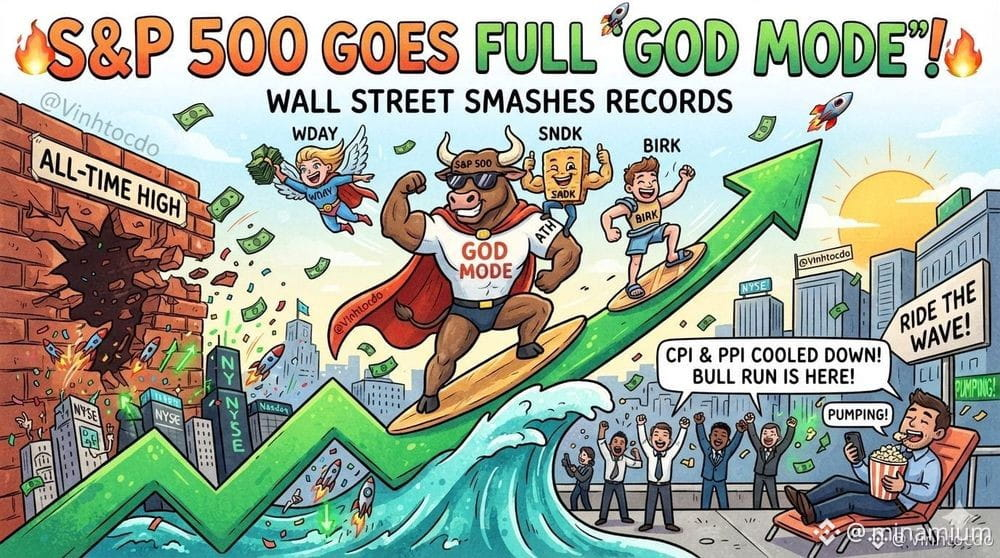
A lot of traders see the S&P 500 making new highs and assume $BTC, $ETH, and alts have to follow immediately. That’s where people get trapped, especially when they chase green candles with leverage while sentiment is still sitting in Fear.
Here’s the catch: a record high in the S&P doesn’t always mean fresh money is flowing into everything. Sometimes it’s just a narrow group of mega-cap stocks pulling the index up, while liquidity stays tight elsewhere. If bond yields rise or the dollar strengthens, crypto can lag hard even while equities look healthy.
I’m also watching stablecoin behavior here. When searches for $USDT are hot and traders are sitting in cash, it usually means people are interested but not fully confident. That creates choppy markets: fake breakouts, fast liquidations, and rotations into random narratives before the broader trend confirms.
So the warning is simple: don’t treat an S&P record close as an automatic buy signal for crypto. Look for confirmation in volume, $BTC market structure, and whether alts are actually breaking resistance instead of just bouncing into it.
Are you using the stock market strength as a green light for crypto, or waiting for cleaner confirmation? #SP500ClosesAtRecordHigh #US30YBondBidToCoverFallsTo2 #EthereumFoundationDropsPoseidonForL1
The weird part about record-high stocks is that crypto can still dump while everyone thinks “risk-on” is back.
A lot of traders see the S&P 500 making new highs and assume $BTC , $ETH , and alts have to follow immediately. That’s where people get trapped, especially when they chase green candles with leverage while sentiment is still sitting in Fear.
Here’s the catch: a record high in the S&P doesn’t always mean fresh money is flowing into everything. Sometimes it’s just a narrow group of mega-cap stocks pulling the index up, while liquidity stays tight elsewhere. If bond yields rise or the dollar strengthens, crypto can lag hard even while equities look healthy.
I’m also watching stablecoin behavior here. When searches for $USDT are hot and traders are sitting in cash, it usually means people are interested but not fully confident. That creates choppy markets: fake breakouts, fast liquidations, and rotations into random narratives before the broader trend confirms.
So the warning is simple: don’t treat an S&P record close as an automatic buy signal for crypto. Look for confirmation in volume, $BTC market structure, and whether alts are actually breaking resistance instead of just bouncing into it.
Are you using the stock market strength as a green light for crypto, or waiting for cleaner confirmation? #SP500ClosesAtRecordHigh #US30YBondBidToCoverFallsTo2 #EthereumFoundationDropsPoseidonForL1
A lot of traders see the S&P 500 making new highs and assume $BTC , $ETH , and alts have to follow immediately. That’s where people get trapped, especially when they chase green candles with leverage while sentiment is still sitting in Fear.
Here’s the catch: a record high in the S&P doesn’t always mean fresh money is flowing into everything. Sometimes it’s just a narrow group of mega-cap stocks pulling the index up, while liquidity stays tight elsewhere. If bond yields rise or the dollar strengthens, crypto can lag hard even while equities look healthy.
I’m also watching stablecoin behavior here. When searches for $USDT are hot and traders are sitting in cash, it usually means people are interested but not fully confident. That creates choppy markets: fake breakouts, fast liquidations, and rotations into random narratives before the broader trend confirms.
So the warning is simple: don’t treat an S&P record close as an automatic buy signal for crypto. Look for confirmation in volume, $BTC market structure, and whether alts are actually breaking resistance instead of just bouncing into it.
Are you using the stock market strength as a green light for crypto, or waiting for cleaner confirmation? #SP500ClosesAtRecordHigh #US30YBondBidToCoverFallsTo2 #EthereumFoundationDropsPoseidonForL1
13
·
--
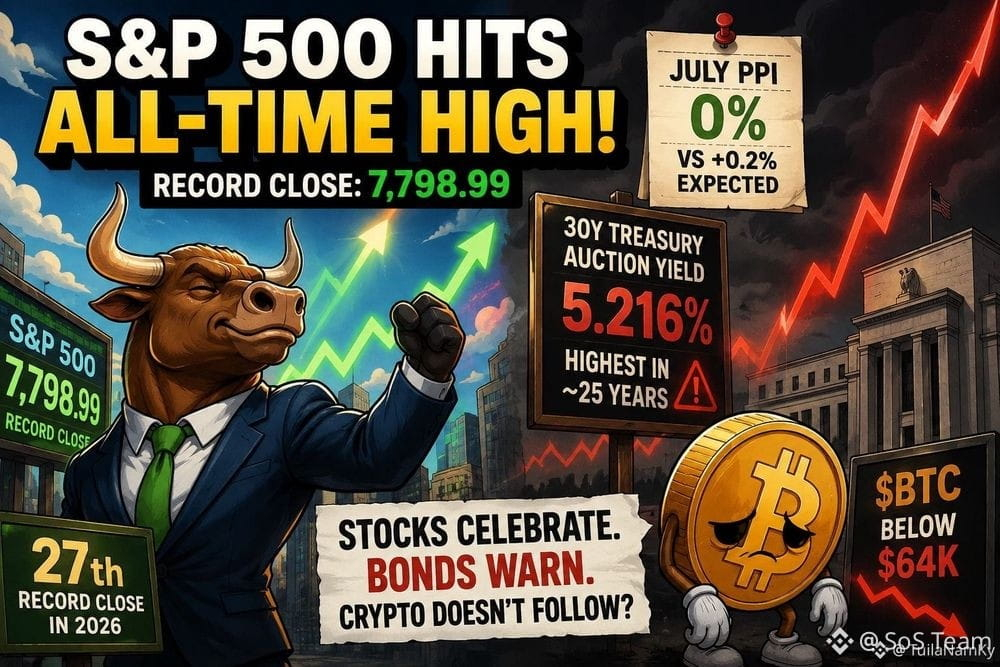
Here's what happened when the S&P 500 printed a record high while crypto sentiment was still sitting in Fear.
A lot of traders see equities at all-time highs and assume crypto has to follow. That’s where the trap starts: they buy $BTC, $ETH, or high-beta alts late, then get caught when the rotation never arrives.
The case study here is simple. The S&P move was not just “risk-on everywhere.” It was helped by strong mega-cap flows, optimism around earnings, and expectations that liquidity conditions may stay supportive. But crypto was telling a quieter story, with Fear & Greed around 37 and searches for $USDT still high, which usually means many traders are watching from defense, not aggression.
That mismatch matters. If equities are making records while crypto volume stays selective, the market may not be confirming the same narrative. $ETH can catch a bid from its own catalysts, and $BTC can hold up as the main liquidity magnet, but smaller names often become the danger zone when traders force an equity-market thesis onto crypto.
The lesson most people miss: record highs in stocks are not automatically a green light for leverage in crypto. Watch bond yields, dollar strength, BTC dominance, and stablecoin flows first. If those disagree with the headline, the “obvious” trade can become the crowded one.
Are you treating this S&P 500 record as real risk-on confirmation, or a warning to be more selective? #SP500ClosesAtRecordHigh #US30YBondBidToCoverFallsTo2 #EthereumFoundationDropsPoseidonForL1
Here's what happened when the S&P 500 printed a record high while crypto sentiment was still sitting in Fear.
A lot of traders see equities at all-time highs and assume crypto has to follow. That’s where the trap starts: they buy $BTC , $ETH , or high-beta alts late, then get caught when the rotation never arrives.
The case study here is simple. The S&P move was not just “risk-on everywhere.” It was helped by strong mega-cap flows, optimism around earnings, and expectations that liquidity conditions may stay supportive. But crypto was telling a quieter story, with Fear & Greed around 37 and searches for $USDT still high, which usually means many traders are watching from defense, not aggression.
That mismatch matters. If equities are making records while crypto volume stays selective, the market may not be confirming the same narrative. $ETH can catch a bid from its own catalysts, and $BTC can hold up as the main liquidity magnet, but smaller names often become the danger zone when traders force an equity-market thesis onto crypto.
The lesson most people miss: record highs in stocks are not automatically a green light for leverage in crypto. Watch bond yields, dollar strength, BTC dominance, and stablecoin flows first. If those disagree with the headline, the “obvious” trade can become the crowded one.
Are you treating this S&P 500 record as real risk-on confirmation, or a warning to be more selective? #SP500ClosesAtRecordHigh #US30YBondBidToCoverFallsTo2 #EthereumFoundationDropsPoseidonForL1
A lot of traders see equities at all-time highs and assume crypto has to follow. That’s where the trap starts: they buy $BTC , $ETH , or high-beta alts late, then get caught when the rotation never arrives.
The case study here is simple. The S&P move was not just “risk-on everywhere.” It was helped by strong mega-cap flows, optimism around earnings, and expectations that liquidity conditions may stay supportive. But crypto was telling a quieter story, with Fear & Greed around 37 and searches for $USDT still high, which usually means many traders are watching from defense, not aggression.
That mismatch matters. If equities are making records while crypto volume stays selective, the market may not be confirming the same narrative. $ETH can catch a bid from its own catalysts, and $BTC can hold up as the main liquidity magnet, but smaller names often become the danger zone when traders force an equity-market thesis onto crypto.
The lesson most people miss: record highs in stocks are not automatically a green light for leverage in crypto. Watch bond yields, dollar strength, BTC dominance, and stablecoin flows first. If those disagree with the headline, the “obvious” trade can become the crowded one.
Are you treating this S&P 500 record as real risk-on confirmation, or a warning to be more selective? #SP500ClosesAtRecordHigh #US30YBondBidToCoverFallsTo2 #EthereumFoundationDropsPoseidonForL1
28
Log in to explore more content
Join global crypto users on Binance Square
⚡️ Get latest and useful information about crypto.
💬 Trusted by the world’s largest crypto exchange.
👍 Discover real insights from verified creators.
Email / Phone number
Trending Topics
1
#AIStocksWhatNext
522,491 views
3,882 Discussing
2
#BitcoinTops$87KAtEightMonthHigh
1,465 views
40 Discussing
3
#ZECBreaksAbove$1600AtRecordHigh
649 views
28 Discussing
4
#BitwiseNEARStakingETPAssetsTop$100M
14,235 views
60 Discussing
5
#BitcoinBreaksAboveMayHighNears$86K
24,319 views
243 Discussing
6
#DogecoinRises15%
81,527 views
1,401 Discussing
7
#$14BBitcoinOptionsExpireFriday
7,079 views
105 Discussing
8
#BNBMarketCapPassesBNYMellon
49,819 views
1,044 Discussing
9
#CryptoMarketCapReclaims$3Trillion
10,291 views
92 Discussing
10
#MuseOvertakesChatGPTAsTopFreeIOSApp
29,645 views
791 Discussing