

#tradfivsdefi
tradfivsdefi
4,729 views
31 Discussing
Hot
Latest
·
--
Bullish
💰 WAKE UP! Wall Street just declared ALL-OUT WAR on the $320 BILLION stablecoin casino – and they’re not here to play nice. 🏦💣
Fidelity just dropped a money-market fund specifically engineered for stablecoin giants and institutional whales, perfectly crafted to comply with the new GENIUS Act reserve mandates.
But here’s the kicker: this isn’t a solo move. BlackRock, Goldman Sachs, BNY, and State Street have ALL quietly rolled out or filed similar products THIS YEAR alone.
Translation? The same TradFi dinosaurs that called crypto ‘rat poison’ are now fighting for front-row seats at the stablecoin feast. 🦖➡️🚀
So the real question is: Does this legitimize crypto and bring mass adoption… or does it hand over the decentralized soul of stablecoins to the very system we were trying to escape?
Drop a 🔥 if you think this is bullish – or 🤡 if you think it’s just another old-money takeover. And tell me: Are we witnessing evolution or a hostile acquisition? 👇"
#StablecoinCoup
#TradFiVsDeFi
#GeniusOrGreed
$USDC
{future}(USDCUSDT)
$USD1
{spot}(USD1USDT)
$USDT
💰 WAKE UP! Wall Street just declared ALL-OUT WAR on the $320 BILLION stablecoin casino – and they’re not here to play nice. 🏦💣
Fidelity just dropped a money-market fund specifically engineered for stablecoin giants and institutional whales, perfectly crafted to comply with the new GENIUS Act reserve mandates.
But here’s the kicker: this isn’t a solo move. BlackRock, Goldman Sachs, BNY, and State Street have ALL quietly rolled out or filed similar products THIS YEAR alone.
Translation? The same TradFi dinosaurs that called crypto ‘rat poison’ are now fighting for front-row seats at the stablecoin feast. 🦖➡️🚀
So the real question is: Does this legitimize crypto and bring mass adoption… or does it hand over the decentralized soul of stablecoins to the very system we were trying to escape?
Drop a 🔥 if you think this is bullish – or 🤡 if you think it’s just another old-money takeover. And tell me: Are we witnessing evolution or a hostile acquisition? 👇"
#StablecoinCoup
#TradFiVsDeFi
#GeniusOrGreed
$USDC
$USD1
$USDT
Fidelity just dropped a money-market fund specifically engineered for stablecoin giants and institutional whales, perfectly crafted to comply with the new GENIUS Act reserve mandates.
But here’s the kicker: this isn’t a solo move. BlackRock, Goldman Sachs, BNY, and State Street have ALL quietly rolled out or filed similar products THIS YEAR alone.
Translation? The same TradFi dinosaurs that called crypto ‘rat poison’ are now fighting for front-row seats at the stablecoin feast. 🦖➡️🚀
So the real question is: Does this legitimize crypto and bring mass adoption… or does it hand over the decentralized soul of stablecoins to the very system we were trying to escape?
Drop a 🔥 if you think this is bullish – or 🤡 if you think it’s just another old-money takeover. And tell me: Are we witnessing evolution or a hostile acquisition? 👇"
#StablecoinCoup
#TradFiVsDeFi
#GeniusOrGreed
$USDC
$USD1
$USDT

130


·
--
When Wall Street Meets Web3: A Practical Guide to TradFi-Crypto ConvergenceMoney is having a bit of an identity crisis right now half of it still lives in banks and brokerage accounts, the other half lives on blockchains. But the line between the two is getting blurry, fast. Here's what that actually looks like in practice.
1. Real-world assets are going digital
Stocks, bonds, real estate, gold — stuff that used to sit in a vault or a brokerage statement — can now be represented as tokens on a blockchain. You still own a claim on the real thing, but now it's tradable 24/7, split into fractions, and usable inside DeFi (as collateral for a loan, for example). Binance leans into this with bStocks — tokenized equities on BNB Chain — plus perpetual futures on things like gold, silver, or Tesla, all settled in USDT.
2. Perpetual futures — trading without an expiration date
Old-school futures contracts expire on a set date and trade during market hours. Crypto took that idea and removed the training wheels: perpetuals never expire, trade around the clock, and use a "funding rate" mechanism to keep prices honest. The upshot — you can bet on Tesla's stock price at 3am on a Sunday without ever touching a brokerage account.
3. Stablecoins are the plumbing
USDT and USDC are basically dollars that live on a blockchain — pegged roughly 1:1 to the real thing, but able to move instantly, anywhere, anytime. They've quietly become the main on-ramp connecting traditional money to crypto markets, whether for trading, remittances, or parking value in DeFi.
4. Lending gets a DeFi makeover
Banks give you a sad little interest rate and make you jump through credit-check hoops. DeFi flips that — permissionless lending pools where anyone can supply crypto and earn a (often much higher, but riskier) yield. The middle ground is emerging too: tokenized deposits and RWAs that pay TradFi-style yields but live natively on-chain.
5. Regulation is catching up
TradFi brings the guardrails — compliance, custody, insurance. Crypto brings speed and efficiency. Increasingly, institutions are quietly using blockchain rails for the boring back-office stuff (settlement, tokenization) while keeping the customer-facing side regulated. Binance's institutional tools and white-label offerings are part of that trend.
$BNB
#TradFiVsDeFi
When Wall Street Meets Web3: A Practical Guide to TradFi-Crypto Convergence
Money is having a bit of an identity crisis right now half of it still lives in banks and brokerage accounts, the other half lives on blockchains. But the line between the two is getting blurry, fast. Here's what that actually looks like in practice.
1. Real-world assets are going digital
Stocks, bonds, real estate, gold — stuff that used to sit in a vault or a brokerage statement — can now be represented as tokens on a blockchain. You still own a claim on the real thing, but now it's tradable 24/7, split into fractions, and usable inside DeFi (as collateral for a loan, for example). Binance leans into this with bStocks — tokenized equities on BNB Chain — plus perpetual futures on things like gold, silver, or Tesla, all settled in USDT.
2. Perpetual futures — trading without an expiration date
Old-school futures contracts expire on a set date and trade during market hours. Crypto took that idea and removed the training wheels: perpetuals never expire, trade around the clock, and use a "funding rate" mechanism to keep prices honest. The upshot — you can bet on Tesla's stock price at 3am on a Sunday without ever touching a brokerage account.
3. Stablecoins are the plumbing
USDT and USDC are basically dollars that live on a blockchain — pegged roughly 1:1 to the real thing, but able to move instantly, anywhere, anytime. They've quietly become the main on-ramp connecting traditional money to crypto markets, whether for trading, remittances, or parking value in DeFi.
4. Lending gets a DeFi makeover
Banks give you a sad little interest rate and make you jump through credit-check hoops. DeFi flips that — permissionless lending pools where anyone can supply crypto and earn a (often much higher, but riskier) yield. The middle ground is emerging too: tokenized deposits and RWAs that pay TradFi-style yields but live natively on-chain.
5. Regulation is catching up
TradFi brings the guardrails — compliance, custody, insurance. Crypto brings speed and efficiency. Increasingly, institutions are quietly using blockchain rails for the boring back-office stuff (settlement, tokenization) while keeping the customer-facing side regulated. Binance's institutional tools and white-label offerings are part of that trend.
$BNB
#TradFiVsDeFi
1. Real-world assets are going digital
Stocks, bonds, real estate, gold — stuff that used to sit in a vault or a brokerage statement — can now be represented as tokens on a blockchain. You still own a claim on the real thing, but now it's tradable 24/7, split into fractions, and usable inside DeFi (as collateral for a loan, for example). Binance leans into this with bStocks — tokenized equities on BNB Chain — plus perpetual futures on things like gold, silver, or Tesla, all settled in USDT.
2. Perpetual futures — trading without an expiration date
Old-school futures contracts expire on a set date and trade during market hours. Crypto took that idea and removed the training wheels: perpetuals never expire, trade around the clock, and use a "funding rate" mechanism to keep prices honest. The upshot — you can bet on Tesla's stock price at 3am on a Sunday without ever touching a brokerage account.
3. Stablecoins are the plumbing
USDT and USDC are basically dollars that live on a blockchain — pegged roughly 1:1 to the real thing, but able to move instantly, anywhere, anytime. They've quietly become the main on-ramp connecting traditional money to crypto markets, whether for trading, remittances, or parking value in DeFi.
4. Lending gets a DeFi makeover
Banks give you a sad little interest rate and make you jump through credit-check hoops. DeFi flips that — permissionless lending pools where anyone can supply crypto and earn a (often much higher, but riskier) yield. The middle ground is emerging too: tokenized deposits and RWAs that pay TradFi-style yields but live natively on-chain.
5. Regulation is catching up
TradFi brings the guardrails — compliance, custody, insurance. Crypto brings speed and efficiency. Increasingly, institutions are quietly using blockchain rails for the boring back-office stuff (settlement, tokenization) while keeping the customer-facing side regulated. Binance's institutional tools and white-label offerings are part of that trend.
$BNB
#TradFiVsDeFi
1
137

·
--
Bullish
📈 DTC Transfer: Stocks to Binance – When Stocks Step Into the Crypto World
DTC Transfer allows investors to conveniently transfer securities between depository institutions. As finance becomes increasingly connected with blockchain, moving assets from traditional markets into the crypto ecosystem is becoming a noteworthy topic.
🔹 DTC = Depository Trust Company
🔹 Transfer = Transfer of assets
🔹 Stocks = Stocks
🔹 Binance = Digital asset ecosystem
What’s interesting isn’t just the act of “transferring assets,” but also how TradFi and Crypto are increasingly coming together. 🚀
In the future, how do you think stocks and crypto will be connected?
#Binance #BinanceSquare #DTCTransfer #Stocks #Crypto #TradFiVsDeFi
📈 DTC Transfer: Stocks to Binance – When Stocks Step Into the Crypto World
DTC Transfer allows investors to conveniently transfer securities between depository institutions. As finance becomes increasingly connected with blockchain, moving assets from traditional markets into the crypto ecosystem is becoming a noteworthy topic.
🔹 DTC = Depository Trust Company
🔹 Transfer = Transfer of assets
🔹 Stocks = Stocks
🔹 Binance = Digital asset ecosystem
What’s interesting isn’t just the act of “transferring assets,” but also how TradFi and Crypto are increasingly coming together. 🚀
In the future, how do you think stocks and crypto will be connected?
#Binance #BinanceSquare #DTCTransfer #Stocks #Crypto #TradFiVsDeFi
DTC Transfer allows investors to conveniently transfer securities between depository institutions. As finance becomes increasingly connected with blockchain, moving assets from traditional markets into the crypto ecosystem is becoming a noteworthy topic.
🔹 DTC = Depository Trust Company
🔹 Transfer = Transfer of assets
🔹 Stocks = Stocks
🔹 Binance = Digital asset ecosystem
What’s interesting isn’t just the act of “transferring assets,” but also how TradFi and Crypto are increasingly coming together. 🚀
In the future, how do you think stocks and crypto will be connected?
#Binance #BinanceSquare #DTCTransfer #Stocks #Crypto #TradFiVsDeFi
1
87

·
--
Bullish
🚨 Big News from Binance Futures! 7 New TradFi Perpetual Contracts Listing Today! 🚀
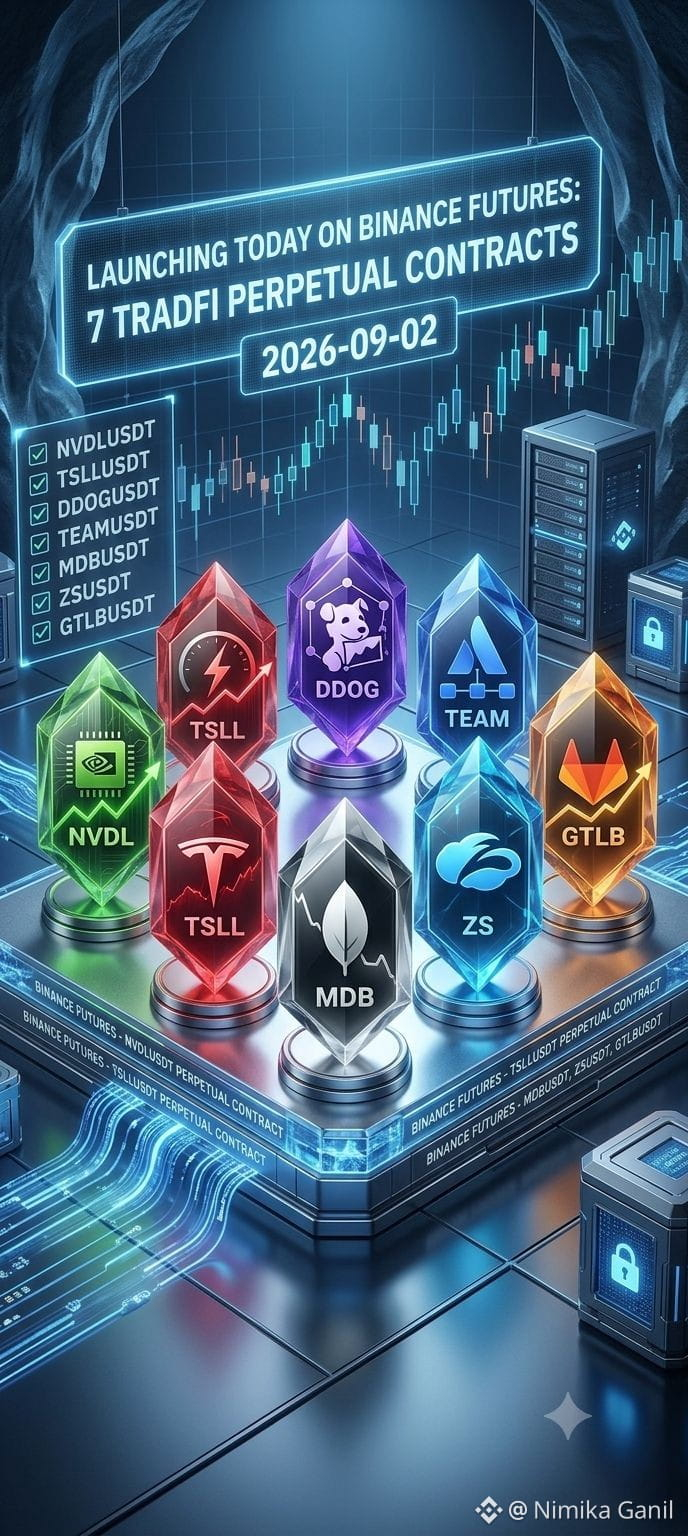
It's not just crypto coins anymore! Today (September 2nd), Binance Futures is expanding its trading options by launching 7 new USDT-margined "TradFi Perpetual Contracts" based on traditional finance assets. Now you can trade these massive corporate giants directly using crypto!
📅 Listing Schedule for Today (2026-09-02) in SL Time / UTC:
🔹 3:30 PM (10:00 UTC) : NVDL / USDT
🔹 3:35 PM (10:05 UTC) : TSLL / USDT
🔹 3:40 PM (10:10 UTC) : DDOG / USDT
🔹 3:45 PM (10:15 UTC) : TEAM / USDT
🔹 3:50 PM (10:20 UTC) : MDB / USDT
🔹 3:55 PM (10:25 UTC) : ZS / USDT
🔹 4:00 PM (10:30 UTC) : GTLB / USDT
📊 Market Analysis & Trade Insights:
Several of these tech companies released their Q2 Earnings Reports yesterday, so expect high volatility (massive price swings) on these contracts today!
{stock_us}(GTLB.US)
📈 $GTLB.US (GitLab): Shares rallied nearly 20% on an earnings beat and upbeat full-year guidance. Watch for strong momentum or wild swings once this contract goes live!
{future}(MDBUSDT)
📉 $MDB (MongoDB): Interestingly, MDB shares dropped 12% despite reporting better-than-expected earnings and upbeat guidance. Keep an eye on this for potential shorting opportunities or a corrective bounce.
Are you planning to trade any of these today? Drop your thoughts in the comments! 👇
#BinanceFutures #TradFiVsDeFi #BinanceSquareTalks #CryptoTrading #CryptoTrends2024
🚨 Big News from Binance Futures! 7 New TradFi Perpetual Contracts Listing Today! 🚀
It's not just crypto coins anymore! Today (September 2nd), Binance Futures is expanding its trading options by launching 7 new USDT-margined "TradFi Perpetual Contracts" based on traditional finance assets. Now you can trade these massive corporate giants directly using crypto!
📅 Listing Schedule for Today (2026-09-02) in SL Time / UTC:
🔹 3:30 PM (10:00 UTC) : NVDL / USDT
🔹 3:35 PM (10:05 UTC) : TSLL / USDT
🔹 3:40 PM (10:10 UTC) : DDOG / USDT
🔹 3:45 PM (10:15 UTC) : TEAM / USDT
🔹 3:50 PM (10:20 UTC) : MDB / USDT
🔹 3:55 PM (10:25 UTC) : ZS / USDT
🔹 4:00 PM (10:30 UTC) : GTLB / USDT
📊 Market Analysis & Trade Insights:
Several of these tech companies released their Q2 Earnings Reports yesterday, so expect high volatility (massive price swings) on these contracts today!
📈 $GTLB.US (GitLab): Shares rallied nearly 20% on an earnings beat and upbeat full-year guidance. Watch for strong momentum or wild swings once this contract goes live!
📉 $MDB (MongoDB): Interestingly, MDB shares dropped 12% despite reporting better-than-expected earnings and upbeat guidance. Keep an eye on this for potential shorting opportunities or a corrective bounce.
Are you planning to trade any of these today? Drop your thoughts in the comments! 👇
#BinanceFutures #TradFiVsDeFi #BinanceSquareTalks #CryptoTrading #CryptoTrends2024
It's not just crypto coins anymore! Today (September 2nd), Binance Futures is expanding its trading options by launching 7 new USDT-margined "TradFi Perpetual Contracts" based on traditional finance assets. Now you can trade these massive corporate giants directly using crypto!
📅 Listing Schedule for Today (2026-09-02) in SL Time / UTC:
🔹 3:30 PM (10:00 UTC) : NVDL / USDT
🔹 3:35 PM (10:05 UTC) : TSLL / USDT
🔹 3:40 PM (10:10 UTC) : DDOG / USDT
🔹 3:45 PM (10:15 UTC) : TEAM / USDT
🔹 3:50 PM (10:20 UTC) : MDB / USDT
🔹 3:55 PM (10:25 UTC) : ZS / USDT
🔹 4:00 PM (10:30 UTC) : GTLB / USDT
📊 Market Analysis & Trade Insights:
Several of these tech companies released their Q2 Earnings Reports yesterday, so expect high volatility (massive price swings) on these contracts today!
📈 $GTLB.US (GitLab): Shares rallied nearly 20% on an earnings beat and upbeat full-year guidance. Watch for strong momentum or wild swings once this contract goes live!
📉 $MDB (MongoDB): Interestingly, MDB shares dropped 12% despite reporting better-than-expected earnings and upbeat guidance. Keep an eye on this for potential shorting opportunities or a corrective bounce.
Are you planning to trade any of these today? Drop your thoughts in the comments! 👇
#BinanceFutures #TradFiVsDeFi #BinanceSquareTalks #CryptoTrading #CryptoTrends2024
1
492

Binance Latest Update: New Trading Opportunities & Lower Fees!Binance Latest Update: New Trading Opportunities & Lower Fees!
Binance is rolling out several important updates for traders, bringing new trading opportunities, expanded bStocks support, and lower trading costs.
🔥 Key Highlights
🏆 ENSO Trading Tournament
Traders can compete for a share of up to 400 BNB in token vouchers, adding another opportunity for active Binance users.
📈 TradFi Perpetual Contracts
Binance is introducing multiple USDⓈ-margined TradFi perpetual contracts and making important updates to mark-price calculations.
🤖 bStocks Trading Bots Expanded
Binance is expanding trading-bot support to 5 selected bStocks pairs, giving users more automated trading options.
💰 Zero Maker Fee Promotion Extended
The zero maker-fee promotion for selected bStocks pairs has been extended through September 30, 2026.
📉 Lower Trading Fees
Binance is also extending reduced fees, allowing users to trade selected traditional stocks and ETFs with up to 50% lower fees.
🚀 Why It Matters
These updates show Binance's continued push to connect crypto, traditional markets, and automated trading on one platform. Lower fees and expanded trading tools could make the platform more attractive to active traders.
What do you think about Binance's latest updates? 🔥
#Binance #BinanceSquare #Crypto #bStocks #Trading #E $GOOGL.US NSO #BNB #TradFiVsDeFi
Binance Latest Update: New Trading Opportunities & Lower Fees!
Binance Latest Update: New Trading Opportunities & Lower Fees!
Binance is rolling out several important updates for traders, bringing new trading opportunities, expanded bStocks support, and lower trading costs.
🔥 Key Highlights
🏆 ENSO Trading Tournament
Traders can compete for a share of up to 400 BNB in token vouchers, adding another opportunity for active Binance users.
📈 TradFi Perpetual Contracts
Binance is introducing multiple USDⓈ-margined TradFi perpetual contracts and making important updates to mark-price calculations.
🤖 bStocks Trading Bots Expanded
Binance is expanding trading-bot support to 5 selected bStocks pairs, giving users more automated trading options.
💰 Zero Maker Fee Promotion Extended
The zero maker-fee promotion for selected bStocks pairs has been extended through September 30, 2026.
📉 Lower Trading Fees
Binance is also extending reduced fees, allowing users to trade selected traditional stocks and ETFs with up to 50% lower fees.
🚀 Why It Matters
These updates show Binance's continued push to connect crypto, traditional markets, and automated trading on one platform. Lower fees and expanded trading tools could make the platform more attractive to active traders.
What do you think about Binance's latest updates? 🔥
#Binance #BinanceSquare #Crypto #bStocks #Trading #E $GOOGL.US NSO #BNB #TradFiVsDeFi
Binance is rolling out several important updates for traders, bringing new trading opportunities, expanded bStocks support, and lower trading costs.
🔥 Key Highlights
🏆 ENSO Trading Tournament
Traders can compete for a share of up to 400 BNB in token vouchers, adding another opportunity for active Binance users.
📈 TradFi Perpetual Contracts
Binance is introducing multiple USDⓈ-margined TradFi perpetual contracts and making important updates to mark-price calculations.
🤖 bStocks Trading Bots Expanded
Binance is expanding trading-bot support to 5 selected bStocks pairs, giving users more automated trading options.
💰 Zero Maker Fee Promotion Extended
The zero maker-fee promotion for selected bStocks pairs has been extended through September 30, 2026.
📉 Lower Trading Fees
Binance is also extending reduced fees, allowing users to trade selected traditional stocks and ETFs with up to 50% lower fees.
🚀 Why It Matters
These updates show Binance's continued push to connect crypto, traditional markets, and automated trading on one platform. Lower fees and expanded trading tools could make the platform more attractive to active traders.
What do you think about Binance's latest updates? 🔥
#Binance #BinanceSquare #Crypto #bStocks #Trading #E $GOOGL.US NSO #BNB #TradFiVsDeFi
72

📈 Why 2x leveraged ETFs don’t always deliver 2x returns?
Many traders expect that a 2x leveraged ETF will automatically double their profit. But in practice, that doesn’t always work.
The reason is that these ETFs are rebalanced daily. In a volatile market, this can reduce overall returns, even if you correctly guessed the direction of the price movement.
💡 Alternative — perpetual futures
Here, leverage is fixed when the position is opened and is not recalculated every day, so the result more often matches your expectations.
Understanding the mechanics of the instrument is just as important as choosing the direction of your trade.
#TradFiVsDeFi
📈 Why 2x leveraged ETFs don’t always deliver 2x returns?
Many traders expect that a 2x leveraged ETF will automatically double their profit. But in practice, that doesn’t always work.
The reason is that these ETFs are rebalanced daily. In a volatile market, this can reduce overall returns, even if you correctly guessed the direction of the price movement.
💡 Alternative — perpetual futures
Here, leverage is fixed when the position is opened and is not recalculated every day, so the result more often matches your expectations.
Understanding the mechanics of the instrument is just as important as choosing the direction of your trade.
#TradFiVsDeFi
Many traders expect that a 2x leveraged ETF will automatically double their profit. But in practice, that doesn’t always work.
The reason is that these ETFs are rebalanced daily. In a volatile market, this can reduce overall returns, even if you correctly guessed the direction of the price movement.
💡 Alternative — perpetual futures
Here, leverage is fixed when the position is opened and is not recalculated every day, so the result more often matches your expectations.
Understanding the mechanics of the instrument is just as important as choosing the direction of your trade.
#TradFiVsDeFi
1
113

·
--
🚨📈 THE RWA BOOM, TRADITIONAL ASSETS TAKE OVER DEFI! 🏢🔗
A recent joint report by CoinShares and Token Terminal reveals that between Q2 2025 and Q2 2026, tokenized Real-World Asset (RWA) deposits in lending protocols and DEXs more than tripled, surging from $2.3 billion to $7.4 billion. Meanwhile, total general DeFi deposits contracted by roughly 15%.
Impact Analysis:
This exponential growth isn't driven by native crypto assets, but by the massive influx of conventional financial instruments like tokenized U.S. Treasuries (featuring funds such as BlackRock's BUIDL, JTRSY, and sUSDS), private credit, and gold tokens (like PAXG and XAUT). While overall spot DEX trading volumes dropped by about 70%, RWA trading jumped by roughly 220%. This data heavily supports the "Hybrid Finance" (HyFi) thesis: investors aren't abandoning traditional finance; they are simply shifting legacy assets onto blockchains to enjoy instant, 24/7 settlement infrastructure. Notably, Ethereum continues to dominate the space, capturing nearly 70% of all RWA deposits.
Call to Action (CTA):
As Wall Street migrates its heavyweight infrastructure on-chain, do you believe the tokenization of legacy assets is the ultimate liquidity engine for DeFi, or does it signal the corporate takeover of Web3? Drop your thoughts in the comments below! 👇🔥
$ETH $PAXG $SOL
#BİNANCESQUARE #RWA #Tokenization #HybridFinance #TradFiVsDeFi
🚨📈 THE RWA BOOM, TRADITIONAL ASSETS TAKE OVER DEFI! 🏢🔗
A recent joint report by CoinShares and Token Terminal reveals that between Q2 2025 and Q2 2026, tokenized Real-World Asset (RWA) deposits in lending protocols and DEXs more than tripled, surging from $2.3 billion to $7.4 billion. Meanwhile, total general DeFi deposits contracted by roughly 15%.
Impact Analysis:
This exponential growth isn't driven by native crypto assets, but by the massive influx of conventional financial instruments like tokenized U.S. Treasuries (featuring funds such as BlackRock's BUIDL, JTRSY, and sUSDS), private credit, and gold tokens (like PAXG and XAUT). While overall spot DEX trading volumes dropped by about 70%, RWA trading jumped by roughly 220%. This data heavily supports the "Hybrid Finance" (HyFi) thesis: investors aren't abandoning traditional finance; they are simply shifting legacy assets onto blockchains to enjoy instant, 24/7 settlement infrastructure. Notably, Ethereum continues to dominate the space, capturing nearly 70% of all RWA deposits.
Call to Action (CTA):
As Wall Street migrates its heavyweight infrastructure on-chain, do you believe the tokenization of legacy assets is the ultimate liquidity engine for DeFi, or does it signal the corporate takeover of Web3? Drop your thoughts in the comments below! 👇🔥
$ETH $PAXG $SOL
#BİNANCESQUARE #RWA #Tokenization #HybridFinance #TradFiVsDeFi
A recent joint report by CoinShares and Token Terminal reveals that between Q2 2025 and Q2 2026, tokenized Real-World Asset (RWA) deposits in lending protocols and DEXs more than tripled, surging from $2.3 billion to $7.4 billion. Meanwhile, total general DeFi deposits contracted by roughly 15%.
Impact Analysis:
This exponential growth isn't driven by native crypto assets, but by the massive influx of conventional financial instruments like tokenized U.S. Treasuries (featuring funds such as BlackRock's BUIDL, JTRSY, and sUSDS), private credit, and gold tokens (like PAXG and XAUT). While overall spot DEX trading volumes dropped by about 70%, RWA trading jumped by roughly 220%. This data heavily supports the "Hybrid Finance" (HyFi) thesis: investors aren't abandoning traditional finance; they are simply shifting legacy assets onto blockchains to enjoy instant, 24/7 settlement infrastructure. Notably, Ethereum continues to dominate the space, capturing nearly 70% of all RWA deposits.
Call to Action (CTA):
As Wall Street migrates its heavyweight infrastructure on-chain, do you believe the tokenization of legacy assets is the ultimate liquidity engine for DeFi, or does it signal the corporate takeover of Web3? Drop your thoughts in the comments below! 👇🔥
$ETH $PAXG $SOL
#BİNANCESQUARE #RWA #Tokenization #HybridFinance #TradFiVsDeFi

74

BTC's $65K Tug-of-War: Read the Volume, Not Just the Price
BTC's holding $64K–$65K, but volume is thinning out as bulls and bears fight it out above that level (KuCoin) — a classic sign the move lacks real conviction either way.
Add to that: Middle East tensions have kept U.S. equities under pressure for several sessions, (KuCoin) reminding us crypto's still tied to macro sentiment. Meanwhile, keep an eye on unlocks — APR unlocks 22%+ of its supply (~$11.8M) and SOON unlocks 6% ($3.4M) today, (KuCoin) both of which can add sell pressure.
Bright spot: Crypto.com just hit a $20B valuation on a $400M Citadel Securities investment, (Investing News Network) proof institutional conviction hasn't left the room.
Takeaway: price without volume context can be misleading — always check what's driving the move.
Not financial advice, DYOR.
#Bitcoin #Crypto #CryptoNews #BTC #TradFiVsDeFi #DeFi $BTC $SOL $ETH
{spot}(BTCUSDT)
{future}(ETHUSDT)
{future}(SOLUSDT)
BTC's $65K Tug-of-War: Read the Volume, Not Just the Price
BTC's holding $64K–$65K, but volume is thinning out as bulls and bears fight it out above that level (KuCoin) — a classic sign the move lacks real conviction either way.
Add to that: Middle East tensions have kept U.S. equities under pressure for several sessions, (KuCoin) reminding us crypto's still tied to macro sentiment. Meanwhile, keep an eye on unlocks — APR unlocks 22%+ of its supply (~$11.8M) and SOON unlocks 6% ($3.4M) today, (KuCoin) both of which can add sell pressure.
Bright spot: Crypto.com just hit a $20B valuation on a $400M Citadel Securities investment, (Investing News Network) proof institutional conviction hasn't left the room.
Takeaway: price without volume context can be misleading — always check what's driving the move.
Not financial advice, DYOR.
#Bitcoin #Crypto #CryptoNews #BTC #TradFiVsDeFi #DeFi $BTC $SOL $ETH
BTC's holding $64K–$65K, but volume is thinning out as bulls and bears fight it out above that level (KuCoin) — a classic sign the move lacks real conviction either way.
Add to that: Middle East tensions have kept U.S. equities under pressure for several sessions, (KuCoin) reminding us crypto's still tied to macro sentiment. Meanwhile, keep an eye on unlocks — APR unlocks 22%+ of its supply (~$11.8M) and SOON unlocks 6% ($3.4M) today, (KuCoin) both of which can add sell pressure.
Bright spot: Crypto.com just hit a $20B valuation on a $400M Citadel Securities investment, (Investing News Network) proof institutional conviction hasn't left the room.
Takeaway: price without volume context can be misleading — always check what's driving the move.
Not financial advice, DYOR.
#Bitcoin #Crypto #CryptoNews #BTC #TradFiVsDeFi #DeFi $BTC $SOL $ETH
86

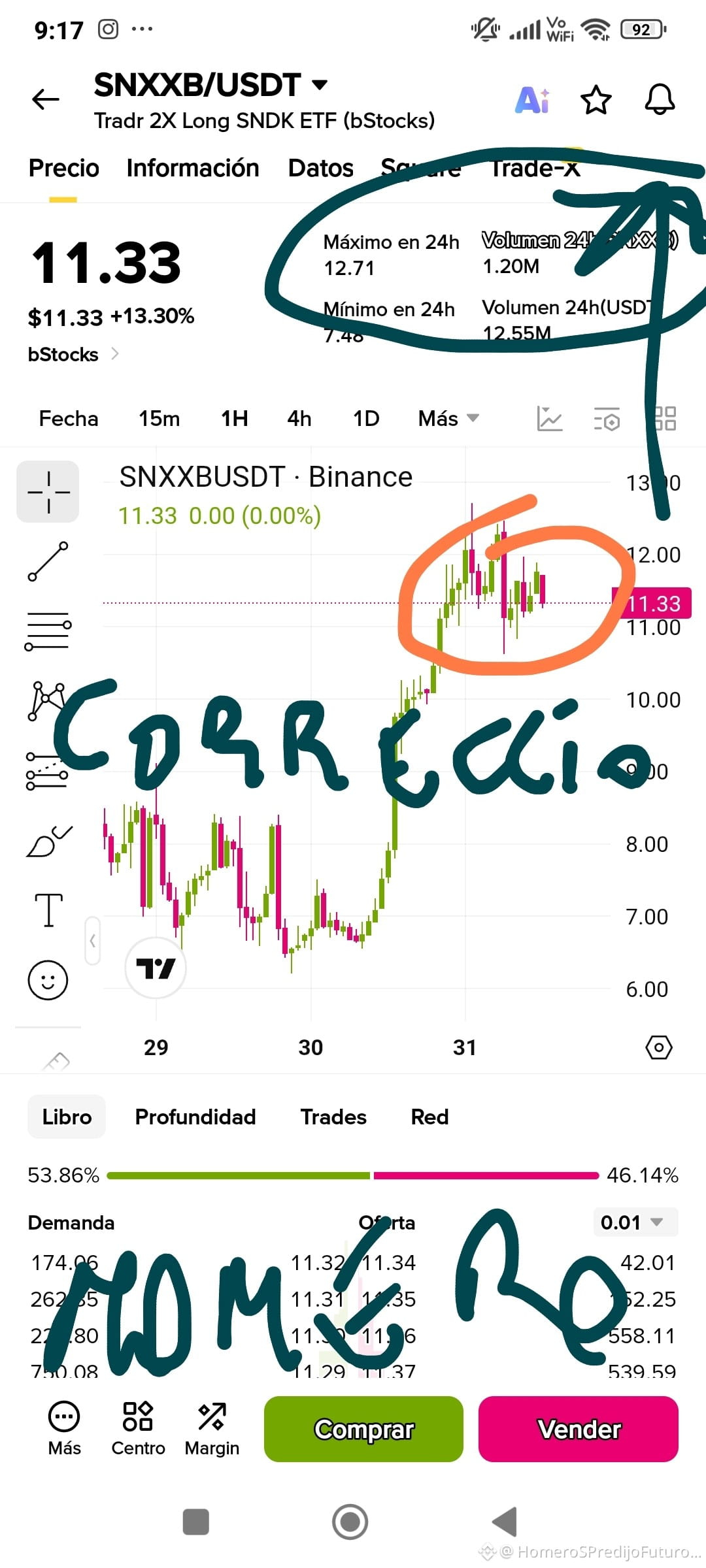
$SNXX with a strong bullish volume after the correction it marked in 12.4 usdt
$KOMA watch its behavior in the piggybacked channel.
it could be a great day ☀️ sunny.
south korea clings to its assets and technological elements.
#TradFiVsDeFi
$SNXX with a strong bullish volume after the correction it marked in 12.4 usdt
$KOMA watch its behavior in the piggybacked channel.
it could be a great day ☀️ sunny.
south korea clings to its assets and technological elements.
#TradFiVsDeFi
$KOMA watch its behavior in the piggybacked channel.
it could be a great day ☀️ sunny.
south korea clings to its assets and technological elements.
#TradFiVsDeFi
1
1
263
Log in to explore more content
Join global crypto users on Binance Square
⚡️ Get latest and useful information about crypto.
💬 Trusted by the world’s largest crypto exchange.
👍 Discover real insights from verified creators.
Email / Phone number
Trending Topics
1
#BTCFallsBelow$83000
331 views
34 Discussing
2
#FedProposesPaymentStablecoinRules
7,413 views
198 Discussing
3
#ChinaMayLetAlibabaByteDanceBuyNvidiaChips
10,242 views
279 Discussing
4
#USChinaRelease$30BTariffCutProductLists
1,856 views
33 Discussing
5
#SKoreaFSCConsidersVirtualAssetMarketMaker
8,869 views
238 Discussing
6
#ChinaIndustrialProfitGrowthSlowsFourthMonth
9,720 views
246 Discussing
7
#BitwiseFilesFinalNEARSpotETFProspectus
123,886 views
1,794 Discussing
8
#BitgetHackerMoves$83MStolenXRP
40,808 views
178 Discussing
9
#SOLSpotETFWeeklyInflow$188M
25,592 views
141 Discussing
10
#DogecoinETFsPostBiggestWeekSinceLaunch
70,468 views
1,139 Discussing