
#solanafallsover3
solanafallsover3
388 views
30 Discussing
Hot
Latest

Solana fell more than 3% in the last few hours and is grabbing attention on social media. Why does it matter?
SOL was coming off a strong week (+20% based on prior data) and now is facing its first clearly visible pullback in days. These kinds of moves are often technical: after a strong rally, the market looks to tap accumulated liquidity in the lower zone before deciding whether to keep going or correct further.
What’s interesting is the context: while Bitcoin rebounds after sweeping liquidity at 76.1K and recovers to 77.3K, Solana is not following. That divergence is a signal. When altcoins don’t track BTC during a rebound, it can mean capital is rotating or that the short-term bullish narrative is cooling down.
Another data point: the Fear & Greed Index dropped from 69 to 63 in 24 hours, indicating the market is less euphoric. It’s not panic, but greed is being tempered. And that often precedes sideways moves or technical corrections.
For those following SOL, the key levels come down to how it reacts at prior support levels. If it breaks with volume, it could head toward a zone about 20% lower. If it bounces quickly, it may have been only a liquidity sweep and the weekly momentum remains intact.
Do you see this as a technical correction or the start of something deeper? Let us know in the comments.
#SolanaFallsOver3%
SOL was coming off a strong week (+20% based on prior data) and now is facing its first clearly visible pullback in days. These kinds of moves are often technical: after a strong rally, the market looks to tap accumulated liquidity in the lower zone before deciding whether to keep going or correct further.
What’s interesting is the context: while Bitcoin rebounds after sweeping liquidity at 76.1K and recovers to 77.3K, Solana is not following. That divergence is a signal. When altcoins don’t track BTC during a rebound, it can mean capital is rotating or that the short-term bullish narrative is cooling down.
Another data point: the Fear & Greed Index dropped from 69 to 63 in 24 hours, indicating the market is less euphoric. It’s not panic, but greed is being tempered. And that often precedes sideways moves or technical corrections.
For those following SOL, the key levels come down to how it reacts at prior support levels. If it breaks with volume, it could head toward a zone about 20% lower. If it bounces quickly, it may have been only a liquidity sweep and the weekly momentum remains intact.
Do you see this as a technical correction or the start of something deeper? Let us know in the comments.
#SolanaFallsOver3%

🚨 Solana's dip of over 3% is concerning! With trending coins like Akedo and Pons soaring, is SOL losing its momentum in this vibrant market? 🤔 Could this be a buying opportunity, or are we witnessing a larger trend? Let’s discuss! #SolanaFallsOver3% $SOL $ARB
📈 Follow for more real-time market breakdowns!
📈 Follow for more real-time market breakdowns!
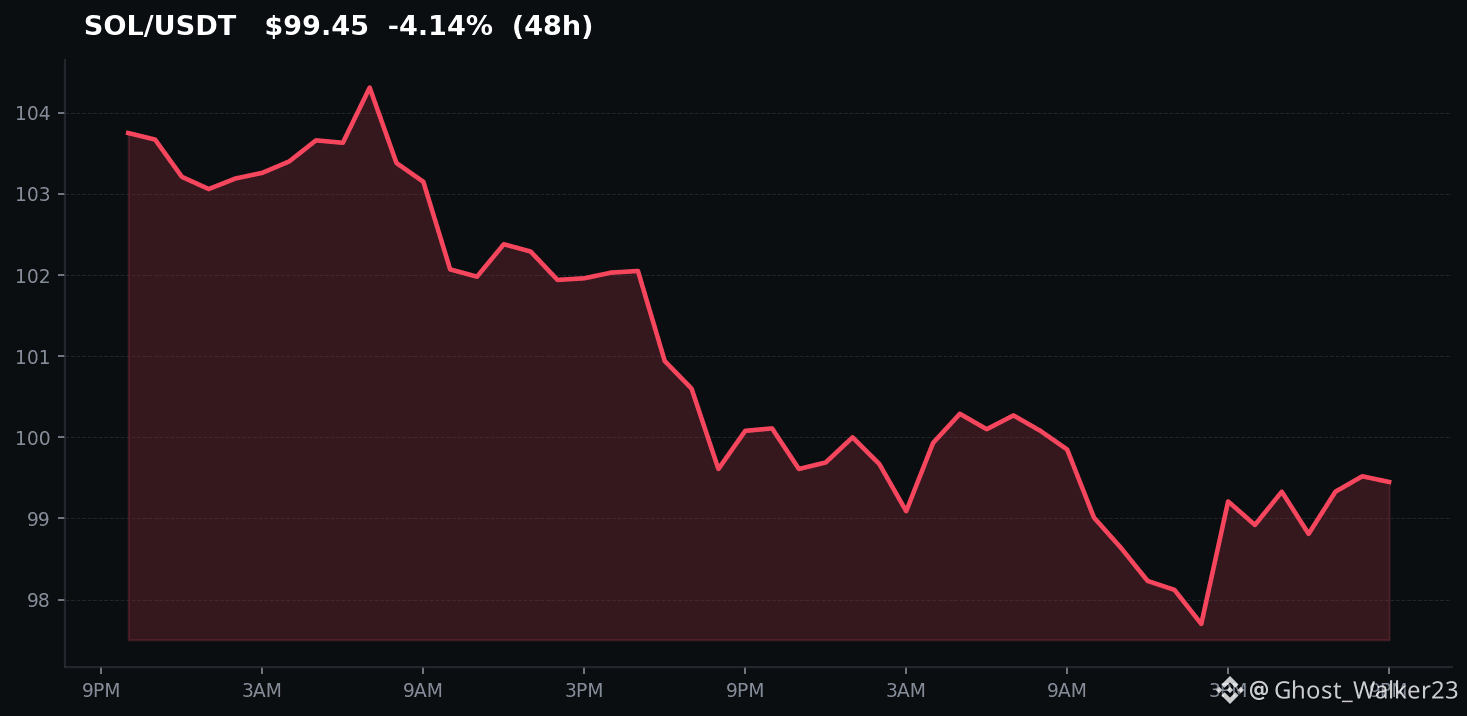

If you are still panic selling every 3% red candle on high-beta layer 1s, stop now.
Watching your portfolio bleed while broader market sentiment sits firmly in Greed is frustrating, especially when you convinced yourself that this breakout had zero resistance left. Most traders get chopped up not by bear markets, but by failing to differentiate between routine liquidity sweeps and structural trend breakdowns.
We saw this exact pattern play out with $SOL multiple times during previous consolidation phases before major legs up. While capital rotates temporarily into stable shelters like $USDT or shifts toward ecosystems like $ETH , a modest dip on high-throughput chains usually just cleans out overleveraged late longs who entered at the local top.
The fundamentals and on-chain volume have not evaporated overnight, even if short-term volatility shakes impatient capital out of position. It feels a lot like earlier market cycles where every minor pullback triggered premature obituaries right before the next expansion.
Do you see this dip as a healthy reset for leverage or the start of a deeper correction?
#SolanaFallsOver3 #USSpotXRPETFsDraw
Watching your portfolio bleed while broader market sentiment sits firmly in Greed is frustrating, especially when you convinced yourself that this breakout had zero resistance left. Most traders get chopped up not by bear markets, but by failing to differentiate between routine liquidity sweeps and structural trend breakdowns.
We saw this exact pattern play out with $SOL multiple times during previous consolidation phases before major legs up. While capital rotates temporarily into stable shelters like $USDT or shifts toward ecosystems like $ETH , a modest dip on high-throughput chains usually just cleans out overleveraged late longs who entered at the local top.
The fundamentals and on-chain volume have not evaporated overnight, even if short-term volatility shakes impatient capital out of position. It feels a lot like earlier market cycles where every minor pullback triggered premature obituaries right before the next expansion.
Do you see this dip as a healthy reset for leverage or the start of a deeper correction?
#SolanaFallsOver3 #USSpotXRPETFsDraw

Have you noticed how traditional market signals are quietly dictating crypto liquidity while everyone is distracted chasing meme coins?
Most traders keep getting chopped up in volatile altcoin moves because they completely ignore macro liquidity shifts until their stops get triggered.
Take the latest dip in Asian equities as a classic case study. While the Hang Seng index closed 18 points lower, capital didn't just vanish; it hesitated. When traditional equities show exhaustion, risk-on capital pauses, directly stalling momentum across majors like $SOL and cooling down rotation into speculative tokens like $CATI .
Smart positioning in crypto isn't just about reading isolated candlestick patterns. Watching Asian market sentiment gives you an early read on global liquidity flows before they hit your order books, especially when high-beta plays start struggling to sustain their breakout rallies.
Do you actively factor traditional market closes into your crypto entries, or do you stick purely to on-chain signals?
#HangSengCloses18PointsLower #SolanaFallsOver3
Most traders keep getting chopped up in volatile altcoin moves because they completely ignore macro liquidity shifts until their stops get triggered.
Take the latest dip in Asian equities as a classic case study. While the Hang Seng index closed 18 points lower, capital didn't just vanish; it hesitated. When traditional equities show exhaustion, risk-on capital pauses, directly stalling momentum across majors like $SOL and cooling down rotation into speculative tokens like $CATI .
Smart positioning in crypto isn't just about reading isolated candlestick patterns. Watching Asian market sentiment gives you an early read on global liquidity flows before they hit your order books, especially when high-beta plays start struggling to sustain their breakout rallies.
Do you actively factor traditional market closes into your crypto entries, or do you stick purely to on-chain signals?
#HangSengCloses18PointsLower #SolanaFallsOver3


everyone thinks ai finding flaws autonomously means our smart contracts are suddenly unhackable, but actually it is giving degens a massive false sense of security.
we keep aping into fresh liquidity pools thinking some automated audit has our back, only to wake up drained because autonomous scanners still miss logical exploit vectors. ngl, losing capital to a zero-day while sitting in greedy market conditions is the fastest way to get completely wiped out.
look at how fast protocols on networks like $ICP or ai compute plays like $PHA get rushed to mainnet the second they pass an automated check. OpenAI's Astra catching code flaws autonomously is clean tech, but devs are already using it as an excuse to cut corners on manual audits. when greed index hits 70 and everyone is chasing the next runner alongside stuff like $CATI , sloppy deployments go parabolic.
automation finds standard vulnerabilities, but it doesn't understand economic exploits or oracle manipulation until the liquidity is already gone. relying purely on autonomous verification without rigorous manual review is just asking for a slow rug.
are you trusting autonomous audit badges for your entries lately or sticking to battle-tested contracts?
#OpenAISaysAstraFindsFlawsAutonomously #SolanaFallsOver3
we keep aping into fresh liquidity pools thinking some automated audit has our back, only to wake up drained because autonomous scanners still miss logical exploit vectors. ngl, losing capital to a zero-day while sitting in greedy market conditions is the fastest way to get completely wiped out.
look at how fast protocols on networks like $ICP or ai compute plays like $PHA get rushed to mainnet the second they pass an automated check. OpenAI's Astra catching code flaws autonomously is clean tech, but devs are already using it as an excuse to cut corners on manual audits. when greed index hits 70 and everyone is chasing the next runner alongside stuff like $CATI , sloppy deployments go parabolic.
automation finds standard vulnerabilities, but it doesn't understand economic exploits or oracle manipulation until the liquidity is already gone. relying purely on autonomous verification without rigorous manual review is just asking for a slow rug.
are you trusting autonomous audit badges for your entries lately or sticking to battle-tested contracts?
#OpenAISaysAstraFindsFlawsAutonomously #SolanaFallsOver3


Everyone thinks a quick dip is just cheap entry season, but actually jumping in without checking network volume is how traders get trapped holding heavy bags.
Watching $SOL slide while the Fear and Greed index sits at 70 makes people rush to catch falling knives, forgetting that leverage flushes take time to reset. Think of a volatile market like an overloaded highway during rush hour; when one major lane slows down, the ripple effect backs up surrounding exits before traffic truly clears.
When capital rotates into stablecoins like $USDT or hunts short-term momentum in tokens like $NEIRO , stepping back to let support zones confirm saves more portfolio value than guessing the exact bottom. Rushing entries during sudden pullbacks usually turns a quick scalp into unwanted long-term stress.
How are you managing your exposure during this pullback?
#SolanaFallsOver3 #USSpotXRPETFsDraw
Watching $SOL slide while the Fear and Greed index sits at 70 makes people rush to catch falling knives, forgetting that leverage flushes take time to reset. Think of a volatile market like an overloaded highway during rush hour; when one major lane slows down, the ripple effect backs up surrounding exits before traffic truly clears.
When capital rotates into stablecoins like $USDT or hunts short-term momentum in tokens like $NEIRO , stepping back to let support zones confirm saves more portfolio value than guessing the exact bottom. Rushing entries during sudden pullbacks usually turns a quick scalp into unwanted long-term stress.
How are you managing your exposure during this pullback?
#SolanaFallsOver3 #USSpotXRPETFsDraw
Picture this: you wake up to breaking headlines about naval escalations in the Persian Gulf, and within minutes, the entire crypto market takes an aggressive nosedive.
Every trader knows that gut-wrenching feeling of watching a sudden geopolitical shock wipe out weeks of steady gains before you can even open your charts to set a stop-loss. It leaves most retail investors paralyzed, panic-selling at the bottom or scrambling into cash at the worst possible time.
We saw almost the exact same script play out during previous Middle East tensions earlier this year. Traditional flight-to-safety assets like oil and gold instantly spiked, while risk assets were dumped indiscriminately. In crypto, heavy leverage gets flushed out first, hitting high-beta majors like $SOL before capital rotates heavily into the safety of stablecoins like $USDT.
The interesting pattern is what happens next. During the initial shockwaves, liquidity contracts and tokens associated with real-world infrastructure or tokenized assets like $ONDO tend to decouple from purely speculative plays. Once the initial panic subsides, markets historically price in the disruption faster than traditional finance, creating sharp V-shaped recoveries for those who didn't panic exit.
Are you treating sudden geopolitical dips as buying opportunities, or staying entirely in cash until the dust settles?
#SaudiSaysIranAttackedShipInHormuz #IRGCSaysTwoTankersHitByMinesInHormuz #SolanaFallsOver3
Every trader knows that gut-wrenching feeling of watching a sudden geopolitical shock wipe out weeks of steady gains before you can even open your charts to set a stop-loss. It leaves most retail investors paralyzed, panic-selling at the bottom or scrambling into cash at the worst possible time.
We saw almost the exact same script play out during previous Middle East tensions earlier this year. Traditional flight-to-safety assets like oil and gold instantly spiked, while risk assets were dumped indiscriminately. In crypto, heavy leverage gets flushed out first, hitting high-beta majors like $SOL before capital rotates heavily into the safety of stablecoins like $USDT.
The interesting pattern is what happens next. During the initial shockwaves, liquidity contracts and tokens associated with real-world infrastructure or tokenized assets like $ONDO tend to decouple from purely speculative plays. Once the initial panic subsides, markets historically price in the disruption faster than traditional finance, creating sharp V-shaped recoveries for those who didn't panic exit.
Are you treating sudden geopolitical dips as buying opportunities, or staying entirely in cash until the dust settles?
#SaudiSaysIranAttackedShipInHormuz #IRGCSaysTwoTankersHitByMinesInHormuz #SolanaFallsOver3

If you are front-running the market purely on regulatory headlines without checking actual liquidity flows, you need to step back.
Too many traders keep getting trapped buying top ticks during ETF application hype, only to watch their positions bleed out during the long review cycles. We saw similar rotation patterns play out across $ONDO and $ICP whenever macro narratives shifted faster than actual capital deployment.
The debate around a potential spot XRP product is heating up again. On one side, proponents argue that institutional clarity and established legal precedents pave the direct runway for massive Wall Street inflows, replicating Bitcoin's ETF trajectory.
However, looking at the structural setup, spot approval does not automatically guarantee instant buy pressure if broader liquidity remains hesitant to step in. A filed application is simply procedural intent, not guaranteed demand, and chasing spikes before official rulings consistently favors market makers over late retail entries.
Are we looking at a genuine institutional inflection point here, or is the market once again pricing in approval way too early?
#USSpotXRPETFsDraw #SolanaFallsOver3
Too many traders keep getting trapped buying top ticks during ETF application hype, only to watch their positions bleed out during the long review cycles. We saw similar rotation patterns play out across $ONDO and $ICP whenever macro narratives shifted faster than actual capital deployment.
The debate around a potential spot XRP product is heating up again. On one side, proponents argue that institutional clarity and established legal precedents pave the direct runway for massive Wall Street inflows, replicating Bitcoin's ETF trajectory.
However, looking at the structural setup, spot approval does not automatically guarantee instant buy pressure if broader liquidity remains hesitant to step in. A filed application is simply procedural intent, not guaranteed demand, and chasing spikes before official rulings consistently favors market makers over late retail entries.
Are we looking at a genuine institutional inflection point here, or is the market once again pricing in approval way too early?
#USSpotXRPETFsDraw #SolanaFallsOver3

Picture this: the market sees headlines about ETF filings, sentiment flips straight to greed, and retail rushes to front-run institutional liquidity before reading the fine print.
Most traders get trapped buying into structural narratives right at local resistance, mistaking a filing submission for imminent capital inflows.
When speculation around spot vehicles heats up, liquidity tends to thin out across majors like $BTC while capital aggressively rotates into $XRP on pure regulatory optimism. But historical filings show a consistent pattern: early hype cycles rarely account for the months of potential delays, regulatory pushback, or the fact that market makers often use these exact momentum spikes to offload spot inventory back into retail demand.
While broader sentiment remains elevated alongside steady bids in assets like $ONDO , blind exposure to ETF approval speculation without a clear invalidation level leaves portfolios vulnerable to sharp liquidation cascades the moment headlines cool off.
Where do you think this goes from here once the initial headline absorption fades?
#USSpotXRPETFsDraw #SolanaFallsOver3
Most traders get trapped buying into structural narratives right at local resistance, mistaking a filing submission for imminent capital inflows.
When speculation around spot vehicles heats up, liquidity tends to thin out across majors like $BTC while capital aggressively rotates into $XRP on pure regulatory optimism. But historical filings show a consistent pattern: early hype cycles rarely account for the months of potential delays, regulatory pushback, or the fact that market makers often use these exact momentum spikes to offload spot inventory back into retail demand.
While broader sentiment remains elevated alongside steady bids in assets like $ONDO , blind exposure to ETF approval speculation without a clear invalidation level leaves portfolios vulnerable to sharp liquidation cascades the moment headlines cool off.
Where do you think this goes from here once the initial headline absorption fades?
#USSpotXRPETFsDraw #SolanaFallsOver3


Have you noticed how retail traders rush to buy the rumor on every ETF headline, only to end up acting as exit liquidity for institutional desks?
Most investors obsess over daily price spikes whenever ETF filings make the news, yet they constantly get caught off guard by the subsequent pullbacks because they mistake speculative momentum for actual spot demand.
Here is how you actually navigate this narrative without getting burned. First, stop treating initial filings as an immediate buy signal; instead, track institutional liquidity flows and open interest spikes across assets like $XRP and $BTC before committing capital. When market sentiment tilts heavily into greed, scale in with staggered limit orders near key structural support rather than chasing green candles at resistance. Finally, always maintain a clear invalidation level on your setup so you are not left holding during sudden post-announcement corrections.
How are you positioning your portfolio around these regulatory filings?
#USSpotXRPETFsDraw #SolanaFallsOver3
Most investors obsess over daily price spikes whenever ETF filings make the news, yet they constantly get caught off guard by the subsequent pullbacks because they mistake speculative momentum for actual spot demand.
Here is how you actually navigate this narrative without getting burned. First, stop treating initial filings as an immediate buy signal; instead, track institutional liquidity flows and open interest spikes across assets like $XRP and $BTC before committing capital. When market sentiment tilts heavily into greed, scale in with staggered limit orders near key structural support rather than chasing green candles at resistance. Finally, always maintain a clear invalidation level on your setup so you are not left holding during sudden post-announcement corrections.
How are you positioning your portfolio around these regulatory filings?
#USSpotXRPETFsDraw #SolanaFallsOver3

everyone thinks filing for a spot etf means an instant god candle, but actually it usually ends up as the cleanest exit liquidity trap for retail.
you see the headlines, panic buy the green wick at local tops, and end up holding heavy bags while smart money derisks into your fomo.
look at how price action played out with earlier launches versus the current hype around $XRP . when the filings hit the tape, everybody rushed in expecting a straight shot up, completely ignoring that market makers use these regulatory milestones to harvest liquidity. even with sentiment leaning greed and people rotating between plays like $ONDO or chasing sudden moves on $ICP , the playbook never changes.
the filing is just step one in a long game of delays and structural positioning. whales accumulate during total silence, not when the entire timeline is screaming about approval dates.
how are you playing this narrative before the actual decision lands?
#USSpotXRPETFsDraw #SolanaFallsOver3
you see the headlines, panic buy the green wick at local tops, and end up holding heavy bags while smart money derisks into your fomo.
look at how price action played out with earlier launches versus the current hype around $XRP . when the filings hit the tape, everybody rushed in expecting a straight shot up, completely ignoring that market makers use these regulatory milestones to harvest liquidity. even with sentiment leaning greed and people rotating between plays like $ONDO or chasing sudden moves on $ICP , the playbook never changes.
the filing is just step one in a long game of delays and structural positioning. whales accumulate during total silence, not when the entire timeline is screaming about approval dates.
how are you playing this narrative before the actual decision lands?
#USSpotXRPETFsDraw #SolanaFallsOver3

everyone thinks macro equity dips don't matter for crypto anymore, but actually ignoring traditional market pullbacks is how most degens end up giving back their entire stack.
most traders get completely blinded by greed when index readings stay hot around 70, blindly apeing into momentum plays like $NEIRO or catching knives on $ONDO while completely ignoring broader liquidity signals. then they wonder why their stop losses get hunted overnight when global risk appetite suddenly dries up.
look at what just played out with asian markets today. the hang seng took another hit, and while 18 points looks tiny on surface level, it shows institutional capital is quietly rotating out of risk assets and parking into $USDT instead of bidding local tops. when traditional macro liquidity tightens even slightly, high beta alts are always the first liquidity exit for smart money, not the hedge everyone prays they will be.
are you guys derisking into stablecoins here or still trying to frontrun the next bounce?
#HangSengCloses18PointsLower #SolanaFallsOver3
most traders get completely blinded by greed when index readings stay hot around 70, blindly apeing into momentum plays like $NEIRO or catching knives on $ONDO while completely ignoring broader liquidity signals. then they wonder why their stop losses get hunted overnight when global risk appetite suddenly dries up.
look at what just played out with asian markets today. the hang seng took another hit, and while 18 points looks tiny on surface level, it shows institutional capital is quietly rotating out of risk assets and parking into $USDT instead of bidding local tops. when traditional macro liquidity tightens even slightly, high beta alts are always the first liquidity exit for smart money, not the hedge everyone prays they will be.
are you guys derisking into stablecoins here or still trying to frontrun the next bounce?
#HangSengCloses18PointsLower #SolanaFallsOver3
If you are still assuming human code audits will protect your portfolio from sudden exploits, stop now.
Too many traders keep losing funds to overlooked smart contract vulnerabilities, only realizing the flaw after an exploit drains liquidity and crashes their positions. With greed creeping into the market, rushing into protocols without verified security is an expensive gamble.
The breaking news about OpenAI developing Astra to find code flaws autonomously is stirring up a massive debate across the developer community. On one side, skeptics argue that relying on automated AI systems creates a false sense of security, insisting nothing replaces human logic. But looking at how fast on-chain ecosystems like $ICP and $PHA are expanding, human audits simply cannot scale fast enough to catch every zero-day exploit.
Autonomous verification is not just an upgrade; it is becoming a necessity for decentralized infrastructure. Having an AI agent continuously probing contracts before deployment could finally put an end to multi-million dollar flash loan attacks.
Do you trust AI agents to secure our smart contracts, or should audits remain strictly in human hands?
#OpenAISaysAstraFindsFlawsAutonomously #SolanaFallsOver3
Too many traders keep losing funds to overlooked smart contract vulnerabilities, only realizing the flaw after an exploit drains liquidity and crashes their positions. With greed creeping into the market, rushing into protocols without verified security is an expensive gamble.
The breaking news about OpenAI developing Astra to find code flaws autonomously is stirring up a massive debate across the developer community. On one side, skeptics argue that relying on automated AI systems creates a false sense of security, insisting nothing replaces human logic. But looking at how fast on-chain ecosystems like $ICP and $PHA are expanding, human audits simply cannot scale fast enough to catch every zero-day exploit.
Autonomous verification is not just an upgrade; it is becoming a necessity for decentralized infrastructure. Having an AI agent continuously probing contracts before deployment could finally put an end to multi-million dollar flash loan attacks.
Do you trust AI agents to secure our smart contracts, or should audits remain strictly in human hands?
#OpenAISaysAstraFindsFlawsAutonomously #SolanaFallsOver3

Most traders look at green crypto candles while completely ignoring the quiet bleed in Asian equities, forgetting that global liquidity flows operate as one connected machine.
The hardest lesson I learned across multiple cycles is that feeling invincible during greed phases usually leads to round-tripping profits. When macro indices slip and capital contracts, retail is almost always caught holding illiquid bags because they mistook local momentum for absolute safety.
Traditional macro sentiment moves capital long before it shows up on your favorite trading pair. A cautious close in regional equities signals institutional hesitation, prompting funds to park profits into $USDT rather than chasing speculative breakouts. When traditional risk appetite cools down, heavy positions across infrastructure plays like $ICP or real-world asset narratives like $ONDO tend to face sudden liquidity crunches.
Watching Asian trading sessions closely has saved my portfolio more times than any technical indicator ever did. Macro headwinds do not trigger immediate crashes, but they quietly drain the bid depth across order books until one wave of selling cascades through over-leveraged longs.
How closely do you track regional equity closes before setting your crypto risk parameters for the week?
#HangSengCloses18PointsLower #SolanaFallsOver3 #USAugADPJobsSmallestGainSinceJan
The hardest lesson I learned across multiple cycles is that feeling invincible during greed phases usually leads to round-tripping profits. When macro indices slip and capital contracts, retail is almost always caught holding illiquid bags because they mistook local momentum for absolute safety.
Traditional macro sentiment moves capital long before it shows up on your favorite trading pair. A cautious close in regional equities signals institutional hesitation, prompting funds to park profits into $USDT rather than chasing speculative breakouts. When traditional risk appetite cools down, heavy positions across infrastructure plays like $ICP or real-world asset narratives like $ONDO tend to face sudden liquidity crunches.
Watching Asian trading sessions closely has saved my portfolio more times than any technical indicator ever did. Macro headwinds do not trigger immediate crashes, but they quietly drain the bid depth across order books until one wave of selling cascades through over-leveraged longs.
How closely do you track regional equity closes before setting your crypto risk parameters for the week?
#HangSengCloses18PointsLower #SolanaFallsOver3 #USAugADPJobsSmallestGainSinceJan
Picture this: an AI agent combs through thousands of lines of complex smart contract code and pinpoints zero-day vulnerabilities in minutes without any human intervention.
For anyone who has ever watched their portfolio evaporate because of a sudden DeFi exploit or protocol hack, code vulnerability is the ultimate nightmare. We spend hours researching tokenomics only to get blindsided by an overlooked logic flaw in a bridge or vault.
When news broke about OpenAI highlighting how Astra identifies flaws autonomously, it underscored a massive shift in how code verification will work. We saw similar narrative momentum when decentralized computation platforms like $ICP and AI infrastructure plays like $PHA surged on the promise of autonomous systems. Unlike legacy static scanners that flood teams with false alarms, modern autonomous models actively simulate exploit paths before malicious actors can find them.
Looking back at the catastrophic bridge hacks of past cycles, the common denominator was almost always human fatigue during manual audits. If decentralized protocols and real-world asset networks like $ONDO integrate autonomous auditing into continuous deployment pipelines, the entire risk profile of on-chain capital changes. It is the same structural evolution we witnessed when automated unit testing replaced manual QA in traditional software development.
Do you think autonomous AI auditing will finally eliminate major DeFi exploits, or will attackers just use the same models to strike faster?
#OpenAISaysAstraFindsFlawsAutonomously #SolanaFallsOver3
For anyone who has ever watched their portfolio evaporate because of a sudden DeFi exploit or protocol hack, code vulnerability is the ultimate nightmare. We spend hours researching tokenomics only to get blindsided by an overlooked logic flaw in a bridge or vault.
When news broke about OpenAI highlighting how Astra identifies flaws autonomously, it underscored a massive shift in how code verification will work. We saw similar narrative momentum when decentralized computation platforms like $ICP and AI infrastructure plays like $PHA surged on the promise of autonomous systems. Unlike legacy static scanners that flood teams with false alarms, modern autonomous models actively simulate exploit paths before malicious actors can find them.
Looking back at the catastrophic bridge hacks of past cycles, the common denominator was almost always human fatigue during manual audits. If decentralized protocols and real-world asset networks like $ONDO integrate autonomous auditing into continuous deployment pipelines, the entire risk profile of on-chain capital changes. It is the same structural evolution we witnessed when automated unit testing replaced manual QA in traditional software development.
Do you think autonomous AI auditing will finally eliminate major DeFi exploits, or will attackers just use the same models to strike faster?
#OpenAISaysAstraFindsFlawsAutonomously #SolanaFallsOver3

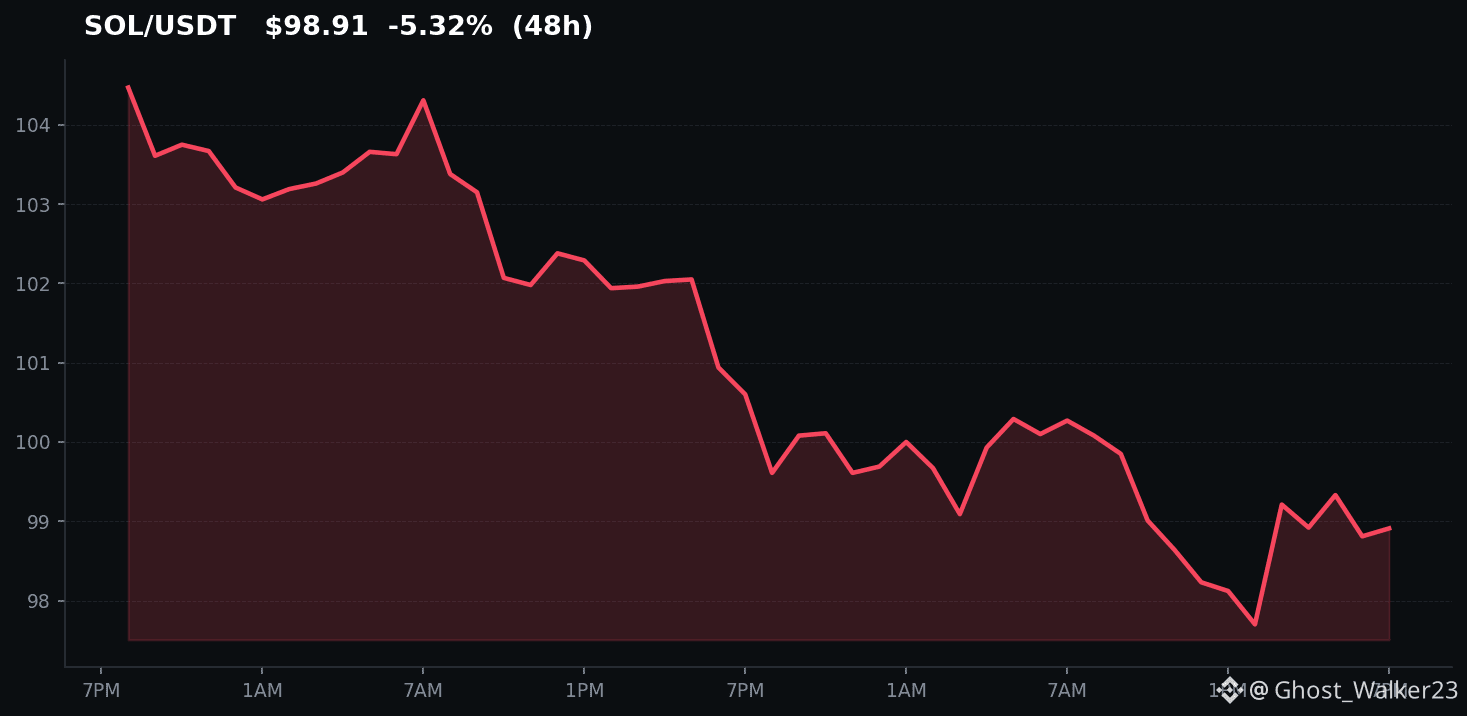
🚀 The crypto landscape is buzzing with volatility! While $SOL is down -2.00% at $98.91, its competitor $MUBARAK is soaring with a +27.9% gain. As you can see below, the chart shows significant movement for both coins.
¿Which one has more potential for the future? 🤔 #SolanaFallsOver3% #crypto
🔔 Follow us for daily crypto insights — más viene en camino!
¿Which one has more potential for the future? 🤔 #SolanaFallsOver3% #crypto
🔔 Follow us for daily crypto insights — más viene en camino!
Picture this: global equities take a quiet step backward, the market shrugs it off, and crypto traders immediately assume liquidity will just rotate into high-beta alts without friction.
Most market participants completely overlook how macro contagion works until a localized slip in traditional risk assets turns into a sudden deleveraging event across their entire portfolio.
When Asian equity benchmarks face pressure, the initial reaction across retail desks is often complacency, especially with broad sentiment sitting deep in greed territory. While traders were busy chasing momentum plays like $NEIRO and watching rotation into institutional narratives like $ONDO , the underlying reality is that global liquidity contraction rarely stays confined to traditional markets.
A subtle cooling in major indices typically leads institutional desks to de-risk collateralized positions first, drying up the quiet liquidity bids that sustain decentralized protocols like $ICP . It is precisely during these low-volatility pullbacks that overextended leverage gets trapped, turning what looked like an isolated regional index move into an unexpected cascade across crypto pairs.
Are you actively adjusting your risk exposure when macro signals start softening, or are you holding spot allocations through the noise?
#HangSengCloses18PointsLower #SolanaFallsOver3
Most market participants completely overlook how macro contagion works until a localized slip in traditional risk assets turns into a sudden deleveraging event across their entire portfolio.
When Asian equity benchmarks face pressure, the initial reaction across retail desks is often complacency, especially with broad sentiment sitting deep in greed territory. While traders were busy chasing momentum plays like $NEIRO and watching rotation into institutional narratives like $ONDO , the underlying reality is that global liquidity contraction rarely stays confined to traditional markets.
A subtle cooling in major indices typically leads institutional desks to de-risk collateralized positions first, drying up the quiet liquidity bids that sustain decentralized protocols like $ICP . It is precisely during these low-volatility pullbacks that overextended leverage gets trapped, turning what looked like an isolated regional index move into an unexpected cascade across crypto pairs.
Are you actively adjusting your risk exposure when macro signals start softening, or are you holding spot allocations through the noise?
#HangSengCloses18PointsLower #SolanaFallsOver3

If you're still ignoring traditional market signals while trading crypto, stop now.
Most traders get completely wiped out because they treat crypto like an isolated bubble, buying local tops when macroeconomic liquidity is quietly draining away.
Asian markets just flashed a subtle warning with the Hang Seng edging lower, and dismissing these small pullbacks is where retail gets caught off guard. When regional equity indices wobble, institutional capital derisks fast, and that pressure inevitably spills over into altcoins. While the Fear & Greed index sits comfortably at 70, blindly chasing momentum plays like $CATI or rotating heavily into $ONDO without watching broader market health is a dangerous game.
Some argue that crypto is decoupling and that assets tied to compute narrative like $PHA can easily shrug off TradFi headwinds. But history shows that when broad index sentiment cools down, speculative liquidity dries up first. Between chasing the breakout and protecting your capital, which side of this macro move are you preparing for?
#HangSengCloses18PointsLower #SolanaFallsOver3
Most traders get completely wiped out because they treat crypto like an isolated bubble, buying local tops when macroeconomic liquidity is quietly draining away.
Asian markets just flashed a subtle warning with the Hang Seng edging lower, and dismissing these small pullbacks is where retail gets caught off guard. When regional equity indices wobble, institutional capital derisks fast, and that pressure inevitably spills over into altcoins. While the Fear & Greed index sits comfortably at 70, blindly chasing momentum plays like $CATI or rotating heavily into $ONDO without watching broader market health is a dangerous game.
Some argue that crypto is decoupling and that assets tied to compute narrative like $PHA can easily shrug off TradFi headwinds. But history shows that when broad index sentiment cools down, speculative liquidity dries up first. Between chasing the breakout and protecting your capital, which side of this macro move are you preparing for?
#HangSengCloses18PointsLower #SolanaFallsOver3

Everyone thinks big tech rallies like Dell surge purely on hardware sales, but actually, they signal a massive structural shift in liquidity that catches everyday crypto traders off guard.
Most investors watch these enterprise compute breakouts from the sidelines, only to panic buy high-beta AI and compute tokens after the easy gains are already gone. It is like rushing to buy expensive power cords when everyone else is already building power plants.
When traditional infrastructure surges on enterprise AI demand, the initial market reaction is a fast liquidity drain from speculative crypto assets. High-utility networks like $ICP and compute-centric protocols like $PHA need time to absorb these macro capital rotations before building sustainable momentum.
1. Watch enterprise infrastructure leaders first, because institutional capital allocates to balance-sheet safety before moving down the risk curve into decentralized compute.
2. Monitor real on-chain utilization rather than chasing speculative green candles, especially when decentralized compute demand is lagging behind traditional enterprise hardware benchmarks.
3. Plan your rebalancing phases in advance instead of letting market greed dictate your entries when capital starts rotating back into decentralized infrastructure like $ONDO .
How are you positioning your portfolio as traditional tech infrastructure continues to absorb this wave of institutional liquidity?
#DellSurges8 #SolanaFallsOver3
Most investors watch these enterprise compute breakouts from the sidelines, only to panic buy high-beta AI and compute tokens after the easy gains are already gone. It is like rushing to buy expensive power cords when everyone else is already building power plants.
When traditional infrastructure surges on enterprise AI demand, the initial market reaction is a fast liquidity drain from speculative crypto assets. High-utility networks like $ICP and compute-centric protocols like $PHA need time to absorb these macro capital rotations before building sustainable momentum.
1. Watch enterprise infrastructure leaders first, because institutional capital allocates to balance-sheet safety before moving down the risk curve into decentralized compute.
2. Monitor real on-chain utilization rather than chasing speculative green candles, especially when decentralized compute demand is lagging behind traditional enterprise hardware benchmarks.
3. Plan your rebalancing phases in advance instead of letting market greed dictate your entries when capital starts rotating back into decentralized infrastructure like $ONDO .
How are you positioning your portfolio as traditional tech infrastructure continues to absorb this wave of institutional liquidity?
#DellSurges8 #SolanaFallsOver3

Why is everyone panicking over a minor dip when the broader market is still printing solid fundamentals?
Most retail traders get completely shaken out the moment $SOL drops a few percent, panic selling their bags right before the actual liquidity sweep finishes. They end up buying back at local tops because they mistake routine market cool-offs for structural collapses.
When the Fear & Greed Index sits around 70, volatility like this is simply healthy redistribution. Instead of reacting emotionally, the smarter move is watching key support retests and laddering bids in high-volume demand zones. Pairing your positioning with stable liquidity like $USDT while keeping tabs on layer-1 rotation into names like $ICP gives you a clear edge over those trading purely on fear.
What is your strategy for navigating these shakeouts?
#SolanaFallsOver3 #USAugADPJobsSmallestGainSinceJan
Most retail traders get completely shaken out the moment $SOL drops a few percent, panic selling their bags right before the actual liquidity sweep finishes. They end up buying back at local tops because they mistake routine market cool-offs for structural collapses.
When the Fear & Greed Index sits around 70, volatility like this is simply healthy redistribution. Instead of reacting emotionally, the smarter move is watching key support retests and laddering bids in high-volume demand zones. Pairing your positioning with stable liquidity like $USDT while keeping tabs on layer-1 rotation into names like $ICP gives you a clear edge over those trading purely on fear.
What is your strategy for navigating these shakeouts?
#SolanaFallsOver3 #USAugADPJobsSmallestGainSinceJan

Log in to explore more content