
#risktoreward
risktoreward
26,311 views
64 Discussing
Hot
Latest

·
--
Article
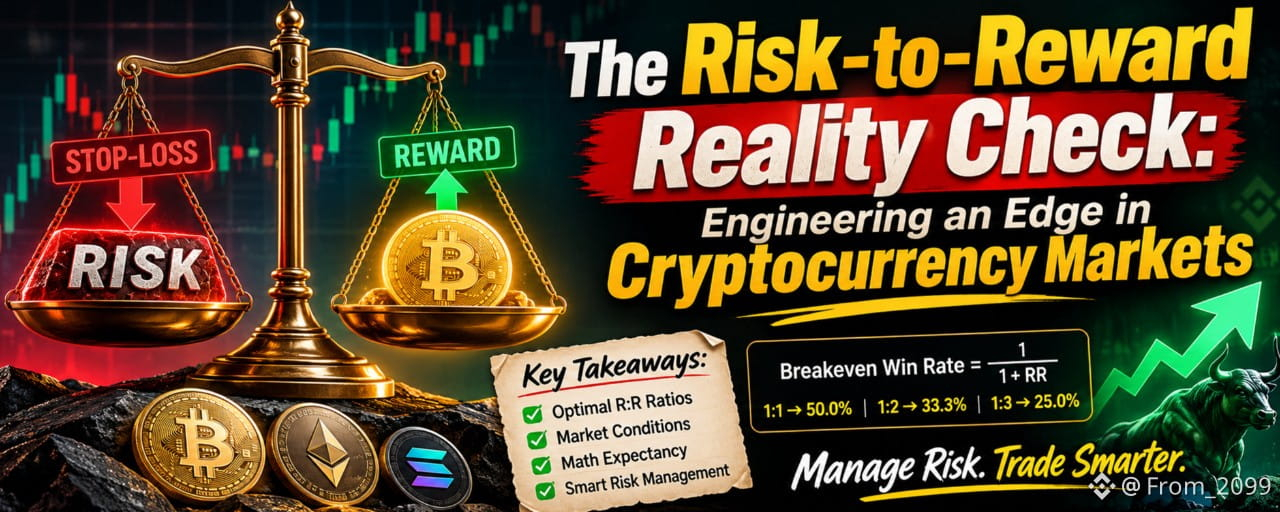
The Risk-to-Reward Reality Check: Engineering an Edge in Cryptocurrency Markets🌐👉 In digital asset trading, colloquial advice often leans heavily on inspirational slogans about holding through volatility or chasing multi-bagger breakouts. Yet, institutional market makers and systematic traders survive not on optimism, but on mathematical expectancy. With the global cryptocurrency market capitalization stabilizing in the multi-trillion-dollar range and stablecoin liquidity exceeding $300 billion, managing risk has shifted from an optional preference to the core determinant of market survival
Understanding how to structure risk relative to potential reward separates long-term market participants from transient liquidity.
👉↔️ The Mathematical Core: Why Ratios Dictate Longevity
The risk-to-reward ratio (RRR) evaluates a simple proposition before capital is deployed: Is the potential upside large enough to justify the exact dollar amount placed at risk?
Three fixed technical anchors define every structured trade:
Entry Price: The execution level where the position is initiated.Stop-Loss Level: The predetermined invalidation point where the trade is cut to prevent catastrophic capital degradation.Take-Profit Target: The objective level where gains are systematically realized.
Risk is measured as the distance between entry and stop-loss; reward is measured as the distance between entry and take-profit. Expressed as a multiplier (e.g., 1:2), it dictates the exact win rate required to break even before exchange fees and slippage.
Breakeven Win Rate = 1 / (1 + RR)
1:1 Ratio: Requires a 50.0% win rate just to remain flat.1:2 Ratio: Requires a 33.3% win rate to break even.1:3 Ratio: Requires a 25.0% win rate to break even.
In discretionary crypto trading, realistic technical win rates typically range between 40% and 55%. Operating below a 1:2 ratio demands an unsustainable level of directional accuracy, forcing traders into over-leveraged bets to compensate for narrow margins.
🚩🚨 Empirical Realities: Crypto Market Structure vs. Traditional Assets
Applying risk-to-reward frameworks to digital assets requires acknowledging structura deviations unique to blockchain-based markets:
Asymmetric Volatility and Liquidity Gaps: Unlike equities, which trade during fixed hours with established circuit breakers, crypto assets trade continuously. Sudden macro news events or liquidations across centralized exchanges (CEXs) can cause sharp price spikes that wick through standard stop-loss orders, creating severe slippage.The Wash Trading Distortion: Exchange-reported spot volumes are frequently inflated by wash trading. On-chain analytics and institutional reporting indicate that true adjusted spot liquidity can be 40% to 70% lower than headline exchange figures. Low adjusted liquidity around order book fringes increases execution risk, invalidating tight stop-losses on smaller altcoin pairs.Holder Profitability Dynamics: Mid-cycle data indicates that while established blue-chip assets like Bitcoin maintain high holder profitability metrics (often tracking above 70% during stable phases), retail altcoin and meme coin cohorts face high failure rates, with historical data suggesting a stark divergence in performance due to poor risk sizing.
Trending Markets (1:3 to 1:5 Targets): During robust directional expansions, price action respects structural swing lows and highs cleanly. Trend followers and breakout strategies utilize wider targets because sustained momentum allows prices to clear initial resistance bands easily.Ranging or Consolidating Markets (1:1.5 to 1:2 Targets): When assets chop sideways inside established channels, extended targets are statistically improbable. Traders tighten expectations, aiming for range boundaries and relying on disciplined execution to compound smaller, higher-probability wins.
⏰👉Calculating Mathematical Expectancy
A favorable risk-to-reward ratio means little without assessing system expectancy ($EV$):
EV = (Win Rate × Average Win) - (Loss Rate × Average Loss)
If a strategy maintains a 40% win rate with a 1:3 risk-to-reward profile, the mathematical expectancy remains positive (+0.6 units per unit risked). Conversely, chasing an extreme 1:5 target that only achieves a 11% empirical success rate results in a net-negative system, despite the superficially impressive ratio.
Prudent risk management in crypto is not about finding a holy grail formula; it is about ruthlessly cutting losing positions short, anchoring exits to structural market levels, and letting mathematics work over a large sample size of trades.
#NvidiaInvestigatesAfterHuang’sAffairApology #AIChipSlumpNasdaq #MarketSentimentToday #CryptoNewss #RiskToReward $INIT $TST $SOXLB
{spot}(SOXLBUSDT)
{future}(TSTUSDT)
{future}(INITUSDT)
The Risk-to-Reward Reality Check: Engineering an Edge in Cryptocurrency Markets
🌐👉 In digital asset trading, colloquial advice often leans heavily on inspirational slogans about holding through volatility or chasing multi-bagger breakouts. Yet, institutional market makers and systematic traders survive not on optimism, but on mathematical expectancy. With the global cryptocurrency market capitalization stabilizing in the multi-trillion-dollar range and stablecoin liquidity exceeding $300 billion, managing risk has shifted from an optional preference to the core determinant of market survival
Understanding how to structure risk relative to potential reward separates long-term market participants from transient liquidity.
👉↔️ The Mathematical Core: Why Ratios Dictate Longevity
The risk-to-reward ratio (RRR) evaluates a simple proposition before capital is deployed: Is the potential upside large enough to justify the exact dollar amount placed at risk?
Three fixed technical anchors define every structured trade:
Entry Price: The execution level where the position is initiated.Stop-Loss Level: The predetermined invalidation point where the trade is cut to prevent catastrophic capital degradation.Take-Profit Target: The objective level where gains are systematically realized.
Risk is measured as the distance between entry and stop-loss; reward is measured as the distance between entry and take-profit. Expressed as a multiplier (e.g., 1:2), it dictates the exact win rate required to break even before exchange fees and slippage.
Breakeven Win Rate = 1 / (1 + RR)
1:1 Ratio: Requires a 50.0% win rate just to remain flat.1:2 Ratio: Requires a 33.3% win rate to break even.1:3 Ratio: Requires a 25.0% win rate to break even.
In discretionary crypto trading, realistic technical win rates typically range between 40% and 55%. Operating below a 1:2 ratio demands an unsustainable level of directional accuracy, forcing traders into over-leveraged bets to compensate for narrow margins.
🚩🚨 Empirical Realities: Crypto Market Structure vs. Traditional Assets
Applying risk-to-reward frameworks to digital assets requires acknowledging structura deviations unique to blockchain-based markets:
Asymmetric Volatility and Liquidity Gaps: Unlike equities, which trade during fixed hours with established circuit breakers, crypto assets trade continuously. Sudden macro news events or liquidations across centralized exchanges (CEXs) can cause sharp price spikes that wick through standard stop-loss orders, creating severe slippage.The Wash Trading Distortion: Exchange-reported spot volumes are frequently inflated by wash trading. On-chain analytics and institutional reporting indicate that true adjusted spot liquidity can be 40% to 70% lower than headline exchange figures. Low adjusted liquidity around order book fringes increases execution risk, invalidating tight stop-losses on smaller altcoin pairs.Holder Profitability Dynamics: Mid-cycle data indicates that while established blue-chip assets like Bitcoin maintain high holder profitability metrics (often tracking above 70% during stable phases), retail altcoin and meme coin cohorts face high failure rates, with historical data suggesting a stark divergence in performance due to poor risk sizing.
Trending Markets (1:3 to 1:5 Targets): During robust directional expansions, price action respects structural swing lows and highs cleanly. Trend followers and breakout strategies utilize wider targets because sustained momentum allows prices to clear initial resistance bands easily.Ranging or Consolidating Markets (1:1.5 to 1:2 Targets): When assets chop sideways inside established channels, extended targets are statistically improbable. Traders tighten expectations, aiming for range boundaries and relying on disciplined execution to compound smaller, higher-probability wins.
⏰👉Calculating Mathematical Expectancy
A favorable risk-to-reward ratio means little without assessing system expectancy ($EV$):
EV = (Win Rate × Average Win) - (Loss Rate × Average Loss)
If a strategy maintains a 40% win rate with a 1:3 risk-to-reward profile, the mathematical expectancy remains positive (+0.6 units per unit risked). Conversely, chasing an extreme 1:5 target that only achieves a 11% empirical success rate results in a net-negative system, despite the superficially impressive ratio.
Prudent risk management in crypto is not about finding a holy grail formula; it is about ruthlessly cutting losing positions short, anchoring exits to structural market levels, and letting mathematics work over a large sample size of trades.
#NvidiaInvestigatesAfterHuang’sAffairApology #AIChipSlumpNasdaq #MarketSentimentToday #CryptoNewss #RiskToReward $INIT $TST $SOXLB
394

·
--
Article
Most people don't blow up their portfolio because of a bad trade.They blow it up because they never had a plan for how much to lose.Here is my actual process before I touch a chart. Read 👇️
1-2% of your total portfolio, max, per trade. Not 1-2% of the position .... of everything you own.
Had a friend put $300 of his $1k bag into a coin he found on CT that morning.
That's not a trade, that's a coin flip with extra steps.
Before you buy, decide what price will makes you wrong...
Not "I'll see how it goes" an actual number.
If you can't say it out loud in one sentence, you're not trading, you're hoping....
And check the order book before the roadmap.
I've seen coins with a great story and zero volume ...
great story, no exit. Narrative gets you in.
Liquidity gets you out.
I Think none of this is complicated.
People skip it because "which coin 10x's , 100x next" is way more fun to think about than position sizing.
PS . i am holding and doing DCA on $BNB $SOL $ETH #BTC on weekly basis....
#RiskToReward #highpropablitysetup
{spot}(ETHUSDT)
{spot}(SOLUSDT)
{spot}(BNBUSDT)
Most people don't blow up their portfolio because of a bad trade.
They blow it up because they never had a plan for how much to lose.Here is my actual process before I touch a chart. Read 👇️
1-2% of your total portfolio, max, per trade. Not 1-2% of the position .... of everything you own.
Had a friend put $300 of his $1k bag into a coin he found on CT that morning.
That's not a trade, that's a coin flip with extra steps.
Before you buy, decide what price will makes you wrong...
Not "I'll see how it goes" an actual number.
If you can't say it out loud in one sentence, you're not trading, you're hoping....
And check the order book before the roadmap.
I've seen coins with a great story and zero volume ...
great story, no exit. Narrative gets you in.
Liquidity gets you out.
I Think none of this is complicated.
People skip it because "which coin 10x's , 100x next" is way more fun to think about than position sizing.
PS . i am holding and doing DCA on $BNB $SOL $ETH #BTC on weekly basis....
#RiskToReward #highpropablitysetup
1
4
148

·
--
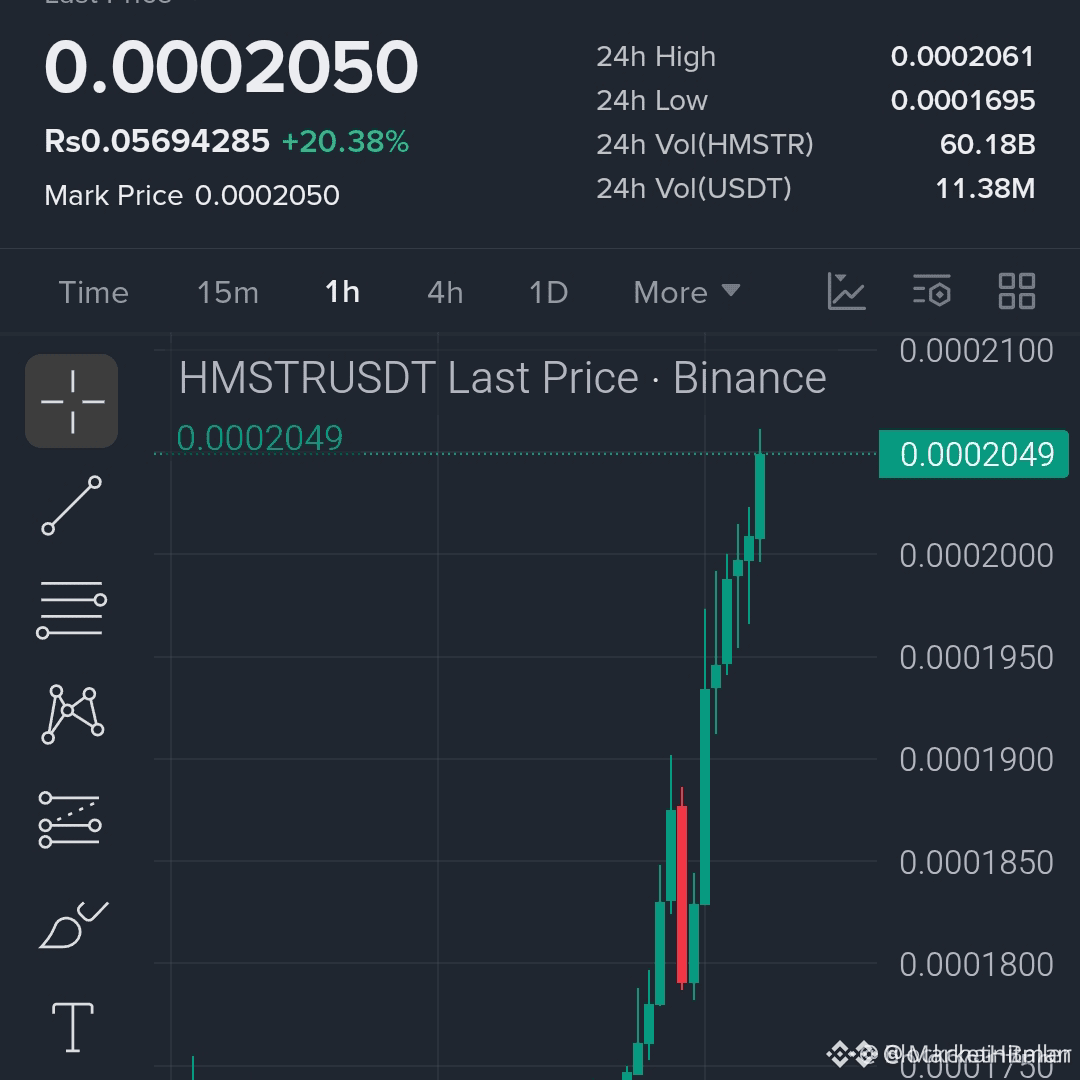
🚀 $HMSTR LONG SETUP WITH A TEXTBOOK RISK-TO-REWARD STRUCTURE! 💥
Entry: 0.000201–0.000205 ⚡
Target: 0.000212 / 0.000220 🎯
Stop Loss: 0.000195 ⚠️
📌 This entry zone sits right on a recently reclaimed demand block where sellers have been repeatedly absorbed. The stop loss below 0.000195 is tight enough to invalidate the thesis quickly, while the first target at 0.000212 offers a clean 1:2 risk-to-reward, with the second target at 0.000220 pushing that ratio to nearly 1:3. 📊 That's the kind of asymmetry smart money looks for before committing capital.
💡 The fact that this long is being taken now suggests buyers are defending that block with conviction. If momentum holds, the path to 0.000220 could come faster than most expect. 💬 Are you treating the first target as a partial exit or holding the full position for the extended move? 👇
⚠️ Not financial advice. Always manage your risk. 🛡️
🏷️ #HMSTR #LongSetup #Crypto #RiskToReward
🔥 🎯
47

·
--
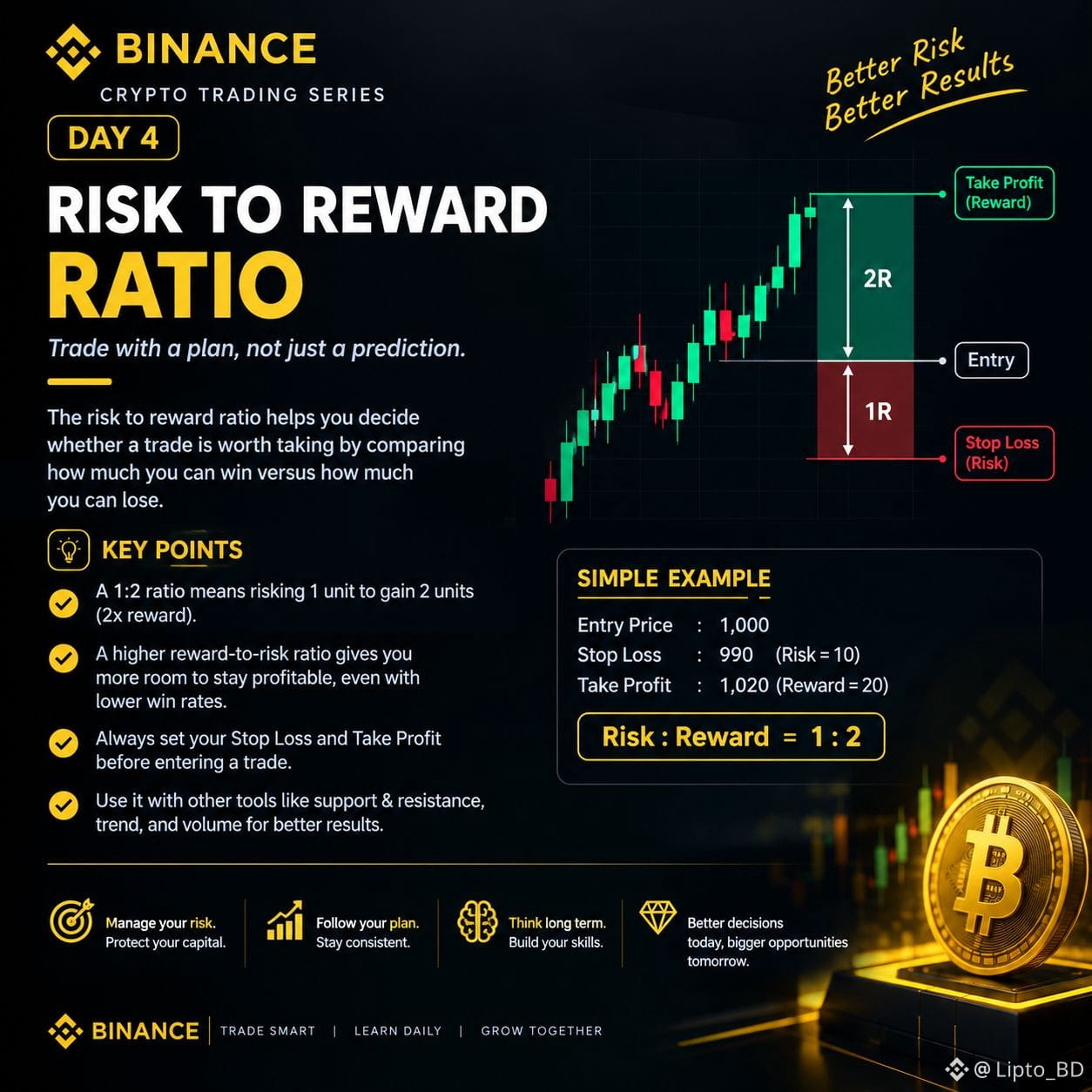
Mastering the Risk-to-Reward Ratio 🎯
Successful trading isn't just about predicting the market correctly — it's about managing risk intelligently.
The Risk-to-Reward Ratio helps traders evaluate whether a trade is worth taking by comparing potential profit with potential loss.
💡 Key Lessons:
✅ A 1:2 ratio means risking $10 to potentially earn $20.
✅ Always set your Stop Loss and Take Profit before entering a trade.
✅ Look for setups with favorable risk-to-reward ratios.
✅ Combine this strategy with market structure, support and resistance, and volume analysis.
✅ Never risk more than you can afford to lose.
Remember: You don't need to win every trade to become a successful trader. You need a disciplined strategy, consistent risk management, and patience. 📈
Protect your capital first. Profits come second. 💎
#Binance #CryptoTrading #RiskManagement #RiskToReward #TradingStrategy
3
138

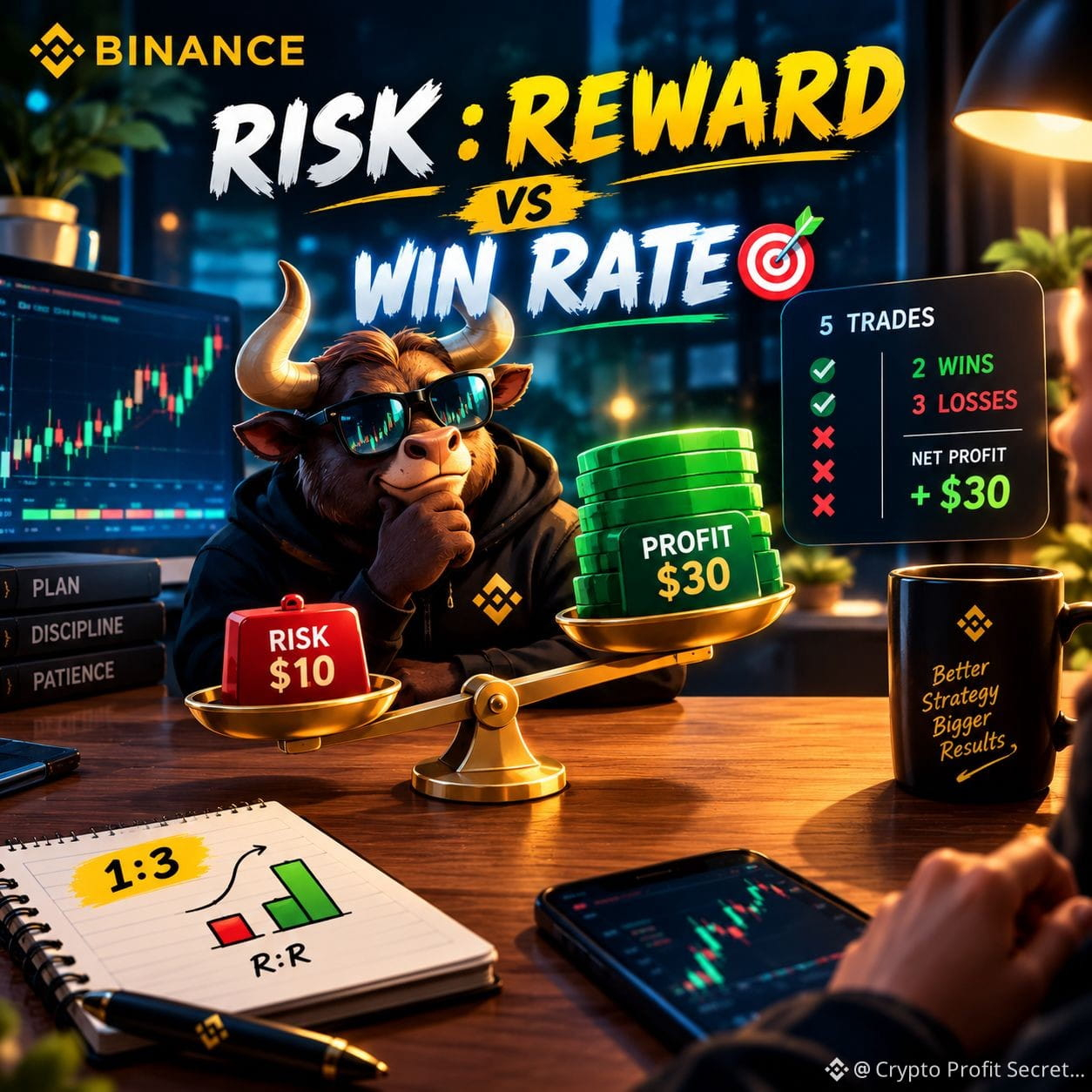
📘 Binance Crypto Learning Series — Part 104
Risk-to-Reward vs. Win Rate 🎯
🔥 You don’t need to win every trade — what matters is that your overall strategy is profitable!
If your strategy has a Risk-to-Reward ratio of 1:3, you’re risking 1 unit to target a profit of 3 units.
📊 Simple Example:
Risk: $10
Potential Profit: $30
2 wins and 3 losses across 5 trades
Total: $60 profit − $30 loss = $30 net profit (before fees)
That means your strategy can be profitable even with a 40% win rate, as long as your actual wins and losses match your planned R:R.
⚠️ But a high R:R doesn’t guarantee profitability on its own. Win rate, fees, and execution matter too.
🧠 Golden Rule:
Don’t just look at how many trades you’ve won — also consider how big your wins are compared to your losses.
What do you prefer: a high win rate or a high Risk-to-Reward ratio? 👇
#BinanceSquare #RiskManagement #RiskToReward #cryptotrading #BTC $BTC
{spot}(BTCUSDT)
📘 Binance Crypto Learning Series — Part 104
Risk-to-Reward vs. Win Rate 🎯
🔥 You don’t need to win every trade — what matters is that your overall strategy is profitable!
If your strategy has a Risk-to-Reward ratio of 1:3, you’re risking 1 unit to target a profit of 3 units.
📊 Simple Example:
Risk: $10
Potential Profit: $30
2 wins and 3 losses across 5 trades
Total: $60 profit − $30 loss = $30 net profit (before fees)
That means your strategy can be profitable even with a 40% win rate, as long as your actual wins and losses match your planned R:R.
⚠️ But a high R:R doesn’t guarantee profitability on its own. Win rate, fees, and execution matter too.
🧠 Golden Rule:
Don’t just look at how many trades you’ve won — also consider how big your wins are compared to your losses.
What do you prefer: a high win rate or a high Risk-to-Reward ratio? 👇
#BinanceSquare #RiskManagement #RiskToReward #cryptotrading #BTC $BTC
6
75


·
--
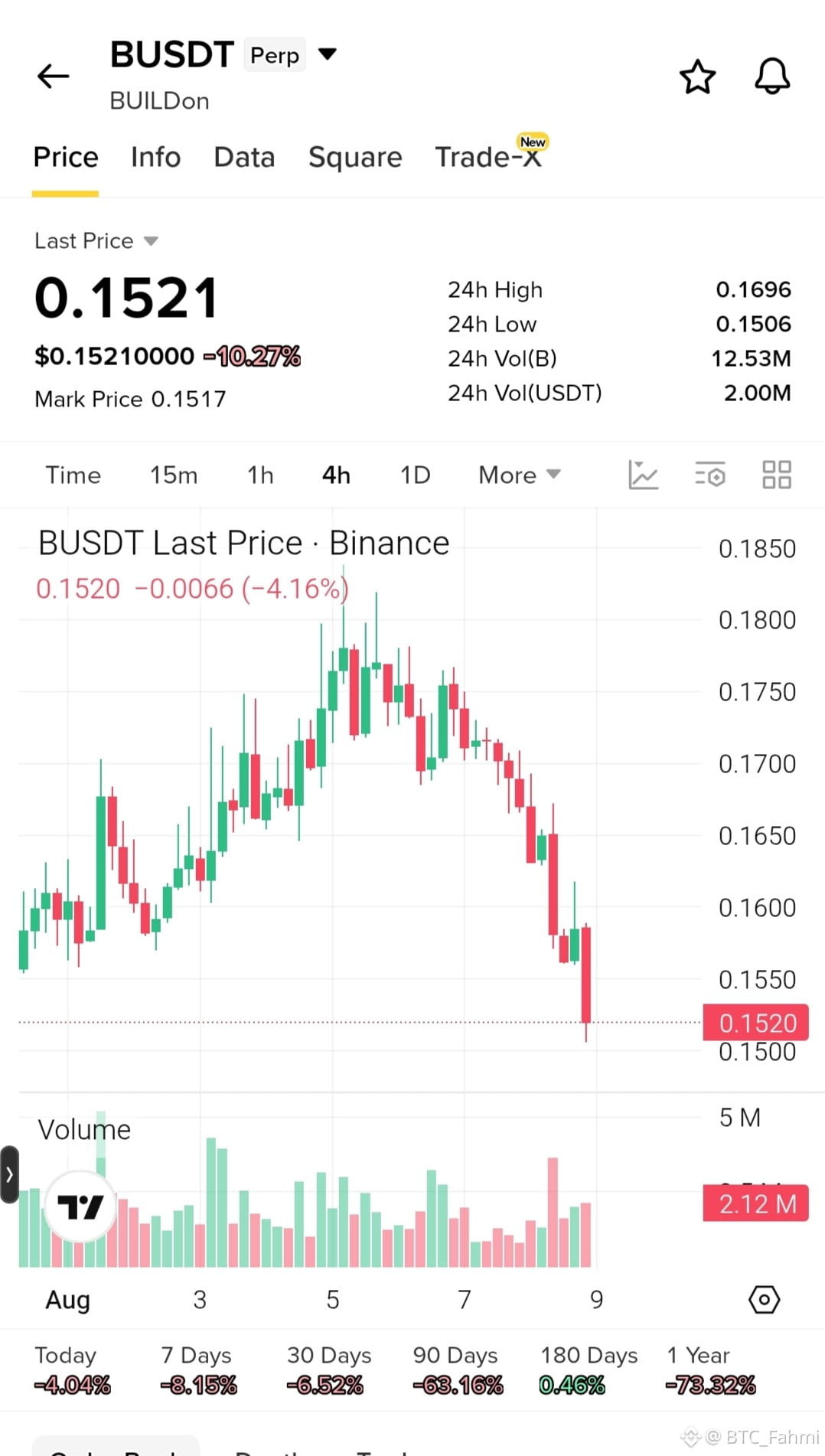
$B BEARISH STRUCTURE IN CONTROL, RELIEF BOUNCE SELL SETUP
🔴 SHORT $B /USDT
⏱️ Timeframe: 4H
📍 Entry: $0.1555 - $0.1585
🛑 SL: $0.1615
🎯 TP1: $0.1520
🎯 TP2: $0.1506
🎯 TP3: $0.1470
B is printing clear lower highs and lower lows, with the latest breakdown pushing price into the $0.1506 liquidity area. The $0.1555–$0.1585 zone now looks like broken support that could act as resistance, keeping sellers in control unless price reclaims above $0.1615.
Trade $B
{future}(BUSDT)
#CryptoTrading #TradeSetup #RiskToReward #B #DOYR
$B BEARISH STRUCTURE IN CONTROL, RELIEF BOUNCE SELL SETUP
🔴 SHORT $B /USDT
⏱️ Timeframe: 4H
📍 Entry: $0.1555 - $0.1585
🛑 SL: $0.1615
🎯 TP1: $0.1520
🎯 TP2: $0.1506
🎯 TP3: $0.1470
B is printing clear lower highs and lower lows, with the latest breakdown pushing price into the $0.1506 liquidity area. The $0.1555–$0.1585 zone now looks like broken support that could act as resistance, keeping sellers in control unless price reclaims above $0.1615.
Trade $B
#CryptoTrading #TradeSetup #RiskToReward #B #DOYR
1
464

🛡️ Crypto Risk Management Guide: Protect Your Capital First! 💸
Assalam-o-Alaikum Traders! 👋
In the crypto market, capital protection comes first before profit. Without risk management, trading is like gambling. Here are 4 Golden Rules that every trader should follow:
1️⃣ 1% to 2% Rule (Position Sizing)
Never risk more than 1% or 2% of your total equity in a single trade. If your account is $1,000, then your maximum loss in one trade should not exceed $10–$20.
2️⃣ Always Use Stop-Loss (SL)
Entering a trade without a Stop-Loss is equal to wiping out your account. Decide your Exit Level before you enter the trade.
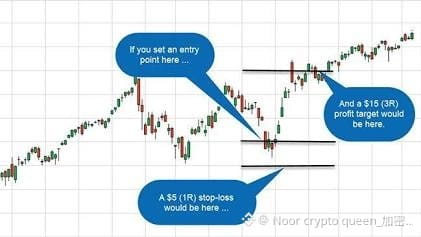
3️⃣ Risk-to-Reward Ratio (R:R)
Always choose trades with at least a 1:2 Risk-to-Reward ratio. If you are risking $10, then the target profit should be at least $20. With this, even at a 50% win rate, you can remain profitable long-term.
4️⃣ Control Your Emotions (FOMO & Greed)
Don’t jump into trades just because you see pumps in the market without any technical setup (FOMO). Stick to your trading plan.
💡 Remember: "Preservation of capital is Rule #1. Making money is Rule #2."
How much risk-to-reward ratio do you maintain in your trading? Share your experience in the comments! 👇
#RiskManagement #TradingTips #RiskToReward #cryptoguide #CryptoPakista
115

·
--
THE #1 REASON SMART TRADERS WIN (IT'S NOT WHAT YOU THINK)Most people think successful traders have a secret indicator.
Or a magic strategy.
Or insider information.
📍 THE REAL REASON
They understand one simple concept:
Risk-to-Reward Ratio.
Not win rate. Not accuracy. Not being right all the time.
📍 WHAT IS RISK-TO-REWARD?
Simple math.
If you risk $1 to make $2 → that's 1:2.
If you risk $1 to make $3 → that's 1:3.
If you risk $1 to make $0.50 → that's 1:0.5 (you're in trouble).
📍 WHY THIS MATTERS
You can be WRONG 60% of the time and still make money.
Example:
- 10 trades
- Lose 6 trades: -$6 (risking $1 each)
- Win 4 trades: +$8 (making $2 each)
- Net profit: +$2
You were wrong more than half the time... and still won.
📍 WHAT MOST TRADERS DO
They focus on being RIGHT.
Chase the perfect entry. Move stop losses. Hold losing trades hoping they turn around.
Their win rate might be 80%. But their one loss wipes out 10 wins.
📍 THE FORMULA
Risk small. Reward big.
Forget about being right. Focus on making your wins bigger than your losses.
That's the secret. No indicator. No guru. Just math.
📍 MY RULE
I never take a trade unless my potential profit is at least 2x my risk.
1:2 minimum. 1:3 or higher is even better.
My win rate is only 50%. But I'm profitable.
Because my winners are bigger than my losers.
What's your typical risk-to-reward ratio?
#RiskToReward #WinByLosing
#RealTalk #Ayesha_Queen
$WARD $RAVE $ETH
THE #1 REASON SMART TRADERS WIN (IT'S NOT WHAT YOU THINK)
Most people think successful traders have a secret indicator.
Or a magic strategy.
Or insider information.
📍 THE REAL REASON
They understand one simple concept:
Risk-to-Reward Ratio.
Not win rate. Not accuracy. Not being right all the time.
📍 WHAT IS RISK-TO-REWARD?
Simple math.
If you risk $1 to make $2 → that's 1:2.
If you risk $1 to make $3 → that's 1:3.
If you risk $1 to make $0.50 → that's 1:0.5 (you're in trouble).
📍 WHY THIS MATTERS
You can be WRONG 60% of the time and still make money.
Example:
- 10 trades
- Lose 6 trades: -$6 (risking $1 each)
- Win 4 trades: +$8 (making $2 each)
- Net profit: +$2
You were wrong more than half the time... and still won.
📍 WHAT MOST TRADERS DO
They focus on being RIGHT.
Chase the perfect entry. Move stop losses. Hold losing trades hoping they turn around.
Their win rate might be 80%. But their one loss wipes out 10 wins.
📍 THE FORMULA
Risk small. Reward big.
Forget about being right. Focus on making your wins bigger than your losses.
That's the secret. No indicator. No guru. Just math.
📍 MY RULE
I never take a trade unless my potential profit is at least 2x my risk.
1:2 minimum. 1:3 or higher is even better.
My win rate is only 50%. But I'm profitable.
Because my winners are bigger than my losers.
What's your typical risk-to-reward ratio?
#RiskToReward #WinByLosing
#RealTalk #Ayesha_Queen
$WARD $RAVE $ETH
4
606
Log in to explore more content
Join global crypto users on Binance Square
⚡️ Get latest and useful information about crypto.
💬 Trusted by the world’s largest crypto exchange.
👍 Discover real insights from verified creators.
Email / Phone number
Trending Topics
1
#StrategyFaces$2.8BSelloffRiskFromMSCIRemoval
30,657 views
190 Discussing
2
#ZcashFallsBelow$1000ForFirstTimeSinceSeptember
17,667 views
112 Discussing
3
#AnthropicRejectsIPODelayValuationinQuestion
401,625 views
3,406 Discussing
4
#HotCPIDecemberHikePriced
408,835 views
3,511 Discussing
5
#TradFiForBeginners
471,784 views
3,102 Discussing
6
#BitcoinETFsLose$1.6BInNovember
14,310 views
71 Discussing
7
#AnthropicDisclosesOver$10BNewComputeDeals
2,840 views
39 Discussing
8
#CoreWeaveJumps10%On168%RevenueGrowth
35,677 views
576 Discussing
9
#CanNvidiaEarningsEaseMarketConcerns?
130,865 views
1,494 Discussing
10
#BarclaysRaisesBlackRockBitcoinETFStake48%
29,628 views
417 Discussing