
#predictionmarketsputclarityact2026oddsat15
predictionmarketsputclarityact2026oddsat15
611 views
18 Discussing
Hot
Latest

Prediction markets are pricing the passage of the CLARITY Act by 2026 at just 15 percent, yet retail is already positioning as if regulatory clarity is guaranteed tomorrow.
Most traders lose their edge by conflating political headlines with immediate price catalysts, getting trapped in speculative narratives only to watch their capital bleed out while waiting for bills that take years to materialize. We saw the exact same exhaustion in past cycles when early institutional promises took half a decade longer to translate into actual market structure.
When fear and greed push sentiment toward euphoria, smart money stops chasing vague policy promises and starts tracking real utility and liquidity flow. Institutional-grade tokens like $ONDO and foundational infrastructure like $ICP will navigate the shifting regulatory landscape based on actual adoption, not speculative legislative timelines. Betting your entire portfolio on the speed of policymakers is usually the fastest way to get left holding empty bags while the broader market rotates into assets backed by tangible volume.
How are you adjusting your long-term thesis when prediction data directly contradicts the mainstream regulatory hype?
#PredictionMarketsPutCLARITYAct2026OddsAt15 #CFTCScrutinizesPredictionMarketAffiliates #SECNewCryptoRulesAimToBringFirmsBackToUS
Most traders lose their edge by conflating political headlines with immediate price catalysts, getting trapped in speculative narratives only to watch their capital bleed out while waiting for bills that take years to materialize. We saw the exact same exhaustion in past cycles when early institutional promises took half a decade longer to translate into actual market structure.
When fear and greed push sentiment toward euphoria, smart money stops chasing vague policy promises and starts tracking real utility and liquidity flow. Institutional-grade tokens like $ONDO and foundational infrastructure like $ICP will navigate the shifting regulatory landscape based on actual adoption, not speculative legislative timelines. Betting your entire portfolio on the speed of policymakers is usually the fastest way to get left holding empty bags while the broader market rotates into assets backed by tangible volume.
How are you adjusting your long-term thesis when prediction data directly contradicts the mainstream regulatory hype?
#PredictionMarketsPutCLARITYAct2026OddsAt15 #CFTCScrutinizesPredictionMarketAffiliates #SECNewCryptoRulesAimToBringFirmsBackToUS


Everyone thinks regulatory clarity is right around the corner, but actually, the market is pricing in a completely different reality.
Many investors are positioning their portfolios on the belief that landmark crypto legislation will pass smoothly this cycle, leaving themselves vulnerable to sudden policy shocks and stalled momentum when deadlines get pushed back. When you bet your hard-earned capital on political promises rather than real probabilities, you risk holding heavy bags while waiting for catalysts that may take years to arrive.
Think of prediction markets like a weather forecast priced by people with skin in the game. Right now, on-chain odds are giving the CLARITY Act just a 15% chance of passing by 2026, which tells us that the runway for regulatory headwinds is much longer than social media sentiment suggests.
1. Pricing regulatory risk means understanding that assets closely tied to compliance narratives, like $ONDO and $ICP , often react more violently to legislative delays than technical milestones.
2. Tracking real-money forecasts gives you an honest look past the hype, especially when broad market greed makes everyone assume policy updates will just rubber-stamp current valuations.
3. Managing exposure to volatile runners like $NEIRO requires remembering that macro legal shifts move at a government pace, not crypto speed.
Where do you think regulatory odds will shift as we head into the next quarter?
#PredictionMarketsPutCLARITYAct2026OddsAt15 #CFTCScrutinizesPredictionMarketAffiliates #SECNewCryptoRulesAimToBringFirmsBackToUS
Many investors are positioning their portfolios on the belief that landmark crypto legislation will pass smoothly this cycle, leaving themselves vulnerable to sudden policy shocks and stalled momentum when deadlines get pushed back. When you bet your hard-earned capital on political promises rather than real probabilities, you risk holding heavy bags while waiting for catalysts that may take years to arrive.
Think of prediction markets like a weather forecast priced by people with skin in the game. Right now, on-chain odds are giving the CLARITY Act just a 15% chance of passing by 2026, which tells us that the runway for regulatory headwinds is much longer than social media sentiment suggests.
1. Pricing regulatory risk means understanding that assets closely tied to compliance narratives, like $ONDO and $ICP , often react more violently to legislative delays than technical milestones.
2. Tracking real-money forecasts gives you an honest look past the hype, especially when broad market greed makes everyone assume policy updates will just rubber-stamp current valuations.
3. Managing exposure to volatile runners like $NEIRO requires remembering that macro legal shifts move at a government pace, not crypto speed.
Where do you think regulatory odds will shift as we head into the next quarter?
#PredictionMarketsPutCLARITYAct2026OddsAt15 #CFTCScrutinizesPredictionMarketAffiliates #SECNewCryptoRulesAimToBringFirmsBackToUS


If you are still positioning your entire portfolio around Washington passing sweeping crypto legislation anytime soon, stop now.
Too many traders lock up dry powder waiting on political promises, watching fresh liquidity rotate elsewhere while their high-conviction regulatory plays bleed out.
Prediction markets are currently pricing the odds of the CLARITY Act passing by 2026 at just 15 percent, which feels like deja vu for anyone who traded through the endless FIT21 debates. While social feeds get overly hyped over every committee hearing, pragmatic capital keeps rotating into operational utility like $ONDO and infrastructure like $ICP that do not rely on congressional handshakes to function.
At the same time, traders hedge their bets by parking volume back into $USDT whenever Capitol Hill timelines drag out. Prediction markets have consistently proven better at discounting political theater than hype cycles, and right now the order books are telling us not to expect a sudden regulatory shortcut.
Do you think prediction markets are underestimating the political momentum, or is 15 percent actually generous?
#PredictionMarketsPutCLARITYAct2026OddsAt15 #CFTCScrutinizesPredictionMarketAffiliates #SECNewCryptoRulesAimToBringFirmsBackToUS
Too many traders lock up dry powder waiting on political promises, watching fresh liquidity rotate elsewhere while their high-conviction regulatory plays bleed out.
Prediction markets are currently pricing the odds of the CLARITY Act passing by 2026 at just 15 percent, which feels like deja vu for anyone who traded through the endless FIT21 debates. While social feeds get overly hyped over every committee hearing, pragmatic capital keeps rotating into operational utility like $ONDO and infrastructure like $ICP that do not rely on congressional handshakes to function.
At the same time, traders hedge their bets by parking volume back into $USDT whenever Capitol Hill timelines drag out. Prediction markets have consistently proven better at discounting political theater than hype cycles, and right now the order books are telling us not to expect a sudden regulatory shortcut.
Do you think prediction markets are underestimating the political momentum, or is 15 percent actually generous?
#PredictionMarketsPutCLARITYAct2026OddsAt15 #CFTCScrutinizesPredictionMarketAffiliates #SECNewCryptoRulesAimToBringFirmsBackToUS

Why is nobody talking about how prediction markets are pricing in regulatory stagnation while the market greed sits at 73?
Most traders keep blindly buying narrative plays expecting immediate clarity, only to get trapped holding bags when legislation inevitably gets kicked down the road. You can avoid this trap if you stop trading congressional hype and start managing your portfolio around real probability data.
First, track what prediction data is actually signaling. With odds for the CLARITY Act by 2026 hovering at just 15%, betting on rapid domestic compliance favors defensive positioning rather than high-beta speculation. This is where holding stable yields in $USDT or rotating into compliant infrastructure assets like $ONDO makes more strategic sense than chasing short-term regulatory catalysts.
Second, adjust your risk framework away from policy-driven spikes. If prediction venues are accurate, decentralized compute and real-world assets like $ICP will need to prove utility independent of US legislative timelines. Rebalance gradually instead of reacting to political headlines that have very low odds of materializing into law anytime soon.
How are you positioning your portfolio given the low probability of regulatory resolution?
#PredictionMarketsPutCLARITYAct2026OddsAt15 #SECNewCryptoRulesAimToBringFirmsBackToUS #CFTCScrutinizesPredictionMarketAffiliates
Most traders keep blindly buying narrative plays expecting immediate clarity, only to get trapped holding bags when legislation inevitably gets kicked down the road. You can avoid this trap if you stop trading congressional hype and start managing your portfolio around real probability data.
First, track what prediction data is actually signaling. With odds for the CLARITY Act by 2026 hovering at just 15%, betting on rapid domestic compliance favors defensive positioning rather than high-beta speculation. This is where holding stable yields in $USDT or rotating into compliant infrastructure assets like $ONDO makes more strategic sense than chasing short-term regulatory catalysts.
Second, adjust your risk framework away from policy-driven spikes. If prediction venues are accurate, decentralized compute and real-world assets like $ICP will need to prove utility independent of US legislative timelines. Rebalance gradually instead of reacting to political headlines that have very low odds of materializing into law anytime soon.
How are you positioning your portfolio given the low probability of regulatory resolution?
#PredictionMarketsPutCLARITYAct2026OddsAt15 #SECNewCryptoRulesAimToBringFirmsBackToUS #CFTCScrutinizesPredictionMarketAffiliates

Picture this: traders on decentralized platforms are currently pricing the passage of the CLARITY Act by 2026 at a mere 15 percent chance.
Most investors keep getting caught off guard by regulatory shifts because they rely on sensational headlines rather than watching where smart money actually wagers on policy outcomes.
Back in 2023, traditional compliance tokens took months to react to legislative gridlock while market participants blindly priced in quick clarity. Today, prediction markets are acting as a real-time risk gauge much faster than spot assets like $ONDO or $ICP can reflect structural changes. When you look at how decentralized forecasting protocols operate versus traditional lobbying trackers, the divergence in sentiment is striking. Capital parked in $USDT is increasingly waiting on the sidelines for hard legal reality rather than speculative optimism, especially as regulatory scrutiny on market affiliates tightens.
Do you trust prediction market odds more than mainstream regulatory commentary when sizing up long-term positions?
#PredictionMarketsPutCLARITYAct2026OddsAt15 #CFTCScrutinizesPredictionMarketAffiliates #SECNewCryptoRulesAimToBringFirmsBackToUS
Most investors keep getting caught off guard by regulatory shifts because they rely on sensational headlines rather than watching where smart money actually wagers on policy outcomes.
Back in 2023, traditional compliance tokens took months to react to legislative gridlock while market participants blindly priced in quick clarity. Today, prediction markets are acting as a real-time risk gauge much faster than spot assets like $ONDO or $ICP can reflect structural changes. When you look at how decentralized forecasting protocols operate versus traditional lobbying trackers, the divergence in sentiment is striking. Capital parked in $USDT is increasingly waiting on the sidelines for hard legal reality rather than speculative optimism, especially as regulatory scrutiny on market affiliates tightens.
Do you trust prediction market odds more than mainstream regulatory commentary when sizing up long-term positions?
#PredictionMarketsPutCLARITYAct2026OddsAt15 #CFTCScrutinizesPredictionMarketAffiliates #SECNewCryptoRulesAimToBringFirmsBackToUS

Picture this: a retail trader parks capital into high-volume event contracts, completely unaware that the front-end interface routing their orders might soon face regulatory shutdown.
Most people only realize the legal ground is shifting beneath them after liquidity evaporates or withdrawal gateways freeze. It is the classic trap of chasing yield while ignoring institutional choke points.
When the CFTC began scrutinizing prediction market affiliates, the market barely blinked because headline volume looked healthy. But the mechanics behind these ecosystems tell a different story. Regulators rarely attack the underlying decentralized infrastructure first. Instead, they target the distribution layer,the referral partners, third-party user interfaces, and settlement gateways moving $USDT across borders.
If you look at the broader landscape of real-world assets and regulated derivatives where protocols like $ONDO operate, compliance is not a footnote; it is the entire moat. Prediction markets running aggressive promotional pipelines without localized licensing risk cutting off their own user funnels overnight. When distribution breaks, order books thin out rapidly, leaving open positions exposed to massive slippage.
Holding exposure in secondary infrastructure or assets like $ICP connected to unshielded event protocols requires understanding where regulatory pressure actually lands. It never starts with the smart contract. It starts with the parties driving the volume.
How do you see this enforcement wave impacting prediction market volume over the next quarter?
#CFTCScrutinizesPredictionMarketAffiliates #PredictionMarketsPutCLARITYAct2026OddsAt15
Most people only realize the legal ground is shifting beneath them after liquidity evaporates or withdrawal gateways freeze. It is the classic trap of chasing yield while ignoring institutional choke points.
When the CFTC began scrutinizing prediction market affiliates, the market barely blinked because headline volume looked healthy. But the mechanics behind these ecosystems tell a different story. Regulators rarely attack the underlying decentralized infrastructure first. Instead, they target the distribution layer,the referral partners, third-party user interfaces, and settlement gateways moving $USDT across borders.
If you look at the broader landscape of real-world assets and regulated derivatives where protocols like $ONDO operate, compliance is not a footnote; it is the entire moat. Prediction markets running aggressive promotional pipelines without localized licensing risk cutting off their own user funnels overnight. When distribution breaks, order books thin out rapidly, leaving open positions exposed to massive slippage.
Holding exposure in secondary infrastructure or assets like $ICP connected to unshielded event protocols requires understanding where regulatory pressure actually lands. It never starts with the smart contract. It starts with the parties driving the volume.
How do you see this enforcement wave impacting prediction market volume over the next quarter?
#CFTCScrutinizesPredictionMarketAffiliates #PredictionMarketsPutCLARITYAct2026OddsAt15


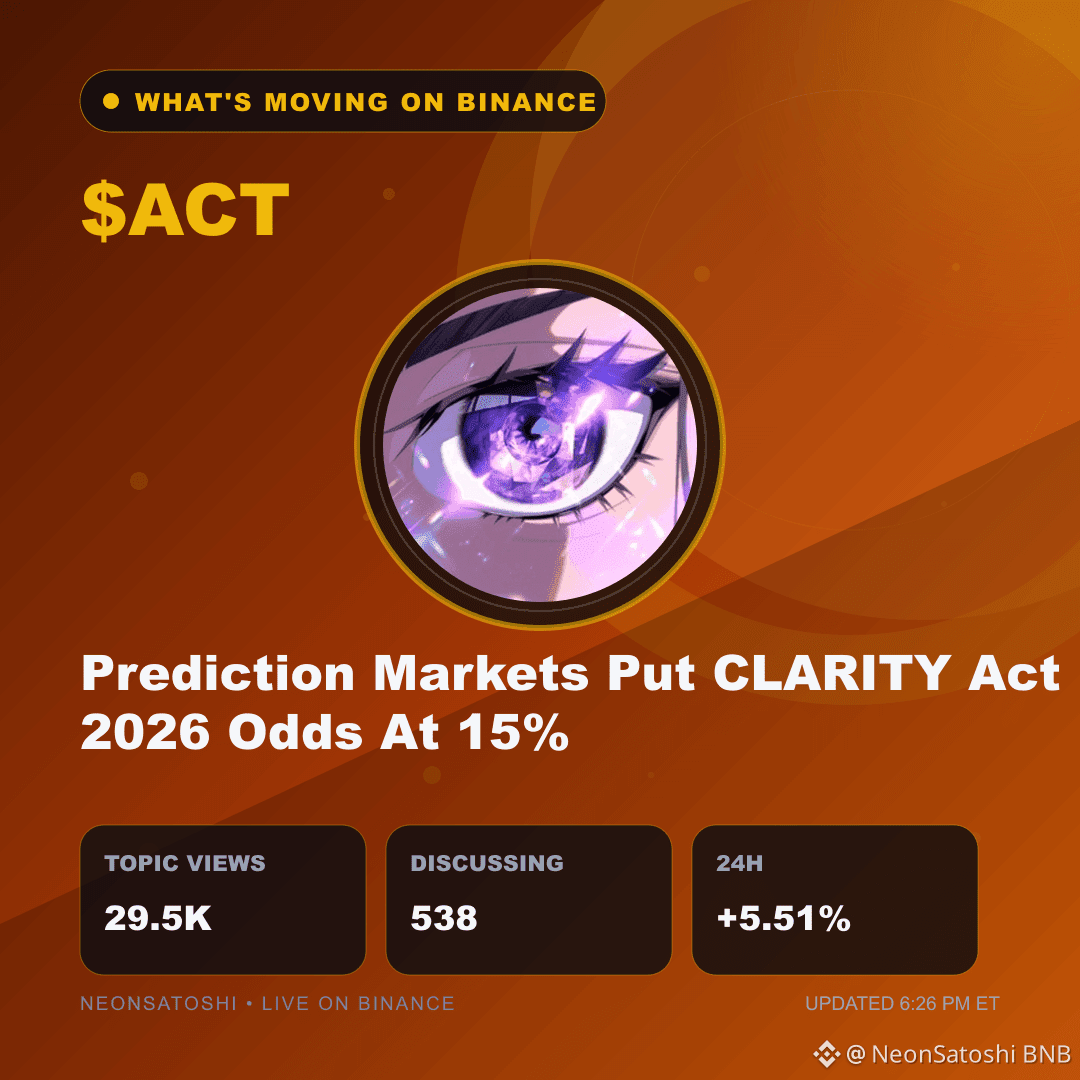
#PredictionMarketsPutCLARITYAct2026OddsAt15% is receiving strong attention on Binance Square. $ACT is +5.51% at 0.01054 USDT.
Price is near today's high. I would wait for a pullback before considering a purchase.
Price is near today's high. I would wait for a pullback before considering a purchase.
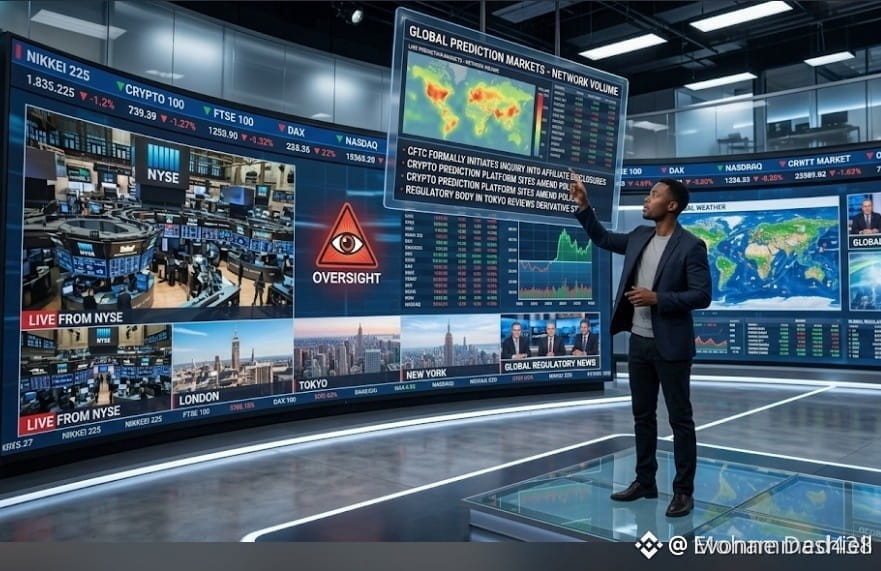
Why is nobody talking about how regulatory scrutiny on prediction market affiliates is about to completely redraw where retail liquidity flows?
Most traders are still blind-bidding on protocol hype or chasing governance tokens like $ONDO and $ICP , completely ignoring that distribution channels and affiliate funnels are the real targets when watchdogs step in. If you are positioned without understanding compliance exposure, you are essentially setting yourself up to hold bags when frontends suddenly restrict access.
Here is how you actually navigate this shift instead of panicking later. First, audit your exposure to protocols relying heavily on retail affiliate acquisition models, and pivot risk toward infrastructure assets that do not depend on localized affiliate incentives. Second, keep a close watch on $USDT liquidity movements across prediction pairs to spot smart money derisking before official filings drop. Finally, evaluate whether the projects in your portfolio are building decentralized, permissionless backends rather than relying on centralized marketing partners that can be wiped out overnight.
Where do you think liquidity rotates once affiliate-driven volume dries up?
#CFTCScrutinizesPredictionMarketAffiliates #PredictionMarketsPutCLARITYAct2026OddsAt15
Most traders are still blind-bidding on protocol hype or chasing governance tokens like $ONDO and $ICP , completely ignoring that distribution channels and affiliate funnels are the real targets when watchdogs step in. If you are positioned without understanding compliance exposure, you are essentially setting yourself up to hold bags when frontends suddenly restrict access.
Here is how you actually navigate this shift instead of panicking later. First, audit your exposure to protocols relying heavily on retail affiliate acquisition models, and pivot risk toward infrastructure assets that do not depend on localized affiliate incentives. Second, keep a close watch on $USDT liquidity movements across prediction pairs to spot smart money derisking before official filings drop. Finally, evaluate whether the projects in your portfolio are building decentralized, permissionless backends rather than relying on centralized marketing partners that can be wiped out overnight.
Where do you think liquidity rotates once affiliate-driven volume dries up?
#CFTCScrutinizesPredictionMarketAffiliates #PredictionMarketsPutCLARITYAct2026OddsAt15

Prediction markets were supposed to be the purest gauge of collective intelligence, but regulators are now pulling back the curtain on the actual distribution pipelines behind them.
Most traders blindly trust the odds displayed across decentralized betting platforms, completely unaware of how affiliate kickbacks and synthetic volume quietly distort the sentiment they rely on to size their positions.
When you look at on-chain liquidity routing, especially around tokenized RWAs like $ONDO or smart contract rails settling in $USDT, the mechanics seem rock-solid. The real failure point has always been off-chain marketing channels. Affiliates get paid to drive engagement, which often means artificially pumping perceived liquidity into niche contract outcomes before retail catches on.
Now with regulatory scrutiny landing squarely on affiliate networks, a lot of promotional pipelines risk drying up overnight. If the underlying incentive loop breaks, we could see sudden liquidity evaporation on contract resolutions, leaving smaller liquidity providers holding unhedged positions when resolution disputes trigger.
How much do you think affiliate incentives actually warp real market probabilities?
#CFTCScrutinizesPredictionMarketAffiliates #PredictionMarketsPutCLARITYAct2026OddsAt15
Most traders blindly trust the odds displayed across decentralized betting platforms, completely unaware of how affiliate kickbacks and synthetic volume quietly distort the sentiment they rely on to size their positions.
When you look at on-chain liquidity routing, especially around tokenized RWAs like $ONDO or smart contract rails settling in $USDT, the mechanics seem rock-solid. The real failure point has always been off-chain marketing channels. Affiliates get paid to drive engagement, which often means artificially pumping perceived liquidity into niche contract outcomes before retail catches on.
Now with regulatory scrutiny landing squarely on affiliate networks, a lot of promotional pipelines risk drying up overnight. If the underlying incentive loop breaks, we could see sudden liquidity evaporation on contract resolutions, leaving smaller liquidity providers holding unhedged positions when resolution disputes trigger.
How much do you think affiliate incentives actually warp real market probabilities?
#CFTCScrutinizesPredictionMarketAffiliates #PredictionMarketsPutCLARITYAct2026OddsAt15

Everyone thinks prediction markets are a completely safe playground for hedging, but actually, regulatory crosshairs are shifting straight to the front doors that lead users there.
Many traders jump headfirst into trending event contracts using $USDT without realizing how affiliate promotions can suddenly trigger compliance shutdowns, leaving their capital temporarily stranded or illiquid. It feels just like walking into a licensed local ticket booth, only to discover the operator never had authorization to sell passes in your district.
1. Regulators are no longer just looking at smart contracts. They are actively examining the referral networks and affiliate channels driving retail volume into prediction markets. When platforms rely on decentralized compute infrastructure like $ICP to operate globally, domestic enforcement simply targets the marketing layer instead.
2. Real-world asset and prediction protocols often handle settlement liquidity alongside markets like $ONDO , which makes strict jurisdictional clarity inevitable. If a promoter steers users into unregistered commodity derivatives, the affiliate links might vanish overnight and platform access could get geo-blocked during peak market volatility.
3. Staying protected means understanding whether the interface you use is compliant with local rules, rather than assuming every web3 event book operates outside existing financial laws.
How do you think increased regulatory oversight on prediction promoters will reshape retail access over the coming months?
#CFTCScrutinizesPredictionMarketAffiliates #PredictionMarketsPutCLARITYAct2026OddsAt15 #SECNewCryptoRulesAimToBringFirmsBackToUS
Many traders jump headfirst into trending event contracts using $USDT without realizing how affiliate promotions can suddenly trigger compliance shutdowns, leaving their capital temporarily stranded or illiquid. It feels just like walking into a licensed local ticket booth, only to discover the operator never had authorization to sell passes in your district.
1. Regulators are no longer just looking at smart contracts. They are actively examining the referral networks and affiliate channels driving retail volume into prediction markets. When platforms rely on decentralized compute infrastructure like $ICP to operate globally, domestic enforcement simply targets the marketing layer instead.
2. Real-world asset and prediction protocols often handle settlement liquidity alongside markets like $ONDO , which makes strict jurisdictional clarity inevitable. If a promoter steers users into unregistered commodity derivatives, the affiliate links might vanish overnight and platform access could get geo-blocked during peak market volatility.
3. Staying protected means understanding whether the interface you use is compliant with local rules, rather than assuming every web3 event book operates outside existing financial laws.
How do you think increased regulatory oversight on prediction promoters will reshape retail access over the coming months?
#CFTCScrutinizesPredictionMarketAffiliates #PredictionMarketsPutCLARITYAct2026OddsAt15 #SECNewCryptoRulesAimToBringFirmsBackToUS
Why is everyone celebrating the SEC suddenly trying to lure crypto firms back to American soil?
Most traders keep getting rekt because they blindly chase regulatory headlines, buying right into the top while institutions quietly hedge their real exposure.
Look at what happened with projects pushing real-world compliance like $ONDO or enterprise infrastructure like $ICP . The narrative told us US clarity would unleash institutional liquidity overnight. Instead, the real playbook is simple: domestic compliance creates an expensive moat that favors legacy balance sheets while offshore liquidity like $USDT continues running the global order books anyway.
Bringing firms back under US jurisdiction is not a gift to retail innovation. It is an effort to re-tax and re-cage an ecosystem that proved it could thrive globally without them.
Are we actually entering a new era of adoption, or is this just another regulatory trap for domestic builders?
#SECNewCryptoRulesAimToBringFirmsBackToUS #PredictionMarketsPutCLARITYAct2026OddsAt15
Most traders keep getting rekt because they blindly chase regulatory headlines, buying right into the top while institutions quietly hedge their real exposure.
Look at what happened with projects pushing real-world compliance like $ONDO or enterprise infrastructure like $ICP . The narrative told us US clarity would unleash institutional liquidity overnight. Instead, the real playbook is simple: domestic compliance creates an expensive moat that favors legacy balance sheets while offshore liquidity like $USDT continues running the global order books anyway.
Bringing firms back under US jurisdiction is not a gift to retail innovation. It is an effort to re-tax and re-cage an ecosystem that proved it could thrive globally without them.
Are we actually entering a new era of adoption, or is this just another regulatory trap for domestic builders?
#SECNewCryptoRulesAimToBringFirmsBackToUS #PredictionMarketsPutCLARITYAct2026OddsAt15

If you are still positioning your portfolio as if US regulators will forever push crypto offshore, stop now.
Traders keep missing generational rotation entries because they are stuck fighting yesterday's regulatory battles instead of watching where institutional capital is actually heading. Getting caught on the wrong side of policy shifts is one of the easiest ways to bleed liquidity while waiting for rallies that never come.
The narrative that American capital is permanently locked out is rapidly unraveling. While some argue that strict compliance frameworks will stifle permissionless innovation and force builders into regulatory bottlenecks, the reality is that institutional giants want clear rules before deploying serious balance sheet reserves. We are already seeing institutional-grade assets like $ONDO gain serious traction, while fundamental infrastructure plays like $ICP stand to benefit once domestic compliance hurdles are resolved.
Regulatory clarity has historically acted as a gatekeeper rather than a death sentence. Projects that embrace standard reporting and transparent reserves will likely absorb the liquidity that offshore speculative plays lose once enforcement catches up. With liquidity stabilizing across major pairs anchored by $USDT, the next cycle favor projects building directly for compliant scale.
Do you think clearer regulatory frameworks will bring real innovation back onshore, or will they just create an exclusive playground for traditional finance?
#SECNewCryptoRulesAimToBringFirmsBackToUS #PredictionMarketsPutCLARITYAct2026OddsAt15
Traders keep missing generational rotation entries because they are stuck fighting yesterday's regulatory battles instead of watching where institutional capital is actually heading. Getting caught on the wrong side of policy shifts is one of the easiest ways to bleed liquidity while waiting for rallies that never come.
The narrative that American capital is permanently locked out is rapidly unraveling. While some argue that strict compliance frameworks will stifle permissionless innovation and force builders into regulatory bottlenecks, the reality is that institutional giants want clear rules before deploying serious balance sheet reserves. We are already seeing institutional-grade assets like $ONDO gain serious traction, while fundamental infrastructure plays like $ICP stand to benefit once domestic compliance hurdles are resolved.
Regulatory clarity has historically acted as a gatekeeper rather than a death sentence. Projects that embrace standard reporting and transparent reserves will likely absorb the liquidity that offshore speculative plays lose once enforcement catches up. With liquidity stabilizing across major pairs anchored by $USDT, the next cycle favor projects building directly for compliant scale.
Do you think clearer regulatory frameworks will bring real innovation back onshore, or will they just create an exclusive playground for traditional finance?
#SECNewCryptoRulesAimToBringFirmsBackToUS #PredictionMarketsPutCLARITYAct2026OddsAt15

Picture this: a major Web3 founder spends millions restructuring offshore, only to realize the latest regulatory shift might quietly pull their entire operational baseline back to US soil.
Most retail participants see headlines and immediately FOMO into speculative narratives, completely ignoring how structural compliance bottlenecks can trap capital overnight when onshore reporting mandates tighten.
When the narrative flipped toward repatriating crypto enterprises, initial market reactions pushed volume into compliant infrastructure like $ONDO and enterprise-grade networks like $ICP . But behind the optimistic headlines lies a complex compliance sieve. Bringing operations back under a revamped federal umbrella rarely means an immediate free pass; instead, it typically brings strict disclosure liabilities, custody audits, and severe limitations on previously unchecked token emissions.
Teams that hastily migrate back without rock-solid legal insulation risk getting caught between jurisdictions. If liquidity gets fractured during these regulatory transitions, projects relying heavily on stable settlement assets like $USDT will find that staying compliant often costs more than operating offshore ever did.
Where do you think institutional capital rotates once these onshore requirements actually go live?
#SECNewCryptoRulesAimToBringFirmsBackToUS #PredictionMarketsPutCLARITYAct2026OddsAt15
Most retail participants see headlines and immediately FOMO into speculative narratives, completely ignoring how structural compliance bottlenecks can trap capital overnight when onshore reporting mandates tighten.
When the narrative flipped toward repatriating crypto enterprises, initial market reactions pushed volume into compliant infrastructure like $ONDO and enterprise-grade networks like $ICP . But behind the optimistic headlines lies a complex compliance sieve. Bringing operations back under a revamped federal umbrella rarely means an immediate free pass; instead, it typically brings strict disclosure liabilities, custody audits, and severe limitations on previously unchecked token emissions.
Teams that hastily migrate back without rock-solid legal insulation risk getting caught between jurisdictions. If liquidity gets fractured during these regulatory transitions, projects relying heavily on stable settlement assets like $USDT will find that staying compliant often costs more than operating offshore ever did.
Where do you think institutional capital rotates once these onshore requirements actually go live?
#SECNewCryptoRulesAimToBringFirmsBackToUS #PredictionMarketsPutCLARITYAct2026OddsAt15

Most traders think regulatory clarity kills volatility, but history proves it is actually the catalyst that unlocks institutional capital.
Having survived multiple cycles, I know how exhausting it feels to watch your portfolio bleed sideways while constant regulatory crackdowns force promising projects offshore, leaving retail holding bags in legal limbo. That fear of waking up to sudden enforcement actions often pushes investors to sell at the absolute bottom right before the real structure forms.
We are seeing a pivotal shift as policymakers work on clear frameworks to bring operations back home. When institutions finally get a compliant roadmap, liquidity stops hiding in $USDT and begins flowing into foundational assets. We saw a similar dynamic play out with $ONDO and Real World Assets, proving that capital actively seeks regulatory safety rather than running from it. Infrastructure plays like $ICP also stand to benefit significantly once enterprise-grade networks can build on domestic soil without endless compliance paranoia.
The market always climbs a wall of regulatory worry before establishing its strongest macro trend.
Do you think bringing crypto firms back home will kick off the next sustainable liquidity wave, or are offshore markets still leading the pace?
#SECNewCryptoRulesAimToBringFirmsBackToUS #PredictionMarketsPutCLARITYAct2026OddsAt15
Having survived multiple cycles, I know how exhausting it feels to watch your portfolio bleed sideways while constant regulatory crackdowns force promising projects offshore, leaving retail holding bags in legal limbo. That fear of waking up to sudden enforcement actions often pushes investors to sell at the absolute bottom right before the real structure forms.
We are seeing a pivotal shift as policymakers work on clear frameworks to bring operations back home. When institutions finally get a compliant roadmap, liquidity stops hiding in $USDT and begins flowing into foundational assets. We saw a similar dynamic play out with $ONDO and Real World Assets, proving that capital actively seeks regulatory safety rather than running from it. Infrastructure plays like $ICP also stand to benefit significantly once enterprise-grade networks can build on domestic soil without endless compliance paranoia.
The market always climbs a wall of regulatory worry before establishing its strongest macro trend.
Do you think bringing crypto firms back home will kick off the next sustainable liquidity wave, or are offshore markets still leading the pace?
#SECNewCryptoRulesAimToBringFirmsBackToUS #PredictionMarketsPutCLARITYAct2026OddsAt15
everyone thinks clear regulations will instantly send our bags to valhalla, but actually most degens are about to get caught completely off guard.
we spent years begging for legal clarity, only to realize that when compliance kicks in, retail liquidity gets chopped in half while institutions take over the playbook. you rush into every green candle thinking the regulatory moat protects your trades, only to watch your portfolio bleed because you bought the top of a narrative instead of watching actual capital flows.
look at what happened when compliance narratives started heating up around real world assets. traders aped blindly into tokens like $ONDO and $ICP expecting overnight institutional volume, but the reality is firms migrating back onshore take months to clear legal hurdles. while everyone was distracted chasing fake breakouts, capital quietly parked into safe yield and $USDT instead of bidding mid caps.
the playbook is changing right in front of us, and holding bags based on old cycle assumptions will wreck you faster than any leverage liquidation.
where do you think capital flows next once the dust settles?
#SECNewCryptoRulesAimToBringFirmsBackToUS #PredictionMarketsPutCLARITYAct2026OddsAt15
we spent years begging for legal clarity, only to realize that when compliance kicks in, retail liquidity gets chopped in half while institutions take over the playbook. you rush into every green candle thinking the regulatory moat protects your trades, only to watch your portfolio bleed because you bought the top of a narrative instead of watching actual capital flows.
look at what happened when compliance narratives started heating up around real world assets. traders aped blindly into tokens like $ONDO and $ICP expecting overnight institutional volume, but the reality is firms migrating back onshore take months to clear legal hurdles. while everyone was distracted chasing fake breakouts, capital quietly parked into safe yield and $USDT instead of bidding mid caps.
the playbook is changing right in front of us, and holding bags based on old cycle assumptions will wreck you faster than any leverage liquidation.
where do you think capital flows next once the dust settles?
#SECNewCryptoRulesAimToBringFirmsBackToUS #PredictionMarketsPutCLARITYAct2026OddsAt15

Binance Square cannot stop talking about #PredictionMarketsPutCLARITYAct2026OddsAt15%, and $ACT is right in the middle of it. It is +3.04% at 0.01049 USDT.
The move is already near today's high, so I would wait for a pullback instead of chasing.
The move is already near today's high, so I would wait for a pullback instead of chasing.

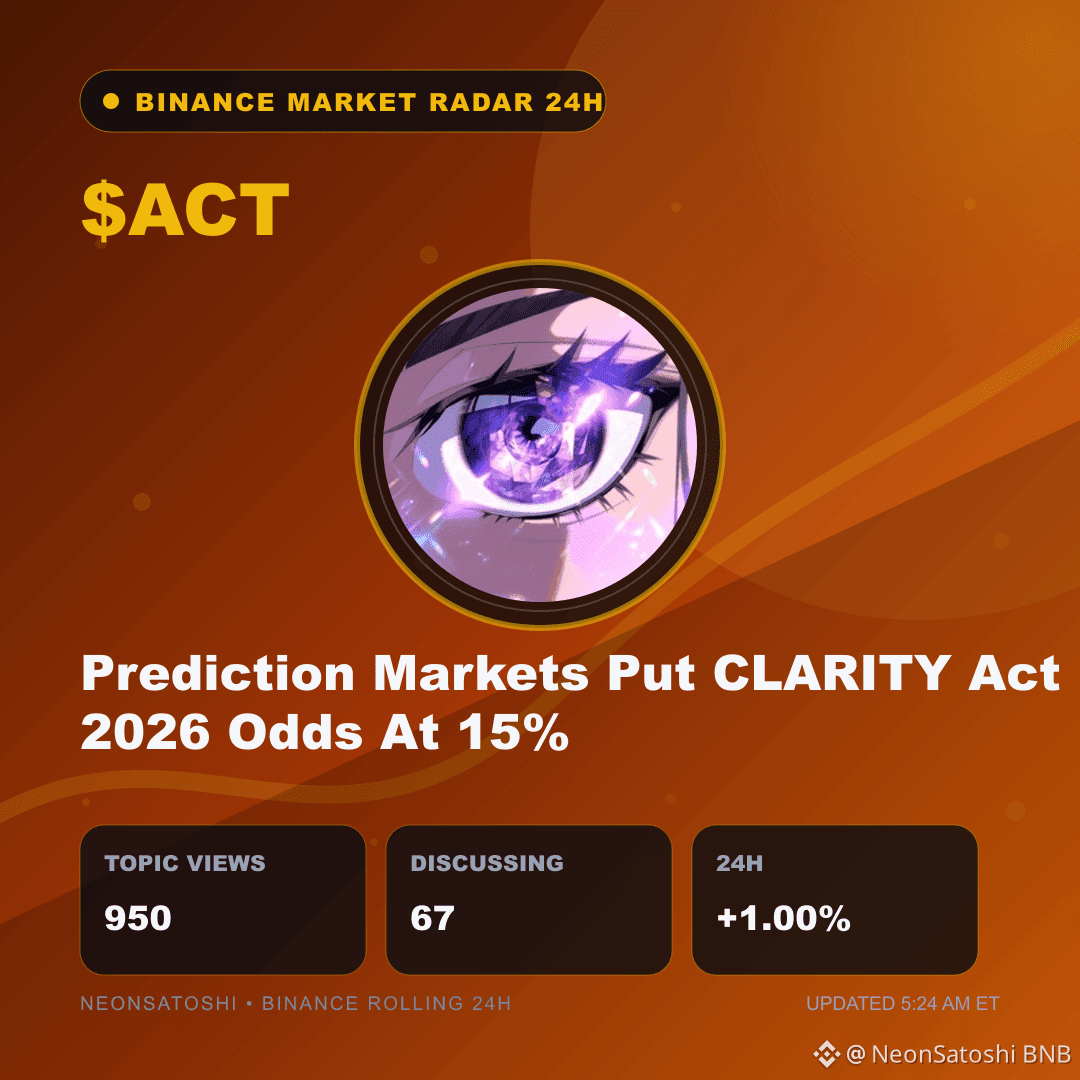
#PredictionMarketsPutCLARITYAct2026OddsAt15% is pulling 950 views on Binance Square, and $ACT is the coin behind the conversation.
Price: 0.01013 USDT | 24H: +1.00%. It is sitting mid-range, which leaves room for either side to take control.
My bias: no trade until price leaves the middle.
Price: 0.01013 USDT | 24H: +1.00%. It is sitting mid-range, which leaves room for either side to take control.
My bias: no trade until price leaves the middle.
Log in to explore more content