
#hbm
hbm
80,078 views
308 Discussing
Hot
Latest
·
--
Article
🔬 SK Hynix AI chip news: SK Hynix’s share price rose 4.3% in the morning session to 1,859,0 | Sep 08🔬 SK Hynix AI chip news | Sep 08
━━━━━━━━━━
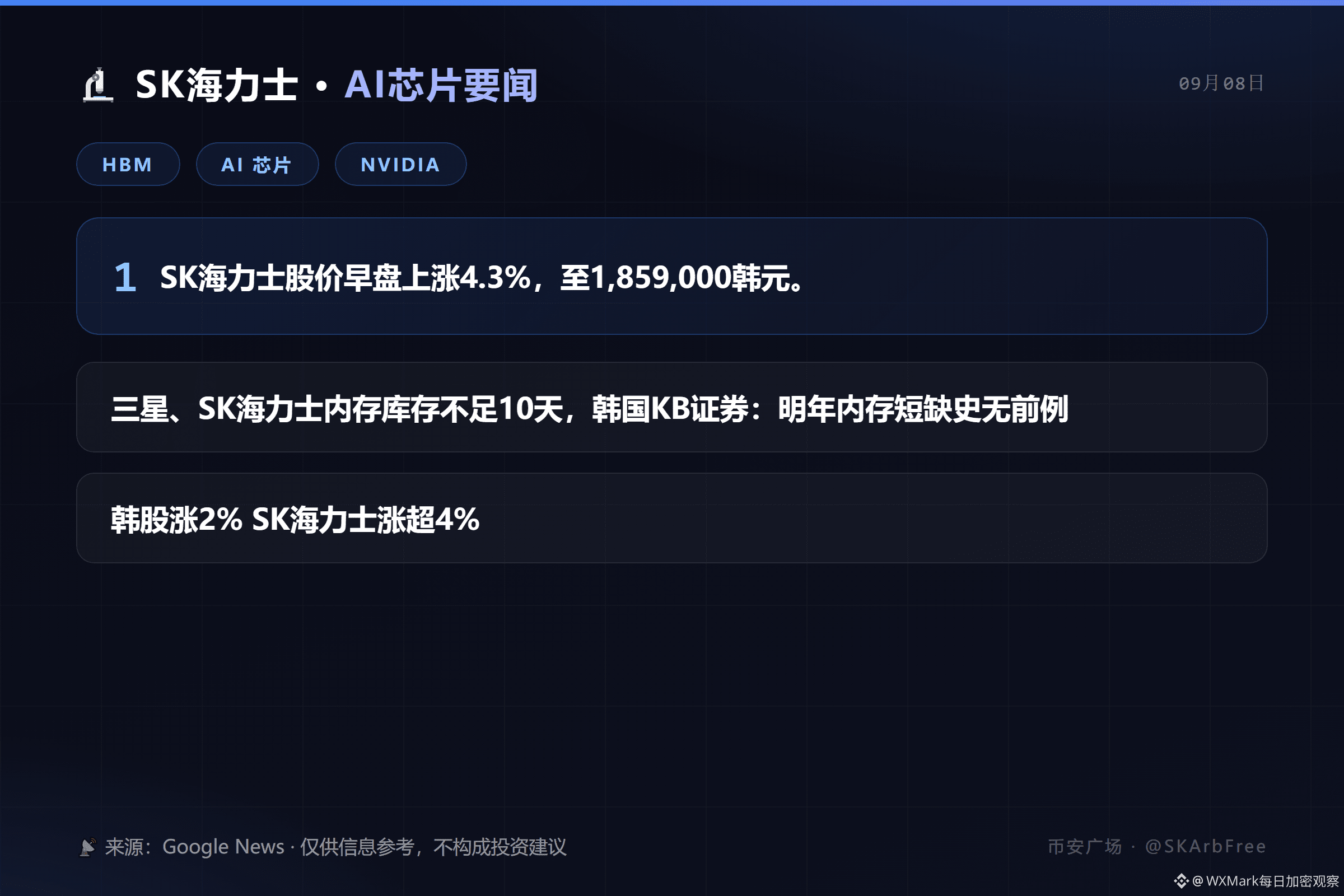
1. SK Hynix’s share price rose 4.3% in the morning session to 1,859,000 won.
2. Samsung and SK Hynix memory inventory runs short for less than 10 days; Korea KB Securities: next year’s memory shortage will be unprecedented
3. Korean stocks up 2%; SK Hynix up more than 4%
📡 Source: Google News
💡 Focus: HBM/DRAM supply-and-demand updates will directly move the SK Hynix contracts and ADRs; watch for abnormal trading in the market
$SKHYNIX $SKHY #SK海力士 #AI芯片 #HBM #Nvidia
⚠️ For information only and does not constitute investment advice
🔬 SK Hynix AI chip news: SK Hynix’s share price rose 4.3% in the morning session to 1,859,0 | Sep 08
🔬 SK Hynix AI chip news | Sep 08
━━━━━━━━━━
1. SK Hynix’s share price rose 4.3% in the morning session to 1,859,000 won.
2. Samsung and SK Hynix memory inventory runs short for less than 10 days; Korea KB Securities: next year’s memory shortage will be unprecedented
3. Korean stocks up 2%; SK Hynix up more than 4%
📡 Source: Google News
💡 Focus: HBM/DRAM supply-and-demand updates will directly move the SK Hynix contracts and ADRs; watch for abnormal trading in the market
$SKHYNIX $SKHY #SK海力士 #AI芯片 #HBM #Nvidia
⚠️ For information only and does not constitute investment advice
━━━━━━━━━━
1. SK Hynix’s share price rose 4.3% in the morning session to 1,859,000 won.
2. Samsung and SK Hynix memory inventory runs short for less than 10 days; Korea KB Securities: next year’s memory shortage will be unprecedented
3. Korean stocks up 2%; SK Hynix up more than 4%
📡 Source: Google News
💡 Focus: HBM/DRAM supply-and-demand updates will directly move the SK Hynix contracts and ADRs; watch for abnormal trading in the market
$SKHYNIX $SKHY #SK海力士 #AI芯片 #HBM #Nvidia
⚠️ For information only and does not constitute investment advice
118
·
--
Article
🔬 SK Hynix AI Chip News: Reports say 1c nm is expected to become SK Hynix's top | Sep 07🔬 SK Hynix AI Chip News | Sep 07
━━━━━━━━━━
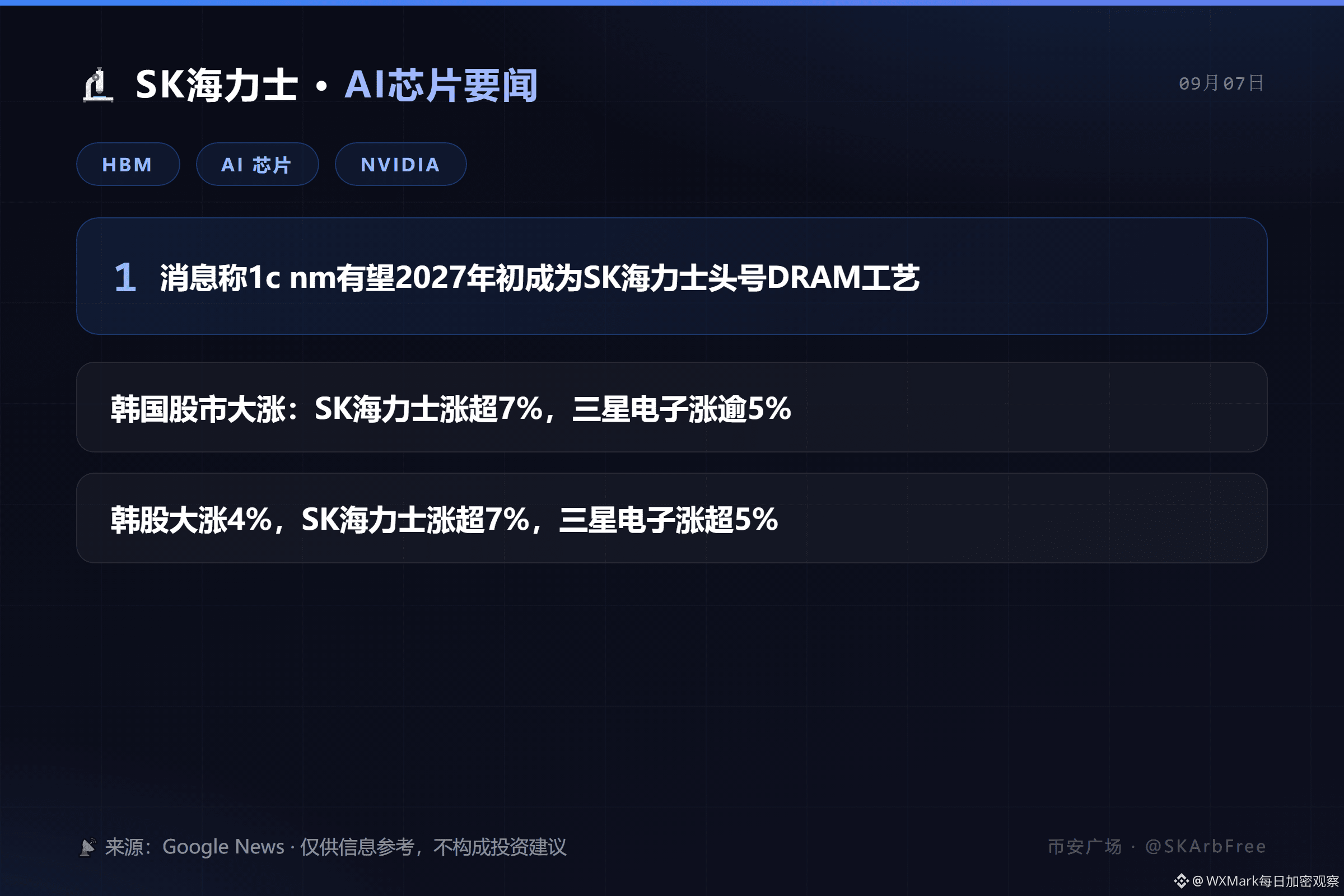
1. Reports say 1c nm is expected to become SK Hynix's top DRAM process in early 2027
2. South Korean stock market surges: SK Hynix rises more than 7%, Samsung Electronics rises more than 5%
3. Korean stocks surge 4%, SK Hynix rises more than 7%, Samsung Electronics rises more than 5%
📡 Source: Google News
💡 Focus: HBM/DRAM supply and demand news will directly affect SK Hynix contracts and ADRs; watch for intraday moves
$SKHYNIX $SKHY #SK海力士 #AI芯片 #HBM #Nvidia
⚠️ For informational purposes only, not investment advice
🔬 SK Hynix AI Chip News: Reports say 1c nm is expected to become SK Hynix's top | Sep 07
🔬 SK Hynix AI Chip News | Sep 07
━━━━━━━━━━
1. Reports say 1c nm is expected to become SK Hynix's top DRAM process in early 2027
2. South Korean stock market surges: SK Hynix rises more than 7%, Samsung Electronics rises more than 5%
3. Korean stocks surge 4%, SK Hynix rises more than 7%, Samsung Electronics rises more than 5%
📡 Source: Google News
💡 Focus: HBM/DRAM supply and demand news will directly affect SK Hynix contracts and ADRs; watch for intraday moves
$SKHYNIX $SKHY #SK海力士 #AI芯片 #HBM #Nvidia
⚠️ For informational purposes only, not investment advice
━━━━━━━━━━
1. Reports say 1c nm is expected to become SK Hynix's top DRAM process in early 2027
2. South Korean stock market surges: SK Hynix rises more than 7%, Samsung Electronics rises more than 5%
3. Korean stocks surge 4%, SK Hynix rises more than 7%, Samsung Electronics rises more than 5%
📡 Source: Google News
💡 Focus: HBM/DRAM supply and demand news will directly affect SK Hynix contracts and ADRs; watch for intraday moves
$SKHYNIX $SKHY #SK海力士 #AI芯片 #HBM #Nvidia
⚠️ For informational purposes only, not investment advice
245
·
--
Article
🔬 SK Hynix AI Chip News: Why the memory cycle will not disappear | September 6🔬 SK Hynix AI Chip News | September 6
━━━━━━━━━━
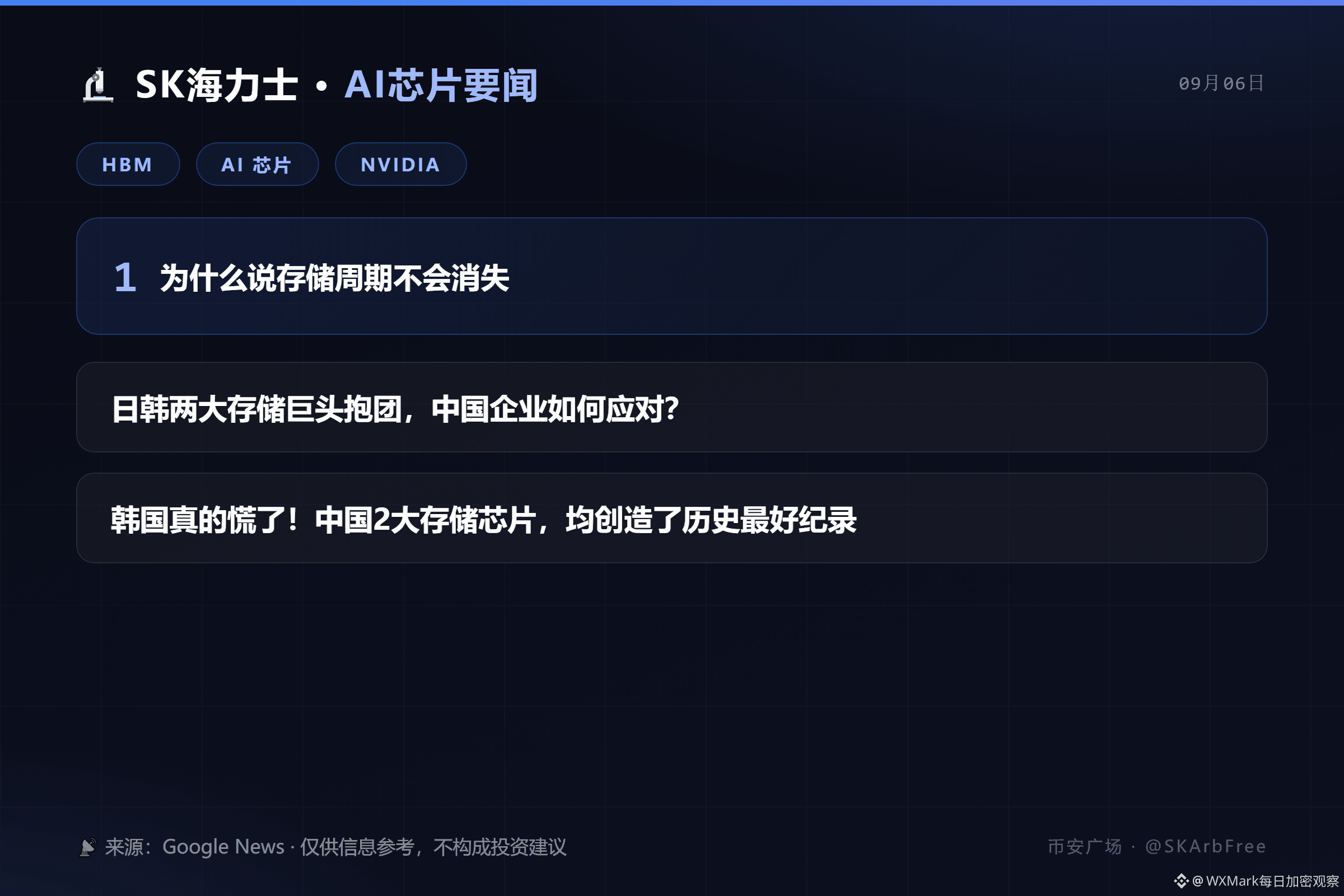
1. Why the memory cycle will not disappear
2. The two major storage giants from Japan and South Korea are banding together. How should Chinese companies respond?
3. South Korea is really panicking! China's two major memory chips have both set their best historical records
📡 Source: Google News
💡 Focus: HBM/DRAM supply and demand news will directly affect SKHYNIX contracts and ADRs; watch for unusual market movements
$SKHYNIX $SKHY #SK海力士 #AI芯片 #HBM #Nvidia
⚠️ For informational purposes only, not investment advice
🔬 SK Hynix AI Chip News: Why the memory cycle will not disappear | September 6
🔬 SK Hynix AI Chip News | September 6
━━━━━━━━━━
1. Why the memory cycle will not disappear
2. The two major storage giants from Japan and South Korea are banding together. How should Chinese companies respond?
3. South Korea is really panicking! China's two major memory chips have both set their best historical records
📡 Source: Google News
💡 Focus: HBM/DRAM supply and demand news will directly affect SKHYNIX contracts and ADRs; watch for unusual market movements
$SKHYNIX $SKHY #SK海力士 #AI芯片 #HBM #Nvidia
⚠️ For informational purposes only, not investment advice
━━━━━━━━━━
1. Why the memory cycle will not disappear
2. The two major storage giants from Japan and South Korea are banding together. How should Chinese companies respond?
3. South Korea is really panicking! China's two major memory chips have both set their best historical records
📡 Source: Google News
💡 Focus: HBM/DRAM supply and demand news will directly affect SKHYNIX contracts and ADRs; watch for unusual market movements
$SKHYNIX $SKHY #SK海力士 #AI芯片 #HBM #Nvidia
⚠️ For informational purposes only, not investment advice
460
·
--
Article
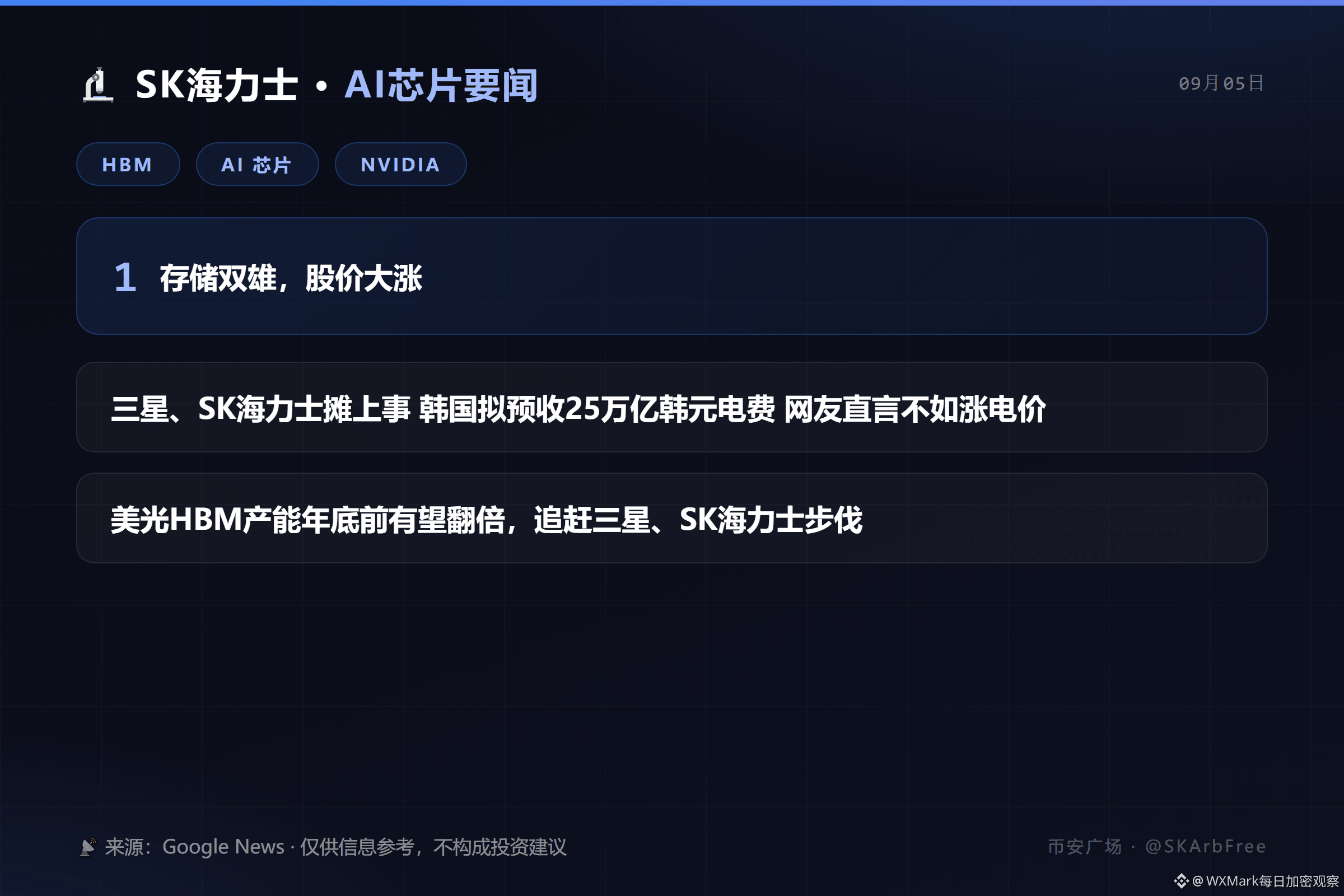
🔬 SK Hynix AI Chip News: Storage giants, stock prices soar | September 5🔬 SK Hynix AI chip news | September 5
━━━━━━━━━━
1. The storage giants, stock prices soar
2. Samsung and SK Hynix got into trouble; South Korea is planning to pre-collect 25 trillion won in electricity bills. Netizens bluntly said it would be better to just raise electricity prices
3. Micron's HBM capacity is expected to double by the end of the year, catching up with Samsung and SK Hynix
📡 Source: Google News
💡 Focus: HBM/DRAM supply and demand news will directly affect SKHYNIX contracts and ADR; pay attention to intraday fluctuations
$SKHYNIX $SKHY #SK海力士 #AI芯片 #HBM #Nvidia
⚠️ For information reference only, not investment advice
🔬 SK Hynix AI Chip News: Storage giants, stock prices soar | September 5
🔬 SK Hynix AI chip news | September 5
━━━━━━━━━━
1. The storage giants, stock prices soar
2. Samsung and SK Hynix got into trouble; South Korea is planning to pre-collect 25 trillion won in electricity bills. Netizens bluntly said it would be better to just raise electricity prices
3. Micron's HBM capacity is expected to double by the end of the year, catching up with Samsung and SK Hynix
📡 Source: Google News
💡 Focus: HBM/DRAM supply and demand news will directly affect SKHYNIX contracts and ADR; pay attention to intraday fluctuations
$SKHYNIX $SKHY #SK海力士 #AI芯片 #HBM #Nvidia
⚠️ For information reference only, not investment advice
━━━━━━━━━━
1. The storage giants, stock prices soar
2. Samsung and SK Hynix got into trouble; South Korea is planning to pre-collect 25 trillion won in electricity bills. Netizens bluntly said it would be better to just raise electricity prices
3. Micron's HBM capacity is expected to double by the end of the year, catching up with Samsung and SK Hynix
📡 Source: Google News
💡 Focus: HBM/DRAM supply and demand news will directly affect SKHYNIX contracts and ADR; pay attention to intraday fluctuations
$SKHYNIX $SKHY #SK海力士 #AI芯片 #HBM #Nvidia
⚠️ For information reference only, not investment advice
163

·
--
Bullish
🔥 $MU
{future}(MUUSDT)
— BUY THE DIP? | HBM GROWTH WATCH 🚀
Micron Technology is reportedly planning major equipment investments to expand next-gen HBM production capacity, potentially strengthening its position against Samsung and SK Hynix.
📈 Bullish catalyst: Higher HBM capacity could support market-share growth as AI demand continues.
💡 With $MU pulling back, a confirmed support hold could offer a potential long opportunity.
⚠️ Wait for confirmation rather than blindly buying the dip. Manage risk and position size carefully.
DYOR • NFA
#MU #Micron #HBM #Aİ
🔥 $MU
— BUY THE DIP? | HBM GROWTH WATCH 🚀
Micron Technology is reportedly planning major equipment investments to expand next-gen HBM production capacity, potentially strengthening its position against Samsung and SK Hynix.
📈 Bullish catalyst: Higher HBM capacity could support market-share growth as AI demand continues.
💡 With $MU pulling back, a confirmed support hold could offer a potential long opportunity.
⚠️ Wait for confirmation rather than blindly buying the dip. Manage risk and position size carefully.
DYOR • NFA
#MU #Micron #HBM #Aİ
— BUY THE DIP? | HBM GROWTH WATCH 🚀
Micron Technology is reportedly planning major equipment investments to expand next-gen HBM production capacity, potentially strengthening its position against Samsung and SK Hynix.
📈 Bullish catalyst: Higher HBM capacity could support market-share growth as AI demand continues.
💡 With $MU pulling back, a confirmed support hold could offer a potential long opportunity.
⚠️ Wait for confirmation rather than blindly buying the dip. Manage risk and position size carefully.
DYOR • NFA
#MU #Micron #HBM #Aİ
349
·
--
Article
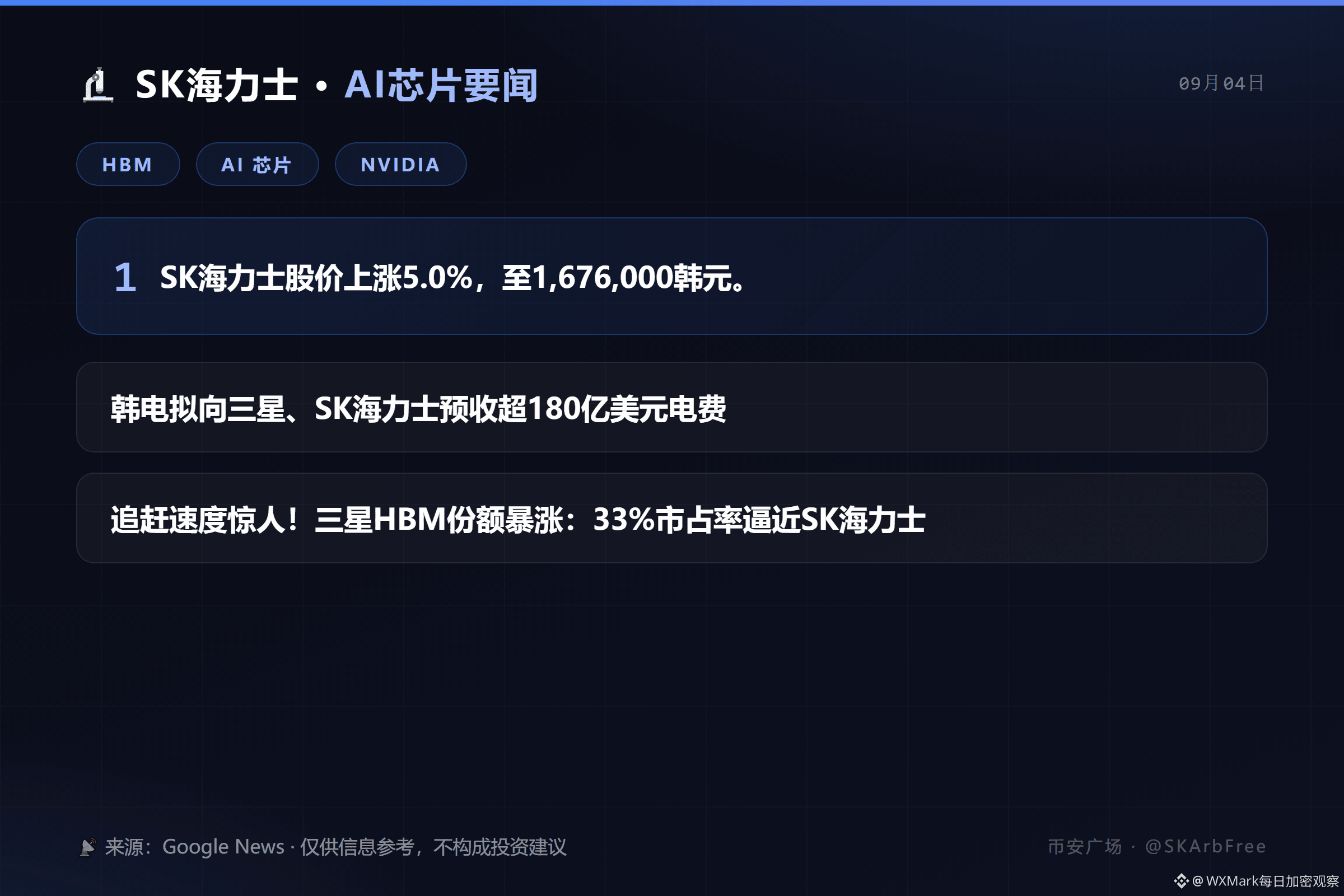
🔬 SK hynix AI chip news: SK hynix stock price up 5.0% to 1,676,000 | Sep 04🔬 SK hynix AI chip news | Sep 04
━━━━━━━━━━
1. SK hynix stock price rises 5.0% to 1,676,000 won.
2. Hanwha Electronics plans to pre-collect more than $18 billion in electricity fees from Samsung and SK hynix
3. Unbelievable catch-up speed! Samsung HBM market share surges to 33%, nearing SK hynix
📡 Source: Google News
💡 Focus: HBM/DRAM supply-and-demand news will directly link with SK hynix contracts and ADRs—watch for unusual market moves
$SKHYNIX $SKHY #SK海力士 #AI芯片 #HBM #Nvidia
⚠️ For information only and does not constitute investment advice
🔬 SK hynix AI chip news: SK hynix stock price up 5.0% to 1,676,000 | Sep 04
🔬 SK hynix AI chip news | Sep 04
━━━━━━━━━━
1. SK hynix stock price rises 5.0% to 1,676,000 won.
2. Hanwha Electronics plans to pre-collect more than $18 billion in electricity fees from Samsung and SK hynix
3. Unbelievable catch-up speed! Samsung HBM market share surges to 33%, nearing SK hynix
📡 Source: Google News
💡 Focus: HBM/DRAM supply-and-demand news will directly link with SK hynix contracts and ADRs—watch for unusual market moves
$SKHYNIX $SKHY #SK海力士 #AI芯片 #HBM #Nvidia
⚠️ For information only and does not constitute investment advice
━━━━━━━━━━
1. SK hynix stock price rises 5.0% to 1,676,000 won.
2. Hanwha Electronics plans to pre-collect more than $18 billion in electricity fees from Samsung and SK hynix
3. Unbelievable catch-up speed! Samsung HBM market share surges to 33%, nearing SK hynix
📡 Source: Google News
💡 Focus: HBM/DRAM supply-and-demand news will directly link with SK hynix contracts and ADRs—watch for unusual market moves
$SKHYNIX $SKHY #SK海力士 #AI芯片 #HBM #Nvidia
⚠️ For information only and does not constitute investment advice
148
·
--
Article
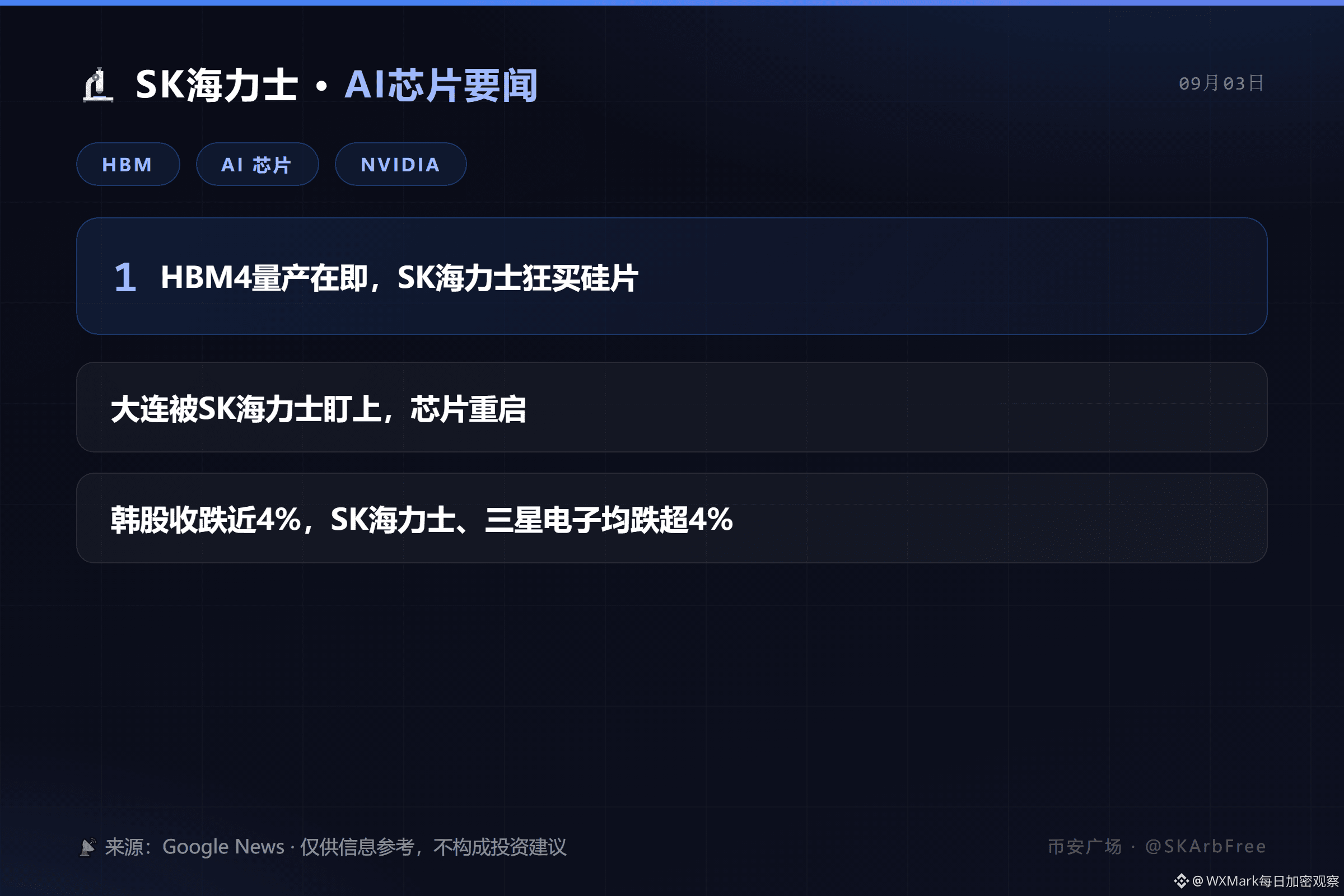
🔬 SK hynix AI chip news: HBM4 mass production is imminent; SK hynix is buying silicon wafers aggressively | Sep 03🔬 SK hynix AI chip news | Sep 03
━━━━━━━━━━
1. HBM4 mass production is imminent; SK hynix is buying silicon wafers aggressively
2. Dalian has been targeted by SK hynix, and chip reboots
3. South Korean stocks closed down nearly 4%; both SK hynix and Samsung Electronics fell by over 4%
📡 Source: Google News
💡 Key points: HBM/DRAM supply-and-demand news will directly move SKHYNIX contracts and ADRs; watch for unusual price action
$SKHYNIX $SKHY #SK海力士 #AI芯片 #HBM #Nvidia
⚠️ For informational purposes only and does not constitute investment advice
🔬 SK hynix AI chip news: HBM4 mass production is imminent; SK hynix is buying silicon wafers aggressively | Sep 03
🔬 SK hynix AI chip news | Sep 03
━━━━━━━━━━
1. HBM4 mass production is imminent; SK hynix is buying silicon wafers aggressively
2. Dalian has been targeted by SK hynix, and chip reboots
3. South Korean stocks closed down nearly 4%; both SK hynix and Samsung Electronics fell by over 4%
📡 Source: Google News
💡 Key points: HBM/DRAM supply-and-demand news will directly move SKHYNIX contracts and ADRs; watch for unusual price action
$SKHYNIX $SKHY #SK海力士 #AI芯片 #HBM #Nvidia
⚠️ For informational purposes only and does not constitute investment advice
━━━━━━━━━━
1. HBM4 mass production is imminent; SK hynix is buying silicon wafers aggressively
2. Dalian has been targeted by SK hynix, and chip reboots
3. South Korean stocks closed down nearly 4%; both SK hynix and Samsung Electronics fell by over 4%
📡 Source: Google News
💡 Key points: HBM/DRAM supply-and-demand news will directly move SKHYNIX contracts and ADRs; watch for unusual price action
$SKHYNIX $SKHY #SK海力士 #AI芯片 #HBM #Nvidia
⚠️ For informational purposes only and does not constitute investment advice
179
·
--
Article
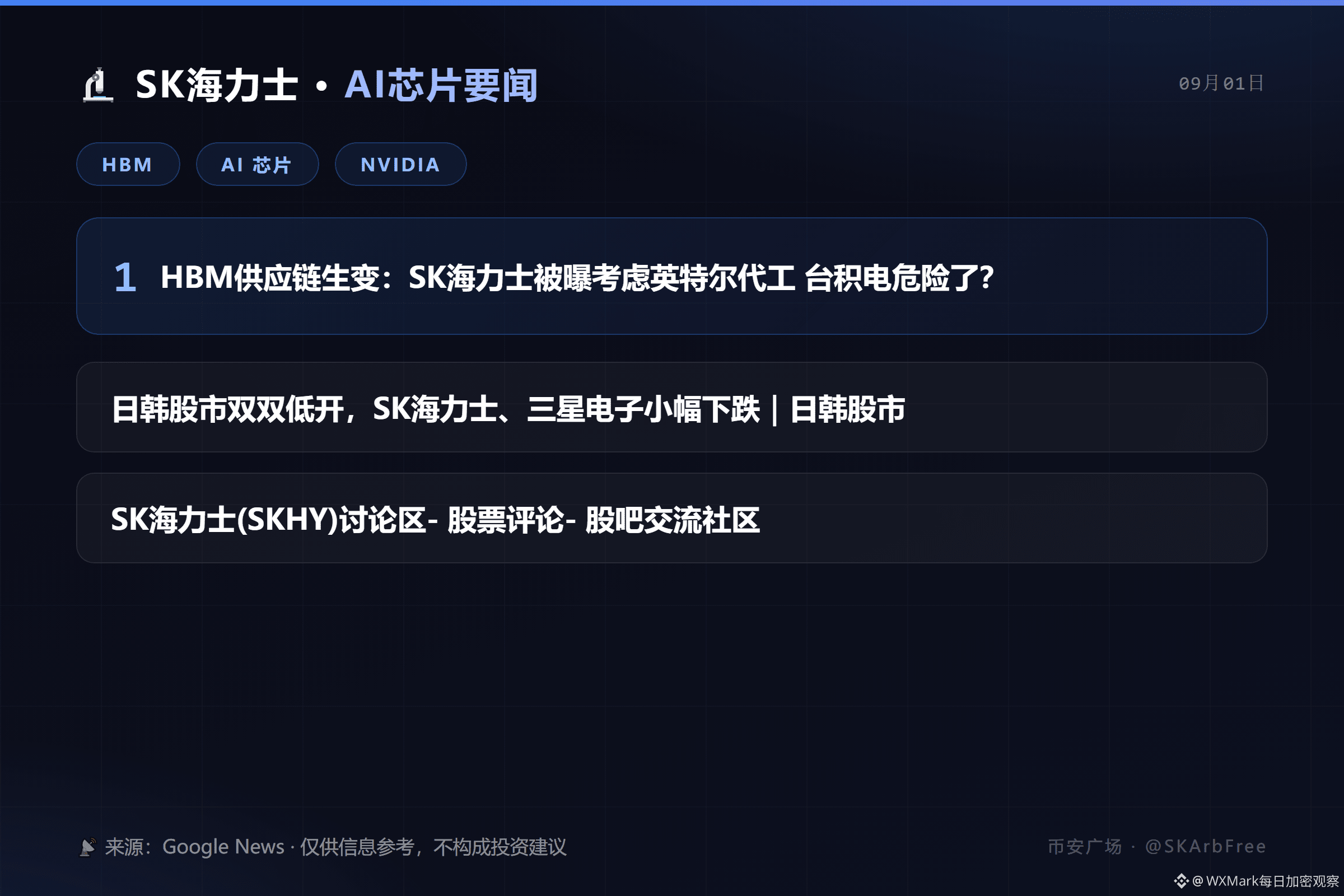
🔬 SK Hynix AI Chip News: Changes in the HBM supply chain: SK Hynix reportedly considering Intel for contract manufacturing | Sep 01🔬 SK Hynix AI Chip News | Sep 01
━━━━━━━━━━
1. Changes in the HBM supply chain: SK Hynix is reportedly considering Intel for contract manufacturing—Is TSMC in danger?
2. The Korean stock markets opened lower in both markets. SK Hynix and Samsung Electronics fell slightly|Korean stock markets
3. SK Hynix (SKHY) Discussion Board - Stock Comments - Stock Forum Exchange Community
📡 Source: Google News
💡 Focus: News on HBM/DRAM supply and demand will directly move SK Hynix contracts and ADRs. Watch for unusual price action.
$SKHYNIX $SKHY #SK海力士 #AI芯片 #HBM #Nvidia
⚠️ For information only and does not constitute investment advice
🔬 SK Hynix AI Chip News: Changes in the HBM supply chain: SK Hynix reportedly considering Intel for contract manufacturing | Sep 01
🔬 SK Hynix AI Chip News | Sep 01
━━━━━━━━━━
1. Changes in the HBM supply chain: SK Hynix is reportedly considering Intel for contract manufacturing—Is TSMC in danger?
2. The Korean stock markets opened lower in both markets. SK Hynix and Samsung Electronics fell slightly|Korean stock markets
3. SK Hynix (SKHY) Discussion Board - Stock Comments - Stock Forum Exchange Community
📡 Source: Google News
💡 Focus: News on HBM/DRAM supply and demand will directly move SK Hynix contracts and ADRs. Watch for unusual price action.
$SKHYNIX $SKHY #SK海力士 #AI芯片 #HBM #Nvidia
⚠️ For information only and does not constitute investment advice
━━━━━━━━━━
1. Changes in the HBM supply chain: SK Hynix is reportedly considering Intel for contract manufacturing—Is TSMC in danger?
2. The Korean stock markets opened lower in both markets. SK Hynix and Samsung Electronics fell slightly|Korean stock markets
3. SK Hynix (SKHY) Discussion Board - Stock Comments - Stock Forum Exchange Community
📡 Source: Google News
💡 Focus: News on HBM/DRAM supply and demand will directly move SK Hynix contracts and ADRs. Watch for unusual price action.
$SKHYNIX $SKHY #SK海力士 #AI芯片 #HBM #Nvidia
⚠️ For information only and does not constitute investment advice
177

·
--
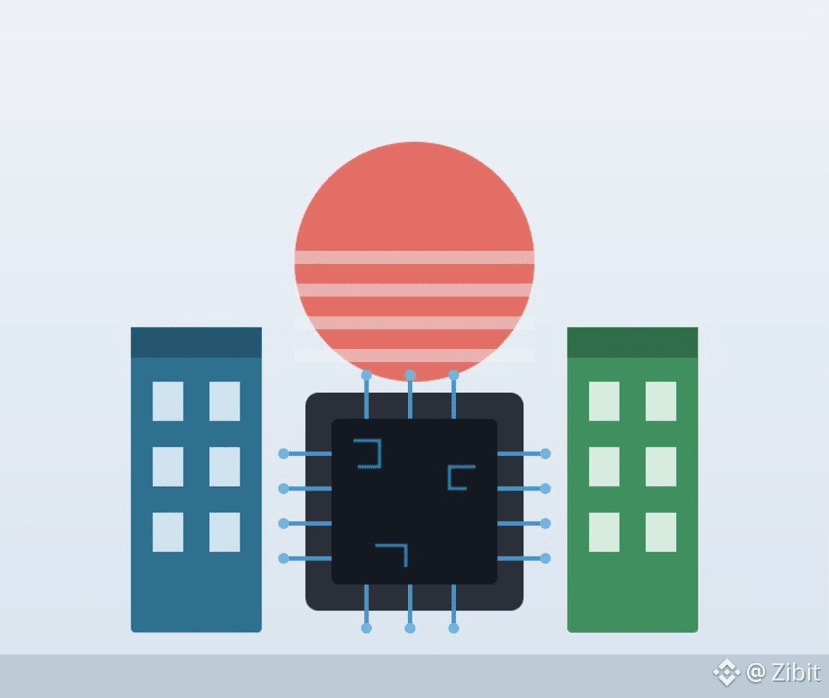
🇰🇷⚡🇯🇵 The memory war just went cross border.
SK Hynix scouting Japan for a JV plant isn't just a real estate story, it's a supply chain hedge. HBM demand from Nvidia's AI stack is so tight that even the market leader is diversifying production outside its home turf. Pair that with the Kioxia stake and Japan's equipment/supplier base (Tokyo Electron, etc.), and this reads less like expansion and more like insurance against the next AI capacity crunch.
📊 Worth watching: SKHY already popped +4.5% on the Miyagi rumor alone. If NAND and HBM scarcity runs through 2030 like execs suggest, "Korea+Japan memory bloc" could become the next sector narrative traders front run.
🔑 Takeaway: This isn't about one fab. It's about who controls AI's bottleneck resource, memory, and Japan just became part of that chessboard.
#AI #Semiconductors #HBM
#SKHynixStudiesJapanMemoryChipVenture
🇰🇷⚡🇯🇵 The memory war just went cross border.
SK Hynix scouting Japan for a JV plant isn't just a real estate story, it's a supply chain hedge. HBM demand from Nvidia's AI stack is so tight that even the market leader is diversifying production outside its home turf. Pair that with the Kioxia stake and Japan's equipment/supplier base (Tokyo Electron, etc.), and this reads less like expansion and more like insurance against the next AI capacity crunch.
📊 Worth watching: SKHY already popped +4.5% on the Miyagi rumor alone. If NAND and HBM scarcity runs through 2030 like execs suggest, "Korea+Japan memory bloc" could become the next sector narrative traders front run.
🔑 Takeaway: This isn't about one fab. It's about who controls AI's bottleneck resource, memory, and Japan just became part of that chessboard.
#AI #Semiconductors #HBM
#SKHynixStudiesJapanMemoryChipVenture
SK Hynix scouting Japan for a JV plant isn't just a real estate story, it's a supply chain hedge. HBM demand from Nvidia's AI stack is so tight that even the market leader is diversifying production outside its home turf. Pair that with the Kioxia stake and Japan's equipment/supplier base (Tokyo Electron, etc.), and this reads less like expansion and more like insurance against the next AI capacity crunch.
📊 Worth watching: SKHY already popped +4.5% on the Miyagi rumor alone. If NAND and HBM scarcity runs through 2030 like execs suggest, "Korea+Japan memory bloc" could become the next sector narrative traders front run.
🔑 Takeaway: This isn't about one fab. It's about who controls AI's bottleneck resource, memory, and Japan just became part of that chessboard.
#AI #Semiconductors #HBM
#SKHynixStudiesJapanMemoryChipVenture
1
105
·
--
Article
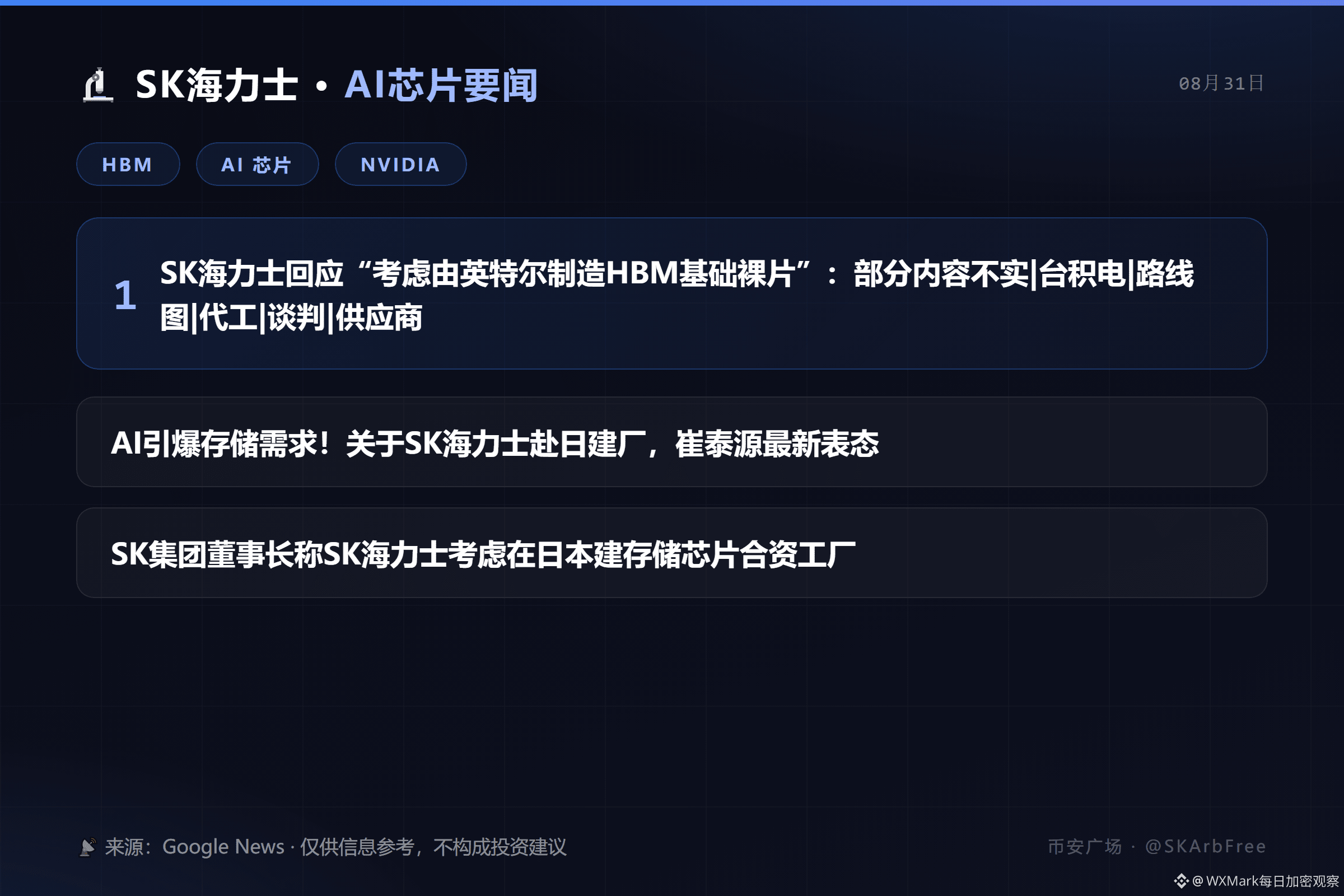
🔬 SK hynix AI chip news: SK hynix responds to “consider having Intel manufacture the HBM base bare dies” | Aug 31🔬 SK hynix AI chip news | Aug 31
━━━━━━━━━━
1. SK hynix responds to “consider having Intel manufacture the HBM base bare dies”: some information is untrue | TSMC | roadmap | foundry | negotiations | suppliers
2. AI ignites storage demand! About SK hynix building a factory in Japan, Choi Tae-won’s latest remarks
3. The chairman of SK Group says SK hynix is considering building a joint-venture plant for storage chips in Japan
📡 Source: Google News
💡 Focus: HBM/DRAM supply and demand updates will directly link to SK hynix contracts and ADR—watch for unusual market moves
$SKHYNIX $SKHY #SK海力士 #AI芯片 #HBM #Nvidia
🔬 SK hynix AI chip news: SK hynix responds to “consider having Intel manufacture the HBM base bare dies” | Aug 31
🔬 SK hynix AI chip news | Aug 31
━━━━━━━━━━
1. SK hynix responds to “consider having Intel manufacture the HBM base bare dies”: some information is untrue | TSMC | roadmap | foundry | negotiations | suppliers
2. AI ignites storage demand! About SK hynix building a factory in Japan, Choi Tae-won’s latest remarks
3. The chairman of SK Group says SK hynix is considering building a joint-venture plant for storage chips in Japan
📡 Source: Google News
💡 Focus: HBM/DRAM supply and demand updates will directly link to SK hynix contracts and ADR—watch for unusual market moves
$SKHYNIX $SKHY #SK海力士 #AI芯片 #HBM #Nvidia
━━━━━━━━━━
1. SK hynix responds to “consider having Intel manufacture the HBM base bare dies”: some information is untrue | TSMC | roadmap | foundry | negotiations | suppliers
2. AI ignites storage demand! About SK hynix building a factory in Japan, Choi Tae-won’s latest remarks
3. The chairman of SK Group says SK hynix is considering building a joint-venture plant for storage chips in Japan
📡 Source: Google News
💡 Focus: HBM/DRAM supply and demand updates will directly link to SK hynix contracts and ADR—watch for unusual market moves
$SKHYNIX $SKHY #SK海力士 #AI芯片 #HBM #Nvidia
65
·
--
Article
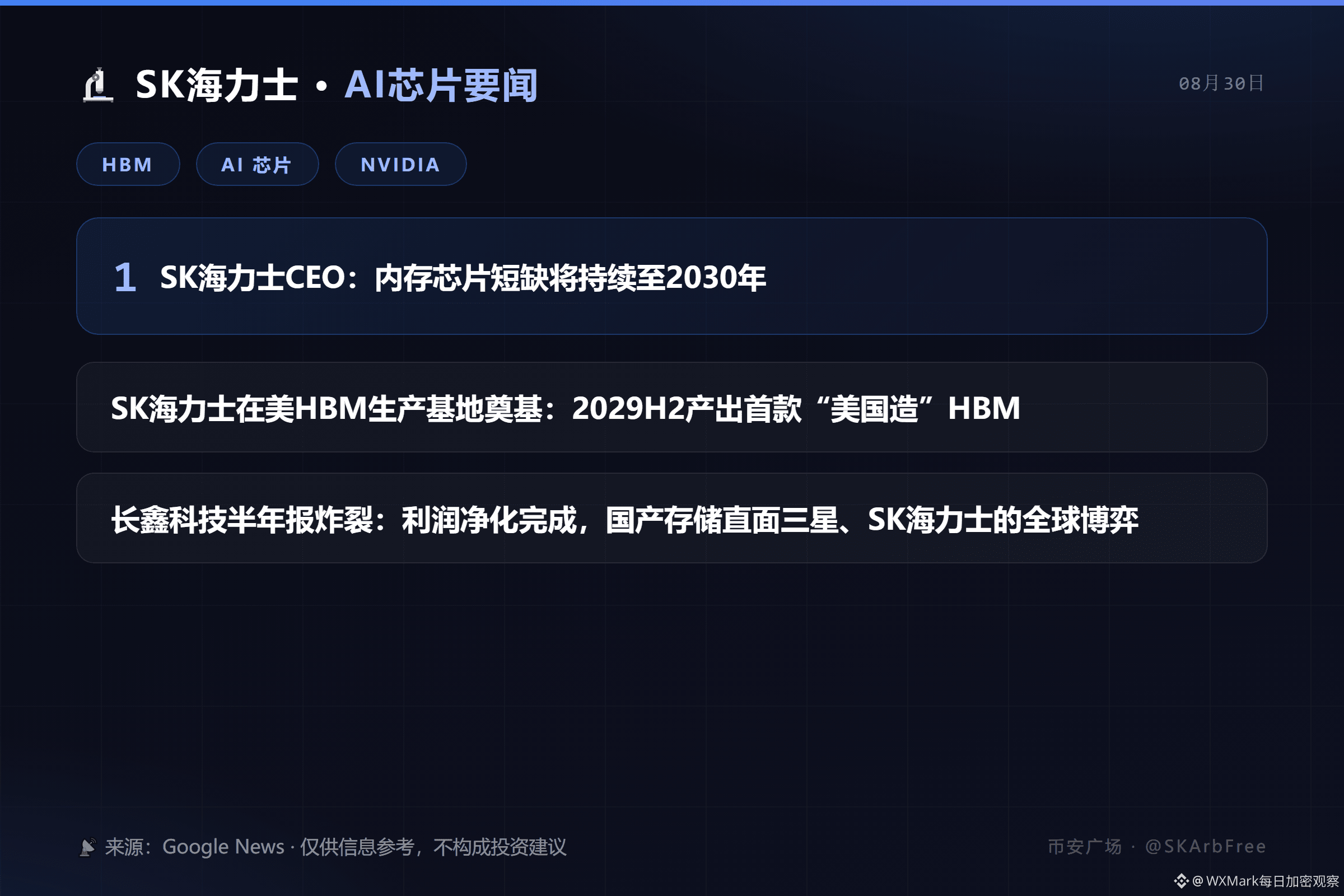
🔬 SK hynix AI chip news: SK hynix CEO: memory chip shortages will continue until 2030 | Aug 30🔬 SK hynix AI chip news | Aug 30
━━━━━━━━━━
1. SK hynix CEO: memory chip shortages will continue until 2030
2. SK hynix breaks ground on its U.S. HBM production base: first “Made in the USA” HBM output in 2029 H2
3. ChangXin Technology’s interim report is explosive: profit purification completed, domestic memory storage directly facing the global game between Samsung and SK hynix
📡 Source: Google News
💡 Focus: HBM/DRAM supply-and-demand updates will directly link up SK hynix’s contracts and ADRs—watch for unusual market moves
$SKHYNIX $SKHY #SK海力士 #AI芯片 #HBM #Nvidia
⚠️ For informational purposes only and does not constitute investment advice
🔬 SK hynix AI chip news: SK hynix CEO: memory chip shortages will continue until 2030 | Aug 30
🔬 SK hynix AI chip news | Aug 30
━━━━━━━━━━
1. SK hynix CEO: memory chip shortages will continue until 2030
2. SK hynix breaks ground on its U.S. HBM production base: first “Made in the USA” HBM output in 2029 H2
3. ChangXin Technology’s interim report is explosive: profit purification completed, domestic memory storage directly facing the global game between Samsung and SK hynix
📡 Source: Google News
💡 Focus: HBM/DRAM supply-and-demand updates will directly link up SK hynix’s contracts and ADRs—watch for unusual market moves
$SKHYNIX $SKHY #SK海力士 #AI芯片 #HBM #Nvidia
⚠️ For informational purposes only and does not constitute investment advice
━━━━━━━━━━
1. SK hynix CEO: memory chip shortages will continue until 2030
2. SK hynix breaks ground on its U.S. HBM production base: first “Made in the USA” HBM output in 2029 H2
3. ChangXin Technology’s interim report is explosive: profit purification completed, domestic memory storage directly facing the global game between Samsung and SK hynix
📡 Source: Google News
💡 Focus: HBM/DRAM supply-and-demand updates will directly link up SK hynix’s contracts and ADRs—watch for unusual market moves
$SKHYNIX $SKHY #SK海力士 #AI芯片 #HBM #Nvidia
⚠️ For informational purposes only and does not constitute investment advice
180
·
--
Article
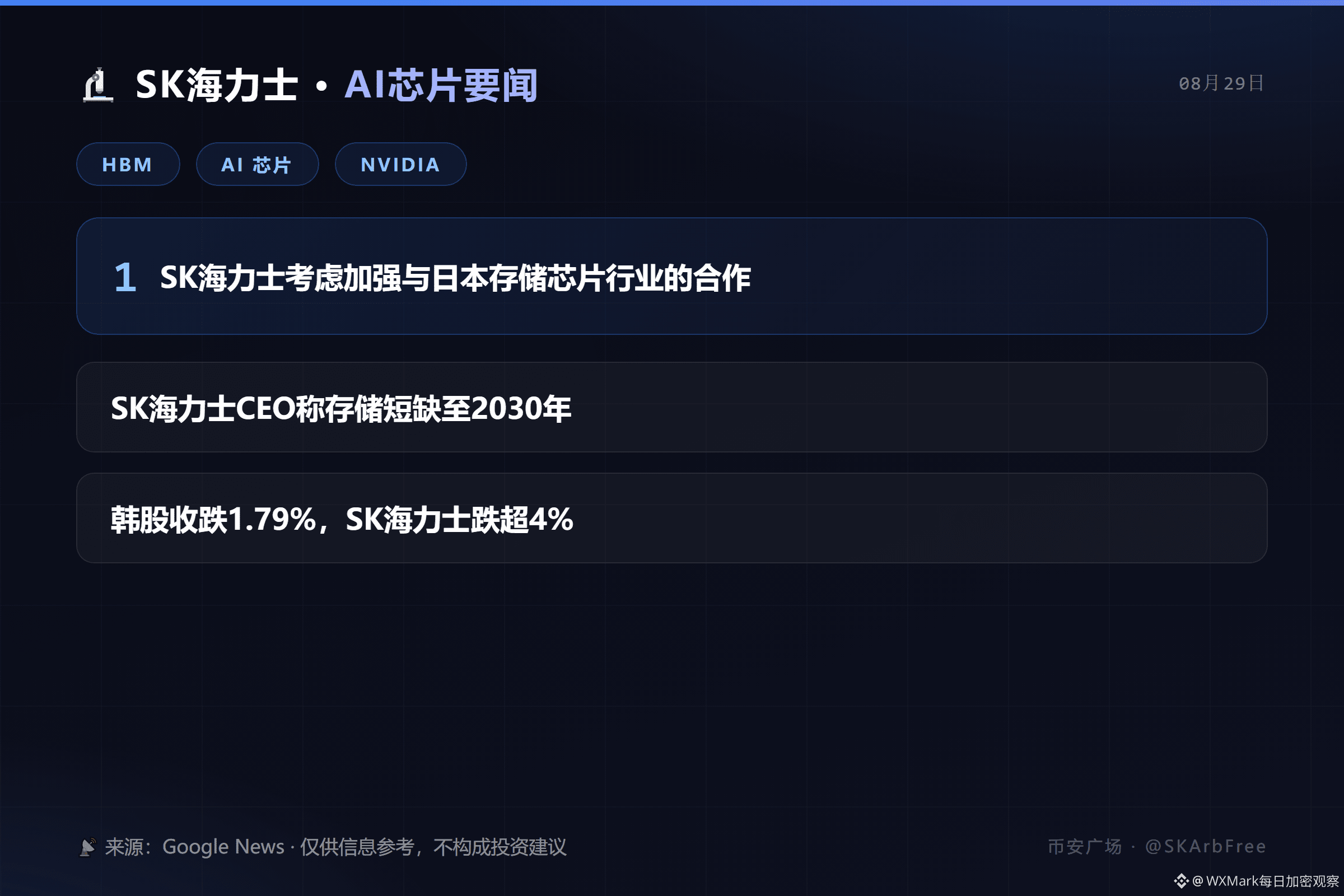
🔬 SK Hynix AI chip news: SK Hynix considers strengthening cooperation with Japan’s memory-chip industry | Aug 29🔬 SK Hynix AI chip news | Aug 29
━━━━━━━━━━
1. SK Hynix considers strengthening cooperation with Japan’s memory-chip industry
2. SK Hynix CEO says the memory shortage will last until 2030
3. South Korean stocks fall 1.79%; SK Hynix drops more than 4%
📡 Source: Google News
💡 Focus: HBM/DRAM supply-and-demand updates will directly move SK Hynix contracts and ADRs—watch for unusual price action in the market
$SKHYNIX $SKHY #SK海力士 #AI芯片 #HBM #Nvidia
⚠️ For informational purposes only and does not constitute investment advice
🔬 SK Hynix AI chip news: SK Hynix considers strengthening cooperation with Japan’s memory-chip industry | Aug 29
🔬 SK Hynix AI chip news | Aug 29
━━━━━━━━━━
1. SK Hynix considers strengthening cooperation with Japan’s memory-chip industry
2. SK Hynix CEO says the memory shortage will last until 2030
3. South Korean stocks fall 1.79%; SK Hynix drops more than 4%
📡 Source: Google News
💡 Focus: HBM/DRAM supply-and-demand updates will directly move SK Hynix contracts and ADRs—watch for unusual price action in the market
$SKHYNIX $SKHY #SK海力士 #AI芯片 #HBM #Nvidia
⚠️ For informational purposes only and does not constitute investment advice
━━━━━━━━━━
1. SK Hynix considers strengthening cooperation with Japan’s memory-chip industry
2. SK Hynix CEO says the memory shortage will last until 2030
3. South Korean stocks fall 1.79%; SK Hynix drops more than 4%
📡 Source: Google News
💡 Focus: HBM/DRAM supply-and-demand updates will directly move SK Hynix contracts and ADRs—watch for unusual price action in the market
$SKHYNIX $SKHY #SK海力士 #AI芯片 #HBM #Nvidia
⚠️ For informational purposes only and does not constitute investment advice
104
·
--
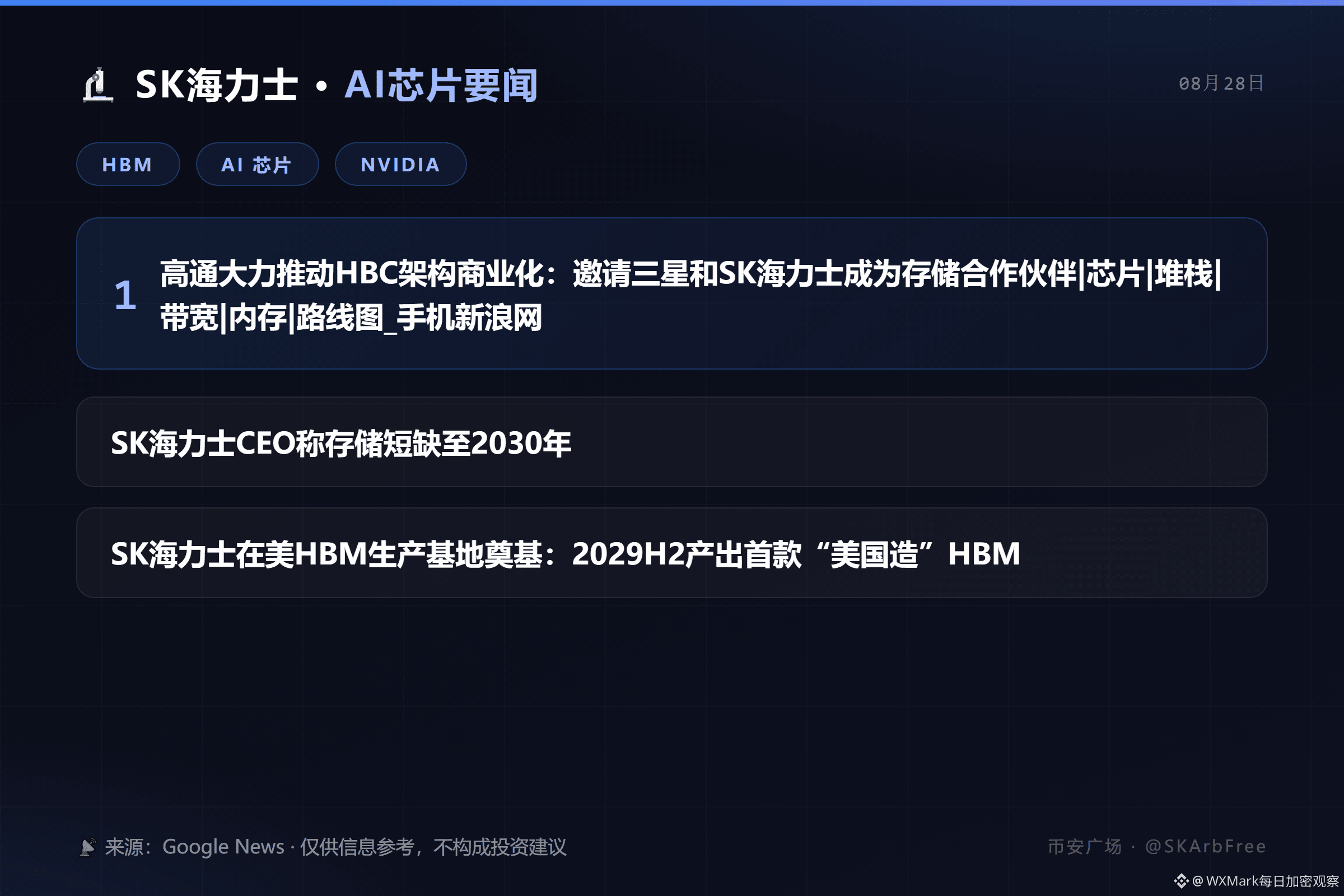
Article
🔬 SK hynix AI chip news: Qualcomm strongly promotes the commercialization of the HBC architecture—invites Samsung and SK hynix to be storage partners | August 28🔬 SK hynix AI chip news | August 28
━━━━━━━━━━
1. Qualcomm strongly promotes the commercialization of the HBC architecture: invites Samsung and SK hynix to be storage partners | chip | stack | bandwidth | memory | roadmap_ Sina News
2. SK hynix's CEO says the memory shortage will last until 2030
3. SK hynix breaks ground on its U.S. HBM production base: first “Made in the USA” HBM to be produced in H2 2029
📡 Source: Google News
💡 Focus: HBM/DRAM supply and demand updates will directly move in line with SK hynix contracts and ADRs—watch for abnormal market moves
$SKHYNIX $SKHY #SK海力士 #AI芯片 #HBM #Nvidia
🔬 SK hynix AI chip news: Qualcomm strongly promotes the commercialization of the HBC architecture—invites Samsung and SK hynix to be storage partners | August 28
🔬 SK hynix AI chip news | August 28
━━━━━━━━━━
1. Qualcomm strongly promotes the commercialization of the HBC architecture: invites Samsung and SK hynix to be storage partners | chip | stack | bandwidth | memory | roadmap_ Sina News
2. SK hynix's CEO says the memory shortage will last until 2030
3. SK hynix breaks ground on its U.S. HBM production base: first “Made in the USA” HBM to be produced in H2 2029
📡 Source: Google News
💡 Focus: HBM/DRAM supply and demand updates will directly move in line with SK hynix contracts and ADRs—watch for abnormal market moves
$SKHYNIX $SKHY #SK海力士 #AI芯片 #HBM #Nvidia
━━━━━━━━━━
1. Qualcomm strongly promotes the commercialization of the HBC architecture: invites Samsung and SK hynix to be storage partners | chip | stack | bandwidth | memory | roadmap_ Sina News
2. SK hynix's CEO says the memory shortage will last until 2030
3. SK hynix breaks ground on its U.S. HBM production base: first “Made in the USA” HBM to be produced in H2 2029
📡 Source: Google News
💡 Focus: HBM/DRAM supply and demand updates will directly move in line with SK hynix contracts and ADRs—watch for abnormal market moves
$SKHYNIX $SKHY #SK海力士 #AI芯片 #HBM #Nvidia
116

·
--
🇰🇷 SK Hynix (000660.KS) — ₩1,678,000 And Grinding Higher
SK Hynix is quietly building a base, up 0.42% to ₩1.678M. The world's #2 memory maker is still 42.5% below its 3-month high (₩2.919M) — which is either a warning sign or a massive discount.
📊 Technical Snapshot:
• Price: ₩1,678,000 | Trend: Uptrend (short-term)
• RSI: 49.1 (neutral) | MACD: negative at -62,879
• Volume: 0.76x — below average
• Price above SMA5/10/20 but below SMA50 (₩1,992,120)
🔑 Key Logic:
Same thesis as Micron — HBM3E demand for AI accelerators is real and growing. SK Hynix is the primary supplier to NVIDIA. The short-term uptrend is intact, but the SMA50 overhead at ₩1.99M is the real test. Price needs to reclaim that level for a sustained move.
📍 Key Levels:
Support: ₩1,500,000 (psychological + structural)
Resistance: ₩2,628,000 (major — 3-month resistance zone)
Bullish on memory for AI, or is this a value trap? 🧠
#SKHynix #HBM #DYOR
⚠️ This is not financial advice. All analysis reflects personal opinion and should not be taken as investment guidance. Always DYOR and manage your risk.
🇰🇷 SK Hynix (000660.KS) — ₩1,678,000 And Grinding Higher
SK Hynix is quietly building a base, up 0.42% to ₩1.678M. The world's #2 memory maker is still 42.5% below its 3-month high (₩2.919M) — which is either a warning sign or a massive discount.
📊 Technical Snapshot:
• Price: ₩1,678,000 | Trend: Uptrend (short-term)
• RSI: 49.1 (neutral) | MACD: negative at -62,879
• Volume: 0.76x — below average
• Price above SMA5/10/20 but below SMA50 (₩1,992,120)
🔑 Key Logic:
Same thesis as Micron — HBM3E demand for AI accelerators is real and growing. SK Hynix is the primary supplier to NVIDIA. The short-term uptrend is intact, but the SMA50 overhead at ₩1.99M is the real test. Price needs to reclaim that level for a sustained move.
📍 Key Levels:
Support: ₩1,500,000 (psychological + structural)
Resistance: ₩2,628,000 (major — 3-month resistance zone)
Bullish on memory for AI, or is this a value trap? 🧠
#SKHynix #HBM #DYOR
⚠️ This is not financial advice. All analysis reflects personal opinion and should not be taken as investment guidance. Always DYOR and manage your risk.
SK Hynix is quietly building a base, up 0.42% to ₩1.678M. The world's #2 memory maker is still 42.5% below its 3-month high (₩2.919M) — which is either a warning sign or a massive discount.
📊 Technical Snapshot:
• Price: ₩1,678,000 | Trend: Uptrend (short-term)
• RSI: 49.1 (neutral) | MACD: negative at -62,879
• Volume: 0.76x — below average
• Price above SMA5/10/20 but below SMA50 (₩1,992,120)
🔑 Key Logic:
Same thesis as Micron — HBM3E demand for AI accelerators is real and growing. SK Hynix is the primary supplier to NVIDIA. The short-term uptrend is intact, but the SMA50 overhead at ₩1.99M is the real test. Price needs to reclaim that level for a sustained move.
📍 Key Levels:
Support: ₩1,500,000 (psychological + structural)
Resistance: ₩2,628,000 (major — 3-month resistance zone)
Bullish on memory for AI, or is this a value trap? 🧠
#SKHynix #HBM #DYOR
⚠️ This is not financial advice. All analysis reflects personal opinion and should not be taken as investment guidance. Always DYOR and manage your risk.
307
·
--
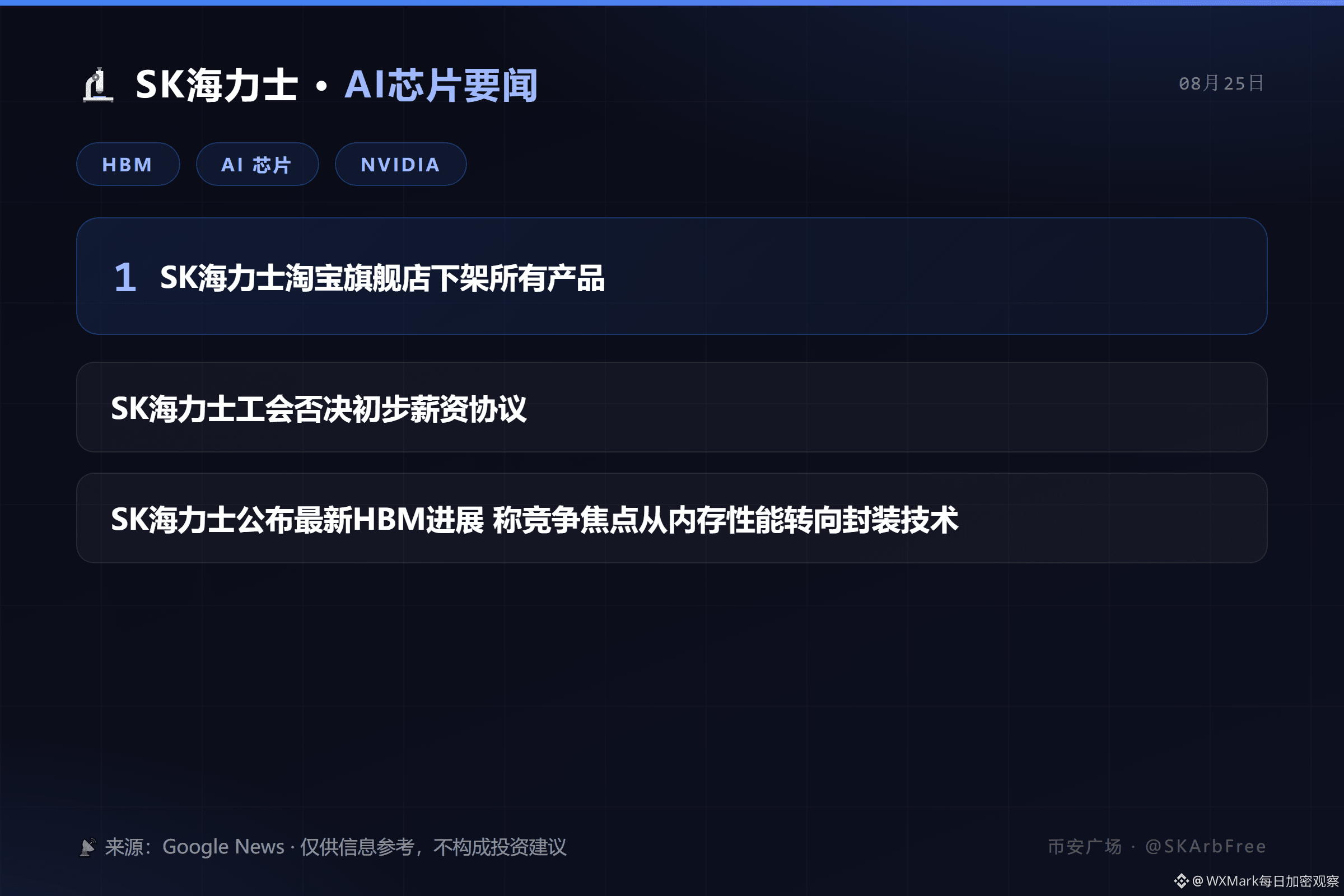
Article
🔬 SK Hynix AI chip news: SK Hynix Tmall flagship store removes all products | Aug 25🔬 SK Hynix AI chip news | Aug 25
━━━━━━━━━━
1. SK Hynix Tmall flagship store removes all products
2. SK Hynix workers' union rejects the preliminary wage agreement
3. SK Hynix announces the latest HBM progress, saying the competitive focus is shifting from memory performance to packaging technology
📡 Source: Google News
💡 Focus: HBM/DRAM supply and demand updates will directly move SK Hynix contracts and ADR—watch for market fluctuations
$SKHYNIX $SKHY #SK海力士 #AI芯片 #HBM #Nvidia
⚠️ For information only and does not constitute investment advice
🔬 SK Hynix AI chip news: SK Hynix Tmall flagship store removes all products | Aug 25
🔬 SK Hynix AI chip news | Aug 25
━━━━━━━━━━
1. SK Hynix Tmall flagship store removes all products
2. SK Hynix workers' union rejects the preliminary wage agreement
3. SK Hynix announces the latest HBM progress, saying the competitive focus is shifting from memory performance to packaging technology
📡 Source: Google News
💡 Focus: HBM/DRAM supply and demand updates will directly move SK Hynix contracts and ADR—watch for market fluctuations
$SKHYNIX $SKHY #SK海力士 #AI芯片 #HBM #Nvidia
⚠️ For information only and does not constitute investment advice
━━━━━━━━━━
1. SK Hynix Tmall flagship store removes all products
2. SK Hynix workers' union rejects the preliminary wage agreement
3. SK Hynix announces the latest HBM progress, saying the competitive focus is shifting from memory performance to packaging technology
📡 Source: Google News
💡 Focus: HBM/DRAM supply and demand updates will directly move SK Hynix contracts and ADR—watch for market fluctuations
$SKHYNIX $SKHY #SK海力士 #AI芯片 #HBM #Nvidia
⚠️ For information only and does not constitute investment advice
229
·
--
🇰🇷 SK Hynix at 1,671,000 KRW — down 3.41% but holding above short-term MAs. The world's #2 memory maker is consolidating, and the chart tells an interesting story.
Technical Snapshot:
→ Price: 1,671,000 KRW | RSI: 48.8 (neutral)
→ Above SMA5 and SMA10 — short-term bullish
→ Below SMA50 (2,001,560) — longer-term recovery in progress
→ Volume at 0.8x — quiet consolidation, not panic
Key Levels:
• Support: 1,500,000 (psychological + technical floor)
• Resistance: 2,628,000 (ambitious target)
The Thesis:
SK Hynix dominates HBM (High Bandwidth Memory) for AI chips. Every NVIDIA GPU needs their product. The stock is 43% below its 3-month high, which means either the market is wrong about AI demand or this is a generational buying opportunity.
Watch 1,500,000 like a hawk. If it holds, this is a buy. If it breaks, re-evaluate everything.
Is the memory cycle turning or just pausing? 👇
#SKHynix #HBM #DYOR
⚠️ Not financial advice. International stocks carry currency risk. DYOR.
🇰🇷 SK Hynix at 1,671,000 KRW — down 3.41% but holding above short-term MAs. The world's #2 memory maker is consolidating, and the chart tells an interesting story.
Technical Snapshot:
→ Price: 1,671,000 KRW | RSI: 48.8 (neutral)
→ Above SMA5 and SMA10 — short-term bullish
→ Below SMA50 (2,001,560) — longer-term recovery in progress
→ Volume at 0.8x — quiet consolidation, not panic
Key Levels:
• Support: 1,500,000 (psychological + technical floor)
• Resistance: 2,628,000 (ambitious target)
The Thesis:
SK Hynix dominates HBM (High Bandwidth Memory) for AI chips. Every NVIDIA GPU needs their product. The stock is 43% below its 3-month high, which means either the market is wrong about AI demand or this is a generational buying opportunity.
Watch 1,500,000 like a hawk. If it holds, this is a buy. If it breaks, re-evaluate everything.
Is the memory cycle turning or just pausing? 👇
#SKHynix #HBM #DYOR
⚠️ Not financial advice. International stocks carry currency risk. DYOR.
Technical Snapshot:
→ Price: 1,671,000 KRW | RSI: 48.8 (neutral)
→ Above SMA5 and SMA10 — short-term bullish
→ Below SMA50 (2,001,560) — longer-term recovery in progress
→ Volume at 0.8x — quiet consolidation, not panic
Key Levels:
• Support: 1,500,000 (psychological + technical floor)
• Resistance: 2,628,000 (ambitious target)
The Thesis:
SK Hynix dominates HBM (High Bandwidth Memory) for AI chips. Every NVIDIA GPU needs their product. The stock is 43% below its 3-month high, which means either the market is wrong about AI demand or this is a generational buying opportunity.
Watch 1,500,000 like a hawk. If it holds, this is a buy. If it breaks, re-evaluate everything.
Is the memory cycle turning or just pausing? 👇
#SKHynix #HBM #DYOR
⚠️ Not financial advice. International stocks carry currency risk. DYOR.
239
·
--
🇰🇷 SK Hynix (000660.KS) -2.9% today — down 42% from highs but up 27% from lows. Where does it go from here?
SK Hynix is the HBM (High Bandwidth Memory) king, supplying Nvidia's AI chips. Today's 2.9% drop to ₩1.68M is a pullback in a recovery trend. RSI 49.2 is dead neutral — the next move depends on AI demand data.
📊 Technical Snapshot:
- Price: ₩1,680,000 (-2.89%)
- RSI: 49.2 (neutral)
- MACD: -72,067 (bearish divergence)
- Volume: 3.4M shares (0.78x — declining)
- Trend: Uptrend but with bearish MACD
🎯 Key Levels:
Support: ₩1,500,000 (psychological) | Resistance: ₩2,628,000 (SMA50)
💡 The HBM thesis is long-term bullish, but short-term the stock is struggling below the 50-day MA. A close above ₩1.7M would be a bullish signal.
Is SK Hynix a buy at these levels or still too early? 🤔
#Stocks #HBM #DYOR
⚠️ Not financial advice. Always do your own research.
🇰🇷 SK Hynix (000660.KS) -2.9% today — down 42% from highs but up 27% from lows. Where does it go from here?
SK Hynix is the HBM (High Bandwidth Memory) king, supplying Nvidia's AI chips. Today's 2.9% drop to ₩1.68M is a pullback in a recovery trend. RSI 49.2 is dead neutral — the next move depends on AI demand data.
📊 Technical Snapshot:
- Price: ₩1,680,000 (-2.89%)
- RSI: 49.2 (neutral)
- MACD: -72,067 (bearish divergence)
- Volume: 3.4M shares (0.78x — declining)
- Trend: Uptrend but with bearish MACD
🎯 Key Levels:
Support: ₩1,500,000 (psychological) | Resistance: ₩2,628,000 (SMA50)
💡 The HBM thesis is long-term bullish, but short-term the stock is struggling below the 50-day MA. A close above ₩1.7M would be a bullish signal.
Is SK Hynix a buy at these levels or still too early? 🤔
#Stocks #HBM #DYOR
⚠️ Not financial advice. Always do your own research.
SK Hynix is the HBM (High Bandwidth Memory) king, supplying Nvidia's AI chips. Today's 2.9% drop to ₩1.68M is a pullback in a recovery trend. RSI 49.2 is dead neutral — the next move depends on AI demand data.
📊 Technical Snapshot:
- Price: ₩1,680,000 (-2.89%)
- RSI: 49.2 (neutral)
- MACD: -72,067 (bearish divergence)
- Volume: 3.4M shares (0.78x — declining)
- Trend: Uptrend but with bearish MACD
🎯 Key Levels:
Support: ₩1,500,000 (psychological) | Resistance: ₩2,628,000 (SMA50)
💡 The HBM thesis is long-term bullish, but short-term the stock is struggling below the 50-day MA. A close above ₩1.7M would be a bullish signal.
Is SK Hynix a buy at these levels or still too early? 🤔
#Stocks #HBM #DYOR
⚠️ Not financial advice. Always do your own research.
134
·
--
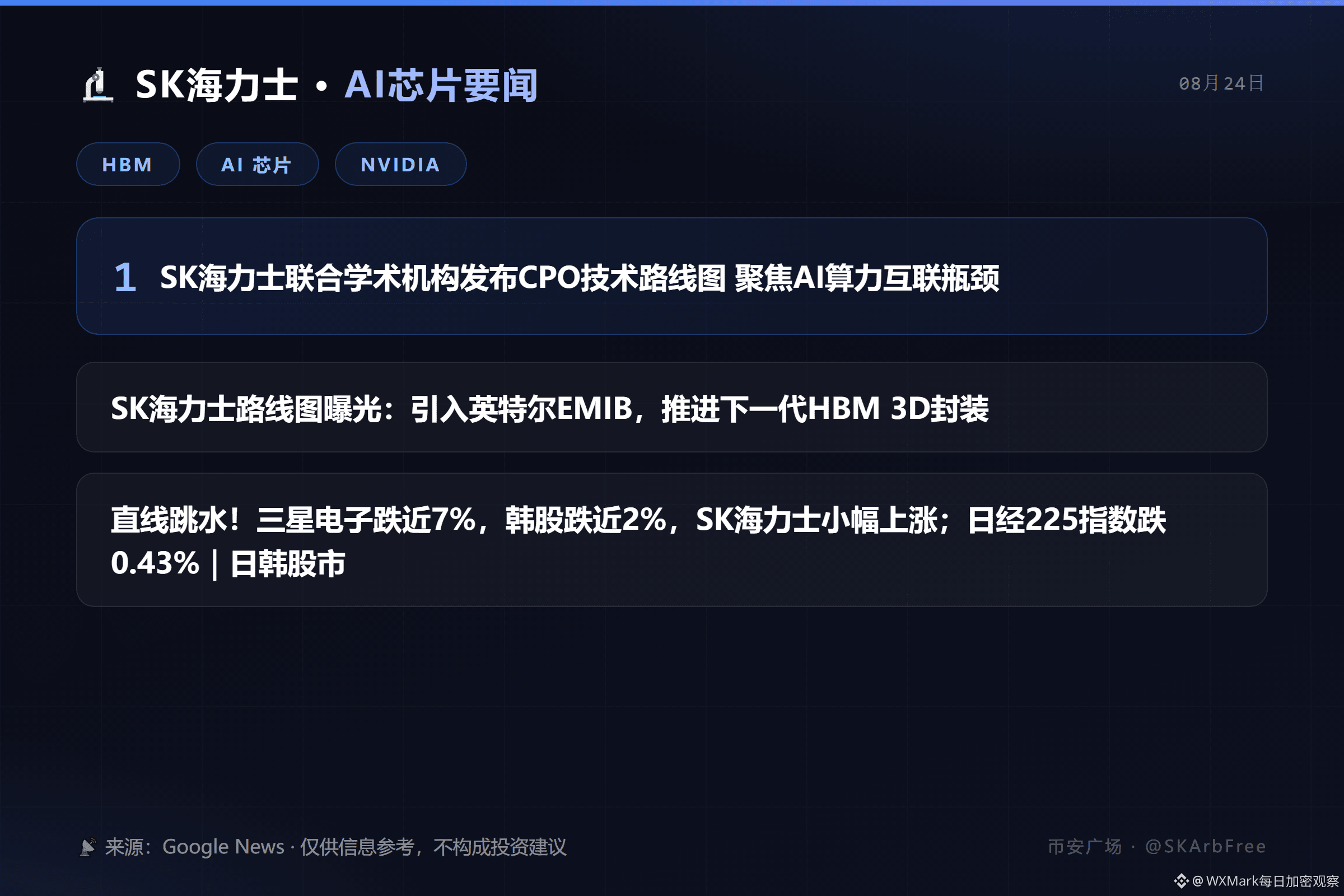
Article
🔬 SK hynix AI chip news: SK hynix and academic institutions release a CPO technology roadmap, focusing on | Aug 24🔬 SK hynix AI chip news | Aug 24
━━━━━━━━━━
1. SK hynix, together with academic institutions, releases a CPO technology roadmap, focusing on bottlenecks in AI compute interconnects
2. SK hynix roadmap leaked: introduces Intel EMIB and advances next-generation HBM 3D packaging
3. Straight plunge! Samsung Electronics drops nearly 7%, Korean stocks drop nearly 2%, SK hynix rises slightly; Nikkei 225 falls 0.43% | Japan and South Korea stock markets
📡 Source: Google News
💡 Focus: HBM/DRAM supply-and-demand updates will directly move SK hynix contracts and ADRs—watch for unusual market movements
$SKHYNIX $SKHY #SK海力士 #AI芯片 #HBM #Nvidia
🔬 SK hynix AI chip news: SK hynix and academic institutions release a CPO technology roadmap, focusing on | Aug 24
🔬 SK hynix AI chip news | Aug 24
━━━━━━━━━━
1. SK hynix, together with academic institutions, releases a CPO technology roadmap, focusing on bottlenecks in AI compute interconnects
2. SK hynix roadmap leaked: introduces Intel EMIB and advances next-generation HBM 3D packaging
3. Straight plunge! Samsung Electronics drops nearly 7%, Korean stocks drop nearly 2%, SK hynix rises slightly; Nikkei 225 falls 0.43% | Japan and South Korea stock markets
📡 Source: Google News
💡 Focus: HBM/DRAM supply-and-demand updates will directly move SK hynix contracts and ADRs—watch for unusual market movements
$SKHYNIX $SKHY #SK海力士 #AI芯片 #HBM #Nvidia
━━━━━━━━━━
1. SK hynix, together with academic institutions, releases a CPO technology roadmap, focusing on bottlenecks in AI compute interconnects
2. SK hynix roadmap leaked: introduces Intel EMIB and advances next-generation HBM 3D packaging
3. Straight plunge! Samsung Electronics drops nearly 7%, Korean stocks drop nearly 2%, SK hynix rises slightly; Nikkei 225 falls 0.43% | Japan and South Korea stock markets
📡 Source: Google News
💡 Focus: HBM/DRAM supply-and-demand updates will directly move SK hynix contracts and ADRs—watch for unusual market movements
$SKHYNIX $SKHY #SK海力士 #AI芯片 #HBM #Nvidia
277
·
--
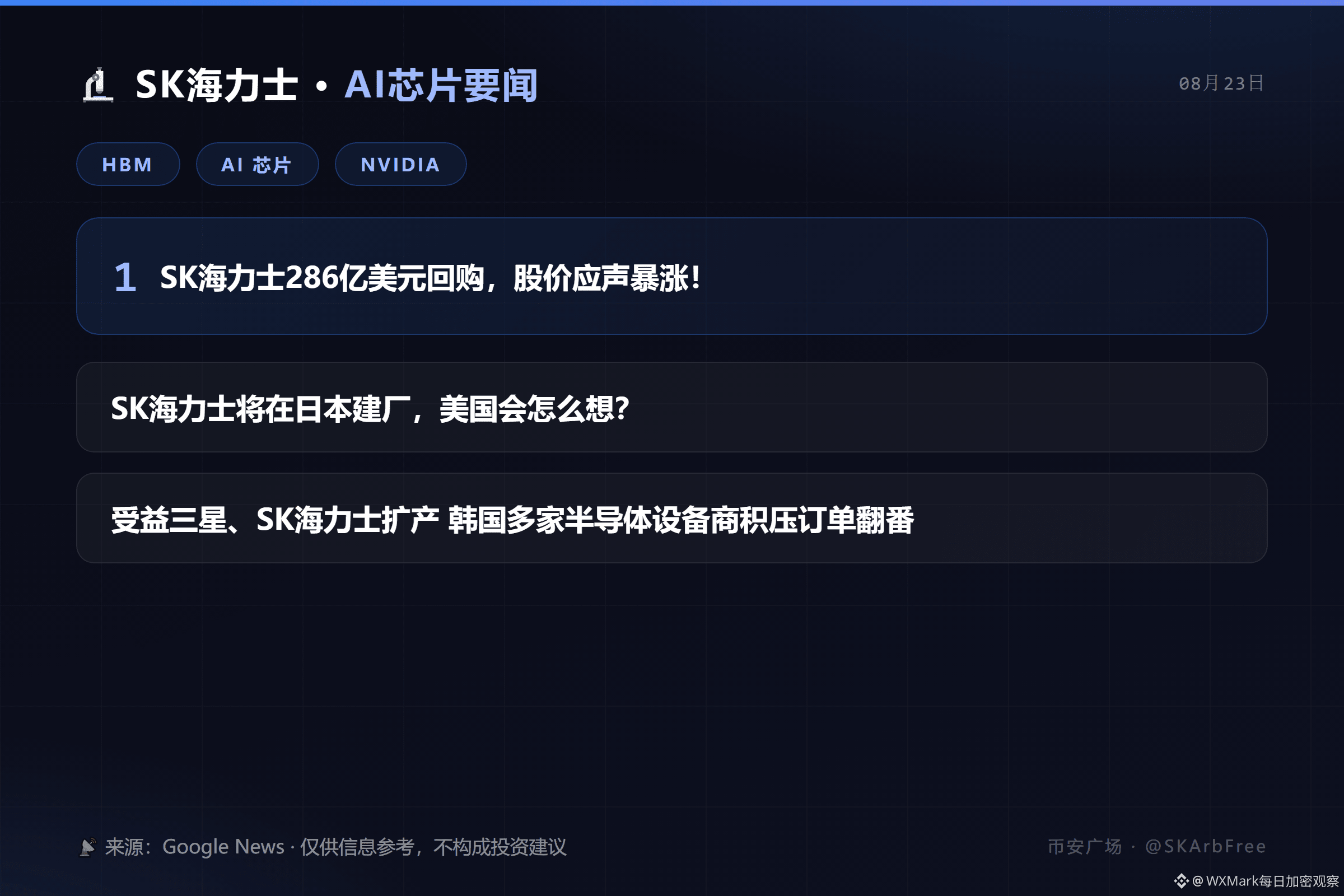
Article
🔬 SK Hynix AI Chip News: SK Hynix Repurchases $28.6 Billion, Shares Jump Immediately! | Aug 23🔬 SK Hynix AI chip news | Aug 23
━━━━━━━━━━
1. SK Hynix repurchases $28.6 billion—its stock price surged immediately!
2. SK Hynix will build a factory in Japan—what will the U.S. think?
3. Benefiting Samsung and SK Hynix as they expand production—orders at multiple South Korean semiconductor equipment companies double
📡 Source: Google News
💡 Focus: HBM/DRAM supply and demand updates will directly link with SK Hynix contracts and ADRs—watch for unusual price movements
$SKHYNIX $SKHY #SK海力士 #AI芯片 #HBM #Nvidia
⚠️ For information purposes only and does not constitute investment advice
🔬 SK Hynix AI Chip News: SK Hynix Repurchases $28.6 Billion, Shares Jump Immediately! | Aug 23
🔬 SK Hynix AI chip news | Aug 23
━━━━━━━━━━
1. SK Hynix repurchases $28.6 billion—its stock price surged immediately!
2. SK Hynix will build a factory in Japan—what will the U.S. think?
3. Benefiting Samsung and SK Hynix as they expand production—orders at multiple South Korean semiconductor equipment companies double
📡 Source: Google News
💡 Focus: HBM/DRAM supply and demand updates will directly link with SK Hynix contracts and ADRs—watch for unusual price movements
$SKHYNIX $SKHY #SK海力士 #AI芯片 #HBM #Nvidia
⚠️ For information purposes only and does not constitute investment advice
━━━━━━━━━━
1. SK Hynix repurchases $28.6 billion—its stock price surged immediately!
2. SK Hynix will build a factory in Japan—what will the U.S. think?
3. Benefiting Samsung and SK Hynix as they expand production—orders at multiple South Korean semiconductor equipment companies double
📡 Source: Google News
💡 Focus: HBM/DRAM supply and demand updates will directly link with SK Hynix contracts and ADRs—watch for unusual price movements
$SKHYNIX $SKHY #SK海力士 #AI芯片 #HBM #Nvidia
⚠️ For information purposes only and does not constitute investment advice
165
·
--
🇰🇷 SK Hynix ($000660.KS) just popped +2.31% — the HBM king is waking up.
₩1,730,000 with normal volume. RSI at 51 — dead neutral. But here's the setup that caught my eye: price is 40.7% BELOW its 3-month high (₩2,919,000) while sitting 30.9% above its 3-month low. That's a massive range, and we're right in the middle.
📊 Technical Snapshot:
• Price: ₩1,730,000 | Trend: Strong Uptrend (short-term)
• RSI: 51 — neutral, plenty of room
• Volume: Normal (0.82x) — no urgency yet
• Support: ₩1,500,000 | Resistance: ₩2,628,000
• MACD: Still negative but histogram narrowing — momentum shifting
🧠 Why Hynix Deserves Your Attention:
SK Hynix is THE dominant supplier of HBM chips to NVIDIA. Every H100, every B200 — they all need Hynix memory. The stock sold off hard from its highs but is now building a base. The +2.31% move today on normal volume suggests institutional accumulation, not retail FOMO.
📍 Key Levels:
• ₩1,500,000 is the floor — if it breaks, the next support is much lower
• ₩2,000,000 is the first meaningful resistance (psychological + technical)
• Above ₩2,000,000 opens the door to retest ₩2,600,000+
The AI memory trade isn't over — it's consolidating. Hynix at ₩1.73M could be the value entry of the cycle.
🤔 Are you buying the HBM dip or is the semiconductor cycle topping? What's your read? 👇
#SKHynix #HBM #DYOR
⚠️ Disclaimer: This is analysis, not financial advice. International stocks carry additional currency and geopolitical risk — always do your own research.
🇰🇷 SK Hynix ($000660.KS) just popped +2.31% — the HBM king is waking up.
₩1,730,000 with normal volume. RSI at 51 — dead neutral. But here's the setup that caught my eye: price is 40.7% BELOW its 3-month high (₩2,919,000) while sitting 30.9% above its 3-month low. That's a massive range, and we're right in the middle.
📊 Technical Snapshot:
• Price: ₩1,730,000 | Trend: Strong Uptrend (short-term)
• RSI: 51 — neutral, plenty of room
• Volume: Normal (0.82x) — no urgency yet
• Support: ₩1,500,000 | Resistance: ₩2,628,000
• MACD: Still negative but histogram narrowing — momentum shifting
🧠 Why Hynix Deserves Your Attention:
SK Hynix is THE dominant supplier of HBM chips to NVIDIA. Every H100, every B200 — they all need Hynix memory. The stock sold off hard from its highs but is now building a base. The +2.31% move today on normal volume suggests institutional accumulation, not retail FOMO.
📍 Key Levels:
• ₩1,500,000 is the floor — if it breaks, the next support is much lower
• ₩2,000,000 is the first meaningful resistance (psychological + technical)
• Above ₩2,000,000 opens the door to retest ₩2,600,000+
The AI memory trade isn't over — it's consolidating. Hynix at ₩1.73M could be the value entry of the cycle.
🤔 Are you buying the HBM dip or is the semiconductor cycle topping? What's your read? 👇
#SKHynix #HBM #DYOR
⚠️ Disclaimer: This is analysis, not financial advice. International stocks carry additional currency and geopolitical risk — always do your own research.
₩1,730,000 with normal volume. RSI at 51 — dead neutral. But here's the setup that caught my eye: price is 40.7% BELOW its 3-month high (₩2,919,000) while sitting 30.9% above its 3-month low. That's a massive range, and we're right in the middle.
📊 Technical Snapshot:
• Price: ₩1,730,000 | Trend: Strong Uptrend (short-term)
• RSI: 51 — neutral, plenty of room
• Volume: Normal (0.82x) — no urgency yet
• Support: ₩1,500,000 | Resistance: ₩2,628,000
• MACD: Still negative but histogram narrowing — momentum shifting
🧠 Why Hynix Deserves Your Attention:
SK Hynix is THE dominant supplier of HBM chips to NVIDIA. Every H100, every B200 — they all need Hynix memory. The stock sold off hard from its highs but is now building a base. The +2.31% move today on normal volume suggests institutional accumulation, not retail FOMO.
📍 Key Levels:
• ₩1,500,000 is the floor — if it breaks, the next support is much lower
• ₩2,000,000 is the first meaningful resistance (psychological + technical)
• Above ₩2,000,000 opens the door to retest ₩2,600,000+
The AI memory trade isn't over — it's consolidating. Hynix at ₩1.73M could be the value entry of the cycle.
🤔 Are you buying the HBM dip or is the semiconductor cycle topping? What's your read? 👇
#SKHynix #HBM #DYOR
⚠️ Disclaimer: This is analysis, not financial advice. International stocks carry additional currency and geopolitical risk — always do your own research.
23
Log in to explore more content
Join global crypto users on Binance Square
⚡️ Get latest and useful information about crypto.
💬 Trusted by the world’s largest crypto exchange.
👍 Discover real insights from verified creators.
Email / Phone number
Trending Topics
1
#BitcoinReboundsTo$79K
2,527 views
58 Discussing
2
#FedHikeOddsRiseTo89%
53,412 views
888 Discussing
3
#RLUSDSupplyHitsRecord$2.442B
2,711 views
52 Discussing
4
#AvalancheIntegratesIntoUAEPassDigitalVault
57,693 views
903 Discussing
5
#UKSeeksViewsOnTokenizingGold
43,959 views
676 Discussing
6
#AnthropicCEOCallsForAISlowdown
217,275 views
3,189 Discussing
7
#RevolutDataLeakReportedlyPostedAttackersThreatenDailyReleases
4,085 views
84 Discussing
8
#BrazilCentralBankRaisesVASPCapitalRequirements
35,905 views
767 Discussing
9
#BitcoinThirdSingleBlockReorgInFourWeeks
86,573 views
1,584 Discussing
10
#EthereumFallsBelow$2500
6,888 views
95 Discussing