

#gaming
gaming
1.8M views
7,801 Discussing
Hot
Latest
·
--
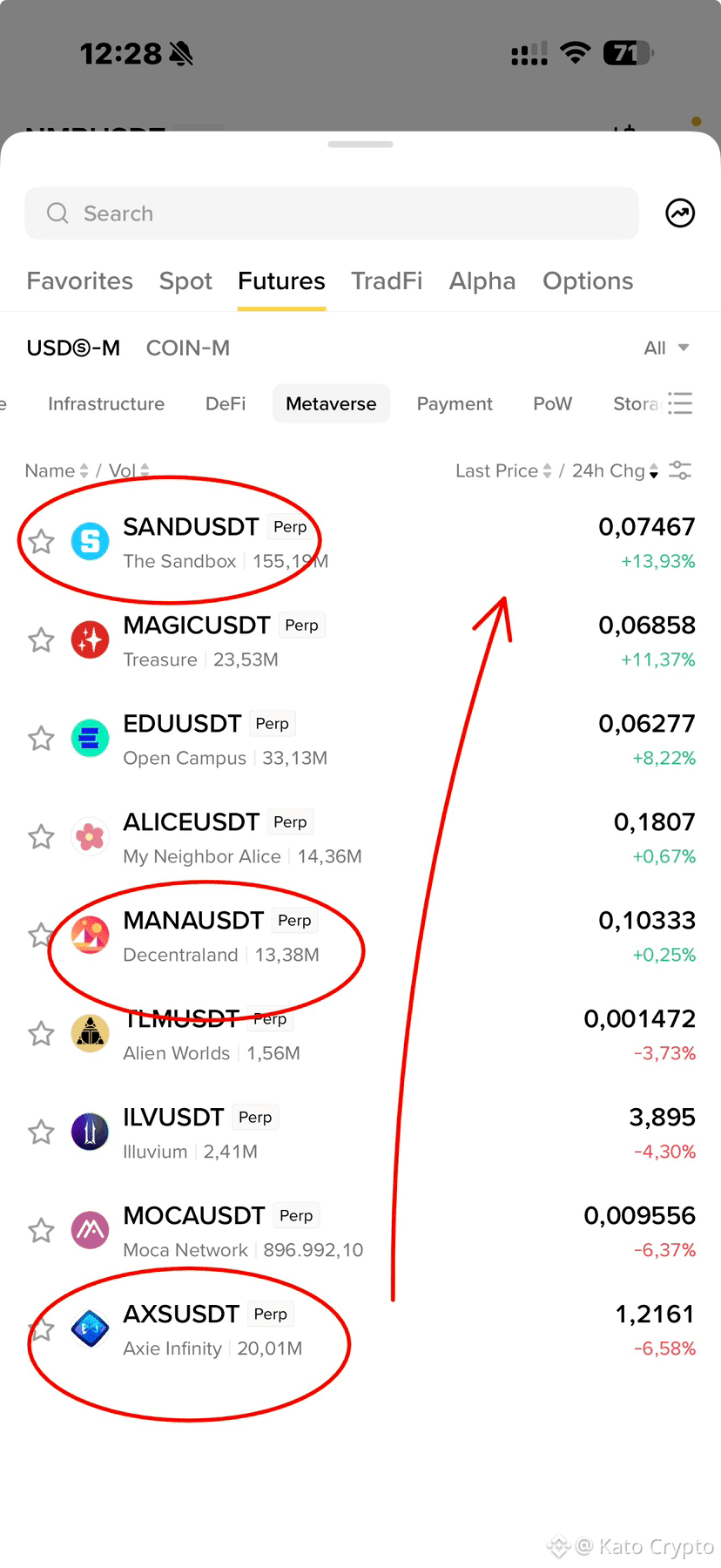
Metaverse gaming rotation, $SAND leads, $MANA and $AXS follow, AXS is the one at the entry. 📊
📍 Current: $1.22, pulled back 6.6% today into the base, 7 day still +4.4%
🔺 SAND moved first, MANA followed, AXS dipped into the zone while the sector is green, that is the timing
💎 Market cap: $213M, gaming category, the original play to earn, 99.3% below the $164 ATH
📈 Same rotation as every cycle, SAND, MANA, AXS, YGG move as a group, YGG signal already live at 0.029
🛡️ Stop-loss -20%, hold play, 30 to 60 days
The leader printed. The follower dipped. Buy the dip on the follower. 🎯
🔻 #AXS #gaming #cryptotrading #TechnicalAnalysis
📌 Sharing personal opinions only
not financial advice or a recommendation to buy/sell. Crypto is highly risky; DYOR and you are solely responsible. No coin promotion.
{future}(AXSUSDT)
Metaverse gaming rotation, $SAND leads, $MANA and $AXS follow, AXS is the one at the entry. 📊
📍 Current: $1.22, pulled back 6.6% today into the base, 7 day still +4.4%
🔺 SAND moved first, MANA followed, AXS dipped into the zone while the sector is green, that is the timing
💎 Market cap: $213M, gaming category, the original play to earn, 99.3% below the $164 ATH
📈 Same rotation as every cycle, SAND, MANA, AXS, YGG move as a group, YGG signal already live at 0.029
🛡️ Stop-loss -20%, hold play, 30 to 60 days
The leader printed. The follower dipped. Buy the dip on the follower. 🎯
🔻 #AXS #gaming #cryptotrading #TechnicalAnalysis
📌 Sharing personal opinions only
not financial advice or a recommendation to buy/sell. Crypto is highly risky; DYOR and you are solely responsible. No coin promotion.
📍 Current: $1.22, pulled back 6.6% today into the base, 7 day still +4.4%
🔺 SAND moved first, MANA followed, AXS dipped into the zone while the sector is green, that is the timing
💎 Market cap: $213M, gaming category, the original play to earn, 99.3% below the $164 ATH
📈 Same rotation as every cycle, SAND, MANA, AXS, YGG move as a group, YGG signal already live at 0.029
🛡️ Stop-loss -20%, hold play, 30 to 60 days
The leader printed. The follower dipped. Buy the dip on the follower. 🎯
🔻 #AXS #gaming #cryptotrading #TechnicalAnalysis
📌 Sharing personal opinions only
not financial advice or a recommendation to buy/sell. Crypto is highly risky; DYOR and you are solely responsible. No coin promotion.
2
2.1k

·
--
GAMING TOKENS ARE NOT DEAD!
$GALA — Watch for increasing spot volume before expecting continuation.
$IMX — Blockchain gaming adoption remains the major narrative.
$BEAM.US — Momentum could accelerate if gaming tokens rotate higher together.
Sector confirmation would make these setups more interesting.
NFA. DYOR.
#GALA #IMX #BEAM #Gaming #Crypto
GAMING TOKENS ARE NOT DEAD!
$GALA — Watch for increasing spot volume before expecting continuation.
$IMX — Blockchain gaming adoption remains the major narrative.
$BEAM.US — Momentum could accelerate if gaming tokens rotate higher together.
Sector confirmation would make these setups more interesting.
NFA. DYOR.
#GALA #IMX #BEAM #Gaming #Crypto
$GALA — Watch for increasing spot volume before expecting continuation.
$IMX — Blockchain gaming adoption remains the major narrative.
$BEAM.US — Momentum could accelerate if gaming tokens rotate higher together.
Sector confirmation would make these setups more interesting.
NFA. DYOR.
#GALA #IMX #BEAM #Gaming #Crypto
1
13
·
--
GAMING COINS COULD BE PREPARING A MOVE!
$ACE — Watch whether gaming-sector demand begins improving.
$PIXEL — Community activity could produce renewed speculative interest.
$PORTAL — A breakout backed by volume would make the setup more convincing.
Gaming rotation remains one narrative to monitor.
NFA. DYOR.
#ACE #PIXEL #PORTAL #Gaming #Crypto
GAMING COINS COULD BE PREPARING A MOVE!
$ACE — Watch whether gaming-sector demand begins improving.
$PIXEL — Community activity could produce renewed speculative interest.
$PORTAL — A breakout backed by volume would make the setup more convincing.
Gaming rotation remains one narrative to monitor.
NFA. DYOR.
#ACE #PIXEL #PORTAL #Gaming #Crypto
$ACE — Watch whether gaming-sector demand begins improving.
$PIXEL — Community activity could produce renewed speculative interest.
$PORTAL — A breakout backed by volume would make the setup more convincing.
Gaming rotation remains one narrative to monitor.
NFA. DYOR.
#ACE #PIXEL #PORTAL #Gaming #Crypto
2
93

·
--
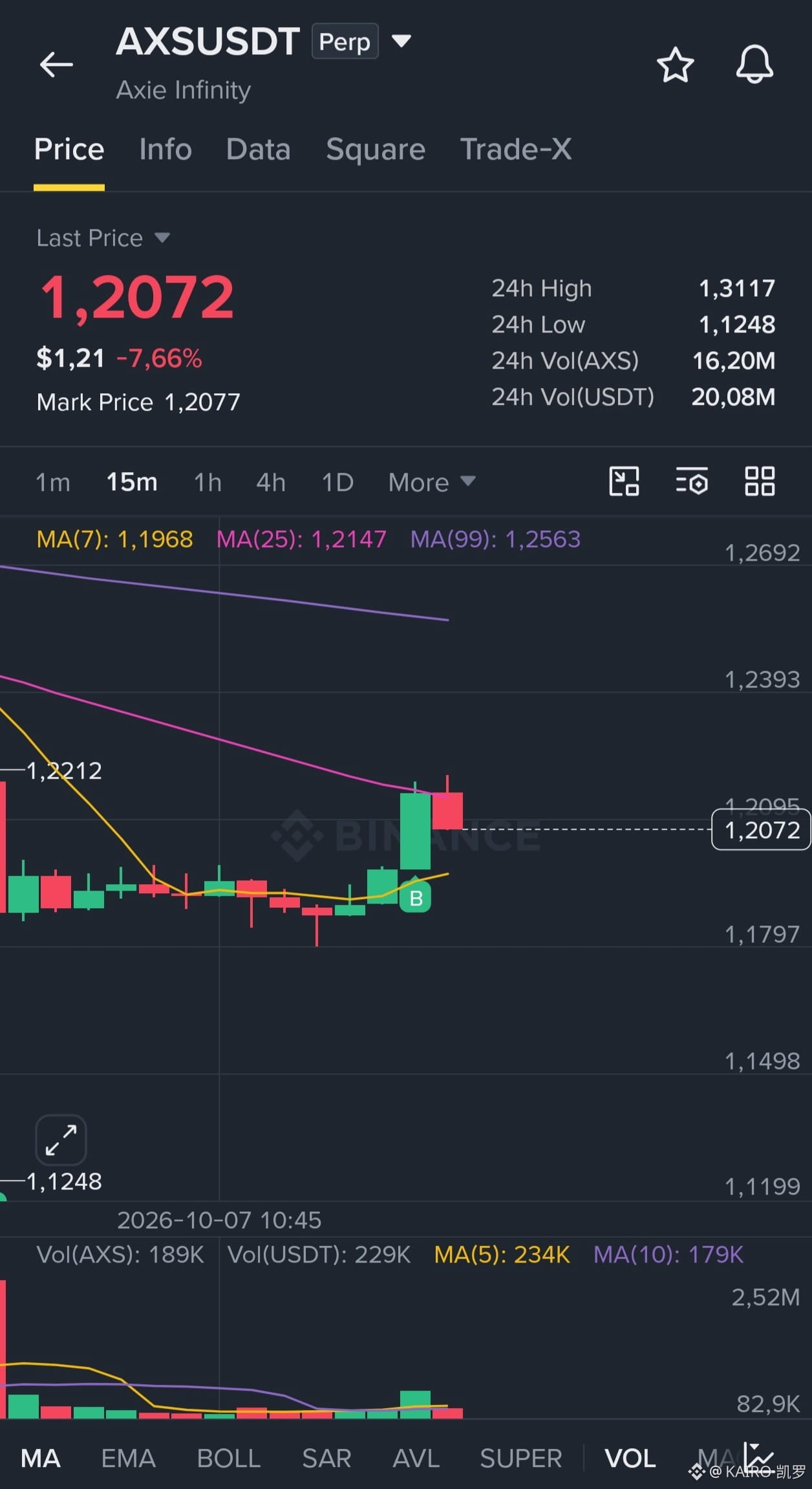
$AXS /USDT LONG 🔵
Metaverse & gaming trend is heating up, and AXS could follow the move higher 🧭
🟢 Buyzone: 1.207
🔴 Stoploss: 1.050
🎯 Target 1: 1.270
🎯 Target 2: 1.350
🎯 Target 3: 1.500
⚠️ Risk: FOMO — don't chase if price spikes too fast.
Not financial advice and not a recommendation to buy or sell. Crypto is highly risky, DYOR and you are solely responsible. No coin promotion.
#AXS #Metaverse #Gaming #Write2Earn
$AXS /USDT LONG 🔵
Metaverse & gaming trend is heating up, and AXS could follow the move higher 🧭
🟢 Buyzone: 1.207
🔴 Stoploss: 1.050
🎯 Target 1: 1.270
🎯 Target 2: 1.350
🎯 Target 3: 1.500
⚠️ Risk: FOMO — don't chase if price spikes too fast.
Not financial advice and not a recommendation to buy or sell. Crypto is highly risky, DYOR and you are solely responsible. No coin promotion.
#AXS #Metaverse #Gaming #Write2Earn
Metaverse & gaming trend is heating up, and AXS could follow the move higher 🧭
🟢 Buyzone: 1.207
🔴 Stoploss: 1.050
🎯 Target 1: 1.270
🎯 Target 2: 1.350
🎯 Target 3: 1.500
⚠️ Risk: FOMO — don't chase if price spikes too fast.
Not financial advice and not a recommendation to buy or sell. Crypto is highly risky, DYOR and you are solely responsible. No coin promotion.
#AXS #Metaverse #Gaming #Write2Earn
288

🐹 Hamster Kombat ($HMSTR ) just listed on Binance Spot and saw 20,000%+ volume spikes within minutes
This isn't just a meme coin — it's a play-to-earn gaming protocol where AI agent traders and clicker games work together
Listing announcement sent retail into FOMO panic due to previous bot activity + arbitrage. Price volatility is now at extreme levels
First 24 hours: classic listing chaos — mint price launch, 5x in minutes, 3x correction, now consolidating mid-move
Gaming + AI + listing hype all converging — this combo usually creates unpredictable volatility
Will Hamster Kombat sustain this listing momentum, or become a typical P&D?
#Bitcoin #HamsterKombat #Gaming #BinanceSquare
🐹 Hamster Kombat ($HMSTR ) just listed on Binance Spot and saw 20,000%+ volume spikes within minutes
This isn't just a meme coin — it's a play-to-earn gaming protocol where AI agent traders and clicker games work together
Listing announcement sent retail into FOMO panic due to previous bot activity + arbitrage. Price volatility is now at extreme levels
First 24 hours: classic listing chaos — mint price launch, 5x in minutes, 3x correction, now consolidating mid-move
Gaming + AI + listing hype all converging — this combo usually creates unpredictable volatility
Will Hamster Kombat sustain this listing momentum, or become a typical P&D?
#Bitcoin #HamsterKombat #Gaming #BinanceSquare
This isn't just a meme coin — it's a play-to-earn gaming protocol where AI agent traders and clicker games work together
Listing announcement sent retail into FOMO panic due to previous bot activity + arbitrage. Price volatility is now at extreme levels
First 24 hours: classic listing chaos — mint price launch, 5x in minutes, 3x correction, now consolidating mid-move
Gaming + AI + listing hype all converging — this combo usually creates unpredictable volatility
Will Hamster Kombat sustain this listing momentum, or become a typical P&D?
#Bitcoin #HamsterKombat #Gaming #BinanceSquare
1
472
·
--
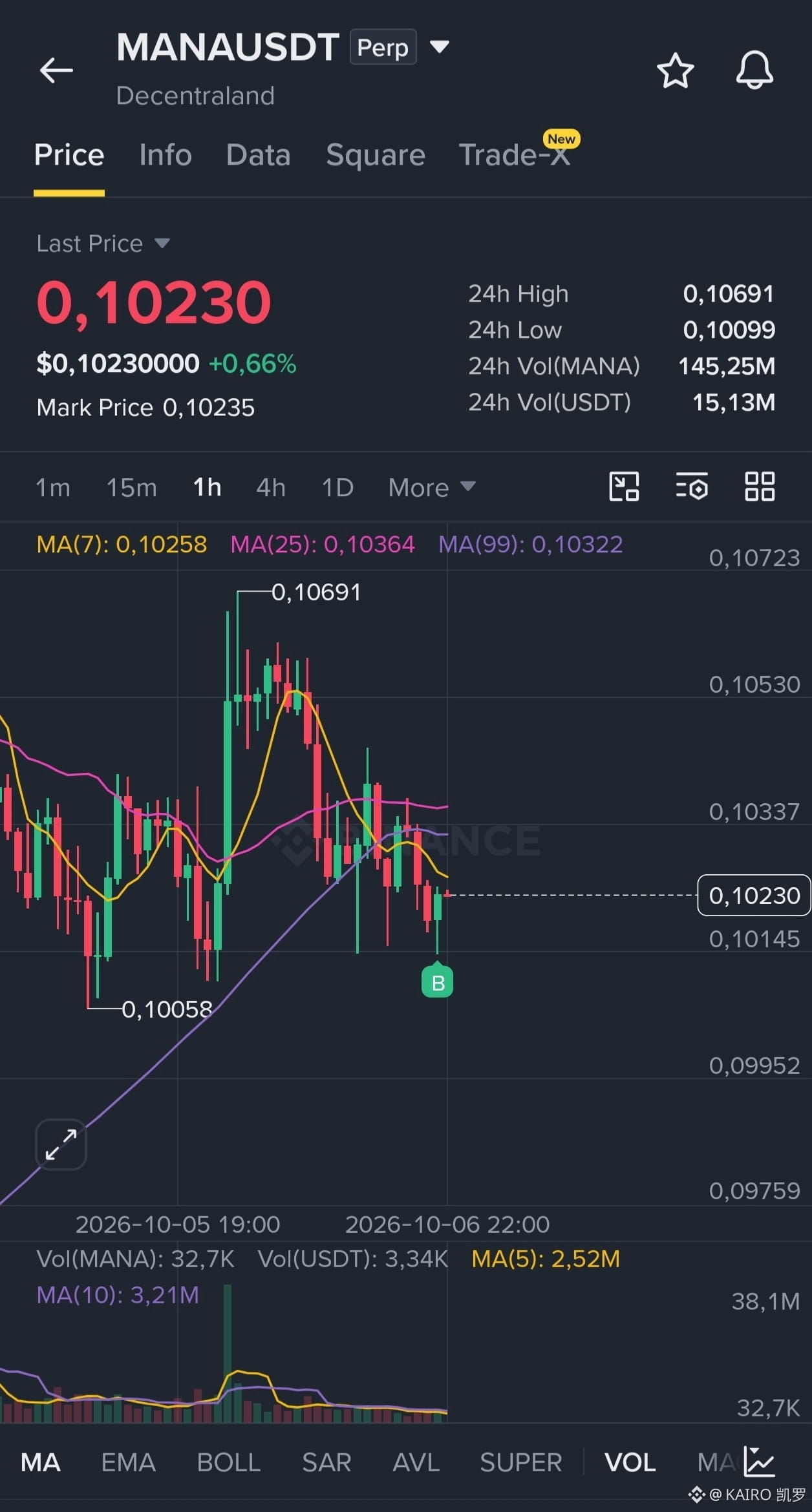
$MANA /USDT LONG 🔵
Gaming/metaverse trend is heating up, and MANA is setting up for a potential move higher 🧭
🟢 Buyzone: 0.10230
🔴 Stoploss: 0.08900
🎯 Target 1: 0.10800
🎯 Target 2: 0.11600
🎯 Target 3: 0.12800
⚠️ Risk: FOMO — don't chase if price spikes too fast.
Not financial advice and not a recommendation to buy or sell. Crypto is highly risky, DYOR and you are solely responsible. No coin promotion.
#MANA. #Decentraland #gaming #Write2Earn
$MANA /USDT LONG 🔵
Gaming/metaverse trend is heating up, and MANA is setting up for a potential move higher 🧭
🟢 Buyzone: 0.10230
🔴 Stoploss: 0.08900
🎯 Target 1: 0.10800
🎯 Target 2: 0.11600
🎯 Target 3: 0.12800
⚠️ Risk: FOMO — don't chase if price spikes too fast.
Not financial advice and not a recommendation to buy or sell. Crypto is highly risky, DYOR and you are solely responsible. No coin promotion.
#MANA. #Decentraland #gaming #Write2Earn
Gaming/metaverse trend is heating up, and MANA is setting up for a potential move higher 🧭
🟢 Buyzone: 0.10230
🔴 Stoploss: 0.08900
🎯 Target 1: 0.10800
🎯 Target 2: 0.11600
🎯 Target 3: 0.12800
⚠️ Risk: FOMO — don't chase if price spikes too fast.
Not financial advice and not a recommendation to buy or sell. Crypto is highly risky, DYOR and you are solely responsible. No coin promotion.
#MANA. #Decentraland #gaming #Write2Earn
300
·
--
DON’T SLEEP ON THESE GAMING TOKENS!
$CHZ — CHZ remains closely linked with sports and fan-token activity. Fresh sector interest could increase volatility.
$ENJ — ENJ is an older gaming and NFT-related token that could react if legacy gaming assets rotate higher.
$YGG — YGG is a more speculative gaming play where strong volume can produce rapid moves.
NFA. DYOR.
#CHZ #ENJ #YGG #Gaming #Altcoins
DON’T SLEEP ON THESE GAMING TOKENS!
$CHZ — CHZ remains closely linked with sports and fan-token activity. Fresh sector interest could increase volatility.
$ENJ — ENJ is an older gaming and NFT-related token that could react if legacy gaming assets rotate higher.
$YGG — YGG is a more speculative gaming play where strong volume can produce rapid moves.
NFA. DYOR.
#CHZ #ENJ #YGG #Gaming #Altcoins
$CHZ — CHZ remains closely linked with sports and fan-token activity. Fresh sector interest could increase volatility.
$ENJ — ENJ is an older gaming and NFT-related token that could react if legacy gaming assets rotate higher.
$YGG — YGG is a more speculative gaming play where strong volume can produce rapid moves.
NFA. DYOR.
#CHZ #ENJ #YGG #Gaming #Altcoins
2
562

·
--
Gaming tokens are absorbing the harshest selling today while majors hold the line 🎮
$AXS leads the losers down 9.29% to 1.319 on modest 10.2M volume — the sharpest single-session drop on the board. Play-to-earn infrastructure has been under rotational pressure for weeks, and thin liquidity is amplifying each leg lower. ZRO followed with a 5.13% decline to 1.903 despite 15.3M flow, suggesting broader LayerZero ecosystem fatigue after months of rangebound chop. QNT also slipped 4.13% but on heavyweight 48M volume, pointing to methodical distribution rather than panic 📉
Majors continue to digest sideways — BTC held 86,236 on nearly 1 billion USDT, ETH and SOL both fractionally green. The divergence between large-cap stability and select alt weakness signals profit rotation, not broad risk-off.
Watch for AXS support around the 1.30 psychological handle and whether gaming sentiment shifts if broader NFT or metaverse catalysts emerge. Are you seeing this as sector-specific pressure or early signs of deeper alt correction?
#AXS #Axie #Gaming #CryptoMarkets
Gaming tokens are absorbing the harshest selling today while majors hold the line 🎮
$AXS leads the losers down 9.29% to 1.319 on modest 10.2M volume — the sharpest single-session drop on the board. Play-to-earn infrastructure has been under rotational pressure for weeks, and thin liquidity is amplifying each leg lower. ZRO followed with a 5.13% decline to 1.903 despite 15.3M flow, suggesting broader LayerZero ecosystem fatigue after months of rangebound chop. QNT also slipped 4.13% but on heavyweight 48M volume, pointing to methodical distribution rather than panic 📉
Majors continue to digest sideways — BTC held 86,236 on nearly 1 billion USDT, ETH and SOL both fractionally green. The divergence between large-cap stability and select alt weakness signals profit rotation, not broad risk-off.
Watch for AXS support around the 1.30 psychological handle and whether gaming sentiment shifts if broader NFT or metaverse catalysts emerge. Are you seeing this as sector-specific pressure or early signs of deeper alt correction?
#AXS #Axie #Gaming #CryptoMarkets
$AXS leads the losers down 9.29% to 1.319 on modest 10.2M volume — the sharpest single-session drop on the board. Play-to-earn infrastructure has been under rotational pressure for weeks, and thin liquidity is amplifying each leg lower. ZRO followed with a 5.13% decline to 1.903 despite 15.3M flow, suggesting broader LayerZero ecosystem fatigue after months of rangebound chop. QNT also slipped 4.13% but on heavyweight 48M volume, pointing to methodical distribution rather than panic 📉
Majors continue to digest sideways — BTC held 86,236 on nearly 1 billion USDT, ETH and SOL both fractionally green. The divergence between large-cap stability and select alt weakness signals profit rotation, not broad risk-off.
Watch for AXS support around the 1.30 psychological handle and whether gaming sentiment shifts if broader NFT or metaverse catalysts emerge. Are you seeing this as sector-specific pressure or early signs of deeper alt correction?
#AXS #Axie #Gaming #CryptoMarkets
65
·
--
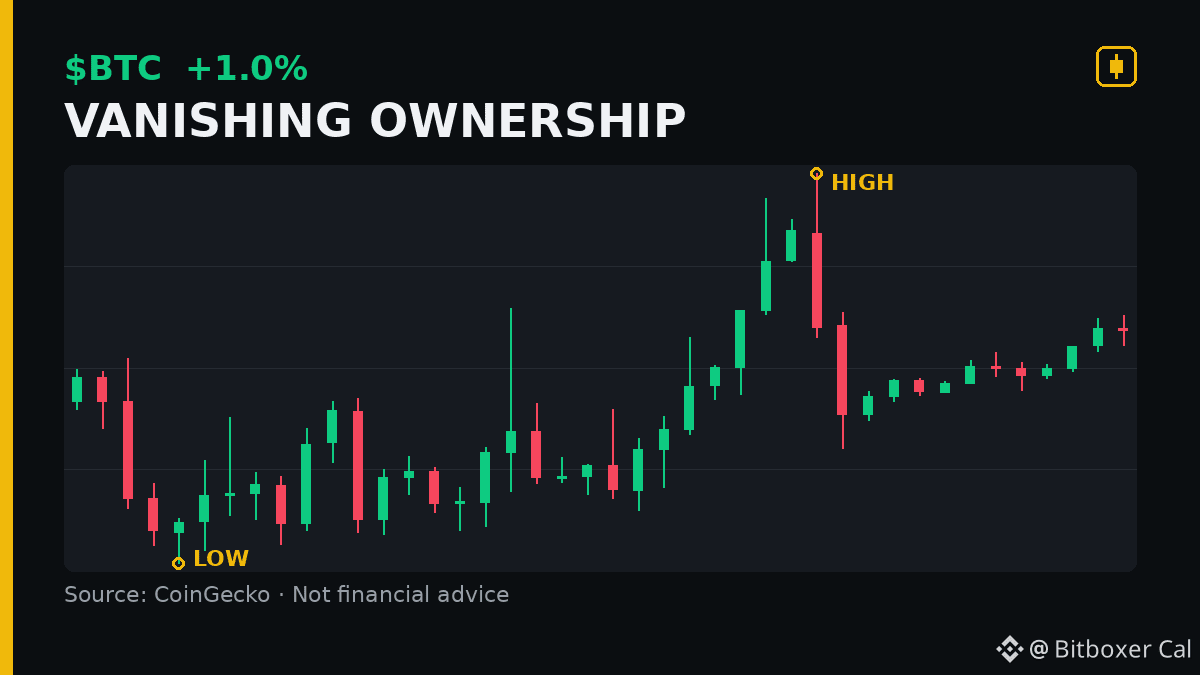
Theater owners don't own the movies, and $AVAX or $BTC gamers are currently trapped in the same illusion.
While you grind for hours, platforms still dictate your actual 'ownership' of in-game assets. Watch secondary market liquidity closely; it is the only real metric for whether players are finally capturing the value they create. Are you building equity or just renting your progress?
$BTC $AVAX #gaming #digitalownership #Web3Gaming
Theater owners don't own the movies, and $AVAX or $BTC gamers are currently trapped in the same illusion.
While you grind for hours, platforms still dictate your actual 'ownership' of in-game assets. Watch secondary market liquidity closely; it is the only real metric for whether players are finally capturing the value they create. Are you building equity or just renting your progress?
$BTC $AVAX #gaming #digitalownership #Web3Gaming
While you grind for hours, platforms still dictate your actual 'ownership' of in-game assets. Watch secondary market liquidity closely; it is the only real metric for whether players are finally capturing the value they create. Are you building equity or just renting your progress?
$BTC $AVAX #gaming #digitalownership #Web3Gaming
234

·
--
🔥 **Why Is SAND More Interesting Than It Looks?**
Many people still see **SAND** only as a metaverse token. But The Sandbox is building something much bigger.
🎮 **Gaming** – More creator-made games and experiences are being developed.
🤖 **AI** – AI tools can help creators build digital assets and experiences faster.
📱 **Mobile** – The Sandbox is expanding toward mobile gaming, opening the door to more users.
🔗 **SANDchain** – A new blockchain infrastructure is being developed to support creators, ownership and rewards.
👥 **Large Ecosystem** – The Sandbox has reported millions of users and hundreds of thousands of creators.
💡 **The interesting part:**
If gaming + AI + mobile + creator adoption continue to grow, SAND could have more utility than it had during the earlier metaverse hype.
⚠️ **Remember:** Adoption and real usage matter more than hype. Price targets are never guaranteed.
📌 **SAND is not just a metaverse bet anymore — watch the Gaming + AI + Creator + Blockchain story.**
#SAND #TheSandbox #Crypto #Gaming
🔥 **Why Is SAND More Interesting Than It Looks?**
Many people still see **SAND** only as a metaverse token. But The Sandbox is building something much bigger.
🎮 **Gaming** – More creator-made games and experiences are being developed.
🤖 **AI** – AI tools can help creators build digital assets and experiences faster.
📱 **Mobile** – The Sandbox is expanding toward mobile gaming, opening the door to more users.
🔗 **SANDchain** – A new blockchain infrastructure is being developed to support creators, ownership and rewards.
👥 **Large Ecosystem** – The Sandbox has reported millions of users and hundreds of thousands of creators.
💡 **The interesting part:**
If gaming + AI + mobile + creator adoption continue to grow, SAND could have more utility than it had during the earlier metaverse hype.
⚠️ **Remember:** Adoption and real usage matter more than hype. Price targets are never guaranteed.
📌 **SAND is not just a metaverse bet anymore — watch the Gaming + AI + Creator + Blockchain story.**
#SAND #TheSandbox #Crypto #Gaming
Many people still see **SAND** only as a metaverse token. But The Sandbox is building something much bigger.
🎮 **Gaming** – More creator-made games and experiences are being developed.
🤖 **AI** – AI tools can help creators build digital assets and experiences faster.
📱 **Mobile** – The Sandbox is expanding toward mobile gaming, opening the door to more users.
🔗 **SANDchain** – A new blockchain infrastructure is being developed to support creators, ownership and rewards.
👥 **Large Ecosystem** – The Sandbox has reported millions of users and hundreds of thousands of creators.
💡 **The interesting part:**
If gaming + AI + mobile + creator adoption continue to grow, SAND could have more utility than it had during the earlier metaverse hype.
⚠️ **Remember:** Adoption and real usage matter more than hype. Price targets are never guaranteed.
📌 **SAND is not just a metaverse bet anymore — watch the Gaming + AI + Creator + Blockchain story.**
#SAND #TheSandbox #Crypto #Gaming
1
308

·
--
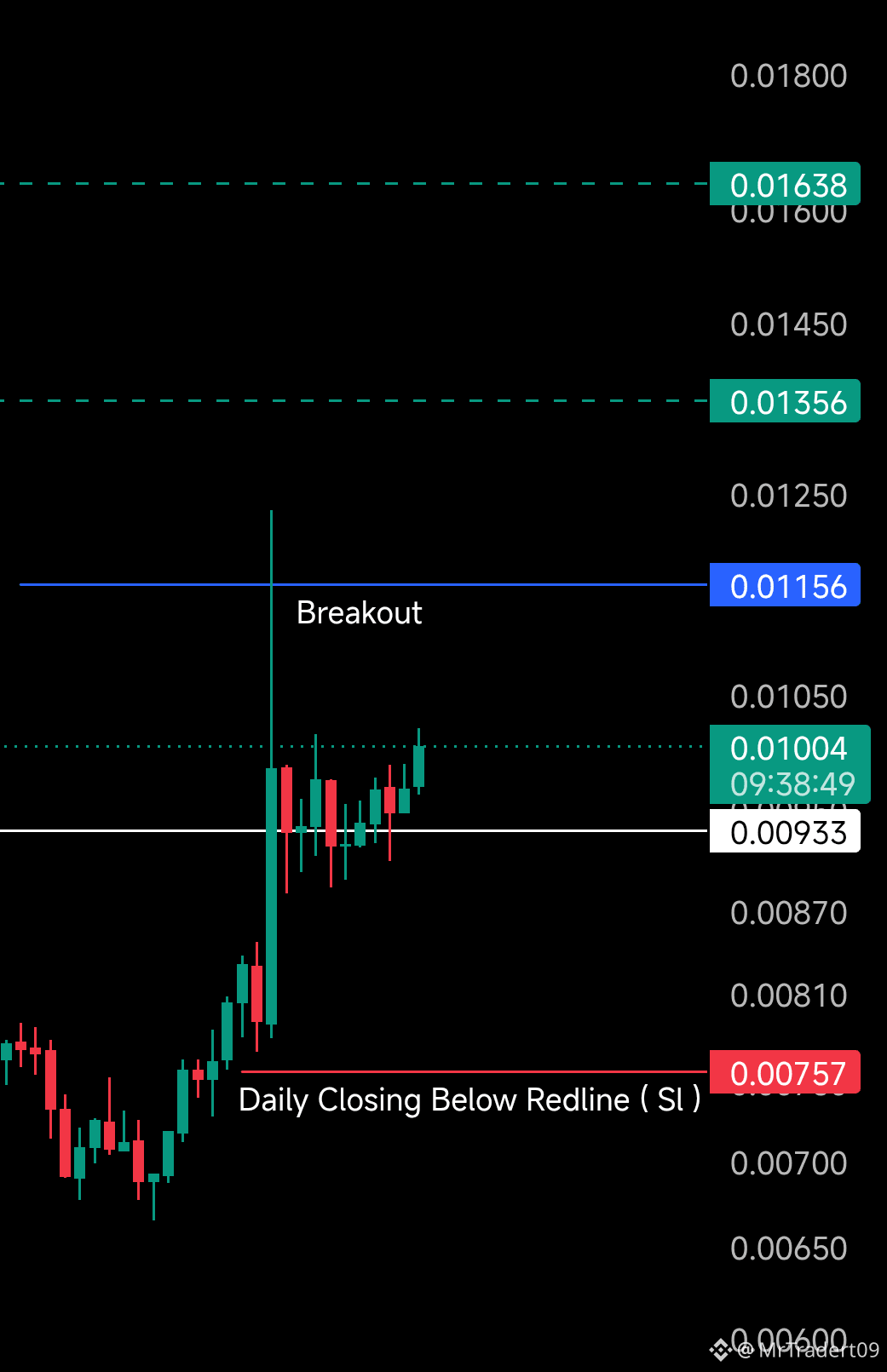
$XAI usdt Chart update !
Gaming Narrative pumping hard . Xai is a gaming category project which show insane strength .
If it hold white line area . Soon it will be blast .
The real game will start after breakout of blue line.
and give a Real closing above blue line will trigger the game . still we are above from our entry point .
Remember i am not financial advisor please DYOR
[ Hit that FOLLOW button for daily whale alerts, on-chain metrics, crypto updates, and for quality setups ]
$BEAMX
{future}(BEAMXUSDT)
$COLLECT
{future}(COLLECTUSDT)
#Binance #BinanceSquare #gainer #gaming #BTC
$XAI usdt Chart update !
Gaming Narrative pumping hard . Xai is a gaming category project which show insane strength .
If it hold white line area . Soon it will be blast .
The real game will start after breakout of blue line.
and give a Real closing above blue line will trigger the game . still we are above from our entry point .
Remember i am not financial advisor please DYOR
[ Hit that FOLLOW button for daily whale alerts, on-chain metrics, crypto updates, and for quality setups ]
$BEAMX
$COLLECT
#Binance #BinanceSquare #gainer #gaming #BTC
Gaming Narrative pumping hard . Xai is a gaming category project which show insane strength .
If it hold white line area . Soon it will be blast .
The real game will start after breakout of blue line.
and give a Real closing above blue line will trigger the game . still we are above from our entry point .
Remember i am not financial advisor please DYOR
[ Hit that FOLLOW button for daily whale alerts, on-chain metrics, crypto updates, and for quality setups ]
$BEAMX
$COLLECT
#Binance #BinanceSquare #gainer #gaming #BTC
1
526

·
--
Bullish
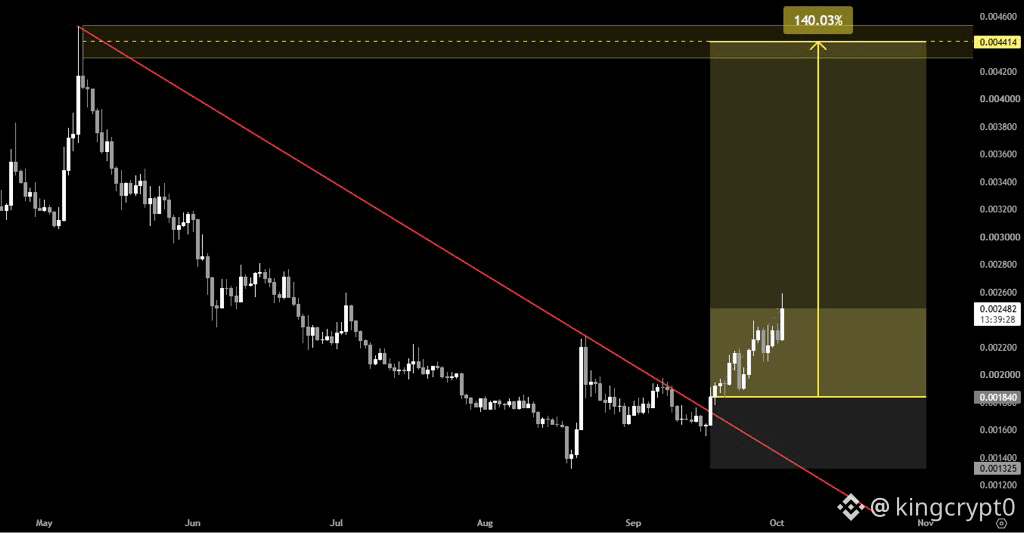
$GALA IS EXPANDING THE WEB3 ENTERTAINMENT STACK.
Gala's ecosystem spans gaming and entertainment products built around blockchain technology.
Web3 is moving toward broader digital experiences rather than NFTs alone.
#gala #gaming #entertainment #Crypto
{spot}(GALAUSDT)
$GALA IS EXPANDING THE WEB3 ENTERTAINMENT STACK.
Gala's ecosystem spans gaming and entertainment products built around blockchain technology.
Web3 is moving toward broader digital experiences rather than NFTs alone.
#gala #gaming #entertainment #Crypto
Gala's ecosystem spans gaming and entertainment products built around blockchain technology.
Web3 is moving toward broader digital experiences rather than NFTs alone.
#gala #gaming #entertainment #Crypto
2
554

·
--
Phenomenon: $MAGIC ’s activity today has once again highlighted the risk profile of assets in the blockchain gaming / gaming asset infrastructure sector—up approximately 17.419% on Binance Spot over 24 hours, while trading volume was only about 4.52 million USDT.
Reason: Demand for gaming asset infrastructure ultimately depends on how many people are actually playing and whether assets can move between different games. Hype can build overnight, but real users and capital take much longer to accumulate; for assets with limited liquidity, both entering and exiting positions can be costly.
Takeaway: When evaluating this sector, first look at the depth of liquidity, then whether the narrative can be put into practice, and only then at short-term figures. At PMTSoul, we build enterprise AI execution systems, and we also put the reliability of dependencies ahead of features—only after clearly identifying weak points can you talk about automation.
Reminder: $MAGIC has limited liquidity and high volatility. The above is a public overview of sector risks only; it does not predict prices or constitute investment advice.
#GameFi #Gaming
$MAGIC
Phenomenon: $MAGIC ’s activity today has once again highlighted the risk profile of assets in the blockchain gaming / gaming asset infrastructure sector—up approximately 17.419% on Binance Spot over 24 hours, while trading volume was only about 4.52 million USDT.
Reason: Demand for gaming asset infrastructure ultimately depends on how many people are actually playing and whether assets can move between different games. Hype can build overnight, but real users and capital take much longer to accumulate; for assets with limited liquidity, both entering and exiting positions can be costly.
Takeaway: When evaluating this sector, first look at the depth of liquidity, then whether the narrative can be put into practice, and only then at short-term figures. At PMTSoul, we build enterprise AI execution systems, and we also put the reliability of dependencies ahead of features—only after clearly identifying weak points can you talk about automation.
Reminder: $MAGIC has limited liquidity and high volatility. The above is a public overview of sector risks only; it does not predict prices or constitute investment advice.
#GameFi #Gaming
$MAGIC
Reason: Demand for gaming asset infrastructure ultimately depends on how many people are actually playing and whether assets can move between different games. Hype can build overnight, but real users and capital take much longer to accumulate; for assets with limited liquidity, both entering and exiting positions can be costly.
Takeaway: When evaluating this sector, first look at the depth of liquidity, then whether the narrative can be put into practice, and only then at short-term figures. At PMTSoul, we build enterprise AI execution systems, and we also put the reliability of dependencies ahead of features—only after clearly identifying weak points can you talk about automation.
Reminder: $MAGIC has limited liquidity and high volatility. The above is a public overview of sector risks only; it does not predict prices or constitute investment advice.
#GameFi #Gaming
$MAGIC
211
·
--
Bullish
🎮 Primal Tactica Demo officially launches on Steam under license from Illuvium!
The Illuvium ecosystem has officially announced that the demo for Primal Tactica is now available on the global Steam platform. Developed by ErrataStudio, the game is based on Illuvium’s intellectual property (IP) and combines TFT-style strategy with Slay the Spire gameplay, featuring Illuvium’s famous creatures.
💡 Affected token: $ILV
📈 Expected impact on $ILV:
Ecosystem expansion: Allowing independent developers to use Illuvium’s IP expands the player base and strengthens the brand’s value.
Attracting a Web2 gaming audience: Launching the game on Steam opens the door for millions of traditional gamers to discover the world of Illuvium, positively influencing ecosystem adoption and demand for $ILV.
Bullish catalyst: Continued development and diversification of games built on the project’s IP could provide a positive boost for the token in the medium to long term.
📌 Follow-up: Keep an eye on player interest and the game’s demo reviews on Steam!
#ILV #gaming #GamingCoins #CryptoNews
$ILV
{spot}(ILVUSDT)
🎮 Primal Tactica Demo officially launches on Steam under license from Illuvium!
The Illuvium ecosystem has officially announced that the demo for Primal Tactica is now available on the global Steam platform. Developed by ErrataStudio, the game is based on Illuvium’s intellectual property (IP) and combines TFT-style strategy with Slay the Spire gameplay, featuring Illuvium’s famous creatures.
💡 Affected token: $ILV
📈 Expected impact on $ILV :
Ecosystem expansion: Allowing independent developers to use Illuvium’s IP expands the player base and strengthens the brand’s value.
Attracting a Web2 gaming audience: Launching the game on Steam opens the door for millions of traditional gamers to discover the world of Illuvium, positively influencing ecosystem adoption and demand for $ILV .
Bullish catalyst: Continued development and diversification of games built on the project’s IP could provide a positive boost for the token in the medium to long term.
📌 Follow-up: Keep an eye on player interest and the game’s demo reviews on Steam!
#ILV #gaming #GamingCoins #CryptoNews
$ILV
The Illuvium ecosystem has officially announced that the demo for Primal Tactica is now available on the global Steam platform. Developed by ErrataStudio, the game is based on Illuvium’s intellectual property (IP) and combines TFT-style strategy with Slay the Spire gameplay, featuring Illuvium’s famous creatures.
💡 Affected token: $ILV
📈 Expected impact on $ILV :
Ecosystem expansion: Allowing independent developers to use Illuvium’s IP expands the player base and strengthens the brand’s value.
Attracting a Web2 gaming audience: Launching the game on Steam opens the door for millions of traditional gamers to discover the world of Illuvium, positively influencing ecosystem adoption and demand for $ILV .
Bullish catalyst: Continued development and diversification of games built on the project’s IP could provide a positive boost for the token in the medium to long term.
📌 Follow-up: Keep an eye on player interest and the game’s demo reviews on Steam!
#ILV #gaming #GamingCoins #CryptoNews
$ILV
1
19

·
--
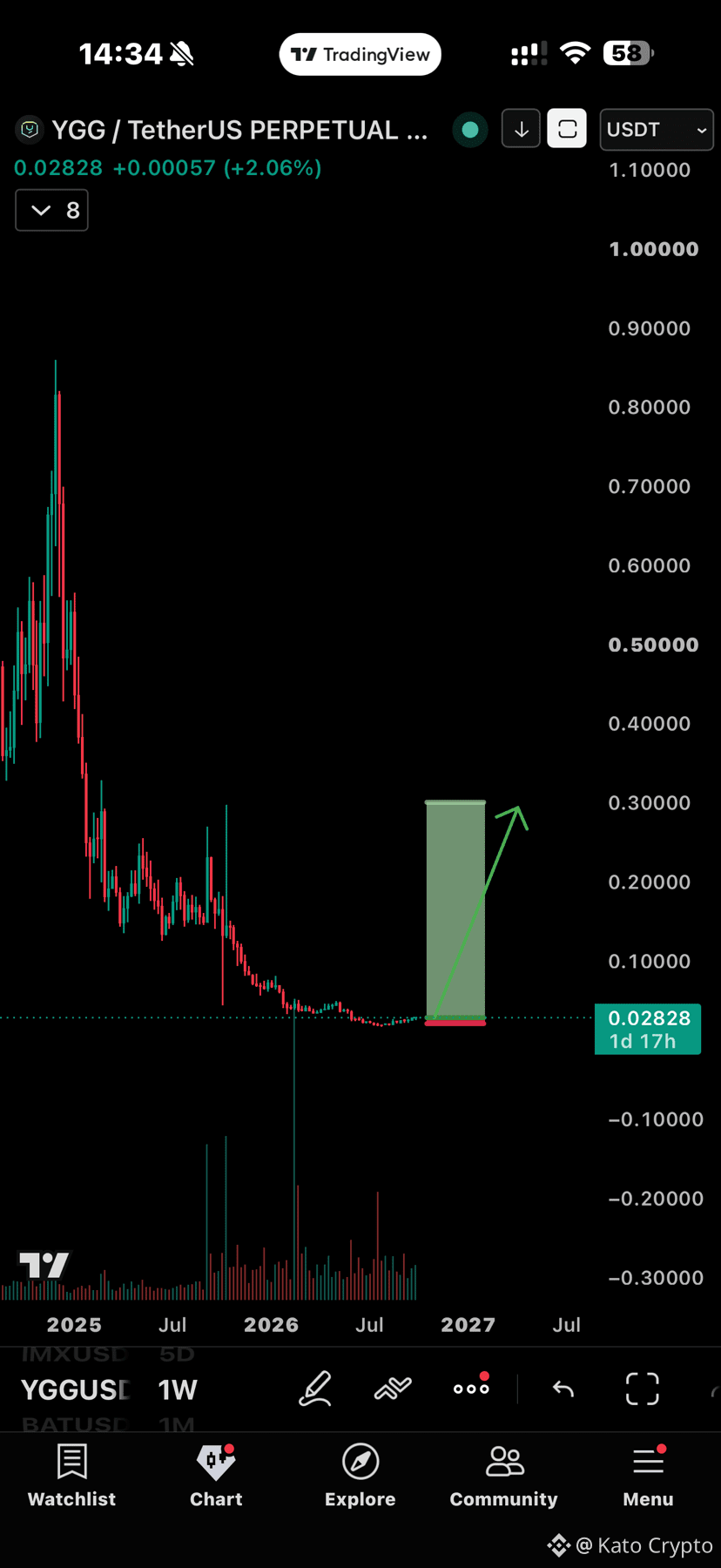
$YGG
{future}(YGGUSDT)
long entry live, gaming rotation reaching the virtual worlds group, clean risk reward. 🔨
📍 Entry: $0.02908, SL $0.02326, roughly -20% risk
🔺 TPs from 0.03053 to 0.05816, max +100% upside
💎 Market cap: $25M, gaming guild category, 90% circulating, 99.7% below the $11 ATH
📈 Same group as $SAND and $MANA on the gaming map, virtual worlds and assets, the row that moves together
🛡️ Hold play, SL fixed under the September base, 30 to 60 days
ALICE +20%, TLM following, gaming is rotating. YGG is the guild that sits on top of all of it. 🎯
🔻 #YGG #gaming #cryptotrading #TechnicalAnalysis
📌 Sharing personal opinions only
not financial advice or a recommendation to buy/sell. Crypto is highly risky; DYOR and you are solely responsible. No coin promotion
$YGG
long entry live, gaming rotation reaching the virtual worlds group, clean risk reward. 🔨
📍 Entry: $0.02908, SL $0.02326, roughly -20% risk
🔺 TPs from 0.03053 to 0.05816, max +100% upside
💎 Market cap: $25M, gaming guild category, 90% circulating, 99.7% below the $11 ATH
📈 Same group as $SAND and $MANA on the gaming map, virtual worlds and assets, the row that moves together
🛡️ Hold play, SL fixed under the September base, 30 to 60 days
ALICE +20%, TLM following, gaming is rotating. YGG is the guild that sits on top of all of it. 🎯
🔻 #YGG #gaming #cryptotrading #TechnicalAnalysis
📌 Sharing personal opinions only
not financial advice or a recommendation to buy/sell. Crypto is highly risky; DYOR and you are solely responsible. No coin promotion
long entry live, gaming rotation reaching the virtual worlds group, clean risk reward. 🔨
📍 Entry: $0.02908, SL $0.02326, roughly -20% risk
🔺 TPs from 0.03053 to 0.05816, max +100% upside
💎 Market cap: $25M, gaming guild category, 90% circulating, 99.7% below the $11 ATH
📈 Same group as $SAND and $MANA on the gaming map, virtual worlds and assets, the row that moves together
🛡️ Hold play, SL fixed under the September base, 30 to 60 days
ALICE +20%, TLM following, gaming is rotating. YGG is the guild that sits on top of all of it. 🎯
🔻 #YGG #gaming #cryptotrading #TechnicalAnalysis
📌 Sharing personal opinions only
not financial advice or a recommendation to buy/sell. Crypto is highly risky; DYOR and you are solely responsible. No coin promotion

Kato Crypto
·
--
friend $YGG is the next #sand #mana
加密之王CRYPTO KINGAMi:
Thanks Kato! Loving the thread series, following along closely 🙌 Excited for the third piece, keep the alpha coming!
12
1
9
6k

🚨 $GALA IS JOINING THE PARTY! 🎮🔥 GALA is up around 15% in 24H, while gaming tokens are catching fresh attention. 👀 📍 BUY Entry: $0.00250–$0.00258
🎯 TP1: $0.00275
🎯 TP2: $0.00295
🛑 SL: $0.00240
⚠️ Wait for the retest — don’t FOMO into a green candle.
👇 What’s GALA cooking next?
🟢 A. 🚀 Next pump loading
🟡 B. 💰 Buy the dip
🔴 C. 📉 Bears crash the party
⚪ D. 👀 Watching first
#GALA #crypto #Gaming #BinanceSquare
{spot}(GALAUSDT)
🚨 $GALA IS JOINING THE PARTY! 🎮🔥 GALA is up around 15% in 24H, while gaming tokens are catching fresh attention. 👀 📍 BUY Entry: $0.00250–$0.00258
🎯 TP1: $0.00275
🎯 TP2: $0.00295
🛑 SL: $0.00240
⚠️ Wait for the retest — don’t FOMO into a green candle.
👇 What’s GALA cooking next?
🟢 A. 🚀 Next pump loading
🟡 B. 💰 Buy the dip
🔴 C. 📉 Bears crash the party
⚪ D. 👀 Watching first
#GALA #crypto #Gaming #BinanceSquare
🎯 TP1: $0.00275
🎯 TP2: $0.00295
🛑 SL: $0.00240
⚠️ Wait for the retest — don’t FOMO into a green candle.
👇 What’s GALA cooking next?
🟢 A. 🚀 Next pump loading
🟡 B. 💰 Buy the dip
🔴 C. 📉 Bears crash the party
⚪ D. 👀 Watching first
#GALA #crypto #Gaming #BinanceSquare
1
308


·
--
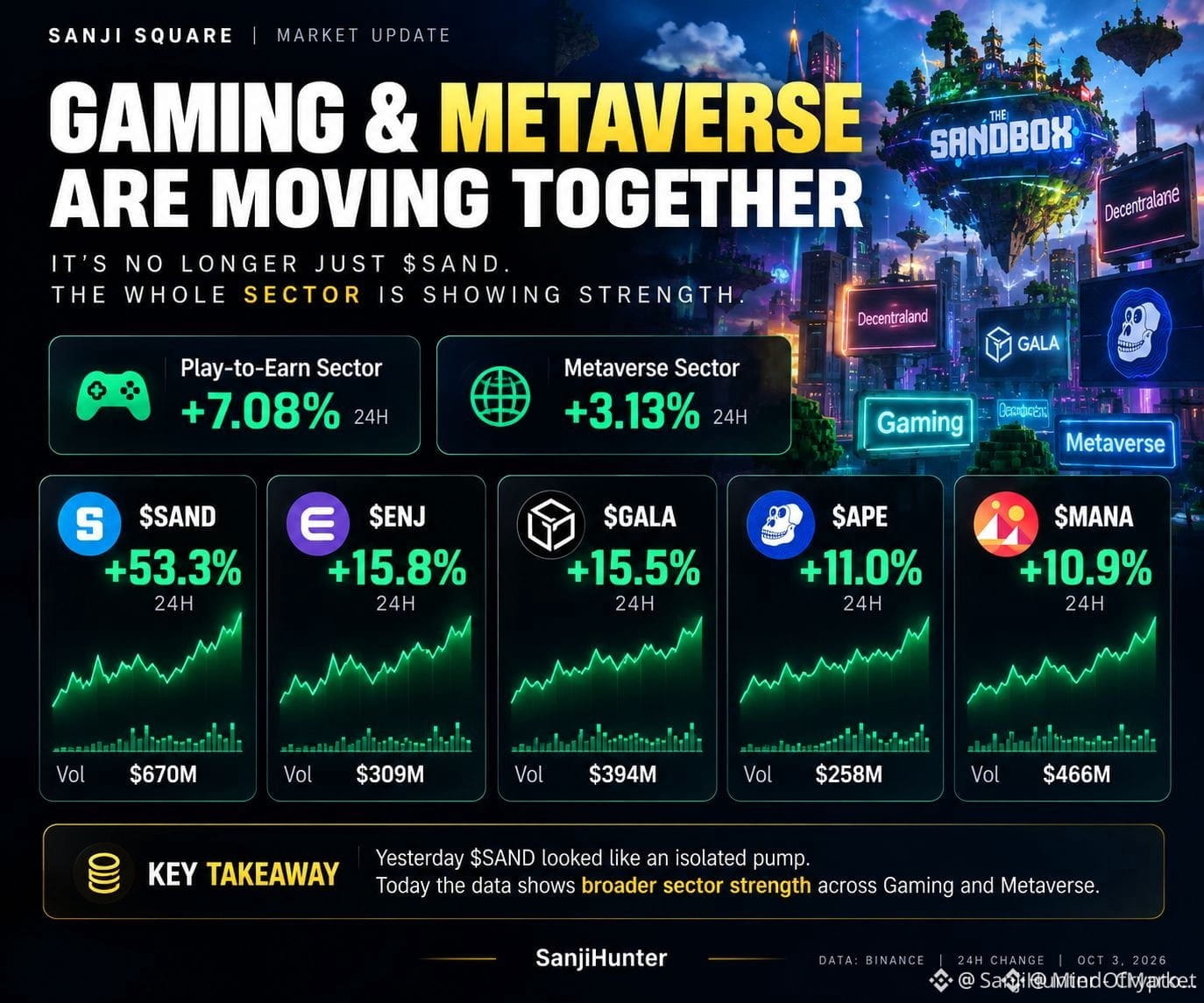
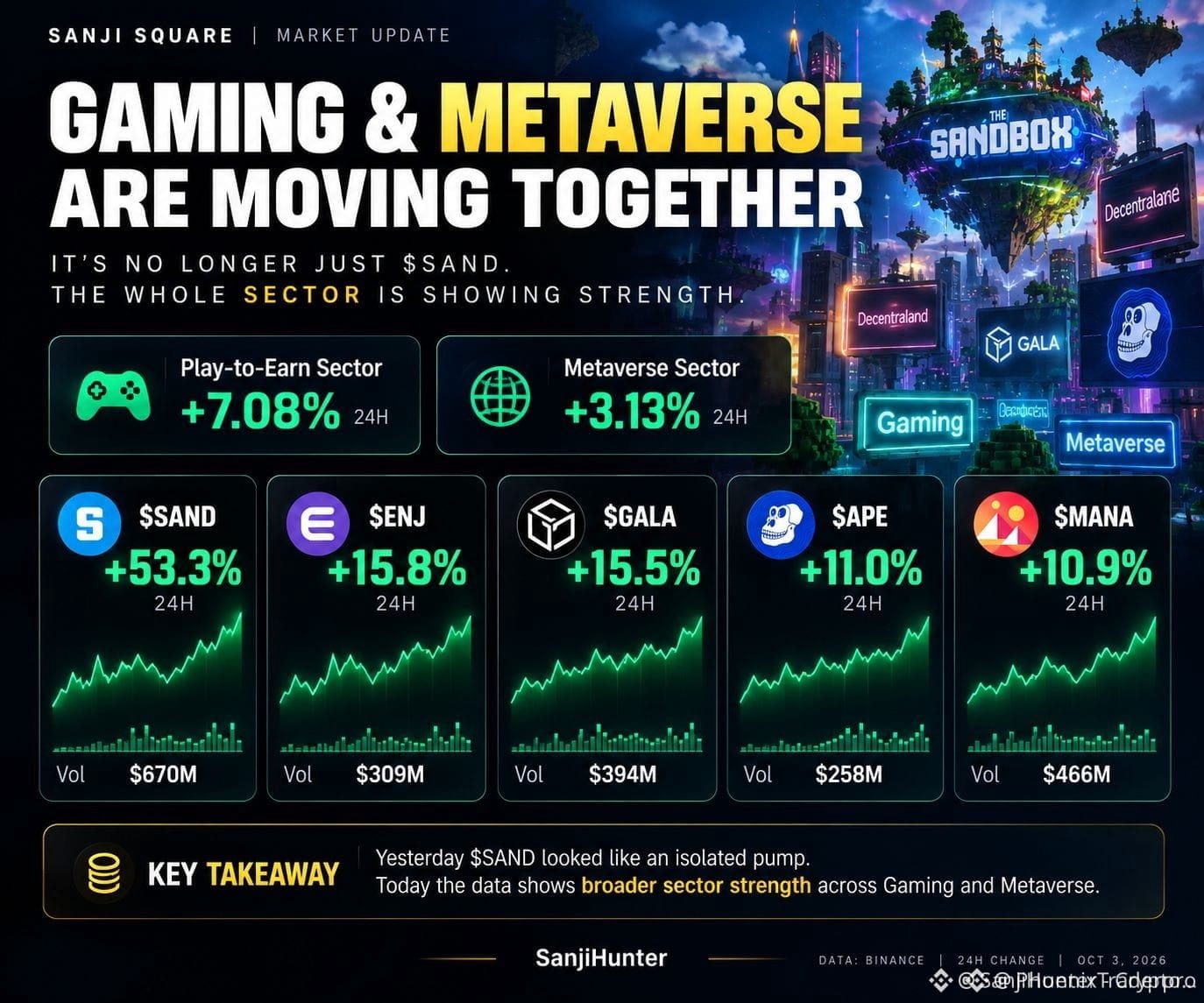
🚨 $SAND LEADS AS GAMING SECTOR BREADTH FADES ACROSS INSTITUTIONAL BOARDS 📊
What initially registered as broad gaming sector rotation is rapidly compressing into isolated relative strength. While $SAND holds a strong +16% gain, secondary names like $ENJ and $MANA are failing to expand liquidity beyond initial impulse waves. 📊
When sector breadth shrinks, smart money concentrates capital strictly into structural leaders capable of absorbing supply. 🔍 If secondary bids fail to re-ignite, this shift represents selective positioning rather than broad macro rotation. 💡
💬 Are you positioning strictly into relative strength leaders or waiting for sector-wide liquidity expansion? 👇
⚠️ Not financial advice. Always manage your risk. 🛡️
🏷️ #SAND #Gaming #MarketStructure #Crypto
🎯 🦈
🚨 $SAND LEADS AS GAMING SECTOR BREADTH FADES ACROSS INSTITUTIONAL BOARDS 📊
What initially registered as broad gaming sector rotation is rapidly compressing into isolated relative strength. While $SAND holds a strong +16% gain, secondary names like $ENJ and $MANA are failing to expand liquidity beyond initial impulse waves. 📊
When sector breadth shrinks, smart money concentrates capital strictly into structural leaders capable of absorbing supply. 🔍 If secondary bids fail to re-ignite, this shift represents selective positioning rather than broad macro rotation. 💡
💬 Are you positioning strictly into relative strength leaders or waiting for sector-wide liquidity expansion? 👇
⚠️ Not financial advice. Always manage your risk. 🛡️
🏷️ #SAND #Gaming #MarketStructure #Crypto
🎯 🦈
What initially registered as broad gaming sector rotation is rapidly compressing into isolated relative strength. While $SAND holds a strong +16% gain, secondary names like $ENJ and $MANA are failing to expand liquidity beyond initial impulse waves. 📊
When sector breadth shrinks, smart money concentrates capital strictly into structural leaders capable of absorbing supply. 🔍 If secondary bids fail to re-ignite, this shift represents selective positioning rather than broad macro rotation. 💡
💬 Are you positioning strictly into relative strength leaders or waiting for sector-wide liquidity expansion? 👇
⚠️ Not financial advice. Always manage your risk. 🛡️
🏷️ #SAND #Gaming #MarketStructure #Crypto
🎯 🦈
268

$SAND STANDS ALONE AS GAMING ROTATION FAILS TO SUSTAIN SECTOR BREADTH ⚡ 📊
What began as a promising metaverse breakout is rapidly concentrating into a single-asset leadership battle. While $SAND defends a strong 16% daily gain, secondary tokens like $ENJ and $APE are losing momentum, signaling that broad sector rotation is quickly fading. 📊
Smart capital does not blindly chase green candles when market breadth narrows this sharply. 🔍 If $SAND absorbs seller distribution while the rest of the group bleeds out, we are looking at isolated relative strength rather than a rising macro tide. 💡
I am watching to see if bids re-engage across secondary names or stay locked on the market leader. 💬 Are you buying single-asset strength here or waiting for sector breadth to confirm? 👇
⚠️ Not financial advice. Always manage your risk. 🛡️
🏷️ #SAND #Altcoins #Gaming #Crypto
🔥 💎
$SAND STANDS ALONE AS GAMING ROTATION FAILS TO SUSTAIN SECTOR BREADTH ⚡ 📊
What began as a promising metaverse breakout is rapidly concentrating into a single-asset leadership battle. While $SAND defends a strong 16% daily gain, secondary tokens like $ENJ and $APE are losing momentum, signaling that broad sector rotation is quickly fading. 📊
Smart capital does not blindly chase green candles when market breadth narrows this sharply. 🔍 If $SAND absorbs seller distribution while the rest of the group bleeds out, we are looking at isolated relative strength rather than a rising macro tide. 💡
I am watching to see if bids re-engage across secondary names or stay locked on the market leader. 💬 Are you buying single-asset strength here or waiting for sector breadth to confirm? 👇
⚠️ Not financial advice. Always manage your risk. 🛡️
🏷️ #SAND #Altcoins #Gaming #Crypto
🔥 💎
What began as a promising metaverse breakout is rapidly concentrating into a single-asset leadership battle. While $SAND defends a strong 16% daily gain, secondary tokens like $ENJ and $APE are losing momentum, signaling that broad sector rotation is quickly fading. 📊
Smart capital does not blindly chase green candles when market breadth narrows this sharply. 🔍 If $SAND absorbs seller distribution while the rest of the group bleeds out, we are looking at isolated relative strength rather than a rising macro tide. 💡
I am watching to see if bids re-engage across secondary names or stay locked on the market leader. 💬 Are you buying single-asset strength here or waiting for sector breadth to confirm? 👇
⚠️ Not financial advice. Always manage your risk. 🛡️
🏷️ #SAND #Altcoins #Gaming #Crypto
🔥 💎
74
Log in to explore more content
Join global crypto users on Binance Square
⚡️ Get latest and useful information about crypto.
💬 Trusted by the world’s largest crypto exchange.
👍 Discover real insights from verified creators.
Email / Phone number
Trending Topics
1
#BinanceLaunchesBinanceIntelligence
796,375 views
4,989 Discussing
2
#BTCFallsBelow$84K
44,470 views
140 Discussing
3
#DubaiVARAIssuesReserveAssetAuditCircular
16,086 views
537 Discussing
4
#SECApproves3XBitcoinETF
13,889 views
461 Discussing
5
#WinklevossFilesSpotZcashETFApplication
23,226 views
577 Discussing
6
#SouthKoreaAITradeLiftsWorldcoinTo$7.41B
2,680 views
45 Discussing
7
#StrategyEstimates$4.1BIncomeTaxBenefit
1,630 views
24 Discussing
8
#IglooShutsDownAbstractBlockchain
10,499 views
307 Discussing
9
#StrategyMarketCapSurpassesRumble
53,727 views
1,038 Discussing
10
#StriveBuys2000BTCFor$169M
19,118 views
165 Discussing