

#devops
devops
1,506 views
27 Discussing
Hot
Latest


·
--
The Illusion of Local Dev Independence
Transitioning from cloud infrastructure to self-hosted local hardware isn't just about saving money; it's a structural pivot toward absolute autonomy.
Relying on paid enterprise servers introduces third-party risk and hidden counterparty liabilities. Local architecture via independent nodes guarantees absolute data privacy.
#SelfHosted #OpenSource #DevOps #TechAutonomy
The Illusion of Local Dev Independence
Transitioning from cloud infrastructure to self-hosted local hardware isn't just about saving money; it's a structural pivot toward absolute autonomy.
Relying on paid enterprise servers introduces third-party risk and hidden counterparty liabilities. Local architecture via independent nodes guarantees absolute data privacy.
#SelfHosted #OpenSource #DevOps #TechAutonomy
Transitioning from cloud infrastructure to self-hosted local hardware isn't just about saving money; it's a structural pivot toward absolute autonomy.
Relying on paid enterprise servers introduces third-party risk and hidden counterparty liabilities. Local architecture via independent nodes guarantees absolute data privacy.
#SelfHosted #OpenSource #DevOps #TechAutonomy
115

·
--
Article
ICPay — Protocol Reliability: Zero-Downtime Canister Upgrades and State SafetyPreserving User Account Balances Across Production Motoko Releases
Upgrading smart contracts on live blockchain networks carries severe risk. Incorrect memory deserialization can permanently corrupt contract state and erase user account balances.
ICPay executes upgrades following rigorous Motoko stable memory persistence protocols.
───────────────
Core Technical Architecture & Mechanisms
───────────────
1. Stable Memory Data Structures
Critical user accounts, balances, and transaction indexes reside in Motoko stable variables that survive code updates without serialization bottlenecks.
2. Pre-Upgrade and Post-Upgrade Hooks
Deterministic migration routines validate state consistency before executing WebAssembly module replacement on canister 6vbhm-nqaaa-aaaan-q6muq-cai.
3. Verifiable Rollback Capabilities
The operations toolchain verifies cryptographic wasm hashes before applying upgrades, maintaining deterministic rollback paths if anomalies arise.
$ICP #ICP #DevOps
ICPay — Protocol Reliability: Zero-Downtime Canister Upgrades and State Safety
Preserving User Account Balances Across Production Motoko Releases
Upgrading smart contracts on live blockchain networks carries severe risk. Incorrect memory deserialization can permanently corrupt contract state and erase user account balances.
ICPay executes upgrades following rigorous Motoko stable memory persistence protocols.
───────────────
Core Technical Architecture & Mechanisms
───────────────
1. Stable Memory Data Structures
Critical user accounts, balances, and transaction indexes reside in Motoko stable variables that survive code updates without serialization bottlenecks.
2. Pre-Upgrade and Post-Upgrade Hooks
Deterministic migration routines validate state consistency before executing WebAssembly module replacement on canister 6vbhm-nqaaa-aaaan-q6muq-cai.
3. Verifiable Rollback Capabilities
The operations toolchain verifies cryptographic wasm hashes before applying upgrades, maintaining deterministic rollback paths if anomalies arise.
$ICP #ICP #DevOps
Upgrading smart contracts on live blockchain networks carries severe risk. Incorrect memory deserialization can permanently corrupt contract state and erase user account balances.
ICPay executes upgrades following rigorous Motoko stable memory persistence protocols.
───────────────
Core Technical Architecture & Mechanisms
───────────────
1. Stable Memory Data Structures
Critical user accounts, balances, and transaction indexes reside in Motoko stable variables that survive code updates without serialization bottlenecks.
2. Pre-Upgrade and Post-Upgrade Hooks
Deterministic migration routines validate state consistency before executing WebAssembly module replacement on canister 6vbhm-nqaaa-aaaan-q6muq-cai.
3. Verifiable Rollback Capabilities
The operations toolchain verifies cryptographic wasm hashes before applying upgrades, maintaining deterministic rollback paths if anomalies arise.
$ICP #ICP #DevOps
219

·
--
Node Health Beyond UptimeA blockchain node can return a successful response and still be serving stale data. That is why a simple ping is not a production health check.
Start with reachability, but add freshness. Compare the node’s latest block height and timestamp with an independent reference. Watch synchronization status and peer health where those signals are available. A node that is online but several blocks behind can mislead wallets, dashboards, trading systems and indexers.
Measure request behavior too. Track latency percentiles, timeouts, rate-limit responses, JSON-RPC errors and method-specific failures. Separate read calls from transaction submission and subscription workloads because they can fail differently.
For infrastructure you control, monitor CPU, memory, disk capacity, disk latency, network traffic, process restarts and logs. Set alerts that name a condition and an action: sustained block lag, rising error rate, a WebSocket disconnect loop or disk usage approaching the level that threatens the node.
Metrics without ownership become noise. Every alert should have a threshold, severity, runbook and responsible person. The objective is to detect degradation before users become the monitoring system.
TokenToolHub’s guide compares the monitoring layers and tools:
https://tokentoolhub.com/best-blockchain-node-monitoring-tools/
#BlockchainNodes #RPCA #Devops #Web3Infrastructure #CryptoSecurity
Node Health Beyond Uptime
A blockchain node can return a successful response and still be serving stale data. That is why a simple ping is not a production health check.
Start with reachability, but add freshness. Compare the node’s latest block height and timestamp with an independent reference. Watch synchronization status and peer health where those signals are available. A node that is online but several blocks behind can mislead wallets, dashboards, trading systems and indexers.
Measure request behavior too. Track latency percentiles, timeouts, rate-limit responses, JSON-RPC errors and method-specific failures. Separate read calls from transaction submission and subscription workloads because they can fail differently.
For infrastructure you control, monitor CPU, memory, disk capacity, disk latency, network traffic, process restarts and logs. Set alerts that name a condition and an action: sustained block lag, rising error rate, a WebSocket disconnect loop or disk usage approaching the level that threatens the node.
Metrics without ownership become noise. Every alert should have a threshold, severity, runbook and responsible person. The objective is to detect degradation before users become the monitoring system.
TokenToolHub’s guide compares the monitoring layers and tools:
https://tokentoolhub.com/best-blockchain-node-monitoring-tools/
#BlockchainNodes #RPCA #Devops #Web3Infrastructure #CryptoSecurity
Start with reachability, but add freshness. Compare the node’s latest block height and timestamp with an independent reference. Watch synchronization status and peer health where those signals are available. A node that is online but several blocks behind can mislead wallets, dashboards, trading systems and indexers.
Measure request behavior too. Track latency percentiles, timeouts, rate-limit responses, JSON-RPC errors and method-specific failures. Separate read calls from transaction submission and subscription workloads because they can fail differently.
For infrastructure you control, monitor CPU, memory, disk capacity, disk latency, network traffic, process restarts and logs. Set alerts that name a condition and an action: sustained block lag, rising error rate, a WebSocket disconnect loop or disk usage approaching the level that threatens the node.
Metrics without ownership become noise. Every alert should have a threshold, severity, runbook and responsible person. The objective is to detect degradation before users become the monitoring system.
TokenToolHub’s guide compares the monitoring layers and tools:
https://tokentoolhub.com/best-blockchain-node-monitoring-tools/
#BlockchainNodes #RPCA #Devops #Web3Infrastructure #CryptoSecurity
73

·
--
🚨 NORTH KOREAN HACKERS UNLEASH NEW TERRAFORM PHISHING VECTOR TARGETING $BTC DEVELOPERS! 💣
📌 Sophisticated threat actor TraderTraitor is actively weaponizing malicious GitHub interview code to infiltrate Web3 infrastructure and hijack AWS credentials. 🔍 Devs downloading unverified repos are triggering stealthy macOS backdoors capable of draining cloud environments and compromised codebases.
⚠️ Institutional security is the real foundation of every $BTC bull run, and these attacks prove threat groups are hunting upstream developer access. 💬 Are you verifying your Terraform dependencies before running init scripts, or leaving your cloud infrastructure exposed? 👇
⚠️ Not financial advice. Always manage your risk. 🛡️
🏷️ #BTC #CryptoSecurity #DevOps #Web3
🛡️ 🔍
🚨 NORTH KOREAN HACKERS UNLEASH NEW TERRAFORM PHISHING VECTOR TARGETING $BTC DEVELOPERS! 💣
📌 Sophisticated threat actor TraderTraitor is actively weaponizing malicious GitHub interview code to infiltrate Web3 infrastructure and hijack AWS credentials. 🔍 Devs downloading unverified repos are triggering stealthy macOS backdoors capable of draining cloud environments and compromised codebases.
⚠️ Institutional security is the real foundation of every $BTC bull run, and these attacks prove threat groups are hunting upstream developer access. 💬 Are you verifying your Terraform dependencies before running init scripts, or leaving your cloud infrastructure exposed? 👇
⚠️ Not financial advice. Always manage your risk. 🛡️
🏷️ #BTC #CryptoSecurity #DevOps #Web3
🛡️ 🔍
📌 Sophisticated threat actor TraderTraitor is actively weaponizing malicious GitHub interview code to infiltrate Web3 infrastructure and hijack AWS credentials. 🔍 Devs downloading unverified repos are triggering stealthy macOS backdoors capable of draining cloud environments and compromised codebases.
⚠️ Institutional security is the real foundation of every $BTC bull run, and these attacks prove threat groups are hunting upstream developer access. 💬 Are you verifying your Terraform dependencies before running init scripts, or leaving your cloud infrastructure exposed? 👇
⚠️ Not financial advice. Always manage your risk. 🛡️
🏷️ #BTC #CryptoSecurity #DevOps #Web3
🛡️ 🔍
23

🚨 TRADERTRAITOR TARGETS DEV CLOUD KEYS IN PHISHING CAMPAIGN RECALLING $ZRO BACKDOORS! 🔍
Sophisticated state-sponsored actors are shifting vectors from direct smart contract exploits to underlying cloud infrastructure. 🔍 Recent forensics reveal TraderTraitor executing malicious Terraform Provider downloads, deploying macOS backdoors identical to those identified during the historical $ZRO infrastructure breach.
Smart money understands that protocol liquidity is only as secure as the developer API keys backing the ecosystem. 🛡️ With AWS and GCP credentials targeted across DevOps teams, monitoring operational risk is now just as critical as analyzing market structure.
💬 How are you adjusting your operational security protocols to protect your capital against infrastructure-level threats? 👇
⚠️ Not financial advice. Always manage your risk. 🛡️
🏷️ #ZRO #CryptoSecurity #DevOps #SmartMoney #LayerZero
🛡️ 👁️
🚨 TRADERTRAITOR TARGETS DEV CLOUD KEYS IN PHISHING CAMPAIGN RECALLING $ZRO BACKDOORS! 🔍
Sophisticated state-sponsored actors are shifting vectors from direct smart contract exploits to underlying cloud infrastructure. 🔍 Recent forensics reveal TraderTraitor executing malicious Terraform Provider downloads, deploying macOS backdoors identical to those identified during the historical $ZRO infrastructure breach.
Smart money understands that protocol liquidity is only as secure as the developer API keys backing the ecosystem. 🛡️ With AWS and GCP credentials targeted across DevOps teams, monitoring operational risk is now just as critical as analyzing market structure.
💬 How are you adjusting your operational security protocols to protect your capital against infrastructure-level threats? 👇
⚠️ Not financial advice. Always manage your risk. 🛡️
🏷️ #ZRO #CryptoSecurity #DevOps #SmartMoney #LayerZero
🛡️ 👁️
Sophisticated state-sponsored actors are shifting vectors from direct smart contract exploits to underlying cloud infrastructure. 🔍 Recent forensics reveal TraderTraitor executing malicious Terraform Provider downloads, deploying macOS backdoors identical to those identified during the historical $ZRO infrastructure breach.
Smart money understands that protocol liquidity is only as secure as the developer API keys backing the ecosystem. 🛡️ With AWS and GCP credentials targeted across DevOps teams, monitoring operational risk is now just as critical as analyzing market structure.
💬 How are you adjusting your operational security protocols to protect your capital against infrastructure-level threats? 👇
⚠️ Not financial advice. Always manage your risk. 🛡️
🏷️ #ZRO #CryptoSecurity #DevOps #SmartMoney #LayerZero
🛡️ 👁️
65

·
--
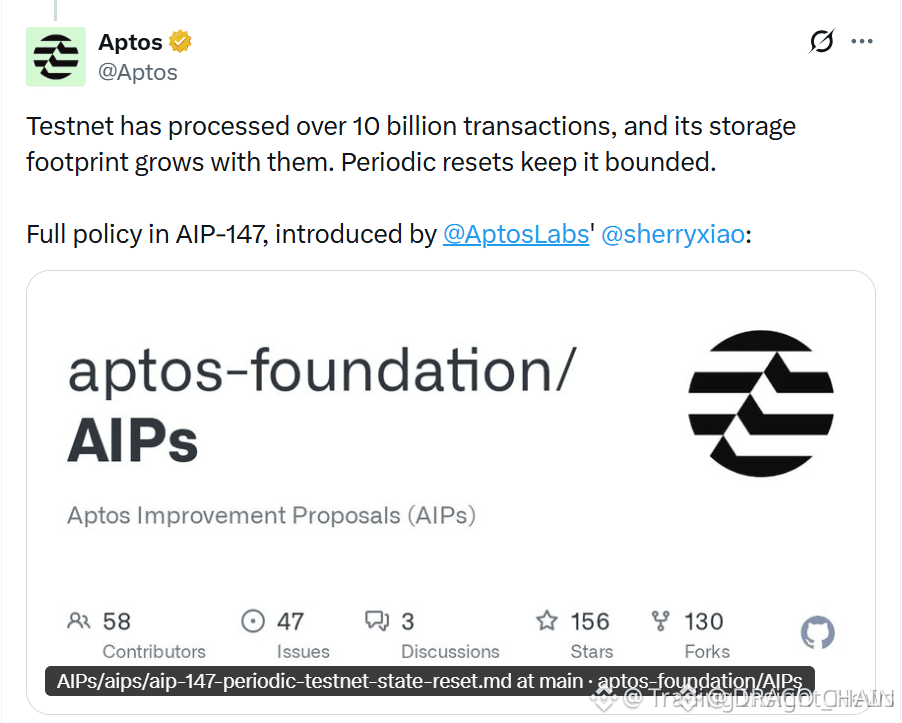
🚨 $APT TESTNET RESET APPROACHES OCT 7 – PREP FOR STORAGE SWEEP 🦈
Aptos is slated to wipe its testnet clean on Oct 7, resetting contracts, balances and transaction history to zero. 📌 This full‑state revert follows more than 10 B transactions, a storage load that threatens cost efficiency.
Smart‑money developers view the purge as a liquidity‑reset for on‑chain storage, clearing stale state and freeing space for fresh deployments. 📊 Expect a brief dip in testnet activity as teams redeploy, but the mainnet stays untouched.
📈 Keep an eye on the post‑reset performance metrics; a leaner testnet often translates into smoother dev cycles and sharper fee signals on the live chain. 💡
💬 How are you adjusting your testnet strategy ahead of the Oct 7 reset?
⚠️ Not financial advice. Always manage your risk. 🛡️
🏷️ #APT #TestnetReset #DevOps #Aptos #Crypto
🦈 🔥
🚨 $APT TESTNET RESET APPROACHES OCT 7 – PREP FOR STORAGE SWEEP 🦈
Aptos is slated to wipe its testnet clean on Oct 7, resetting contracts, balances and transaction history to zero. 📌 This full‑state revert follows more than 10 B transactions, a storage load that threatens cost efficiency.
Smart‑money developers view the purge as a liquidity‑reset for on‑chain storage, clearing stale state and freeing space for fresh deployments. 📊 Expect a brief dip in testnet activity as teams redeploy, but the mainnet stays untouched.
📈 Keep an eye on the post‑reset performance metrics; a leaner testnet often translates into smoother dev cycles and sharper fee signals on the live chain. 💡
💬 How are you adjusting your testnet strategy ahead of the Oct 7 reset?
⚠️ Not financial advice. Always manage your risk. 🛡️
🏷️ #APT #TestnetReset #DevOps #Aptos #Crypto
🦈 🔥
Aptos is slated to wipe its testnet clean on Oct 7, resetting contracts, balances and transaction history to zero. 📌 This full‑state revert follows more than 10 B transactions, a storage load that threatens cost efficiency.
Smart‑money developers view the purge as a liquidity‑reset for on‑chain storage, clearing stale state and freeing space for fresh deployments. 📊 Expect a brief dip in testnet activity as teams redeploy, but the mainnet stays untouched.
📈 Keep an eye on the post‑reset performance metrics; a leaner testnet often translates into smoother dev cycles and sharper fee signals on the live chain. 💡
💬 How are you adjusting your testnet strategy ahead of the Oct 7 reset?
⚠️ Not financial advice. Always manage your risk. 🛡️
🏷️ #APT #TestnetReset #DevOps #Aptos #Crypto
🦈 🔥
426
·
--
Verified
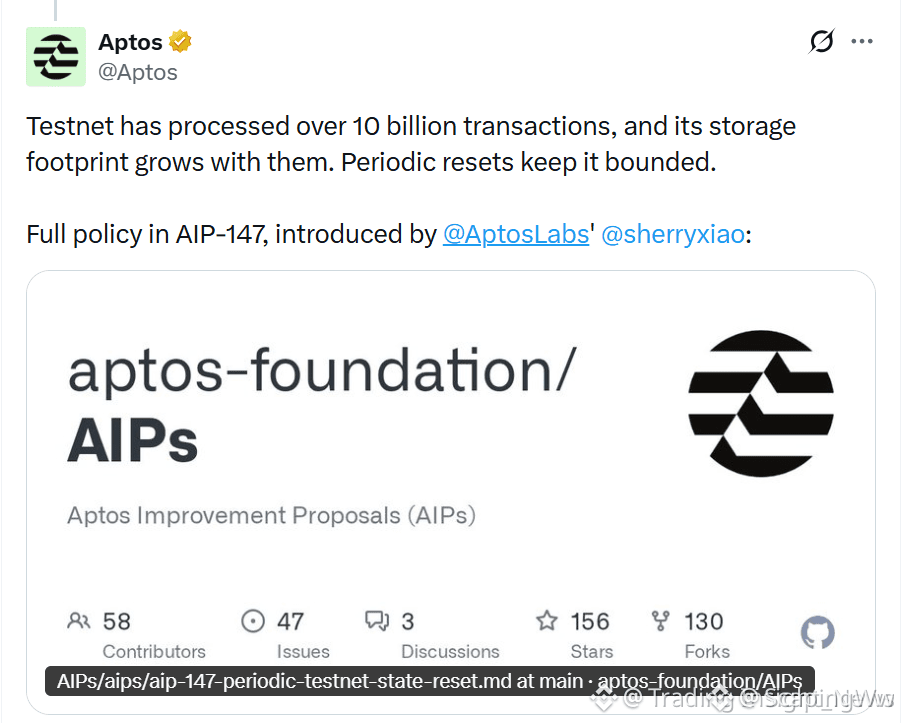
🚨 $APT TESTNET RESET SET FOR OCT 7 – STORAGE SWEEP INCOMING! 📊
Aptos is pulling the plug on its testnet on Oct 7, wiping contracts, balances and the entire transaction ledger. 🦈 This clean‑slate move trims storage pressure after crushing 10 B transactions, keeping the network lean for devs.
No ripple hits mainnet or devnet – they stay untouched, so production stays smooth. 📊 Expect a brief pause for redeployment, then a fresh canvas for new experiments. ⚡
💬 How are you prepping your test contracts for the reset? 👇
⚠️ Not financial advice. Always manage your risk. 🛡️
🏷️ #APT #TestnetReset #DevOps #Aptos #Crypto
🚀 🔥
🚨 $APT TESTNET RESET SET FOR OCT 7 – STORAGE SWEEP INCOMING! 📊
Aptos is pulling the plug on its testnet on Oct 7, wiping contracts, balances and the entire transaction ledger. 🦈 This clean‑slate move trims storage pressure after crushing 10 B transactions, keeping the network lean for devs.
No ripple hits mainnet or devnet – they stay untouched, so production stays smooth. 📊 Expect a brief pause for redeployment, then a fresh canvas for new experiments. ⚡
💬 How are you prepping your test contracts for the reset? 👇
⚠️ Not financial advice. Always manage your risk. 🛡️
🏷️ #APT #TestnetReset #DevOps #Aptos #Crypto
🚀 🔥
Aptos is pulling the plug on its testnet on Oct 7, wiping contracts, balances and the entire transaction ledger. 🦈 This clean‑slate move trims storage pressure after crushing 10 B transactions, keeping the network lean for devs.
No ripple hits mainnet or devnet – they stay untouched, so production stays smooth. 📊 Expect a brief pause for redeployment, then a fresh canvas for new experiments. ⚡
💬 How are you prepping your test contracts for the reset? 👇
⚠️ Not financial advice. Always manage your risk. 🛡️
🏷️ #APT #TestnetReset #DevOps #Aptos #Crypto
🚀 🔥
4
1k

⚡ CRITICAL GITHUB INFRASTRUCTURE OUTAGE SHAKES TECH AND $FET AI ECOSYSTEM WORKFLOWS! 🚨
Major core infrastructure is buckling under pressure today as GitHub hits severe database replication lag in its collaboration systems. 📊 With authorization interfaces failing and GitHub Actions stalling across the board, developer pipelines and automated deployment flows are essentially frozen in real time. 🔍
Smart money watches infrastructure glitches closely, knowing how code deployment delays impact momentum in fast-moving tech environments. ⚡ When the underlying execution layer stutters, execution speed becomes the ultimate premium on the board. 💬 Do you think infrastructure hiccups like this temporarily stall momentum, or will devs push right through the noise? 👇
⚠️ Not financial advice. Always manage your risk. 🛡️
🏷️ #FET #AI #DevOps #Crypto #Infrastructure
🔥 ⚡
⚡ CRITICAL GITHUB INFRASTRUCTURE OUTAGE SHAKES TECH AND $FET AI ECOSYSTEM WORKFLOWS! 🚨
Major core infrastructure is buckling under pressure today as GitHub hits severe database replication lag in its collaboration systems. 📊 With authorization interfaces failing and GitHub Actions stalling across the board, developer pipelines and automated deployment flows are essentially frozen in real time. 🔍
Smart money watches infrastructure glitches closely, knowing how code deployment delays impact momentum in fast-moving tech environments. ⚡ When the underlying execution layer stutters, execution speed becomes the ultimate premium on the board. 💬 Do you think infrastructure hiccups like this temporarily stall momentum, or will devs push right through the noise? 👇
⚠️ Not financial advice. Always manage your risk. 🛡️
🏷️ #FET #AI #DevOps #Crypto #Infrastructure
🔥 ⚡
Major core infrastructure is buckling under pressure today as GitHub hits severe database replication lag in its collaboration systems. 📊 With authorization interfaces failing and GitHub Actions stalling across the board, developer pipelines and automated deployment flows are essentially frozen in real time. 🔍
Smart money watches infrastructure glitches closely, knowing how code deployment delays impact momentum in fast-moving tech environments. ⚡ When the underlying execution layer stutters, execution speed becomes the ultimate premium on the board. 💬 Do you think infrastructure hiccups like this temporarily stall momentum, or will devs push right through the noise? 👇
⚠️ Not financial advice. Always manage your risk. 🛡️
🏷️ #FET #AI #DevOps #Crypto #Infrastructure
🔥 ⚡
111

·
--
After launching the automated system, how do I monitor if it’s still alive?
This is the deepest lesson I learned after setting up several automated pipelines: **the system can't crash in the middle of the night and let you find out the next day**.
I once deployed a scheduled task, thinking that setting up the cron would mean I could leave it alone. After a week, I checked the status and found it had silently stopped running for 3 days—database connection dropped, no notifications. Since then, I've established a complete monitoring philosophy, which I’ll share with you today.
**First Layer: Execution Cycle Monitoring**
The most basic method is to look at cron's last_run_at. My rule is: **if the last run time exceeds 2 times the expected cycle, trigger an alert immediately**. For example, if a task is supposed to run every 5 minutes, if last_run_at is more than 10 minutes ago, I directly send a Telegram alert. This metric is extremely effective—about 90% of "system crashes" can be caught within 1 hour, instead of passively waiting for the business department to notice.
**Second Layer: API Circuit Breaker Mechanism**
API instability is the norm. My approach is: **if 3 consecutive API requests fail, automatically trigger a circuit breaker for 24 hours**. Why 3 times? Because 1-2 failures could be network glitches, but 3 consecutive failures indicate a real issue. During the circuit breaker period, the system stops trying to call, avoiding wasting precious API quotas and log space in an error state. This is much more effective than blindly retrying.
**Third Layer: State File Persistence**
Every time the system runs, I write the current status—success count, failure count, timestamp, error messages—into a state file. I keep this file for 30 days of history. What’s the benefit of this? It allows for retrospection—"Why did the posting rate suddenly drop to 60% last Wednesday?"—just check the logs for the answer. The state file takes up minimal space but gives me a complete audit trail.
**Fourth Layer: Weekly Manual Review**
I spend 15 minutes each week letting the system automatically generate a summary report: posting success rate, error rate distribution, word count statistics, and whether there are any abnormal fluctuations. It doesn’t need to be too frequent, but **you can’t rely solely on automated alerts**. Sometimes, an increase in the error rate from 2% to 4% is a trend issue that automated monitoring won’t tell you, but a human can easily spot, "This is something to watch out for."
**Core Insight**
Setting up automation is quick, but **doing monitoring right allows you to rest easy without constant oversight**. My experience is that automated alerts handle emergencies (the system completely crashing), while manual reviews are responsible for trend issues (gradually worsening). The combination of both ensures this system lasts long. Otherwise, no matter how smart the automation, it’s just a time bomb in a black box.
$BTC #DevOps #automation
After launching the automated system, how do I monitor if it’s still alive?
This is the deepest lesson I learned after setting up several automated pipelines: **the system can't crash in the middle of the night and let you find out the next day**.
I once deployed a scheduled task, thinking that setting up the cron would mean I could leave it alone. After a week, I checked the status and found it had silently stopped running for 3 days—database connection dropped, no notifications. Since then, I've established a complete monitoring philosophy, which I’ll share with you today.
**First Layer: Execution Cycle Monitoring**
The most basic method is to look at cron's last_run_at. My rule is: **if the last run time exceeds 2 times the expected cycle, trigger an alert immediately**. For example, if a task is supposed to run every 5 minutes, if last_run_at is more than 10 minutes ago, I directly send a Telegram alert. This metric is extremely effective—about 90% of "system crashes" can be caught within 1 hour, instead of passively waiting for the business department to notice.
**Second Layer: API Circuit Breaker Mechanism**
API instability is the norm. My approach is: **if 3 consecutive API requests fail, automatically trigger a circuit breaker for 24 hours**. Why 3 times? Because 1-2 failures could be network glitches, but 3 consecutive failures indicate a real issue. During the circuit breaker period, the system stops trying to call, avoiding wasting precious API quotas and log space in an error state. This is much more effective than blindly retrying.
**Third Layer: State File Persistence**
Every time the system runs, I write the current status—success count, failure count, timestamp, error messages—into a state file. I keep this file for 30 days of history. What’s the benefit of this? It allows for retrospection—"Why did the posting rate suddenly drop to 60% last Wednesday?"—just check the logs for the answer. The state file takes up minimal space but gives me a complete audit trail.
**Fourth Layer: Weekly Manual Review**
I spend 15 minutes each week letting the system automatically generate a summary report: posting success rate, error rate distribution, word count statistics, and whether there are any abnormal fluctuations. It doesn’t need to be too frequent, but **you can’t rely solely on automated alerts**. Sometimes, an increase in the error rate from 2% to 4% is a trend issue that automated monitoring won’t tell you, but a human can easily spot, "This is something to watch out for."
**Core Insight**
Setting up automation is quick, but **doing monitoring right allows you to rest easy without constant oversight**. My experience is that automated alerts handle emergencies (the system completely crashing), while manual reviews are responsible for trend issues (gradually worsening). The combination of both ensures this system lasts long. Otherwise, no matter how smart the automation, it’s just a time bomb in a black box.
$BTC #DevOps #automation
This is the deepest lesson I learned after setting up several automated pipelines: **the system can't crash in the middle of the night and let you find out the next day**.
I once deployed a scheduled task, thinking that setting up the cron would mean I could leave it alone. After a week, I checked the status and found it had silently stopped running for 3 days—database connection dropped, no notifications. Since then, I've established a complete monitoring philosophy, which I’ll share with you today.
**First Layer: Execution Cycle Monitoring**
The most basic method is to look at cron's last_run_at. My rule is: **if the last run time exceeds 2 times the expected cycle, trigger an alert immediately**. For example, if a task is supposed to run every 5 minutes, if last_run_at is more than 10 minutes ago, I directly send a Telegram alert. This metric is extremely effective—about 90% of "system crashes" can be caught within 1 hour, instead of passively waiting for the business department to notice.
**Second Layer: API Circuit Breaker Mechanism**
API instability is the norm. My approach is: **if 3 consecutive API requests fail, automatically trigger a circuit breaker for 24 hours**. Why 3 times? Because 1-2 failures could be network glitches, but 3 consecutive failures indicate a real issue. During the circuit breaker period, the system stops trying to call, avoiding wasting precious API quotas and log space in an error state. This is much more effective than blindly retrying.
**Third Layer: State File Persistence**
Every time the system runs, I write the current status—success count, failure count, timestamp, error messages—into a state file. I keep this file for 30 days of history. What’s the benefit of this? It allows for retrospection—"Why did the posting rate suddenly drop to 60% last Wednesday?"—just check the logs for the answer. The state file takes up minimal space but gives me a complete audit trail.
**Fourth Layer: Weekly Manual Review**
I spend 15 minutes each week letting the system automatically generate a summary report: posting success rate, error rate distribution, word count statistics, and whether there are any abnormal fluctuations. It doesn’t need to be too frequent, but **you can’t rely solely on automated alerts**. Sometimes, an increase in the error rate from 2% to 4% is a trend issue that automated monitoring won’t tell you, but a human can easily spot, "This is something to watch out for."
**Core Insight**
Setting up automation is quick, but **doing monitoring right allows you to rest easy without constant oversight**. My experience is that automated alerts handle emergencies (the system completely crashing), while manual reviews are responsible for trend issues (gradually worsening). The combination of both ensures this system lasts long. Otherwise, no matter how smart the automation, it’s just a time bomb in a black box.
$BTC #DevOps #automation
98

·
--
Security Warning: CZ Just Put Every $BNB Chain Developer on Alert
GitHub repositories compromised. Access credentials leaked. Development pipelines across open-source crypto projects exposed to targeted attacks.
CZ's message to all builders: your GitHub keys are as critical as your exchange wallet. One weak link in your dev pipeline equals attackers inside your protocol.
BNB Chain hosts hundreds of open-source DeFi projects. Publicly forked code creates the widest attack surface in crypto. With billions at stake, the weakest link is your ops security.
Urgent: Audit repos. Rotate keys. Assume nothing is safe.
$BNB #BNBChain #CryptoSecurity #DevOps #OpSec
Security Warning: CZ Just Put Every $BNB Chain Developer on Alert
GitHub repositories compromised. Access credentials leaked. Development pipelines across open-source crypto projects exposed to targeted attacks.
CZ's message to all builders: your GitHub keys are as critical as your exchange wallet. One weak link in your dev pipeline equals attackers inside your protocol.
BNB Chain hosts hundreds of open-source DeFi projects. Publicly forked code creates the widest attack surface in crypto. With billions at stake, the weakest link is your ops security.
Urgent: Audit repos. Rotate keys. Assume nothing is safe.
$BNB #BNBChain #CryptoSecurity #DevOps #OpSec
GitHub repositories compromised. Access credentials leaked. Development pipelines across open-source crypto projects exposed to targeted attacks.
CZ's message to all builders: your GitHub keys are as critical as your exchange wallet. One weak link in your dev pipeline equals attackers inside your protocol.
BNB Chain hosts hundreds of open-source DeFi projects. Publicly forked code creates the widest attack surface in crypto. With billions at stake, the weakest link is your ops security.
Urgent: Audit repos. Rotate keys. Assume nothing is safe.
$BNB #BNBChain #CryptoSecurity #DevOps #OpSec

1
2
33

·
--
Bullish
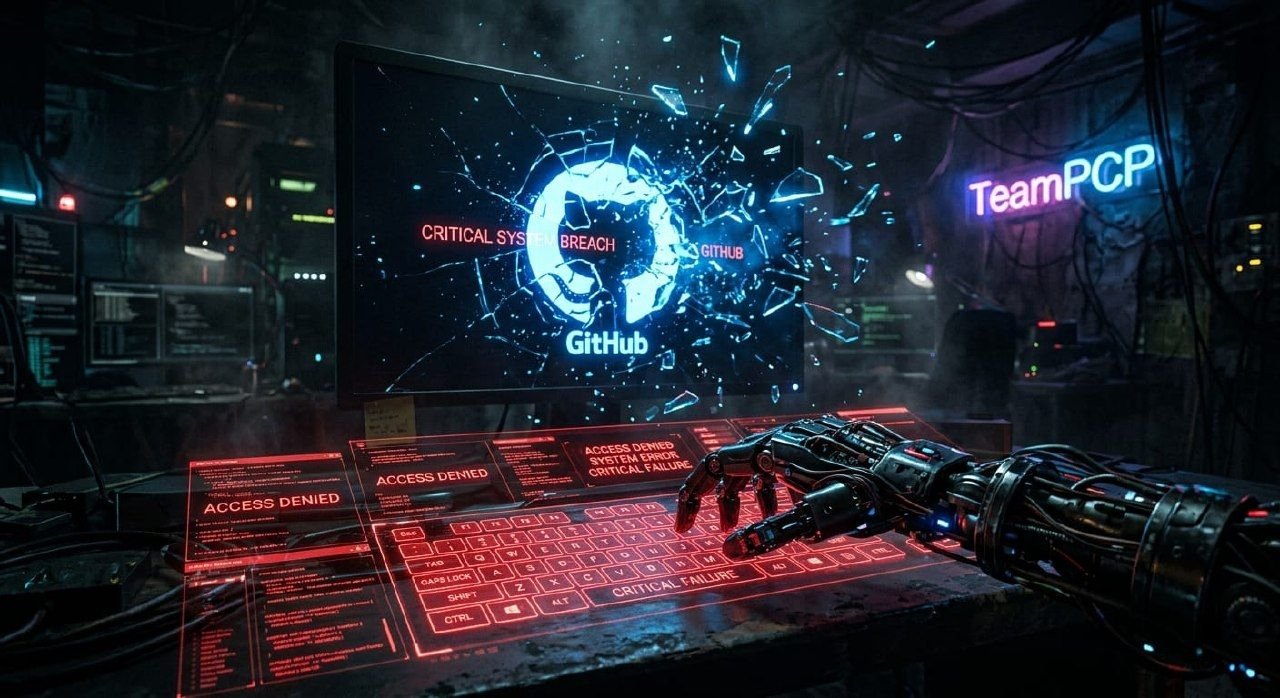
GitHub Internal Breach Alert 🚨: TeamPCP claims exfiltration of ~4,000 private repos via a malicious VS Code extension on an employee device.
• No customer data leaked (yet).
• Supply chain attacks are the new norm.
• Action: Audit your extensions, rotate secrets, and enforce endpoint security.
Don't be the weakest link. 🛡️
#GitHub #CyberSecurity #TeamPCP #DevOps #SecurityAlert
GitHub Internal Breach Alert 🚨: TeamPCP claims exfiltration of ~4,000 private repos via a malicious VS Code extension on an employee device.
• No customer data leaked (yet).
• Supply chain attacks are the new norm.
• Action: Audit your extensions, rotate secrets, and enforce endpoint security.
Don't be the weakest link. 🛡️
#GitHub #CyberSecurity #TeamPCP #DevOps #SecurityAlert
• No customer data leaked (yet).
• Supply chain attacks are the new norm.
• Action: Audit your extensions, rotate secrets, and enforce endpoint security.
Don't be the weakest link. 🛡️
#GitHub #CyberSecurity #TeamPCP #DevOps #SecurityAlert
2
6
188

·
--
Recent security research uncovered malicious npm packages impersonating Rollup polyfill tools, highlighting supply‑chain risks for blockchain developers. 📊
Ethereum’s extensive tooling ecosystem, including popular rollup solutions, makes it a frequent target for such attacks. 🧠
The findings underscore the importance of verifying package signatures and using hardened development environments when building $ETH smart contracts. 🔍
Ethereum’s roadmap continues with upcoming rollup‑centric upgrades like EIP‑4844, aiming to improve scalability and reduce transaction costs. ⚡
Developers are encouraged to adopt verified libraries and monitor official channels for security advisories. 💡
DYOR before integrating any third‑party code into your $ETH projects. 🌐
How is your team strengthening its smart‑contract security in light of these new threats? #crypto #Ethereum #Security #DevOps #GAMERXERO
Recent security research uncovered malicious npm packages impersonating Rollup polyfill tools, highlighting supply‑chain risks for blockchain developers. 📊
Ethereum’s extensive tooling ecosystem, including popular rollup solutions, makes it a frequent target for such attacks. 🧠
The findings underscore the importance of verifying package signatures and using hardened development environments when building $ETH smart contracts. 🔍
Ethereum’s roadmap continues with upcoming rollup‑centric upgrades like EIP‑4844, aiming to improve scalability and reduce transaction costs. ⚡
Developers are encouraged to adopt verified libraries and monitor official channels for security advisories. 💡
DYOR before integrating any third‑party code into your $ETH projects. 🌐
How is your team strengthening its smart‑contract security in light of these new threats? #crypto #Ethereum #Security #DevOps #GAMERXERO
Ethereum’s extensive tooling ecosystem, including popular rollup solutions, makes it a frequent target for such attacks. 🧠
The findings underscore the importance of verifying package signatures and using hardened development environments when building $ETH smart contracts. 🔍
Ethereum’s roadmap continues with upcoming rollup‑centric upgrades like EIP‑4844, aiming to improve scalability and reduce transaction costs. ⚡
Developers are encouraged to adopt verified libraries and monitor official channels for security advisories. 💡
DYOR before integrating any third‑party code into your $ETH projects. 🌐
How is your team strengthening its smart‑contract security in light of these new threats? #crypto #Ethereum #Security #DevOps #GAMERXERO


24
Log in to explore more content
Join global crypto users on Binance Square
⚡️ Get latest and useful information about crypto.
💬 Trusted by the world’s largest crypto exchange.
👍 Discover real insights from verified creators.
Email / Phone number
Trending Topics
1
#Nikkei225Jumps2.5%ToThreeMonthHigh
13,795 views
307 Discussing
2
#DriftHackVictimsBeginClaims
91,746 views
992 Discussing
3
#SolanaTokenizedStockVolumeTops$4.4BInSeptember
8,619 views
98 Discussing
4
#BitcoinSpotETFsDraw$6.34BInflowsInQ3
30,204 views
211 Discussing
5
#EthereumValidatorExitQueueJumps392%
233,754 views
2,000 Discussing
6
#IMFApprovesElSalvador$138MWithBitcoinWaiver
21,834 views
124 Discussing
7
#SECHaltsCryptoETFReviewsAmidFundingLapse
354,174 views
2,679 Discussing
8
#ZcashETFPostsFirstWeeklyOutflow$93.6M
107,737 views
286 Discussing
9
#GreekPoliceBustCryptoScamRingArrest17
484,098 views
3,238 Discussing
10
#BitcoinRejectedAt$87K
246,117 views
368 Discussing