
#depin
depin
3.7M views
13,164 Discussing
Hot
Latest

·
--
The crypto market is constantly evolving, and smart investors are always on the lookout for projects that anchor decentralized finance with real-world utility. One such project quietly building its foundation is Standard Protocol, represented by the ticker STND. Let us dive into what makes this project stand out in the current market landscape.
Standard Protocol is positioning itself at the intersection of Decentralized Physical Infrastructure Networks (DePIN) and Web3 data standards. Originally known for its innovative approach to collateralized stablecoins and rebasing mechanisms, the project has expanded its vision. It now aims to solve a major bottleneck in Web3: the lack of standardized, reliable data and liquidity infrastructure across multi-chain ecosystems.
Why is STND gaining traction now? The answer lies in the massive narrative shift toward DePIN and Real-World Assets (RWA). Investors are moving away from pure speculation and demanding projects with tangible utility. Standard Protocol provides the framework for decentralized applications to secure, share, and value data assets. By doing so, it enables smoother cross-chain operations and reduces the fragmentation that often plagues DeFi.
From a market perspective, STND represents a lower-cap asset with high asymmetric upside, especially as the broader market looks for undervalued infrastructure plays. Its integration with major ecosystems like Polkadot and Ethereum gives it a solid technical runway. Additionally, its focus on community-driven governance ensures that the network adapts directly to user needs.
As we head into a highly selective market phase, infrastructure protocols like Standard are worth keeping on your watchlist. They might not grab daily headlines like meme coins, but they build the highways that the next bull run will ride on.
What are your thoughts on STND? Is DePIN the dominant narrative of this cycle? Let us know in the comments below.
#STND #DePIN #CryptoAnalysis
The crypto market is constantly evolving, and smart investors are always on the lookout for projects that anchor decentralized finance with real-world utility. One such project quietly building its foundation is Standard Protocol, represented by the ticker STND. Let us dive into what makes this project stand out in the current market landscape.
Standard Protocol is positioning itself at the intersection of Decentralized Physical Infrastructure Networks (DePIN) and Web3 data standards. Originally known for its innovative approach to collateralized stablecoins and rebasing mechanisms, the project has expanded its vision. It now aims to solve a major bottleneck in Web3: the lack of standardized, reliable data and liquidity infrastructure across multi-chain ecosystems.
Why is STND gaining traction now? The answer lies in the massive narrative shift toward DePIN and Real-World Assets (RWA). Investors are moving away from pure speculation and demanding projects with tangible utility. Standard Protocol provides the framework for decentralized applications to secure, share, and value data assets. By doing so, it enables smoother cross-chain operations and reduces the fragmentation that often plagues DeFi.
From a market perspective, STND represents a lower-cap asset with high asymmetric upside, especially as the broader market looks for undervalued infrastructure plays. Its integration with major ecosystems like Polkadot and Ethereum gives it a solid technical runway. Additionally, its focus on community-driven governance ensures that the network adapts directly to user needs.
As we head into a highly selective market phase, infrastructure protocols like Standard are worth keeping on your watchlist. They might not grab daily headlines like meme coins, but they build the highways that the next bull run will ride on.
What are your thoughts on STND? Is DePIN the dominant narrative of this cycle? Let us know in the comments below.
#STND #DePIN #CryptoAnalysis
Standard Protocol is positioning itself at the intersection of Decentralized Physical Infrastructure Networks (DePIN) and Web3 data standards. Originally known for its innovative approach to collateralized stablecoins and rebasing mechanisms, the project has expanded its vision. It now aims to solve a major bottleneck in Web3: the lack of standardized, reliable data and liquidity infrastructure across multi-chain ecosystems.
Why is STND gaining traction now? The answer lies in the massive narrative shift toward DePIN and Real-World Assets (RWA). Investors are moving away from pure speculation and demanding projects with tangible utility. Standard Protocol provides the framework for decentralized applications to secure, share, and value data assets. By doing so, it enables smoother cross-chain operations and reduces the fragmentation that often plagues DeFi.
From a market perspective, STND represents a lower-cap asset with high asymmetric upside, especially as the broader market looks for undervalued infrastructure plays. Its integration with major ecosystems like Polkadot and Ethereum gives it a solid technical runway. Additionally, its focus on community-driven governance ensures that the network adapts directly to user needs.
As we head into a highly selective market phase, infrastructure protocols like Standard are worth keeping on your watchlist. They might not grab daily headlines like meme coins, but they build the highways that the next bull run will ride on.
What are your thoughts on STND? Is DePIN the dominant narrative of this cycle? Let us know in the comments below.
#STND #DePIN #CryptoAnalysis
57

·
--
$RENDER
{future}(RENDERUSDT)
RENDER connects blockchain technology with decentralized GPU computing. The network is designed to help provide distributed computing resources for demanding digital workloads.
With AI and high-performance computing becoming major technology themes, decentralized GPU infrastructure has gained increasing attention across Web3.
#RENDER #AI #DePIN #BinanceSquare
$RENDER
RENDER connects blockchain technology with decentralized GPU computing. The network is designed to help provide distributed computing resources for demanding digital workloads.
With AI and high-performance computing becoming major technology themes, decentralized GPU infrastructure has gained increasing attention across Web3.
#RENDER #AI #DePIN #BinanceSquare
RENDER connects blockchain technology with decentralized GPU computing. The network is designed to help provide distributed computing resources for demanding digital workloads.
With AI and high-performance computing becoming major technology themes, decentralized GPU infrastructure has gained increasing attention across Web3.
#RENDER #AI #DePIN #BinanceSquare
61

·
--
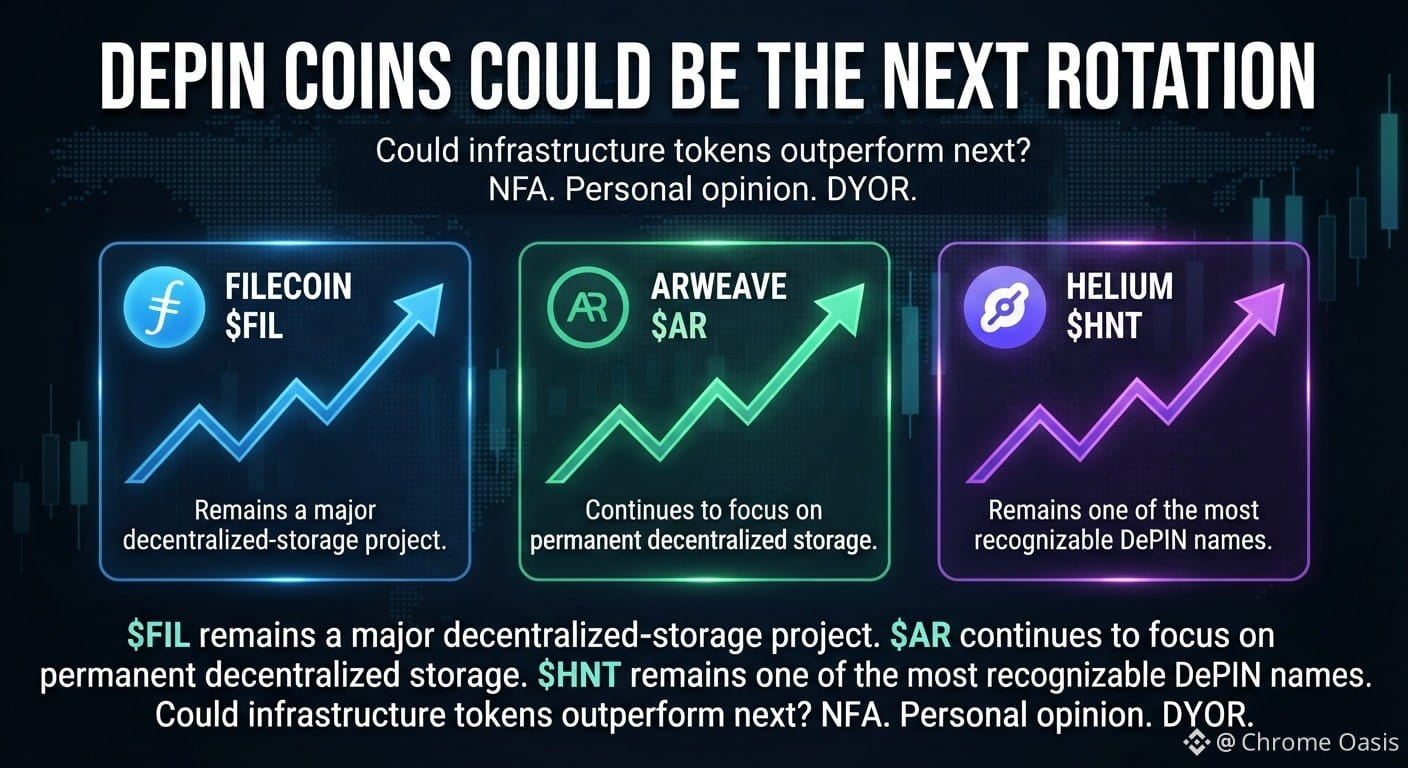
DEPIN COINS COULD BE THE NEXT ROTATION
$FIL remains a major decentralized-storage project.
$AR continues to focus on permanent decentralized storage.
$HNT remains one of the most recognizable DePIN names.
Could infrastructure tokens outperform next?
NFA. Personal opinion. DYOR.
#FIL #AR #HNT #DePIN #Crypto
DEPIN COINS COULD BE THE NEXT ROTATION
$FIL remains a major decentralized-storage project.
$AR continues to focus on permanent decentralized storage.
$HNT remains one of the most recognizable DePIN names.
Could infrastructure tokens outperform next?
NFA. Personal opinion. DYOR.
#FIL #AR #HNT #DePIN #Crypto
$FIL remains a major decentralized-storage project.
$AR continues to focus on permanent decentralized storage.
$HNT remains one of the most recognizable DePIN names.
Could infrastructure tokens outperform next?
NFA. Personal opinion. DYOR.
#FIL #AR #HNT #DePIN #Crypto
3
346

{alpha}(560xd955c9ba56fb1ab30e34766e252a97ccce3d31a6)
👀 Why is nobody talking about $XPIN ?
XPIN Network is building around the DePIN + AI narrative, and that combination is getting harder to ignore. 🔥
But here's the question:
Can XPIN turn the hype into real adoption and real utility? 🤔
I'm watching:
🌐 Network growth
🤖 AI integration
📈 Community activity
🚀 Ecosystem development
I'm not saying $XPIN will pump.
I'm saying this is a project worth watching closely. 👀
Have you researched XPIN yet, or is it still under your radar?
#XPIN #XPINNetwork #DePIN #AImodel #crypto
👀 Why is nobody talking about $XPIN ?
XPIN Network is building around the DePIN + AI narrative, and that combination is getting harder to ignore. 🔥
But here's the question:
Can XPIN turn the hype into real adoption and real utility? 🤔
I'm watching:
🌐 Network growth
🤖 AI integration
📈 Community activity
🚀 Ecosystem development
I'm not saying $XPIN will pump.
I'm saying this is a project worth watching closely. 👀
Have you researched XPIN yet, or is it still under your radar?
#XPIN #XPINNetwork #DePIN #AImodel #crypto
XPIN Network is building around the DePIN + AI narrative, and that combination is getting harder to ignore. 🔥
But here's the question:
Can XPIN turn the hype into real adoption and real utility? 🤔
I'm watching:
🌐 Network growth
🤖 AI integration
📈 Community activity
🚀 Ecosystem development
I'm not saying $XPIN will pump.
I'm saying this is a project worth watching closely. 👀
Have you researched XPIN yet, or is it still under your radar?
#XPIN #XPINNetwork #DePIN #AImodel #crypto
1
270

·
--
Who’s powering the AI behind the scenes? @fluence
One thing I find interesting about AI agents is that latency isn’t always caused by the model itself.
An agent can make multiple tool calls, retrieve state, run validations, update memory, and repeat the loop several times. A few milliseconds of CPU delay at each step might look insignificant on its own, but across the entire workflow, those delays can add up and push the request past its deadline.
This is where infrastructure becomes more important than it first appears.
For AI workloads, average performance is not always enough. The real problem can show up
especially when CPU contention causes small delays across many stages.
That makes dedicated compute an interesting option for workloads where predictable performance matters.
Fluence is approaching this from the decentralized compute side, giving developers access to dedicated CPU resources for workloads that need more consistent capacity.
I think this becomes increasingly relevant as AI agents move from simple experiments into production. When an agent is handling dozens of steps, shaving variability from each stage can have a much bigger impact on the final user experience.
The question I’m watching is simple: as agent workloads become more complex, will predictable compute become just as important as raw compute power?
https://fluence.ai/
#Fluence #AI #DePIN
Who’s powering the AI behind the scenes? @Fluence
One thing I find interesting about AI agents is that latency isn’t always caused by the model itself.
An agent can make multiple tool calls, retrieve state, run validations, update memory, and repeat the loop several times. A few milliseconds of CPU delay at each step might look insignificant on its own, but across the entire workflow, those delays can add up and push the request past its deadline.
This is where infrastructure becomes more important than it first appears.
For AI workloads, average performance is not always enough. The real problem can show up
especially when CPU contention causes small delays across many stages.
That makes dedicated compute an interesting option for workloads where predictable performance matters.
Fluence is approaching this from the decentralized compute side, giving developers access to dedicated CPU resources for workloads that need more consistent capacity.
I think this becomes increasingly relevant as AI agents move from simple experiments into production. When an agent is handling dozens of steps, shaving variability from each stage can have a much bigger impact on the final user experience.
The question I’m watching is simple: as agent workloads become more complex, will predictable compute become just as important as raw compute power?
https://fluence.ai/
#Fluence #AI #DePIN
One thing I find interesting about AI agents is that latency isn’t always caused by the model itself.
An agent can make multiple tool calls, retrieve state, run validations, update memory, and repeat the loop several times. A few milliseconds of CPU delay at each step might look insignificant on its own, but across the entire workflow, those delays can add up and push the request past its deadline.
This is where infrastructure becomes more important than it first appears.
For AI workloads, average performance is not always enough. The real problem can show up
especially when CPU contention causes small delays across many stages.
That makes dedicated compute an interesting option for workloads where predictable performance matters.
Fluence is approaching this from the decentralized compute side, giving developers access to dedicated CPU resources for workloads that need more consistent capacity.
I think this becomes increasingly relevant as AI agents move from simple experiments into production. When an agent is handling dozens of steps, shaving variability from each stage can have a much bigger impact on the final user experience.
The question I’m watching is simple: as agent workloads become more complex, will predictable compute become just as important as raw compute power?
https://fluence.ai/
#Fluence #AI #DePIN

33
·
--
@fluence VPC going live could be an important step for the Fluence ecosystem.
https://fluence.ai/
The new VPC infrastructure allows developers to run multiple VMs with private networking, security groups, controlled egress, optional public IPs, and cloud-init. In simple terms, it makes Fluence more suitable for running real applications with different services working together securely.
From an $FLT perspective, this is where I think things get interesting.
A new infrastructure feature does not automatically mean FLT price goes up. The bigger question is whether VPC helps Fluence attract more developers, workloads, and businesses.
If adoption grows, more compute could be deployed across the network, creating stronger underlying demand and potentially improving the fundamentals supporting FLT.
So I’m watching usage more than the announcement itself. If Fluence keeps adding practical infrastructure and those features translate into real network activity, I think that could become a positive catalyst for FLT over time.
For me, the thesis is simple: better infrastructure → more use cases → more network activity → potentially stronger FLT fundamentals.
#DePIN #AI #Web3
@Fluence VPC going live could be an important step for the Fluence ecosystem.
https://fluence.ai/
The new VPC infrastructure allows developers to run multiple VMs with private networking, security groups, controlled egress, optional public IPs, and cloud-init. In simple terms, it makes Fluence more suitable for running real applications with different services working together securely.
From an $FLT perspective, this is where I think things get interesting.
A new infrastructure feature does not automatically mean FLT price goes up. The bigger question is whether VPC helps Fluence attract more developers, workloads, and businesses.
If adoption grows, more compute could be deployed across the network, creating stronger underlying demand and potentially improving the fundamentals supporting FLT.
So I’m watching usage more than the announcement itself. If Fluence keeps adding practical infrastructure and those features translate into real network activity, I think that could become a positive catalyst for FLT over time.
For me, the thesis is simple: better infrastructure → more use cases → more network activity → potentially stronger FLT fundamentals.
#DePIN #AI #Web3
https://fluence.ai/
The new VPC infrastructure allows developers to run multiple VMs with private networking, security groups, controlled egress, optional public IPs, and cloud-init. In simple terms, it makes Fluence more suitable for running real applications with different services working together securely.
From an $FLT perspective, this is where I think things get interesting.
A new infrastructure feature does not automatically mean FLT price goes up. The bigger question is whether VPC helps Fluence attract more developers, workloads, and businesses.
If adoption grows, more compute could be deployed across the network, creating stronger underlying demand and potentially improving the fundamentals supporting FLT.
So I’m watching usage more than the announcement itself. If Fluence keeps adding practical infrastructure and those features translate into real network activity, I think that could become a positive catalyst for FLT over time.
For me, the thesis is simple: better infrastructure → more use cases → more network activity → potentially stronger FLT fundamentals.
#DePIN #AI #Web3

67

·
--
Bullish
$GLM DePIN and AI computing: what can be seen on the higher time frame $GLM?
While the local feed is clogged with noise around micro-movements, the higher charts show a completely different picture.
Facts from the higher time frame:
Global baseline: The coin is trading around $0.1160, right at the historical bottom block ($0.0850–$0.1000).
Testing key moving averages: The price has approached 1D EMA 21 ($0.1160) and is gradually compressing before 1D EMA 50 ($0.1520).
Neutral RSI: On the weekly interval, the oscillator wiped out all the overbought conditions from the previous impulse waves, forming a platform for new long-term accumulation.
Volatility compression: After the drop from local peaks, market supply is compressed, and volumes have fallen to minimums.
Real moves in alts with strong fundamentals (the DePIN/AI sector) are not prepared in a single day. Accumulation at the bottom is always a quiet and sticky process.
What do you think: will we see a breakout from this base this fall, or will accumulation take longer? 👇
#GLMUSDT #DePIN #BinanceSquareTalks #CryptoAnalysis #Trading #AI
$GLM DePIN and AI computing: what can be seen on the higher time frame $GLM ?
While the local feed is clogged with noise around micro-movements, the higher charts show a completely different picture.
Facts from the higher time frame:
Global baseline: The coin is trading around $0.1160, right at the historical bottom block ($0.0850–$0.1000).
Testing key moving averages: The price has approached 1D EMA 21 ($0.1160) and is gradually compressing before 1D EMA 50 ($0.1520).
Neutral RSI: On the weekly interval, the oscillator wiped out all the overbought conditions from the previous impulse waves, forming a platform for new long-term accumulation.
Volatility compression: After the drop from local peaks, market supply is compressed, and volumes have fallen to minimums.
Real moves in alts with strong fundamentals (the DePIN/AI sector) are not prepared in a single day. Accumulation at the bottom is always a quiet and sticky process.
What do you think: will we see a breakout from this base this fall, or will accumulation take longer? 👇
#GLMUSDT #DePIN #BinanceSquareTalks #CryptoAnalysis #Trading #AI
While the local feed is clogged with noise around micro-movements, the higher charts show a completely different picture.
Facts from the higher time frame:
Global baseline: The coin is trading around $0.1160, right at the historical bottom block ($0.0850–$0.1000).
Testing key moving averages: The price has approached 1D EMA 21 ($0.1160) and is gradually compressing before 1D EMA 50 ($0.1520).
Neutral RSI: On the weekly interval, the oscillator wiped out all the overbought conditions from the previous impulse waves, forming a platform for new long-term accumulation.
Volatility compression: After the drop from local peaks, market supply is compressed, and volumes have fallen to minimums.
Real moves in alts with strong fundamentals (the DePIN/AI sector) are not prepared in a single day. Accumulation at the bottom is always a quiet and sticky process.
What do you think: will we see a breakout from this base this fall, or will accumulation take longer? 👇
#GLMUSDT #DePIN #BinanceSquareTalks #CryptoAnalysis #Trading #AI
1
123
·
--
$GLM DePIN and AI computing: why the market ignores the shortage $GLM ?
While retail chases memecoins, a fundamental shift is ripening in decentralized infrastructure (DePIN).
Facts:
Earn over 40% APR: Daily spikes in yields — a sign that market makers are catastrophically short on liquidity.
Demand for compute power: Amid the AI boom, decentralized GPU/CPU are becoming a cheap alternative to cloud services.
Technique: After the impulse, the price doesn’t fall; instead, it unloads RSI at the key EMAs (50/200).
Real moves are formed in silence as the order books get squeezed before the second wave. And those who take profit via the system calmly wait for the resolution with cash.
Share your view: a lull before the breakout or a range-bound move? 👇
#GLM #DePIN #BinanceSquare #Crypto
$GLM DePIN and AI computing: why the market ignores the shortage $GLM ?
While retail chases memecoins, a fundamental shift is ripening in decentralized infrastructure (DePIN).
Facts:
Earn over 40% APR: Daily spikes in yields — a sign that market makers are catastrophically short on liquidity.
Demand for compute power: Amid the AI boom, decentralized GPU/CPU are becoming a cheap alternative to cloud services.
Technique: After the impulse, the price doesn’t fall; instead, it unloads RSI at the key EMAs (50/200).
Real moves are formed in silence as the order books get squeezed before the second wave. And those who take profit via the system calmly wait for the resolution with cash.
Share your view: a lull before the breakout or a range-bound move? 👇
#GLM #DePIN #BinanceSquare #Crypto
While retail chases memecoins, a fundamental shift is ripening in decentralized infrastructure (DePIN).
Facts:
Earn over 40% APR: Daily spikes in yields — a sign that market makers are catastrophically short on liquidity.
Demand for compute power: Amid the AI boom, decentralized GPU/CPU are becoming a cheap alternative to cloud services.
Technique: After the impulse, the price doesn’t fall; instead, it unloads RSI at the key EMAs (50/200).
Real moves are formed in silence as the order books get squeezed before the second wave. And those who take profit via the system calmly wait for the resolution with cash.
Share your view: a lull before the breakout or a range-bound move? 👇
#GLM #DePIN #BinanceSquare #Crypto
1
357


·
--
Just added $FIL around $0.812. I’m watching this level because Filecoin’s decentralized storage narrative still has strong relevance as demand for data infrastructure keeps expanding.
What interests me most is the network’s role in storing and retrieving data across a decentralized marketplace, with growing overlap between storage, Web3, and AI infrastructure.
If buyers start stepping in with stronger volume, FIL could have room for a solid recovery move.
TP: $0.92–$1.05
#fil #Filecoin #DecentralizedStorage #DePIN
$FIL
{future}(FILUSDT)
Just added $FIL around $0.812. I’m watching this level because Filecoin’s decentralized storage narrative still has strong relevance as demand for data infrastructure keeps expanding.
What interests me most is the network’s role in storing and retrieving data across a decentralized marketplace, with growing overlap between storage, Web3, and AI infrastructure.
If buyers start stepping in with stronger volume, FIL could have room for a solid recovery move.
TP: $0.92–$1.05
#fil #Filecoin #DecentralizedStorage #DePIN
$FIL
What interests me most is the network’s role in storing and retrieving data across a decentralized marketplace, with growing overlap between storage, Web3, and AI infrastructure.
If buyers start stepping in with stronger volume, FIL could have room for a solid recovery move.
TP: $0.92–$1.05
#fil #Filecoin #DecentralizedStorage #DePIN
$FIL
3
214

·
--
$FIL rises ahead of DePIN, while the storage sector strengthens against the trend
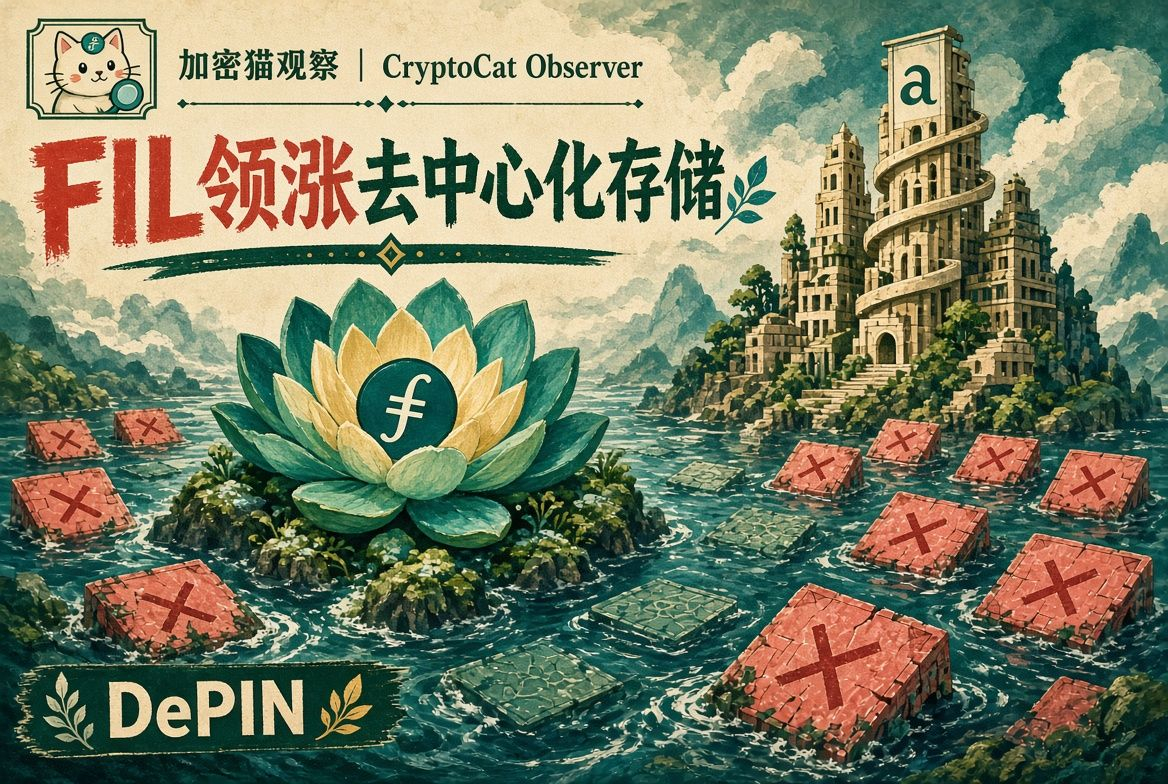
On September 14, most crypto sectors declined, with only DePIN and some Layer 2s moving against the tide: the DePIN sector rose about 3.49% over 24 hours. Among them, $FIL gained about 21.43%, and $AR rose about 9.41%. The decentralized storage sector’s market cap is about $2.87 billion, up about +5.6% over 24 hours. The market brief also indicates FIL, AR, and SKL led the rally, with FIL seeing increased trading volume.
On the narrative side, the market is focused on changes in Filecoin’s release schedule around Oct 15—whether it will bring additional issuance or significantly slow down (some analyses suggest the issuance rate may drop by about 75%). Combined with expectations for AI data archiving and permanent storage, funds are rotating from pressured mainstream coins into storage and DePIN beta.
It should be noted that some statistics show trading volume remains below the 30-day average; short-term volatility is high, and whether breakouts and holding above key resistance can be sustained still needs confirmation from both trading volume and the macro environment. Therefore, it’s not advisable to extrapolate based on a single day’s gains.
$FIL $AR
{spot}(FILUSDT)
#DePIN #Filecoin. #去中心化存储
This does not constitute investment advice
$FIL rises ahead of DePIN, while the storage sector strengthens against the trend
On September 14, most crypto sectors declined, with only DePIN and some Layer 2s moving against the tide: the DePIN sector rose about 3.49% over 24 hours. Among them, $FIL gained about 21.43%, and $AR rose about 9.41%. The decentralized storage sector’s market cap is about $2.87 billion, up about +5.6% over 24 hours. The market brief also indicates FIL, AR, and SKL led the rally, with FIL seeing increased trading volume.
On the narrative side, the market is focused on changes in Filecoin’s release schedule around Oct 15—whether it will bring additional issuance or significantly slow down (some analyses suggest the issuance rate may drop by about 75%). Combined with expectations for AI data archiving and permanent storage, funds are rotating from pressured mainstream coins into storage and DePIN beta.
It should be noted that some statistics show trading volume remains below the 30-day average; short-term volatility is high, and whether breakouts and holding above key resistance can be sustained still needs confirmation from both trading volume and the macro environment. Therefore, it’s not advisable to extrapolate based on a single day’s gains.
$FIL $AR
#DePIN #Filecoin. #去中心化存储
This does not constitute investment advice
On September 14, most crypto sectors declined, with only DePIN and some Layer 2s moving against the tide: the DePIN sector rose about 3.49% over 24 hours. Among them, $FIL gained about 21.43%, and $AR rose about 9.41%. The decentralized storage sector’s market cap is about $2.87 billion, up about +5.6% over 24 hours. The market brief also indicates FIL, AR, and SKL led the rally, with FIL seeing increased trading volume.
On the narrative side, the market is focused on changes in Filecoin’s release schedule around Oct 15—whether it will bring additional issuance or significantly slow down (some analyses suggest the issuance rate may drop by about 75%). Combined with expectations for AI data archiving and permanent storage, funds are rotating from pressured mainstream coins into storage and DePIN beta.
It should be noted that some statistics show trading volume remains below the 30-day average; short-term volatility is high, and whether breakouts and holding above key resistance can be sustained still needs confirmation from both trading volume and the macro environment. Therefore, it’s not advisable to extrapolate based on a single day’s gains.
$FIL $AR
#DePIN #Filecoin. #去中心化存储
This does not constitute investment advice
1
370

#opticalcommsstocksrallyover3%
The backbone of the AI revolution isn’t just silicon—it’s glass. 🌐
Optical communication stocks like Corning, Coherent, and Ciena recently rallied over 3%, signaling a major shift in the infrastructure space. This surge is being driven by a massive wave of AI data center investments and recent institutional forecast upgrades for high-speed optical modules. To handle massive AI compute loads, networks are requiring bandwidth that only fiber can provide.
For the crypto market, this traditional hardware rally validates a core thesis: the physical infrastructure layer is critical. It directly mirrors the momentum we are tracking in DePIN (Decentralized Physical Infrastructure Networks), as both Web2 and Web3 sectors race to lay the hardware foundations for decentralized AI.
How are you positioning yourself for the AI infrastructure boom?
👇 Let me know in the poll below!
#DePIN #AIInfrastructure #CryptoMacro
$NEAR
{future}(NEARUSDT)
$TAO
{future}(TAOUSDT)
$RENDER
{future}(RENDERUSDT)
#opticalcommsstocksrallyover3%
The backbone of the AI revolution isn’t just silicon—it’s glass. 🌐
Optical communication stocks like Corning, Coherent, and Ciena recently rallied over 3%, signaling a major shift in the infrastructure space. This surge is being driven by a massive wave of AI data center investments and recent institutional forecast upgrades for high-speed optical modules. To handle massive AI compute loads, networks are requiring bandwidth that only fiber can provide.
For the crypto market, this traditional hardware rally validates a core thesis: the physical infrastructure layer is critical. It directly mirrors the momentum we are tracking in DePIN (Decentralized Physical Infrastructure Networks), as both Web2 and Web3 sectors race to lay the hardware foundations for decentralized AI.
How are you positioning yourself for the AI infrastructure boom?
👇 Let me know in the poll below!
#DePIN #AIInfrastructure #CryptoMacro
$NEAR
$TAO
$RENDER
The backbone of the AI revolution isn’t just silicon—it’s glass. 🌐
Optical communication stocks like Corning, Coherent, and Ciena recently rallied over 3%, signaling a major shift in the infrastructure space. This surge is being driven by a massive wave of AI data center investments and recent institutional forecast upgrades for high-speed optical modules. To handle massive AI compute loads, networks are requiring bandwidth that only fiber can provide.
For the crypto market, this traditional hardware rally validates a core thesis: the physical infrastructure layer is critical. It directly mirrors the momentum we are tracking in DePIN (Decentralized Physical Infrastructure Networks), as both Web2 and Web3 sectors race to lay the hardware foundations for decentralized AI.
How are you positioning yourself for the AI infrastructure boom?
👇 Let me know in the poll below!
#DePIN #AIInfrastructure #CryptoMacro
$NEAR
$TAO
$RENDER

246

·
--

Article
Where are the data that train Artificial Intelligence stored?Every time we interact with an AI model, it processes and generates gigabytes of information in real time. $By 2026, the mass of data required to train large language models and generative systems has reached astronomical volumes. However, there is a crucial question that few people ask:
Where is all that information physically stored, and who controls that infrastructure?
Currently, the vast majority of the world’s storage and computing capacity is concentrated in a handful of tech giants. If the infrastructure that supports AI remains under the control of three or four corporations, we face serious risks of massive disruptions due to centralized failures, risks of censorship of information, and unsustainable scaling costs for independent developers.
Where are the data that train Artificial Intelligence stored?
Every time we interact with an AI model, it processes and generates gigabytes of information in real time. $By 2026, the mass of data required to train large language models and generative systems has reached astronomical volumes. However, there is a crucial question that few people ask:
Where is all that information physically stored, and who controls that infrastructure?
Currently, the vast majority of the world’s storage and computing capacity is concentrated in a handful of tech giants. If the infrastructure that supports AI remains under the control of three or four corporations, we face serious risks of massive disruptions due to centralized failures, risks of censorship of information, and unsustainable scaling costs for independent developers.
Where is all that information physically stored, and who controls that infrastructure?
Currently, the vast majority of the world’s storage and computing capacity is concentrated in a handful of tech giants. If the infrastructure that supports AI remains under the control of three or four corporations, we face serious risks of massive disruptions due to centralized failures, risks of censorship of information, and unsustainable scaling costs for independent developers.
1
79

·
--
🎯 A satellite network worth $1 billion, DePIN is about to heat up again
📰 Space42 teamed up with Viasat to establish Equatys. Each side contributes $400 million to build a space-and-ground communications platform. Then they plan to bring in a third party with another $200 million, targeting 60 orbital planes and 2,800 satellites
💬 Shared infrastructure is the real-life case study for DePIN. Offshore areas and deserts where ground signals can’t reach are exactly the true battleground where on-chain nodes can share the pie
🏷️ #DePIN #卫星互联网 #Space42 #Viasat #Web3 infrastructure
🎯 A satellite network worth $1 billion, DePIN is about to heat up again
📰 Space42 teamed up with Viasat to establish Equatys. Each side contributes $400 million to build a space-and-ground communications platform. Then they plan to bring in a third party with another $200 million, targeting 60 orbital planes and 2,800 satellites
💬 Shared infrastructure is the real-life case study for DePIN. Offshore areas and deserts where ground signals can’t reach are exactly the true battleground where on-chain nodes can share the pie
🏷️ #DePIN #卫星互联网 #Space42 #Viasat #Web3 infrastructure
📰 Space42 teamed up with Viasat to establish Equatys. Each side contributes $400 million to build a space-and-ground communications platform. Then they plan to bring in a third party with another $200 million, targeting 60 orbital planes and 2,800 satellites
💬 Shared infrastructure is the real-life case study for DePIN. Offshore areas and deserts where ground signals can’t reach are exactly the true battleground where on-chain nodes can share the pie
🏷️ #DePIN #卫星互联网 #Space42 #Viasat #Web3 infrastructure
5

·
--
In the evolving landscape of decentralized physical infrastructure, networks coordinating real-world resources continue demonstrating tangible utility beyond narrative. As sensors, bandwidth, and compute find on-chain coordination, capital begins recognizing grounded value creation. Echoing the 2021 infrastructure waves that rewarded practical deployment, this chapter carries a 64% probability of steady growth through the season if adoption metrics and partnership integrations keep compounding.
$FIL $RENDER #RadaRI106 #CoinVahini #DePIN #Infrastructure
In the evolving landscape of decentralized physical infrastructure, networks coordinating real-world resources continue demonstrating tangible utility beyond narrative. As sensors, bandwidth, and compute find on-chain coordination, capital begins recognizing grounded value creation. Echoing the 2021 infrastructure waves that rewarded practical deployment, this chapter carries a 64% probability of steady growth through the season if adoption metrics and partnership integrations keep compounding.
$FIL $RENDER #RadaRI106 #CoinVahini #DePIN #Infrastructure
$FIL $RENDER #RadaRI106 #CoinVahini #DePIN #Infrastructure
1
378

·
--
Bullish
🟧👉 Disclosure: This post ( ✍️ Text + 🖼️ images ) is AI-generated.
🚀 The decentralized streaming ecosystem is heating up with real network activity 🔥.
1️⃣ On-chain gas demand is expanding rapidly as $TFUEL powers video delivery and smart contracts ⚡.
2️⃣ Enterprise edge nodes continue processing massive distributed bandwidth while burning $TFUEL 🌐.
3️⃣ Market watchers notice accumulation zones forming across exchange order books for $TFUEL 📈.
{spot}(TFUELUSDT)
#TFUEL #Crypto #Altcoins #Binance #DePIN .
🟥👉 Reminder: Not 🚫 Financial Advice (NFA), Please 🙏 Do Your Own Research (DYOR).
🟧👉 Disclosure: This post ( ✍️ Text + 🖼️ images ) is AI-generated.
🚀 The decentralized streaming ecosystem is heating up with real network activity 🔥.
1️⃣ On-chain gas demand is expanding rapidly as $TFUEL powers video delivery and smart contracts ⚡.
2️⃣ Enterprise edge nodes continue processing massive distributed bandwidth while burning $TFUEL 🌐.
3️⃣ Market watchers notice accumulation zones forming across exchange order books for $TFUEL 📈.
#TFUEL #Crypto #Altcoins #Binance #DePIN .
🟥👉 Reminder: Not 🚫 Financial Advice (NFA), Please 🙏 Do Your Own Research (DYOR).
🚀 The decentralized streaming ecosystem is heating up with real network activity 🔥.
1️⃣ On-chain gas demand is expanding rapidly as $TFUEL powers video delivery and smart contracts ⚡.
2️⃣ Enterprise edge nodes continue processing massive distributed bandwidth while burning $TFUEL 🌐.
3️⃣ Market watchers notice accumulation zones forming across exchange order books for $TFUEL 📈.
#TFUEL #Crypto #Altcoins #Binance #DePIN .
🟥👉 Reminder: Not 🚫 Financial Advice (NFA), Please 🙏 Do Your Own Research (DYOR).

23
·
--
Will Decentralized Physical Infrastructure Networks (DePIN) Lead the Next Crypto Bull Run? 🌐⚡
As blockchain technology evolves beyond purely financial applications, DePIN is quickly emerging as one of the most promising sectors in Web3. But what exactly makes DePIN a potential game-changer for mainstream adoption?
DePIN leverages token incentives to build and maintain real-world physical infrastructure -ranging from decentralized wireless networks and compute clusters to solar power grids and storage solutions. By tokenizing hardware contribution, it lowers capital costs and disrupts traditional centralized giants.
By bridging digital tokens with real-world utility, DePIN provides tangible economic value that extends far beyond speculative trading.
$RNDR $FIL #DePIN #Web3 #CryptoInnovation #CoinVahini
Will Decentralized Physical Infrastructure Networks (DePIN) Lead the Next Crypto Bull Run? 🌐⚡
As blockchain technology evolves beyond purely financial applications, DePIN is quickly emerging as one of the most promising sectors in Web3. But what exactly makes DePIN a potential game-changer for mainstream adoption?
DePIN leverages token incentives to build and maintain real-world physical infrastructure -ranging from decentralized wireless networks and compute clusters to solar power grids and storage solutions. By tokenizing hardware contribution, it lowers capital costs and disrupts traditional centralized giants.
By bridging digital tokens with real-world utility, DePIN provides tangible economic value that extends far beyond speculative trading.
$RNDR $FIL #DePIN #Web3 #CryptoInnovation #CoinVahini
As blockchain technology evolves beyond purely financial applications, DePIN is quickly emerging as one of the most promising sectors in Web3. But what exactly makes DePIN a potential game-changer for mainstream adoption?
DePIN leverages token incentives to build and maintain real-world physical infrastructure -ranging from decentralized wireless networks and compute clusters to solar power grids and storage solutions. By tokenizing hardware contribution, it lowers capital costs and disrupts traditional centralized giants.
By bridging digital tokens with real-world utility, DePIN provides tangible economic value that extends far beyond speculative trading.
$RNDR $FIL #DePIN #Web3 #CryptoInnovation #CoinVahini
1
253

🚨 The Quiet Rotation Most Traders Are Missing
While everyone watches memecoins, capital is quietly rotating into AI, RWA, and DePIN projects.
Why it matters:
✅ AI tokens benefit from growing demand for decentralised compute.
✅ RWA is bringing real-world assets on-chain, attracting institutional interest.
✅ DePIN projects are building physical infrastructure powered by crypto incentives.
The next big winners often emerge when attention is elsewhere.
📌 My view: Narratives with real utility may outperform short-lived hype cycles over the long term.
⚠️ Risk: Market sentiment still drives short-term price action. Strong narratives do not guarantee performance.
Which sector are you watching most closely right now: AI, RWA, DePIN, or Memes? 👇
$BTC
{future}(BTCUSDT)
$ETH $BNB $LINK $RNDR
#crypto #BinanceSquare #AI #RWA #DePIN
🚨 The Quiet Rotation Most Traders Are Missing
While everyone watches memecoins, capital is quietly rotating into AI, RWA, and DePIN projects.
Why it matters:
✅ AI tokens benefit from growing demand for decentralised compute.
✅ RWA is bringing real-world assets on-chain, attracting institutional interest.
✅ DePIN projects are building physical infrastructure powered by crypto incentives.
The next big winners often emerge when attention is elsewhere.
📌 My view: Narratives with real utility may outperform short-lived hype cycles over the long term.
⚠️ Risk: Market sentiment still drives short-term price action. Strong narratives do not guarantee performance.
Which sector are you watching most closely right now: AI, RWA, DePIN, or Memes? 👇
$BTC
$ETH $BNB $LINK $RNDR
#crypto #BinanceSquare #AI #RWA #DePIN
While everyone watches memecoins, capital is quietly rotating into AI, RWA, and DePIN projects.
Why it matters:
✅ AI tokens benefit from growing demand for decentralised compute.
✅ RWA is bringing real-world assets on-chain, attracting institutional interest.
✅ DePIN projects are building physical infrastructure powered by crypto incentives.
The next big winners often emerge when attention is elsewhere.
📌 My view: Narratives with real utility may outperform short-lived hype cycles over the long term.
⚠️ Risk: Market sentiment still drives short-term price action. Strong narratives do not guarantee performance.
Which sector are you watching most closely right now: AI, RWA, DePIN, or Memes? 👇
$BTC
$ETH $BNB $LINK $RNDR
#crypto #BinanceSquare #AI #RWA #DePIN

142

$TAO is sitting in an interesting part of the market.
Bitcoin is struggling around the $77–78K area while macro pressure is rising.
Yet TAO remains one of the altcoins investors watch when the AI narrative returns.
That distinction matters.
Bittensor isn’t simply betting on “AI tokens going up.” Its thesis is about creating an incentive network around decentralized machine intelligence.
But the market is asking a harder question now:
Can TAO continue outperforming if liquidity becomes tighter?
At roughly the $250 area, I would rather watch structure and confirmation than chase momentum.
The strongest assets don’t need you to FOMO.
They give you a setup.
📊 POLL:
Where do you think TAO goes next?
#TAO #bittensor #AI #crypto #DePIN
$TAO is sitting in an interesting part of the market.
Bitcoin is struggling around the $77–78K area while macro pressure is rising.
Yet TAO remains one of the altcoins investors watch when the AI narrative returns.
That distinction matters.
Bittensor isn’t simply betting on “AI tokens going up.” Its thesis is about creating an incentive network around decentralized machine intelligence.
But the market is asking a harder question now:
Can TAO continue outperforming if liquidity becomes tighter?
At roughly the $250 area, I would rather watch structure and confirmation than chase momentum.
The strongest assets don’t need you to FOMO.
They give you a setup.
📊 POLL:
Where do you think TAO goes next?
#TAO #bittensor #AI #crypto #DePIN
Bitcoin is struggling around the $77–78K area while macro pressure is rising.
Yet TAO remains one of the altcoins investors watch when the AI narrative returns.
That distinction matters.
Bittensor isn’t simply betting on “AI tokens going up.” Its thesis is about creating an incentive network around decentralized machine intelligence.
But the market is asking a harder question now:
Can TAO continue outperforming if liquidity becomes tighter?
At roughly the $250 area, I would rather watch structure and confirmation than chase momentum.
The strongest assets don’t need you to FOMO.
They give you a setup.
📊 POLL:
Where do you think TAO goes next?
#TAO #bittensor #AI #crypto #DePIN
🧱 Consolidation first
60%
📉 Deeper correction
30%
👀 Too early to decide
10%
10 votes • Voting closed
550

·
--
When the market is lively, I actually want to talk about a well-established track that almost nobody discusses.
$STORJ is building decentralized cloud storage: files are encrypted, sliced, and distributed across a global network of nodes. In essence, it monetizes idle hard drives and bandwidth. It belongs to the earliest batch of players in the DePIN and storage track.
A few data points worth noting: the current price is around $0.067, the market cap is under $29 million, and 24-hour trading volume is about $18 million. The turnover rate isn’t low, which suggests the float is still moving. The project hasn’t been completely forgotten—just that its narrative hype has clearly cooled off.
Storage is one of the few directions with genuine demand in the crypto world—overall data volume has long-term growth, and centralized cloud services remain expensive. The logic has always held. But the reality is that competition in this track is fierce, and the leading players squeeze the rest heavily. Storj wants to be repriced again; ultimately it will depend on growth in storage usage, paying customers, and actual revenue—not on repeating the same old story.
A small market cap means both upside (elasticity) and risk. In a phase when nobody is talking about it, it’s more suitable to put it on an observation list for patient tracking rather than rushing to buy or sell. Once fundamental signals or confirmation from sector rotation arrives, it won’t be too late to act.
#DePIN #去中心化存储 #Storj
When the market is lively, I actually want to talk about a well-established track that almost nobody discusses.
$STORJ is building decentralized cloud storage: files are encrypted, sliced, and distributed across a global network of nodes. In essence, it monetizes idle hard drives and bandwidth. It belongs to the earliest batch of players in the DePIN and storage track.
A few data points worth noting: the current price is around $0.067, the market cap is under $29 million, and 24-hour trading volume is about $18 million. The turnover rate isn’t low, which suggests the float is still moving. The project hasn’t been completely forgotten—just that its narrative hype has clearly cooled off.
Storage is one of the few directions with genuine demand in the crypto world—overall data volume has long-term growth, and centralized cloud services remain expensive. The logic has always held. But the reality is that competition in this track is fierce, and the leading players squeeze the rest heavily. Storj wants to be repriced again; ultimately it will depend on growth in storage usage, paying customers, and actual revenue—not on repeating the same old story.
A small market cap means both upside (elasticity) and risk. In a phase when nobody is talking about it, it’s more suitable to put it on an observation list for patient tracking rather than rushing to buy or sell. Once fundamental signals or confirmation from sector rotation arrives, it won’t be too late to act.
#DePIN #去中心化存储 #Storj
$STORJ is building decentralized cloud storage: files are encrypted, sliced, and distributed across a global network of nodes. In essence, it monetizes idle hard drives and bandwidth. It belongs to the earliest batch of players in the DePIN and storage track.
A few data points worth noting: the current price is around $0.067, the market cap is under $29 million, and 24-hour trading volume is about $18 million. The turnover rate isn’t low, which suggests the float is still moving. The project hasn’t been completely forgotten—just that its narrative hype has clearly cooled off.
Storage is one of the few directions with genuine demand in the crypto world—overall data volume has long-term growth, and centralized cloud services remain expensive. The logic has always held. But the reality is that competition in this track is fierce, and the leading players squeeze the rest heavily. Storj wants to be repriced again; ultimately it will depend on growth in storage usage, paying customers, and actual revenue—not on repeating the same old story.
A small market cap means both upside (elasticity) and risk. In a phase when nobody is talking about it, it’s more suitable to put it on an observation list for patient tracking rather than rushing to buy or sell. Once fundamental signals or confirmation from sector rotation arrives, it won’t be too late to act.
#DePIN #去中心化存储 #Storj
58
A quiet market doesn’t mean there are no stories. The long-established decentralized storage project Storj has recently hardly been discussed, but the market data is anything but dull.
Its current price is around $0.0508, with a market cap of only about $21.61 million. Yet its 24-hour trading volume is as high as roughly $11.86 million—daily turnover as a percentage of market cap exceeds fifty percent. A relatively small market cap amplifying turnover suggests that low-level shares have been quietly changing hands, though the hype hasn’t fully returned to it yet.
Storj is building distributed encrypted object storage: node operators contribute idle hard-drive space to earn rewards, while enterprise customers slice, encrypt, and store their data across a global network of nodes. This places Storj in the DePIN storage track as one of the few directions with genuinely paid-for demand.
When nobody’s talking about it, that’s often the right time to put it on your watchlist first. Going forward, focus on two things: whether trading volume can continue to expand, and when the broader storage-sector narrative will warm up again. Before the wave arrives, patience matters more than chasing higher prices.
$STORJ #DePIN #decentralized storage
A quiet market doesn’t mean there are no stories. The long-established decentralized storage project Storj has recently hardly been discussed, but the market data is anything but dull.
Its current price is around $0.0508, with a market cap of only about $21.61 million. Yet its 24-hour trading volume is as high as roughly $11.86 million—daily turnover as a percentage of market cap exceeds fifty percent. A relatively small market cap amplifying turnover suggests that low-level shares have been quietly changing hands, though the hype hasn’t fully returned to it yet.
Storj is building distributed encrypted object storage: node operators contribute idle hard-drive space to earn rewards, while enterprise customers slice, encrypt, and store their data across a global network of nodes. This places Storj in the DePIN storage track as one of the few directions with genuinely paid-for demand.
When nobody’s talking about it, that’s often the right time to put it on your watchlist first. Going forward, focus on two things: whether trading volume can continue to expand, and when the broader storage-sector narrative will warm up again. Before the wave arrives, patience matters more than chasing higher prices.
$STORJ #DePIN #decentralized storage
Its current price is around $0.0508, with a market cap of only about $21.61 million. Yet its 24-hour trading volume is as high as roughly $11.86 million—daily turnover as a percentage of market cap exceeds fifty percent. A relatively small market cap amplifying turnover suggests that low-level shares have been quietly changing hands, though the hype hasn’t fully returned to it yet.
Storj is building distributed encrypted object storage: node operators contribute idle hard-drive space to earn rewards, while enterprise customers slice, encrypt, and store their data across a global network of nodes. This places Storj in the DePIN storage track as one of the few directions with genuinely paid-for demand.
When nobody’s talking about it, that’s often the right time to put it on your watchlist first. Going forward, focus on two things: whether trading volume can continue to expand, and when the broader storage-sector narrative will warm up again. Before the wave arrives, patience matters more than chasing higher prices.
$STORJ #DePIN #decentralized storage
17
Log in to explore more content
Join global crypto users on Binance Square
⚡️ Get latest and useful information about crypto.
💬 Trusted by the world’s largest crypto exchange.
👍 Discover real insights from verified creators.
Email / Phone number
Trending Topics
1
#FedRateWatch
414,302 views
2,318 Discussing
2
#BitcoinSlidesTo$76000
10,169 views
94 Discussing
3
#BitcoinReboundsTo$79K
56,980 views
387 Discussing
4
#StrategyMarketCapPassesFord
21,755 views
524 Discussing
5
#ClarityActOddsHalveOnPolymarket
24,289 views
423 Discussing
6
#US30YTreasuryYieldTops5.40%
19,066 views
306 Discussing
7
#BessentEndorsesFinalClarityActDraft
41,817 views
655 Discussing
8
#ZamaOpens16ConfidentialMorphoVaults
14,492 views
315 Discussing
9
#USDCOnChainVolumeTops$100Trillion
2,207 views
47 Discussing
10
#BitcoinSpotETFsNetInflow$160M
2,819 views
100 Discussing