
#criptoativos
criptoativos
47,774 views
109 Discussing
Hot
Latest
Hello dear investors! I present to you the IR Chain I Crypto Accounting!
We offer tax restructuring services for investors in crypto assets, delivery of the ancillary obligation DeCripto, personalized consulting in swaps, selling, and restructuring hard and cold wallet portfolios, taking advantage of the exemption limits!
Don’t let the taxman eat your profits! Regularize now!
#Decripto #cryptoindertax #cryptoaccountant #criptoativos $BTC
Hello dear investors! I present to you the IR Chain I Crypto Accounting!
We offer tax restructuring services for investors in crypto assets, delivery of the ancillary obligation DeCripto, personalized consulting in swaps, selling, and restructuring hard and cold wallet portfolios, taking advantage of the exemption limits!
Don’t let the taxman eat your profits! Regularize now!
#Decripto #cryptoindertax #cryptoaccountant #criptoativos $BTC
We offer tax restructuring services for investors in crypto assets, delivery of the ancillary obligation DeCripto, personalized consulting in swaps, selling, and restructuring hard and cold wallet portfolios, taking advantage of the exemption limits!
Don’t let the taxman eat your profits! Regularize now!
#Decripto #cryptoindertax #cryptoaccountant #criptoativos $BTC
140

·
--
Bullish
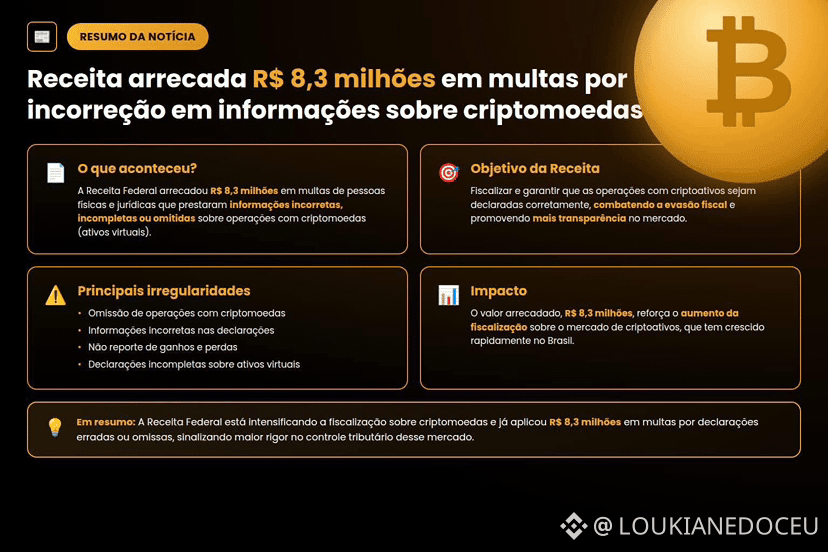
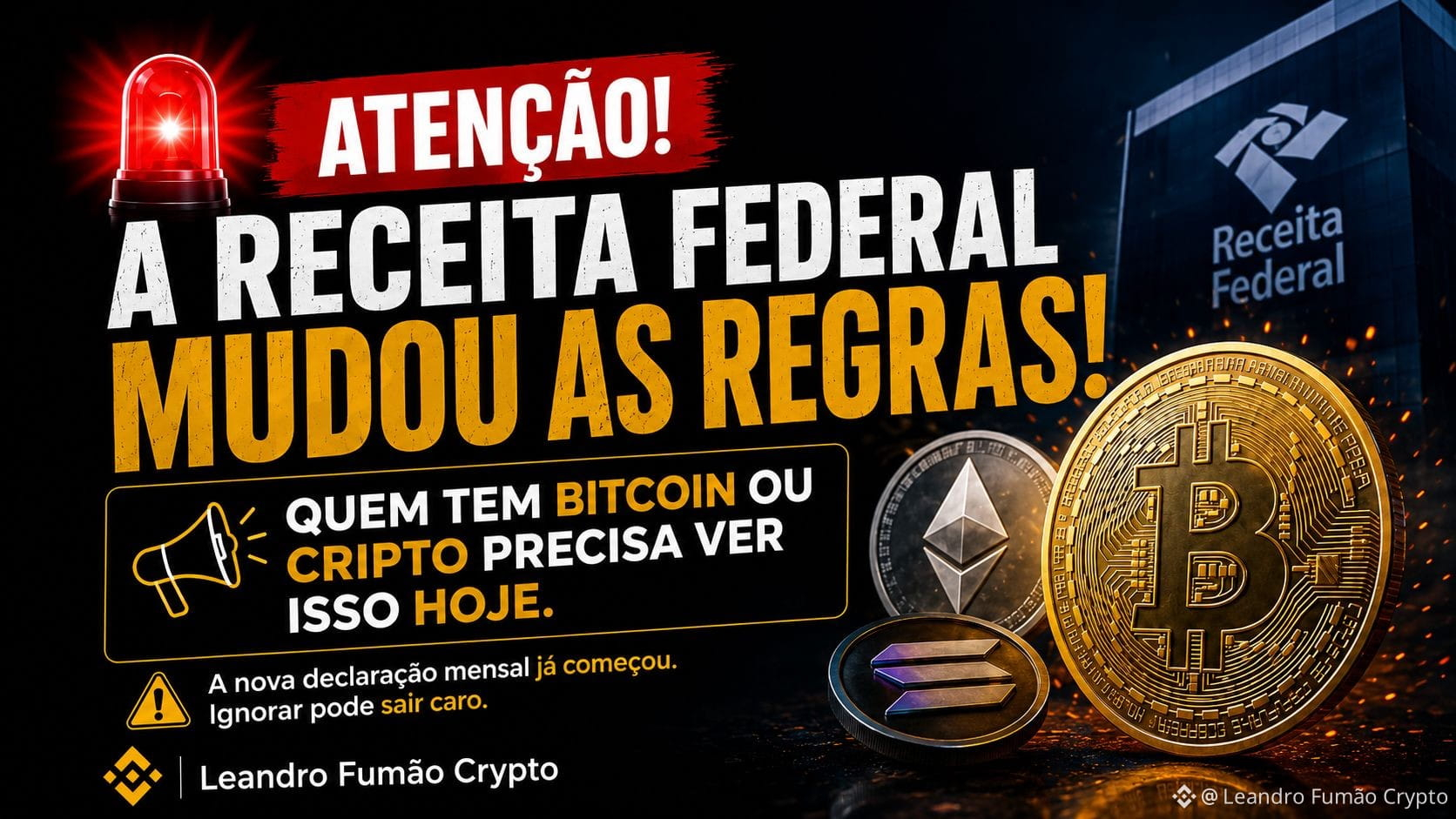
😨⚠️A 𝙍𝙀𝘾𝙀𝙄𝙏𝘼 𝙁𝙀𝘿𝙀𝙍𝘼𝙇 𝘿𝙀 𝘽𝙍𝘼𝙎𝙄𝙇 𝙃𝘼𝙎 𝙀𝙉𝘿𝙄𝙍 𝙁𝘼𝘾𝙏𝙐𝙍𝘼 𝘿𝙤 𝘽𝙍𝘼𝙎𝙄𝙇 𝙀𝙎 𝙍𝙀𝙂𝙍𝘼𝙎 𝙋𝘼𝙍𝘼 𝙌𝙐𝙀𝙈 𝙈𝙊𝙑𝙄𝙈𝙀𝙉𝙏𝘼 𝘾𝙍𝙄𝙋𝙏𝙊 𝙉𝙊 𝘽𝙍𝘼𝙎𝙄𝙇❗
Starting from the operations carried out in July 2026, DeCripto takes center stage—a new cryptoassets declaration created by the Federal Revenue Service to align Brazil with the international CARF standard from the OECD.
This doesn’t mean that “everyone who owns Bitcoin will be fined”.
But it does mean that the control will become broader, standardized, and connected to national and international information.
🔥 What Changes in Practice❓
Cryptoasset exchanges and service providers must follow the new reporting model.
And individuals or companies that conduct operations outside Brazilian exchanges also need to comply with the obligation to report certain movements to the Revenue Service.
The monthly deadline remains until the last business day of the month following the operations that were declared.
Operations that come under scrutiny include:
▸ Buying and selling
▸ Swapping between cryptoassets
▸ Transfers
▸ Payments
▸ Donations and other movements provided for in the rules.
The most important point is this:
having your own wallet does not mean fiscal invisibility.
Self-custody is different from not needing to prove the source, acquisition cost, and transaction history.
With the adoption of CARF, Brazil also strengthens the automatic exchange of tax information with other jurisdictions.
🧠 What Should the Crypto Investor Do Now?
Organize statements.
Record purchases and sales.
Keep receipts.
Separate transfers from trades.
Track costs and any gains.
Consult an accountant in complex situations.
Don’t wait for a notification to reconstruct years of activity.
This new phase of crypto enforcement doesn’t mean the end of the market.
It means that operating without registration is even riskier.
$BTC $BNB $GALA
👇 Do you already keep a complete history of your cryptocurrency operations?
#Bitcoin #criptoativos #receitafederal
😨⚠️A 𝙍𝙀𝘾𝙀𝙄𝙏𝘼 𝙁𝙀𝘿𝙀𝙍𝘼𝙇 𝘿𝙀 𝘽𝙍𝘼𝙎𝙄𝙇 𝙃𝘼𝙎 𝙀𝙉𝘿𝙄𝙍 𝙁𝘼𝘾𝙏𝙐𝙍𝘼 𝘿𝙤 𝘽𝙍𝘼𝙎𝙄𝙇 𝙀𝙎 𝙍𝙀𝙂𝙍𝘼𝙎 𝙋𝘼𝙍𝘼 𝙌𝙐𝙀𝙈 𝙈𝙊𝙑𝙄𝙈𝙀𝙉𝙏𝘼 𝘾𝙍𝙄𝙋𝙏𝙊 𝙉𝙊 𝘽𝙍𝘼𝙎𝙄𝙇❗
Starting from the operations carried out in July 2026, DeCripto takes center stage—a new cryptoassets declaration created by the Federal Revenue Service to align Brazil with the international CARF standard from the OECD.
This doesn’t mean that “everyone who owns Bitcoin will be fined”.
But it does mean that the control will become broader, standardized, and connected to national and international information.
🔥 What Changes in Practice❓
Cryptoasset exchanges and service providers must follow the new reporting model.
And individuals or companies that conduct operations outside Brazilian exchanges also need to comply with the obligation to report certain movements to the Revenue Service.
The monthly deadline remains until the last business day of the month following the operations that were declared.
Operations that come under scrutiny include:
▸ Buying and selling
▸ Swapping between cryptoassets
▸ Transfers
▸ Payments
▸ Donations and other movements provided for in the rules.
The most important point is this:
having your own wallet does not mean fiscal invisibility.
Self-custody is different from not needing to prove the source, acquisition cost, and transaction history.
With the adoption of CARF, Brazil also strengthens the automatic exchange of tax information with other jurisdictions.
🧠 What Should the Crypto Investor Do Now?
Organize statements.
Record purchases and sales.
Keep receipts.
Separate transfers from trades.
Track costs and any gains.
Consult an accountant in complex situations.
Don’t wait for a notification to reconstruct years of activity.
This new phase of crypto enforcement doesn’t mean the end of the market.
It means that operating without registration is even riskier.
$BTC $BNB $GALA
👇 Do you already keep a complete history of your cryptocurrency operations?
#Bitcoin #criptoativos #receitafederal
Starting from the operations carried out in July 2026, DeCripto takes center stage—a new cryptoassets declaration created by the Federal Revenue Service to align Brazil with the international CARF standard from the OECD.
This doesn’t mean that “everyone who owns Bitcoin will be fined”.
But it does mean that the control will become broader, standardized, and connected to national and international information.
🔥 What Changes in Practice❓
Cryptoasset exchanges and service providers must follow the new reporting model.
And individuals or companies that conduct operations outside Brazilian exchanges also need to comply with the obligation to report certain movements to the Revenue Service.
The monthly deadline remains until the last business day of the month following the operations that were declared.
Operations that come under scrutiny include:
▸ Buying and selling
▸ Swapping between cryptoassets
▸ Transfers
▸ Payments
▸ Donations and other movements provided for in the rules.
The most important point is this:
having your own wallet does not mean fiscal invisibility.
Self-custody is different from not needing to prove the source, acquisition cost, and transaction history.
With the adoption of CARF, Brazil also strengthens the automatic exchange of tax information with other jurisdictions.
🧠 What Should the Crypto Investor Do Now?
Organize statements.
Record purchases and sales.
Keep receipts.
Separate transfers from trades.
Track costs and any gains.
Consult an accountant in complex situations.
Don’t wait for a notification to reconstruct years of activity.
This new phase of crypto enforcement doesn’t mean the end of the market.
It means that operating without registration is even riskier.
$BTC $BNB $GALA
👇 Do you already keep a complete history of your cryptocurrency operations?
#Bitcoin #criptoativos #receitafederal
10
13
8k
·
--
💬 An opinion that can divide the market:
Most people don’t lose money because of lack of information. $BTC
They lose because:
🔸 They buy after a very strong surge;
🔸 They increase their position out of euphoria;
🔸 They don’t set a loss limit;
🔸 They sell at the first moment of fear;
🔸 They follow opinions without understanding their own operation.
Knowledge without discipline isn’t enough.
In the market, surviving is more important than getting a single trade right.
Do you agree or disagree?
#bitcoin #TradingSignals #Investimentos #criptoativos #BinanceSquare
💬 An opinion that can divide the market:
Most people don’t lose money because of lack of information. $BTC
They lose because:
🔸 They buy after a very strong surge;
🔸 They increase their position out of euphoria;
🔸 They don’t set a loss limit;
🔸 They sell at the first moment of fear;
🔸 They follow opinions without understanding their own operation.
Knowledge without discipline isn’t enough.
In the market, surviving is more important than getting a single trade right.
Do you agree or disagree?
#bitcoin #TradingSignals #Investimentos #criptoativos #BinanceSquare
Most people don’t lose money because of lack of information. $BTC
They lose because:
🔸 They buy after a very strong surge;
🔸 They increase their position out of euphoria;
🔸 They don’t set a loss limit;
🔸 They sell at the first moment of fear;
🔸 They follow opinions without understanding their own operation.
Knowledge without discipline isn’t enough.
In the market, surviving is more important than getting a single trade right.
Do you agree or disagree?
#bitcoin #TradingSignals #Investimentos #criptoativos #BinanceSquare

1
115

When Trump talks about taking action against factions here in Brazil, the market interprets it like this:
🔹 If there’s pressure or measures from the US, the dollar experiences strong fluctuations
🔹 Investors see increased risk, hesitate to put money in, or pull out
🔹 Foreign companies become cautious and delay investments
🔹 Cryptocurrencies become more volatile, as many use them as a hedge during uncertainty
In summary: when security and foreign relations become a hot topic, the value of your money and assets waver along with it.
What do you think? Do you believe this movement will shake up the market even more? Comment below 👇
#economía a #MercadoFinanceiro #Investimentos #criptoativos
When Trump talks about taking action against factions here in Brazil, the market interprets it like this:
🔹 If there’s pressure or measures from the US, the dollar experiences strong fluctuations
🔹 Investors see increased risk, hesitate to put money in, or pull out
🔹 Foreign companies become cautious and delay investments
🔹 Cryptocurrencies become more volatile, as many use them as a hedge during uncertainty
In summary: when security and foreign relations become a hot topic, the value of your money and assets waver along with it.
What do you think? Do you believe this movement will shake up the market even more? Comment below 👇
#economía a #MercadoFinanceiro #Investimentos #criptoativos
🔹 If there’s pressure or measures from the US, the dollar experiences strong fluctuations
🔹 Investors see increased risk, hesitate to put money in, or pull out
🔹 Foreign companies become cautious and delay investments
🔹 Cryptocurrencies become more volatile, as many use them as a hedge during uncertainty
In summary: when security and foreign relations become a hot topic, the value of your money and assets waver along with it.
What do you think? Do you believe this movement will shake up the market even more? Comment below 👇
#economía a #MercadoFinanceiro #Investimentos #criptoativos
1
144

·
--
The recent move of $B3, with an impressive rise of +30%, reignites crucial discussions about technical analysis and how to interpret these signals. 📈
When analyzing the chart, it’s essential to observe the volume that accompanies this appreciation. High volume can indicate genuine buying interest, validating the move. On the other hand, a strong move with low volume may be more volatile and less sustainable. Let’s keep an eye on it!
Beyond volume, candlestick patterns and momentum indicators, such as the RSI (Relative Strength Index) and the MACD, can provide valuable insights. For example, an overbought condition may suggest an upcoming pause or correction.
It’s a constant reminder that, in the cryptocurrency market, patience and meticulous analysis are powerful allies. This is not investment advice, but rather an observation about the market moves we should follow and analyze. 📊🔍
#AnaliseTecnica #CriptoAtivos #B3 #MercadoCripto #Tendencias
The recent move of $B3 , with an impressive rise of +30%, reignites crucial discussions about technical analysis and how to interpret these signals. 📈
When analyzing the chart, it’s essential to observe the volume that accompanies this appreciation. High volume can indicate genuine buying interest, validating the move. On the other hand, a strong move with low volume may be more volatile and less sustainable. Let’s keep an eye on it!
Beyond volume, candlestick patterns and momentum indicators, such as the RSI (Relative Strength Index) and the MACD, can provide valuable insights. For example, an overbought condition may suggest an upcoming pause or correction.
It’s a constant reminder that, in the cryptocurrency market, patience and meticulous analysis are powerful allies. This is not investment advice, but rather an observation about the market moves we should follow and analyze. 📊🔍
#AnaliseTecnica #CriptoAtivos #B3 #MercadoCripto #Tendencias
When analyzing the chart, it’s essential to observe the volume that accompanies this appreciation. High volume can indicate genuine buying interest, validating the move. On the other hand, a strong move with low volume may be more volatile and less sustainable. Let’s keep an eye on it!
Beyond volume, candlestick patterns and momentum indicators, such as the RSI (Relative Strength Index) and the MACD, can provide valuable insights. For example, an overbought condition may suggest an upcoming pause or correction.
It’s a constant reminder that, in the cryptocurrency market, patience and meticulous analysis are powerful allies. This is not investment advice, but rather an observation about the market moves we should follow and analyze. 📊🔍
#AnaliseTecnica #CriptoAtivos #B3 #MercadoCripto #Tendencias
1
51

·
--
Bullish
🚨 BlackRock: $BTC now it's the "Primary Digital Asset" 🌐🏦
When the world's largest asset manager stops calling the $BTC "digital gold" and starts labeling it as the primary digital asset, the game has changed.
It's not just marketing; it's the acknowledgment of a new financial infrastructure.
What does this mean in practice?
Institutional Capitulation: Smart money has stopped fighting against Bitcoin and has begun to lead the adoption.
Checkmate on Fiat: While the traditional banking system grapples with inflation and instability, BTC is solidifying as the ultimate store of value.
Market Clarity: BlackRock is signaling to the world that Bitcoin is the foundation of the new digital economy.
The question is no longer whether Bitcoin will win, but rather who will be left out of this transition. 🐢💰
And you? Do you still see BTC as a risk or have you realized that the real risk is fiat money?
Follow the primary asset chart below! 👇
#Bitcoin #BlackRock #MarketAnalysis #CriptoAtivos #DYOR
🚨 BlackRock: $BTC now it's the "Primary Digital Asset" 🌐🏦
When the world's largest asset manager stops calling the $BTC "digital gold" and starts labeling it as the primary digital asset, the game has changed.
It's not just marketing; it's the acknowledgment of a new financial infrastructure.
What does this mean in practice?
Institutional Capitulation: Smart money has stopped fighting against Bitcoin and has begun to lead the adoption.
Checkmate on Fiat: While the traditional banking system grapples with inflation and instability, BTC is solidifying as the ultimate store of value.
Market Clarity: BlackRock is signaling to the world that Bitcoin is the foundation of the new digital economy.
The question is no longer whether Bitcoin will win, but rather who will be left out of this transition. 🐢💰
And you? Do you still see BTC as a risk or have you realized that the real risk is fiat money?
Follow the primary asset chart below! 👇
#Bitcoin #BlackRock #MarketAnalysis #CriptoAtivos #DYOR
When the world's largest asset manager stops calling the $BTC "digital gold" and starts labeling it as the primary digital asset, the game has changed.
It's not just marketing; it's the acknowledgment of a new financial infrastructure.
What does this mean in practice?
Institutional Capitulation: Smart money has stopped fighting against Bitcoin and has begun to lead the adoption.
Checkmate on Fiat: While the traditional banking system grapples with inflation and instability, BTC is solidifying as the ultimate store of value.
Market Clarity: BlackRock is signaling to the world that Bitcoin is the foundation of the new digital economy.
The question is no longer whether Bitcoin will win, but rather who will be left out of this transition. 🐢💰
And you? Do you still see BTC as a risk or have you realized that the real risk is fiat money?
Follow the primary asset chart below! 👇
#Bitcoin #BlackRock #MarketAnalysis #CriptoAtivos #DYOR
71

Article
WHY BITCOIN HAS MOVED FROM "BET" TO FINANCIAL SURVIVALThe financial market is in a new paradigm, and the message from the experts is clear: Bitcoin has moved from being a "digital experiment" to becoming a strategic pillar in modern portfolios. During the ETF Day event, analysts from BTG Pactual and Empiricus warned that investors who ignore Bitcoin need to "rethink their concepts."
Why is not having crypto considered a risk?
According to Matheus Parizotto from BTG, Bitcoin is seen as the "Holy Grail of allocation" because it is an uncorrelated asset that offers the expectation of positive returns. The lack of exposure means missing out on the biggest asymmetry of the decade and the opportunity to protect wealth against the devaluation of traditional currencies.
WHY BITCOIN HAS MOVED FROM "BET" TO FINANCIAL SURVIVAL
The financial market is in a new paradigm, and the message from the experts is clear: Bitcoin has moved from being a "digital experiment" to becoming a strategic pillar in modern portfolios. During the ETF Day event, analysts from BTG Pactual and Empiricus warned that investors who ignore Bitcoin need to "rethink their concepts."
Why is not having crypto considered a risk?
According to Matheus Parizotto from BTG, Bitcoin is seen as the "Holy Grail of allocation" because it is an uncorrelated asset that offers the expectation of positive returns. The lack of exposure means missing out on the biggest asymmetry of the decade and the opportunity to protect wealth against the devaluation of traditional currencies.
Why is not having crypto considered a risk?
According to Matheus Parizotto from BTG, Bitcoin is seen as the "Holy Grail of allocation" because it is an uncorrelated asset that offers the expectation of positive returns. The lack of exposure means missing out on the biggest asymmetry of the decade and the opportunity to protect wealth against the devaluation of traditional currencies.
2
434
Log in to explore more content
Join global crypto users on Binance Square
⚡️ Get latest and useful information about crypto.
💬 Trusted by the world’s largest crypto exchange.
👍 Discover real insights from verified creators.
Email / Phone number
Trending Topics
1
#BOJHikesRatesTo31YearHigh
1,388 views
89 Discussing
2
#ChainlinkPowersBottomlinePaymentPlatform
5,892 views
192 Discussing
3
#DtcpayCompletes$25MSeriesA
13 views
2 Discussing
4
#StellarActivatesProtocol28At211TPS
14,888 views
366 Discussing
5
#SECGrantsInnovationExemptionForTokenizedStocks
11,954 views
302 Discussing
6
#XRPGains3%AsRippleAddsMPPSupport
9,348 views
228 Discussing
7
#SPGlobalToAcquireOpenZeppelin
5,638 views
153 Discussing
8
#WorldLaunchesSelfCustodyAppIn150Countries
2,700 views
76 Discussing
9
#BitcoinSurpasses$77000
22,237 views
253 Discussing
10
#ParadigmDisclosesZECHolding
100,347 views
1,317 Discussing