

#china
china
12.7M views
11,565 Discussing
Hot
Latest

·
--
JUST IN: 😱😱😱😱😱😱😱
🚨🚨🚨🚨🚨🚨🚨
China's top spy agency says crypto anonymity is an "illusion," and users can be TRACED.
It says every transaction is permanently recorded on public blockchains, and wallets can be linked to real people through exchanges, devices and IP addresses.
#china
$BNB
{spot}(BNBUSDT)
JUST IN: 😱😱😱😱😱😱😱
🚨🚨🚨🚨🚨🚨🚨
China's top spy agency says crypto anonymity is an "illusion," and users can be TRACED.
It says every transaction is permanently recorded on public blockchains, and wallets can be linked to real people through exchanges, devices and IP addresses.
#china
$BNB
🚨🚨🚨🚨🚨🚨🚨
China's top spy agency says crypto anonymity is an "illusion," and users can be TRACED.
It says every transaction is permanently recorded on public blockchains, and wallets can be linked to real people through exchanges, devices and IP addresses.
#china
$BNB
6
717

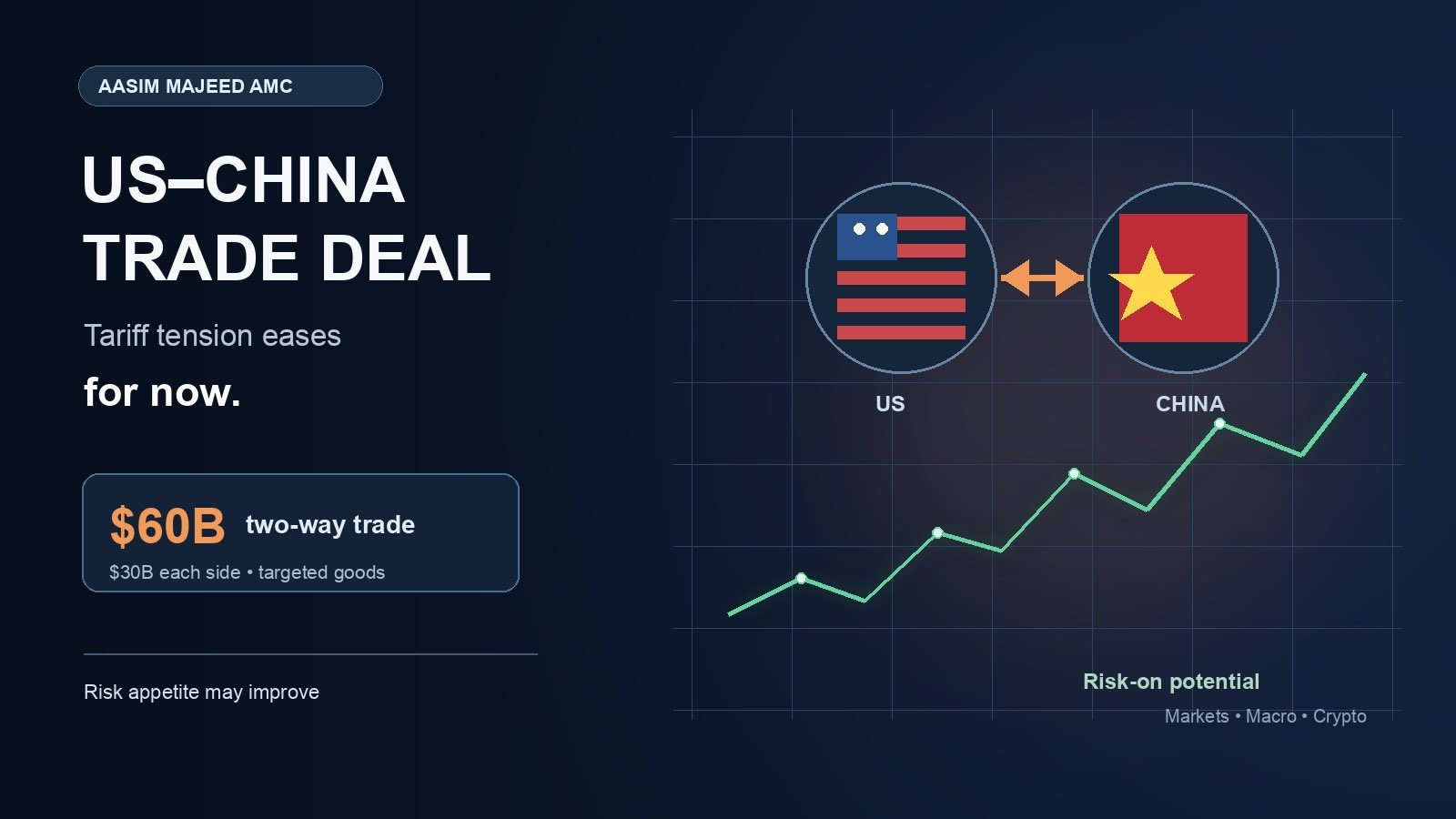
🚨 US–CHINA TRADE TENSIONS EASE
The United States and China are moving toward lower tariffs on around $60 billion of two-way trade.
The agreement covers about $30 billion from each side and includes selected agricultural, consumer and manufactured goods.
This is positive for global markets, but traders should not treat it as a full trade-war resolution.
What could it mean for markets?
Stocks may benefit from lower trade uncertainty.
Manufacturing and consumer companies could get some relief from lower tariff pressure.
Gold may face short-term pressure if safe-haven demand falls.
Crypto could benefit from a stronger risk-on mood, but Bitcoin still needs to confirm the move with price action and volume.
The important point is this:
The headline is positive, but the agreement is targeted. Implementation and future negotiations will matter more than the announcement itself.
Watch these markets closely:
Gold
US Dollar
Treasury yields
Stock indexes
Bitcoin
This could support risk assets in the short term, but volatility will remain high if the deal does not move beyond limited products.
Trade the reaction, not just the headline.
#AasimmajeedAMC
$BTC $MU $XAU
#Binance #china #US
🚨 US–CHINA TRADE TENSIONS EASE
The United States and China are moving toward lower tariffs on around $60 billion of two-way trade.
The agreement covers about $30 billion from each side and includes selected agricultural, consumer and manufactured goods.
This is positive for global markets, but traders should not treat it as a full trade-war resolution.
What could it mean for markets?
Stocks may benefit from lower trade uncertainty.
Manufacturing and consumer companies could get some relief from lower tariff pressure.
Gold may face short-term pressure if safe-haven demand falls.
Crypto could benefit from a stronger risk-on mood, but Bitcoin still needs to confirm the move with price action and volume.
The important point is this:
The headline is positive, but the agreement is targeted. Implementation and future negotiations will matter more than the announcement itself.
Watch these markets closely:
Gold
US Dollar
Treasury yields
Stock indexes
Bitcoin
This could support risk assets in the short term, but volatility will remain high if the deal does not move beyond limited products.
Trade the reaction, not just the headline.
#AasimmajeedAMC
$BTC $MU $XAU
#Binance #china #US
The United States and China are moving toward lower tariffs on around $60 billion of two-way trade.
The agreement covers about $30 billion from each side and includes selected agricultural, consumer and manufactured goods.
This is positive for global markets, but traders should not treat it as a full trade-war resolution.
What could it mean for markets?
Stocks may benefit from lower trade uncertainty.
Manufacturing and consumer companies could get some relief from lower tariff pressure.
Gold may face short-term pressure if safe-haven demand falls.
Crypto could benefit from a stronger risk-on mood, but Bitcoin still needs to confirm the move with price action and volume.
The important point is this:
The headline is positive, but the agreement is targeted. Implementation and future negotiations will matter more than the announcement itself.
Watch these markets closely:
Gold
US Dollar
Treasury yields
Stock indexes
Bitcoin
This could support risk assets in the short term, but volatility will remain high if the deal does not move beyond limited products.
Trade the reaction, not just the headline.
#AasimmajeedAMC
$BTC $MU $XAU
#Binance #china #US
367

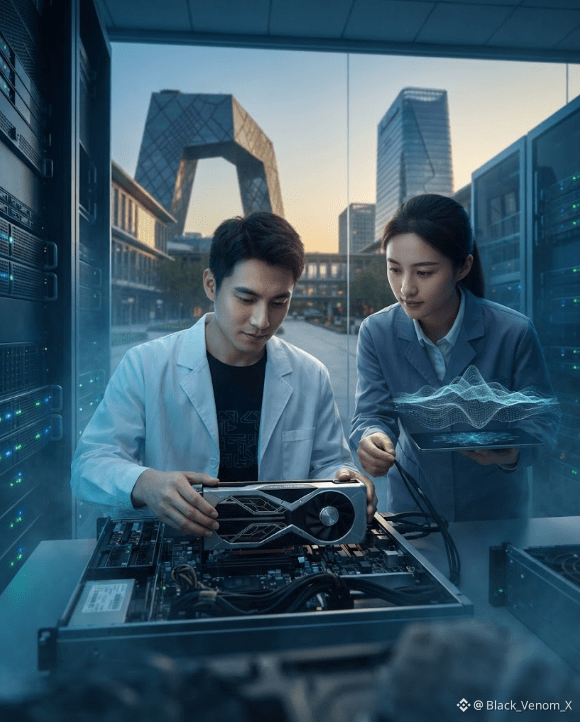
China May Allow Alibaba & ByteDance to Buy Nvidia Chips
China may allow major technology companies including Alibaba and ByteDance to purchase Nvidia’s RTX Pro 5500 chips. The move could give Chinese AI developers greater access to advanced computing hardware while adding another major development to the US-China semiconductor story.
#NVIDIA #Aİ #china #tech
China May Allow Alibaba & ByteDance to Buy Nvidia Chips
China may allow major technology companies including Alibaba and ByteDance to purchase Nvidia’s RTX Pro 5500 chips. The move could give Chinese AI developers greater access to advanced computing hardware while adding another major development to the US-China semiconductor story.
#NVIDIA #Aİ #china #tech
China may allow major technology companies including Alibaba and ByteDance to purchase Nvidia’s RTX Pro 5500 chips. The move could give Chinese AI developers greater access to advanced computing hardware while adding another major development to the US-China semiconductor story.
#NVIDIA #Aİ #china #tech
60

·
--
#chinaindustrialprofitgrowthslowsfourthmonth
🚨 BREAKING: China Industrial Growth Slows: Stimulus Expectations Rise Amid Fed Easing Cycle 🚨🚀🇨🇳
🌐 THE BIG NEWS: Industrial Profit Growth Cools to Single Digits!
Fresh official data reveals that China’s industrial profit growth slowed for the fourth consecutive month, with August expansion easing sharply to 4.2% year-on-year (down from 11.2% in July). While year-to-date growth remains up 15.7% (driven primarily by the ongoing AI and hardware boom), sluggish domestic consumption and deflationary factory pressures are intensifying calls for Beijing to unleash major fiscal and monetary policy support!
📉 1. The Economic Reality: 4th Month of Deceleration
⚠️ Domestic Demand Bottleneck: Weak retail spending and real estate headwinds continue to weigh heavily on manufacturing margins, offsetting gains in high-tech exports.
⚖️ Divergent Sectors: High-tech manufacturing and AI compute infrastructure remain bright spots, but traditional heavy industries face margin compression.
🏛️ 2. Stimulus Speculation: PBOC & Fed Coordination
🌊 PBOC Rate Cut Runway: With the U.S. Federal Reserve actively lowering rates, the People's Bank of China (PBOC) has ample monetary headroom to slash reserve requirement ratios (RRR) and inject deep liquidity without destabilizing the Yuan 💸.
📦 Aggressive Fiscal Packages: Markets are heavily pricing in a sweeping fiscal stimulus package aimed at direct consumer subsidies and credit expansion to reboot industrial output 🎯.
🚀 3. Why Liquidity Spillovers Are Bullish for Crypto
🟢 History Repeating: Chinese monetary easing cycles historically drive global M2 expansion. Crypto assets treat global M2 growth as primary fuel, leading to strong risk-on momentum 📈.
🌐 Asian Capital Flows: As domestic savings yields drop under low-interest PBOC policies, liquidity seeks higher-yielding alternatives—benefiting major digital assets like Bitcoin, Ethereum, and key L1 networks 🪙.
#ChinaMayLetAlibabaByteDanceBuyNvidiaChips #china #PBUX
#chinaindustrialprofitgrowthslowsfourthmonth
🚨 BREAKING: China Industrial Growth Slows: Stimulus Expectations Rise Amid Fed Easing Cycle 🚨🚀🇨🇳
🌐 THE BIG NEWS: Industrial Profit Growth Cools to Single Digits!
Fresh official data reveals that China’s industrial profit growth slowed for the fourth consecutive month, with August expansion easing sharply to 4.2% year-on-year (down from 11.2% in July). While year-to-date growth remains up 15.7% (driven primarily by the ongoing AI and hardware boom), sluggish domestic consumption and deflationary factory pressures are intensifying calls for Beijing to unleash major fiscal and monetary policy support!
📉 1. The Economic Reality: 4th Month of Deceleration
⚠️ Domestic Demand Bottleneck: Weak retail spending and real estate headwinds continue to weigh heavily on manufacturing margins, offsetting gains in high-tech exports.
⚖️ Divergent Sectors: High-tech manufacturing and AI compute infrastructure remain bright spots, but traditional heavy industries face margin compression.
🏛️ 2. Stimulus Speculation: PBOC & Fed Coordination
🌊 PBOC Rate Cut Runway: With the U.S. Federal Reserve actively lowering rates, the People's Bank of China (PBOC) has ample monetary headroom to slash reserve requirement ratios (RRR) and inject deep liquidity without destabilizing the Yuan 💸.
📦 Aggressive Fiscal Packages: Markets are heavily pricing in a sweeping fiscal stimulus package aimed at direct consumer subsidies and credit expansion to reboot industrial output 🎯.
🚀 3. Why Liquidity Spillovers Are Bullish for Crypto
🟢 History Repeating: Chinese monetary easing cycles historically drive global M2 expansion. Crypto assets treat global M2 growth as primary fuel, leading to strong risk-on momentum 📈.
🌐 Asian Capital Flows: As domestic savings yields drop under low-interest PBOC policies, liquidity seeks higher-yielding alternatives—benefiting major digital assets like Bitcoin, Ethereum, and key L1 networks 🪙.
#ChinaMayLetAlibabaByteDanceBuyNvidiaChips #china #PBUX
🚨 BREAKING: China Industrial Growth Slows: Stimulus Expectations Rise Amid Fed Easing Cycle 🚨🚀🇨🇳
🌐 THE BIG NEWS: Industrial Profit Growth Cools to Single Digits!
Fresh official data reveals that China’s industrial profit growth slowed for the fourth consecutive month, with August expansion easing sharply to 4.2% year-on-year (down from 11.2% in July). While year-to-date growth remains up 15.7% (driven primarily by the ongoing AI and hardware boom), sluggish domestic consumption and deflationary factory pressures are intensifying calls for Beijing to unleash major fiscal and monetary policy support!
📉 1. The Economic Reality: 4th Month of Deceleration
⚠️ Domestic Demand Bottleneck: Weak retail spending and real estate headwinds continue to weigh heavily on manufacturing margins, offsetting gains in high-tech exports.
⚖️ Divergent Sectors: High-tech manufacturing and AI compute infrastructure remain bright spots, but traditional heavy industries face margin compression.
🏛️ 2. Stimulus Speculation: PBOC & Fed Coordination
🌊 PBOC Rate Cut Runway: With the U.S. Federal Reserve actively lowering rates, the People's Bank of China (PBOC) has ample monetary headroom to slash reserve requirement ratios (RRR) and inject deep liquidity without destabilizing the Yuan 💸.
📦 Aggressive Fiscal Packages: Markets are heavily pricing in a sweeping fiscal stimulus package aimed at direct consumer subsidies and credit expansion to reboot industrial output 🎯.
🚀 3. Why Liquidity Spillovers Are Bullish for Crypto
🟢 History Repeating: Chinese monetary easing cycles historically drive global M2 expansion. Crypto assets treat global M2 growth as primary fuel, leading to strong risk-on momentum 📈.
🌐 Asian Capital Flows: As domestic savings yields drop under low-interest PBOC policies, liquidity seeks higher-yielding alternatives—benefiting major digital assets like Bitcoin, Ethereum, and key L1 networks 🪙.
#ChinaMayLetAlibabaByteDanceBuyNvidiaChips #china #PBUX
2
2.5k

China’s Industrial Profits Are Losing MomentumChina’s industrial profit growth slowed sharply in August, rising 4.2% YoY, compared with 11.2% in July. 👀
But the data isn’t uniform:
📈 Tech & electronics profits surged 110%
🚗 Auto-sector profits fell 16%
🏭 Industrial revenue grew 6.6%
💰 Jan–Aug industrial profits reached 5.27T yuan
The takeaway: China’s high-tech economy is expanding, while traditional industries are facing weaker demand and intense price competition.
For markets, I’m watching how this affects Asian equities, commodities and broader risk sentiment — and whether it eventually feeds into crypto liquidity.
$NEO $VET $BTC
#chinaindustrialprofitgrowthslowsfourthmonth #china #Bitcoin #crypto #CryptoTrading #GlobalMarkets #StockMarket #Ethereum #altcoins
{spot}(BTCUSDT)
{spot}(VETUSDT)
{spot}(NEOUSDT)
China’s Industrial Profits Are Losing Momentum
China’s industrial profit growth slowed sharply in August, rising 4.2% YoY, compared with 11.2% in July. 👀
But the data isn’t uniform:
📈 Tech & electronics profits surged 110%
🚗 Auto-sector profits fell 16%
🏭 Industrial revenue grew 6.6%
💰 Jan–Aug industrial profits reached 5.27T yuan
The takeaway: China’s high-tech economy is expanding, while traditional industries are facing weaker demand and intense price competition.
For markets, I’m watching how this affects Asian equities, commodities and broader risk sentiment — and whether it eventually feeds into crypto liquidity.
$NEO $VET $BTC
#chinaindustrialprofitgrowthslowsfourthmonth #china #Bitcoin #crypto #CryptoTrading #GlobalMarkets #StockMarket #Ethereum #altcoins
But the data isn’t uniform:
📈 Tech & electronics profits surged 110%
🚗 Auto-sector profits fell 16%
🏭 Industrial revenue grew 6.6%
💰 Jan–Aug industrial profits reached 5.27T yuan
The takeaway: China’s high-tech economy is expanding, while traditional industries are facing weaker demand and intense price competition.
For markets, I’m watching how this affects Asian equities, commodities and broader risk sentiment — and whether it eventually feeds into crypto liquidity.
$NEO $VET $BTC
#chinaindustrialprofitgrowthslowsfourthmonth #china #Bitcoin #crypto #CryptoTrading #GlobalMarkets #StockMarket #Ethereum #altcoins
34

·
--
Bullish
#chinamayletalibababytedancebuynvidiachips
🚨 CHINA MAY BE OPENING THE DOOR FOR NVIDIA AGAIN.
Beijing has reportedly signaled that Alibaba and ByteDance could be allowed to buy NVIDIA’s new RTX PRO 5500 chips. 🇨🇳⚡
China’s Ministry of Industry and Information Technology has reportedly asked companies to provide their purchase plans and intended uses, with some firms told approval is expected.
🔥 ByteDance is reportedly considering up to 1 MILLION chips
🧠 Demand for AI computing is surging
🏦 NVIDIA could regain part of its China market
⚔️ Huawei and domestic chipmakers remain major competitors
But there’s a catch: Reuters says it could not independently verify the report.
👀 If Beijing approves the purchases, could this become another major catalyst for $NVDA ?
#china #NVIDIA #Aİ
#chinamayletalibababytedancebuynvidiachips
🚨 CHINA MAY BE OPENING THE DOOR FOR NVIDIA AGAIN.
Beijing has reportedly signaled that Alibaba and ByteDance could be allowed to buy NVIDIA’s new RTX PRO 5500 chips. 🇨🇳⚡
China’s Ministry of Industry and Information Technology has reportedly asked companies to provide their purchase plans and intended uses, with some firms told approval is expected.
🔥 ByteDance is reportedly considering up to 1 MILLION chips
🧠 Demand for AI computing is surging
🏦 NVIDIA could regain part of its China market
⚔️ Huawei and domestic chipmakers remain major competitors
But there’s a catch: Reuters says it could not independently verify the report.
👀 If Beijing approves the purchases, could this become another major catalyst for $NVDA ?
#china #NVIDIA #Aİ
🚨 CHINA MAY BE OPENING THE DOOR FOR NVIDIA AGAIN.
Beijing has reportedly signaled that Alibaba and ByteDance could be allowed to buy NVIDIA’s new RTX PRO 5500 chips. 🇨🇳⚡
China’s Ministry of Industry and Information Technology has reportedly asked companies to provide their purchase plans and intended uses, with some firms told approval is expected.
🔥 ByteDance is reportedly considering up to 1 MILLION chips
🧠 Demand for AI computing is surging
🏦 NVIDIA could regain part of its China market
⚔️ Huawei and domestic chipmakers remain major competitors
But there’s a catch: Reuters says it could not independently verify the report.
👀 If Beijing approves the purchases, could this become another major catalyst for $NVDA ?
#china #NVIDIA #Aİ
AngelOfCrypto_-:
nice
1
3
1.5k

·
--
China May Allow Nvidia Chip Purchases 🇨🇳China is reportedly considering allowing companies like Alibaba and ByteDance to buy new Nvidia chips. This could be important for the AI and technology industry, as Nvidia chips are widely used for artificial intelligence. The move may also affect the global semiconductor and crypto markets. 📈🤖
$NEAR #Aİ #Crypto #Binance #China #Technology $ONE
{spot}(NEARUSDT)
China May Allow Nvidia Chip Purchases 🇨🇳
China is reportedly considering allowing companies like Alibaba and ByteDance to buy new Nvidia chips. This could be important for the AI and technology industry, as Nvidia chips are widely used for artificial intelligence. The move may also affect the global semiconductor and crypto markets. 📈🤖
$NEAR #Aİ #Crypto #Binance #China #Technology $ONE
$NEAR #Aİ #Crypto #Binance #China #Technology $ONE
134

Article
China’s Profit Engine Is Slowing: Can AI Save the Economy?🚨 China’s industrial profit growth is slowing. 🇨🇳📉
Industrial profits rose just 4.2% year over year in August, down from 11.2% in July.
For the first eight months, profits still climbed 15.7% to 5.27 trillion yuan, but the slowdown shows the recovery is uneven.
The interesting part?
🤖 Tech & electronics: profits +110%
🚗 Auto sector: profits remain under pressure
🏭 Traditional industries are facing weaker demand and excess capacity.
So China’s story isn't simply “growth is slowing.”
It’s becoming a technology vs traditional industry story.
AI and high tech are powering profits, while weaker domestic demand is hurting other sectors.
👀 Can China’s AI boom keep offsetting weakness across the wider industrial economy?
$NEO $VET $BTC
#China
{future}(BTCUSDT)
{future}(NEOUSDT)
{future}(VETUSDT)
#Bitcoin #Crypto #GlobalMarkets #Aİ
China’s Profit Engine Is Slowing: Can AI Save the Economy?
🚨 China’s industrial profit growth is slowing. 🇨🇳📉
Industrial profits rose just 4.2% year over year in August, down from 11.2% in July.
For the first eight months, profits still climbed 15.7% to 5.27 trillion yuan, but the slowdown shows the recovery is uneven.
The interesting part?
🤖 Tech & electronics: profits +110%
🚗 Auto sector: profits remain under pressure
🏭 Traditional industries are facing weaker demand and excess capacity.
So China’s story isn't simply “growth is slowing.”
It’s becoming a technology vs traditional industry story.
AI and high tech are powering profits, while weaker domestic demand is hurting other sectors.
👀 Can China’s AI boom keep offsetting weakness across the wider industrial economy?
$NEO $VET $BTC
#China
#Bitcoin #Crypto #GlobalMarkets #Aİ
Industrial profits rose just 4.2% year over year in August, down from 11.2% in July.
For the first eight months, profits still climbed 15.7% to 5.27 trillion yuan, but the slowdown shows the recovery is uneven.
The interesting part?
🤖 Tech & electronics: profits +110%
🚗 Auto sector: profits remain under pressure
🏭 Traditional industries are facing weaker demand and excess capacity.
So China’s story isn't simply “growth is slowing.”
It’s becoming a technology vs traditional industry story.
AI and high tech are powering profits, while weaker domestic demand is hurting other sectors.
👀 Can China’s AI boom keep offsetting weakness across the wider industrial economy?
$NEO $VET $BTC
#China
#Bitcoin #Crypto #GlobalMarkets #Aİ
1
242

#China May Ease Access to New Nvidia Chips💲
Reports indicate China is considering allowing companies such as Alibaba and ByteDance to purchase Nvidia’s newly released RTX PRO 5500 chips.
{spot}(NVDABUSDT)
The Ministry of Industry and Information Technology has asked firms about planned order volumes and intended use cases, with officials signaling that approvals could follow. The RTX PRO 5500 is a high-end workstation GPU rather than a data-center accelerator.
{spot}(BABABUSDT)
The development comes amid ongoing restrictions on advanced AI chips and could open a limited channel for Nvidia sales into the Chinese market.
$NVDA $BABA #Nvidia #Alibaba #ByteDance #CoinVahini
#China May Ease Access to New Nvidia Chips💲
Reports indicate China is considering allowing companies such as Alibaba and ByteDance to purchase Nvidia’s newly released RTX PRO 5500 chips.
The Ministry of Industry and Information Technology has asked firms about planned order volumes and intended use cases, with officials signaling that approvals could follow. The RTX PRO 5500 is a high-end workstation GPU rather than a data-center accelerator.
The development comes amid ongoing restrictions on advanced AI chips and could open a limited channel for Nvidia sales into the Chinese market.
$NVDA $BABA #Nvidia #Alibaba #ByteDance #CoinVahini
Reports indicate China is considering allowing companies such as Alibaba and ByteDance to purchase Nvidia’s newly released RTX PRO 5500 chips.
The Ministry of Industry and Information Technology has asked firms about planned order volumes and intended use cases, with officials signaling that approvals could follow. The RTX PRO 5500 is a high-end workstation GPU rather than a data-center accelerator.
The development comes amid ongoing restrictions on advanced AI chips and could open a limited channel for Nvidia sales into the Chinese market.
$NVDA $BABA #Nvidia #Alibaba #ByteDance #CoinVahini
1
181

·
--
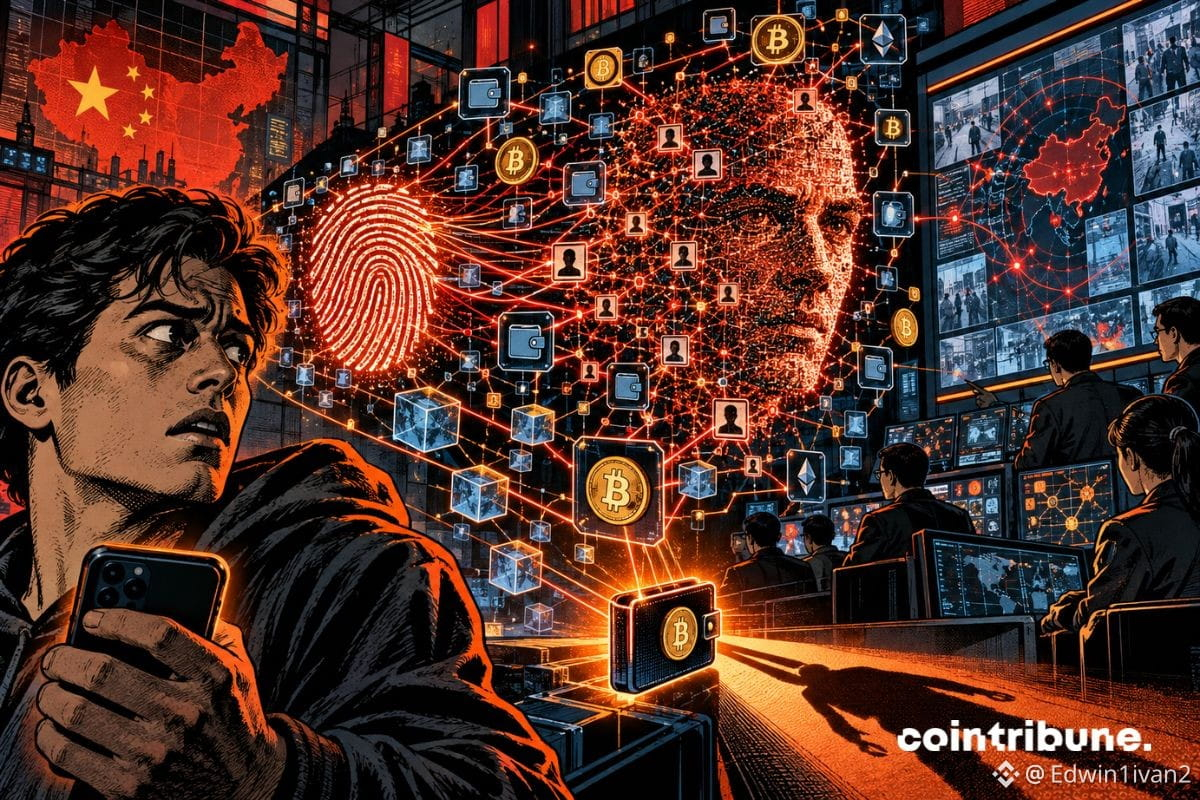
China: Crypto anonymity is just an illusion, warns Beijing
China attacks an old reputation of cryptocurrencies. For its Ministry of State Security, using bitcoin or other digital assets is not enough to disappear from the radar. Public transactions remain on the blockchain; exchanges often know their customers; and converting to traditional currency can leave new traces. Beijing talks about fraud, money laundering, scams, and even espionage. The diagnosis fits Bitcoin quite well. For all crypto, it’s already less simple.
China claims that the anonymity offered by crypto is widely overestimated.
Bitcoin allows the movements between addresses to be followed publicly for years.
Monero and Zcash were designed specifically to hide much more information.
Beijing attacks the crypto anonymity myth
The first part of the Chinese argument is fairly classic. A Bitcoin address carries no name, but transactions remain traceable on the blockchain. Amounts, used addresses, and movement history can be checked in an explorer.
The Chinese Ministry of State Security, or MSS, relies on this feature to warn about criminal use of crypto. It cites in particular phone scams, online gambling, and certain cross-border transactions. Ransomware is also on the list. In addition, the ministry claims that foreign intelligence services can use digital assets to pay agents without going directly through the traditional banking system.
Crypto then complicates the work. It doesn’t necessarily make it impossible. A newly created address may reveal almost nothing about its owner. Funds arrive, go to a second wallet, then a third. No name appears in the record. This can last a long time. The problem begins when one of those transfers crosses information located elsewhere.
$CHIP
{spot}(CHIPUSDT)
$PEPE
{spot}(PEPEUSDT)
$ADX
{spot}(ADXUSDT)
#china
China: Crypto anonymity is just an illusion, warns Beijing
China attacks an old reputation of cryptocurrencies. For its Ministry of State Security, using bitcoin or other digital assets is not enough to disappear from the radar. Public transactions remain on the blockchain; exchanges often know their customers; and converting to traditional currency can leave new traces. Beijing talks about fraud, money laundering, scams, and even espionage. The diagnosis fits Bitcoin quite well. For all crypto, it’s already less simple.
China claims that the anonymity offered by crypto is widely overestimated.
Bitcoin allows the movements between addresses to be followed publicly for years.
Monero and Zcash were designed specifically to hide much more information.
Beijing attacks the crypto anonymity myth
The first part of the Chinese argument is fairly classic. A Bitcoin address carries no name, but transactions remain traceable on the blockchain. Amounts, used addresses, and movement history can be checked in an explorer.
The Chinese Ministry of State Security, or MSS, relies on this feature to warn about criminal use of crypto. It cites in particular phone scams, online gambling, and certain cross-border transactions. Ransomware is also on the list. In addition, the ministry claims that foreign intelligence services can use digital assets to pay agents without going directly through the traditional banking system.
Crypto then complicates the work. It doesn’t necessarily make it impossible. A newly created address may reveal almost nothing about its owner. Funds arrive, go to a second wallet, then a third. No name appears in the record. This can last a long time. The problem begins when one of those transfers crosses information located elsewhere.
$CHIP
$PEPE
$ADX
#china
China attacks an old reputation of cryptocurrencies. For its Ministry of State Security, using bitcoin or other digital assets is not enough to disappear from the radar. Public transactions remain on the blockchain; exchanges often know their customers; and converting to traditional currency can leave new traces. Beijing talks about fraud, money laundering, scams, and even espionage. The diagnosis fits Bitcoin quite well. For all crypto, it’s already less simple.
China claims that the anonymity offered by crypto is widely overestimated.
Bitcoin allows the movements between addresses to be followed publicly for years.
Monero and Zcash were designed specifically to hide much more information.
Beijing attacks the crypto anonymity myth
The first part of the Chinese argument is fairly classic. A Bitcoin address carries no name, but transactions remain traceable on the blockchain. Amounts, used addresses, and movement history can be checked in an explorer.
The Chinese Ministry of State Security, or MSS, relies on this feature to warn about criminal use of crypto. It cites in particular phone scams, online gambling, and certain cross-border transactions. Ransomware is also on the list. In addition, the ministry claims that foreign intelligence services can use digital assets to pay agents without going directly through the traditional banking system.
Crypto then complicates the work. It doesn’t necessarily make it impossible. A newly created address may reveal almost nothing about its owner. Funds arrive, go to a second wallet, then a third. No name appears in the record. This can last a long time. The problem begins when one of those transfers crosses information located elsewhere.
$CHIP
$PEPE
$ADX
#china
691

·
--
Bearish
🚨📉 GLOBAL MARKETS ALERT!
🇨🇳 SHARP DROP IN THE CHINESE STOCK MARKET
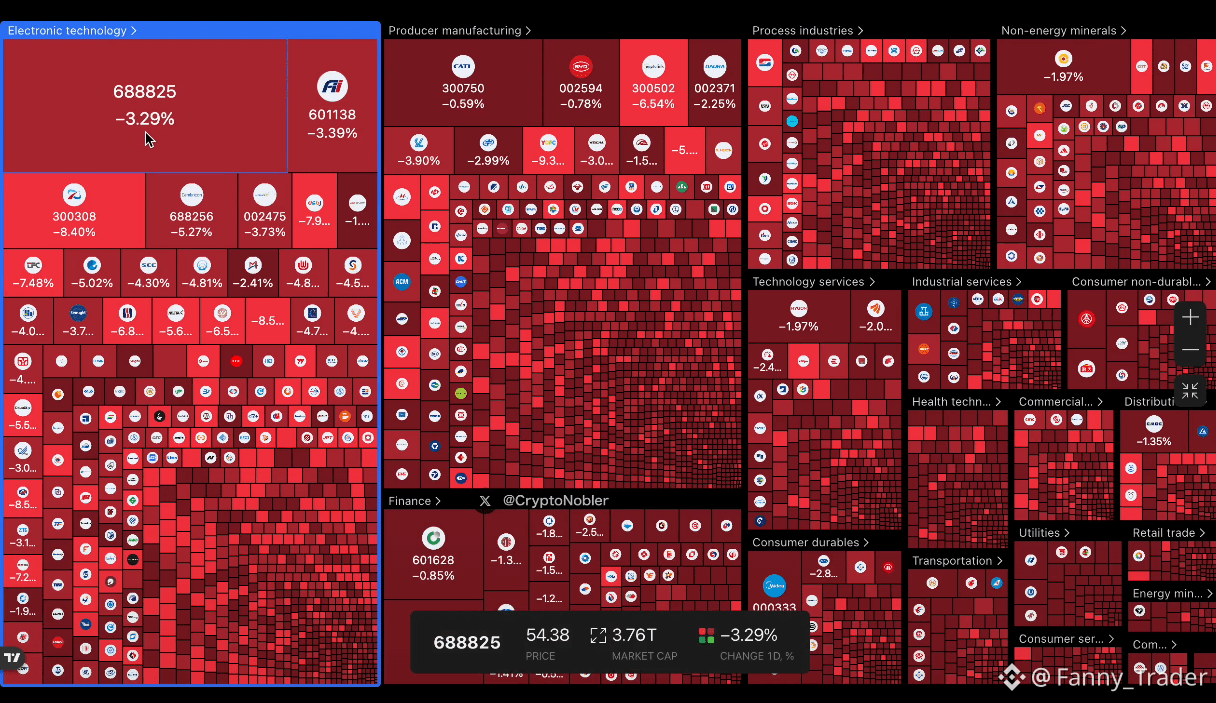
💥 According to the information in the image, more than 2.5 trillion yuan may have been wiped out from the Chinese stock market in just 15 minutes.
🔴 The heat map shows steep declines across multiple sectors, especially technology.
🌍 What does this mean for cryptocurrencies?
⚠️ A drop in traditional markets can increase uncertainty and trigger sudden moves in Bitcoin and altcoins.
👀 The big question: Are we seeing a temporary correction or the start of a deeper decline?
📊 Stay tuned for the next market moves.
💬 Do you think Bitcoin will withstand this pressure, or will we see more drops?
#Binance #Criptomonedas #china #BTC #altcoins
🚨📉 GLOBAL MARKETS ALERT!
🇨🇳 SHARP DROP IN THE CHINESE STOCK MARKET
💥 According to the information in the image, more than 2.5 trillion yuan may have been wiped out from the Chinese stock market in just 15 minutes.
🔴 The heat map shows steep declines across multiple sectors, especially technology.
🌍 What does this mean for cryptocurrencies?
⚠️ A drop in traditional markets can increase uncertainty and trigger sudden moves in Bitcoin and altcoins.
👀 The big question: Are we seeing a temporary correction or the start of a deeper decline?
📊 Stay tuned for the next market moves.
💬 Do you think Bitcoin will withstand this pressure, or will we see more drops?
#Binance #Criptomonedas #china #BTC #altcoins
🇨🇳 SHARP DROP IN THE CHINESE STOCK MARKET
💥 According to the information in the image, more than 2.5 trillion yuan may have been wiped out from the Chinese stock market in just 15 minutes.
🔴 The heat map shows steep declines across multiple sectors, especially technology.
🌍 What does this mean for cryptocurrencies?
⚠️ A drop in traditional markets can increase uncertainty and trigger sudden moves in Bitcoin and altcoins.
👀 The big question: Are we seeing a temporary correction or the start of a deeper decline?
📊 Stay tuned for the next market moves.
💬 Do you think Bitcoin will withstand this pressure, or will we see more drops?
#Binance #Criptomonedas #china #BTC #altcoins
FILIPO777:
El mercado chino no vale
1
6
9.4k

Verified
🚨🌎 WASHINGTON AND BEIJING HAVE JUST MOVED THE LINES!
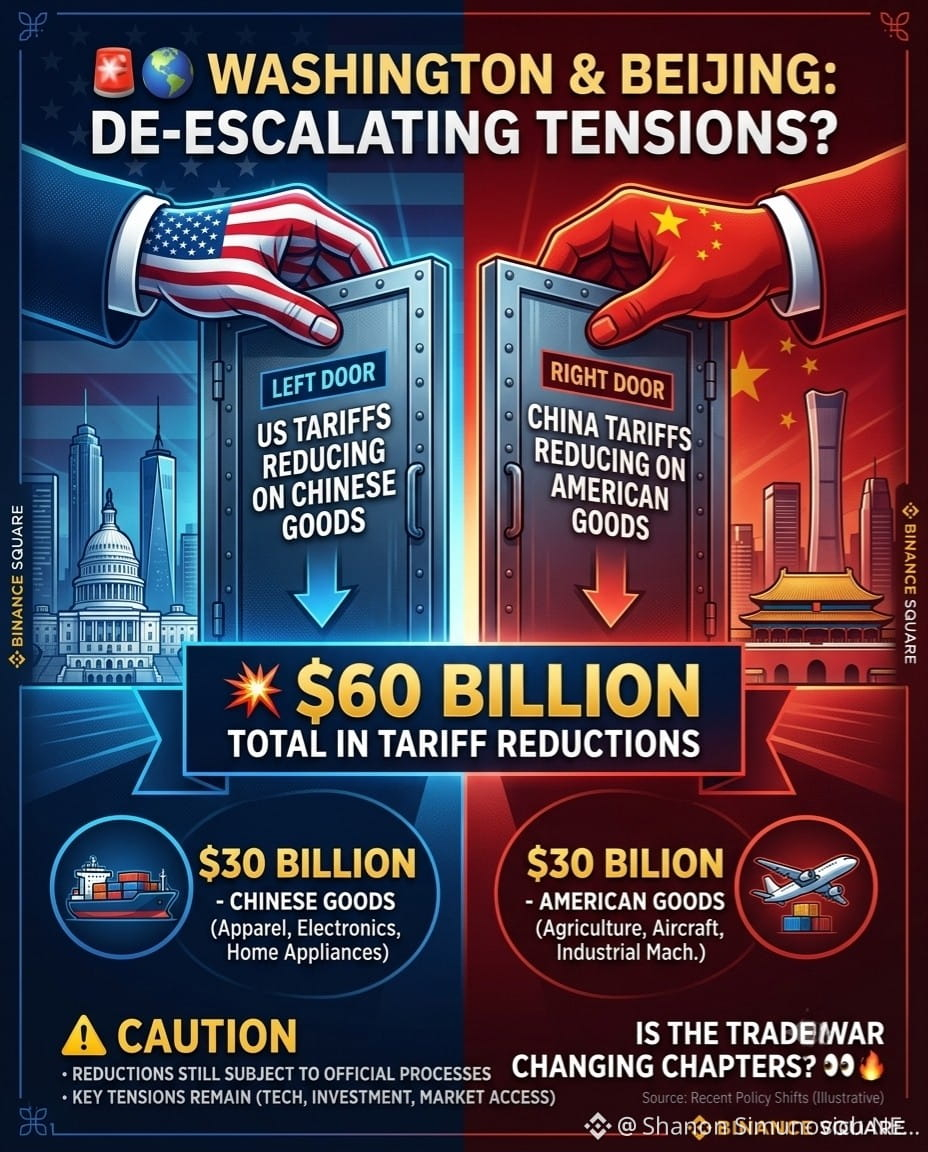
After months of trade tensions, the United States 🇺🇸 and China 🇨🇳 are moving toward a reduction in tariffs covering approximately 60 BILLION $ in goods.
💥 30 billion $ in Chinese products
💥 30 billion $ in American products
From American agricultural products to Chinese household appliances, the list covers a wide range of goods.
But don’t call victory yet…
⚠️ The reductions still need to go through the necessary procedures before they can be implemented.
And above all, the major tensions between Washington and Beijing — technology, investments, and market access — are not all resolved.
Is the trade war starting to change chapter? 👀🔥
#USA #China #Trump #Bitcoin
🚨🌎 WASHINGTON AND BEIJING HAVE JUST MOVED THE LINES!
After months of trade tensions, the United States 🇺🇸 and China 🇨🇳 are moving toward a reduction in tariffs covering approximately 60 BILLION $ in goods.
💥 30 billion $ in Chinese products
💥 30 billion $ in American products
From American agricultural products to Chinese household appliances, the list covers a wide range of goods.
But don’t call victory yet…
⚠️ The reductions still need to go through the necessary procedures before they can be implemented.
And above all, the major tensions between Washington and Beijing — technology, investments, and market access — are not all resolved.
Is the trade war starting to change chapter? 👀🔥
#USA #China #Trump #Bitcoin
After months of trade tensions, the United States 🇺🇸 and China 🇨🇳 are moving toward a reduction in tariffs covering approximately 60 BILLION $ in goods.
💥 30 billion $ in Chinese products
💥 30 billion $ in American products
From American agricultural products to Chinese household appliances, the list covers a wide range of goods.
But don’t call victory yet…
⚠️ The reductions still need to go through the necessary procedures before they can be implemented.
And above all, the major tensions between Washington and Beijing — technology, investments, and market access — are not all resolved.
Is the trade war starting to change chapter? 👀🔥
#USA #China #Trump #Bitcoin
651


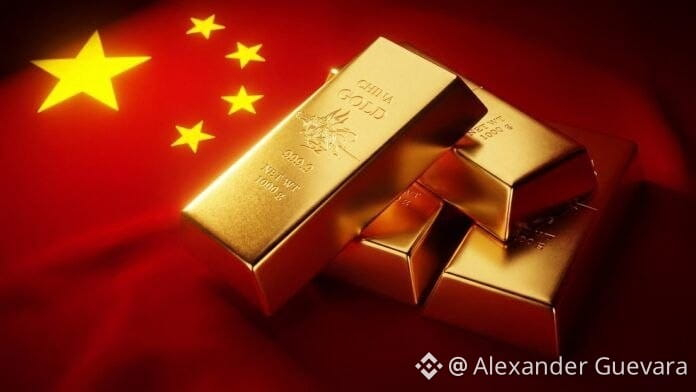
🇨🇳 China imported +1,141 tonnes of gold in the first 8 months of 2026, representing its highest recorded import volume for this period of the year.
This figure already exceeds China’s total gold imports for all of 2025.
#china #ChinaEconomy #oro #GOLD #finanzas $XAUT $XAU $PAXG
🇨🇳 China imported +1,141 tonnes of gold in the first 8 months of 2026, representing its highest recorded import volume for this period of the year.
This figure already exceeds China’s total gold imports for all of 2025.
#china #ChinaEconomy #oro #GOLD #finanzas $XAUT $XAU $PAXG
This figure already exceeds China’s total gold imports for all of 2025.
#china #ChinaEconomy #oro #GOLD #finanzas $XAUT $XAU $PAXG
355
🟢🔥IT IS OFFICIAL🔥
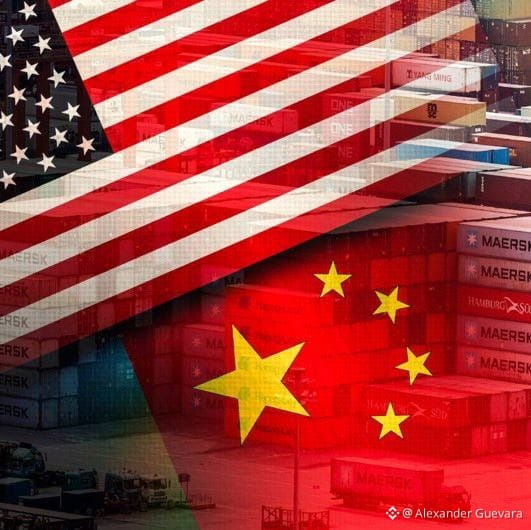
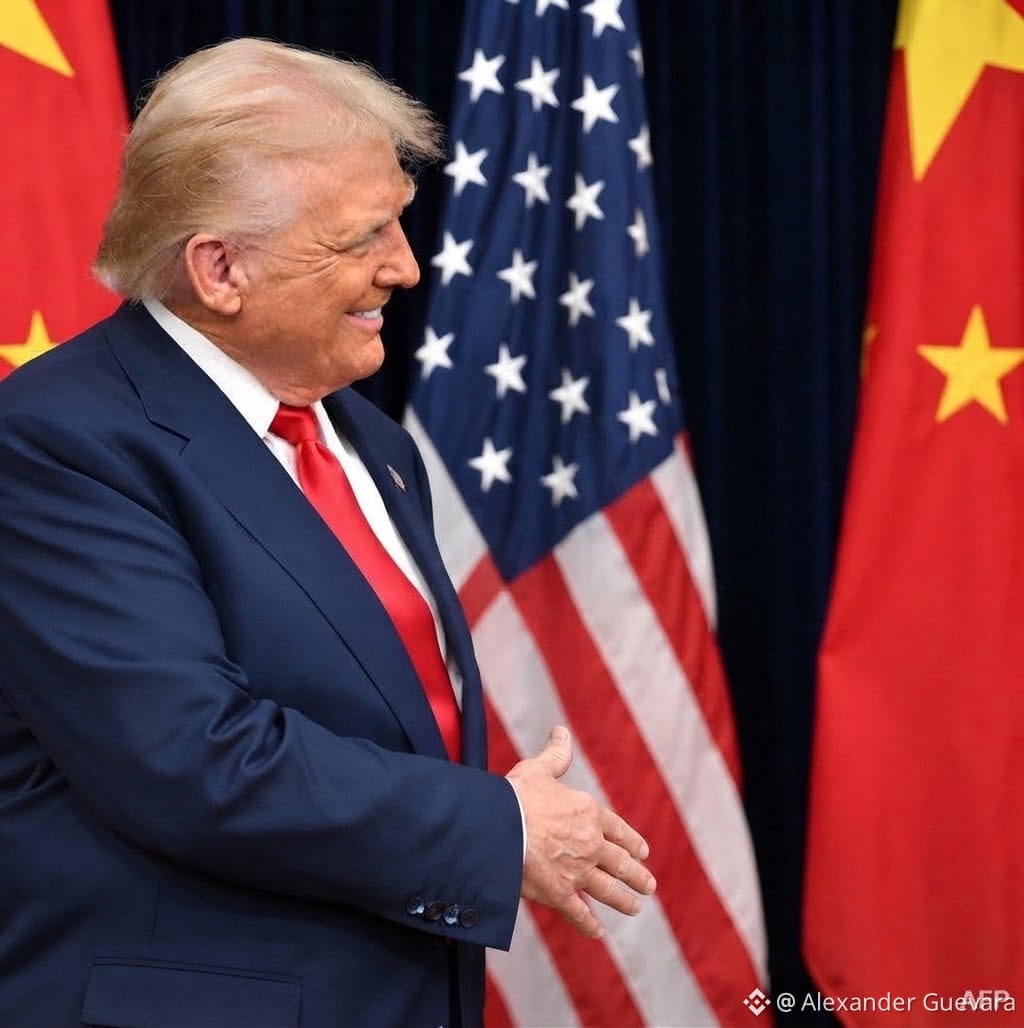
The White House has published the terms of its new trade agreement with China, covering $30 BILLION BILLION of goods in each direction 😎🤝
Here’s what the U.S. gets:
Recommended lower Chinese tariffs on U.S. agricultural products, seafood, wood products, cosmetics, and medical devices
China will buy at least 10 MILLION tons of U.S. coal in both 2027 and 2028
Here’s what China gets:
Recommended lower U.S. tariffs on small Chinese appliances, toys, holiday decorations, and children’s car seats
Both sides also:
Set up a working group to address barriers to market access in agriculture
Launched an Investment Board to address barriers to investment
Will continue working on rare earths and other critical minerals
#china #EEUU #aranceles #GuerraComercial #ChinaEconomy $BTC $MSFTB $AMZNB
🟢🔥IT IS OFFICIAL🔥
The White House has published the terms of its new trade agreement with China, covering $30 BILLION BILLION of goods in each direction 😎🤝
Here’s what the U.S. gets:
Recommended lower Chinese tariffs on U.S. agricultural products, seafood, wood products, cosmetics, and medical devices
China will buy at least 10 MILLION tons of U.S. coal in both 2027 and 2028
Here’s what China gets:
Recommended lower U.S. tariffs on small Chinese appliances, toys, holiday decorations, and children’s car seats
Both sides also:
Set up a working group to address barriers to market access in agriculture
Launched an Investment Board to address barriers to investment
Will continue working on rare earths and other critical minerals
#china #EEUU #aranceles #GuerraComercial #ChinaEconomy $BTC $MSFTB $AMZNB
The White House has published the terms of its new trade agreement with China, covering $30 BILLION BILLION of goods in each direction 😎🤝
Here’s what the U.S. gets:
Recommended lower Chinese tariffs on U.S. agricultural products, seafood, wood products, cosmetics, and medical devices
China will buy at least 10 MILLION tons of U.S. coal in both 2027 and 2028
Here’s what China gets:
Recommended lower U.S. tariffs on small Chinese appliances, toys, holiday decorations, and children’s car seats
Both sides also:
Set up a working group to address barriers to market access in agriculture
Launched an Investment Board to address barriers to investment
Will continue working on rare earths and other critical minerals
#china #EEUU #aranceles #GuerraComercial #ChinaEconomy $BTC $MSFTB $AMZNB
62


Article
THE WAR FOR CONTROL OF ASIACompetition for economic control over Asia goes far beyond territory. It involves resources, maritime routes, ports, technology, semiconductors, logistics, and access to markets.
China, Japan, South Korea, Taiwan, and Southeast Asian economies are deeply connected through production and trade chains. The OECD shows that China, Taiwan, Korea, Japan, and the United States accounted for about 87% of the world’s wafer manufacturing capacity in operation in September 2025.
This concentration matters because semiconductors are inputs used by countless other industries. An interruption at one point in the supply chain can produce effects far beyond the technology sector.
THE WAR FOR CONTROL OF ASIA
Competition for economic control over Asia goes far beyond territory. It involves resources, maritime routes, ports, technology, semiconductors, logistics, and access to markets.
China, Japan, South Korea, Taiwan, and Southeast Asian economies are deeply connected through production and trade chains. The OECD shows that China, Taiwan, Korea, Japan, and the United States accounted for about 87% of the world’s wafer manufacturing capacity in operation in September 2025.
This concentration matters because semiconductors are inputs used by countless other industries. An interruption at one point in the supply chain can produce effects far beyond the technology sector.
China, Japan, South Korea, Taiwan, and Southeast Asian economies are deeply connected through production and trade chains. The OECD shows that China, Taiwan, Korea, Japan, and the United States accounted for about 87% of the world’s wafer manufacturing capacity in operation in September 2025.
This concentration matters because semiconductors are inputs used by countless other industries. An interruption at one point in the supply chain can produce effects far beyond the technology sector.
EWJETF+1.40%
FXIETF+0.60%
EWSETF-0.01%
1
6

·
--
Bullish
🇺🇸📜 XI IS LEAVING WASHINGTON — AND TRUMP IS SHOWING HIM AMERICA’S FOUNDING DOCUMENTS.
After three days of ceremony, negotiations and global attention, X up his Washington visit with a symbolic stop at the National Archives.
Trump is taking Xi to see the U.S. Constitution, Declaration of Independence and Bill of Rights.
But behind the ceremony, several major issues remain.
🇺🇸🇨🇳 Trump and Xi discussed trade and economic relations.
🤖 $AI was another major issue on the agenda.
🌏 Taiwan remains a major point of tension between Washington and Beijing.
🇺🇦 Zelenskyy says he urged Trump to use China’s influence to help end Russia’s war in Ukraine.
🇪🇺 Europe is also watching closely, particularly over trade and energy.
Meanwhile, Trump described the relationship with Xi as important for both countries.
But despite the high-profile reception, no major breakthrough on trade or AI has been announced.
And now Xi is leaving Washington.
The real test begins after the cameras disappear. 👀
$BTC #China #USA #Geopolitics
🇺🇸📜 XI IS LEAVING WASHINGTON — AND TRUMP IS SHOWING HIM AMERICA’S FOUNDING DOCUMENTS.
After three days of ceremony, negotiations and global attention, X up his Washington visit with a symbolic stop at the National Archives.
Trump is taking Xi to see the U.S. Constitution, Declaration of Independence and Bill of Rights.
But behind the ceremony, several major issues remain.
🇺🇸🇨🇳 Trump and Xi discussed trade and economic relations.
🤖 $AI was another major issue on the agenda.
🌏 Taiwan remains a major point of tension between Washington and Beijing.
🇺🇦 Zelenskyy says he urged Trump to use China’s influence to help end Russia’s war in Ukraine.
🇪🇺 Europe is also watching closely, particularly over trade and energy.
Meanwhile, Trump described the relationship with Xi as important for both countries.
But despite the high-profile reception, no major breakthrough on trade or AI has been announced.
And now Xi is leaving Washington.
The real test begins after the cameras disappear. 👀
$BTC #China #USA #Geopolitics
After three days of ceremony, negotiations and global attention, X up his Washington visit with a symbolic stop at the National Archives.
Trump is taking Xi to see the U.S. Constitution, Declaration of Independence and Bill of Rights.
But behind the ceremony, several major issues remain.
🇺🇸🇨🇳 Trump and Xi discussed trade and economic relations.
🤖 $AI was another major issue on the agenda.
🌏 Taiwan remains a major point of tension between Washington and Beijing.
🇺🇦 Zelenskyy says he urged Trump to use China’s influence to help end Russia’s war in Ukraine.
🇪🇺 Europe is also watching closely, particularly over trade and energy.
Meanwhile, Trump described the relationship with Xi as important for both countries.
But despite the high-profile reception, no major breakthrough on trade or AI has been announced.
And now Xi is leaving Washington.
The real test begins after the cameras disappear. 👀
$BTC #China #USA #Geopolitics

64

·
--
Thinking about how things work....
A few days ago there was instability, inexplicable depression, a lot of people losing money..
The Xi and Donald Summit began and everything green, prosperity and profits for everyone!!!
All the Whales rowing in one direction!!!
Nobody knows what next week will be like!!
Happy $$$$ weekend!! enjoy
#china #usa
Thinking about how things work....
A few days ago there was instability, inexplicable depression, a lot of people losing money..
The Xi and Donald Summit began and everything green, prosperity and profits for everyone!!!
All the Whales rowing in one direction!!!
Nobody knows what next week will be like!!
Happy $$$$ weekend!! enjoy
#china #usa
A few days ago there was instability, inexplicable depression, a lot of people losing money..
The Xi and Donald Summit began and everything green, prosperity and profits for everyone!!!
All the Whales rowing in one direction!!!
Nobody knows what next week will be like!!
Happy $$$$ weekend!! enjoy
#china #usa
160

·
--
EVERYONE IS TALKING ABOUT CHINA LIFTING THE CRYPTO BAN. HERE IS THE TRUTH. 🚨
A post claiming China will lift its crypto ban by end of 2026 just went viral with 347K views. I stayed up researching it so you don't have to.
Here is what actually happened:
In February 2026 China issued what experts are calling "Ban 2.0" — making crypto MORE illegal not less. Criminal penalties. Bank accounts frozen. Even stablecoins banned. The strictest crackdown in Chinese history.
FOR BEGINNERS :
this is exactly how fake news works in crypto. Someone posts an exciting headline. 347K people see it. Some buy. Price pumps briefly. Then reality hits and they lose money.
Always verify before you buy.
Now here is the REAL story nobody is talking about today:
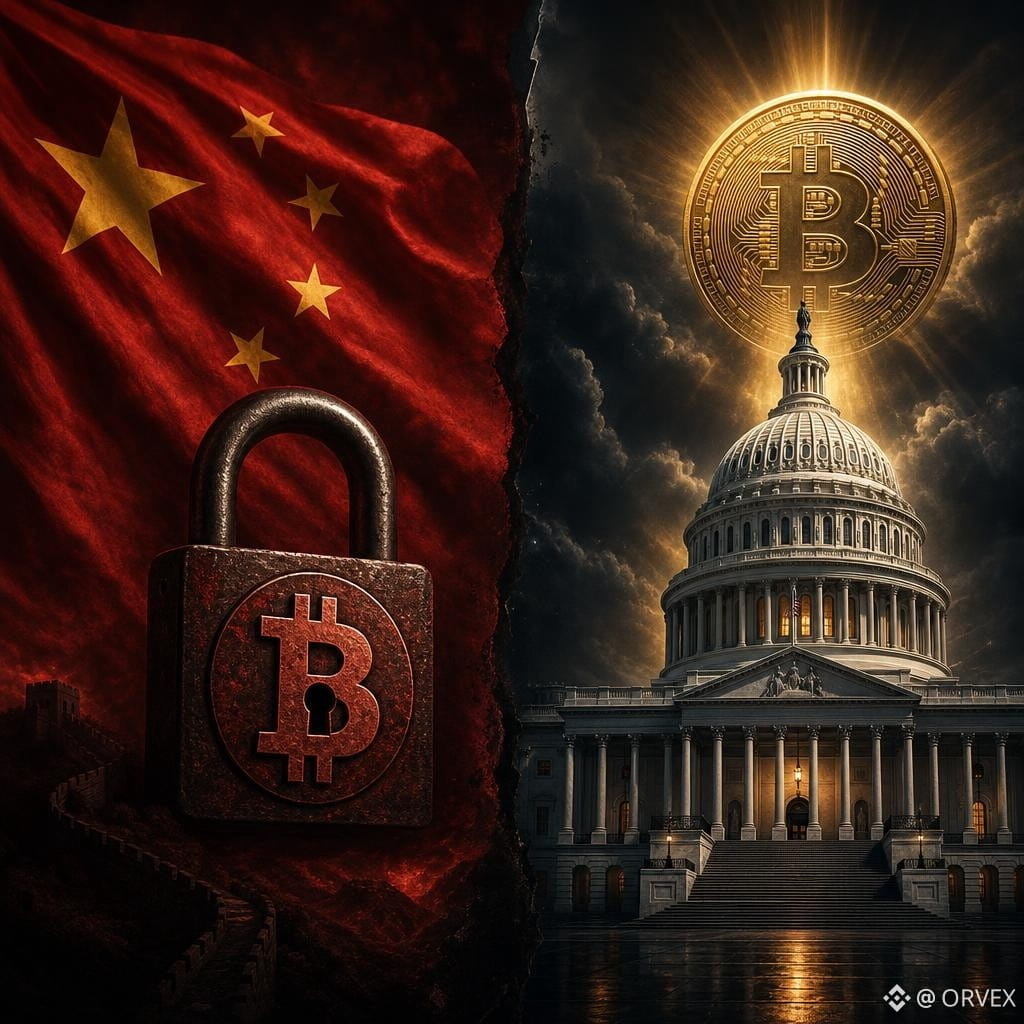
While China bans crypto harder than ever America just did the opposite:
→ 🏛️ US House advancing the Strategic Bitcoin Reserve bill
→ 🏦 OCC just approved 3 bank charters for crypto companies today
→ 📈 Bitcoin holding above $86,000
→ 💰 DOGE just pumped 12% on whale accumulation
→ 🇻🇳 Vietnam licensing its first ever crypto companies in 2026
The contrast couldn't be more clear. China is closing the door on crypto. America is opening it wider every week.
One country is going to be right. History will decide which one. 👀
Do you think China eventually reverses course or doubles down? 👇
$BTC $ETH $BNB #Bitcoin #China #CryptoNews #BinanceSquare #FakeNews
EVERYONE IS TALKING ABOUT CHINA LIFTING THE CRYPTO BAN. HERE IS THE TRUTH. 🚨
A post claiming China will lift its crypto ban by end of 2026 just went viral with 347K views. I stayed up researching it so you don't have to.
Here is what actually happened:
In February 2026 China issued what experts are calling "Ban 2.0" — making crypto MORE illegal not less. Criminal penalties. Bank accounts frozen. Even stablecoins banned. The strictest crackdown in Chinese history.
FOR BEGINNERS :
this is exactly how fake news works in crypto. Someone posts an exciting headline. 347K people see it. Some buy. Price pumps briefly. Then reality hits and they lose money.
Always verify before you buy.
Now here is the REAL story nobody is talking about today:
While China bans crypto harder than ever America just did the opposite:
→ 🏛️ US House advancing the Strategic Bitcoin Reserve bill
→ 🏦 OCC just approved 3 bank charters for crypto companies today
→ 📈 Bitcoin holding above $86,000
→ 💰 DOGE just pumped 12% on whale accumulation
→ 🇻🇳 Vietnam licensing its first ever crypto companies in 2026
The contrast couldn't be more clear. China is closing the door on crypto. America is opening it wider every week.
One country is going to be right. History will decide which one. 👀
Do you think China eventually reverses course or doubles down? 👇
$BTC $ETH $BNB #Bitcoin #China #CryptoNews #BinanceSquare #FakeNews
A post claiming China will lift its crypto ban by end of 2026 just went viral with 347K views. I stayed up researching it so you don't have to.
Here is what actually happened:
In February 2026 China issued what experts are calling "Ban 2.0" — making crypto MORE illegal not less. Criminal penalties. Bank accounts frozen. Even stablecoins banned. The strictest crackdown in Chinese history.
FOR BEGINNERS :
this is exactly how fake news works in crypto. Someone posts an exciting headline. 347K people see it. Some buy. Price pumps briefly. Then reality hits and they lose money.
Always verify before you buy.
Now here is the REAL story nobody is talking about today:
While China bans crypto harder than ever America just did the opposite:
→ 🏛️ US House advancing the Strategic Bitcoin Reserve bill
→ 🏦 OCC just approved 3 bank charters for crypto companies today
→ 📈 Bitcoin holding above $86,000
→ 💰 DOGE just pumped 12% on whale accumulation
→ 🇻🇳 Vietnam licensing its first ever crypto companies in 2026
The contrast couldn't be more clear. China is closing the door on crypto. America is opening it wider every week.
One country is going to be right. History will decide which one. 👀
Do you think China eventually reverses course or doubles down? 👇
$BTC $ETH $BNB #Bitcoin #China #CryptoNews #BinanceSquare #FakeNews
FEDAT - sport digital assets marketplace:
Спасибо,учту🤝👍
6
2
151
·
--
Bullish
🇨🇳 CHINA + CRYPTO: THE RUMOR THAT COULD SHAKE THE MARKET 👀🔥
A report is circulating that China could ease its crypto restrictions by the end of 2026. 🇨🇳
If that actually happens, the impact could be massive. 🚨
China has one of the world's largest investor populations — and even a partial return of Chinese capital to crypto could change liquidity across the market.
Imagine millions of investors suddenly getting easier access to $BTC and $ETH . 👀
But there’s a catch… ⚠️
China’s latest official notice still maintains strict restrictions on crypto-related activities.
So for now, this is a possibility — not a confirmed reopening.
But if Beijing ever changes course…
Crypto liquidity could look VERY different. 🌏🔥
#Bitcoin #Crypto #china
🇨🇳 CHINA + CRYPTO: THE RUMOR THAT COULD SHAKE THE MARKET 👀🔥
A report is circulating that China could ease its crypto restrictions by the end of 2026. 🇨🇳
If that actually happens, the impact could be massive. 🚨
China has one of the world's largest investor populations — and even a partial return of Chinese capital to crypto could change liquidity across the market.
Imagine millions of investors suddenly getting easier access to $BTC and $ETH . 👀
But there’s a catch… ⚠️
China’s latest official notice still maintains strict restrictions on crypto-related activities.
So for now, this is a possibility — not a confirmed reopening.
But if Beijing ever changes course…
Crypto liquidity could look VERY different. 🌏🔥
#Bitcoin #Crypto #china
A report is circulating that China could ease its crypto restrictions by the end of 2026. 🇨🇳
If that actually happens, the impact could be massive. 🚨
China has one of the world's largest investor populations — and even a partial return of Chinese capital to crypto could change liquidity across the market.
Imagine millions of investors suddenly getting easier access to $BTC and $ETH . 👀
But there’s a catch… ⚠️
China’s latest official notice still maintains strict restrictions on crypto-related activities.
So for now, this is a possibility — not a confirmed reopening.
But if Beijing ever changes course…
Crypto liquidity could look VERY different. 🌏🔥
#Bitcoin #Crypto #china
53
Log in to explore more content
Join global crypto users on Binance Square
⚡️ Get latest and useful information about crypto.
💬 Trusted by the world’s largest crypto exchange.
👍 Discover real insights from verified creators.
Email / Phone number
Trending Topics
1
#SECToClarifyOnChainFundraisingRules
25 views
47 Discussing
2
#UKFCAOpensCryptoFirmAuthorization
1,096 views
95 Discussing
3
#JapanMOFStudyGroupOnTokenizedGovtBonds
1,452 views
126 Discussing
4
#QNTRises287%
25,352 views
420 Discussing
5
#TrumpRejectsAIRulesForVoluntaryAudits
19,768 views
508 Discussing
6
#BitgetHotWalletBreachTiedToThirdPartySecurityFlaw
10,497 views
344 Discussing
7
#OpenAIUnveilsAlwaysOnAgentDots
9,350 views
362 Discussing
8
#ChainlinkLaunchesBankSWIFTLedgerFramework
9,828 views
280 Discussing
9
#EarningsSeason
536,986 views
3,822 Discussing
10
#ZcashApproves$1.5MBugBounty
113 views
4 Discussing