

#bitgo
bitgo
156,017 views
433 Discussing
Hot
Latest

·
--
Verified
BitGo×OKX expands off-exchange settlement internationally: assets don’t need to go into the exchange firstThe institutional side then added another point: trading is for trading, custody is for custody.
BitGo (NYSE: $BTGO) and OKX just released a Business Wire announcement: Off-Exchange Settlement (OTC settlement) to expand internationally. Outside the U.S., qualified institutions can connect to OKX liquidity; assets can continue to be kept in segregated, regulated custody at BitGo Singapore, without needing to first move into the exchange’s pre-funded model before settlement.
This is the next step in Go Network after connecting with OKX on the U.S. side—same suite for both the U.S. region and international: custody / execution / settlement split apart. Belshe’s original words were very direct: institutions are increasingly concerned about separating “where trading happens” from “where positions are held.”
BitGo×OKX expands off-exchange settlement internationally: assets don’t need to go into the exchange first
The institutional side then added another point: trading is for trading, custody is for custody.
BitGo (NYSE: $BTGO) and OKX just released a Business Wire announcement: Off-Exchange Settlement (OTC settlement) to expand internationally. Outside the U.S., qualified institutions can connect to OKX liquidity; assets can continue to be kept in segregated, regulated custody at BitGo Singapore, without needing to first move into the exchange’s pre-funded model before settlement.
This is the next step in Go Network after connecting with OKX on the U.S. side—same suite for both the U.S. region and international: custody / execution / settlement split apart. Belshe’s original words were very direct: institutions are increasingly concerned about separating “where trading happens” from “where positions are held.”
BitGo (NYSE: $BTGO) and OKX just released a Business Wire announcement: Off-Exchange Settlement (OTC settlement) to expand internationally. Outside the U.S., qualified institutions can connect to OKX liquidity; assets can continue to be kept in segregated, regulated custody at BitGo Singapore, without needing to first move into the exchange’s pre-funded model before settlement.
This is the next step in Go Network after connecting with OKX on the U.S. side—same suite for both the U.S. region and international: custody / execution / settlement split apart. Belshe’s original words were very direct: institutions are increasingly concerned about separating “where trading happens” from “where positions are held.”
1
1.6k

·
--
BitGo’s move for NYDIG’s institutional trading business is a meaningful expansion beyond custody.
According to the report, BitGo will add derivatives, structured products, financing and other capital-markets services through the acquisition. Around 30 NYDIG employees and roughly 250 institutional client relationships are also expected to join BitGo.
That matters because institutions do not just need a place to store crypto—they want trading, financing, settlement and risk-management tools in an integrated setup. BitGo is positioning itself to serve more of that workflow as professional participation in digital assets develops.
The next thing to watch is how quickly the NYDIG trading operation is integrated, and whether BitGo can convert those client relationships into broader use of its platform.
Could this be the start of a bigger consolidation wave among institutional crypto service providers?
#CryptoNews #BitGo #InstitutionalCrypto
BitGo’s move for NYDIG’s institutional trading business is a meaningful expansion beyond custody.
According to the report, BitGo will add derivatives, structured products, financing and other capital-markets services through the acquisition. Around 30 NYDIG employees and roughly 250 institutional client relationships are also expected to join BitGo.
That matters because institutions do not just need a place to store crypto—they want trading, financing, settlement and risk-management tools in an integrated setup. BitGo is positioning itself to serve more of that workflow as professional participation in digital assets develops.
The next thing to watch is how quickly the NYDIG trading operation is integrated, and whether BitGo can convert those client relationships into broader use of its platform.
Could this be the start of a bigger consolidation wave among institutional crypto service providers?
#CryptoNews #BitGo #InstitutionalCrypto
According to the report, BitGo will add derivatives, structured products, financing and other capital-markets services through the acquisition. Around 30 NYDIG employees and roughly 250 institutional client relationships are also expected to join BitGo.
That matters because institutions do not just need a place to store crypto—they want trading, financing, settlement and risk-management tools in an integrated setup. BitGo is positioning itself to serve more of that workflow as professional participation in digital assets develops.
The next thing to watch is how quickly the NYDIG trading operation is integrated, and whether BitGo can convert those client relationships into broader use of its platform.
Could this be the start of a bigger consolidation wave among institutional crypto service providers?
#CryptoNews #BitGo #InstitutionalCrypto
22

🇸🇬 BitGo expands its presence in Singapore as its global client base grows
BitGo, which specializes in digital asset custody services for institutions, has opened a new office in Singapore. This expansion comes as its global client base has doubled, reflecting growing institutional demand for regulated digital asset solutions in the Asia-Pacific region.
━━━━━━━━━━━━━━
📊 Impact: 📈 High
🏷️ EXCHANGE
#BitGo #Singapore #CryptoCustody #InstitutionalCrypto #DigitalAssets
📰 Source: cryptobriefing.com
🇸🇬 BitGo expands its presence in Singapore as its global client base grows
BitGo, which specializes in digital asset custody services for institutions, has opened a new office in Singapore. This expansion comes as its global client base has doubled, reflecting growing institutional demand for regulated digital asset solutions in the Asia-Pacific region.
━━━━━━━━━━━━━━
📊 Impact: 📈 High
🏷️ EXCHANGE
#BitGo #Singapore #CryptoCustody #InstitutionalCrypto #DigitalAssets
📰 Source: cryptobriefing.com
BitGo, which specializes in digital asset custody services for institutions, has opened a new office in Singapore. This expansion comes as its global client base has doubled, reflecting growing institutional demand for regulated digital asset solutions in the Asia-Pacific region.
━━━━━━━━━━━━━━
📊 Impact: 📈 High
🏷️ EXCHANGE
#BitGo #Singapore #CryptoCustody #InstitutionalCrypto #DigitalAssets
📰 Source: cryptobriefing.com
51

·
--
Verified
💥BitGo buys NYDIG’s institutional trading business as NYDIG pivots to power and HPC
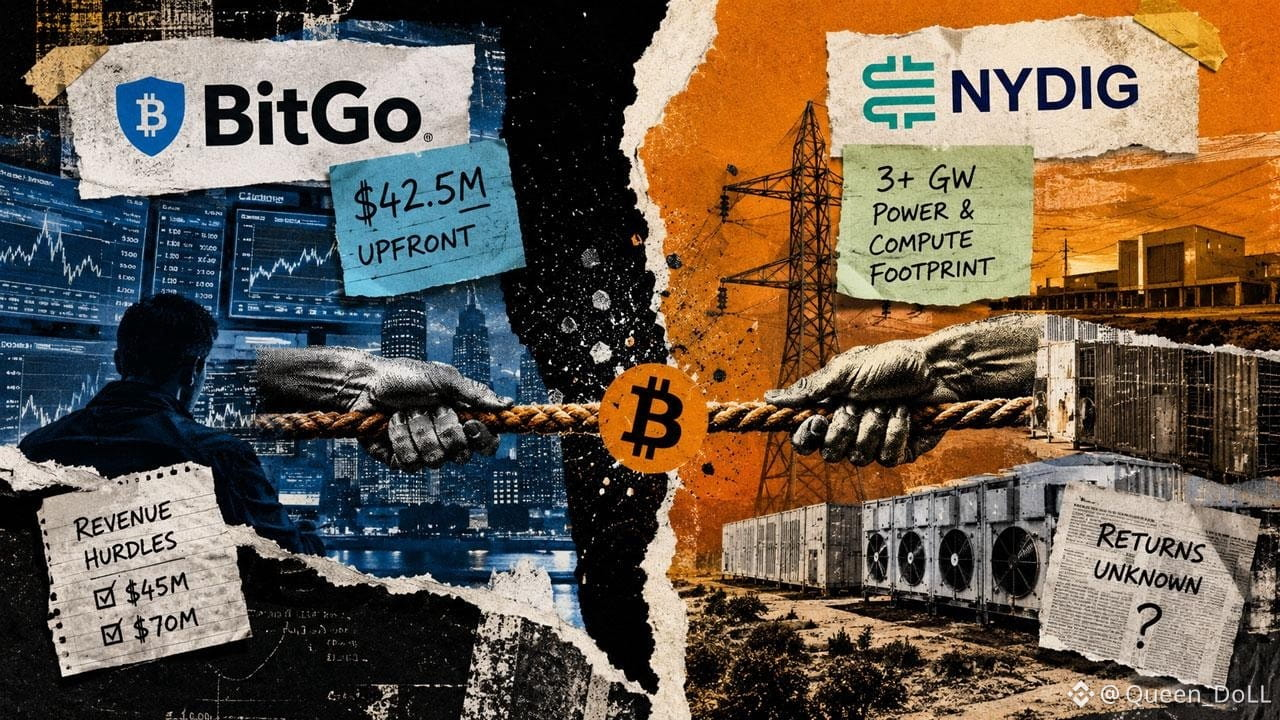
BitGo has acquired NYDIG’s institutional trading business in a deal worth roughly $42.5 million upfront, adding derivatives, structured products, financing and capital-markets capabilities to its existing custody and settlement infrastructure.
The transaction brings around 30 NYDIG employees and institutional client relationships to BitGo. The deal also includes revenue-based earn-outs tied to $45 million and $70 million trailing-12-month revenue targets.
#Bitcoin #BitGo #NYDIG #HPC
#ThuyBNB
$BTC $BNB $NEAR
💥BitGo buys NYDIG’s institutional trading business as NYDIG pivots to power and HPC
BitGo has acquired NYDIG’s institutional trading business in a deal worth roughly $42.5 million upfront, adding derivatives, structured products, financing and capital-markets capabilities to its existing custody and settlement infrastructure.
The transaction brings around 30 NYDIG employees and institutional client relationships to BitGo. The deal also includes revenue-based earn-outs tied to $45 million and $70 million trailing-12-month revenue targets.
#Bitcoin #BitGo #NYDIG #HPC
#ThuyBNB
$BTC $BNB $NEAR
BitGo has acquired NYDIG’s institutional trading business in a deal worth roughly $42.5 million upfront, adding derivatives, structured products, financing and capital-markets capabilities to its existing custody and settlement infrastructure.
The transaction brings around 30 NYDIG employees and institutional client relationships to BitGo. The deal also includes revenue-based earn-outs tied to $45 million and $70 million trailing-12-month revenue targets.
#Bitcoin #BitGo #NYDIG #HPC
#ThuyBNB
$BTC $BNB $NEAR

4
108

·
--
⚡ NYDIG is stepping away from institutional trading, selling the business to BitGo for around $42.5M upfront.
What makes this interesting is the strategic split.
BitGo is doubling down on Bitcoin financial services, while NYDIG is shifting its focus toward something arguably harder to replicate: power, mining, and HPC infrastructure.
With more than 3 GW in its infrastructure pipeline, NYDIG appears to be betting that scarce power could become one of the most valuable assets in the Bitcoin and AI era.
The big question is still unanswered: will higher margins come from controlling financial flows or controlling the physical infrastructure behind them?
My view: the next Bitcoin infrastructure battle may not be about who holds the most BTC—but who controls the most valuable resources. ⚡
#Bitcoin #Crypto #Mining #BitGo #blockchain
⚡ NYDIG is stepping away from institutional trading, selling the business to BitGo for around $42.5M upfront.
What makes this interesting is the strategic split.
BitGo is doubling down on Bitcoin financial services, while NYDIG is shifting its focus toward something arguably harder to replicate: power, mining, and HPC infrastructure.
With more than 3 GW in its infrastructure pipeline, NYDIG appears to be betting that scarce power could become one of the most valuable assets in the Bitcoin and AI era.
The big question is still unanswered: will higher margins come from controlling financial flows or controlling the physical infrastructure behind them?
My view: the next Bitcoin infrastructure battle may not be about who holds the most BTC—but who controls the most valuable resources. ⚡
#Bitcoin #Crypto #Mining #BitGo #blockchain
What makes this interesting is the strategic split.
BitGo is doubling down on Bitcoin financial services, while NYDIG is shifting its focus toward something arguably harder to replicate: power, mining, and HPC infrastructure.
With more than 3 GW in its infrastructure pipeline, NYDIG appears to be betting that scarce power could become one of the most valuable assets in the Bitcoin and AI era.
The big question is still unanswered: will higher margins come from controlling financial flows or controlling the physical infrastructure behind them?
My view: the next Bitcoin infrastructure battle may not be about who holds the most BTC—but who controls the most valuable resources. ⚡
#Bitcoin #Crypto #Mining #BitGo #blockchain
1
214

$BTC BITGO CUTS 15% STAFF – A SIGN OF MARKET MATURATION 🔥
BitGo just announced a 15% workforce reduction, calling it a one-time adjustment. CEO Belshe says the crypto ecosystem has evolved and they're refocusing on security, stablecoins, and AI infrastructure.
This is a big player trimming fat to stay sharp — not a panic move. The institutional side is cleaning up for the next leg. That 15% number tells me the industry is getting leaner, not weaker.
Are you reading this as a bullish signal for the long haul or a short-term headwind?
Not financial advice. Always manage your risk.
#BTC #CryptoNews #BitGo #InstitutionalAdoption #MarketMaturity
🔥
$BTC BITGO CUTS 15% STAFF – A SIGN OF MARKET MATURATION 🔥
BitGo just announced a 15% workforce reduction, calling it a one-time adjustment. CEO Belshe says the crypto ecosystem has evolved and they're refocusing on security, stablecoins, and AI infrastructure.
This is a big player trimming fat to stay sharp — not a panic move. The institutional side is cleaning up for the next leg. That 15% number tells me the industry is getting leaner, not weaker.
Are you reading this as a bullish signal for the long haul or a short-term headwind?
Not financial advice. Always manage your risk.
#BTC #CryptoNews #BitGo #InstitutionalAdoption #MarketMaturity
🔥
BitGo just announced a 15% workforce reduction, calling it a one-time adjustment. CEO Belshe says the crypto ecosystem has evolved and they're refocusing on security, stablecoins, and AI infrastructure.
This is a big player trimming fat to stay sharp — not a panic move. The institutional side is cleaning up for the next leg. That 15% number tells me the industry is getting leaner, not weaker.
Are you reading this as a bullish signal for the long haul or a short-term headwind?
Not financial advice. Always manage your risk.
#BTC #CryptoNews #BitGo #InstitutionalAdoption #MarketMaturity
🔥
519

💭 Opinion: BitGo's Restructuring Is a Sign of Maturity
On June 26, 2026, BitGo announced 15% staff cuts to focus on AI and stablecoins. While layoffs are never good news, this restructuring signals strategic evolution, not desperation.
Crypto infrastructure firms face intense competition and margin pressure. BitGo's pivot to higher-growth areas (AI, stablecoins) is a rational response to a changing market. The firms that adapt survive.
📌 Key Takeaway:
BitGo's AI and stablecoin pivot shows the crypto industry is evolving — only the most adaptable firms will thrive.
#BitGo #Crypto #Evolution
#BinanceAlphaAlert
💭 Opinion: BitGo's Restructuring Is a Sign of Maturity
On June 26, 2026, BitGo announced 15% staff cuts to focus on AI and stablecoins. While layoffs are never good news, this restructuring signals strategic evolution, not desperation.
Crypto infrastructure firms face intense competition and margin pressure. BitGo's pivot to higher-growth areas (AI, stablecoins) is a rational response to a changing market. The firms that adapt survive.
📌 Key Takeaway:
BitGo's AI and stablecoin pivot shows the crypto industry is evolving — only the most adaptable firms will thrive.
#BitGo #Crypto #Evolution
#BinanceAlphaAlert
On June 26, 2026, BitGo announced 15% staff cuts to focus on AI and stablecoins. While layoffs are never good news, this restructuring signals strategic evolution, not desperation.
Crypto infrastructure firms face intense competition and margin pressure. BitGo's pivot to higher-growth areas (AI, stablecoins) is a rational response to a changing market. The firms that adapt survive.
📌 Key Takeaway:
BitGo's AI and stablecoin pivot shows the crypto industry is evolving — only the most adaptable firms will thrive.
#BitGo #Crypto #Evolution
#BinanceAlphaAlert
11

BitGo lays off 15% of employees
- Crypto infrastructure firm BitGo has announced the layoff of 15% of its employees.
- CEO Mike Belshe said this is a one-time action and the company has no plans for further cuts.
- The move comes amid volatility in the crypto market.
#BitGo #CryptoNews #Layoffs
$btc $eth
#vlikevn #Titanbot
Source: CoinTelegraph
BitGo lays off 15% of employees
- Crypto infrastructure firm BitGo has announced the layoff of 15% of its employees.
- CEO Mike Belshe said this is a one-time action and the company has no plans for further cuts.
- The move comes amid volatility in the crypto market.
#BitGo #CryptoNews #Layoffs
$btc $eth
#vlikevn #Titanbot
Source: CoinTelegraph
- Crypto infrastructure firm BitGo has announced the layoff of 15% of its employees.
- CEO Mike Belshe said this is a one-time action and the company has no plans for further cuts.
- The move comes amid volatility in the crypto market.
#BitGo #CryptoNews #Layoffs
$btc $eth
#vlikevn #Titanbot
Source: CoinTelegraph
321
BitGo and OTC Markets partner to bring tokenized securities to brokers
• BitGo and OTC Markets team up to deploy a solution that enables brokers to access tokenized securities.
• This collaboration allows more than 150 brokers to trade and settle digital asset transactions through the OTC Link ATS platform.
• Use BitGo’s custody infrastructure to ensure safety and efficiency for digital asset transactions.
#BitGo #OTCMarkets #Tokenization #RWA #CryptoNews BinanceSquare
$btc $eth
vlikevn Titanbot
Source: CoinTelegraph
BitGo and OTC Markets partner to bring tokenized securities to brokers
• BitGo and OTC Markets team up to deploy a solution that enables brokers to access tokenized securities.
• This collaboration allows more than 150 brokers to trade and settle digital asset transactions through the OTC Link ATS platform.
• Use BitGo’s custody infrastructure to ensure safety and efficiency for digital asset transactions.
#BitGo #OTCMarkets #Tokenization #RWA #CryptoNews BinanceSquare
$btc $eth
vlikevn Titanbot
Source: CoinTelegraph
• BitGo and OTC Markets team up to deploy a solution that enables brokers to access tokenized securities.
• This collaboration allows more than 150 brokers to trade and settle digital asset transactions through the OTC Link ATS platform.
• Use BitGo’s custody infrastructure to ensure safety and efficiency for digital asset transactions.
#BitGo #OTCMarkets #Tokenization #RWA #CryptoNews BinanceSquare
$btc $eth
vlikevn Titanbot
Source: CoinTelegraph
87

·
--
BitGo secures South Korea's virtual asset license, the first global crypto company to do so. Backed by Hana Financial Group and SK Telecom, BitGo Korea built a locally registered entity from scratch to serve institutional and enterprise clients, rather than taking the acquisition route. A landmark milestone for crypto regulation and institutional custody in Asia. $BTC
#Crypto #BitGo #Korea
BitGo secures South Korea's virtual asset license, the first global crypto company to do so. Backed by Hana Financial Group and SK Telecom, BitGo Korea built a locally registered entity from scratch to serve institutional and enterprise clients, rather than taking the acquisition route. A landmark milestone for crypto regulation and institutional custody in Asia. $BTC
#Crypto #BitGo #Korea
#Crypto #BitGo #Korea

16


Partly True
Article
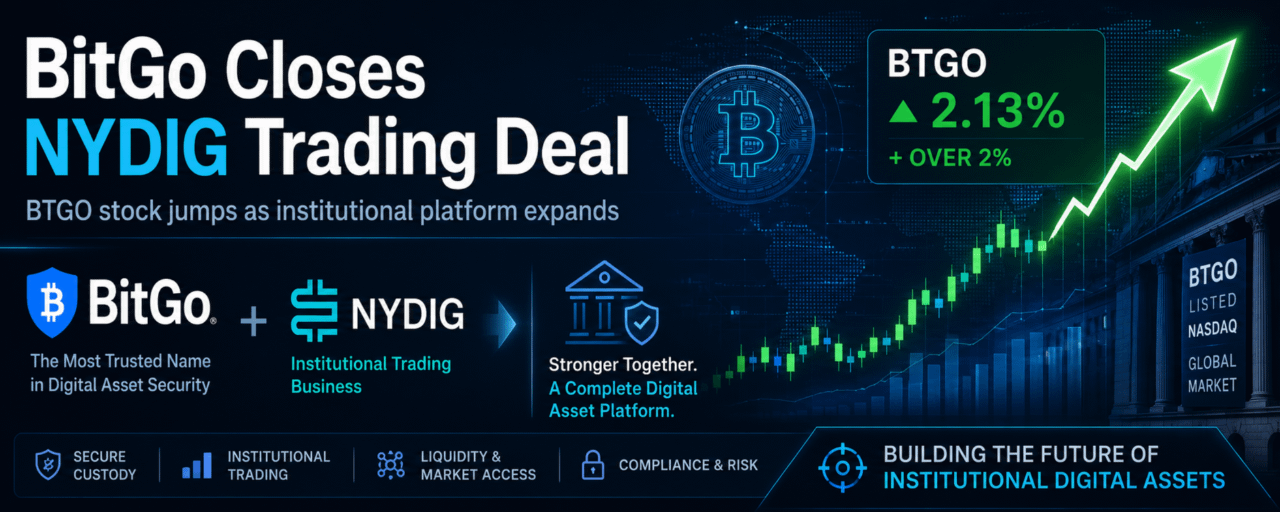
BitGo Acquires Bitcoin Miner NYDIG’s Institutional Trading Business, BTGO Stock JumpsToday, BitGo announced that it has closed the sale of the NYDIG institutional trading business and related assets, a transaction that has validated its acquisition of bitcoin mining firm NYDIG. The investment further empowers the crypto custodian and establishes it as a complete digital asset platform. As a result, BTGO stock price jumped more than 2%.
Bitgo wraps up acquisition of NYDIG institutional trading business.
According to the official announcement, Crypto custodial BitGo made a definitive agreement to buy the NYDIG institutional trading business. This enhanced the regulated crypto custodian's derivatives, structured products and financing capabilities.
In particular, NYDIG's institutional trading arm caters to asset managers, hedge funds, corporates, family offices, and other high-end institutional investors. This enhances BitGo's status as a fully fledged digital asset infrastructure provider.
It provides institutions access to a wider array of trading and capital markets services under one, integrated and regulated system.
With the transaction, around 30 NYDIG employees have joined BitGo, along with their institutional trading relationships. NYDIG Institutional Trading offers derivatives, structured products, financing and capital markets solutions.
Mike Belshe, BitGo's CEO and co-founder, noted that as digital assets become more important, institutions are increasingly looking for a trusted partner who can support the entire digital asset life cycle from being held in custody to trading to financing and settlement. The buy is expected to help him to “serve a wider range of sophisticated clients”, he added.
In the meantime, NYDIG plans to concentrate its efforts on its vertically integrated power generation, bitcoin mining, and high-performance computing data center development business.
BTGO Stock Extends Gain
Btgo stock has risen 1.99% to $7.16 Thursday trading on the NYSE. The stock has risen 24 hours by more than 2.50% after the opening, moving further up 0.56% after hours. Trading volume has also increased to the average of 2 million in volume which parallels the overall recovery of the crypto market.
Recently, Canaccord reiterated a ‘Buy’ rating on BTGO stock, with a $15 price target. Remarkably, BTGO stock has jumped over 44% in just a month. Key among these is that BitGo recently got its VASP license from South Korea's VASP licensing body, the Financial Intelligence Unit (FIU), which is the first foreign company to receive a direct license in the country.
Meanwhile, Bitcoin is trading more than 1% higher in the past 24 hours, with the price currently trading at $79,919. The 24-hour low and high are $78,597 and $81,281, respectively. Furthermore, trading volume increased by almost 30% in the last 24 hours despite crypto options expiry.
The purchase marks a trend in the industry towards centralized platforms that provide secure, compliant, and comprehensive institutional crypto custody solutions for digital asset portfolios.
#BitGo
BitGo Acquires Bitcoin Miner NYDIG’s Institutional Trading Business, BTGO Stock Jumps
Today, BitGo announced that it has closed the sale of the NYDIG institutional trading business and related assets, a transaction that has validated its acquisition of bitcoin mining firm NYDIG. The investment further empowers the crypto custodian and establishes it as a complete digital asset platform. As a result, BTGO stock price jumped more than 2%.
Bitgo wraps up acquisition of NYDIG institutional trading business.
According to the official announcement, Crypto custodial BitGo made a definitive agreement to buy the NYDIG institutional trading business. This enhanced the regulated crypto custodian's derivatives, structured products and financing capabilities.
In particular, NYDIG's institutional trading arm caters to asset managers, hedge funds, corporates, family offices, and other high-end institutional investors. This enhances BitGo's status as a fully fledged digital asset infrastructure provider.
It provides institutions access to a wider array of trading and capital markets services under one, integrated and regulated system.
With the transaction, around 30 NYDIG employees have joined BitGo, along with their institutional trading relationships. NYDIG Institutional Trading offers derivatives, structured products, financing and capital markets solutions.
Mike Belshe, BitGo's CEO and co-founder, noted that as digital assets become more important, institutions are increasingly looking for a trusted partner who can support the entire digital asset life cycle from being held in custody to trading to financing and settlement. The buy is expected to help him to “serve a wider range of sophisticated clients”, he added.
In the meantime, NYDIG plans to concentrate its efforts on its vertically integrated power generation, bitcoin mining, and high-performance computing data center development business.
BTGO Stock Extends Gain
Btgo stock has risen 1.99% to $7.16 Thursday trading on the NYSE. The stock has risen 24 hours by more than 2.50% after the opening, moving further up 0.56% after hours. Trading volume has also increased to the average of 2 million in volume which parallels the overall recovery of the crypto market.
Recently, Canaccord reiterated a ‘Buy’ rating on BTGO stock, with a $15 price target. Remarkably, BTGO stock has jumped over 44% in just a month. Key among these is that BitGo recently got its VASP license from South Korea's VASP licensing body, the Financial Intelligence Unit (FIU), which is the first foreign company to receive a direct license in the country.
Meanwhile, Bitcoin is trading more than 1% higher in the past 24 hours, with the price currently trading at $79,919. The 24-hour low and high are $78,597 and $81,281, respectively. Furthermore, trading volume increased by almost 30% in the last 24 hours despite crypto options expiry.
The purchase marks a trend in the industry towards centralized platforms that provide secure, compliant, and comprehensive institutional crypto custody solutions for digital asset portfolios.
#BitGo
Bitgo wraps up acquisition of NYDIG institutional trading business.
According to the official announcement, Crypto custodial BitGo made a definitive agreement to buy the NYDIG institutional trading business. This enhanced the regulated crypto custodian's derivatives, structured products and financing capabilities.
In particular, NYDIG's institutional trading arm caters to asset managers, hedge funds, corporates, family offices, and other high-end institutional investors. This enhances BitGo's status as a fully fledged digital asset infrastructure provider.
It provides institutions access to a wider array of trading and capital markets services under one, integrated and regulated system.
With the transaction, around 30 NYDIG employees have joined BitGo, along with their institutional trading relationships. NYDIG Institutional Trading offers derivatives, structured products, financing and capital markets solutions.
Mike Belshe, BitGo's CEO and co-founder, noted that as digital assets become more important, institutions are increasingly looking for a trusted partner who can support the entire digital asset life cycle from being held in custody to trading to financing and settlement. The buy is expected to help him to “serve a wider range of sophisticated clients”, he added.
In the meantime, NYDIG plans to concentrate its efforts on its vertically integrated power generation, bitcoin mining, and high-performance computing data center development business.
BTGO Stock Extends Gain
Btgo stock has risen 1.99% to $7.16 Thursday trading on the NYSE. The stock has risen 24 hours by more than 2.50% after the opening, moving further up 0.56% after hours. Trading volume has also increased to the average of 2 million in volume which parallels the overall recovery of the crypto market.
Recently, Canaccord reiterated a ‘Buy’ rating on BTGO stock, with a $15 price target. Remarkably, BTGO stock has jumped over 44% in just a month. Key among these is that BitGo recently got its VASP license from South Korea's VASP licensing body, the Financial Intelligence Unit (FIU), which is the first foreign company to receive a direct license in the country.
Meanwhile, Bitcoin is trading more than 1% higher in the past 24 hours, with the price currently trading at $79,919. The 24-hour low and high are $78,597 and $81,281, respectively. Furthermore, trading volume increased by almost 30% in the last 24 hours despite crypto options expiry.
The purchase marks a trend in the industry towards centralized platforms that provide secure, compliant, and comprehensive institutional crypto custody solutions for digital asset portfolios.
#BitGo
1
5
187

🦈 $BTC INSTITUTIONAL CAPITAL JUST GOT A HIGH-FREQUENCY CONTROL CENTER ⚡
📊 BitGo’s new Link platform hands treasury desks a unified console to sweep assets across top-tier exchange venues without abandoning custody-grade security. This is the plumbing upgrade institutions needed to rebalance collateral in seconds, not days. 🏦
💡 When margin calls hit or a volatility vacuum opens, the ability to fire cross-platform transfers through a single policy engine changes the velocity of capital deployment. This isn't just convenience—it's a structural layer for liquidity absorption. 🌊
The market impact is subtle but profound: smoother institutional flow means fewer dislocated wicks and faster recoveries from inefficiencies. 🔍 As these control centers scale, expect quieter consolidation phases before the next expansion leg. 💬 Do you think consolidated institutional rails reduce volatility or simply redistribute where the wicks land? 👇
⚠️ Not financial advice. Always manage your risk. 🛡️
🏷️ #BTC #InstitutionalCrypto #BitGo #CryptoNews
🎯 🦈
🦈 $BTC INSTITUTIONAL CAPITAL JUST GOT A HIGH-FREQUENCY CONTROL CENTER ⚡
📊 BitGo’s new Link platform hands treasury desks a unified console to sweep assets across top-tier exchange venues without abandoning custody-grade security. This is the plumbing upgrade institutions needed to rebalance collateral in seconds, not days. 🏦
💡 When margin calls hit or a volatility vacuum opens, the ability to fire cross-platform transfers through a single policy engine changes the velocity of capital deployment. This isn't just convenience—it's a structural layer for liquidity absorption. 🌊
The market impact is subtle but profound: smoother institutional flow means fewer dislocated wicks and faster recoveries from inefficiencies. 🔍 As these control centers scale, expect quieter consolidation phases before the next expansion leg. 💬 Do you think consolidated institutional rails reduce volatility or simply redistribute where the wicks land? 👇
⚠️ Not financial advice. Always manage your risk. 🛡️
🏷️ #BTC #InstitutionalCrypto #BitGo #CryptoNews
🎯 🦈
📊 BitGo’s new Link platform hands treasury desks a unified console to sweep assets across top-tier exchange venues without abandoning custody-grade security. This is the plumbing upgrade institutions needed to rebalance collateral in seconds, not days. 🏦
💡 When margin calls hit or a volatility vacuum opens, the ability to fire cross-platform transfers through a single policy engine changes the velocity of capital deployment. This isn't just convenience—it's a structural layer for liquidity absorption. 🌊
The market impact is subtle but profound: smoother institutional flow means fewer dislocated wicks and faster recoveries from inefficiencies. 🔍 As these control centers scale, expect quieter consolidation phases before the next expansion leg. 💬 Do you think consolidated institutional rails reduce volatility or simply redistribute where the wicks land? 👇
⚠️ Not financial advice. Always manage your risk. 🛡️
🏷️ #BTC #InstitutionalCrypto #BitGo #CryptoNews
🎯 🦈
25

Revenue is booming.
BitGo's revenue exploded 80% to $4.3B, even with a $19M Q2 loss. The red is mostly just unrealized asset hits. Seeing revenue scale this fast despite market volatility is a massive signal for institutional infrastructure.
#BitGo
Revenue is booming.
BitGo's revenue exploded 80% to $4.3B, even with a $19M Q2 loss. The red is mostly just unrealized asset hits. Seeing revenue scale this fast despite market volatility is a massive signal for institutional infrastructure.
#BitGo
BitGo's revenue exploded 80% to $4.3B, even with a $19M Q2 loss. The red is mostly just unrealized asset hits. Seeing revenue scale this fast despite market volatility is a massive signal for institutional infrastructure.
#BitGo
10

·
--
🟢 BitGo Hits Fortune 500 with $16.2B Revenue, Signaling Institutional Crypto Infrastructure Boom
BitGo just punched its ticket to the Fortune 500, landing at No. 273 with a staggering $16.2 billion in revenue. This isn't some fly-by-night operation; it's the first dedicated digital asset infrastructure company to achieve this milestone, especially this fast after going public. Think custody, wallets, settlement – the plumbing that makes the crypto economy tick, now recognized by the old guard.
This move is huge because BitGo isn't just a tech company; it's now a federally chartered national trust bank under the OCC. That means serious regulatory clarity and institutional-grade trust, a moat that software alone can't replicate. They're essentially building the bridge between TradFi and digital assets, a critical piece for the big money players eyeing crypto 💰.
Their client list reads like a who's who of institutional crypto: ETF issuers, major funds, and even stablecoin issuers like SoFi. BitGo is quietly holding over 470,000 BTC in custody, making them one of the biggest Bitcoin holders on the planet. This isn't just about Bitcoin anymore; Ethereum, Solana, and stablecoins are driving significant revenue too.
With Prime services including OTC trading and derivatives now live, and a global footprint spanning over 100 countries, BitGo is positioning itself as the go-to infrastructure provider for institutions. This Fortune 500 debut is more than just a number; it's a validation of regulated digital asset infrastructure and a clear sign of where institutional capital is flowing.
📊 This validates the institutionalization of crypto infrastructure, likely boosting confidence in regulated entities and potentially leading to increased inflows into Bitcoin and Ethereum ETFs. Expect continued strength in custody and prime brokerage services for digital assets.
#bitgo #fortune500 #institutional #infrastructure #btc
🟢 BitGo Hits Fortune 500 with $16.2B Revenue, Signaling Institutional Crypto Infrastructure Boom
BitGo just punched its ticket to the Fortune 500, landing at No. 273 with a staggering $16.2 billion in revenue. This isn't some fly-by-night operation; it's the first dedicated digital asset infrastructure company to achieve this milestone, especially this fast after going public. Think custody, wallets, settlement – the plumbing that makes the crypto economy tick, now recognized by the old guard.
This move is huge because BitGo isn't just a tech company; it's now a federally chartered national trust bank under the OCC. That means serious regulatory clarity and institutional-grade trust, a moat that software alone can't replicate. They're essentially building the bridge between TradFi and digital assets, a critical piece for the big money players eyeing crypto 💰.
Their client list reads like a who's who of institutional crypto: ETF issuers, major funds, and even stablecoin issuers like SoFi. BitGo is quietly holding over 470,000 BTC in custody, making them one of the biggest Bitcoin holders on the planet. This isn't just about Bitcoin anymore; Ethereum, Solana, and stablecoins are driving significant revenue too.
With Prime services including OTC trading and derivatives now live, and a global footprint spanning over 100 countries, BitGo is positioning itself as the go-to infrastructure provider for institutions. This Fortune 500 debut is more than just a number; it's a validation of regulated digital asset infrastructure and a clear sign of where institutional capital is flowing.
📊 This validates the institutionalization of crypto infrastructure, likely boosting confidence in regulated entities and potentially leading to increased inflows into Bitcoin and Ethereum ETFs. Expect continued strength in custody and prime brokerage services for digital assets.
#bitgo #fortune500 #institutional #infrastructure #btc
BitGo just punched its ticket to the Fortune 500, landing at No. 273 with a staggering $16.2 billion in revenue. This isn't some fly-by-night operation; it's the first dedicated digital asset infrastructure company to achieve this milestone, especially this fast after going public. Think custody, wallets, settlement – the plumbing that makes the crypto economy tick, now recognized by the old guard.
This move is huge because BitGo isn't just a tech company; it's now a federally chartered national trust bank under the OCC. That means serious regulatory clarity and institutional-grade trust, a moat that software alone can't replicate. They're essentially building the bridge between TradFi and digital assets, a critical piece for the big money players eyeing crypto 💰.
Their client list reads like a who's who of institutional crypto: ETF issuers, major funds, and even stablecoin issuers like SoFi. BitGo is quietly holding over 470,000 BTC in custody, making them one of the biggest Bitcoin holders on the planet. This isn't just about Bitcoin anymore; Ethereum, Solana, and stablecoins are driving significant revenue too.
With Prime services including OTC trading and derivatives now live, and a global footprint spanning over 100 countries, BitGo is positioning itself as the go-to infrastructure provider for institutions. This Fortune 500 debut is more than just a number; it's a validation of regulated digital asset infrastructure and a clear sign of where institutional capital is flowing.
📊 This validates the institutionalization of crypto infrastructure, likely boosting confidence in regulated entities and potentially leading to increased inflows into Bitcoin and Ethereum ETFs. Expect continued strength in custody and prime brokerage services for digital assets.
#bitgo #fortune500 #institutional #infrastructure #btc
90

·
--
🟠 BitGo Cuts 15% of Staff to Double Rates on Stablecoins and AI
BitGo is pulling the eject button for 15% of its staff, a clear signal that they’re cutting the fat and putting everything into stablecoins and AI-based infrastructure. CEO Mike Belsch claims it’s a one-time cleanup, but it’s the latest chapter in the ongoing saga of layoffs across the crypto industry. After a turbulent IPO in January, the digital asset custodian is under pressure to turn a profit, not just grow revenue. Their 2025 performance shows a massive jump in revenue, but a net loss of $14.8 million paints the real picture. Expect a more streamlined BitGo that will pursue these more valuable institutional deals—especially in the thriving stablecoin minting sector 💰.
📊 It’s unlikely that this move by BitGo will cause immediate price swings in major crypto assets. However, it signals a growing institutional focus on stablecoins and AI infrastructure, which may benefit related projects and services in the medium term.
Are you ready for BitGo’s future? 👇
#bitgo #stablecoins #ai #layoffs #institutional
🟠 BitGo Cuts 15% of Staff to Double Rates on Stablecoins and AI
BitGo is pulling the eject button for 15% of its staff, a clear signal that they’re cutting the fat and putting everything into stablecoins and AI-based infrastructure. CEO Mike Belsch claims it’s a one-time cleanup, but it’s the latest chapter in the ongoing saga of layoffs across the crypto industry. After a turbulent IPO in January, the digital asset custodian is under pressure to turn a profit, not just grow revenue. Their 2025 performance shows a massive jump in revenue, but a net loss of $14.8 million paints the real picture. Expect a more streamlined BitGo that will pursue these more valuable institutional deals—especially in the thriving stablecoin minting sector 💰.
📊 It’s unlikely that this move by BitGo will cause immediate price swings in major crypto assets. However, it signals a growing institutional focus on stablecoins and AI infrastructure, which may benefit related projects and services in the medium term.
Are you ready for BitGo’s future? 👇
#bitgo #stablecoins #ai #layoffs #institutional
BitGo is pulling the eject button for 15% of its staff, a clear signal that they’re cutting the fat and putting everything into stablecoins and AI-based infrastructure. CEO Mike Belsch claims it’s a one-time cleanup, but it’s the latest chapter in the ongoing saga of layoffs across the crypto industry. After a turbulent IPO in January, the digital asset custodian is under pressure to turn a profit, not just grow revenue. Their 2025 performance shows a massive jump in revenue, but a net loss of $14.8 million paints the real picture. Expect a more streamlined BitGo that will pursue these more valuable institutional deals—especially in the thriving stablecoin minting sector 💰.
📊 It’s unlikely that this move by BitGo will cause immediate price swings in major crypto assets. However, it signals a growing institutional focus on stablecoins and AI infrastructure, which may benefit related projects and services in the medium term.
Are you ready for BitGo’s future? 👇
#bitgo #stablecoins #ai #layoffs #institutional
55

BITGO JUST CHANGED THE GAME FOR AI INTEGRATION IN CRYPTO INFRASTRUCTURE ⚡
Bitgo just launched their Model Context Protocol Server, which effectively gives developers an AI-native way to interact with crypto infrastructure. This is a massive efficiency play because it cuts out the manual documentation search and allows AI agents to interface directly with their systems.
We are seeing a clear shift toward AI-integrated dev tools, and this move positions them at the forefront of the infrastructure layer. When the builders get faster tools, the entire ecosystem usually follows suit. Do you think AI agents will become the primary way we manage institutional custody?
Not financial advice. Always manage your risk.
#Bitgo #CryptoNews #AI #Blockchain #Infrastructure
⚡
BITGO JUST CHANGED THE GAME FOR AI INTEGRATION IN CRYPTO INFRASTRUCTURE ⚡
Bitgo just launched their Model Context Protocol Server, which effectively gives developers an AI-native way to interact with crypto infrastructure. This is a massive efficiency play because it cuts out the manual documentation search and allows AI agents to interface directly with their systems.
We are seeing a clear shift toward AI-integrated dev tools, and this move positions them at the forefront of the infrastructure layer. When the builders get faster tools, the entire ecosystem usually follows suit. Do you think AI agents will become the primary way we manage institutional custody?
Not financial advice. Always manage your risk.
#Bitgo #CryptoNews #AI #Blockchain #Infrastructure
⚡
Bitgo just launched their Model Context Protocol Server, which effectively gives developers an AI-native way to interact with crypto infrastructure. This is a massive efficiency play because it cuts out the manual documentation search and allows AI agents to interface directly with their systems.
We are seeing a clear shift toward AI-integrated dev tools, and this move positions them at the forefront of the infrastructure layer. When the builders get faster tools, the entire ecosystem usually follows suit. Do you think AI agents will become the primary way we manage institutional custody?
Not financial advice. Always manage your risk.
#Bitgo #CryptoNews #AI #Blockchain #Infrastructure
⚡
17

·
--
📉 BitGo is cutting nearly 15% of its workforce as it pivots toward stablecoins and AI infrastructure.
The crypto custodian previously laid off 12% of staff in late 2023, citing market conditions and operational streamlining. CEO Mike Belshe noted the company was still growing and hiring in key areas despite the cuts.
Watch for how the strategic shift toward stablecoins and AI plays out in BitGo's product lineup.
#CryptoNews #MarketUpdate #BitGo
📉 BitGo is cutting nearly 15% of its workforce as it pivots toward stablecoins and AI infrastructure.
The crypto custodian previously laid off 12% of staff in late 2023, citing market conditions and operational streamlining. CEO Mike Belshe noted the company was still growing and hiring in key areas despite the cuts.
Watch for how the strategic shift toward stablecoins and AI plays out in BitGo's product lineup.
#CryptoNews #MarketUpdate #BitGo
The crypto custodian previously laid off 12% of staff in late 2023, citing market conditions and operational streamlining. CEO Mike Belshe noted the company was still growing and hiring in key areas despite the cuts.
Watch for how the strategic shift toward stablecoins and AI plays out in BitGo's product lineup.
#CryptoNews #MarketUpdate #BitGo
27

·
--
BitGo just completed the migration of WBTC worth $7.3 billion, triggering a major reshuffle of the custody landscape. At the same time, Chainlink CCIP’s cross-chain market share has been surging, and the competitive landscape in the cross-chain infrastructure sector is being reshaped.
On one side, the top restructuring of BTC-pegged assets; on the other, the powerful rise of cross-chain interoperability. These two main storylines intersect, making the narrative for crypto infrastructure in 2025 increasingly clear.
#BitGo #Chainlink #cross-chain infrastructure
BitGo just completed the migration of WBTC worth $7.3 billion, triggering a major reshuffle of the custody landscape. At the same time, Chainlink CCIP’s cross-chain market share has been surging, and the competitive landscape in the cross-chain infrastructure sector is being reshaped.
On one side, the top restructuring of BTC-pegged assets; on the other, the powerful rise of cross-chain interoperability. These two main storylines intersect, making the narrative for crypto infrastructure in 2025 increasingly clear.
#BitGo #Chainlink #cross-chain infrastructure
On one side, the top restructuring of BTC-pegged assets; on the other, the powerful rise of cross-chain interoperability. These two main storylines intersect, making the narrative for crypto infrastructure in 2025 increasingly clear.
#BitGo #Chainlink #cross-chain infrastructure
56

·
--
Bullish
With #币安 opening up the #美股 port, projects in the crypto space linked to the US stock market and #SEC are taking off, and every time #BitGo makes a move, it’s bound to be exceptional.
Five hours ago, Bitgo withdrew 107 million ENA tokens from a $ENA multi-signature wallet, totaling a value of 11.6 million USD.
Gateway:
https://arkm.com/explorer/address/0xbd02c51150a4Ab6Ce97B9de2025644594F3E75B8
With #币安 opening up the #美股 port, projects in the crypto space linked to the US stock market and #SEC are taking off, and every time #BitGo makes a move, it’s bound to be exceptional.
Five hours ago, Bitgo withdrew 107 million ENA tokens from a $ENA multi-signature wallet, totaling a value of 11.6 million USD.
Gateway:
https://arkm.com/explorer/address/0xbd02c51150a4Ab6Ce97B9de2025644594F3E75B8
Five hours ago, Bitgo withdrew 107 million ENA tokens from a $ENA multi-signature wallet, totaling a value of 11.6 million USD.
Gateway:
https://arkm.com/explorer/address/0xbd02c51150a4Ab6Ce97B9de2025644594F3E75B8

2
676
BitGo reports a Q2 loss of $19M despite revenue increasing 80% to $4.3B
- $18.8M unrealized damage due to Q2 digital assets
- Weak trading margin performance pushes BitGo into the red
- Q2 revenue increases 80% to $4.3B
#BitGo #CryptoNews #Q2Loss #RevenueSurge
$btc $eth
#vlikevn Titanbot
Source: CoinTelegraph
BitGo reports a Q2 loss of $19M despite revenue increasing 80% to $4.3B
- $18.8M unrealized damage due to Q2 digital assets
- Weak trading margin performance pushes BitGo into the red
- Q2 revenue increases 80% to $4.3B
#BitGo #CryptoNews #Q2Loss #RevenueSurge
$btc $eth
#vlikevn Titanbot
Source: CoinTelegraph
- $18.8M unrealized damage due to Q2 digital assets
- Weak trading margin performance pushes BitGo into the red
- Q2 revenue increases 80% to $4.3B
#BitGo #CryptoNews #Q2Loss #RevenueSurge
$btc $eth
#vlikevn Titanbot
Source: CoinTelegraph
52
Log in to explore more content
Join global crypto users on Binance Square
⚡️ Get latest and useful information about crypto.
💬 Trusted by the world’s largest crypto exchange.
👍 Discover real insights from verified creators.
Email / Phone number
Trending Topics
1
#AmazonPlansToSell$8BNvidiaChips
0 views
0 Discussing
2
#NEARFallsToAround$4.70Down14%
19,396 views
28 Discussing
3
#EthereumFoundationLaunchesZkAPIOnMainnet
9,175 views
196 Discussing
4
#EvernorthPlansNasdaqListingOct8
20,209 views
192 Discussing
5
#SECProposesCryptoCustodyFramework
21,719 views
173 Discussing
6
#IMFApproves$139MDisbursementToElSalvador
17,362 views
16 Discussing
7
#AnthropicTargetsIPOAsSoonAsMidNovember
19,401 views
185 Discussing
8
#EtherGains70.9%InQ3
221,227 views
1,462 Discussing
9
#TreasuryLetsStatesFileStablecoinCertificationsEarly
16,587 views
108 Discussing
10
#US10YearYieldNears5.3%
182,914 views
1,326 Discussing