

#bitcoinparesgainsafterrallyto
bitcoinparesgainsafterrallyto
835 views
52 Discussing
Hot
Latest

Here's what happened when Bitcoin tagged resistance last week and got stuffed on the first real test.
The pain is familiar. Traders who chased the strength are now stuck holding a loser they never sized for, wondering if they should cut or add into a wall that already won.
Most people missed the setup. $BTC ran into a known ceiling while sentiment sat in greed, and the tape treated it like confirmation instead of a liquidity grab. Volume never confirmed. Sellers were already there.
Even as hike odds for October faded, the follow-through never showed. Price just pared the rally. That's when capital rotates into $USDT and the weaker bids disappear.
A rejection at a key level is not a rest. It is the market taking the late money and leaving. The risk is not missing the next green candle. The risk is still being long when that ceiling holds again.
Where do you think this goes from here if that level keeps rejecting?
#BitcoinRejectedAt #BitcoinParesGainsAfterRallyTo #FedOctoberRateHikeOddsFallTo17
Here's what happened when Bitcoin tagged resistance last week and got stuffed on the first real test.
The pain is familiar. Traders who chased the strength are now stuck holding a loser they never sized for, wondering if they should cut or add into a wall that already won.
Most people missed the setup. $BTC ran into a known ceiling while sentiment sat in greed, and the tape treated it like confirmation instead of a liquidity grab. Volume never confirmed. Sellers were already there.
Even as hike odds for October faded, the follow-through never showed. Price just pared the rally. That's when capital rotates into $USDT and the weaker bids disappear.
A rejection at a key level is not a rest. It is the market taking the late money and leaving. The risk is not missing the next green candle. The risk is still being long when that ceiling holds again.
Where do you think this goes from here if that level keeps rejecting?
#BitcoinRejectedAt #BitcoinParesGainsAfterRallyTo #FedOctoberRateHikeOddsFallTo17
The pain is familiar. Traders who chased the strength are now stuck holding a loser they never sized for, wondering if they should cut or add into a wall that already won.
Most people missed the setup. $BTC ran into a known ceiling while sentiment sat in greed, and the tape treated it like confirmation instead of a liquidity grab. Volume never confirmed. Sellers were already there.
Even as hike odds for October faded, the follow-through never showed. Price just pared the rally. That's when capital rotates into $USDT and the weaker bids disappear.
A rejection at a key level is not a rest. It is the market taking the late money and leaving. The risk is not missing the next green candle. The risk is still being long when that ceiling holds again.
Where do you think this goes from here if that level keeps rejecting?
#BitcoinRejectedAt #BitcoinParesGainsAfterRallyTo #FedOctoberRateHikeOddsFallTo17

9

·
--
Have you noticed $BTC getting rejected at that same resistance every single time it tries to break out?
Traders keep getting wrecked buying the fake breakouts. They watch their positions dump overnight because they never set an exit plan.
The crowd still thinks this is just a pause before new highs. That's the story they sell so they can offload into the next wave of buyers. Volume on the rejection was heavy and it printed a lower high. This isn't healthy.
If you actually want to navigate this, stop chasing every wick. Wait for a real daily close above that level backed by volume. Take profits on the way up, hold some $USDT, and only re-enter on confirmed support. $ETH is doing the same thing right now so don't expect a decoupling.
Where do you think this goes from here if the sellers keep winning?
#BitcoinRejectedAt #BitcoinParesGainsAfterRallyTo #FedOctoberRateHikeOddsFallTo17
Have you noticed $BTC getting rejected at that same resistance every single time it tries to break out?
Traders keep getting wrecked buying the fake breakouts. They watch their positions dump overnight because they never set an exit plan.
The crowd still thinks this is just a pause before new highs. That's the story they sell so they can offload into the next wave of buyers. Volume on the rejection was heavy and it printed a lower high. This isn't healthy.
If you actually want to navigate this, stop chasing every wick. Wait for a real daily close above that level backed by volume. Take profits on the way up, hold some $USDT, and only re-enter on confirmed support. $ETH is doing the same thing right now so don't expect a decoupling.
Where do you think this goes from here if the sellers keep winning?
#BitcoinRejectedAt #BitcoinParesGainsAfterRallyTo #FedOctoberRateHikeOddsFallTo17
Traders keep getting wrecked buying the fake breakouts. They watch their positions dump overnight because they never set an exit plan.
The crowd still thinks this is just a pause before new highs. That's the story they sell so they can offload into the next wave of buyers. Volume on the rejection was heavy and it printed a lower high. This isn't healthy.
If you actually want to navigate this, stop chasing every wick. Wait for a real daily close above that level backed by volume. Take profits on the way up, hold some $USDT, and only re-enter on confirmed support. $ETH is doing the same thing right now so don't expect a decoupling.
Where do you think this goes from here if the sellers keep winning?
#BitcoinRejectedAt #BitcoinParesGainsAfterRallyTo #FedOctoberRateHikeOddsFallTo17

4
Picture this: you wake up to green candles pushing past major resistance, only to watch the entire move evaporate before your morning coffee gets cold.
Most retail traders get trapped buying the breakout euphoria right into local distribution. When the momentum stalls, overleveraged longs get squeezed and end up panic-swapping back into $USDT at the worst possible moment.
What we just witnessed with $BTC paring its rally isn't an anomaly, it is the classic liquidity sweep we have seen play out repeatedly across previous cycle expansions. Back in mid-2024, every time the market sentiment drifted into greed and open interest spiked too fast, smart money used the breakout liquidity to rebalance before pushing higher.
The real takeaway here is about leverage versus spot absorption. Macro buyers are quietly accumulating structural dips, but excessive derivative speculation pushed funding rates to unsustainable levels. Once the top became heavy, cascading liquidations flushed the late buyers, resetting the order book without invalidating the broader trend.
Are you viewing this pullback as a healthy reset, or do you think we see deeper downside from here?
#BitcoinParesGainsAfterRallyTo #SECApproves3xLongCryptoCommodityETPs
Picture this: you wake up to green candles pushing past major resistance, only to watch the entire move evaporate before your morning coffee gets cold.
Most retail traders get trapped buying the breakout euphoria right into local distribution. When the momentum stalls, overleveraged longs get squeezed and end up panic-swapping back into $USDT at the worst possible moment.
What we just witnessed with $BTC paring its rally isn't an anomaly, it is the classic liquidity sweep we have seen play out repeatedly across previous cycle expansions. Back in mid-2024, every time the market sentiment drifted into greed and open interest spiked too fast, smart money used the breakout liquidity to rebalance before pushing higher.
The real takeaway here is about leverage versus spot absorption. Macro buyers are quietly accumulating structural dips, but excessive derivative speculation pushed funding rates to unsustainable levels. Once the top became heavy, cascading liquidations flushed the late buyers, resetting the order book without invalidating the broader trend.
Are you viewing this pullback as a healthy reset, or do you think we see deeper downside from here?
#BitcoinParesGainsAfterRallyTo #SECApproves3xLongCryptoCommodityETPs
Most retail traders get trapped buying the breakout euphoria right into local distribution. When the momentum stalls, overleveraged longs get squeezed and end up panic-swapping back into $USDT at the worst possible moment.
What we just witnessed with $BTC paring its rally isn't an anomaly, it is the classic liquidity sweep we have seen play out repeatedly across previous cycle expansions. Back in mid-2024, every time the market sentiment drifted into greed and open interest spiked too fast, smart money used the breakout liquidity to rebalance before pushing higher.
The real takeaway here is about leverage versus spot absorption. Macro buyers are quietly accumulating structural dips, but excessive derivative speculation pushed funding rates to unsustainable levels. Once the top became heavy, cascading liquidations flushed the late buyers, resetting the order book without invalidating the broader trend.
Are you viewing this pullback as a healthy reset, or do you think we see deeper downside from here?
#BitcoinParesGainsAfterRallyTo #SECApproves3xLongCryptoCommodityETPs
2
·
--
Why is nobody talking about how $BTC keeps handing back every rally the second retail shows up?
You buy the breakout because it looks unstoppable, then sit there watching the same candle that made you feel smart turn into a slow bleed. That is the tax you pay for entering when the timeline is already loud.
This latest fade is a case study, not a coincidence. Bitcoin pushed higher, greed climbed, and then the market did what it does when late buyers arrive in size. It took the liquidity and walked it back. The crowd treating a two-day rally like a confirmed cycle is the same crowd that will be confused when price chops them out.
Look at the tape. Volume thinned at the highs, $USDT started catching bids again, and even names that ran with it like $ZEC are giving it back. This is not a crash. It is a reset that happens every time a rally gets treated like a finished story.
Where do you think this goes from here?
#BitcoinParesGainsAfterRallyTo #USStocksCloseHigherOnWeakJobsData #SECApproves3xLongCryptoCommodityETPs
Why is nobody talking about how $BTC keeps handing back every rally the second retail shows up?
You buy the breakout because it looks unstoppable, then sit there watching the same candle that made you feel smart turn into a slow bleed. That is the tax you pay for entering when the timeline is already loud.
This latest fade is a case study, not a coincidence. Bitcoin pushed higher, greed climbed, and then the market did what it does when late buyers arrive in size. It took the liquidity and walked it back. The crowd treating a two-day rally like a confirmed cycle is the same crowd that will be confused when price chops them out.
Look at the tape. Volume thinned at the highs, $USDT started catching bids again, and even names that ran with it like $ZEC are giving it back. This is not a crash. It is a reset that happens every time a rally gets treated like a finished story.
Where do you think this goes from here?
#BitcoinParesGainsAfterRallyTo #USStocksCloseHigherOnWeakJobsData #SECApproves3xLongCryptoCommodityETPs
You buy the breakout because it looks unstoppable, then sit there watching the same candle that made you feel smart turn into a slow bleed. That is the tax you pay for entering when the timeline is already loud.
This latest fade is a case study, not a coincidence. Bitcoin pushed higher, greed climbed, and then the market did what it does when late buyers arrive in size. It took the liquidity and walked it back. The crowd treating a two-day rally like a confirmed cycle is the same crowd that will be confused when price chops them out.
Look at the tape. Volume thinned at the highs, $USDT started catching bids again, and even names that ran with it like $ZEC are giving it back. This is not a crash. It is a reset that happens every time a rally gets treated like a finished story.
Where do you think this goes from here?
#BitcoinParesGainsAfterRallyTo #USStocksCloseHigherOnWeakJobsData #SECApproves3xLongCryptoCommodityETPs
79

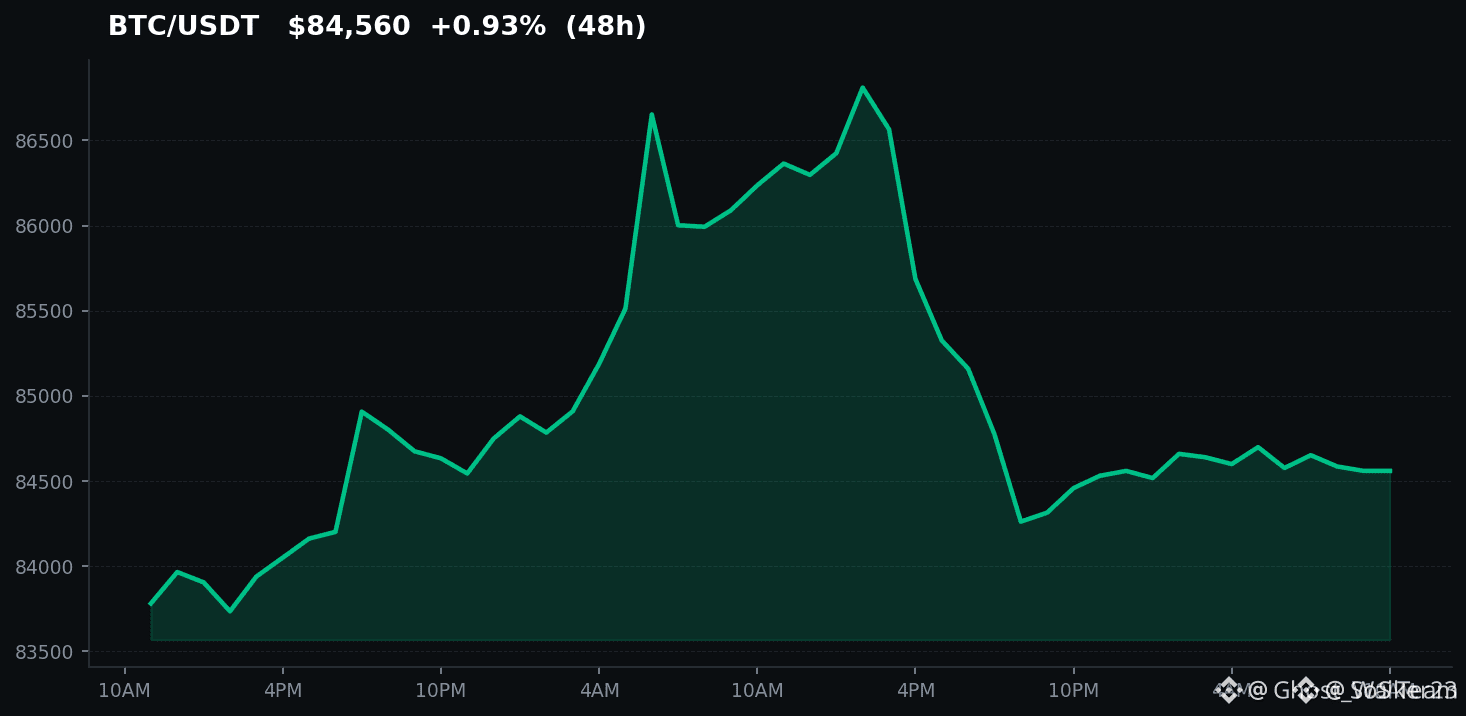
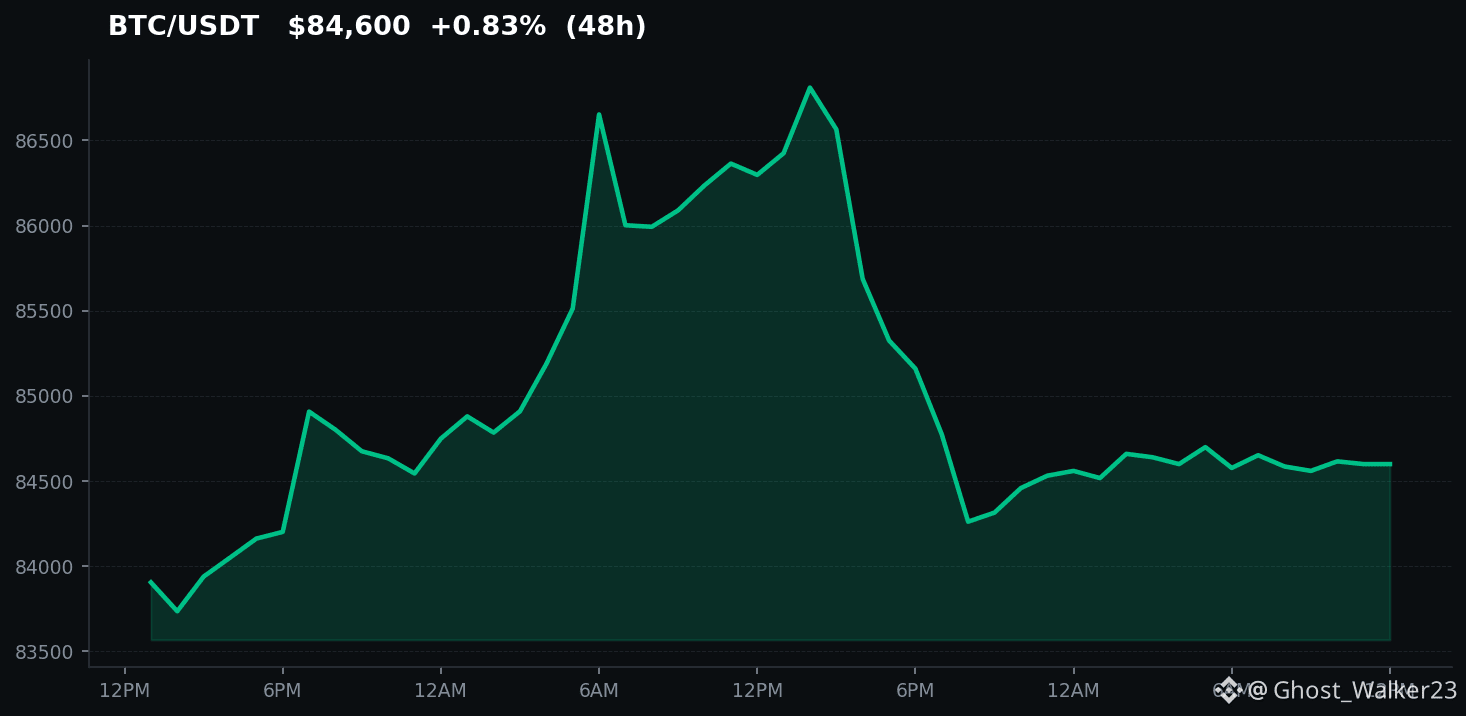
🚨 Bitcoin has seen a slight downturn, now at $84,560.01 (-1.81%) after rallying to a high of $86.5K. This pullback is common as traders take profits. Meanwhile, $SAND shines, up 28.2%! 🌟 Check the chart below to see these movements. What are your thoughts on the current market? #BitcoinParesGainsAfterRallyTo$86.5K
📈 Follow for more real-time market breakdowns!
🚨 Bitcoin has seen a slight downturn, now at $84,560.01 (-1.81%) after rallying to a high of $86.5K. This pullback is common as traders take profits. Meanwhile, $SAND shines, up 28.2%! 🌟 Check the chart below to see these movements. What are your thoughts on the current market? #BitcoinParesGainsAfterRallyTo$86.5K
📈 Follow for more real-time market breakdowns!
📈 Follow for more real-time market breakdowns!
51


Bitcoin has seen its recent gains trimmed following a significant rally that pushed the price to $86.5K. This pullback suggests a potential consolidation phase or profit-taking by traders after a rapid ascent. Market participants will be closely watching to see if $BTC can hold key support levels or if further downward pressure will emerge. The market sentiment remains cautious as investors digest this latest price action and its implications for the short-term trend.
Disclaimer: This is not financial advice. Please do your own research.
#BitcoinParesGainsAfterRallyTo$86.5K $BTC
Bitcoin has seen its recent gains trimmed following a significant rally that pushed the price to $86.5K. This pullback suggests a potential consolidation phase or profit-taking by traders after a rapid ascent. Market participants will be closely watching to see if $BTC can hold key support levels or if further downward pressure will emerge. The market sentiment remains cautious as investors digest this latest price action and its implications for the short-term trend.
Disclaimer: This is not financial advice. Please do your own research.
#BitcoinParesGainsAfterRallyTo$86.5K $BTC
Disclaimer: This is not financial advice. Please do your own research.
#BitcoinParesGainsAfterRallyTo$86.5K $BTC
2
91

#BitcoinParesGainsAfterRallyTo$86.5K
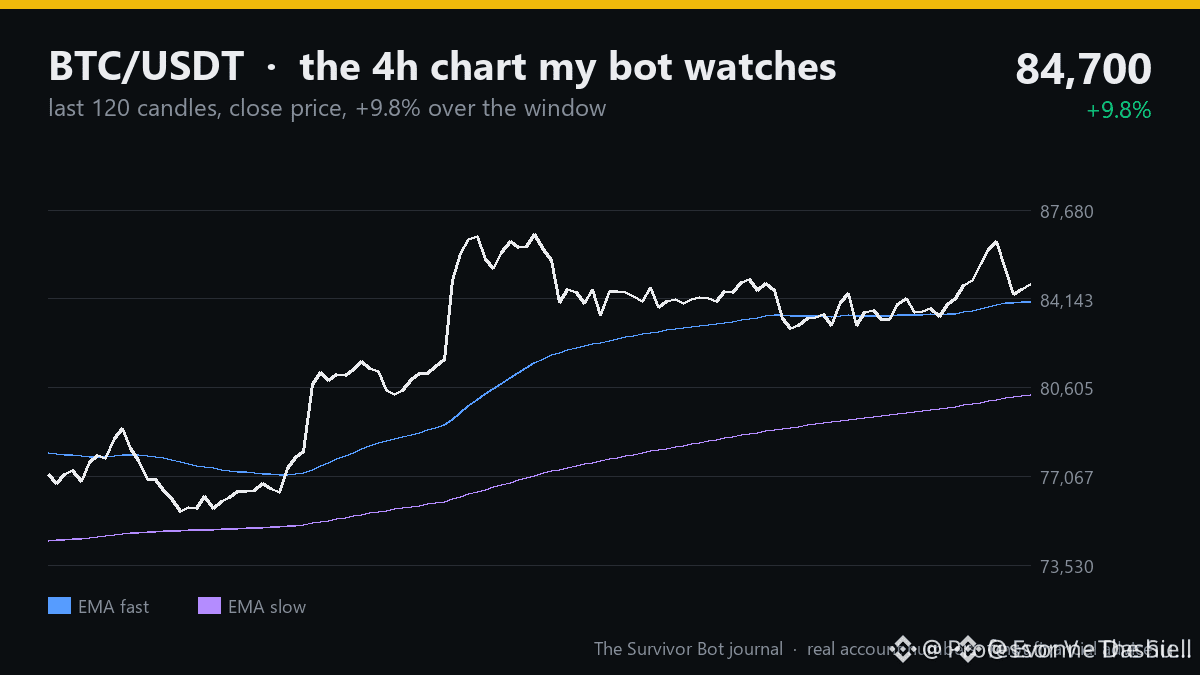
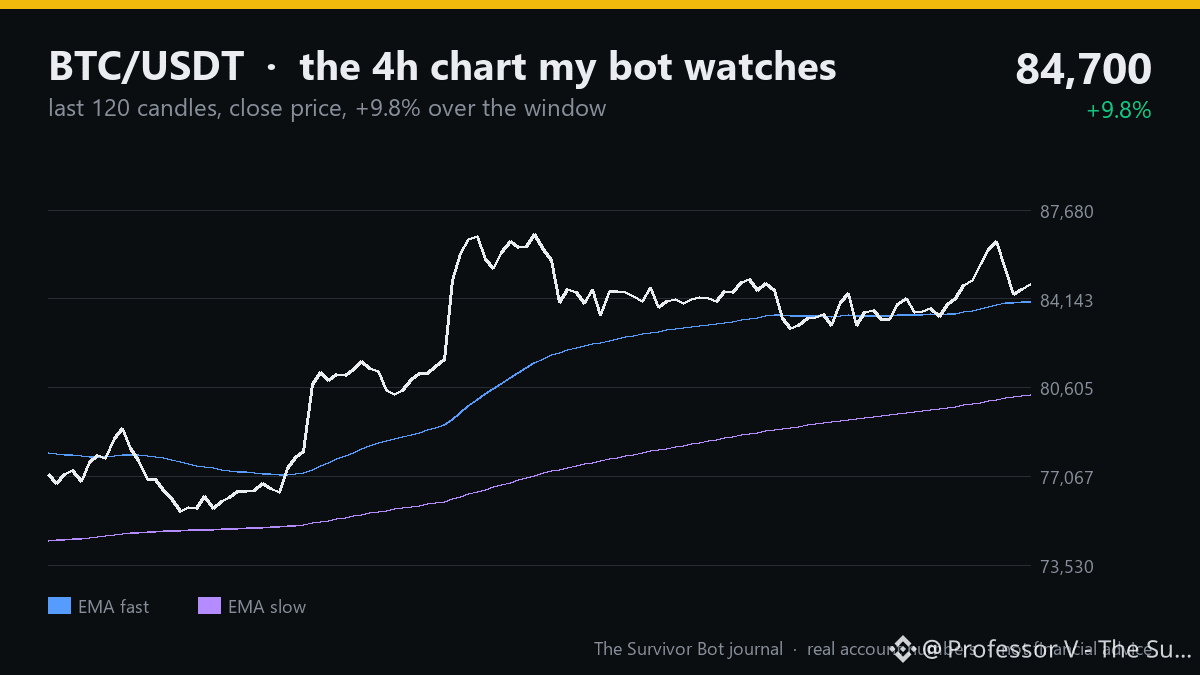
$BTC $84,570 uptrend, news mood risk-on +0.17
Live updates: Bitcoin reverses big early gains following soft U.S. jobs data.
BTC 4-hour trend is uptrend and daily bias stays up.
NEAR entry 4.893 now 4.718, stop 3.565 --3.6% PnL.
$ARB entry 0.2039 now 0.1977, stop 0.1362 --3.0% PnL.
$NIGHT entry 0.0444 now 0.0512, stop 0.0404 +15.3% PnL.
MOVR entry 2.287 now 1.809, stop 2.083 --20.9% PnL.
With BTC bias up, the bot will only add new long alts if news mood stays risk-on; today it holds current positions and trails stops as programmed.
Levels I’m watching on NEAR: entry 4.893, stop 3.565.
Follow: the bot's real number lands at 20:00 IST every day, win or lose.
#BitcoinParesGainsAfterRallyTo$86.5K #TheSurvivorBot
#BitcoinParesGainsAfterRallyTo$86.5K
$BTC $84,570 uptrend, news mood risk-on +0.17
Live updates: Bitcoin reverses big early gains following soft U.S. jobs data.
BTC 4-hour trend is uptrend and daily bias stays up.
NEAR entry 4.893 now 4.718, stop 3.565 --3.6% PnL.
$ARB entry 0.2039 now 0.1977, stop 0.1362 --3.0% PnL.
$NIGHT entry 0.0444 now 0.0512, stop 0.0404 +15.3% PnL.
MOVR entry 2.287 now 1.809, stop 2.083 --20.9% PnL.
With BTC bias up, the bot will only add new long alts if news mood stays risk-on; today it holds current positions and trails stops as programmed.
Levels I’m watching on NEAR: entry 4.893, stop 3.565.
Follow: the bot's real number lands at 20:00 IST every day, win or lose.
#BitcoinParesGainsAfterRallyTo$86.5K #TheSurvivorBot
$BTC $84,570 uptrend, news mood risk-on +0.17
Live updates: Bitcoin reverses big early gains following soft U.S. jobs data.
BTC 4-hour trend is uptrend and daily bias stays up.
NEAR entry 4.893 now 4.718, stop 3.565 --3.6% PnL.
$ARB entry 0.2039 now 0.1977, stop 0.1362 --3.0% PnL.
$NIGHT entry 0.0444 now 0.0512, stop 0.0404 +15.3% PnL.
MOVR entry 2.287 now 1.809, stop 2.083 --20.9% PnL.
With BTC bias up, the bot will only add new long alts if news mood stays risk-on; today it holds current positions and trails stops as programmed.
Levels I’m watching on NEAR: entry 4.893, stop 3.565.
Follow: the bot's real number lands at 20:00 IST every day, win or lose.
#BitcoinParesGainsAfterRallyTo$86.5K #TheSurvivorBot
112

·
--
Bitcoin dipped after rising to $865,000, with the latest quote at $852,000, down 2.3% over the past 24 hours. The fluctuation occurred as the total global cryptocurrency market capitalization surpassed $2.9 trillion. Institutional data shows that during this rally, Bitcoin’s cumulative gain exceeded 15%, but the pullback at high levels indicates profit-taking pressure in the market. #BitcoinParesGainsAfterRallyTo$86.5K $BTC
#BTC
Bitcoin dipped after rising to $865,000, with the latest quote at $852,000, down 2.3% over the past 24 hours. The fluctuation occurred as the total global cryptocurrency market capitalization surpassed $2.9 trillion. Institutional data shows that during this rally, Bitcoin’s cumulative gain exceeded 15%, but the pullback at high levels indicates profit-taking pressure in the market. #BitcoinParesGainsAfterRallyTo$86.5K $BTC
#BTC
#BTC
9

·
--
This pullback is just retail getting shaken out 📉
most people buy high and panic at the first red candle
smart money looks for liquidity pools to sweep
this changes your execution from chasing momentum to waiting for retests
im sitting on my hands until the range forms again ⏳
a high volume dump through local support proves me wrong instantly
bullish or bearish
#BitcoinParesGainsAfterRallyTo$86.5K #CryptoNews
This pullback is just retail getting shaken out 📉
most people buy high and panic at the first red candle
smart money looks for liquidity pools to sweep
this changes your execution from chasing momentum to waiting for retests
im sitting on my hands until the range forms again ⏳
a high volume dump through local support proves me wrong instantly
bullish or bearish
#BitcoinParesGainsAfterRallyTo$86.5K #CryptoNews
most people buy high and panic at the first red candle
smart money looks for liquidity pools to sweep
this changes your execution from chasing momentum to waiting for retests
im sitting on my hands until the range forms again ⏳
a high volume dump through local support proves me wrong instantly
bullish or bearish
#BitcoinParesGainsAfterRallyTo$86.5K #CryptoNews
11
🚨 Bitcoin's recent rally to $86.5K was exhilarating, but the pullback has many wondering if this is a correction or a sign of weakness. With altcoins like #SAND surging, are we witnessing a shift in market dominance? 💡 Let's discuss! #BitcoinParesGainsAfterRallyTo$86.5K
$BTC
🚀 Like + Follow si quieres más contenido como este!
🚨 Bitcoin's recent rally to $86.5K was exhilarating, but the pullback has many wondering if this is a correction or a sign of weakness. With altcoins like #SAND surging, are we witnessing a shift in market dominance? 💡 Let's discuss! #BitcoinParesGainsAfterRallyTo$86.5K
$BTC
🚀 Like + Follow si quieres más contenido como este!
$BTC
🚀 Like + Follow si quieres más contenido como este!
11

·
--
Bullish
My friends: you look very happy 😊.
Are you taking something.... ?
Me: $BTC is going to $90k 🥂🤑💸
#BitcoinParesGainsAfterRallyTo
My friends: you look very happy 😊.
Are you taking something.... ?
Me: $BTC is going to $90k 🥂🤑💸
#BitcoinParesGainsAfterRallyTo
Are you taking something.... ?
Me: $BTC is going to $90k 🥂🤑💸
#BitcoinParesGainsAfterRallyTo
69
Nonfarm payrolls surprise lower by only 29,000; Bitcoin rockets past $86,000; the SEC clears a 3x leveraged ETF, igniting Wall Street
1. Employment data far under expectations, sharply boosting rate-cut odds
The U.S. Department of Labor’s September nonfarm payrolls report shocked the market: only 29,000 jobs were added, far below the market forecast of 90,000, and the prior figure was revised down from 133,000. The unemployment rate climbed in tandem to 4.2%, higher than the expected 4.1%. After this was released—widely described as the weakest employment report in recent years—markets quickly repriced the Fed’s rate-cut path. Bond yields fell sharply and risk assets rebounded across the board.
After the data came out, Bitcoin surged from around $84,000 to above $87,000; within 24 hours, it gained more than 3%. Major cryptocurrencies such as Ethereum and Solana also moved higher in sync. Bullish sentiment toward Bitcoin in the Square community notably warmed: in the past 24 hours, mentions approached 30,000 times, and the number of unique authors was close to 10,000, signaling that market participants are paying close attention to the macro shift.
2. SEC approves 3x leveraged Bitcoin and Ethereum ETFs; institutional products hit a new ceiling
This week, the U.S. Securities and Exchange Commission approved listing rules for six 3x leveraged Bitcoin and Ethereum exchange-traded products submitted by Volatility Shares, covering the Chicago Board Options Exchange’s BZX platform. Bloomberg ETF analyst Eric Balchunas called this a major breakthrough in the productization of crypto market products. Although the products still need to complete S-1 registration before they can trade officially, this regulatory signal shows that U.S. regulators’ stance toward crypto derivatives is shifting from cautious observation to conditional openness.
The approval of 3x leveraged ETFs means traditional investors can gain higher exposure to crypto through familiar brokerage accounts, which could significantly expand the potential pool of capital in the crypto market. At the same time, it also implies higher volatility risk—best suited for more mature investors who fully understand derivatives.
3. Tokenized stocks on BNB Chain surpass a $1 billion milestone; on-chain U.S. stocks enter a new era
BNB Chain became the first blockchain globally where the total value of tokenized stocks and ETFs surpassed $1 billion. It holds roughly 30% of the $37 billion global tokenized market. This milestone marks a shift of real-world asset tokenization from proof of concept toward large-scale, practical deployment. Meanwhile, Base Chain also added 26 tokenized stocks, including those of Nvidia and Netflix, offering around-the-clock trading services.
The core appeal of tokenized U.S. stocks lies in breaking traditional trading-time constraints, enabling global investors to trade U.S. stock assets 24/7 without interruption. For investors in Asia and Europe, this means they no longer have to wait for U.S. market hours, reducing friction costs associated with cross-time-zone trading. As more public chains join the competition, the infrastructure for tokenized stocks is maturing rapidly.
4. Community banks sue the Office of the Comptroller of the Currency; crypto regulatory legal battle escalates
The Independent Community Bankers Association of the U.S. sued the Office of the Comptroller of the Currency in federal court this week, accusing it of exceeding its authority by issuing national trust bank charters to crypto firms such as Coinbase and Circle, and of failing to require them to meet full banking compliance standards. The outcome of the lawsuit could directly threaten the effectiveness of existing crypto trust charters and reshape the pathway for digital asset companies to access the U.S. banking system.
The tug-of-war on the regulatory front reflects increasingly intense interest conflicts between traditional finance and the crypto industry. For participants, regulatory uncertainty is both a risk and an opportunity—key is to closely monitor legal developments and adjust compliance strategies in a timely manner.
5. Market outlook and risk warning
Right now, the market is being driven by two forces: weakening macro data and regulators gradually opening up. Bitcoin around $86,000 faces profit-taking pressure. In the near term, attention should be paid to the strength of the $84,000 support. If employment data remains soft over the next few weeks, the probability of the Fed cutting rates within the year will rise further, which would be a mid-term tailwind for the crypto market. However, investors should also be alert to the high-volatility risks brought by leveraged ETFs, and the possibility of policy reversals triggered by the regulatory legal battle.
#BitcoinParesGainsAfterRallyTo$86.5K #USRussiaUkraineTalksReportedlyIncludeLukoilOilDeal #BNBChain
Nonfarm payrolls surprise lower by only 29,000; Bitcoin rockets past $86,000; the SEC clears a 3x leveraged ETF, igniting Wall Street
1. Employment data far under expectations, sharply boosting rate-cut odds
The U.S. Department of Labor’s September nonfarm payrolls report shocked the market: only 29,000 jobs were added, far below the market forecast of 90,000, and the prior figure was revised down from 133,000. The unemployment rate climbed in tandem to 4.2%, higher than the expected 4.1%. After this was released—widely described as the weakest employment report in recent years—markets quickly repriced the Fed’s rate-cut path. Bond yields fell sharply and risk assets rebounded across the board.
After the data came out, Bitcoin surged from around $84,000 to above $87,000; within 24 hours, it gained more than 3%. Major cryptocurrencies such as Ethereum and Solana also moved higher in sync. Bullish sentiment toward Bitcoin in the Square community notably warmed: in the past 24 hours, mentions approached 30,000 times, and the number of unique authors was close to 10,000, signaling that market participants are paying close attention to the macro shift.
2. SEC approves 3x leveraged Bitcoin and Ethereum ETFs; institutional products hit a new ceiling
This week, the U.S. Securities and Exchange Commission approved listing rules for six 3x leveraged Bitcoin and Ethereum exchange-traded products submitted by Volatility Shares, covering the Chicago Board Options Exchange’s BZX platform. Bloomberg ETF analyst Eric Balchunas called this a major breakthrough in the productization of crypto market products. Although the products still need to complete S-1 registration before they can trade officially, this regulatory signal shows that U.S. regulators’ stance toward crypto derivatives is shifting from cautious observation to conditional openness.
The approval of 3x leveraged ETFs means traditional investors can gain higher exposure to crypto through familiar brokerage accounts, which could significantly expand the potential pool of capital in the crypto market. At the same time, it also implies higher volatility risk—best suited for more mature investors who fully understand derivatives.
3. Tokenized stocks on BNB Chain surpass a $1 billion milestone; on-chain U.S. stocks enter a new era
BNB Chain became the first blockchain globally where the total value of tokenized stocks and ETFs surpassed $1 billion. It holds roughly 30% of the $37 billion global tokenized market. This milestone marks a shift of real-world asset tokenization from proof of concept toward large-scale, practical deployment. Meanwhile, Base Chain also added 26 tokenized stocks, including those of Nvidia and Netflix, offering around-the-clock trading services.
The core appeal of tokenized U.S. stocks lies in breaking traditional trading-time constraints, enabling global investors to trade U.S. stock assets 24/7 without interruption. For investors in Asia and Europe, this means they no longer have to wait for U.S. market hours, reducing friction costs associated with cross-time-zone trading. As more public chains join the competition, the infrastructure for tokenized stocks is maturing rapidly.
4. Community banks sue the Office of the Comptroller of the Currency; crypto regulatory legal battle escalates
The Independent Community Bankers Association of the U.S. sued the Office of the Comptroller of the Currency in federal court this week, accusing it of exceeding its authority by issuing national trust bank charters to crypto firms such as Coinbase and Circle, and of failing to require them to meet full banking compliance standards. The outcome of the lawsuit could directly threaten the effectiveness of existing crypto trust charters and reshape the pathway for digital asset companies to access the U.S. banking system.
The tug-of-war on the regulatory front reflects increasingly intense interest conflicts between traditional finance and the crypto industry. For participants, regulatory uncertainty is both a risk and an opportunity—key is to closely monitor legal developments and adjust compliance strategies in a timely manner.
5. Market outlook and risk warning
Right now, the market is being driven by two forces: weakening macro data and regulators gradually opening up. Bitcoin around $86,000 faces profit-taking pressure. In the near term, attention should be paid to the strength of the $84,000 support. If employment data remains soft over the next few weeks, the probability of the Fed cutting rates within the year will rise further, which would be a mid-term tailwind for the crypto market. However, investors should also be alert to the high-volatility risks brought by leveraged ETFs, and the possibility of policy reversals triggered by the regulatory legal battle.
#BitcoinParesGainsAfterRallyTo$86.5K #USRussiaUkraineTalksReportedlyIncludeLukoilOilDeal #BNBChain
1. Employment data far under expectations, sharply boosting rate-cut odds
The U.S. Department of Labor’s September nonfarm payrolls report shocked the market: only 29,000 jobs were added, far below the market forecast of 90,000, and the prior figure was revised down from 133,000. The unemployment rate climbed in tandem to 4.2%, higher than the expected 4.1%. After this was released—widely described as the weakest employment report in recent years—markets quickly repriced the Fed’s rate-cut path. Bond yields fell sharply and risk assets rebounded across the board.
After the data came out, Bitcoin surged from around $84,000 to above $87,000; within 24 hours, it gained more than 3%. Major cryptocurrencies such as Ethereum and Solana also moved higher in sync. Bullish sentiment toward Bitcoin in the Square community notably warmed: in the past 24 hours, mentions approached 30,000 times, and the number of unique authors was close to 10,000, signaling that market participants are paying close attention to the macro shift.
2. SEC approves 3x leveraged Bitcoin and Ethereum ETFs; institutional products hit a new ceiling
This week, the U.S. Securities and Exchange Commission approved listing rules for six 3x leveraged Bitcoin and Ethereum exchange-traded products submitted by Volatility Shares, covering the Chicago Board Options Exchange’s BZX platform. Bloomberg ETF analyst Eric Balchunas called this a major breakthrough in the productization of crypto market products. Although the products still need to complete S-1 registration before they can trade officially, this regulatory signal shows that U.S. regulators’ stance toward crypto derivatives is shifting from cautious observation to conditional openness.
The approval of 3x leveraged ETFs means traditional investors can gain higher exposure to crypto through familiar brokerage accounts, which could significantly expand the potential pool of capital in the crypto market. At the same time, it also implies higher volatility risk—best suited for more mature investors who fully understand derivatives.
3. Tokenized stocks on BNB Chain surpass a $1 billion milestone; on-chain U.S. stocks enter a new era
BNB Chain became the first blockchain globally where the total value of tokenized stocks and ETFs surpassed $1 billion. It holds roughly 30% of the $37 billion global tokenized market. This milestone marks a shift of real-world asset tokenization from proof of concept toward large-scale, practical deployment. Meanwhile, Base Chain also added 26 tokenized stocks, including those of Nvidia and Netflix, offering around-the-clock trading services.
The core appeal of tokenized U.S. stocks lies in breaking traditional trading-time constraints, enabling global investors to trade U.S. stock assets 24/7 without interruption. For investors in Asia and Europe, this means they no longer have to wait for U.S. market hours, reducing friction costs associated with cross-time-zone trading. As more public chains join the competition, the infrastructure for tokenized stocks is maturing rapidly.
4. Community banks sue the Office of the Comptroller of the Currency; crypto regulatory legal battle escalates
The Independent Community Bankers Association of the U.S. sued the Office of the Comptroller of the Currency in federal court this week, accusing it of exceeding its authority by issuing national trust bank charters to crypto firms such as Coinbase and Circle, and of failing to require them to meet full banking compliance standards. The outcome of the lawsuit could directly threaten the effectiveness of existing crypto trust charters and reshape the pathway for digital asset companies to access the U.S. banking system.
The tug-of-war on the regulatory front reflects increasingly intense interest conflicts between traditional finance and the crypto industry. For participants, regulatory uncertainty is both a risk and an opportunity—key is to closely monitor legal developments and adjust compliance strategies in a timely manner.
5. Market outlook and risk warning
Right now, the market is being driven by two forces: weakening macro data and regulators gradually opening up. Bitcoin around $86,000 faces profit-taking pressure. In the near term, attention should be paid to the strength of the $84,000 support. If employment data remains soft over the next few weeks, the probability of the Fed cutting rates within the year will rise further, which would be a mid-term tailwind for the crypto market. However, investors should also be alert to the high-volatility risks brought by leveraged ETFs, and the possibility of policy reversals triggered by the regulatory legal battle.
#BitcoinParesGainsAfterRallyTo$86.5K #USRussiaUkraineTalksReportedlyIncludeLukoilOilDeal #BNBChain
6

·
--
Bullish
After $BTC touched $86.5k, the market is now asking: are altcoins ready to take over, or is this just a warm-up before a correction?
BTC's rise to $86.5k is definitely a hot topic, but what’s more interesting is what’s happening behind the scenes: capital rotation is starting to show up in several altcoins. This is a classic pattern that often appears after bitcoin flexes—traders begin hunting for opportunities with potentially higher returns outside the crypto king.
Based on ARKUS data, ecosystem sentiment remains bullish on higher timeframes, but there are caution signals in the short term. The LONG signal for BTC with an engine score of 4.92 shows a bullish bias on D1 and H4, with RSI D1 at 63.3 and MACD H4 still positive.
However, the current price is still below the entry zone, and taker flow is leaning short with a ratio of 0.68. In other words, even though the bigger structure remains up, the short-term momentum is getting tired—this isn’t a moment to chase price, but a time to be patient and wait for a reclaim.
Interestingly, a dump-warning signal is showing up in some altcoins like $MOVR , $QNT , and SAND, with scores of 89, 87, and 80 respectively. These are signals from the ARKUS system indicating that there is fairly strong selling pressure on those coins. For me, this reinforces that the rotation isn’t uniform—some altcoins are actually in a distribution phase.token
This looks similar to the market condition from early last year: bitcoin led, then capital spread to altcoins with clear fundamentals, while those without catalysts were left behind. Of course, not all altcoins will join the rally. So it’s important for market participants to stay selective amid this euphoria.
From my observations, what needs to be watched is whether BTC can reclaim its entry zone area in the near term. If it does, rotation opportunities into altcoins with strong structures will become even more open. If it fails, the risk of a short-term correction could cause altcoins that already ran earlier to correct even deeper.
#bitcoinparesgainsafterrallyto $86\.5k
After $BTC touched $86.5k, the market is now asking: are altcoins ready to take over, or is this just a warm-up before a correction?
BTC's rise to $86.5k is definitely a hot topic, but what’s more interesting is what’s happening behind the scenes: capital rotation is starting to show up in several altcoins. This is a classic pattern that often appears after bitcoin flexes—traders begin hunting for opportunities with potentially higher returns outside the crypto king.
Based on ARKUS data, ecosystem sentiment remains bullish on higher timeframes, but there are caution signals in the short term. The LONG signal for BTC with an engine score of 4.92 shows a bullish bias on D1 and H4, with RSI D1 at 63.3 and MACD H4 still positive.
However, the current price is still below the entry zone, and taker flow is leaning short with a ratio of 0.68. In other words, even though the bigger structure remains up, the short-term momentum is getting tired—this isn’t a moment to chase price, but a time to be patient and wait for a reclaim.
Interestingly, a dump-warning signal is showing up in some altcoins like $MOVR , $QNT , and SAND, with scores of 89, 87, and 80 respectively. These are signals from the ARKUS system indicating that there is fairly strong selling pressure on those coins. For me, this reinforces that the rotation isn’t uniform—some altcoins are actually in a distribution phase.token
This looks similar to the market condition from early last year: bitcoin led, then capital spread to altcoins with clear fundamentals, while those without catalysts were left behind. Of course, not all altcoins will join the rally. So it’s important for market participants to stay selective amid this euphoria.
From my observations, what needs to be watched is whether BTC can reclaim its entry zone area in the near term. If it does, rotation opportunities into altcoins with strong structures will become even more open. If it fails, the risk of a short-term correction could cause altcoins that already ran earlier to correct even deeper.
#bitcoinparesgainsafterrallyto $86\.5k
BTC's rise to $86.5k is definitely a hot topic, but what’s more interesting is what’s happening behind the scenes: capital rotation is starting to show up in several altcoins. This is a classic pattern that often appears after bitcoin flexes—traders begin hunting for opportunities with potentially higher returns outside the crypto king.
Based on ARKUS data, ecosystem sentiment remains bullish on higher timeframes, but there are caution signals in the short term. The LONG signal for BTC with an engine score of 4.92 shows a bullish bias on D1 and H4, with RSI D1 at 63.3 and MACD H4 still positive.
However, the current price is still below the entry zone, and taker flow is leaning short with a ratio of 0.68. In other words, even though the bigger structure remains up, the short-term momentum is getting tired—this isn’t a moment to chase price, but a time to be patient and wait for a reclaim.
Interestingly, a dump-warning signal is showing up in some altcoins like $MOVR , $QNT , and SAND, with scores of 89, 87, and 80 respectively. These are signals from the ARKUS system indicating that there is fairly strong selling pressure on those coins. For me, this reinforces that the rotation isn’t uniform—some altcoins are actually in a distribution phase.token
This looks similar to the market condition from early last year: bitcoin led, then capital spread to altcoins with clear fundamentals, while those without catalysts were left behind. Of course, not all altcoins will join the rally. So it’s important for market participants to stay selective amid this euphoria.
From my observations, what needs to be watched is whether BTC can reclaim its entry zone area in the near term. If it does, rotation opportunities into altcoins with strong structures will become even more open. If it fails, the risk of a short-term correction could cause altcoins that already ran earlier to correct even deeper.
#bitcoinparesgainsafterrallyto $86\.5k
90
Nonfarm payrolls came in as a surprise: only up 29,000, with rate-cut expectations surging; tokenized US stocks break through the $1 billion mark
1. US employment data significantly underwhelms expectations, shaking the market
The latest September nonfarm payroll figures released by the US Department of Labor left the market stunned. New nonfarm payrolls rose by only 29,000—far below the market expectation of 90,000—and dropped sharply from the prior figure of 133,000. At the same time, the unemployment rate climbed to 4.2%, also above the market forecast of 4.1%. Market participants generally interpreted this employment report as an important signal that the US economy is slowing.
After the data was released, expectations for the Federal Reserve to cut rates within the year rapidly heated up. Traders increased their bets that the Fed would deliver consecutive rate cuts at its upcoming meetings. For a time after the announcement, Bitcoin surged to above $86,500, reflecting how sensitive crypto assets are to expectations of easier macro liquidity. However, the gains later narrowed due to geopolitical tensions.
2. Tokenized US stocks reach a historic milestone
Against a backdrop of volatility in macro markets, the tokenized US stocks space brought major good news. BNB Chain became the world’s first blockchain network to exceed a total market capitalization of $1 billion for tokenized stocks and ETFs, accounting for roughly 30% of the global $37 billion tokenized market. This milestone signals that the development of on-chain real-world assets has entered a brand-new phase.
Meanwhile, the Base network also added 26 tokenized stocks, including those from Nvidia and Netflix, supporting 24/7 trading. Multiple major blockchain platforms moved in sync, indicating that institutional acceptance of tokenized stocks is accelerating. The integration of traditional finance and blockchain is no longer just a concept—it is becoming reality. Investors can now trade US stock assets on-chain with lower barriers and faster execution, which has far-reaching significance for improving the efficiency of global capital flows.
3. Sudden upheaval in the AI race: Cerebras plunges nearly 20%
In the AI sector, a major piece of news triggered a sharp market reaction. Reports say Nvidia will provide compute power support for OpenAI. The news directly caused the AI chip startup Cerebras’ share price to tumble by nearly 20%. The market’s concerns about Cerebras’ competitive outlook intensified, because Nvidia’s deep ties with OpenAI suggest that the concentration effect at the top end of the AI compute market will become even stronger.
The incident also reflects the harsh competitive landscape currently facing the AI industry. As major tech companies lock down compute resources, smaller and mid-sized AI firms face mounting survival pressure. Investors positioning themselves in the AI space need to pay closer attention to companies’ core competitive advantages and differentiation capabilities—not just chase the headlines.
4. Regulatory environment continues to improve; institutions move in faster
The US Securities and Exchange Commission has been making frequent moves. It has not only approved the listing of 3x leveraged Bitcoin and Ethereum ETFs, but also proposed new regulatory rules establishing a crypto-asset custody framework for investment advisers. These steps provide a clearer compliance pathway for institutional investors to enter the crypto market.
Bloomberg analysts called the approval of 3x leveraged ETFs a milestone win for crypto derivatives products, while the new custody framework fills a longstanding regulatory gap regarding how funds hold digital assets. Ongoing improvements in the regulatory environment are bringing more traditional financial capital into the crypto market, which is a major positive for the industry’s long-term development.
5. Outlook for the next phase
Overall, the market is currently at a critical point where multiple factors intersect. Weak employment data reinforces rate-cut expectations, which benefits risk assets. The rapid growth of tokenized US stocks provides traditional investors with a new entry channel, while the divergence in the AI sector is a reminder to select targets carefully. With regulation gradually becoming clearer, the integration of crypto and traditional finance will continue to deepen. Investors should closely monitor macro policy direction and developments within the industry.
#BitcoinParesGainsAfterRallyTo$86.5K #CerebrasSinksNearly20%OnReportNvidiaToPowerOpenAI #BNBChainTokenizedStocks
Nonfarm payrolls came in as a surprise: only up 29,000, with rate-cut expectations surging; tokenized US stocks break through the $1 billion mark
1. US employment data significantly underwhelms expectations, shaking the market
The latest September nonfarm payroll figures released by the US Department of Labor left the market stunned. New nonfarm payrolls rose by only 29,000—far below the market expectation of 90,000—and dropped sharply from the prior figure of 133,000. At the same time, the unemployment rate climbed to 4.2%, also above the market forecast of 4.1%. Market participants generally interpreted this employment report as an important signal that the US economy is slowing.
After the data was released, expectations for the Federal Reserve to cut rates within the year rapidly heated up. Traders increased their bets that the Fed would deliver consecutive rate cuts at its upcoming meetings. For a time after the announcement, Bitcoin surged to above $86,500, reflecting how sensitive crypto assets are to expectations of easier macro liquidity. However, the gains later narrowed due to geopolitical tensions.
2. Tokenized US stocks reach a historic milestone
Against a backdrop of volatility in macro markets, the tokenized US stocks space brought major good news. BNB Chain became the world’s first blockchain network to exceed a total market capitalization of $1 billion for tokenized stocks and ETFs, accounting for roughly 30% of the global $37 billion tokenized market. This milestone signals that the development of on-chain real-world assets has entered a brand-new phase.
Meanwhile, the Base network also added 26 tokenized stocks, including those from Nvidia and Netflix, supporting 24/7 trading. Multiple major blockchain platforms moved in sync, indicating that institutional acceptance of tokenized stocks is accelerating. The integration of traditional finance and blockchain is no longer just a concept—it is becoming reality. Investors can now trade US stock assets on-chain with lower barriers and faster execution, which has far-reaching significance for improving the efficiency of global capital flows.
3. Sudden upheaval in the AI race: Cerebras plunges nearly 20%
In the AI sector, a major piece of news triggered a sharp market reaction. Reports say Nvidia will provide compute power support for OpenAI. The news directly caused the AI chip startup Cerebras’ share price to tumble by nearly 20%. The market’s concerns about Cerebras’ competitive outlook intensified, because Nvidia’s deep ties with OpenAI suggest that the concentration effect at the top end of the AI compute market will become even stronger.
The incident also reflects the harsh competitive landscape currently facing the AI industry. As major tech companies lock down compute resources, smaller and mid-sized AI firms face mounting survival pressure. Investors positioning themselves in the AI space need to pay closer attention to companies’ core competitive advantages and differentiation capabilities—not just chase the headlines.
4. Regulatory environment continues to improve; institutions move in faster
The US Securities and Exchange Commission has been making frequent moves. It has not only approved the listing of 3x leveraged Bitcoin and Ethereum ETFs, but also proposed new regulatory rules establishing a crypto-asset custody framework for investment advisers. These steps provide a clearer compliance pathway for institutional investors to enter the crypto market.
Bloomberg analysts called the approval of 3x leveraged ETFs a milestone win for crypto derivatives products, while the new custody framework fills a longstanding regulatory gap regarding how funds hold digital assets. Ongoing improvements in the regulatory environment are bringing more traditional financial capital into the crypto market, which is a major positive for the industry’s long-term development.
5. Outlook for the next phase
Overall, the market is currently at a critical point where multiple factors intersect. Weak employment data reinforces rate-cut expectations, which benefits risk assets. The rapid growth of tokenized US stocks provides traditional investors with a new entry channel, while the divergence in the AI sector is a reminder to select targets carefully. With regulation gradually becoming clearer, the integration of crypto and traditional finance will continue to deepen. Investors should closely monitor macro policy direction and developments within the industry.
#BitcoinParesGainsAfterRallyTo$86.5K #CerebrasSinksNearly20%OnReportNvidiaToPowerOpenAI #BNBChainTokenizedStocks
1. US employment data significantly underwhelms expectations, shaking the market
The latest September nonfarm payroll figures released by the US Department of Labor left the market stunned. New nonfarm payrolls rose by only 29,000—far below the market expectation of 90,000—and dropped sharply from the prior figure of 133,000. At the same time, the unemployment rate climbed to 4.2%, also above the market forecast of 4.1%. Market participants generally interpreted this employment report as an important signal that the US economy is slowing.
After the data was released, expectations for the Federal Reserve to cut rates within the year rapidly heated up. Traders increased their bets that the Fed would deliver consecutive rate cuts at its upcoming meetings. For a time after the announcement, Bitcoin surged to above $86,500, reflecting how sensitive crypto assets are to expectations of easier macro liquidity. However, the gains later narrowed due to geopolitical tensions.
2. Tokenized US stocks reach a historic milestone
Against a backdrop of volatility in macro markets, the tokenized US stocks space brought major good news. BNB Chain became the world’s first blockchain network to exceed a total market capitalization of $1 billion for tokenized stocks and ETFs, accounting for roughly 30% of the global $37 billion tokenized market. This milestone signals that the development of on-chain real-world assets has entered a brand-new phase.
Meanwhile, the Base network also added 26 tokenized stocks, including those from Nvidia and Netflix, supporting 24/7 trading. Multiple major blockchain platforms moved in sync, indicating that institutional acceptance of tokenized stocks is accelerating. The integration of traditional finance and blockchain is no longer just a concept—it is becoming reality. Investors can now trade US stock assets on-chain with lower barriers and faster execution, which has far-reaching significance for improving the efficiency of global capital flows.
3. Sudden upheaval in the AI race: Cerebras plunges nearly 20%
In the AI sector, a major piece of news triggered a sharp market reaction. Reports say Nvidia will provide compute power support for OpenAI. The news directly caused the AI chip startup Cerebras’ share price to tumble by nearly 20%. The market’s concerns about Cerebras’ competitive outlook intensified, because Nvidia’s deep ties with OpenAI suggest that the concentration effect at the top end of the AI compute market will become even stronger.
The incident also reflects the harsh competitive landscape currently facing the AI industry. As major tech companies lock down compute resources, smaller and mid-sized AI firms face mounting survival pressure. Investors positioning themselves in the AI space need to pay closer attention to companies’ core competitive advantages and differentiation capabilities—not just chase the headlines.
4. Regulatory environment continues to improve; institutions move in faster
The US Securities and Exchange Commission has been making frequent moves. It has not only approved the listing of 3x leveraged Bitcoin and Ethereum ETFs, but also proposed new regulatory rules establishing a crypto-asset custody framework for investment advisers. These steps provide a clearer compliance pathway for institutional investors to enter the crypto market.
Bloomberg analysts called the approval of 3x leveraged ETFs a milestone win for crypto derivatives products, while the new custody framework fills a longstanding regulatory gap regarding how funds hold digital assets. Ongoing improvements in the regulatory environment are bringing more traditional financial capital into the crypto market, which is a major positive for the industry’s long-term development.
5. Outlook for the next phase
Overall, the market is currently at a critical point where multiple factors intersect. Weak employment data reinforces rate-cut expectations, which benefits risk assets. The rapid growth of tokenized US stocks provides traditional investors with a new entry channel, while the divergence in the AI sector is a reminder to select targets carefully. With regulation gradually becoming clearer, the integration of crypto and traditional finance will continue to deepen. Investors should closely monitor macro policy direction and developments within the industry.
#BitcoinParesGainsAfterRallyTo$86.5K #CerebrasSinksNearly20%OnReportNvidiaToPowerOpenAI #BNBChainTokenizedStocks
5
The odds of a Fed rate hike in October just crashed to 17%, yet that's often the exact setup where crypto traders get rekt the hardest.
You've been there. Piling into positions on the back of dovish headlines only to watch everything unwind when the actual data hits, leaving you staring at red while $USDT dominance climbs.
When those hike odds fall this sharply, it means the market is pricing in a high chance the Fed holds rates steady, which should theoretically send more capital into risk-on plays like $BTC. People start rotating out of $USDT into alts expecting the liquidity wave. The problem is this move is frequently already baked in by the time the number prints, and any hotter-than-expected inflation reading can flip the script in hours. Names like $QNT have been wrecked in similar setups where the good news wasn't quite good enough to hold the pumps.
Greed is sitting at 67 right now, which usually means the crowd is too comfortable. If Powell sounds even slightly hawkish next week, we could see a sharp unwind that catches a lot of late longs.
Where do you think this goes from here if the data doesn't cooperate?
#FedOctoberRateHikeOddsFallTo17 #BitcoinParesGainsAfterRallyTo #BitcoinRejectedAt
The odds of a Fed rate hike in October just crashed to 17%, yet that's often the exact setup where crypto traders get rekt the hardest.
You've been there. Piling into positions on the back of dovish headlines only to watch everything unwind when the actual data hits, leaving you staring at red while $USDT dominance climbs.
When those hike odds fall this sharply, it means the market is pricing in a high chance the Fed holds rates steady, which should theoretically send more capital into risk-on plays like $BTC . People start rotating out of $USDT into alts expecting the liquidity wave. The problem is this move is frequently already baked in by the time the number prints, and any hotter-than-expected inflation reading can flip the script in hours. Names like $QNT have been wrecked in similar setups where the good news wasn't quite good enough to hold the pumps.
Greed is sitting at 67 right now, which usually means the crowd is too comfortable. If Powell sounds even slightly hawkish next week, we could see a sharp unwind that catches a lot of late longs.
Where do you think this goes from here if the data doesn't cooperate?
#FedOctoberRateHikeOddsFallTo17 #BitcoinParesGainsAfterRallyTo #BitcoinRejectedAt
You've been there. Piling into positions on the back of dovish headlines only to watch everything unwind when the actual data hits, leaving you staring at red while $USDT dominance climbs.
When those hike odds fall this sharply, it means the market is pricing in a high chance the Fed holds rates steady, which should theoretically send more capital into risk-on plays like $BTC . People start rotating out of $USDT into alts expecting the liquidity wave. The problem is this move is frequently already baked in by the time the number prints, and any hotter-than-expected inflation reading can flip the script in hours. Names like $QNT have been wrecked in similar setups where the good news wasn't quite good enough to hold the pumps.
Greed is sitting at 67 right now, which usually means the crowd is too comfortable. If Powell sounds even slightly hawkish next week, we could see a sharp unwind that catches a lot of late longs.
Where do you think this goes from here if the data doesn't cooperate?
#FedOctoberRateHikeOddsFallTo17 #BitcoinParesGainsAfterRallyTo #BitcoinRejectedAt

70
·
--
Everyone thinks rate hike odds collapsing to 17 percent gives an instant green light to go all in on leverage, but actually, markets love setting traps right when macro conditions look most obvious.
Too many traders rush to front-run monetary policy shifts only to get completely wiped out by short-term liquidity squeezes and sudden fakeouts before the actual trend establishes itself.
Think of macro shifts like turning a massive cargo ship. Even when the captain eases off the throttle, the ship still carries immense forward momentum for miles. When rate pressure eases, liquidity does not magically flood all risk assets overnight, yet people blindly rotate their $USDT into volatile plays without watching real volume support.
Right now, projects like $WLD or infrastructure plays like $QNT might catch speculative bursts, but chasing every green candle while the broader sentiment sits in greed territory is how accounts bleed out slowly. Instead of trying to guess the exact pivot candle, smart capital usually waits for retests and keeps dry powder ready for true structural shifts.
Where do you think liquidity flows first if macro headwinds continue to soften?
#FedOctoberRateHikeOddsFallTo17 #BitcoinParesGainsAfterRallyTo
Everyone thinks rate hike odds collapsing to 17 percent gives an instant green light to go all in on leverage, but actually, markets love setting traps right when macro conditions look most obvious.
Too many traders rush to front-run monetary policy shifts only to get completely wiped out by short-term liquidity squeezes and sudden fakeouts before the actual trend establishes itself.
Think of macro shifts like turning a massive cargo ship. Even when the captain eases off the throttle, the ship still carries immense forward momentum for miles. When rate pressure eases, liquidity does not magically flood all risk assets overnight, yet people blindly rotate their $USDT into volatile plays without watching real volume support.
Right now, projects like $WLD or infrastructure plays like $QNT might catch speculative bursts, but chasing every green candle while the broader sentiment sits in greed territory is how accounts bleed out slowly. Instead of trying to guess the exact pivot candle, smart capital usually waits for retests and keeps dry powder ready for true structural shifts.
Where do you think liquidity flows first if macro headwinds continue to soften?
#FedOctoberRateHikeOddsFallTo17 #BitcoinParesGainsAfterRallyTo
Too many traders rush to front-run monetary policy shifts only to get completely wiped out by short-term liquidity squeezes and sudden fakeouts before the actual trend establishes itself.
Think of macro shifts like turning a massive cargo ship. Even when the captain eases off the throttle, the ship still carries immense forward momentum for miles. When rate pressure eases, liquidity does not magically flood all risk assets overnight, yet people blindly rotate their $USDT into volatile plays without watching real volume support.
Right now, projects like $WLD or infrastructure plays like $QNT might catch speculative bursts, but chasing every green candle while the broader sentiment sits in greed territory is how accounts bleed out slowly. Instead of trying to guess the exact pivot candle, smart capital usually waits for retests and keeps dry powder ready for true structural shifts.
Where do you think liquidity flows first if macro headwinds continue to soften?
#FedOctoberRateHikeOddsFallTo17 #BitcoinParesGainsAfterRallyTo

103
Have you noticed why nobody is talking about $MASK hitting a record market cap while the timeline stays glued to $BTC?
Most traders are still paying the FOMO tax. They wait until a move looks obvious, buy the high, then have no idea when to exit once the rotation starts.
$MASK makes a clean case study right now. This token has real product behind it with privacy tools and decentralized social features that actually get used. In a market sitting at 67 on the greed index, a lot of names are moving on nothing but liquidity. MASK printing a new market cap high feels more like usage meeting capital than empty hype. You see similar searches around $ICP but the MASK move has a different texture to it.
Records like this also tend to mark the point where late buyers get trapped. $BTC has already started pairing some of those rally gains. If that pressure continues, even projects with actual traction can give back a lot of the move. That's the part the greed crowd never wants to hear until it's too late.
Where do you think this $MASK run goes once the index cools off?
#MASKHitsRecordMarketCapAbove #BitcoinParesGainsAfterRallyTo
Have you noticed why nobody is talking about $MASK hitting a record market cap while the timeline stays glued to $BTC ?
Most traders are still paying the FOMO tax. They wait until a move looks obvious, buy the high, then have no idea when to exit once the rotation starts.
$MASK makes a clean case study right now. This token has real product behind it with privacy tools and decentralized social features that actually get used. In a market sitting at 67 on the greed index, a lot of names are moving on nothing but liquidity. MASK printing a new market cap high feels more like usage meeting capital than empty hype. You see similar searches around $ICP but the MASK move has a different texture to it.
Records like this also tend to mark the point where late buyers get trapped. $BTC has already started pairing some of those rally gains. If that pressure continues, even projects with actual traction can give back a lot of the move. That's the part the greed crowd never wants to hear until it's too late.
Where do you think this $MASK run goes once the index cools off?
#MASKHitsRecordMarketCapAbove #BitcoinParesGainsAfterRallyTo
Most traders are still paying the FOMO tax. They wait until a move looks obvious, buy the high, then have no idea when to exit once the rotation starts.
$MASK makes a clean case study right now. This token has real product behind it with privacy tools and decentralized social features that actually get used. In a market sitting at 67 on the greed index, a lot of names are moving on nothing but liquidity. MASK printing a new market cap high feels more like usage meeting capital than empty hype. You see similar searches around $ICP but the MASK move has a different texture to it.
Records like this also tend to mark the point where late buyers get trapped. $BTC has already started pairing some of those rally gains. If that pressure continues, even projects with actual traction can give back a lot of the move. That's the part the greed crowd never wants to hear until it's too late.
Where do you think this $MASK run goes once the index cools off?
#MASKHitsRecordMarketCapAbove #BitcoinParesGainsAfterRallyTo

31
·
--
A cartoon frog is now one SEC filing closer to an ETF than most real projects will ever get.
You know the feeling. Headline drops, $PEPE rips, you chase it, then the move fades and you're left wondering why you keep doing this to yourself.
Canary amending their S-1 is just them answering questions and tightening the documents. It is not approval. Bitcoin went through this for over a decade before spot ETFs actually launched and started pulling in billions. Ethereum followed the same slow path. A meme coin trying the same route in a greed market tells you more about where we are in the cycle than about $PEPE itself.
I have lived through enough of these. 2017, 2021, now this. The filings that matter take years and still might fail. The ones that print money are the ones nobody expected until the money was already moving. Right now people are hunting $USDT and $SAND like they cannot sit still. That restlessness usually shows up near turning points.
Where do you think this PEPE ETF story actually ends?
#CanaryFilesAmendedS1ForPEPEETF #ZcashETFPostsFirstWeeklyOutflow #BitcoinParesGainsAfterRallyTo
A cartoon frog is now one SEC filing closer to an ETF than most real projects will ever get.
You know the feeling. Headline drops, $PEPE rips, you chase it, then the move fades and you're left wondering why you keep doing this to yourself.
Canary amending their S-1 is just them answering questions and tightening the documents. It is not approval. Bitcoin went through this for over a decade before spot ETFs actually launched and started pulling in billions. Ethereum followed the same slow path. A meme coin trying the same route in a greed market tells you more about where we are in the cycle than about $PEPE itself.
I have lived through enough of these. 2017, 2021, now this. The filings that matter take years and still might fail. The ones that print money are the ones nobody expected until the money was already moving. Right now people are hunting $USDT and $SAND like they cannot sit still. That restlessness usually shows up near turning points.
Where do you think this PEPE ETF story actually ends?
#CanaryFilesAmendedS1ForPEPEETF #ZcashETFPostsFirstWeeklyOutflow #BitcoinParesGainsAfterRallyTo
You know the feeling. Headline drops, $PEPE rips, you chase it, then the move fades and you're left wondering why you keep doing this to yourself.
Canary amending their S-1 is just them answering questions and tightening the documents. It is not approval. Bitcoin went through this for over a decade before spot ETFs actually launched and started pulling in billions. Ethereum followed the same slow path. A meme coin trying the same route in a greed market tells you more about where we are in the cycle than about $PEPE itself.
I have lived through enough of these. 2017, 2021, now this. The filings that matter take years and still might fail. The ones that print money are the ones nobody expected until the money was already moving. Right now people are hunting $USDT and $SAND like they cannot sit still. That restlessness usually shows up near turning points.
Where do you think this PEPE ETF story actually ends?
#CanaryFilesAmendedS1ForPEPEETF #ZcashETFPostsFirstWeeklyOutflow #BitcoinParesGainsAfterRallyTo

72
·
--
Here's what happened when Nvidia printed a fresh record high while most of crypto was still glued to $BTC charts waiting for a breakout that never quite arrived.
We've all been there. NVDA ticks up, the AI narrative catches fire, and you FOMO into the nearest compute token only to get wrecked on the pullback because you never decided when to actually take profit.
Nvidia's latest high is a clean case study in how traditional markets still set the pace for the entire AI story. Data-center demand for their chips remains relentless as hyperscalers race to train the next wave of models. We saw this exact setup in 2023. NVDA started its monster run first, then crypto AI names followed with a lag, overshot wildly, and gave most of it back. This time $WLD is quietly building identity rails for that same AI future while $QNT keeps focusing on the enterprise plumbing that actually has to function at scale.
The pattern keeps repeating. A 2 percent pop to a new high on Nvidia does not mean your bags rip overnight. The real tell is whether on-chain usage in these projects starts matching the hardware demand instead of just reacting to the stock ticker. Last cycle that gap between Nvidia's move and crypto's overreaction taught a lot of people expensive lessons about timing and exits.
Where do you think this Nvidia run actually spills into our market from here?
#NvidiaHitsRecordHighUp2 #BitcoinParesGainsAfterRallyTo #BitcoinRejectedAt
Here's what happened when Nvidia printed a fresh record high while most of crypto was still glued to $BTC charts waiting for a breakout that never quite arrived.
We've all been there. NVDA ticks up, the AI narrative catches fire, and you FOMO into the nearest compute token only to get wrecked on the pullback because you never decided when to actually take profit.
Nvidia's latest high is a clean case study in how traditional markets still set the pace for the entire AI story. Data-center demand for their chips remains relentless as hyperscalers race to train the next wave of models. We saw this exact setup in 2023. NVDA started its monster run first, then crypto AI names followed with a lag, overshot wildly, and gave most of it back. This time $WLD is quietly building identity rails for that same AI future while $QNT keeps focusing on the enterprise plumbing that actually has to function at scale.
The pattern keeps repeating. A 2 percent pop to a new high on Nvidia does not mean your bags rip overnight. The real tell is whether on-chain usage in these projects starts matching the hardware demand instead of just reacting to the stock ticker. Last cycle that gap between Nvidia's move and crypto's overreaction taught a lot of people expensive lessons about timing and exits.
Where do you think this Nvidia run actually spills into our market from here?
#NvidiaHitsRecordHighUp2 #BitcoinParesGainsAfterRallyTo #BitcoinRejectedAt
We've all been there. NVDA ticks up, the AI narrative catches fire, and you FOMO into the nearest compute token only to get wrecked on the pullback because you never decided when to actually take profit.
Nvidia's latest high is a clean case study in how traditional markets still set the pace for the entire AI story. Data-center demand for their chips remains relentless as hyperscalers race to train the next wave of models. We saw this exact setup in 2023. NVDA started its monster run first, then crypto AI names followed with a lag, overshot wildly, and gave most of it back. This time $WLD is quietly building identity rails for that same AI future while $QNT keeps focusing on the enterprise plumbing that actually has to function at scale.
The pattern keeps repeating. A 2 percent pop to a new high on Nvidia does not mean your bags rip overnight. The real tell is whether on-chain usage in these projects starts matching the hardware demand instead of just reacting to the stock ticker. Last cycle that gap between Nvidia's move and crypto's overreaction taught a lot of people expensive lessons about timing and exits.
Where do you think this Nvidia run actually spills into our market from here?
#NvidiaHitsRecordHighUp2 #BitcoinParesGainsAfterRallyTo #BitcoinRejectedAt
168
Picture this: diplomatic rumors leak that US, Russia, and Ukraine talks might quietly package a Lukoil oil settlement, and suddenly macro traders rewrite their entire fourth-quarter playbook in an afternoon.
Most crypto investors get completely whipsawed by these geopolitical headlines because they treat oil negotiations as detached traditional market noise, only to get caught off-guard when liquidity abruptly shifts out of defensive sidelines.
We saw a nearly identical dynamic during the initial sanctions shockwaves back in 2022. When energy supply chains fracture, capital rushes into safe havens like $USDT, but the moment diplomatic concessions appear on the table, macro risk premiums deflate rapidly. That relief almost always trickles down into high-beta plays like $WLD and cross-chain liquidity hubs like $KAVA as appetite for volatility comes back online.
The lesson from every geopolitical cycle is straightforward: markets price peace and trade normalizations much faster than diplomats sign treaties. If energy flows stabilize, global inflation expectations cool down, giving central banks room to loosen the screws and letting risk assets catch a sustained bid.
Do you think these talks actually mark a turning point for broader market liquidity, or are traders getting ahead of themselves?
#USRussiaUkraineTalksReportedlyIncludeLukoilOilDeal #FedOctoberRateHikeOddsFallTo17 #BitcoinParesGainsAfterRallyTo
Picture this: diplomatic rumors leak that US, Russia, and Ukraine talks might quietly package a Lukoil oil settlement, and suddenly macro traders rewrite their entire fourth-quarter playbook in an afternoon.
Most crypto investors get completely whipsawed by these geopolitical headlines because they treat oil negotiations as detached traditional market noise, only to get caught off-guard when liquidity abruptly shifts out of defensive sidelines.
We saw a nearly identical dynamic during the initial sanctions shockwaves back in 2022. When energy supply chains fracture, capital rushes into safe havens like $USDT, but the moment diplomatic concessions appear on the table, macro risk premiums deflate rapidly. That relief almost always trickles down into high-beta plays like $WLD and cross-chain liquidity hubs like $KAVA as appetite for volatility comes back online.
The lesson from every geopolitical cycle is straightforward: markets price peace and trade normalizations much faster than diplomats sign treaties. If energy flows stabilize, global inflation expectations cool down, giving central banks room to loosen the screws and letting risk assets catch a sustained bid.
Do you think these talks actually mark a turning point for broader market liquidity, or are traders getting ahead of themselves?
#USRussiaUkraineTalksReportedlyIncludeLukoilOilDeal #FedOctoberRateHikeOddsFallTo17 #BitcoinParesGainsAfterRallyTo
Most crypto investors get completely whipsawed by these geopolitical headlines because they treat oil negotiations as detached traditional market noise, only to get caught off-guard when liquidity abruptly shifts out of defensive sidelines.
We saw a nearly identical dynamic during the initial sanctions shockwaves back in 2022. When energy supply chains fracture, capital rushes into safe havens like $USDT, but the moment diplomatic concessions appear on the table, macro risk premiums deflate rapidly. That relief almost always trickles down into high-beta plays like $WLD and cross-chain liquidity hubs like $KAVA as appetite for volatility comes back online.
The lesson from every geopolitical cycle is straightforward: markets price peace and trade normalizations much faster than diplomats sign treaties. If energy flows stabilize, global inflation expectations cool down, giving central banks room to loosen the screws and letting risk assets catch a sustained bid.
Do you think these talks actually mark a turning point for broader market liquidity, or are traders getting ahead of themselves?
#USRussiaUkraineTalksReportedlyIncludeLukoilOilDeal #FedOctoberRateHikeOddsFallTo17 #BitcoinParesGainsAfterRallyTo

192
Log in to explore more content
Join global crypto users on Binance Square
⚡️ Get latest and useful information about crypto.
💬 Trusted by the world’s largest crypto exchange.
👍 Discover real insights from verified creators.
Email / Phone number
Trending Topics
1
#SECHaltsCryptoETFReviewsAmidFundingLapse
3,015 views
112 Discussing
2
#ZcashETFPostsFirstWeeklyOutflow$93.6M
55,553 views
167 Discussing
3
#GreekPoliceBustCryptoScamRingArrest17
163,475 views
1,143 Discussing
4
#BitcoinRejectedAt$87K
156,231 views
216 Discussing
5
#FedOctoberRateHikeOddsFallTo17%
197,294 views
1,346 Discussing
6
#NvidiaHitsRecordHighUp2.4%
140,725 views
947 Discussing
7
#CanaryFilesAmendedS1ForPEPEETF
35,260 views
642 Discussing
8
#BitcoinParesGainsAfterRallyTo$86.5K
55,740 views
171 Discussing
9
#CerebrasSinksNearly20%OnReportNvidiaToPowerOpenAI
146,567 views
1,276 Discussing
10
#SECProposesCryptoCustodyRules
200,951 views
1,585 Discussing