

#bitcoinfundingratetriplesto10
bitcoinfundingratetriplesto10
1,128 views
39 Discussing
Hot
Latest

·
--
If you're still piling into leveraged $BTC longs after the funding rate tripled, stop now.
Too many traders ignore how quickly these fees compound and how fast a crowded trade can reverse. One sharp move lower and you're paying to hold a losing position while getting liquidated.
Some see the spike as bullish because paying elevated rates shows real conviction in $BTC. Price can still grind higher and squeeze the shorts. I disagree. Rates jumping this fast usually mean the longs are overcrowded, especially with greed already at 69 on the index. Similar setups in the past led to 8-10 percent pullbacks as $USDT-margined positions unwound.
This looks more like a warning than confirmation of the next rally.
Where do you stand on fading versus riding this funding spike?
#BitcoinFundingRateTriplesTo10 #BitcoinRisesToward
If you're still piling into leveraged $BTC longs after the funding rate tripled, stop now.
Too many traders ignore how quickly these fees compound and how fast a crowded trade can reverse. One sharp move lower and you're paying to hold a losing position while getting liquidated.
Some see the spike as bullish because paying elevated rates shows real conviction in $BTC . Price can still grind higher and squeeze the shorts. I disagree. Rates jumping this fast usually mean the longs are overcrowded, especially with greed already at 69 on the index. Similar setups in the past led to 8-10 percent pullbacks as $USDT-margined positions unwound.
This looks more like a warning than confirmation of the next rally.
Where do you stand on fading versus riding this funding spike?
#BitcoinFundingRateTriplesTo10 #BitcoinRisesToward
Too many traders ignore how quickly these fees compound and how fast a crowded trade can reverse. One sharp move lower and you're paying to hold a losing position while getting liquidated.
Some see the spike as bullish because paying elevated rates shows real conviction in $BTC . Price can still grind higher and squeeze the shorts. I disagree. Rates jumping this fast usually mean the longs are overcrowded, especially with greed already at 69 on the index. Similar setups in the past led to 8-10 percent pullbacks as $USDT-margined positions unwound.
This looks more like a warning than confirmation of the next rally.
Where do you stand on fading versus riding this funding spike?
#BitcoinFundingRateTriplesTo10 #BitcoinRisesToward
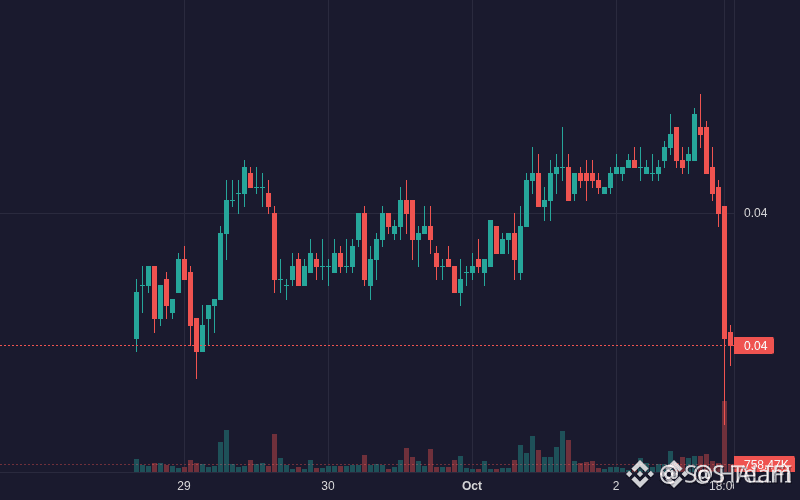
7

Why is everyone celebrating overleveraged longs when $BTC funding rates just spiked to extreme highs?
Most retail traders do not lose money because their macro thesis was wrong, but because they enter right when the perpetual market becomes unsustainably crowded. You end up bleeding capital on funding payments or getting wicked out during the inevitable leverage flush before the actual continuation happens.
The mainstream consensus treats soaring funding as pure bullish momentum, but smart money sees it as an overextended trade waiting to reset. When holding a leveraged long becomes this expensive, the risk-to-reward ratio flips against aggressive buyers. Instead of blindly chasing green candles at peak greed, you need a structured game plan.
Start by monitoring the perpetual premium and consider shifting heavy derivative exposure into spot holdings or parking liquidity in $USDT until funding normalizes. If you are tracking setups across major altcoins like $ADA, let the leverage wash out first before building new swing positions. Surviving these overheating phases with your capital intact is how you catch the real trend on favorable terms.
How are you managing your leverage exposure during this funding spike?
#BitcoinFundingRateTriplesTo10 #BitcoinRisesToward #BitcoinSurpasses
Why is everyone celebrating overleveraged longs when $BTC funding rates just spiked to extreme highs?
Most retail traders do not lose money because their macro thesis was wrong, but because they enter right when the perpetual market becomes unsustainably crowded. You end up bleeding capital on funding payments or getting wicked out during the inevitable leverage flush before the actual continuation happens.
The mainstream consensus treats soaring funding as pure bullish momentum, but smart money sees it as an overextended trade waiting to reset. When holding a leveraged long becomes this expensive, the risk-to-reward ratio flips against aggressive buyers. Instead of blindly chasing green candles at peak greed, you need a structured game plan.
Start by monitoring the perpetual premium and consider shifting heavy derivative exposure into spot holdings or parking liquidity in $USDT until funding normalizes. If you are tracking setups across major altcoins like $ADA , let the leverage wash out first before building new swing positions. Surviving these overheating phases with your capital intact is how you catch the real trend on favorable terms.
How are you managing your leverage exposure during this funding spike?
#BitcoinFundingRateTriplesTo10 #BitcoinRisesToward #BitcoinSurpasses
Most retail traders do not lose money because their macro thesis was wrong, but because they enter right when the perpetual market becomes unsustainably crowded. You end up bleeding capital on funding payments or getting wicked out during the inevitable leverage flush before the actual continuation happens.
The mainstream consensus treats soaring funding as pure bullish momentum, but smart money sees it as an overextended trade waiting to reset. When holding a leveraged long becomes this expensive, the risk-to-reward ratio flips against aggressive buyers. Instead of blindly chasing green candles at peak greed, you need a structured game plan.
Start by monitoring the perpetual premium and consider shifting heavy derivative exposure into spot holdings or parking liquidity in $USDT until funding normalizes. If you are tracking setups across major altcoins like $ADA , let the leverage wash out first before building new swing positions. Surviving these overheating phases with your capital intact is how you catch the real trend on favorable terms.
How are you managing your leverage exposure during this funding spike?
#BitcoinFundingRateTriplesTo10 #BitcoinRisesToward #BitcoinSurpasses
9


The funding rate for Bitcoin perpetual futures has surged dramatically, tripling to reach 10%. This significant increase indicates a strong bullish sentiment among traders in the derivatives market, with longs paying a premium to hold their positions. Such a high funding rate often precedes periods of heightened volatility or potential market corrections as the cost of leverage becomes substantial. Traders should closely monitor this metric for signs of overheating or shifts in market sentiment.
Disclaimer: This is not investment advice. Please conduct your own research.
#BitcoinFundingRateTriplesTo10% $BTC
The funding rate for Bitcoin perpetual futures has surged dramatically, tripling to reach 10%. This significant increase indicates a strong bullish sentiment among traders in the derivatives market, with longs paying a premium to hold their positions. Such a high funding rate often precedes periods of heightened volatility or potential market corrections as the cost of leverage becomes substantial. Traders should closely monitor this metric for signs of overheating or shifts in market sentiment.
Disclaimer: This is not investment advice. Please conduct your own research.
#BitcoinFundingRateTriplesTo10% $BTC
Disclaimer: This is not investment advice. Please conduct your own research.
#BitcoinFundingRateTriplesTo10% $BTC
1
36
·
--
Here's what happened when $BTC last surpassed the level everyone had circled on their charts.
Traders who sat out the grind higher felt that familiar panic of being left behind, then bought the breakout with leverage they couldn't stomach on a red candle. That's how you turn a confirmation into a liquidation.
The pattern is almost mechanical. Price clears a key zone, social volume spikes, and positioning gets one-sided fast. Right now Fear and Greed is sitting at 69 and the feed is full of people treating the move as settled. What most missed last time was the funding. It stretched, open interest piled in, and the first real dip didn't look like a dip until $USDT started catching a bid and late longs were gone. Names like $ADA barely participated, which is usually a tell that the move is more crowded than it is broad.
Surpassing a number doesn't mean the risk disappeared. It often means the easy part of the trade is over and the people who arrived last are now the exit. I've seen this setup enough times to treat the celebration as a warning, not a green light.
Anyone else watching how thin this breakout actually looks under the surface?
#BitcoinSurpasses #BitcoinFundingRateTriplesTo10 #BitcoinRisesToward
Here's what happened when $BTC last surpassed the level everyone had circled on their charts.
Traders who sat out the grind higher felt that familiar panic of being left behind, then bought the breakout with leverage they couldn't stomach on a red candle. That's how you turn a confirmation into a liquidation.
The pattern is almost mechanical. Price clears a key zone, social volume spikes, and positioning gets one-sided fast. Right now Fear and Greed is sitting at 69 and the feed is full of people treating the move as settled. What most missed last time was the funding. It stretched, open interest piled in, and the first real dip didn't look like a dip until $USDT started catching a bid and late longs were gone. Names like $ADA barely participated, which is usually a tell that the move is more crowded than it is broad.
Surpassing a number doesn't mean the risk disappeared. It often means the easy part of the trade is over and the people who arrived last are now the exit. I've seen this setup enough times to treat the celebration as a warning, not a green light.
Anyone else watching how thin this breakout actually looks under the surface?
#BitcoinSurpasses #BitcoinFundingRateTriplesTo10 #BitcoinRisesToward
Traders who sat out the grind higher felt that familiar panic of being left behind, then bought the breakout with leverage they couldn't stomach on a red candle. That's how you turn a confirmation into a liquidation.
The pattern is almost mechanical. Price clears a key zone, social volume spikes, and positioning gets one-sided fast. Right now Fear and Greed is sitting at 69 and the feed is full of people treating the move as settled. What most missed last time was the funding. It stretched, open interest piled in, and the first real dip didn't look like a dip until $USDT started catching a bid and late longs were gone. Names like $ADA barely participated, which is usually a tell that the move is more crowded than it is broad.
Surpassing a number doesn't mean the risk disappeared. It often means the easy part of the trade is over and the people who arrived last are now the exit. I've seen this setup enough times to treat the celebration as a warning, not a green light.
Anyone else watching how thin this breakout actually looks under the surface?
#BitcoinSurpasses #BitcoinFundingRateTriplesTo10 #BitcoinRisesToward
21
Nonfarm payrolls shock plus a Bitcoin ETF craze pulling in massive inflows—US stocks and the crypto market are entering a critical turning point
1. US employment data far below expectations, and rate-cut hopes surge
On the evening of October 2 Beijing time, the US Department of Labor released the September nonfarm payroll report. The number of new nonfarm jobs added was only 29,000, far below the market forecast of 90,000, and the prior figure was also revised down from 133,000. At the same time, the unemployment rate rose to 4.2%, above the market expectation of 4.1%. Market participants generally viewed this report as a “big surprise,” indicating that the US labor market is experiencing a significant slowdown.
After the data was released, Bitcoin quickly surged and broke above $88,000, reaching a recent high. More than $120 million worth of short positions were liquidated. The market logic is straightforward: weak employment implies the Federal Reserve is more likely to continue cutting rates within the year, and expectations of looser liquidity directly benefit risk assets. Fed funds futures show the probability of holding rates unchanged in October has increased, while expectations for a rate cut in December have risen sharply.
2. Continued inflows into Bitcoin spot ETFs, with institutions accelerating allocation
Coinciding with the employment data was strong net inflow demand for Bitcoin spot ETFs. In September, US spot Bitcoin ETF cumulative net inflows totaled $2.65 billion, setting the second-largest single-month inflow record since October 2025. In the first day of October alone, net inflows reached $1.027 billion, suggesting that institutional capital is still accelerating into the market.
Citi recently raised its 12-month target price for Bitcoin to $113,000. The rationale includes continued ETF inflows, a weaker US dollar, and liquidity support stemming from the US Treasury’s repo buyback plans. According to data from the platform “Plaza,” Bitcoin was mentioned nearly 30,000 times in the past 24 hours, with more than 10,000 independent authors; bullish sentiment clearly dominates, and the long-vs-short ratio is 5:1.
3. BNB Chain tokenized US stocks surpass $1 billion, and the RWA track keeps heating up
On another front where traditional finance and crypto are converging, BNB Chain became the first blockchain platform where the total size of tokenized stocks and ETFs exceeded $1 billion. The total market size of tokenized real-world assets (RWAs) on BNB Chain has reached $3.7 billion, with recent growth of about 17%. Currently, multiple tokenized US stock products are live on BNB Chain, including emerging markets ETF (EEM), Moderna (MRNA), and others. Investors can trade traditional US stock assets on-chain around the clock.
This milestone is significant. Tokenized US stocks break traditional trading hours and geographic constraints, enabling global users to participate in US stock investing with lower barriers. As the SEC recently proposed a new crypto-asset custody framework—allowing eligible self-custody and state-chartered trust companies to serve as qualified custodians—regulatory hurdles for institutional entry are gradually being removed. It’s reasonable to expect tokenized US stocks to become the next explosive growth point.
4. Outlook and risk warnings
The current market sits at a delicate intersection: weaker employment data creates room for rate cuts, ongoing ETF inflows provide buy-side support for Bitcoin, and the rapid development of tokenized US stocks blurs the boundary between traditional finance and the crypto world. However, investors should remain alert to the following risks: (1) employment data could trigger fears of an economic downturn, and if subsequent data continues to deteriorate, risk assets may not be spared; (2) Bitcoin funding rates have recently surged to above 10%, and short-term leverage overheating may lead to a pullback; (3) geopolitical conditions and regulatory policy still involve uncertainties.
Overall, the shift in the macro environment has opened a window for the crypto market, but rational position sizing and controlling leverage remain the core principles for navigating volatility.
#NFPWatch #BitcoinFundingRateTriplesTo10% #TokenizedUSStocksIn
Nonfarm payrolls shock plus a Bitcoin ETF craze pulling in massive inflows—US stocks and the crypto market are entering a critical turning point
1. US employment data far below expectations, and rate-cut hopes surge
On the evening of October 2 Beijing time, the US Department of Labor released the September nonfarm payroll report. The number of new nonfarm jobs added was only 29,000, far below the market forecast of 90,000, and the prior figure was also revised down from 133,000. At the same time, the unemployment rate rose to 4.2%, above the market expectation of 4.1%. Market participants generally viewed this report as a “big surprise,” indicating that the US labor market is experiencing a significant slowdown.
After the data was released, Bitcoin quickly surged and broke above $88,000, reaching a recent high. More than $120 million worth of short positions were liquidated. The market logic is straightforward: weak employment implies the Federal Reserve is more likely to continue cutting rates within the year, and expectations of looser liquidity directly benefit risk assets. Fed funds futures show the probability of holding rates unchanged in October has increased, while expectations for a rate cut in December have risen sharply.
2. Continued inflows into Bitcoin spot ETFs, with institutions accelerating allocation
Coinciding with the employment data was strong net inflow demand for Bitcoin spot ETFs. In September, US spot Bitcoin ETF cumulative net inflows totaled $2.65 billion, setting the second-largest single-month inflow record since October 2025. In the first day of October alone, net inflows reached $1.027 billion, suggesting that institutional capital is still accelerating into the market.
Citi recently raised its 12-month target price for Bitcoin to $113,000. The rationale includes continued ETF inflows, a weaker US dollar, and liquidity support stemming from the US Treasury’s repo buyback plans. According to data from the platform “Plaza,” Bitcoin was mentioned nearly 30,000 times in the past 24 hours, with more than 10,000 independent authors; bullish sentiment clearly dominates, and the long-vs-short ratio is 5:1.
3. BNB Chain tokenized US stocks surpass $1 billion, and the RWA track keeps heating up
On another front where traditional finance and crypto are converging, BNB Chain became the first blockchain platform where the total size of tokenized stocks and ETFs exceeded $1 billion. The total market size of tokenized real-world assets (RWAs) on BNB Chain has reached $3.7 billion, with recent growth of about 17%. Currently, multiple tokenized US stock products are live on BNB Chain, including emerging markets ETF (EEM), Moderna (MRNA), and others. Investors can trade traditional US stock assets on-chain around the clock.
This milestone is significant. Tokenized US stocks break traditional trading hours and geographic constraints, enabling global users to participate in US stock investing with lower barriers. As the SEC recently proposed a new crypto-asset custody framework—allowing eligible self-custody and state-chartered trust companies to serve as qualified custodians—regulatory hurdles for institutional entry are gradually being removed. It’s reasonable to expect tokenized US stocks to become the next explosive growth point.
4. Outlook and risk warnings
The current market sits at a delicate intersection: weaker employment data creates room for rate cuts, ongoing ETF inflows provide buy-side support for Bitcoin, and the rapid development of tokenized US stocks blurs the boundary between traditional finance and the crypto world. However, investors should remain alert to the following risks: (1) employment data could trigger fears of an economic downturn, and if subsequent data continues to deteriorate, risk assets may not be spared; (2) Bitcoin funding rates have recently surged to above 10%, and short-term leverage overheating may lead to a pullback; (3) geopolitical conditions and regulatory policy still involve uncertainties.
Overall, the shift in the macro environment has opened a window for the crypto market, but rational position sizing and controlling leverage remain the core principles for navigating volatility.
#NFPWatch #BitcoinFundingRateTriplesTo10% #TokenizedUSStocksIn
1. US employment data far below expectations, and rate-cut hopes surge
On the evening of October 2 Beijing time, the US Department of Labor released the September nonfarm payroll report. The number of new nonfarm jobs added was only 29,000, far below the market forecast of 90,000, and the prior figure was also revised down from 133,000. At the same time, the unemployment rate rose to 4.2%, above the market expectation of 4.1%. Market participants generally viewed this report as a “big surprise,” indicating that the US labor market is experiencing a significant slowdown.
After the data was released, Bitcoin quickly surged and broke above $88,000, reaching a recent high. More than $120 million worth of short positions were liquidated. The market logic is straightforward: weak employment implies the Federal Reserve is more likely to continue cutting rates within the year, and expectations of looser liquidity directly benefit risk assets. Fed funds futures show the probability of holding rates unchanged in October has increased, while expectations for a rate cut in December have risen sharply.
2. Continued inflows into Bitcoin spot ETFs, with institutions accelerating allocation
Coinciding with the employment data was strong net inflow demand for Bitcoin spot ETFs. In September, US spot Bitcoin ETF cumulative net inflows totaled $2.65 billion, setting the second-largest single-month inflow record since October 2025. In the first day of October alone, net inflows reached $1.027 billion, suggesting that institutional capital is still accelerating into the market.
Citi recently raised its 12-month target price for Bitcoin to $113,000. The rationale includes continued ETF inflows, a weaker US dollar, and liquidity support stemming from the US Treasury’s repo buyback plans. According to data from the platform “Plaza,” Bitcoin was mentioned nearly 30,000 times in the past 24 hours, with more than 10,000 independent authors; bullish sentiment clearly dominates, and the long-vs-short ratio is 5:1.
3. BNB Chain tokenized US stocks surpass $1 billion, and the RWA track keeps heating up
On another front where traditional finance and crypto are converging, BNB Chain became the first blockchain platform where the total size of tokenized stocks and ETFs exceeded $1 billion. The total market size of tokenized real-world assets (RWAs) on BNB Chain has reached $3.7 billion, with recent growth of about 17%. Currently, multiple tokenized US stock products are live on BNB Chain, including emerging markets ETF (EEM), Moderna (MRNA), and others. Investors can trade traditional US stock assets on-chain around the clock.
This milestone is significant. Tokenized US stocks break traditional trading hours and geographic constraints, enabling global users to participate in US stock investing with lower barriers. As the SEC recently proposed a new crypto-asset custody framework—allowing eligible self-custody and state-chartered trust companies to serve as qualified custodians—regulatory hurdles for institutional entry are gradually being removed. It’s reasonable to expect tokenized US stocks to become the next explosive growth point.
4. Outlook and risk warnings
The current market sits at a delicate intersection: weaker employment data creates room for rate cuts, ongoing ETF inflows provide buy-side support for Bitcoin, and the rapid development of tokenized US stocks blurs the boundary between traditional finance and the crypto world. However, investors should remain alert to the following risks: (1) employment data could trigger fears of an economic downturn, and if subsequent data continues to deteriorate, risk assets may not be spared; (2) Bitcoin funding rates have recently surged to above 10%, and short-term leverage overheating may lead to a pullback; (3) geopolitical conditions and regulatory policy still involve uncertainties.
Overall, the shift in the macro environment has opened a window for the crypto market, but rational position sizing and controlling leverage remain the core principles for navigating volatility.
#NFPWatch #BitcoinFundingRateTriplesTo10% #TokenizedUSStocksIn
26
US Non-Farm Payrolls Plunge Triggers Global Markets; Tokenized US Stocks Reach a Historic Milestone
1. Unexpected Sharp Drop in Non-Farm Data Raises Macroeconomic Alarms
The U.S. Department of Labor’s September non-farm employment report shocked the market: the number of newly added jobs was only 29,000, far below market expectations of 90,000, and a steep decline from the prior value of 133,000. At the same time, the unemployment rate rose to 4.2%, also exceeding market expectations. This data was widely interpreted as a strong signal that the U.S. economy is slowing, driving investors’ deep expectations that the Federal Reserve will shift its policy.
After the release, market expectations for Fed rate hikes cooled sharply, with the probability of a hike falling below 20%. Investors quickly adjusted their asset allocation strategies, moving funds from safe-haven assets to risk assets, which fueled a major surge in both the cryptocurrency market and certain tokenized US stock assets. This macro shockwave not only impacted traditional financial markets, but also sparked a chain reaction in the blockchain and tokenized asset sectors.
2. Bitcoin Breaks Strongly Above $88,000; ETF Inflows Keep Pouring In
Driven by the negative impact on the traditional economy from the non-farm data, but the positive outlook for monetary easing, Bitcoin quickly broke above the $88,000 threshold. Bitcoin ETFs recorded a net inflow of $102.7 million on the first trading day of October, continuing the strong momentum from the third quarter. Data shows that in September alone, the total net inflow to Bitcoin ETFs reached $2.65 billion, setting the highest quarterly record for 2026.
Citibank subsequently raised its 12-month target price for Bitcoin to $113,000, citing reasons including continued ETF capital attraction, a weaker U.S. dollar, and liquidity benefits from U.S. Treasury repo operations. Plaza data shows that in the past 24 hours, Bitcoin was mentioned more than 29,000 times; nearly 10,000 independent discussion authors engaged, and market sentiment was clearly tilted bullish. Meanwhile, the Bitcoin funding rate tripled to 10%, reflecting a surge in bullish enthusiasm in the derivatives market.
3. Tokenized Stocks on BNB Chain Break Through the $1 Billion Mark; RWA Track Accelerates Expansion
Amid macro market turbulence, BNB Chain became the first blockchain platform where the total market cap of tokenized stocks and ETFs exceeded $1 billion. The overall size of the tokenized real-world assets market reached $3.7 billion, with recent growth of about 17%. This milestone signals that traditional financial assets being put on-chain is moving from concept to large-scale implementation.
So far, multiple tokenized US stock products have been launched on BNB Chain, covering sectors such as emerging market ETFs and biotech/pharmaceuticals. The tokenized US stock perpetual contract market is also active: MAGMA’s daily gain exceeded 44%, SAND rose 37%, and VELVET gained more than 30%, indicating that investor trading interest in tokenized US stock-related assets continues to heat up.
4. Regulatory Environment Continues to Improve; Entry Barriers for Institutions Lower
Under the leadership of newly appointed SEC Chair Paul Atkins, the U.S. Securities and Exchange Commission proposed new custody standards for crypto assets for registered investment advisers and regulated funds. Under certain conditions, self-custody arrangements are permitted. This adjustment in the regulatory framework is expected to remove key obstacles that have hindered institutional investors from entering, opening the floodgates for a large influx of new capital into the digital asset market.
At the same time, Binance Pay and Japan’s major QR payment platform PayPay have reached an integration, enabling crypto payments to cover millions of merchants in Japan—an important step forward for crypto assets in real-world consumption scenarios. Binance founder CZ met with Vietnam’s top leadership in New York to discuss promoting crypto adoption, further releasing positive signals regarding greater clarity on crypto regulation in Southeast Asia.
5. Outlook and Risk Reminder
Overall, the weakness in the non-farm data provides data support for a Fed shift toward a more dovish stance. In the near term, risk assets—including cryptocurrencies and tokenized US stocks—are expected to continue the rebound. However, investors should note that month-to-month employment data can be revised, and over-optimistic market expectations may be corrected, creating pullback risks. While tokenized US stocks are growing quickly, liquidity and regulatory compliance remain core issues that require ongoing attention. It is recommended that investors, while capturing macro turning points, manage position sizes reasonably and monitor the subsequent validation of economic data.
#NFPWatch #BitcoinFundingRateTriplesTo10% #TokenizedUSStocks
US Non-Farm Payrolls Plunge Triggers Global Markets; Tokenized US Stocks Reach a Historic Milestone
1. Unexpected Sharp Drop in Non-Farm Data Raises Macroeconomic Alarms
The U.S. Department of Labor’s September non-farm employment report shocked the market: the number of newly added jobs was only 29,000, far below market expectations of 90,000, and a steep decline from the prior value of 133,000. At the same time, the unemployment rate rose to 4.2%, also exceeding market expectations. This data was widely interpreted as a strong signal that the U.S. economy is slowing, driving investors’ deep expectations that the Federal Reserve will shift its policy.
After the release, market expectations for Fed rate hikes cooled sharply, with the probability of a hike falling below 20%. Investors quickly adjusted their asset allocation strategies, moving funds from safe-haven assets to risk assets, which fueled a major surge in both the cryptocurrency market and certain tokenized US stock assets. This macro shockwave not only impacted traditional financial markets, but also sparked a chain reaction in the blockchain and tokenized asset sectors.
2. Bitcoin Breaks Strongly Above $88,000; ETF Inflows Keep Pouring In
Driven by the negative impact on the traditional economy from the non-farm data, but the positive outlook for monetary easing, Bitcoin quickly broke above the $88,000 threshold. Bitcoin ETFs recorded a net inflow of $102.7 million on the first trading day of October, continuing the strong momentum from the third quarter. Data shows that in September alone, the total net inflow to Bitcoin ETFs reached $2.65 billion, setting the highest quarterly record for 2026.
Citibank subsequently raised its 12-month target price for Bitcoin to $113,000, citing reasons including continued ETF capital attraction, a weaker U.S. dollar, and liquidity benefits from U.S. Treasury repo operations. Plaza data shows that in the past 24 hours, Bitcoin was mentioned more than 29,000 times; nearly 10,000 independent discussion authors engaged, and market sentiment was clearly tilted bullish. Meanwhile, the Bitcoin funding rate tripled to 10%, reflecting a surge in bullish enthusiasm in the derivatives market.
3. Tokenized Stocks on BNB Chain Break Through the $1 Billion Mark; RWA Track Accelerates Expansion
Amid macro market turbulence, BNB Chain became the first blockchain platform where the total market cap of tokenized stocks and ETFs exceeded $1 billion. The overall size of the tokenized real-world assets market reached $3.7 billion, with recent growth of about 17%. This milestone signals that traditional financial assets being put on-chain is moving from concept to large-scale implementation.
So far, multiple tokenized US stock products have been launched on BNB Chain, covering sectors such as emerging market ETFs and biotech/pharmaceuticals. The tokenized US stock perpetual contract market is also active: MAGMA’s daily gain exceeded 44%, SAND rose 37%, and VELVET gained more than 30%, indicating that investor trading interest in tokenized US stock-related assets continues to heat up.
4. Regulatory Environment Continues to Improve; Entry Barriers for Institutions Lower
Under the leadership of newly appointed SEC Chair Paul Atkins, the U.S. Securities and Exchange Commission proposed new custody standards for crypto assets for registered investment advisers and regulated funds. Under certain conditions, self-custody arrangements are permitted. This adjustment in the regulatory framework is expected to remove key obstacles that have hindered institutional investors from entering, opening the floodgates for a large influx of new capital into the digital asset market.
At the same time, Binance Pay and Japan’s major QR payment platform PayPay have reached an integration, enabling crypto payments to cover millions of merchants in Japan—an important step forward for crypto assets in real-world consumption scenarios. Binance founder CZ met with Vietnam’s top leadership in New York to discuss promoting crypto adoption, further releasing positive signals regarding greater clarity on crypto regulation in Southeast Asia.
5. Outlook and Risk Reminder
Overall, the weakness in the non-farm data provides data support for a Fed shift toward a more dovish stance. In the near term, risk assets—including cryptocurrencies and tokenized US stocks—are expected to continue the rebound. However, investors should note that month-to-month employment data can be revised, and over-optimistic market expectations may be corrected, creating pullback risks. While tokenized US stocks are growing quickly, liquidity and regulatory compliance remain core issues that require ongoing attention. It is recommended that investors, while capturing macro turning points, manage position sizes reasonably and monitor the subsequent validation of economic data.
#NFPWatch #BitcoinFundingRateTriplesTo10% #TokenizedUSStocks
1. Unexpected Sharp Drop in Non-Farm Data Raises Macroeconomic Alarms
The U.S. Department of Labor’s September non-farm employment report shocked the market: the number of newly added jobs was only 29,000, far below market expectations of 90,000, and a steep decline from the prior value of 133,000. At the same time, the unemployment rate rose to 4.2%, also exceeding market expectations. This data was widely interpreted as a strong signal that the U.S. economy is slowing, driving investors’ deep expectations that the Federal Reserve will shift its policy.
After the release, market expectations for Fed rate hikes cooled sharply, with the probability of a hike falling below 20%. Investors quickly adjusted their asset allocation strategies, moving funds from safe-haven assets to risk assets, which fueled a major surge in both the cryptocurrency market and certain tokenized US stock assets. This macro shockwave not only impacted traditional financial markets, but also sparked a chain reaction in the blockchain and tokenized asset sectors.
2. Bitcoin Breaks Strongly Above $88,000; ETF Inflows Keep Pouring In
Driven by the negative impact on the traditional economy from the non-farm data, but the positive outlook for monetary easing, Bitcoin quickly broke above the $88,000 threshold. Bitcoin ETFs recorded a net inflow of $102.7 million on the first trading day of October, continuing the strong momentum from the third quarter. Data shows that in September alone, the total net inflow to Bitcoin ETFs reached $2.65 billion, setting the highest quarterly record for 2026.
Citibank subsequently raised its 12-month target price for Bitcoin to $113,000, citing reasons including continued ETF capital attraction, a weaker U.S. dollar, and liquidity benefits from U.S. Treasury repo operations. Plaza data shows that in the past 24 hours, Bitcoin was mentioned more than 29,000 times; nearly 10,000 independent discussion authors engaged, and market sentiment was clearly tilted bullish. Meanwhile, the Bitcoin funding rate tripled to 10%, reflecting a surge in bullish enthusiasm in the derivatives market.
3. Tokenized Stocks on BNB Chain Break Through the $1 Billion Mark; RWA Track Accelerates Expansion
Amid macro market turbulence, BNB Chain became the first blockchain platform where the total market cap of tokenized stocks and ETFs exceeded $1 billion. The overall size of the tokenized real-world assets market reached $3.7 billion, with recent growth of about 17%. This milestone signals that traditional financial assets being put on-chain is moving from concept to large-scale implementation.
So far, multiple tokenized US stock products have been launched on BNB Chain, covering sectors such as emerging market ETFs and biotech/pharmaceuticals. The tokenized US stock perpetual contract market is also active: MAGMA’s daily gain exceeded 44%, SAND rose 37%, and VELVET gained more than 30%, indicating that investor trading interest in tokenized US stock-related assets continues to heat up.
4. Regulatory Environment Continues to Improve; Entry Barriers for Institutions Lower
Under the leadership of newly appointed SEC Chair Paul Atkins, the U.S. Securities and Exchange Commission proposed new custody standards for crypto assets for registered investment advisers and regulated funds. Under certain conditions, self-custody arrangements are permitted. This adjustment in the regulatory framework is expected to remove key obstacles that have hindered institutional investors from entering, opening the floodgates for a large influx of new capital into the digital asset market.
At the same time, Binance Pay and Japan’s major QR payment platform PayPay have reached an integration, enabling crypto payments to cover millions of merchants in Japan—an important step forward for crypto assets in real-world consumption scenarios. Binance founder CZ met with Vietnam’s top leadership in New York to discuss promoting crypto adoption, further releasing positive signals regarding greater clarity on crypto regulation in Southeast Asia.
5. Outlook and Risk Reminder
Overall, the weakness in the non-farm data provides data support for a Fed shift toward a more dovish stance. In the near term, risk assets—including cryptocurrencies and tokenized US stocks—are expected to continue the rebound. However, investors should note that month-to-month employment data can be revised, and over-optimistic market expectations may be corrected, creating pullback risks. While tokenized US stocks are growing quickly, liquidity and regulatory compliance remain core issues that require ongoing attention. It is recommended that investors, while capturing macro turning points, manage position sizes reasonably and monitor the subsequent validation of economic data.
#NFPWatch #BitcoinFundingRateTriplesTo10% #TokenizedUSStocks
204
Why is nobody talking about how this jobs report is setting up the next trap for $BTC bulls?
Crypto traders keep getting chopped up chasing NFP headlines. They pile in on the first green candle then watch the move reverse and their stops get hunted within hours.
The 29K jobs added with unemployment ticking higher looks textbook dovish. Rate-cut odds will jump and on paper $BTC should rip. The problem is that everyone already knows it. We are sitting at 69 on Fear and Greed, the crowd is positioned for the obvious trade, and that is usually when these prints turn into sell-the-news events rather than the start of a new leg. Funding was already stretching before the data even dropped.
If you actually want to trade this instead of donating, stay in $USDT until $BTC proves it can hold the post-print range. Ignore the first impulse. Scale only after volume confirms the move has legs. The $ADA chase that always follows these reports is usually just exit liquidity for whoever bought the spike.
Anyone else seeing this as a trap rather than a launchpad?
#USSeptemberPayrollsAdd29KUnemploymentRises4 #NFPWatch #BitcoinFundingRateTriplesTo10
Why is nobody talking about how this jobs report is setting up the next trap for $BTC bulls?
Crypto traders keep getting chopped up chasing NFP headlines. They pile in on the first green candle then watch the move reverse and their stops get hunted within hours.
The 29K jobs added with unemployment ticking higher looks textbook dovish. Rate-cut odds will jump and on paper $BTC should rip. The problem is that everyone already knows it. We are sitting at 69 on Fear and Greed, the crowd is positioned for the obvious trade, and that is usually when these prints turn into sell-the-news events rather than the start of a new leg. Funding was already stretching before the data even dropped.
If you actually want to trade this instead of donating, stay in $USDT until $BTC proves it can hold the post-print range. Ignore the first impulse. Scale only after volume confirms the move has legs. The $ADA chase that always follows these reports is usually just exit liquidity for whoever bought the spike.
Anyone else seeing this as a trap rather than a launchpad?
#USSeptemberPayrollsAdd29KUnemploymentRises4 #NFPWatch #BitcoinFundingRateTriplesTo10
Crypto traders keep getting chopped up chasing NFP headlines. They pile in on the first green candle then watch the move reverse and their stops get hunted within hours.
The 29K jobs added with unemployment ticking higher looks textbook dovish. Rate-cut odds will jump and on paper $BTC should rip. The problem is that everyone already knows it. We are sitting at 69 on Fear and Greed, the crowd is positioned for the obvious trade, and that is usually when these prints turn into sell-the-news events rather than the start of a new leg. Funding was already stretching before the data even dropped.
If you actually want to trade this instead of donating, stay in $USDT until $BTC proves it can hold the post-print range. Ignore the first impulse. Scale only after volume confirms the move has legs. The $ADA chase that always follows these reports is usually just exit liquidity for whoever bought the spike.
Anyone else seeing this as a trap rather than a launchpad?
#USSeptemberPayrollsAdd29KUnemploymentRises4 #NFPWatch #BitcoinFundingRateTriplesTo10
58

·
--
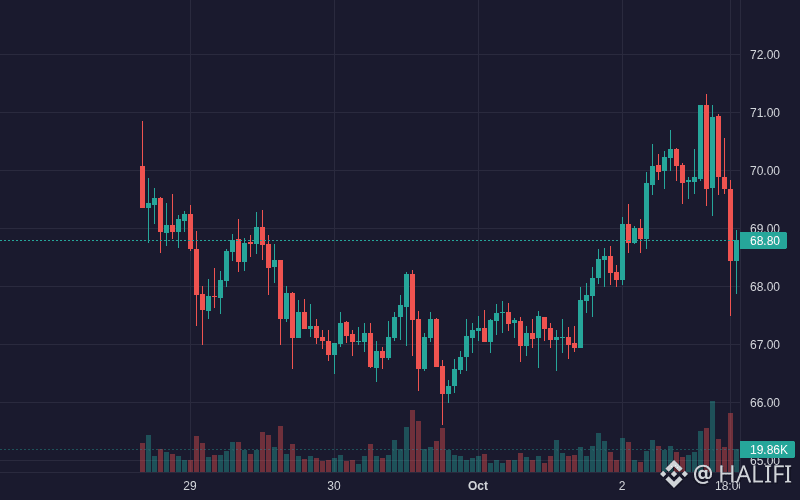
$LTC LTC is showing bullish movement: 1.10% (Crypto).
Volume: 41.61M | Last: $68.88
Key signals: high trader activity.
Bias Daily: BULLISH 🟢 | Weekly: BULLISH 🟢
LTC spiked to $71.11 before pulling back to $68.48 (+0.48% in 24h) amid institutional news and aggressive profit-taking.
**Institutional sentiment (High)**: Partnership news to bring cLTC to Canton Network alongside CFTC digital asset clearing approval → lifted market sentiment toward $71.11.
- **Breakout & capital surge (Medium)**: Price pierced the upper Bollinger Band with volume expanding above $10.3M USDT → accelerated brief bullish momentum.
- **Large-scale profit-taking (Medium)**: Inflows reversed sharply with large-order net outflows exceeding -$1.2M USDT → triggered a rapid decline back toward $68.48.
#LTC #nfpwatch #ethergains70.9%inq3 #BitcoinFundingRateTriplesTo10% #Crypto
$LTC LTC is showing bullish movement: 1.10% (Crypto).
Volume: 41.61M | Last: $68.88
Key signals: high trader activity.
Bias Daily: BULLISH 🟢 | Weekly: BULLISH 🟢
LTC spiked to $71.11 before pulling back to $68.48 (+0.48% in 24h) amid institutional news and aggressive profit-taking.
**Institutional sentiment (High)**: Partnership news to bring cLTC to Canton Network alongside CFTC digital asset clearing approval → lifted market sentiment toward $71.11.
- **Breakout & capital surge (Medium)**: Price pierced the upper Bollinger Band with volume expanding above $10.3M USDT → accelerated brief bullish momentum.
- **Large-scale profit-taking (Medium)**: Inflows reversed sharply with large-order net outflows exceeding -$1.2M USDT → triggered a rapid decline back toward $68.48.
#LTC #nfpwatch #ethergains70.9%inq3 #BitcoinFundingRateTriplesTo10% #Crypto
Volume: 41.61M | Last: $68.88
Key signals: high trader activity.
Bias Daily: BULLISH 🟢 | Weekly: BULLISH 🟢
LTC spiked to $71.11 before pulling back to $68.48 (+0.48% in 24h) amid institutional news and aggressive profit-taking.
**Institutional sentiment (High)**: Partnership news to bring cLTC to Canton Network alongside CFTC digital asset clearing approval → lifted market sentiment toward $71.11.
- **Breakout & capital surge (Medium)**: Price pierced the upper Bollinger Band with volume expanding above $10.3M USDT → accelerated brief bullish momentum.
- **Large-scale profit-taking (Medium)**: Inflows reversed sharply with large-order net outflows exceeding -$1.2M USDT → triggered a rapid decline back toward $68.48.
#LTC #nfpwatch #ethergains70.9%inq3 #BitcoinFundingRateTriplesTo10% #Crypto
52
Everyone thinks a breakout means it is time to market buy with both hands, but actually, that is usually when retail ends up paying for the exit liquidity of patient money.
When you see green candles pushing past major resistance levels, the instinct to chase takes over and you end up buying the exact top of an overcrowded trade, only to panic when a sudden pullback hits your portfolio.
Think of an aggressive rally like stepping onto a speeding train: you either board early at the platform or wait for the next station, because leaping while it is in full motion rarely ends well. Right now, with market sentiment sitting firmly in greed, there are three classic mistakes unfolding. First, open interest builds up rapidly as late longs pile into $BTC, making sharp liquidation wicks almost inevitable. Second, capital rotates prematurely into alts like $ADA before the primary trend even establishes clear support. Third, holding cash like $USDT suddenly feels like a mistake, forcing undisciplined trades without any invalidation plan.
Real profitability in this space is built on the calm discipline of waiting for confirmed pullbacks rather than chasing green candles.
How are you managing your exposure during this move?
#BitcoinSurpasses #BitcoinFundingRateTriplesTo10 #BitcoinRisesToward
Everyone thinks a breakout means it is time to market buy with both hands, but actually, that is usually when retail ends up paying for the exit liquidity of patient money.
When you see green candles pushing past major resistance levels, the instinct to chase takes over and you end up buying the exact top of an overcrowded trade, only to panic when a sudden pullback hits your portfolio.
Think of an aggressive rally like stepping onto a speeding train: you either board early at the platform or wait for the next station, because leaping while it is in full motion rarely ends well. Right now, with market sentiment sitting firmly in greed, there are three classic mistakes unfolding. First, open interest builds up rapidly as late longs pile into $BTC , making sharp liquidation wicks almost inevitable. Second, capital rotates prematurely into alts like $ADA before the primary trend even establishes clear support. Third, holding cash like $USDT suddenly feels like a mistake, forcing undisciplined trades without any invalidation plan.
Real profitability in this space is built on the calm discipline of waiting for confirmed pullbacks rather than chasing green candles.
How are you managing your exposure during this move?
#BitcoinSurpasses #BitcoinFundingRateTriplesTo10 #BitcoinRisesToward
When you see green candles pushing past major resistance levels, the instinct to chase takes over and you end up buying the exact top of an overcrowded trade, only to panic when a sudden pullback hits your portfolio.
Think of an aggressive rally like stepping onto a speeding train: you either board early at the platform or wait for the next station, because leaping while it is in full motion rarely ends well. Right now, with market sentiment sitting firmly in greed, there are three classic mistakes unfolding. First, open interest builds up rapidly as late longs pile into $BTC , making sharp liquidation wicks almost inevitable. Second, capital rotates prematurely into alts like $ADA before the primary trend even establishes clear support. Third, holding cash like $USDT suddenly feels like a mistake, forcing undisciplined trades without any invalidation plan.
Real profitability in this space is built on the calm discipline of waiting for confirmed pullbacks rather than chasing green candles.
How are you managing your exposure during this move?
#BitcoinSurpasses #BitcoinFundingRateTriplesTo10 #BitcoinRisesToward
19
·
--
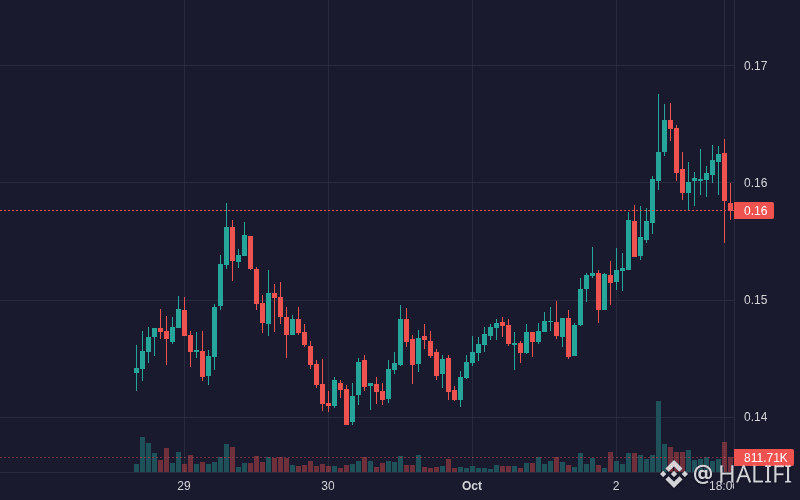
Why is nobody talking about what this 21% $ZEC drop really signals while greed is still running the tape?
Traders who bought the privacy pitch are staring at a sudden hole in their stack and cannot decide whether to sell, hold, or add. That freeze is how people lock in the worst exit of the move.
The easy take is that Zcash is finished and privacy coins are dead money. I don't buy it. Fear and Greed is sitting at 69, so capital is crowding into $BTC and whatever is already green. $ZEC gets treated like leftover inventory until demand for shielded transfers shows up again. A flush this sharp looks like leverage getting cleaned out, not the protocol collapsing.
Don't make it an all-or-nothing panic. Let the candle stop bleeding and see if support actually holds. If your thesis is still intact, scale any add with $USDT instead of throwing size at the wick. Watch how $BTC funding behaves when it gets stretched. That is often when names that got left behind get a second look.
Where do you think $ZEC goes from here after this kind of wipe?
#ZcashFalls21 #BitcoinFundingRateTriplesTo10 #BitcoinRisesToward
Why is nobody talking about what this 21% $ZEC drop really signals while greed is still running the tape?
Traders who bought the privacy pitch are staring at a sudden hole in their stack and cannot decide whether to sell, hold, or add. That freeze is how people lock in the worst exit of the move.
The easy take is that Zcash is finished and privacy coins are dead money. I don't buy it. Fear and Greed is sitting at 69, so capital is crowding into $BTC and whatever is already green. $ZEC gets treated like leftover inventory until demand for shielded transfers shows up again. A flush this sharp looks like leverage getting cleaned out, not the protocol collapsing.
Don't make it an all-or-nothing panic. Let the candle stop bleeding and see if support actually holds. If your thesis is still intact, scale any add with $USDT instead of throwing size at the wick. Watch how $BTC funding behaves when it gets stretched. That is often when names that got left behind get a second look.
Where do you think $ZEC goes from here after this kind of wipe?
#ZcashFalls21 #BitcoinFundingRateTriplesTo10 #BitcoinRisesToward
Traders who bought the privacy pitch are staring at a sudden hole in their stack and cannot decide whether to sell, hold, or add. That freeze is how people lock in the worst exit of the move.
The easy take is that Zcash is finished and privacy coins are dead money. I don't buy it. Fear and Greed is sitting at 69, so capital is crowding into $BTC and whatever is already green. $ZEC gets treated like leftover inventory until demand for shielded transfers shows up again. A flush this sharp looks like leverage getting cleaned out, not the protocol collapsing.
Don't make it an all-or-nothing panic. Let the candle stop bleeding and see if support actually holds. If your thesis is still intact, scale any add with $USDT instead of throwing size at the wick. Watch how $BTC funding behaves when it gets stretched. That is often when names that got left behind get a second look.
Where do you think $ZEC goes from here after this kind of wipe?
#ZcashFalls21 #BitcoinFundingRateTriplesTo10 #BitcoinRisesToward
103
·
--
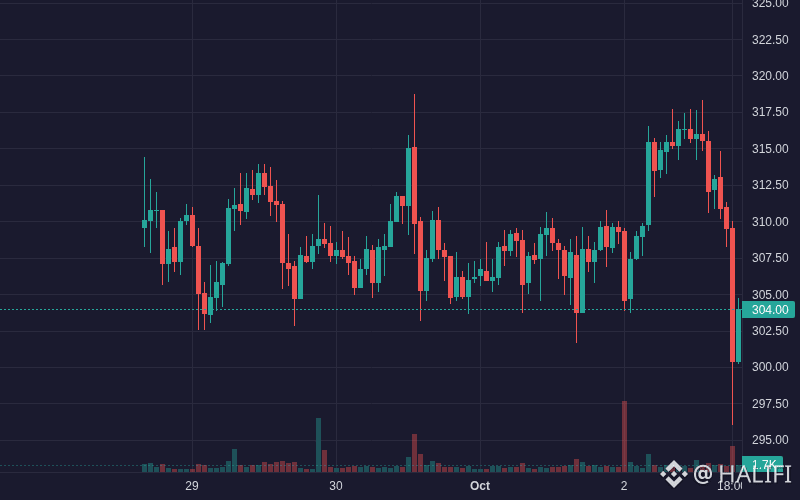
$BCH BCH is showing bearish movement: -1.17% (Crypto).
Volume: 22.00M | Last: $303.90
Key signals: high trader activity.
Bias Daily: BULLISH 🟢 | Weekly: BULLISH 🟢
BCH fell 2.4% over 24h to $300.50 after early gains reversed on heavy volume and sustained outflows.
**Derivatives & Protocol Upgrades (High)**: Perpetual contract integrations across decentralized exchanges combined with Bitcoin Cash Node v29.2.0 upgrade initially propelled price to $316.30.
- **Aggressive Spot Selling (High)**: Elevated trading volume exceeding $5.29M triggered an abrupt decline below $301 → major selloff breaking key support levels.
- **Capital Outflows (Medium)**: Persistent hourly net outflows and negative large-order flows toward the close accelerated the price drop.
#BCH #nfpwatch #ethergains70.9%inq3 #BitcoinFundingRateTriplesTo10% #Crypto
$BCH BCH is showing bearish movement: -1.17% (Crypto).
Volume: 22.00M | Last: $303.90
Key signals: high trader activity.
Bias Daily: BULLISH 🟢 | Weekly: BULLISH 🟢
BCH fell 2.4% over 24h to $300.50 after early gains reversed on heavy volume and sustained outflows.
**Derivatives & Protocol Upgrades (High)**: Perpetual contract integrations across decentralized exchanges combined with Bitcoin Cash Node v29.2.0 upgrade initially propelled price to $316.30.
- **Aggressive Spot Selling (High)**: Elevated trading volume exceeding $5.29M triggered an abrupt decline below $301 → major selloff breaking key support levels.
- **Capital Outflows (Medium)**: Persistent hourly net outflows and negative large-order flows toward the close accelerated the price drop.
#BCH #nfpwatch #ethergains70.9%inq3 #BitcoinFundingRateTriplesTo10% #Crypto
Volume: 22.00M | Last: $303.90
Key signals: high trader activity.
Bias Daily: BULLISH 🟢 | Weekly: BULLISH 🟢
BCH fell 2.4% over 24h to $300.50 after early gains reversed on heavy volume and sustained outflows.
**Derivatives & Protocol Upgrades (High)**: Perpetual contract integrations across decentralized exchanges combined with Bitcoin Cash Node v29.2.0 upgrade initially propelled price to $316.30.
- **Aggressive Spot Selling (High)**: Elevated trading volume exceeding $5.29M triggered an abrupt decline below $301 → major selloff breaking key support levels.
- **Capital Outflows (Medium)**: Persistent hourly net outflows and negative large-order flows toward the close accelerated the price drop.
#BCH #nfpwatch #ethergains70.9%inq3 #BitcoinFundingRateTriplesTo10% #Crypto
102
·
--
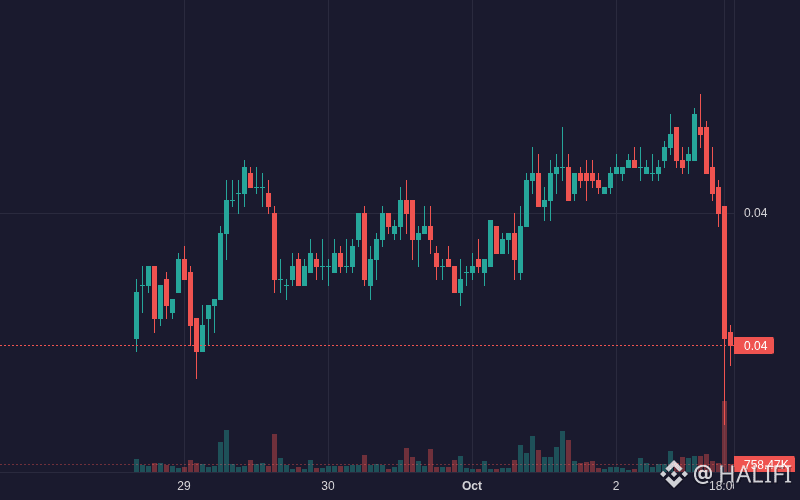
$TNSR TNSR is showing bearish movement: -5.94% (Crypto).
Volume: 1.11M | Last: $0.038000
Key signals: strong momentum, high volatility.
Bias Daily: BULLISH 🟢 | Weekly: BULLISH 🟢
TNSR dropped 5.9% over the past 24 hours to $0.0381 amid elevated outflow volume and technical breakdown.
**Heavy sell volume (High)**: Sharp volume surge past 1.15M USDT drove price below the lower Bollinger Band → breaking multi-week support
- **Consistent capital outflow (High)**: Over -$260K cumulative net outflow across consecutive hours fueled a steep technical drop
- **Momentum reversal (Medium)**: MACD histogram slipped into negative territory (-0.00026) as 6-period RSI fell from 74 into deep oversold at 12.68
#TNSR #nfpwatch #ethergains70.9%inq3 #BitcoinFundingRateTriplesTo10% #Crypto
$TNSR TNSR is showing bearish movement: -5.94% (Crypto).
Volume: 1.11M | Last: $0.038000
Key signals: strong momentum, high volatility.
Bias Daily: BULLISH 🟢 | Weekly: BULLISH 🟢
TNSR dropped 5.9% over the past 24 hours to $0.0381 amid elevated outflow volume and technical breakdown.
**Heavy sell volume (High)**: Sharp volume surge past 1.15M USDT drove price below the lower Bollinger Band → breaking multi-week support
- **Consistent capital outflow (High)**: Over -$260K cumulative net outflow across consecutive hours fueled a steep technical drop
- **Momentum reversal (Medium)**: MACD histogram slipped into negative territory (-0.00026) as 6-period RSI fell from 74 into deep oversold at 12.68
#TNSR #nfpwatch #ethergains70.9%inq3 #BitcoinFundingRateTriplesTo10% #Crypto
Volume: 1.11M | Last: $0.038000
Key signals: strong momentum, high volatility.
Bias Daily: BULLISH 🟢 | Weekly: BULLISH 🟢
TNSR dropped 5.9% over the past 24 hours to $0.0381 amid elevated outflow volume and technical breakdown.
**Heavy sell volume (High)**: Sharp volume surge past 1.15M USDT drove price below the lower Bollinger Band → breaking multi-week support
- **Consistent capital outflow (High)**: Over -$260K cumulative net outflow across consecutive hours fueled a steep technical drop
- **Momentum reversal (Medium)**: MACD histogram slipped into negative territory (-0.00026) as 6-period RSI fell from 74 into deep oversold at 12.68
#TNSR #nfpwatch #ethergains70.9%inq3 #BitcoinFundingRateTriplesTo10% #Crypto
35
·
--
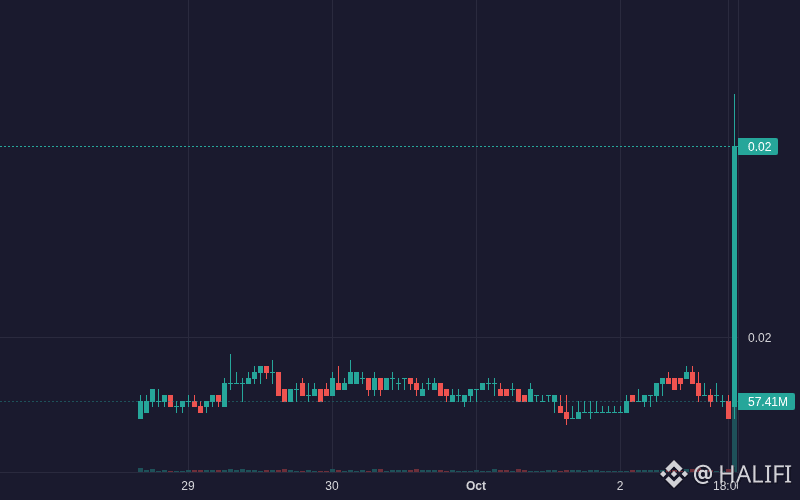
$AI AI is showing bullish movement: 29.03% (Crypto).
Volume: 1.43M | Last: $0.024000
Key signals: strong momentum, high volatility.
Bias Daily: BULLISH 🟢 | Weekly: BULLISH 🟢
AI fell 0.5% over 24h to $0.0186 as late sell-offs reversed intraday highs ahead of an upcoming supply unlock.
**Spike in selling flow (High)**: Persistent net outflows over recent hours, peaking at -$31.9K and -$16.6K → erased earlier gains and pushed price down to $0.0186
- **Exhaustion of intraday breakout (Medium)**: Price rejected at $0.0194 after RSI-6 topped at 93.5 → triggered sharp pullback below 25-EMA and 99-EMA
- **Micro-cap trading environment (Low)**: Low concentration score (~0.073) and thin liquidity magnified hourly volatility on minimal spot volume
#AI #nfpwatch #ethergains70.9%inq3 #BitcoinFundingRateTriplesTo10% #Crypto
$AI AI is showing bullish movement: 29.03% (Crypto).
Volume: 1.43M | Last: $0.024000
Key signals: strong momentum, high volatility.
Bias Daily: BULLISH 🟢 | Weekly: BULLISH 🟢
AI fell 0.5% over 24h to $0.0186 as late sell-offs reversed intraday highs ahead of an upcoming supply unlock.
**Spike in selling flow (High)**: Persistent net outflows over recent hours, peaking at -$31.9K and -$16.6K → erased earlier gains and pushed price down to $0.0186
- **Exhaustion of intraday breakout (Medium)**: Price rejected at $0.0194 after RSI-6 topped at 93.5 → triggered sharp pullback below 25-EMA and 99-EMA
- **Micro-cap trading environment (Low)**: Low concentration score (~0.073) and thin liquidity magnified hourly volatility on minimal spot volume
#AI #nfpwatch #ethergains70.9%inq3 #BitcoinFundingRateTriplesTo10% #Crypto
Volume: 1.43M | Last: $0.024000
Key signals: strong momentum, high volatility.
Bias Daily: BULLISH 🟢 | Weekly: BULLISH 🟢
AI fell 0.5% over 24h to $0.0186 as late sell-offs reversed intraday highs ahead of an upcoming supply unlock.
**Spike in selling flow (High)**: Persistent net outflows over recent hours, peaking at -$31.9K and -$16.6K → erased earlier gains and pushed price down to $0.0186
- **Exhaustion of intraday breakout (Medium)**: Price rejected at $0.0194 after RSI-6 topped at 93.5 → triggered sharp pullback below 25-EMA and 99-EMA
- **Micro-cap trading environment (Low)**: Low concentration score (~0.073) and thin liquidity magnified hourly volatility on minimal spot volume
#AI #nfpwatch #ethergains70.9%inq3 #BitcoinFundingRateTriplesTo10% #Crypto
77
·
--
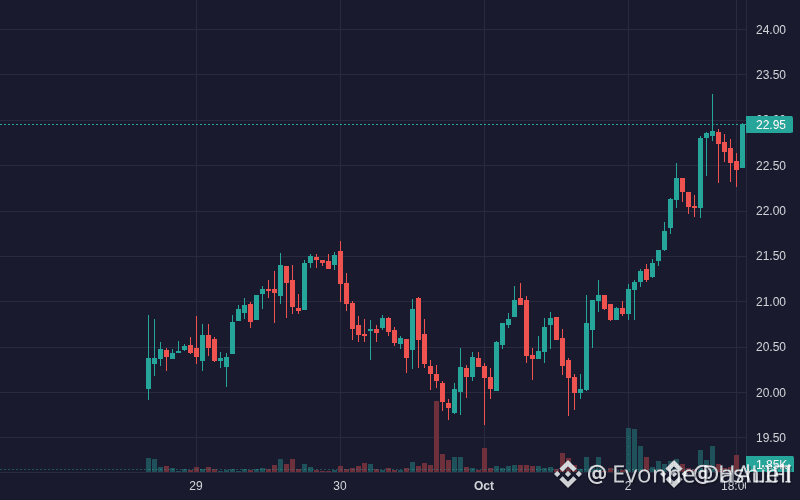
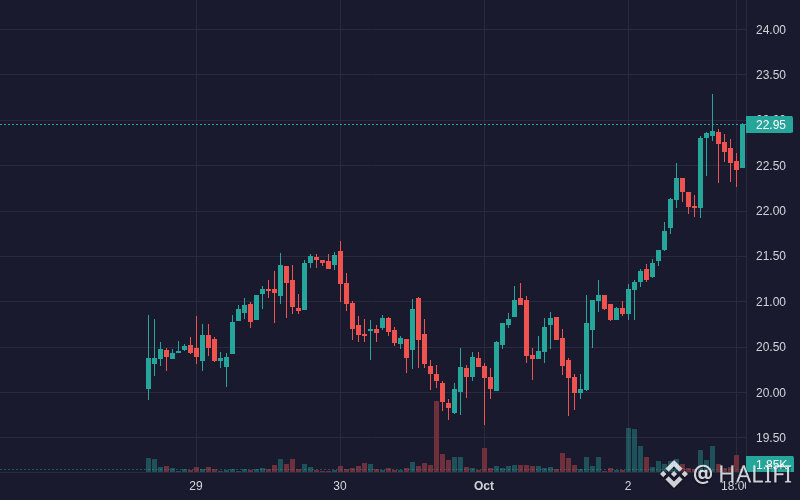
$KORUB KORUB is showing bullish movement: 9.02% (Crypto).
Volume: 4.98M | Last: $22.97
Key signals: strong momentum, high volatility.
Bias Daily: BULLISH 🟢 | Weekly: BULLISH 🟢
KORUB advanced 6.6% over 24h to $22.46, driven by leveraged equity exposure before facing late profit-taking.
**Leveraged equity tracking (High)**: KORUB tracks the 3x daily performance of Korean equities → strength in South Korean equities transmitted significant upside momentum.
- **Trend continuation buying (High)**: Break above the EMA-99 ($20.74) and EMA-25 triggered strong programmatic bidding → pushed price from $21.07 to a peak of $22.88.
- **Bullish MACD expansion (Medium)**: MACD histogram expanded to +0.136 during the breakout phase → reinforced upward momentum as short-term traders followed the surge.
#KORUB #nfpwatch #ethergains70.9%inq3 #BitcoinFundingRateTriplesTo10% #Crypto
$KORUB KORUB is showing bullish movement: 9.02% (Crypto).
Volume: 4.98M | Last: $22.97
Key signals: strong momentum, high volatility.
Bias Daily: BULLISH 🟢 | Weekly: BULLISH 🟢
KORUB advanced 6.6% over 24h to $22.46, driven by leveraged equity exposure before facing late profit-taking.
**Leveraged equity tracking (High)**: KORUB tracks the 3x daily performance of Korean equities → strength in South Korean equities transmitted significant upside momentum.
- **Trend continuation buying (High)**: Break above the EMA-99 ($20.74) and EMA-25 triggered strong programmatic bidding → pushed price from $21.07 to a peak of $22.88.
- **Bullish MACD expansion (Medium)**: MACD histogram expanded to +0.136 during the breakout phase → reinforced upward momentum as short-term traders followed the surge.
#KORUB #nfpwatch #ethergains70.9%inq3 #BitcoinFundingRateTriplesTo10% #Crypto
Volume: 4.98M | Last: $22.97
Key signals: strong momentum, high volatility.
Bias Daily: BULLISH 🟢 | Weekly: BULLISH 🟢
KORUB advanced 6.6% over 24h to $22.46, driven by leveraged equity exposure before facing late profit-taking.
**Leveraged equity tracking (High)**: KORUB tracks the 3x daily performance of Korean equities → strength in South Korean equities transmitted significant upside momentum.
- **Trend continuation buying (High)**: Break above the EMA-99 ($20.74) and EMA-25 triggered strong programmatic bidding → pushed price from $21.07 to a peak of $22.88.
- **Bullish MACD expansion (Medium)**: MACD histogram expanded to +0.136 during the breakout phase → reinforced upward momentum as short-term traders followed the surge.
#KORUB #nfpwatch #ethergains70.9%inq3 #BitcoinFundingRateTriplesTo10% #Crypto
17
·
--
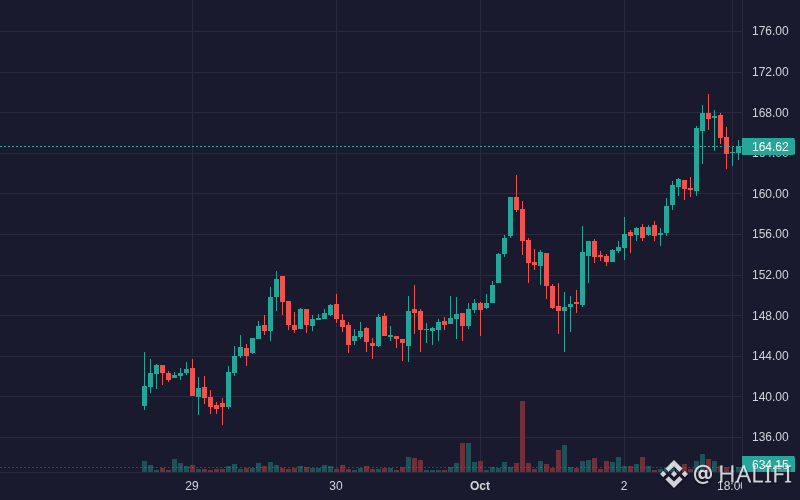
$SOXLB SOXLB is showing bullish movement: 6.58% (Crypto).
Volume: 3.91M | Last: $164.72
Key signals: strong momentum, high volatility.
Bias Daily: BULLISH 🟢 | Weekly: BULLISH 🟢
SOXLB rose 6.78% over the past 24 hours to $164.10, lifted by AI chip optimism before momentum cooled.
**Semiconductor infrastructure optimism (High)**: AI datacenter lease expansions and chip demand boosted semiconductor equity sentiment → lifted underlying SOXL benchmarks.
- **Trend momentum breakout (Medium)**: Price crossed above EMA 7 ($164.63) and EMA 25 ($160.28) → MACD histogram maintained positive expansion (+0.183).
- **Periodic buyer inflows (Medium)**: Inflow bursts reaching +$302K supported price highs near $167.95 before consolidating.
#SOXLB #nfpwatch #ethergains70.9%inq3 #BitcoinFundingRateTriplesTo10% #Crypto
$SOXLB SOXLB is showing bullish movement: 6.58% (Crypto).
Volume: 3.91M | Last: $164.72
Key signals: strong momentum, high volatility.
Bias Daily: BULLISH 🟢 | Weekly: BULLISH 🟢
SOXLB rose 6.78% over the past 24 hours to $164.10, lifted by AI chip optimism before momentum cooled.
**Semiconductor infrastructure optimism (High)**: AI datacenter lease expansions and chip demand boosted semiconductor equity sentiment → lifted underlying SOXL benchmarks.
- **Trend momentum breakout (Medium)**: Price crossed above EMA 7 ($164.63) and EMA 25 ($160.28) → MACD histogram maintained positive expansion (+0.183).
- **Periodic buyer inflows (Medium)**: Inflow bursts reaching +$302K supported price highs near $167.95 before consolidating.
#SOXLB #nfpwatch #ethergains70.9%inq3 #BitcoinFundingRateTriplesTo10% #Crypto
Volume: 3.91M | Last: $164.72
Key signals: strong momentum, high volatility.
Bias Daily: BULLISH 🟢 | Weekly: BULLISH 🟢
SOXLB rose 6.78% over the past 24 hours to $164.10, lifted by AI chip optimism before momentum cooled.
**Semiconductor infrastructure optimism (High)**: AI datacenter lease expansions and chip demand boosted semiconductor equity sentiment → lifted underlying SOXL benchmarks.
- **Trend momentum breakout (Medium)**: Price crossed above EMA 7 ($164.63) and EMA 25 ($160.28) → MACD histogram maintained positive expansion (+0.183).
- **Periodic buyer inflows (Medium)**: Inflow bursts reaching +$302K supported price highs near $167.95 before consolidating.
#SOXLB #nfpwatch #ethergains70.9%inq3 #BitcoinFundingRateTriplesTo10% #Crypto
11
·
--
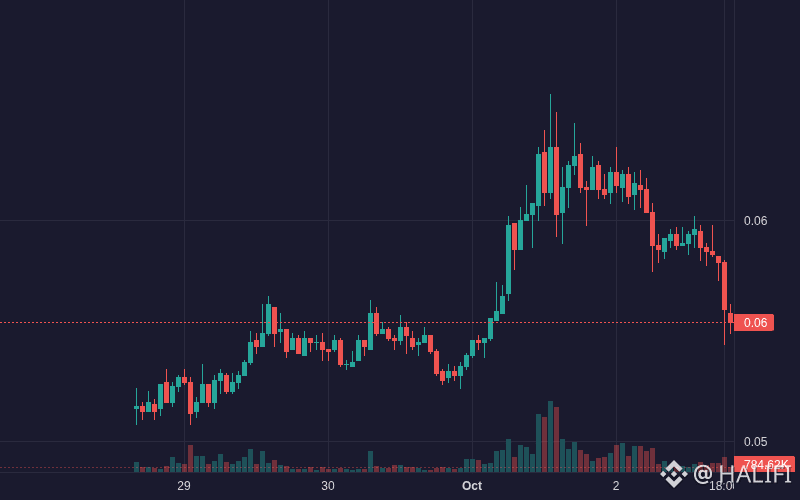
$OPN OPN is showing bearish movement: -9.18% (Crypto).
Volume: 3.32M | Last: $0.055400
Key signals: strong momentum, high volatility.
Bias Daily: BULLISH 🟢 | Weekly: BULLISH 🟢
OPN declined 8.8% over the past 24 hours driven by steady capital outflows and supply overhang concerns.
**Sustained net outflows (High)**: Cumulative spot selling exceeding -$600K over 24h → consistent liquidation pressure across mid-to-large orders
- **Technical breakdown (Medium)**: Price breached below key short-term moving averages (EMA 7, EMA 25, EMA 99) and the Bollinger lower band ($0.05658) → trigger for momentum sell-off
- **Bearish momentum divergence (Low)**: MACD histogram slipped deeper into negative territory (-0.00043) alongside RSI 6 dropping into extreme oversold levels (12.78)
#OPN #nfpwatch #ethergains70.9%inq3 #BitcoinFundingRateTriplesTo10% #Crypto
$OPN OPN is showing bearish movement: -9.18% (Crypto).
Volume: 3.32M | Last: $0.055400
Key signals: strong momentum, high volatility.
Bias Daily: BULLISH 🟢 | Weekly: BULLISH 🟢
OPN declined 8.8% over the past 24 hours driven by steady capital outflows and supply overhang concerns.
**Sustained net outflows (High)**: Cumulative spot selling exceeding -$600K over 24h → consistent liquidation pressure across mid-to-large orders
- **Technical breakdown (Medium)**: Price breached below key short-term moving averages (EMA 7, EMA 25, EMA 99) and the Bollinger lower band ($0.05658) → trigger for momentum sell-off
- **Bearish momentum divergence (Low)**: MACD histogram slipped deeper into negative territory (-0.00043) alongside RSI 6 dropping into extreme oversold levels (12.78)
#OPN #nfpwatch #ethergains70.9%inq3 #BitcoinFundingRateTriplesTo10% #Crypto
Volume: 3.32M | Last: $0.055400
Key signals: strong momentum, high volatility.
Bias Daily: BULLISH 🟢 | Weekly: BULLISH 🟢
OPN declined 8.8% over the past 24 hours driven by steady capital outflows and supply overhang concerns.
**Sustained net outflows (High)**: Cumulative spot selling exceeding -$600K over 24h → consistent liquidation pressure across mid-to-large orders
- **Technical breakdown (Medium)**: Price breached below key short-term moving averages (EMA 7, EMA 25, EMA 99) and the Bollinger lower band ($0.05658) → trigger for momentum sell-off
- **Bearish momentum divergence (Low)**: MACD histogram slipped deeper into negative territory (-0.00043) alongside RSI 6 dropping into extreme oversold levels (12.78)
#OPN #nfpwatch #ethergains70.9%inq3 #BitcoinFundingRateTriplesTo10% #Crypto
14
·
--
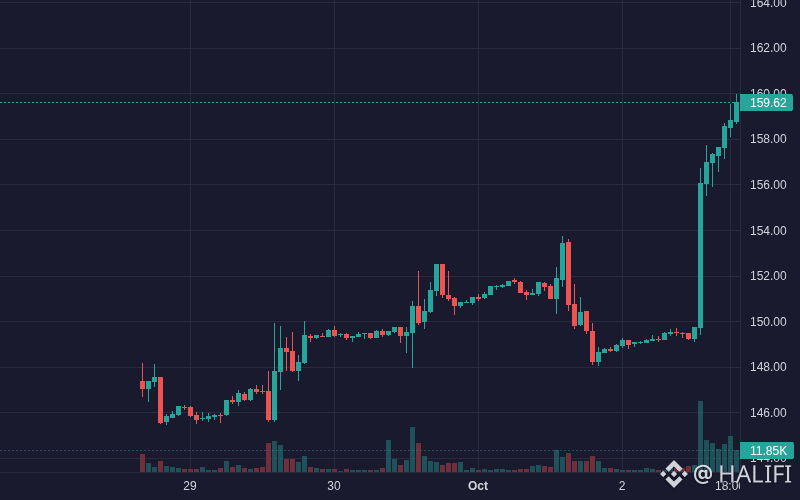
$SPCXB SPCXB is showing bullish movement: 7.00% (Crypto).
Volume: 26.01M | Last: $159.72
Key signals: strong momentum, high volatility, high trader activity.
Bias Daily: BULLISH 🟢 | Weekly: BULLISH 🟢
SPCXB gained 7.17% over 24h on operational achievements, but overbought RSI and persistent outflows warn of pullbacks.
**Operational milestones (High)**: Five successful launches in six days, rapid Crew-13 ISS docking, and orbital AI chip deployments → catalyzed strong fundamental sentiment
- **Commercial adoption (Medium)**: Airline fleet integration of Starlink WiFi expanded enterprise demand visibility
- **Incentive campaign (Medium)**: Platform trading reward pools triggered liquidity and volume expansion past 12.2M USDT
#SPCXB #nfpwatch #ethergains70.9%inq3 #BitcoinFundingRateTriplesTo10% #Crypto
$SPCXB SPCXB is showing bullish movement: 7.00% (Crypto).
Volume: 26.01M | Last: $159.72
Key signals: strong momentum, high volatility, high trader activity.
Bias Daily: BULLISH 🟢 | Weekly: BULLISH 🟢
SPCXB gained 7.17% over 24h on operational achievements, but overbought RSI and persistent outflows warn of pullbacks.
**Operational milestones (High)**: Five successful launches in six days, rapid Crew-13 ISS docking, and orbital AI chip deployments → catalyzed strong fundamental sentiment
- **Commercial adoption (Medium)**: Airline fleet integration of Starlink WiFi expanded enterprise demand visibility
- **Incentive campaign (Medium)**: Platform trading reward pools triggered liquidity and volume expansion past 12.2M USDT
#SPCXB #nfpwatch #ethergains70.9%inq3 #BitcoinFundingRateTriplesTo10% #Crypto
Volume: 26.01M | Last: $159.72
Key signals: strong momentum, high volatility, high trader activity.
Bias Daily: BULLISH 🟢 | Weekly: BULLISH 🟢
SPCXB gained 7.17% over 24h on operational achievements, but overbought RSI and persistent outflows warn of pullbacks.
**Operational milestones (High)**: Five successful launches in six days, rapid Crew-13 ISS docking, and orbital AI chip deployments → catalyzed strong fundamental sentiment
- **Commercial adoption (Medium)**: Airline fleet integration of Starlink WiFi expanded enterprise demand visibility
- **Incentive campaign (Medium)**: Platform trading reward pools triggered liquidity and volume expansion past 12.2M USDT
#SPCXB #nfpwatch #ethergains70.9%inq3 #BitcoinFundingRateTriplesTo10% #Crypto
20
·
--
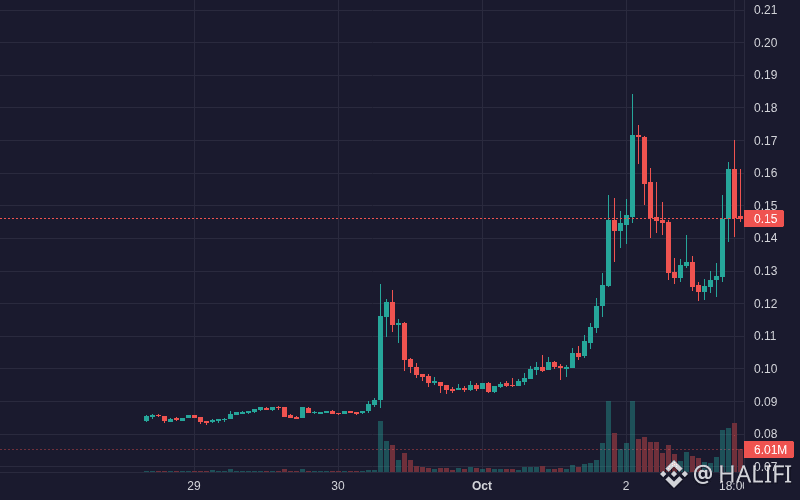
$GTC GTC is showing bullish movement: 25.82% (Crypto).
Volume: 27.84M | Last: $0.147730
Key signals: strong momentum, high volatility, high trader activity.
Bias Daily: BULLISH 🟢 | Weekly: BULLISH 🟢
GTC gained 22.8% over the past 24 hours, driven by macro easing and speculative AI-infrastructure narrative rotation.
**Macro easing & altcoin rotation (High)**: Softer US employment data cooled rate hike expectations → boosted digital asset risk appetite and speculative rotation into infrastructure tokens.
- **Volume surges (High)**: Hourly volumes jumped over $6.6M during peak rallies, lifting price from $0.119 to $0.171.
- **Decentralized AI narrative (Medium)**: Speculative alignment with decentralized computing frameworks drove renewed community interest.
#GTC #nfpwatch #ethergains70.9%inq3 #BitcoinFundingRateTriplesTo10% #Crypto
$GTC GTC is showing bullish movement: 25.82% (Crypto).
Volume: 27.84M | Last: $0.147730
Key signals: strong momentum, high volatility, high trader activity.
Bias Daily: BULLISH 🟢 | Weekly: BULLISH 🟢
GTC gained 22.8% over the past 24 hours, driven by macro easing and speculative AI-infrastructure narrative rotation.
**Macro easing & altcoin rotation (High)**: Softer US employment data cooled rate hike expectations → boosted digital asset risk appetite and speculative rotation into infrastructure tokens.
- **Volume surges (High)**: Hourly volumes jumped over $6.6M during peak rallies, lifting price from $0.119 to $0.171.
- **Decentralized AI narrative (Medium)**: Speculative alignment with decentralized computing frameworks drove renewed community interest.
#GTC #nfpwatch #ethergains70.9%inq3 #BitcoinFundingRateTriplesTo10% #Crypto
Volume: 27.84M | Last: $0.147730
Key signals: strong momentum, high volatility, high trader activity.
Bias Daily: BULLISH 🟢 | Weekly: BULLISH 🟢
GTC gained 22.8% over the past 24 hours, driven by macro easing and speculative AI-infrastructure narrative rotation.
**Macro easing & altcoin rotation (High)**: Softer US employment data cooled rate hike expectations → boosted digital asset risk appetite and speculative rotation into infrastructure tokens.
- **Volume surges (High)**: Hourly volumes jumped over $6.6M during peak rallies, lifting price from $0.119 to $0.171.
- **Decentralized AI narrative (Medium)**: Speculative alignment with decentralized computing frameworks drove renewed community interest.
#GTC #nfpwatch #ethergains70.9%inq3 #BitcoinFundingRateTriplesTo10% #Crypto
18
·
--
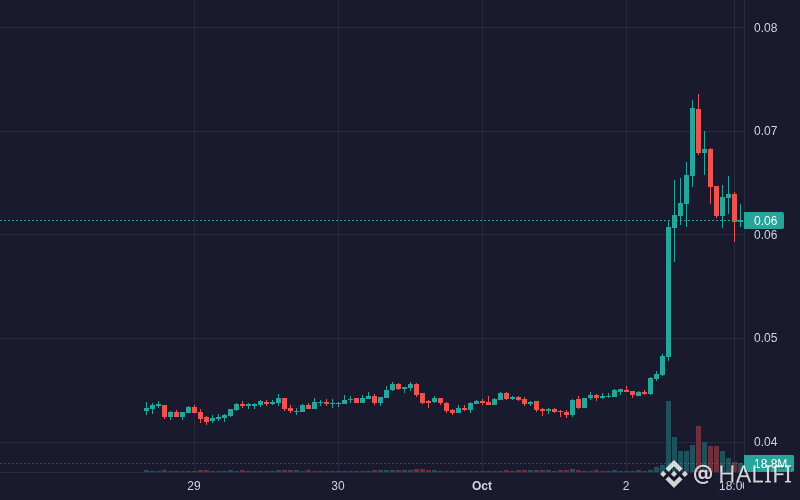
$SAND SAND is showing bullish movement: 38.96% (Crypto).
Volume: 56.01M | Last: $0.061490
Key signals: strong momentum, high volatility, high trader activity.
Bias Daily: BULLISH 🟢 | Weekly: BULLISH 🟢
SAND gained 38.4% over 24h following an exchange warning removal and strong inflows before facing profit-taking.
**Exchange warning removal (High)**: Regulatory relief as a major South Korean exchange lifted its investment warning designation → sparked strong spot accumulation and renewed liquidity
- **Massive capital inflows (High)**: Over $4.4M net spot inflows between hours 12–19 lifted volume above $26M → propelled price from $0.044 to peak $0.072
- **Ecosystem & macro catalysts (Medium)**: Upcoming Sandbox Studio launch combined with softer U.S. labor data bolstered risk appetite across gaming tokens
#SAND #nfpwatch #ethergains70.9%inq3 #BitcoinFundingRateTriplesTo10% #Crypto
$SAND SAND is showing bullish movement: 38.96% (Crypto).
Volume: 56.01M | Last: $0.061490
Key signals: strong momentum, high volatility, high trader activity.
Bias Daily: BULLISH 🟢 | Weekly: BULLISH 🟢
SAND gained 38.4% over 24h following an exchange warning removal and strong inflows before facing profit-taking.
**Exchange warning removal (High)**: Regulatory relief as a major South Korean exchange lifted its investment warning designation → sparked strong spot accumulation and renewed liquidity
- **Massive capital inflows (High)**: Over $4.4M net spot inflows between hours 12–19 lifted volume above $26M → propelled price from $0.044 to peak $0.072
- **Ecosystem & macro catalysts (Medium)**: Upcoming Sandbox Studio launch combined with softer U.S. labor data bolstered risk appetite across gaming tokens
#SAND #nfpwatch #ethergains70.9%inq3 #BitcoinFundingRateTriplesTo10% #Crypto
Volume: 56.01M | Last: $0.061490
Key signals: strong momentum, high volatility, high trader activity.
Bias Daily: BULLISH 🟢 | Weekly: BULLISH 🟢
SAND gained 38.4% over 24h following an exchange warning removal and strong inflows before facing profit-taking.
**Exchange warning removal (High)**: Regulatory relief as a major South Korean exchange lifted its investment warning designation → sparked strong spot accumulation and renewed liquidity
- **Massive capital inflows (High)**: Over $4.4M net spot inflows between hours 12–19 lifted volume above $26M → propelled price from $0.044 to peak $0.072
- **Ecosystem & macro catalysts (Medium)**: Upcoming Sandbox Studio launch combined with softer U.S. labor data bolstered risk appetite across gaming tokens
#SAND #nfpwatch #ethergains70.9%inq3 #BitcoinFundingRateTriplesTo10% #Crypto
54
·
--
$MINA MINA is showing bullish movement: 4.63% (Crypto).
Volume: 3.93M | Last: $0.158200
Key signals: strong momentum, high trader activity.
Bias Daily: BULLISH 🟢 | Weekly: BULLISH 🟢
MINA gained 4.2% over 24h to $0.1585 following protocol update 4.0.1, though momentum is showing signs of cooling.
**Protocol update v4.0.1 (High)**: Mainnet and Devnet maintenance release resolved archive sync and daemon health issues → improved node reliability and lifted sentiment
- **Technical breakout & volume surge (Medium)**: Price crossed above Bollinger middle and EMA bands to a high of $0.1653, supported by a 2.74M USDT volume spike
- **Intermittent whale absorption (Low)**: Selected hourly large inflows peaked at +$64.9K, aiding short-term price stability despite prevailing spot outflows
#MINA #nfpwatch #ethergains70.9%inq3 #BitcoinFundingRateTriplesTo10% #Crypto
$MINA MINA is showing bullish movement: 4.63% (Crypto).
Volume: 3.93M | Last: $0.158200
Key signals: strong momentum, high trader activity.
Bias Daily: BULLISH 🟢 | Weekly: BULLISH 🟢
MINA gained 4.2% over 24h to $0.1585 following protocol update 4.0.1, though momentum is showing signs of cooling.
**Protocol update v4.0.1 (High)**: Mainnet and Devnet maintenance release resolved archive sync and daemon health issues → improved node reliability and lifted sentiment
- **Technical breakout & volume surge (Medium)**: Price crossed above Bollinger middle and EMA bands to a high of $0.1653, supported by a 2.74M USDT volume spike
- **Intermittent whale absorption (Low)**: Selected hourly large inflows peaked at +$64.9K, aiding short-term price stability despite prevailing spot outflows
#MINA #nfpwatch #ethergains70.9%inq3 #BitcoinFundingRateTriplesTo10% #Crypto
Volume: 3.93M | Last: $0.158200
Key signals: strong momentum, high trader activity.
Bias Daily: BULLISH 🟢 | Weekly: BULLISH 🟢
MINA gained 4.2% over 24h to $0.1585 following protocol update 4.0.1, though momentum is showing signs of cooling.
**Protocol update v4.0.1 (High)**: Mainnet and Devnet maintenance release resolved archive sync and daemon health issues → improved node reliability and lifted sentiment
- **Technical breakout & volume surge (Medium)**: Price crossed above Bollinger middle and EMA bands to a high of $0.1653, supported by a 2.74M USDT volume spike
- **Intermittent whale absorption (Low)**: Selected hourly large inflows peaked at +$64.9K, aiding short-term price stability despite prevailing spot outflows
#MINA #nfpwatch #ethergains70.9%inq3 #BitcoinFundingRateTriplesTo10% #Crypto
223
Log in to explore more content
Join global crypto users on Binance Square
⚡️ Get latest and useful information about crypto.
💬 Trusted by the world’s largest crypto exchange.
👍 Discover real insights from verified creators.
Email / Phone number
Trending Topics
1
#NFPWatch
10.9M views
19,286 Discussing
2
#BitcoinFundingRateTriplesTo10%
168,896 views
1,195 Discussing
3
#BitcoinSurpasses$86KUp2.99%
55,354 views
114 Discussing
4
#ZcashFalls21%FromSeptemberPeak
89,658 views
852 Discussing
5
#USSeptemberPayrollsAdd29KUnemploymentRises4.2%
73,209 views
521 Discussing
6
#XRPPostsFirstThreeGreenMonthsInQ3
61,737 views
713 Discussing
7
#BNBChainTokenizedStocksTop$1BAt30%Share
27,520 views
38 Discussing
8
#BitcoinRisesToward$85K
126,032 views
157 Discussing
9
#AmazonPlansToSell$8BNvidiaChips
8,150 views
91 Discussing
10
#NEARFallsToAround$4.70Down14%
50,559 views
118 Discussing