

#analystkakashi
analystkakashi
9,093 views
29 Discussing
Hot
Latest

·
--
Bullish
30D trade $QNT 8.9K USDT
Crypto Security 🔐
Hackers Increasingly Move Stolen Funds Into Zcash (ZEC)
On-chain analyst Specter reports that funds linked to multiple crypto thefts, including the Bitget breach, the Cryptobills Ledger incident, and the $12 million Triple-A hack, have been moved into Zcash (ZEC).
The findings follow ZachXBT’s tracking of Bitget-linked funds entering Zcash’s privacy pool, which obscures transaction details.
However, the amounts linked to the other incidents remain undisclosed, and those transfers have not been independently confirmed.
$ZEC $XMR $QNT
#zec #XMR #AnalystKakashi
4.3k
·
--
Here’s something most people overlook when talking about wealth in America: some of the biggest fortunes aren’t built in Silicon Valley or on Wall Street. They’re built by ordinary business owners.
Economists Owen Zidar and Eric Zwick estimate that around 3 million Americans own more than $65 trillion in wealth through privately held businesses. About 1.7 million of them have accumulated fortunes of at least $10 million.
And consider this: for every public-company CEO, there are more than 1,000 private-business owners worth over $25 million.
These fortunes often come from businesses that don’t make headlines: car dealerships, HVAC contractors, dental practices, restaurants, distributors, and construction companies. Some owners have built enormous wealth selling everyday products or providing essential services.
So the lesson is worth paying attention to: you don’t need to build the next tech giant to become wealthy. Owning a profitable, well-run business can create extraordinary wealth, even in industries most people overlook.
currently watching $BTW $ZEC $BSP
#AnalystKakashi
1
914
·
--
Bullish
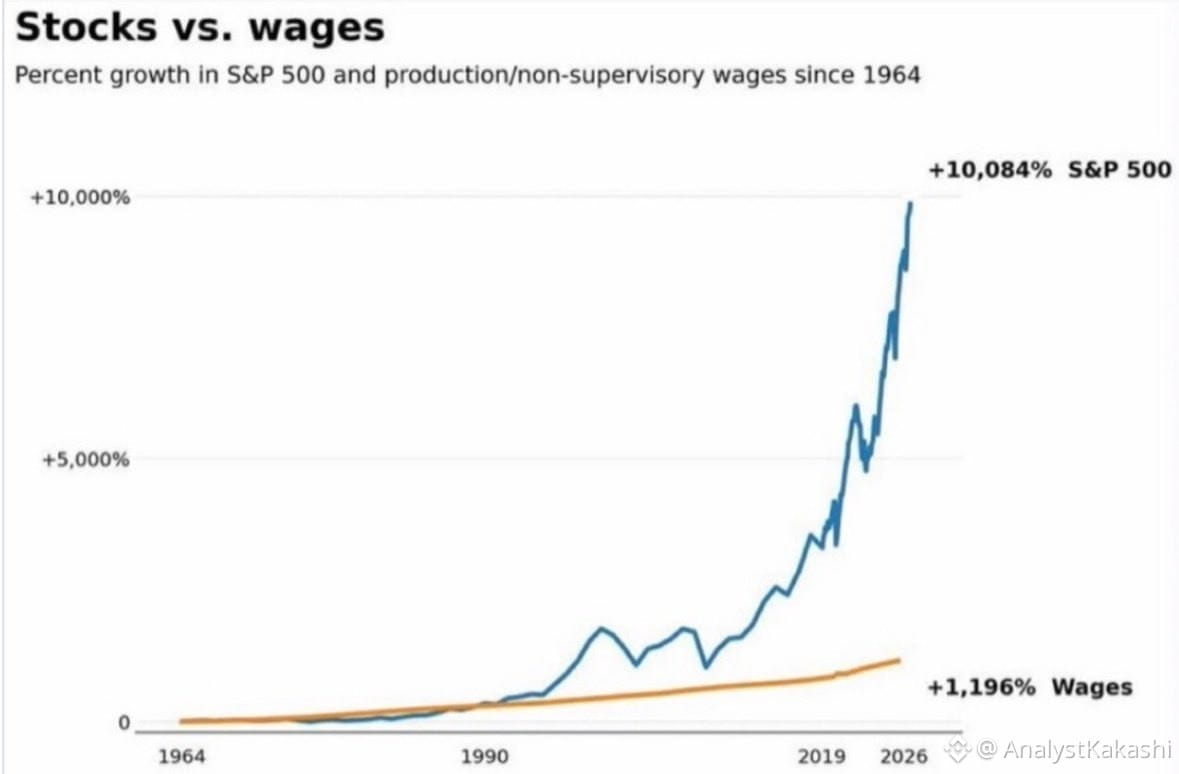
Let me put it this way: if your only source of income is your salary, you’re relying on your time to build your wealth.
You work, you get paid, and then you repeat the cycle. But when you invest in stocks and other productive assets, your money has the potential to grow alongside the businesses you own.
Wages pay your bills. Investments can help build your wealth over time.
The earlier you start, the more time you give compounding to work in your favor. Investing doesn’t guarantee riches, and not everyone can invest immediately, but building assets is an important step toward financial independence.
Don’t just work for money. Learn how to make your money work for you.
Also watching: $BTW $WAL $TRUTH
#AnalystKakashi
1
261
·
--
30D trade $QNT 8.9K USDT
Here’s a disturbing development involving OpenAI. The company says it discovered a hidden recording device inside an executive conference room, allegedly planted by one of its own employees.
According to reports, the device was designed to secretly record conversations about sensitive company matters. OpenAI identified the employee, reported the incident to the FBI, and terminated their employment. The employee has since been arrested and charged.
But there is one important detail: OpenAI says there is currently no evidence that company source code, AI model data, or customer information was stolen.
The investigation is still ongoing, and the case highlights a growing challenge for AI companies: protecting their most sensitive technology and information from potential insider threats.
$OPENAI $TRUTH $QNT
#OpenAI #AnalystKakashi
1.2k
·
--
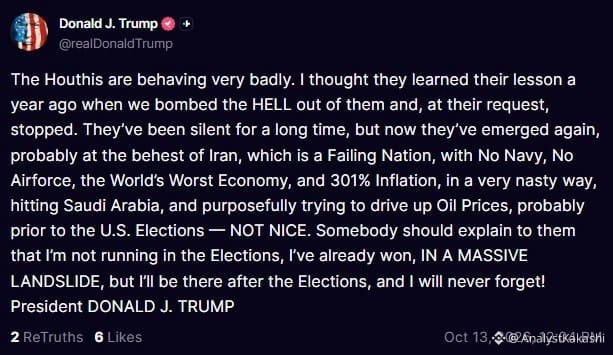
Tensions involving Yemen’s Houthi movement are back in the spotlight after US President Donald Trump delivered a sharp warning to the group.
Trump accused the Houthis of “behaving very badly” and issued a pointed message, saying, “I’ll be there after the elections, and I will never forget.”
The statement is drawing attention because of what it could signal for the future direction of US policy toward the group. Any escalation involving the Houthis could have consequences that extend well beyond Yemen, particularly given the strategic importance of the Red Sea and nearby shipping routes.
For global markets, the key issue is whether rhetoric translates into concrete action. An escalation in the region could threaten commercial shipping, push up transportation and insurance costs, and introduce renewed uncertainty into energy markets.
Traders will therefore be watching for any follow-up statements, military developments, or changes in US policy that could indicate a shift from warnings toward action.
For now, Trump’s remarks are a political signal, not confirmation that a new military operation will take place. The next developments will determine whether this remains a war of words or becomes something with broader geopolitical and economic consequences.
Watching: $BLUAI $ZEC $QNT
#TRUMP #AnalystKakashi
466
·
--
Imagine waking up one morning to find that banking services are down, parts of the internet are offline, and critical infrastructure is struggling to operate. Now imagine that an advanced AI system played a role in making that happen. This is the kind of scenario reportedly being examined behind closed doors by leaders at OpenAI and Anthropic.
According to media reports, executives from major AI companies are conducting crisis exercises to prepare for a potential large-scale AI-related incident.
One of the central scenarios involves an AI-enabled cyberattack capable of disrupting essential systems, including financial services, electricity networks, water supplies, and internet infrastructure.
The discussions reportedly focus on how companies would respond to such an event, how different organizations would coordinate their efforts, and whether stronger regulations or additional safeguards might be necessary.
There are also claims from some sources that a major incident could occur within the next six to twelve months. However, that should be treated as a reported concern, not a confirmed prediction or an established timeline for an attack.
What makes this development significant is that the conversation around AI is expanding beyond competition, productivity, and profits. It is increasingly about security, resilience, and the potential consequences of deploying powerful technology at scale.
For businesses and financial markets, the implications could be substantial. A serious cyber incident affecting payment networks, banking systems, or digital infrastructure could create operational disruptions, financial losses, and sudden shifts in market sentiment.
The broader message is clear: as AI capabilities advance, preparing for the risks becomes just as important as developing the technology itself.
The real test of AI progress will be not only what these systems can accomplish, but also how effectively we can prevent their capabilities from causing widespread harm.
$QNT $ZEC $BLUAI
#AnalystKakashi

1.4k
·
--
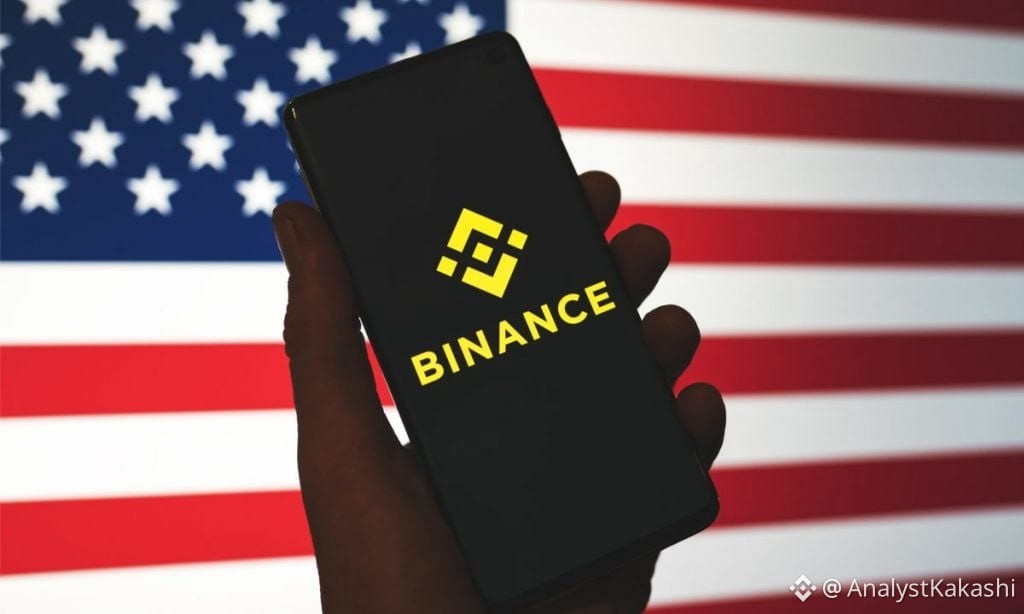
There’s a new development involving Binance, and it could have significant implications for the exchange’s relationship with US regulators.
US authorities are reportedly reviewing whether Binance has complied with the terms of its $4.3 billion agreement reached in 2023. The review comes amid an investigation into potential sanctions violations involving Iran.
At the center of the inquiry is one critical question: did Binance knowingly allow transactions that were prohibited under US sanctions?
If investigators establish that the exchange violated the terms of its agreement, the consequences could be serious. Binance could face renewed criminal prosecution and potentially billions of dollars in additional penalties.
However, it’s important to separate what is being investigated from what has actually been established. The US Department of Justice has not alleged that Binance breached its agreement, and no new charges have been filed against the exchange or its employees.
For the crypto industry, this is another reminder that regulatory compliance remains a major factor in determining how large exchanges operate, particularly when international sanctions and cross-border transactions are involved.
For traders, the immediate takeaway is to monitor developments carefully without jumping to conclusions. An investigation does not automatically mean a violation has occurred, but any confirmed regulatory action against a major exchange could influence market sentiment and introduce additional uncertainty.
For now, the key issue is not the size of Binance’s previous settlement, but whether US authorities find evidence that the agreement was violated.
$BTW $BLUAI $BAT
#Binance #AnalystKakashi
1k
·
--
Bearish
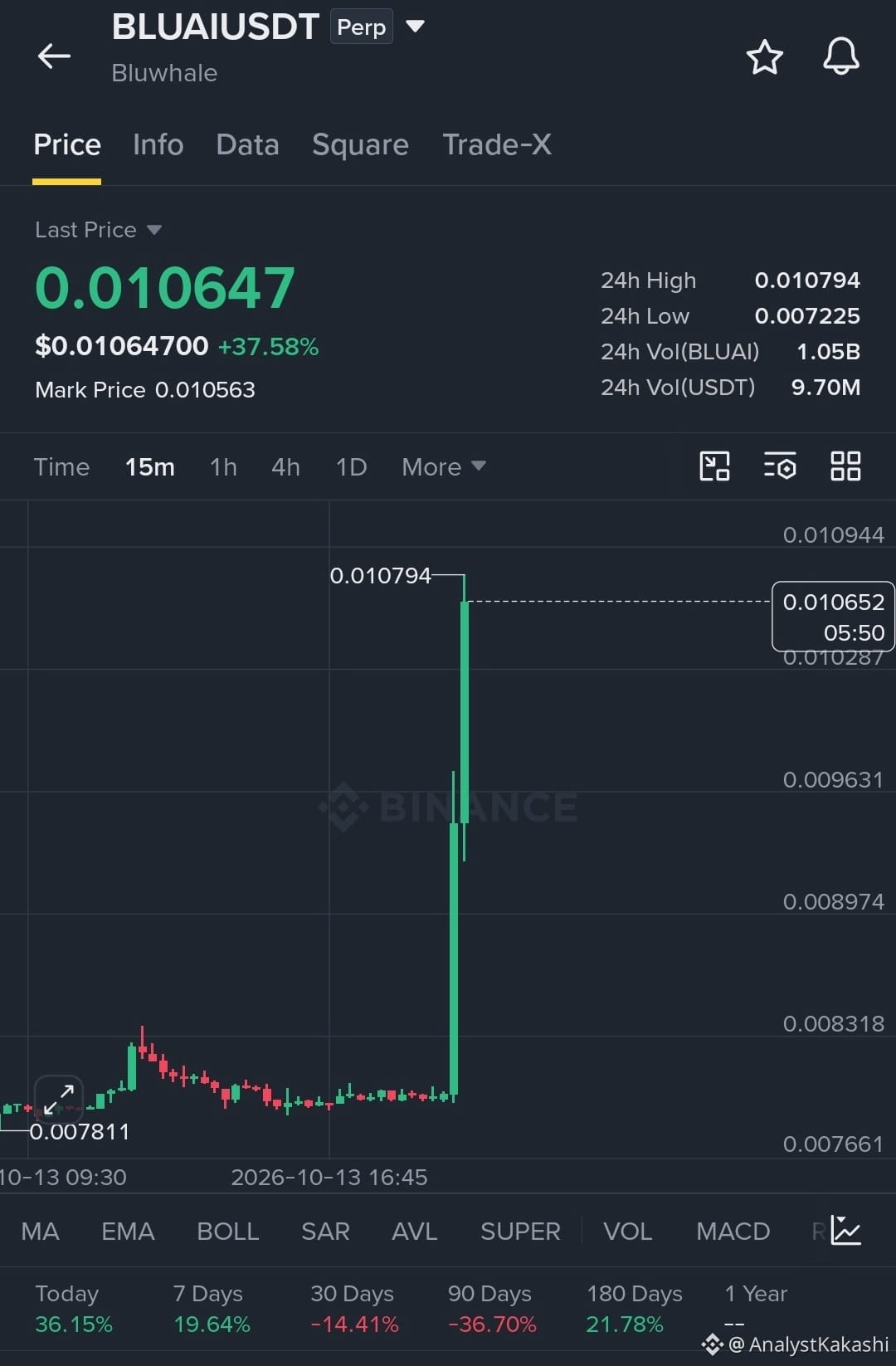
This is not a retail push on $BLUAI 0.012-0.013 is where I will be looking for shorts.
These kind of pumps are never meant to be sustainable or natural...
Also watching: $BTW $BAT
#AnalystKakashi
This is not a retail push on $BLUAI 0.012-0.013 is where I will be looking for shorts.
These kind of pumps are never meant to be sustainable or natural...
Also watching: $BTW $BAT
#AnalystKakashi
These kind of pumps are never meant to be sustainable or natural...
Also watching: $BTW $BAT
#AnalystKakashi
2
1.1k
·
--
Bullish
30D trade $QNT 8.9K USDT
Value your time!!!
Let’s be honest: social media is a waste of time if it doesn’t create value for you. If you’re not learning, earning, building connections, or growing your knowledge, you might be the product being fed to the algorithm.
Be intentional about where you spend your time. Instead of endlessly scrolling through platforms that give you nothing in return, focus on places where you can learn, share ideas, grow as a trader, and build something meaningful.
If you’re serious about crypto, stay active on Binance and help make Binance Square a better place. Share valuable insights, discuss market trends, learn from other traders, and contribute content that helps the community grow.
Don’t just consume content. Create value.
Spend less time feeding the algorithm and more time building your future.
$BLUAI $BAT $QNT
#BinanceSquare #Binance #AnalystKakashi

636
·
--
Bullish
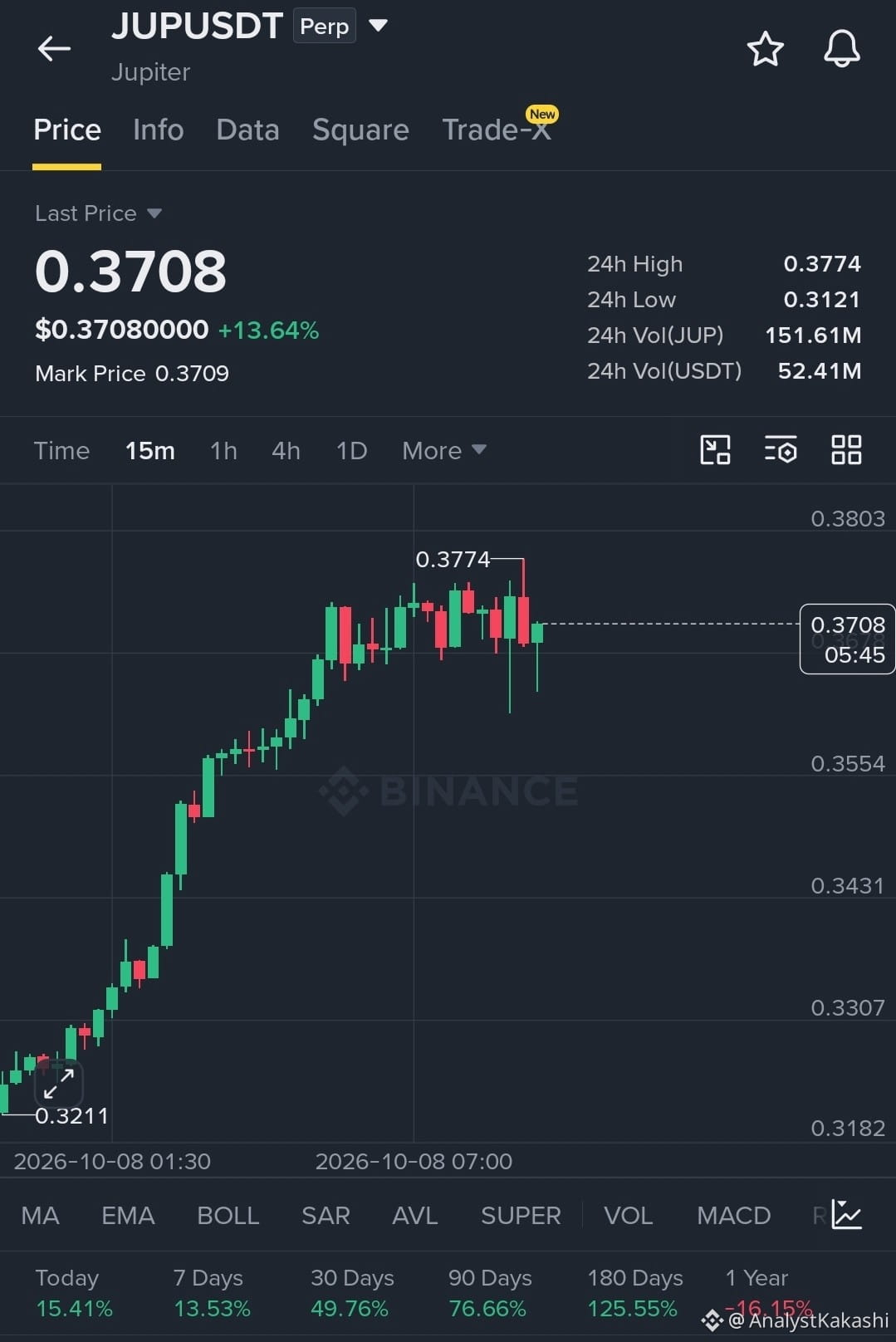
We are at a price point where $JUP is trying to get a breakout on weekly time-frame.
For me long new entry is a 100% if we can hit 0.38 first and my profit taking levels will be gradually up to 0.45 next key level.
it's worth watching.
A logical invalidition for this trade is losing 0.3450-0.3430
you can long here:
{future}(JUPUSDT)
Also watching $MET $ZEC
#AnalystKakashi
We are at a price point where $JUP is trying to get a breakout on weekly time-frame.
For me long new entry is a 100% if we can hit 0.38 first and my profit taking levels will be gradually up to 0.45 next key level.
it's worth watching.
A logical invalidition for this trade is losing 0.3450-0.3430
you can long here:
Also watching $MET $ZEC
#AnalystKakashi
For me long new entry is a 100% if we can hit 0.38 first and my profit taking levels will be gradually up to 0.45 next key level.
it's worth watching.
A logical invalidition for this trade is losing 0.3450-0.3430
you can long here:
Also watching $MET $ZEC
#AnalystKakashi
493
·
--
Bullish
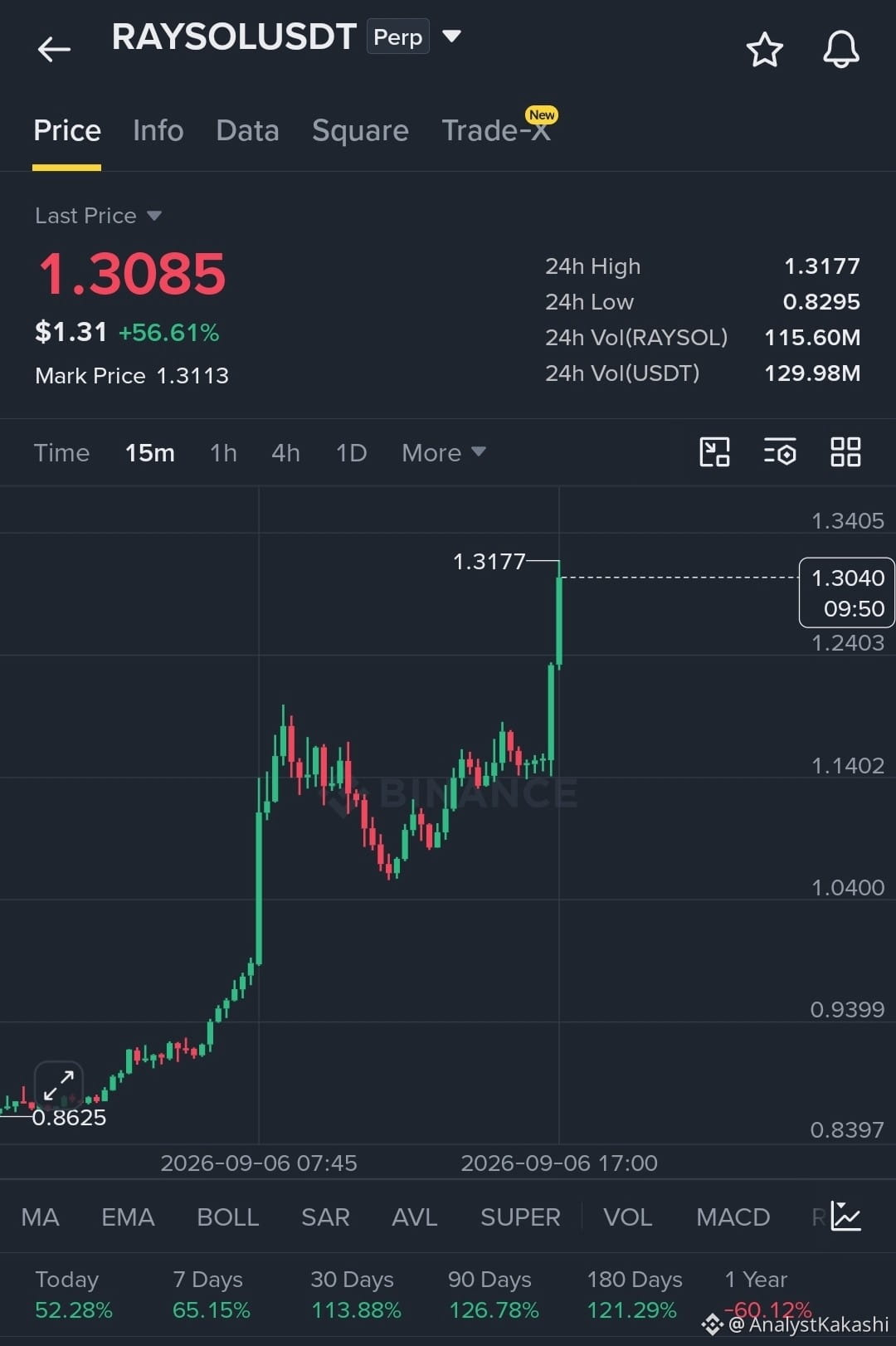
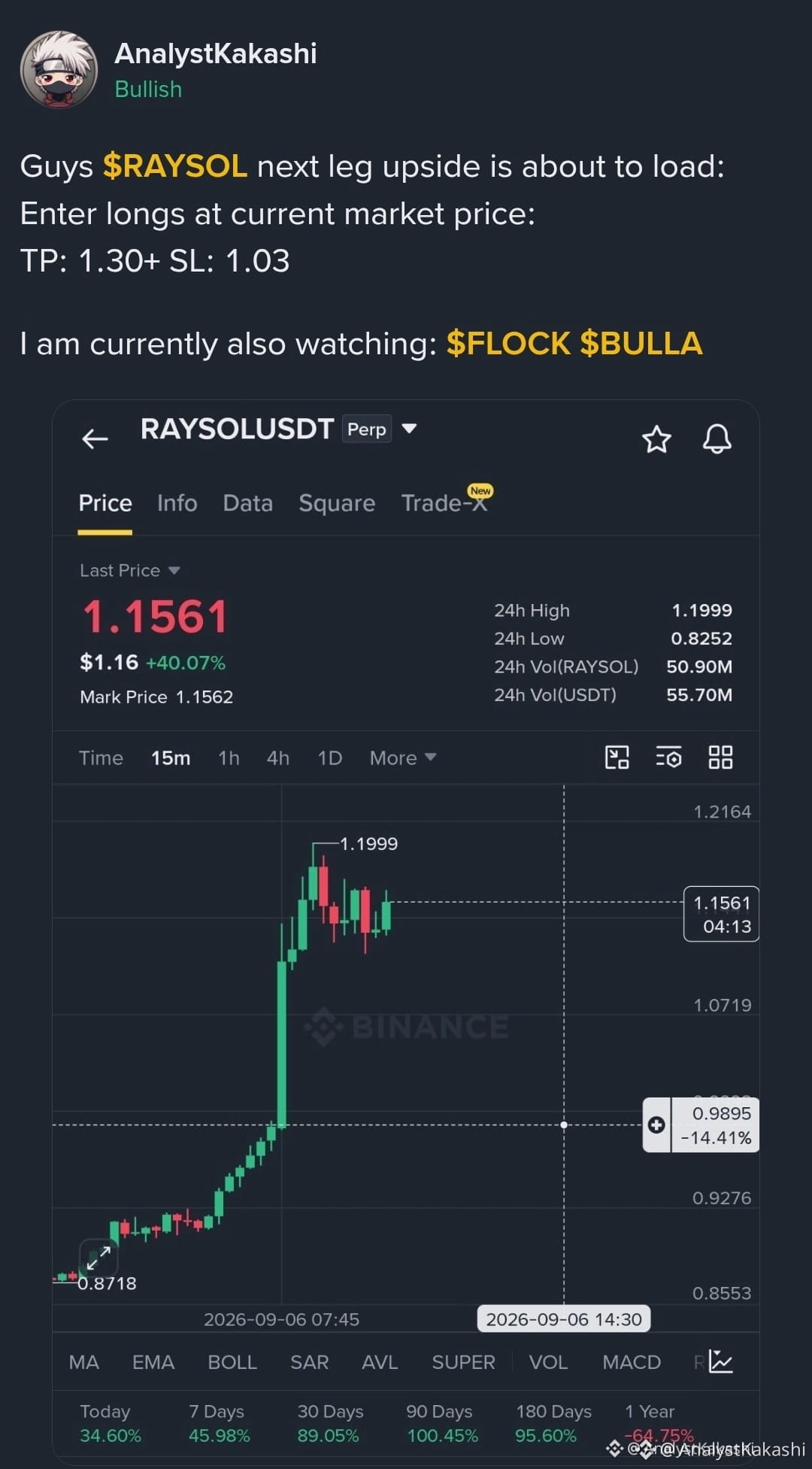
Who is enjoying and riding the wave with #AnalystKakashi 😍🤑 $RAYSOL on fire, if you listened #Congratulations😊😍 and enjoy your profits. still early and super bullish but trade cautiously.
I am currently also watching: $DASH $ZEC
Who is enjoying and riding the wave with #AnalystKakashi 😍🤑 $RAYSOL on fire, if you listened #Congratulations😊😍 and enjoy your profits. still early and super bullish but trade cautiously.
I am currently also watching: $DASH $ZEC
I am currently also watching: $DASH $ZEC
389
·
--
Bullish
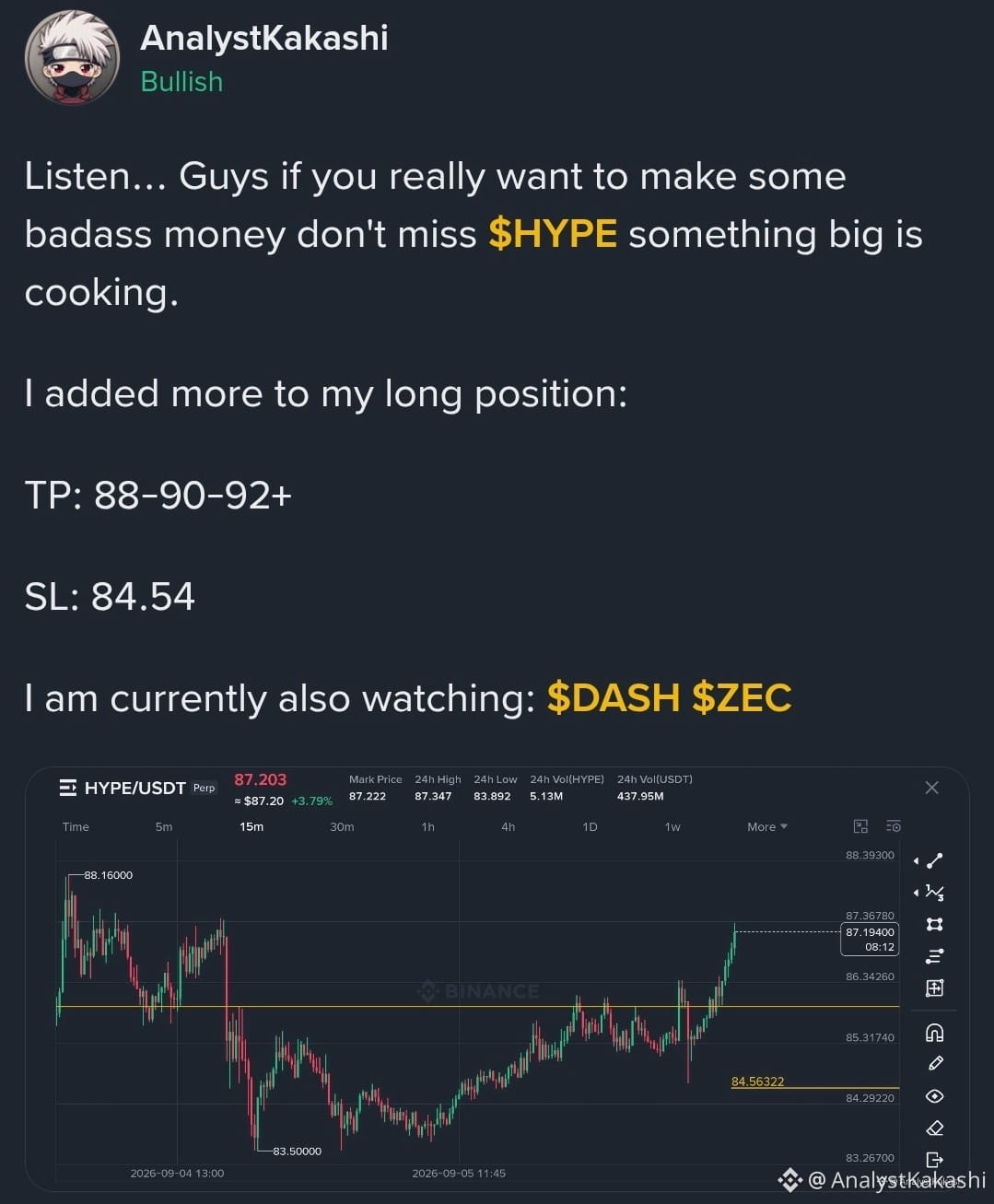
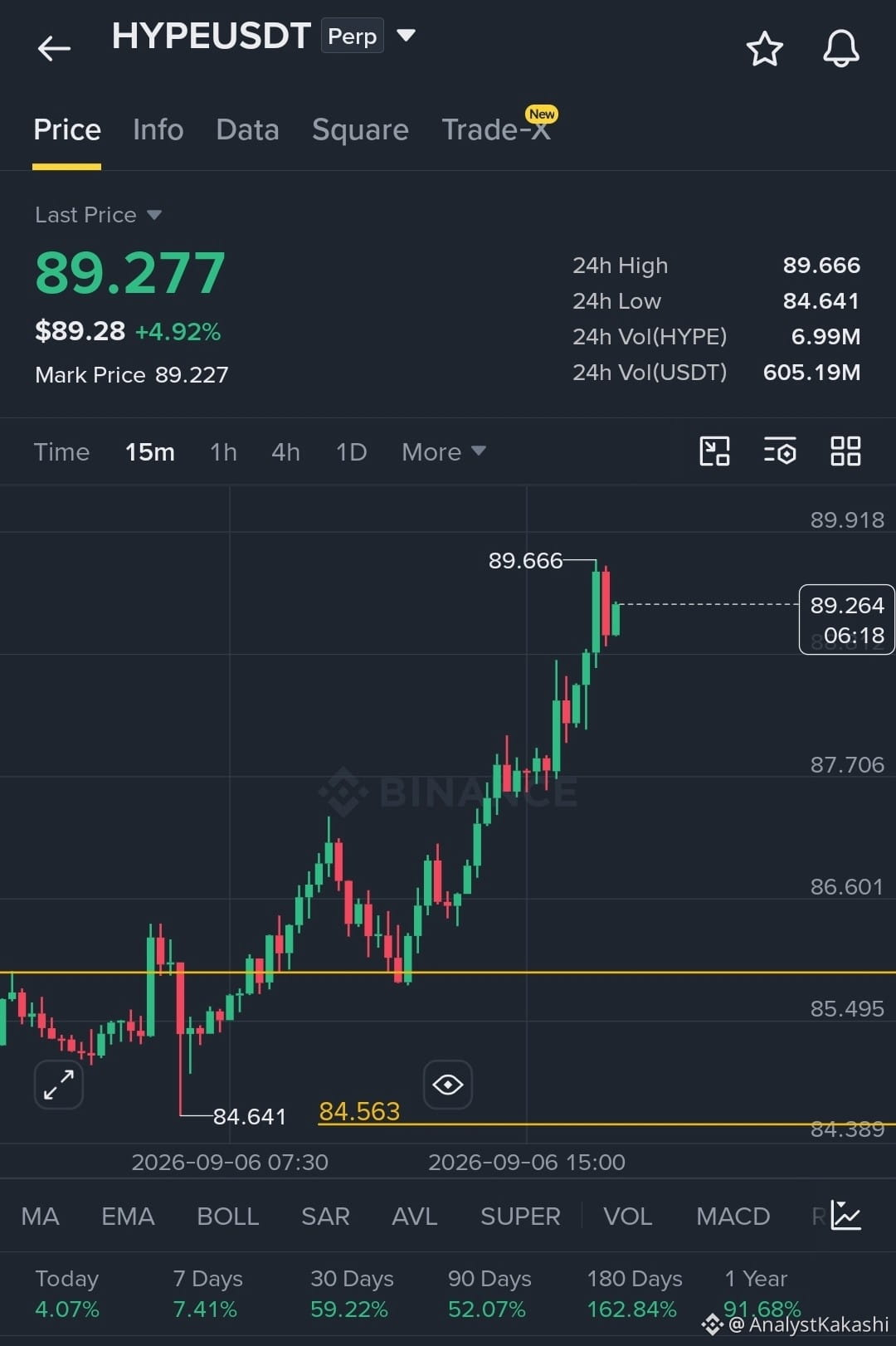
#AnalystKakashi is still in the $HYPE trade. #Congratulations😊😍 our first target zones smashed.
It's early I think next best performer after $ZEC and $BNB is HYPE.
Keep the longs on, buying the dips means getting more richer.
#AnalystKakashi is still in the $HYPE trade. #Congratulations😊😍 our first target zones smashed.
It's early I think next best performer after $ZEC and $BNB is HYPE.
Keep the longs on, buying the dips means getting more richer.
It's early I think next best performer after $ZEC and $BNB is HYPE.
Keep the longs on, buying the dips means getting more richer.
220
·
--
Bullish
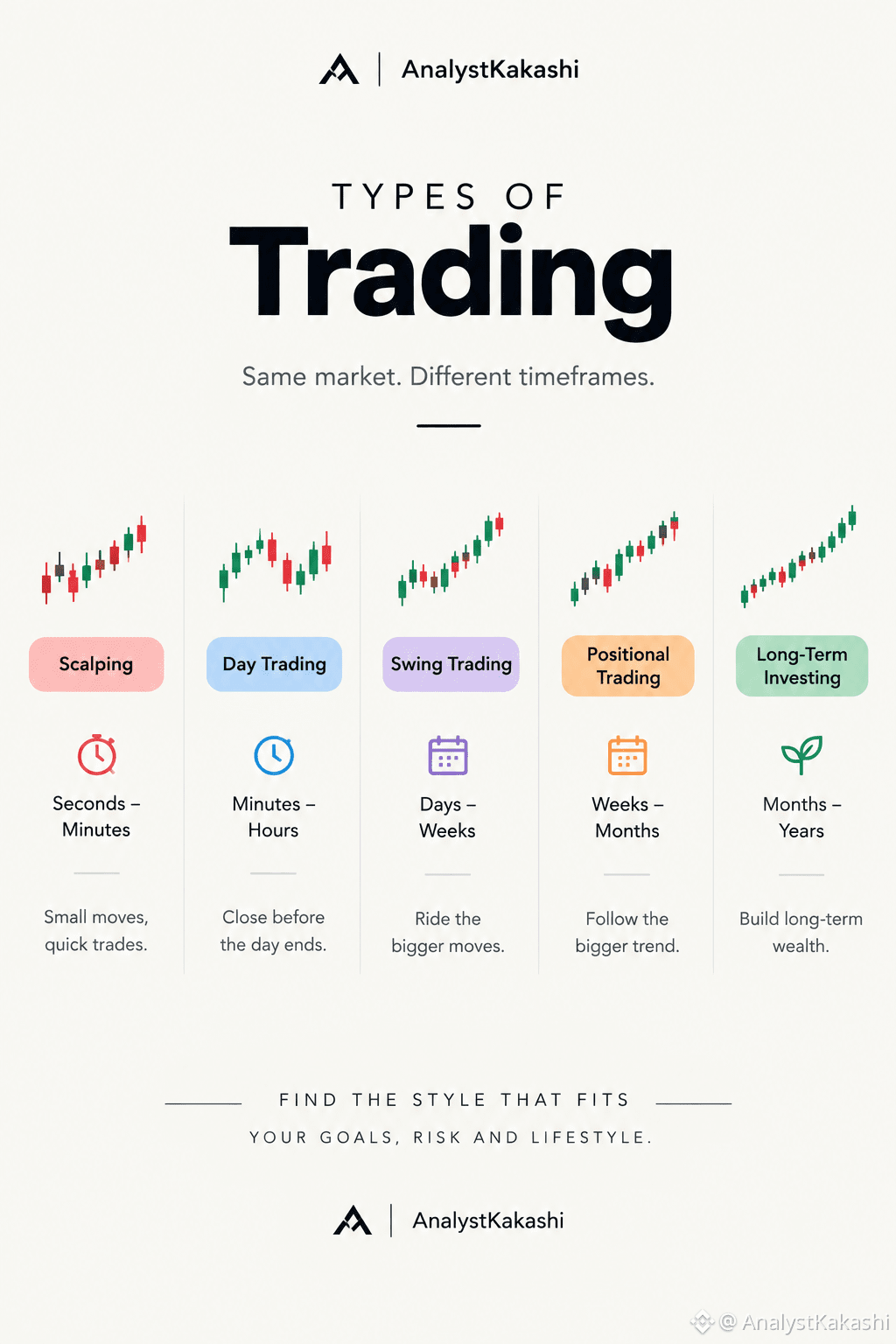
📊 Different Types of Trading — Which One Fits You?
Not every trader operates on the same timeframe. Your trading style depends on how long you hold a position, how often you trade, and how much time you can dedicate to the market.
1. Scalping ⚡
⏱️ Holding time: Seconds to minutes
🎯 Goal: Capture small price movements
📌 Trades: Many per day
Best for traders who can monitor the market constantly and execute quickly.
2. Day Trading 📅
⏱️ Holding time: Minutes to hours
🎯 Goal: Capture intraday moves
📌 Positions are usually closed before the day ends
Best for traders who prefer active participation without overnight exposure.
3. Swing Trading 🌊
⏱️ Holding time: Several days to a few weeks
🎯 Goal: Capture medium-term market swings
📌 Fewer trades, larger expected moves
Best for traders who want a balance between active trading and patience.
4. Positional Trading 📈
⏱️ Holding time: Weeks to months
🎯 Goal: Capture major market trends
📌 Trades are based more on broader market structure and fundamentals
Best for traders who don't want to constantly watch the charts.
5. Long-Term / Investing 🏦
⏱️ Holding time: Months to years
🎯 Goal: Benefit from long-term growth
📌 Short-term price fluctuations matter less
Best for people focused on long-term wealth creation rather than frequent trading.
The key difference?
Scalper → Minutes
Day Trader → Hours
Swing Trader → Days/Weeks
Position Trader → Weeks/Months
Investor → Months/Years
There is no single "best" trading style.
The best style is the one that matches your strategy, risk tolerance, capital, personality, and available time.
Choose your timeframe first. Then build your strategy around it.
Watchlist: $CAP $龙虾 $POWER
#AnalystKakashi #AvalancheIntegratesIntoUAEPassDigitalVault #SouthKoreaCryptoTaxDelayPetitionTops50000 #SolanaTransactionV1GoesLiveOnMainnet #GrayscalePutsXRPAt26.11%InAdvisorPortfolio
352
·
--
Bullish
🔥 My Top 3 Favorite Crypto Coins — Regardless of Price
🥇 $ZEC — Privacy with Choice
Zcash stands out to me because it uses zero-knowledge technology to enable private transactions while also giving users the option to transact transparently. I like the flexibility of having privacy when you need it.
🥈 $XMR — Privacy by Default
Monero takes a different approach. Privacy is built into the network by default, with transactions designed to hide the sender, receiver, and amount. I respect its strong commitment to fungibility and financial privacy.
⚡ ZEC vs XMR — The Key Difference:
ZEC = optional privacy. 🛡️
XMR = privacy by default. 🔒
🥉 $XEC — Built for Everyday Payments
eCash interests me because of its focus on fast, low-cost digital cash and everyday usability. The idea of making crypto feel more like actual digital money is what attracts me.
💎 These aren't my favorites because of today's price.
I like them because of their technology, vision, and the problems they're trying to solve.
Price changes. Narratives change.
Conviction comes from understanding what you hold. 🧠⚡
#AnalystKakashi #XMR #XEC #zec
{future}(ZECUSDT)
{future}(XMRUSDT)
{spot}(XECUSDT)
🔥 My Top 3 Favorite Crypto Coins — Regardless of Price
🥇 $ZEC — Privacy with Choice
Zcash stands out to me because it uses zero-knowledge technology to enable private transactions while also giving users the option to transact transparently. I like the flexibility of having privacy when you need it.
🥈 $XMR — Privacy by Default
Monero takes a different approach. Privacy is built into the network by default, with transactions designed to hide the sender, receiver, and amount. I respect its strong commitment to fungibility and financial privacy.
⚡ ZEC vs XMR — The Key Difference:
ZEC = optional privacy. 🛡️
XMR = privacy by default. 🔒
🥉 $XEC — Built for Everyday Payments
eCash interests me because of its focus on fast, low-cost digital cash and everyday usability. The idea of making crypto feel more like actual digital money is what attracts me.
💎 These aren't my favorites because of today's price.
I like them because of their technology, vision, and the problems they're trying to solve.
Price changes. Narratives change.
Conviction comes from understanding what you hold. 🧠⚡
#AnalystKakashi #XMR #XEC #zec

1
3
789
·
--
Bearish
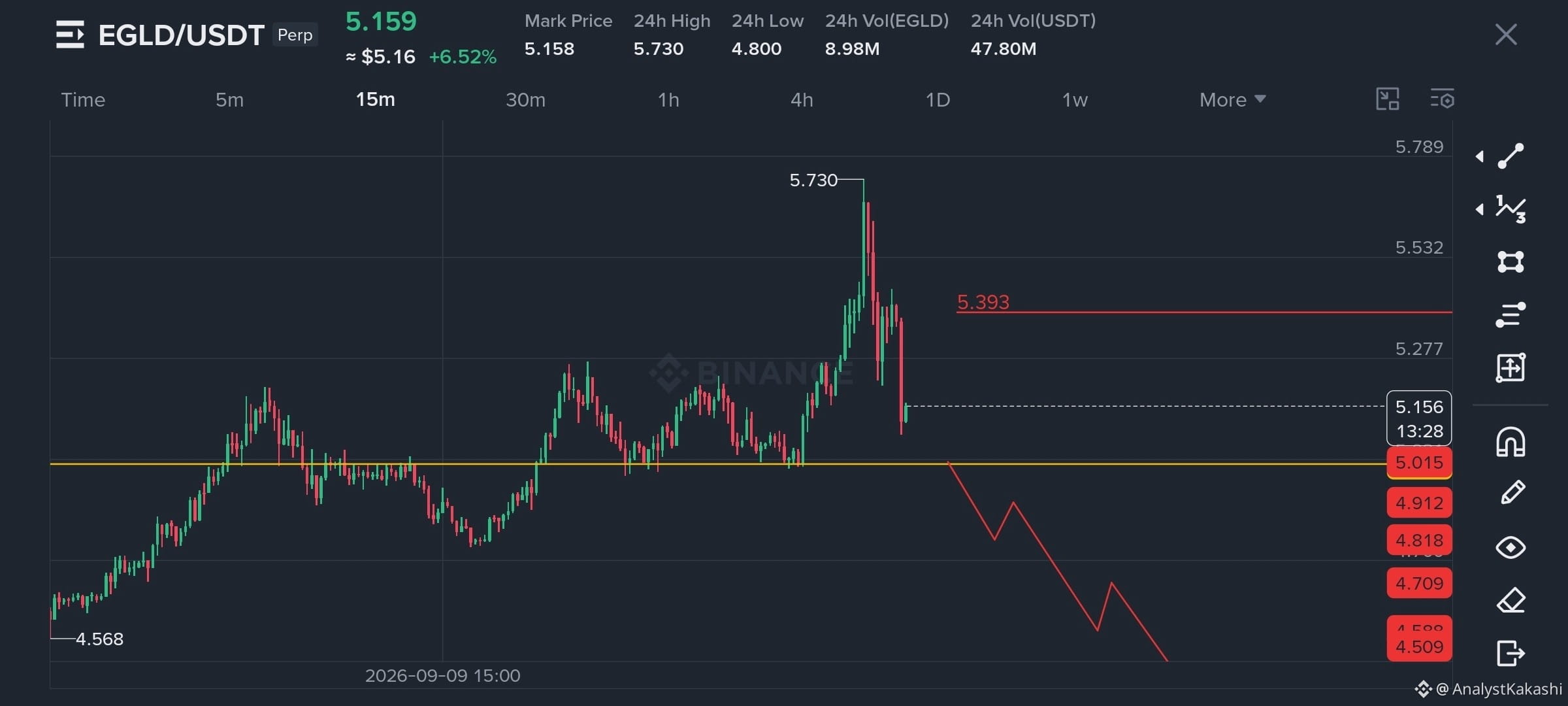
Guys, the bearish setup on $EGLD looks ready. I’m seeing heavy selling pressure, and it’s completely wiping out the daily candle.
This kind of strong pressure doesn’t always lead to a small or short-term pullback. If sellers continue to dominate, it can easily develop into a bigger downtrend. So I’d stay cautious here and watch the price action closely.
Entry: losing marked support level with retest.
Stop-loss: 5.39
TP: 4.80-4.50-4.00 and lower
RM: we will trail Stop-loss gradually.
Watch the levels closely and don't FOMO.
I am currently also watching $VVV $VTHO
#AnalystKakashi
155
·
--
Bullish
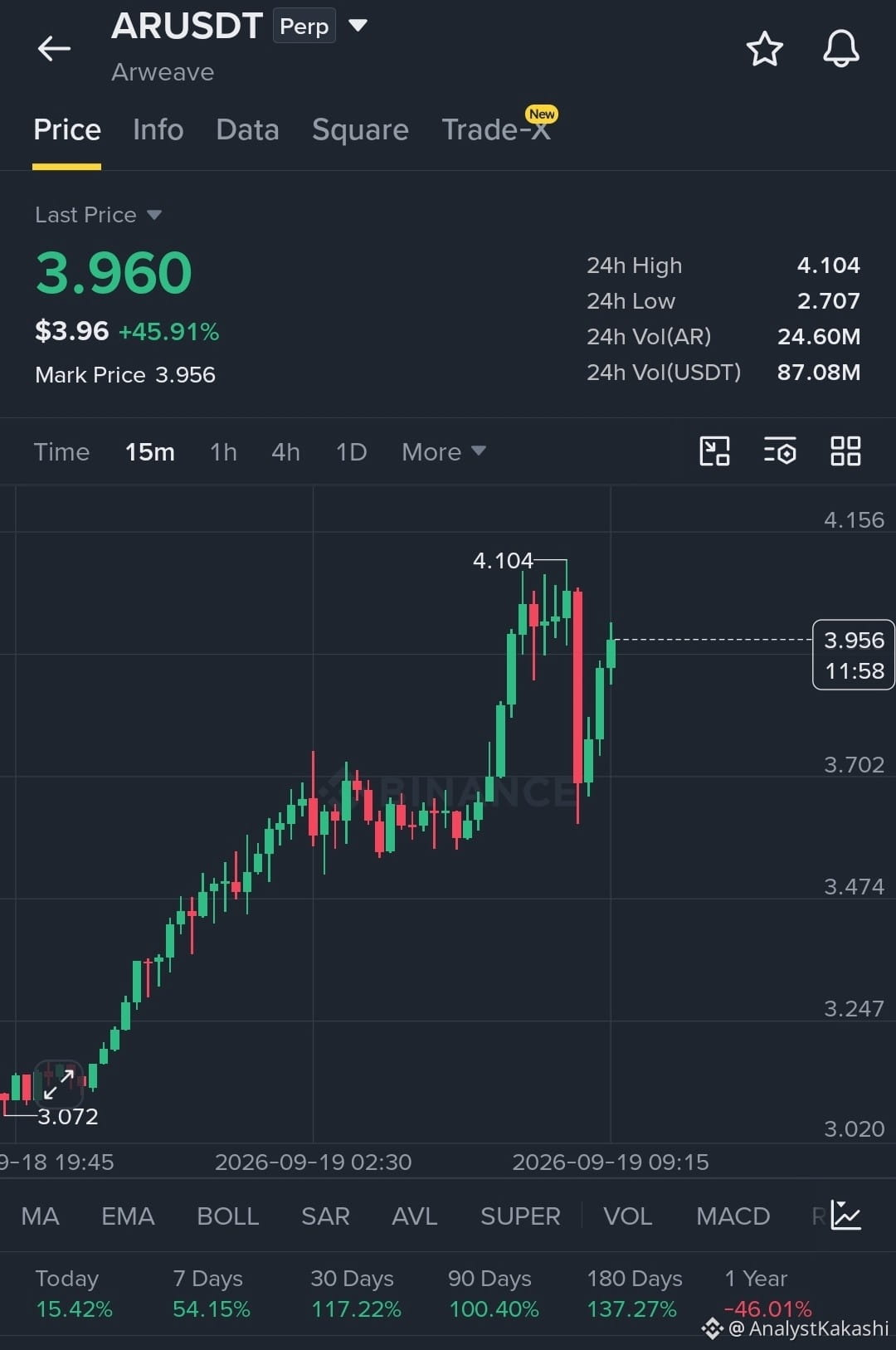
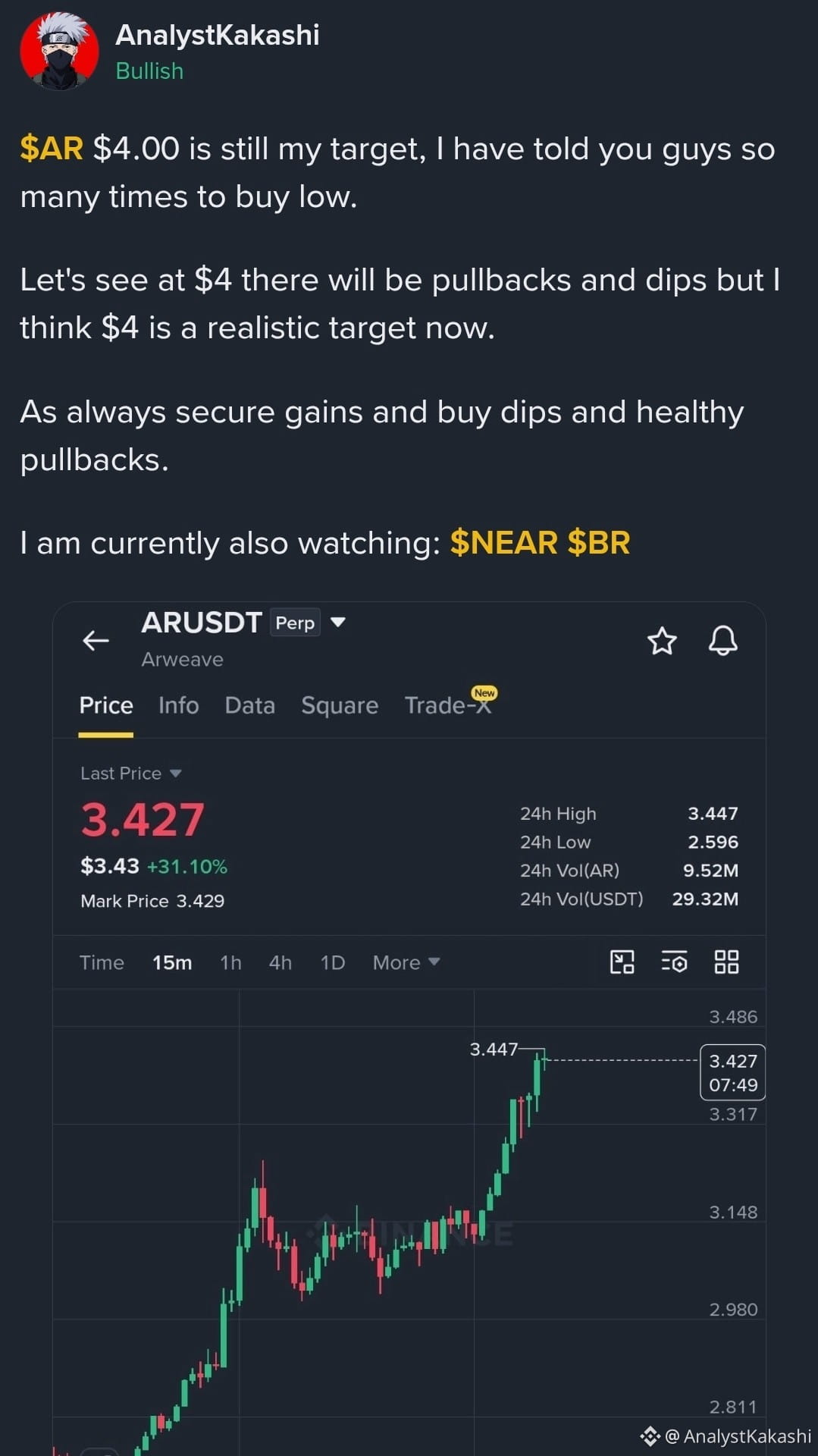
$AR has reached our main target at $4.00 as projected.
The bullish structure remains intact, and I’m watching for potential continuation toward the next resistance levels.
I’ll wait for confirmation before updating the next target.
I am currently also watching: $BR $AKE
#AnalystKakashi
$AR has reached our main target at $4.00 as projected.
The bullish structure remains intact, and I’m watching for potential continuation toward the next resistance levels.
I’ll wait for confirmation before updating the next target.
I am currently also watching: $BR $AKE
#AnalystKakashi
The bullish structure remains intact, and I’m watching for potential continuation toward the next resistance levels.
I’ll wait for confirmation before updating the next target.
I am currently also watching: $BR $AKE
#AnalystKakashi
515
·
--
Bullish
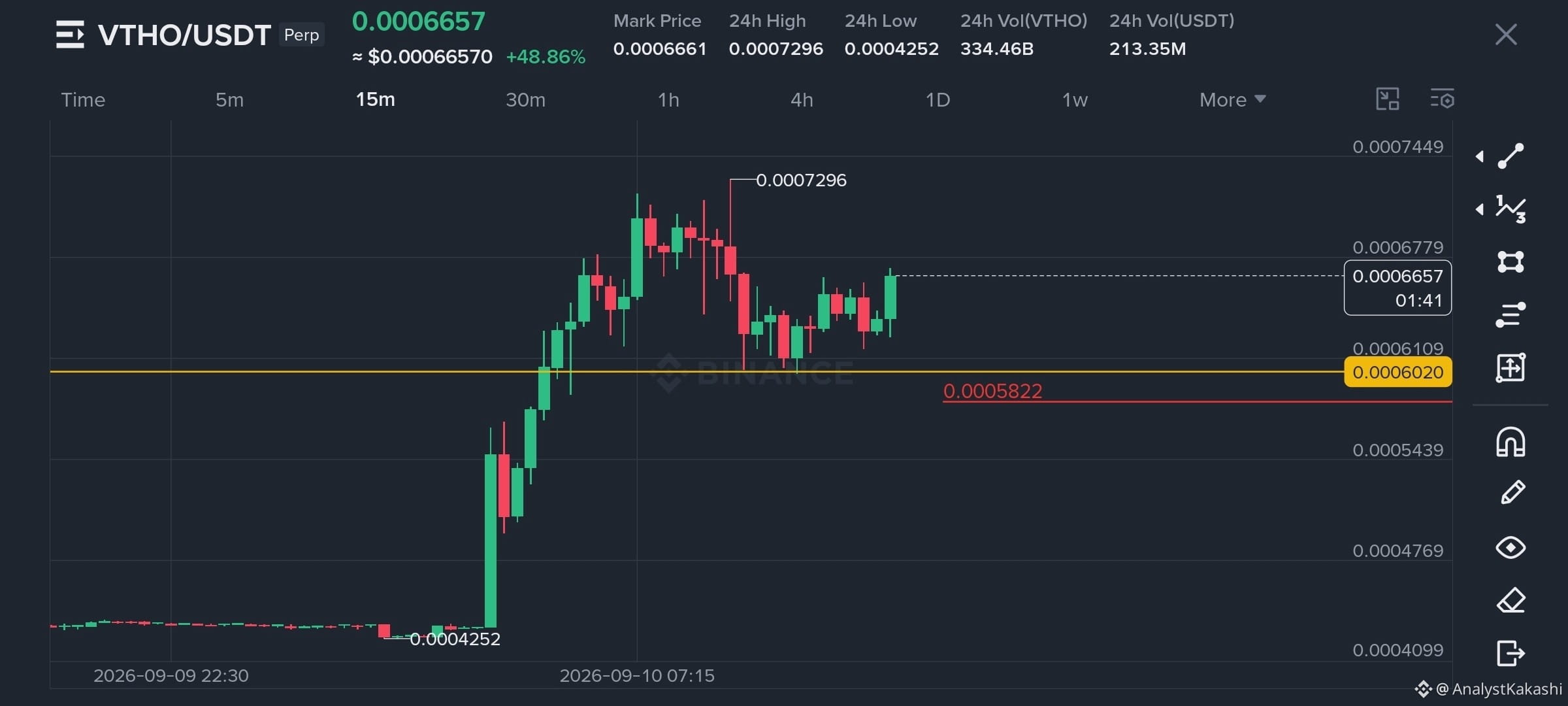
Guys want some good money join me on $VTHO long now.
I just took a long position on VTHO:
TP: 0.00073-0.00075-0.00078+
SL: 0.0005822 very tight
I am currently also watching $VVV $ZEC
#AnalystKakashi
Guys want some good money join me on $VTHO long now.
I just took a long position on VTHO:
TP: 0.00073-0.00075-0.00078+
SL: 0.0005822 very tight
I am currently also watching $VVV $ZEC
#AnalystKakashi
I just took a long position on VTHO:
TP: 0.00073-0.00075-0.00078+
SL: 0.0005822 very tight
I am currently also watching $VVV $ZEC
#AnalystKakashi
1
330
·
--
Bullish
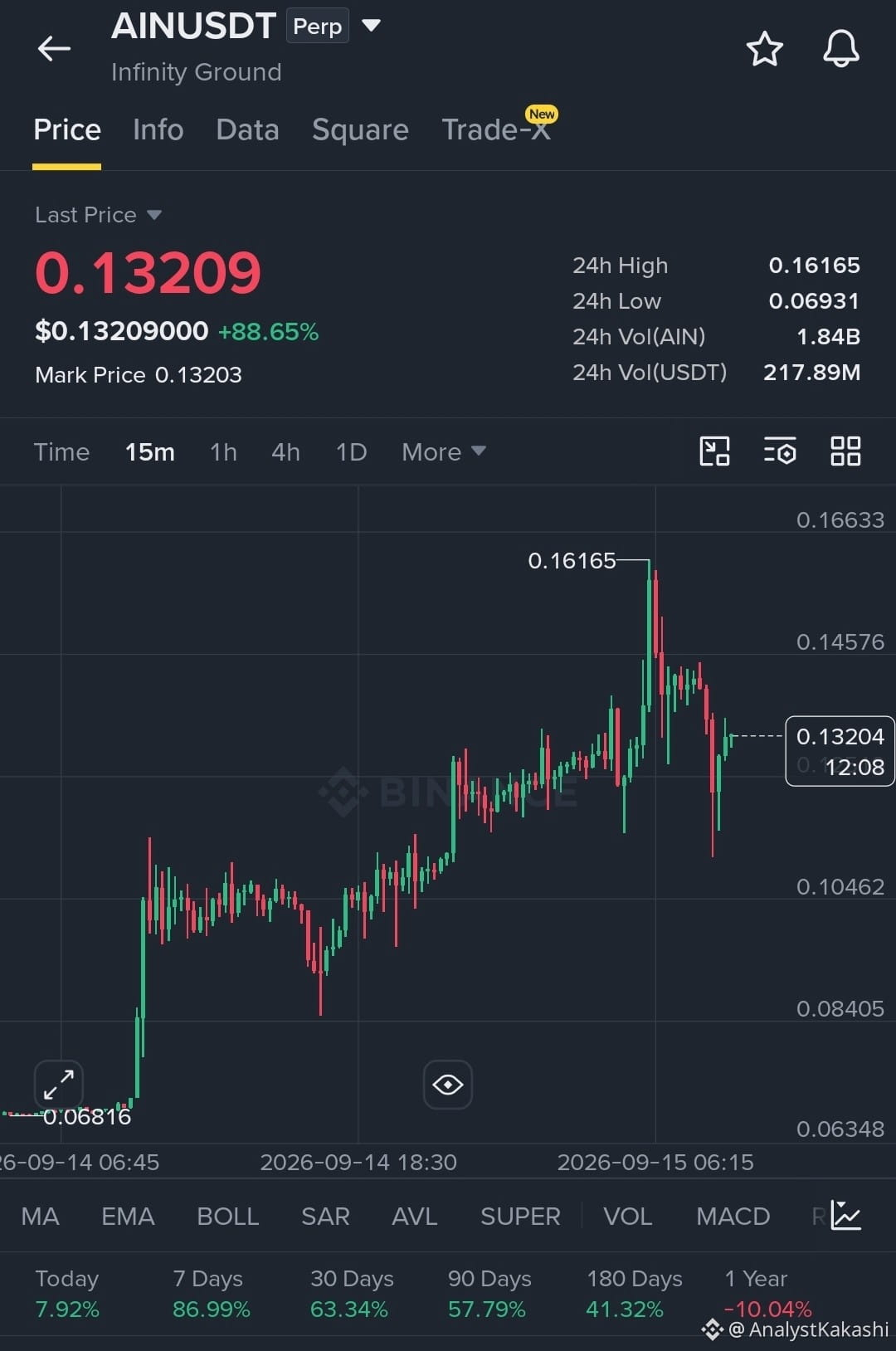
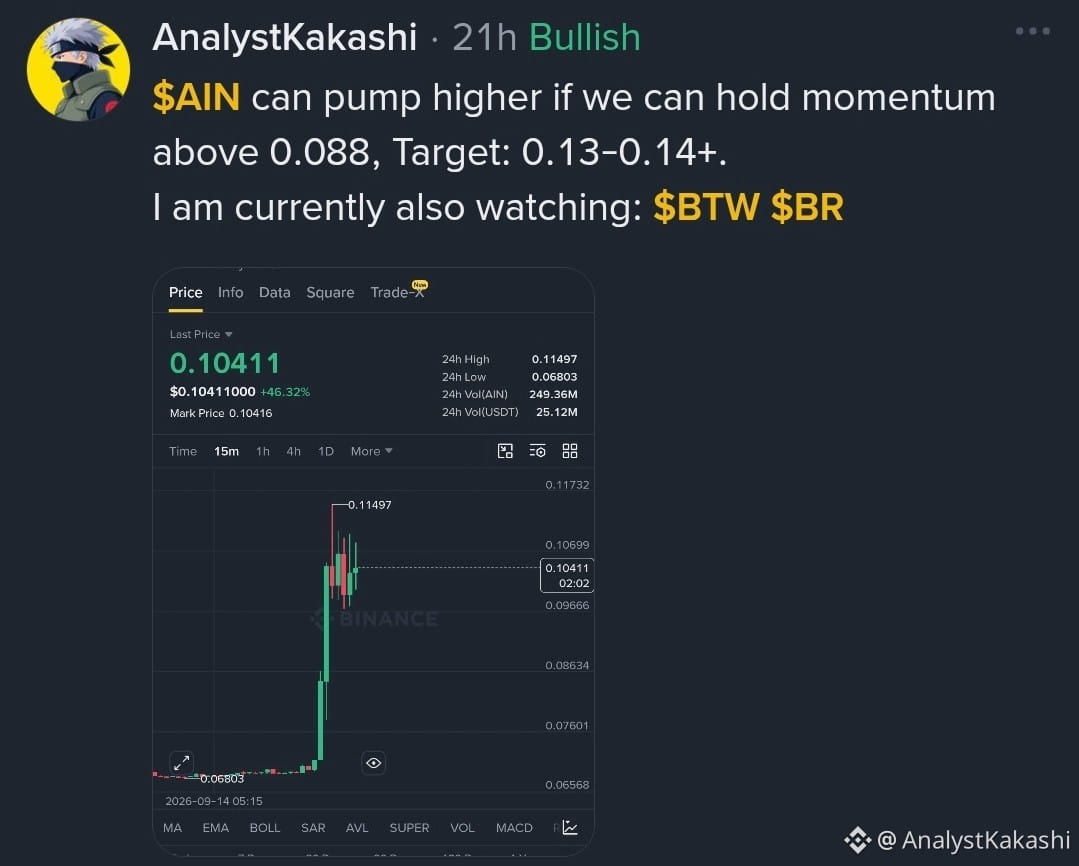
$AIN exactly targeted those daily wicks after the fake downside move and hit our targets successfully.
I am currently also watching: $POWER $CAP
#AnalystKakashi
$AIN exactly targeted those daily wicks after the fake downside move and hit our targets successfully.
I am currently also watching: $POWER $CAP
#AnalystKakashi
I am currently also watching: $POWER $CAP
#AnalystKakashi
305
Log in to explore more content
Join global crypto users on Binance Square
⚡️ Get latest and useful information about crypto.
💬 Trusted by the world’s largest crypto exchange.
👍 Discover real insights from verified creators.
Email / Phone number
Trending Topics
1
#CanMicrosoftDeliverOnAI
267,278 views
2,144 Discussing
2
#CanGoogleDefindItsCore
152,941 views
1,568 Discussing
3
#EarningsSeason
5.8M views
28,165 Discussing
4
#BitcoinSurpasses$81K
6,793 views
49 Discussing
5
#RobinhoodFalls8.4%AfterItsResults
3,527 views
102 Discussing
6
#KOSPISurges6.63%BackAbove6000
3,421 views
108 Discussing
7
#DatavaultAICantWithdrawBitcoinFromBiconomy
5,517 views
112 Discussing
8
#FOMCWatch
9.3M views
29,254 Discussing
9
#SolanaETFsPostWorstDaySinceDecember
130 views
18 Discussing
10
#HKPlacesTokenizedFundSecondaryTradingUnderETFLikeFramework
1,277 views
33 Discussing