

#avaausdt
avaausdt
6,400 views
18 Discussing
Hot
Latest

·
--
Bullish
Strong momentum $AVAAI There is still an opportunity to buy
Buy 0.011700
First target 0.01450
Second target 0.01660
Third target 0.01749
Stop loss
0.01060
#AVAAUSDT
Strong momentum $AVAAI There is still an opportunity to buy
Buy 0.011700
First target 0.01450
Second target 0.01660
Third target 0.01749
Stop loss
0.01060
#AVAAUSDT
Buy 0.011700
First target 0.01450
Second target 0.01660
Third target 0.01749
Stop loss
0.01060
#AVAAUSDT
1
212


·
--
Bearish
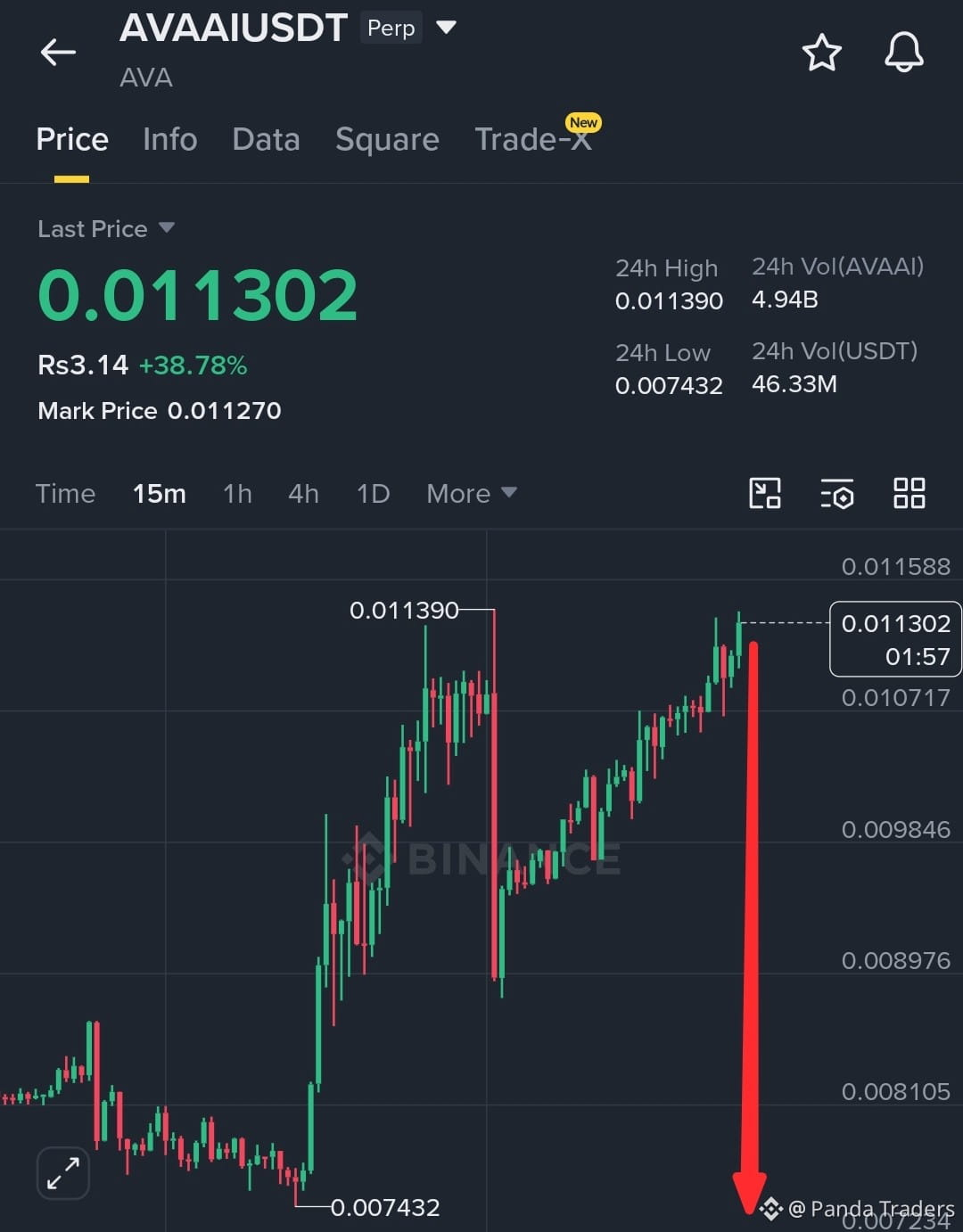
$AVAAI DUMP Alert 🚨📉
Entry zone: 0.01130–0.01170
Stop loss: 0.1390
TP1: 0.01055
TP2: 0.00965
TP3: 0.00885
DYOR
Never invest all in one trade
Use trailing stop loss in profit 🔥
Click below and short 👇👇👇
{future}(AVAAIUSDT)
#AVAAUSDT #FootballSeason2026 WTICrudeRises2%To$84#KOSPIActivatesSidecarOnChipSelloff #CaspianPipelineHaltsOilLoadings
$AVAAI DUMP Alert 🚨📉
Entry zone: 0.01130–0.01170
Stop loss: 0.1390
TP1: 0.01055
TP2: 0.00965
TP3: 0.00885
DYOR
Never invest all in one trade
Use trailing stop loss in profit 🔥
Click below and short 👇👇👇
#AVAAUSDT #FootballSeason2026 WTICrudeRises2%To$84#KOSPIActivatesSidecarOnChipSelloff #CaspianPipelineHaltsOilLoadings
Entry zone: 0.01130–0.01170
Stop loss: 0.1390
TP1: 0.01055
TP2: 0.00965
TP3: 0.00885
DYOR
Never invest all in one trade
Use trailing stop loss in profit 🔥
Click below and short 👇👇👇
#AVAAUSDT #FootballSeason2026 WTICrudeRises2%To$84#KOSPIActivatesSidecarOnChipSelloff #CaspianPipelineHaltsOilLoadings
15
1
13
9k

·
--
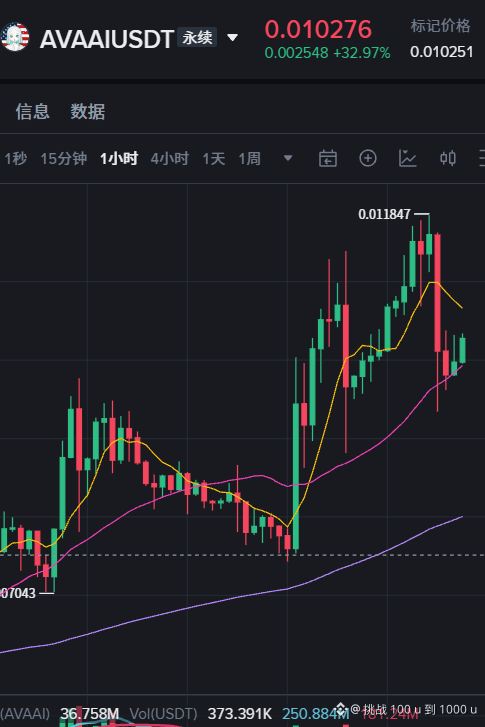
#AVAAUSDT upward pull possibility is very high
{future}(AVAAIUSDT)
#AVAAUSDT upward pull possibility is very high
75

·
--
I picked up this beautiful coin Alfa
#AVAAUSDT
The cool thing about Alfa and Spot is that it just needs some patience and its profits are great
No liquidation price or instant trading fees
Calmness and professional trading 😃
No need for pickles
Just readings and conviction, based on your own thoughts
The decision to avoid futures contracts is really comforting
And steering clear of random streams is a solid choice
Wishing everyone good luck
Morning of ease 😃
I picked up this beautiful coin Alfa
#AVAAUSDT
The cool thing about Alfa and Spot is that it just needs some patience and its profits are great
No liquidation price or instant trading fees
Calmness and professional trading 😃
No need for pickles
Just readings and conviction, based on your own thoughts
The decision to avoid futures contracts is really comforting
And steering clear of random streams is a solid choice
Wishing everyone good luck
Morning of ease 😃
#AVAAUSDT
The cool thing about Alfa and Spot is that it just needs some patience and its profits are great
No liquidation price or instant trading fees
Calmness and professional trading 😃
No need for pickles
Just readings and conviction, based on your own thoughts
The decision to avoid futures contracts is really comforting
And steering clear of random streams is a solid choice
Wishing everyone good luck
Morning of ease 😃
3
152

·
--
Bearish
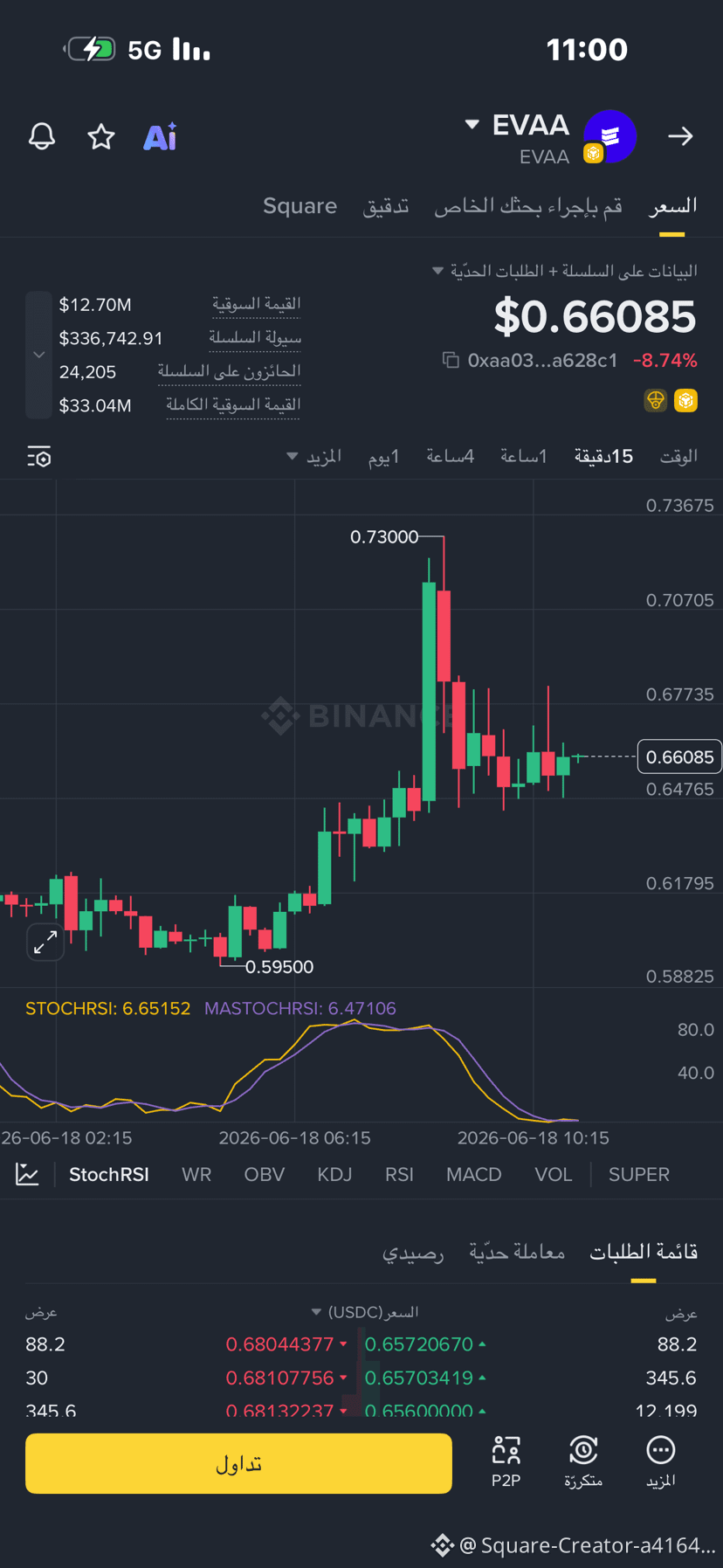
🔴 $EVAA 4H
Zone of interest: $0.7620 – $0.7948
Idea invalidation level: $0.8366
Targets: $0.7184 / $0.6718 / $0.6186
Following a strong rebound, the upper zone could turn into a trap for buyers — sellers are gaining room for a sharp structural break.
Not financial advice.
#TechnicalAnalysis #DYOR #AVAAUSDT 👇🤝
🔴 $EVAA
{future}(EVAAUSDT)
🔴 $EVAA 4H
Zone of interest: $0.7620 – $0.7948
Idea invalidation level: $0.8366
Targets: $0.7184 / $0.6718 / $0.6186
Following a strong rebound, the upper zone could turn into a trap for buyers — sellers are gaining room for a sharp structural break.
Not financial advice.
#TechnicalAnalysis #DYOR #AVAAUSDT 👇🤝
🔴 $EVAA
Zone of interest: $0.7620 – $0.7948
Idea invalidation level: $0.8366
Targets: $0.7184 / $0.6718 / $0.6186
Following a strong rebound, the upper zone could turn into a trap for buyers — sellers are gaining room for a sharp structural break.
Not financial advice.
#TechnicalAnalysis #DYOR #AVAAUSDT 👇🤝
🔴 $EVAA
3
112

·
--
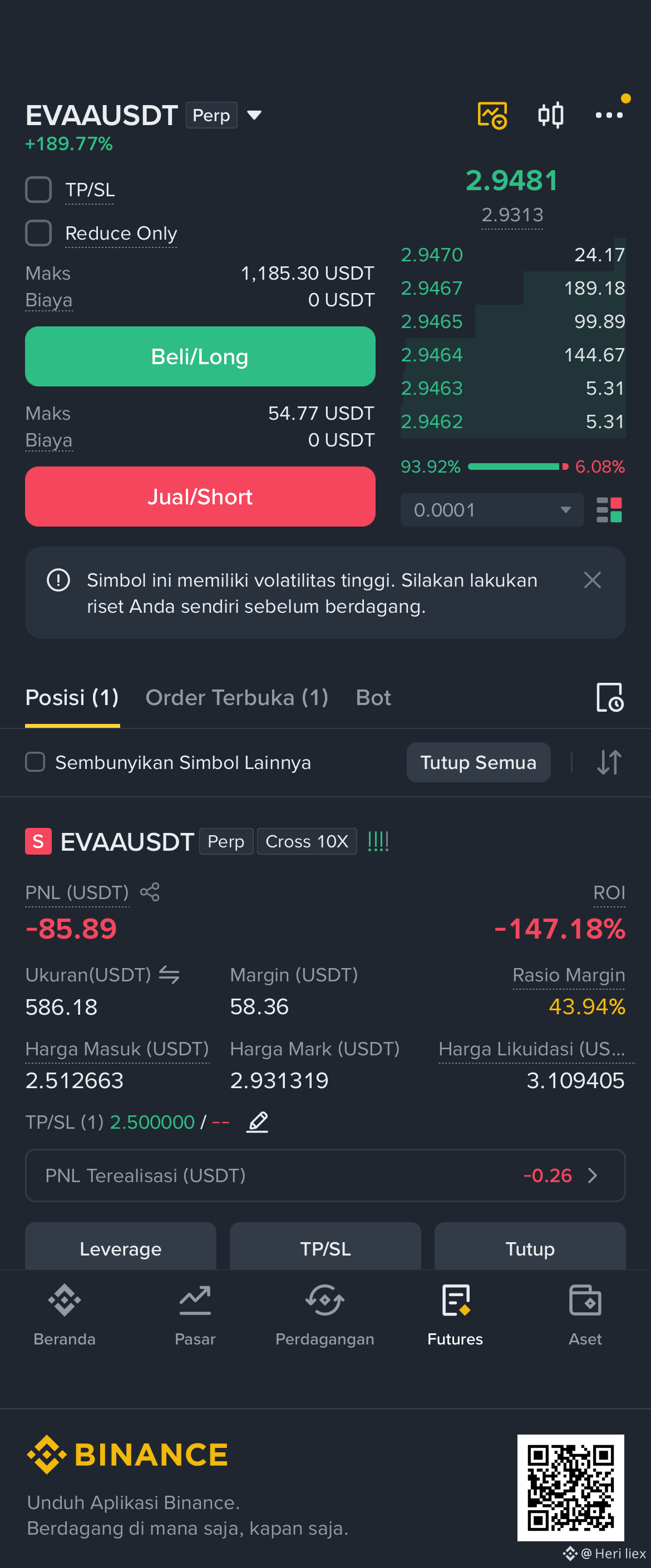
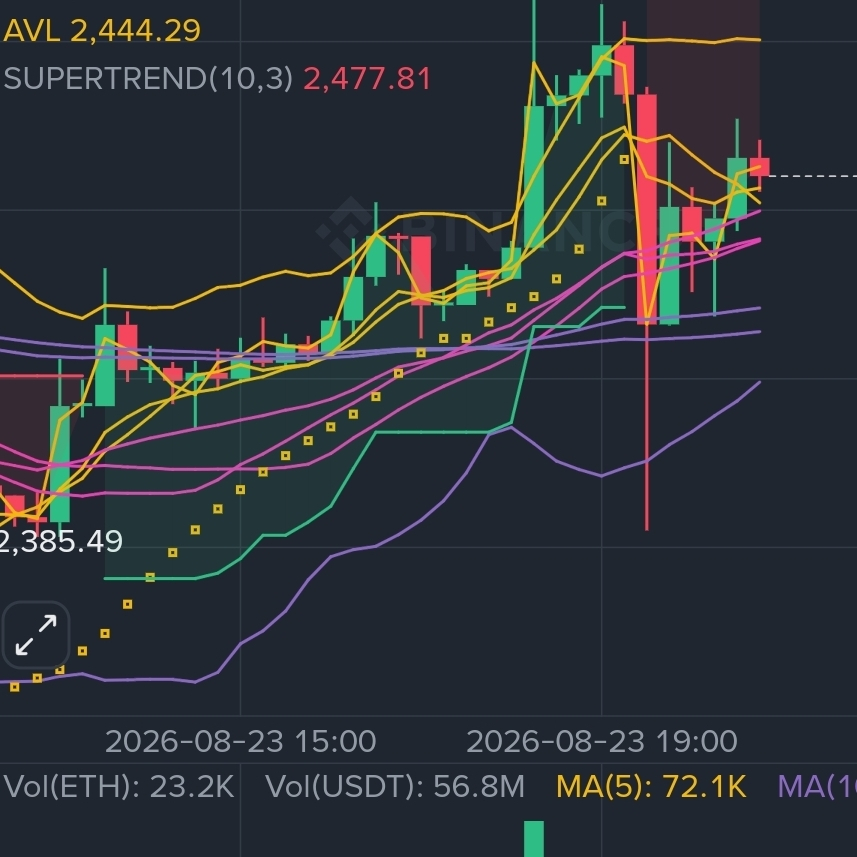
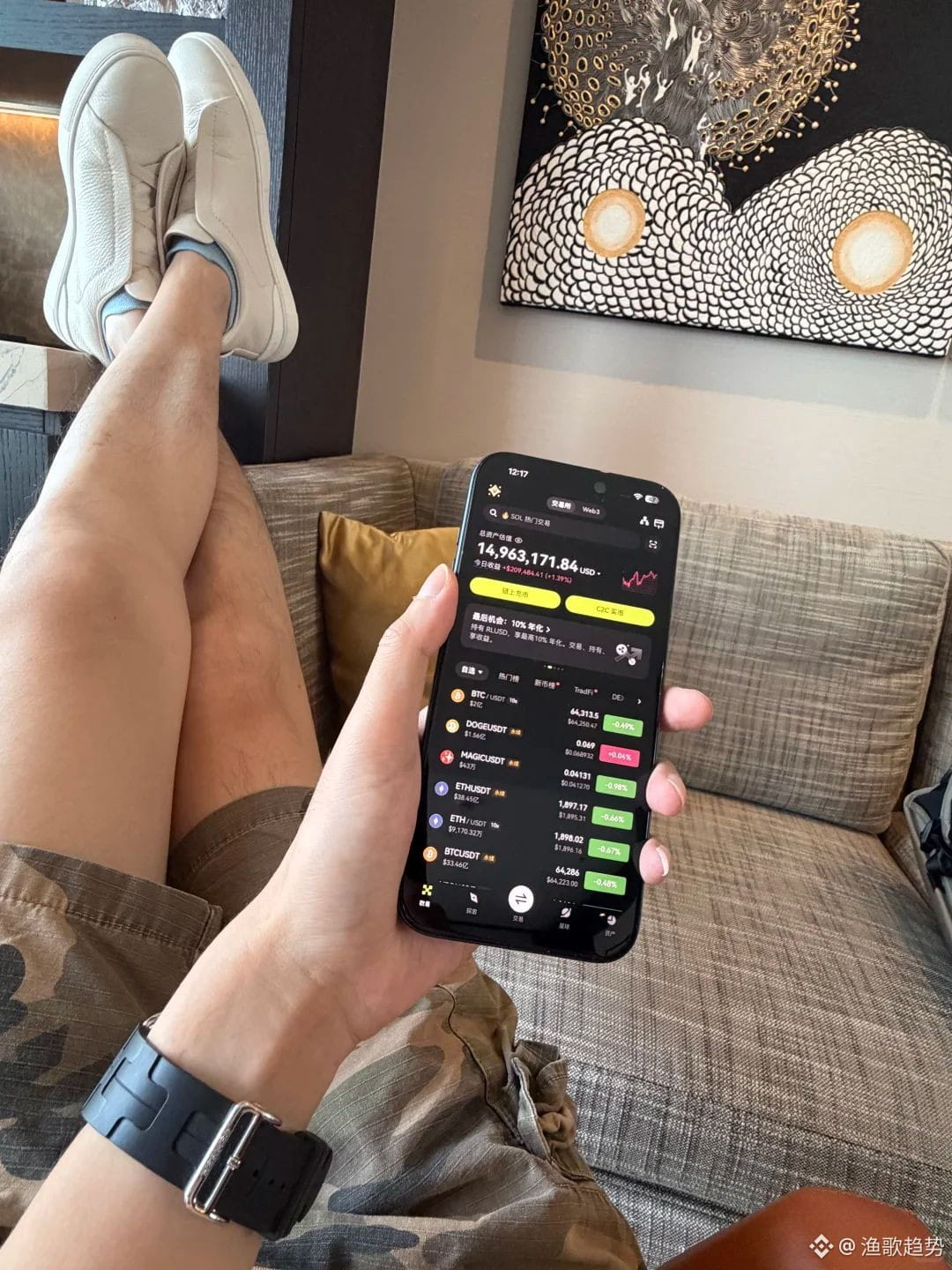
From nothing to $50 million in assets—maybe what I’ve gone through could be a reference for you.
I’m a post-90s millennial, from Chengdu, and I’m now based in Shenzhen.
9 years ago I entered the market. The first 4 years were completely clueless: stop-losses, liquidations, going to zero, even getting swept out of my capital by smaller teams. Every pit I should have avoided—I stepped into.
Those years, I watched several opportunities slip right out of my hands. Even my girlfriend wanted to break up with me. Back then, I drank away my sorrow every day. But it was in that low valley that I made it through “312.”
Many people know: that wave was an enormous opportunity.
I grabbed it too. Starting with the remaining 7000U, I went all in and made it to over 8 million.
That turnaround gave me a name in the crypto world.
But what truly helped me grow wasn’t getting rich overnight—it was the later settling and accumulation.
I started to review my trades, study the logic of the market, and hone my mindset.
Today, my account has surpassed 10 million U.
I don’t have insider information, and I’m not riding a so-called “god-tier bull market.” I’m just using a set of “ridiculously dumb” methods.
Rule 1: Fast up, slow down—that’s the market maker accumulating.
Don’t panic. If it shoots up and then declines slowly, most of the time it’s just distribution/cleaning. When you truly see the top, it’s often a “surge with a volume spike followed by one single waterfall candle.”
Rule 2: Fast down, slow up—that’s the market maker distributing.
After a flash crash, it rebounds slowly. That’s not an opportunity—it’s a trap. Don’t keep asking, “Can it still drop?”—Yes, it can.
Rule 3: A volume spike at the top doesn’t necessarily mean it’s over. Low volume is what’s dangerous.
At high levels with volume: there may still be a push.
At high levels without volume: silence—an eerie stillness—that’s the real night before the collapse.
Rule 4: Don’t rush into action just because volume spikes at the bottom—consistency is what matters.
A single volume surge might just be bait. Continuous volume surges—that’s the real accumulation/building position.
Rule 5: Never go all-in.
Position management isn’t nonsense. It’s the only bottom line that determines whether you can survive. A full-portfolio gambler: win once is luck; lose once and you’re out.
Rule 6: Rhythm matters more than entry/exit levels; mindset matters more than tactics.
The market is always there, but opportunities don’t wait. What you need isn’t to run faster—it’s to hold your rhythm, and last until the moment that belongs to you.
Many people aren’t failing to work hard—they’re always crashing around in the dark. Losses, liquidations, reviewing again, then losing again—over and over.
The market is always there. Rhythm doesn’t wait.
What you truly need isn’t a god-tier technique—it’s a light in my hand, whether you can’t follow @Square-Creator-58b326784 #AVAAUSDT
From nothing to $50 million in assets—maybe what I’ve gone through could be a reference for you.
I’m a post-90s millennial, from Chengdu, and I’m now based in Shenzhen.
9 years ago I entered the market. The first 4 years were completely clueless: stop-losses, liquidations, going to zero, even getting swept out of my capital by smaller teams. Every pit I should have avoided—I stepped into.
Those years, I watched several opportunities slip right out of my hands. Even my girlfriend wanted to break up with me. Back then, I drank away my sorrow every day. But it was in that low valley that I made it through “312.”
Many people know: that wave was an enormous opportunity.
I grabbed it too. Starting with the remaining 7000U, I went all in and made it to over 8 million.
That turnaround gave me a name in the crypto world.
But what truly helped me grow wasn’t getting rich overnight—it was the later settling and accumulation.
I started to review my trades, study the logic of the market, and hone my mindset.
Today, my account has surpassed 10 million U.
I don’t have insider information, and I’m not riding a so-called “god-tier bull market.” I’m just using a set of “ridiculously dumb” methods.
Rule 1: Fast up, slow down—that’s the market maker accumulating.
Don’t panic. If it shoots up and then declines slowly, most of the time it’s just distribution/cleaning. When you truly see the top, it’s often a “surge with a volume spike followed by one single waterfall candle.”
Rule 2: Fast down, slow up—that’s the market maker distributing.
After a flash crash, it rebounds slowly. That’s not an opportunity—it’s a trap. Don’t keep asking, “Can it still drop?”—Yes, it can.
Rule 3: A volume spike at the top doesn’t necessarily mean it’s over. Low volume is what’s dangerous.
At high levels with volume: there may still be a push.
At high levels without volume: silence—an eerie stillness—that’s the real night before the collapse.
Rule 4: Don’t rush into action just because volume spikes at the bottom—consistency is what matters.
A single volume surge might just be bait. Continuous volume surges—that’s the real accumulation/building position.
Rule 5: Never go all-in.
Position management isn’t nonsense. It’s the only bottom line that determines whether you can survive. A full-portfolio gambler: win once is luck; lose once and you’re out.
Rule 6: Rhythm matters more than entry/exit levels; mindset matters more than tactics.
The market is always there, but opportunities don’t wait. What you need isn’t to run faster—it’s to hold your rhythm, and last until the moment that belongs to you.
Many people aren’t failing to work hard—they’re always crashing around in the dark. Losses, liquidations, reviewing again, then losing again—over and over.
The market is always there. Rhythm doesn’t wait.
What you truly need isn’t a god-tier technique—it’s a light in my hand, whether you can’t follow @渔歌趋势 #AVAAUSDT
I’m a post-90s millennial, from Chengdu, and I’m now based in Shenzhen.
9 years ago I entered the market. The first 4 years were completely clueless: stop-losses, liquidations, going to zero, even getting swept out of my capital by smaller teams. Every pit I should have avoided—I stepped into.
Those years, I watched several opportunities slip right out of my hands. Even my girlfriend wanted to break up with me. Back then, I drank away my sorrow every day. But it was in that low valley that I made it through “312.”
Many people know: that wave was an enormous opportunity.
I grabbed it too. Starting with the remaining 7000U, I went all in and made it to over 8 million.
That turnaround gave me a name in the crypto world.
But what truly helped me grow wasn’t getting rich overnight—it was the later settling and accumulation.
I started to review my trades, study the logic of the market, and hone my mindset.
Today, my account has surpassed 10 million U.
I don’t have insider information, and I’m not riding a so-called “god-tier bull market.” I’m just using a set of “ridiculously dumb” methods.
Rule 1: Fast up, slow down—that’s the market maker accumulating.
Don’t panic. If it shoots up and then declines slowly, most of the time it’s just distribution/cleaning. When you truly see the top, it’s often a “surge with a volume spike followed by one single waterfall candle.”
Rule 2: Fast down, slow up—that’s the market maker distributing.
After a flash crash, it rebounds slowly. That’s not an opportunity—it’s a trap. Don’t keep asking, “Can it still drop?”—Yes, it can.
Rule 3: A volume spike at the top doesn’t necessarily mean it’s over. Low volume is what’s dangerous.
At high levels with volume: there may still be a push.
At high levels without volume: silence—an eerie stillness—that’s the real night before the collapse.
Rule 4: Don’t rush into action just because volume spikes at the bottom—consistency is what matters.
A single volume surge might just be bait. Continuous volume surges—that’s the real accumulation/building position.
Rule 5: Never go all-in.
Position management isn’t nonsense. It’s the only bottom line that determines whether you can survive. A full-portfolio gambler: win once is luck; lose once and you’re out.
Rule 6: Rhythm matters more than entry/exit levels; mindset matters more than tactics.
The market is always there, but opportunities don’t wait. What you need isn’t to run faster—it’s to hold your rhythm, and last until the moment that belongs to you.
Many people aren’t failing to work hard—they’re always crashing around in the dark. Losses, liquidations, reviewing again, then losing again—over and over.
The market is always there. Rhythm doesn’t wait.
What you truly need isn’t a god-tier technique—it’s a light in my hand, whether you can’t follow @渔歌趋势 #AVAAUSDT
101

·
--
Bullish
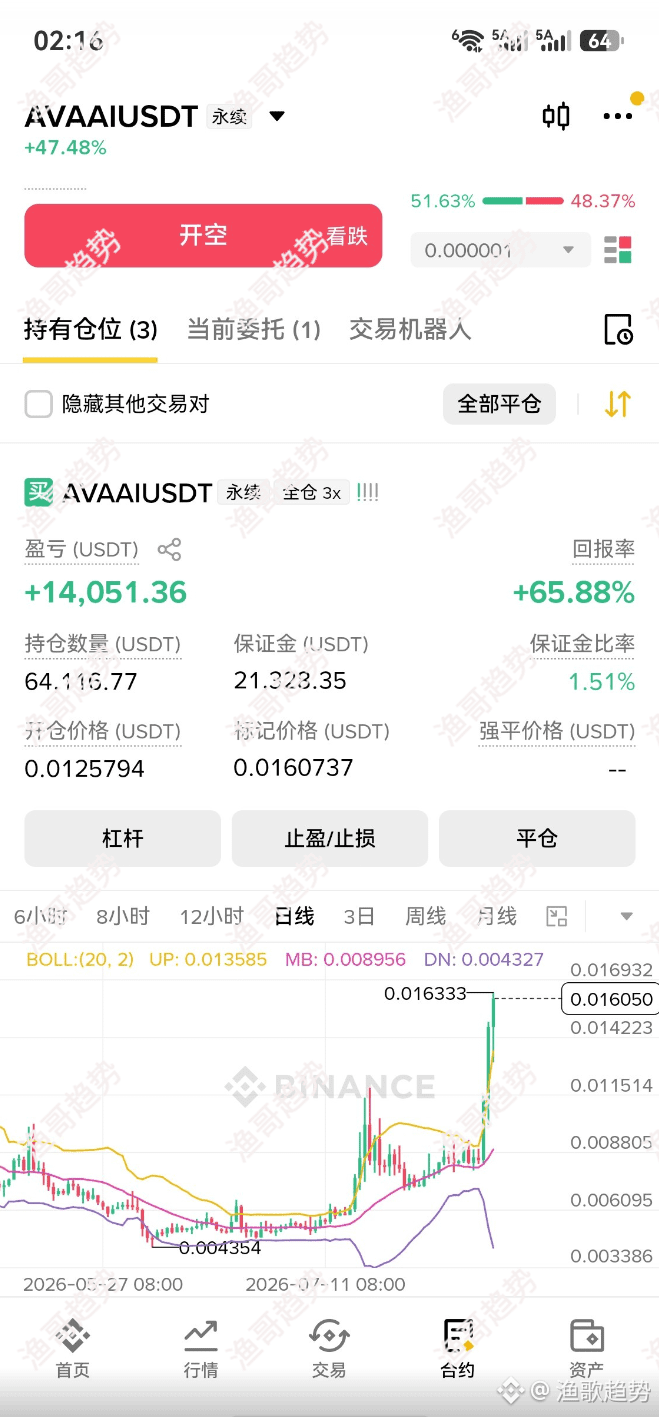
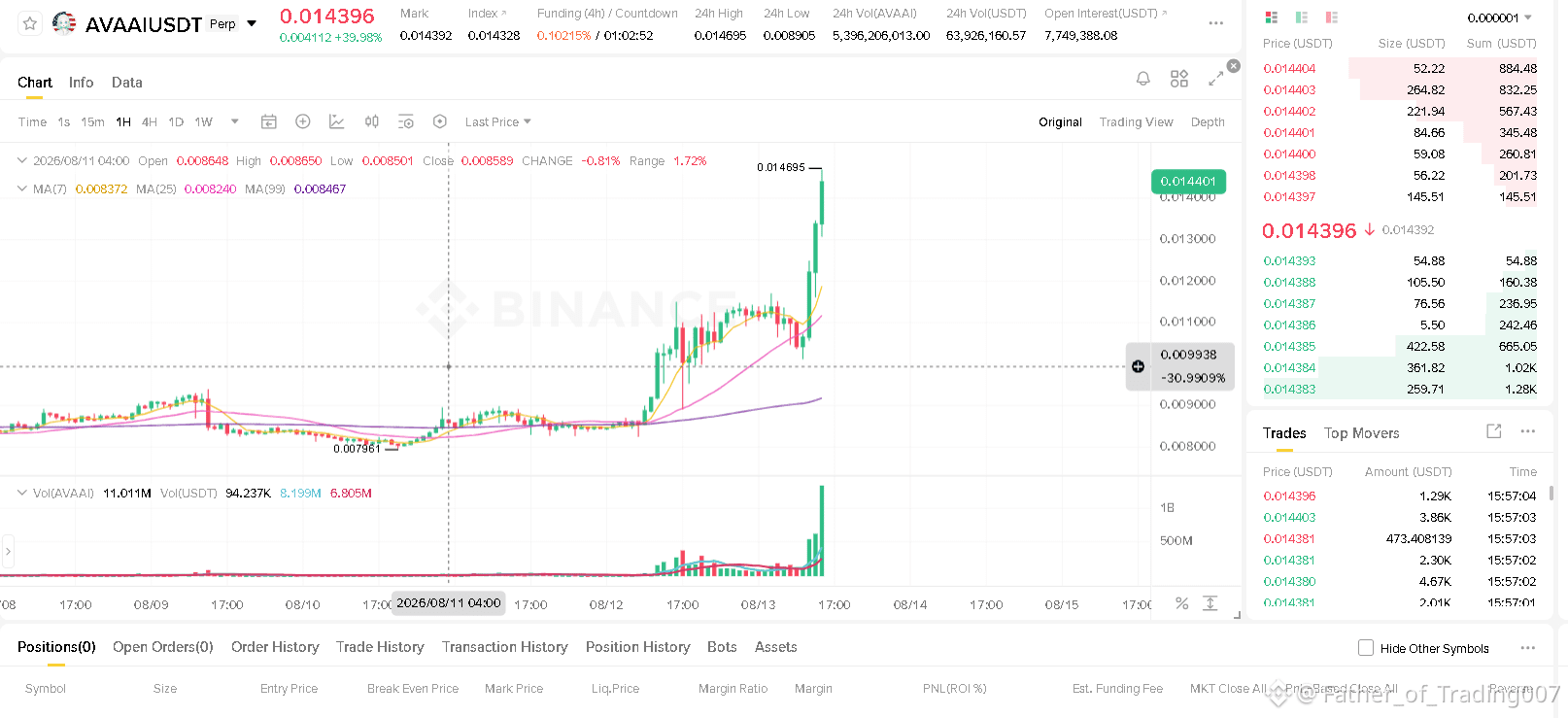
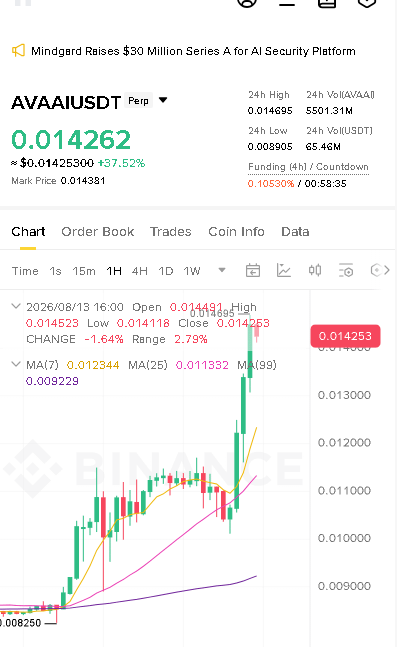
🚨 $AVAAI — 1H BREAKOUT SIGNAL 🚨
{future}(AVAAIUSDT)
🔥 +37% MOVE & VOLUME EXPLOSION!
📈 LONG: $0.0135–$0.0140
🎯 TP1: $0.0147
🎯 TP2: $0.0155
🎯 TP3: $0.0170
🛑 SL: $0.0130
Support: $0.0130 / $0.0120
Resistance: $0.0147 / $0.0155
⚠️ Strong momentum, but don’t chase the pump. Wait for a pullback/retest or confirmed breakout.
📲 Follow for multiple crypto signals every day.
#AVAA #AVAAUSDT #BinanceSquare #CryptoTrading #TradingSignals
🚨 $AVAAI — 1H BREAKOUT SIGNAL 🚨
🔥 +37% MOVE & VOLUME EXPLOSION!
📈 LONG: $0.0135–$0.0140
🎯 TP1: $0.0147
🎯 TP2: $0.0155
🎯 TP3: $0.0170
🛑 SL: $0.0130
Support: $0.0130 / $0.0120
Resistance: $0.0147 / $0.0155
⚠️ Strong momentum, but don’t chase the pump. Wait for a pullback/retest or confirmed breakout.
📲 Follow for multiple crypto signals every day.
#AVAA #AVAAUSDT #BinanceSquare #CryptoTrading #TradingSignals
🔥 +37% MOVE & VOLUME EXPLOSION!
📈 LONG: $0.0135–$0.0140
🎯 TP1: $0.0147
🎯 TP2: $0.0155
🎯 TP3: $0.0170
🛑 SL: $0.0130
Support: $0.0130 / $0.0120
Resistance: $0.0147 / $0.0155
⚠️ Strong momentum, but don’t chase the pump. Wait for a pullback/retest or confirmed breakout.
📲 Follow for multiple crypto signals every day.
#AVAA #AVAAUSDT #BinanceSquare #CryptoTrading #TradingSignals
2
102


·
--
#AKE How much U do you have to make, so I can come back to you?
I’m a post-90s kid, from Chengdu, now living in Shenzhen.
Five years ago, I stepped into the crypto world with 30,000 U. Strictly speaking, it was nine years ago when I first got in. In the first four years I was a complete beginner—cut losses and got liquidated again and again, wiped out to zero, and exchanges rug-pulled (so now I only use Binance, Huobi, and OKEx—three exchanges). Of course, I’m not forcing anyone, and I’m not demanding anything either. I’m just suggesting it: after losing everything, honestly, at least I participated in the process—I can accept it. But if a couple hundred thousand in principal disappears because a small exchange rug-pulls… I truly can’t accept that. It’s unbearable.
In the past few years, every trap I should have avoided, I ended up stepping into. Back then, my girlfriend and I broke up. She and I argued all the time, and she drank to drown her sorrows, and I tried to dodge the 312. So many things are hard to judge. It was this dip-buying wave that helped me turn things around and get back on my feet. Everyone knows the “cold mattress” story: 2,000 yuan’s worth of 312 turned into 10 million after a single move—made me famous overnight.
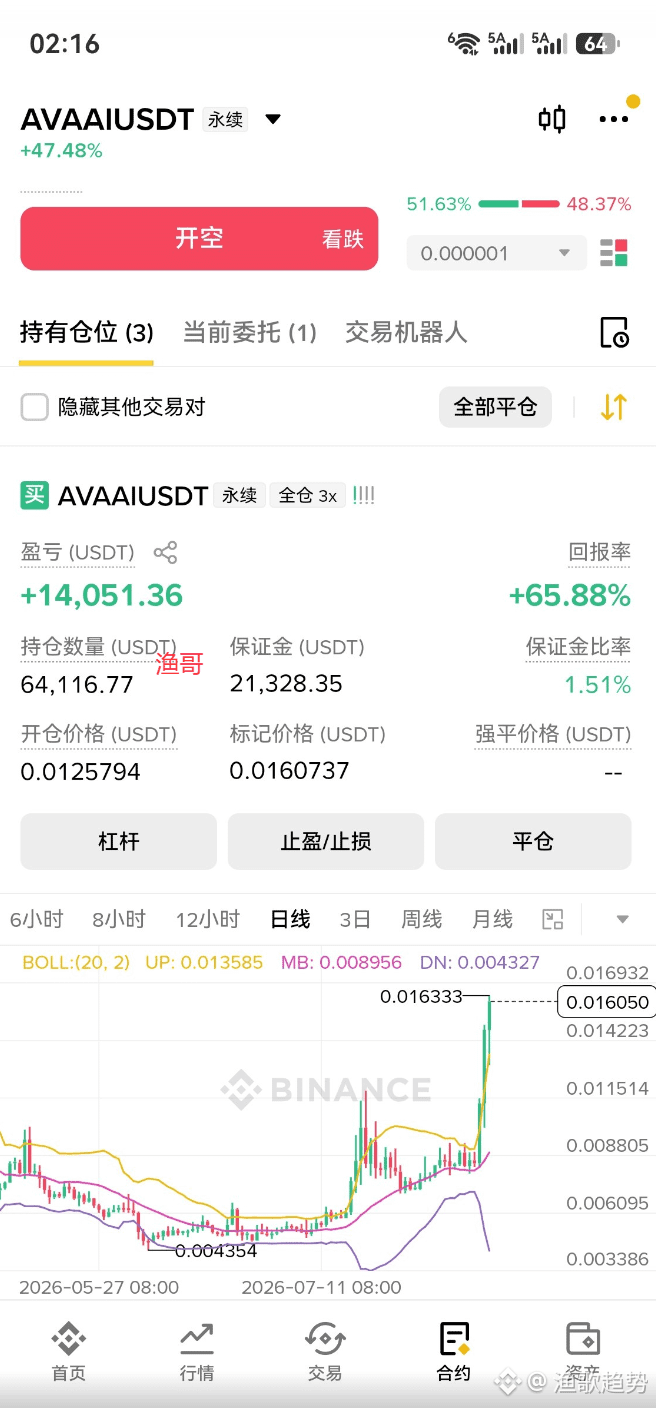
After #AVAAUSDT , I turned myself around. My mindset improved too. I kept reviewing, studying technicals, and honing my trading strategy and psychology. Looking back now, my account has already grown to over 10 million U.
No inside information. No “bull market led by mythical powers.” It’s all just a method that looks “ridiculously dumb,” but works.
Today, I’m going to lay out these 6 iron rules from the heart:
If you understand just one, you can lose 100,000 U less;
If you do three, you can take down 90% of retail traders.
First rule: Fast up, slow down—those are the big players accumulating.
When they pump fast and then let it drift down slowly, it’s mostly a shakeout—don’t panic.
The real top is—after a big volume surge, a single waterfall-like candle—that’s the classic bull trap.
Second rule: Fast down, slow up—those are the big players distributing.
After a flash crash, a slow rebound isn’t a bargain hunt; it’s the last knife.
Don’t indulge the fantasy: “It already dropped so much, how could it still keep dropping?”
Third rule: A top with volume may not be over; low volume is what’s truly dangerous.
If there’s volume at high levels, they might surge again.
If there’s no volume at high levels, everything goes dead—that’s the night before the real crash.
Fourth rule: Don’t impulsively chase when you see heavy volume at the bottom—consistency is what matters.
One burst of volume might just be bait.
Repeated heavy volume over multiple days, and especially volume expanding after a period of low-volume consolidation—those are the real signals of building positions.
A lot of people aren’t not trying—they’re just crashing around blindly in the dark, alone, always stuck in the same loop. Remember: the market is always there, but timing doesn’t wait for anyone.
What you need isn’t to run around even faster—it’s someone who can hold up a light and help you walk out of the darkness. @Square-Creator-58b326784
#AKE How much U do you have to make, so I can come back to you?
I’m a post-90s kid, from Chengdu, now living in Shenzhen.
Five years ago, I stepped into the crypto world with 30,000 U. Strictly speaking, it was nine years ago when I first got in. In the first four years I was a complete beginner—cut losses and got liquidated again and again, wiped out to zero, and exchanges rug-pulled (so now I only use Binance, Huobi, and OKEx—three exchanges). Of course, I’m not forcing anyone, and I’m not demanding anything either. I’m just suggesting it: after losing everything, honestly, at least I participated in the process—I can accept it. But if a couple hundred thousand in principal disappears because a small exchange rug-pulls… I truly can’t accept that. It’s unbearable.
In the past few years, every trap I should have avoided, I ended up stepping into. Back then, my girlfriend and I broke up. She and I argued all the time, and she drank to drown her sorrows, and I tried to dodge the 312. So many things are hard to judge. It was this dip-buying wave that helped me turn things around and get back on my feet. Everyone knows the “cold mattress” story: 2,000 yuan’s worth of 312 turned into 10 million after a single move—made me famous overnight.
After #AVAAUSDT , I turned myself around. My mindset improved too. I kept reviewing, studying technicals, and honing my trading strategy and psychology. Looking back now, my account has already grown to over 10 million U.
No inside information. No “bull market led by mythical powers.” It’s all just a method that looks “ridiculously dumb,” but works.
Today, I’m going to lay out these 6 iron rules from the heart:
If you understand just one, you can lose 100,000 U less;
If you do three, you can take down 90% of retail traders.
First rule: Fast up, slow down—those are the big players accumulating.
When they pump fast and then let it drift down slowly, it’s mostly a shakeout—don’t panic.
The real top is—after a big volume surge, a single waterfall-like candle—that’s the classic bull trap.
Second rule: Fast down, slow up—those are the big players distributing.
After a flash crash, a slow rebound isn’t a bargain hunt; it’s the last knife.
Don’t indulge the fantasy: “It already dropped so much, how could it still keep dropping?”
Third rule: A top with volume may not be over; low volume is what’s truly dangerous.
If there’s volume at high levels, they might surge again.
If there’s no volume at high levels, everything goes dead—that’s the night before the real crash.
Fourth rule: Don’t impulsively chase when you see heavy volume at the bottom—consistency is what matters.
One burst of volume might just be bait.
Repeated heavy volume over multiple days, and especially volume expanding after a period of low-volume consolidation—those are the real signals of building positions.
A lot of people aren’t not trying—they’re just crashing around blindly in the dark, alone, always stuck in the same loop. Remember: the market is always there, but timing doesn’t wait for anyone.
What you need isn’t to run around even faster—it’s someone who can hold up a light and help you walk out of the darkness. @渔歌趋势
I’m a post-90s kid, from Chengdu, now living in Shenzhen.
Five years ago, I stepped into the crypto world with 30,000 U. Strictly speaking, it was nine years ago when I first got in. In the first four years I was a complete beginner—cut losses and got liquidated again and again, wiped out to zero, and exchanges rug-pulled (so now I only use Binance, Huobi, and OKEx—three exchanges). Of course, I’m not forcing anyone, and I’m not demanding anything either. I’m just suggesting it: after losing everything, honestly, at least I participated in the process—I can accept it. But if a couple hundred thousand in principal disappears because a small exchange rug-pulls… I truly can’t accept that. It’s unbearable.
In the past few years, every trap I should have avoided, I ended up stepping into. Back then, my girlfriend and I broke up. She and I argued all the time, and she drank to drown her sorrows, and I tried to dodge the 312. So many things are hard to judge. It was this dip-buying wave that helped me turn things around and get back on my feet. Everyone knows the “cold mattress” story: 2,000 yuan’s worth of 312 turned into 10 million after a single move—made me famous overnight.
After #AVAAUSDT , I turned myself around. My mindset improved too. I kept reviewing, studying technicals, and honing my trading strategy and psychology. Looking back now, my account has already grown to over 10 million U.
No inside information. No “bull market led by mythical powers.” It’s all just a method that looks “ridiculously dumb,” but works.
Today, I’m going to lay out these 6 iron rules from the heart:
If you understand just one, you can lose 100,000 U less;
If you do three, you can take down 90% of retail traders.
First rule: Fast up, slow down—those are the big players accumulating.
When they pump fast and then let it drift down slowly, it’s mostly a shakeout—don’t panic.
The real top is—after a big volume surge, a single waterfall-like candle—that’s the classic bull trap.
Second rule: Fast down, slow up—those are the big players distributing.
After a flash crash, a slow rebound isn’t a bargain hunt; it’s the last knife.
Don’t indulge the fantasy: “It already dropped so much, how could it still keep dropping?”
Third rule: A top with volume may not be over; low volume is what’s truly dangerous.
If there’s volume at high levels, they might surge again.
If there’s no volume at high levels, everything goes dead—that’s the night before the real crash.
Fourth rule: Don’t impulsively chase when you see heavy volume at the bottom—consistency is what matters.
One burst of volume might just be bait.
Repeated heavy volume over multiple days, and especially volume expanding after a period of low-volume consolidation—those are the real signals of building positions.
A lot of people aren’t not trying—they’re just crashing around blindly in the dark, alone, always stuck in the same loop. Remember: the market is always there, but timing doesn’t wait for anyone.
What you need isn’t to run around even faster—it’s someone who can hold up a light and help you walk out of the darkness. @渔歌趋势
1
223

Log in to explore more content
Join global crypto users on Binance Square
⚡️ Get latest and useful information about crypto.
💬 Trusted by the world’s largest crypto exchange.
👍 Discover real insights from verified creators.
Email / Phone number
Trending Topics
1
#EarningsSeason
178,642 views
1,673 Discussing
2
#BitwiseLaunchesFirstSpotNEARETF
4,437 views
190 Discussing
3
#USJobOpeningsFallToFiveMonthLow
7,779 views
141 Discussing
4
#ECBToTestAIAgentsInDigitalEuroPayments
11,667 views
323 Discussing
5
#JapanFSABacksFourthStablecoinTradeSettlementPilot
12,737 views
372 Discussing
6
#BitgetHackerFailsToMoveStolenFunds
27,466 views
507 Discussing
7
#BitMineETHHoldingsTop6Million
25,159 views
635 Discussing
8
#StrategyAdds1666BTCHoldingsReach847666
21,086 views
444 Discussing
9
#NvidiaApproves$150BBuyback
4,223 views
67 Discussing
10
#OpenAIDelaysGPT6.1OverSafetyIssues
33,315 views
810 Discussing