
#arbdropsabout6
arbdropsabout6
379 views
24 Discussing
Hot
Latest

·
--

Article
Why Retail Always Sells the L2 BottomWhy is everyone panic-selling their Layer 2 tokens the moment the market shows a sliver of fear?
Most retail traders buy the top out of FOMO, only to sell at a loss during minor corrections because they lack a concrete accumulation strategy. They watch their portfolio bleed and escape to stablecoins like $USDT right before the actual market reversal happens.
The recent price action where $ARB drops about 6% isn't a sign of project failure, but rather a routine liquidity sweep. The best way to play this is to establish a strict tier-buying system instead of market-buying all at once. Allocate your capital into three distinct limit orders at key historical support levels, allowing you to lower your average entry price without constantly checking the charts.
We see similar consolidation patterns in other major scaling solutions like $OP. The fundamental utility of these networks remains unchanged, meaning these fear-driven dips are historically the safest times to accumulate. By keeping a portion of your capital ready for these specific drops, you turn volatility into a planned trading strategy rather than an emotional emergency.
Are you buying this dip, or do you think Layer 2s have further to fall?
#ARBDropsAbout6 #BitcoinETFsSnapEightWeekOutflowStreak
Why Retail Always Sells the L2 Bottom
Why is everyone panic-selling their Layer 2 tokens the moment the market shows a sliver of fear?
Most retail traders buy the top out of FOMO, only to sell at a loss during minor corrections because they lack a concrete accumulation strategy. They watch their portfolio bleed and escape to stablecoins like $USDT right before the actual market reversal happens.
The recent price action where $ARB drops about 6% isn't a sign of project failure, but rather a routine liquidity sweep. The best way to play this is to establish a strict tier-buying system instead of market-buying all at once. Allocate your capital into three distinct limit orders at key historical support levels, allowing you to lower your average entry price without constantly checking the charts.
We see similar consolidation patterns in other major scaling solutions like $OP . The fundamental utility of these networks remains unchanged, meaning these fear-driven dips are historically the safest times to accumulate. By keeping a portion of your capital ready for these specific drops, you turn volatility into a planned trading strategy rather than an emotional emergency.
Are you buying this dip, or do you think Layer 2s have further to fall?
#ARBDropsAbout6 #BitcoinETFsSnapEightWeekOutflowStreak
Most retail traders buy the top out of FOMO, only to sell at a loss during minor corrections because they lack a concrete accumulation strategy. They watch their portfolio bleed and escape to stablecoins like $USDT right before the actual market reversal happens.
The recent price action where $ARB drops about 6% isn't a sign of project failure, but rather a routine liquidity sweep. The best way to play this is to establish a strict tier-buying system instead of market-buying all at once. Allocate your capital into three distinct limit orders at key historical support levels, allowing you to lower your average entry price without constantly checking the charts.
We see similar consolidation patterns in other major scaling solutions like $OP . The fundamental utility of these networks remains unchanged, meaning these fear-driven dips are historically the safest times to accumulate. By keeping a portion of your capital ready for these specific drops, you turn volatility into a planned trading strategy rather than an emotional emergency.
Are you buying this dip, or do you think Layer 2s have further to fall?
#ARBDropsAbout6 #BitcoinETFsSnapEightWeekOutflowStreak
45

·
--

Article
Why buying the L2 dip is a trapBuying the dip on major Layer 2 networks during market panics feels like a safe play, but historical data shows these governance tokens often bleed value even when network activity is hitting all-time highs.
It is incredibly frustrating to watch your portfolio shrink while the actual tech you backed is thriving. Many traders fall into the trap of buying the dip on $ARB without realizing they are absorbing massive sell pressure from early investors and team unlocks.
Let's look at what is happening with the recent drop. When a token like $ARB drops about 6%, it is easy to blame general market fear. But the real culprit is often the massive gap between circulating supply and fully diluted valuation. When billions of tokens are scheduled to hit the market over the next few years, the constant supply inflation acts like a heavy anchor on the price.
Think of it this way. If a project has only 20% of its tokens in circulation, the team and VCs own the remaining 80%. As those locked tokens vest, they get distributed and often sold. We see similar patterns across other major L2s like $OP. When buying these dips, you aren't just trading against other retail investors, you are trading against a ticking clock of scheduled supply dilution.
How are you hedging against token unlocks in your portfolio right now?
#ARBDropsAbout6 #BitcoinETFsSnapEightWeekOutflowStreak
Why buying the L2 dip is a trap
Buying the dip on major Layer 2 networks during market panics feels like a safe play, but historical data shows these governance tokens often bleed value even when network activity is hitting all-time highs.
It is incredibly frustrating to watch your portfolio shrink while the actual tech you backed is thriving. Many traders fall into the trap of buying the dip on $ARB without realizing they are absorbing massive sell pressure from early investors and team unlocks.
Let's look at what is happening with the recent drop. When a token like $ARB drops about 6%, it is easy to blame general market fear. But the real culprit is often the massive gap between circulating supply and fully diluted valuation. When billions of tokens are scheduled to hit the market over the next few years, the constant supply inflation acts like a heavy anchor on the price.
Think of it this way. If a project has only 20% of its tokens in circulation, the team and VCs own the remaining 80%. As those locked tokens vest, they get distributed and often sold. We see similar patterns across other major L2s like $OP . When buying these dips, you aren't just trading against other retail investors, you are trading against a ticking clock of scheduled supply dilution.
How are you hedging against token unlocks in your portfolio right now?
#ARBDropsAbout6 #BitcoinETFsSnapEightWeekOutflowStreak
It is incredibly frustrating to watch your portfolio shrink while the actual tech you backed is thriving. Many traders fall into the trap of buying the dip on $ARB without realizing they are absorbing massive sell pressure from early investors and team unlocks.
Let's look at what is happening with the recent drop. When a token like $ARB drops about 6%, it is easy to blame general market fear. But the real culprit is often the massive gap between circulating supply and fully diluted valuation. When billions of tokens are scheduled to hit the market over the next few years, the constant supply inflation acts like a heavy anchor on the price.
Think of it this way. If a project has only 20% of its tokens in circulation, the team and VCs own the remaining 80%. As those locked tokens vest, they get distributed and often sold. We see similar patterns across other major L2s like $OP . When buying these dips, you aren't just trading against other retail investors, you are trading against a ticking clock of scheduled supply dilution.
How are you hedging against token unlocks in your portfolio right now?
#ARBDropsAbout6 #BitcoinETFsSnapEightWeekOutflowStreak
55
·
--

Article
Why Tech Earnings Are a Crypto Bull TrapTSMC just posted a massive 67% jump in June revenue, but history shows that blockbuster traditional tech earnings often act as local tops for speculative crypto assets.
It is incredibly easy to FOMO into AI or DePIN tokens thinking real-world hardware demand translates instantly to on-chain price pumps. Too many traders buy the green candles only to watch their bags bleed out days later.
Let's look at how this actually works. When chip manufacturers report massive growth, it fuels a narrative shift that trickles down to projects like $RENDER. But there is a massive disconnect between physical silicon supply chains and decentralized compute protocols. While TSMC sells physical hardware to tech giants, crypto networks are still struggling to find consistent, paying clients for their decentralized GPU power.
In a fearful market where the fear and greed index is hovering around 29, liquidity is thin. People see the positive tech news, rush to buy, and completely ignore the massive supply unlocks happening on tokens like $ARB. Traditional tech success does not fix bad tokenomics or lack of actual network adoption.
Are you hedging your AI exposure here, or do you think the tech narrative keeps running?
#TSMCJuneRevenueUp67 #ARBDropsAbout6
Why Tech Earnings Are a Crypto Bull Trap
TSMC just posted a massive 67% jump in June revenue, but history shows that blockbuster traditional tech earnings often act as local tops for speculative crypto assets.
It is incredibly easy to FOMO into AI or DePIN tokens thinking real-world hardware demand translates instantly to on-chain price pumps. Too many traders buy the green candles only to watch their bags bleed out days later.
Let's look at how this actually works. When chip manufacturers report massive growth, it fuels a narrative shift that trickles down to projects like $RENDER . But there is a massive disconnect between physical silicon supply chains and decentralized compute protocols. While TSMC sells physical hardware to tech giants, crypto networks are still struggling to find consistent, paying clients for their decentralized GPU power.
In a fearful market where the fear and greed index is hovering around 29, liquidity is thin. People see the positive tech news, rush to buy, and completely ignore the massive supply unlocks happening on tokens like $ARB . Traditional tech success does not fix bad tokenomics or lack of actual network adoption.
Are you hedging your AI exposure here, or do you think the tech narrative keeps running?
#TSMCJuneRevenueUp67 #ARBDropsAbout6
It is incredibly easy to FOMO into AI or DePIN tokens thinking real-world hardware demand translates instantly to on-chain price pumps. Too many traders buy the green candles only to watch their bags bleed out days later.
Let's look at how this actually works. When chip manufacturers report massive growth, it fuels a narrative shift that trickles down to projects like $RENDER . But there is a massive disconnect between physical silicon supply chains and decentralized compute protocols. While TSMC sells physical hardware to tech giants, crypto networks are still struggling to find consistent, paying clients for their decentralized GPU power.
In a fearful market where the fear and greed index is hovering around 29, liquidity is thin. People see the positive tech news, rush to buy, and completely ignore the massive supply unlocks happening on tokens like $ARB . Traditional tech success does not fix bad tokenomics or lack of actual network adoption.
Are you hedging your AI exposure here, or do you think the tech narrative keeps running?
#TSMCJuneRevenueUp67 #ARBDropsAbout6
16
·
--
Article
Why Religious Crypto Decrees Won't Stop AdoptionWhy is everyone assuming that the recent religious ruling against crypto in Pakistan will actually stop adoption?
Every time a new local ban or decree hits the news, retail investors panic-sell their bags at a loss, fearing a total collapse in regional liquidity. This constant cycle of regulatory and cultural FUD makes it incredibly difficult for average traders to hold their positions with confidence.
Let's look at the actual mechanics of this case study. A prominent Islamic seminary recently declared crypto trading impermissible, citing speculation and lack of physical backing. While the mainstream media paints this as a death blow for regional adoption, history shows a completely different outcome. When you restrict access to official channels, users do not stop trading; they simply move to alternative methods.
We are already seeing traders bypass traditional banking rails to swap local fiat for $USDT through peer-to-peer networks to preserve their purchasing power. Prohibitions like this fail because they treat decentralized assets like traditional financial products. Instead of protecting the public, these rulings push users away from secure platforms and into the hands of peer-to-peer scammers.
Even during market downturns, when tokens like $ARB are experiencing volatility, the fundamental demand for censorship-resistant value does not disappear. True adoption is driven by economic necessity, not top-down permission, and no decree can easily undo that reality.
Do you think local rulings like this actually impact long-term adoption, or is it just temporary noise?
#PakistanScholarsRuleCryptoPurchasesNotPermitted #ARBDropsAbout6
Why Religious Crypto Decrees Won't Stop Adoption
Why is everyone assuming that the recent religious ruling against crypto in Pakistan will actually stop adoption?
Every time a new local ban or decree hits the news, retail investors panic-sell their bags at a loss, fearing a total collapse in regional liquidity. This constant cycle of regulatory and cultural FUD makes it incredibly difficult for average traders to hold their positions with confidence.
Let's look at the actual mechanics of this case study. A prominent Islamic seminary recently declared crypto trading impermissible, citing speculation and lack of physical backing. While the mainstream media paints this as a death blow for regional adoption, history shows a completely different outcome. When you restrict access to official channels, users do not stop trading; they simply move to alternative methods.
We are already seeing traders bypass traditional banking rails to swap local fiat for $USDT through peer-to-peer networks to preserve their purchasing power. Prohibitions like this fail because they treat decentralized assets like traditional financial products. Instead of protecting the public, these rulings push users away from secure platforms and into the hands of peer-to-peer scammers.
Even during market downturns, when tokens like $ARB are experiencing volatility, the fundamental demand for censorship-resistant value does not disappear. True adoption is driven by economic necessity, not top-down permission, and no decree can easily undo that reality.
Do you think local rulings like this actually impact long-term adoption, or is it just temporary noise?
#PakistanScholarsRuleCryptoPurchasesNotPermitted #ARBDropsAbout6
Every time a new local ban or decree hits the news, retail investors panic-sell their bags at a loss, fearing a total collapse in regional liquidity. This constant cycle of regulatory and cultural FUD makes it incredibly difficult for average traders to hold their positions with confidence.
Let's look at the actual mechanics of this case study. A prominent Islamic seminary recently declared crypto trading impermissible, citing speculation and lack of physical backing. While the mainstream media paints this as a death blow for regional adoption, history shows a completely different outcome. When you restrict access to official channels, users do not stop trading; they simply move to alternative methods.
We are already seeing traders bypass traditional banking rails to swap local fiat for $USDT through peer-to-peer networks to preserve their purchasing power. Prohibitions like this fail because they treat decentralized assets like traditional financial products. Instead of protecting the public, these rulings push users away from secure platforms and into the hands of peer-to-peer scammers.
Even during market downturns, when tokens like $ARB are experiencing volatility, the fundamental demand for censorship-resistant value does not disappear. True adoption is driven by economic necessity, not top-down permission, and no decree can easily undo that reality.
Do you think local rulings like this actually impact long-term adoption, or is it just temporary noise?
#PakistanScholarsRuleCryptoPurchasesNotPermitted #ARBDropsAbout6
60
·
--

Article
Stock Market Crashes Are Crypto's Ultimate Buy SignalWhy is everyone panicking about traditional stock market crashes when history shows they are the ultimate buy signals for crypto?
Most retail investors watch global headlines, panic sell their bags at a loss, and then watch from the sidelines as the market violently recovers. It is an exhausting cycle of buying the top and selling the macro fear.
When index crashes trigger circuit breakers, the immediate reaction is capital fleeing into stablecoins like $USDT. But this is exactly when you should be executing a structured accumulation plan. Instead of trying to catch the absolute bottom, divide your dry powder into three entry tiers. Focus on high-utility layer-2 tokens like $ARB and $OP that get unfairly beaten down during global deleveraging events.
The key is recognizing that local political and financial shocks rarely break the long-term crypto thesis. While traditional markets freeze, decentralized networks keep processing blocks. Set your limit orders slightly below key support levels and let the panic sell-offs fill your bags while others are glued to the news.
Are you buying this dip, or waiting for the macro dust to settle?
#KospiFallsNearly5 #SouthKoreaTriggersSeventhCircuitBreakerThisYear #ARBDropsAbout6
Stock Market Crashes Are Crypto's Ultimate Buy Signal
Why is everyone panicking about traditional stock market crashes when history shows they are the ultimate buy signals for crypto?
Most retail investors watch global headlines, panic sell their bags at a loss, and then watch from the sidelines as the market violently recovers. It is an exhausting cycle of buying the top and selling the macro fear.
When index crashes trigger circuit breakers, the immediate reaction is capital fleeing into stablecoins like $USDT. But this is exactly when you should be executing a structured accumulation plan. Instead of trying to catch the absolute bottom, divide your dry powder into three entry tiers. Focus on high-utility layer-2 tokens like $ARB and $OP that get unfairly beaten down during global deleveraging events.
The key is recognizing that local political and financial shocks rarely break the long-term crypto thesis. While traditional markets freeze, decentralized networks keep processing blocks. Set your limit orders slightly below key support levels and let the panic sell-offs fill your bags while others are glued to the news.
Are you buying this dip, or waiting for the macro dust to settle?
#KospiFallsNearly5 #SouthKoreaTriggersSeventhCircuitBreakerThisYear #ARBDropsAbout6
Most retail investors watch global headlines, panic sell their bags at a loss, and then watch from the sidelines as the market violently recovers. It is an exhausting cycle of buying the top and selling the macro fear.
When index crashes trigger circuit breakers, the immediate reaction is capital fleeing into stablecoins like $USDT. But this is exactly when you should be executing a structured accumulation plan. Instead of trying to catch the absolute bottom, divide your dry powder into three entry tiers. Focus on high-utility layer-2 tokens like $ARB and $OP that get unfairly beaten down during global deleveraging events.
The key is recognizing that local political and financial shocks rarely break the long-term crypto thesis. While traditional markets freeze, decentralized networks keep processing blocks. Set your limit orders slightly below key support levels and let the panic sell-offs fill your bags while others are glued to the news.
Are you buying this dip, or waiting for the macro dust to settle?
#KospiFallsNearly5 #SouthKoreaTriggersSeventhCircuitBreakerThisYear #ARBDropsAbout6
77
·
--

Article
Stop Panic Selling Every Time the Market DipsIf you are still panic-selling your core holdings every time the market dips into fear, stop now.
Watching your portfolio bleed while trying to time the absolute bottom usually results in missing the eventual rebound entirely. It is the classic trap of buying high and selling low out of sheer exhaustion.
With the market sentiment currently sitting in fear, the debate online is heating up around whether to hide in stablecoins like $USDT or accumulate utility tokens that have survived multiple cycles. Some argue that major exchange ecosystems are past their prime and that newer layer-2s like $ARB are where the real future growth lies. They believe the old guard has capped upside.
But that view misses the bigger picture of market survival. Longevity in crypto is the ultimate stress test, and platforms that build through multi-year bear markets establish a level of trust that new projects simply cannot replicate. While chasing high-beta assets feels exciting, holding the foundational assets of platforms that actually generate consistent utility is historically the safer bet when sentiment turns sour.
Do you think established ecosystem giants will continue to dominate the next cycle, or is it time for newer protocols to take the crown?
#BinanceTurns9 #ARBDropsAbout6
Stop Panic Selling Every Time the Market Dips
If you are still panic-selling your core holdings every time the market dips into fear, stop now.
Watching your portfolio bleed while trying to time the absolute bottom usually results in missing the eventual rebound entirely. It is the classic trap of buying high and selling low out of sheer exhaustion.
With the market sentiment currently sitting in fear, the debate online is heating up around whether to hide in stablecoins like $USDT or accumulate utility tokens that have survived multiple cycles. Some argue that major exchange ecosystems are past their prime and that newer layer-2s like $ARB are where the real future growth lies. They believe the old guard has capped upside.
But that view misses the bigger picture of market survival. Longevity in crypto is the ultimate stress test, and platforms that build through multi-year bear markets establish a level of trust that new projects simply cannot replicate. While chasing high-beta assets feels exciting, holding the foundational assets of platforms that actually generate consistent utility is historically the safer bet when sentiment turns sour.
Do you think established ecosystem giants will continue to dominate the next cycle, or is it time for newer protocols to take the crown?
#BinanceTurns9 #ARBDropsAbout6
Watching your portfolio bleed while trying to time the absolute bottom usually results in missing the eventual rebound entirely. It is the classic trap of buying high and selling low out of sheer exhaustion.
With the market sentiment currently sitting in fear, the debate online is heating up around whether to hide in stablecoins like $USDT or accumulate utility tokens that have survived multiple cycles. Some argue that major exchange ecosystems are past their prime and that newer layer-2s like $ARB are where the real future growth lies. They believe the old guard has capped upside.
But that view misses the bigger picture of market survival. Longevity in crypto is the ultimate stress test, and platforms that build through multi-year bear markets establish a level of trust that new projects simply cannot replicate. While chasing high-beta assets feels exciting, holding the foundational assets of platforms that actually generate consistent utility is historically the safer bet when sentiment turns sour.
Do you think established ecosystem giants will continue to dominate the next cycle, or is it time for newer protocols to take the crown?
#BinanceTurns9 #ARBDropsAbout6
23
·
--

Article
Why AI Crypto Crashes When Tech Stocks DipEveryone thinks AI crypto tokens are completely decoupled from traditional tech stocks, but actually, a sudden drop in legacy chipmakers can trigger a domino effect in your portfolio.
Many investors buy AI tokens at the peak of tech hype, only to get caught in a sudden drawdown when traditional markets sneeze. It is painful to watch your hard-earned capital evaporate just because you did not look at the underlying hardware supply chain.
1. First, we need to understand the hardware bottleneck. Think of AI tokens like fancy sports cars. They cannot run without fuel, which in this case is high-bandwidth memory chips. When a giant slips, it signals that the hardware engine is overheating, directly cooling down investor appetite for decentralized compute tokens like $RENDER.
2. Second, market sentiment is highly contagious. When traditional tech investors panic and sell off semiconductor stocks, that fear quickly spills over into riskier digital assets. We see this chain reaction hit layer-2 networks like $ARB as liquidity dries up across the board.
3. Third, the trap of buying the dip too early. A 10% drop in traditional tech might look like a minor discount, but in crypto, it can translate to a much deeper correction for assets like $IMX. Waiting for the dust to settle is usually safer than catching a falling knife.
How are you adjusting your AI token exposure after this tech sector shakeup?
#SKHynixADRFalls10 #KospiFallsNearly5 #ARBDropsAbout6
Why AI Crypto Crashes When Tech Stocks Dip
Everyone thinks AI crypto tokens are completely decoupled from traditional tech stocks, but actually, a sudden drop in legacy chipmakers can trigger a domino effect in your portfolio.
Many investors buy AI tokens at the peak of tech hype, only to get caught in a sudden drawdown when traditional markets sneeze. It is painful to watch your hard-earned capital evaporate just because you did not look at the underlying hardware supply chain.
1. First, we need to understand the hardware bottleneck. Think of AI tokens like fancy sports cars. They cannot run without fuel, which in this case is high-bandwidth memory chips. When a giant slips, it signals that the hardware engine is overheating, directly cooling down investor appetite for decentralized compute tokens like $RENDER .
2. Second, market sentiment is highly contagious. When traditional tech investors panic and sell off semiconductor stocks, that fear quickly spills over into riskier digital assets. We see this chain reaction hit layer-2 networks like $ARB as liquidity dries up across the board.
3. Third, the trap of buying the dip too early. A 10% drop in traditional tech might look like a minor discount, but in crypto, it can translate to a much deeper correction for assets like $IMX . Waiting for the dust to settle is usually safer than catching a falling knife.
How are you adjusting your AI token exposure after this tech sector shakeup?
#SKHynixADRFalls10 #KospiFallsNearly5 #ARBDropsAbout6
Many investors buy AI tokens at the peak of tech hype, only to get caught in a sudden drawdown when traditional markets sneeze. It is painful to watch your hard-earned capital evaporate just because you did not look at the underlying hardware supply chain.
1. First, we need to understand the hardware bottleneck. Think of AI tokens like fancy sports cars. They cannot run without fuel, which in this case is high-bandwidth memory chips. When a giant slips, it signals that the hardware engine is overheating, directly cooling down investor appetite for decentralized compute tokens like $RENDER .
2. Second, market sentiment is highly contagious. When traditional tech investors panic and sell off semiconductor stocks, that fear quickly spills over into riskier digital assets. We see this chain reaction hit layer-2 networks like $ARB as liquidity dries up across the board.
3. Third, the trap of buying the dip too early. A 10% drop in traditional tech might look like a minor discount, but in crypto, it can translate to a much deeper correction for assets like $IMX . Waiting for the dust to settle is usually safer than catching a falling knife.
How are you adjusting your AI token exposure after this tech sector shakeup?
#SKHynixADRFalls10 #KospiFallsNearly5 #ARBDropsAbout6
43
·
--
Article
Stop Panic Selling Your Crypto During Stock CrashesEveryone thinks that traditional stock market crashes do not affect their crypto portfolios, but actually, global liquidity is a single connected web. When international indexes tumble, many investors panic and sell their bags at a loss, only to watch the market rebound hours later. This knee-jerk reaction turns temporary paper losses into permanent financial pain.
Here are three mistakes to avoid when global markets shake.
1. Falling for the decoupling myth. Think of global financial liquidity like a shared water system. When a major pipe leaks, the pressure drops everywhere, forcing institutions to sell liquid crypto assets like $ARB or $OP just to cover their traditional losses.
2. Panic selling into thin order books. When fear spikes, market depth shrinks and selling during the chaos usually results in terrible execution prices. It is wiser to step back and let the initial dust settle.
3. Running out of dry powder. The biggest regret during a dip is having no capital left to buy. Keeping a strategic reserve in $USDT ensures you can capitalize on the discount rather than just watching it happen.
How do you adjust your trading strategy when traditional markets start sliding?
#KospiFallsNearly5 #SouthKoreaTriggersSeventhCircuitBreakerThisYear #ARBDropsAbout6
Stop Panic Selling Your Crypto During Stock Crashes
Everyone thinks that traditional stock market crashes do not affect their crypto portfolios, but actually, global liquidity is a single connected web. When international indexes tumble, many investors panic and sell their bags at a loss, only to watch the market rebound hours later. This knee-jerk reaction turns temporary paper losses into permanent financial pain.
Here are three mistakes to avoid when global markets shake.
1. Falling for the decoupling myth. Think of global financial liquidity like a shared water system. When a major pipe leaks, the pressure drops everywhere, forcing institutions to sell liquid crypto assets like $ARB or $OP just to cover their traditional losses.
2. Panic selling into thin order books. When fear spikes, market depth shrinks and selling during the chaos usually results in terrible execution prices. It is wiser to step back and let the initial dust settle.
3. Running out of dry powder. The biggest regret during a dip is having no capital left to buy. Keeping a strategic reserve in $USDT ensures you can capitalize on the discount rather than just watching it happen.
How do you adjust your trading strategy when traditional markets start sliding?
#KospiFallsNearly5 #SouthKoreaTriggersSeventhCircuitBreakerThisYear #ARBDropsAbout6
Here are three mistakes to avoid when global markets shake.
1. Falling for the decoupling myth. Think of global financial liquidity like a shared water system. When a major pipe leaks, the pressure drops everywhere, forcing institutions to sell liquid crypto assets like $ARB or $OP just to cover their traditional losses.
2. Panic selling into thin order books. When fear spikes, market depth shrinks and selling during the chaos usually results in terrible execution prices. It is wiser to step back and let the initial dust settle.
3. Running out of dry powder. The biggest regret during a dip is having no capital left to buy. Keeping a strategic reserve in $USDT ensures you can capitalize on the discount rather than just watching it happen.
How do you adjust your trading strategy when traditional markets start sliding?
#KospiFallsNearly5 #SouthKoreaTriggersSeventhCircuitBreakerThisYear #ARBDropsAbout6
66
·
--

Article
How Retail Got Trapped Buying the Crypto BounceHere's what happened when the market finally saw green inflows after two months of relentless selling.
Retail traders immediately rushed to buy the bounce, assuming the bottom was in, only to watch their positions stall as liquidity dried up. It is the classic trap of chasing institutional headlines without looking at the underlying market structure.
When the eight-week outflow streak finally snapped, the headlines painted a picture of a sudden bullish reversal. But a closer look at the data shows this was not a wave of new retail demand. Instead, it was mostly market makers rebalancing and short-term institutional hedging. Relying solely on $BTC ETF inflows to time your entries often leads to buying the local top, especially when the Fear and Greed Index is hovering deep in fear territory at 29.
We are seeing a stark divergence between Bitcoin strength and the rest of the market. While capital trickles back into index products, native tokens like $ARB are still facing heavy sell pressure. If you are positioning your portfolio based purely on ETF flow data, you are missing the lack of liquidity trickling down to altcoins. The risk here is getting trapped in illiquid assets while waiting for a broad market rally.
Are you adjusting your strategy based on these ETF flows, or looking at on-chain liquidity instead?
#BitcoinETFsSnapEightWeekOutflowStreak #ARBDropsAbout6
How Retail Got Trapped Buying the Crypto Bounce
Here's what happened when the market finally saw green inflows after two months of relentless selling.
Retail traders immediately rushed to buy the bounce, assuming the bottom was in, only to watch their positions stall as liquidity dried up. It is the classic trap of chasing institutional headlines without looking at the underlying market structure.
When the eight-week outflow streak finally snapped, the headlines painted a picture of a sudden bullish reversal. But a closer look at the data shows this was not a wave of new retail demand. Instead, it was mostly market makers rebalancing and short-term institutional hedging. Relying solely on $BTC ETF inflows to time your entries often leads to buying the local top, especially when the Fear and Greed Index is hovering deep in fear territory at 29.
We are seeing a stark divergence between Bitcoin strength and the rest of the market. While capital trickles back into index products, native tokens like $ARB are still facing heavy sell pressure. If you are positioning your portfolio based purely on ETF flow data, you are missing the lack of liquidity trickling down to altcoins. The risk here is getting trapped in illiquid assets while waiting for a broad market rally.
Are you adjusting your strategy based on these ETF flows, or looking at on-chain liquidity instead?
#BitcoinETFsSnapEightWeekOutflowStreak #ARBDropsAbout6
Retail traders immediately rushed to buy the bounce, assuming the bottom was in, only to watch their positions stall as liquidity dried up. It is the classic trap of chasing institutional headlines without looking at the underlying market structure.
When the eight-week outflow streak finally snapped, the headlines painted a picture of a sudden bullish reversal. But a closer look at the data shows this was not a wave of new retail demand. Instead, it was mostly market makers rebalancing and short-term institutional hedging. Relying solely on $BTC ETF inflows to time your entries often leads to buying the local top, especially when the Fear and Greed Index is hovering deep in fear territory at 29.
We are seeing a stark divergence between Bitcoin strength and the rest of the market. While capital trickles back into index products, native tokens like $ARB are still facing heavy sell pressure. If you are positioning your portfolio based purely on ETF flow data, you are missing the lack of liquidity trickling down to altcoins. The risk here is getting trapped in illiquid assets while waiting for a broad market rally.
Are you adjusting your strategy based on these ETF flows, or looking at on-chain liquidity instead?
#BitcoinETFsSnapEightWeekOutflowStreak #ARBDropsAbout6
53
·
--
Article
Stop Selling Your Utility Tokens to Chase Legacy PumpsIf you are still panic-selling your modern utility tokens to chase sudden pumps in legacy privacy coins, stop now.
Most retail traders end up buying the exact top of these sudden liquidity rotations out of pure boredom and frustration. You watch your fundamentally solid bags bleed, get impatient, and jump into a green candle only to get dumped on.
We have seen this movie before. Legacy privacy assets like $ZEC occasionally wake up from a multi-year slumber, triggering nostalgic rallies that remind us of the 2017 bull run. While it is fun to see the dinosaurs run, these privacy narratives often struggle to sustain momentum once regulators start paying attention again.
Compare this to the current crop of layer-2 tokens like $ARB, which are bleeding out despite having actual, measurable network activity. The market is currently sitting in a state of fear, making capital highly impatient. Money is fleeing productive assets to gamble on sudden, isolated pumps, but history shows these rotations are usually short-lived.
Do you think this privacy coin rally has real legs, or is it just a trap before the next leg down?
#ZcashRises1190 #ARBDropsAbout6
Stop Selling Your Utility Tokens to Chase Legacy Pumps
If you are still panic-selling your modern utility tokens to chase sudden pumps in legacy privacy coins, stop now.
Most retail traders end up buying the exact top of these sudden liquidity rotations out of pure boredom and frustration. You watch your fundamentally solid bags bleed, get impatient, and jump into a green candle only to get dumped on.
We have seen this movie before. Legacy privacy assets like $ZEC occasionally wake up from a multi-year slumber, triggering nostalgic rallies that remind us of the 2017 bull run. While it is fun to see the dinosaurs run, these privacy narratives often struggle to sustain momentum once regulators start paying attention again.
Compare this to the current crop of layer-2 tokens like $ARB , which are bleeding out despite having actual, measurable network activity. The market is currently sitting in a state of fear, making capital highly impatient. Money is fleeing productive assets to gamble on sudden, isolated pumps, but history shows these rotations are usually short-lived.
Do you think this privacy coin rally has real legs, or is it just a trap before the next leg down?
#ZcashRises1190 #ARBDropsAbout6
Most retail traders end up buying the exact top of these sudden liquidity rotations out of pure boredom and frustration. You watch your fundamentally solid bags bleed, get impatient, and jump into a green candle only to get dumped on.
We have seen this movie before. Legacy privacy assets like $ZEC occasionally wake up from a multi-year slumber, triggering nostalgic rallies that remind us of the 2017 bull run. While it is fun to see the dinosaurs run, these privacy narratives often struggle to sustain momentum once regulators start paying attention again.
Compare this to the current crop of layer-2 tokens like $ARB , which are bleeding out despite having actual, measurable network activity. The market is currently sitting in a state of fear, making capital highly impatient. Money is fleeing productive assets to gamble on sudden, isolated pumps, but history shows these rotations are usually short-lived.
Do you think this privacy coin rally has real legs, or is it just a trap before the next leg down?
#ZcashRises1190 #ARBDropsAbout6
91
·
--

Article
Why Exchange Anniversaries Are Giant Liquidity Trapseveryone thinks exchange milestones like #BinanceTurns9 are automatic green flags for the market, but actually they are prime liquidity traps. we've all been there, buying the hype only to get dumped on by whales who planned their exits weeks ago. you end up holding bags of overpriced assets while the market turns red and the fear index creeps lower.
look at how these major events play out historically. when big platforms celebrate anniversaries, retail traders rush to buy native assets or ecosystem tokens thinking there is some massive announcement coming. instead, smart money uses that hype-driven volume to rotate into stables like $USDT or hedge their risk. we are seeing similar distribution patterns right now, and chasing the pump during these events usually ends in tears.
if you are looking at tokens like $ARB during these promotional cycles, the temptation to buy the dip is high. but the reality is that market makers love these high-volume periods to clean up their books. instead of chasing the green candles, the play here is to watch the order books and wait for the post-event hangover. patience is literally free, ser.
are you guys bidding this week or sitting in cash?
#BinanceTurns9 #ARBDropsAbout6
Why Exchange Anniversaries Are Giant Liquidity Traps
everyone thinks exchange milestones like #BinanceTurns9 are automatic green flags for the market, but actually they are prime liquidity traps. we've all been there, buying the hype only to get dumped on by whales who planned their exits weeks ago. you end up holding bags of overpriced assets while the market turns red and the fear index creeps lower.
look at how these major events play out historically. when big platforms celebrate anniversaries, retail traders rush to buy native assets or ecosystem tokens thinking there is some massive announcement coming. instead, smart money uses that hype-driven volume to rotate into stables like $USDT or hedge their risk. we are seeing similar distribution patterns right now, and chasing the pump during these events usually ends in tears.
if you are looking at tokens like $ARB during these promotional cycles, the temptation to buy the dip is high. but the reality is that market makers love these high-volume periods to clean up their books. instead of chasing the green candles, the play here is to watch the order books and wait for the post-event hangover. patience is literally free, ser.
are you guys bidding this week or sitting in cash?
#BinanceTurns9 #ARBDropsAbout6
look at how these major events play out historically. when big platforms celebrate anniversaries, retail traders rush to buy native assets or ecosystem tokens thinking there is some massive announcement coming. instead, smart money uses that hype-driven volume to rotate into stables like $USDT or hedge their risk. we are seeing similar distribution patterns right now, and chasing the pump during these events usually ends in tears.
if you are looking at tokens like $ARB during these promotional cycles, the temptation to buy the dip is high. but the reality is that market makers love these high-volume periods to clean up their books. instead of chasing the green candles, the play here is to watch the order books and wait for the post-event hangover. patience is literally free, ser.
are you guys bidding this week or sitting in cash?
#BinanceTurns9 #ARBDropsAbout6
11
·
--

Article
The Macro Blindspot Wiping Out Crypto TradersHere is what happened last week when WTI crude oil prices touched their lowest levels in months while most crypto traders were staring at four-hour charts.
Many retail investors treat crypto as an isolated bubble, completely ignoring macroeconomic distress signals until their leverage gets wiped out in minutes. By the time the correlation becomes obvious, it is already too late to hedge.
The recent drop in oil prices is not just an energy market issue; it is a flashing red light for global liquidity. When energy demand collapses, it signals a broader economic slowdown, prompting institutional capital to flee risk assets. We saw this play out as major capital rotated back into stablecoins like $USDT, leaving high-beta layer-2 tokens like $ARB vulnerable to sudden downside pressure.
The lesson here is simple but overlooked. Crypto does not trade in a vacuum, and when macro indicators flash recession warnings, the risk-on liquidity is the first to evaporate. If you are only watching order books and ignoring global commodity trends, you are trading with a blindfold on.
How are you adjusting your portfolio risk as macro indicators turn bearish?
#WTICrudeTouches #ARBDropsAbout6
The Macro Blindspot Wiping Out Crypto Traders
Here is what happened last week when WTI crude oil prices touched their lowest levels in months while most crypto traders were staring at four-hour charts.
Many retail investors treat crypto as an isolated bubble, completely ignoring macroeconomic distress signals until their leverage gets wiped out in minutes. By the time the correlation becomes obvious, it is already too late to hedge.
The recent drop in oil prices is not just an energy market issue; it is a flashing red light for global liquidity. When energy demand collapses, it signals a broader economic slowdown, prompting institutional capital to flee risk assets. We saw this play out as major capital rotated back into stablecoins like $USDT, leaving high-beta layer-2 tokens like $ARB vulnerable to sudden downside pressure.
The lesson here is simple but overlooked. Crypto does not trade in a vacuum, and when macro indicators flash recession warnings, the risk-on liquidity is the first to evaporate. If you are only watching order books and ignoring global commodity trends, you are trading with a blindfold on.
How are you adjusting your portfolio risk as macro indicators turn bearish?
#WTICrudeTouches #ARBDropsAbout6
Many retail investors treat crypto as an isolated bubble, completely ignoring macroeconomic distress signals until their leverage gets wiped out in minutes. By the time the correlation becomes obvious, it is already too late to hedge.
The recent drop in oil prices is not just an energy market issue; it is a flashing red light for global liquidity. When energy demand collapses, it signals a broader economic slowdown, prompting institutional capital to flee risk assets. We saw this play out as major capital rotated back into stablecoins like $USDT, leaving high-beta layer-2 tokens like $ARB vulnerable to sudden downside pressure.
The lesson here is simple but overlooked. Crypto does not trade in a vacuum, and when macro indicators flash recession warnings, the risk-on liquidity is the first to evaporate. If you are only watching order books and ignoring global commodity trends, you are trading with a blindfold on.
How are you adjusting your portfolio risk as macro indicators turn bearish?
#WTICrudeTouches #ARBDropsAbout6
25
·
--

Article
How to Survive a Geopolitical Crypto CrashPicture this: you wake up in the middle of the night to check your portfolio, only to find the charts bleeding red because of a breaking news alert halfway across the world.
It is the classic crypto trader's dilemma where geopolitical chaos triggers instant panic selling, leaving you unsure whether to hedge or risk catching a falling knife. When macro shockwaves hit, the gut reaction is often to dump risk assets immediately, even if the underlying tech hasn't changed a bit.
Looking back at how markets reacted during the Middle East escalations earlier this year, the pattern is familiar. We saw a sudden capital flight into $USDT as leverage got flushed out in minutes, mirroring the recent liquidations where tokens like $ARB took a sudden hit. Historically, these geopolitical dips are sharp but remarkably short-lived because the market panics first, asks questions later, and then quietly buys the discount.
If we compare this to the market reaction during the early 2022 conflicts, the narrative holds up. Initial panic drove liquidations, but within weeks, capital began flowing back into majors and scaling ecosystems like $OP as investors realized that traditional market instability often strengthens the thesis for decentralized assets. The key takeaway from these events is that geopolitical risk usually creates a temporary liquidity squeeze rather than a structural market death spiral.
How are you adjusting your portfolio to handle these sudden geopolitical swings?
#USLaunchesFourthStrikeOnIranInAWeek #ARBDropsAbout6 #BitcoinETFsSnapEightWeekOutflowStreak
How to Survive a Geopolitical Crypto Crash
Picture this: you wake up in the middle of the night to check your portfolio, only to find the charts bleeding red because of a breaking news alert halfway across the world.
It is the classic crypto trader's dilemma where geopolitical chaos triggers instant panic selling, leaving you unsure whether to hedge or risk catching a falling knife. When macro shockwaves hit, the gut reaction is often to dump risk assets immediately, even if the underlying tech hasn't changed a bit.
Looking back at how markets reacted during the Middle East escalations earlier this year, the pattern is familiar. We saw a sudden capital flight into $USDT as leverage got flushed out in minutes, mirroring the recent liquidations where tokens like $ARB took a sudden hit. Historically, these geopolitical dips are sharp but remarkably short-lived because the market panics first, asks questions later, and then quietly buys the discount.
If we compare this to the market reaction during the early 2022 conflicts, the narrative holds up. Initial panic drove liquidations, but within weeks, capital began flowing back into majors and scaling ecosystems like $OP as investors realized that traditional market instability often strengthens the thesis for decentralized assets. The key takeaway from these events is that geopolitical risk usually creates a temporary liquidity squeeze rather than a structural market death spiral.
How are you adjusting your portfolio to handle these sudden geopolitical swings?
#USLaunchesFourthStrikeOnIranInAWeek #ARBDropsAbout6 #BitcoinETFsSnapEightWeekOutflowStreak
It is the classic crypto trader's dilemma where geopolitical chaos triggers instant panic selling, leaving you unsure whether to hedge or risk catching a falling knife. When macro shockwaves hit, the gut reaction is often to dump risk assets immediately, even if the underlying tech hasn't changed a bit.
Looking back at how markets reacted during the Middle East escalations earlier this year, the pattern is familiar. We saw a sudden capital flight into $USDT as leverage got flushed out in minutes, mirroring the recent liquidations where tokens like $ARB took a sudden hit. Historically, these geopolitical dips are sharp but remarkably short-lived because the market panics first, asks questions later, and then quietly buys the discount.
If we compare this to the market reaction during the early 2022 conflicts, the narrative holds up. Initial panic drove liquidations, but within weeks, capital began flowing back into majors and scaling ecosystems like $OP as investors realized that traditional market instability often strengthens the thesis for decentralized assets. The key takeaway from these events is that geopolitical risk usually creates a temporary liquidity squeeze rather than a structural market death spiral.
How are you adjusting your portfolio to handle these sudden geopolitical swings?
#USLaunchesFourthStrikeOnIranInAWeek #ARBDropsAbout6 #BitcoinETFsSnapEightWeekOutflowStreak
33
·
--

Article
Stop Panic Selling Crypto When Stock Markets HaltIf you are still panic selling your crypto every time a traditional stock market halts trading, stop now.
Watching your portfolio bleed during global market halts is painful, especially when you end up selling the bottom only to watch the market rebound hours later. It is the classic trap of letting legacy market fear dictate your decentralized positions.
We have seen this movie before. When South Korea triggered its seventh circuit breaker of the year, it felt like a rerun of the August Yen carry trade panic. Traditional finance freezes up, panic spreads to crypto, and suddenly everyone is dumping liquid assets to cover leverage elsewhere. During these liquidations, solid layer-2 projects like $ARB and $OP get dragged down unfairly as traders rush into the safety of stablecoins like $USDT.
But here is the twist. While traditional boards go dark to force everyone to calm down, crypto keeps trading twenty-four seven. This structural difference means we price in the absolute worst-case scenario in minutes, leading to massive overreactions before the traditional markets even reopen. Historically, these forced liquidations have been some of the best accumulation windows for patient capital.
Are you buying the macro dip this time, or do you think the traditional market pain is just getting started?
#SouthKoreaTriggersSeventhCircuitBreakerThisYear #KospiFallsNearly5 #ARBDropsAbout6
Stop Panic Selling Crypto When Stock Markets Halt
If you are still panic selling your crypto every time a traditional stock market halts trading, stop now.
Watching your portfolio bleed during global market halts is painful, especially when you end up selling the bottom only to watch the market rebound hours later. It is the classic trap of letting legacy market fear dictate your decentralized positions.
We have seen this movie before. When South Korea triggered its seventh circuit breaker of the year, it felt like a rerun of the August Yen carry trade panic. Traditional finance freezes up, panic spreads to crypto, and suddenly everyone is dumping liquid assets to cover leverage elsewhere. During these liquidations, solid layer-2 projects like $ARB and $OP get dragged down unfairly as traders rush into the safety of stablecoins like $USDT.
But here is the twist. While traditional boards go dark to force everyone to calm down, crypto keeps trading twenty-four seven. This structural difference means we price in the absolute worst-case scenario in minutes, leading to massive overreactions before the traditional markets even reopen. Historically, these forced liquidations have been some of the best accumulation windows for patient capital.
Are you buying the macro dip this time, or do you think the traditional market pain is just getting started?
#SouthKoreaTriggersSeventhCircuitBreakerThisYear #KospiFallsNearly5 #ARBDropsAbout6
Watching your portfolio bleed during global market halts is painful, especially when you end up selling the bottom only to watch the market rebound hours later. It is the classic trap of letting legacy market fear dictate your decentralized positions.
We have seen this movie before. When South Korea triggered its seventh circuit breaker of the year, it felt like a rerun of the August Yen carry trade panic. Traditional finance freezes up, panic spreads to crypto, and suddenly everyone is dumping liquid assets to cover leverage elsewhere. During these liquidations, solid layer-2 projects like $ARB and $OP get dragged down unfairly as traders rush into the safety of stablecoins like $USDT.
But here is the twist. While traditional boards go dark to force everyone to calm down, crypto keeps trading twenty-four seven. This structural difference means we price in the absolute worst-case scenario in minutes, leading to massive overreactions before the traditional markets even reopen. Historically, these forced liquidations have been some of the best accumulation windows for patient capital.
Are you buying the macro dip this time, or do you think the traditional market pain is just getting started?
#SouthKoreaTriggersSeventhCircuitBreakerThisYear #KospiFallsNearly5 #ARBDropsAbout6
60
·
--

Article
Stop Letting Geopolitical Noise Shake You OutHave you noticed how the crypto market consistently overreacts to unverified geopolitical headlines before the traditional financial world even has time to react? It is painful watching retail traders panic-sell their bags at a loss during these sudden volatility spikes, only to buy back higher once the news is debunked or priced in. This constant cycle of getting shaken out by noise is what keeps most portfolio balances bleeding.
Take the recent rumors of strikes in the Middle East as a prime case study of this phenomenon. The moment headlines hit, algorithmic trading bots trigger sell-offs, cascading into liquidations across leverage-heavy assets like $OP and $ARB. Meanwhile, capital flees to safety, temporarily parking in stablecoins like $USDT while patient spot buyers quietly scoop up the discount.
The mainstream narrative tells you to risk-off immediately during global instability. But history shows that these politically driven dips are almost always short-lived liquidity grabs. The underlying tech and adoption curves of these networks do not change because of a sensationalized headline. Smart money knows that volatility is just the price of admission for 24/7 liquidity, and panic selling is rarely the right move.
Do you view these geopolitical sell-offs as a warning sign to exit, or just another buying opportunity?
#IranianMediaClaimsStrikeOnUSFifthFleetHQ #ARBDropsAbout6
Stop Letting Geopolitical Noise Shake You Out
Have you noticed how the crypto market consistently overreacts to unverified geopolitical headlines before the traditional financial world even has time to react? It is painful watching retail traders panic-sell their bags at a loss during these sudden volatility spikes, only to buy back higher once the news is debunked or priced in. This constant cycle of getting shaken out by noise is what keeps most portfolio balances bleeding.
Take the recent rumors of strikes in the Middle East as a prime case study of this phenomenon. The moment headlines hit, algorithmic trading bots trigger sell-offs, cascading into liquidations across leverage-heavy assets like $OP and $ARB . Meanwhile, capital flees to safety, temporarily parking in stablecoins like $USDT while patient spot buyers quietly scoop up the discount.
The mainstream narrative tells you to risk-off immediately during global instability. But history shows that these politically driven dips are almost always short-lived liquidity grabs. The underlying tech and adoption curves of these networks do not change because of a sensationalized headline. Smart money knows that volatility is just the price of admission for 24/7 liquidity, and panic selling is rarely the right move.
Do you view these geopolitical sell-offs as a warning sign to exit, or just another buying opportunity?
#IranianMediaClaimsStrikeOnUSFifthFleetHQ #ARBDropsAbout6
Take the recent rumors of strikes in the Middle East as a prime case study of this phenomenon. The moment headlines hit, algorithmic trading bots trigger sell-offs, cascading into liquidations across leverage-heavy assets like $OP and $ARB . Meanwhile, capital flees to safety, temporarily parking in stablecoins like $USDT while patient spot buyers quietly scoop up the discount.
The mainstream narrative tells you to risk-off immediately during global instability. But history shows that these politically driven dips are almost always short-lived liquidity grabs. The underlying tech and adoption curves of these networks do not change because of a sensationalized headline. Smart money knows that volatility is just the price of admission for 24/7 liquidity, and panic selling is rarely the right move.
Do you view these geopolitical sell-offs as a warning sign to exit, or just another buying opportunity?
#IranianMediaClaimsStrikeOnUSFifthFleetHQ #ARBDropsAbout6
32
·
--
Article
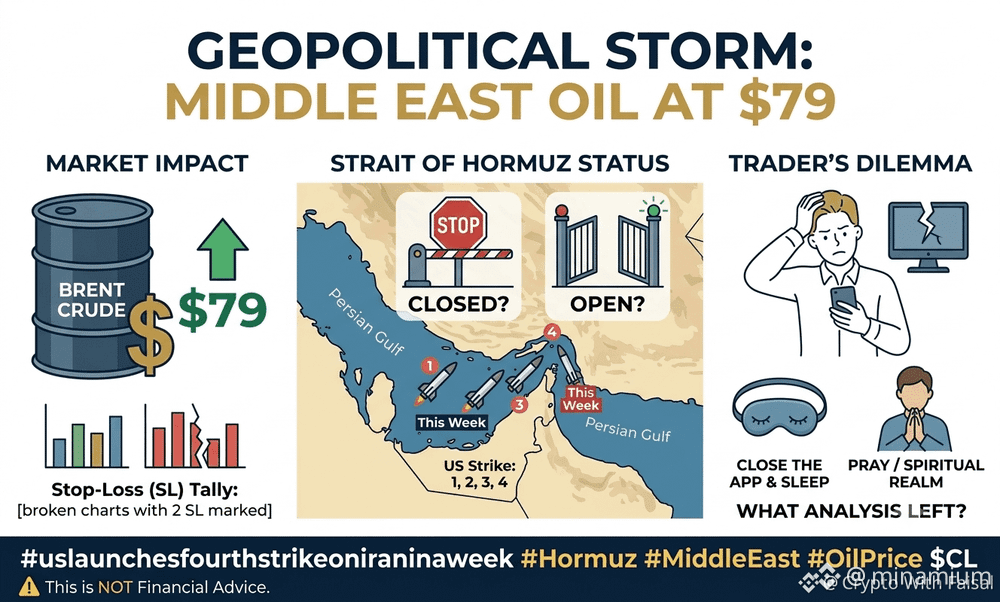
Why Markets Bottom the Day Conflict BeginsDuring major geopolitical conflicts over the last fifty years, risk assets historically bottom out the very day the actual military conflict begins.
Watching the news feed while your portfolio bleeds makes it tempting to panic-sell everything into $USDT just to make the anxiety stop. Unfortunately, reacting to breaking news alerts usually means selling the exact bottom right before the market rebounds.
I have traded through multiple cycles, from the 2020 liquidity crisis to various Middle East escalations, and the pattern remains identical. When headlines scream war, leverage gets violently flushed out, dragging down assets like $ARB and $OP regardless of their fundamentals. This is a liquidity event, not a structural failure of the crypto ecosystem.
Smart money exploits these moments because they understand that fear has a shelf life. While retail traders are frozen in panic, institutional desks use the volatility to accumulate quality assets at steep discounts. The hardest part of trading isn't reading charts, it is controlling your nervous system when everyone else is throwing in the towel.
How are you positioning your portfolio during this current wave of geopolitical tension?
#USLaunchesFourthStrikeOnIranInAWeek #ARBDropsAbout6
Why Markets Bottom the Day Conflict Begins
During major geopolitical conflicts over the last fifty years, risk assets historically bottom out the very day the actual military conflict begins.
Watching the news feed while your portfolio bleeds makes it tempting to panic-sell everything into $USDT just to make the anxiety stop. Unfortunately, reacting to breaking news alerts usually means selling the exact bottom right before the market rebounds.
I have traded through multiple cycles, from the 2020 liquidity crisis to various Middle East escalations, and the pattern remains identical. When headlines scream war, leverage gets violently flushed out, dragging down assets like $ARB and $OP regardless of their fundamentals. This is a liquidity event, not a structural failure of the crypto ecosystem.
Smart money exploits these moments because they understand that fear has a shelf life. While retail traders are frozen in panic, institutional desks use the volatility to accumulate quality assets at steep discounts. The hardest part of trading isn't reading charts, it is controlling your nervous system when everyone else is throwing in the towel.
How are you positioning your portfolio during this current wave of geopolitical tension?
#USLaunchesFourthStrikeOnIranInAWeek #ARBDropsAbout6
Watching the news feed while your portfolio bleeds makes it tempting to panic-sell everything into $USDT just to make the anxiety stop. Unfortunately, reacting to breaking news alerts usually means selling the exact bottom right before the market rebounds.
I have traded through multiple cycles, from the 2020 liquidity crisis to various Middle East escalations, and the pattern remains identical. When headlines scream war, leverage gets violently flushed out, dragging down assets like $ARB and $OP regardless of their fundamentals. This is a liquidity event, not a structural failure of the crypto ecosystem.
Smart money exploits these moments because they understand that fear has a shelf life. While retail traders are frozen in panic, institutional desks use the volatility to accumulate quality assets at steep discounts. The hardest part of trading isn't reading charts, it is controlling your nervous system when everyone else is throwing in the towel.
How are you positioning your portfolio during this current wave of geopolitical tension?
#USLaunchesFourthStrikeOnIranInAWeek #ARBDropsAbout6
82
·
--

Article
Cultural Rulings Kill Crypto Liquidity Faster Than Banseveryone thinks regulatory bans are the only thing that can kill local liquidity, but actually, cultural and religious rulings can dry up a market way faster. ngl, most traders ignore these regional shifts until they are already stuck in a bad position. when local fiat gateways suddenly freeze up because of a new ruling, you get caught holding the bag with zero exit liquidity.
look at the case study in pakistan right now. some prominent scholars just declared crypto trading impermissible under sharia law. a lot of people dismiss this as minor news, but pakistan is a massive hub for p2p volume, especially for capital preservation using $USDT. when a ruling like this drops, it does not just affect local spot buyers. it triggers a massive wave of panic selling that drains regional order books and messes with global spreads.
if you are holding assets like $ARB and expecting retail volume to pump your bags, you need to realize how interconnected this stuff is. when a major demographic gets told their portfolio is no longer compliant, the liquidity vanishes instantly. we have seen this play out before in other emerging markets, and it always ends with late buyers getting rekt.
do you think these local rulings actually impact global volume, or is it just temporary noise?
#PakistanScholarsRuleCryptoPurchasesNotPermitted #ARBDropsAbout6
Cultural Rulings Kill Crypto Liquidity Faster Than Bans
everyone thinks regulatory bans are the only thing that can kill local liquidity, but actually, cultural and religious rulings can dry up a market way faster. ngl, most traders ignore these regional shifts until they are already stuck in a bad position. when local fiat gateways suddenly freeze up because of a new ruling, you get caught holding the bag with zero exit liquidity.
look at the case study in pakistan right now. some prominent scholars just declared crypto trading impermissible under sharia law. a lot of people dismiss this as minor news, but pakistan is a massive hub for p2p volume, especially for capital preservation using $USDT. when a ruling like this drops, it does not just affect local spot buyers. it triggers a massive wave of panic selling that drains regional order books and messes with global spreads.
if you are holding assets like $ARB and expecting retail volume to pump your bags, you need to realize how interconnected this stuff is. when a major demographic gets told their portfolio is no longer compliant, the liquidity vanishes instantly. we have seen this play out before in other emerging markets, and it always ends with late buyers getting rekt.
do you think these local rulings actually impact global volume, or is it just temporary noise?
#PakistanScholarsRuleCryptoPurchasesNotPermitted #ARBDropsAbout6
look at the case study in pakistan right now. some prominent scholars just declared crypto trading impermissible under sharia law. a lot of people dismiss this as minor news, but pakistan is a massive hub for p2p volume, especially for capital preservation using $USDT. when a ruling like this drops, it does not just affect local spot buyers. it triggers a massive wave of panic selling that drains regional order books and messes with global spreads.
if you are holding assets like $ARB and expecting retail volume to pump your bags, you need to realize how interconnected this stuff is. when a major demographic gets told their portfolio is no longer compliant, the liquidity vanishes instantly. we have seen this play out before in other emerging markets, and it always ends with late buyers getting rekt.
do you think these local rulings actually impact global volume, or is it just temporary noise?
#PakistanScholarsRuleCryptoPurchasesNotPermitted #ARBDropsAbout6
34
·
--

Article
Beware The Privacy Coin Liquidity TrapEveryone thinks that when an old-school privacy coin suddenly pumps, it means the entire market is about to reverse, but actually, it is often a liquidity trap. Most retail traders end up buying the absolute top of these sudden spikes because they fear missing the next big run. They swap stablecoins like $USDT into pumping assets, only to watch the price dump hours later.
Think of a sudden pump like a flash flood in a dry creek. It looks impressive and powerful, but it disappears just as quickly as it arrived. When assets like $ZEC experience massive sudden moves while the broader market is in fear, we need to look closer.
Here are three warning signs to watch. 1. The liquidity illusion: thin order books mean a few large players can easily push the price upward, leaving late buyers holding the bag when they exit. 2. The regulatory shadow: privacy tech faces constant pressure, meaning sudden delisting news can wipe out gains overnight. 3. Opportunity cost: chasing a sudden green candle locks up capital that could be used to accumulate fundamentally strong projects like $ARB while they consolidate.
How do you manage your risk when old-school tokens suddenly spike?
#ZcashRises1190 #ARBDropsAbout6
Beware The Privacy Coin Liquidity Trap
Everyone thinks that when an old-school privacy coin suddenly pumps, it means the entire market is about to reverse, but actually, it is often a liquidity trap. Most retail traders end up buying the absolute top of these sudden spikes because they fear missing the next big run. They swap stablecoins like $USDT into pumping assets, only to watch the price dump hours later.
Think of a sudden pump like a flash flood in a dry creek. It looks impressive and powerful, but it disappears just as quickly as it arrived. When assets like $ZEC experience massive sudden moves while the broader market is in fear, we need to look closer.
Here are three warning signs to watch. 1. The liquidity illusion: thin order books mean a few large players can easily push the price upward, leaving late buyers holding the bag when they exit. 2. The regulatory shadow: privacy tech faces constant pressure, meaning sudden delisting news can wipe out gains overnight. 3. Opportunity cost: chasing a sudden green candle locks up capital that could be used to accumulate fundamentally strong projects like $ARB while they consolidate.
How do you manage your risk when old-school tokens suddenly spike?
#ZcashRises1190 #ARBDropsAbout6
Think of a sudden pump like a flash flood in a dry creek. It looks impressive and powerful, but it disappears just as quickly as it arrived. When assets like $ZEC experience massive sudden moves while the broader market is in fear, we need to look closer.
Here are three warning signs to watch. 1. The liquidity illusion: thin order books mean a few large players can easily push the price upward, leaving late buyers holding the bag when they exit. 2. The regulatory shadow: privacy tech faces constant pressure, meaning sudden delisting news can wipe out gains overnight. 3. Opportunity cost: chasing a sudden green candle locks up capital that could be used to accumulate fundamentally strong projects like $ARB while they consolidate.
How do you manage your risk when old-school tokens suddenly spike?
#ZcashRises1190 #ARBDropsAbout6
84
·
--
Article
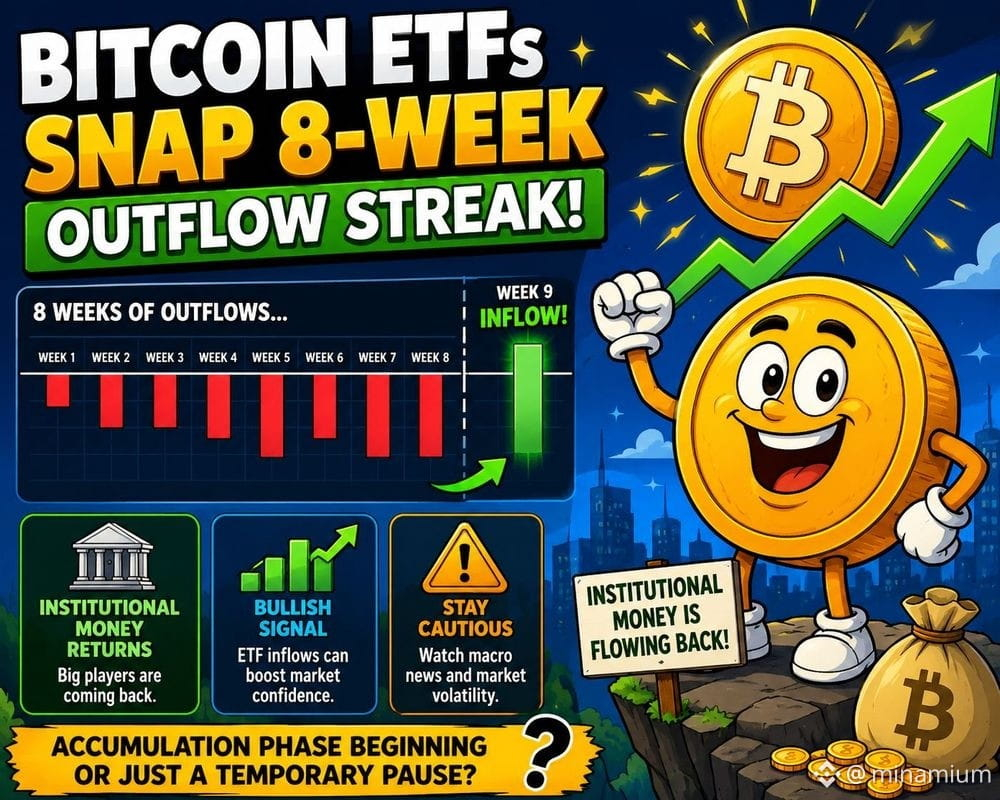
Don't Fall for the ETF Inflow TrapInstitutional ETF inflows just turned positive after two months of bleeding, but historical data shows this is exactly when late-stage retail buyers get trapped.
It is incredibly frustrating to buy what looks like a confirmed trend reversal, only to watch the market dump immediately after you enter. Most traders see the headline about institutions buying again and FOMO in, thinking the bottom is locked in.
Here is the catch with this data. When we see net inflows return to $BTC ETFs, it does not automatically mean organic spot demand is back. Often, it is just institutional desks closing out basis trades or hedging futures positions. If you buy spot based purely on daily inflow numbers, you are trading lagging data that has already been priced in by the time the reports publish.
Look at how altcoins behave during these transition phases. While Bitcoin might hold steady on ETF buying days, tokens like $ARB often experience brief relief rallies that quickly fade into deeper corrections because new capital is not actually trickling down to the rest of the market. With the market sentiment sitting in fear, these sudden inflow spikes are frequently used by larger players to distribute their bags to hopeful buyers.
Are you treating this inflow shift as a local bottom, or are you waiting for more spot volume to confirm?
#BitcoinETFsSnapEightWeekOutflowStreak #ARBDropsAbout6
Don't Fall for the ETF Inflow Trap
Institutional ETF inflows just turned positive after two months of bleeding, but historical data shows this is exactly when late-stage retail buyers get trapped.
It is incredibly frustrating to buy what looks like a confirmed trend reversal, only to watch the market dump immediately after you enter. Most traders see the headline about institutions buying again and FOMO in, thinking the bottom is locked in.
Here is the catch with this data. When we see net inflows return to $BTC ETFs, it does not automatically mean organic spot demand is back. Often, it is just institutional desks closing out basis trades or hedging futures positions. If you buy spot based purely on daily inflow numbers, you are trading lagging data that has already been priced in by the time the reports publish.
Look at how altcoins behave during these transition phases. While Bitcoin might hold steady on ETF buying days, tokens like $ARB often experience brief relief rallies that quickly fade into deeper corrections because new capital is not actually trickling down to the rest of the market. With the market sentiment sitting in fear, these sudden inflow spikes are frequently used by larger players to distribute their bags to hopeful buyers.
Are you treating this inflow shift as a local bottom, or are you waiting for more spot volume to confirm?
#BitcoinETFsSnapEightWeekOutflowStreak #ARBDropsAbout6
It is incredibly frustrating to buy what looks like a confirmed trend reversal, only to watch the market dump immediately after you enter. Most traders see the headline about institutions buying again and FOMO in, thinking the bottom is locked in.
Here is the catch with this data. When we see net inflows return to $BTC ETFs, it does not automatically mean organic spot demand is back. Often, it is just institutional desks closing out basis trades or hedging futures positions. If you buy spot based purely on daily inflow numbers, you are trading lagging data that has already been priced in by the time the reports publish.
Look at how altcoins behave during these transition phases. While Bitcoin might hold steady on ETF buying days, tokens like $ARB often experience brief relief rallies that quickly fade into deeper corrections because new capital is not actually trickling down to the rest of the market. With the market sentiment sitting in fear, these sudden inflow spikes are frequently used by larger players to distribute their bags to hopeful buyers.
Are you treating this inflow shift as a local bottom, or are you waiting for more spot volume to confirm?
#BitcoinETFsSnapEightWeekOutflowStreak #ARBDropsAbout6
44
·
--
Article
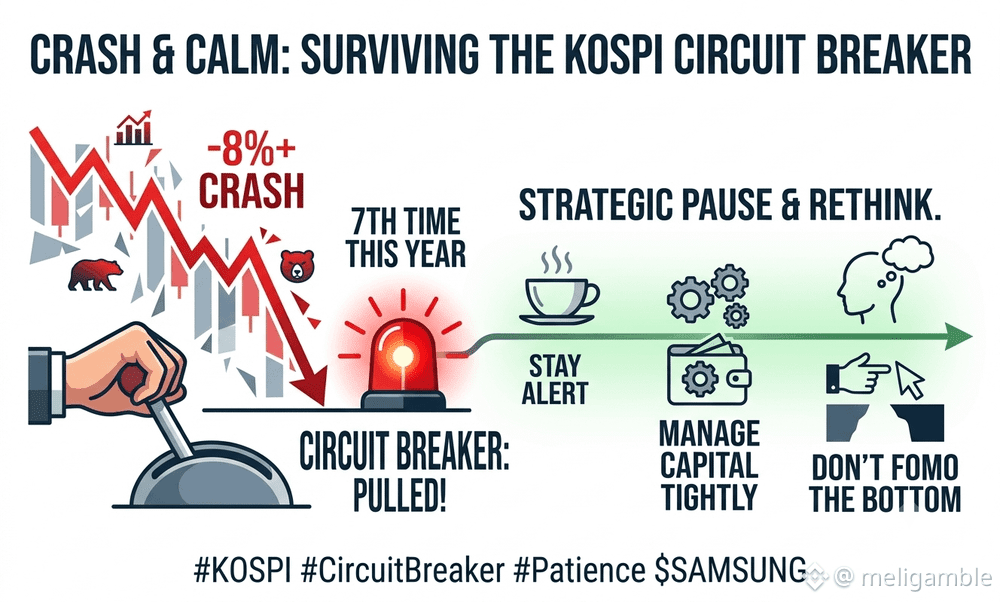
When Stock Markets Freeze, Crypto BleedsPicture this: you wake up to check your portfolio, only to find that one of the most tech-forward stock markets in the world has literally pulled the plug on trading to stop the bleeding. It is the ultimate nightmare for crypto traders who watch macro panic bleed into their bags, leaving them stuck in a loop of panic-selling at the absolute bottom. When traditional markets freeze, crypto becomes the only liquid exit ramp, which usually means a cascade of forced liquidations.
This is exactly what happened when South Korea triggered its seventh circuit breaker of the year, halting trading as the Kospi index plummeted. We saw a very similar movie play out during the March 2020 liquidity crisis. When traditional margin calls hit, investors do not sell what they want to sell; they sell what they can. That is why we saw major assets like $BTC take a temporary hit alongside altcoins like $ARB, as traders rushed to the safety of stablecoins like $USDT to preserve capital.
The lesson here is about systemic correlation. Many retail investors buy altcoins thinking they are decoupled from traditional finance, but global liquidity is a single pool. When South Korean retail investors panic, the shockwave travels instantly through the digital asset ecosystem. The silver lining is that these circuit-breaker events historically mark local capitulation bottoms rather than the start of a permanent downtrend.
Do you think these macro shocks are creating a buying opportunity, or is there more pain ahead for the markets?
#SouthKoreaTriggersSeventhCircuitBreakerThisYear #KospiFallsNearly5 #ARBDropsAbout6
When Stock Markets Freeze, Crypto Bleeds
Picture this: you wake up to check your portfolio, only to find that one of the most tech-forward stock markets in the world has literally pulled the plug on trading to stop the bleeding. It is the ultimate nightmare for crypto traders who watch macro panic bleed into their bags, leaving them stuck in a loop of panic-selling at the absolute bottom. When traditional markets freeze, crypto becomes the only liquid exit ramp, which usually means a cascade of forced liquidations.
This is exactly what happened when South Korea triggered its seventh circuit breaker of the year, halting trading as the Kospi index plummeted. We saw a very similar movie play out during the March 2020 liquidity crisis. When traditional margin calls hit, investors do not sell what they want to sell; they sell what they can. That is why we saw major assets like $BTC take a temporary hit alongside altcoins like $ARB , as traders rushed to the safety of stablecoins like $USDT to preserve capital.
The lesson here is about systemic correlation. Many retail investors buy altcoins thinking they are decoupled from traditional finance, but global liquidity is a single pool. When South Korean retail investors panic, the shockwave travels instantly through the digital asset ecosystem. The silver lining is that these circuit-breaker events historically mark local capitulation bottoms rather than the start of a permanent downtrend.
Do you think these macro shocks are creating a buying opportunity, or is there more pain ahead for the markets?
#SouthKoreaTriggersSeventhCircuitBreakerThisYear #KospiFallsNearly5 #ARBDropsAbout6
This is exactly what happened when South Korea triggered its seventh circuit breaker of the year, halting trading as the Kospi index plummeted. We saw a very similar movie play out during the March 2020 liquidity crisis. When traditional margin calls hit, investors do not sell what they want to sell; they sell what they can. That is why we saw major assets like $BTC take a temporary hit alongside altcoins like $ARB , as traders rushed to the safety of stablecoins like $USDT to preserve capital.
The lesson here is about systemic correlation. Many retail investors buy altcoins thinking they are decoupled from traditional finance, but global liquidity is a single pool. When South Korean retail investors panic, the shockwave travels instantly through the digital asset ecosystem. The silver lining is that these circuit-breaker events historically mark local capitulation bottoms rather than the start of a permanent downtrend.
Do you think these macro shocks are creating a buying opportunity, or is there more pain ahead for the markets?
#SouthKoreaTriggersSeventhCircuitBreakerThisYear #KospiFallsNearly5 #ARBDropsAbout6
58
Log in to explore more content
Join global crypto users on Binance Square
⚡️ Get latest and useful information about crypto.
💬 Trusted by the world’s largest crypto exchange.
👍 Discover real insights from verified creators.
Email / Phone number
Trending Topics
1
#YenBreaks155NearingYearHigh
4,527 views
170 Discussing
2
#USIranTradeTankerStrikesEscalate
173,590 views
2,737 Discussing
3
#CanadaTariffsOnUSTakeEffect
8,281 views
210 Discussing
4
#CanadaToImpose15%To50%TariffsOnUSGoods
33,208 views
677 Discussing
5
#ZcashRises45%WeeklyToHighestSince2016
82,900 views
1,022 Discussing
6
#LiquidNetworkSuffers$320MExploit
8,045 views
113 Discussing
7
#IMFSaysElSalvadorBTCNoPublicFunds
123,607 views
1,736 Discussing
8
#IranSaysItHit3USShips3Tankers
66,405 views
1,094 Discussing
9
#SideSwapSuspendsLiquidServices
70,194 views
936 Discussing
10
#RussiaUkraineTradeStrikesKushnerWitkoffToKyiv
53,212 views
814 Discussing