
#adl
adl
5,859 views
29 Discussing
Hot
Latest

·
--
ADL light is on, and the profit positions may also be reduced
In the contract, ADL is an automatic deleveraging mechanism: only when there is a bankrupt position and the relevant insurance funds cannot take over does the system proceed to this step, reducing positions in order from the counterparty’s profitable positions. It’s not a normal stop-loss, and it’s not a platform “backstop” that takes over positions.
The sorting is based on “profit rate × effective leverage.” Example: a position with ID $BTC has a notional value of 10,000 USDT. Wallet balance plus unrealized profit is 2,000 USDT, so the effective leverage is about 5x. If unrealized profit is 1,000 USDT and the profit rate is 10%, the sorting value is about 0.5. Similarly, with 10% profit and an effective leverage of 2x, the sorting value is about 0.2, so the former comes earlier. The numbers are only for understanding the formula; the actual ADL queue is determined by the positions page’s ADL instruction.
When operating, first open the contract → check the ADL instruction in the positions view. If risk increases, you can reduce your position size or add margin to lower the effective leverage—don’t treat all unrealized profit as available funds. When ADL happens, the profitable position will be partially or fully closed off according to the counterparty’s bankruptcy price. The platform will send a notification and will not charge the trading fee for that transaction. How many segments are lit on your positions page now?
$BTC {future}(BTCUSDT)
#合约教程 #风险管理 #ADL
ADL light is on, and the profit positions may also be reduced
In the contract, ADL is an automatic deleveraging mechanism: only when there is a bankrupt position and the relevant insurance funds cannot take over does the system proceed to this step, reducing positions in order from the counterparty’s profitable positions. It’s not a normal stop-loss, and it’s not a platform “backstop” that takes over positions.
The sorting is based on “profit rate × effective leverage.” Example: a position with ID $BTC has a notional value of 10,000 USDT. Wallet balance plus unrealized profit is 2,000 USDT, so the effective leverage is about 5x. If unrealized profit is 1,000 USDT and the profit rate is 10%, the sorting value is about 0.5. Similarly, with 10% profit and an effective leverage of 2x, the sorting value is about 0.2, so the former comes earlier. The numbers are only for understanding the formula; the actual ADL queue is determined by the positions page’s ADL instruction.
When operating, first open the contract → check the ADL instruction in the positions view. If risk increases, you can reduce your position size or add margin to lower the effective leverage—don’t treat all unrealized profit as available funds. When ADL happens, the profitable position will be partially or fully closed off according to the counterparty’s bankruptcy price. The platform will send a notification and will not charge the trading fee for that transaction. How many segments are lit on your positions page now?
$BTC
#合约教程 #风险管理 #ADL
In the contract, ADL is an automatic deleveraging mechanism: only when there is a bankrupt position and the relevant insurance funds cannot take over does the system proceed to this step, reducing positions in order from the counterparty’s profitable positions. It’s not a normal stop-loss, and it’s not a platform “backstop” that takes over positions.
The sorting is based on “profit rate × effective leverage.” Example: a position with ID $BTC has a notional value of 10,000 USDT. Wallet balance plus unrealized profit is 2,000 USDT, so the effective leverage is about 5x. If unrealized profit is 1,000 USDT and the profit rate is 10%, the sorting value is about 0.5. Similarly, with 10% profit and an effective leverage of 2x, the sorting value is about 0.2, so the former comes earlier. The numbers are only for understanding the formula; the actual ADL queue is determined by the positions page’s ADL instruction.
When operating, first open the contract → check the ADL instruction in the positions view. If risk increases, you can reduce your position size or add margin to lower the effective leverage—don’t treat all unrealized profit as available funds. When ADL happens, the profitable position will be partially or fully closed off according to the counterparty’s bankruptcy price. The platform will send a notification and will not charge the trading fee for that transaction. How many segments are lit on your positions page now?
$BTC
#合约教程 #风险管理 #ADL
90

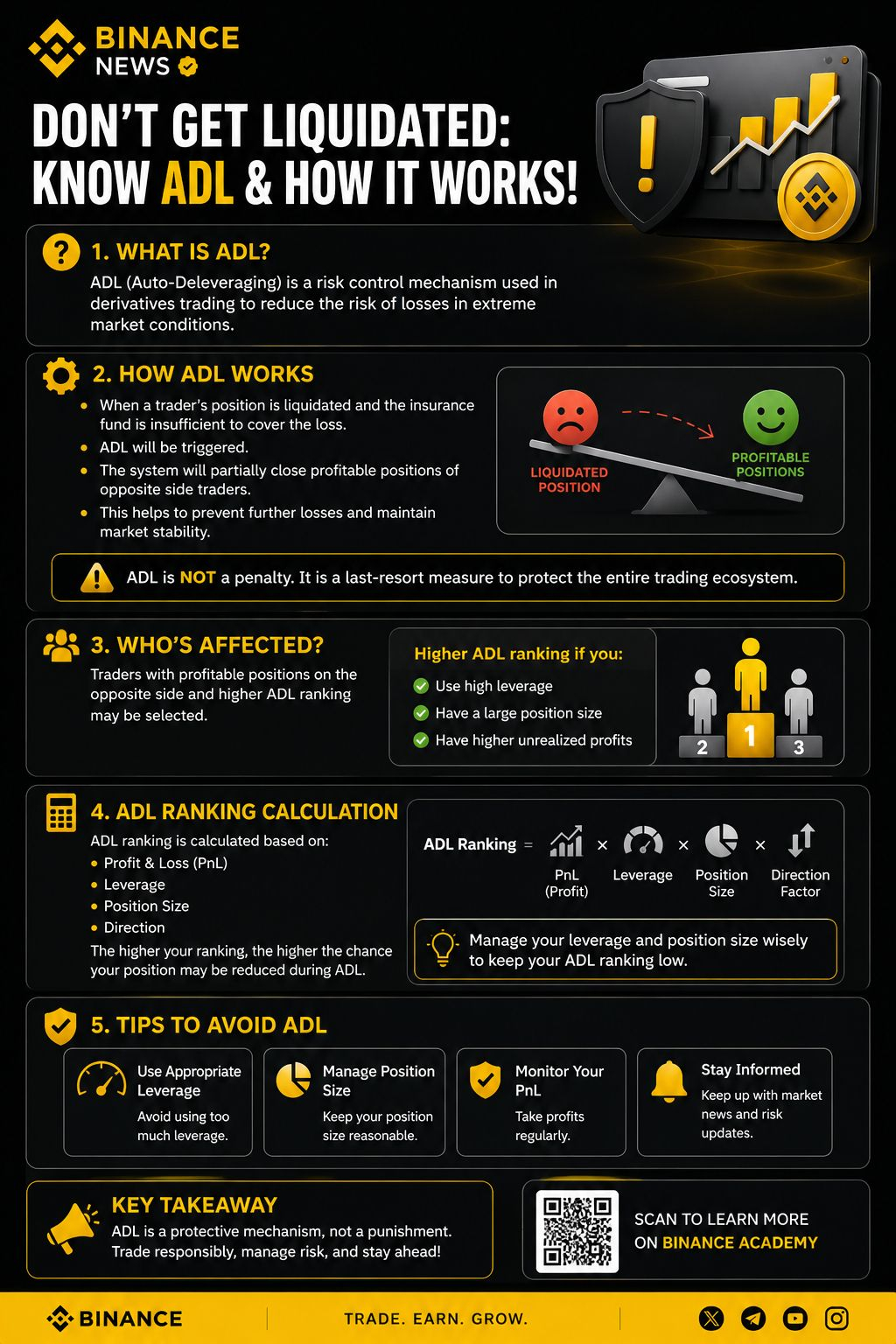
Ever wondered what happens when the market moves too fast and the insurance fund can't keep up? That's where ADL (Auto-Deleveraging) steps in. ⚡
It's not a penalty — it's Binance's last-resort mechanism to protect the ecosystem when a liquidated position can't be covered. Traders with high leverage, large position size, or high unrealized profits carry a higher ADL ranking, meaning a greater chance of being selected.
💡 Pro tip: manage your leverage and position size wisely to keep your ADL ranking low.
Trade smart. Stay informed. Protect your capital. 🛡️
#BinanceExplorers #ADL #AutoDeleveraging #CryptoTrading
Ever wondered what happens when the market moves too fast and the insurance fund can't keep up? That's where ADL (Auto-Deleveraging) steps in. ⚡
It's not a penalty — it's Binance's last-resort mechanism to protect the ecosystem when a liquidated position can't be covered. Traders with high leverage, large position size, or high unrealized profits carry a higher ADL ranking, meaning a greater chance of being selected.
💡 Pro tip: manage your leverage and position size wisely to keep your ADL ranking low.
Trade smart. Stay informed. Protect your capital. 🛡️
#BinanceExplorers #ADL #AutoDeleveraging #CryptoTrading
It's not a penalty — it's Binance's last-resort mechanism to protect the ecosystem when a liquidated position can't be covered. Traders with high leverage, large position size, or high unrealized profits carry a higher ADL ranking, meaning a greater chance of being selected.
💡 Pro tip: manage your leverage and position size wisely to keep your ADL ranking low.
Trade smart. Stay informed. Protect your capital. 🛡️
#BinanceExplorers #ADL #AutoDeleveraging #CryptoTrading
32

·
--
Yesterday I experienced ADL on ESPORT even though my position had a healthy margin and was far from liquidation.
It made me learn more about how ADL works. I understand that it is used to manage risk during extreme market moves and help keep the platform stable.
At the same time it raises an interesting question.
When the market moves against us nobody adds margin to save our position and we accept the risk of liquidation. But when the market moves in our favor ADL can sometimes close a position before we decide to exit.
I understand why ADL exists but I can also understand why many traders are surprised when it happens.
Have you ever experienced ADL and what do you think about it?
#BinanceSquare #cryptotrading #FuturesTrading #ADL
Yesterday I experienced ADL on ESPORT even though my position had a healthy margin and was far from liquidation.
It made me learn more about how ADL works. I understand that it is used to manage risk during extreme market moves and help keep the platform stable.
At the same time it raises an interesting question.
When the market moves against us nobody adds margin to save our position and we accept the risk of liquidation. But when the market moves in our favor ADL can sometimes close a position before we decide to exit.
I understand why ADL exists but I can also understand why many traders are surprised when it happens.
Have you ever experienced ADL and what do you think about it?
#BinanceSquare #cryptotrading #FuturesTrading #ADL
It made me learn more about how ADL works. I understand that it is used to manage risk during extreme market moves and help keep the platform stable.
At the same time it raises an interesting question.
When the market moves against us nobody adds margin to save our position and we accept the risk of liquidation. But when the market moves in our favor ADL can sometimes close a position before we decide to exit.
I understand why ADL exists but I can also understand why many traders are surprised when it happens.
Have you ever experienced ADL and what do you think about it?
#BinanceSquare #cryptotrading #FuturesTrading #ADL
1
435



💥 $HYPERLIQUID WHALES JUST POCKETED $7M FROM THE ADL MECHANISM 🦈
Entry: N/A
Target: N/A
Stop Loss: N/A
📌 This morning’s sharp wick on Hyperliquid triggered the Auto-Deleveraging system, forcing three high-profit shorts to close at $931.36 — handing them a combined $6.958M. The market’s most ruthless liquidation engine became their ATM. 💰
💡 The ADL formula picks off the highest-leverage winners first when the insurance fund can’t absorb the blow. These addresses didn’t just survive the needle — they front-ran the protocol’s own risk engine. 🔍
💬 If you were holding a high-leverage position through that liquidity sweep, did your strategy account for the ADL order book? 👇
⚠️ Not financial advice. Always manage your risk. 🛡️
🏷️ #HyperLiquid #ADL #DeFi #SmartMoney #Crypto
🦈 💎
💥 $HYPERLIQUID WHALES JUST POCKETED $7M FROM THE ADL MECHANISM 🦈
Entry: N/A
Target: N/A
Stop Loss: N/A
📌 This morning’s sharp wick on Hyperliquid triggered the Auto-Deleveraging system, forcing three high-profit shorts to close at $931.36 — handing them a combined $6.958M. The market’s most ruthless liquidation engine became their ATM. 💰
💡 The ADL formula picks off the highest-leverage winners first when the insurance fund can’t absorb the blow. These addresses didn’t just survive the needle — they front-ran the protocol’s own risk engine. 🔍
💬 If you were holding a high-leverage position through that liquidity sweep, did your strategy account for the ADL order book? 👇
⚠️ Not financial advice. Always manage your risk. 🛡️
🏷️ #HyperLiquid #ADL #DeFi #SmartMoney #Crypto
🦈 💎
Entry: N/A
Target: N/A
Stop Loss: N/A
📌 This morning’s sharp wick on Hyperliquid triggered the Auto-Deleveraging system, forcing three high-profit shorts to close at $931.36 — handing them a combined $6.958M. The market’s most ruthless liquidation engine became their ATM. 💰
💡 The ADL formula picks off the highest-leverage winners first when the insurance fund can’t absorb the blow. These addresses didn’t just survive the needle — they front-ran the protocol’s own risk engine. 🔍
💬 If you were holding a high-leverage position through that liquidity sweep, did your strategy account for the ADL order book? 👇
⚠️ Not financial advice. Always manage your risk. 🛡️
🏷️ #HyperLiquid #ADL #DeFi #SmartMoney #Crypto
🦈 💎
36

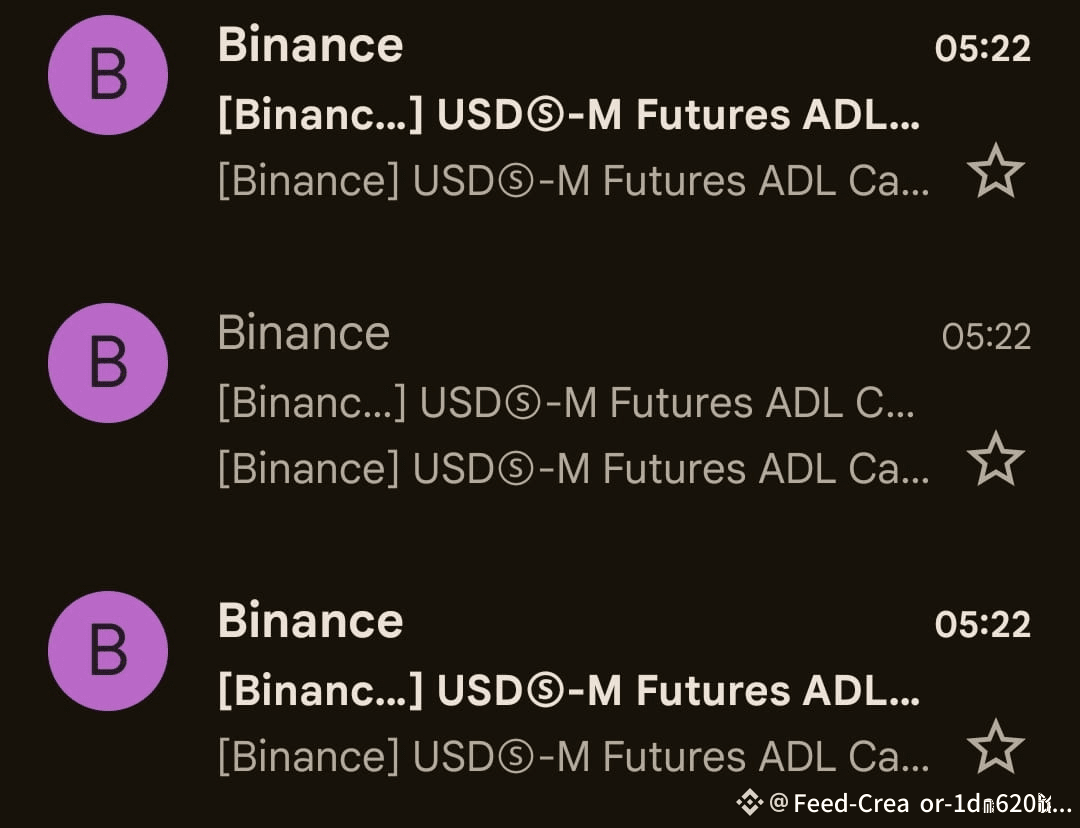
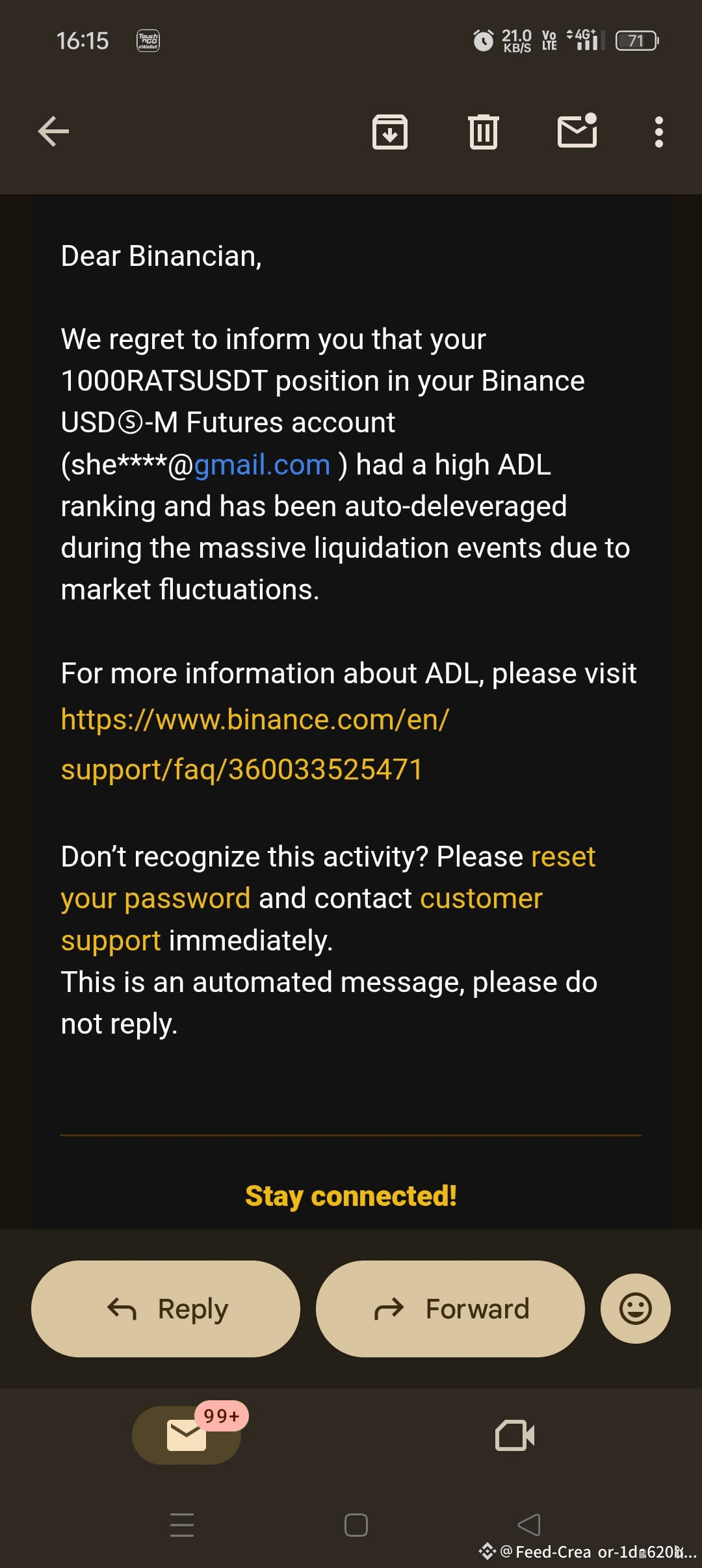
"I finally shorted the top and nailed the move…
and Binance said, ‘Congrats! You’re too profitable. Time to go home.’
#ADL
"I finally shorted the top and nailed the move…
and Binance said, ‘Congrats! You’re too profitable. Time to go home.’
#ADL
and Binance said, ‘Congrats! You’re too profitable. Time to go home.’
#ADL
6
242
·
--
Bearish
$1000CHEEMS
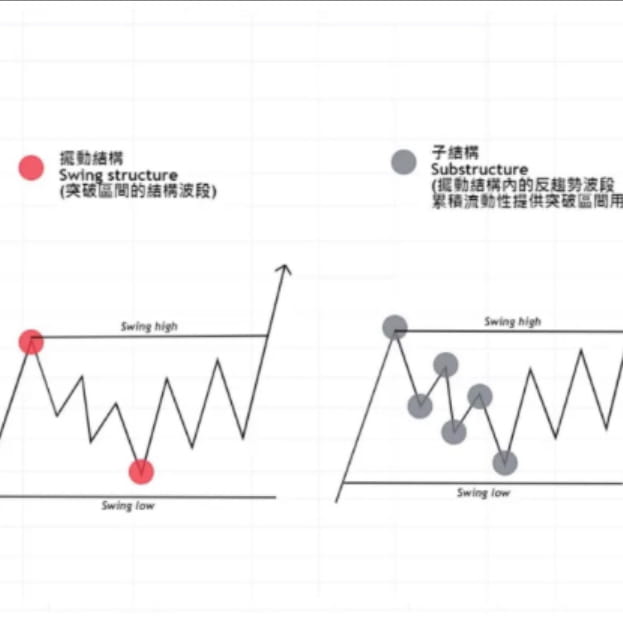
Originally, when the callback was a bit lower, I reduced leverage and increased my position, aiming to roll over to 0.0012, with a take profit at 0.001, but at midnight it automatically liquidated at 0.00145...? The exchange doesn't want to lose money, and ADL makes the winners cover the losses of the longs... this is too ridiculous, I can't even make a big profit.
#ADL
$1000CHEEMS
Originally, when the callback was a bit lower, I reduced leverage and increased my position, aiming to roll over to 0.0012, with a take profit at 0.001, but at midnight it automatically liquidated at 0.00145...? The exchange doesn't want to lose money, and ADL makes the winners cover the losses of the longs... this is too ridiculous, I can't even make a big profit.
#ADL
Originally, when the callback was a bit lower, I reduced leverage and increased my position, aiming to roll over to 0.0012, with a take profit at 0.001, but at midnight it automatically liquidated at 0.00145...? The exchange doesn't want to lose money, and ADL makes the winners cover the losses of the longs... this is too ridiculous, I can't even make a big profit.
#ADL
9
148
🦈 $SKHX LIQUIDITY HUNT: ADL MECHANISM REWARDS SHORTS WITH $6.95M 💰
Three addresses closed 16,441 SKHX at $931.36 during the Hyperliquid Shanghai Lishi flash crash, earning $6.958M combined. The ADL mechanism automatically offset the bad debt by forcing high-profit counterparties to exit at the wick bottom.
🧠 This is a textbook liquidity sweep into a structural inefficiency. The $931.36 level acted as a magnet for stop-losses and liquidation cascades, while smart money positioned at the extreme wick captured institutional-grade returns. 📊 The system’s deleveraging protocol prioritized unrealized profits to stabilize the platform — a reminder that market dislocations often reward those who understand counter-party risk mechanics.
💬 Do you see similar ADL opportunities forming on other alt-L1s, or was this a one-off structural anomaly? 👇
⚠️ Not financial advice. Always manage your risk. 🛡️
🏷️ #SKHX #LiquiditySweep #Crypto #SmartMoney #ADL
🔥 🦈
🦈 $SKHX LIQUIDITY HUNT: ADL MECHANISM REWARDS SHORTS WITH $6.95M 💰
Three addresses closed 16,441 SKHX at $931.36 during the Hyperliquid Shanghai Lishi flash crash, earning $6.958M combined. The ADL mechanism automatically offset the bad debt by forcing high-profit counterparties to exit at the wick bottom.
🧠 This is a textbook liquidity sweep into a structural inefficiency. The $931.36 level acted as a magnet for stop-losses and liquidation cascades, while smart money positioned at the extreme wick captured institutional-grade returns. 📊 The system’s deleveraging protocol prioritized unrealized profits to stabilize the platform — a reminder that market dislocations often reward those who understand counter-party risk mechanics.
💬 Do you see similar ADL opportunities forming on other alt-L1s, or was this a one-off structural anomaly? 👇
⚠️ Not financial advice. Always manage your risk. 🛡️
🏷️ #SKHX #LiquiditySweep #Crypto #SmartMoney #ADL
🔥 🦈
Three addresses closed 16,441 SKHX at $931.36 during the Hyperliquid Shanghai Lishi flash crash, earning $6.958M combined. The ADL mechanism automatically offset the bad debt by forcing high-profit counterparties to exit at the wick bottom.
🧠 This is a textbook liquidity sweep into a structural inefficiency. The $931.36 level acted as a magnet for stop-losses and liquidation cascades, while smart money positioned at the extreme wick captured institutional-grade returns. 📊 The system’s deleveraging protocol prioritized unrealized profits to stabilize the platform — a reminder that market dislocations often reward those who understand counter-party risk mechanics.
💬 Do you see similar ADL opportunities forming on other alt-L1s, or was this a one-off structural anomaly? 👇
⚠️ Not financial advice. Always manage your risk. 🛡️
🏷️ #SKHX #LiquiditySweep #Crypto #SmartMoney #ADL
🔥 🦈
15
Log in to explore more content
Join global crypto users on Binance Square
⚡️ Get latest and useful information about crypto.
💬 Trusted by the world’s largest crypto exchange.
👍 Discover real insights from verified creators.
Email / Phone number
Trending Topics
1
#BitcoinSurpasses$77000
4,341 views
85 Discussing
2
#ParadigmDisclosesZECHolding
6,920 views
259 Discussing
3
#BitcoinETFsShed$450M
15,774 views
143 Discussing
4
#USWeeklyJoblessClaimsFallTo196K
2,850 views
164 Discussing
5
#ArkhamSaysBlackRockBuys$1.5BInETH
1,043 views
23 Discussing
6
#ElSalvadorBTCHoldingsRiseTo7777
21,923 views
491 Discussing
7
#MemeLaunchpads82%OfArcDayOneVolume
28,551 views
704 Discussing
8
#OstiumLoanDisputeHearingSetInNYFederalCourt
23,328 views
487 Discussing
9
#HyperliquidUSDCSupplyOvertakesSolana
9,871 views
234 Discussing
10
#SKPoliceRefer18PolymarketUsersToProsecutors
16,011 views
399 Discussing