

#17502
17502
109 views
3 Discussing
Hot
Latest

·
--
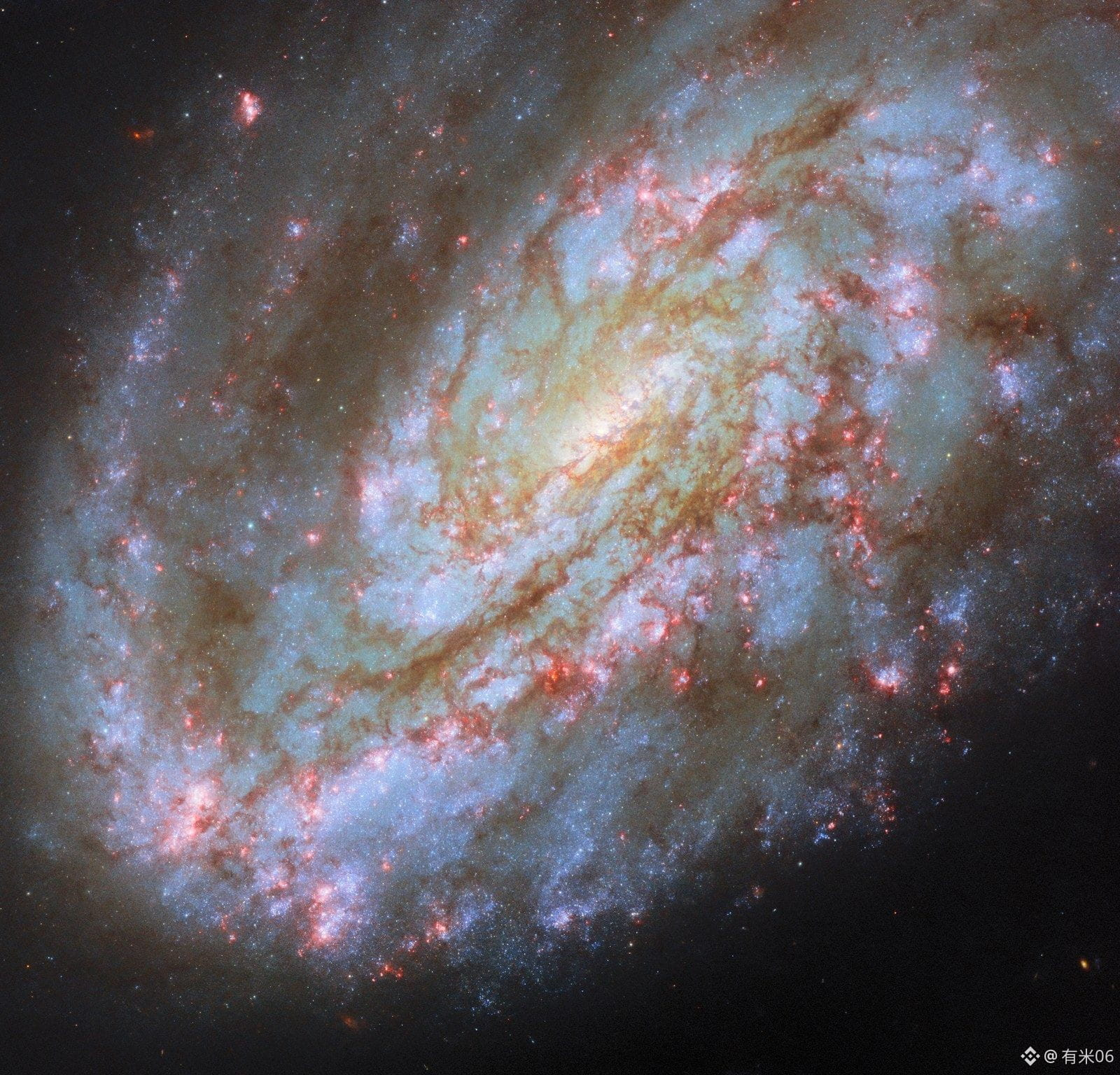
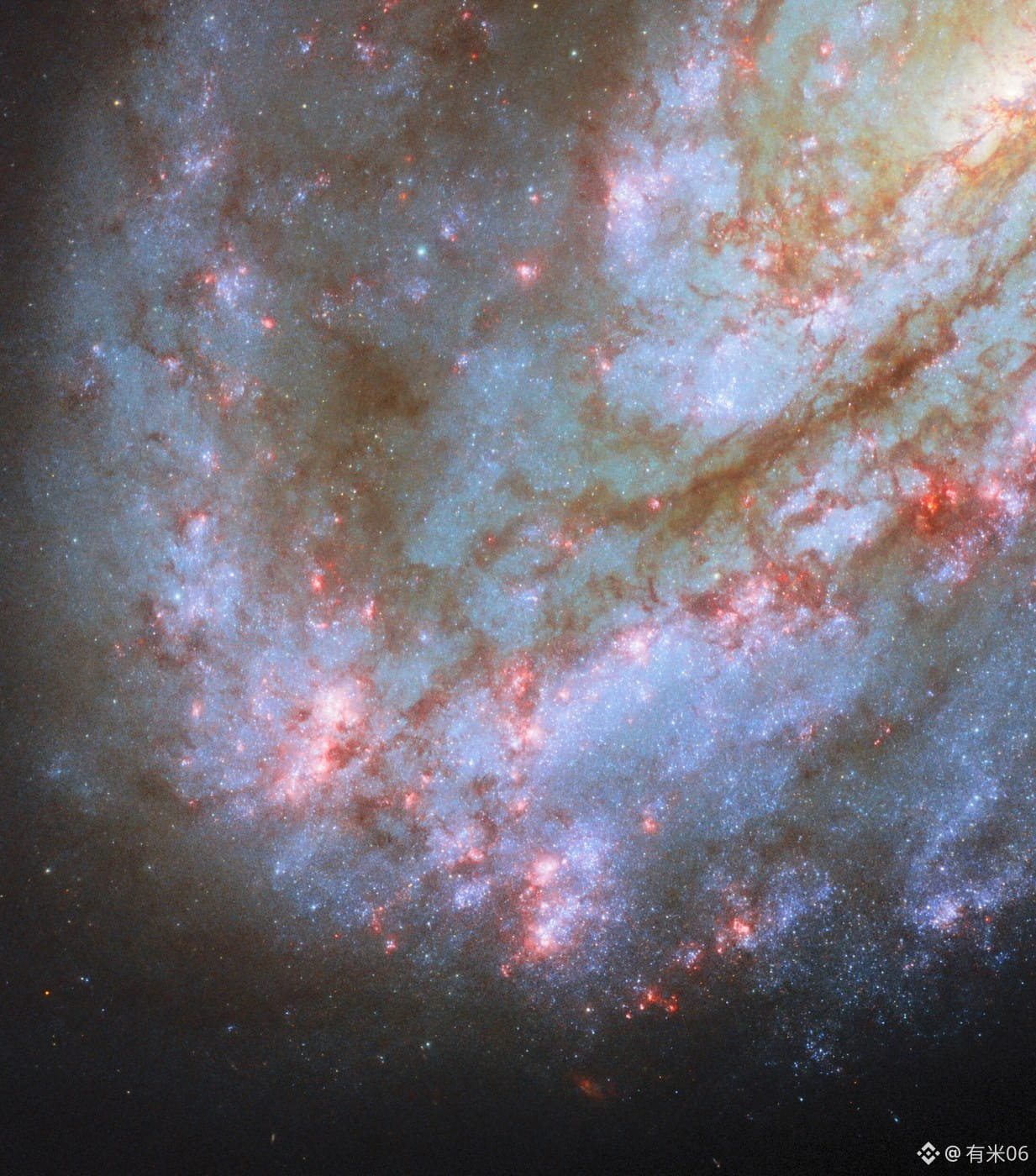
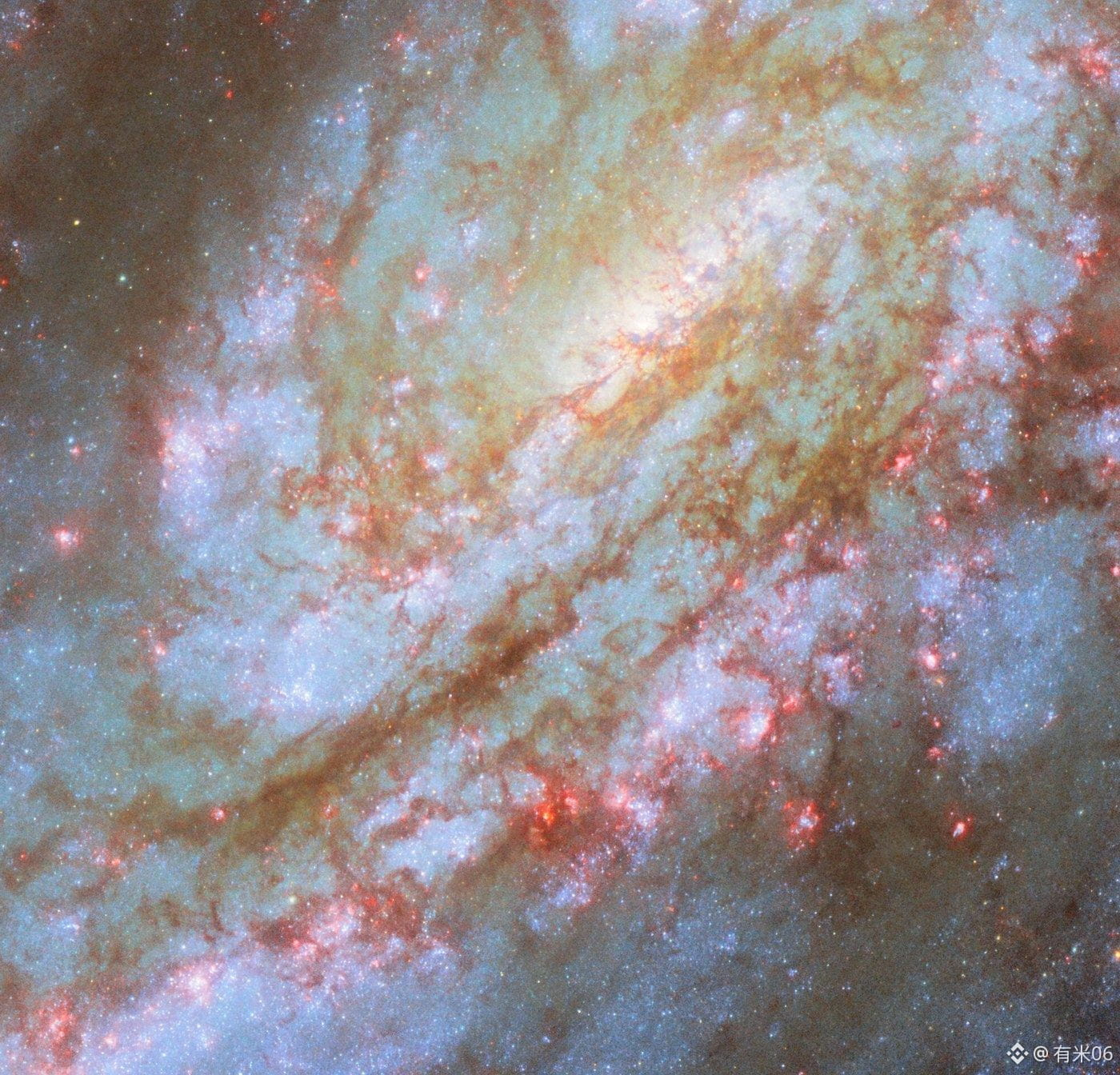
The spiral galaxy NGC 3137 photographed by Hubble: about 53 million light-years away, a “neighbor” version of our local galaxy group.
According to an ESA/Hubble and NASA same-day press release (2026-04-30 / NASA Doc. 05-04): NGC 3137 is located in Antlia, at a distance of roughly 53 million light-years. It and NGC 3175 belong to the same galaxy group. In terms of structure, it is often compared to our local group, which includes the Milky Way and Andromeda—on both sides there are two large spiral disks, plus a batch of dwarf galaxies; this group has already identified more than 500 dwarf-galaxy candidate members. The image is a composite made from six bands, and with a tilted viewing angle you can clearly see the loose, feathery spiral arms. The central black hole is estimated to have a mass of about 60 million solar masses. The disk is crowded with bright blue star clusters and pink star-forming gas—this is the focus of observing program #17502 (PHANGS-HST, PI: D. Thilker), which catalogs the ages of clusters and nebulae in about 55 nearby galaxies.
Independent verification: A Daily Space Stories recap on 2026-04-30 confirms the same key figures—about 53 million light-years away, a central black hole of about 60 million solar masses, program 17502 / PHANGS-HST, and the presence of blue star clusters and red gas—matching ESA/NASA.
Image source: ESA/Hubble & NASA, D. Thilker and the PHANGS-HST Team
Data as of: ESA/Hubble release 2026-04-30; NASA image text 2026-05-04
#Hubble #astronomy
The spiral galaxy NGC 3137 photographed by Hubble: about 53 million light-years away, a “neighbor” version of our local galaxy group.
According to an ESA/Hubble and NASA same-day press release (2026-04-30 / NASA Doc. 05-04): NGC 3137 is located in Antlia, at a distance of roughly 53 million light-years. It and NGC 3175 belong to the same galaxy group. In terms of structure, it is often compared to our local group, which includes the Milky Way and Andromeda—on both sides there are two large spiral disks, plus a batch of dwarf galaxies; this group has already identified more than 500 dwarf-galaxy candidate members. The image is a composite made from six bands, and with a tilted viewing angle you can clearly see the loose, feathery spiral arms. The central black hole is estimated to have a mass of about 60 million solar masses. The disk is crowded with bright blue star clusters and pink star-forming gas—this is the focus of observing program #17502 (PHANGS-HST, PI: D. Thilker), which catalogs the ages of clusters and nebulae in about 55 nearby galaxies.
Independent verification: A Daily Space Stories recap on 2026-04-30 confirms the same key figures—about 53 million light-years away, a central black hole of about 60 million solar masses, program 17502 / PHANGS-HST, and the presence of blue star clusters and red gas—matching ESA/NASA.
Image source: ESA/Hubble & NASA, D. Thilker and the PHANGS-HST Team
Data as of: ESA/Hubble release 2026-04-30; NASA image text 2026-05-04
#Hubble #astronomy
According to an ESA/Hubble and NASA same-day press release (2026-04-30 / NASA Doc. 05-04): NGC 3137 is located in Antlia, at a distance of roughly 53 million light-years. It and NGC 3175 belong to the same galaxy group. In terms of structure, it is often compared to our local group, which includes the Milky Way and Andromeda—on both sides there are two large spiral disks, plus a batch of dwarf galaxies; this group has already identified more than 500 dwarf-galaxy candidate members. The image is a composite made from six bands, and with a tilted viewing angle you can clearly see the loose, feathery spiral arms. The central black hole is estimated to have a mass of about 60 million solar masses. The disk is crowded with bright blue star clusters and pink star-forming gas—this is the focus of observing program #17502 (PHANGS-HST, PI: D. Thilker), which catalogs the ages of clusters and nebulae in about 55 nearby galaxies.
Independent verification: A Daily Space Stories recap on 2026-04-30 confirms the same key figures—about 53 million light-years away, a central black hole of about 60 million solar masses, program 17502 / PHANGS-HST, and the presence of blue star clusters and red gas—matching ESA/NASA.
Image source: ESA/Hubble & NASA, D. Thilker and the PHANGS-HST Team
Data as of: ESA/Hubble release 2026-04-30; NASA image text 2026-05-04
#Hubble #astronomy


34
·
--
The spiral galaxy captured by Hubble looks like one side has puffed into a neat disk, while the other has been torn apart by the wind.
According to an ESA/Hubble and NASA joint release (2026-07-24): NGC 4654 is a “late-type” spiral galaxy about 72 million light-years away in the direction of the Virgo constellation. It has a weak bar, with a morphology between barred and unbarred spirals, and it resides in the Virgo Cluster. One edge of the galaxy is round and well-defined, while the opposite side trails a gas tail that extends out of the frame. As the galaxy moves at high speed through the cluster’s tenuous, hot gas, it experiences ram pressure—squeezing its leading edge and stripping material that forms the tail. Less commonly, the stars themselves are also asymmetric: the stars and gas in the leading spiral arms are richer, while the trailing spiral arms are clearly deficient in stars. The release argues that ram pressure alone cannot fully explain the effect. A close flyby with another cluster galaxy, NGC 4639, about 500 million years ago may have pulled away gas from one side and suppressed star formation, leaving the galaxy’s current lopsided shape. Even so, it is still forming stars at a rate of about twice the Sun’s mass per year. The pink bubbles in the image are ionized gas surrounding newly formed stars. Observation program IDs #15654 and #17502 (PHANGS-HST).
Independent verification: Sci.News (2026-07-27) reported on the same topic, confirming the ram-pressure tail, the approximate 500-million-years-ago flyby with NGC 4639, and ongoing active star formation—consistent with the ESA/NASA release.
Image source: ESA/Hubble & NASA, D. Thilker, J. Lee and the PHANGS-HST Team
Data through: ESA/Hubble / NASA joint release dated 2026-07-24
The spiral galaxy captured by Hubble looks like one side has puffed into a neat disk, while the other has been torn apart by the wind.
According to an ESA/Hubble and NASA joint release (2026-07-24): NGC 4654 is a “late-type” spiral galaxy about 72 million light-years away in the direction of the Virgo constellation. It has a weak bar, with a morphology between barred and unbarred spirals, and it resides in the Virgo Cluster. One edge of the galaxy is round and well-defined, while the opposite side trails a gas tail that extends out of the frame. As the galaxy moves at high speed through the cluster’s tenuous, hot gas, it experiences ram pressure—squeezing its leading edge and stripping material that forms the tail. Less commonly, the stars themselves are also asymmetric: the stars and gas in the leading spiral arms are richer, while the trailing spiral arms are clearly deficient in stars. The release argues that ram pressure alone cannot fully explain the effect. A close flyby with another cluster galaxy, NGC 4639, about 500 million years ago may have pulled away gas from one side and suppressed star formation, leaving the galaxy’s current lopsided shape. Even so, it is still forming stars at a rate of about twice the Sun’s mass per year. The pink bubbles in the image are ionized gas surrounding newly formed stars. Observation program IDs #15654 and #17502 (PHANGS-HST).
Independent verification: Sci.News (2026-07-27) reported on the same topic, confirming the ram-pressure tail, the approximate 500-million-years-ago flyby with NGC 4639, and ongoing active star formation—consistent with the ESA/NASA release.
Image source: ESA/Hubble & NASA, D. Thilker, J. Lee and the PHANGS-HST Team
Data through: ESA/Hubble / NASA joint release dated 2026-07-24
According to an ESA/Hubble and NASA joint release (2026-07-24): NGC 4654 is a “late-type” spiral galaxy about 72 million light-years away in the direction of the Virgo constellation. It has a weak bar, with a morphology between barred and unbarred spirals, and it resides in the Virgo Cluster. One edge of the galaxy is round and well-defined, while the opposite side trails a gas tail that extends out of the frame. As the galaxy moves at high speed through the cluster’s tenuous, hot gas, it experiences ram pressure—squeezing its leading edge and stripping material that forms the tail. Less commonly, the stars themselves are also asymmetric: the stars and gas in the leading spiral arms are richer, while the trailing spiral arms are clearly deficient in stars. The release argues that ram pressure alone cannot fully explain the effect. A close flyby with another cluster galaxy, NGC 4639, about 500 million years ago may have pulled away gas from one side and suppressed star formation, leaving the galaxy’s current lopsided shape. Even so, it is still forming stars at a rate of about twice the Sun’s mass per year. The pink bubbles in the image are ionized gas surrounding newly formed stars. Observation program IDs #15654 and #17502 (PHANGS-HST).
Independent verification: Sci.News (2026-07-27) reported on the same topic, confirming the ram-pressure tail, the approximate 500-million-years-ago flyby with NGC 4639, and ongoing active star formation—consistent with the ESA/NASA release.
Image source: ESA/Hubble & NASA, D. Thilker, J. Lee and the PHANGS-HST Team
Data through: ESA/Hubble / NASA joint release dated 2026-07-24
191
Log in to explore more content
Join global crypto users on Binance Square
⚡️ Get latest and useful information about crypto.
💬 Trusted by the world’s largest crypto exchange.
👍 Discover real insights from verified creators.
Email / Phone number
Trending Topics
1
#BinancePick
2.9M views
149,401 Discussing
2
#EarningsSeason
5.2M views
25,503 Discussing
3
#AnthropicTTMRevenueGrewAbout1200%
7,725 views
226 Discussing
4
#AnthropicS1ExpectedToday
11,068 views
212 Discussing
5
#SouthKoreaReportedlyWeighsFourthCryptoTaxDelay
19,230 views
349 Discussing
6
#FranklinTempletonFilesForTwoDividendToBitcoinETFs
26,176 views
457 Discussing
7
#StrategyMSTRSurpassesNasdaqInMarketCap
20,051 views
341 Discussing
8
#CanadaProposesStablecoinRedemptionWithin3BusinessDays
920 views
33 Discussing
9
#ElectrumWalletBugLetRogueServersStealFunds
23,465 views
428 Discussing
10
#ArgentineCourtDismissesLIBRACaseAgainstMilei
35,444 views
526 Discussing