
Ruoxi BNB
10.3k පෝස්ටු

Ruoxi BNB
වාර්තා කරන්න
පරිශීලක අවහිර කරන්න
විවෘත වෙළෙඳාම
නිතර වෙළෙන්දා
{වේලාව} මාස
1.4K+ හඹා යමින්
21.3K+ හඹා යන්නන්
6.5K+ කැමති විය
පෝස්ටු
ආයෝජන කළඹ
සියල්ල
උපුටා දැක්වීම්
සජීවි
අමුණා ඇත
·
--
උසබ තත්ත්වය
@Dusk_Foundation
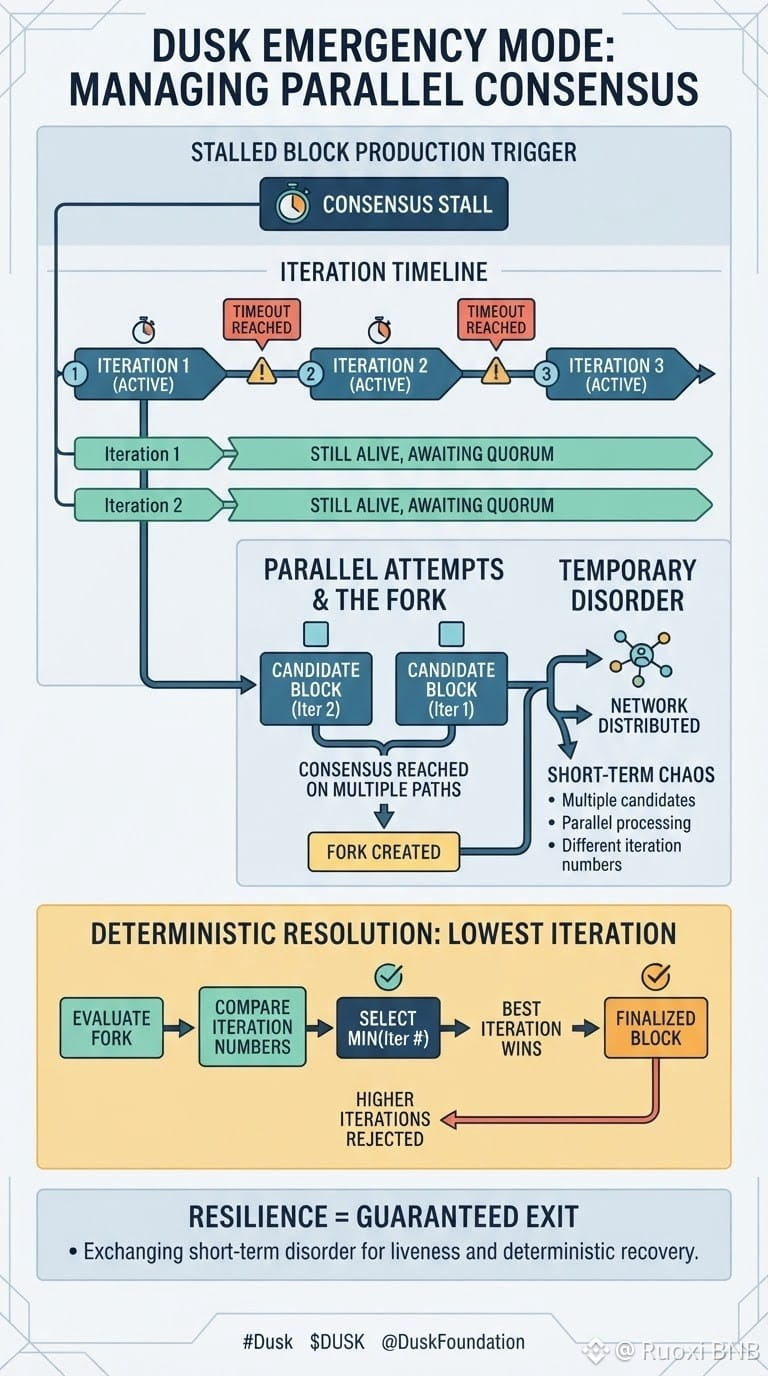
ආරම්භයේදී මම සිතුවේ ඩස්ක් (Dusk) ගේ හදිසි ක්රමය ප්රධාන වශයෙන් නතර වූ බ්ලොක් නිෂ්පාදනයට පසුබැක් අපේක්ෂාවක් ලෙසයි කියලා. ඒත් මම තවත් බැලූ විට කුඩා විස්තරයක් කැපී පෙනුනා: විවෘත (open) iteration වලට එකවරම එකම අවස්ථාවේ දිගටම පැවතිය හැක. උපරිම step timeout පසු නව iteration එකක් ආරම්භ වෙනවා, නමුත් කලින් තිබූ iteration මැරිලා යන්නේ නැහැ—ඒවා ඇත්තටම quorum වෙත ළඟා වෙනතුරුම ජීවමානව පවතිනවා. ඒ කියන්නේ එක් stuck මාර්ගයකට ජාලය බලා සිටවන්නට බල නොකර, ප්රොටෝකෝලය තාවකාලික සමකාලීන උත්සාහයන් පිළිගන්නවා. ඊට පැහැදිලි වියදමක් තියෙනවා: අනුකූලකම (consensus) කරා අවසානයේ කිහිප දෙනෙක්ම ළඟා විය හැකි නිසා fork එකක් සෑදෙනවා—ඒක එවිට අඩුම iteration එක තෝරා ගැනීමෙන් විසඳන්න සිදුවෙනවා. එම හුවමාරුව හදිසි ලේබලයට වඩා මට වඩා රසවත් ලෙස පෙනෙනවා. ඩස්ක් සාරාංශයෙන් කතා කරන්නේ—කෙටි කාලීන ව්යාකූලත්වයකින් යම් කොටසක් අල්ලාගෙන—provisioners අඩුවූවත් හෝ හුදකලා වූවත් අවම වශයෙන් එක් මාර්ගයක්ම ප්රගතියක් කරා යන්න වැඩි අවස්ථාවක් ලබාගැනීමක්. සමහරවිට මෙය සාධාරණ අසාර්ථක වීමේ හැසිරීම් (failure mode) එකක් වෙන්න ඇති; නමුත් එය complexity එක නිකමට බලා සිටීමෙන් fork resolution වෙත මාරු කරන්නේ.
ඒ නිසා මට කල්පනා වෙනවා: resilience කියන්නේ සමහර විට අපැහැදිලි තත්ත්වයන් වළක්වා ගැනීම ගැන නොව, ඒ ව්යාකූලත්වයට නිශ්චිත (deterministic) විසඳුම් මාර්ගයක් ඇති බව සහතික කිරීම ගැනද?
@Dusk_Foundation #dusk $DUSK
{spot}(DUSKUSDT)
@Dusk
ආරම්භයේදී මම සිතුවේ ඩස්ක් (Dusk) ගේ හදිසි ක්රමය ප්රධාන වශයෙන් නතර වූ බ්ලොක් නිෂ්පාදනයට පසුබැක් අපේක්ෂාවක් ලෙසයි කියලා. ඒත් මම තවත් බැලූ විට කුඩා විස්තරයක් කැපී පෙනුනා: විවෘත (open) iteration වලට එකවරම එකම අවස්ථාවේ දිගටම පැවතිය හැක. උපරිම step timeout පසු නව iteration එකක් ආරම්භ වෙනවා, නමුත් කලින් තිබූ iteration මැරිලා යන්නේ නැහැ—ඒවා ඇත්තටම quorum වෙත ළඟා වෙනතුරුම ජීවමානව පවතිනවා. ඒ කියන්නේ එක් stuck මාර්ගයකට ජාලය බලා සිටවන්නට බල නොකර, ප්රොටෝකෝලය තාවකාලික සමකාලීන උත්සාහයන් පිළිගන්නවා. ඊට පැහැදිලි වියදමක් තියෙනවා: අනුකූලකම (consensus) කරා අවසානයේ කිහිප දෙනෙක්ම ළඟා විය හැකි නිසා fork එකක් සෑදෙනවා—ඒක එවිට අඩුම iteration එක තෝරා ගැනීමෙන් විසඳන්න සිදුවෙනවා. එම හුවමාරුව හදිසි ලේබලයට වඩා මට වඩා රසවත් ලෙස පෙනෙනවා. ඩස්ක් සාරාංශයෙන් කතා කරන්නේ—කෙටි කාලීන ව්යාකූලත්වයකින් යම් කොටසක් අල්ලාගෙන—provisioners අඩුවූවත් හෝ හුදකලා වූවත් අවම වශයෙන් එක් මාර්ගයක්ම ප්රගතියක් කරා යන්න වැඩි අවස්ථාවක් ලබාගැනීමක්. සමහරවිට මෙය සාධාරණ අසාර්ථක වීමේ හැසිරීම් (failure mode) එකක් වෙන්න ඇති; නමුත් එය complexity එක නිකමට බලා සිටීමෙන් fork resolution වෙත මාරු කරන්නේ.
ඒ නිසා මට කල්පනා වෙනවා: resilience කියන්නේ සමහර විට අපැහැදිලි තත්ත්වයන් වළක්වා ගැනීම ගැන නොව, ඒ ව්යාකූලත්වයට නිශ්චිත (deterministic) විසඳුම් මාර්ගයක් ඇති බව සහතික කිරීම ගැනද?
@Dusk #dusk $DUSK
ආරම්භයේදී මම සිතුවේ ඩස්ක් (Dusk) ගේ හදිසි ක්රමය ප්රධාන වශයෙන් නතර වූ බ්ලොක් නිෂ්පාදනයට පසුබැක් අපේක්ෂාවක් ලෙසයි කියලා. ඒත් මම තවත් බැලූ විට කුඩා විස්තරයක් කැපී පෙනුනා: විවෘත (open) iteration වලට එකවරම එකම අවස්ථාවේ දිගටම පැවතිය හැක. උපරිම step timeout පසු නව iteration එකක් ආරම්භ වෙනවා, නමුත් කලින් තිබූ iteration මැරිලා යන්නේ නැහැ—ඒවා ඇත්තටම quorum වෙත ළඟා වෙනතුරුම ජීවමානව පවතිනවා. ඒ කියන්නේ එක් stuck මාර්ගයකට ජාලය බලා සිටවන්නට බල නොකර, ප්රොටෝකෝලය තාවකාලික සමකාලීන උත්සාහයන් පිළිගන්නවා. ඊට පැහැදිලි වියදමක් තියෙනවා: අනුකූලකම (consensus) කරා අවසානයේ කිහිප දෙනෙක්ම ළඟා විය හැකි නිසා fork එකක් සෑදෙනවා—ඒක එවිට අඩුම iteration එක තෝරා ගැනීමෙන් විසඳන්න සිදුවෙනවා. එම හුවමාරුව හදිසි ලේබලයට වඩා මට වඩා රසවත් ලෙස පෙනෙනවා. ඩස්ක් සාරාංශයෙන් කතා කරන්නේ—කෙටි කාලීන ව්යාකූලත්වයකින් යම් කොටසක් අල්ලාගෙන—provisioners අඩුවූවත් හෝ හුදකලා වූවත් අවම වශයෙන් එක් මාර්ගයක්ම ප්රගතියක් කරා යන්න වැඩි අවස්ථාවක් ලබාගැනීමක්. සමහරවිට මෙය සාධාරණ අසාර්ථක වීමේ හැසිරීම් (failure mode) එකක් වෙන්න ඇති; නමුත් එය complexity එක නිකමට බලා සිටීමෙන් fork resolution වෙත මාරු කරන්නේ.
ඒ නිසා මට කල්පනා වෙනවා: resilience කියන්නේ සමහර විට අපැහැදිලි තත්ත්වයන් වළක්වා ගැනීම ගැන නොව, ඒ ව්යාකූලත්වයට නිශ්චිත (deterministic) විසඳුම් මාර්ගයක් ඇති බව සහතික කිරීම ගැනද?
@Dusk #dusk $DUSK
3
4
145
අමුණා ඇත
·
--
උසබ තත්ත්වය
@Dusk_Foundation
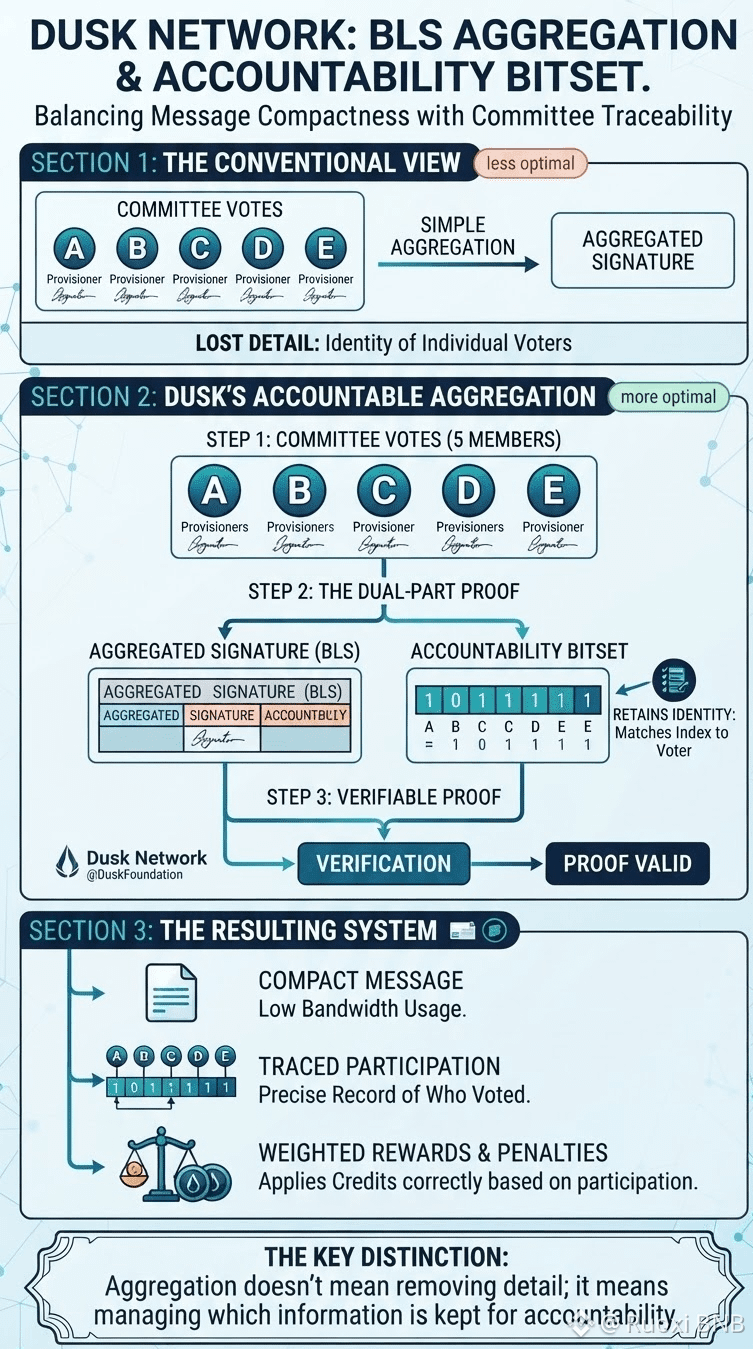
အစပိုင်းမှာတော့ Dusk ရဲ့ BLS ပေါင်းစည်းခြင်းဟာ အများအားဖြင့် bandwidth ကိုချွေတာတဲ့ လှည့်ကွက်တစ်ခုလိုပဲ ထင်ခဲ့တယ်။ ဒါပေမယ့် ပိုပြီးကြည့်လေလေ aggregated signature နဲ့ တွဲထားတဲ့ bitset က ကိုယ်နှိုက် compression ထက်ပိုအရေးကြီးတယ်လို့ မြင်လာခဲ့တယ်။ ကော်မတီအဖွဲ့ဝင်တစ်ဦးချင်းစီမှာ index တစ်ခုရှိပြီး bitset က သူတို့ရဲ့ signature တွေကို ဘယ်အဖွဲ့ဝင်တွေက ပံ့ပိုးခဲ့လဲဆိုတာကို တိတိကျကျ မှတ်တမ်းတင်ထားတယ်။ ဆိုလိုတာက ကွန်ယက်က ပေါင်းစည်းပြီး တစ်ခုတည်းသော signature တစ်ခုကိုပဲ သယ်ဆောင်နိုင်သလို၊ အဲဒီ signature နောက်က မဲပေးသူတွေရဲ့ အထောက်အထားကိုတော့ ဆက်လက်ထိန်းသိမ်းနိုင်တယ်။ ဒီကွာခြားချက်ကို စိတ်ဝင်စားခဲ့တယ်၊ ဘာကြောင့်လဲဆိုတော့ aggregation ဆိုတာက ပုံမှန်အားဖြင့် အသေးစိတ်ကိုဖျက်ပစ်သလို တွေးမိတတ်လို့ပဲ။ ဒီနေရာမှာတော့ မက်ဆေ့ဂျ် ဖော်မတ်ထဲကနေ အသေးစိတ်တချို့ကို ဖယ်ရှားထားပေမယ့်၊ ပရိုတိုကောက တကယ်ပါဝင်ခဲ့တဲ့သူတွေကို ပြန်တည်ဆောက်နိုင်အောင် လုံလောက်တဲ့ ဖွဲ့စည်းပုံကို ထိန်းထားပေးတယ်။ ကော်မတီမဲတွေက credit တွေအပေါ်အခြေခံပြီး အလေးချိန်ပေးထားလို့၊ နောက်ပိုင်း reward နဲ့ penalty တွေက သက်ဆိုင်ရာ မဲပေးသူတွေကို သိဖို့လိုတာကြောင့် အဲဒါက အရေးကြီးတယ်။ ဒါကြောင့် compact proof ဆိုတာက မဲပေးသူ membership အချက်အလက်တိတိကျကျကို ဘေးမှာ တစ်ပါတ်တည်း ထားဖို့လိုတယ်။ ပေါင်းစည်းခြင်းရဲ့ အသုံးဝင်တဲ့ အပိုင်းဟာ consensus message တွေကို ပိုသေးသွားအောင်လုပ်ရုံတင်မဟုတ်ဘဲ၊ ဘယ်အချက်အလက်တွေကို လုံခြုံစွာ compressed လုပ်နိုင်ပြီး ဘယ်ဟာကိုတော့ မလုပ်နိုင်ဘူးဆိုတာကို ဆုံးဖြတ်တာ ဖြစ်နိုင်တယ်။
Consensus proof တစ်ခုဟာ “succinctness” ဘယ်လောက်အထိ လက်ခံနိုင်ပြီး၊ accountability က ပျောက်စပြုလာမယ့် အမှတ်က ဘယ်မှာလဲဆိုတာကို တွေးမိစေတယ်။
@Dusk_Foundation #dusk $DUSK
{spot}(DUSKUSDT)
@Dusk
အစပိုင်းမှာတော့ Dusk ရဲ့ BLS ပေါင်းစည်းခြင်းဟာ အများအားဖြင့် bandwidth ကိုချွေတာတဲ့ လှည့်ကွက်တစ်ခုလိုပဲ ထင်ခဲ့တယ်။ ဒါပေမယ့် ပိုပြီးကြည့်လေလေ aggregated signature နဲ့ တွဲထားတဲ့ bitset က ကိုယ်နှိုက် compression ထက်ပိုအရေးကြီးတယ်လို့ မြင်လာခဲ့တယ်။ ကော်မတီအဖွဲ့ဝင်တစ်ဦးချင်းစီမှာ index တစ်ခုရှိပြီး bitset က သူတို့ရဲ့ signature တွေကို ဘယ်အဖွဲ့ဝင်တွေက ပံ့ပိုးခဲ့လဲဆိုတာကို တိတိကျကျ မှတ်တမ်းတင်ထားတယ်။ ဆိုလိုတာက ကွန်ယက်က ပေါင်းစည်းပြီး တစ်ခုတည်းသော signature တစ်ခုကိုပဲ သယ်ဆောင်နိုင်သလို၊ အဲဒီ signature နောက်က မဲပေးသူတွေရဲ့ အထောက်အထားကိုတော့ ဆက်လက်ထိန်းသိမ်းနိုင်တယ်။ ဒီကွာခြားချက်ကို စိတ်ဝင်စားခဲ့တယ်၊ ဘာကြောင့်လဲဆိုတော့ aggregation ဆိုတာက ပုံမှန်အားဖြင့် အသေးစိတ်ကိုဖျက်ပစ်သလို တွေးမိတတ်လို့ပဲ။ ဒီနေရာမှာတော့ မက်ဆေ့ဂျ် ဖော်မတ်ထဲကနေ အသေးစိတ်တချို့ကို ဖယ်ရှားထားပေမယ့်၊ ပရိုတိုကောက တကယ်ပါဝင်ခဲ့တဲ့သူတွေကို ပြန်တည်ဆောက်နိုင်အောင် လုံလောက်တဲ့ ဖွဲ့စည်းပုံကို ထိန်းထားပေးတယ်။ ကော်မတီမဲတွေက credit တွေအပေါ်အခြေခံပြီး အလေးချိန်ပေးထားလို့၊ နောက်ပိုင်း reward နဲ့ penalty တွေက သက်ဆိုင်ရာ မဲပေးသူတွေကို သိဖို့လိုတာကြောင့် အဲဒါက အရေးကြီးတယ်။ ဒါကြောင့် compact proof ဆိုတာက မဲပေးသူ membership အချက်အလက်တိတိကျကျကို ဘေးမှာ တစ်ပါတ်တည်း ထားဖို့လိုတယ်။ ပေါင်းစည်းခြင်းရဲ့ အသုံးဝင်တဲ့ အပိုင်းဟာ consensus message တွေကို ပိုသေးသွားအောင်လုပ်ရုံတင်မဟုတ်ဘဲ၊ ဘယ်အချက်အလက်တွေကို လုံခြုံစွာ compressed လုပ်နိုင်ပြီး ဘယ်ဟာကိုတော့ မလုပ်နိုင်ဘူးဆိုတာကို ဆုံးဖြတ်တာ ဖြစ်နိုင်တယ်။
Consensus proof တစ်ခုဟာ “succinctness” ဘယ်လောက်အထိ လက်ခံနိုင်ပြီး၊ accountability က ပျောက်စပြုလာမယ့် အမှတ်က ဘယ်မှာလဲဆိုတာကို တွေးမိစေတယ်။
@Dusk #dusk $DUSK
အစပိုင်းမှာတော့ Dusk ရဲ့ BLS ပေါင်းစည်းခြင်းဟာ အများအားဖြင့် bandwidth ကိုချွေတာတဲ့ လှည့်ကွက်တစ်ခုလိုပဲ ထင်ခဲ့တယ်။ ဒါပေမယ့် ပိုပြီးကြည့်လေလေ aggregated signature နဲ့ တွဲထားတဲ့ bitset က ကိုယ်နှိုက် compression ထက်ပိုအရေးကြီးတယ်လို့ မြင်လာခဲ့တယ်။ ကော်မတီအဖွဲ့ဝင်တစ်ဦးချင်းစီမှာ index တစ်ခုရှိပြီး bitset က သူတို့ရဲ့ signature တွေကို ဘယ်အဖွဲ့ဝင်တွေက ပံ့ပိုးခဲ့လဲဆိုတာကို တိတိကျကျ မှတ်တမ်းတင်ထားတယ်။ ဆိုလိုတာက ကွန်ယက်က ပေါင်းစည်းပြီး တစ်ခုတည်းသော signature တစ်ခုကိုပဲ သယ်ဆောင်နိုင်သလို၊ အဲဒီ signature နောက်က မဲပေးသူတွေရဲ့ အထောက်အထားကိုတော့ ဆက်လက်ထိန်းသိမ်းနိုင်တယ်။ ဒီကွာခြားချက်ကို စိတ်ဝင်စားခဲ့တယ်၊ ဘာကြောင့်လဲဆိုတော့ aggregation ဆိုတာက ပုံမှန်အားဖြင့် အသေးစိတ်ကိုဖျက်ပစ်သလို တွေးမိတတ်လို့ပဲ။ ဒီနေရာမှာတော့ မက်ဆေ့ဂျ် ဖော်မတ်ထဲကနေ အသေးစိတ်တချို့ကို ဖယ်ရှားထားပေမယ့်၊ ပရိုတိုကောက တကယ်ပါဝင်ခဲ့တဲ့သူတွေကို ပြန်တည်ဆောက်နိုင်အောင် လုံလောက်တဲ့ ဖွဲ့စည်းပုံကို ထိန်းထားပေးတယ်။ ကော်မတီမဲတွေက credit တွေအပေါ်အခြေခံပြီး အလေးချိန်ပေးထားလို့၊ နောက်ပိုင်း reward နဲ့ penalty တွေက သက်ဆိုင်ရာ မဲပေးသူတွေကို သိဖို့လိုတာကြောင့် အဲဒါက အရေးကြီးတယ်။ ဒါကြောင့် compact proof ဆိုတာက မဲပေးသူ membership အချက်အလက်တိတိကျကျကို ဘေးမှာ တစ်ပါတ်တည်း ထားဖို့လိုတယ်။ ပေါင်းစည်းခြင်းရဲ့ အသုံးဝင်တဲ့ အပိုင်းဟာ consensus message တွေကို ပိုသေးသွားအောင်လုပ်ရုံတင်မဟုတ်ဘဲ၊ ဘယ်အချက်အလက်တွေကို လုံခြုံစွာ compressed လုပ်နိုင်ပြီး ဘယ်ဟာကိုတော့ မလုပ်နိုင်ဘူးဆိုတာကို ဆုံးဖြတ်တာ ဖြစ်နိုင်တယ်။
Consensus proof တစ်ခုဟာ “succinctness” ဘယ်လောက်အထိ လက်ခံနိုင်ပြီး၊ accountability က ပျောက်စပြုလာမယ့် အမှတ်က ဘယ်မှာလဲဆိုတာကို တွေးမိစေတယ်။
@Dusk #dusk $DUSK
20
11
207
·
--
99
·
--
උසබ තත්ත්වය
@Dusk_Foundation
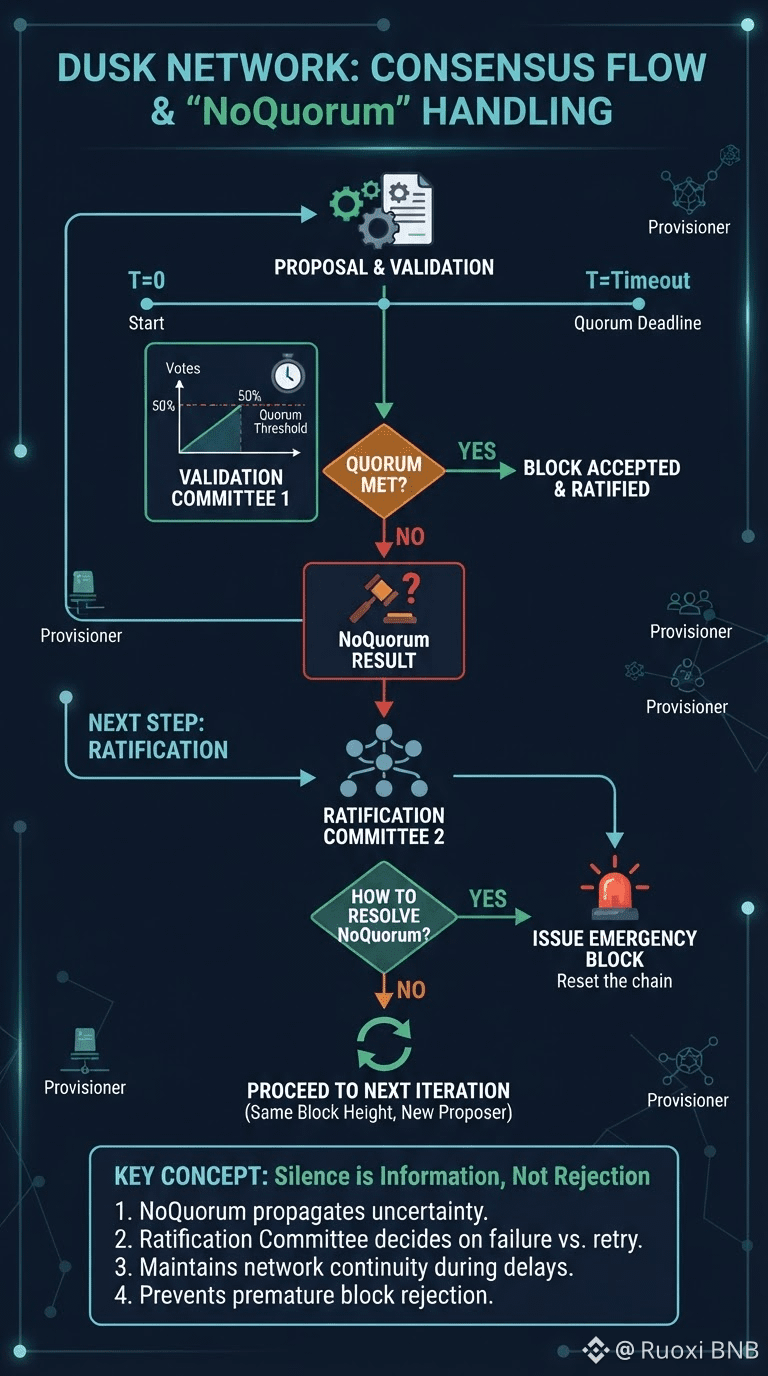
ආරම්භයේදී මම සිතුවේ ඩස්ක්ගේ ඡන්ද ක්රියාවලිය බොහෝදුරට ටයිම්අවුට් එකකට පෙර ක്വෝරම් එකක් ළඟා කර ගැනීම ගැන බවයි. නමුත් තවත් දේ බලද්දී, නොමැති ක്വෝරම් එකක් සලකන ආකාරය මට කැපී පෙනුණා. වලංගු කිරීමේ පියවරට නියමිත වේලාවේ ප්රමාණවත් ඡන්ද එකතු කරගන්න බැරි නම්, එය සරලවම බ්ලොක් එක අකුරැස් (invalid) බව කියා දමන්නේ නැහැ. එය NoQuorum ප්රතිඵලයක් නිපදවන අතර එය පසුව ratification සඳහාම ගෙනයනු ලබනවා. ඊළඟ කමිටුවට ඒ ප්රතිඵලය ගැන ඡන්දය දෙන්න අවස්ථාව තියෙනවා—නමුත් මුළු ක්රියාවලියම වහාම නැවත ආරම්භ කරනවා වෙනුවට. ඒ නිසා “බ්ලොක් එක අසාර්ථක වුණා” කියන එක සහ “ජාලයට තීරණය කරගන්න බැරි වුණා” කියන එක අතර කුඩා වෙනසක් තියෙනවා. මේවා බොහෝ වෙනස් අවස්ථා—උදාහරණයක් ලෙස provisioners offline විය හැකිවීම හෝ පණිවිඩ ප්රමාද වීම. ප්රොටෝකෝලය එම අස්ථිරතාව තවත් එක පියවරක් සඳහා දෘශ්ය ලෙස තබාගෙන, iteration එක අසාර්ථක විය යුතුද කියා තීරණය කරන තෙක් බලා සිටිනවා. ටයිම්අවුට් එකට වඩා මෙය මට වඩා රසවත්. මේකෙන් පෙන්වෙන්නේ නිශ්ශබ්දතාවය තොරතුරක් ලෙස සැලකෙන බව; නමුත් එය අනිවාර්යයෙන්ම ප්රතික්ෂේප කිරීමක් ලෙස නොවෙයි.
ඉතින් සමහර විට වඩා නිහඬ ප්රශ්නය තමයි—අවසානයේ එකඟතාවක් නැති බව අසාර්ථක බවට හරවා දීමට පෙර, consensus පද්ධතියකින් කොපමණ අස්ථිරතාවක් රඳවාගත යුතුද?
@Dusk_Foundation #dusk $DUSK
{spot}(DUSKUSDT)
@Dusk
ආරම්භයේදී මම සිතුවේ ඩස්ක්ගේ ඡන්ද ක්රියාවලිය බොහෝදුරට ටයිම්අවුට් එකකට පෙර ක്വෝරම් එකක් ළඟා කර ගැනීම ගැන බවයි. නමුත් තවත් දේ බලද්දී, නොමැති ක്വෝරම් එකක් සලකන ආකාරය මට කැපී පෙනුණා. වලංගු කිරීමේ පියවරට නියමිත වේලාවේ ප්රමාණවත් ඡන්ද එකතු කරගන්න බැරි නම්, එය සරලවම බ්ලොක් එක අකුරැස් (invalid) බව කියා දමන්නේ නැහැ. එය NoQuorum ප්රතිඵලයක් නිපදවන අතර එය පසුව ratification සඳහාම ගෙනයනු ලබනවා. ඊළඟ කමිටුවට ඒ ප්රතිඵලය ගැන ඡන්දය දෙන්න අවස්ථාව තියෙනවා—නමුත් මුළු ක්රියාවලියම වහාම නැවත ආරම්භ කරනවා වෙනුවට. ඒ නිසා “බ්ලොක් එක අසාර්ථක වුණා” කියන එක සහ “ජාලයට තීරණය කරගන්න බැරි වුණා” කියන එක අතර කුඩා වෙනසක් තියෙනවා. මේවා බොහෝ වෙනස් අවස්ථා—උදාහරණයක් ලෙස provisioners offline විය හැකිවීම හෝ පණිවිඩ ප්රමාද වීම. ප්රොටෝකෝලය එම අස්ථිරතාව තවත් එක පියවරක් සඳහා දෘශ්ය ලෙස තබාගෙන, iteration එක අසාර්ථක විය යුතුද කියා තීරණය කරන තෙක් බලා සිටිනවා. ටයිම්අවුට් එකට වඩා මෙය මට වඩා රසවත්. මේකෙන් පෙන්වෙන්නේ නිශ්ශබ්දතාවය තොරතුරක් ලෙස සැලකෙන බව; නමුත් එය අනිවාර්යයෙන්ම ප්රතික්ෂේප කිරීමක් ලෙස නොවෙයි.
ඉතින් සමහර විට වඩා නිහඬ ප්රශ්නය තමයි—අවසානයේ එකඟතාවක් නැති බව අසාර්ථක බවට හරවා දීමට පෙර, consensus පද්ධතියකින් කොපමණ අස්ථිරතාවක් රඳවාගත යුතුද?
@Dusk #dusk $DUSK
ආරම්භයේදී මම සිතුවේ ඩස්ක්ගේ ඡන්ද ක්රියාවලිය බොහෝදුරට ටයිම්අවුට් එකකට පෙර ක്വෝරම් එකක් ළඟා කර ගැනීම ගැන බවයි. නමුත් තවත් දේ බලද්දී, නොමැති ක്വෝරම් එකක් සලකන ආකාරය මට කැපී පෙනුණා. වලංගු කිරීමේ පියවරට නියමිත වේලාවේ ප්රමාණවත් ඡන්ද එකතු කරගන්න බැරි නම්, එය සරලවම බ්ලොක් එක අකුරැස් (invalid) බව කියා දමන්නේ නැහැ. එය NoQuorum ප්රතිඵලයක් නිපදවන අතර එය පසුව ratification සඳහාම ගෙනයනු ලබනවා. ඊළඟ කමිටුවට ඒ ප්රතිඵලය ගැන ඡන්දය දෙන්න අවස්ථාව තියෙනවා—නමුත් මුළු ක්රියාවලියම වහාම නැවත ආරම්භ කරනවා වෙනුවට. ඒ නිසා “බ්ලොක් එක අසාර්ථක වුණා” කියන එක සහ “ජාලයට තීරණය කරගන්න බැරි වුණා” කියන එක අතර කුඩා වෙනසක් තියෙනවා. මේවා බොහෝ වෙනස් අවස්ථා—උදාහරණයක් ලෙස provisioners offline විය හැකිවීම හෝ පණිවිඩ ප්රමාද වීම. ප්රොටෝකෝලය එම අස්ථිරතාව තවත් එක පියවරක් සඳහා දෘශ්ය ලෙස තබාගෙන, iteration එක අසාර්ථක විය යුතුද කියා තීරණය කරන තෙක් බලා සිටිනවා. ටයිම්අවුට් එකට වඩා මෙය මට වඩා රසවත්. මේකෙන් පෙන්වෙන්නේ නිශ්ශබ්දතාවය තොරතුරක් ලෙස සැලකෙන බව; නමුත් එය අනිවාර්යයෙන්ම ප්රතික්ෂේප කිරීමක් ලෙස නොවෙයි.
ඉතින් සමහර විට වඩා නිහඬ ප්රශ්නය තමයි—අවසානයේ එකඟතාවක් නැති බව අසාර්ථක බවට හරවා දීමට පෙර, consensus පද්ධතියකින් කොපමණ අස්ථිරතාවක් රඳවාගත යුතුද?
@Dusk #dusk $DUSK
20
13
152
·
--
උසබ තත්ත්වය
@Dusk_Foundation
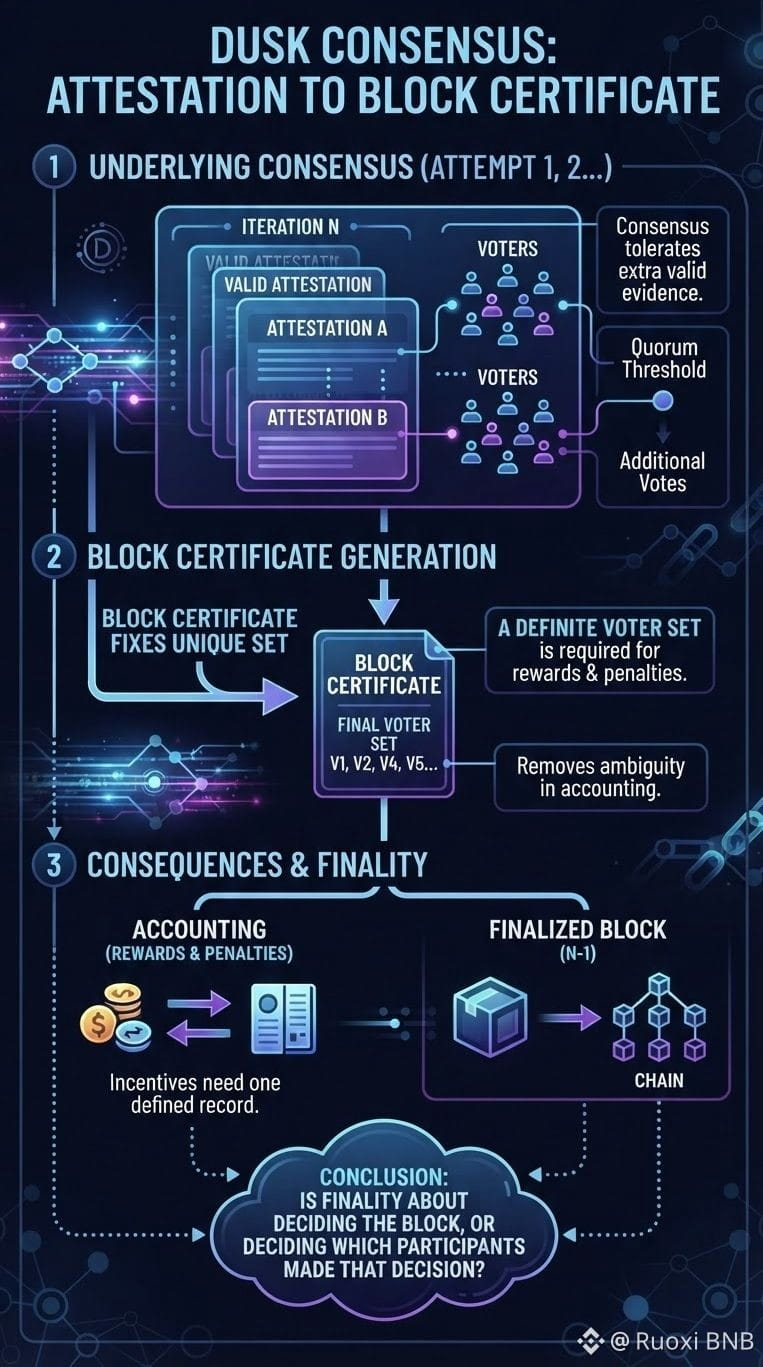
အစပိုင်းမှာတော့ Dusk ရဲ့ အသိအမှတ်ပြုချက်တွေက လုံလောက်တဲ့ provisioner တွေက သဘောတူကြောင်းကို သက်သေပြဖို့သာ တိုတောင်းတဲ့နည်းလမ်းတစ်ခုလို ယူဆခဲ့တယ်။ ဒါပေမယ့် ပိုကြည့်လေလေ တစ်ချက်ထူးခြားတာတွေ့လာတယ်—မဲအရေအတွက်က quorum ထက်ကျော်ပြီး လက်ခံရရှိထားရင် အတူတူ iteration တစ်ခုအတွက် တရားဝင် attestations တစ်ခုထက်ပိုပြီးလည်း ရှိနိုင်တယ်။ ဒါကြောင့် Dusk က မတိုင်ခင်ဘလောက်ရဲ့ attestation ကနေ မူတည်ပြီး ထူးခြားတဲ့ မဲပေးသူအစုတစ်ခုကို စိုက်ထူပေးတဲ့ block certificate ကို ထပ်တိုးတယ်။ ဒါက compression အသေးစိတ်တစ်ခုလိုထက် နောက်ပိုင်း စာရင်းပြုလုပ်မှုတွေ မရှင်းလင်းမဖြစ်အောင် ထားတဲ့နည်းလမ်းလို့ ပိုခံစားရတယ်။ အကျိုးခံစားခွင့်နဲ့ ဒဏ်ခတ်မှုတွေက သေချာတဲ့ voter set တစ်ခုလိုအပ်တယ်—ပေမယ့် underlying consensus step က quorum proof အမျိုးမျိုး ဖြစ်နိုင်ခြေများကို ထုတ်ပေးထားတယ်လည်း ဖြစ်နိုင်တယ်။ ပရိုတိုကောလ်က “လုံလောက်တဲ့မဲတွေ ဖြစ်ခဲ့သည်” နဲ့ “နောက်ပိုင်း အကျိုးဆက်တွေအတွက် ဘယ်မဲတွေက အရေးပါသလဲ” ကို ခွဲပြားထားတယ်။ Consensus flow ကိုဖတ်တဲ့အခါ ဒီကွာခြားချက်ကို လွယ်လွယ်နဲ့ မမြင်နိုင်ပေမယ့် သဘောတူညီမှုရဲ့ နောက်ဆက်တွဲအတွက် သေးငယ်တဲ့ ယုံကြည်မှုနယ်နိမိတ်တစ်ခုကို ဖြစ်စေတယ်။ Consensus က အပိုတရားဝင်အထောက်အထားတွေကို ခံနိုင်ရည်ရှိနိုင်ပေမယ့် လှုံ့ဆော်မှုတွေကတော့ မှတ်တမ်းတစ်ခုတည်းကို သတ်မှတ်ထားဖို့ လိုတယ်။
Finality ဆိုတာ ဘလောက်ကို ဆုံးဖြတ်တာတင်မက၊ ဒီဆုံးဖြတ်ချက်ကို လုပ်ခဲ့တယ်လို့ စနစ်က မှတ်မိထားမယ့် ပါဝင်သူတွေကိုလည်း ဆုံးဖြတ်တာပဲလားလို့ တွေးမိစေတယ်။
@Dusk_Foundation #dusk $DUSK
{spot}(DUSKUSDT)
@Dusk
အစပိုင်းမှာတော့ Dusk ရဲ့ အသိအမှတ်ပြုချက်တွေက လုံလောက်တဲ့ provisioner တွေက သဘောတူကြောင်းကို သက်သေပြဖို့သာ တိုတောင်းတဲ့နည်းလမ်းတစ်ခုလို ယူဆခဲ့တယ်။ ဒါပေမယ့် ပိုကြည့်လေလေ တစ်ချက်ထူးခြားတာတွေ့လာတယ်—မဲအရေအတွက်က quorum ထက်ကျော်ပြီး လက်ခံရရှိထားရင် အတူတူ iteration တစ်ခုအတွက် တရားဝင် attestations တစ်ခုထက်ပိုပြီးလည်း ရှိနိုင်တယ်။ ဒါကြောင့် Dusk က မတိုင်ခင်ဘလောက်ရဲ့ attestation ကနေ မူတည်ပြီး ထူးခြားတဲ့ မဲပေးသူအစုတစ်ခုကို စိုက်ထူပေးတဲ့ block certificate ကို ထပ်တိုးတယ်။ ဒါက compression အသေးစိတ်တစ်ခုလိုထက် နောက်ပိုင်း စာရင်းပြုလုပ်မှုတွေ မရှင်းလင်းမဖြစ်အောင် ထားတဲ့နည်းလမ်းလို့ ပိုခံစားရတယ်။ အကျိုးခံစားခွင့်နဲ့ ဒဏ်ခတ်မှုတွေက သေချာတဲ့ voter set တစ်ခုလိုအပ်တယ်—ပေမယ့် underlying consensus step က quorum proof အမျိုးမျိုး ဖြစ်နိုင်ခြေများကို ထုတ်ပေးထားတယ်လည်း ဖြစ်နိုင်တယ်။ ပရိုတိုကောလ်က “လုံလောက်တဲ့မဲတွေ ဖြစ်ခဲ့သည်” နဲ့ “နောက်ပိုင်း အကျိုးဆက်တွေအတွက် ဘယ်မဲတွေက အရေးပါသလဲ” ကို ခွဲပြားထားတယ်။ Consensus flow ကိုဖတ်တဲ့အခါ ဒီကွာခြားချက်ကို လွယ်လွယ်နဲ့ မမြင်နိုင်ပေမယ့် သဘောတူညီမှုရဲ့ နောက်ဆက်တွဲအတွက် သေးငယ်တဲ့ ယုံကြည်မှုနယ်နိမိတ်တစ်ခုကို ဖြစ်စေတယ်။ Consensus က အပိုတရားဝင်အထောက်အထားတွေကို ခံနိုင်ရည်ရှိနိုင်ပေမယ့် လှုံ့ဆော်မှုတွေကတော့ မှတ်တမ်းတစ်ခုတည်းကို သတ်မှတ်ထားဖို့ လိုတယ်။
Finality ဆိုတာ ဘလောက်ကို ဆုံးဖြတ်တာတင်မက၊ ဒီဆုံးဖြတ်ချက်ကို လုပ်ခဲ့တယ်လို့ စနစ်က မှတ်မိထားမယ့် ပါဝင်သူတွေကိုလည်း ဆုံးဖြတ်တာပဲလားလို့ တွေးမိစေတယ်။
@Dusk #dusk $DUSK
အစပိုင်းမှာတော့ Dusk ရဲ့ အသိအမှတ်ပြုချက်တွေက လုံလောက်တဲ့ provisioner တွေက သဘောတူကြောင်းကို သက်သေပြဖို့သာ တိုတောင်းတဲ့နည်းလမ်းတစ်ခုလို ယူဆခဲ့တယ်။ ဒါပေမယ့် ပိုကြည့်လေလေ တစ်ချက်ထူးခြားတာတွေ့လာတယ်—မဲအရေအတွက်က quorum ထက်ကျော်ပြီး လက်ခံရရှိထားရင် အတူတူ iteration တစ်ခုအတွက် တရားဝင် attestations တစ်ခုထက်ပိုပြီးလည်း ရှိနိုင်တယ်။ ဒါကြောင့် Dusk က မတိုင်ခင်ဘလောက်ရဲ့ attestation ကနေ မူတည်ပြီး ထူးခြားတဲ့ မဲပေးသူအစုတစ်ခုကို စိုက်ထူပေးတဲ့ block certificate ကို ထပ်တိုးတယ်။ ဒါက compression အသေးစိတ်တစ်ခုလိုထက် နောက်ပိုင်း စာရင်းပြုလုပ်မှုတွေ မရှင်းလင်းမဖြစ်အောင် ထားတဲ့နည်းလမ်းလို့ ပိုခံစားရတယ်။ အကျိုးခံစားခွင့်နဲ့ ဒဏ်ခတ်မှုတွေက သေချာတဲ့ voter set တစ်ခုလိုအပ်တယ်—ပေမယ့် underlying consensus step က quorum proof အမျိုးမျိုး ဖြစ်နိုင်ခြေများကို ထုတ်ပေးထားတယ်လည်း ဖြစ်နိုင်တယ်။ ပရိုတိုကောလ်က “လုံလောက်တဲ့မဲတွေ ဖြစ်ခဲ့သည်” နဲ့ “နောက်ပိုင်း အကျိုးဆက်တွေအတွက် ဘယ်မဲတွေက အရေးပါသလဲ” ကို ခွဲပြားထားတယ်။ Consensus flow ကိုဖတ်တဲ့အခါ ဒီကွာခြားချက်ကို လွယ်လွယ်နဲ့ မမြင်နိုင်ပေမယ့် သဘောတူညီမှုရဲ့ နောက်ဆက်တွဲအတွက် သေးငယ်တဲ့ ယုံကြည်မှုနယ်နိမိတ်တစ်ခုကို ဖြစ်စေတယ်။ Consensus က အပိုတရားဝင်အထောက်အထားတွေကို ခံနိုင်ရည်ရှိနိုင်ပေမယ့် လှုံ့ဆော်မှုတွေကတော့ မှတ်တမ်းတစ်ခုတည်းကို သတ်မှတ်ထားဖို့ လိုတယ်။
Finality ဆိုတာ ဘလောက်ကို ဆုံးဖြတ်တာတင်မက၊ ဒီဆုံးဖြတ်ချက်ကို လုပ်ခဲ့တယ်လို့ စနစ်က မှတ်မိထားမယ့် ပါဝင်သူတွေကိုလည်း ဆုံးဖြတ်တာပဲလားလို့ တွေးမိစေတယ်။
@Dusk #dusk $DUSK
35
18
224
·
--
උසබ තත්ත්වය
@Dusk_Foundation
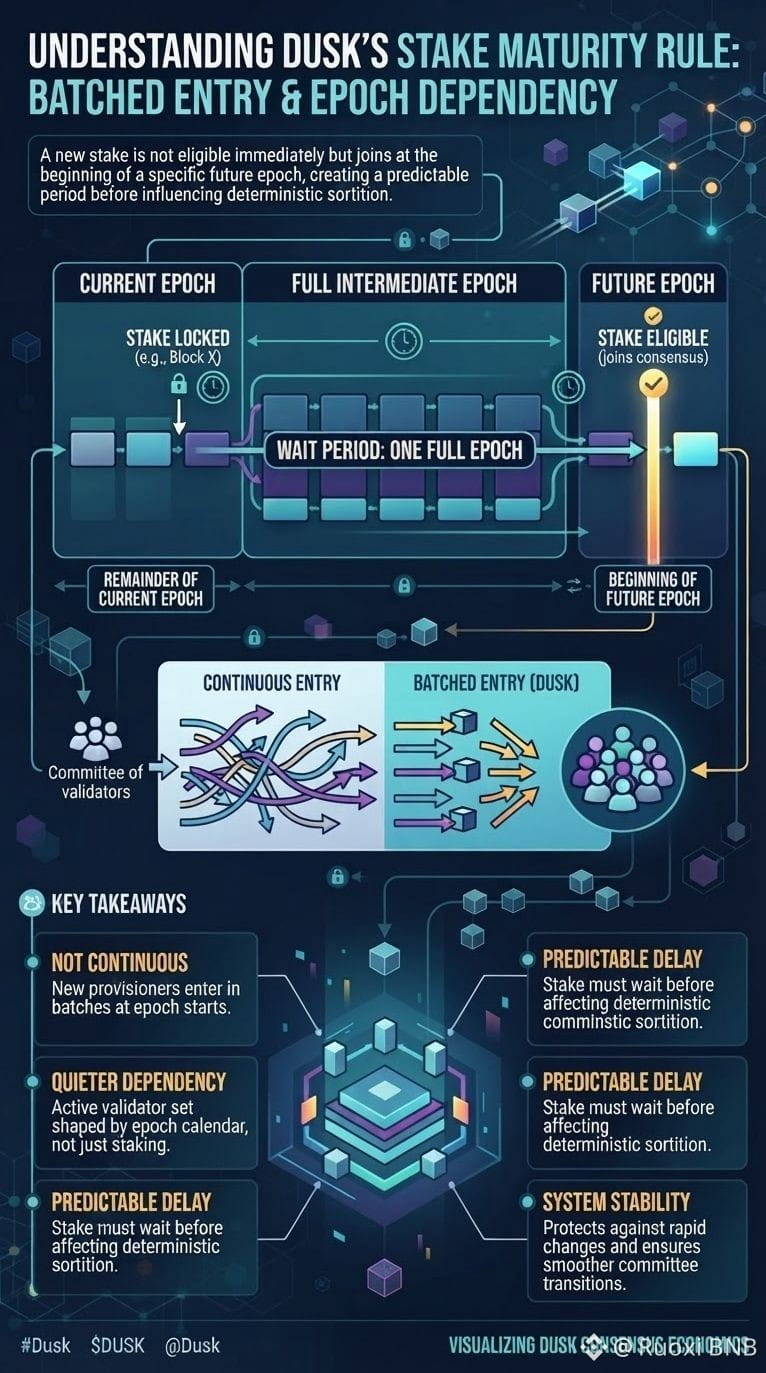
මම මුලින් හිතුවේ ඩස්ක්ගේ stake maturity නීතිය මූලික වශයෙන්—කෙනෙකුට අතිශය ඉක්මනින් consensus එකට එක්වීමට නතර කරන්න—එක එළඹීමේ පමාවක් (waiting period) වගේ කියලා. නමුත් මම තවත් හොයද්දි, ඒ කාලය වඩාත් අදහස් කරලා සැලසුම් කරලා තියෙන බවක් පෙනුනා. නව stake එකක් වහාම eligible වෙන්නේ නැහැ; ඒ වගේම එය අහඹු (arbitrary) block එකක් වෙලාවෙදී eligible වෙන්නෙත් නැහැ. whitepaper එකේ eligibility වගේම epoch එකක් ආරම්භයේ දී—වත්මන් epoch එකේ ඉතිරි කාලය (remainder) එකතු කරලා තවත් එක් සම්පූර්ණ epoch එකක් ගතවූ පසුව—තබනවා. මගේ අවධානය ගත්තේ, මේ නීතිය ඇත්තටම නව provisioners අඛණ්ඩව නොව batches ලෙස consensus එකට ඇතුල් කරවන එකයි. ඒකෙන් ලැබෙන තවත් නිහඬ dependency එකක් තියෙනවා: active validator set එක epoch වල calendar එකෙන් කොටසක් shaped වෙනවා; සරලව stake කරලා තියෙන්නේ කවුද කියන එකෙන් පමණක් නොව. තවද මෙයින් අදහස් වෙන්නේ අලුතින් lock කරපු stake එකක් deterministic sortition එකට බලපාන්න පෙර predictable කාලයක් ඉන්න ඕනෑ කියලා. සමහරවිට මේක committee වෙනස්කම් (committee changes) හිතන්න/පැහැදිලි කරගන්න පහසු කරනවා ඇති; ඒත් නව සහභාගීන්ට පද්ධතියට බලපෑමක් කරන්න කොතරම් ඉක්මනින් හැකිද කියන එක පරක්කු වෙනවා.
ඒක නිසා සමහරවිට ප්රශ්නය “staking වලට delay එකක් තියෙන්නේ ඇයි?” කියන එක නොව, “ඒ delay එක ඇත්තටම ආරක්ෂා කරන්නේ මොනවාද?” කියන එකයි.
@Dusk_Foundation #dusk $DUSK
{spot}(DUSKUSDT)
@Dusk
මම මුලින් හිතුවේ ඩස්ක්ගේ stake maturity නීතිය මූලික වශයෙන්—කෙනෙකුට අතිශය ඉක්මනින් consensus එකට එක්වීමට නතර කරන්න—එක එළඹීමේ පමාවක් (waiting period) වගේ කියලා. නමුත් මම තවත් හොයද්දි, ඒ කාලය වඩාත් අදහස් කරලා සැලසුම් කරලා තියෙන බවක් පෙනුනා. නව stake එකක් වහාම eligible වෙන්නේ නැහැ; ඒ වගේම එය අහඹු (arbitrary) block එකක් වෙලාවෙදී eligible වෙන්නෙත් නැහැ. whitepaper එකේ eligibility වගේම epoch එකක් ආරම්භයේ දී—වත්මන් epoch එකේ ඉතිරි කාලය (remainder) එකතු කරලා තවත් එක් සම්පූර්ණ epoch එකක් ගතවූ පසුව—තබනවා. මගේ අවධානය ගත්තේ, මේ නීතිය ඇත්තටම නව provisioners අඛණ්ඩව නොව batches ලෙස consensus එකට ඇතුල් කරවන එකයි. ඒකෙන් ලැබෙන තවත් නිහඬ dependency එකක් තියෙනවා: active validator set එක epoch වල calendar එකෙන් කොටසක් shaped වෙනවා; සරලව stake කරලා තියෙන්නේ කවුද කියන එකෙන් පමණක් නොව. තවද මෙයින් අදහස් වෙන්නේ අලුතින් lock කරපු stake එකක් deterministic sortition එකට බලපාන්න පෙර predictable කාලයක් ඉන්න ඕනෑ කියලා. සමහරවිට මේක committee වෙනස්කම් (committee changes) හිතන්න/පැහැදිලි කරගන්න පහසු කරනවා ඇති; ඒත් නව සහභාගීන්ට පද්ධතියට බලපෑමක් කරන්න කොතරම් ඉක්මනින් හැකිද කියන එක පරක්කු වෙනවා.
ඒක නිසා සමහරවිට ප්රශ්නය “staking වලට delay එකක් තියෙන්නේ ඇයි?” කියන එක නොව, “ඒ delay එක ඇත්තටම ආරක්ෂා කරන්නේ මොනවාද?” කියන එකයි.
@Dusk #dusk $DUSK
මම මුලින් හිතුවේ ඩස්ක්ගේ stake maturity නීතිය මූලික වශයෙන්—කෙනෙකුට අතිශය ඉක්මනින් consensus එකට එක්වීමට නතර කරන්න—එක එළඹීමේ පමාවක් (waiting period) වගේ කියලා. නමුත් මම තවත් හොයද්දි, ඒ කාලය වඩාත් අදහස් කරලා සැලසුම් කරලා තියෙන බවක් පෙනුනා. නව stake එකක් වහාම eligible වෙන්නේ නැහැ; ඒ වගේම එය අහඹු (arbitrary) block එකක් වෙලාවෙදී eligible වෙන්නෙත් නැහැ. whitepaper එකේ eligibility වගේම epoch එකක් ආරම්භයේ දී—වත්මන් epoch එකේ ඉතිරි කාලය (remainder) එකතු කරලා තවත් එක් සම්පූර්ණ epoch එකක් ගතවූ පසුව—තබනවා. මගේ අවධානය ගත්තේ, මේ නීතිය ඇත්තටම නව provisioners අඛණ්ඩව නොව batches ලෙස consensus එකට ඇතුල් කරවන එකයි. ඒකෙන් ලැබෙන තවත් නිහඬ dependency එකක් තියෙනවා: active validator set එක epoch වල calendar එකෙන් කොටසක් shaped වෙනවා; සරලව stake කරලා තියෙන්නේ කවුද කියන එකෙන් පමණක් නොව. තවද මෙයින් අදහස් වෙන්නේ අලුතින් lock කරපු stake එකක් deterministic sortition එකට බලපාන්න පෙර predictable කාලයක් ඉන්න ඕනෑ කියලා. සමහරවිට මේක committee වෙනස්කම් (committee changes) හිතන්න/පැහැදිලි කරගන්න පහසු කරනවා ඇති; ඒත් නව සහභාගීන්ට පද්ධතියට බලපෑමක් කරන්න කොතරම් ඉක්මනින් හැකිද කියන එක පරක්කු වෙනවා.
ඒක නිසා සමහරවිට ප්රශ්නය “staking වලට delay එකක් තියෙන්නේ ඇයි?” කියන එක නොව, “ඒ delay එක ඇත්තටම ආරක්ෂා කරන්නේ මොනවාද?” කියන එකයි.
@Dusk #dusk $DUSK
22
10
169
·
--
මගේ මිතුරේ කරුණාකර මට පසුපස එන්න
මගේ මිතුරේ කරුණාකර මට පසුපස එන්න
Ruoxi BNB
·
--
[අවසන්] 🎙️ සුභ උදෑසනක් 🎙️ 🥰🥰🥰🌞
8 සවන්දීම්
2
62
·
--
උසබ තත්ත්වය
පරිවර්තනය බලන්න
@Dusk_Foundation
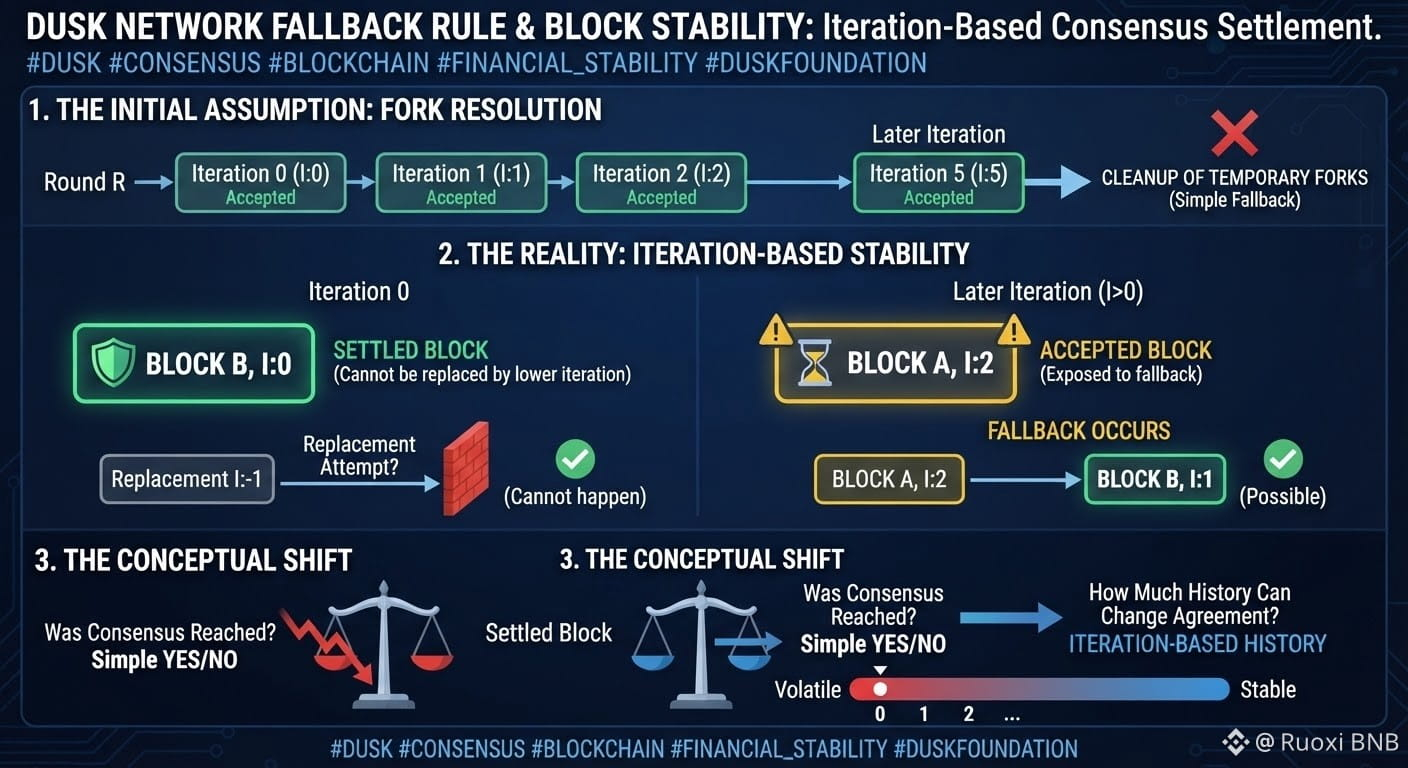
At first I assumed Dusk’s fallback rule was mainly there to clean up forks caused by network delays. But the more I looked, the stranger the rule felt. If two blocks reach consensus in the same round, Dusk can replace a block from a higher iteration with one from a lower iteration, even after the higher-iteration block had already been accepted locally. So an accepted block is not necessarily a settled block. The interesting part is that the protocol does not treat every successful consensus result as equally strong. The iteration number carries meaning after the vote is finished. A block from iteration zero cannot be replaced by another block from a lower iteration, while later iterations remain exposed to fallback. That makes the history of how consensus was reached part of the block’s stability. It is a small detail, but it changes how I think about “agreement” in this design. So maybe the question isn’t whether consensus happened. It’s how much history is still capable of changing what that agreement means?
@Dusk_Foundation #dusk $DUSK
{spot}(DUSKUSDT)
@Dusk
At first I assumed Dusk’s fallback rule was mainly there to clean up forks caused by network delays. But the more I looked, the stranger the rule felt. If two blocks reach consensus in the same round, Dusk can replace a block from a higher iteration with one from a lower iteration, even after the higher-iteration block had already been accepted locally. So an accepted block is not necessarily a settled block. The interesting part is that the protocol does not treat every successful consensus result as equally strong. The iteration number carries meaning after the vote is finished. A block from iteration zero cannot be replaced by another block from a lower iteration, while later iterations remain exposed to fallback. That makes the history of how consensus was reached part of the block’s stability. It is a small detail, but it changes how I think about “agreement” in this design. So maybe the question isn’t whether consensus happened. It’s how much history is still capable of changing what that agreement means?
@Dusk #dusk $DUSK
At first I assumed Dusk’s fallback rule was mainly there to clean up forks caused by network delays. But the more I looked, the stranger the rule felt. If two blocks reach consensus in the same round, Dusk can replace a block from a higher iteration with one from a lower iteration, even after the higher-iteration block had already been accepted locally. So an accepted block is not necessarily a settled block. The interesting part is that the protocol does not treat every successful consensus result as equally strong. The iteration number carries meaning after the vote is finished. A block from iteration zero cannot be replaced by another block from a lower iteration, while later iterations remain exposed to fallback. That makes the history of how consensus was reached part of the block’s stability. It is a small detail, but it changes how I think about “agreement” in this design. So maybe the question isn’t whether consensus happened. It’s how much history is still capable of changing what that agreement means?
@Dusk #dusk $DUSK
25
11
164
·
--
උසබ තත්ත්වය
පරිවර්තනය බලන්න
@Dusk_Foundation
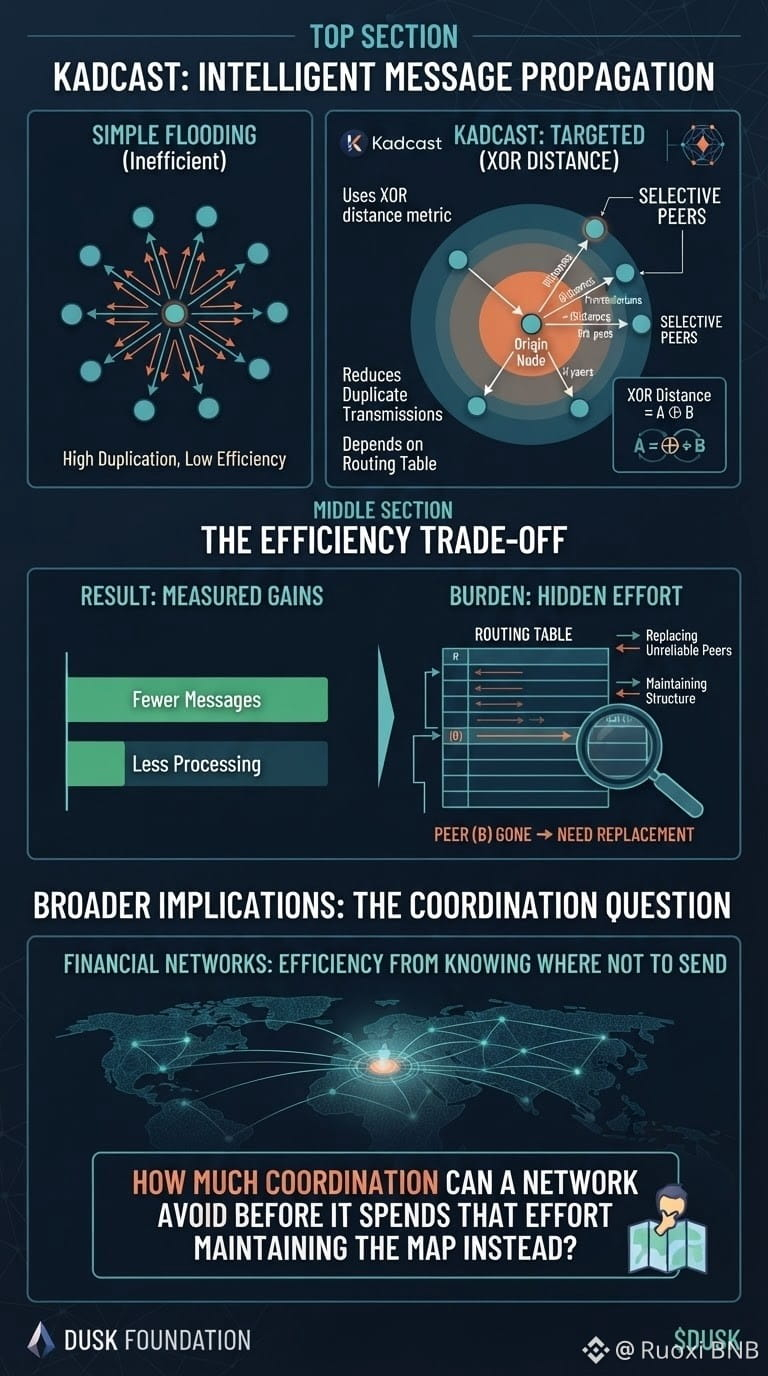
At first I assumed Dusk’s network efficiency mostly came from reducing how much data nodes have to process. But the more I looked at Kadcast, the small detail that stayed with me was its use of XOR distance to decide where messages should travel. A node doesn’t simply forward a block to every nearby peer. It sends it toward selected peers at increasing distances in the routing structure. That reduces duplicate transmissions, but it also means propagation depends on the routing tables being useful and reasonably current. If peers disappear or become unreliable, the network has to replace them before those structured paths remain effective. I found that trade-off easy to overlook because the result is measured as fewer messages, while the burden has partly moved into maintaining the structure that decides where messages go. It made me think about financial networks more generally. Efficiency often comes from knowing where not to send something. Which leaves the quieter question: how much coordination can a network avoid before it has to spend that effort maintaining the map instead?
@Dusk_Foundation #dusk $DUSK
{spot}(DUSKUSDT)
@Dusk
At first I assumed Dusk’s network efficiency mostly came from reducing how much data nodes have to process. But the more I looked at Kadcast, the small detail that stayed with me was its use of XOR distance to decide where messages should travel. A node doesn’t simply forward a block to every nearby peer. It sends it toward selected peers at increasing distances in the routing structure. That reduces duplicate transmissions, but it also means propagation depends on the routing tables being useful and reasonably current. If peers disappear or become unreliable, the network has to replace them before those structured paths remain effective. I found that trade-off easy to overlook because the result is measured as fewer messages, while the burden has partly moved into maintaining the structure that decides where messages go. It made me think about financial networks more generally. Efficiency often comes from knowing where not to send something. Which leaves the quieter question: how much coordination can a network avoid before it has to spend that effort maintaining the map instead?
@Dusk #dusk $DUSK
At first I assumed Dusk’s network efficiency mostly came from reducing how much data nodes have to process. But the more I looked at Kadcast, the small detail that stayed with me was its use of XOR distance to decide where messages should travel. A node doesn’t simply forward a block to every nearby peer. It sends it toward selected peers at increasing distances in the routing structure. That reduces duplicate transmissions, but it also means propagation depends on the routing tables being useful and reasonably current. If peers disappear or become unreliable, the network has to replace them before those structured paths remain effective. I found that trade-off easy to overlook because the result is measured as fewer messages, while the burden has partly moved into maintaining the structure that decides where messages go. It made me think about financial networks more generally. Efficiency often comes from knowing where not to send something. Which leaves the quieter question: how much coordination can a network avoid before it has to spend that effort maintaining the map instead?
@Dusk #dusk $DUSK
43
19
168
·
--
උසබ තත්ත්වය
සත්යායනය කළ
පරිවර්තනය බලන්න
@Dusk_Foundation
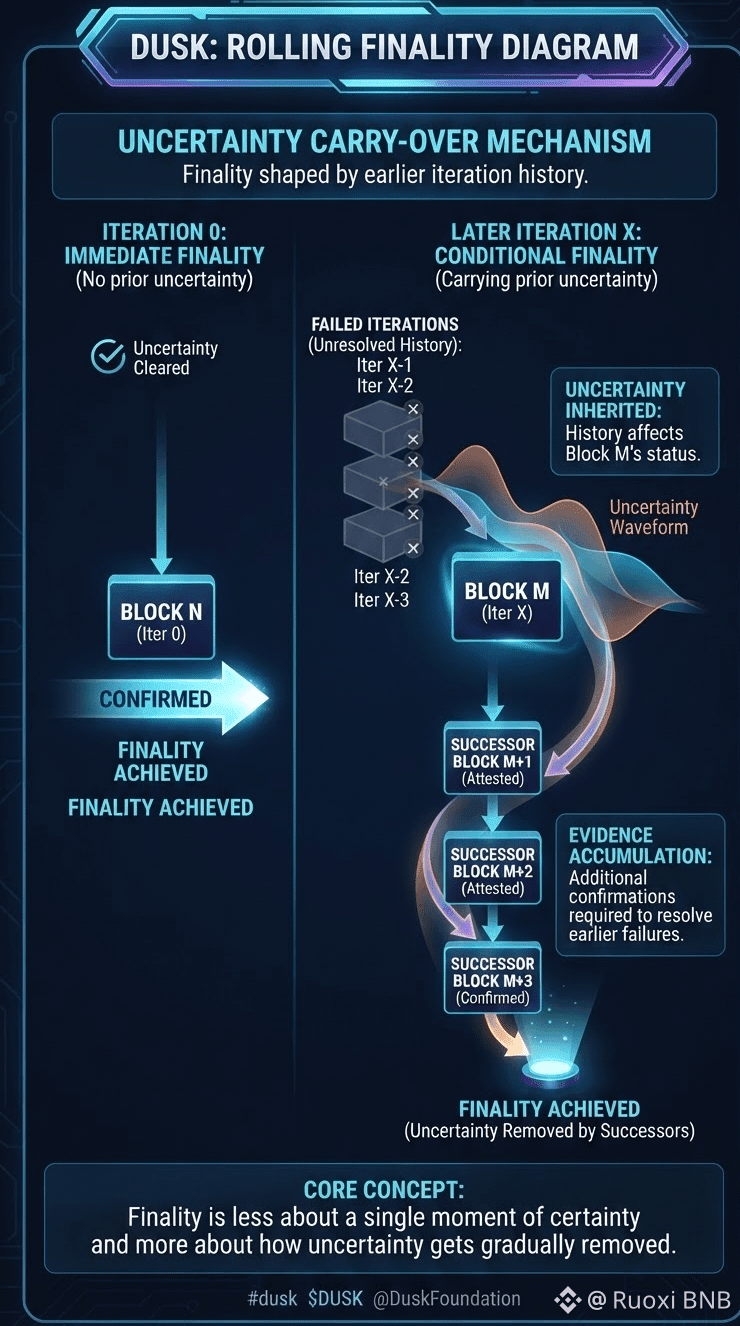
At first I assumed faster finality mostly comes from making consensus more efficient. But the more I looked at Dusk’s rolling finality rules, the interesting detail was that a block’s status can depend on how many earlier iterations failed to reach a definitive result. A block accepted at a later iteration isn’t treated the same as one from iteration zero. If there are unresolved earlier attempts, the protocol waits for additional attested or confirmed successors before treating that block as confirmed.
What caught my attention is the way uncertainty becomes something the chain carries forward. It doesn’t simply say, “this block passed, move on.” The history of earlier uncertainty still affects how much evidence is needed afterward. That seems like a reasonable trade-off, but it also means finality is partly shaped by what happened before the block itself.
In financial systems, confidence often works the same way: an outcome can be accepted while still carrying some unresolved context.
Makes me wonder whether finality is less about a single moment of certainty and more about how uncertainty gets gradually removed.
@Dusk_Foundation #dusk $DUSK
{spot}(DUSKUSDT)
@Dusk
At first I assumed faster finality mostly comes from making consensus more efficient. But the more I looked at Dusk’s rolling finality rules, the interesting detail was that a block’s status can depend on how many earlier iterations failed to reach a definitive result. A block accepted at a later iteration isn’t treated the same as one from iteration zero. If there are unresolved earlier attempts, the protocol waits for additional attested or confirmed successors before treating that block as confirmed.
What caught my attention is the way uncertainty becomes something the chain carries forward. It doesn’t simply say, “this block passed, move on.” The history of earlier uncertainty still affects how much evidence is needed afterward. That seems like a reasonable trade-off, but it also means finality is partly shaped by what happened before the block itself.
In financial systems, confidence often works the same way: an outcome can be accepted while still carrying some unresolved context.
Makes me wonder whether finality is less about a single moment of certainty and more about how uncertainty gets gradually removed.
@Dusk #dusk $DUSK
At first I assumed faster finality mostly comes from making consensus more efficient. But the more I looked at Dusk’s rolling finality rules, the interesting detail was that a block’s status can depend on how many earlier iterations failed to reach a definitive result. A block accepted at a later iteration isn’t treated the same as one from iteration zero. If there are unresolved earlier attempts, the protocol waits for additional attested or confirmed successors before treating that block as confirmed.
What caught my attention is the way uncertainty becomes something the chain carries forward. It doesn’t simply say, “this block passed, move on.” The history of earlier uncertainty still affects how much evidence is needed afterward. That seems like a reasonable trade-off, but it also means finality is partly shaped by what happened before the block itself.
In financial systems, confidence often works the same way: an outcome can be accepted while still carrying some unresolved context.
Makes me wonder whether finality is less about a single moment of certainty and more about how uncertainty gets gradually removed.
@Dusk #dusk $DUSK
70
20
371
·
--
උසබ තත්ත්වය
@Dusk_Foundation
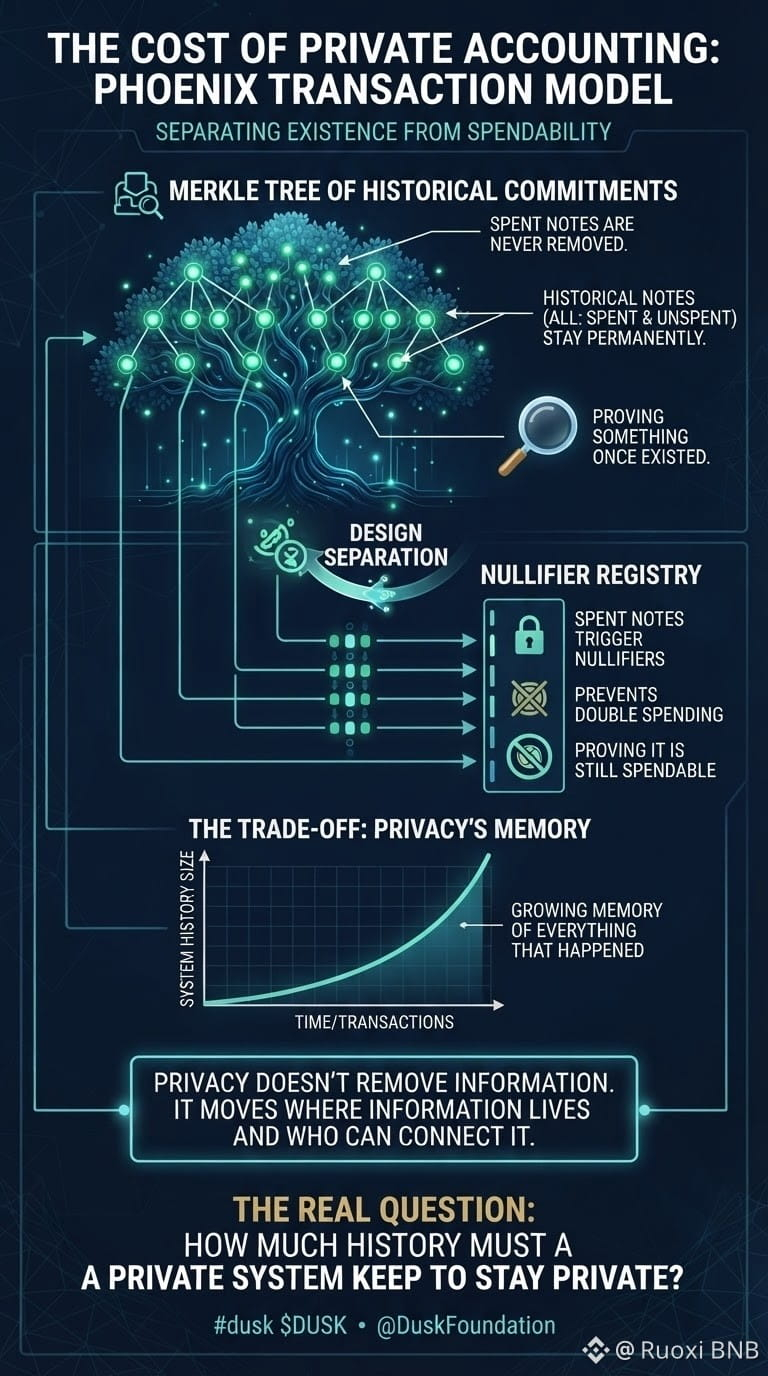
පළමුව මම සිතුවේ පෞද්ගලිකත්ව පද්ධති බොහෝ විට අතීත ක්රියාකාරිත්වයේ සලකුණු ඉවත් කිරීමටයි.
නමුත් මම Phoenix දෙස වැඩි වැඩියෙන් බැලූ විට, භාවිතා කර අවසන් සටහන් Merkle tree වෙතින් කිසිදා ඉවත් නොවන බව මට හොඳින් දකින්න ලැබුණා. ඒවා එතැනම ස්ථිරව පවතිනවා—ඒ සටහන්වල වටිනාකම වෙනත් තැනකින් භාවිතා කර අවසන් වුණත්. පැතිරවීම (double spending) nullifiers මගින් වැළැක්වෙනවා; පැරණි වාර්තා මකා දැමීමෙන් නොවේ.
මට විශේෂයෙන් ඇඟවුනේ මේ නිර්මාණය සාමාන්යයෙන් එකට බැඳෙන අදහස් දෙකක් වෙන් කරනවා කියන එකයි: එකක් වන්නේ යමක් කලින් තිබුණ බව සනාථ කිරීම, අනෙක වන්නේ එය තවමත් වියදම් කළ හැකිද කියන එක සනාථ කිරීම. ජාලය පළමු කොටස සදහටම තබාගෙන ඉන්නවා, දෙවැනි කොටස වෙනත් තැනක කොහෙවත් ලියාපදිංචි කරයි.
බොහෝ විට මෙය පුද්ගලික ගිණුම්කරණයේ වියදම විය හැකිය. ගනුදෙනු අතර සම්බන්ධතා සඟවන පද්ධතියකට, බොහෝ දේ තවදුරටත් ආර්ථිකව ක්රියාකාරී නොවුණත්, කවදා හෝ සිදු වූ සියල්ලේම වර්ධනය වන මතකයක් තබාගන්නට අවශ්ය විය හැකිය.
එය මට සිතෙන්න හැදුවේ පෞද්ගලිකත්වය බොහෝවිට තොරතුරු ඉවත් නොකරන බවයි. එය තොරතුරු කොතැන ජීවත් වෙයිද කියන එකත්, ඒ සම්බන්ධ කළ හැක්කේ කාටද කියන එකත් පමණක් වෙනස් කරයි.
ඉතින් සමහර විට ප්රශ්නය නැත්තේ පුද්ගලික පද්ධතියක් කොපමණ දත්ත හෙළි කරනවාද කියන එක නොවෙයි. ඒ පද්ධතිය පෞද්ගලිකව තබාගන්න තරම් කොපමණ ඉතිහාසයක් තබාගන්නට සිදුවෙනවාද කියන එකයි.
@Dusk_Foundation #dusk $DUSK
{spot}(DUSKUSDT)
@Dusk
පළමුව මම සිතුවේ පෞද්ගලිකත්ව පද්ධති බොහෝ විට අතීත ක්රියාකාරිත්වයේ සලකුණු ඉවත් කිරීමටයි.
නමුත් මම Phoenix දෙස වැඩි වැඩියෙන් බැලූ විට, භාවිතා කර අවසන් සටහන් Merkle tree වෙතින් කිසිදා ඉවත් නොවන බව මට හොඳින් දකින්න ලැබුණා. ඒවා එතැනම ස්ථිරව පවතිනවා—ඒ සටහන්වල වටිනාකම වෙනත් තැනකින් භාවිතා කර අවසන් වුණත්. පැතිරවීම (double spending) nullifiers මගින් වැළැක්වෙනවා; පැරණි වාර්තා මකා දැමීමෙන් නොවේ.
මට විශේෂයෙන් ඇඟවුනේ මේ නිර්මාණය සාමාන්යයෙන් එකට බැඳෙන අදහස් දෙකක් වෙන් කරනවා කියන එකයි: එකක් වන්නේ යමක් කලින් තිබුණ බව සනාථ කිරීම, අනෙක වන්නේ එය තවමත් වියදම් කළ හැකිද කියන එක සනාථ කිරීම. ජාලය පළමු කොටස සදහටම තබාගෙන ඉන්නවා, දෙවැනි කොටස වෙනත් තැනක කොහෙවත් ලියාපදිංචි කරයි.
බොහෝ විට මෙය පුද්ගලික ගිණුම්කරණයේ වියදම විය හැකිය. ගනුදෙනු අතර සම්බන්ධතා සඟවන පද්ධතියකට, බොහෝ දේ තවදුරටත් ආර්ථිකව ක්රියාකාරී නොවුණත්, කවදා හෝ සිදු වූ සියල්ලේම වර්ධනය වන මතකයක් තබාගන්නට අවශ්ය විය හැකිය.
එය මට සිතෙන්න හැදුවේ පෞද්ගලිකත්වය බොහෝවිට තොරතුරු ඉවත් නොකරන බවයි. එය තොරතුරු කොතැන ජීවත් වෙයිද කියන එකත්, ඒ සම්බන්ධ කළ හැක්කේ කාටද කියන එකත් පමණක් වෙනස් කරයි.
ඉතින් සමහර විට ප්රශ්නය නැත්තේ පුද්ගලික පද්ධතියක් කොපමණ දත්ත හෙළි කරනවාද කියන එක නොවෙයි. ඒ පද්ධතිය පෞද්ගලිකව තබාගන්න තරම් කොපමණ ඉතිහාසයක් තබාගන්නට සිදුවෙනවාද කියන එකයි.
@Dusk #dusk $DUSK
පළමුව මම සිතුවේ පෞද්ගලිකත්ව පද්ධති බොහෝ විට අතීත ක්රියාකාරිත්වයේ සලකුණු ඉවත් කිරීමටයි.
නමුත් මම Phoenix දෙස වැඩි වැඩියෙන් බැලූ විට, භාවිතා කර අවසන් සටහන් Merkle tree වෙතින් කිසිදා ඉවත් නොවන බව මට හොඳින් දකින්න ලැබුණා. ඒවා එතැනම ස්ථිරව පවතිනවා—ඒ සටහන්වල වටිනාකම වෙනත් තැනකින් භාවිතා කර අවසන් වුණත්. පැතිරවීම (double spending) nullifiers මගින් වැළැක්වෙනවා; පැරණි වාර්තා මකා දැමීමෙන් නොවේ.
මට විශේෂයෙන් ඇඟවුනේ මේ නිර්මාණය සාමාන්යයෙන් එකට බැඳෙන අදහස් දෙකක් වෙන් කරනවා කියන එකයි: එකක් වන්නේ යමක් කලින් තිබුණ බව සනාථ කිරීම, අනෙක වන්නේ එය තවමත් වියදම් කළ හැකිද කියන එක සනාථ කිරීම. ජාලය පළමු කොටස සදහටම තබාගෙන ඉන්නවා, දෙවැනි කොටස වෙනත් තැනක කොහෙවත් ලියාපදිංචි කරයි.
බොහෝ විට මෙය පුද්ගලික ගිණුම්කරණයේ වියදම විය හැකිය. ගනුදෙනු අතර සම්බන්ධතා සඟවන පද්ධතියකට, බොහෝ දේ තවදුරටත් ආර්ථිකව ක්රියාකාරී නොවුණත්, කවදා හෝ සිදු වූ සියල්ලේම වර්ධනය වන මතකයක් තබාගන්නට අවශ්ය විය හැකිය.
එය මට සිතෙන්න හැදුවේ පෞද්ගලිකත්වය බොහෝවිට තොරතුරු ඉවත් නොකරන බවයි. එය තොරතුරු කොතැන ජීවත් වෙයිද කියන එකත්, ඒ සම්බන්ධ කළ හැක්කේ කාටද කියන එකත් පමණක් වෙනස් කරයි.
ඉතින් සමහර විට ප්රශ්නය නැත්තේ පුද්ගලික පද්ධතියක් කොපමණ දත්ත හෙළි කරනවාද කියන එක නොවෙයි. ඒ පද්ධතිය පෞද්ගලිකව තබාගන්න තරම් කොපමණ ඉතිහාසයක් තබාගන්නට සිදුවෙනවාද කියන එකයි.
@Dusk #dusk $DUSK
43
23
174
·
--
උසබ තත්ත්වය
@Dusk_Foundation
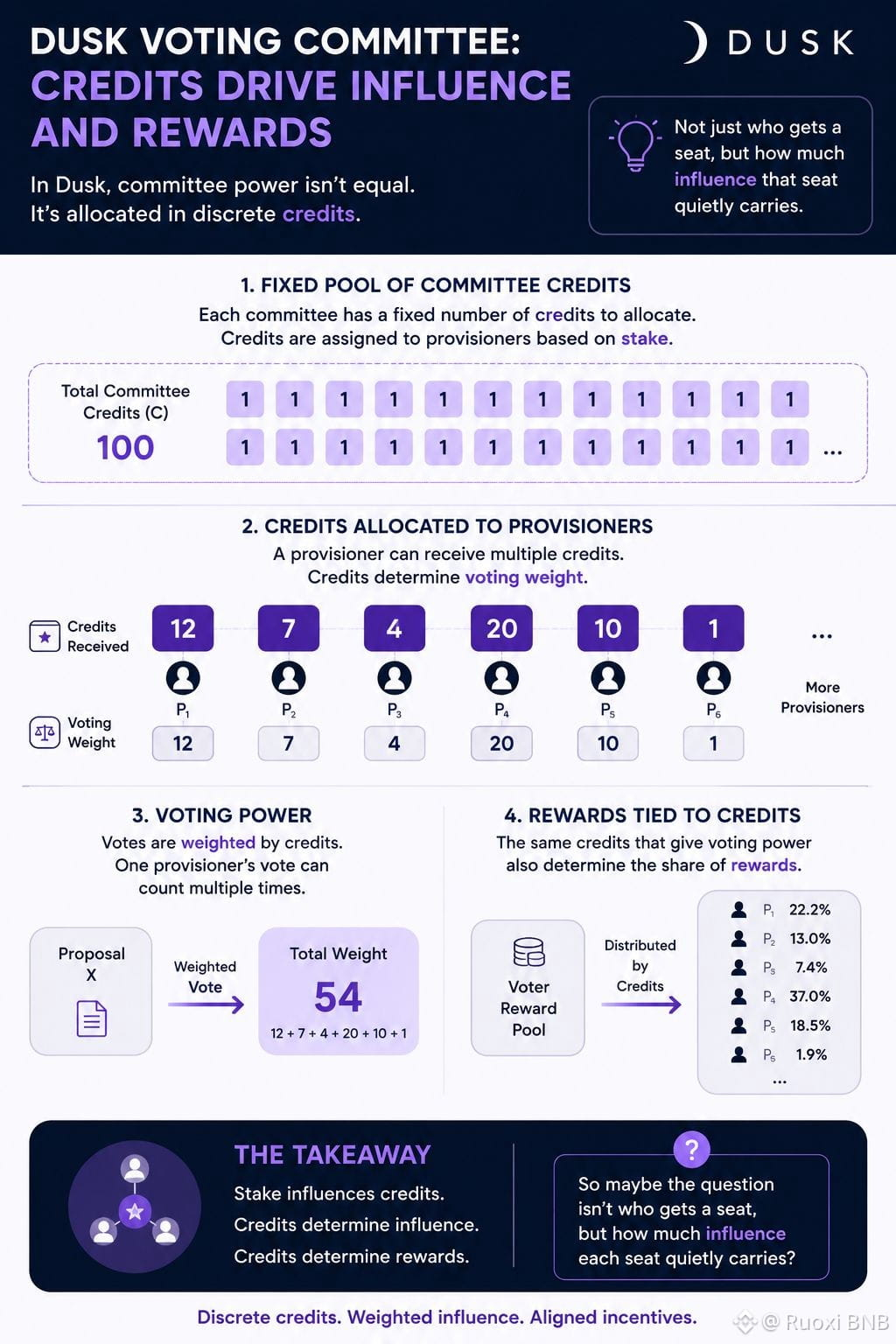
මුලින්ම මම හිතුවේ ඡන්ද කමිටුවක් යනු බොහෝ දුරට තෝරාගනු ලබන්නේ කවුද යන්න පිළිබඳ දෙයක් බවයි. ඩස්ක්ගේ සැලසුමේ මගේ අවධානය දිනාගත්තේ තෝරාගැනීමෙන් පසුව සිදුවන්නේ කුමක්ද යන්නයි. සෑම කමිටුවකටම නිශ්චිත ක්රෙඩිට් (credits) සංචිතයක් තිබෙන අතර එක් provisioner කෙනෙකුට එකකට වඩා වැඩි ප්රමාණයකට ක්රෙඩිට් ලැබිය හැක. ඒ ක්රෙඩිට් එමෙන්ම ඡන්ද බර (voting weight) බවට පත් වන්නේ නිසා provisioner කෙනෙකුගේ ඡන්දය විටින් විට බොහෝ වාරයක් ගණන් කරන ලෙස තීරණ විය හැක. එහෙත් එම එකම ක්රෙඩිට් පැවරීම ප්රතිලාභ (rewards) සඳහාද බලපානවා—එයින් කමිටු බලපෑම හා වන්දි/පිරිවැය (compensation) එකම කුඩා ඒකකයකට බැඳී තිබෙනවා. ඒ නිසා රසවත් යැයි පෙනෙන අන්තර්ගත බැඳීමක් (dependency) නිර්මාණය වෙනවා. විශාල stake එකක් වැඩි ක්රෙඩිට්, වැඩි ඡන්ද බර, සහ වෝටර් ප්රතිලාභයේ වැඩි කොටසක් දක්වා යා හැකියි. නමුත් මෙය සරලව මුල් stake වෙන්කිරීමම නැවත නැවත කරයි කියලා කියන්න බැහැ, මන්ද තෝරාගැනීමම මේ විසංයෝජිත ක්රෙඩිට් (discrete credits) හරහා ක්රියා කරන නිසායි. stake-weighted කමිටු පිළිබඳ ප්රධාන අදහසට වඩා මට මේ විස්තරය වඩා රසවත් වුණා. එය කමිටුවක් තරමක් සමාන ඡන්ද දායකයන්ගේ ලැයිස්තුවක් වගේ නොවෙයි—ඒ වෙනුවට එය තාවකාලිකව බලපෑම (influence) වෙන් කරදීමක් වගේ. එහෙයින් සමහර විට ප්රශ්නය වන්නේ ආසනයක් කවුටද ලැබෙන්නේද කියන එක නොව, එක් එක් ආසනය නිහඬවම කොපමණ බලපෑමක් රැගෙන යනවද කියන එකද?
@Dusk_Foundation #dusk $DUSK
{spot}(DUSKUSDT)
@Dusk
මුලින්ම මම හිතුවේ ඡන්ද කමිටුවක් යනු බොහෝ දුරට තෝරාගනු ලබන්නේ කවුද යන්න පිළිබඳ දෙයක් බවයි. ඩස්ක්ගේ සැලසුමේ මගේ අවධානය දිනාගත්තේ තෝරාගැනීමෙන් පසුව සිදුවන්නේ කුමක්ද යන්නයි. සෑම කමිටුවකටම නිශ්චිත ක්රෙඩිට් (credits) සංචිතයක් තිබෙන අතර එක් provisioner කෙනෙකුට එකකට වඩා වැඩි ප්රමාණයකට ක්රෙඩිට් ලැබිය හැක. ඒ ක්රෙඩිට් එමෙන්ම ඡන්ද බර (voting weight) බවට පත් වන්නේ නිසා provisioner කෙනෙකුගේ ඡන්දය විටින් විට බොහෝ වාරයක් ගණන් කරන ලෙස තීරණ විය හැක. එහෙත් එම එකම ක්රෙඩිට් පැවරීම ප්රතිලාභ (rewards) සඳහාද බලපානවා—එයින් කමිටු බලපෑම හා වන්දි/පිරිවැය (compensation) එකම කුඩා ඒකකයකට බැඳී තිබෙනවා. ඒ නිසා රසවත් යැයි පෙනෙන අන්තර්ගත බැඳීමක් (dependency) නිර්මාණය වෙනවා. විශාල stake එකක් වැඩි ක්රෙඩිට්, වැඩි ඡන්ද බර, සහ වෝටර් ප්රතිලාභයේ වැඩි කොටසක් දක්වා යා හැකියි. නමුත් මෙය සරලව මුල් stake වෙන්කිරීමම නැවත නැවත කරයි කියලා කියන්න බැහැ, මන්ද තෝරාගැනීමම මේ විසංයෝජිත ක්රෙඩිට් (discrete credits) හරහා ක්රියා කරන නිසායි. stake-weighted කමිටු පිළිබඳ ප්රධාන අදහසට වඩා මට මේ විස්තරය වඩා රසවත් වුණා. එය කමිටුවක් තරමක් සමාන ඡන්ද දායකයන්ගේ ලැයිස්තුවක් වගේ නොවෙයි—ඒ වෙනුවට එය තාවකාලිකව බලපෑම (influence) වෙන් කරදීමක් වගේ. එහෙයින් සමහර විට ප්රශ්නය වන්නේ ආසනයක් කවුටද ලැබෙන්නේද කියන එක නොව, එක් එක් ආසනය නිහඬවම කොපමණ බලපෑමක් රැගෙන යනවද කියන එකද?
@Dusk #dusk $DUSK
මුලින්ම මම හිතුවේ ඡන්ද කමිටුවක් යනු බොහෝ දුරට තෝරාගනු ලබන්නේ කවුද යන්න පිළිබඳ දෙයක් බවයි. ඩස්ක්ගේ සැලසුමේ මගේ අවධානය දිනාගත්තේ තෝරාගැනීමෙන් පසුව සිදුවන්නේ කුමක්ද යන්නයි. සෑම කමිටුවකටම නිශ්චිත ක්රෙඩිට් (credits) සංචිතයක් තිබෙන අතර එක් provisioner කෙනෙකුට එකකට වඩා වැඩි ප්රමාණයකට ක්රෙඩිට් ලැබිය හැක. ඒ ක්රෙඩිට් එමෙන්ම ඡන්ද බර (voting weight) බවට පත් වන්නේ නිසා provisioner කෙනෙකුගේ ඡන්දය විටින් විට බොහෝ වාරයක් ගණන් කරන ලෙස තීරණ විය හැක. එහෙත් එම එකම ක්රෙඩිට් පැවරීම ප්රතිලාභ (rewards) සඳහාද බලපානවා—එයින් කමිටු බලපෑම හා වන්දි/පිරිවැය (compensation) එකම කුඩා ඒකකයකට බැඳී තිබෙනවා. ඒ නිසා රසවත් යැයි පෙනෙන අන්තර්ගත බැඳීමක් (dependency) නිර්මාණය වෙනවා. විශාල stake එකක් වැඩි ක්රෙඩිට්, වැඩි ඡන්ද බර, සහ වෝටර් ප්රතිලාභයේ වැඩි කොටසක් දක්වා යා හැකියි. නමුත් මෙය සරලව මුල් stake වෙන්කිරීමම නැවත නැවත කරයි කියලා කියන්න බැහැ, මන්ද තෝරාගැනීමම මේ විසංයෝජිත ක්රෙඩිට් (discrete credits) හරහා ක්රියා කරන නිසායි. stake-weighted කමිටු පිළිබඳ ප්රධාන අදහසට වඩා මට මේ විස්තරය වඩා රසවත් වුණා. එය කමිටුවක් තරමක් සමාන ඡන්ද දායකයන්ගේ ලැයිස්තුවක් වගේ නොවෙයි—ඒ වෙනුවට එය තාවකාලිකව බලපෑම (influence) වෙන් කරදීමක් වගේ. එහෙයින් සමහර විට ප්රශ්නය වන්නේ ආසනයක් කවුටද ලැබෙන්නේද කියන එක නොව, එක් එක් ආසනය නිහඬවම කොපමණ බලපෑමක් රැගෙන යනවද කියන එකද?
@Dusk #dusk $DUSK
60
20
168
·
--
උසබ තත්ත්වය
@Dusk_Foundation
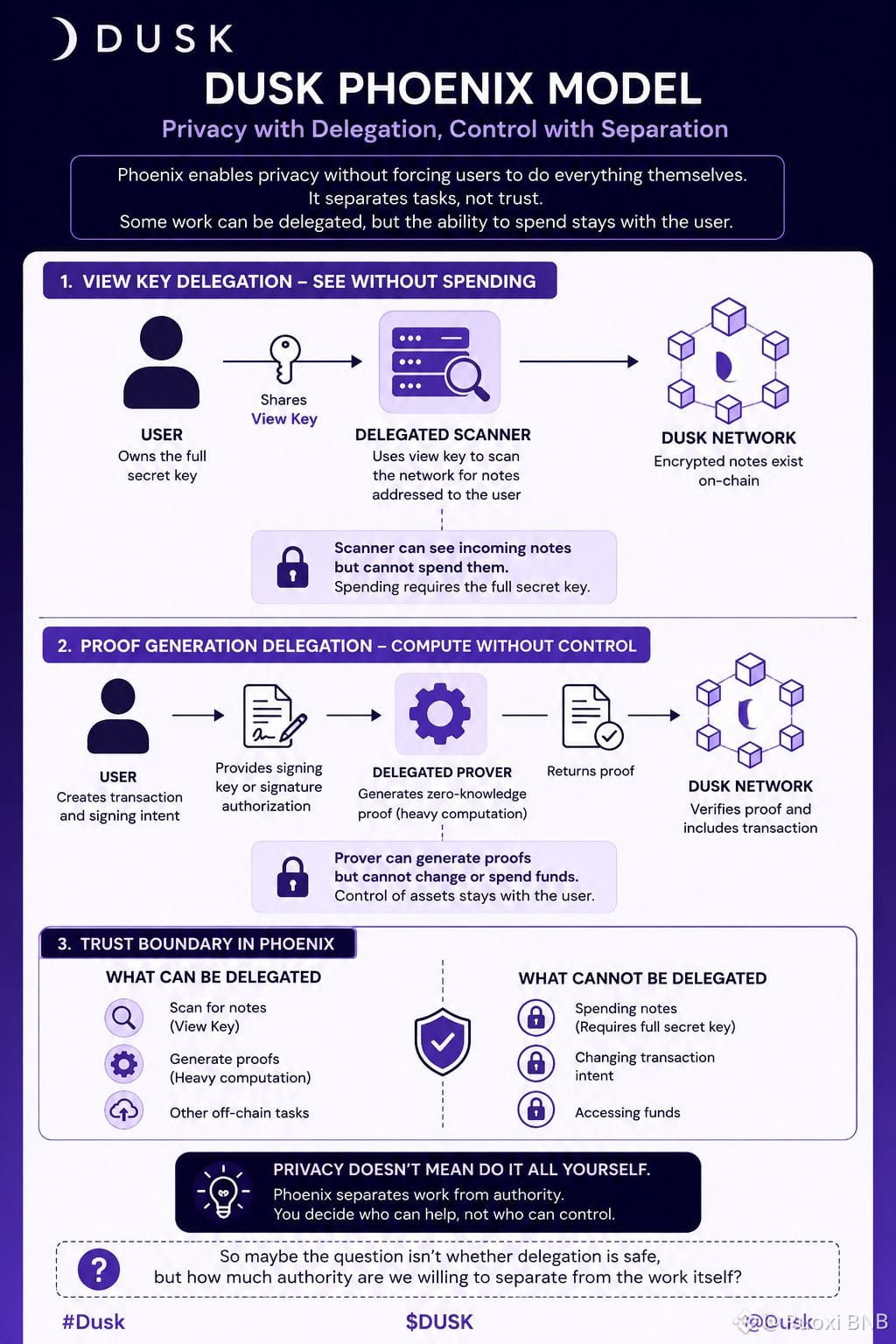
ආරම්භයේදී මම Dusk’s Phoenix මාදිලිය ප්රධාන වශයෙන් ගනුදෙනු විස්තර රහසිගතව තබාගන්නා බව සිතුවා. එහෙත් මම තවදුරටත් බැලූ තරමට එම නියෝජන (delegation) මාදිලිය වඩාත් සිත්ගන්නාසුළු විය. පරිශීලකයෙකුට තමන්ට අදාළ සටහන් (notes) සඳහා ජාලය පරීක්ෂා කිරීමට තෙවන පාර්ශවයකට view key එකක් ලබාදිය හැක; එහෙත් එම පාර්ශවයට සම්පූර්ණ රහස් යතුර (complete secret key) නොමැති නිසා එම සටහන් වියදම් (spend) කරගත නොහැක. සාධන (proof) නිර්මාණය සම්බන්ධයෙන්ද එම වෙන්වීම දක්නට ලැබේ: අත්සන් (signatures) වැනි දේවල් කිසිවෙකුට ගනුදෙනුවටම අධිකාරිය නොදී ඔවුන්ට බර ZK ගණනය (heavy ZK computation) කරගැනීමට ඉඩ දිය හැක. මට විශේෂයෙන් ඇලුණේ මෙය නිර්මාණය කරන විශ්වාස සීමාව (trust boundary) ය. රහස්යතාව (privacy) යන්නෙන් අදහස් වන්නේ සෑම කාර්යයක්ම පරිශීලකයා සමඟම තිබිය යුතුමයි යන අර්ථයක් නොවිය යුතුය. සමහර කාර්යයන් නියෝජනය කර දීමට (outsource) හැකිය. එහෙත් වියදම් කිරීමේ හැකියාව (ability to spend) ඒකෙන් වෙන්ව පවතින්නේය. මෙය රහස්ය පද්ධති සහ ගණනය බොහෝවිට නියෝජනය වීමට සිදුවන යථාර්ථය අතර ප්රායෝගික සම්මුතියක් ලෙස පෙනේ. එසේම පරිශීලකයන් කොතැනට අඩක් විශ්වාසය තැබීමට සුව පහසුද යන්න පිළිබඳ නිහඬ ප්රශ්නයක්ද මතු කරයි. ඒ නිසා නියෝජනය ආරක්ෂිතද නැද්ද යන ප්රශ්නය පමණක් නොවෙයි—ඒ වෙනුවට, ජනතාව තමන් විසින් කරන කාර්යයෙන් කොපමණ අධිකාරිය වෙන්කර තබන්නට කැමතිද කියන එකයි.
@Dusk_Foundation #dusk $DUSK
{spot}(DUSKUSDT)
@Dusk
ආරම්භයේදී මම Dusk’s Phoenix මාදිලිය ප්රධාන වශයෙන් ගනුදෙනු විස්තර රහසිගතව තබාගන්නා බව සිතුවා. එහෙත් මම තවදුරටත් බැලූ තරමට එම නියෝජන (delegation) මාදිලිය වඩාත් සිත්ගන්නාසුළු විය. පරිශීලකයෙකුට තමන්ට අදාළ සටහන් (notes) සඳහා ජාලය පරීක්ෂා කිරීමට තෙවන පාර්ශවයකට view key එකක් ලබාදිය හැක; එහෙත් එම පාර්ශවයට සම්පූර්ණ රහස් යතුර (complete secret key) නොමැති නිසා එම සටහන් වියදම් (spend) කරගත නොහැක. සාධන (proof) නිර්මාණය සම්බන්ධයෙන්ද එම වෙන්වීම දක්නට ලැබේ: අත්සන් (signatures) වැනි දේවල් කිසිවෙකුට ගනුදෙනුවටම අධිකාරිය නොදී ඔවුන්ට බර ZK ගණනය (heavy ZK computation) කරගැනීමට ඉඩ දිය හැක. මට විශේෂයෙන් ඇලුණේ මෙය නිර්මාණය කරන විශ්වාස සීමාව (trust boundary) ය. රහස්යතාව (privacy) යන්නෙන් අදහස් වන්නේ සෑම කාර්යයක්ම පරිශීලකයා සමඟම තිබිය යුතුමයි යන අර්ථයක් නොවිය යුතුය. සමහර කාර්යයන් නියෝජනය කර දීමට (outsource) හැකිය. එහෙත් වියදම් කිරීමේ හැකියාව (ability to spend) ඒකෙන් වෙන්ව පවතින්නේය. මෙය රහස්ය පද්ධති සහ ගණනය බොහෝවිට නියෝජනය වීමට සිදුවන යථාර්ථය අතර ප්රායෝගික සම්මුතියක් ලෙස පෙනේ. එසේම පරිශීලකයන් කොතැනට අඩක් විශ්වාසය තැබීමට සුව පහසුද යන්න පිළිබඳ නිහඬ ප්රශ්නයක්ද මතු කරයි. ඒ නිසා නියෝජනය ආරක්ෂිතද නැද්ද යන ප්රශ්නය පමණක් නොවෙයි—ඒ වෙනුවට, ජනතාව තමන් විසින් කරන කාර්යයෙන් කොපමණ අධිකාරිය වෙන්කර තබන්නට කැමතිද කියන එකයි.
@Dusk #dusk $DUSK
ආරම්භයේදී මම Dusk’s Phoenix මාදිලිය ප්රධාන වශයෙන් ගනුදෙනු විස්තර රහසිගතව තබාගන්නා බව සිතුවා. එහෙත් මම තවදුරටත් බැලූ තරමට එම නියෝජන (delegation) මාදිලිය වඩාත් සිත්ගන්නාසුළු විය. පරිශීලකයෙකුට තමන්ට අදාළ සටහන් (notes) සඳහා ජාලය පරීක්ෂා කිරීමට තෙවන පාර්ශවයකට view key එකක් ලබාදිය හැක; එහෙත් එම පාර්ශවයට සම්පූර්ණ රහස් යතුර (complete secret key) නොමැති නිසා එම සටහන් වියදම් (spend) කරගත නොහැක. සාධන (proof) නිර්මාණය සම්බන්ධයෙන්ද එම වෙන්වීම දක්නට ලැබේ: අත්සන් (signatures) වැනි දේවල් කිසිවෙකුට ගනුදෙනුවටම අධිකාරිය නොදී ඔවුන්ට බර ZK ගණනය (heavy ZK computation) කරගැනීමට ඉඩ දිය හැක. මට විශේෂයෙන් ඇලුණේ මෙය නිර්මාණය කරන විශ්වාස සීමාව (trust boundary) ය. රහස්යතාව (privacy) යන්නෙන් අදහස් වන්නේ සෑම කාර්යයක්ම පරිශීලකයා සමඟම තිබිය යුතුමයි යන අර්ථයක් නොවිය යුතුය. සමහර කාර්යයන් නියෝජනය කර දීමට (outsource) හැකිය. එහෙත් වියදම් කිරීමේ හැකියාව (ability to spend) ඒකෙන් වෙන්ව පවතින්නේය. මෙය රහස්ය පද්ධති සහ ගණනය බොහෝවිට නියෝජනය වීමට සිදුවන යථාර්ථය අතර ප්රායෝගික සම්මුතියක් ලෙස පෙනේ. එසේම පරිශීලකයන් කොතැනට අඩක් විශ්වාසය තැබීමට සුව පහසුද යන්න පිළිබඳ නිහඬ ප්රශ්නයක්ද මතු කරයි. ඒ නිසා නියෝජනය ආරක්ෂිතද නැද්ද යන ප්රශ්නය පමණක් නොවෙයි—ඒ වෙනුවට, ජනතාව තමන් විසින් කරන කාර්යයෙන් කොපමණ අධිකාරිය වෙන්කර තබන්නට කැමතිද කියන එකයි.
@Dusk #dusk $DUSK
85
28
382
·
--
උසබ තත්ත්වය
අර්ධ වශයෙන් සත්යයි
@Dusk_Foundation
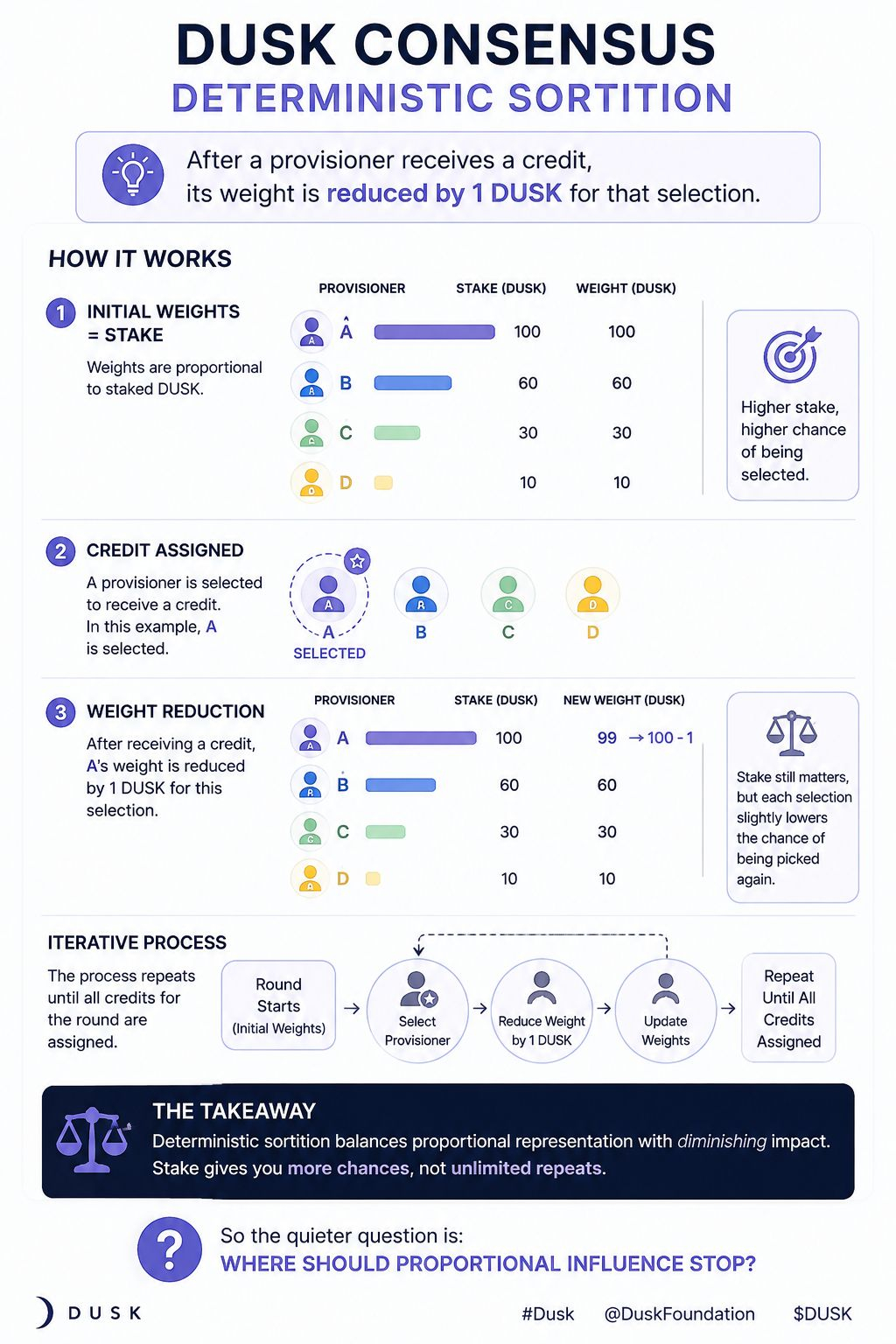
මුලින් මම සිතුවේ Dusk හි නිශ්චිත (deterministic) sortition යනු ප්රධාන වශයෙන් කමිටු තේරීම මුල්ය කොටස් (stake) අනුව ප්රමාණාත්මක ලෙස කරන්නට ඇති බවයි. නමුත් මම වැඩිදුර බලද්දී හරහා නොපෙනෙන ලෙස හරියටම පෙනුණේ කුමක්ද කියලා: provisioner එකක් credit එකක් ලැබූ පසුව සිදුවන්නේ, එම තේරීම සඳහා එහි බර 1 DUSKකින් අඩු වීමයි. අදහස සරලයි, නමුත් එයින් අදහස් වන්නේ තේරීමේ ක්රියාවලිය එකම stake බෙදාහැරීමෙන්ම නැවත නැවත සාම්පල ගැනීමක් නොවෙන බවයි. වැඩි stake ඇති provisioner කෙනෙකුට තවමත් වැඩි අවස්ථා ලැබෙනවා; ඒත් සෑම සාර්ථක තේරීමක්ම තවත් credit එකක් ලබාගැනීමේ අවස්ථාව ටිකක් අඩු කරයි. මෙය stake-බරක් සහිත බලපෑම හා කමිටුවක් තුළ එකම සහභාගීන්ට නැවත නැවතම වැඩි වාසි දෙන එක අතර ප්රායෝගික සම්මුතියක් ලෙස පෙනේ. තවද මෙයින් අදහස් වන්නේ stake මෙහි කාර්ය දෙකක් කරන්නේ: තේරීම සඳහා මුල් සුදුසුකම් (eligibility) තීරණය කිරීම, ඉන් පසු credits පවරන විට ක්රමානුකූලව බර අඩුවෙනවා. මම මෙම දේ මූලික වශයෙන් ප්රමාණාත්මක තේරීමේ අදහසට වඩා වඩා රසවත් ලෙස දුටුවා. සමහරවිට මෙය තනිවම fairness ගැන එතරම් නොවෙයි—එක් stake පිහිටීමකට නැවත නැවත බලපෑම කොපමණක් ලැබිය යුතුද කියන ප්රමාණය ගැනයි. ඉතින් නිහඬව ඇති ප්රශ්නය වන්නේ: ප්රමාණාත්මක බලපෑම (proportional influence) නතර කළ යුත්තේ කොතැනින්ද?
@Dusk_Foundation #dusk $DUSK
{spot}(DUSKUSDT)
@Dusk
මුලින් මම සිතුවේ Dusk හි නිශ්චිත (deterministic) sortition යනු ප්රධාන වශයෙන් කමිටු තේරීම මුල්ය කොටස් (stake) අනුව ප්රමාණාත්මක ලෙස කරන්නට ඇති බවයි. නමුත් මම වැඩිදුර බලද්දී හරහා නොපෙනෙන ලෙස හරියටම පෙනුණේ කුමක්ද කියලා: provisioner එකක් credit එකක් ලැබූ පසුව සිදුවන්නේ, එම තේරීම සඳහා එහි බර 1 DUSKකින් අඩු වීමයි. අදහස සරලයි, නමුත් එයින් අදහස් වන්නේ තේරීමේ ක්රියාවලිය එකම stake බෙදාහැරීමෙන්ම නැවත නැවත සාම්පල ගැනීමක් නොවෙන බවයි. වැඩි stake ඇති provisioner කෙනෙකුට තවමත් වැඩි අවස්ථා ලැබෙනවා; ඒත් සෑම සාර්ථක තේරීමක්ම තවත් credit එකක් ලබාගැනීමේ අවස්ථාව ටිකක් අඩු කරයි. මෙය stake-බරක් සහිත බලපෑම හා කමිටුවක් තුළ එකම සහභාගීන්ට නැවත නැවතම වැඩි වාසි දෙන එක අතර ප්රායෝගික සම්මුතියක් ලෙස පෙනේ. තවද මෙයින් අදහස් වන්නේ stake මෙහි කාර්ය දෙකක් කරන්නේ: තේරීම සඳහා මුල් සුදුසුකම් (eligibility) තීරණය කිරීම, ඉන් පසු credits පවරන විට ක්රමානුකූලව බර අඩුවෙනවා. මම මෙම දේ මූලික වශයෙන් ප්රමාණාත්මක තේරීමේ අදහසට වඩා වඩා රසවත් ලෙස දුටුවා. සමහරවිට මෙය තනිවම fairness ගැන එතරම් නොවෙයි—එක් stake පිහිටීමකට නැවත නැවත බලපෑම කොපමණක් ලැබිය යුතුද කියන ප්රමාණය ගැනයි. ඉතින් නිහඬව ඇති ප්රශ්නය වන්නේ: ප්රමාණාත්මක බලපෑම (proportional influence) නතර කළ යුත්තේ කොතැනින්ද?
@Dusk #dusk $DUSK
මුලින් මම සිතුවේ Dusk හි නිශ්චිත (deterministic) sortition යනු ප්රධාන වශයෙන් කමිටු තේරීම මුල්ය කොටස් (stake) අනුව ප්රමාණාත්මක ලෙස කරන්නට ඇති බවයි. නමුත් මම වැඩිදුර බලද්දී හරහා නොපෙනෙන ලෙස හරියටම පෙනුණේ කුමක්ද කියලා: provisioner එකක් credit එකක් ලැබූ පසුව සිදුවන්නේ, එම තේරීම සඳහා එහි බර 1 DUSKකින් අඩු වීමයි. අදහස සරලයි, නමුත් එයින් අදහස් වන්නේ තේරීමේ ක්රියාවලිය එකම stake බෙදාහැරීමෙන්ම නැවත නැවත සාම්පල ගැනීමක් නොවෙන බවයි. වැඩි stake ඇති provisioner කෙනෙකුට තවමත් වැඩි අවස්ථා ලැබෙනවා; ඒත් සෑම සාර්ථක තේරීමක්ම තවත් credit එකක් ලබාගැනීමේ අවස්ථාව ටිකක් අඩු කරයි. මෙය stake-බරක් සහිත බලපෑම හා කමිටුවක් තුළ එකම සහභාගීන්ට නැවත නැවතම වැඩි වාසි දෙන එක අතර ප්රායෝගික සම්මුතියක් ලෙස පෙනේ. තවද මෙයින් අදහස් වන්නේ stake මෙහි කාර්ය දෙකක් කරන්නේ: තේරීම සඳහා මුල් සුදුසුකම් (eligibility) තීරණය කිරීම, ඉන් පසු credits පවරන විට ක්රමානුකූලව බර අඩුවෙනවා. මම මෙම දේ මූලික වශයෙන් ප්රමාණාත්මක තේරීමේ අදහසට වඩා වඩා රසවත් ලෙස දුටුවා. සමහරවිට මෙය තනිවම fairness ගැන එතරම් නොවෙයි—එක් stake පිහිටීමකට නැවත නැවත බලපෑම කොපමණක් ලැබිය යුතුද කියන ප්රමාණය ගැනයි. ඉතින් නිහඬව ඇති ප්රශ්නය වන්නේ: ප්රමාණාත්මක බලපෑම (proportional influence) නතර කළ යුත්තේ කොතැනින්ද?
@Dusk #dusk $DUSK
51
13
353
·
--
පරිවර්තනය බලන්න
@Dusk_Foundation
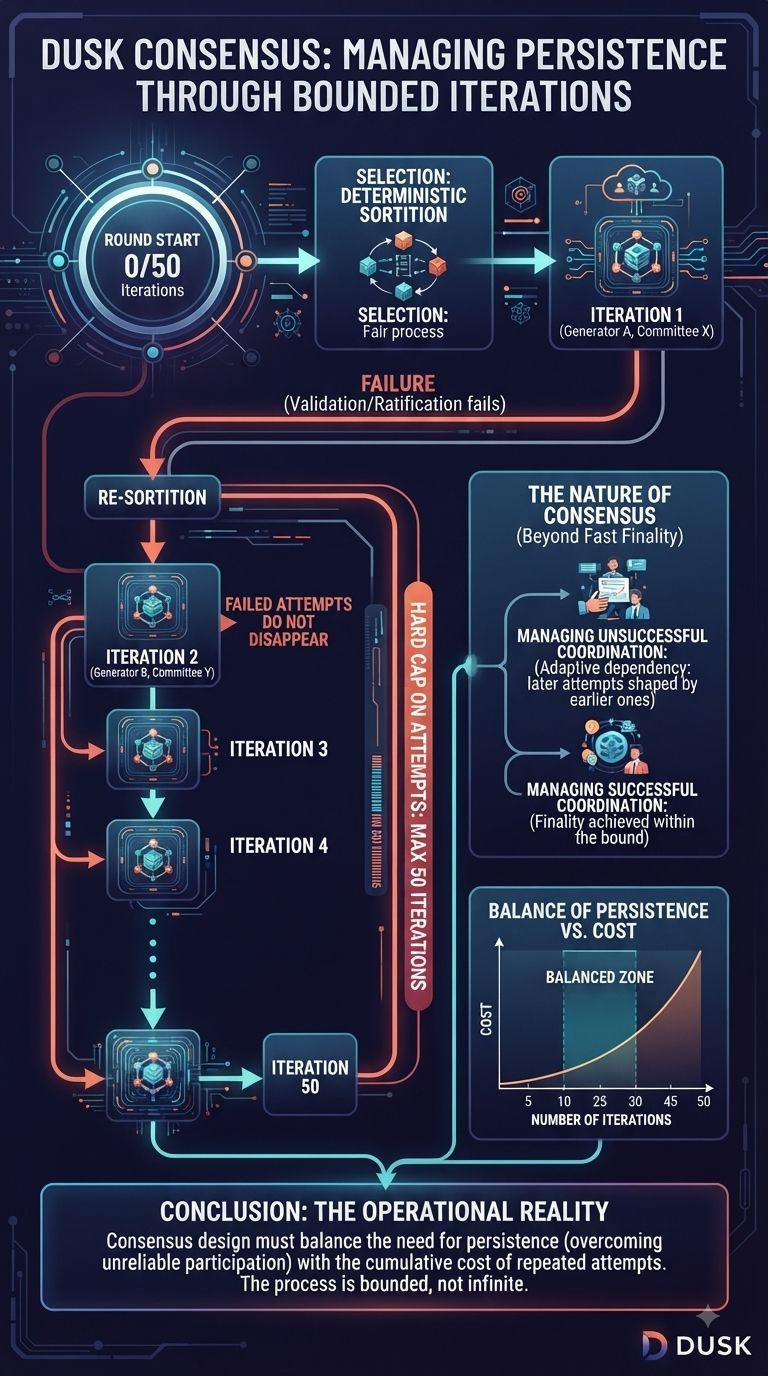
At first I assumed Dusk’s consensus rounds were mostly a matter of waiting for enough votes. But the more I looked at the iteration structure, the part that stayed with me was how a failed attempt doesn’t simply disappear. If validation or ratification fails, the protocol moves to another iteration, with a new generator and committees selected through deterministic sortition. That creates a small but interesting dependency: a later attempt is partly shaped by what happened in the earlier ones. The whitepaper even limits a round to 50 iterations, which suggests failure isn’t treated as an exceptional case that can be ignored. It has to fit inside a bounded process. I find that more interesting than the usual “fast finality” description. Consensus here seems to involve managing unsuccessful coordination as much as successful coordination. Maybe that’s unavoidable when network participation isn’t perfectly reliable. Which leaves the quieter question: how should a consensus system balance persistence with the cost of repeatedly trying to agree? #dusk $DUSK @Dusk_Foundation $DUSK
{spot}(DUSKUSDT)
@Dusk
At first I assumed Dusk’s consensus rounds were mostly a matter of waiting for enough votes. But the more I looked at the iteration structure, the part that stayed with me was how a failed attempt doesn’t simply disappear. If validation or ratification fails, the protocol moves to another iteration, with a new generator and committees selected through deterministic sortition. That creates a small but interesting dependency: a later attempt is partly shaped by what happened in the earlier ones. The whitepaper even limits a round to 50 iterations, which suggests failure isn’t treated as an exceptional case that can be ignored. It has to fit inside a bounded process. I find that more interesting than the usual “fast finality” description. Consensus here seems to involve managing unsuccessful coordination as much as successful coordination. Maybe that’s unavoidable when network participation isn’t perfectly reliable. Which leaves the quieter question: how should a consensus system balance persistence with the cost of repeatedly trying to agree? #dusk $DUSK @Dusk $DUSK
At first I assumed Dusk’s consensus rounds were mostly a matter of waiting for enough votes. But the more I looked at the iteration structure, the part that stayed with me was how a failed attempt doesn’t simply disappear. If validation or ratification fails, the protocol moves to another iteration, with a new generator and committees selected through deterministic sortition. That creates a small but interesting dependency: a later attempt is partly shaped by what happened in the earlier ones. The whitepaper even limits a round to 50 iterations, which suggests failure isn’t treated as an exceptional case that can be ignored. It has to fit inside a bounded process. I find that more interesting than the usual “fast finality” description. Consensus here seems to involve managing unsuccessful coordination as much as successful coordination. Maybe that’s unavoidable when network participation isn’t perfectly reliable. Which leaves the quieter question: how should a consensus system balance persistence with the cost of repeatedly trying to agree? #dusk $DUSK @Dusk $DUSK
41
16
168
·
--
උසබ තත්ත්වය
සත්යායනය කළ
@Dusk_Foundation
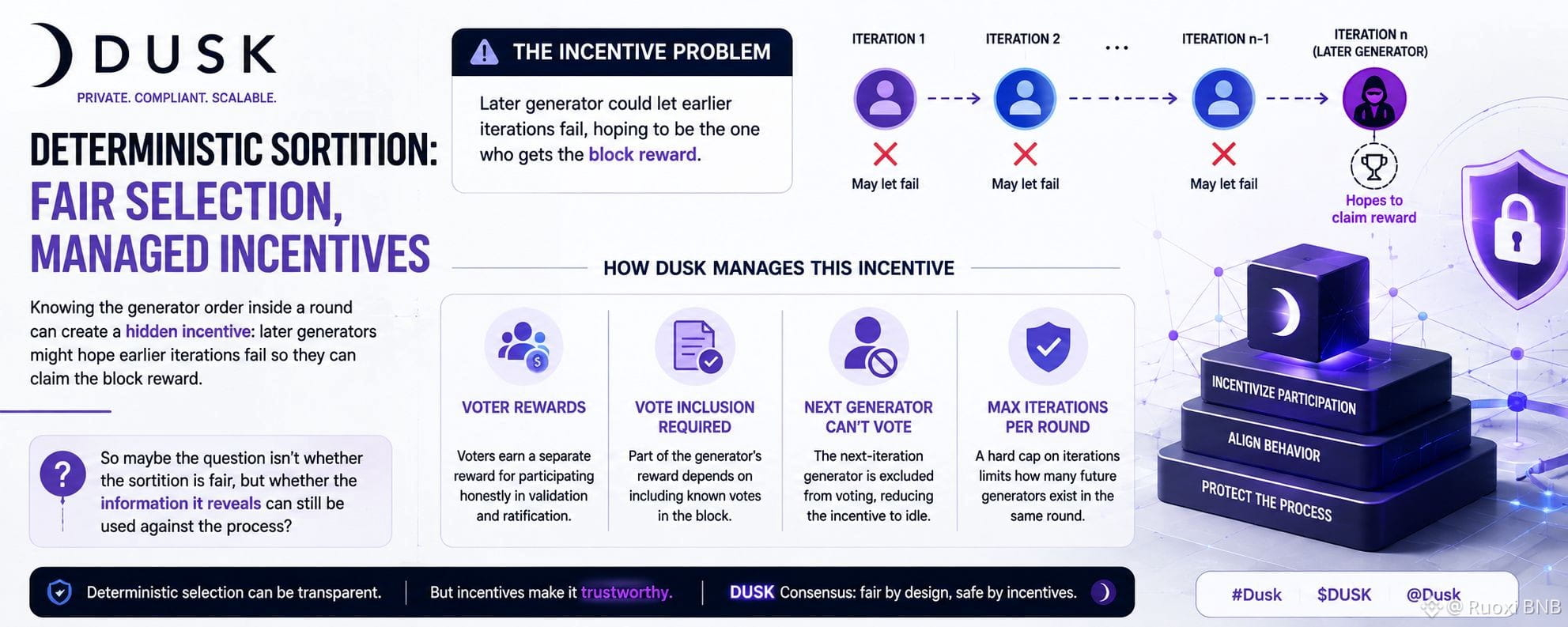
මුලින් මට පෙනුණේ “ඩස්ක්” (Dusk) හි නිර්ණායක sortition එක විශේෂයෙන්ම කමිටු තේරීම සාධාරණ කිරීමටයි කියලා. නමුත් මම තවදුරටත් බලද්දී, මට ඇල්ලුණේ එක් වටයක් තුළ ජෙනරේටරයේ අනුපිළිවෙල දැනගැනීම නිසා ඇතිවන ගැටලුවයි. පසුව පැමිණෙන ජෙනරේටරයට, කලින් iteration වල අසාර්ථක වීමට හේතුවක් ඇති කරලා, block reward එක එකතු කරගන්න බලාපොරොත්තු වෙන්න පුළුවන්. whitepaper එක මේක “අපක්ෂපාතී සහභාගීත්වය” යැයි උපකල්පනය කරන්නේ වෙනුවට, ආකිරිති (incentive) ගැටලුවක් ලෙස සලකයි. ඡන්දදායකයන්ට වෙනම ත්යාගයක් ලැබෙනවා; ජෙනරේටරයාගේ ත්යාගයේ කොටසක් දන්නා ඡන්ද ඇතුළත් කිරීම මත රඳා පවතිනවා; ඊළඟ-iteration ජෙනරේටරය ඡන්දයෙන් බැහැර කරලා තියෙනවා. iteration ගණන සඳහා දැඩි සීමාවක් (hard cap) ද තිබෙනවා, ඒ නිසා එකම වටයක් තුළ පසුකාලීන ජෙනරේටර කොච්චරක් ඉන්න පුළුවන්ද කියලා සීමා වෙනවා. මට රසවත්ම දේ තමයි, consensus සැලසුමේ බොහෝ දේ අවසානයේම කෙනෙකුට ප්රොටෝකෝලයම විසින් ඔහුට ලබාදෙන තොරතුරු වලින් ප්රයෝජන ලබාගන්න බාධා කිරීම ගැන වීම. තේරීම නිර්ණායක විය හැකි නමුත්, ඒ තේරීම වටා ඇති හැසිරීම තවමත් කළමනාකරණය කළ යුතුයි. එහෙනම් ප්රශ්නය “sortition එක සාධාරණ ද?” කියන එකම නොවෙයිද, ඒක හෙළි කරන තොරතුරු තවමත් ක්රියාවලියට එරෙහිව භාවිතා කළ හැකිද කියන එක ද?
@Dusk_Foundation #dusk $DUSK
{spot}(DUSKUSDT)
@Dusk
මුලින් මට පෙනුණේ “ඩස්ක්” (Dusk) හි නිර්ණායක sortition එක විශේෂයෙන්ම කමිටු තේරීම සාධාරණ කිරීමටයි කියලා. නමුත් මම තවදුරටත් බලද්දී, මට ඇල්ලුණේ එක් වටයක් තුළ ජෙනරේටරයේ අනුපිළිවෙල දැනගැනීම නිසා ඇතිවන ගැටලුවයි. පසුව පැමිණෙන ජෙනරේටරයට, කලින් iteration වල අසාර්ථක වීමට හේතුවක් ඇති කරලා, block reward එක එකතු කරගන්න බලාපොරොත්තු වෙන්න පුළුවන්. whitepaper එක මේක “අපක්ෂපාතී සහභාගීත්වය” යැයි උපකල්පනය කරන්නේ වෙනුවට, ආකිරිති (incentive) ගැටලුවක් ලෙස සලකයි. ඡන්දදායකයන්ට වෙනම ත්යාගයක් ලැබෙනවා; ජෙනරේටරයාගේ ත්යාගයේ කොටසක් දන්නා ඡන්ද ඇතුළත් කිරීම මත රඳා පවතිනවා; ඊළඟ-iteration ජෙනරේටරය ඡන්දයෙන් බැහැර කරලා තියෙනවා. iteration ගණන සඳහා දැඩි සීමාවක් (hard cap) ද තිබෙනවා, ඒ නිසා එකම වටයක් තුළ පසුකාලීන ජෙනරේටර කොච්චරක් ඉන්න පුළුවන්ද කියලා සීමා වෙනවා. මට රසවත්ම දේ තමයි, consensus සැලසුමේ බොහෝ දේ අවසානයේම කෙනෙකුට ප්රොටෝකෝලයම විසින් ඔහුට ලබාදෙන තොරතුරු වලින් ප්රයෝජන ලබාගන්න බාධා කිරීම ගැන වීම. තේරීම නිර්ණායක විය හැකි නමුත්, ඒ තේරීම වටා ඇති හැසිරීම තවමත් කළමනාකරණය කළ යුතුයි. එහෙනම් ප්රශ්නය “sortition එක සාධාරණ ද?” කියන එකම නොවෙයිද, ඒක හෙළි කරන තොරතුරු තවමත් ක්රියාවලියට එරෙහිව භාවිතා කළ හැකිද කියන එක ද?
@Dusk #dusk $DUSK
මුලින් මට පෙනුණේ “ඩස්ක්” (Dusk) හි නිර්ණායක sortition එක විශේෂයෙන්ම කමිටු තේරීම සාධාරණ කිරීමටයි කියලා. නමුත් මම තවදුරටත් බලද්දී, මට ඇල්ලුණේ එක් වටයක් තුළ ජෙනරේටරයේ අනුපිළිවෙල දැනගැනීම නිසා ඇතිවන ගැටලුවයි. පසුව පැමිණෙන ජෙනරේටරයට, කලින් iteration වල අසාර්ථක වීමට හේතුවක් ඇති කරලා, block reward එක එකතු කරගන්න බලාපොරොත්තු වෙන්න පුළුවන්. whitepaper එක මේක “අපක්ෂපාතී සහභාගීත්වය” යැයි උපකල්පනය කරන්නේ වෙනුවට, ආකිරිති (incentive) ගැටලුවක් ලෙස සලකයි. ඡන්දදායකයන්ට වෙනම ත්යාගයක් ලැබෙනවා; ජෙනරේටරයාගේ ත්යාගයේ කොටසක් දන්නා ඡන්ද ඇතුළත් කිරීම මත රඳා පවතිනවා; ඊළඟ-iteration ජෙනරේටරය ඡන්දයෙන් බැහැර කරලා තියෙනවා. iteration ගණන සඳහා දැඩි සීමාවක් (hard cap) ද තිබෙනවා, ඒ නිසා එකම වටයක් තුළ පසුකාලීන ජෙනරේටර කොච්චරක් ඉන්න පුළුවන්ද කියලා සීමා වෙනවා. මට රසවත්ම දේ තමයි, consensus සැලසුමේ බොහෝ දේ අවසානයේම කෙනෙකුට ප්රොටෝකෝලයම විසින් ඔහුට ලබාදෙන තොරතුරු වලින් ප්රයෝජන ලබාගන්න බාධා කිරීම ගැන වීම. තේරීම නිර්ණායක විය හැකි නමුත්, ඒ තේරීම වටා ඇති හැසිරීම තවමත් කළමනාකරණය කළ යුතුයි. එහෙනම් ප්රශ්නය “sortition එක සාධාරණ ද?” කියන එකම නොවෙයිද, ඒක හෙළි කරන තොරතුරු තවමත් ක්රියාවලියට එරෙහිව භාවිතා කළ හැකිද කියන එක ද?
@Dusk #dusk $DUSK
44
14
315
·
--
උසබ තත්ත්වය
$EDGE
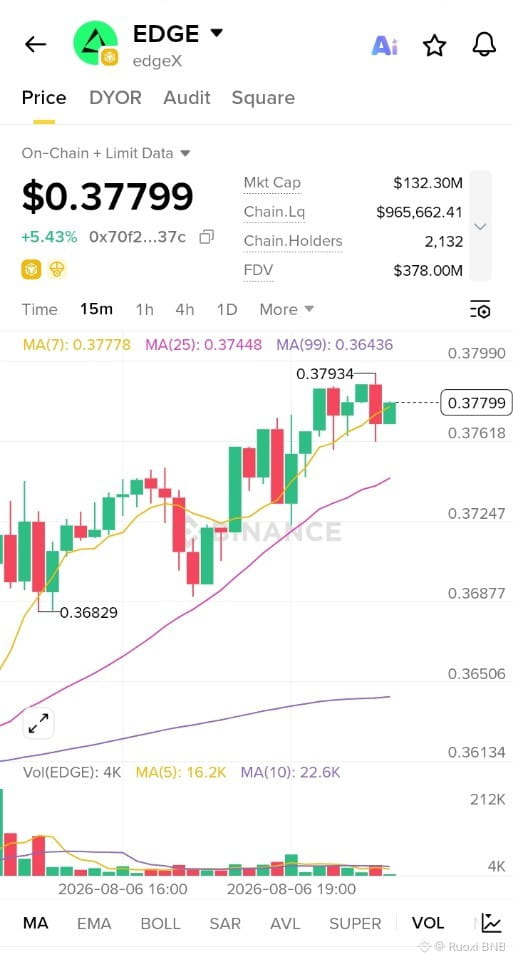
$0.37799ක් වටිනාකමකට ගනුදෙනු සිදු වන අතර, කෙටි කාලීන චලන සාමාන්යයන්ට ඉහළින් රැඳී සිටීමෙන් ස්ථාවර ඉහළ ගමන් (bullish) මනෝභාවය පෙන්වයි. මිල ආසන්න ප්රතිරෝධයට තල්ලු වෙමින් පවතින අතර, ඉහළ චලන සාමාන්යයන් විසින් පුළුල් ප්රවනතාවයට සහාය ලබා දෙයි. ස්ථාවර වශයෙන් වෙළඳ පරිමාව ඉදිරියට ආත්ම විශ්වාසය වැඩි කළ හැකි නමුත්, මෑත ඉහළ මට්ටම් අසලදී ප්රතික්ෂේප වීමක්ද සිදුවිය හැක. ප්රතිරෝධයට ඉහළින් තහවුරු වීමක් ලැබෙන තුරු අත්සන් කරන්නේ/පදිංචි වන්නේ නැතුව බලා සිටින්න. #EDGE #DeFi #Crypto #Trading $EDGE
{alpha}(560x70f2eadf1ca1969ff42b0c78e9da519e8937cbaf)
$EDGE
$0.37799ක් වටිනාකමකට ගනුදෙනු සිදු වන අතර, කෙටි කාලීන චලන සාමාන්යයන්ට ඉහළින් රැඳී සිටීමෙන් ස්ථාවර ඉහළ ගමන් (bullish) මනෝභාවය පෙන්වයි. මිල ආසන්න ප්රතිරෝධයට තල්ලු වෙමින් පවතින අතර, ඉහළ චලන සාමාන්යයන් විසින් පුළුල් ප්රවනතාවයට සහාය ලබා දෙයි. ස්ථාවර වශයෙන් වෙළඳ පරිමාව ඉදිරියට ආත්ම විශ්වාසය වැඩි කළ හැකි නමුත්, මෑත ඉහළ මට්ටම් අසලදී ප්රතික්ෂේප වීමක්ද සිදුවිය හැක. ප්රතිරෝධයට ඉහළින් තහවුරු වීමක් ලැබෙන තුරු අත්සන් කරන්නේ/පදිංචි වන්නේ නැතුව බලා සිටින්න. #EDGE #DeFi #Crypto #Trading $EDGE
$0.37799ක් වටිනාකමකට ගනුදෙනු සිදු වන අතර, කෙටි කාලීන චලන සාමාන්යයන්ට ඉහළින් රැඳී සිටීමෙන් ස්ථාවර ඉහළ ගමන් (bullish) මනෝභාවය පෙන්වයි. මිල ආසන්න ප්රතිරෝධයට තල්ලු වෙමින් පවතින අතර, ඉහළ චලන සාමාන්යයන් විසින් පුළුල් ප්රවනතාවයට සහාය ලබා දෙයි. ස්ථාවර වශයෙන් වෙළඳ පරිමාව ඉදිරියට ආත්ම විශ්වාසය වැඩි කළ හැකි නමුත්, මෑත ඉහළ මට්ටම් අසලදී ප්රතික්ෂේප වීමක්ද සිදුවිය හැක. ප්රතිරෝධයට ඉහළින් තහවුරු වීමක් ලැබෙන තුරු අත්සන් කරන්නේ/පදිංචි වන්නේ නැතුව බලා සිටින්න. #EDGE #DeFi #Crypto #Trading $EDGE
2
138
·
--
උසබ තත්ත්වය
$RAVE ගනුදෙනු $0.29702ට සිදු වෙයි; ප්රධාන චලන සාමාන්යයන්ට ඉහළින් තරමක් පවතිමින් පවතින ස්ථිර යටින් වූ ශක්තියක් පෙන්වයි. ප්රවණතාව (momentum) හිතකරව පවතී; නමුත් මෑත ඉහළ මට්ටම්වලට ආසන්න ප්රතිරෝධය කඩිනම් ඉදිරියට යාම සීමා කළ හැක. වත්මන් සහය ස්ථානය අල්ලාගෙන සිටීමෙන් බුලිෂ් ව්යුහය (bullish structure) පවත්වාගෙන යා හැකි අතර, වඩාත් ශක්තිමත් තහවුරු කිරීමක් සඳහා පරිමාව (volume) දැඩිව නිරීක්ෂණය කිරීම අවශ්ය වේ. #RAVE #RaveDAO #Crypto #DeFi $RAVE
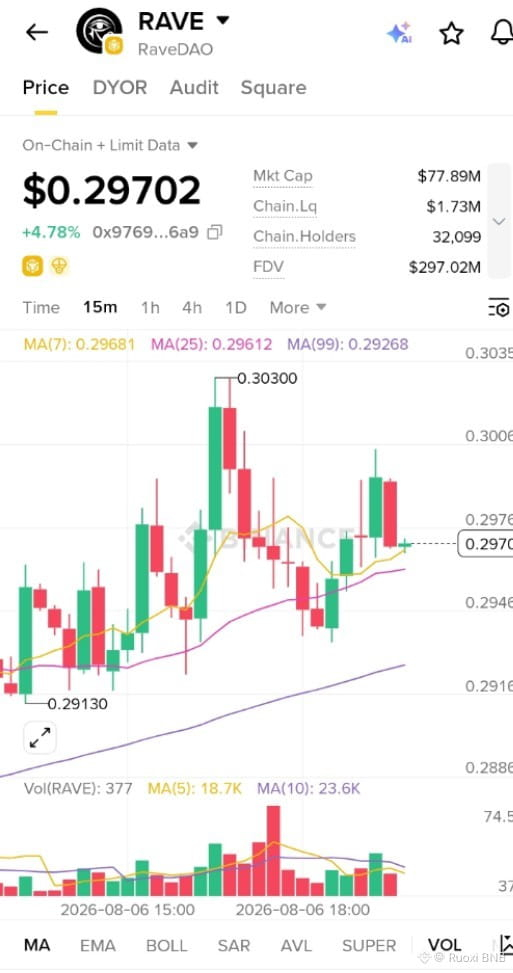
{alpha}(560x97693439ea2f0ecdeb9135881e49f354656a911c)
$RAVE ගනුදෙනු $0.29702ට සිදු වෙයි; ප්රධාන චලන සාමාන්යයන්ට ඉහළින් තරමක් පවතිමින් පවතින ස්ථිර යටින් වූ ශක්තියක් පෙන්වයි. ප්රවණතාව (momentum) හිතකරව පවතී; නමුත් මෑත ඉහළ මට්ටම්වලට ආසන්න ප්රතිරෝධය කඩිනම් ඉදිරියට යාම සීමා කළ හැක. වත්මන් සහය ස්ථානය අල්ලාගෙන සිටීමෙන් බුලිෂ් ව්යුහය (bullish structure) පවත්වාගෙන යා හැකි අතර, වඩාත් ශක්තිමත් තහවුරු කිරීමක් සඳහා පරිමාව (volume) දැඩිව නිරීක්ෂණය කිරීම අවශ්ය වේ. #RAVE #RaveDAO #Crypto #DeFi $RAVE
3
218
·
--
උසබ තත්ත්වය
$AKE ගනුදෙනු $0.0042275ක් වෙත පවතින අතර ප්රධාන චලනය වන සාමාන්යයන්ට ඉහළින් රැඳී සිටිමින් කෙටි කාලීන ශක්තිමත් ගම්යතාවයක් සංඥා කරයි. ගැණුම්කරුවන් ආසන්න සහය ස්ථානය රැකගෙන දිගටම සිටින අතර, ඒ ආසන්න ප්රතිරෝධය මගින් ඊළඟ දිශානාන්තර චලනය තීරණය විය හැක. වැඩිවන සහභාගීත්වය විශ්වාසය ශක්තිමත් කරනු ඇතත්, වෙනස් වන වෙළඳපොළ තත්ත්වයන් තුළ අවධානයෙන් යුතු අවදානම් කළමනාකරණය අත්යවශ්යය. #AKE #Crypto #Altcoins #DeFi $AKE
{future}(AKEUSDT)
$AKE ගනුදෙනු $0.0042275ක් වෙත පවතින අතර ප්රධාන චලනය වන සාමාන්යයන්ට ඉහළින් රැඳී සිටිමින් කෙටි කාලීන ශක්තිමත් ගම්යතාවයක් සංඥා කරයි. ගැණුම්කරුවන් ආසන්න සහය ස්ථානය රැකගෙන දිගටම සිටින අතර, ඒ ආසන්න ප්රතිරෝධය මගින් ඊළඟ දිශානාන්තර චලනය තීරණය විය හැක. වැඩිවන සහභාගීත්වය විශ්වාසය ශක්තිමත් කරනු ඇතත්, වෙනස් වන වෙළඳපොළ තත්ත්වයන් තුළ අවධානයෙන් යුතු අවදානම් කළමනාකරණය අත්යවශ්යය. #AKE #Crypto #Altcoins #DeFi $AKE
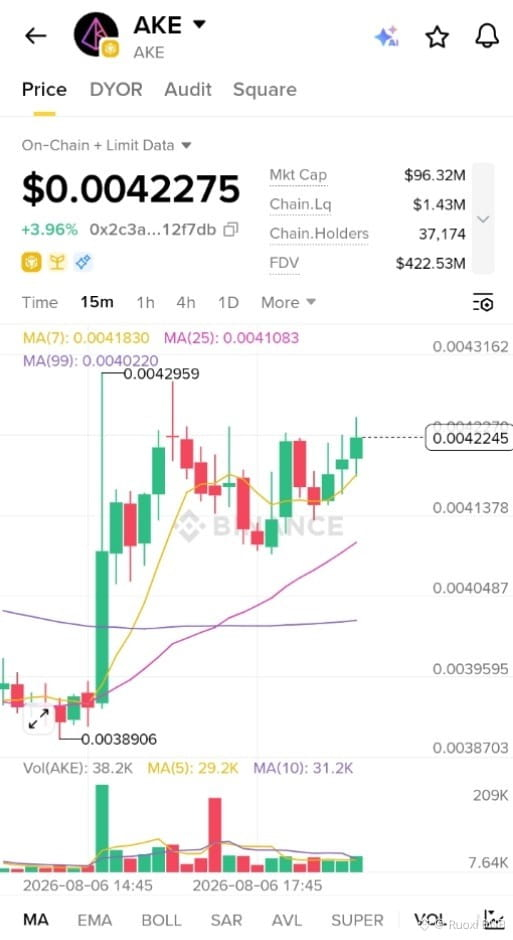
1
278
·
--
උසබ තත්ත්වය
$BTW trades at $0.18063, holding above key moving averages with steady bullish momentum. Buyers continue defending support, while nearby resistance may challenge further upside. Watch volume for confirmation before expecting sustained continuation. Stay disciplined, manage risk, and monitor price action carefully through evolving market conditions daily. #BTW #Bitway #Crypto #Altcoins $BTW
{future}(BTWUSDT)
$BTW trades at $0.18063, holding above key moving averages with steady bullish momentum. Buyers continue defending support, while nearby resistance may challenge further upside. Watch volume for confirmation before expecting sustained continuation. Stay disciplined, manage risk, and monitor price action carefully through evolving market conditions daily. #BTW #Bitway #Crypto #Altcoins $BTW
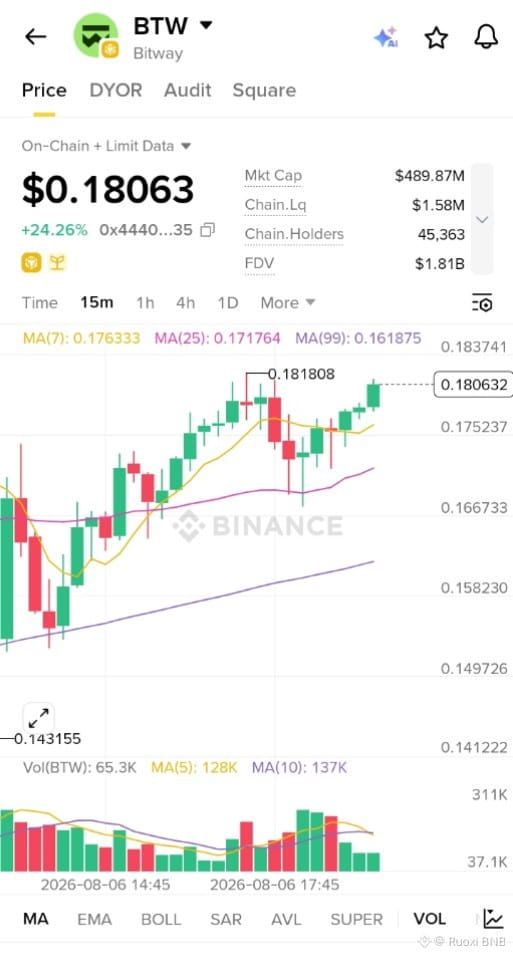
1
307
තවත් අන්තර්ගතයන් ගවේෂණය කිරීමට ඇතුල් වන්න
Binance චතුරශ්රය හි ගෝලීය ක්රිප්ටෝ පරිශීලකයින් හා එක්වන්න
⚡️ ක්රිප්ටෝ පිළිබඳ නවතම සහ ප්රයෝජනවත් තොරතුරු ලබා ගන්න.
💬 ලොව විශාලතම ක්රිප්ටෝ හුවමාරුව මගින් විශ්වාස කෙරේ.
👍 සත්යායනය කරන ලද නිර්මාණකරුවන්ගෙන් සැබෑ විදසුන් සොයා ගන්න.
විද්යුත් තැපෑල / දුරකථන අංකය
නැගී එන මාතෘකා
FedRateWatch
487,593 views
2,476 සාකච්ඡා කරමින්
எங்கள் டிரெண்டிங் ஹாஷ்டாக் பிரச்சாரத்தில் போக்குவரத்து ரிவார்டை பகிர்ந்து வெல்லுங்கள்
✨தலைப்பு: FOMC செப்டம்பர், பெடின் அடுத்த நடவடிக்கை என்ன?
👉சேருவது எப்படி:
ஹாஷ்டாக் #FedRateWatch உடன் ஒரு குறுகிய பதிவையோ அல்லது கட்டுரையையோ வெளியிடுங்கள்
கீழுள்ள கோணங்களின் அடிப்படையில் உள்ளடக்கத்தை உருவாக்குங்கள்:
- ஆகஸ்ட் கோர் CPI மாதந்தோறும் 0.3% உயர்ந்தது; இந்த வாரம் 25bp உயர்வுக்கான வாய்ப்புகள் இப்போது சுமார் 90% ஆக உள்ளன. இந்த வாரம் வட்டி உயர்வு நடக்குமென நீங்கள் எதிர்பார்க்கிறீர்களா? அது ஒருமுறைதானா, அல்லது இன்னும் நீளமான வட்டி உயர்வு சுழற்சியின் தொடக்கமா?
- உயர்வு நடந்தால், BTC, டெக் பங்குகள், மற்றும் தங்கம் ஆகியவற்றுக்கு அது எப்படி தாக்கம் காட்டும்? உயர்ச்சியா அல்லது சரிவா?
- நீங்கள் அடுத்ததாக எப்படி டிரேடு செய்ய திட்டமிடுகிறீர்கள்? எங்களின் டிரேடு பகிர்வு வித்ஜெட்டின் மூலம் உங்கள் BTC, பங்குகள் அல்லது தங்க டிரேடு/உடைமைகளைப் பகிருங்கள்.
⏰பிரச்சார காலம்:
- 2026-09-15 11:00 - 2026-09-17 3:00 UTC
🎁ரிவார்டு:
- மேலுள்ள வழிகாட்டுதல்களுக்கு இணங்கவும் 100 வார்த்தைகளுக்கு மேல் உள்ள தகுதிபெற்ற பதிவுகள் மதிப்பாய்வு செய்யப்படும்; மேலும் 500 முதல் 3,000 பார்வைகள் வரை சீரற்ற (ரேண்டம்) போக்குவரத்து அதிகரிப்பு கிடைக்கலாம். உங்கள் பதிவு தேர்ந்தெடுக்கப்பட்டால், உங்கள் feed secretary மூலம் ஒரு அறிவிப்பு கிடைக்கும்.
- Binance Square Official-ல் உங்கள் கட்டுரை இடம்பெற வாய்ப்பு பெறுங்கள்
உங்கள் பதிவுக்கான யோசனைகள் வேண்டுமா? தலைப்புப் பக்கத்தை #FedRateWatch அல்லது Square Guide on How to Post for Better Reach-ஐ பாருங்கள்.
Binance Square Official
·362 කැමත්ත දැක්වීම්
·776.8k views
BitcoinSlidesTo$76000
15,154 views
105 සාකච්ඡා කරමින්
BitcoinReboundsTo$79K
59,468 views
396 සාකච්ඡා කරමින්