
7toraka
679 පෝස්ටු

7toraka
වාර්තා කරන්න
පරිශීලක අවහිර කරන්න
178 හඹා යමින්
334 හඹා යන්නන්
1.1K+ කැමති විය
පෝස්ටු
සියල්ල
උපුටා දැක්වීම්
සජීවි
·
--

ලිපිය
La Economía Venezolana al Día de Hoy y su FuturoCon la llegada de la líder de la oposición venezolana al país, María Corina Machado, el entorno político ha dado un cambio importante. Sin embargo, el escenario económico sigue siendo el mismo: dependencia del petróleo, la inflación más alta del mundo, con un estimado del 387% para este año, un sistema bancario estable pero muy pequeño y servicios públicos en crisis.
Desde hace unos meses se ha iniciado un proceso de inversión en el sector petrolero impulsado por el Departamento de Estado de Estados Unidos y apoyado por un conjunto de empresas petroleras y de servicios estadounidenses y europeas. Al día de hoy podemos creer que se está empezando un proceso de reconstrucción muy distinto a los procesos anteriores.
Si imaginamos la inversión actual del país como una torre de copas de champán, la lógica es clara: el impulso comienza arriba, en el petróleo, y luego baja poco a poco. Los nuevos ingresos y capitales del sector hidrocarburos deberían fortalecer primero las finanzas públicas y el sistema bancario, para después moverse hacia contratistas, servicios básicos, construcción, proveedores de equipos, comercio y, al final, los hogares venezolanos. El champán no puede quedarse solo en la copa superior: la verdadera prueba de los próximos dos años será ver si el beneficio llega a todas las demás.
El punto de partida de Venezuela en 2026 hace posible esa secuencia. La reforma de hidrocarburos de enero amplió la participación privada directa y mejoró las condiciones contractuales, fiscales y legales. Al mismo tiempo, Chevron anunció una inversión superior a los 7.000 millones de dólares en cinco años a través de sus empresas mixtas en Venezuela, con la meta de más que duplicar su producción hasta unos 600.000 barriles diarios.
Aun así, esto no es una promesa automática. El escenario depende de precios petroleros viables, licencias y contratos estables, una PDVSA capaz de ejecutar, infraestructura que mejore y reglas tributarias y laborales razonablemente previsibles. La propia Chevron reconoce que los cambios de política, sanciones, mercado y regulación son riesgos importantes.
Etapa 0 — Octubre a diciembre de 2026: el impulso comienza arriba
Los primeros beneficiarios serían las finanzas del Estado, PDVSA y las empresas mixtas, los bancos que financian a los operadores y las primeras empresas de servicios petroleros.
Las compañías de petróleo y gas transforman los acuerdos recientes en compras, mantenimiento, perforación, intervenciones de pozos, logística, seguridad, transporte e ingeniería. Las empresas mixtas de Chevron ya habían elevado su producción 15% entre enero y septiembre de 2026, mientras que los nuevos acuerdos sumaron áreas operativas y compromisos de inversión.
El Estado empieza a recibir ingresos más previsibles por regalías, impuestos, dividendos y operaciones de exportación. La reforma de la Ley de Hidrocarburos de 2026 creó los Contratos de Participación en la Producción, que dan a los operadores privados mayor responsabilidad operativa y financiera, además de simplificar algunos aspectos fiscales.
La modernización del SENIAT también juega un papel importante. La digitalización, la interoperabilidad con SUDEBAN y SAREN, la reducción de documentos físicos y el RIF sin vencimiento facilitan la operación de empresas formales, importadores y contratistas.
Sin embargo, el terreno laboral sigue siendo complicado. La estabilidad laboral se mantiene hasta diciembre de 2026 y las empresas continúan enfrentando obligaciones parafiscales como el IVSS, el FAOV, el INCES y una cotización previsional equivalente al 9% de salarios y bonos.
Señales a observar: más depósitos y crédito en empresas de servicios petroleros, mayor capacidad de gasto público, primeras contrataciones técnicas y pagos más regulares por parte de los grandes operadores.
Etapa 1 — Enero a junio de 2027: los contratistas entran en acción
El siguiente eslabón lo forman las pymes de servicios petroleros, transportistas, empresas de campamentos y catering, compañías de mantenimiento, agentes de aduana, aseguradoras, despachos legales y contables, y bancos regionales.
Los contratos dejan de ser planes y comienzan a ejecutarse. Aumentan las compras de equipos, repuestos, insumos de perforación, válvulas, tuberías, químicos, generadores, camiones y servicios especializados. El plan de Chevron, pensado para crecer durante cinco años, exige una cadena de suministro local mucho más activa.
Los bancos empiezan a ver mejores garantías, depósitos y capacidad de pago entre los contratistas. El crédito seguirá siendo prudente, pero el financiamiento de comercio, el capital de trabajo y el arrendamiento de equipos deberían reactivarse antes que el crédito masivo a consumidores.
La facturación electrónica y la digitalización aduanera del SENIAT pueden bajar los costos de cumplimiento para las pymes. La aplicación móvil de facturación anunciada podría ser especialmente útil si reduce la dependencia de máquinas fiscales costosas.
La reforma laboral será una variable decisiva. Las autoridades habían anunciado una revisión de la jornada, las vacaciones, las pensiones y la sostenibilidad de la seguridad social, mientras el sector empresarial pedía flexibilidad laboral e incentivos fiscales antes de que terminara 2026.
Señales a observar: más empleo formal en Zulia, Monagas, Anzoátegui y Carabobo, pagos más puntuales de los clientes petroleros, mayores importaciones de insumos industriales y una primera recuperación de hoteles, transporte y restaurantes cerca de los polos petroleros.
Etapa 2 — Julio a diciembre de 2027: electricidad, construcción y equipos
Después llegan las empresas eléctricas, constructoras, proveedores de cemento y acero, ferreterías, importadores de equipos, compañías de mantenimiento industrial y servicios inmobiliarios.
Más actividad petrolera deja al descubierto los problemas de electricidad, puertos, carreteras, agua y vivienda. Eso crea demanda pública y privada de generación, transmisión, transformadores, cables, materiales de construcción e ingeniería. La revisión de la Ley Orgánica del Sistema Eléctrico ya formaba parte de la agenda de reformas de 2026.
La construcción responde con retraso: primero surgen proyectos industriales y logísticos; después, viviendas para trabajadores, oficinas, almacenes y remodelaciones comerciales. La revisión de activos estatales y el debate sobre reforma habitacional podrían, con el tiempo, poner terrenos e inmuebles en usos más productivos.
El sector de ferretería y equipos tiene una oportunidad evidente. Antes de que el consumidor común aumente sus compras discrecionales, contratistas y pymes necesitan herramientas, equipos de protección, materiales eléctricos, bombas, compresores, generadores y vehículos.
Si la reforma laboral define con claridad la contratación, las horas extra, las prestaciones y la tercerización, las empresas podrán planificar mejor sus nóminas. Pero si mantiene reglas rígidas sin mejorar la productividad, muchas compañías optarán por contratos temporales, tercerización o más inversión en maquinaria.
Señales a observar: más permisos de construcción, mayores importaciones de materiales eléctricos y de construcción, mayor demanda eléctrica industrial y mejores ventas en ferreterías y distribuidores de equipos.
Etapa 3 — Enero a junio de 2028: el comercio y los servicios se expanden
En esta fase se benefician los mayoristas, comercios, restaurantes, farmacias, escuelas, centros de salud, telecomunicaciones, turismo y servicios profesionales locales.
Para entonces, los salarios y los pagos derivados de la actividad petrolera ya se habrán extendido más allá del corredor petrolero. Trabajadores del sector, contratistas, empleados de construcción y proveedores del Estado gastan más en alimentos, ropa, electrodomésticos, transporte, educación, salud y entretenimiento.
El comercio también puede volverse más formal. Si el SENIAT simplifica la facturación y los trámites digitales, operar dentro de la legalidad se vuelve menos costoso para los pequeños comerciantes. La herramienta móvil de facturación anunciada puede ser especialmente relevante para ese segmento.
Los bancos podrían ampliar el crédito hacia hipotecas, financiamiento de vehículos, tarjetas y capital de trabajo para pymes, aunque solo si la inflación y el comportamiento de pago permanecen bajo control.
Para este momento, la torre de champán ya tiene varias capas: el dinero petrolero del Estado se ha convertido en salarios, pagos a proveedores, recaudación fiscal, depósitos bancarios y ventas comerciales.
Señales a observar: más movimiento en zonas comerciales, mayores importaciones de bienes de consumo, más demanda de alquileres y crecimiento del empleo en servicios, no solamente en empleos técnicos vinculados al petróleo.
Etapa 4 — Julio a octubre de 2028: la recuperación llega a los hogares
Los últimos en sentir el efecto son los hogares comunes, sobre todo aquellos conectados directa o indirectamente al empleo formal.
Para finales de 2028, la mejora debería traducirse en más empleos, mayores ingresos reales, mejor acceso a dólares o servicios bancarios, servicios públicos menos deteriorados y mayor disponibilidad de productos.
Pero la recuperación no será pareja. Los estados petroleros, las grandes ciudades, los corredores logísticos y las pymes formales lo notarán primero. Las zonas rurales y los trabajadores informales quedarán rezagados si no mejoran también las transferencias públicas, la agricultura y la infraestructura local.
La reforma laboral y previsional definirá qué tan inclusivo será este último tramo. Si los salarios formales suben sin disparar los costos empresariales, el consumo puede ampliarse. Si los costos no salariales aumentan demasiado, las contrataciones podrían frenarse y la informalidad volver a crecer.
El mayor reto es que el Estado use los ingresos petroleros adicionales para resolver los cuellos de botella —electricidad, puertos, carreteras, agua, salud y educación— y no solo para aumentar el gasto corriente.
Señales a observar: más empleo formal, mayores ventas fuera de las zonas petroleras, mayor uso de la banca, mejor disponibilidad de productos importados y una recuperación gradual de los salarios reales.
El papel del SENIAT y de la reforma laboral
El SENIAT puede acelerar toda esta cadena si sigue reduciendo trámites, digitalizando aduanas y facturación, y haciendo que cumplir las obligaciones fiscales sea más barato para las pymes. Las medidas de 2026 —eliminación de la homologación de software, simplificación del RIF, menos documentos físicos y la futura facturación electrónica mediante aplicación móvil— apuntan en esa dirección.
La reforma laboral, en cambio, puede acelerar o frenar el proceso. El marco actual es muy protector: la estabilidad laboral sigue vigente hasta diciembre de 2026 y las contribuciones empresariales son significativas. Las reformas anunciadas tocan la jornada, las vacaciones, las pensiones y el financiamiento de la seguridad social. Un resultado equilibrado debería formalizar más empleo, hacer predecible la contratación y financiar las pensiones sin volver inviables los costos laborales de las pymes.
En pocas palabras: entre octubre de 2026 y finales de 2027 deberíamos ver una recuperación principalmente industrial y fiscal. En 2028, el efecto debería hacerse visible en el comercio, el crédito, los servicios y la vida cotidiana de los hogares. El proceso es real, pero su velocidad dependerá menos de la forma de la torre de champán que de si cada copa recibe realmente el flujo: contratos pagados a tiempo, electricidad disponible, bancos dispuestos a prestar, impuestos previsibles y reglas laborales que inviten a invertir.
La Economía Venezolana al Día de Hoy y su Futuro
Con la llegada de la líder de la oposición venezolana al país, María Corina Machado, el entorno político ha dado un cambio importante. Sin embargo, el escenario económico sigue siendo el mismo: dependencia del petróleo, la inflación más alta del mundo, con un estimado del 387% para este año, un sistema bancario estable pero muy pequeño y servicios públicos en crisis.
Desde hace unos meses se ha iniciado un proceso de inversión en el sector petrolero impulsado por el Departamento de Estado de Estados Unidos y apoyado por un conjunto de empresas petroleras y de servicios estadounidenses y europeas. Al día de hoy podemos creer que se está empezando un proceso de reconstrucción muy distinto a los procesos anteriores.
Si imaginamos la inversión actual del país como una torre de copas de champán, la lógica es clara: el impulso comienza arriba, en el petróleo, y luego baja poco a poco. Los nuevos ingresos y capitales del sector hidrocarburos deberían fortalecer primero las finanzas públicas y el sistema bancario, para después moverse hacia contratistas, servicios básicos, construcción, proveedores de equipos, comercio y, al final, los hogares venezolanos. El champán no puede quedarse solo en la copa superior: la verdadera prueba de los próximos dos años será ver si el beneficio llega a todas las demás.
El punto de partida de Venezuela en 2026 hace posible esa secuencia. La reforma de hidrocarburos de enero amplió la participación privada directa y mejoró las condiciones contractuales, fiscales y legales. Al mismo tiempo, Chevron anunció una inversión superior a los 7.000 millones de dólares en cinco años a través de sus empresas mixtas en Venezuela, con la meta de más que duplicar su producción hasta unos 600.000 barriles diarios.
Aun así, esto no es una promesa automática. El escenario depende de precios petroleros viables, licencias y contratos estables, una PDVSA capaz de ejecutar, infraestructura que mejore y reglas tributarias y laborales razonablemente previsibles. La propia Chevron reconoce que los cambios de política, sanciones, mercado y regulación son riesgos importantes.
Etapa 0 — Octubre a diciembre de 2026: el impulso comienza arriba
Los primeros beneficiarios serían las finanzas del Estado, PDVSA y las empresas mixtas, los bancos que financian a los operadores y las primeras empresas de servicios petroleros.
Las compañías de petróleo y gas transforman los acuerdos recientes en compras, mantenimiento, perforación, intervenciones de pozos, logística, seguridad, transporte e ingeniería. Las empresas mixtas de Chevron ya habían elevado su producción 15% entre enero y septiembre de 2026, mientras que los nuevos acuerdos sumaron áreas operativas y compromisos de inversión.
El Estado empieza a recibir ingresos más previsibles por regalías, impuestos, dividendos y operaciones de exportación. La reforma de la Ley de Hidrocarburos de 2026 creó los Contratos de Participación en la Producción, que dan a los operadores privados mayor responsabilidad operativa y financiera, además de simplificar algunos aspectos fiscales.
La modernización del SENIAT también juega un papel importante. La digitalización, la interoperabilidad con SUDEBAN y SAREN, la reducción de documentos físicos y el RIF sin vencimiento facilitan la operación de empresas formales, importadores y contratistas.
Sin embargo, el terreno laboral sigue siendo complicado. La estabilidad laboral se mantiene hasta diciembre de 2026 y las empresas continúan enfrentando obligaciones parafiscales como el IVSS, el FAOV, el INCES y una cotización previsional equivalente al 9% de salarios y bonos.
Señales a observar: más depósitos y crédito en empresas de servicios petroleros, mayor capacidad de gasto público, primeras contrataciones técnicas y pagos más regulares por parte de los grandes operadores.
Etapa 1 — Enero a junio de 2027: los contratistas entran en acción
El siguiente eslabón lo forman las pymes de servicios petroleros, transportistas, empresas de campamentos y catering, compañías de mantenimiento, agentes de aduana, aseguradoras, despachos legales y contables, y bancos regionales.
Los contratos dejan de ser planes y comienzan a ejecutarse. Aumentan las compras de equipos, repuestos, insumos de perforación, válvulas, tuberías, químicos, generadores, camiones y servicios especializados. El plan de Chevron, pensado para crecer durante cinco años, exige una cadena de suministro local mucho más activa.
Los bancos empiezan a ver mejores garantías, depósitos y capacidad de pago entre los contratistas. El crédito seguirá siendo prudente, pero el financiamiento de comercio, el capital de trabajo y el arrendamiento de equipos deberían reactivarse antes que el crédito masivo a consumidores.
La facturación electrónica y la digitalización aduanera del SENIAT pueden bajar los costos de cumplimiento para las pymes. La aplicación móvil de facturación anunciada podría ser especialmente útil si reduce la dependencia de máquinas fiscales costosas.
La reforma laboral será una variable decisiva. Las autoridades habían anunciado una revisión de la jornada, las vacaciones, las pensiones y la sostenibilidad de la seguridad social, mientras el sector empresarial pedía flexibilidad laboral e incentivos fiscales antes de que terminara 2026.
Señales a observar: más empleo formal en Zulia, Monagas, Anzoátegui y Carabobo, pagos más puntuales de los clientes petroleros, mayores importaciones de insumos industriales y una primera recuperación de hoteles, transporte y restaurantes cerca de los polos petroleros.
Etapa 2 — Julio a diciembre de 2027: electricidad, construcción y equipos
Después llegan las empresas eléctricas, constructoras, proveedores de cemento y acero, ferreterías, importadores de equipos, compañías de mantenimiento industrial y servicios inmobiliarios.
Más actividad petrolera deja al descubierto los problemas de electricidad, puertos, carreteras, agua y vivienda. Eso crea demanda pública y privada de generación, transmisión, transformadores, cables, materiales de construcción e ingeniería. La revisión de la Ley Orgánica del Sistema Eléctrico ya formaba parte de la agenda de reformas de 2026.
La construcción responde con retraso: primero surgen proyectos industriales y logísticos; después, viviendas para trabajadores, oficinas, almacenes y remodelaciones comerciales. La revisión de activos estatales y el debate sobre reforma habitacional podrían, con el tiempo, poner terrenos e inmuebles en usos más productivos.
El sector de ferretería y equipos tiene una oportunidad evidente. Antes de que el consumidor común aumente sus compras discrecionales, contratistas y pymes necesitan herramientas, equipos de protección, materiales eléctricos, bombas, compresores, generadores y vehículos.
Si la reforma laboral define con claridad la contratación, las horas extra, las prestaciones y la tercerización, las empresas podrán planificar mejor sus nóminas. Pero si mantiene reglas rígidas sin mejorar la productividad, muchas compañías optarán por contratos temporales, tercerización o más inversión en maquinaria.
Señales a observar: más permisos de construcción, mayores importaciones de materiales eléctricos y de construcción, mayor demanda eléctrica industrial y mejores ventas en ferreterías y distribuidores de equipos.
Etapa 3 — Enero a junio de 2028: el comercio y los servicios se expanden
En esta fase se benefician los mayoristas, comercios, restaurantes, farmacias, escuelas, centros de salud, telecomunicaciones, turismo y servicios profesionales locales.
Para entonces, los salarios y los pagos derivados de la actividad petrolera ya se habrán extendido más allá del corredor petrolero. Trabajadores del sector, contratistas, empleados de construcción y proveedores del Estado gastan más en alimentos, ropa, electrodomésticos, transporte, educación, salud y entretenimiento.
El comercio también puede volverse más formal. Si el SENIAT simplifica la facturación y los trámites digitales, operar dentro de la legalidad se vuelve menos costoso para los pequeños comerciantes. La herramienta móvil de facturación anunciada puede ser especialmente relevante para ese segmento.
Los bancos podrían ampliar el crédito hacia hipotecas, financiamiento de vehículos, tarjetas y capital de trabajo para pymes, aunque solo si la inflación y el comportamiento de pago permanecen bajo control.
Para este momento, la torre de champán ya tiene varias capas: el dinero petrolero del Estado se ha convertido en salarios, pagos a proveedores, recaudación fiscal, depósitos bancarios y ventas comerciales.
Señales a observar: más movimiento en zonas comerciales, mayores importaciones de bienes de consumo, más demanda de alquileres y crecimiento del empleo en servicios, no solamente en empleos técnicos vinculados al petróleo.
Etapa 4 — Julio a octubre de 2028: la recuperación llega a los hogares
Los últimos en sentir el efecto son los hogares comunes, sobre todo aquellos conectados directa o indirectamente al empleo formal.
Para finales de 2028, la mejora debería traducirse en más empleos, mayores ingresos reales, mejor acceso a dólares o servicios bancarios, servicios públicos menos deteriorados y mayor disponibilidad de productos.
Pero la recuperación no será pareja. Los estados petroleros, las grandes ciudades, los corredores logísticos y las pymes formales lo notarán primero. Las zonas rurales y los trabajadores informales quedarán rezagados si no mejoran también las transferencias públicas, la agricultura y la infraestructura local.
La reforma laboral y previsional definirá qué tan inclusivo será este último tramo. Si los salarios formales suben sin disparar los costos empresariales, el consumo puede ampliarse. Si los costos no salariales aumentan demasiado, las contrataciones podrían frenarse y la informalidad volver a crecer.
El mayor reto es que el Estado use los ingresos petroleros adicionales para resolver los cuellos de botella —electricidad, puertos, carreteras, agua, salud y educación— y no solo para aumentar el gasto corriente.
Señales a observar: más empleo formal, mayores ventas fuera de las zonas petroleras, mayor uso de la banca, mejor disponibilidad de productos importados y una recuperación gradual de los salarios reales.
El papel del SENIAT y de la reforma laboral
El SENIAT puede acelerar toda esta cadena si sigue reduciendo trámites, digitalizando aduanas y facturación, y haciendo que cumplir las obligaciones fiscales sea más barato para las pymes. Las medidas de 2026 —eliminación de la homologación de software, simplificación del RIF, menos documentos físicos y la futura facturación electrónica mediante aplicación móvil— apuntan en esa dirección.
La reforma laboral, en cambio, puede acelerar o frenar el proceso. El marco actual es muy protector: la estabilidad laboral sigue vigente hasta diciembre de 2026 y las contribuciones empresariales son significativas. Las reformas anunciadas tocan la jornada, las vacaciones, las pensiones y el financiamiento de la seguridad social. Un resultado equilibrado debería formalizar más empleo, hacer predecible la contratación y financiar las pensiones sin volver inviables los costos laborales de las pymes.
En pocas palabras: entre octubre de 2026 y finales de 2027 deberíamos ver una recuperación principalmente industrial y fiscal. En 2028, el efecto debería hacerse visible en el comercio, el crédito, los servicios y la vida cotidiana de los hogares. El proceso es real, pero su velocidad dependerá menos de la forma de la torre de champán que de si cada copa recibe realmente el flujo: contratos pagados a tiempo, electricidad disponible, bancos dispuestos a prestar, impuestos previsibles y reglas laborales que inviten a invertir.
174
·
--
සත්යායනය කළ

ලිපිය
Venezuela's Economy TodayVenezuela today, October 24, 2026, is no longer in free fall. The economy remains oil-dependent, inflationary, and deeply unequal, but after years of contraction and emergency, there is finally a credible reason to speak about reconstruction rather than mere survival.
If we see current investment in the country as a champagne-glass tower, the logic is top-down and oil-led: new hydrocarbon income and investment first repair the fiscal position and financial system, then cascade through contractors, utilities, construction, equipment suppliers, commerce, and finally reach household incomes. The champagne should not remain at the top; the test of the next two years is whether it fills every glass below.
Venezuela’s 2026 starting point supports that sequencing. January’s hydrocarbons reform opened greater direct private participation and improved contractual, fiscal, and legal terms, while Chevron announced plans to invest more than US$7 billion over five years through its Venezuelan joint ventures, aiming to more than double its own output to about 600,000 barrels per day.
This is a conditional base case, not a guarantee. It assumes workable oil prices, stable licenses and contracts, credible execution by PDVSA, improving infrastructure, and a broadly predictable tax and labor framework. Chevron itself identifies policy, sanctions, market, and regulatory changes as material risks.
Stage 0 — October to December 2026: “Filling the top glass”
Who benefits first: Venezuelan state accounts, PDVSA and joint ventures, banks financing operators, and the first wave of oil-service companies.
Oil and gas companies convert new agreements into procurement, maintenance, drilling, workover, logistics, security, transport, and engineering contracts. Chevron’s joint ventures had already increased production 15% year-to-date by September 2026, and new agreements added acreage and investment commitments.The state begins to receive more predictable inflows through royalties, taxes, dividends, and export-related revenue. The 2026 Hydrocarbons Law reform created Production Participation Contracts, allowing private operators greater operational and financial responsibility, while simplifying some fiscal arrangements.SENIAT’s modernization matters here: digitalization, interoperability with SUDEBAN and SAREN, removal of some physical-document requirements, and no-expiry RIF reduce friction for formal companies, importers, and contractors.Labor conditions remain restrictive: job-security protections run through December 2026, and employers still face parafiscal obligations including SSO, FAOV, INCES, and a pension contribution equal to 9% of salaries and bonuses.
Visible signal: More bank deposits and credit activity among oil-service firms; higher government spending capacity; early hiring in technical trades; better payment regularity from large operators.
Stage 1 — January to June 2027: Contractors and finance expand
Who benefits next: Oilfield-service SMEs, transport firms, camps and catering, maintenance companies, customs brokers, insurers, legal/accounting firms, and regional banks.
Contracts move from planning to execution. Equipment orders, spare parts, drilling inputs, valves, pipes, chemicals, generators, trucks, and specialized services rise. Chevron’s program alone is designed to expand production over five years, which requires a sustained local supply chain.Banks begin to see stronger collateral, deposits, and repayment capacity among contractors. Credit may remain cautious, but trade finance, working-capital lines, and equipment leasing should improve before broad consumer lending.SENIAT’s electronic-invoicing and customs digitalization can lower compliance costs for SMEs, especially if the announced mobile e-invoicing app reduces the need for costly fiscal printers.Labor reform becomes a major variable. Authorities had announced a review of working hours, vacations, pensions, and social-security sustainability, while business groups were pushing for labor flexibility and fiscal incentives before the end of 2026.
Visible signal: More formal hiring in Zulia, Monagas, Anzoátegui, and Carabobo; improved payments from oil clients; rising imports of industrial inputs; first signs of hotel, transport, and food-service recovery near oil hubs.
Stage 2 — July to December 2027: Electricity, construction, and equipment
Who benefits next: Power-sector companies, construction firms, cement and steel suppliers, hardware stores, equipment importers, industrial maintenance firms, and real-estate services.
Higher oil activity exposes bottlenecks in electricity, ports, roads, water, and housing. That creates public and private demand for generation, transmission, transformers, cables, construction materials, and engineering services. Legislative work on the Electricity Law was already on the 2026 reform agenda.Construction follows with a lag: first industrial and logistics projects, then worker housing, offices, warehouses, and commercial refurbishment. The government’s review of state assets and discussion of housing reforms could eventually release land and properties into more productive use.The equipment and hardware sector sees a clear upturn because contractors and SMEs buy tools, safety gear, electrical materials, pumps, compressors, generators, and vehicles before consumers materially increase discretionary purchases.If labor reform clarifies contracting rules, overtime, severance exposure, and outsourcing, firms can plan payrolls with less uncertainty. But if reform preserves rigid protections without offsetting productivity measures, companies may prefer temporary, outsourced, or capital-intensive solutions.
Visible signal: More construction permits, higher imports of electrical and building materials, rising industrial electricity demand, and stronger sales at hardware and equipment distributors.
Stage 3 — January to June 2028: Commerce and services broaden
Who benefits next: Wholesale distributors, retailers, restaurants, pharmacies, schools, health services, telecoms, tourism, and local professional services.
By now, wages and procurement income have spread beyond the oil corridor. Oil workers, contractors, construction employees, and public-sector vendors spend more on food, clothing, appliances, transport, education, health, and leisure.Commerce becomes more formal because SENIAT’s simplified invoicing and digital procedures lower the relative cost of operating formally; the announced mobile invoicing tool is particularly relevant for small merchants.Banks broaden credit from corporate and trade finance toward mortgages, auto loans, credit cards, and SME working capital—though only if inflation and payment behavior remain controlled.The champagne tower is now several layers deep: the state’s oil revenue has become salaries, supplier payments, tax receipts, bank deposits, and retail sales.
Visible signal: Higher foot traffic in commercial areas, more imports of consumer goods, stronger demand for housing rentals, and growth in service employment rather than only technical oil employment.
Stage 4 — July to October 2028: Household-level recovery
Who benefits last: Ordinary households, especially those connected directly or indirectly to formal employment.
By late 2028, the effect reaches people through more jobs, higher real incomes, better access to dollars or formal banking, improved public services, and greater availability of goods.The improvement will be uneven. Oil-producing states, major cities, logistics corridors, and formal SMEs should feel it first; rural areas and informal workers will lag unless public transfers, agriculture, and local infrastructure also improve.Labor and pension reform will determine how inclusive the final stage is. A reform that raises formal wages without exploding labor costs could broaden consumption; one that sharply raises non-wage costs could slow hiring and push activity back into informality.The most important test is whether the state uses the additional oil revenue to reduce bottlenecks—electricity, ports, roads, water, health, and education—rather than merely expanding current spending.
Visible signal: More formal jobs, higher retail sales outside oil zones, greater bank penetration, improved availability of imported goods, and a gradual recovery in real wages.
What SENIAT and labor reform can change
SENIAT can accelerate the cascade if it continues reducing paperwork, digitizing customs and invoicing, and making compliance affordable for SMEs. The 2026 measures—software-homologation elimination, RIF simplification, reduced physical documentation, and planned mobile e-invoicing—point in that direction.
Labor reform can either amplify or restrain the final stages. Venezuela’s current framework is highly protective, with job-security rules through December 2026 and significant employer contributions; announced reforms address working hours, vacations, pensions, and social-security financing. A balanced outcome would formalize more employment, make hiring predictable, and finance pensions without making SME labor costs prohibitive.
In short: October 2026 to late 2027 should look like an industrial and fiscal recovery; 2028 should be when it becomes visible in commerce, credit, services, and household welfare. The process is real, but its speed depends less on the champagne tower’s shape than on whether each “glass” actually receives the flow: contracts paid on time, electricity available, banks lending, taxes predictable, and labor rules investable.
Venezuela's Economy Today
Venezuela today, October 24, 2026, is no longer in free fall. The economy remains oil-dependent, inflationary, and deeply unequal, but after years of contraction and emergency, there is finally a credible reason to speak about reconstruction rather than mere survival.
If we see current investment in the country as a champagne-glass tower, the logic is top-down and oil-led: new hydrocarbon income and investment first repair the fiscal position and financial system, then cascade through contractors, utilities, construction, equipment suppliers, commerce, and finally reach household incomes. The champagne should not remain at the top; the test of the next two years is whether it fills every glass below.
Venezuela’s 2026 starting point supports that sequencing. January’s hydrocarbons reform opened greater direct private participation and improved contractual, fiscal, and legal terms, while Chevron announced plans to invest more than US$7 billion over five years through its Venezuelan joint ventures, aiming to more than double its own output to about 600,000 barrels per day.
This is a conditional base case, not a guarantee. It assumes workable oil prices, stable licenses and contracts, credible execution by PDVSA, improving infrastructure, and a broadly predictable tax and labor framework. Chevron itself identifies policy, sanctions, market, and regulatory changes as material risks.
Stage 0 — October to December 2026: “Filling the top glass”
Who benefits first: Venezuelan state accounts, PDVSA and joint ventures, banks financing operators, and the first wave of oil-service companies.
Oil and gas companies convert new agreements into procurement, maintenance, drilling, workover, logistics, security, transport, and engineering contracts. Chevron’s joint ventures had already increased production 15% year-to-date by September 2026, and new agreements added acreage and investment commitments.The state begins to receive more predictable inflows through royalties, taxes, dividends, and export-related revenue. The 2026 Hydrocarbons Law reform created Production Participation Contracts, allowing private operators greater operational and financial responsibility, while simplifying some fiscal arrangements.SENIAT’s modernization matters here: digitalization, interoperability with SUDEBAN and SAREN, removal of some physical-document requirements, and no-expiry RIF reduce friction for formal companies, importers, and contractors.Labor conditions remain restrictive: job-security protections run through December 2026, and employers still face parafiscal obligations including SSO, FAOV, INCES, and a pension contribution equal to 9% of salaries and bonuses.
Visible signal: More bank deposits and credit activity among oil-service firms; higher government spending capacity; early hiring in technical trades; better payment regularity from large operators.
Stage 1 — January to June 2027: Contractors and finance expand
Who benefits next: Oilfield-service SMEs, transport firms, camps and catering, maintenance companies, customs brokers, insurers, legal/accounting firms, and regional banks.
Contracts move from planning to execution. Equipment orders, spare parts, drilling inputs, valves, pipes, chemicals, generators, trucks, and specialized services rise. Chevron’s program alone is designed to expand production over five years, which requires a sustained local supply chain.Banks begin to see stronger collateral, deposits, and repayment capacity among contractors. Credit may remain cautious, but trade finance, working-capital lines, and equipment leasing should improve before broad consumer lending.SENIAT’s electronic-invoicing and customs digitalization can lower compliance costs for SMEs, especially if the announced mobile e-invoicing app reduces the need for costly fiscal printers.Labor reform becomes a major variable. Authorities had announced a review of working hours, vacations, pensions, and social-security sustainability, while business groups were pushing for labor flexibility and fiscal incentives before the end of 2026.
Visible signal: More formal hiring in Zulia, Monagas, Anzoátegui, and Carabobo; improved payments from oil clients; rising imports of industrial inputs; first signs of hotel, transport, and food-service recovery near oil hubs.
Stage 2 — July to December 2027: Electricity, construction, and equipment
Who benefits next: Power-sector companies, construction firms, cement and steel suppliers, hardware stores, equipment importers, industrial maintenance firms, and real-estate services.
Higher oil activity exposes bottlenecks in electricity, ports, roads, water, and housing. That creates public and private demand for generation, transmission, transformers, cables, construction materials, and engineering services. Legislative work on the Electricity Law was already on the 2026 reform agenda.Construction follows with a lag: first industrial and logistics projects, then worker housing, offices, warehouses, and commercial refurbishment. The government’s review of state assets and discussion of housing reforms could eventually release land and properties into more productive use.The equipment and hardware sector sees a clear upturn because contractors and SMEs buy tools, safety gear, electrical materials, pumps, compressors, generators, and vehicles before consumers materially increase discretionary purchases.If labor reform clarifies contracting rules, overtime, severance exposure, and outsourcing, firms can plan payrolls with less uncertainty. But if reform preserves rigid protections without offsetting productivity measures, companies may prefer temporary, outsourced, or capital-intensive solutions.
Visible signal: More construction permits, higher imports of electrical and building materials, rising industrial electricity demand, and stronger sales at hardware and equipment distributors.
Stage 3 — January to June 2028: Commerce and services broaden
Who benefits next: Wholesale distributors, retailers, restaurants, pharmacies, schools, health services, telecoms, tourism, and local professional services.
By now, wages and procurement income have spread beyond the oil corridor. Oil workers, contractors, construction employees, and public-sector vendors spend more on food, clothing, appliances, transport, education, health, and leisure.Commerce becomes more formal because SENIAT’s simplified invoicing and digital procedures lower the relative cost of operating formally; the announced mobile invoicing tool is particularly relevant for small merchants.Banks broaden credit from corporate and trade finance toward mortgages, auto loans, credit cards, and SME working capital—though only if inflation and payment behavior remain controlled.The champagne tower is now several layers deep: the state’s oil revenue has become salaries, supplier payments, tax receipts, bank deposits, and retail sales.
Visible signal: Higher foot traffic in commercial areas, more imports of consumer goods, stronger demand for housing rentals, and growth in service employment rather than only technical oil employment.
Stage 4 — July to October 2028: Household-level recovery
Who benefits last: Ordinary households, especially those connected directly or indirectly to formal employment.
By late 2028, the effect reaches people through more jobs, higher real incomes, better access to dollars or formal banking, improved public services, and greater availability of goods.The improvement will be uneven. Oil-producing states, major cities, logistics corridors, and formal SMEs should feel it first; rural areas and informal workers will lag unless public transfers, agriculture, and local infrastructure also improve.Labor and pension reform will determine how inclusive the final stage is. A reform that raises formal wages without exploding labor costs could broaden consumption; one that sharply raises non-wage costs could slow hiring and push activity back into informality.The most important test is whether the state uses the additional oil revenue to reduce bottlenecks—electricity, ports, roads, water, health, and education—rather than merely expanding current spending.
Visible signal: More formal jobs, higher retail sales outside oil zones, greater bank penetration, improved availability of imported goods, and a gradual recovery in real wages.
What SENIAT and labor reform can change
SENIAT can accelerate the cascade if it continues reducing paperwork, digitizing customs and invoicing, and making compliance affordable for SMEs. The 2026 measures—software-homologation elimination, RIF simplification, reduced physical documentation, and planned mobile e-invoicing—point in that direction.
Labor reform can either amplify or restrain the final stages. Venezuela’s current framework is highly protective, with job-security rules through December 2026 and significant employer contributions; announced reforms address working hours, vacations, pensions, and social-security financing. A balanced outcome would formalize more employment, make hiring predictable, and finance pensions without making SME labor costs prohibitive.
In short: October 2026 to late 2027 should look like an industrial and fiscal recovery; 2028 should be when it becomes visible in commerce, credit, services, and household welfare. The process is real, but its speed depends less on the champagne tower’s shape than on whether each “glass” actually receives the flow: contracts paid on time, electricity available, banks lending, taxes predictable, and labor rules investable.
11
2
2.2k
·
--
උසබ තත්ත්වය
🚨🚨Key Events to Watch This Week🚨🚨
👉Tuesday – U.S. Jobs Data. ADP Weekly Jobless Claims
👉Wednesday – U.S. Unemployment Claims
#USJobsData
🚨🚨Key Events to Watch This Week🚨🚨
👉Tuesday – U.S. Jobs Data. ADP Weekly Jobless Claims
👉Wednesday – U.S. Unemployment Claims
#USJobsData
👉Tuesday – U.S. Jobs Data. ADP Weekly Jobless Claims
👉Wednesday – U.S. Unemployment Claims
#USJobsData

3
535
·
--
උසබ තත්ත්වය
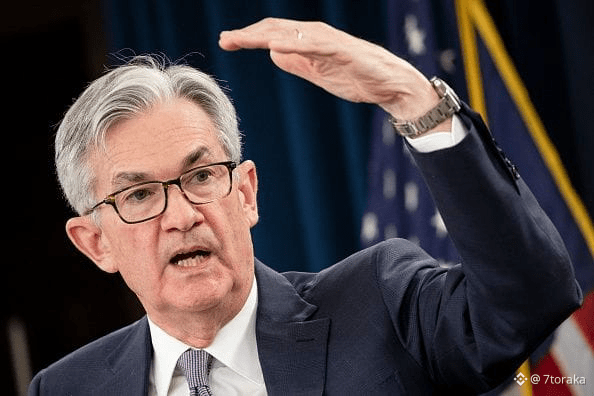
👀🤔👉Leading Candidates To Be The Next Fed Chair
Kevin Warsh and Kevin Hassett remain the leading candidates for the next Federal Reserve chair under President Trump. Other notable contenders include Scott Bessent, Chris Waller, and Rick Rieder, based on recent surveys and reports.
Kevin Warsh, a former Fed governor, tops many lists due to his experience during the financial crisis and hawkish views aligning with Trump's preferences. Kevin Hassett, Trump's National Economic Council director, is a close second, valued for his daily consultations with the president and economic advisory role.
Scott Bessent, Treasury Secretary, ties closely in some polls at around 24% support.
Chris Waller, current Fed governor, gains traction for dovish stances on rates and optimism about Trump's policies.
Rick Rieder from BlackRock impressed in interviews but lacks prior Fed experience.
Jerome Powell's term ends in May 2026, prompting this race amid Trump's push for rate cuts and Fed alignment. Prediction markets and experts see no clear winner yet, with Senate confirmation as a key hurdle.
#FedDovishNow
8
·
--
උසබ තත්ත්වය
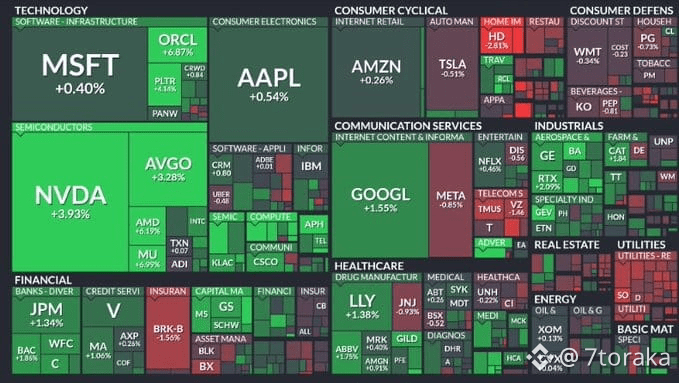
👀👀👉S&P 500 $SPX Friday Heat Map
On Friday, the S&P 500 closed higher amid a tech-led rally. The index ended the trading day at 6,834.50.
#S&P500
👀👀👉S&P 500 $SPX Friday Heat Map
On Friday, the S&P 500 closed higher amid a tech-led rally. The index ended the trading day at 6,834.50.
#S&P500
On Friday, the S&P 500 closed higher amid a tech-led rally. The index ended the trading day at 6,834.50.
#S&P500
2
1k
·
--
උසබ තත්ත්වය
👀👀👉Unexpected Disinflation in November Despite Shutdown Data Gaps
The November 2025 US CPI data signals cooling inflation across both headline and core measures, suggesting reduced price pressures in the economy. This deceleration, with headline CPI at 2.7% year-over-year (below expectations of 3.1%) and core at 2.6%, indicates disinflationary trends in goods and services, including shelter costs.
Lower inflation eases burdens on consumers and businesses, potentially supporting sustained spending despite a recent government shutdown distorting data collection. Energy prices rose but food cooled, pointing to mixed sector dynamics amid robust prior GDP growth.
The Federal Reserve may accelerate rate cuts if this trend persists, as evidenced by falling Treasury yields post-release, boosting odds of looser monetary policy. Overall, it reflects economic resilience rather than distress, though one month's data warrants caution amid holiday-season discounts.
#CPIWatch
1
1
1
606
·
--
උසබ තත්ත්වය
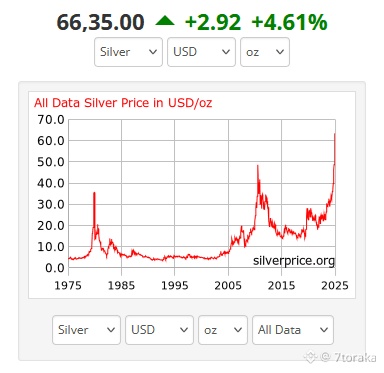
👀👀👉Silver Price Hits Historic $67 Peak
Silver prices surged to a record high near $67 per ounce, driven by strong industrial demand and supply constraints. While some reports confirm it touched $67.045 before retreating slightly, the current spot price stands at $66.35 per ounce.
#Silver
👀👀👉Silver Price Hits Historic $67 Peak
Silver prices surged to a record high near $67 per ounce, driven by strong industrial demand and supply constraints. While some reports confirm it touched $67.045 before retreating slightly, the current spot price stands at $66.35 per ounce.
#Silver
Silver prices surged to a record high near $67 per ounce, driven by strong industrial demand and supply constraints. While some reports confirm it touched $67.045 before retreating slightly, the current spot price stands at $66.35 per ounce.
#Silver
1
357
·
--
උසබ තත්ත්වය
👀👀👉Tomorrow's CPI: Two-Month Update After Shutdown, Eyes on Sticky 3% Inflation
The November CPI release is expected to show headline inflation at about 3.1% and core around 3.0–3.1%, both still above the Fed’s 2% target. Because the October report was canceled due to the shutdown, this release effectively covers two months and could have an unusually large impact on Fed policy expectations and markets.
#CPIWatch
2
597
·
--
උසබ තත්ත්වය
👀👀👉US Economic Indicators for November 2025 Released Today
The latest US employment and retail sales data, corresponding to November 2025 and released today, show mixed labor market signals amid steady consumer spending trends.
Labor Market Key Metrics
👉Non-Farm Employment Change increased by 64,000 jobs, below recent averages.
👉Unemployment Rate rose to 4.6%.
👉Average Hourly Earnings m/m grew by 0.3%, with year-over-year at 3.5%.
#USNonFarmPayrollReport
4
514
·
--
උසබ තත්ත්වය
👀👀👉Federal Reserve's $5.2 Billion Overnight Repo Operation: Liquidity Support
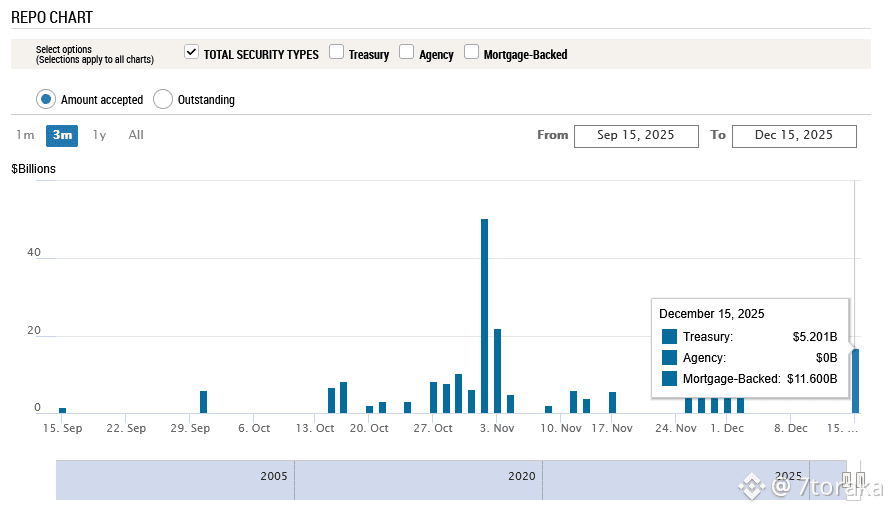
The Federal Reserve conducted overnight repurchase agreements totaling $5.201 billion on December 15, 2025.
It alleviates short-term funding strains for banks and dealers,
maintaining the federal funds rate within the 3.5-3.75% target range. Full-allotment standing repos, effective since December 11, mitigate rate volatility akin to 2019 disruptions, supporting Treasury and money market equilibrium.
These actions enhance liquidity flow to risk assets, potentially elevating equities and cryptocurrencies through re-hypothecation, as observed with prior $13.5 billion injections. Yet, as a minor daily volume in the $12.6 trillion repo market, it sustains accommodative policy absent significant price swings.
Amid the FOMC's rate cut and quantitative tightening cessation, it
reinforces easing measures, with stable rate projections aiding 2026 expansion while tracking inflation. Short-term Treasury yields remain subdued, bolstering equity performance.
#Fed
159
·
--
උසබ තත්ත්වය
👀👀👉Polymarket: Warsh Surges Past Hassett in Fed Chair
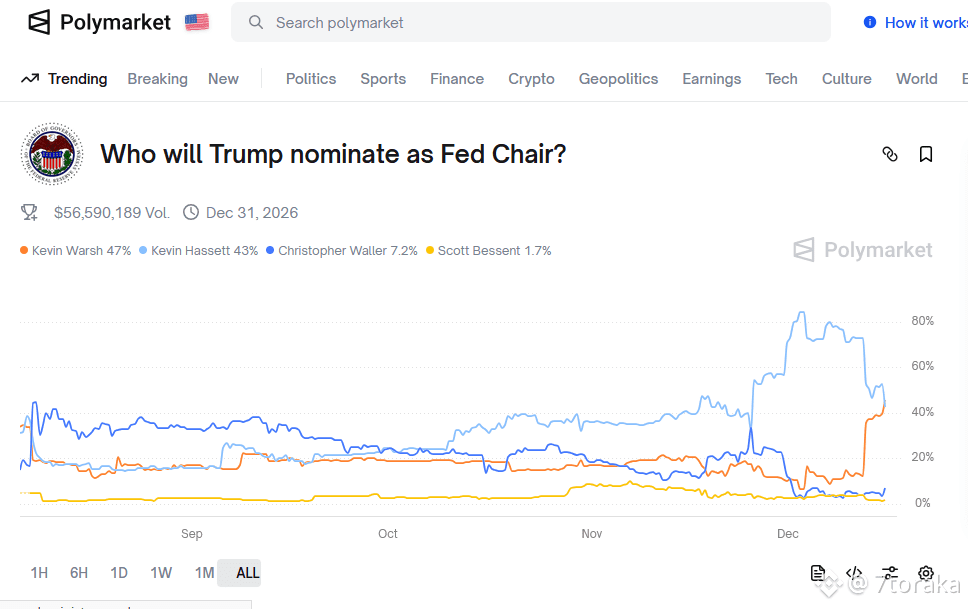
Kevin Warsh has gained significant momentum in the race to replace Federal Reserve Chair Jerome Powell, recently overtaking Kevin Hassett in prediction markets. This shift reflects evolving sentiment among traders and advisors close to President Donald Trump.
Warsh now leads on platforms like Polymarket (46%) and Kalshi (47-52%), while Hassett trails at 41-44%. These figures mark a reversal from early December, when Hassett held odds above 80%.
Trump's recent comments to the Wall Street Journal placed Warsh at the top of his shortlist, following a strong White House interview. Resistance to Hassett stems from concerns over his close ties to Trump potentially undermining Fed independence.
Who's your favorite?
#Fed
1
379
·
--
උසබ තත්ත්වය
🚨🚨Key Events to Watch This Week🚨🚨
👉Tuesday – U.S. Jobs Data
👉Thursday – U.S. CPI Inflation Data
👉Initial Jobless Claims
👉Friday – Existing Home Sales
👉 Consumer Sentiment
#news
🚨🚨Key Events to Watch This Week🚨🚨
👉Tuesday – U.S. Jobs Data
👉Thursday – U.S. CPI Inflation Data
👉Initial Jobless Claims
👉Friday – Existing Home Sales
👉 Consumer Sentiment
#news
👉Tuesday – U.S. Jobs Data
👉Thursday – U.S. CPI Inflation Data
👉Initial Jobless Claims
👉Friday – Existing Home Sales
👉 Consumer Sentiment
#news

2
876
·
--
උසබ තත්ත්වය
👀👀👉Crypto Trust Banks: A New Wave of Competition for Traditional Finance
The [Office of the Comptroller of the Currency](https://www.binance.com/en/square/post/33627881292346) (OCC) has granted conditional national trust bank charters to five digital-asset firms: Ripple, Fidelity Digital Assets, Paxos, BitGo, and First National Digital Currency Bank. These charters enable the firms to provide crypto-focused services, such as custody and settlement, under a federal framework without the requirements of traditional insured depository banks.
The American Bankers Association (ABA) argues that these charters blur the definition of a "bank," undermine charter integrity, and allow regulatory arbitrage, as crypto firms gain national preemption without matching capital, liquidity, or supervisory standards. The Independent Community Bankers of America (ICBA) contends that the OCC exceeds the traditional scope of national trust charters, which focused on fiduciary roles, creating a two-tier system that burdens community banks with stricter regulations.
These complaints stem from valid questions about statutory authority and historical precedents, including exemptions from FDIC insurance, Community Reinvestment Act obligations, and certain capital rules. Yet they also reflect competitive pressures, as crypto firms like Ripple and Paxos can now operate as "national trust banks," bypassing state regulations while traditional banks face higher compliance costs.
This development integrates crypto into the federal banking system through hybrid entities, potentially normalizing digital-asset custody. Traditional banks may need to adapt, though outcomes depend on final charter conditions and access to Federal Reserve services.
#USCryptoRegulation
👀👀👉Crypto Trust Banks: A New Wave of Competition for Traditional Finance
The Office of the Comptroller of the Currency (OCC) has granted conditional national trust bank charters to five digital-asset firms: Ripple, Fidelity Digital Assets, Paxos, BitGo, and First National Digital Currency Bank. These charters enable the firms to provide crypto-focused services, such as custody and settlement, under a federal framework without the requirements of traditional insured depository banks.
The American Bankers Association (ABA) argues that these charters blur the definition of a "bank," undermine charter integrity, and allow regulatory arbitrage, as crypto firms gain national preemption without matching capital, liquidity, or supervisory standards. The Independent Community Bankers of America (ICBA) contends that the OCC exceeds the traditional scope of national trust charters, which focused on fiduciary roles, creating a two-tier system that burdens community banks with stricter regulations.
These complaints stem from valid questions about statutory authority and historical precedents, including exemptions from FDIC insurance, Community Reinvestment Act obligations, and certain capital rules. Yet they also reflect competitive pressures, as crypto firms like Ripple and Paxos can now operate as "national trust banks," bypassing state regulations while traditional banks face higher compliance costs.
This development integrates crypto into the federal banking system through hybrid entities, potentially normalizing digital-asset custody. Traditional banks may need to adapt, though outcomes depend on final charter conditions and access to Federal Reserve services.
#USCryptoRegulation
2
459
·
--
උසබ තත්ත්වය
👀👀👉US Crypto Bill Talks Stall Despite December Hopes
US crypto Market Structure Bill negotiations are dragging on. Industry groups, the White House, Republicans, and Democrats keep talking, even with draft language out there. High hopes for December action have faded—no markup before the holiday break, so it's delayed to January 2026.
The House pushed the Senate hard to pass the CLARITY Act by month's end, after its own approval back in July. Senate Banking Chair Tim Scott aimed for markups this December, and Coinbase CEO Brian Armstrong lobbied fiercely for regulatory clarity on CFTC roles and DeFi.
Key disputes include ethics rules tied to Trump connections, stablecoin yields, SEC powers over tokens, and DeFi safeguards. GOP compromise offers to Democrats on December 9 built some optimism, but the tight calendar forced a postponement. Bipartisan drive remains solid for early next year.
#USGovernment

177
·
--
උසබ තත්ත්වය
👀👀👉OCC Approves Trust Charters for Ripple, Circle, BitGo, Fidelity, Paxos
The Office of the Comptroller of the Currency (OCC), the top U.S. federal banking regulator, has granted conditional approval for national trust bank charters to Ripple, Circle, BitGo, Fidelity Digital Assets, and Paxos today, marking a major step toward mainstream banking integration for major crypto firms.
What the OCC approved:
The OCC conditionally approved:
👉Two new (de novo) national trust bank charters:
👉Ripple National Trust Bank (for Ripple).
👉First National Digital Currency Bank (for Circle, to oversee the USDC reserve and provide fiduciary digital asset custody).
Conversions of existing state trust companies into national trust banks:
👉BitGo Bank & Trust (BitGo’s South Dakota trust company).
👉Fidelity Digital Assets (Fidelity’s digital assets trust business).
👉Paxos Trust Company (Paxos’s existing state trust charter).
#USCrypto $XRP

1
158
·
--
උසබ තත්ත්වය
👀👀👉Federal Reserve Extends Terms for 11 Regional Presidents
The Federal Reserve’s Board of Governors voted unanimously to reappoint the existing regional Reserve Bank presidents to new five‑year terms that begin on March 1, 2026. By law, these presidents serve five‑year terms that all expire at the end of February in years ending in 1 or 6, so the board periodically votes to extend or replace them.
Atlanta Fed President Raphael Bostic had already announced that he will retire at the end of his current term in February, so he is not being reappointed to a new term. Because of that planned retirement, the reappointment action effectively covers 11 sitting Reserve Bank presidents rather than all 12, with a search under way for Bostic’s successor in Atlanta.
#Fed

2
865
·
--
උසබ තත්ත්වය
👀👀👉Oracle Down 7%, Software Slump Overshadows Cloud Wins
Oracle is dropping after hours because its latest earnings report disappointed investors on revenue and raised concerns about the sustainability and quality of its growth.
Oracle reported its latest fiscal quarter after the close, posting adjusted earnings per share that were above Wall Street estimates but revenue that came in below consensus expectations. The stock is trading down around 6–7% in the after‑hours session as investors react more to the revenue shortfall than to the earnings beat.
Analysts had expected higher top‑line growth from Oracle’s cloud and software businesses, but total revenue of about 16.06 billion dollars missed the roughly 16.19 billion dollars the street was looking for. The miss is being interpreted as a sign that demand for some of Oracle’s software and cloud offerings may be softer than hoped, especially given elevated expectations around AI‑driven growth.
Oracle did highlight very strong remaining performance obligations (its backlog of contracted but not yet recognized revenue), which it said surged by more than 400%, helped by large cloud deals with customers such as Meta and Nvidia. However, traders are currently prioritizing the near‑term revenue miss and questions about how quickly that backlog will convert into reported sales, which is contributing to the sharp after‑hours sell‑off despite the strong long‑term contract pipeline.
#earnings
1
1
659
·
--
උසබ තත්ත්වය
🚨🚨Fed’s 0.25% Cut Reflects Tightrope Between Hawks and Doves 🚨🚨
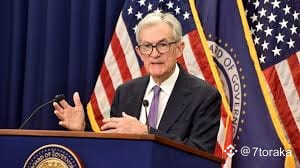
The Federal Reserve cut its key interest rate by 0.25 percentage points, bringing the target range to 3.5%–3.75%. This move, widely anticipated as a "hawkish cut," exposed notable divisions within the Federal Open Market Committee (FOMC).
This split underscores an ongoing debate between the Fed’s "hawks," focused on taming inflation, and "doves," who prioritize supporting economic growth and the labor market.
This latest cut marks the third in a row, but signals from the Fed suggest limited scope for more reductions soon. The "dot plot," illustrating officials’ rate projections, anticipates just one more cut in 2026 and another in 2027, eventually settling near 3%. Meanwhile, the Fed raised its GDP growth forecast for 2026 to 2.3%, even as inflation, currently at 2.8%, is expected to stay above the 2% target until 2028.
In a strategic shift, the Fed will resume purchasing $40 billion in Treasury bills monthly starting this Friday to ease pressures in overnight funding markets, marking a key tactical move after pausing its balance sheet runoff.
#Fed
9
·
--
උසබ තත්ත්වය
👀👀👉US Employment Cost Index: Stable 3.5% Growth Amid Cooling Labor Market
The September 2025 Employment Cost Index (ECI) data indicates stable wage and compensation growth in the US economy, signaling a cooling labor market without sharp inflationary pressures from labor costs.
Over the 12-month period, civilian worker compensation rose 3.5%, matching wages, salaries, and benefits, while private industry saw slightly higher wage growth at 3.6% and inflation-adjusted real wages up 0.6%, suggesting workers are gaining modest purchasing power amid moderating inflation. State and local government costs increased 3.6%, with benefits up 3.8%, reflecting steady public sector pressures. The 0.8% quarterly rise (seasonally adjusted) points to sustained but not accelerating cost trends.
These figures align with a resilient yet moderating US economy, where productivity gains (from AI and other efficiencies) offset slower employment growth, preventing overheating. Lower survey response rates due to the federal shutdown introduce some data uncertainty, but the balanced growth—neither surging nor stalling—supports forecasts of around 2% real GDP expansion into 2026 without imminent recession risks. This stability aids the Federal Reserve in balancing rate cuts against lingering inflation around 2.75-3%.
#USJobsData
2
518
·
--
උසබ තත්ත්වය
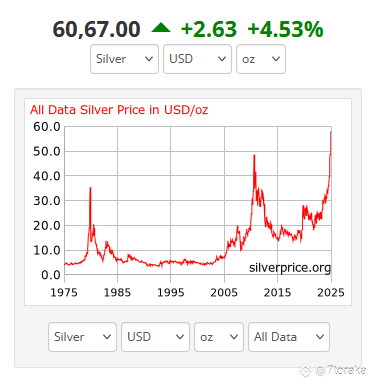
👀👀👉Silver spot prices have surpassed $61 per ounce for the first time in history.
Silver futures reached $61.16 per ounce, with an intraday high of $61.295 and reports of spot prices hitting around $60.74 to $61 per troy ounce during late U.S. trading. This marks a daily gain of over 4.7%, or about $2.755 from the previous close of $58.405. The year's low was $28.31, confirming a more than doubling in value throughout 2025.
#Silver
4
740
තවත් අන්තර්ගතයන් ගවේෂණය කිරීමට ඇතුල් වන්න
Binance චතුරශ්රය හි ගෝලීය ක්රිප්ටෝ පරිශීලකයින් හා එක්වන්න
⚡️ ක්රිප්ටෝ පිළිබඳ නවතම සහ ප්රයෝජනවත් තොරතුරු ලබා ගන්න.
💬 ලොව විශාලතම ක්රිප්ටෝ හුවමාරුව මගින් විශ්වාස කෙරේ.
👍 සත්යායනය කරන ලද නිර්මාණකරුවන්ගෙන් සැබෑ විදසුන් සොයා ගන්න.
විද්යුත් තැපෑල / දුරකථන අංකය
නැගී එන මාතෘකා
BitcoinAndStocksSlipAgainAmidTrump’sTariffPlans
65,122 නැරඹීම්
829 සාකච්ඡා කරමින්
U.S. Plans New Tariffs on China, EU and Others; Bitcoin Slips Below $60,000 and Nasdaq Falls 1.5%
Binance News
·13 කැමත්ත දැක්වීම්
·12.9k නැරඹීම්
WillOctCorePCEShiftFedHikeExpectations?
366,415 නැරඹීම්
2,408 සාකච්ඡා කරමින්
JensenHuangSaysNvidiaDoesn’tNeedASuccessionPlan
38,597 නැරඹීම්
489 සාකච්ඡා කරමින්