
#nodeoperators
nodeoperators
869 නැරඹීම්
9 සාකච්ඡා කරමින්
උණුසුම්
නවතම

🚨 CORE LIGHTNING CONFIRMS CRITICAL VULNERABILITIES IN $BTC LAYER-2 INFRASTRUCTURE! 🚨
Core Lightning developers just confirmed multiple active vulnerabilities inside Bitcoin’s foundational layer-2 protocol following a surge of AI-assisted security reports. 🛡️ Emergency patches are dropping within days, with technical details locked down for two weeks to give node operators a window to fortify their setup.
With payment routing expanding fast across self-custodial apps, immediate operator upgrades are vital to secure active liquidity channels. ⚡ Infrastructure defense is the quiet engine of market conviction, and how quickly operators patch will test the network's operational speed. 🔍
💬 Are node operators moving fast enough to secure routing, or will this slow short-term lightning throughput? 👇
⚠️ Not financial advice. Always manage your risk. 🛡️
🏷️ #BTC #LightningNetwork #CryptoSecurity #NodeOperators
🎯 ⚡
24
·
--
#bitcoincore32.1raisespeerconnectionlimit
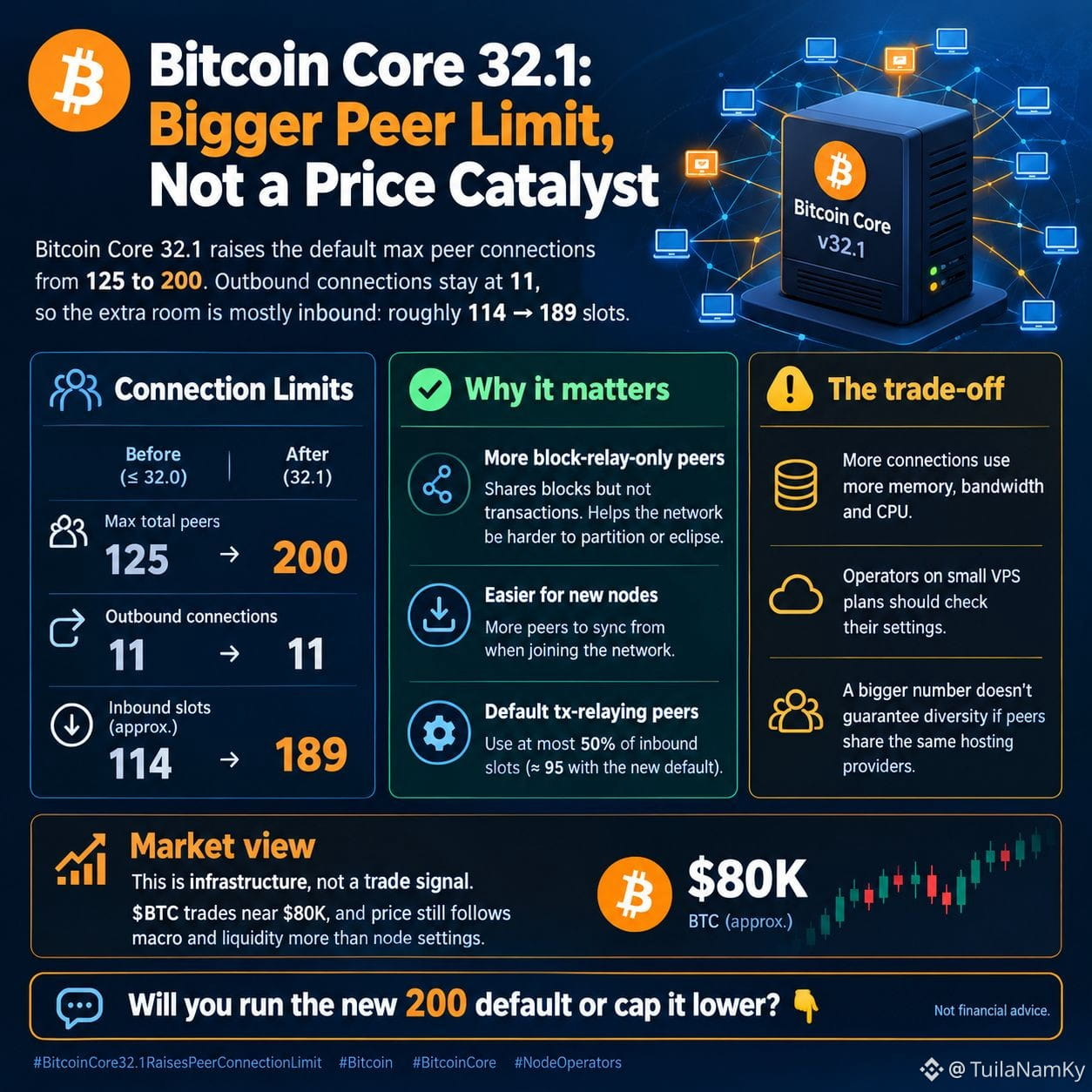
Bitcoin Core 32.1: Bigger Peer Limit, Not a Price Catalyst
Bitcoin Core 32.1 raises the default max peer connections from 125 to 200. Outbound connections stay at 11, so the extra room is mostly inbound: roughly 114 → 189 slots.
Why it matters
The change makes room for more block-relay-only peers, which share blocks but not transactions. That can make the network harder to partition or eclipse and gives new nodes more peers to sync from. By default, tx-relaying peers use at most 50% of inbound slots.
The trade-off
More connections use more memory, bandwidth and CPU, so operators on small VPS plans should check their settings. A bigger number also doesn't guarantee diversity if peers share the same hosting providers.
Market view
This is infrastructure, not a trade signal. $BTC trades near $80K, and price still follows macro and liquidity more than node settings.
Will you run the new 200 default or cap it lower? 👇
Not financial advice.
#Bitcoin #BitcoinCore #NodeOperators
$BTC
{future}(BTCUSDT)
#bitcoincore32.1raisespeerconnectionlimit
Bitcoin Core 32.1: Bigger Peer Limit, Not a Price Catalyst
Bitcoin Core 32.1 raises the default max peer connections from 125 to 200. Outbound connections stay at 11, so the extra room is mostly inbound: roughly 114 → 189 slots.
Why it matters
The change makes room for more block-relay-only peers, which share blocks but not transactions. That can make the network harder to partition or eclipse and gives new nodes more peers to sync from. By default, tx-relaying peers use at most 50% of inbound slots.
The trade-off
More connections use more memory, bandwidth and CPU, so operators on small VPS plans should check their settings. A bigger number also doesn't guarantee diversity if peers share the same hosting providers.
Market view
This is infrastructure, not a trade signal. $BTC trades near $80K, and price still follows macro and liquidity more than node settings.
Will you run the new 200 default or cap it lower? 👇
Not financial advice.
#Bitcoin #BitcoinCore #NodeOperators
$BTC
306

·
--
#BitcoinCore32.1RaisesPeerConnectionLimit
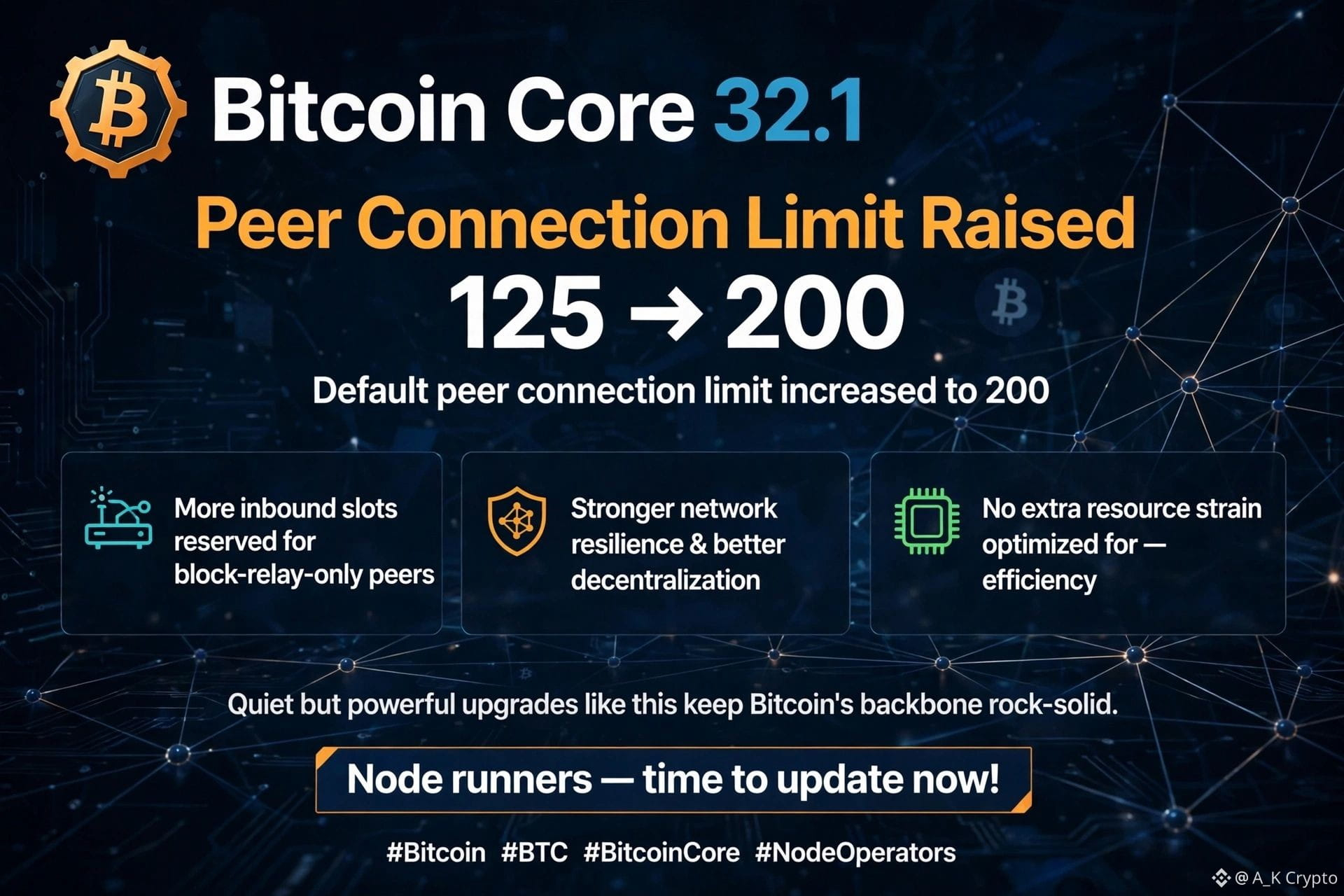
🚀 $BTC Core 32.1 just raised the default peer connection limit from 125 to 200!
More inbound slots reserved for block-relay-only peers — stronger network resilience and better decentralization without extra resource strain.
Quiet but powerful upgrades like this keep $BTC ’s backbone rock-solid. Node runners, time to update!
$BTC
#Bitcoin #BTC #BitcoinCore #NodeOperators
{spot}(BTCUSDT)
#BitcoinCore32.1RaisesPeerConnectionLimit
🚀 $BTC Core 32.1 just raised the default peer connection limit from 125 to 200!
More inbound slots reserved for block-relay-only peers — stronger network resilience and better decentralization without extra resource strain.
Quiet but powerful upgrades like this keep $BTC ’s backbone rock-solid. Node runners, time to update!
$BTC
#Bitcoin #BTC #BitcoinCore #NodeOperators
128

සත්යායනය කළ
#bitcoincore32.1raisespeerconnectionlimit
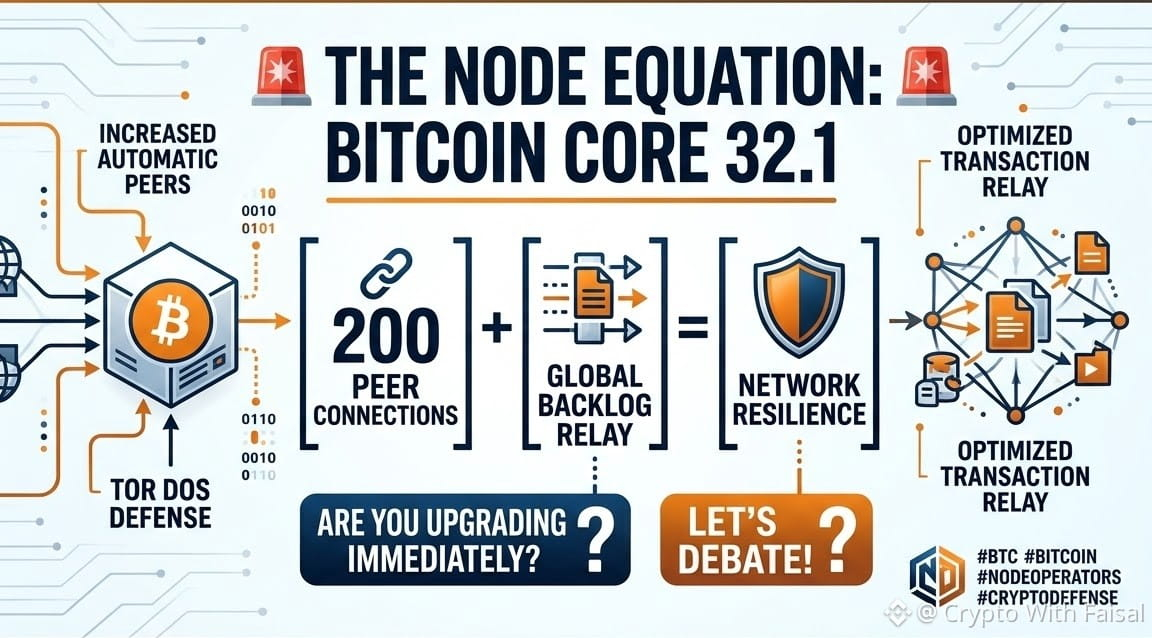
🚨 THE NODE EQUATION: BITCOIN CORE 32.1 🚨
A critical upgrade just dropped for Bitcoin full nodes, and it’s a massive win for network health! Let’s break down the new release using pure math 🧮👇
(200 Peer Connections) + (Global Backlog Relay) = Network Resilience 🛡️
Here is the exact formula driving the Bitcoin network update today:
The Upgrade Breakdown:
(The Input) = Bitcoin Core has released version 32.1.
The Expansion: It increases the default maximum number of automatic peer connections from 125 to 200 .
The Defense: It adds proof-of-work defenses for Tor hidden services to fight DoS attacks.
The Efficiency: It utilizes a "global-backlog" approach to transaction relay rate limiting, optimizing memory and CPU use.
The Breakdown:
Fewer peers means slower block and transaction propagation. By boosting connections and securing Tor nodes, Bitcoin Core 32.1 significantly hardens the network against censorship and DoS attempts while lowering resource requirements for node operators.
If you are a node operator, are you upgrading immediately, or waiting to test? Let's debate! 👇💬
$BTC
{future}(BTCUSDT)
$ETH
{future}(ETHUSDT)
$BNB
{future}(BNBUSDT)
#Bitcoin #CryptoSecurity #NodeOperators #BinanceSquare
#bitcoincore32.1raisespeerconnectionlimit
🚨 THE NODE EQUATION: BITCOIN CORE 32.1 🚨
A critical upgrade just dropped for Bitcoin full nodes, and it’s a massive win for network health! Let’s break down the new release using pure math 🧮👇
(200 Peer Connections) + (Global Backlog Relay) = Network Resilience 🛡️
Here is the exact formula driving the Bitcoin network update today:
The Upgrade Breakdown:
(The Input) = Bitcoin Core has released version 32.1.
The Expansion: It increases the default maximum number of automatic peer connections from 125 to 200 .
The Defense: It adds proof-of-work defenses for Tor hidden services to fight DoS attacks.
The Efficiency: It utilizes a "global-backlog" approach to transaction relay rate limiting, optimizing memory and CPU use.
The Breakdown:
Fewer peers means slower block and transaction propagation. By boosting connections and securing Tor nodes, Bitcoin Core 32.1 significantly hardens the network against censorship and DoS attempts while lowering resource requirements for node operators.
If you are a node operator, are you upgrading immediately, or waiting to test? Let's debate! 👇💬
$BTC
$ETH
$BNB
#Bitcoin #CryptoSecurity #NodeOperators #BinanceSquare
2
2
907

$OPG NODE ECONOMICS ARE THE REAL TEST FOR MAINNET STABILITY 🔍
I have been digging into the node operator math for $OPG and the numbers tell a deeper story than just technical specs. Running an inference node involves fixed costs like electricity and hardware depreciation, while revenue remains tied to network demand and token price volatility.
The real signal to watch once mainnet goes live is the node churn rate during price swings. If the network cannot retain operators who are committed to quality rather than just short-term speculation, the infrastructure could face reliability issues.
Have you calculated the true cost of running an inference node yourself?
Not financial advice. Always manage your risk.
#OPG #CryptoAnalysis #DePIN #NodeOperators #Web3
⚡
2
27

·
--
උසබ තත්ත්වය
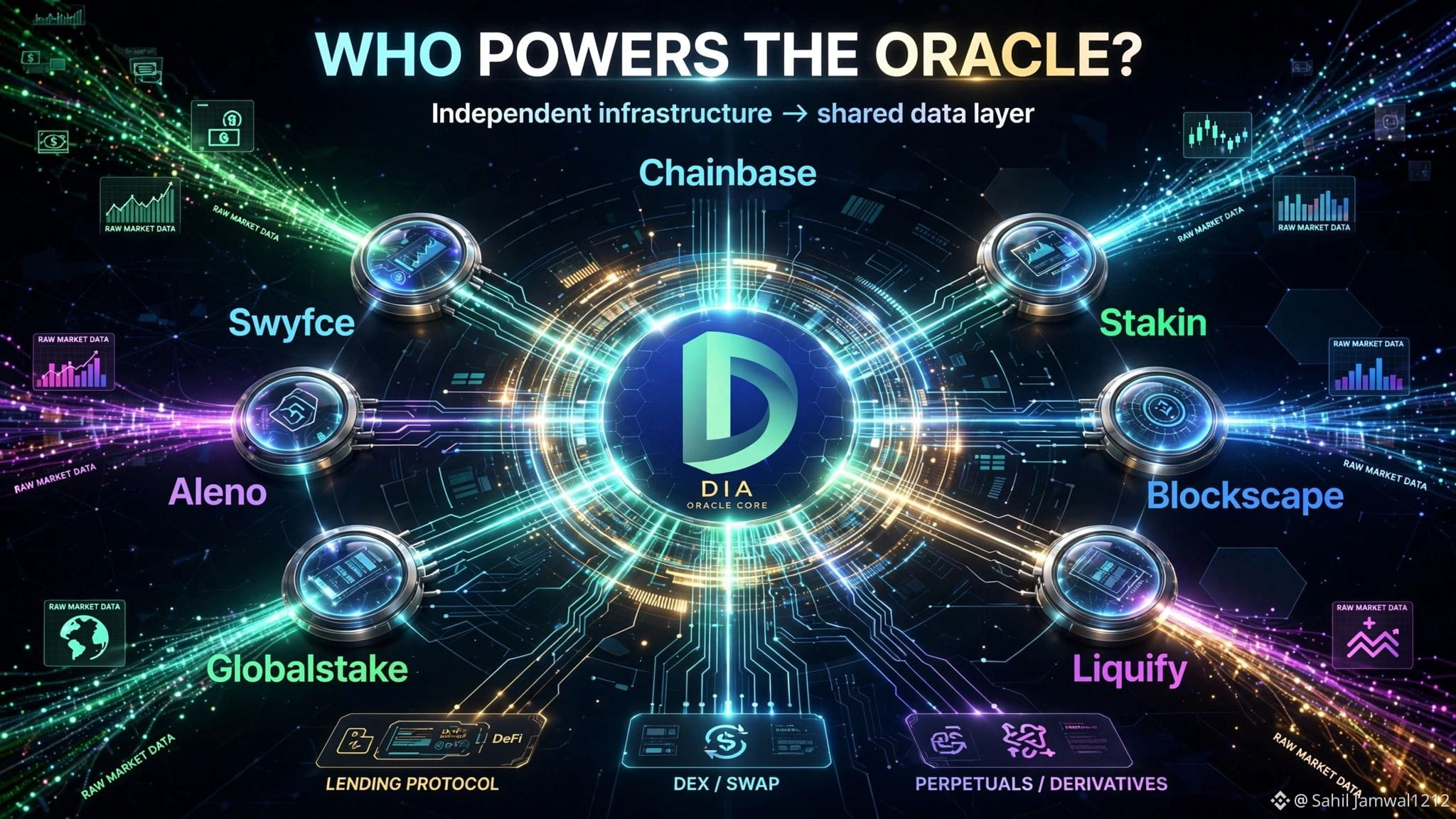
Quick question: who actually runs the infrastructure behind DIA's oracle data?
I started looking into DIA's feeder network and found something interesting.
The network includes independent infrastructure providers such as:
Chainbase • Stakin • Blockscape • Liquify • Stakecraft • Globalstake • Aleno • Swyfce
These aren't DIA employees.
They're independent operators participating in the feeder infrastructure.
And that's important because an oracle isn't secure simply because its final price looks correct.
You also need to ask:
Who collected the data?
How many independent operators are involved?
How is their data aggregated?
Can one operator become a single point of failure?
DIA's approach uses multiple feeders that collect and process data before submissions move through its onchain aggregation infrastructure.
The network is permissionless, while staking provides an economic-security layer. DIA's planned future slashing mechanism is another part of that security roadmap.
So I think the better way to evaluate an oracle is to look beyond the final feed.
Look at the infrastructure underneath it.
Who runs it?
Where does the data come from?
How is it verified?
How is it aggregated?
That's where decentralization actually becomes measurable. $DIA
{spot}(DIAUSDT)
#Dia #defi #Oracles #NodeOperators #Web3
Quick question: who actually runs the infrastructure behind DIA's oracle data?
I started looking into DIA's feeder network and found something interesting.
The network includes independent infrastructure providers such as:
Chainbase • Stakin • Blockscape • Liquify • Stakecraft • Globalstake • Aleno • Swyfce
These aren't DIA employees.
They're independent operators participating in the feeder infrastructure.
And that's important because an oracle isn't secure simply because its final price looks correct.
You also need to ask:
Who collected the data?
How many independent operators are involved?
How is their data aggregated?
Can one operator become a single point of failure?
DIA's approach uses multiple feeders that collect and process data before submissions move through its onchain aggregation infrastructure.
The network is permissionless, while staking provides an economic-security layer. DIA's planned future slashing mechanism is another part of that security roadmap.
So I think the better way to evaluate an oracle is to look beyond the final feed.
Look at the infrastructure underneath it.
Who runs it?
Where does the data come from?
How is it verified?
How is it aggregated?
That's where decentralization actually becomes measurable. $DIA
#Dia #defi #Oracles #NodeOperators #Web3
128
තවත් අන්තර්ගතයන් ගවේෂණය කිරීමට ඇතුල් වන්න
Binance චතුරශ්රය හි ගෝලීය ක්රිප්ටෝ පරිශීලකයින් හා එක්වන්න
⚡️ ක්රිප්ටෝ පිළිබඳ නවතම සහ ප්රයෝජනවත් තොරතුරු ලබා ගන්න.
💬 ලොව විශාලතම ක්රිප්ටෝ හුවමාරුව මගින් විශ්වාස කෙරේ.
👍 සත්යායනය කරන ලද නිර්මාණකරුවන්ගෙන් සැබෑ විදසුන් සොයා ගන්න.
විද්යුත් තැපෑල / දුරකථන අංකය
නැගී එන මාතෘකා
1
#HuangExitNvidiaStrategyInFocus
99,683 නැරඹීම්
1,095 සාකච්ඡා කරමින්
2
#AnthropicRejectsIPODelayValuationinQuestion
705,749 නැරඹීම්
5,333 සාකච්ඡා කරමින්
3
#HedgeFundsCMEBitcoinNetShortsFall89%
0 නැරඹීම්
8 සාකච්ඡා කරමින්
4
#BitMineReports$6.3BNetLossForFiscal2026
12,751 නැරඹීම්
132 සාකච්ඡා කරමින්
5
#AnthropicIPOAboutSixTimesOversubscribed
0 නැරඹීම්
6 සාකච්ඡා කරමින්
6
#SoFiExpandsSoFiUSDStablecoinToPolygon
877 නැරඹීම්
36 සාකච්ඡා කරමින්
7
#TetherGoldXAUTCompletesKPMGAudit
655 නැරඹීම්
27 සාකච්ඡා කරමින්
8
#ChipStocksExtendLossesAfterNvidiaCEOChange
40,063 නැරඹීම්
485 සාකච්ඡා කරමින්
9
#TrezorConfirmsMaliciousImplantsIn3Safe5Devices
40 නැරඹීම්
16 සාකච්ඡා කරමින්
10
#TradFiForBeginners
536,678 නැරඹීම්
3,742 සාකච්ඡා කරමින්