

#op
op
3.9M නැරඹීම්
13,256 සාකච්ඡා කරමින්
උණුසුම්
නවතම

·
--
සත්යායනය කළ
Alpha leak incoming! $OP just bounced off these lows, showing some serious resilience despite the recent governance drama and Base's dip. I'm seeing big enterprise plays like Sony rolling in with OP Stack. Quantum security roadmap is pure long-term fire! 🔥 But watch those token unlocks and the buyback slowdown from April. Are you bidding this dip or still sleeping on the Superchain? #OP #Crypto 🚀💎
Alpha leak incoming! $OP just bounced off these lows, showing some serious resilience despite the recent governance drama and Base's dip. I'm seeing big enterprise plays like Sony rolling in with OP Stack. Quantum security roadmap is pure long-term fire! 🔥 But watch those token unlocks and the buyback slowdown from April. Are you bidding this dip or still sleeping on the Superchain? #OP #Crypto 🚀💎
211


$OP: How Thin Books Hide Risk
Relative volume at 2.05699 signals stronger participation, yet price sits at 0.1047. This gap invites scrutiny of liquidity depth. Consider a crowded hallway. Walking through it feels easy until you try to turn around quickly. The fewer people, the harder the turn. In crypto, order books act like that hallway. A thin book makes sharp moves possible with small effort. Large market orders sweep away resting limit orders faster than expected. This creates exaggerated price jumps even without major news. Market orders consume liquidity, while limit orders provide it. When 2.05699 rises, market orders often dominate. If limit orders are sparse near current levels, the price stretches. Think of pushing a shopping cart on ice. Light pressure sends it sliding far. Thin liquidity is that ice. Traders assume steady movement means stable demand. Often it just means fewer orders to block the path. The 8.28528e+06 figure shows total traded value, not how easily you can exit. A high number might reflect large trades against thin books. This can inflate volatility without changing underlying project value. To reassess, look beyond the headline volume. Check if price respects 0.102 or 0.1051 under pressure. If the book thins near these levels, watch for slippage. A smooth move might be an illusion caused by empty shelves. Verify where the next batch of limit orders sits. If they are far away, the path is clear but risky. This mechanism explains why volume alone is an incomplete picture. It highlights the difference between activity and stability. Understanding this helps avoid jumping into moves that look effortless but lack structural support. The key is asking how the move happened, not just that it happened. Depth matters more than speed.
Probabilistic market research, not a recommendation or guaranteed return.
What would you check before trusting a smooth-looking price move?
#OP #CryptoEducation #CryptoLearning
$OP : How Thin Books Hide Risk
Relative volume at 2.05699 signals stronger participation, yet price sits at 0.1047. This gap invites scrutiny of liquidity depth. Consider a crowded hallway. Walking through it feels easy until you try to turn around quickly. The fewer people, the harder the turn. In crypto, order books act like that hallway. A thin book makes sharp moves possible with small effort. Large market orders sweep away resting limit orders faster than expected. This creates exaggerated price jumps even without major news. Market orders consume liquidity, while limit orders provide it. When 2.05699 rises, market orders often dominate. If limit orders are sparse near current levels, the price stretches. Think of pushing a shopping cart on ice. Light pressure sends it sliding far. Thin liquidity is that ice. Traders assume steady movement means stable demand. Often it just means fewer orders to block the path. The 8.28528e+06 figure shows total traded value, not how easily you can exit. A high number might reflect large trades against thin books. This can inflate volatility without changing underlying project value. To reassess, look beyond the headline volume. Check if price respects 0.102 or 0.1051 under pressure. If the book thins near these levels, watch for slippage. A smooth move might be an illusion caused by empty shelves. Verify where the next batch of limit orders sits. If they are far away, the path is clear but risky. This mechanism explains why volume alone is an incomplete picture. It highlights the difference between activity and stability. Understanding this helps avoid jumping into moves that look effortless but lack structural support. The key is asking how the move happened, not just that it happened. Depth matters more than speed.
Probabilistic market research, not a recommendation or guaranteed return.
What would you check before trusting a smooth-looking price move?
#OP #CryptoEducation #CryptoLearning
153


·
--
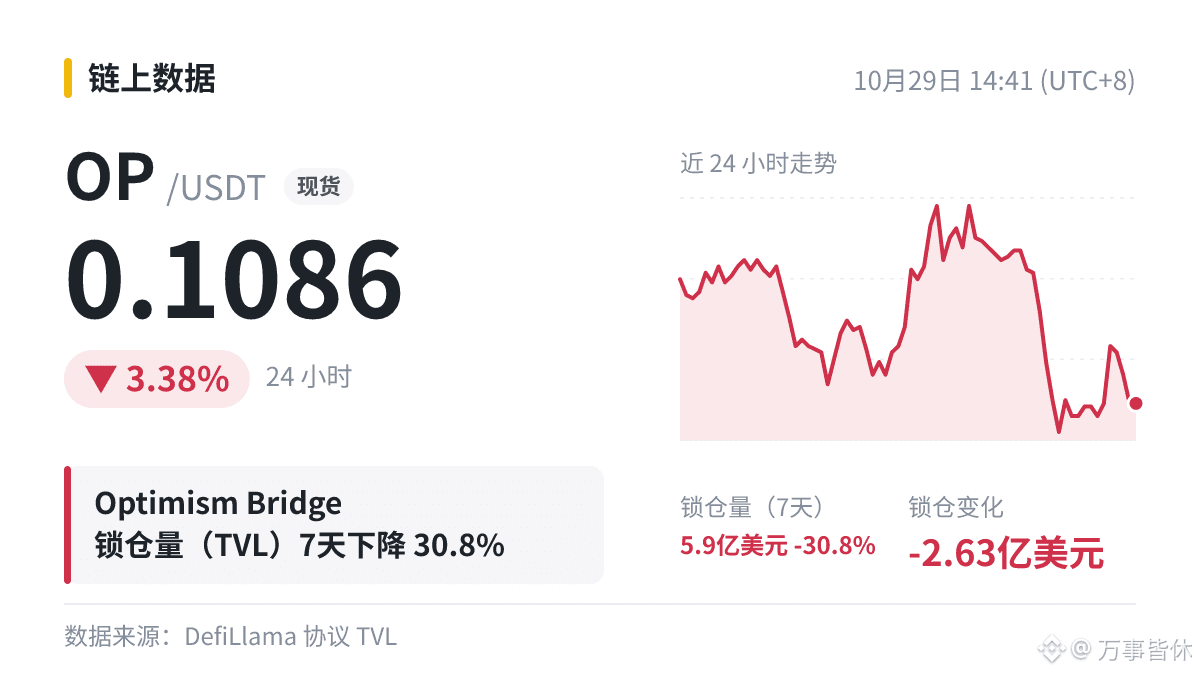
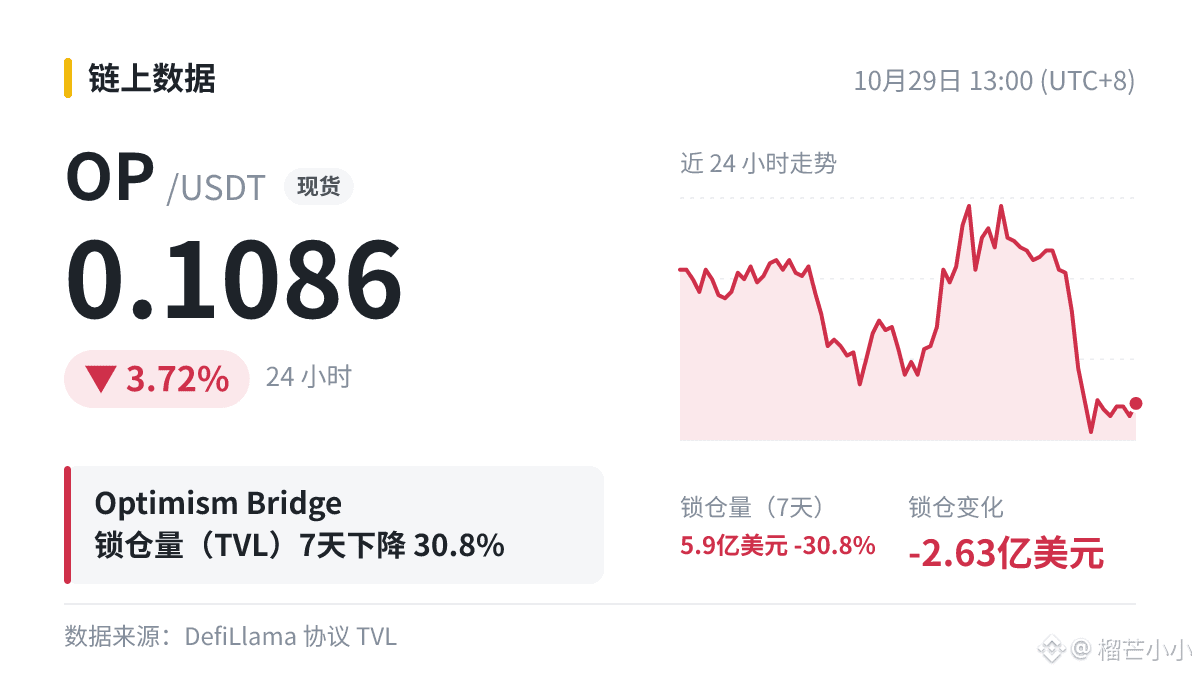
DeFi 异动:跨链桥协议 Optimism Bridge 7天减少约 2.63亿美元 锁仓(-30.81%),目前排 DeFi 第 64。
$OP 现价 0.1086。单个地址的一次存取也能带来这么大的变化,后面几天才重要。
#OP
DeFi 异动:跨链桥协议 Optimism Bridge 7天减少约 2.63亿美元 锁仓(-30.81%),目前排 DeFi 第 64。
$OP 现价 0.1086。单个地址的一次存取也能带来这么大的变化,后面几天才重要。
#OP
$OP 现价 0.1086。单个地址的一次存取也能带来这么大的变化,后面几天才重要。
#OP
304

·
--
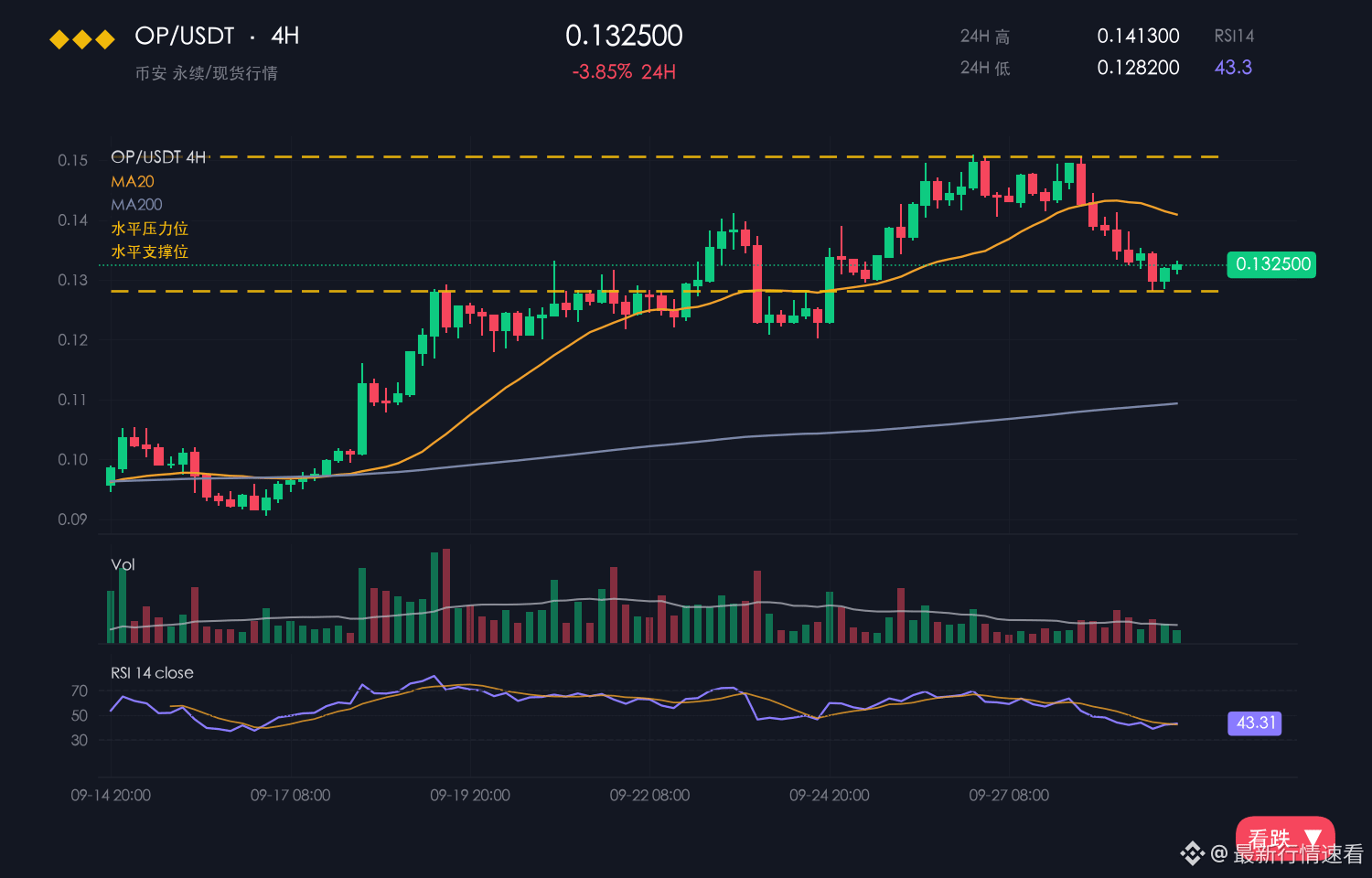
OP 现报 0.1108,24 小时涨 1.28%,7 日仍跌 10.36%,日内区间 0.1093–0.1133,振幅 3.7%。
【盘面】
OP 直接看涨,现价 0.1108,日内波动 3.7%。
重心一路上移,0.1133 一带就是分水岭。
OP 这波回调明显抗跌,短线强度排在市场前排。
下方 0.1093 支撑经过两轮测试都站住了。
对比 BTC 的 -0.12%,OP 的相对强度占优,这类标的通常是反弹先锋。
【宏观面】 隔夜美股 纳指 +0.82%、标普 +0.70%(2026-10-27 收盘),BTC ETF 本月净流出约 452 亿美元,美 CPI 同比 3.7% 超预期,2026-10-27/28 议息加息概率约 47%。
短期偏向看涨。
【看涨理由】
1.28% 的涨幅摆在这,多头说了算,思路就这么直接。
周线 10.36% 的坑还没填平,24 小时 1.28% 的反弹暂时谈不上趋势扭转。
24 小时 1.28% 的上涨里,日内高点 0.1133 被反复测试,说明上方压力在被消化。
注意力都在别处,没人盯 0.1093 这个位。
需要留意大盘如果转头回调,OP 的高位筹码随时可能松动。
$OP #OP
5

·
--
$OP #OP
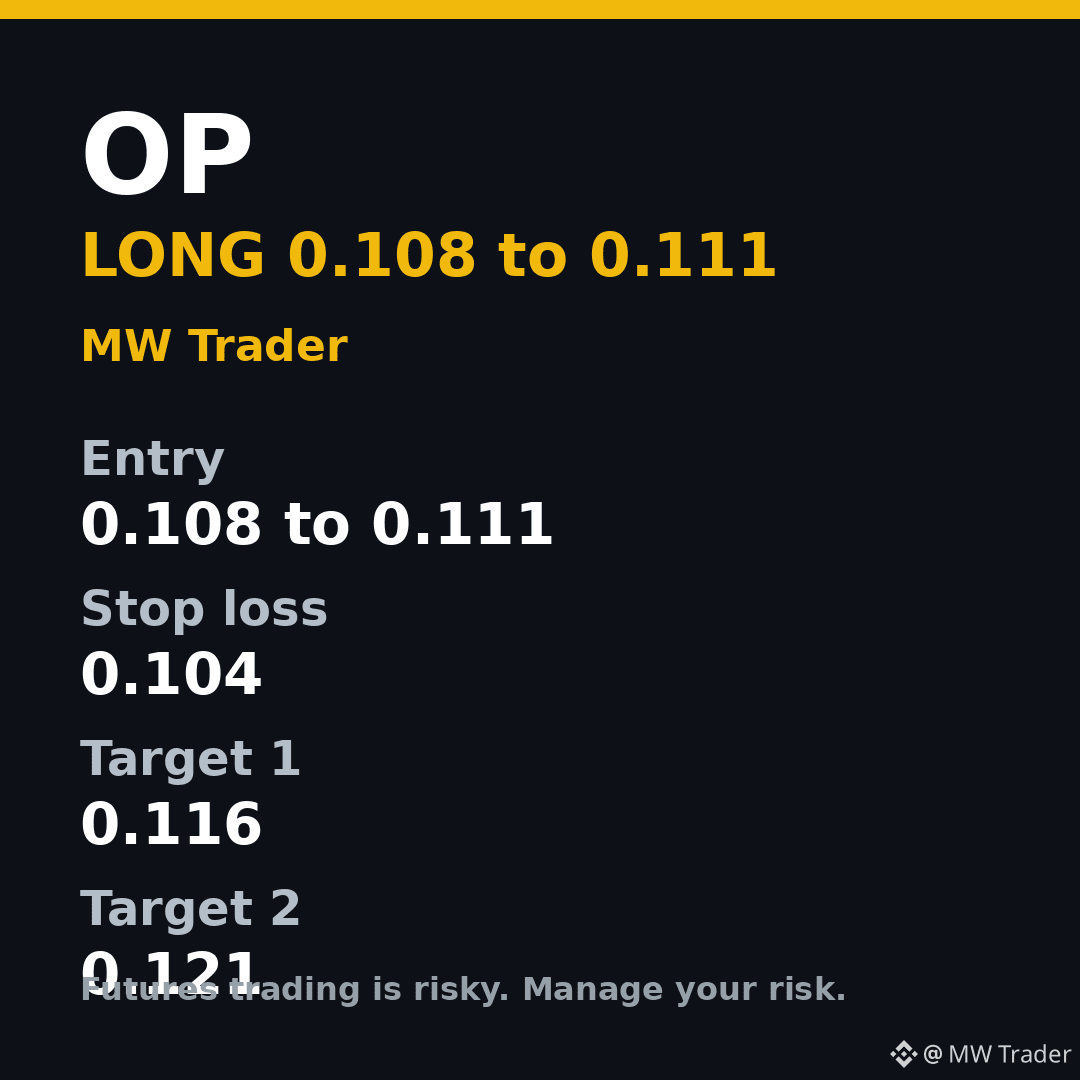
LONG idea, fresh setup for 29 October evening
Entry: 0.108 to 0.111
Stop loss: 0.104
Target 1: 0.116
Target 2: 0.121
Optimism is near 0.1106, up about 0.56 percent over 24 hours on about 60 million dollars of volume, quietly positive while Bitcoin is flat. Small gains with steady volume beat a chasing trade in this market. A long on a pullback toward 0.108 to 0.111 favours a move toward 0.116. Below 0.104, exit.
Futures trading is risky, trade small, manage your risk, and do your own research.
#Optimism #Crypto #FuturesTrading #TradingSignals
Follow for more trades.
8

·
--
盯盘笑点上线:$OP 失守 0.11 关口。
整数关口在K线眼里只是个数字,在人眼里却是大事。
正经科普一下,关口一带往往挂着不少止损单,价格如果越过去,这些止损会被一起触发,振幅往往会一下子变大。
指标会不准,止损不能省掉:事先定好看错了如何应对,要比猜对不对更要紧。
#OP
以上是公开信息整理,以原文为准。
盯盘笑点上线:$OP 失守 0.11 关口。
整数关口在K线眼里只是个数字,在人眼里却是大事。
正经科普一下,关口一带往往挂着不少止损单,价格如果越过去,这些止损会被一起触发,振幅往往会一下子变大。
指标会不准,止损不能省掉:事先定好看错了如何应对,要比猜对不对更要紧。
#OP
以上是公开信息整理,以原文为准。
整数关口在K线眼里只是个数字,在人眼里却是大事。
正经科普一下,关口一带往往挂着不少止损单,价格如果越过去,这些止损会被一起触发,振幅往往会一下子变大。
指标会不准,止损不能省掉:事先定好看错了如何应对,要比猜对不对更要紧。
#OP
以上是公开信息整理,以原文为准。
5

·
--
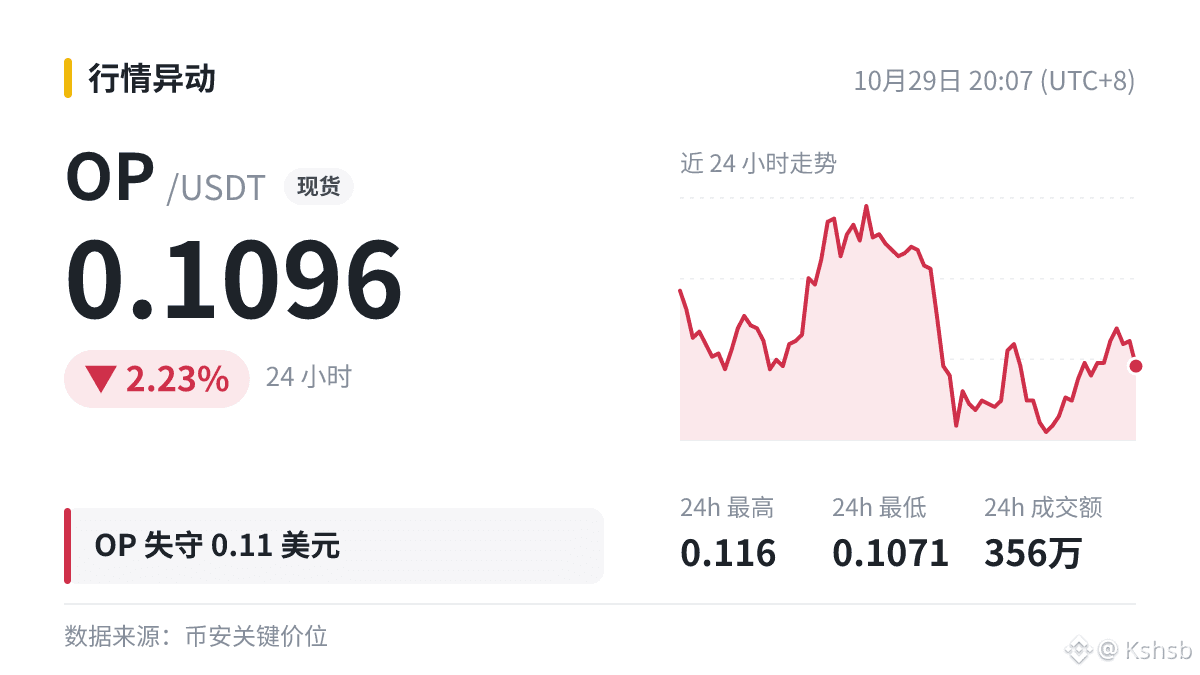
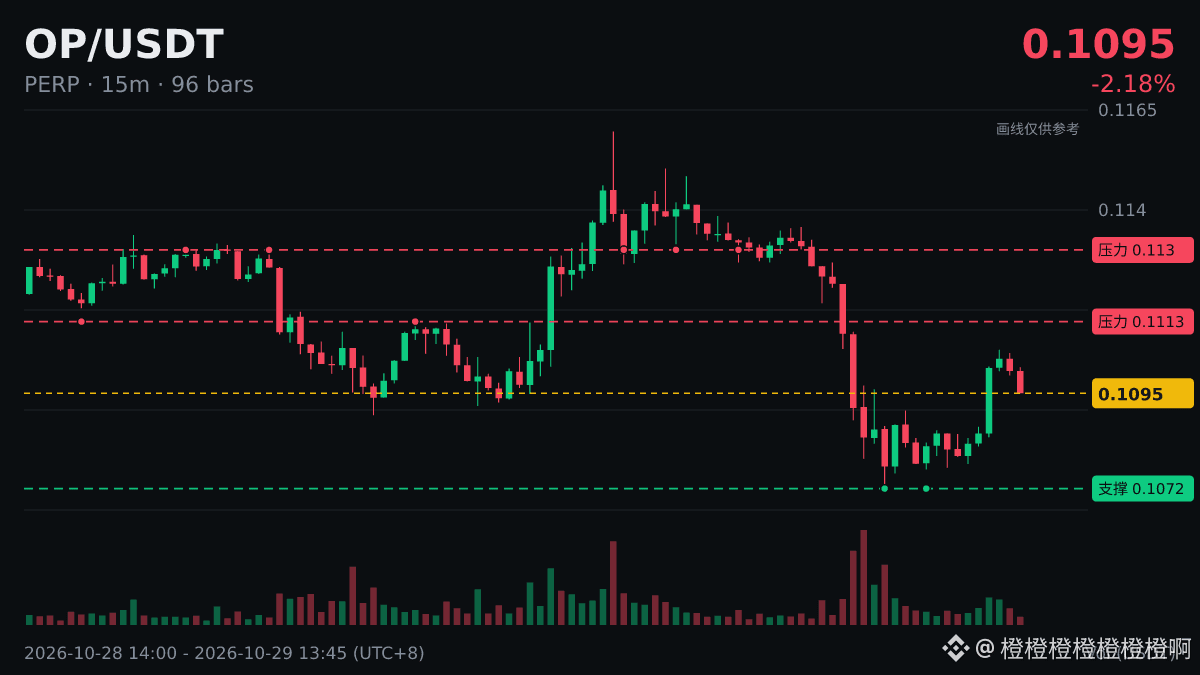
$OP |失守 0.11 关口
聊资金之前,先弄清关键价位。
支撑和压力更像一段价格带,不是精确到小数点的价格,价格在附近反复拉锯是常态。
越过关口只能说明这一刻某一方占了上风,之后能走多远,还要取决于再往前的关口在哪和资金能不能跟上。
不要因为一个数字就改变原来的计划,更不要用借来的钱来验证一个读数。
#OP
$OP |失守 0.11 关口
聊资金之前,先弄清关键价位。
支撑和压力更像一段价格带,不是精确到小数点的价格,价格在附近反复拉锯是常态。
越过关口只能说明这一刻某一方占了上风,之后能走多远,还要取决于再往前的关口在哪和资金能不能跟上。
不要因为一个数字就改变原来的计划,更不要用借来的钱来验证一个读数。
#OP
聊资金之前,先弄清关键价位。
支撑和压力更像一段价格带,不是精确到小数点的价格,价格在附近反复拉锯是常态。
越过关口只能说明这一刻某一方占了上风,之后能走多远,还要取决于再往前的关口在哪和资金能不能跟上。
不要因为一个数字就改变原来的计划,更不要用借来的钱来验证一个读数。
#OP
7

·
--
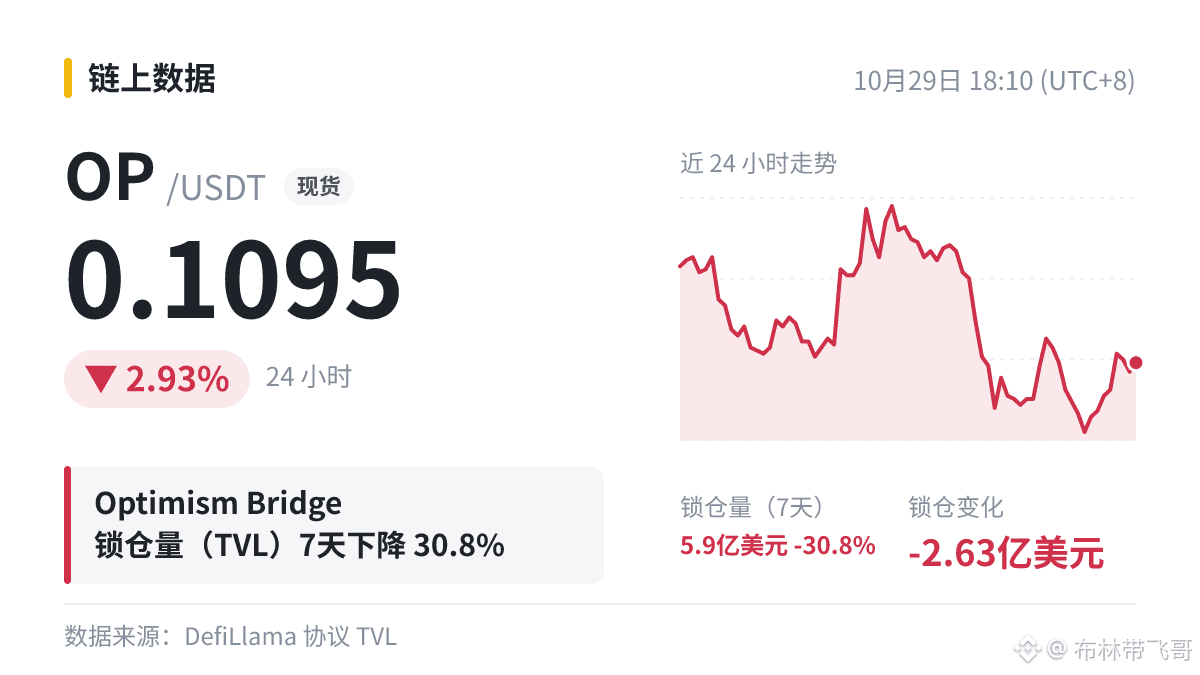
$OP 的 Optimism Bridge,7天 TVL -30.81%😵
TVL7天掉了 30.81%,比我的体重掉得还利索。
说正经的:现在 5.9亿美元,DeFi 排第 64。个别大户进出一笔就能让曲线大起大落,不要光看这一个数就冲。
#OP
$OP 的 Optimism Bridge,7天 TVL -30.81%😵
TVL7天掉了 30.81%,比我的体重掉得还利索。
说正经的:现在 5.9亿美元,DeFi 排第 64。个别大户进出一笔就能让曲线大起大落,不要光看这一个数就冲。
#OP
TVL7天掉了 30.81%,比我的体重掉得还利索。
说正经的:现在 5.9亿美元,DeFi 排第 64。个别大户进出一笔就能让曲线大起大落,不要光看这一个数就冲。
#OP
6

·
--
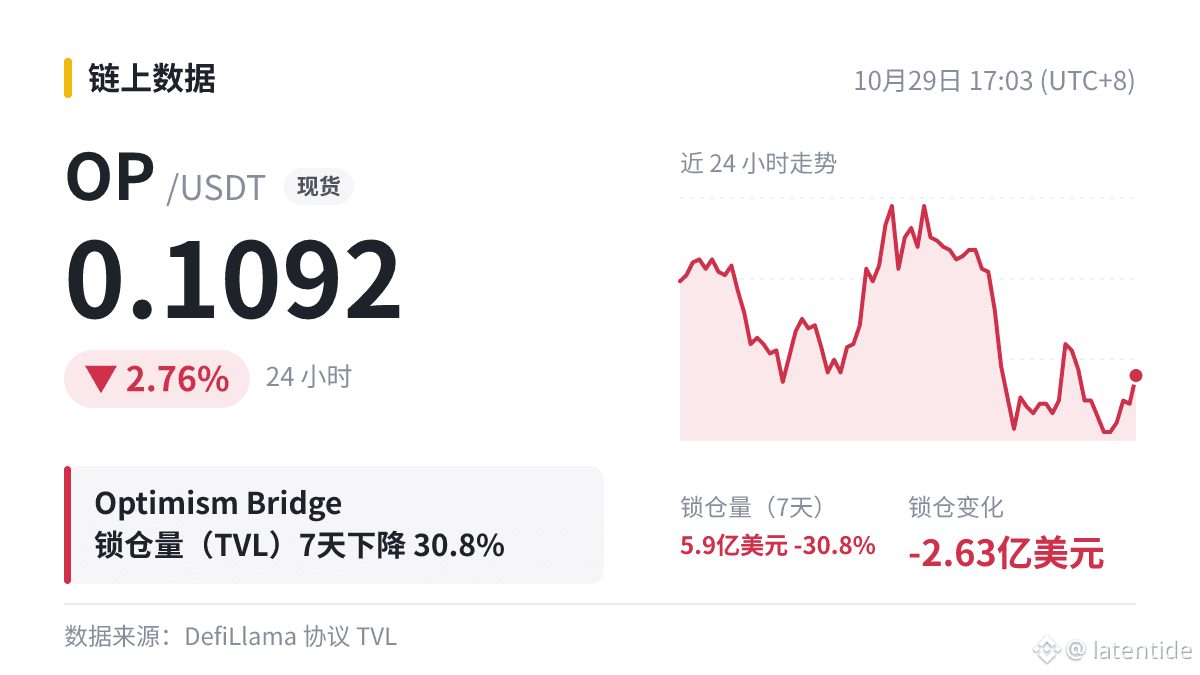
跨链桥赛道有动静了😱
Optimism Bridge($OP )7天少了 2.63亿美元 的锁仓,变化 -30.81%!
这量级的锁仓变化,大家注意到了吗?是大家在往外提、锁着的资产跌价,还是个别大户在倒腾?评论区说说👇
#OP
跨链桥赛道有动静了😱
Optimism Bridge($OP )7天少了 2.63亿美元 的锁仓,变化 -30.81%!
这量级的锁仓变化,大家注意到了吗?是大家在往外提、锁着的资产跌价,还是个别大户在倒腾?评论区说说👇
#OP
Optimism Bridge($OP )7天少了 2.63亿美元 的锁仓,变化 -30.81%!
这量级的锁仓变化,大家注意到了吗?是大家在往外提、锁着的资产跌价,还是个别大户在倒腾?评论区说说👇
#OP
1

·
--
$OP #OP
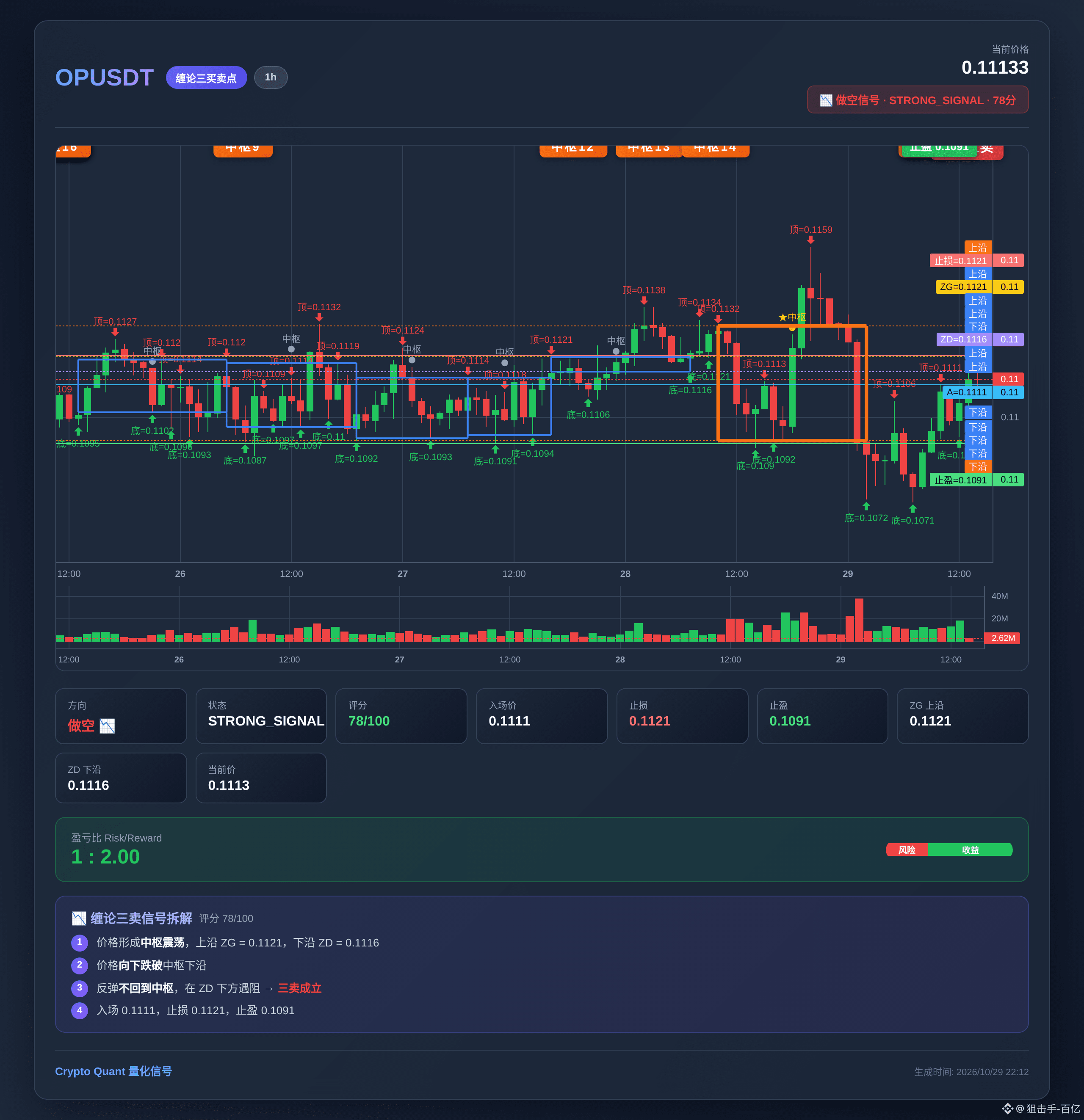
异动提醒:做空警报 | OP
OP 15m 出现 1h空头异动观察,1h 量能开始抬升。
核心信号:1h成交额1.6x / 4h成交额2.5x / 1h实体弱且收低 / 1h跌破VWAP / 1h压在EMA8/20下方 / GMMA空头
1h成交额:1.6x
24h成交额:37.4M USDT
资金费:-0.0044% (空付多收)
分数:9/12
短线关键:跌破位 0.10716
失效位:0.11439
下方观察:0.09723 / 0.08642
触发后可按方向执行,失效位为止损位。
$OP #OP
异动提醒:做空警报 | OP
OP 15m 出现 1h空头异动观察,1h 量能开始抬升。
核心信号:1h成交额1.6x / 4h成交额2.5x / 1h实体弱且收低 / 1h跌破VWAP / 1h压在EMA8/20下方 / GMMA空头
1h成交额:1.6x
24h成交额:37.4M USDT
资金费:-0.0044% (空付多收)
分数:9/12
短线关键:跌破位 0.10716
失效位:0.11439
下方观察:0.09723 / 0.08642
触发后可按方向执行,失效位为止损位。
异动提醒:做空警报 | OP
OP 15m 出现 1h空头异动观察,1h 量能开始抬升。
核心信号:1h成交额1.6x / 4h成交额2.5x / 1h实体弱且收低 / 1h跌破VWAP / 1h压在EMA8/20下方 / GMMA空头
1h成交额:1.6x
24h成交额:37.4M USDT
资金费:-0.0044% (空付多收)
分数:9/12
短线关键:跌破位 0.10716
失效位:0.11439
下方观察:0.09723 / 0.08642
触发后可按方向执行,失效位为止损位。
358

·
--
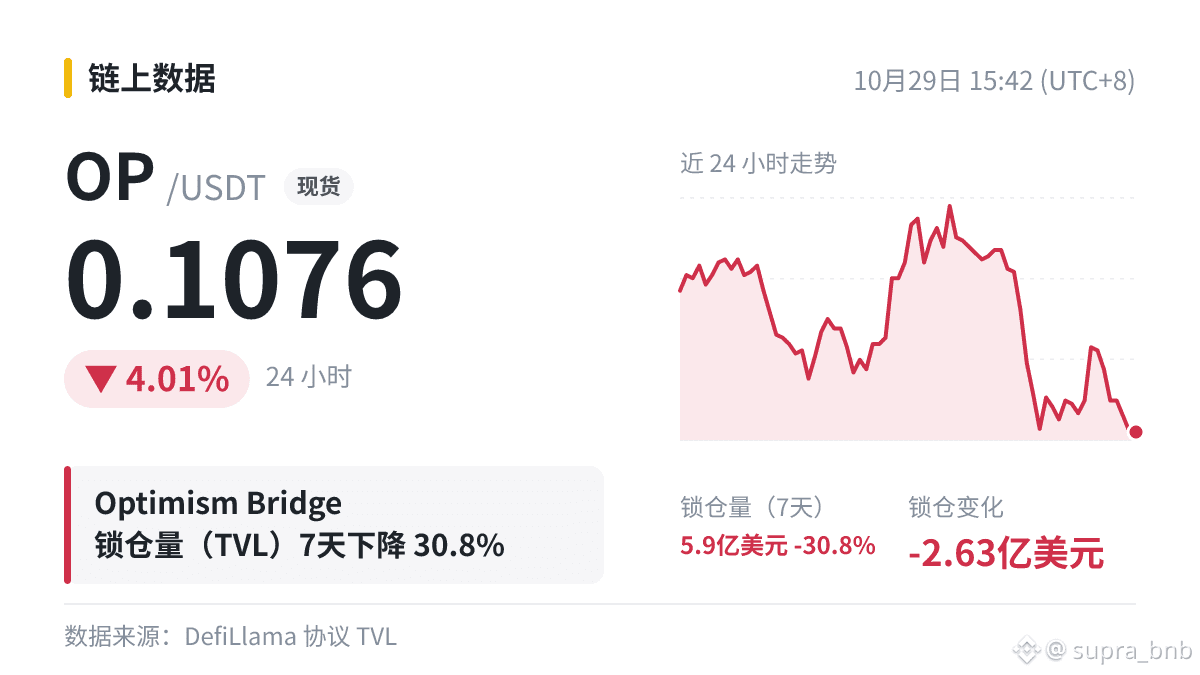
硬数据一览:
Optimism Bridge($OP )7天TVL净减 2.63亿美元,幅度 -30.81%。
对照代币同期 -6.19%:锁仓降幅更大,不只是价格带下来的。
目前 5.9亿美元,在全部 DeFi 协议中排第 64。$OP 现价 0.1076。
@Binance BiBi
#OP
硬数据一览:
Optimism Bridge($OP )7天TVL净减 2.63亿美元,幅度 -30.81%。
对照代币同期 -6.19%:锁仓降幅更大,不只是价格带下来的。
目前 5.9亿美元,在全部 DeFi 协议中排第 64。$OP 现价 0.1076。
@Binance BiBi
#OP
Optimism Bridge($OP )7天TVL净减 2.63亿美元,幅度 -30.81%。
对照代币同期 -6.19%:锁仓降幅更大,不只是价格带下来的。
目前 5.9亿美元,在全部 DeFi 协议中排第 64。$OP 现价 0.1076。
@Binance BiBi
#OP
6

·
--
📌 消息:Optimism Bridge 锁仓量(TVL)7天下降 30.8%($OP)
单条消息的影响,往往不如想象中那么大。消息出来后怎么走,拭目以待。
#OP
只是个人看法,不作为交易依据。
📌 消息:Optimism Bridge 锁仓量(TVL)7天下降 30.8%($OP )
单条消息的影响,往往不如想象中那么大。消息出来后怎么走,拭目以待。
#OP
只是个人看法,不作为交易依据。
单条消息的影响,往往不如想象中那么大。消息出来后怎么走,拭目以待。
#OP
只是个人看法,不作为交易依据。
79

·
--
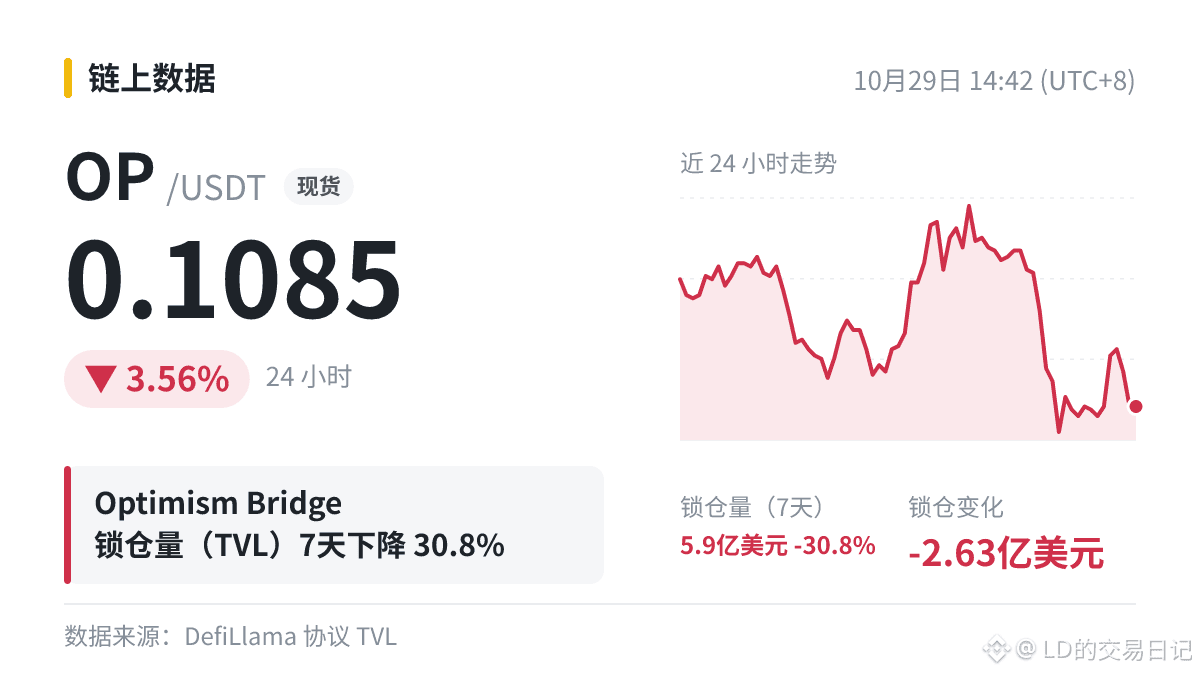
夜猫子快报:Optimism Bridge 7天锁仓掉了 2.63亿美元(-30.81%),现在 5.9亿美元。
它的锁仓一下少了一大截,我的账户这个月也瘦了一圈,不过我少的是房租。同样是“缩水”,分量差了那么亿点点。
$OP 的朋友们,笑完别忘了:锁仓和币价未必同步。留言比比,谁的看盘时间最长?
#OP
夜猫子快报:Optimism Bridge 7天锁仓掉了 2.63亿美元(-30.81%),现在 5.9亿美元。
它的锁仓一下少了一大截,我的账户这个月也瘦了一圈,不过我少的是房租。同样是“缩水”,分量差了那么亿点点。
$OP 的朋友们,笑完别忘了:锁仓和币价未必同步。留言比比,谁的看盘时间最长?
#OP
它的锁仓一下少了一大截,我的账户这个月也瘦了一圈,不过我少的是房租。同样是“缩水”,分量差了那么亿点点。
$OP 的朋友们,笑完别忘了:锁仓和币价未必同步。留言比比,谁的看盘时间最长?
#OP
7




·
--
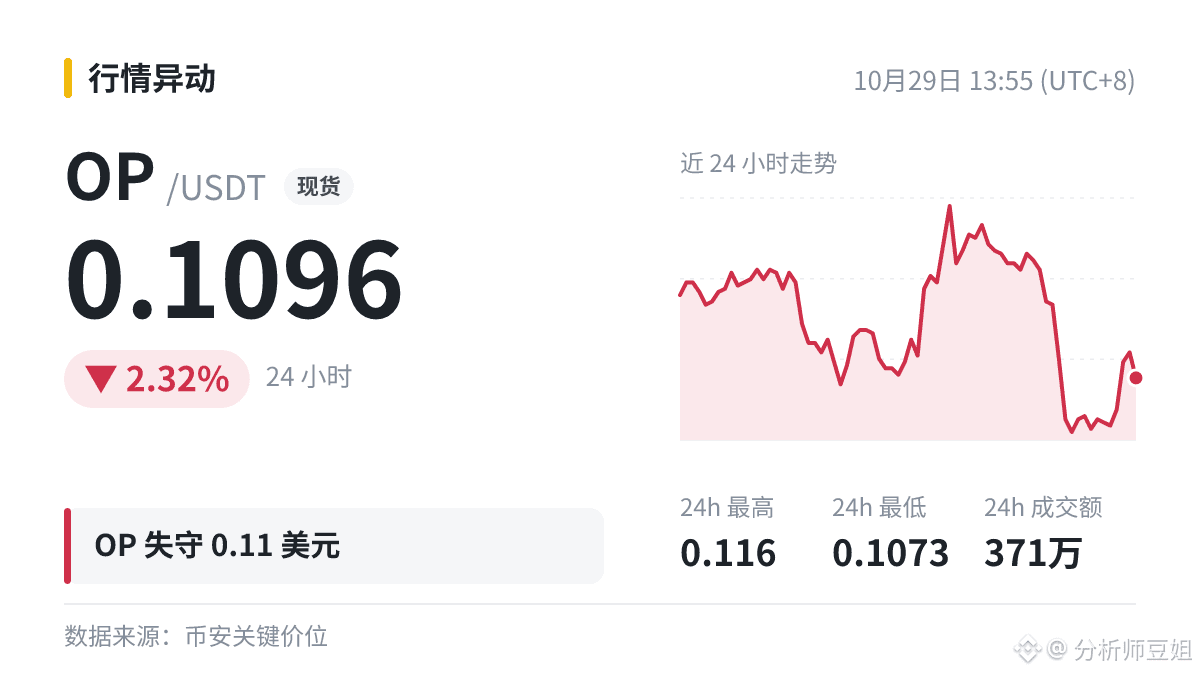
$OP 失守 0.11 关口。
关口一带往往堆着不少订单,那就先弄清关键价位为什么重要。
同样是整数关口,数字越大,盯着的人往往就越多:比如整万、整十万这样的大关,比一般的整数要更引人注目。
穿过关口只能说明当下一方占了上风,之后还能不能延续,还得取决于再往前的关键位在哪与成交能否持续。
了解一个指标,是为了避免被单个数字吓到,而不是用它来算准涨跌。
#OP
看个参考就行,别全信。
$OP 失守 0.11 关口。
关口一带往往堆着不少订单,那就先弄清关键价位为什么重要。
同样是整数关口,数字越大,盯着的人往往就越多:比如整万、整十万这样的大关,比一般的整数要更引人注目。
穿过关口只能说明当下一方占了上风,之后还能不能延续,还得取决于再往前的关键位在哪与成交能否持续。
了解一个指标,是为了避免被单个数字吓到,而不是用它来算准涨跌。
#OP
看个参考就行,别全信。
关口一带往往堆着不少订单,那就先弄清关键价位为什么重要。
同样是整数关口,数字越大,盯着的人往往就越多:比如整万、整十万这样的大关,比一般的整数要更引人注目。
穿过关口只能说明当下一方占了上风,之后还能不能延续,还得取决于再往前的关键位在哪与成交能否持续。
了解一个指标,是为了避免被单个数字吓到,而不是用它来算准涨跌。
#OP
看个参考就行,别全信。
තවත් අන්තර්ගතයන් ගවේෂණය කිරීමට ඇතුල් වන්න
Binance චතුරශ්රය හි ගෝලීය ක්රිප්ටෝ පරිශීලකයින් හා එක්වන්න
⚡️ ක්රිප්ටෝ පිළිබඳ නවතම සහ ප්රයෝජනවත් තොරතුරු ලබා ගන්න.
💬 ලොව විශාලතම ක්රිප්ටෝ හුවමාරුව මගින් විශ්වාස කෙරේ.
👍 සත්යායනය කරන ලද නිර්මාණකරුවන්ගෙන් සැබෑ විදසුන් සොයා ගන්න.
විද්යුත් තැපෑල / දුරකථන අංකය
නැගී එන මාතෘකා
1
#$1.5BInLeveragedCryptoBetsLiquidated
6,200 නැරඹීම්
94 සාකච්ඡා කරමින්
2
#KOSPIFalls3.53%BackBelow6000
13,604 නැරඹීම්
396 සාකච්ඡා කරමින්
3
#AmazonSharesFallAbout7%InPremarketTrading
1,091 නැරඹීම්
60 සාකච්ඡා කරමින්
4
#USMidtermElections
139,450 නැරඹීම්
1,668 සාකච්ඡා කරමින්
5
#StrategySTRCReaches$99.95ForFirstTimeIn165Days
2,993 නැරඹීම්
71 සාකච්ඡා කරමින්
6
#BinanceWillListPredictPREDICT
40,710 නැරඹීම්
809 සාකච්ඡා කරමින්
7
#SwitzerlandFirstSpotBitcoinETFExpectedToTradeInNovember
1,641 නැරඹීම්
81 සාකච්ඡා කරමින්
8
#StrategyReports$21BQ3OperatingProfit
1,640 නැරඹීම්
44 සාකච්ඡා කරමින්
9
#Strategy三季度营业利润210亿美元
21,182 නැරඹීම්
79 සාකච්ඡා කරමින්
10
#TwoAddressesHoldingAbout1.28BUSDTFrozen
22,410 නැරඹීම්
487 සාකච්ඡා කරමින්