
#addresspoisoning
addresspoisoning
16,347 නැරඹීම්
74 සාකච්ඡා කරමින්
උණුසුම්
නවතම
·
--

ලිපිය
O golpe que ignora seu 2FA e sua seed: alguém perdeu US$ 68 milhões só copiando e colandoSérie Segurança Cripto #2
No post anterior falei de 2FA, phishing e seed phrase. Agora o assunto é um golpe que passa por cima de tudo isso. O golpista não invade sua conta, não rouba sua senha e não precisa da sua seed. Quem envia o dinheiro é você.
O caso real
Em 3 de maio de 2024, uma vítima em Hong Kong tentou transferir 1.155 Wrapped Bitcoin (WBTC), cerca de US$ 68 milhões na época, entre duas carteiras próprias. O dinheiro foi parar com o golpista. A transferência representou 97% do que havia na conta. (dextools) (Cointelegraph)
O final foi raro: depois de negociações, o golpista devolveu quase todos os fundos. Isso não costuma acontecer. Na grande maioria dos casos, o dinheiro some para sempre. (Cointelegraph)
Como o golpe funciona (address poisoning)
O golpista monitora carteiras que movimentam valores altos.
Ele gera um endereço falso que começa e termina com os mesmos caracteres de um endereço que você costuma usar. Exemplo: 0xd9A1...4f2c
Ele envia para você uma transação de valor zero ou uma quantia minúscula a partir desse endereço falso.
O endereço falso passa a aparecer no seu histórico de transações.
Na próxima transferência, você copia o endereço do histórico, confere só o começo e o fim e envia para o golpista.
O golpe não exige nenhuma aprovação, assinatura ou interação além de você enviar uma transação para o endereço errado. Por isso o 2FA não ajuda aqui. (dextools)
Como se proteger (dicas que pouca gente usa)
✅ Nunca copie endereço do histórico de transações. Use sempre a fonte original: a tela de depósito da corretora ou a carteira de destino.
✅ Ative a whitelist de saque na Binance. Com ela, saques só podem ir para endereços que você já cadastrou. Mesmo que você cole o endereço errado, o saque é bloqueado.
✅ Use o catálogo de endereços da corretora ou da carteira, com nomes claros como "Minha Ledger" ou "Carteira fria".
✅ Faça uma transação de teste antes de mandar valores altos. Se o pequeno valor chegou, aí sim envie o resto.
✅ Confira o endereço inteiro, ou pelo menos um trecho do meio. O golpe foi feito justamente para enganar quem confere só o começo e o fim.
✅ Desconfie de transações de valor zero ou de tokens que você não reconhece no histórico. Isso é sinal de que sua carteira está sendo alvo.
Resumindo
A segurança em cripto não acaba no 2FA. Os golpes mais caros exploram hábitos, não falhas técnicas. Um copiar e colar sem atenção custou 68 milhões de dólares.
💬 Responda nos comentários: antes de enviar, você confere o endereço inteiro ou só o começo e o fim? Seja sincero 👇
🔖 Salve este post para consultar antes da sua próxima transferência.
Conteúdo educacional. Não é recomendação de investimento.
$BTC $ETH #SegurancaCripto #AddressPoisoning #golpe #DicasCripto
O golpe que ignora seu 2FA e sua seed: alguém perdeu US$ 68 milhões só copiando e colando
Série Segurança Cripto #2
No post anterior falei de 2FA, phishing e seed phrase. Agora o assunto é um golpe que passa por cima de tudo isso. O golpista não invade sua conta, não rouba sua senha e não precisa da sua seed. Quem envia o dinheiro é você.
O caso real
Em 3 de maio de 2024, uma vítima em Hong Kong tentou transferir 1.155 Wrapped Bitcoin (WBTC), cerca de US$ 68 milhões na época, entre duas carteiras próprias. O dinheiro foi parar com o golpista. A transferência representou 97% do que havia na conta. (dextools) (Cointelegraph)
O final foi raro: depois de negociações, o golpista devolveu quase todos os fundos. Isso não costuma acontecer. Na grande maioria dos casos, o dinheiro some para sempre. (Cointelegraph)
Como o golpe funciona (address poisoning)
O golpista monitora carteiras que movimentam valores altos.
Ele gera um endereço falso que começa e termina com os mesmos caracteres de um endereço que você costuma usar. Exemplo: 0xd9A1...4f2c
Ele envia para você uma transação de valor zero ou uma quantia minúscula a partir desse endereço falso.
O endereço falso passa a aparecer no seu histórico de transações.
Na próxima transferência, você copia o endereço do histórico, confere só o começo e o fim e envia para o golpista.
O golpe não exige nenhuma aprovação, assinatura ou interação além de você enviar uma transação para o endereço errado. Por isso o 2FA não ajuda aqui. (dextools)
Como se proteger (dicas que pouca gente usa)
✅ Nunca copie endereço do histórico de transações. Use sempre a fonte original: a tela de depósito da corretora ou a carteira de destino.
✅ Ative a whitelist de saque na Binance. Com ela, saques só podem ir para endereços que você já cadastrou. Mesmo que você cole o endereço errado, o saque é bloqueado.
✅ Use o catálogo de endereços da corretora ou da carteira, com nomes claros como "Minha Ledger" ou "Carteira fria".
✅ Faça uma transação de teste antes de mandar valores altos. Se o pequeno valor chegou, aí sim envie o resto.
✅ Confira o endereço inteiro, ou pelo menos um trecho do meio. O golpe foi feito justamente para enganar quem confere só o começo e o fim.
✅ Desconfie de transações de valor zero ou de tokens que você não reconhece no histórico. Isso é sinal de que sua carteira está sendo alvo.
Resumindo
A segurança em cripto não acaba no 2FA. Os golpes mais caros exploram hábitos, não falhas técnicas. Um copiar e colar sem atenção custou 68 milhões de dólares.
💬 Responda nos comentários: antes de enviar, você confere o endereço inteiro ou só o começo e o fim? Seja sincero 👇
🔖 Salve este post para consultar antes da sua próxima transferência.
Conteúdo educacional. Não é recomendação de investimento.
$BTC $ETH #SegurancaCripto #AddressPoisoning #golpe #DicasCripto
No post anterior falei de 2FA, phishing e seed phrase. Agora o assunto é um golpe que passa por cima de tudo isso. O golpista não invade sua conta, não rouba sua senha e não precisa da sua seed. Quem envia o dinheiro é você.
O caso real
Em 3 de maio de 2024, uma vítima em Hong Kong tentou transferir 1.155 Wrapped Bitcoin (WBTC), cerca de US$ 68 milhões na época, entre duas carteiras próprias. O dinheiro foi parar com o golpista. A transferência representou 97% do que havia na conta. (dextools) (Cointelegraph)
O final foi raro: depois de negociações, o golpista devolveu quase todos os fundos. Isso não costuma acontecer. Na grande maioria dos casos, o dinheiro some para sempre. (Cointelegraph)
Como o golpe funciona (address poisoning)
O golpista monitora carteiras que movimentam valores altos.
Ele gera um endereço falso que começa e termina com os mesmos caracteres de um endereço que você costuma usar. Exemplo: 0xd9A1...4f2c
Ele envia para você uma transação de valor zero ou uma quantia minúscula a partir desse endereço falso.
O endereço falso passa a aparecer no seu histórico de transações.
Na próxima transferência, você copia o endereço do histórico, confere só o começo e o fim e envia para o golpista.
O golpe não exige nenhuma aprovação, assinatura ou interação além de você enviar uma transação para o endereço errado. Por isso o 2FA não ajuda aqui. (dextools)
Como se proteger (dicas que pouca gente usa)
✅ Nunca copie endereço do histórico de transações. Use sempre a fonte original: a tela de depósito da corretora ou a carteira de destino.
✅ Ative a whitelist de saque na Binance. Com ela, saques só podem ir para endereços que você já cadastrou. Mesmo que você cole o endereço errado, o saque é bloqueado.
✅ Use o catálogo de endereços da corretora ou da carteira, com nomes claros como "Minha Ledger" ou "Carteira fria".
✅ Faça uma transação de teste antes de mandar valores altos. Se o pequeno valor chegou, aí sim envie o resto.
✅ Confira o endereço inteiro, ou pelo menos um trecho do meio. O golpe foi feito justamente para enganar quem confere só o começo e o fim.
✅ Desconfie de transações de valor zero ou de tokens que você não reconhece no histórico. Isso é sinal de que sua carteira está sendo alvo.
Resumindo
A segurança em cripto não acaba no 2FA. Os golpes mais caros exploram hábitos, não falhas técnicas. Um copiar e colar sem atenção custou 68 milhões de dólares.
💬 Responda nos comentários: antes de enviar, você confere o endereço inteiro ou só o começo e o fim? Seja sincero 👇
🔖 Salve este post para consultar antes da sua próxima transferência.
Conteúdo educacional. Não é recomendação de investimento.
$BTC $ETH #SegurancaCripto #AddressPoisoning #golpe #DicasCripto
1
325

·
--
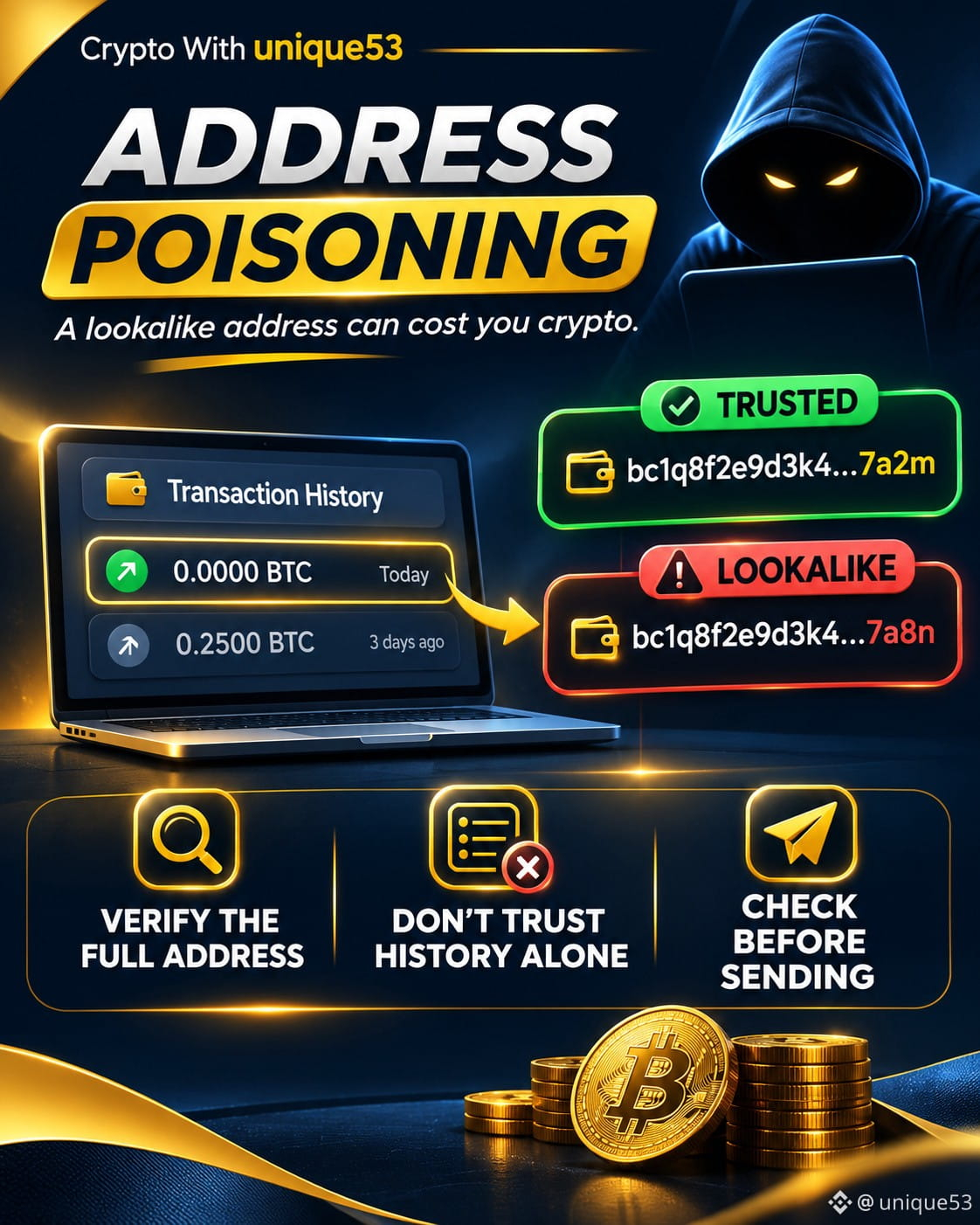
🚨 Your Wallet Can Be Tricked Without Being Hacked!
I'm learning that not every crypto scam involves stealing passwords or private keys.
One trick I recently discovered is called Address Poisoning.
Here's how it works:
🔹 The Lookalike: Scammers create a wallet address that resembles one you've used before.
🔹 The Trap: They send a tiny or zero-value transaction so their address appears in your transaction history.
🔹 The Mistake: If you later copy that address without checking it, you could send your crypto to the scammer.
⚠️ The scary part? Your wallet doesn't necessarily need to be hacked for this to happen.
3 safety habits I'm learning:
✅ Verify the entire destination address using a trusted source.
✅ Don't blindly copy addresses from transaction history.
✅ Consider using a verified address book and a small test transfer when appropriate.
💡 My takeaway: A familiar-looking address isn't necessarily a safe address.
I'm learning that protecting crypto starts with understanding how scams work.
❓ Have you ever noticed a suspicious transaction in your wallet history?
#CryptoSecurity #AddressPoisoning #CryptoEducation #CryptoBeginners
🚨 Your Wallet Can Be Tricked Without Being Hacked!
I'm learning that not every crypto scam involves stealing passwords or private keys.
One trick I recently discovered is called Address Poisoning.
Here's how it works:
🔹 The Lookalike: Scammers create a wallet address that resembles one you've used before.
🔹 The Trap: They send a tiny or zero-value transaction so their address appears in your transaction history.
🔹 The Mistake: If you later copy that address without checking it, you could send your crypto to the scammer.
⚠️ The scary part? Your wallet doesn't necessarily need to be hacked for this to happen.
3 safety habits I'm learning:
✅ Verify the entire destination address using a trusted source.
✅ Don't blindly copy addresses from transaction history.
✅ Consider using a verified address book and a small test transfer when appropriate.
💡 My takeaway: A familiar-looking address isn't necessarily a safe address.
I'm learning that protecting crypto starts with understanding how scams work.
❓ Have you ever noticed a suspicious transaction in your wallet history?
#CryptoSecurity #AddressPoisoning #CryptoEducation #CryptoBeginners
I'm learning that not every crypto scam involves stealing passwords or private keys.
One trick I recently discovered is called Address Poisoning.
Here's how it works:
🔹 The Lookalike: Scammers create a wallet address that resembles one you've used before.
🔹 The Trap: They send a tiny or zero-value transaction so their address appears in your transaction history.
🔹 The Mistake: If you later copy that address without checking it, you could send your crypto to the scammer.
⚠️ The scary part? Your wallet doesn't necessarily need to be hacked for this to happen.
3 safety habits I'm learning:
✅ Verify the entire destination address using a trusted source.
✅ Don't blindly copy addresses from transaction history.
✅ Consider using a verified address book and a small test transfer when appropriate.
💡 My takeaway: A familiar-looking address isn't necessarily a safe address.
I'm learning that protecting crypto starts with understanding how scams work.
❓ Have you ever noticed a suspicious transaction in your wallet history?
#CryptoSecurity #AddressPoisoning #CryptoEducation #CryptoBeginners
1
134

·
--
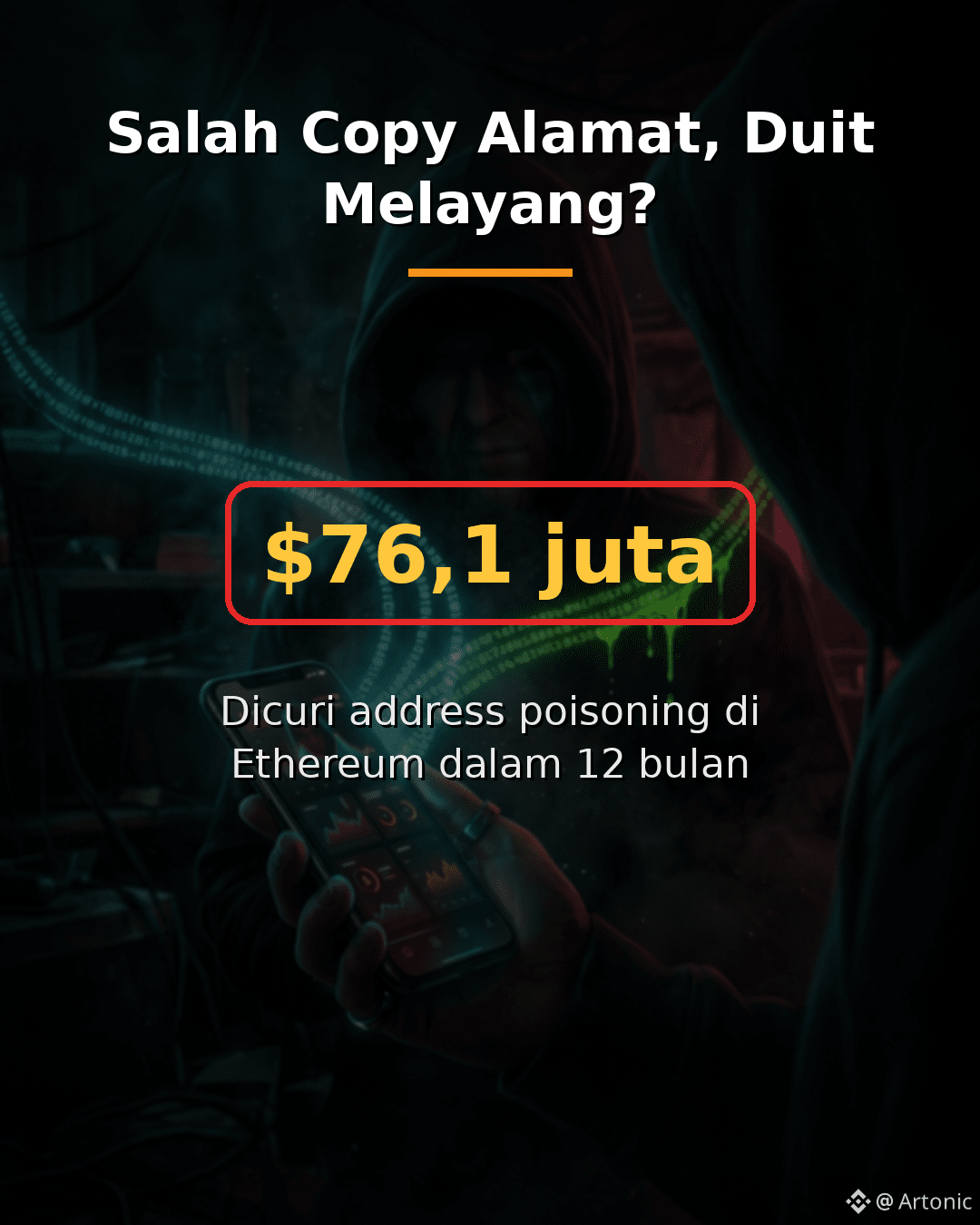
Salah copy alamat wallet, duit bisa melayang selamanya?
$76,1 juta | 1.635 korban | 7.997.367 wallet jadi target
Namanya address poisoning. Penipu bikin alamat palsu yang awal dan akhirnya mirip alamat yang biasa kamu kirimi, lalu "menyelipkannya" ke riwayat transaksi lewat dust atau transfer 0 token. Begitu kamu copy dari riwayat, uangnya nyasar ke penipu.
1. Skalanya gede — Riset Bitquery (12 bulan s.d. 31 Juli 2026) mencatat 1.635 orang kehilangan total $76,1 juta di Ethereum saja. Kasus terbesar: hampir $50 juta USDT, 19 Desember 2025, alamat palsunya cuma sama 3 karakter di depan.
2. Bait-nya sabar — Median jarak dari umpan sampai pencurian 4,5 hari. Kasus terbaru (28 Okt 2026, Scam Sniffer): user rugi ~$50 ribu USDT karena alamat palsu cocok 4 karakter depan & 6 belakang.
3. Cara aman — Jangan pernah copy alamat dari riwayat transaksi. Simpan di address book, cek juga karakter tengah, dan hati-hati sama alamat deposit exchange kamu sendiri (28,3% kasus nyontek alamat ini).
#AddressPoisoning #KeamananKripto #Ethereum #USDT #BinanceSquare
Salah copy alamat wallet, duit bisa melayang selamanya?
$76,1 juta | 1.635 korban | 7.997.367 wallet jadi target
Namanya address poisoning. Penipu bikin alamat palsu yang awal dan akhirnya mirip alamat yang biasa kamu kirimi, lalu "menyelipkannya" ke riwayat transaksi lewat dust atau transfer 0 token. Begitu kamu copy dari riwayat, uangnya nyasar ke penipu.
1. Skalanya gede — Riset Bitquery (12 bulan s.d. 31 Juli 2026) mencatat 1.635 orang kehilangan total $76,1 juta di Ethereum saja. Kasus terbesar: hampir $50 juta USDT, 19 Desember 2025, alamat palsunya cuma sama 3 karakter di depan.
2. Bait-nya sabar — Median jarak dari umpan sampai pencurian 4,5 hari. Kasus terbaru (28 Okt 2026, Scam Sniffer): user rugi ~$50 ribu USDT karena alamat palsu cocok 4 karakter depan & 6 belakang.
3. Cara aman — Jangan pernah copy alamat dari riwayat transaksi. Simpan di address book, cek juga karakter tengah, dan hati-hati sama alamat deposit exchange kamu sendiri (28,3% kasus nyontek alamat ini).
#AddressPoisoning #KeamananKripto #Ethereum #USDT #BinanceSquare
$76,1 juta | 1.635 korban | 7.997.367 wallet jadi target
Namanya address poisoning. Penipu bikin alamat palsu yang awal dan akhirnya mirip alamat yang biasa kamu kirimi, lalu "menyelipkannya" ke riwayat transaksi lewat dust atau transfer 0 token. Begitu kamu copy dari riwayat, uangnya nyasar ke penipu.
1. Skalanya gede — Riset Bitquery (12 bulan s.d. 31 Juli 2026) mencatat 1.635 orang kehilangan total $76,1 juta di Ethereum saja. Kasus terbesar: hampir $50 juta USDT, 19 Desember 2025, alamat palsunya cuma sama 3 karakter di depan.
2. Bait-nya sabar — Median jarak dari umpan sampai pencurian 4,5 hari. Kasus terbaru (28 Okt 2026, Scam Sniffer): user rugi ~$50 ribu USDT karena alamat palsu cocok 4 karakter depan & 6 belakang.
3. Cara aman — Jangan pernah copy alamat dari riwayat transaksi. Simpan di address book, cek juga karakter tengah, dan hati-hati sama alamat deposit exchange kamu sendiri (28,3% kasus nyontek alamat ini).
#AddressPoisoning #KeamananKripto #Ethereum #USDT #BinanceSquare
426

·
--
«звірив перші і останні символи» — більше не захист. взагалі
Scam Sniffer: людина втратила близько $50000 в USDT на Ethereum. адреса-двійник збігалася з правильною в перших чотирьох і останніх шести символах
для порівняння, свіжі випадки:
- грудень 2025: 49999950 USDT, збіг лише три + чотири символи, плюс пиловий переказ 0.005 USDT в історію жертви
- у серпні: близько 100000 USDT, двійника підкинули в історію за 66 днів до того
address poisoning живе з терпіння: двійник лежить в історії тижнями і чекає, поки ти скопіюєш звідти
мої USDT сидять у Simple Earn Flexible, але рано чи пізно виводить кожен. правила прості: адреса тільки з адресної книги, і звіряти всю, а не краї
слідкуйте, якщо не хочете стати наступним рядком у такому списку — я їх збираю
#AddressPoisoning #ScamSniffer
«звірив перші і останні символи» — більше не захист. взагалі
Scam Sniffer: людина втратила близько $50000 в USDT на Ethereum. адреса-двійник збігалася з правильною в перших чотирьох і останніх шести символах
для порівняння, свіжі випадки:
- грудень 2025: 49999950 USDT, збіг лише три + чотири символи, плюс пиловий переказ 0.005 USDT в історію жертви
- у серпні: близько 100000 USDT, двійника підкинули в історію за 66 днів до того
address poisoning живе з терпіння: двійник лежить в історії тижнями і чекає, поки ти скопіюєш звідти
мої USDT сидять у Simple Earn Flexible, але рано чи пізно виводить кожен. правила прості: адреса тільки з адресної книги, і звіряти всю, а не краї
слідкуйте, якщо не хочете стати наступним рядком у такому списку — я їх збираю
#AddressPoisoning #ScamSniffer
Scam Sniffer: людина втратила близько $50000 в USDT на Ethereum. адреса-двійник збігалася з правильною в перших чотирьох і останніх шести символах
для порівняння, свіжі випадки:
- грудень 2025: 49999950 USDT, збіг лише три + чотири символи, плюс пиловий переказ 0.005 USDT в історію жертви
- у серпні: близько 100000 USDT, двійника підкинули в історію за 66 днів до того
address poisoning живе з терпіння: двійник лежить в історії тижнями і чекає, поки ти скопіюєш звідти
мої USDT сидять у Simple Earn Flexible, але рано чи пізно виводить кожен. правила прості: адреса тільки з адресної книги, і звіряти всю, а не краї
слідкуйте, якщо не хочете стати наступним рядком у такому списку — я їх збираю
#AddressPoisoning #ScamSniffer
52


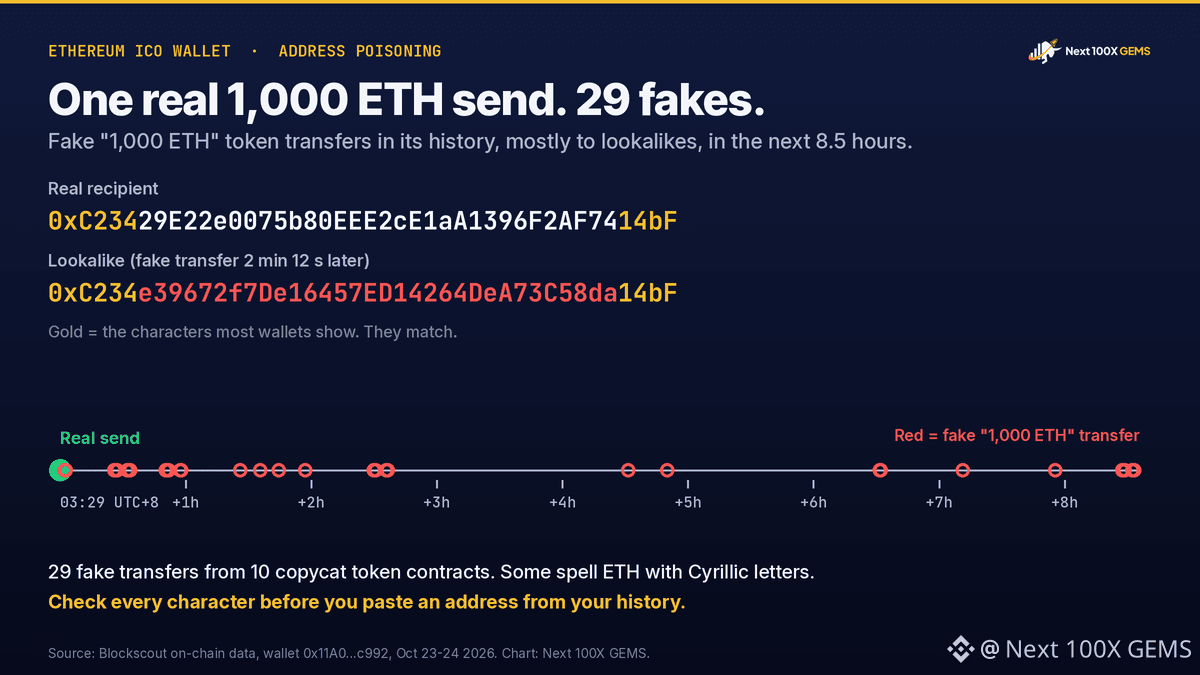
An Ethereum ICO wallet sent 1,000 ETH, about $2.38M, on Friday. Two minutes and 12 seconds later, scammers started faking that same transfer in its history.
Lookonchain flagged the sender as an ICO buyer who got 100,000 ETH at $0.31 each and called the move a sale. At that price, the 1,000 ETH cost $310. The wallet still holds 11,348.88 ETH, about $27M at $2,382.
We pulled the wallet's history. The real transfer went to an address starting 0xC234 and ending 14bF at 03:29 UTC+8 on Oct 24. In the next 8.5 hours, 29 fake "1,000 ETH" token transfers landed in its history from 10 copycat token contracts, some spelling ETH with Cyrillic letters. 28 of them point to lookalike addresses that start with 0xC2 and end in 14bF. Three more lookalikes sent the wallet 0 or 0.000000001 ETH, so they sit in its normal transaction list too.
The bet is that next time, the holder copies an address from recent history and picks a fake. The same wallet drew lookalikes after a 106 ETH send on Sep 30.
If you paste addresses from your history, check every character, or send only to a saved address book entry.
$ETH
#Ethereum #AddressPoisoning
NFA. DYOR.
An Ethereum ICO wallet sent 1,000 ETH, about $2.38M, on Friday. Two minutes and 12 seconds later, scammers started faking that same transfer in its history.
Lookonchain flagged the sender as an ICO buyer who got 100,000 ETH at $0.31 each and called the move a sale. At that price, the 1,000 ETH cost $310. The wallet still holds 11,348.88 ETH, about $27M at $2,382.
We pulled the wallet's history. The real transfer went to an address starting 0xC234 and ending 14bF at 03:29 UTC+8 on Oct 24. In the next 8.5 hours, 29 fake "1,000 ETH" token transfers landed in its history from 10 copycat token contracts, some spelling ETH with Cyrillic letters. 28 of them point to lookalike addresses that start with 0xC2 and end in 14bF. Three more lookalikes sent the wallet 0 or 0.000000001 ETH, so they sit in its normal transaction list too.
The bet is that next time, the holder copies an address from recent history and picks a fake. The same wallet drew lookalikes after a 106 ETH send on Sep 30.
If you paste addresses from your history, check every character, or send only to a saved address book entry.
$ETH
#Ethereum #AddressPoisoning
NFA. DYOR.
Lookonchain flagged the sender as an ICO buyer who got 100,000 ETH at $0.31 each and called the move a sale. At that price, the 1,000 ETH cost $310. The wallet still holds 11,348.88 ETH, about $27M at $2,382.
We pulled the wallet's history. The real transfer went to an address starting 0xC234 and ending 14bF at 03:29 UTC+8 on Oct 24. In the next 8.5 hours, 29 fake "1,000 ETH" token transfers landed in its history from 10 copycat token contracts, some spelling ETH with Cyrillic letters. 28 of them point to lookalike addresses that start with 0xC2 and end in 14bF. Three more lookalikes sent the wallet 0 or 0.000000001 ETH, so they sit in its normal transaction list too.
The bet is that next time, the holder copies an address from recent history and picks a fake. The same wallet drew lookalikes after a 106 ETH send on Sep 30.
If you paste addresses from your history, check every character, or send only to a saved address book entry.
$ETH
#Ethereum #AddressPoisoning
NFA. DYOR.
222

·
--
☠️ Defending Against Address Poisoning Scams in Web3
As transaction safety awareness grows, malicious actors invent sophisticated tricks like Address Poisoning to exploit habit-based copying behavior during routine transfers.
💡 How Address Poisoning Works & How to Counter It
The Vanity Address Trap: Attackers generate synthetic wallet addresses matching the first few and last few characters of your frequently used recipient addresses.
History Littering: They execute zero-value or dust transactions to insert their fraudulent address directly into your wallet’s transaction history.
The Copy-Paste Vulnerability: Users who routinely copy recipient addresses from past history logs without verifying the complete character string accidentally send funds to the attacker.
Prevention via Address Books: Always save verified withdrawal addresses into your platform’s Whitelisted Address Book rather than pulling from raw transaction logs.
⚠️ Security & Educational Disclaimer
Blockchain transaction verification demands rigorous attention to detail, This publication is prepared strictly for educational and security awareness purposes.
[https://www.binance.com/en/academy/articles/how-do-crypto-address-poisoning-attacks-work](https://www.binance.com/en/academy/articles/how-do-crypto-address-poisoning-attacks-work)
Verify every character, utilize whitelisted address books, and always DYOR (Do Your Own Research) 💡
#Binance #security #CryptoSafety #AddressPoisoning #dyor
☠️ Defending Against Address Poisoning Scams in Web3
As transaction safety awareness grows, malicious actors invent sophisticated tricks like Address Poisoning to exploit habit-based copying behavior during routine transfers.
💡 How Address Poisoning Works & How to Counter It
The Vanity Address Trap: Attackers generate synthetic wallet addresses matching the first few and last few characters of your frequently used recipient addresses.
History Littering: They execute zero-value or dust transactions to insert their fraudulent address directly into your wallet’s transaction history.
The Copy-Paste Vulnerability: Users who routinely copy recipient addresses from past history logs without verifying the complete character string accidentally send funds to the attacker.
Prevention via Address Books: Always save verified withdrawal addresses into your platform’s Whitelisted Address Book rather than pulling from raw transaction logs.
⚠️ Security & Educational Disclaimer
Blockchain transaction verification demands rigorous attention to detail, This publication is prepared strictly for educational and security awareness purposes.
https://www.binance.com/en/academy/articles/how-do-crypto-address-poisoning-attacks-work
Verify every character, utilize whitelisted address books, and always DYOR (Do Your Own Research) 💡
#Binance #security #CryptoSafety #AddressPoisoning #dyor
As transaction safety awareness grows, malicious actors invent sophisticated tricks like Address Poisoning to exploit habit-based copying behavior during routine transfers.
💡 How Address Poisoning Works & How to Counter It
The Vanity Address Trap: Attackers generate synthetic wallet addresses matching the first few and last few characters of your frequently used recipient addresses.
History Littering: They execute zero-value or dust transactions to insert their fraudulent address directly into your wallet’s transaction history.
The Copy-Paste Vulnerability: Users who routinely copy recipient addresses from past history logs without verifying the complete character string accidentally send funds to the attacker.
Prevention via Address Books: Always save verified withdrawal addresses into your platform’s Whitelisted Address Book rather than pulling from raw transaction logs.
⚠️ Security & Educational Disclaimer
Blockchain transaction verification demands rigorous attention to detail, This publication is prepared strictly for educational and security awareness purposes.
https://www.binance.com/en/academy/articles/how-do-crypto-address-poisoning-attacks-work
Verify every character, utilize whitelisted address books, and always DYOR (Do Your Own Research) 💡
#Binance #security #CryptoSafety #AddressPoisoning #dyor
9
82
·
--
සත්යායනය කළ
ලිපිය
Don't Get Tricked: How Crypto Address Poisoning Scams WorkCrypto transactions are fast and irreversible. That makes one simple mistake very expensive.
One growing scam is called Address Poisoning.
What Is Address Poisoning?
Scammers send a tiny amount of crypto to your wallet from an address that looks very similar to one you have used before.
Their goal is simple:
They hope you will copy the fake address from your transaction history and accidentally send funds to them later.
Since many users only check the first few and last few characters of an address, the scam can be surprisingly effective.
Example
Imagine you regularly send USDT to:
0x813e...87627
A scammer creates a similar-looking address:
0x813e...87621
They send you a small transaction so their address appears in your wallet history.
Later, when you're in a hurry, you copy the wrong address and send your funds directly to the scammer.
The transaction cannot be reversed.
How to Stay Safe
1. Never Copy Addresses From Transaction History
Always use a saved address book or verify the full address before sending.
2. Double-Check Every Transfer
Don't rely only on the first and last few characters.
3. Use Binance Address Management
Save verified addresses and whitelist trusted recipients whenever possible.
4. Send a Small Test Transaction
For large transfers, send a small amount first and confirm it arrives correctly.
5. Ignore Random Dust Transactions
Unexpected tiny deposits may be attempts to place a fake address in your history.
Final Thoughts
Address poisoning doesn't hack your wallet.
Instead, it tries to trick you into making a mistake.
In crypto, security isn't only about protecting your private keys—it's also about paying attention to every address you use.
Stay alert, verify carefully, and always think twice before pressing "Send."
#scam #AddressPoisoning #crypto
$PIEVERSE
{alpha}(560x0e63b9c287e32a05e6b9ab8ee8df88a2760225a9)
$BAS
{alpha}(560x0f0df6cb17ee5e883eddfef9153fc6036bdb4e37)
$BTC
{future}(BTCUSDT)
Don't Get Tricked: How Crypto Address Poisoning Scams Work
Crypto transactions are fast and irreversible. That makes one simple mistake very expensive.
One growing scam is called Address Poisoning.
What Is Address Poisoning?
Scammers send a tiny amount of crypto to your wallet from an address that looks very similar to one you have used before.
Their goal is simple:
They hope you will copy the fake address from your transaction history and accidentally send funds to them later.
Since many users only check the first few and last few characters of an address, the scam can be surprisingly effective.
Example
Imagine you regularly send USDT to:
0x813e...87627
A scammer creates a similar-looking address:
0x813e...87621
They send you a small transaction so their address appears in your wallet history.
Later, when you're in a hurry, you copy the wrong address and send your funds directly to the scammer.
The transaction cannot be reversed.
How to Stay Safe
1. Never Copy Addresses From Transaction History
Always use a saved address book or verify the full address before sending.
2. Double-Check Every Transfer
Don't rely only on the first and last few characters.
3. Use Binance Address Management
Save verified addresses and whitelist trusted recipients whenever possible.
4. Send a Small Test Transaction
For large transfers, send a small amount first and confirm it arrives correctly.
5. Ignore Random Dust Transactions
Unexpected tiny deposits may be attempts to place a fake address in your history.
Final Thoughts
Address poisoning doesn't hack your wallet.
Instead, it tries to trick you into making a mistake.
In crypto, security isn't only about protecting your private keys—it's also about paying attention to every address you use.
Stay alert, verify carefully, and always think twice before pressing "Send."
#scam #AddressPoisoning #crypto
$PIEVERSE
$BAS
$BTC
One growing scam is called Address Poisoning.
What Is Address Poisoning?
Scammers send a tiny amount of crypto to your wallet from an address that looks very similar to one you have used before.
Their goal is simple:
They hope you will copy the fake address from your transaction history and accidentally send funds to them later.
Since many users only check the first few and last few characters of an address, the scam can be surprisingly effective.
Example
Imagine you regularly send USDT to:
0x813e...87627
A scammer creates a similar-looking address:
0x813e...87621
They send you a small transaction so their address appears in your wallet history.
Later, when you're in a hurry, you copy the wrong address and send your funds directly to the scammer.
The transaction cannot be reversed.
How to Stay Safe
1. Never Copy Addresses From Transaction History
Always use a saved address book or verify the full address before sending.
2. Double-Check Every Transfer
Don't rely only on the first and last few characters.
3. Use Binance Address Management
Save verified addresses and whitelist trusted recipients whenever possible.
4. Send a Small Test Transaction
For large transfers, send a small amount first and confirm it arrives correctly.
5. Ignore Random Dust Transactions
Unexpected tiny deposits may be attempts to place a fake address in your history.
Final Thoughts
Address poisoning doesn't hack your wallet.
Instead, it tries to trick you into making a mistake.
In crypto, security isn't only about protecting your private keys—it's also about paying attention to every address you use.
Stay alert, verify carefully, and always think twice before pressing "Send."
#scam #AddressPoisoning #crypto
$PIEVERSE
$BAS
$BTC
4
672

·
--
Address Poisoning Attack Exposes Vulnerability in Crypto's Digital LandscapeThe latest address poisoning attack has drained a staggering $100,000 in USDT from an unsuspecting user, highlighting a growing threat to the security of digital wallets and transactions. Address poisoning is a type of attack in which hackers plant malicious wallet addresses in a user's transaction history, waiting for them to be triggered unwittingly. In this case, the victim transferred the funds to a lookalike wallet address 66 days after it was first planted, resulting in the loss of a significant sum.
The #AddressPoisoning attack serves as a stark reminder of the importance of digital asset security and due diligence within the crypto community. As the industry continues to mature and grow, so too do the tactics employed by malicious actors. This specific attack underscores the need for heightened vigilance and awareness among traders, investors, and users.
Analyzing the on-chain data surrounding the incident reveals a concerning trend. According to the Cyvers Alerts report, the attacker had been monitoring the victim's transaction history for over two months, patiently waiting for an opportunity to strike. This level of sophistication and persistence is a testament to the resources and expertise available to threat actors in the crypto space.
The #USDT transaction in question demonstrates a clear disregard for user security, underscoring the need for greater transparency and accountability in the industry. As the $USDT market continues to fluctuate, traders and investors should remain cautious and prioritize rigorous security protocols to protect their assets.
In light of this incident, the #DigitalAssetSecurity watch list should top the priorities of all crypto enthusiasts. Monitoring on-chain behavior, maintaining secure wallet practices, and staying up-to-date with emerging threats are crucial steps in safeguarding digital assets.
What steps will you take to protect your crypto holdings from the rising threat of address poisoning attacks?
Address Poisoning Attack Exposes Vulnerability in Crypto's Digital Landscape
The latest address poisoning attack has drained a staggering $100,000 in USDT from an unsuspecting user, highlighting a growing threat to the security of digital wallets and transactions. Address poisoning is a type of attack in which hackers plant malicious wallet addresses in a user's transaction history, waiting for them to be triggered unwittingly. In this case, the victim transferred the funds to a lookalike wallet address 66 days after it was first planted, resulting in the loss of a significant sum.
The #AddressPoisoning attack serves as a stark reminder of the importance of digital asset security and due diligence within the crypto community. As the industry continues to mature and grow, so too do the tactics employed by malicious actors. This specific attack underscores the need for heightened vigilance and awareness among traders, investors, and users.
Analyzing the on-chain data surrounding the incident reveals a concerning trend. According to the Cyvers Alerts report, the attacker had been monitoring the victim's transaction history for over two months, patiently waiting for an opportunity to strike. This level of sophistication and persistence is a testament to the resources and expertise available to threat actors in the crypto space.
The #USDT transaction in question demonstrates a clear disregard for user security, underscoring the need for greater transparency and accountability in the industry. As the $USDT market continues to fluctuate, traders and investors should remain cautious and prioritize rigorous security protocols to protect their assets.
In light of this incident, the #DigitalAssetSecurity watch list should top the priorities of all crypto enthusiasts. Monitoring on-chain behavior, maintaining secure wallet practices, and staying up-to-date with emerging threats are crucial steps in safeguarding digital assets.
What steps will you take to protect your crypto holdings from the rising threat of address poisoning attacks?
The #AddressPoisoning attack serves as a stark reminder of the importance of digital asset security and due diligence within the crypto community. As the industry continues to mature and grow, so too do the tactics employed by malicious actors. This specific attack underscores the need for heightened vigilance and awareness among traders, investors, and users.
Analyzing the on-chain data surrounding the incident reveals a concerning trend. According to the Cyvers Alerts report, the attacker had been monitoring the victim's transaction history for over two months, patiently waiting for an opportunity to strike. This level of sophistication and persistence is a testament to the resources and expertise available to threat actors in the crypto space.
The #USDT transaction in question demonstrates a clear disregard for user security, underscoring the need for greater transparency and accountability in the industry. As the $USDT market continues to fluctuate, traders and investors should remain cautious and prioritize rigorous security protocols to protect their assets.
In light of this incident, the #DigitalAssetSecurity watch list should top the priorities of all crypto enthusiasts. Monitoring on-chain behavior, maintaining secure wallet practices, and staying up-to-date with emerging threats are crucial steps in safeguarding digital assets.
What steps will you take to protect your crypto holdings from the rising threat of address poisoning attacks?
16

Binance is sounding the alarm on address poisoning scams. Scammers are mimicking your past transaction history to bait you into sending funds to their fake addresses. Double check every single character before hitting send.
#AddressPoisoning #WalletSecurity
Binance is sounding the alarm on address poisoning scams. Scammers are mimicking your past transaction history to bait you into sending funds to their fake addresses. Double check every single character before hitting send.
#AddressPoisoning #WalletSecurity
#AddressPoisoning #WalletSecurity
29

·
--
My Crypto Safety Roadmap (Part 9): How I Protect Myself From Address Poisoning and Dusting Attacks 📌️📌️
📌️Maintaining a clean transaction history on public blockchains is vital for avoiding subtle visual traps. In my crypto journey, I encountered unsolicited tiny token transfers and spoofed wallet addresses designed to mimic my actual contacts. Scammers use these dusting and address poisoning tactics hoping I will accidentally copy a fake address from my recent transaction log. To eliminate this human error entirely, I established a strict verification routine for every single transfer.🚀
📌️Today, I never copy destination addresses directly from my blockchain explorer or wallet transaction history. Instead, I rely exclusively on my verified address book and whitelisted contacts for recurring transfers. Whenever I send capital, I verify the entire alphanumeric string character by character rather than just checking the first and last few digits. Ignoring unsolicited mystery tokens and double-checking every destination keeps my funds completely safe from visual deception.🚀
#CryptoSafety #AddressPoisoning #Web3Security #AssetProtection #MyJourney $XAU $BTC $BNB
💥Not Financial Advice
{future}(XAUUSDT)
My Crypto Safety Roadmap (Part 9): How I Protect Myself From Address Poisoning and Dusting Attacks 📌️📌️
📌️Maintaining a clean transaction history on public blockchains is vital for avoiding subtle visual traps. In my crypto journey, I encountered unsolicited tiny token transfers and spoofed wallet addresses designed to mimic my actual contacts. Scammers use these dusting and address poisoning tactics hoping I will accidentally copy a fake address from my recent transaction log. To eliminate this human error entirely, I established a strict verification routine for every single transfer.🚀
📌️Today, I never copy destination addresses directly from my blockchain explorer or wallet transaction history. Instead, I rely exclusively on my verified address book and whitelisted contacts for recurring transfers. Whenever I send capital, I verify the entire alphanumeric string character by character rather than just checking the first and last few digits. Ignoring unsolicited mystery tokens and double-checking every destination keeps my funds completely safe from visual deception.🚀
#CryptoSafety #AddressPoisoning #Web3Security #AssetProtection #MyJourney $XAU $BTC $BNB
💥Not Financial Advice
📌️Maintaining a clean transaction history on public blockchains is vital for avoiding subtle visual traps. In my crypto journey, I encountered unsolicited tiny token transfers and spoofed wallet addresses designed to mimic my actual contacts. Scammers use these dusting and address poisoning tactics hoping I will accidentally copy a fake address from my recent transaction log. To eliminate this human error entirely, I established a strict verification routine for every single transfer.🚀
📌️Today, I never copy destination addresses directly from my blockchain explorer or wallet transaction history. Instead, I rely exclusively on my verified address book and whitelisted contacts for recurring transfers. Whenever I send capital, I verify the entire alphanumeric string character by character rather than just checking the first and last few digits. Ignoring unsolicited mystery tokens and double-checking every destination keeps my funds completely safe from visual deception.🚀
#CryptoSafety #AddressPoisoning #Web3Security #AssetProtection #MyJourney $XAU $BTC $BNB
💥Not Financial Advice
User-6279aa89:
Follow me and I’ll follow you back; let’s grow together on Binance Square; New to crypto and want to learn Trade
2
5
258

🚨 CRITICAL ADDRESS POISONING DANGER THREATENING YOUR $GRAM HOLDINGS! 💣
Scammers are exploiting trader laziness by deploying lookalike wallet addresses to poison your transaction history. They drop micro-dust into your wallet, matching the first and last characters of your real destination so you unwittingly copy their address from your recent feed. 🔍
No contract breach or compromise is required when traders front-run their own due diligence. 🛡️ Always copy destination addresses directly from primary source wallets and rigorously inspect the middle character sequence before approving transactions. 🔒
Never attempt to transfer back or interact with unsolicited zero-value tokens sitting in your balance. 💬 Have you double-checked your address book before routing your latest $GRAM order? 👇
⚠️ Not financial advice. Always manage your risk. 🛡️
🏷️ #GRAM #CryptoSecurity #AddressPoisoning #ScamAlert #Crypto
🎯 🛡️
🚨 CRITICAL ADDRESS POISONING DANGER THREATENING YOUR $GRAM HOLDINGS! 💣
Scammers are exploiting trader laziness by deploying lookalike wallet addresses to poison your transaction history. They drop micro-dust into your wallet, matching the first and last characters of your real destination so you unwittingly copy their address from your recent feed. 🔍
No contract breach or compromise is required when traders front-run their own due diligence. 🛡️ Always copy destination addresses directly from primary source wallets and rigorously inspect the middle character sequence before approving transactions. 🔒
Never attempt to transfer back or interact with unsolicited zero-value tokens sitting in your balance. 💬 Have you double-checked your address book before routing your latest $GRAM order? 👇
⚠️ Not financial advice. Always manage your risk. 🛡️
🏷️ #GRAM #CryptoSecurity #AddressPoisoning #ScamAlert #Crypto
🎯 🛡️
Scammers are exploiting trader laziness by deploying lookalike wallet addresses to poison your transaction history. They drop micro-dust into your wallet, matching the first and last characters of your real destination so you unwittingly copy their address from your recent feed. 🔍
No contract breach or compromise is required when traders front-run their own due diligence. 🛡️ Always copy destination addresses directly from primary source wallets and rigorously inspect the middle character sequence before approving transactions. 🔒
Never attempt to transfer back or interact with unsolicited zero-value tokens sitting in your balance. 💬 Have you double-checked your address book before routing your latest $GRAM order? 👇
⚠️ Not financial advice. Always manage your risk. 🛡️
🏷️ #GRAM #CryptoSecurity #AddressPoisoning #ScamAlert #Crypto
🎯 🛡️
38
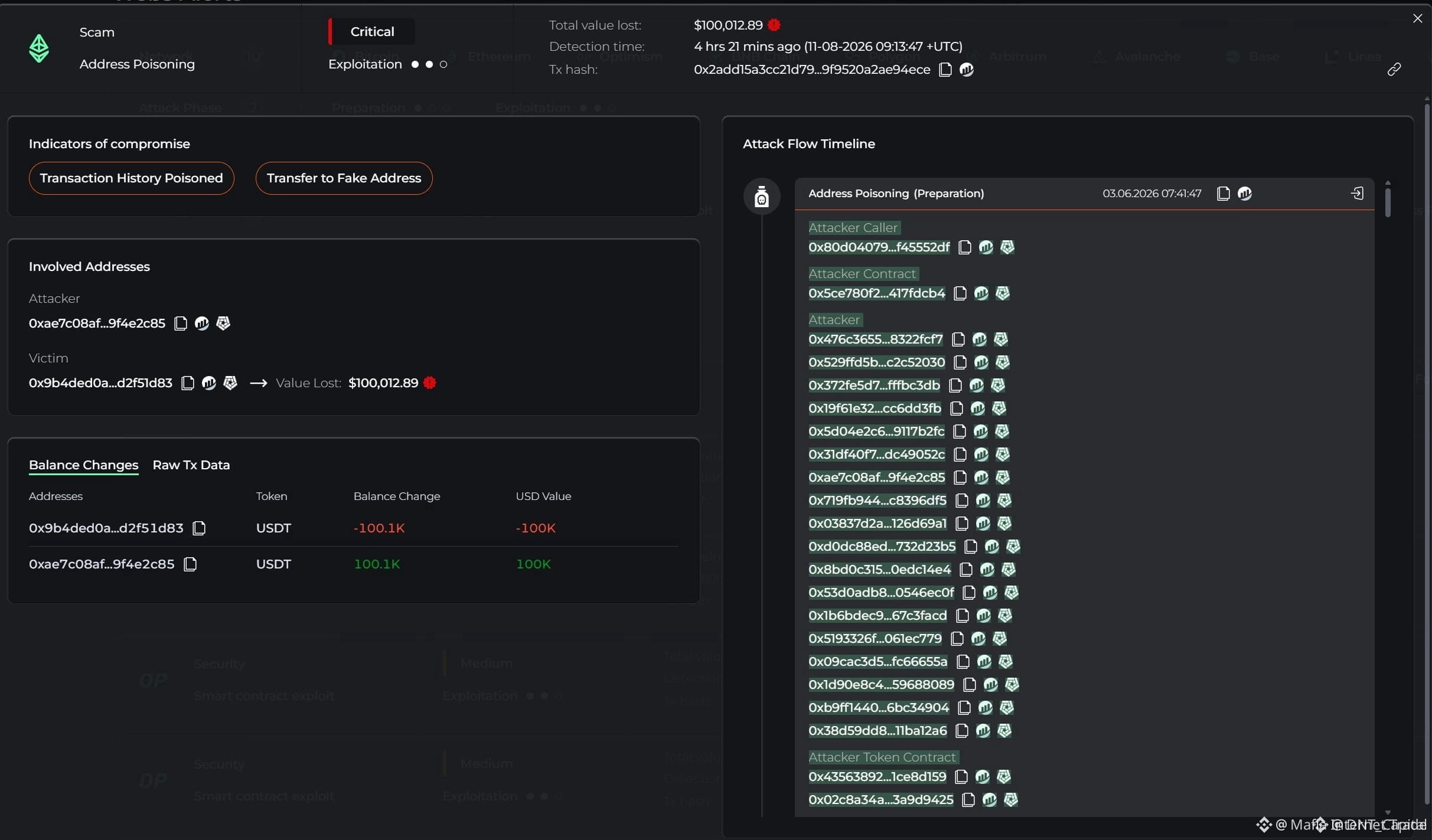
🚨 $100K USDT VANISHES IN A 66-DAY 'ADDRESS POISONING' TRAP! ⚠️
🔍 This scam isn't loud — it's silent and patient. The attacker seeded a fake address into the victim's transaction history 66 days ago, then simply waited for the inevitable copy-paste slip. By the time the $100K USDT moved, it was already swapped into ETH to dodge any freeze attempts. 💡
The lesson is brutal but simple: never trust the last transaction in your history. Scammers are playing the long game, banking on muscle memory over caution. Always verify the full address — character by character — before confirming anything. 🛡️
💬 What's your system for verifying addresses before a transfer — manual double-check or a saved whitelist? 👇
⚠️ Not financial advice. Always manage your risk. 🛡️
🏷️ #USDT #CryptoScam #WalletSecurity #AddressPoisoning #Crypto
🛡️ 🔒
🚨 $100K USDT VANISHES IN A 66-DAY 'ADDRESS POISONING' TRAP! ⚠️
🔍 This scam isn't loud — it's silent and patient. The attacker seeded a fake address into the victim's transaction history 66 days ago, then simply waited for the inevitable copy-paste slip. By the time the $100K USDT moved, it was already swapped into ETH to dodge any freeze attempts. 💡
The lesson is brutal but simple: never trust the last transaction in your history. Scammers are playing the long game, banking on muscle memory over caution. Always verify the full address — character by character — before confirming anything. 🛡️
💬 What's your system for verifying addresses before a transfer — manual double-check or a saved whitelist? 👇
⚠️ Not financial advice. Always manage your risk. 🛡️
🏷️ #USDT #CryptoScam #WalletSecurity #AddressPoisoning #Crypto
🛡️ 🔒
🔍 This scam isn't loud — it's silent and patient. The attacker seeded a fake address into the victim's transaction history 66 days ago, then simply waited for the inevitable copy-paste slip. By the time the $100K USDT moved, it was already swapped into ETH to dodge any freeze attempts. 💡
The lesson is brutal but simple: never trust the last transaction in your history. Scammers are playing the long game, banking on muscle memory over caution. Always verify the full address — character by character — before confirming anything. 🛡️
💬 What's your system for verifying addresses before a transfer — manual double-check or a saved whitelist? 👇
⚠️ Not financial advice. Always manage your risk. 🛡️
🏷️ #USDT #CryptoScam #WalletSecurity #AddressPoisoning #Crypto
🛡️ 🔒
26

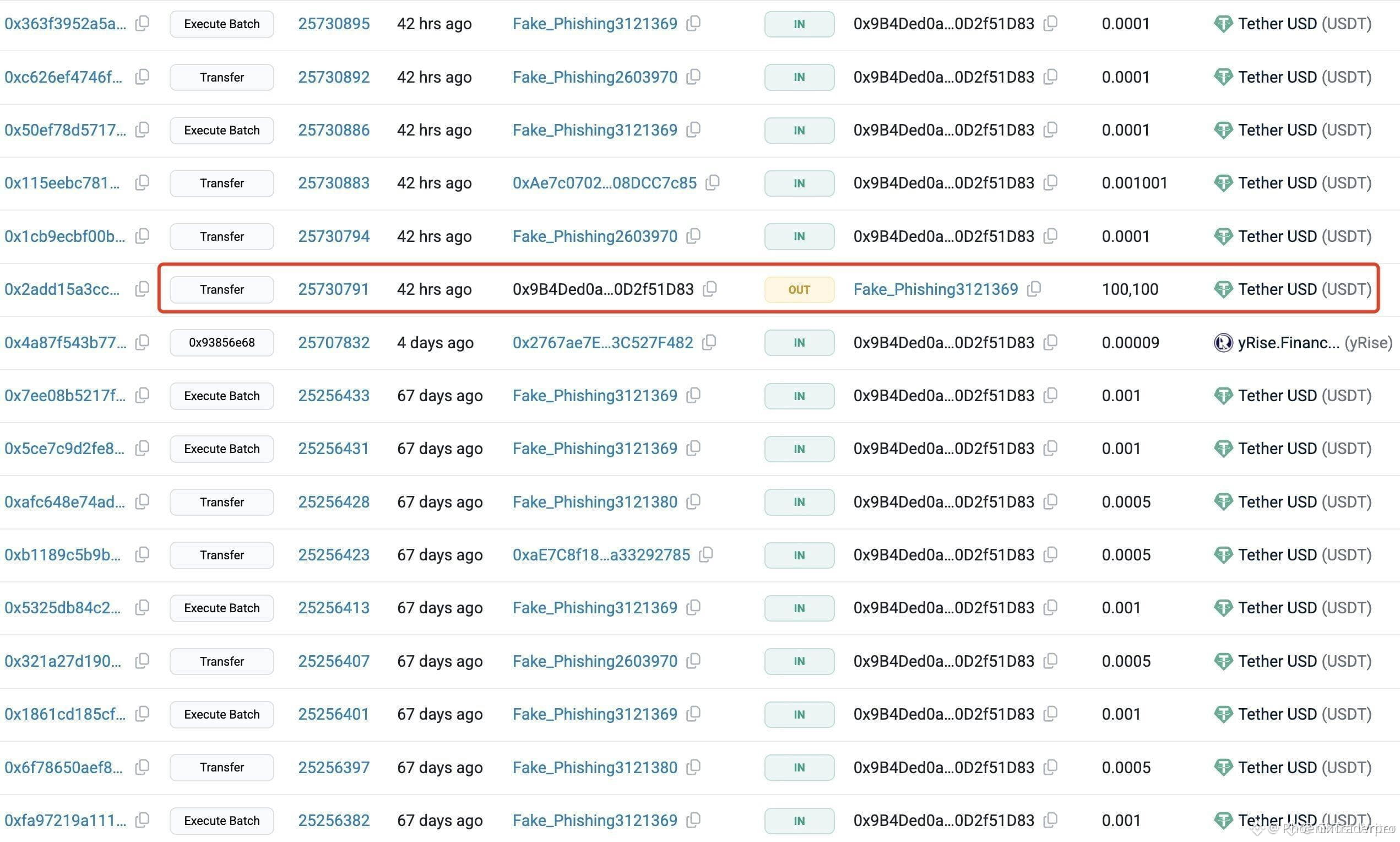
🚨 $100K VANISHED FROM A WALLET — YOUR TRANSACTION HISTORY JUST BECAME A BAIT TRAP! ⚠️
🔍 The latest report from Lookonchain exposes a painful reality: one user copied a poisoned wallet address straight from their own transaction history, watched $100K leave their balance, and never saw it return. 📢 Scammers are quietly sending tiny amounts to your wallets from lookalike addresses — planting decoys right next to the real one you use daily.
💡 These poisoners target the biggest blind spot in crypto: muscle memory. 🌊 You're not just one paste away from a transaction — you're one tiny character difference away from losing everything. 🩸 Always verify the full address — every digit, every letter — before confirming that send. Not the first five characters. Not the last five. The entire string.
💬 Have you ever caught a fake address in your history just in time? 👇
⚠️ Not financial advice. Always manage your risk. 🛡️
🏷️ #CryptoScam #WalletSafety #AddressPoisoning #CryptoSecurity #BTC
🛡️ 🔍
🚨 $100K VANISHED FROM A WALLET — YOUR TRANSACTION HISTORY JUST BECAME A BAIT TRAP! ⚠️
🔍 The latest report from Lookonchain exposes a painful reality: one user copied a poisoned wallet address straight from their own transaction history, watched $100K leave their balance, and never saw it return. 📢 Scammers are quietly sending tiny amounts to your wallets from lookalike addresses — planting decoys right next to the real one you use daily.
💡 These poisoners target the biggest blind spot in crypto: muscle memory. 🌊 You're not just one paste away from a transaction — you're one tiny character difference away from losing everything. 🩸 Always verify the full address — every digit, every letter — before confirming that send. Not the first five characters. Not the last five. The entire string.
💬 Have you ever caught a fake address in your history just in time? 👇
⚠️ Not financial advice. Always manage your risk. 🛡️
🏷️ #CryptoScam #WalletSafety #AddressPoisoning #CryptoSecurity #BTC
🛡️ 🔍
🔍 The latest report from Lookonchain exposes a painful reality: one user copied a poisoned wallet address straight from their own transaction history, watched $100K leave their balance, and never saw it return. 📢 Scammers are quietly sending tiny amounts to your wallets from lookalike addresses — planting decoys right next to the real one you use daily.
💡 These poisoners target the biggest blind spot in crypto: muscle memory. 🌊 You're not just one paste away from a transaction — you're one tiny character difference away from losing everything. 🩸 Always verify the full address — every digit, every letter — before confirming that send. Not the first five characters. Not the last five. The entire string.
💬 Have you ever caught a fake address in your history just in time? 👇
⚠️ Not financial advice. Always manage your risk. 🛡️
🏷️ #CryptoScam #WalletSafety #AddressPoisoning #CryptoSecurity #BTC
🛡️ 🔍
26
තවත් අන්තර්ගතයන් ගවේෂණය කිරීමට ඇතුල් වන්න
Binance චතුරශ්රය හි ගෝලීය ක්රිප්ටෝ පරිශීලකයින් හා එක්වන්න
⚡️ ක්රිප්ටෝ පිළිබඳ නවතම සහ ප්රයෝජනවත් තොරතුරු ලබා ගන්න.
💬 ලොව විශාලතම ක්රිප්ටෝ හුවමාරුව මගින් විශ්වාස කෙරේ.
👍 සත්යායනය කරන ලද නිර්මාණකරුවන්ගෙන් සැබෑ විදසුන් සොයා ගන්න.
විද්යුත් තැපෑල / දුරකථන අංකය
නැගී එන මාතෘකා
1
#USPPIMissMayEaseBTCPressure
43,524 නැරඹීම්
753 සාකච්ඡා කරමින්
2
#BitcoinCoreDisclosesTorTrafficVulnerability
17,062 නැරඹීම්
397 සාකච්ඡා කරමින්
3
#WhatWillDriveCryptoandStocks’NextRebound?
155,602 නැරඹීම්
1,617 සාකච්ඡා කරමින්
4
#BitcoinBreaksBelow200WeekMovingAverage
51,332 නැරඹීම්
505 සාකච්ඡා කරමින්
5
#SpaceXTeslaMergerTalksWouldCombine30220BTC
16,796 නැරඹීම්
275 සාකච්ඡා කරමින්
6
#Anthropic’s6xIPODemandSignalsPotentialRecordRaise
53,378 නැරඹීම්
733 සාකච්ඡා කරමින්
7
#USCryptoETFsLose$1.48BInFiveDays
2,702 නැරඹීම්
51 සාකච්ඡා කරමින්
8
#KoreaDigitalAssetBasicActFinalDraftExpectedEarlyJanuary
3,748 නැරඹීම්
23 සාකච්ඡා කරමින්
9
#RippleRLUSDMarketCapSurpassesPayPalPYUSD
11,199 නැරඹීම්
148 සාකච්ඡා කරමින්
10
#JaneStreetNearlyOctuplesFidelityBitcoinETFHoldings
24,239 නැරඹීම්
260 සාකච්ඡා කරමින්