
John_BNB
1.2k පෝස්ටු
John_BNB
වාර්තා කරන්න
පරිශීලක අවහිර කරන්න
I’m John, Binance Angel from Cambodia 🇰🇭
Active in trading, P2P, Web3 farming & community building.
x: @JohnRealKH
square: @John_BNB

Binance Square Angels
විවෘත වෙළෙඳාම
නිතර වෙළෙන්දා
{වේලාව} වසර
378 හඹා යමින්
4.6K+ හඹා යන්නන්
4.6K+ කැමති විය
1 ලාංජනය
පෝස්ටු
ආයෝජන කළඹ
සියල්ල
උපුටා දැක්වීම්
වීඩියෝ
සජීවි
·
--
My $PIEVERSE order been taking limited long ago oh unexpected...
My $PIEVERSE order been taking limited long ago oh unexpected...
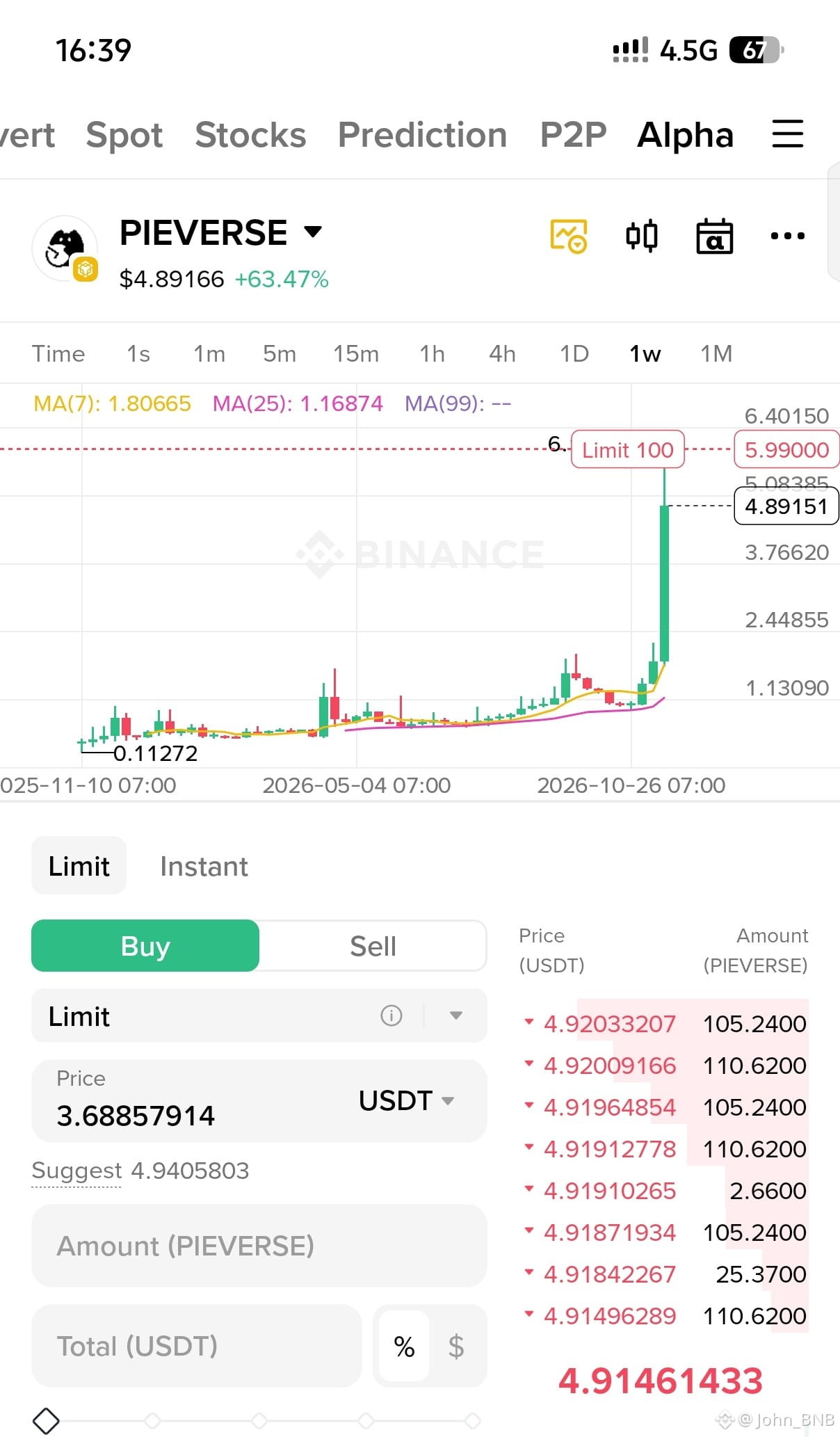
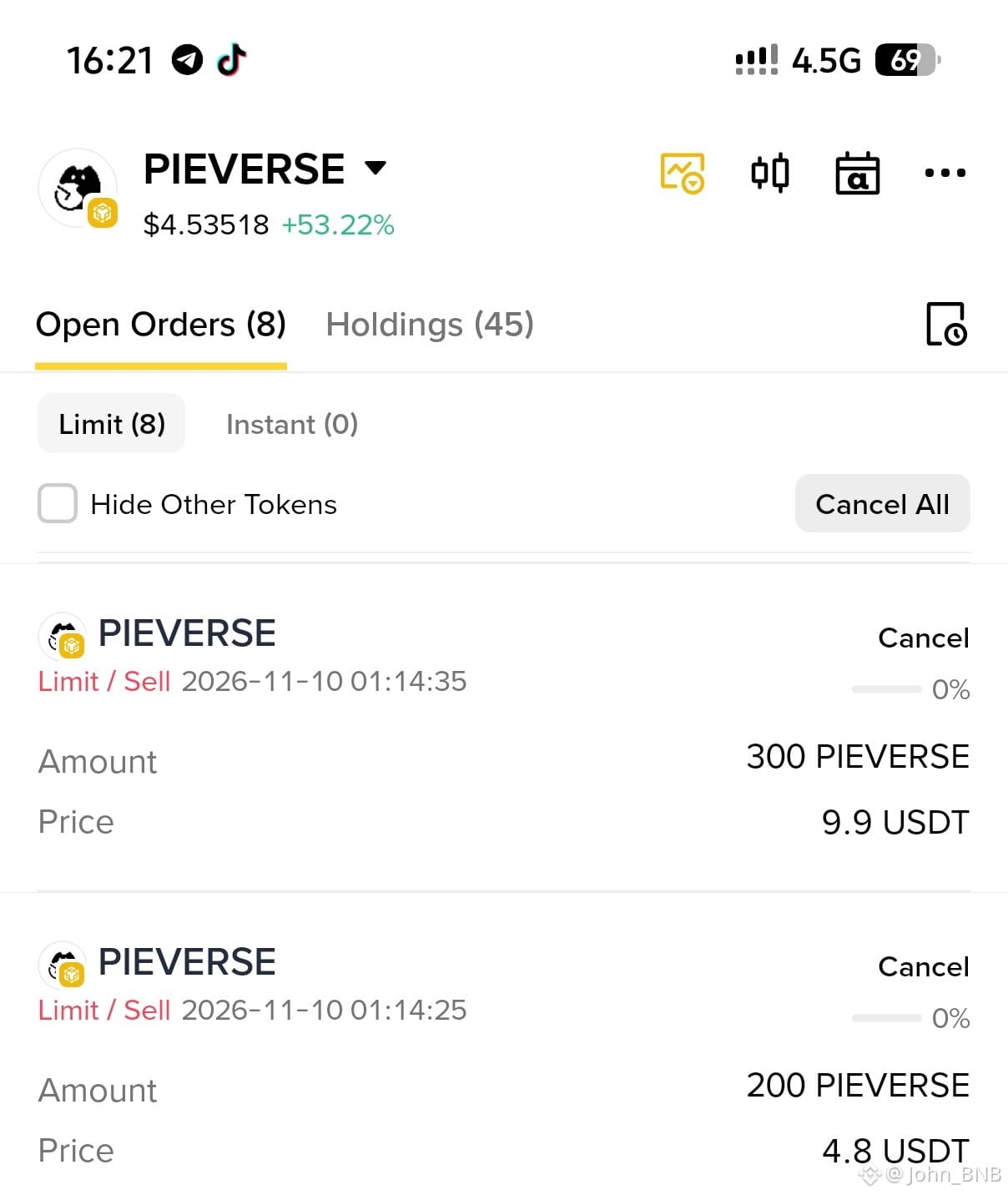
417
·
--
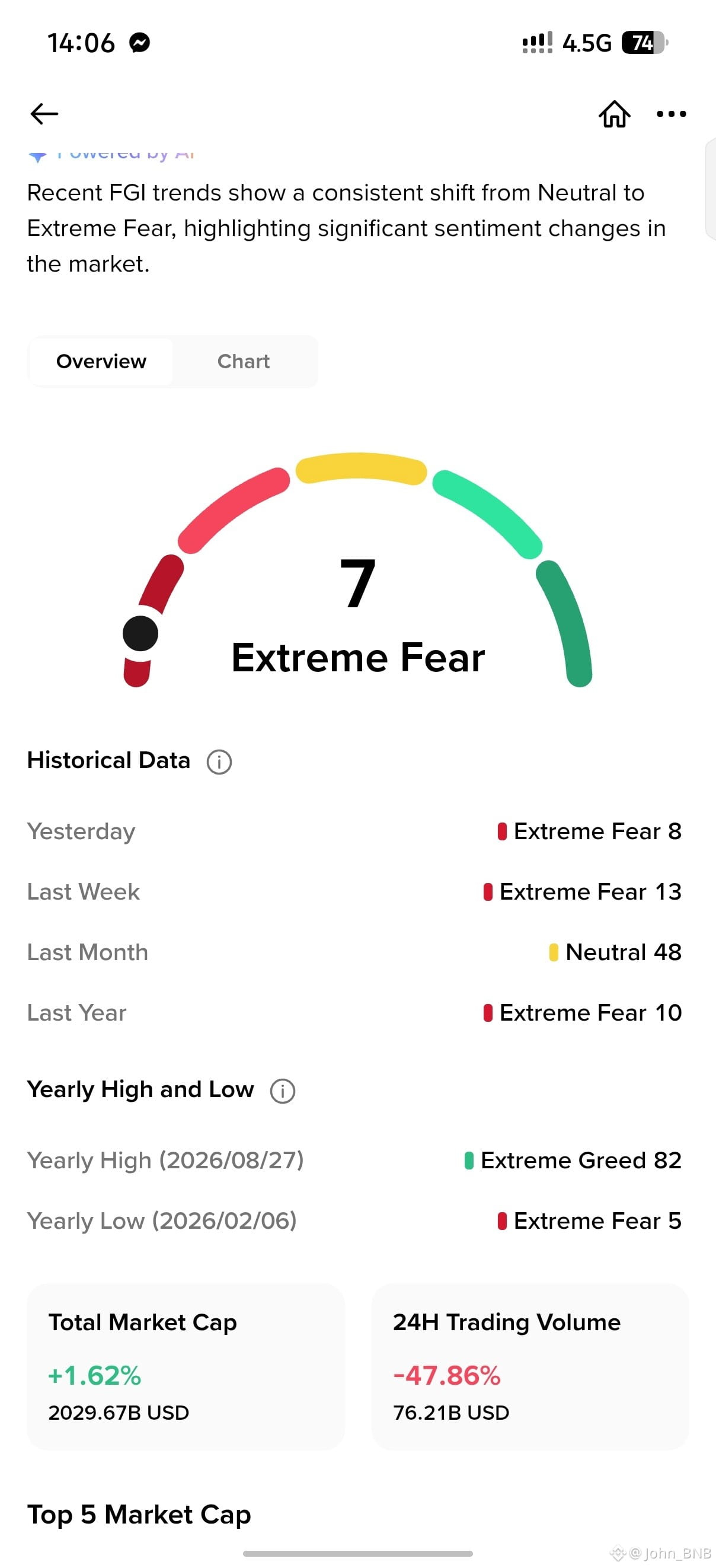
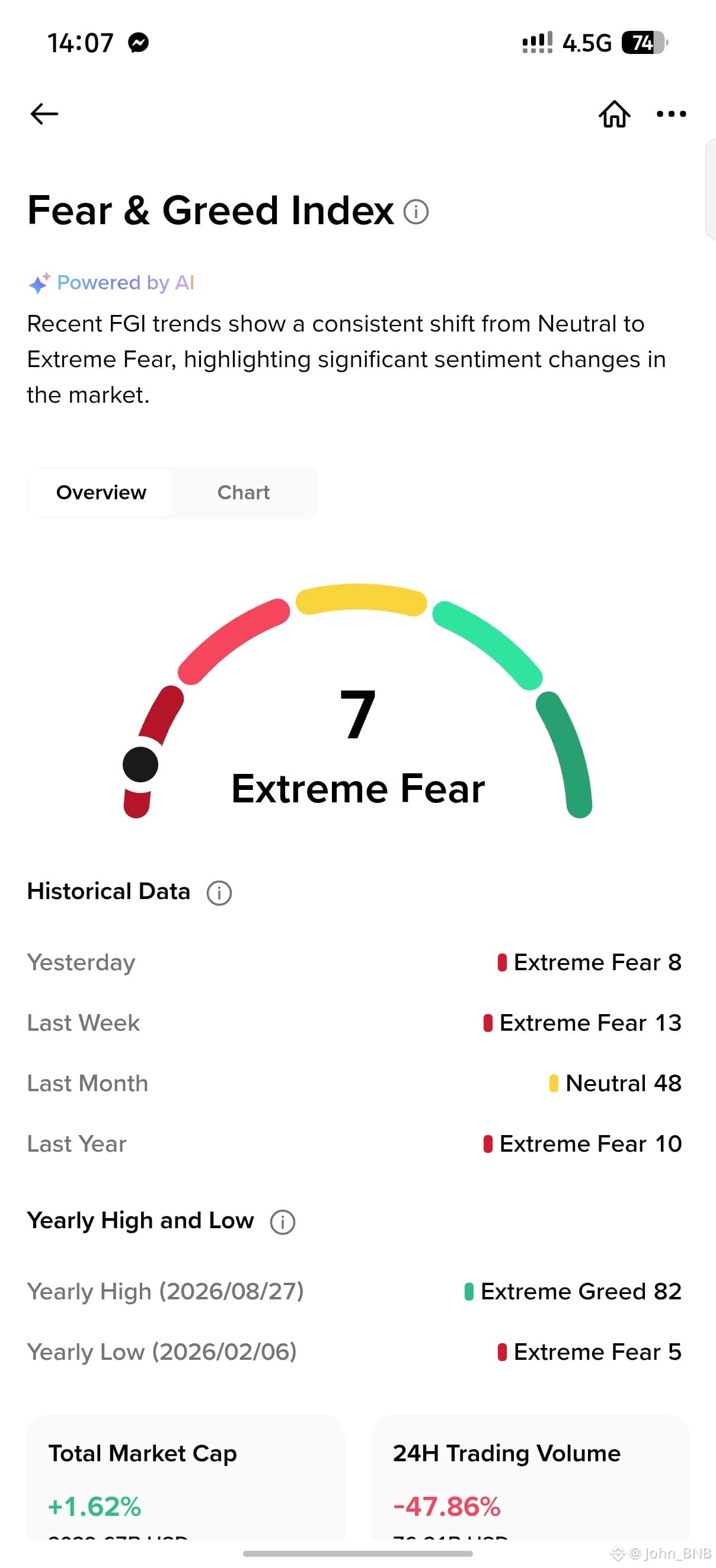
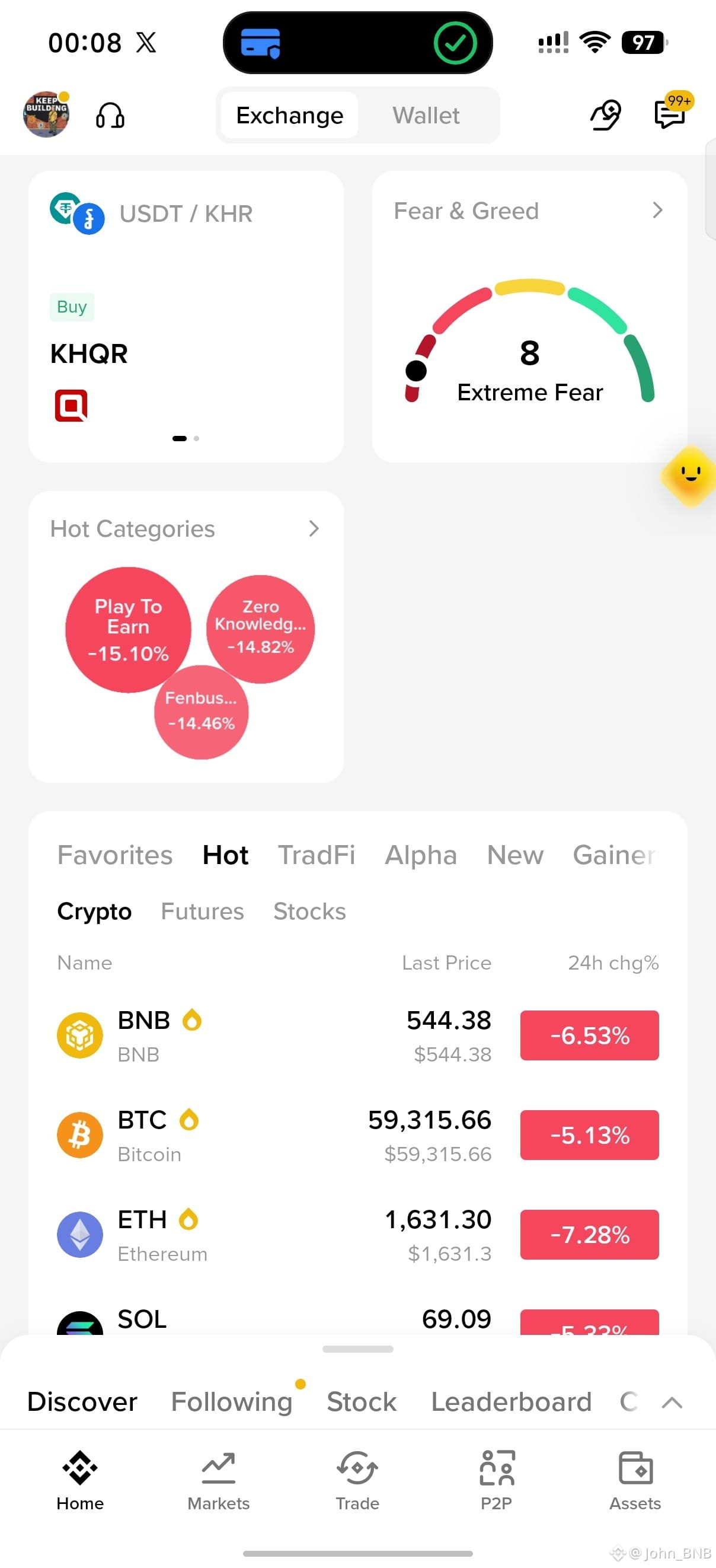
What an extreme fear in crypto history
#FearIndex
What an extreme fear in crypto history
#FearIndex
#FearIndex
3
336
·
--
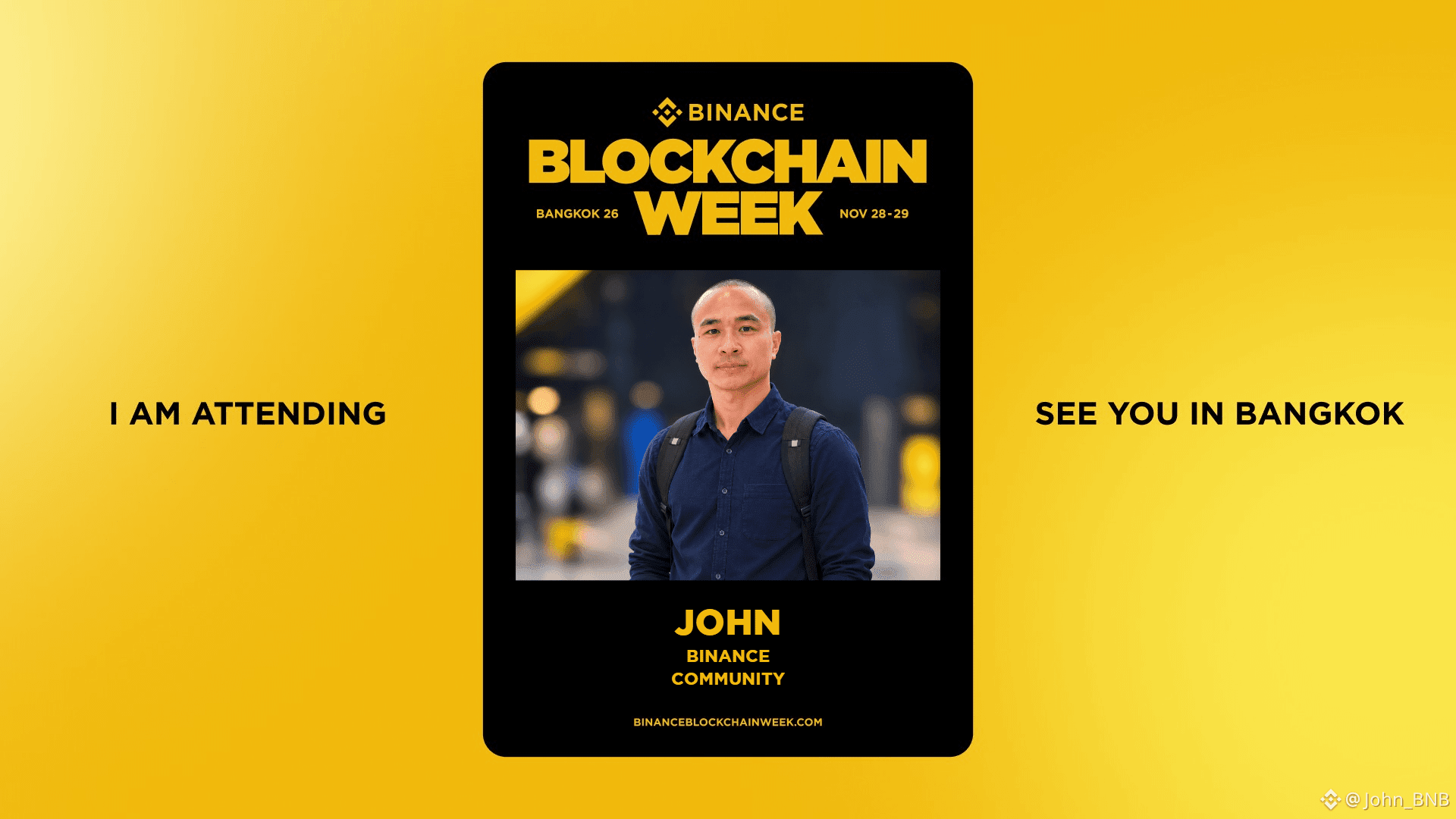
Even if you are not at BBW 2026 this year, you can still generate a social card to look impressive right?
Here: [BBW social card generate](https://www.binance.com/en/bbw/social-card)
#BinanceBlockchainWeek2026 #BBW
Even if you are not at BBW 2026 this year, you can still generate a social card to look impressive right?
Here: BBW social card generate
#BinanceBlockchainWeek2026 #BBW
Here: BBW social card generate
#BinanceBlockchainWeek2026 #BBW
3
150
·
--
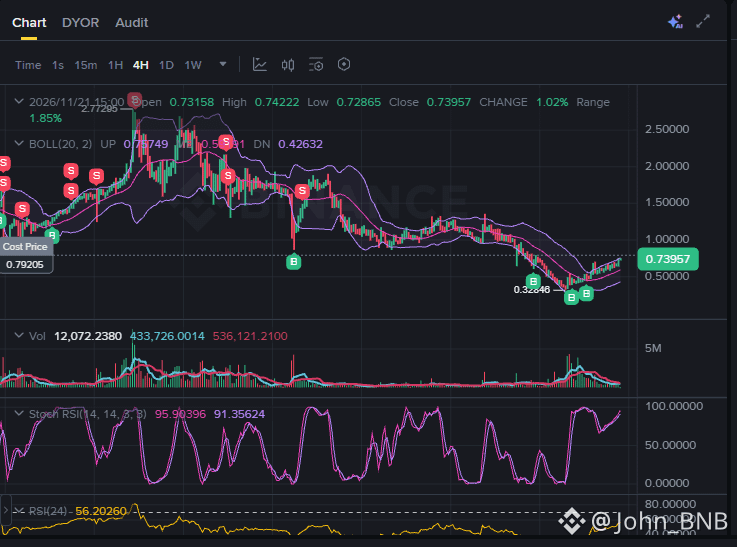
show some strength $BTW m waiting you at 1 dollar ish..haha
{future}(BTWUSDT)
show some strength $BTW m waiting you at 1 dollar ish..haha
John_BNB
·
--
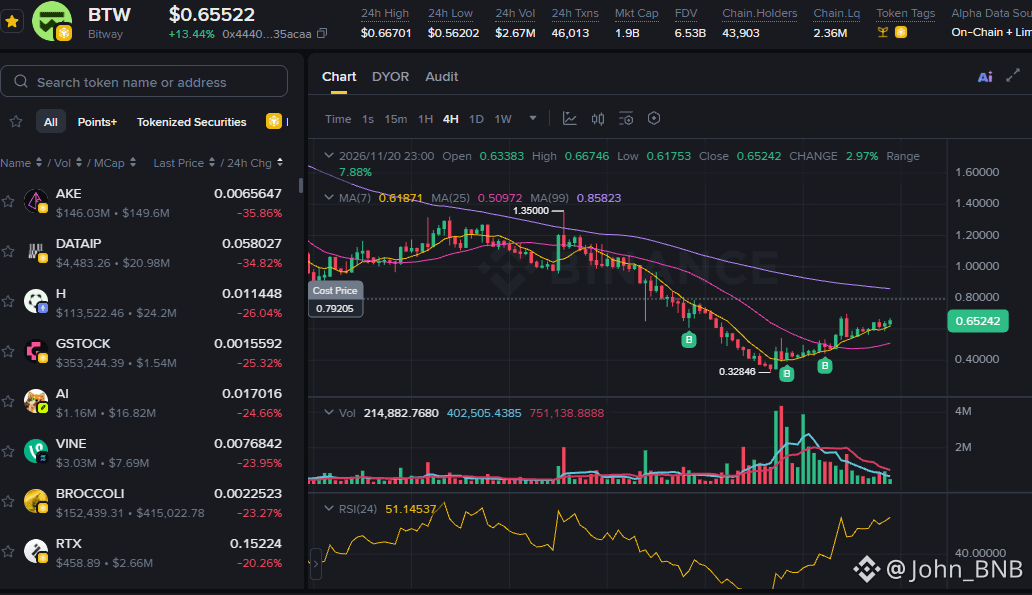
While $BTC dip below 60k this $BTW keep it's momentum up from a deep retrace...
Opportunity is ahead.
#crypto
Opportunity is ahead.
#crypto
187
·
--
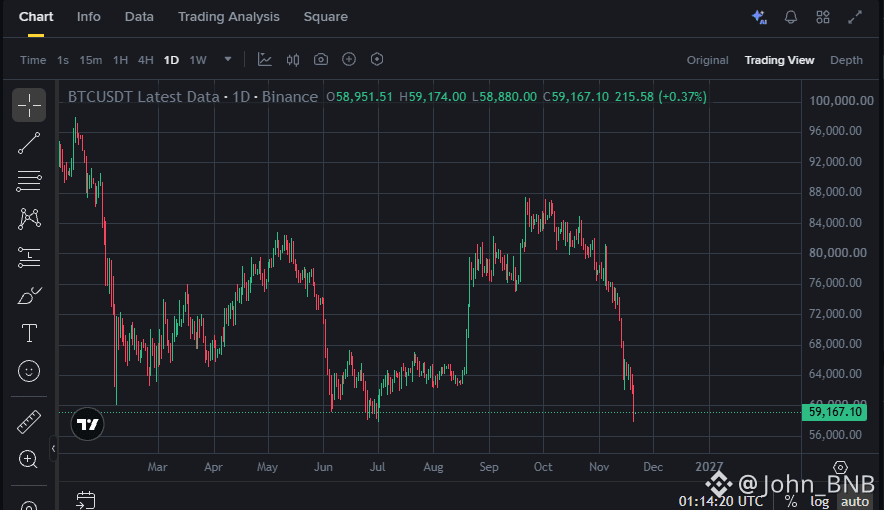
You asked for it $BTC 59k and now you wait for 45k?
😀
{spot}(BTCUSDT)
You asked for it $BTC 59k and now you wait for 45k?
😀
😀
2
240
·
--
While $BTC dip below 60k this $BTW keep it's momentum up from a deep retrace...
Opportunity is ahead.
#crypto
{future}(BTWUSDT)
{spot}(BTCUSDT)
While $BTC dip below 60k this $BTW keep it's momentum up from a deep retrace...
Opportunity is ahead.
#crypto
Opportunity is ahead.
#crypto
1
2
370
·
--
ලිපිය
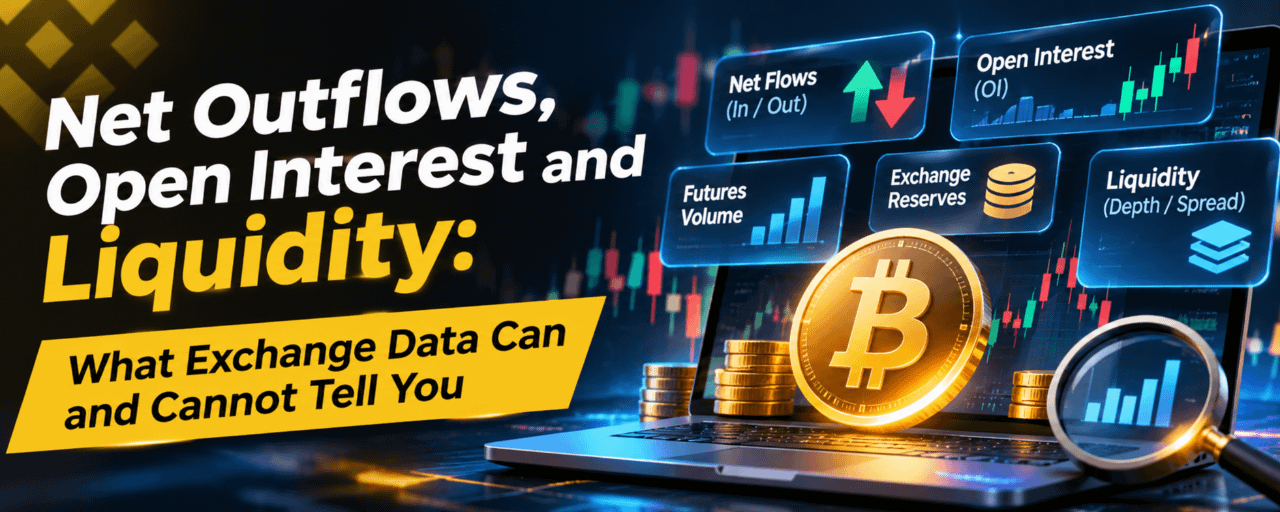
Net Outflows, Open Interest and Liquidity: What Exchange Data Can and Cannot Tell YouCrypto exchange data offers a valuable window into market activity. From Bitcoin leaving exchanges to rising futures open interest, these metrics can reveal changes in trader behavior, liquidity conditions and market positioning.
But there is a problem: the same data can tell very different stories depending on how it is interpreted.
A large exchange outflow does not automatically mean investors are accumulating. Rising open interest does not necessarily indicate a bullish market. And high trading volume does not always mean an exchange has deep liquidity.
Let's break down what these indicators actually tell us, what they cannot prove, and how to use them together.
1. Exchange Netflows: Are Investors Moving Their Coins?
Exchange netflow measures the difference between assets entering and leaving an exchange.
Net inflows: More assets are deposited into exchanges than withdrawn.Net outflows: More assets leave exchanges than enter.
For example, when Bitcoin experiences significant net outflows, some analysts interpret this as investors moving assets into self-custody for long-term holding.
However, there are other explanations.
Coins may be transferred to another exchange, moved between internal wallets, or shifted for operational reasons. Similarly, inflows do not automatically mean investors are preparing to sell.
What it tells us: Changes in asset movement and potential shifts in exchange supply.
What it cannot tell us: The exact intentions of wallet owners or whether the market is about to move up or down.
The important question is not simply how much crypto leaves an exchange, but where it goes and what happens afterward.
2. Futures Volume: Measuring Trading Activity
Futures trading volume measures the total value of contracts traded during a specific period.
A sudden increase can indicate stronger market participation, increased speculation or a reaction to major news.
However, high futures volume alone does not reveal market direction.
Both buyers and sellers participate in every matched trade. A surge in volume can occur during a strong rally, a sharp sell-off or a period of intense volatility.
It is also important to distinguish between spot volume and futures volume.
Spot volume: Measures actual trading of the underlying asset.Futures volume: Measures trading activity in derivative contracts.
A market dominated by leveraged futures activity may behave differently from one supported by strong spot demand.
3. Open Interest: Understanding Market Positioning
Open interest (OI) represents the total number or value of outstanding derivative contracts that have not yet been closed or settled.
Unlike trading volume, which measures activity over a period, open interest measures outstanding positions at a particular moment.
Here are four common scenarios:
These are useful clues, not definitive explanations.
For example, rising prices and increasing open interest may suggest expanding participation in a bullish move. But it does not prove that new positions are exclusively long.
Open interest represents both sides of outstanding contracts. Funding rates, liquidation data and market structure can provide additional context.
4. Exchange Reserves: How Much Crypto Is Held on Exchanges?
Exchange reserves estimate the amount of cryptocurrency held in wallets attributed to centralized exchanges.
Analysts monitor reserve levels to understand how much supply is potentially available within exchange-controlled wallets.
For example:
Declining reserves may indicate withdrawals or changes in custody.Increasing reserves may indicate deposits or asset transfers into exchange wallets.Stable reserves may suggest relatively unchanged reported holdings.
But exchange reserves have limitations.
Wallet labeling is not always complete. Exchanges may reorganize wallets, use multiple custody providers or move assets between cold and hot storage.
A declining reserve balance does not automatically mean selling pressure will disappear. Likewise, increasing reserves do not guarantee an upcoming sell-off.
Reserve data should be treated as an estimate, not a complete picture of all available market supply.
5. Liquidity: Why Trading Volume Is Not Enough
Liquidity describes how easily an asset can be bought or sold without significantly affecting its price.
This is one of the most important metrics for understanding exchange quality and market conditions.
Several indicators help measure liquidity:
Bid-ask spread: The difference between the highest buying price and lowest selling price.Order book depth: The amount of buy and sell orders available at different price levels.Slippage: The difference between the expected execution price and the actual execution price.Market depth: How much trading activity the market can absorb before prices move significantly.
An exchange may report billions of dollars in daily trading volume but still have limited order book depth for a particular trading pair.
This is why professional traders often examine liquidity around the current market price rather than relying entirely on reported volume.
6. Comparing Exchanges: Avoid These Common Mistakes
Not all exchange data is directly comparable.
Different platforms may calculate and report metrics using different methodologies.
Some common comparison mistakes include:
Mixing spot and futures volume: These represent different types of market activity.Ignoring reporting periods: Comparing 24-hour data with weekly or monthly figures creates misleading conclusions.Ignoring asset coverage: One platform may report reserves for more assets than another.Overlooking internal transfers: Wallet movements can distort interpretations of exchange netflows.Ignoring liquidity differences: High volume does not necessarily mean better execution.Comparing different contract types: Open interest in USD-margined and coin-margined contracts may require different treatment.
For meaningful comparisons, analysts should use consistent timeframes, asset coverage, contract types and measurement methods.
7. How to Combine These Metrics for Better Market Analysis
The real value comes from combining indicators rather than looking at one metric in isolation.
Consider a hypothetical Bitcoin market scenario:
Exchange reserves are declining.Net outflows are increasing.Spot trading volume is rising.Futures open interest is increasing.Funding rates are becoming increasingly positive.
This could suggest stronger market participation, increased withdrawals and growing leveraged long positioning.
But there is another possibility: excessive leverage is building, making the market vulnerable to a long liquidation event.
Now imagine open interest declining while spot volume increases. This may indicate that leveraged positions are being reduced while spot trading remains active.
Neither scenario guarantees a particular price direction.
The objective is to identify market conditions, understand potential risks and avoid making decisions based on isolated numbers.
Conclusion: Data Is a Tool, Not a Crystal Ball
Exchange data has become an essential part of modern crypto market analysis. Netflows, futures volume, open interest, reserves and liquidity can help investors understand how capital moves and how market participants position themselves.
However, every metric has limitations.
A large outflow is not automatically bullish. High open interest is not automatically bearish. And billions in trading volume do not guarantee deep liquidity.
The strongest analysis comes from combining multiple indicators, checking their underlying methodology and comparing them across consistent timeframes.
Don't just watch where the money moves. Understand why the data may be moving, what it actually measures, and what it cannot prove.
Disclaimer: This article is for educational and informational purposes only. It does not constitute financial or investment advice.
#crypto #blockchain #Web3 #Aİ #education
$BTC $NVDAB $BNB
{spot}(BNBUSDT)
{spot}(NVDABUSDT)
{spot}(BTCUSDT)
Net Outflows, Open Interest and Liquidity: What Exchange Data Can and Cannot Tell You
Crypto exchange data offers a valuable window into market activity. From Bitcoin leaving exchanges to rising futures open interest, these metrics can reveal changes in trader behavior, liquidity conditions and market positioning.
But there is a problem: the same data can tell very different stories depending on how it is interpreted.
A large exchange outflow does not automatically mean investors are accumulating. Rising open interest does not necessarily indicate a bullish market. And high trading volume does not always mean an exchange has deep liquidity.
Let's break down what these indicators actually tell us, what they cannot prove, and how to use them together.
1. Exchange Netflows: Are Investors Moving Their Coins?
Exchange netflow measures the difference between assets entering and leaving an exchange.
Net inflows: More assets are deposited into exchanges than withdrawn.Net outflows: More assets leave exchanges than enter.
For example, when Bitcoin experiences significant net outflows, some analysts interpret this as investors moving assets into self-custody for long-term holding.
However, there are other explanations.
Coins may be transferred to another exchange, moved between internal wallets, or shifted for operational reasons. Similarly, inflows do not automatically mean investors are preparing to sell.
What it tells us: Changes in asset movement and potential shifts in exchange supply.
What it cannot tell us: The exact intentions of wallet owners or whether the market is about to move up or down.
The important question is not simply how much crypto leaves an exchange, but where it goes and what happens afterward.
2. Futures Volume: Measuring Trading Activity
Futures trading volume measures the total value of contracts traded during a specific period.
A sudden increase can indicate stronger market participation, increased speculation or a reaction to major news.
However, high futures volume alone does not reveal market direction.
Both buyers and sellers participate in every matched trade. A surge in volume can occur during a strong rally, a sharp sell-off or a period of intense volatility.
It is also important to distinguish between spot volume and futures volume.
Spot volume: Measures actual trading of the underlying asset.Futures volume: Measures trading activity in derivative contracts.
A market dominated by leveraged futures activity may behave differently from one supported by strong spot demand.
3. Open Interest: Understanding Market Positioning
Open interest (OI) represents the total number or value of outstanding derivative contracts that have not yet been closed or settled.
Unlike trading volume, which measures activity over a period, open interest measures outstanding positions at a particular moment.
Here are four common scenarios:
These are useful clues, not definitive explanations.
For example, rising prices and increasing open interest may suggest expanding participation in a bullish move. But it does not prove that new positions are exclusively long.
Open interest represents both sides of outstanding contracts. Funding rates, liquidation data and market structure can provide additional context.
4. Exchange Reserves: How Much Crypto Is Held on Exchanges?
Exchange reserves estimate the amount of cryptocurrency held in wallets attributed to centralized exchanges.
Analysts monitor reserve levels to understand how much supply is potentially available within exchange-controlled wallets.
For example:
Declining reserves may indicate withdrawals or changes in custody.Increasing reserves may indicate deposits or asset transfers into exchange wallets.Stable reserves may suggest relatively unchanged reported holdings.
But exchange reserves have limitations.
Wallet labeling is not always complete. Exchanges may reorganize wallets, use multiple custody providers or move assets between cold and hot storage.
A declining reserve balance does not automatically mean selling pressure will disappear. Likewise, increasing reserves do not guarantee an upcoming sell-off.
Reserve data should be treated as an estimate, not a complete picture of all available market supply.
5. Liquidity: Why Trading Volume Is Not Enough
Liquidity describes how easily an asset can be bought or sold without significantly affecting its price.
This is one of the most important metrics for understanding exchange quality and market conditions.
Several indicators help measure liquidity:
Bid-ask spread: The difference between the highest buying price and lowest selling price.Order book depth: The amount of buy and sell orders available at different price levels.Slippage: The difference between the expected execution price and the actual execution price.Market depth: How much trading activity the market can absorb before prices move significantly.
An exchange may report billions of dollars in daily trading volume but still have limited order book depth for a particular trading pair.
This is why professional traders often examine liquidity around the current market price rather than relying entirely on reported volume.
6. Comparing Exchanges: Avoid These Common Mistakes
Not all exchange data is directly comparable.
Different platforms may calculate and report metrics using different methodologies.
Some common comparison mistakes include:
Mixing spot and futures volume: These represent different types of market activity.Ignoring reporting periods: Comparing 24-hour data with weekly or monthly figures creates misleading conclusions.Ignoring asset coverage: One platform may report reserves for more assets than another.Overlooking internal transfers: Wallet movements can distort interpretations of exchange netflows.Ignoring liquidity differences: High volume does not necessarily mean better execution.Comparing different contract types: Open interest in USD-margined and coin-margined contracts may require different treatment.
For meaningful comparisons, analysts should use consistent timeframes, asset coverage, contract types and measurement methods.
7. How to Combine These Metrics for Better Market Analysis
The real value comes from combining indicators rather than looking at one metric in isolation.
Consider a hypothetical Bitcoin market scenario:
Exchange reserves are declining.Net outflows are increasing.Spot trading volume is rising.Futures open interest is increasing.Funding rates are becoming increasingly positive.
This could suggest stronger market participation, increased withdrawals and growing leveraged long positioning.
But there is another possibility: excessive leverage is building, making the market vulnerable to a long liquidation event.
Now imagine open interest declining while spot volume increases. This may indicate that leveraged positions are being reduced while spot trading remains active.
Neither scenario guarantees a particular price direction.
The objective is to identify market conditions, understand potential risks and avoid making decisions based on isolated numbers.
Conclusion: Data Is a Tool, Not a Crystal Ball
Exchange data has become an essential part of modern crypto market analysis. Netflows, futures volume, open interest, reserves and liquidity can help investors understand how capital moves and how market participants position themselves.
However, every metric has limitations.
A large outflow is not automatically bullish. High open interest is not automatically bearish. And billions in trading volume do not guarantee deep liquidity.
The strongest analysis comes from combining multiple indicators, checking their underlying methodology and comparing them across consistent timeframes.
Don't just watch where the money moves. Understand why the data may be moving, what it actually measures, and what it cannot prove.
Disclaimer: This article is for educational and informational purposes only. It does not constitute financial or investment advice.
#crypto #blockchain #Web3 #Aİ #education
$BTC $NVDAB $BNB
4
229
·
--
ලිපිය
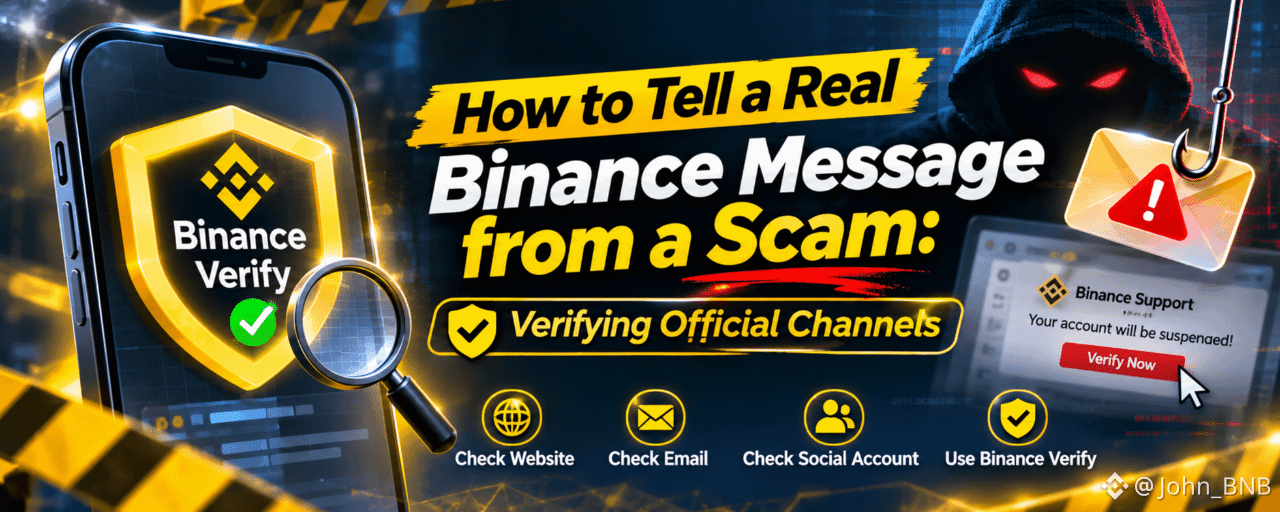
How to Tell a Real Binance Message from a Scam: Verifying Official ChannelsBinance Security Guide | Account Protection | Anti-Phishing
In the crypto world, not every message that looks official comes from the real source.
Scammers frequently impersonate trusted crypto platforms, especially after major security incidents or breaking news. They use fake emails, cloned websites, fraudulent social media accounts, and impersonated customer support agents to trick users into revealing sensitive information or transferring funds.
A message may carry the Binance logo, use professional language, and even appear to come from a familiar account. But appearances are not proof of authenticity.
The good news is that users have a way to check.
This guide explains how to verify whether a website, email, social media account, or other communication genuinely belongs to Binance, how to recognize common scam tactics, and what to do when something feels suspicious.
1. Use Binance Verify Before Trusting a Message
One of the simplest ways to check whether a communication is legitimate is Binance Verify.
Binance Verify is an official verification tool that allows users to check whether a website address, email address, phone number, or social media account is associated with Binance's official channels.
Instead of trusting a message because it looks professional, independently verify its source.
How to use it:
Visit [Binance Verify](https://www.binance.com/en/official-verification)Copy the website URL, email address, phone number, or social media account you want to check.Enter the information into the verification tool.Review the result to determine whether the source is officially recognized.If the source cannot be verified, do not interact with it until you confirm through Binance's official channels.
Important: Always access Binance Verify by typing the official Binance website address yourself or using a trusted bookmark. Avoid clicking verification links sent by suspicious accounts.
2. Check Every Channel, Not Just the Logo
Scammers can imitate almost anything. Knowing where legitimate Binance communications originate is an important part of account security.
Here are the main channels to check:
A. Websites and URLs
Always check the domain name before entering login credentials.Watch for misspellings, extra characters, unusual extensions, and misleading subdomains.Avoid shortened URLs from unknown sources.Access Binance by typing its official address directly: binance.com
B. Social media accounts
Check the account handle and verification status.Be careful with accounts using similar usernames, copied profile pictures, and Binance branding.Verify the social media handle through Binance Verify.Never trust someone simply because they claim to be a Binance employee or Angel.
C. Emails
Inspect the complete sender address, not just the display name.Check your personal Anti-Phishing Code.Avoid opening unexpected attachments or clicking suspicious links.Remember that email sender addresses can be spoofed.
D. Customer Support
Start conversations through Binance's official app or website.Do not trust unsolicited messages from people claiming to be support agents.Never install remote-access software or share your screen because someone claiming to be support asks you to.
3. Recognize the Warning Signs of a Scam
Most impersonation scams follow a familiar pattern: create fear, establish false trust, and push the victim into making a quick decision.
Watch for these common warning signs:
Warning sign
What scammers might say
Urgency
"Your account will be suspended in 30 minutes!"
Security threats
"We detected suspicious activity. Verify immediately."
Fake rewards
"Claim your exclusive Binance bonus here."
Account recovery
"Send your verification code to restore access."
Fake support
"I am your assigned Binance security officer."
Fund transfers
"Move your assets to this secure wallet."
Suspicious links
"Click here to unlock your account."
One particularly important lesson:
Urgency combined with a request for credentials is one of the clearest signs of a scam.
Legitimate security notifications may inform you about account activity, but you should independently open Binance and investigate rather than following instructions from an unexpected message.
4. Understand the Power of Your Anti-Phishing Code
Binance provides an additional security feature called the Anti-Phishing Code.
It allows users to create a unique personal code that appears in genuine Binance emails.
When enabled, you can use this code to distinguish legitimate Binance emails from many phishing attempts.
How to enable it:
Log in through the official Binance app or website.Navigate to your account's Security settings.Find Anti-Phishing Code.Create a unique code that is difficult for others to guess.Save your settings.
Whenever you receive an email claiming to come from Binance, check whether your personal code is displayed.
If it is missing or incorrect, treat the email as suspicious and verify it independently.
Remember: This feature helps authenticate emails, not every SMS, phone call, or social media message. It should be used alongside Binance Verify.
5. What Binance Will Never Ask You to Do
This is perhaps the most important section for every crypto user.
Scammers often pretend to help users protect their accounts, but their real objective is to gain access to their funds.
Keep these rules in mind:
Never share your account password.Never disclose your 2FA or verification codes.Never share your wallet seed phrase or private keys.Never transfer cryptocurrency to a stranger claiming it is necessary to secure your account.Never scan an unknown QR code to log in or authorize access.Never install remote-access applications at the request of an unverified support agent.Never provide screenshots or sensitive account information to strangers.
Your credentials belong to you. No legitimate support conversation should require you to hand over your password, 2FA codes, or private keys.
6. What Should You Do If You Receive a Suspicious Message?
If you receive a suspicious message claiming to be from Binance, don't panic. Follow these steps:
Stop: Don't click links, download files, reply, or share information.Verify: Check the sender, URL, email, or social account through Binance Verify.Report: Report suspicious impersonation through official Binance Support.Secure: If you have interacted with a suspicious website or disclosed information, change your password through the official platform and review your security settings.Act immediately: If you suspect unauthorized access, contact Binance Support through the official app or website and follow its instructions to secure or disable your account.
Also review your account activity, login history, and withdrawal records for anything you don't recognize.
The sooner you respond, the better your chances of limiting potential damage.
7. Security Is a Shared Responsibility
Binance provides security tools and official verification channels, but users also play an important role in protecting their assets.
A strong password, 2FA, Anti-Phishing Code, and regular security checks can help reduce risks. However, the most valuable habit is learning to question unexpected communications before taking action.
Scammers don't necessarily need to break through a platform's security systems if they can convince users to give away their credentials.
The next time someone sends you an urgent message claiming to be from Binance, remember three simple words:
STOP. VERIFY. PROTECT.
Don't trust appearances. Verify the source before you trust the message.
Frequently Asked Questions
1. How can I verify whether a Binance employee is real?
Use Binance Verify to check their email address, phone number, or social media handle. If you cannot verify their identity, do not proceed with their requests.
2. Does Binance Verify check Telegram accounts?
Yes. You can enter Telegram usernames and other supported social media handles to check whether they are officially recognized.
3. What if Binance Verify says an account is verified, but the message still looks suspicious?
Remain cautious. Email and SMS sender information can be spoofed. Contact Binance Support independently if you have doubts.
4. Does Binance Support ever ask for my password or 2FA code?
You should never disclose your password, 2FA codes, seed phrase, or private keys to anyone claiming to be support.
5. Where can I report a fake Binance account?
Use the official Binance Support portal to report suspicious accounts, messages, and phishing websites.
Official Security Resources
[Binance Verify – Official Verification Tool](https://www.binance.com/en/official-verification)[How to Identify and Avoid Binance Imposters](https://www.binance.com/blog/security/299010416215875222?ref=CPA_0037NAK6ST)[How to Identify Phishing Emails](https://www.binance.com/en/support/faq/detail/360002070252?utm_source=new_share&ref=CPA_0037NAK6ST)[How to Prevent Phishing Attacks](https://www.binance.com/en/support/faq/detail/360020819031?utm_source=new_share&ref=CPA_0037NAK6ST)
#Binance #security #SAFE #safu
How to Tell a Real Binance Message from a Scam: Verifying Official Channels
Binance Security Guide | Account Protection | Anti-Phishing
In the crypto world, not every message that looks official comes from the real source.
Scammers frequently impersonate trusted crypto platforms, especially after major security incidents or breaking news. They use fake emails, cloned websites, fraudulent social media accounts, and impersonated customer support agents to trick users into revealing sensitive information or transferring funds.
A message may carry the Binance logo, use professional language, and even appear to come from a familiar account. But appearances are not proof of authenticity.
The good news is that users have a way to check.
This guide explains how to verify whether a website, email, social media account, or other communication genuinely belongs to Binance, how to recognize common scam tactics, and what to do when something feels suspicious.
1. Use Binance Verify Before Trusting a Message
One of the simplest ways to check whether a communication is legitimate is Binance Verify.
Binance Verify is an official verification tool that allows users to check whether a website address, email address, phone number, or social media account is associated with Binance's official channels.
Instead of trusting a message because it looks professional, independently verify its source.
How to use it:
Visit Binance VerifyCopy the website URL, email address, phone number, or social media account you want to check.Enter the information into the verification tool.Review the result to determine whether the source is officially recognized.If the source cannot be verified, do not interact with it until you confirm through Binance's official channels.
Important: Always access Binance Verify by typing the official Binance website address yourself or using a trusted bookmark. Avoid clicking verification links sent by suspicious accounts.
2. Check Every Channel, Not Just the Logo
Scammers can imitate almost anything. Knowing where legitimate Binance communications originate is an important part of account security.
Here are the main channels to check:
A. Websites and URLs
Always check the domain name before entering login credentials.Watch for misspellings, extra characters, unusual extensions, and misleading subdomains.Avoid shortened URLs from unknown sources.Access Binance by typing its official address directly: binance.com
B. Social media accounts
Check the account handle and verification status.Be careful with accounts using similar usernames, copied profile pictures, and Binance branding.Verify the social media handle through Binance Verify.Never trust someone simply because they claim to be a Binance employee or Angel.
C. Emails
Inspect the complete sender address, not just the display name.Check your personal Anti-Phishing Code.Avoid opening unexpected attachments or clicking suspicious links.Remember that email sender addresses can be spoofed.
D. Customer Support
Start conversations through Binance's official app or website.Do not trust unsolicited messages from people claiming to be support agents.Never install remote-access software or share your screen because someone claiming to be support asks you to.
3. Recognize the Warning Signs of a Scam
Most impersonation scams follow a familiar pattern: create fear, establish false trust, and push the victim into making a quick decision.
Watch for these common warning signs:
Warning sign
What scammers might say
Urgency
"Your account will be suspended in 30 minutes!"
Security threats
"We detected suspicious activity. Verify immediately."
Fake rewards
"Claim your exclusive Binance bonus here."
Account recovery
"Send your verification code to restore access."
Fake support
"I am your assigned Binance security officer."
Fund transfers
"Move your assets to this secure wallet."
Suspicious links
"Click here to unlock your account."
One particularly important lesson:
Urgency combined with a request for credentials is one of the clearest signs of a scam.
Legitimate security notifications may inform you about account activity, but you should independently open Binance and investigate rather than following instructions from an unexpected message.
4. Understand the Power of Your Anti-Phishing Code
Binance provides an additional security feature called the Anti-Phishing Code.
It allows users to create a unique personal code that appears in genuine Binance emails.
When enabled, you can use this code to distinguish legitimate Binance emails from many phishing attempts.
How to enable it:
Log in through the official Binance app or website.Navigate to your account's Security settings.Find Anti-Phishing Code.Create a unique code that is difficult for others to guess.Save your settings.
Whenever you receive an email claiming to come from Binance, check whether your personal code is displayed.
If it is missing or incorrect, treat the email as suspicious and verify it independently.
Remember: This feature helps authenticate emails, not every SMS, phone call, or social media message. It should be used alongside Binance Verify.
5. What Binance Will Never Ask You to Do
This is perhaps the most important section for every crypto user.
Scammers often pretend to help users protect their accounts, but their real objective is to gain access to their funds.
Keep these rules in mind:
Never share your account password.Never disclose your 2FA or verification codes.Never share your wallet seed phrase or private keys.Never transfer cryptocurrency to a stranger claiming it is necessary to secure your account.Never scan an unknown QR code to log in or authorize access.Never install remote-access applications at the request of an unverified support agent.Never provide screenshots or sensitive account information to strangers.
Your credentials belong to you. No legitimate support conversation should require you to hand over your password, 2FA codes, or private keys.
6. What Should You Do If You Receive a Suspicious Message?
If you receive a suspicious message claiming to be from Binance, don't panic. Follow these steps:
Stop: Don't click links, download files, reply, or share information.Verify: Check the sender, URL, email, or social account through Binance Verify.Report: Report suspicious impersonation through official Binance Support.Secure: If you have interacted with a suspicious website or disclosed information, change your password through the official platform and review your security settings.Act immediately: If you suspect unauthorized access, contact Binance Support through the official app or website and follow its instructions to secure or disable your account.
Also review your account activity, login history, and withdrawal records for anything you don't recognize.
The sooner you respond, the better your chances of limiting potential damage.
7. Security Is a Shared Responsibility
Binance provides security tools and official verification channels, but users also play an important role in protecting their assets.
A strong password, 2FA, Anti-Phishing Code, and regular security checks can help reduce risks. However, the most valuable habit is learning to question unexpected communications before taking action.
Scammers don't necessarily need to break through a platform's security systems if they can convince users to give away their credentials.
The next time someone sends you an urgent message claiming to be from Binance, remember three simple words:
STOP. VERIFY. PROTECT.
Don't trust appearances. Verify the source before you trust the message.
Frequently Asked Questions
1. How can I verify whether a Binance employee is real?
Use Binance Verify to check their email address, phone number, or social media handle. If you cannot verify their identity, do not proceed with their requests.
2. Does Binance Verify check Telegram accounts?
Yes. You can enter Telegram usernames and other supported social media handles to check whether they are officially recognized.
3. What if Binance Verify says an account is verified, but the message still looks suspicious?
Remain cautious. Email and SMS sender information can be spoofed. Contact Binance Support independently if you have doubts.
4. Does Binance Support ever ask for my password or 2FA code?
You should never disclose your password, 2FA codes, seed phrase, or private keys to anyone claiming to be support.
5. Where can I report a fake Binance account?
Use the official Binance Support portal to report suspicious accounts, messages, and phishing websites.
Official Security Resources
Binance Verify – Official Verification ToolHow to Identify and Avoid Binance ImpostersHow to Identify Phishing EmailsHow to Prevent Phishing Attacks
#Binance #security #SAFE #safu
2
3
554
·
--
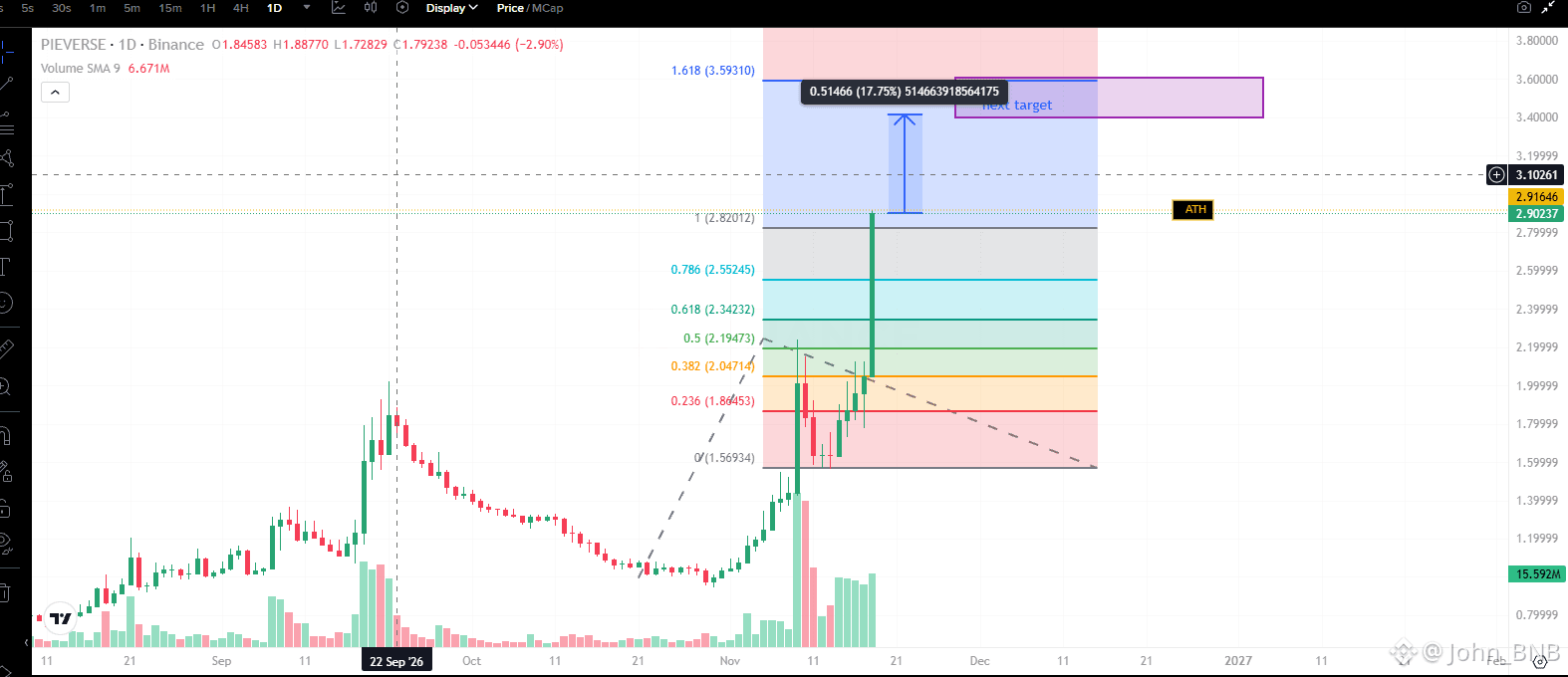
oh regret to sell some early, happy hold some till next target...
lots of emotions 😍😀 $PIEVERSE
{future}(PIEVERSEUSDT)
oh regret to sell some early, happy hold some till next target...
lots of emotions 😍😀 $PIEVERSE
lots of emotions 😍😀 $PIEVERSE
John_BNB
·
--
M tracking $PIEVERSE very long ago since I got reward from the booster,...
Looking at the chart, it's more potential as it's trend momentum tighter.
I did have bag for longer target also some with short term catch.
#cryptotrading
Looking at the chart, it's more potential as it's trend momentum tighter.
I did have bag for longer target also some with short term catch.
#cryptotrading
1
450
·
--
🚨 JENSEN HUANG JUST BROKE HIS SILENCE — IS AN NVIDIA COMEBACK COMING?
After days of silence, Jensen Huang has finally spoken.
His statement carries three important messages:
1️⃣ He accepts responsibility for his personal mistakes and says he will cooperate with the board's independent investigation.
2️⃣ He emphasizes that NVIDIA is his life's work and expresses gratitude for the support of employees, investors, partners and customers.
3️⃣ Most importantly, he openly says he would be honored to return as CEO if the board believes it is in everyone's best interest.
But here's where things get interesting.
My prediction: This comeback won't happen overnight.
NVIDIA is no ordinary technology company. It sits at the center of the global AI revolution, semiconductor supply chains and geopolitical competition.
I see three possible outcomes:
🔹 Scenario 1 — No comeback: The board maintains its position, appoints permanent leadership and NVIDIA moves forward without Jensen.
🔹 Scenario 2 — A comeback battle: Employee, investor and industry pressure continues, forcing further discussions about his leadership.
🔹 Scenario 3 — A long-term return: If the independent investigation produces a favorable outcome and governance concerns are resolved, the door could potentially reopen.
My bet? Scenario 1 in the short term. The board has already publicly said it does not intend to reinstate him.
But one thing is undeniable: Jensen's influence on NVIDIA and the AI industry won't disappear overnight.
This is no longer just about one CEO. It's about whether a company built around a legendary founder can separate its future from its founder.
What do you think? Can NVIDIA really move forward without Jensen Huang, or will the pressure eventually bring him back? 👀
$NVDAB
{spot}(NVDABUSDT)
#NVIDIA #JensenHuang #Aİ #Technology #Leadership
🚨 JENSEN HUANG JUST BROKE HIS SILENCE — IS AN NVIDIA COMEBACK COMING?
After days of silence, Jensen Huang has finally spoken.
His statement carries three important messages:
1️⃣ He accepts responsibility for his personal mistakes and says he will cooperate with the board's independent investigation.
2️⃣ He emphasizes that NVIDIA is his life's work and expresses gratitude for the support of employees, investors, partners and customers.
3️⃣ Most importantly, he openly says he would be honored to return as CEO if the board believes it is in everyone's best interest.
But here's where things get interesting.
My prediction: This comeback won't happen overnight.
NVIDIA is no ordinary technology company. It sits at the center of the global AI revolution, semiconductor supply chains and geopolitical competition.
I see three possible outcomes:
🔹 Scenario 1 — No comeback: The board maintains its position, appoints permanent leadership and NVIDIA moves forward without Jensen.
🔹 Scenario 2 — A comeback battle: Employee, investor and industry pressure continues, forcing further discussions about his leadership.
🔹 Scenario 3 — A long-term return: If the independent investigation produces a favorable outcome and governance concerns are resolved, the door could potentially reopen.
My bet? Scenario 1 in the short term. The board has already publicly said it does not intend to reinstate him.
But one thing is undeniable: Jensen's influence on NVIDIA and the AI industry won't disappear overnight.
This is no longer just about one CEO. It's about whether a company built around a legendary founder can separate its future from its founder.
What do you think? Can NVIDIA really move forward without Jensen Huang, or will the pressure eventually bring him back? 👀
$NVDAB
#NVIDIA #JensenHuang #Aİ #Technology #Leadership

John_BNB
·
--
Will Jensen return to $NVDAB ?
5
3.1k
·
--
ලිපිය
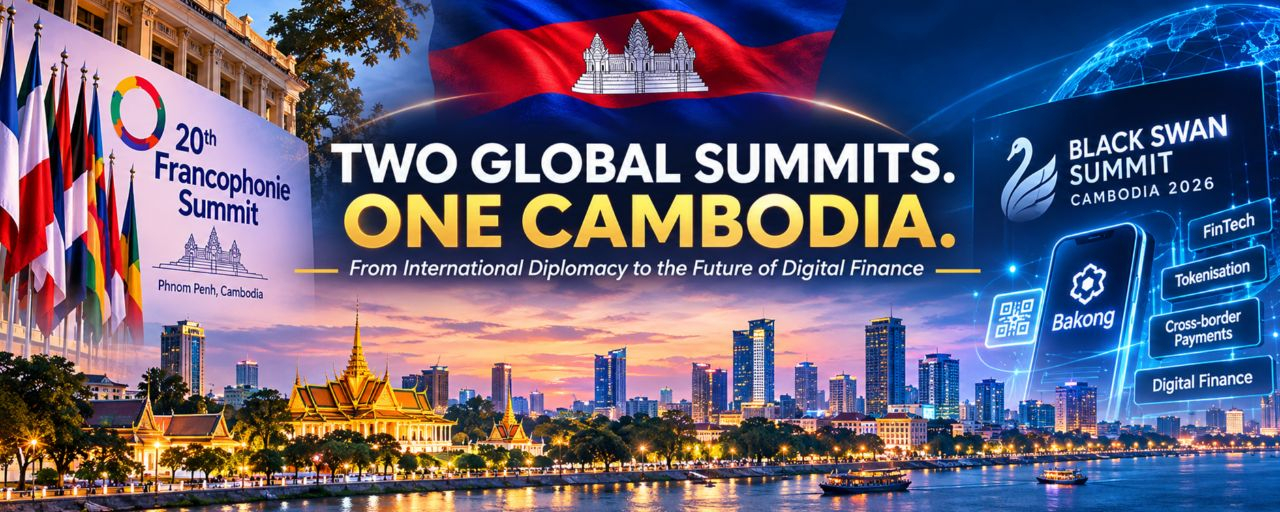
Two Global Summits, One Cambodia: From International Diplomacy to the Future of Digital FinanceThe world came to Phnom Penh for two major international gatherings. But beyond the ceremonies, speeches and diplomatic meetings, something more interesting was happening: Cambodia was stepping into a bigger conversation about the future of global cooperation, financial infrastructure and technology.
November 2026 has been an important moment for Cambodia.
Within just a few days, Phnom Penh became the host city for two major international events: the 20th Francophonie Summit and the inaugural Black Swan Summit Cambodia 2026.
At first glance, these events seem to belong to completely different worlds.
One focuses on diplomacy, language, culture and international cooperation. The other brings together central banks, financial institutions, technology companies, investors and fintech innovators.
But look closer, and there is an interesting connection.
Both events put Cambodia at the centre of conversations about how countries can build stronger international relationships and prepare for the next generation of economic development.
1. Francophonie: Cambodia on the international diplomatic stage
From November 14–16, Phnom Penh hosted the 20th Francophonie Summit, marking the first time Cambodia has hosted this major gathering.
Under the theme "Reinvest in Peace for Shared Prosperity and Lasting Stability," the summit brought together leaders and representatives from across the French-speaking world.
French President Emmanuel Macron was among the prominent international leaders attending.
For Cambodia, this was more than a diplomatic gathering. It was an opportunity to showcase its history, culture, economic potential and growing international engagement.
The summit also created opportunities beyond political discussions:
Strengthening diplomatic relationships with countries across five continents.Expanding trade, investment and business cooperation.Promoting Cambodian culture and heritage internationally.Encouraging cooperation in education, science and technology.Connecting Francophone economies with ASEAN and the wider Asia-Pacific region.
One particularly interesting outcome was the establishment of a Francophone economic cooperation office in Phnom Penh, intended to strengthen connections with ASEAN and the Pacific.
The summit adopted three key documents: the Phnom Penh Declaration, a resolution on crisis recovery and peacebuilding, and the Phnom Penh Appeal on cultural heritage and diversity.
These are important developments because international relationships should not end when visiting leaders leave the country. They should create opportunities for long-term cooperation.
2. Black Swan Summit: Cambodia's financial infrastructure enters the global conversation
While Francophonie focused on international cooperation, another major gathering was exploring a different question:
Can emerging economies build the financial systems of tomorrow instead of simply inheriting those designed by others?
That was one of the central ideas behind Black Swan Summit Cambodia 2026, held on November 15–16.
Co-hosted by the National Bank of Cambodia (NBC) and the Global Finance & Technology Network (GFTN), the summit brought together financial policymakers, central bankers, fintech leaders, investors and technology innovators.
More than 5,000 participants registered from 60 countries, according to the organisers.
And Cambodia had something meaningful to bring to the discussion: Bakong.
Bakong: A Cambodian financial technology story
Cambodia's Bakong system demonstrates how a country can develop its own digital payment infrastructure.
In 2025, Bakong processed approximately $241.84 billion in transaction volume, equivalent to around six times Cambodia's GDP.
Even more interesting, 58% of the transactions were settled in Khmer Riel, compared with 17% in 2020.
These figures show the scale of activity running through the payment ecosystem and the increasing role of the national currency.
Bakong is not simply another payment application. It is blockchain-based financial infrastructure connecting banks and payment providers, supporting Cambodia's national QR-payment ecosystem.
Its development also reflects a broader ambition: making domestic payments more accessible while expanding international connectivity.
The announcements that caught my attention
Black Swan Summit was not just about discussing the future. It also showcased initiatives intended to connect Cambodia's financial infrastructure with international markets.
Some notable developments included:
Japan: Stablecoin and bond tokenisation pilot initiatives.Rwanda: A proposed remittance corridor connecting Cambodia and Africa.International payments: Initiatives to expand Bakong's international payment reach.
Think about the implications.
A Cambodian payment ecosystem connecting with African financial networks and Japanese financial technology initiatives creates possibilities beyond traditional regional payment partnerships.
It could open new pathways for remittances, small-value trade, cross-border payments and financial cooperation between emerging economies.
This is where the conversation becomes particularly interesting for anyone following blockchain and digital finance.
3. The bigger picture: Connecting ASEAN with the Francophone world
Here is where these two summits become particularly interesting together.
Francophonie connects Cambodia with a broad international community, including countries in Africa, Europe and beyond.
Black Swan explores how financial infrastructure and technology can connect economies across borders.
Put these two developments together, and a bigger opportunity emerges.
Imagine a future where:
A Cambodian business can receive payments more easily from customers in African markets.Remittance corridors make sending money across borders faster and more affordable.Digital payment infrastructure supports trade between ASEAN and Francophone economies.Financial technology companies from emerging markets collaborate instead of competing in isolation.Cambodian startups gain access to new international partnerships and investment opportunities.
These are opportunities to pursue, not outcomes guaranteed by hosting a summit.
But the direction of discussion matters.
For decades, many developing economies have relied heavily on financial infrastructure designed and operated elsewhere.
Now, countries are exploring how to build systems around their own economic realities while remaining connected to the global financial ecosystem.
Cambodia is becoming part of that conversation.
4. What does this mean for Cambodia's next generation?
International summits are valuable, but their real impact should be measured by what happens after the events.
For me, there are three areas worth watching.
First: Economic opportunities.
Diplomatic relationships should translate into business partnerships, investment, employment and opportunities for local entrepreneurs.
Second: Technology and financial inclusion.
Bakong demonstrates that digital infrastructure can play an important role in connecting people, businesses and financial institutions.
The next challenge is expanding access, improving interoperability and ensuring that innovation benefits ordinary people.
Third: Global competitiveness.
Cambodia should not only aim to attract international attention. It should develop the talent, businesses and infrastructure needed to participate in the industries shaping the future.
AI, blockchain, digital payments, tokenisation and cross-border financial technology are no longer distant concepts. They are becoming part of the global economic landscape.
Young Cambodians should pay attention.
5. The real question is what happens next
Hosting the Francophonie Summit and Black Swan Summit within the same period sends an interesting signal.
Cambodia is engaging with the world through two different but complementary channels: diplomacy and financial innovation.
One builds relationships between nations. The other explores the infrastructure that could connect their economies.
Neither summit alone will transform Cambodia overnight.
The real test will be whether the discussions, agreements and initiatives turn into practical cooperation, investment, technology adoption and opportunities for ordinary Cambodians.
But one thing is clear: Cambodia has a seat at these international discussions, and it should make the most of it.
The next chapter should not simply be about hosting the world. It should be about building something with the world.
🇰🇭 Cambodia is more than a destination. It can be a bridge between regions, economies and the next generation of digital innovation.
What do you think? Can Cambodia turn this international attention into a meaningful role in the future of global finance and technology?
#Cambodia #Francophonie2026 #BlackSwanSummit #Bakong #fintech
Two Global Summits, One Cambodia: From International Diplomacy to the Future of Digital Finance
The world came to Phnom Penh for two major international gatherings. But beyond the ceremonies, speeches and diplomatic meetings, something more interesting was happening: Cambodia was stepping into a bigger conversation about the future of global cooperation, financial infrastructure and technology.
November 2026 has been an important moment for Cambodia.
Within just a few days, Phnom Penh became the host city for two major international events: the 20th Francophonie Summit and the inaugural Black Swan Summit Cambodia 2026.
At first glance, these events seem to belong to completely different worlds.
One focuses on diplomacy, language, culture and international cooperation. The other brings together central banks, financial institutions, technology companies, investors and fintech innovators.
But look closer, and there is an interesting connection.
Both events put Cambodia at the centre of conversations about how countries can build stronger international relationships and prepare for the next generation of economic development.
1. Francophonie: Cambodia on the international diplomatic stage
From November 14–16, Phnom Penh hosted the 20th Francophonie Summit, marking the first time Cambodia has hosted this major gathering.
Under the theme "Reinvest in Peace for Shared Prosperity and Lasting Stability," the summit brought together leaders and representatives from across the French-speaking world.
French President Emmanuel Macron was among the prominent international leaders attending.
For Cambodia, this was more than a diplomatic gathering. It was an opportunity to showcase its history, culture, economic potential and growing international engagement.
The summit also created opportunities beyond political discussions:
Strengthening diplomatic relationships with countries across five continents.Expanding trade, investment and business cooperation.Promoting Cambodian culture and heritage internationally.Encouraging cooperation in education, science and technology.Connecting Francophone economies with ASEAN and the wider Asia-Pacific region.
One particularly interesting outcome was the establishment of a Francophone economic cooperation office in Phnom Penh, intended to strengthen connections with ASEAN and the Pacific.
The summit adopted three key documents: the Phnom Penh Declaration, a resolution on crisis recovery and peacebuilding, and the Phnom Penh Appeal on cultural heritage and diversity.
These are important developments because international relationships should not end when visiting leaders leave the country. They should create opportunities for long-term cooperation.
2. Black Swan Summit: Cambodia's financial infrastructure enters the global conversation
While Francophonie focused on international cooperation, another major gathering was exploring a different question:
Can emerging economies build the financial systems of tomorrow instead of simply inheriting those designed by others?
That was one of the central ideas behind Black Swan Summit Cambodia 2026, held on November 15–16.
Co-hosted by the National Bank of Cambodia (NBC) and the Global Finance & Technology Network (GFTN), the summit brought together financial policymakers, central bankers, fintech leaders, investors and technology innovators.
More than 5,000 participants registered from 60 countries, according to the organisers.
And Cambodia had something meaningful to bring to the discussion: Bakong.
Bakong: A Cambodian financial technology story
Cambodia's Bakong system demonstrates how a country can develop its own digital payment infrastructure.
In 2025, Bakong processed approximately $241.84 billion in transaction volume, equivalent to around six times Cambodia's GDP.
Even more interesting, 58% of the transactions were settled in Khmer Riel, compared with 17% in 2020.
These figures show the scale of activity running through the payment ecosystem and the increasing role of the national currency.
Bakong is not simply another payment application. It is blockchain-based financial infrastructure connecting banks and payment providers, supporting Cambodia's national QR-payment ecosystem.
Its development also reflects a broader ambition: making domestic payments more accessible while expanding international connectivity.
The announcements that caught my attention
Black Swan Summit was not just about discussing the future. It also showcased initiatives intended to connect Cambodia's financial infrastructure with international markets.
Some notable developments included:
Japan: Stablecoin and bond tokenisation pilot initiatives.Rwanda: A proposed remittance corridor connecting Cambodia and Africa.International payments: Initiatives to expand Bakong's international payment reach.
Think about the implications.
A Cambodian payment ecosystem connecting with African financial networks and Japanese financial technology initiatives creates possibilities beyond traditional regional payment partnerships.
It could open new pathways for remittances, small-value trade, cross-border payments and financial cooperation between emerging economies.
This is where the conversation becomes particularly interesting for anyone following blockchain and digital finance.
3. The bigger picture: Connecting ASEAN with the Francophone world
Here is where these two summits become particularly interesting together.
Francophonie connects Cambodia with a broad international community, including countries in Africa, Europe and beyond.
Black Swan explores how financial infrastructure and technology can connect economies across borders.
Put these two developments together, and a bigger opportunity emerges.
Imagine a future where:
A Cambodian business can receive payments more easily from customers in African markets.Remittance corridors make sending money across borders faster and more affordable.Digital payment infrastructure supports trade between ASEAN and Francophone economies.Financial technology companies from emerging markets collaborate instead of competing in isolation.Cambodian startups gain access to new international partnerships and investment opportunities.
These are opportunities to pursue, not outcomes guaranteed by hosting a summit.
But the direction of discussion matters.
For decades, many developing economies have relied heavily on financial infrastructure designed and operated elsewhere.
Now, countries are exploring how to build systems around their own economic realities while remaining connected to the global financial ecosystem.
Cambodia is becoming part of that conversation.
4. What does this mean for Cambodia's next generation?
International summits are valuable, but their real impact should be measured by what happens after the events.
For me, there are three areas worth watching.
First: Economic opportunities.
Diplomatic relationships should translate into business partnerships, investment, employment and opportunities for local entrepreneurs.
Second: Technology and financial inclusion.
Bakong demonstrates that digital infrastructure can play an important role in connecting people, businesses and financial institutions.
The next challenge is expanding access, improving interoperability and ensuring that innovation benefits ordinary people.
Third: Global competitiveness.
Cambodia should not only aim to attract international attention. It should develop the talent, businesses and infrastructure needed to participate in the industries shaping the future.
AI, blockchain, digital payments, tokenisation and cross-border financial technology are no longer distant concepts. They are becoming part of the global economic landscape.
Young Cambodians should pay attention.
5. The real question is what happens next
Hosting the Francophonie Summit and Black Swan Summit within the same period sends an interesting signal.
Cambodia is engaging with the world through two different but complementary channels: diplomacy and financial innovation.
One builds relationships between nations. The other explores the infrastructure that could connect their economies.
Neither summit alone will transform Cambodia overnight.
The real test will be whether the discussions, agreements and initiatives turn into practical cooperation, investment, technology adoption and opportunities for ordinary Cambodians.
But one thing is clear: Cambodia has a seat at these international discussions, and it should make the most of it.
The next chapter should not simply be about hosting the world. It should be about building something with the world.
🇰🇭 Cambodia is more than a destination. It can be a bridge between regions, economies and the next generation of digital innovation.
What do you think? Can Cambodia turn this international attention into a meaningful role in the future of global finance and technology?
#Cambodia #Francophonie2026 #BlackSwanSummit #Bakong #fintech
4
2.3k
·
--
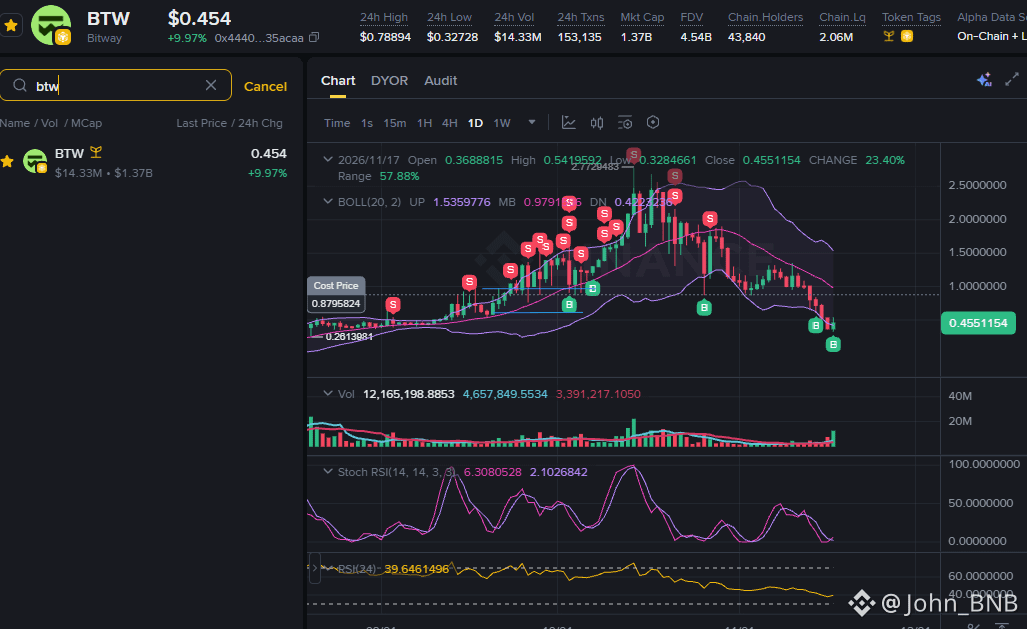
Only buy more $BTW M just a opportunist taker.
Risk taker when right time.
Buy when fear, sell when greed
{alpha}(560x444045b0ee1ee319a660a5e3d604ca0ffa35acaa)
Only buy more $BTW M just a opportunist taker.
Risk taker when right time.
Buy when fear, sell when greed
Risk taker when right time.
Buy when fear, sell when greed
John_BNB
·
--
Buy in the fear $BTW #crypto
1
553
·
--
👓 When AI Becomes Invisible: Is Traditional Education Ready?
South Korea is facing a new kind of exam-cheating controversy.
Students have reportedly used AI-powered smart glasses to capture examination questions and receive AI-generated answers.
Think about that for a second.
AI is no longer limited to computers and smartphones. It's becoming wearable, discreet and increasingly powerful.
But I think the bigger issue isn't cheating. It's whether our education system is evolving fast enough.
If AI can answer questions in seconds, perhaps we should rethink what examinations actually measure.
Critical thinking
Problem-solving
Creativity
Real-world application
Responsible AI usage
Technology is moving faster than traditional education.
One question for the community: Should schools ban AI completely, or teach students how to use it responsibly?
#Aİ #education #FutureTechnology #artificialintelligence

2
5
240
·
--
Will Jensen return to $NVDAB ?
{spot}(NVDABUSDT)
Will Jensen return to $NVDAB ?
YES
47%
NO
38%
Not sure
15%
92 ඡන්ද • ඡන්දය අවසන්
1
1
4
1.4k
·
--
ලිපිය
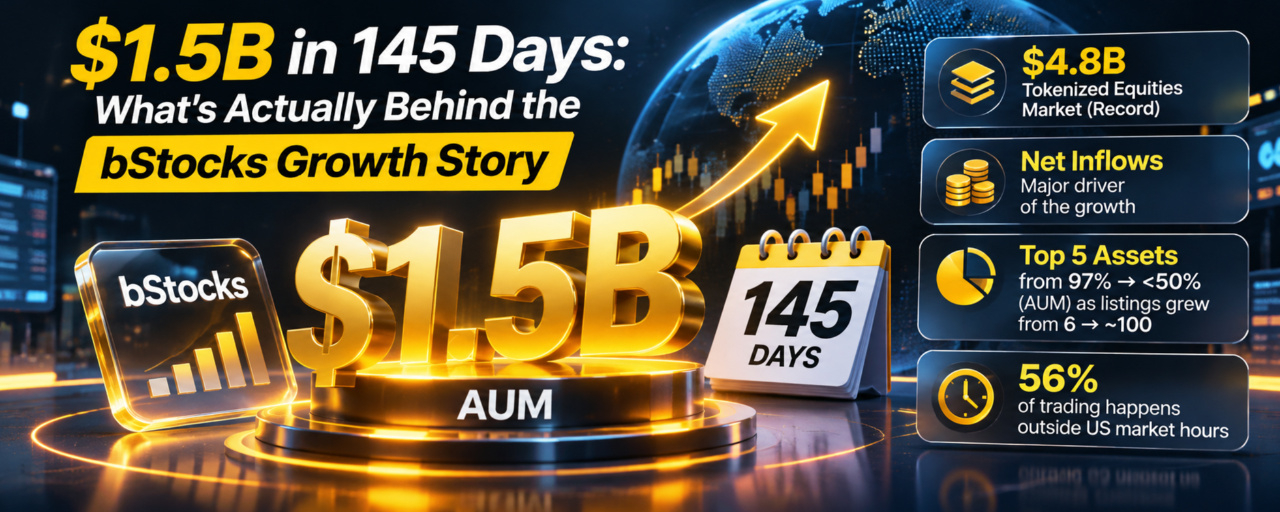
$1.5B in 145 Days: What's Actually Behind the bStocks Growth StorybStocks has reached $1.5 billion in assets under management (AUM) in just 145 days, marking a major milestone in the growing tokenized equities market, which has reached a record $4.8 billion.
But the real story goes beyond the headline number.
Three trends explain the growth:
Strong net inflows: New capital entering the platform has been the primary driver of AUM growth.Broader diversification: The top five assets once represented 97% of AUM. That share has now dropped below 50%, while available listings expanded from just 6 to nearly 100.Changing trading habits: 56% of trading activity happens outside regular US market hours, highlighting demand for more flexible market access.
These numbers reveal something important: tokenized equities are evolving beyond a handful of popular assets.
The growth is not just about more money entering the market. It's also about more choices, broader participation, and trading activity that extends beyond traditional market hours.
Scale makes the headline. Investor behaviour tells the real story.
#Binance #BStocks
$1.5B in 145 Days: What's Actually Behind the bStocks Growth Story
bStocks has reached $1.5 billion in assets under management (AUM) in just 145 days, marking a major milestone in the growing tokenized equities market, which has reached a record $4.8 billion.
But the real story goes beyond the headline number.
Three trends explain the growth:
Strong net inflows: New capital entering the platform has been the primary driver of AUM growth.Broader diversification: The top five assets once represented 97% of AUM. That share has now dropped below 50%, while available listings expanded from just 6 to nearly 100.Changing trading habits: 56% of trading activity happens outside regular US market hours, highlighting demand for more flexible market access.
These numbers reveal something important: tokenized equities are evolving beyond a handful of popular assets.
The growth is not just about more money entering the market. It's also about more choices, broader participation, and trading activity that extends beyond traditional market hours.
Scale makes the headline. Investor behaviour tells the real story.
#Binance #BStocks
2
86
·
--
When market down everyone holding were down. That's the fact.
It doesn't care whose wallets belong to...
When market down everyone holding were down. That's the fact.
It doesn't care whose wallets belong to...
It doesn't care whose wallets belong to...


Yi He
·
--
回撤是暂时的,现货不怕。🫥
1
101
·
--
ලිපිය
Here Are My 5 Steps to Secure My Binance AccountIn today's fast-growing Web3 world, we have more opportunities to own digital assets, manage our investments and take control of our finances.
But greater financial freedom also comes with greater responsibility.
We cannot simply rely on platforms or other people to protect everything for us. Understanding account security and taking preventive action are essential.
Today, I want to share five security practices I personally follow to protect my Binance account.
Step 1: Secure Your Account Credentials
Let's start with the foundation: your email address, phone number and Binance login credentials.
These are the primary access points connected to your account. If someone compromises your email, they may also attempt to compromise your financial accounts.
Here is what I recommend:
Secure your email:
Use a strong, unique password.Enable two-factor authentication (2FA).Protect your recovery email and phone number.Avoid linking your email to unnecessary third-party social accounts.
Secure your Binance account:
Use a strong, unique password.Enable multiple authentication methods.Set up a Passkey.Keep your recovery and backup credentials somewhere secure.
My recommendation: Never depend on a password alone. Add multiple layers of authentication.
Step 2: Manage and Control Your Login Devices
Your account security also depends on the devices you use.
A secure account accessed through an unsecured phone or computer can still be exposed to risks.
Here are my practices:
Set a strong password or PIN on your devices.Enable fingerprint or biometric authentication.Keep your operating system and applications updated.Avoid installing unknown software.Regularly review your Binance login devices and remove anything unfamiliar.
If possible, consider using a dedicated device for financial activities instead of mixing them with high-risk browsing, downloads and unknown applications.
Remember, one accidental click on a phishing link could put your credentials at risk.
Step 3: Verify Every App and Website Before Accessing
Phishing websites and fake applications are common ways attackers try to steal account credentials.
Sometimes, a fake website looks almost identical to the real one.
My checklist:
Bookmark the official Binance website and use that bookmark to log in.Always double-check the URL before entering your credentials.Download Binance applications only from official app stores.Never install unknown APK files or third-party packages.Enable Binance Anti-Phishing Code to help identify genuine Binance emails.Avoid clicking suspicious links received through Telegram, social media or email.
Take a few extra seconds to verify before logging in. That small habit could save you a lot of trouble.
Step 4: Enable Withdrawal Address Whitelist
This is another important layer of protection.
By enabling the withdrawal address whitelist, you restrict withdrawals to wallet addresses you have previously approved.
My recommendations:
Enable Withdrawal Address Whitelist.Add only your trusted wallet addresses.Double-check the destination address and blockchain network.Send a small test transaction before transferring a large amount.
Never rush a withdrawal. A wrong address, incorrect network or manipulated destination can result in irreversible losses.
Step 5: Verify Your Assets Through Proof of Reserves
Account security is not only about protecting login access. Transparency also matters.
Binance provides a Proof of Reserves (PoR) system that allows users to independently check whether their account balances were included in its reserve verification process.
Here is how to check:
Log in to your Binance account.Navigate to Wallet → Verification.Select the latest available Proof of Reserves record.Review your Merkle Leaf, Record ID and covered asset balances.Follow the self-verification process to confirm your inclusion in the verification.
A quick explanation of two important terms:
Proof of Reserves (PoR): Provides transparency and cryptographic evidence that user account balances are included in the reserve verification process.SAFU (Secure Asset Fund for Users): An emergency reserve fund established by Binance to help protect users in extreme situations, such as security breaches.
Both are important parts of the platform's protection and transparency framework, but they serve different purposes. Neither replaces your own account security practices.
Final Thoughts: Have You Completed All 5 Steps?
Security should never be something we think about only after an incident happens.
Let's make it a regular habit.
If you have already implemented all five steps, that's great! Keep reviewing your security settings and login activity.
If you haven't, take a few minutes today to strengthen your account.
One question for the community:
What additional security practices do you personally recommend to make a Binance account even safer?
Drop your thoughts in the comments. I'm always looking forward to learning from the community.
Stay alert. Stay secure. Protect your assets. 🔐
#ThankYouBinancians @Binance_Angels
Here Are My 5 Steps to Secure My Binance Account
In today's fast-growing Web3 world, we have more opportunities to own digital assets, manage our investments and take control of our finances.
But greater financial freedom also comes with greater responsibility.
We cannot simply rely on platforms or other people to protect everything for us. Understanding account security and taking preventive action are essential.
Today, I want to share five security practices I personally follow to protect my Binance account.
Step 1: Secure Your Account Credentials
Let's start with the foundation: your email address, phone number and Binance login credentials.
These are the primary access points connected to your account. If someone compromises your email, they may also attempt to compromise your financial accounts.
Here is what I recommend:
Secure your email:
Use a strong, unique password.Enable two-factor authentication (2FA).Protect your recovery email and phone number.Avoid linking your email to unnecessary third-party social accounts.
Secure your Binance account:
Use a strong, unique password.Enable multiple authentication methods.Set up a Passkey.Keep your recovery and backup credentials somewhere secure.
My recommendation: Never depend on a password alone. Add multiple layers of authentication.
Step 2: Manage and Control Your Login Devices
Your account security also depends on the devices you use.
A secure account accessed through an unsecured phone or computer can still be exposed to risks.
Here are my practices:
Set a strong password or PIN on your devices.Enable fingerprint or biometric authentication.Keep your operating system and applications updated.Avoid installing unknown software.Regularly review your Binance login devices and remove anything unfamiliar.
If possible, consider using a dedicated device for financial activities instead of mixing them with high-risk browsing, downloads and unknown applications.
Remember, one accidental click on a phishing link could put your credentials at risk.
Step 3: Verify Every App and Website Before Accessing
Phishing websites and fake applications are common ways attackers try to steal account credentials.
Sometimes, a fake website looks almost identical to the real one.
My checklist:
Bookmark the official Binance website and use that bookmark to log in.Always double-check the URL before entering your credentials.Download Binance applications only from official app stores.Never install unknown APK files or third-party packages.Enable Binance Anti-Phishing Code to help identify genuine Binance emails.Avoid clicking suspicious links received through Telegram, social media or email.
Take a few extra seconds to verify before logging in. That small habit could save you a lot of trouble.
Step 4: Enable Withdrawal Address Whitelist
This is another important layer of protection.
By enabling the withdrawal address whitelist, you restrict withdrawals to wallet addresses you have previously approved.
My recommendations:
Enable Withdrawal Address Whitelist.Add only your trusted wallet addresses.Double-check the destination address and blockchain network.Send a small test transaction before transferring a large amount.
Never rush a withdrawal. A wrong address, incorrect network or manipulated destination can result in irreversible losses.
Step 5: Verify Your Assets Through Proof of Reserves
Account security is not only about protecting login access. Transparency also matters.
Binance provides a Proof of Reserves (PoR) system that allows users to independently check whether their account balances were included in its reserve verification process.
Here is how to check:
Log in to your Binance account.Navigate to Wallet → Verification.Select the latest available Proof of Reserves record.Review your Merkle Leaf, Record ID and covered asset balances.Follow the self-verification process to confirm your inclusion in the verification.
A quick explanation of two important terms:
Proof of Reserves (PoR): Provides transparency and cryptographic evidence that user account balances are included in the reserve verification process.SAFU (Secure Asset Fund for Users): An emergency reserve fund established by Binance to help protect users in extreme situations, such as security breaches.
Both are important parts of the platform's protection and transparency framework, but they serve different purposes. Neither replaces your own account security practices.
Final Thoughts: Have You Completed All 5 Steps?
Security should never be something we think about only after an incident happens.
Let's make it a regular habit.
If you have already implemented all five steps, that's great! Keep reviewing your security settings and login activity.
If you haven't, take a few minutes today to strengthen your account.
One question for the community:
What additional security practices do you personally recommend to make a Binance account even safer?
Drop your thoughts in the comments. I'm always looking forward to learning from the community.
Stay alert. Stay secure. Protect your assets. 🔐
#ThankYouBinancians @Binance Angels
3
192
තවත් අන්තර්ගතයන් ගවේෂණය කිරීමට ඇතුල් වන්න
Binance චතුරශ්රය හි ගෝලීය ක්රිප්ටෝ පරිශීලකයින් හා එක්වන්න
⚡️ ක්රිප්ටෝ පිළිබඳ නවතම සහ ප්රයෝජනවත් තොරතුරු ලබා ගන්න.
💬 ලොව විශාලතම ක්රිප්ටෝ හුවමාරුව මගින් විශ්වාස කෙරේ.
👍 සත්යායනය කරන ලද නිර්මාණකරුවන්ගෙන් සැබෑ විදසුන් සොයා ගන්න.
විද්යුත් තැපෑල / දුරකථන අංකය
නැගී එන මාතෘකා
NVIDIAReinstatesJensenHuangasCEO
19,475 නැරඹීම්
496 සාකච්ඡා කරමින්
TradFi News | Nvidia Board Unanimously Reinstates Jensen Huang as CEO; Shares Jump 30% Premarket
Binance News
·25 කැමත්ත දැක්වීම්
·25k නැරඹීම්
WillMarketsStageAThanksgivingReliefRally?
121,433 නැරඹීම්
1,628 සාකච්ඡා කරමින්
WillOctCorePCEShiftFedHikeExpectations?
45,709 නැරඹීම්
668 සාකච්ඡා කරමින්