

Sta Lowndes EwJP
118 Публикации

Sta Lowndes EwJP
Отправить жалобу
Заблокировать пользователя
105 подписок(и/а)
16 подписчиков(а)
30 понравилось
Посты
Все
Цитирования
Привет, ребята! Продолжаем с кампанией @Bedrock сегодня. Просто отмечаю свои ежедневные задачи, делаю подписки в соцсетях и убеждаюсь, что мой статус трейда полностью верифицирован. Этот проект выглядит суперобещающе, так что потратить пару минут на обеспечение дропа — это само собой разумеющееся. Как у вас с прогрессом? Дайте знать! $BR #Bedrock
Привет, ребята! Продолжаем с кампанией @Bedrock сегодня. Просто отмечаю свои ежедневные задачи, делаю подписки в соцсетях и убеждаюсь, что мой статус трейда полностью верифицирован. Этот проект выглядит суперобещающе, так что потратить пару минут на обеспечение дропа — это само собой разумеющееся. Как у вас с прогрессом? Дайте знать! $BR #Bedrock
77
Рынки работают 24/7, но человеческие трейдеры быстро выгорают.
Искусственный интеллект наконец-то переходит от базовых чат-инструментов к реальным слоям исполнения на блокчейне. Я слежу за тем, как @Openledger справляется с этим с помощью OctoClaw. Если вы не строите надежную инфраструктуру для автономных агентов, вы просто играете в азартные игры. $OPEN решает проблемы с plumbing. 🧠🤖 #DeFAI #OpenLedger
Рынки работают 24/7, но человеческие трейдеры быстро выгорают.
Искусственный интеллект наконец-то переходит от базовых чат-инструментов к реальным слоям исполнения на блокчейне. Я слежу за тем, как @OpenLedger справляется с этим с помощью OctoClaw. Если вы не строите надежную инфраструктуру для автономных агентов, вы просто играете в азартные игры. $OPEN решает проблемы с plumbing. 🧠🤖 #DeFAI #OpenLedger
Искусственный интеллект наконец-то переходит от базовых чат-инструментов к реальным слоям исполнения на блокчейне. Я слежу за тем, как @OpenLedger справляется с этим с помощью OctoClaw. Если вы не строите надежную инфраструктуру для автономных агентов, вы просто играете в азартные игры. $OPEN решает проблемы с plumbing. 🧠🤖 #DeFAI #OpenLedger
87
Быстрое обновление по кампании @Bedrock ! 🚀 Вчера выложил свой первый пост, а сегодня мы распиливаем остальные задачи. Просто проверяю свой статус на Square, чтобы прокачать эти разрешения и очищаю соцсети от подписок. Также делаю быструю сделку, чтобы зафиксировать последний квалификационный этап. $BR показывает серьезный импульс прямо сейчас, так что определенно стоит потратить несколько минут, чтобы заблокироваться. Кто еще сегодня пашет над этим? Дайте знать о своем прогрессе! #Bedrock
Быстрое обновление по кампании @Bedrock ! 🚀 Вчера выложил свой первый пост, а сегодня мы распиливаем остальные задачи. Просто проверяю свой статус на Square, чтобы прокачать эти разрешения и очищаю соцсети от подписок. Также делаю быструю сделку, чтобы зафиксировать последний квалификационный этап. $BR показывает серьезный импульс прямо сейчас, так что определенно стоит потратить несколько минут, чтобы заблокироваться. Кто еще сегодня пашет над этим? Дайте знать о своем прогрессе! #Bedrock
67

Статья
Хватит следить за графиками 24/7: Переход от ИИ-чата к автономному исполнениюКрипторынки никогда не спят.
Тем не менее, твоему мозгу нужен отдых.
Большинство людей думают, что ИИ в крипте просто предсказывает следующую зеленую свечу. Это мышление для новичков. Реальная проблема не в предсказании, а в исполнении. Перемещение капитала без того, чтобы попасть в ловушку из-за газа, проскальзывания и неудачного тайминга.
Я копал, как
подходит к этому со своей платформой.
Они активно врываются в DeFAI (Децентрализованные Финансовые ИИ).
Посмотри на их настройку OctoClaw.
Это не очередной бесполезный чат-бот, который рассказывает, что биткойн сделал вчера.
Хватит следить за графиками 24/7: Переход от ИИ-чата к автономному исполнению
Крипторынки никогда не спят.
Тем не менее, твоему мозгу нужен отдых.
Большинство людей думают, что ИИ в крипте просто предсказывает следующую зеленую свечу. Это мышление для новичков. Реальная проблема не в предсказании, а в исполнении. Перемещение капитала без того, чтобы попасть в ловушку из-за газа, проскальзывания и неудачного тайминга.
Я копал, как
подходит к этому со своей платформой.
Они активно врываются в DeFAI (Децентрализованные Финансовые ИИ).
Посмотри на их настройку OctoClaw.
Это не очередной бесполезный чат-бот, который рассказывает, что биткойн сделал вчера.
Тем не менее, твоему мозгу нужен отдых.
Большинство людей думают, что ИИ в крипте просто предсказывает следующую зеленую свечу. Это мышление для новичков. Реальная проблема не в предсказании, а в исполнении. Перемещение капитала без того, чтобы попасть в ловушку из-за газа, проскальзывания и неудачного тайминга.
Я копал, как
подходит к этому со своей платформой.
Они активно врываются в DeFAI (Децентрализованные Финансовые ИИ).
Посмотри на их настройку OctoClaw.
Это не очередной бесполезный чат-бот, который рассказывает, что биткойн сделал вчера.
90
Давайте будем честными, большинство проектов DeAI - это просто обертки, скрывающиеся за огромными маркетинговыми бюджетами. Если у вас нет контроля над процессом верификации данных, вы ничего не владеете.
Я пристально слежу за тем, что на самом деле предлагает технология @Openledger .
Инфраструктура всегда выигрывает в долгосрочной перспективе. 🧠⛓️
#OpenLedger $OPEN
Давайте будем честными, большинство проектов DeAI - это просто обертки, скрывающиеся за огромными маркетинговыми бюджетами. Если у вас нет контроля над процессом верификации данных, вы ничего не владеете.
Я пристально слежу за тем, что на самом деле предлагает технология @OpenLedger .
Инфраструктура всегда выигрывает в долгосрочной перспективе. 🧠⛓️
#OpenLedger $OPEN
Я пристально слежу за тем, что на самом деле предлагает технология @OpenLedger .
Инфраструктура всегда выигрывает в долгосрочной перспективе. 🧠⛓️
#OpenLedger $OPEN
120
Динамичное пространство ликвидного стекинга становится переполненным, но, честно говоря,
bedrock 2.0 сегодня привлек мое внимание.
Я проверял их подход к безопасности, и он действительно имеет смысл. Трудно сказать, куда $BR цена пойдет после запуска, но теперь это точно в моем списке наблюдения.
Давайте посмотрим, как @Bedrock справится с развертыванием в течение следующих нескольких недель. #Bedrock
Динамичное пространство ликвидного стекинга становится переполненным, но, честно говоря,
bedrock 2.0 сегодня привлек мое внимание.
Я проверял их подход к безопасности, и он действительно имеет смысл. Трудно сказать, куда $BR цена пойдет после запуска, но теперь это точно в моем списке наблюдения.
Давайте посмотрим, как @Bedrock справится с развертыванием в течение следующих нескольких недель. #Bedrock
bedrock 2.0 сегодня привлек мое внимание.
Я проверял их подход к безопасности, и он действительно имеет смысл. Трудно сказать, куда $BR цена пойдет после запуска, но теперь это точно в моем списке наблюдения.
Давайте посмотрим, как @Bedrock справится с развертыванием в течение следующих нескольких недель. #Bedrock
94
Масштабируемые ИИ-модели не могут выжить на непроверенных или отравленных данных. Это факт. Прозрачность данных в блокчейне — это строгая необходимость для машинной экономики. Безопасные каналы, созданные @Openledger , решают эту задачу на нативном уровне через экосистему $OPEN . Настоящие технологии всегда переживают рыночный шум! 🧠🛡️ #OpenLedger #DePIN
Масштабируемые ИИ-модели не могут выжить на непроверенных или отравленных данных. Это факт. Прозрачность данных в блокчейне — это строгая необходимость для машинной экономики. Безопасные каналы, созданные @OpenLedger , решают эту задачу на нативном уровне через экосистему $OPEN . Настоящие технологии всегда переживают рыночный шум! 🧠🛡️ #OpenLedger #DePIN
110

Статья
Борьба с отравлением данных: Как децентрализованные сети создают щит для машинного обученияЕсли вы в последнее время листали свою ленту или Твиттер, вы, вероятно, это видели.
Отношения между онлайн-креаторами и разработчиками ИИ стали токсичными.
Люди совершенно устали.
Они противостоят корпоративному сбору данных, используя инструменты для отравления данных.
Буквально намеренно коррумпируют обучающие наборы.
Звучит безумно, но это создает огромный кризис доверия вокруг DeAI и проектов вроде $OPEN.
Давайте будем честными.
Если ИИ-сеть не может фильтровать вредоносный, синтетический шум...
Финальные модели становятся совершенно бесполезным цифровым мусором.
Борьба с отравлением данных: Как децентрализованные сети создают щит для машинного обучения
Если вы в последнее время листали свою ленту или Твиттер, вы, вероятно, это видели.
Отношения между онлайн-креаторами и разработчиками ИИ стали токсичными.
Люди совершенно устали.
Они противостоят корпоративному сбору данных, используя инструменты для отравления данных.
Буквально намеренно коррумпируют обучающие наборы.
Звучит безумно, но это создает огромный кризис доверия вокруг DeAI и проектов вроде $OPEN .
Давайте будем честными.
Если ИИ-сеть не может фильтровать вредоносный, синтетический шум...
Финальные модели становятся совершенно бесполезным цифровым мусором.
Отношения между онлайн-креаторами и разработчиками ИИ стали токсичными.
Люди совершенно устали.
Они противостоят корпоративному сбору данных, используя инструменты для отравления данных.
Буквально намеренно коррумпируют обучающие наборы.
Звучит безумно, но это создает огромный кризис доверия вокруг DeAI и проектов вроде $OPEN .
Давайте будем честными.
Если ИИ-сеть не может фильтровать вредоносный, синтетический шум...
Финальные модели становятся совершенно бесполезным цифровым мусором.
145
Перестаньте смотреть на DeAI только из-за хайпа.
Мы провели месяцы, гоняясь за эффектными моделями и чат-ботами, которые ничего не делают, кроме как жечь вычислительные ресурсы и генерировать классный текст. Давайте будем откровенны, это мёртвый конец.
Вопрос, который никто не задаёт: как мы вообще будем аудитировать эту целую экономику?
Если сто разных людей и узлов вносят вклад в один AI-вывод, кто получает оплату? Как мы можем доказать, что данные не были украдены или испорчены?
Именно поэтому я переключил своё внимание на @Openledger .
Они не пытаются построить ещё один бесполезный чат-бот. Они строят инфраструктурный слой, который отслеживает вклад. Подумайте об этом как о прозрачной книге учёта, созданной специально для того, чтобы держать машины подотчётными.
Через их структуру Proof of Attribution данные не просто хранятся — они отслеживаются и вознаграждаются в блокчейне.
Для меня утилита токена $OPEN не о искусственном шуме. Речь идёт о том, чтобы владеть частью трубопровода, который заставляет AI действительно работать в реальном мире.
Вот настоящие трубы машинной экономики. 🧠⛓️ #OpenLedger #DePIN
Перестаньте смотреть на DeAI только из-за хайпа.
Мы провели месяцы, гоняясь за эффектными моделями и чат-ботами, которые ничего не делают, кроме как жечь вычислительные ресурсы и генерировать классный текст. Давайте будем откровенны, это мёртвый конец.
Вопрос, который никто не задаёт: как мы вообще будем аудитировать эту целую экономику?
Если сто разных людей и узлов вносят вклад в один AI-вывод, кто получает оплату? Как мы можем доказать, что данные не были украдены или испорчены?
Именно поэтому я переключил своё внимание на @OpenLedger .
Они не пытаются построить ещё один бесполезный чат-бот. Они строят инфраструктурный слой, который отслеживает вклад. Подумайте об этом как о прозрачной книге учёта, созданной специально для того, чтобы держать машины подотчётными.
Через их структуру Proof of Attribution данные не просто хранятся — они отслеживаются и вознаграждаются в блокчейне.
Для меня утилита токена $OPEN не о искусственном шуме. Речь идёт о том, чтобы владеть частью трубопровода, который заставляет AI действительно работать в реальном мире.
Вот настоящие трубы машинной экономики. 🧠⛓️ #OpenLedger #DePIN
Мы провели месяцы, гоняясь за эффектными моделями и чат-ботами, которые ничего не делают, кроме как жечь вычислительные ресурсы и генерировать классный текст. Давайте будем откровенны, это мёртвый конец.
Вопрос, который никто не задаёт: как мы вообще будем аудитировать эту целую экономику?
Если сто разных людей и узлов вносят вклад в один AI-вывод, кто получает оплату? Как мы можем доказать, что данные не были украдены или испорчены?
Именно поэтому я переключил своё внимание на @OpenLedger .
Они не пытаются построить ещё один бесполезный чат-бот. Они строят инфраструктурный слой, который отслеживает вклад. Подумайте об этом как о прозрачной книге учёта, созданной специально для того, чтобы держать машины подотчётными.
Через их структуру Proof of Attribution данные не просто хранятся — они отслеживаются и вознаграждаются в блокчейне.
Для меня утилита токена $OPEN не о искусственном шуме. Речь идёт о том, чтобы владеть частью трубопровода, который заставляет AI действительно работать в реальном мире.
Вот настоящие трубы машинной экономики. 🧠⛓️ #OpenLedger #DePIN
97

Статья
Мой честный взгляд на нехватку данных ИИ и почему я сейчас слежу за слоем DePINБудем честными на секунду.
Текущий тренд ИИ в крипте?
Это абсолютная шутка.
Мы буквально наводнены бесполезными проектами чат-ботов, которые
не предлагают никакой долгосрочной ценности.
Ничего, кроме дешевого маркетинга, искусственного хайпа и огромного пузыря, который ждет
лопнуть.
Меня бесит тратить время на спекулятивный мусор.
Я глубоко изучал, как модели машинного обучения
на самом деле масштабируются.
И угадай что?
Самая большая проблема не в коде.
Это нехватка данных. Просто и понятно.
Техногиганты агрессивно собирают наши личные данные
Мой честный взгляд на нехватку данных ИИ и почему я сейчас слежу за слоем DePIN
Будем честными на секунду.
Текущий тренд ИИ в крипте?
Это абсолютная шутка.
Мы буквально наводнены бесполезными проектами чат-ботов, которые
не предлагают никакой долгосрочной ценности.
Ничего, кроме дешевого маркетинга, искусственного хайпа и огромного пузыря, который ждет
лопнуть.
Меня бесит тратить время на спекулятивный мусор.
Я глубоко изучал, как модели машинного обучения
на самом деле масштабируются.
И угадай что?
Самая большая проблема не в коде.
Это нехватка данных. Просто и понятно.
Техногиганты агрессивно собирают наши личные данные
Текущий тренд ИИ в крипте?
Это абсолютная шутка.
Мы буквально наводнены бесполезными проектами чат-ботов, которые
не предлагают никакой долгосрочной ценности.
Ничего, кроме дешевого маркетинга, искусственного хайпа и огромного пузыря, который ждет
лопнуть.
Меня бесит тратить время на спекулятивный мусор.
Я глубоко изучал, как модели машинного обучения
на самом деле масштабируются.
И угадай что?
Самая большая проблема не в коде.
Это нехватка данных. Просто и понятно.
Техногиганты агрессивно собирают наши личные данные
117
Централизованные корпорации не могут справиться с необходимой целостностью данных для современного ИИ. Точка. Нам отчаянно нужны настоящие криптографические слои верификации. Дата-пайплайны, построенные на @Openledger , решают эту проблему в сети через их механизм Proof of Attribution. Я сосредоточен на утилите токена $OPEN , потому что физическая инфраструктура сети всегда выигрывает в долгосрочной перспективе над мем-хайпом. 🧠⛓️ #OpenLedger
Централизованные корпорации не могут справиться с необходимой целостностью данных для современного ИИ. Точка. Нам отчаянно нужны настоящие криптографические слои верификации. Дата-пайплайны, построенные на @OpenLedger , решают эту проблему в сети через их механизм Proof of Attribution. Я сосредоточен на утилите токена $OPEN , потому что физическая инфраструктура сети всегда выигрывает в долгосрочной перспективе над мем-хайпом. 🧠⛓️ #OpenLedger
121
Я на 100% согласен с Дрейвеном. Честно говоря, я так устал от чтения гладких презентаций, которые обещают изменить мир, но не приносят никакой реальной пользы. Большие технологические монополии воруют наши данные на протяжении многих лет, а мы получаем только лайки в ответ. То, что привлекло мое внимание к @Openledger , это именно то, что ты упомянул — оно фокусируется на скучной, но важной части: инфраструктуре и справедливом учете прав на данные. Реализация в Web3 ужасно сложна, но отслеживание реального происхождения данных через $OPEN экосистему — единственный способ построить этичную экономику на машинах. Отличный критический анализ! 🧠🛡️ #OpenLedger
Я на 100% согласен с Дрейвеном. Честно говоря, я так устал от чтения гладких презентаций, которые обещают изменить мир, но не приносят никакой реальной пользы. Большие технологические монополии воруют наши данные на протяжении многих лет, а мы получаем только лайки в ответ. То, что привлекло мое внимание к @OpenLedger , это именно то, что ты упомянул — оно фокусируется на скучной, но важной части: инфраструктуре и справедливом учете прав на данные. Реализация в Web3 ужасно сложна, но отслеживание реального происхождения данных через $OPEN экосистему — единственный способ построить этичную экономику на машинах. Отличный критический анализ! 🧠🛡️ #OpenLedger


Draven Kai
·
--
OPENLEDGER (OPEN): БОЛЬШОЙ ВОПРОС НЕ В БЛОКЧЕЙНЕ — А В ТОМ, КТО ПОЛУЧИТ ДЕНЬГИ ЗА ИИ
Я пишу о блокчейне достаточно долго, чтобы развить здоровое недоверие к громким обещаниям.
На самом деле, "здоровое недоверие" может быть слишком мягким словом.
Я наблюдал, как проекты собирали колоссальные суммы денег только на основе стильного сайта и футуристической презентации. Я видел самопровозглашенных "убийц Эфириума", которые приходили и исчезали. Некоторые пропадали в течение года. Другие задерживались достаточно долго, чтобы люди перестали задавать трудные вопросы.
Схема стала знакомой.
Появляется новая технология. Инвесторы кидаются деньгами. Маркетинговые команды работают без усталости. Реальность в конечном счете проявляется.
На самом деле, "здоровое недоверие" может быть слишком мягким словом.
Я наблюдал, как проекты собирали колоссальные суммы денег только на основе стильного сайта и футуристической презентации. Я видел самопровозглашенных "убийц Эфириума", которые приходили и исчезали. Некоторые пропадали в течение года. Другие задерживались достаточно долго, чтобы люди перестали задавать трудные вопросы.
Схема стала знакомой.
Появляется новая технология. Инвесторы кидаются деньгами. Маркетинговые команды работают без усталости. Реальность в конечном счете проявляется.

5
Ты попал в самую суть тезиса DeAI! Переход от спекулятивного хайпа к структурированной инфраструктуре — это определяющий сдвиг 2026 года. Данные не должны быть просто эксплуатируемым товаром; их нужно рассматривать как класс активов, приносящих доход. Именно поэтому структура Proof of Attribution от @Openledger так критична — она соединяет сырые децентрализованные вклады и справедливую ликвидацию цен на блокчейне. Если мы хотим, чтобы ИИ масштабировался этично и устойчиво, экономика машин должна функционировать на прозрачной происхождении данных, и именно это делает экосистему $OPEN фундаментальной длинной защитой. Блестящее структурное разложение! 🧠🛡️📈 #OpenLedger
Ты попал в самую суть тезиса DeAI! Переход от спекулятивного хайпа к структурированной инфраструктуре — это определяющий сдвиг 2026 года. Данные не должны быть просто эксплуатируемым товаром; их нужно рассматривать как класс активов, приносящих доход. Именно поэтому структура Proof of Attribution от @OpenLedger так критична — она соединяет сырые децентрализованные вклады и справедливую ликвидацию цен на блокчейне. Если мы хотим, чтобы ИИ масштабировался этично и устойчиво, экономика машин должна функционировать на прозрачной происхождении данных, и именно это делает экосистему $OPEN фундаментальной длинной защитой. Блестящее структурное разложение! 🧠🛡️📈 #OpenLedger

LUNA-Crypto2
·
--
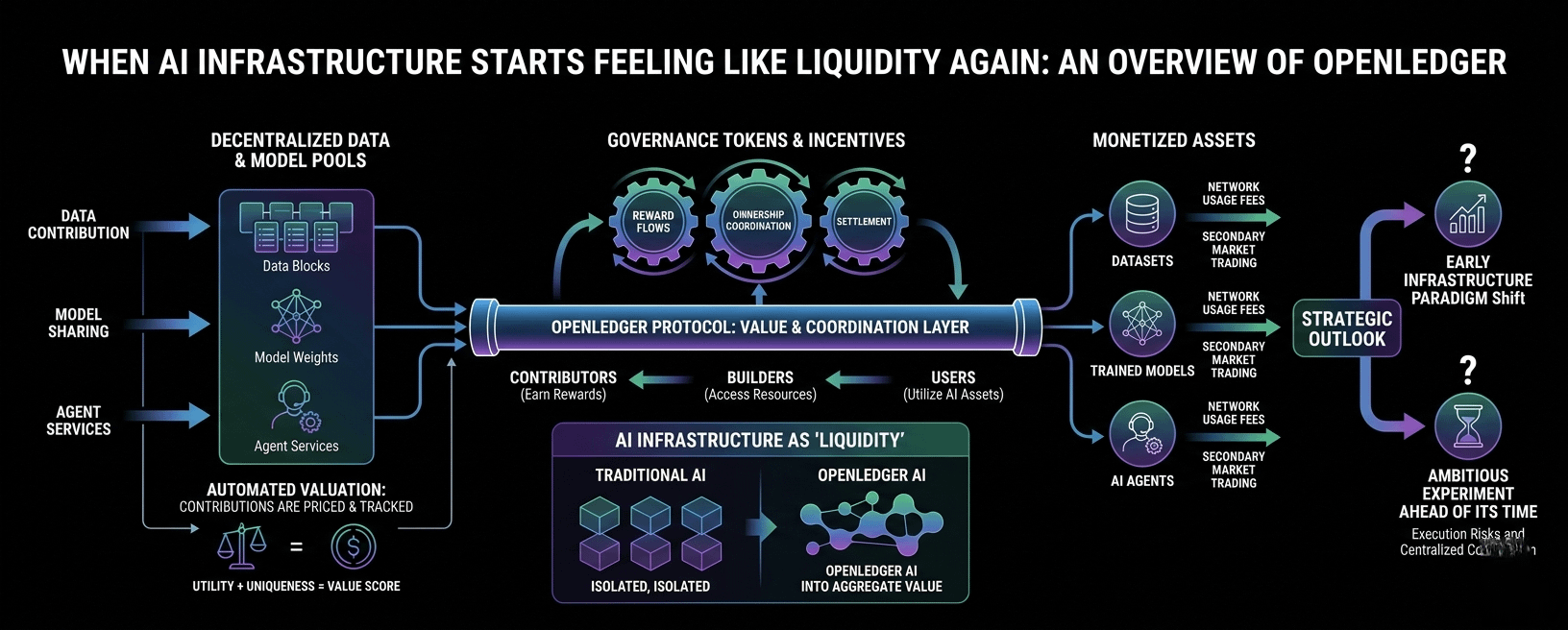
РостКогда инфрастуктура ИИ снова начинает ощущаться как ликвидность
Когда ликвидность начала возвращаться в инфра-нарративы, я начал смотреть на проекты, которые не кричат о хайпе, но тихо меняют способ отслеживания ценности. Я наткнулся на один проект и сначала не понял его — блокчейн ИИ, пытающийся монетизировать данные, модели и агентов, звучал как перегруженное видение. Что привлекло мое внимание, так это идея о том, что данные не просто хранятся или используются, а оцениваются через вклад, почти как это делал DeFi с капиталом. Сначала это казалось абстрактным, но потом стало понятно: если модели ИИ строятся на коллективных входах, кто-то должен координировать владение и потоки вознаграждений. Сеть превращает наборы данных и использование моделей в общие активы, при этом токены действуют как расчет между вкладчиками, строителями и пользователями. Это похоже на ранние проблемы координации в DeFi, примененные к интеллекции вместо ликвидности. Однако я остаюсь осторожным — риски исполнения реальны, стимулы могут смещаться, а централизованные платформы ИИ движутся быстрее. Я продолжаю задумываться, является ли это ранней инфрастуктурой ИИ или просто амбициозным экспериментом, опережающим свое время.
@OpenLedger
#OpenLedger
$OPEN
Когда ликвидность начала возвращаться в инфра-нарративы, я начал смотреть на проекты, которые не кричат о хайпе, но тихо меняют способ отслеживания ценности. Я наткнулся на один проект и сначала не понял его — блокчейн ИИ, пытающийся монетизировать данные, модели и агентов, звучал как перегруженное видение. Что привлекло мое внимание, так это идея о том, что данные не просто хранятся или используются, а оцениваются через вклад, почти как это делал DeFi с капиталом. Сначала это казалось абстрактным, но потом стало понятно: если модели ИИ строятся на коллективных входах, кто-то должен координировать владение и потоки вознаграждений. Сеть превращает наборы данных и использование моделей в общие активы, при этом токены действуют как расчет между вкладчиками, строителями и пользователями. Это похоже на ранние проблемы координации в DeFi, примененные к интеллекции вместо ликвидности. Однако я остаюсь осторожным — риски исполнения реальны, стимулы могут смещаться, а централизованные платформы ИИ движутся быстрее. Я продолжаю задумываться, является ли это ранней инфрастуктурой ИИ или просто амбициозным экспериментом, опережающим свое время.
@OpenLedger
#OpenLedger
$OPEN
16
Открытие доступа к данным для всех требует железобетонных защитных слоев. Если сеть не может фильтровать вредоносные атаки Sybil и синтетический мусор, она становится бесполезной для разработчиков. Современная архитектура происхождения данных, созданная @Openledger , решает эту проблему благодаря строгой системе Proof of Attribution. С поддержкой нативного токена $OPEN , эта сеть обеспечивает чистую, безопасную среду для масштабируемого машинного интеллекта. Инфраструктура всегда побеждает! 🧠🛡️ #OpenLedger
Какова самая большая угроза для масштабирования децентрализованного ИИ?
Открытие доступа к данным для всех требует железобетонных защитных слоев. Если сеть не может фильтровать вредоносные атаки Sybil и синтетический мусор, она становится бесполезной для разработчиков. Современная архитектура происхождения данных, созданная @OpenLedger , решает эту проблему благодаря строгой системе Proof of Attribution. С поддержкой нативного токена $OPEN , эта сеть обеспечивает чистую, безопасную среду для масштабируемого машинного интеллекта. Инфраструктура всегда побеждает! 🧠🛡️ #OpenLedger
Какова самая большая угроза для масштабирования децентрализованного ИИ?
Какова самая большая угроза для масштабирования децентрализованного ИИ?
Sybil attacks & fake data 🛑
0%
High validation costs 💸
0%
Centralized tech monopoly 🏢
0%
0 проголосовали • Голосование закрыто
13

Статья
Криптографическая Происхождение Данных: Решение Кризиса Вычислений и Координации ИИСовременные требования к вычислительным мощностям искусственного интеллекта заставляют нас серьезно переосмысливать слои инфраструктуры Web3. Пока спекулятивные рынки сосредоточены на потребительских приложениях, умный капитал тихо мигрирует к децентрализованным сетям физической инфраструктуры (DePIN). Основная причина ясна: модели искусственного интеллекта по своей сути ограничены целостностью данных, которые их питают.
Централизованные практики сбора данных создали среду, полную споров о интеллектуальной собственности и злонамеренного отравления данных. Чтобы развитие ИИ сохраняло долгосрочную устойчивость, инфраструктурные платформы должны переходить к разрешительным, криптографически проверенным каналам данных. Эта специфическая архитектурная необходимость именно то, что делает экосистему, построенную #OpenLedger , необходимостью для машинной экономики.
Криптографическая Происхождение Данных: Решение Кризиса Вычислений и Координации ИИ
Современные требования к вычислительным мощностям искусственного интеллекта заставляют нас серьезно переосмысливать слои инфраструктуры Web3. Пока спекулятивные рынки сосредоточены на потребительских приложениях, умный капитал тихо мигрирует к децентрализованным сетям физической инфраструктуры (DePIN). Основная причина ясна: модели искусственного интеллекта по своей сути ограничены целостностью данных, которые их питают.
Централизованные практики сбора данных создали среду, полную споров о интеллектуальной собственности и злонамеренного отравления данных. Чтобы развитие ИИ сохраняло долгосрочную устойчивость, инфраструктурные платформы должны переходить к разрешительным, криптографически проверенным каналам данных. Эта специфическая архитектурная необходимость именно то, что делает экосистему, построенную #OpenLedger , необходимостью для машинной экономики.
Централизованные практики сбора данных создали среду, полную споров о интеллектуальной собственности и злонамеренного отравления данных. Чтобы развитие ИИ сохраняло долгосрочную устойчивость, инфраструктурные платформы должны переходить к разрешительным, криптографически проверенным каналам данных. Эта специфическая архитектурная необходимость именно то, что делает экосистему, построенную #OpenLedger , необходимостью для машинной экономики.
8
Сырые данные быстро превращаются из игнорируемого товара в высокодоходный цифровой актив. Центральные технологические корпорации больше не могут монополизировать человеческие знания, не заплатив за это. Децентрализованная архитектура, разработанная @Openledger , предоставляет критическую инфраструктуру, необходимую для прозрачной верификации и монетизации данных. Основанная на экосистеме $OPEN , эта сеть строит справедливую и устойчивую модель для масштабируемого машинного интеллекта. Инфраструктура — это конечная цель для умного капитала! 🧠🌐 #OpenLedger
Сырые данные быстро превращаются из игнорируемого товара в высокодоходный цифровой актив. Центральные технологические корпорации больше не могут монополизировать человеческие знания, не заплатив за это. Децентрализованная архитектура, разработанная @OpenLedger , предоставляет критическую инфраструктуру, необходимую для прозрачной верификации и монетизации данных. Основанная на экосистеме $OPEN , эта сеть строит справедливую и устойчивую модель для масштабируемого машинного интеллекта. Инфраструктура — это конечная цель для умного капитала! 🧠🌐 #OpenLedger
10

Статья
Капитальная эффективность в Эпоху Машин: Превращение Сырых Данных в Доходный КриптоактивЭкономическая модель, стоящая за обучением искусственного интеллекта, приближается к серьезной структурной точке перелома. На протяжении многих лет огромные технологические монополии извлекали данные пользователей без согласия и финансовой компенсации, создавая миллиарды централизованной стоимости. Эта фаза извлечения официально заканчивается. Поскольку качественные данные становятся все более дефицитными, рынок остро нуждается в децентрализованных сетях, способных превращать потоки данных в продуктивные цифровые активы.Традиционные платформы веб-хранения полностью лишены уровней безопасности и инструментов происхождения, необходимых для продвинутых входных данных машинного обучения. Этот конкретный инфраструктурный дефицит именно там, где децентрализованная сеть, построенная #OpenLedger , предлагает определяющее решение для рынка. Создавая принадлежащие сообществу, безразрешительные Datanets, протокол создает среду, в которой данные постоянно проверяются.
Капитальная эффективность в Эпоху Машин: Превращение Сырых Данных в Доходный Криптоактив
Экономическая модель, стоящая за обучением искусственного интеллекта, приближается к серьезной структурной точке перелома. На протяжении многих лет огромные технологические монополии извлекали данные пользователей без согласия и финансовой компенсации, создавая миллиарды централизованной стоимости. Эта фаза извлечения официально заканчивается. Поскольку качественные данные становятся все более дефицитными, рынок остро нуждается в децентрализованных сетях, способных превращать потоки данных в продуктивные цифровые активы.Традиционные платформы веб-хранения полностью лишены уровней безопасности и инструментов происхождения, необходимых для продвинутых входных данных машинного обучения. Этот конкретный инфраструктурный дефицит именно там, где децентрализованная сеть, построенная #OpenLedger , предлагает определяющее решение для рынка. Создавая принадлежащие сообществу, безразрешительные Datanets, протокол создает среду, в которой данные постоянно проверяются.
36
Децентрализованный ИИ — это не просто тренд на 2026 год; это фундаментальный сдвиг в том, как ценится человеческое знание. Проекты, которые игнорируют происхождение данных, потерпят неудачу, поскольку распространение отравления данных неизбежно. Надежный уровень проверки, созданный @Openledger , обеспечивает безопасность каждого отдельного ввода, создавая неоспоримую долгосрочную силу для $OPEN экосистемы. Истинная полезность всегда переживает временный рыночный шум! 🧠💎 #OpenLedger
Децентрализованный ИИ — это не просто тренд на 2026 год; это фундаментальный сдвиг в том, как ценится человеческое знание. Проекты, которые игнорируют происхождение данных, потерпят неудачу, поскольку распространение отравления данных неизбежно. Надежный уровень проверки, созданный @OpenLedger , обеспечивает безопасность каждого отдельного ввода, создавая неоспоримую долгосрочную силу для $OPEN экосистемы. Истинная полезность всегда переживает временный рыночный шум! 🧠💎 #OpenLedger
6
Полагаться на централизованные монополии для обучения искусственного интеллекта - это огромный структурный риск. Рынку отчаянно нужны безопасные, децентрализованные инфраструктурные слои, чтобы обеспечить абсолютную прозрачность и происхождение данных. Именно поэтому архитектура сети, разработанная @Openledger , является фундаментальным изменением правил игры для машинной экономики. Безопасная маршрутизация данных обеспечивает долгосрочную полезность для экосистемы $OPEN . Инфраструктура всегда побеждает! 🧠🛡️ #OpenLedger
Полагаться на централизованные монополии для обучения искусственного интеллекта - это огромный структурный риск. Рынку отчаянно нужны безопасные, децентрализованные инфраструктурные слои, чтобы обеспечить абсолютную прозрачность и происхождение данных. Именно поэтому архитектура сети, разработанная @OpenLedger , является фундаментальным изменением правил игры для машинной экономики. Безопасная маршрутизация данных обеспечивает долгосрочную полезность для экосистемы $OPEN . Инфраструктура всегда побеждает! 🧠🛡️ #OpenLedger
5

Статья
Черная дыра ликвидности: почему инфраструктура ИИ требует проверяемых данныхТекущий криптоцикл показал одно: розничные инвесторы устали от вейпорваров. Проекты, которые полагаются исключительно на хайп в социальных сетях без настоящей технической утилиты, сталкиваются с агрессивными коррекциями. Рынок смещает фокус на децентрализованные физические инфраструктурные сети (DePIN) и искусственный интеллект — это не временная тенденция; это структурный переход к качеству.
Модели искусственного интеллекта требуют астрономического объема высококачественных данных, чтобы оставаться точными и конкурентоспособными. Однако централизованная агрегация данных достигла критической точки из-за нарушений конфиденциальности и споров о интеллектуальной собственности. Это именно та узкая горлышко, где децентрализованная сеть, построенная #OpenLedger , становится критическим рыночным решением.
Черная дыра ликвидности: почему инфраструктура ИИ требует проверяемых данных
Текущий криптоцикл показал одно: розничные инвесторы устали от вейпорваров. Проекты, которые полагаются исключительно на хайп в социальных сетях без настоящей технической утилиты, сталкиваются с агрессивными коррекциями. Рынок смещает фокус на децентрализованные физические инфраструктурные сети (DePIN) и искусственный интеллект — это не временная тенденция; это структурный переход к качеству.
Модели искусственного интеллекта требуют астрономического объема высококачественных данных, чтобы оставаться точными и конкурентоспособными. Однако централизованная агрегация данных достигла критической точки из-за нарушений конфиденциальности и споров о интеллектуальной собственности. Это именно та узкая горлышко, где децентрализованная сеть, построенная #OpenLedger , становится критическим рыночным решением.
Модели искусственного интеллекта требуют астрономического объема высококачественных данных, чтобы оставаться точными и конкурентоспособными. Однако централизованная агрегация данных достигла критической точки из-за нарушений конфиденциальности и споров о интеллектуальной собственности. Это именно та узкая горлышко, где децентрализованная сеть, построенная #OpenLedger , становится критическим рыночным решением.
1
58
Войдите, чтобы посмотреть больше материала
Присоединяйтесь к пользователям криптовалют по всему миру на Binance Square
⚡️ Получайте новейшую и полезную информацию о криптоактивах.
💬 Нам доверяет крупнейшая в мире криптобиржа.
👍 Получите достоверные аналитические данные от верифицированных создателей контента.
Эл. почта/номер телефона