
ratio_avila
6 Публикации

ratio_avila
Отправить жалобу
Заблокировать пользователя
Открытая сделка
1.6 г
0 подписок(и/а)
16 подписчиков(а)
25 понравилось
Посты
Портфель
·
--
Рост
#ShareYourThoughtOnBTC
Сегодня рынок будет падать или расти?
#ShareYourThoughtOnBTC
Сегодня рынок будет падать или расти?
Сегодня рынок будет падать или расти?
1
4
·
--
См. перевод
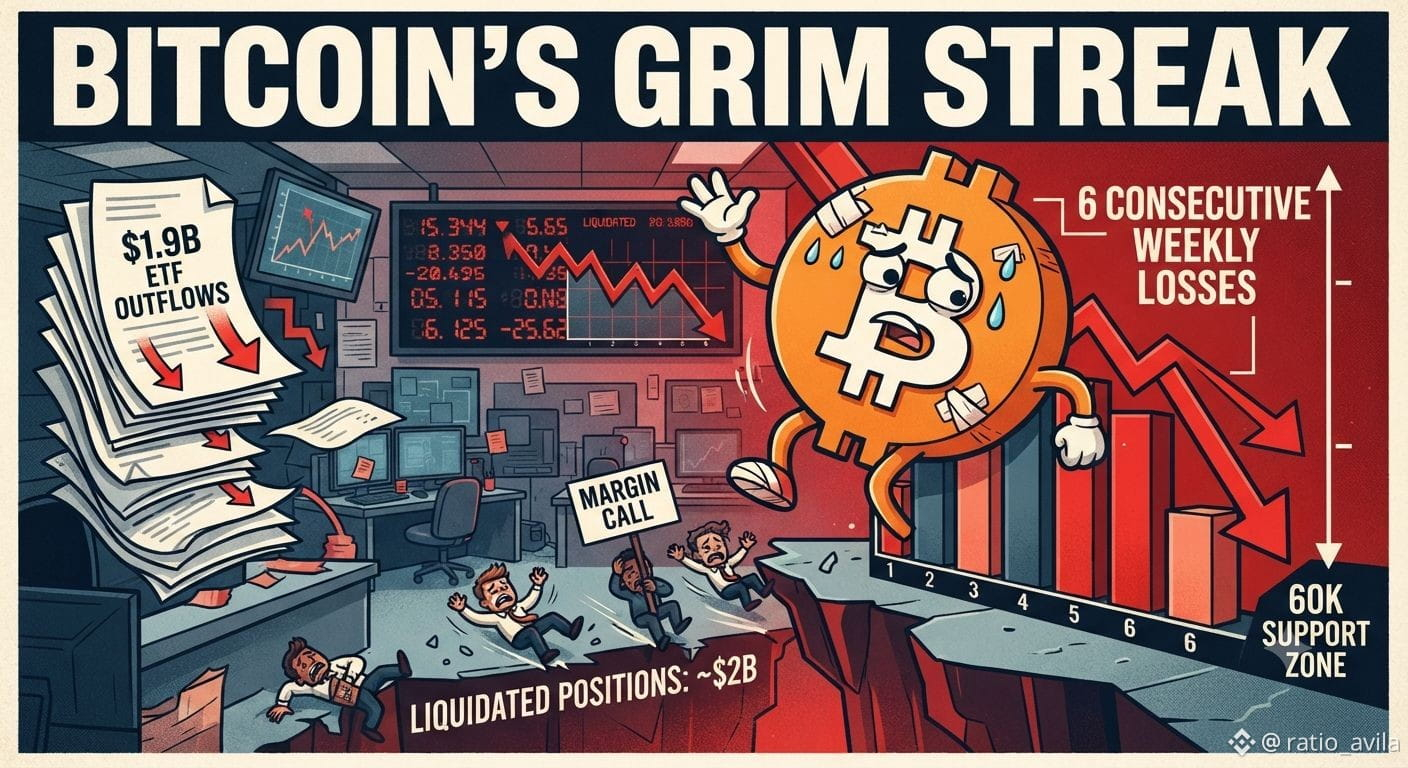
🚨 $BTC JUST RECORDED ITS SIXTH CONSECUTIVE WEEKLY LOSS!
This is getting harder to ignore. #Bitcoin has now extended its losing streak to six weeks, its longest since February. BTC briefly dropped to $62,100 over the weekend before recovering toward $64,000. #bitcoinextendslosingstreaktosixweeks
But the bigger problem isn't just price. US spot Bitcoin ETFs have seen nearly $1.9 billion in outflows across seven consecutive sessions, while roughly $2 billion in leveraged positions were liquidated during the weekend selloff.
With BTC losing key technical levels, the $60K region is becoming increasingly important.
Is this simply a brutal correction before the next recovery, or are we watching a bigger trend reversal unfold?
The next few weeks could tell us a lot. DYOR!
1
33
·
--
См. перевод
#TrumpTaxCuts
The Tax Cuts and Jobs Act (TCJA) enacted in December 2017 significantly overhauled the U.S. tax code. Key provisions included reducing corporate tax rates from 35% to 21%, adjusting individual income tax brackets, increasing the standard deduction, and limiting certain deductions such as the state and local tax (SALT) deduction.
Currently, there's a push to extend these tax cuts, many of which are set to expire at the end of 2025. The proposed extension aims to make the individual tax cuts permanent and introduce new tax breaks, including those for manufacturers and auto loans. However, this initiative faces challenges due to projected costs of up to $5.8 trillion over the next decade and internal divisions within the Republican Party regarding funding mechanisms.
To offset the costs, proposals include $2 trillion in spending cuts, primarily targeting Medicaid and green energy tax credits. There's also debate over adjusting the SALT deduction cap, with some lawmakers advocating for raising it to benefit constituents in high-tax states. Additionally, discussions about increasing taxes on millionaires have emerged, though President Trump has expressed reservations about this approach.
Analysts warn that extending the tax cuts without adequate revenue offsets could exacerbate the national debt, potentially leading to higher interest rates and reduced economic growth. The outcome of these legislative efforts will significantly impact the U.S. economy and taxpayers across various income levels.
1
76
·
--
См. перевод
#XRPETFs The U.S. Securities and Exchange Commission (SEC) has approved the launch of three XRP futures-based exchange-traded funds (ETFs) by ProShares, set to begin trading on April 30, 2025 .
Details of the New XRP ETFs
ProShares will introduce the following leveraged and inverse ETFs:
Ultra XRP ETF: Offers 2x leveraged exposure to XRP futures
Short XRP ETF: Provides inverse (-1x) exposure
Ultra Short XRP ETF: Delivers inverse (-2x) exposure
These ETFs are based on futures contracts rather than direct holdings of XRP tokens, allowing investors to speculate on XRP's price movements without owning the cryptocurrency itself .
In addition to the U.S. developments, Brazil has approved the world's first spot XRP ETF, the Hashdex Nasdaq XRP Fundo de Índice, which is now trading on the Brazilian Stock Exchange .
The approval of these ETFs has generated optimism among investors, with XRP's price experiencing upward momentum in anticipation of the launch .
1
89
·
--
#TariffsPause
пауза означает, что ставки выше 10% для 59 других территорий будут приостановлены до июля.
Это включает 46% на Вьетнам, 44% на Шри-Ланку и 20% на Европейский Союз.
#TariffsPause
пауза означает, что ставки выше 10% для 59 других территорий будут приостановлены до июля.
Это включает 46% на Вьетнам, 44% на Шри-Ланку и 20% на Европейский Союз.
пауза означает, что ставки выше 10% для 59 других территорий будут приостановлены до июля.
Это включает 46% на Вьетнам, 44% на Шри-Ланку и 20% на Европейский Союз.
9
155
Войдите, чтобы посмотреть больше материала
Присоединяйтесь к пользователям криптовалют по всему миру на Binance Square
⚡️ Получайте новейшую и полезную информацию о криптоактивах.
💬 Нам доверяет крупнейшая в мире криптобиржа.
👍 Получите достоверные аналитические данные от верифицированных создателей контента.
Эл. почта/номер телефона
В тренде
fomcотслеживание
Просмотров: 122,242
598 обсуждают
Сейчас всё внимание приковано к решениям ФРС 🇺🇸
Рынок внимательно следит за сигналами от FOMC, ведь даже одно изменение в риторике представителей ФРС может повлиять на настроение инвесторов.
Особенно интересно наблюдать за реакцией BTC и ETH. Иногда рынок начинает двигаться ещё до официальных заявлений, а после публикации протокола волатильность может заметно вырасти.
$BTC
$ETH
Я бы сейчас не торопился с выводами. Лучше следить за новостями, объёмами и реакцией цены, чем пытаться угадать направление заранее.
А вы как думаете, чего сейчас больше ждёт рынок — снижения ставки или сохранения текущей политики?
#fomcотслеживание #ПротоколFOMC
Saymontop20
·Лайков: 0
·Просмотров: 101
ПротоколFOMC
Просмотров: 146,831
347 обсуждают
IsAnthropic’s$1.5TMarketCapJustified?
Просмотров: 51,421
250 обсуждают