


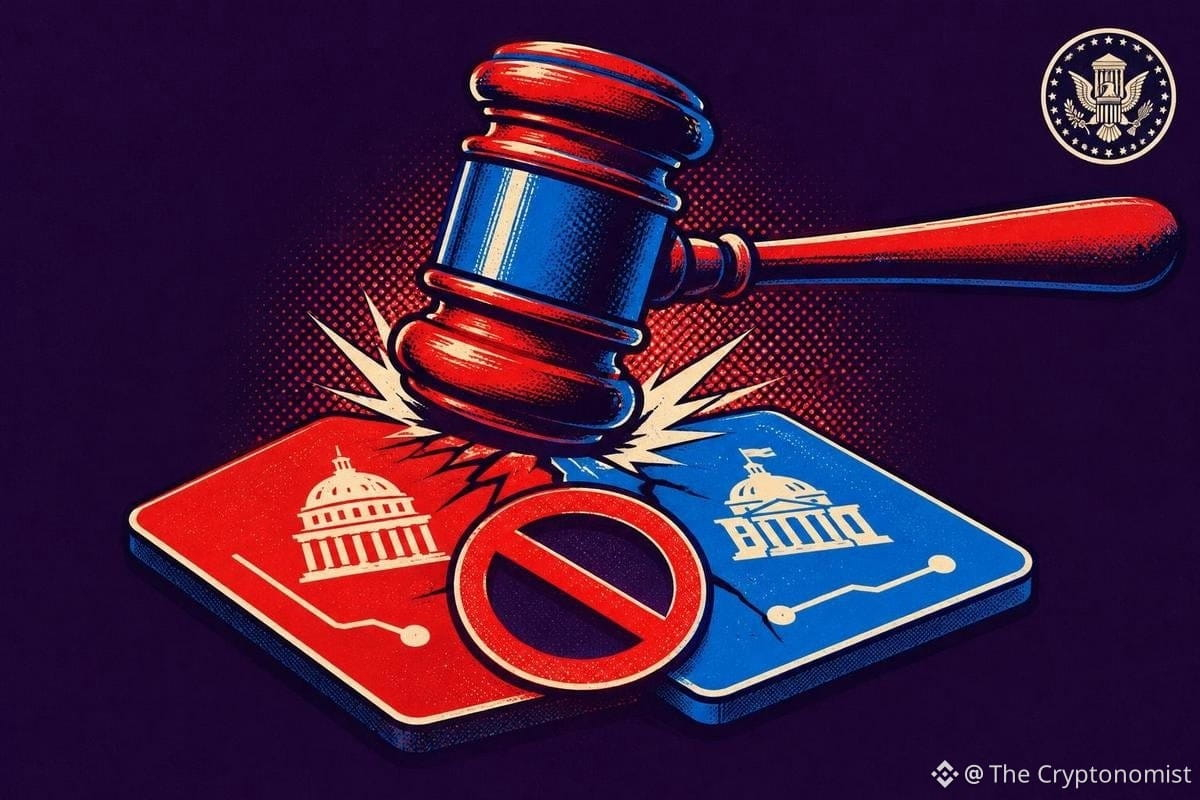
The NFL is asking the U.S. Supreme Court to let states police sports wagers on platforms such as Kalshi and Polymarket, challenging the federal government’s claim to exclusive authority. In a brief filed on October 8, 2026, the league argued that regulation of prediction markets needs stronger protections against manipulation and betting by people younger than 21.
Key takeaways
The NFL backs state oversight of sports prediction markets.
Federal courts have split over the CFTC’s exclusive authority.
Kalshi and the CFTC dispute the NFL’s account of their engagement.
According to CoinDesk, the NFL joined state governments, tribes, former regulator Gary Gensler and former Senator Chris Dodd in opposing exclusive federal oversight. New Jersey has asked the Supreme Court to hear its dispute with Kalshi and resolve who can regulate these markets.
The NFL argues that sports prediction contracts amount to gambling, rather than financial swaps governed solely by federal authorities. The league told CNBC it is not opposed to prediction markets but considers the states better equipped to oversee them, given the federal regulator’s resource constraints.
NFL challenges federal prediction market regulation
The NFL’s brief argues that federal oversight provides fewer safeguards than state gambling regulation. It says the U.S. Commodity Futures Trading Commission, or CFTC, has not imposed standards as demanding as those enforced by state gaming authorities.
The league wants restrictions on contracts involving outcomes a single athlete can influence, such as a field goal attempt. It also objects to trades involving officiating, player injuries and information knowable before a game, including its first play. The NFL wants platforms to cooperate on prohibited bettor lists.
Age limits are another dividing line. Most states require sportsbook customers to be at least 21, while Kalshi accepts customers as young as 18, CNBC reported. The NFL says neither the CFTC nor prediction market companies have adopted its requested age floor or banned categories of bets vulnerable to manipulation.
The NFL told CNBC that football generated $1.8 billion in prediction market trading on the season’s first Sunday, more than half of total volume. Separately, The Athletic cited Ticker Tracker data showing NFL trading represented 65.8% of Kalshi’s sports volume on the Sunday preceding the filing.
Conflicting court rulings divide federal and state authority
One federal court has supported Kalshi’s position that the CFTC is its sole regulator, while two others have backed state authority. The CFTC maintains that its jurisdiction over exchanges including Kalshi and Polymarket overrides state powers.
The Athletic reported that 20 states have challenged prediction markets in court. 39 states filed an amicus brief supporting New Jersey’s case on Wednesday. Tribal nations and organizations submitted their own brief on Thursday, seeking application of tribal gaming laws.
Dodd, a sponsor of the Dodd-Frank Act on which the CFTC bases its position, disputed that reading of the law. He wrote that it “did not set out to authorize nationwide sports betting through derivatives markets or displace decades of state and tribal primacy over gaming regulation.”
Kalshi and the CFTC contest the NFL’s account
Kalshi and the CFTC say they have sought engagement with the NFL on market integrity, challenging the league’s account of unanswered requests. Kalshi spokesperson Elisabeth Diana said: “We have consistently tried to engage proactively and constructively with the NFL to collaborate on market integrity with no response.”
Kalshi also told CNBC that the CFTC can police sports-related event contracts and that its ongoing rulemaking addresses many of the league’s concerns.
CFTC public affairs director Brooke Nethercott told The Athletic that the agency had engaged with the NFL “since day one.” She said the league declined a memorandum of understanding that would have enabled greater cooperation and information sharing.
The NFL urged prompt Supreme Court action, warning in its brief: “Billions of dollars will be bet on NFL games through prediction markets each season, and any delay from the court will result in increasing consumer harm and risk to game integrity.”
Article produced with the assistance of artificial intelligence and reviewed by the editorial team.