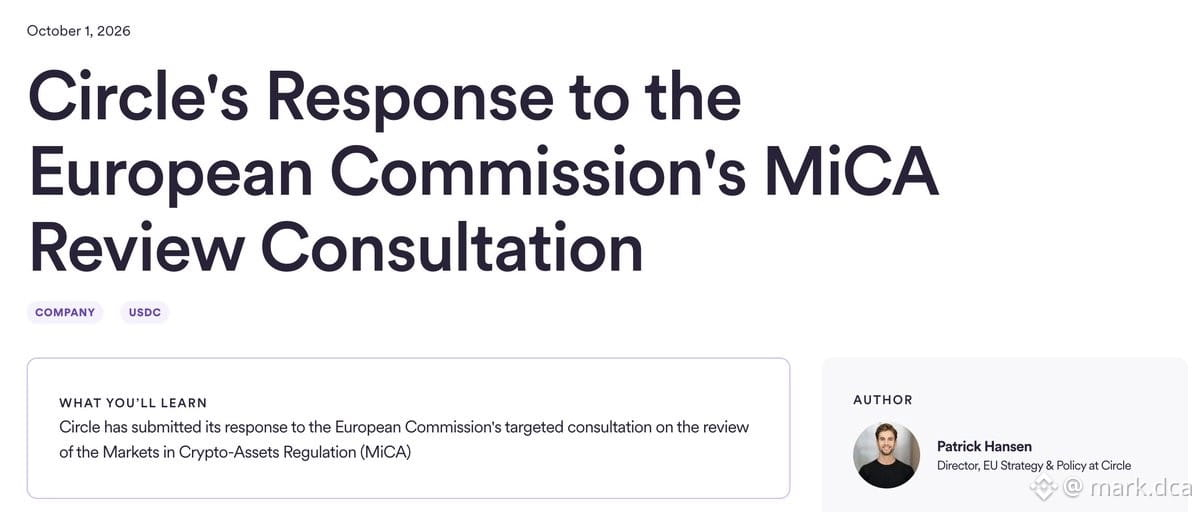
Circle just dropped their MiCA feedback to the EU Commission and it's pretty telling.
They're the biggest MiCA-regulated EMT issuer for both $USDC and EURC. Been compliant since July 2024. So they actually know what's broken.
MiCA spawned ~40 regulated EMTs in 2 years. More than any other framework globally. Banks and fintechs are entering. Good signal.
But here's the problem: Only 3 of the top 30 stablecoins by market cap are MiCA-compliant today. 2 of those are Circle's. MiCA hasn't captured global stablecoin supply. That's a massive gap.
Circle's pushing for an equivalence & recognition regime for foreign stablecoins that aligns with the GENIUS Act. Basically, transatlantic reciprocity. Makes sense if the EU wants to compete.
They also agree with the ECB: the mandatory 30/60% deposit minimum in EMT reserves is too rigid. Should be replaced with a flexible liquidity requirement based on the liquidity profile of HQLAs.
EU is a regulatory leader. Now they need market leadership. The infrastructure is there. The question is whether they'll adapt fast enough to capture real liquidity.
They're the biggest MiCA-regulated EMT issuer for both $USDC and EURC. Been compliant since July 2024. So they actually know what's broken.
MiCA spawned ~40 regulated EMTs in 2 years. More than any other framework globally. Banks and fintechs are entering. Good signal.
But here's the problem: Only 3 of the top 30 stablecoins by market cap are MiCA-compliant today. 2 of those are Circle's. MiCA hasn't captured global stablecoin supply. That's a massive gap.
Circle's pushing for an equivalence & recognition regime for foreign stablecoins that aligns with the GENIUS Act. Basically, transatlantic reciprocity. Makes sense if the EU wants to compete.
They also agree with the ECB: the mandatory 30/60% deposit minimum in EMT reserves is too rigid. Should be replaced with a flexible liquidity requirement based on the liquidity profile of HQLAs.
EU is a regulatory leader. Now they need market leadership. The infrastructure is there. The question is whether they'll adapt fast enough to capture real liquidity.