


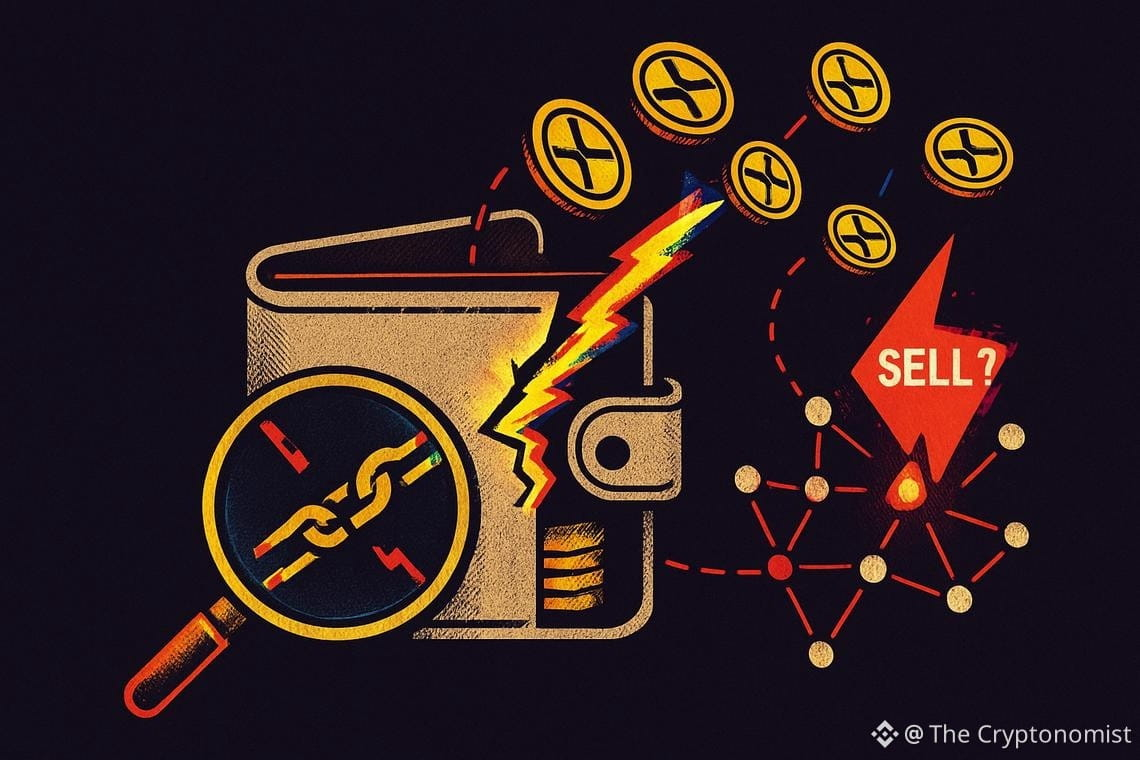
Roughly 54 million XRP has slipped out of the wallets tied to a massive Bitget theft, and the way it’s moving is raising fresh questions about whether the funds are headed toward a sale. The Bitget XRP theft, which saw hackers drain nearly 103 million XRP from the exchange’s infrastructure, has entered a new phase: coins that sat untouched for roughly a day are now being split across new addresses, a pattern that often signals preparation for liquidation.
Key takeaways
Nearly 103 million XRP was stolen from Bitget and initially divided across five wallets.
The hacker has since moved about 54 million XRP out of three of those five wallets.
Two wallets that each held around 20 million XRP were almost completely drained.
Roughly 49 million XRP, still worth tens of millions of dollars, remains parked across the original accounts.
XRP fell about 3% in 24 hours but is still up 3% for the week, suggesting the market is treating the move as a risk, not a confirmed dump.
Details of the Bitget XRP Theft and Wallet Movements
The scale of the breach hasn’t changed since it first surfaced, but its footprint has. Nearly 103 million XRP was taken from Bitget when attackers breached the exchange’s wallet infrastructure, and the stolen tokens were split across five separate accounts. What’s shifted in the days since is distribution: funds that stayed still are now being funneled outward, a sign that the attacker is actively repositioning the stash rather than sitting on it.
Stolen XRP Amount and Wallet Distribution
Of the five wallets that first absorbed the stolen tokens, two initially held about 20 million XRP each. Those two accounts were reduced to balances of roughly 23 XRP and 55 XRP, respectively, effectively wiped clean. That level of depletion points to a deliberate, methodical draining process rather than a one-off transfer.
Recent Movement and Depletion of Stolen XRP Wallets
In total, the hacker has moved about 54 million stolen XRP out of three of the five original wallets. That leaves approximately 49 million XRP still sitting across the five accounts, a sum worth tens of millions of dollars at current prices. The pattern of movement, coins going quiet for a stretch and then suddenly fanning out into new addresses, is the kind of on-chain signature that typically precedes a liquidation attempt, though it doesn’t confirm one has actually happened.
Implications of XRP Movements on Market and Price
The redistribution of stolen tokens doesn’t guarantee a sell-off, but it does raise the odds of one. Whenever a large sum tied to a hack starts moving instead of sitting still, it becomes a variable the market has to price in, even without a confirmed sale on the books.
Potential Future Selling Pressure on XRP
This is one of the two moments in this story that matter most for anyone holding or trading the token: movement alone doesn’t equal a dump, but it does change the risk calculus. If the remaining roughly 49 million XRP stays parked in private wallets, the situation stays theoretical. Should these tokens instead appear at a labeled exchange address or be swapped into another asset on-chain, the likelihood of near-term crypto sell pressure increases substantially, though the real effect on price would hinge on how much buy-side liquidity exists at that particular moment.
XRP Price Reaction to the Theft News
So far, the market hasn’t panicked. XRP is trading around $1.47, down about 3% over the past 24 hours, but it’s still holding on to a weekly gain of roughly 3%. That muted reaction is itself telling: traders appear to be treating the wallet transfers as a risk factor worth watching rather than proof that a large sell-off is already underway.
Technical Limitations of Freezing Native XRP
Here’s the second key takeaway worth understanding: exchanges and even Ripple have real limits on what they can do once stolen XRP leaves Bitget’s control. That gap in the recovery toolkit is central to why this story hasn’t been resolved days after the breach was discovered.
Exchanges’ Ability to Block Withdrawals Vs. Freezing XRP
Once a deposit of flagged XRP is identified, an exchange can lock down the recipient account and prevent withdrawals, but no exchange has the ability to freeze coins sitting in a wallet still under the attacker’s control. That restriction only kicks in after the funds actually land on a platform’s books, meaning the tokens sitting in private wallets right now are effectively untouchable until they move somewhere trackable.
XRP Ledger Freeze Function Does Not Apply to Native XRP
The technical reason traces back to how the XRP Ledger itself works. Its freeze function applies to tokens issued on top of the ledger, not to XRP itself. In other words, Ripple lacks any built-in way to prevent the attacker from spending native XRP as long as those funds remain in a wallet they control. It’s a structural constraint, not an oversight, and it explains why this case differs sharply from incidents involving stablecoins, where issuers like Circle and Tether have been able to blacklist addresses and freeze funds tied to the same Bitget breach. XRP simply doesn’t have that lever.
Bitget’s Recovery Plans and Customer Fund Protection
Bitget’s own timeline for getting back to normal operations is running on a separate track from the unresolved question of where the stolen XRP ends up.
Scheduled Withdrawal Resumption for Tokens
The exchange has laid out a phased schedule for reopening withdrawals: Bitcoin resumes Sept. 28, Ethereum follows on Sept. 29, USDT on Sept. 30, and other tokens are set to come back online on Oct. 2.
Protection Fund Coverage and Customer Balances
Bitget has stated that its protection fund covers the loss from the breach and that customer balances remain unaffected. That leaves the open question less about the exchange’s solvency and more about where the roughly 49 million XRP still sitting in those wallets ultimately lands.
FAQ
How much XRP was stolen in the Bitget breach?
Nearly 103 million XRP was stolen and split across five wallets.
Can exchanges freeze the stolen XRP tokens?
Exchanges can block withdrawals from flagged XRP deposits but cannot freeze native XRP in hacker-controlled wallets.
What is the impact of the stolen XRP movement on XRP’s price?
XRP price dropped about 3% in 24 hours but retained a weekly gain of 3%; the movements signal potential selling pressure but no confirmed dump yet.
How is Bitget handling customer funds after the breach?
Bitget states its protection fund covers the loss and customer balances remain unaffected.
Article produced with the assistance of artificial intelligence and reviewed by the editorial team.