
Давайте разберем, что именно $DUSK на самом деле создает, потому что «приватный блокчейн для регулируемых финансов» часто упоминают без особых объяснений того, что это означает механически.
Начнем с главной проблемы: в публичных блокчейнах каждая транзакция видна всем.
Для большинства криптосценариев этого достаточно, но не для системы клиринга и расчетов по ценным бумагам, потому что торговые данные, идентичность контрагентов и объем позиций — это именно та информация, которую регулируемые финансы обязаны по закону защищать.
Так что вы, наверное, думаете, что ответ — это цепочка с конфиденциальностью.
Но полная приватность создает другую проблему: регулятор с законной потребностью в аудите тоже не увидит ничего. Ни один из крайних вариантов не подходит для реального сценария использования.
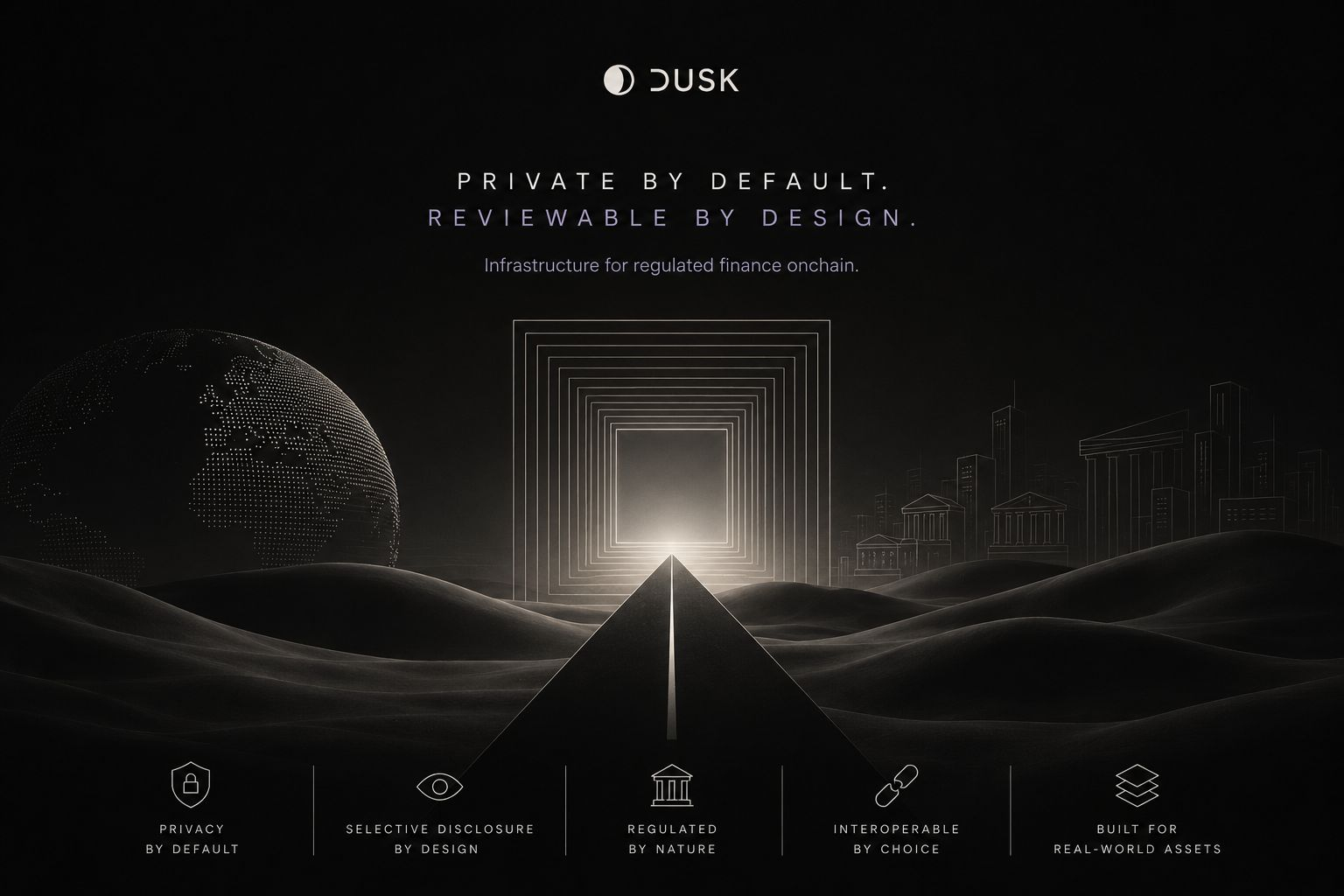
@Dusk подход — это то, что они называют программируемой приватностью, и стоит понимать это как спектр, а не как переключатель.
Транзакция может быть приватной по умолчанию для публичных, оставаясь при этом селективно раскрываемой уполномоченной стороне — например, регулятору или аудитору. Это и есть целевая проектная цель всего остального в стеке, так что держите это в уме, пока мы будем разбирать компоненты.
Уровень исполнения: DuskEVM
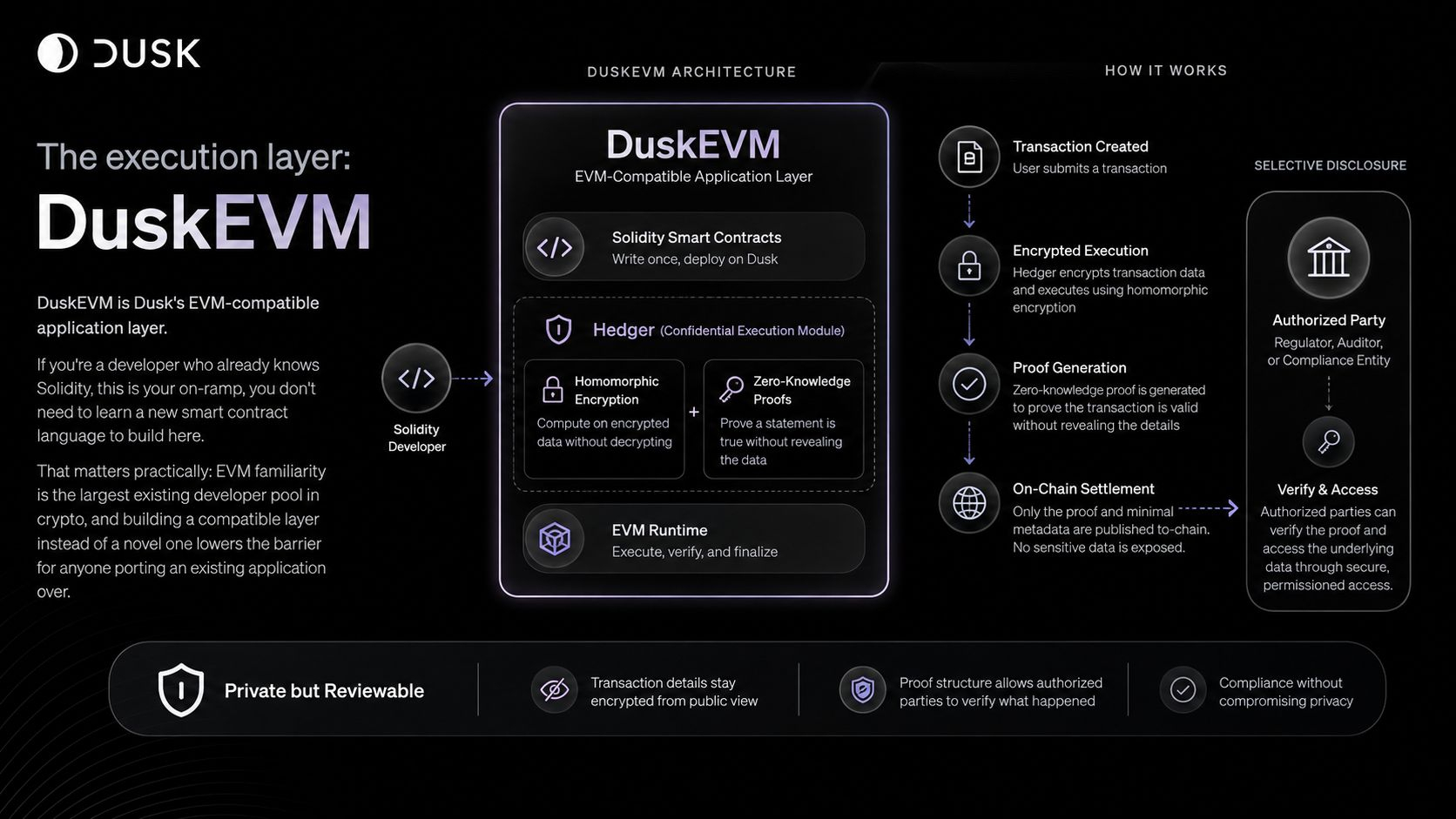
DuskEVM — это прикладной уровень Dusk, совместимый с EVM. Если вы разработчик и уже знаете Solidity, это ваша точка входа: вам не нужно учить новый язык смарт-контрактов, чтобы здесь строить.
Это важно на практике: знакомство с EVM — самый большой существующий пул разработчиков в крипто, и создание совместимого слоя вместо принципиально нового снижает порог для тех, кто переносит уже существующее приложение.
Конфиденциальная часть DuskEVM работает через модуль под названием Hedger.
Механически Hedger объединяет два криптографических инструмента: гомоморфное шифрование — оно позволяет выполнять вычисления над зашифрованными данными без предварительной расшифровки, — и доказательства с нулевым разглашением (zero-knowledge), которые позволяют доказать, что утверждение истинно, не раскрывая лежащие в основе данные.
Вместе это и есть то, как #Dusk обеспечивает свойство «приватно, но проверяемо», описанное выше. Детали транзакций остаются зашифрованными от публичного доступа, но структура доказательства позволяет уполномоченной стороне проверить, что произошло, не транслируя данные открыто.
Прикладной уровень: Dusk Trade
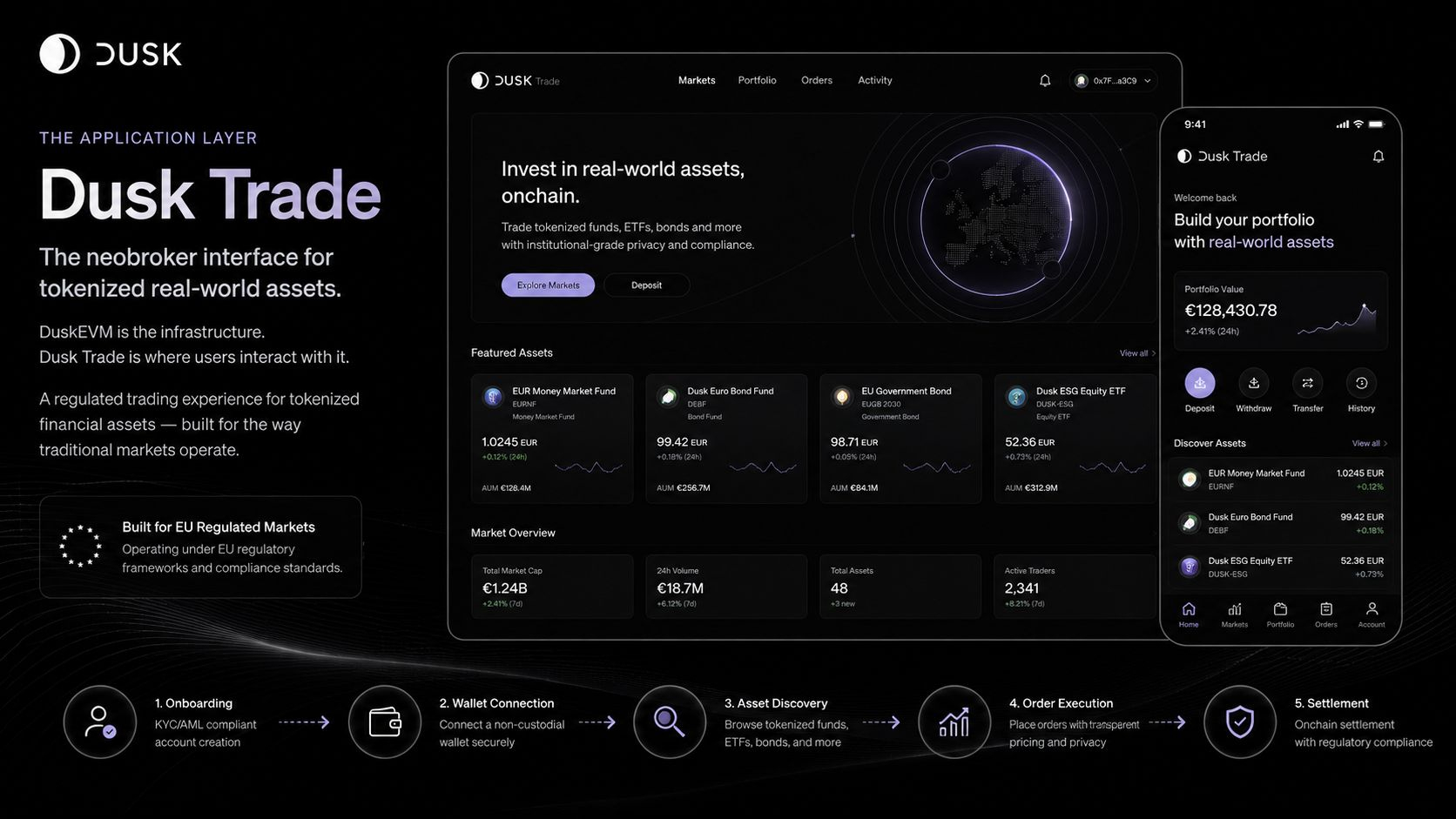
DuskEVM — это инфраструктура. Dusk Trade — это то место, где вы действительно взаимодействуете с ней как пользователь.
Он построен как интерфейс нео-брокера: представьте онбординг и опыт торговли как в обычном брокерском приложении — для токенизированных финансовых активов: фондов денежного рынка, ETF, облигаций и других категорий реальных активов.
Функциональные компоненты — это то, что вы ожидаете от любого брокера: онбординг аккаунтов, подключение кошелька, поиск активов, исполнение ордеров и расчеты — просто всё это сделано для работы по правилам регулируемого рынка ЕС, а не вне их.
Институциональный уровень: партнерства
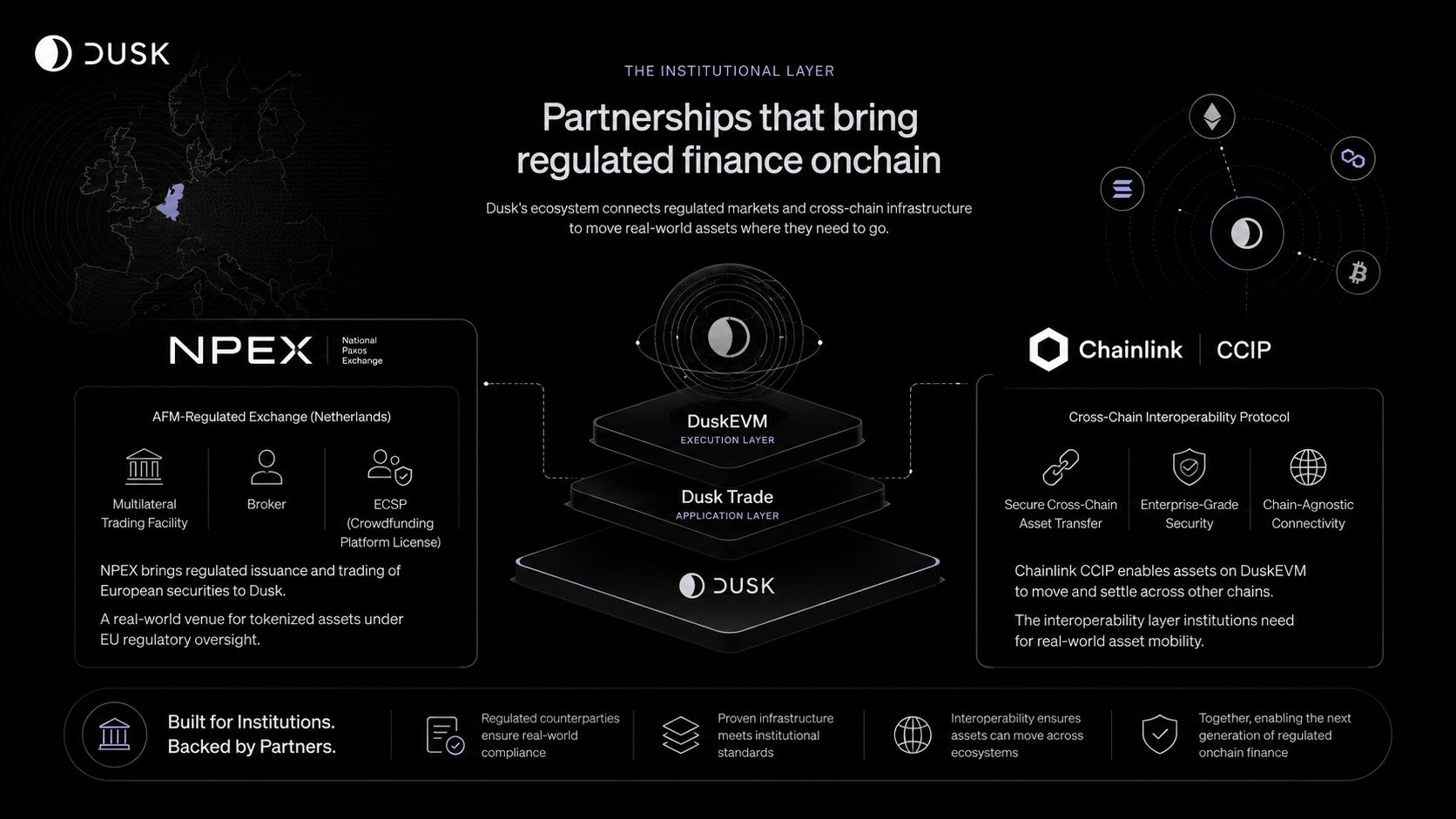
Инфраструктура и торговый интерфейс сами по себе не значат многого без того, чтобы регулируемые контрагенты реально их использовали, поэтому этот слой важнее, чем может показаться.
Самый ясный пример — NPEX: это биржа, регулируемая AFM в Нидерландах, лицензированная как Multilateral Trading Facility, брокер и ECSP (лицензия платформы краудфандинга).
План NPEX — привнести значимый объем токенизированных европейских ценных бумаг на инфраструктуру Dusk. Это реальный тест того, выдержит ли технический дизайн работу в условиях реального регулируемого использования, а не останется теоретическим.
Есть еще одна часть, которую стоит понять: Chainlink.
Chainlink CCIP обеспечивает уровень кроссчейн-взаимодействия, то есть активы, выпущенные в DuskEVM, могут перемещаться и рассчитываться через другие сети без специального моста для каждого соединения.
Для институциональных пользователей это меньше про хайп и больше про инфраструктуру: может ли актив действительно перемещаться туда, куда ему нужно.
Токенизация vs. нативная эмиссия
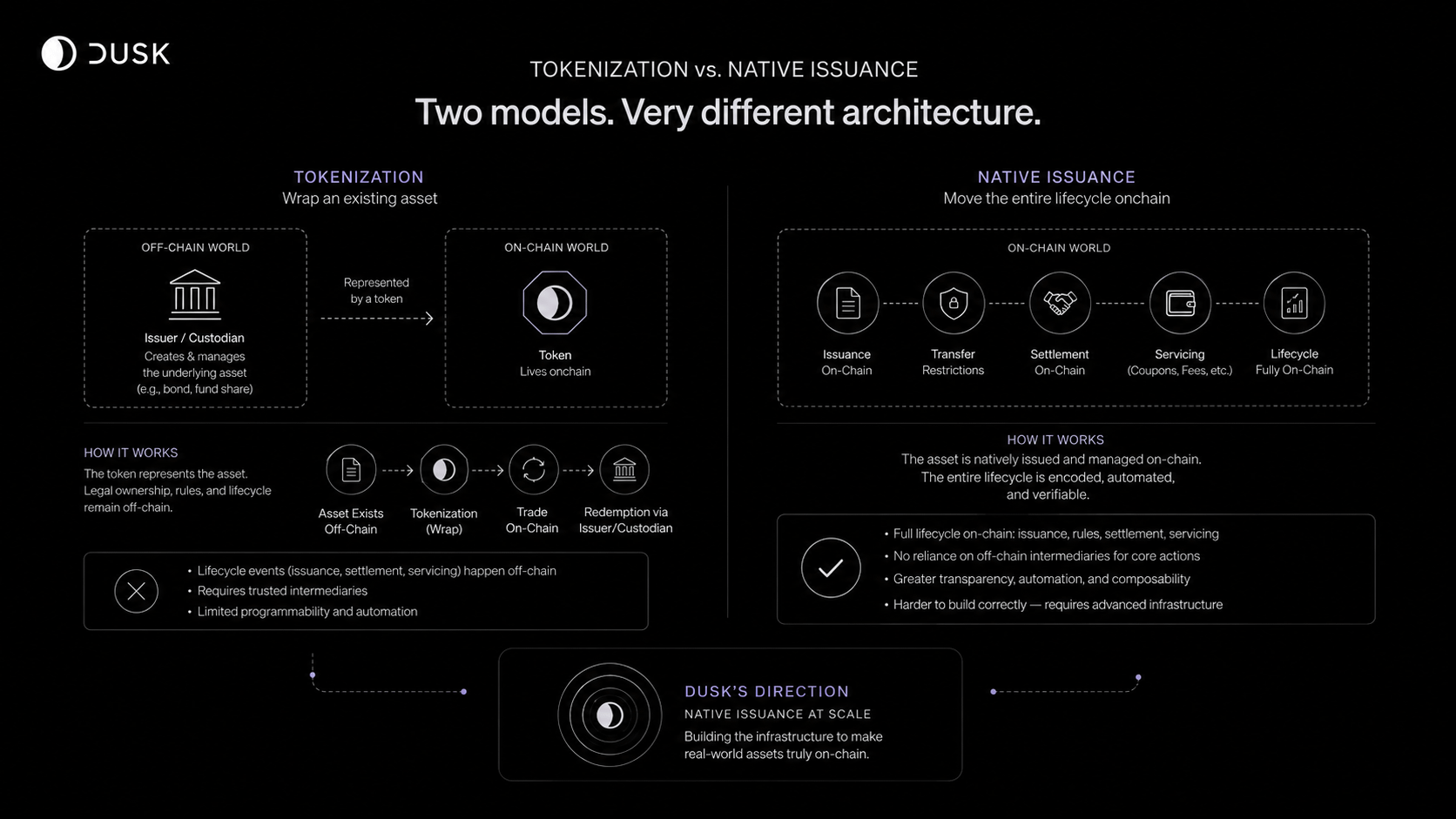
Эта разница очень часто упускается из виду, поэтому стоит быть точными.
Токенизация берет актив, который уже существует где-то еще — облигацию, долю фонда — и «оборачивает» его в токен, который это представляет.
Юридическая реальность и жизненный цикл этого актива по-прежнему живут off-chain.
Нативная эмиссия — это другое: она пытается перенести реальный жизненный цикл актива on-chain — эмиссию, ограничения на передачу, расчеты, сервисинг — всё нативно, а не как представление.
Решать это — более сложная инфраструктурная задача, и именно в этом направлении ориентирована «стековая» архитектура Dusk, а не в более простой модели «обернуть и разместить».
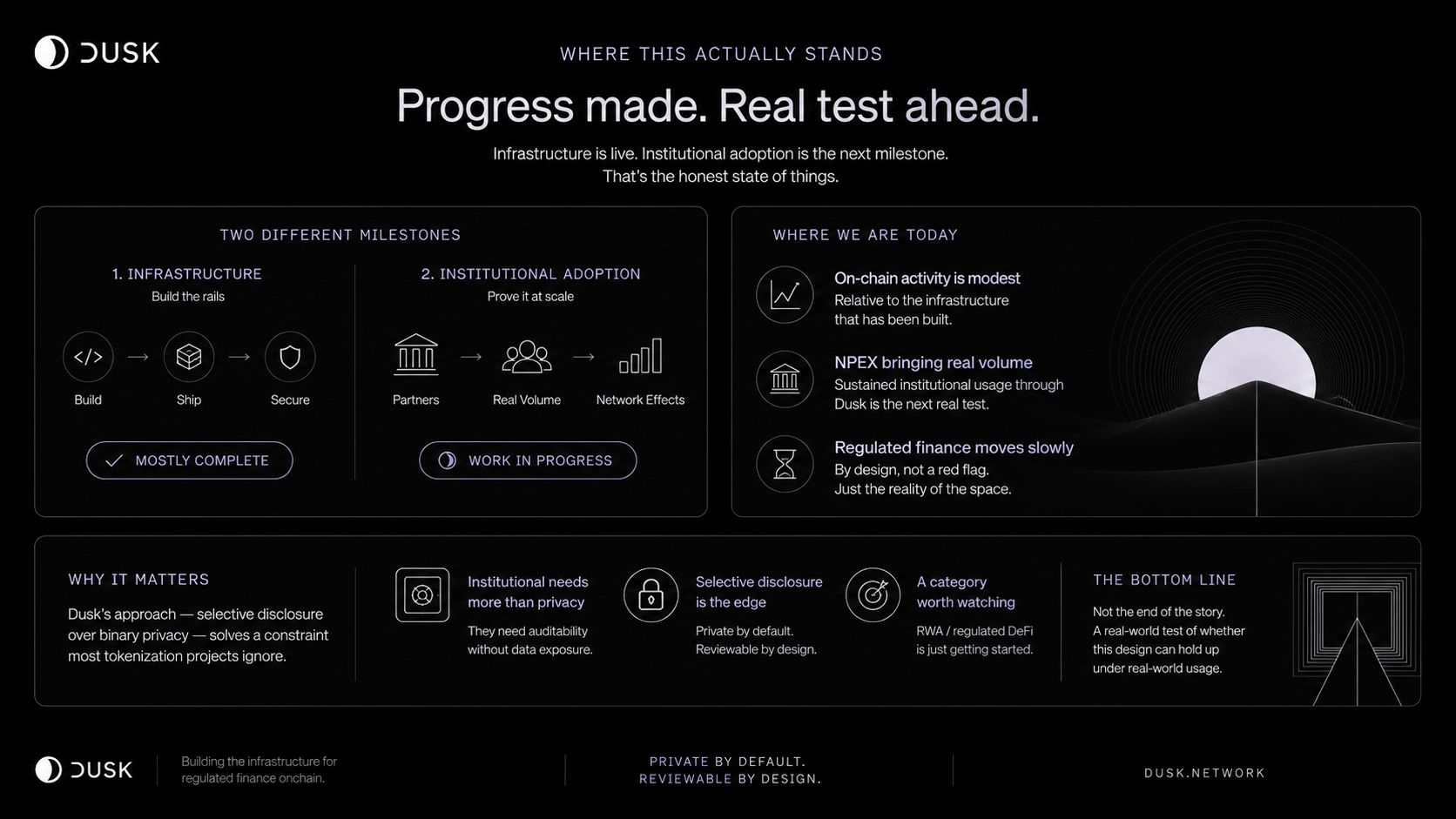
Где это на самом деле находится
Чтобы смотреть трезво: поставка инфраструктуры и доказательство институционального внедрения — это два разных веховых этапа, и на данный момент Dusk выполнил больше первого, чем второго.
Активность в сети была скромной по сравнению с тем, что уже создано, а NPEX, обеспечивающий устойчивый реальный объем через систему, — это следующий реальный тест.
Регулируемые финансы по замыслу движутся медленно, так что это не обязательно красный флаг, но это честное состояние дел, а не завершенная история.
Если вы пытаетесь понять категорию RWA/регулируемый DeFi в целом, Dusk — полезный кейс-стади независимо от того, где вы располагаетесь по спектру токена: технический подход (селективное раскрытие вместо двоичной приватности) устраняет ограничение, которое проекты токенизации вообще не решают.