

Crypto_nium
74 Публикации
Crypto_nium
Отправить жалобу
Заблокировать пользователя
WAGMI
Открытая сделка
Трейдер с частыми сделками
3.6 г
53 подписок(и/а)
34 подписчиков(а)
47 понравилось
Посты
Портфель
Все
Цитирования
PINNED
·
--

Статья
Historical Comparison of Major Crypto HacksThe Early Era & Centralized Exchange Failures
• Mt. Gox (2011–2014): $460 million stolen
The defining hack of early crypto history was My. Gox. Attackers quietly drained 850,000 Bitcoins over several years due to poor wallet management and leaked unencrypted wallet files. The hack forced the exchange, which handled 70% of all global Bitcoin traffic at the time—into bankruptcy.
• Coincheck (2018): $534 million stolen
Hackers infiltrated the Japanese exchange's systems via malware sent through phishing emails. They stole 523 million NEM tokens from a hot wallet that lacked multi-signature security.
The Rise of DeFi & Cross-Chain Bridge Exploits
• The DAO Hack (2016): $50 million stolen
An attacker exploited a reentrancy vulnerability in the code of the first Decentralized Autonomous Organization (The DAO). The hacker repeatedly withdrew funds before the smart contract could update its internal balance. The exploit resulted in a controversial hard fork, splitting Ethereum into Ethereum (ETH) and Ethereum Classic (ETC).
• Poly Network (2021): $611 million targeted
A hacker exploited a flaw in the network’s digital cryptography headers to change keeper addresses and redirect funds. The attacker later communicated with the team and returned nearly all the stolen funds.
• Ronin Network / Axie Infinity (2022): $620 million stolen
The North Korean Lazarus Group targeted Sky Mavis employees via fake LinkedIn job offers. They compromised 5 out of 9 validator nodes, giving them the cryptographic control needed to authorize massive, fraudulent withdrawals.
• BNB Chain Bridge (2022): $570 million generated
An attacker manipulated the cross-chain bridge (BSC Token Hub) using forged cryptographic proofs. This tricked the network into minting 2 million BNB tokens out of thin air, though swift network suspension capped liquid losses to roughly $100 million.
The DevOps Infrastructure Era
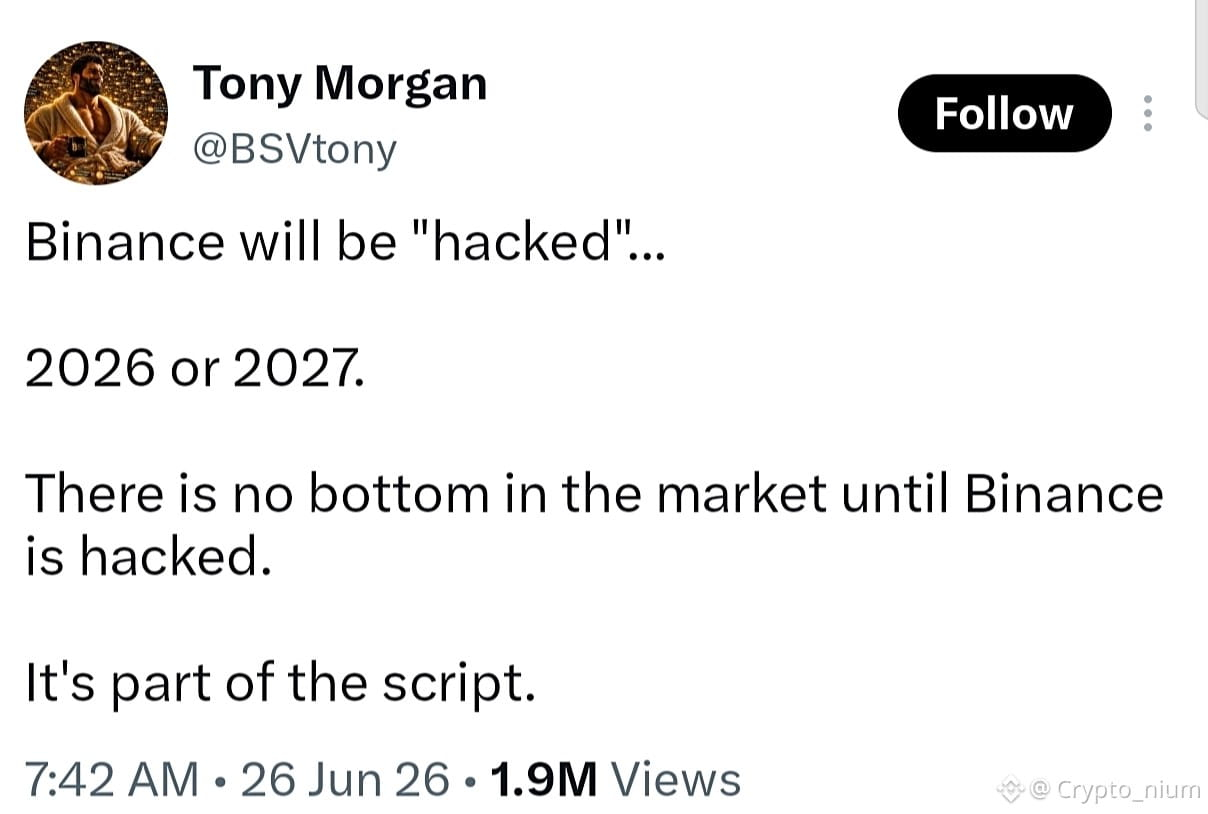
• Binance (October 2026): $6.3 billion exploited
The largest single crypto exploit in history, attributed to North Korea's TraderTraitor (Lazarus Group) hacking unit. Attackers compromised a DevOps engineer's laptop, infiltrating an internal service container to manipulate transaction authorizations. The hackers utilized pre-signed authorizations under the EIP-7702 protocol to deploy a malicious "sweeper contract" that drained billions across ten different blockchains. Coordinated industry efforts successfully froze roughly $3 billion on-chain, and Binance committed to covering the remaining user losses.
#TwoAddressesHoldingAbout1.28BUSDTFrozen #BinanceHack2026
Historical Comparison of Major Crypto Hacks
The Early Era & Centralized Exchange Failures
• Mt. Gox (2011–2014): $460 million stolen
The defining hack of early crypto history was My. Gox. Attackers quietly drained 850,000 Bitcoins over several years due to poor wallet management and leaked unencrypted wallet files. The hack forced the exchange, which handled 70% of all global Bitcoin traffic at the time—into bankruptcy.
• Coincheck (2018): $534 million stolen
Hackers infiltrated the Japanese exchange's systems via malware sent through phishing emails. They stole 523 million NEM tokens from a hot wallet that lacked multi-signature security.
The Rise of DeFi & Cross-Chain Bridge Exploits
• The DAO Hack (2016): $50 million stolen
An attacker exploited a reentrancy vulnerability in the code of the first Decentralized Autonomous Organization (The DAO). The hacker repeatedly withdrew funds before the smart contract could update its internal balance. The exploit resulted in a controversial hard fork, splitting Ethereum into Ethereum (ETH) and Ethereum Classic (ETC).
• Poly Network (2021): $611 million targeted
A hacker exploited a flaw in the network’s digital cryptography headers to change keeper addresses and redirect funds. The attacker later communicated with the team and returned nearly all the stolen funds.
• Ronin Network / Axie Infinity (2022): $620 million stolen
The North Korean Lazarus Group targeted Sky Mavis employees via fake LinkedIn job offers. They compromised 5 out of 9 validator nodes, giving them the cryptographic control needed to authorize massive, fraudulent withdrawals.
• BNB Chain Bridge (2022): $570 million generated
An attacker manipulated the cross-chain bridge (BSC Token Hub) using forged cryptographic proofs. This tricked the network into minting 2 million BNB tokens out of thin air, though swift network suspension capped liquid losses to roughly $100 million.
The DevOps Infrastructure Era
• Binance (October 2026): $6.3 billion exploited
The largest single crypto exploit in history, attributed to North Korea's TraderTraitor (Lazarus Group) hacking unit. Attackers compromised a DevOps engineer's laptop, infiltrating an internal service container to manipulate transaction authorizations. The hackers utilized pre-signed authorizations under the EIP-7702 protocol to deploy a malicious "sweeper contract" that drained billions across ten different blockchains. Coordinated industry efforts successfully froze roughly $3 billion on-chain, and Binance committed to covering the remaining user losses.
#TwoAddressesHoldingAbout1.28BUSDTFrozen #BinanceHack2026
757
·
--
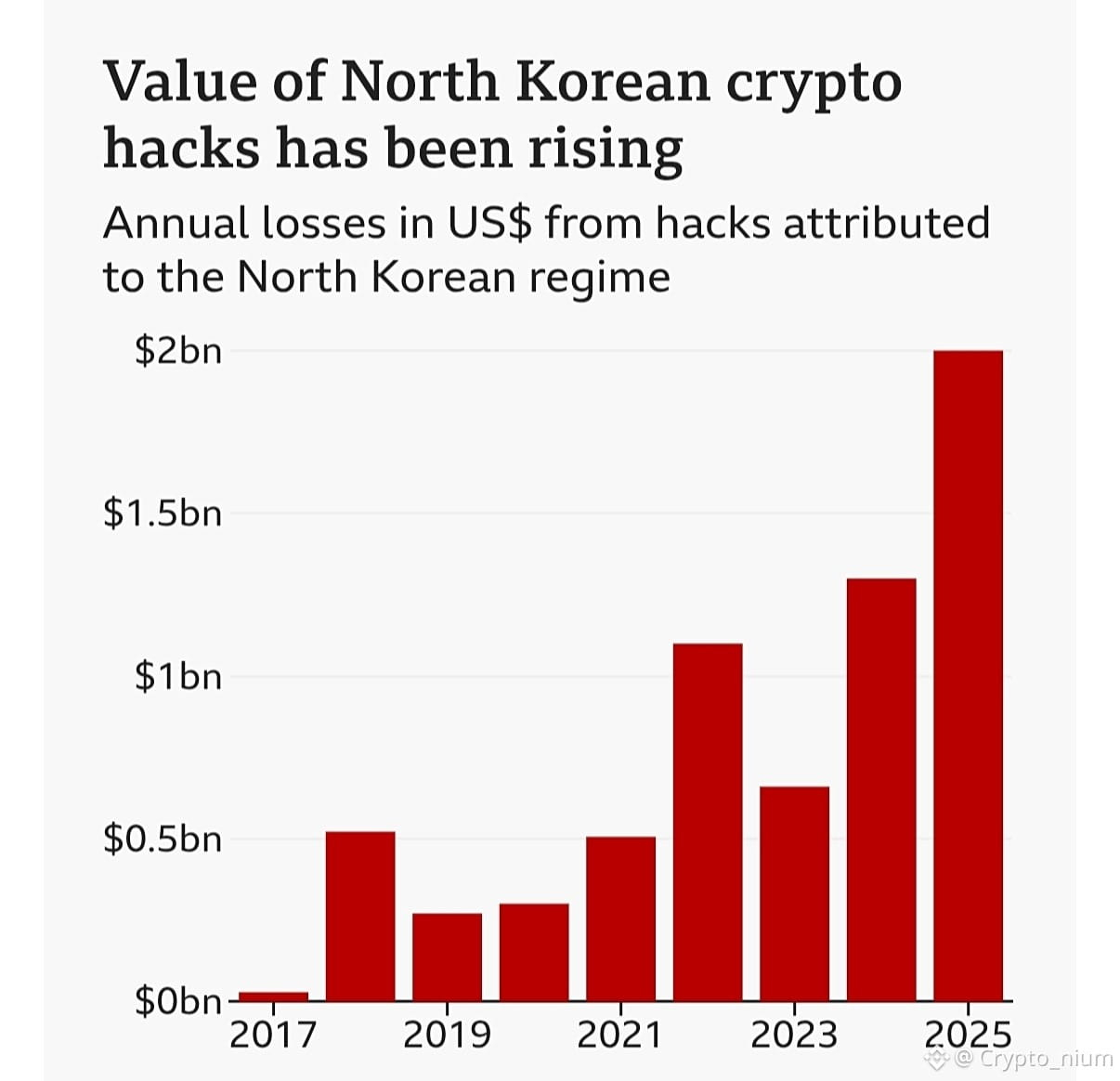
North Korean state-sponsored cyber crimes have increasingly focused on big-scale crypto thefts over the past years. The regime has been repeatedly been accused of using cryptocurrency theft to generate revenue to help fund its weapons programmes.
#TwoAddressesHoldingAbout1.28BUSDTFrozen
North Korean state-sponsored cyber crimes have increasingly focused on big-scale crypto thefts over the past years. The regime has been repeatedly been accused of using cryptocurrency theft to generate revenue to help fund its weapons programmes.
#TwoAddressesHoldingAbout1.28BUSDTFrozen
#TwoAddressesHoldingAbout1.28BUSDTFrozen
2.4k
·
--
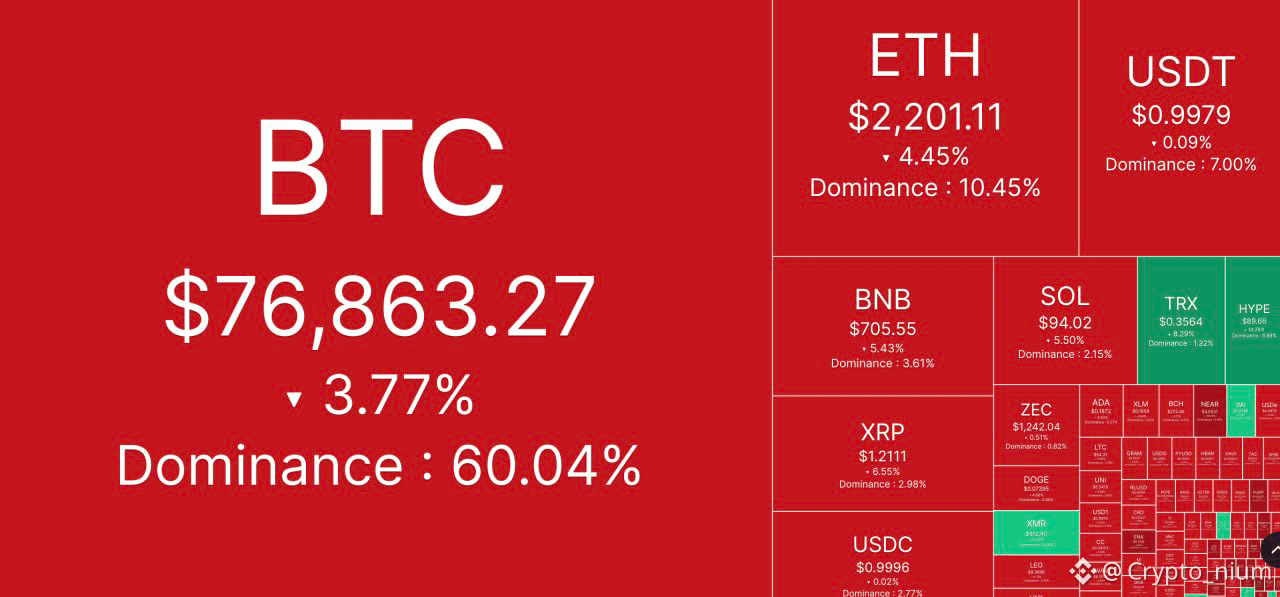
Those who were safe from attack got liquidated lols😂
Those who were safe from attack got liquidated lols😂
5
6
2.3k
·
--
Ever wonder why you always hear about crypto hackers coming from North Korea? 🕵️♂️
It isn't just random individuals working from their bedrooms. It is a highly organized, state-backed system.
They are cut off from the world:
Due to strict international sanctions, North Korea cannot trade or use the normal global banking system. The government uses crypto heists as a shortcut to steal "hard cash" and bypass these blocks.
Government funding:
Unlike regular hackers who steal for personal greed, these groups operate like a government department. The stolen funds go directly into financing the state's military and weapons programs.
School for hackers:
The government spots kids who are math geniuses at a very young age. They pull them into special schools and train them for years to become elite cyber warriors (like the famous Lazarus Group).
The Crypto Reality:
Because these attacks are state-sponsored, they are highly sophisticated. That is why major exchanges and blockchain analysts work around the clock to track stolen funds and freeze them on-chain.
Always keep your personal accounts locked down with 2FA, passkeys, and strong security habits!
#TwoAddressesHoldingAbout1.28BUSDTFrozen

1
421
·
--
In the last 24 hours:
Google dropped 12%.
Amazon dropped 12%.
Intel dropped 20%.
Binance got hacked for $6B.
And BTC is down only 2%.
Everyone knows what this means.
#TwoAddressesHoldingAbout1.28BUSDTFrozen
In the last 24 hours:
Google dropped 12%.
Amazon dropped 12%.
Intel dropped 20%.
Binance got hacked for $6B.
And BTC is down only 2%.
Everyone knows what this means.
#TwoAddressesHoldingAbout1.28BUSDTFrozen
Google dropped 12%.
Amazon dropped 12%.
Intel dropped 20%.
Binance got hacked for $6B.
And BTC is down only 2%.
Everyone knows what this means.
#TwoAddressesHoldingAbout1.28BUSDTFrozen
2
1
840
·
--
Why can’t the hackers hack the corrupt corporations, traditional banks and federal reserve and distribute millions to the citizens?
Why is it always crypto?
#TwoAddressesHoldingAbout1.28BUSDTFrozen
Why can’t the hackers hack the corrupt corporations, traditional banks and federal reserve and distribute millions to the citizens?
Why is it always crypto?
#TwoAddressesHoldingAbout1.28BUSDTFrozen
Why is it always crypto?
#TwoAddressesHoldingAbout1.28BUSDTFrozen
19
11
8.8k
·
--
Статья
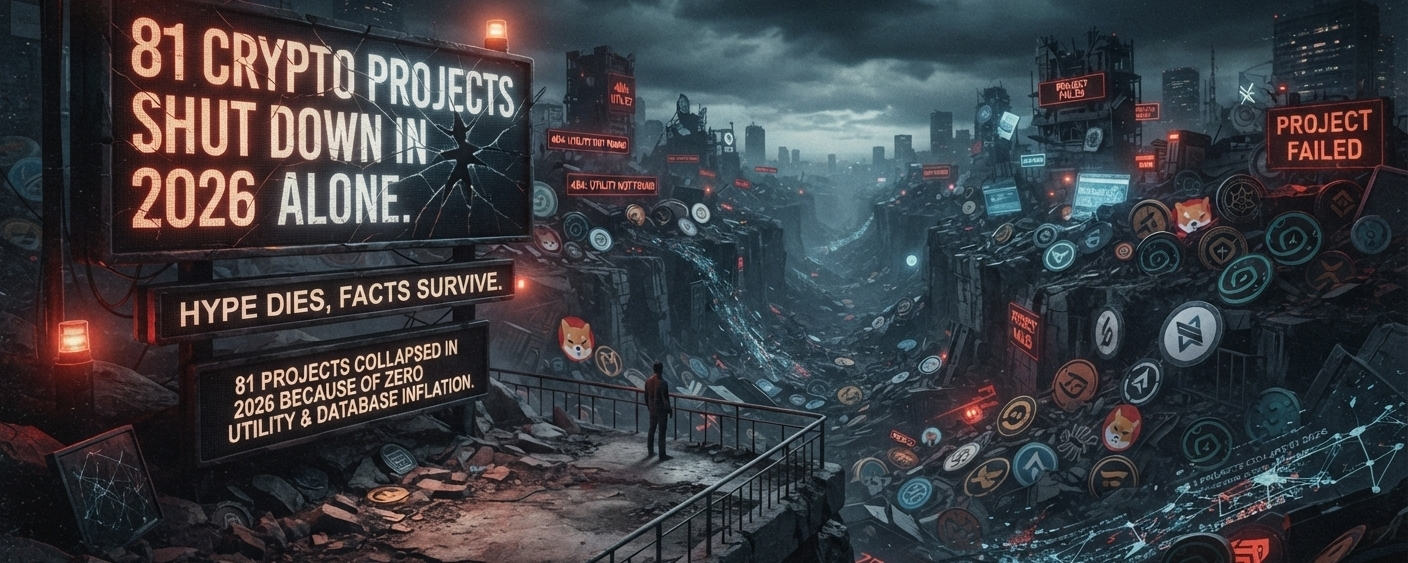
81 CRYPTO PROJECTS SHUT DOWN IN 2026 ALONEHype dies, facts survive. 81 projects collapsed in 2026 because of zero utility and database inflation.
October 2026
1..Blur (October 12)
2..Abstract (October 6)
3..Blast (October 2)
4..Neon EVM (October 1)
5..September 2026
6..OneSwap (September 15)
7..Coinx Smart Chain (September 15)
8..CoinEx (September 15)
9..Balancer (September 14)
10..Router Protocol (September 5)
11..Full Sail (September 1)
August 2026
1..Lisk Chain (August 25)
2..Shipyard (IPFS) (August 24)
3..Paystream (August 15)
4..Trepa (August 10)
5..Fireplace (August 10)
6..Step App (August 5)
7..Proof of Play (August 4)
8..POAP (August 3)
July 2026
1..BitMart (July 26)
2..Dango (July 25)
3..BitMEX (July 23)
4..ODOS (July 23)
5..Movement Labs (July 22)
6..SecondFi (July 22)
7..Xenea (July 13)
8..AscendEX (July 11)
9..Zapper (July 9)
10..Ctrl Wallet (July 7)
11..Loopring (July 3)
12..Polygon zkEVM (July 1)
June 2026
1..Sophon (June 26)
2..Ionic (June 18)
3..Soundness (June 18)
4..Swell (June 17)
5..Powerloom (June 16)
6..Satori (June 16)
7..Ventuals (June 15)
8..Fishing Frenzy (June 15)
9..Pudgy Party (June 13)
10..Botanix (June 10)
11..Hyli (June 10)
12..Radiant Capital (June 1)
May 2026
1..Zero Network (May 22)
2..Everclear (May 21)
3..Syndicate (May 21)
4..Fantasy (May 20)
5..Legend (May 13)
6..Phi (May 4)
7..Carrot (May 1)
April 2026
1..Genso Online (April 30)
2..Luckio (April 24)
3..Beets (April 17)
4..Mint Blockchain (April 17)
5..Pixel Heroes Adventure (April 17)
6..XOCIETY (April 16)
7..77-Bit (April 16)
8..Opulous (April 15)
9..Foundation (April 15)
10..Megaphone (April 12)
11..Seamless Protocol (April 8)
12..Intergaze (April 3)
13..Dmail (April 2)
14..Leap Wallet (April 2)
15..Fey (April 1)
16..Magic Eden Wallet (April 1)
March 2026
1..Yupp AI (March 31)
2..Bit.com (March)
3..MilkyWay (March 26)
4..Tally (March 17)
5..BlockFills (March 16)
6..Genome Protocol (March 11)
7..DataHaven (March 4)
8..Angle Protocol (March 4)
February 2026
1..Step Finance (February 24)
2..Remora Markets (February 24)
3..Parsec (February 19)
4..ZeroLend (February 16)
5..Polynomial (February 13)
January 2026
1..NGS (January 26)
2..Entropy (January 24)
3..Slingshot (January 21)
81 CRYPTO PROJECTS SHUT DOWN IN 2026 ALONE
Hype dies, facts survive. 81 projects collapsed in 2026 because of zero utility and database inflation.
October 2026
1..Blur (October 12)
2..Abstract (October 6)
3..Blast (October 2)
4..Neon EVM (October 1)
5..September 2026
6..OneSwap (September 15)
7..Coinx Smart Chain (September 15)
8..CoinEx (September 15)
9..Balancer (September 14)
10..Router Protocol (September 5)
11..Full Sail (September 1)
August 2026
1..Lisk Chain (August 25)
2..Shipyard (IPFS) (August 24)
3..Paystream (August 15)
4..Trepa (August 10)
5..Fireplace (August 10)
6..Step App (August 5)
7..Proof of Play (August 4)
8..POAP (August 3)
July 2026
1..BitMart (July 26)
2..Dango (July 25)
3..BitMEX (July 23)
4..ODOS (July 23)
5..Movement Labs (July 22)
6..SecondFi (July 22)
7..Xenea (July 13)
8..AscendEX (July 11)
9..Zapper (July 9)
10..Ctrl Wallet (July 7)
11..Loopring (July 3)
12..Polygon zkEVM (July 1)
June 2026
1..Sophon (June 26)
2..Ionic (June 18)
3..Soundness (June 18)
4..Swell (June 17)
5..Powerloom (June 16)
6..Satori (June 16)
7..Ventuals (June 15)
8..Fishing Frenzy (June 15)
9..Pudgy Party (June 13)
10..Botanix (June 10)
11..Hyli (June 10)
12..Radiant Capital (June 1)
May 2026
1..Zero Network (May 22)
2..Everclear (May 21)
3..Syndicate (May 21)
4..Fantasy (May 20)
5..Legend (May 13)
6..Phi (May 4)
7..Carrot (May 1)
April 2026
1..Genso Online (April 30)
2..Luckio (April 24)
3..Beets (April 17)
4..Mint Blockchain (April 17)
5..Pixel Heroes Adventure (April 17)
6..XOCIETY (April 16)
7..77-Bit (April 16)
8..Opulous (April 15)
9..Foundation (April 15)
10..Megaphone (April 12)
11..Seamless Protocol (April 8)
12..Intergaze (April 3)
13..Dmail (April 2)
14..Leap Wallet (April 2)
15..Fey (April 1)
16..Magic Eden Wallet (April 1)
March 2026
1..Yupp AI (March 31)
2..Bit.com (March)
3..MilkyWay (March 26)
4..Tally (March 17)
5..BlockFills (March 16)
6..Genome Protocol (March 11)
7..DataHaven (March 4)
8..Angle Protocol (March 4)
February 2026
1..Step Finance (February 24)
2..Remora Markets (February 24)
3..Parsec (February 19)
4..ZeroLend (February 16)
5..Polynomial (February 13)
January 2026
1..NGS (January 26)
2..Entropy (January 24)
3..Slingshot (January 21)
109
·
--
The Next FOMC Meeting is Coming: What Crypto Traders Need to Watch 🚨
Mark your calendars! The Federal Open Market Committee (FOMC) meeting is taking place on October 27–28, 2026. The official interest rate decision and policy statement will drop on Wednesday, October 28, 2026, at 2:00 PM ET, followed by Federal Reserve Chair Jerome Powell's press conference at 2:30 PM ET.
Why This Matters for Crypto 📉📈
FOMC meetings are massive volatility catalysts for Bitcoin (BTC) and the broader altcoins market. Here is what the market is looking for:
Rate Decisions: Any unexpected hikes, pauses, or cuts can instantly trigger sharp liquidations or massive rallies.
The Powell Effect: Fed Chair Jerome Powell's tone during the 2:30 PM ET press conference often moves the markets more than the actual rate decision. Watch for "hawkish" (unfavorable for crypto) or "dovish" (favorable for crypto) signals.
Macro Liquidity: Higher rates generally strengthen the US Dollar Index (DXY) and put pressure on risk assets like crypto. Lower rates or hints of easing tend to fuel bullish momentum.
💡 Trader Checklist & Risk Management
1. Expect Volatility: Spreads can widen and sudden wicks can hunt stop-losses right around 2:00 PM ET.
2. Manage Leverage: If you are trading futures, consider lowering your leverage or tightening your risk parameters to survive sudden market swings.
3. Watch the DXY and SPX: Crypto often moves inversely to the Dollar Index (DXY) and highly correlates with the S&P 500 around macro news events.
#FOMC $BTC
103
·
--
What would happen if Strategy sold all their $BTC ? Is there anyone who could provide satisfactory answer?
$MSTR
What would happen if Strategy sold all their $BTC ? Is there anyone who could provide satisfactory answer?
$MSTR
$MSTR
1
355
·
--
Market Reaction on Election
Historically, crypto follows a "fall first, then rise" pattern around U.S. midterms due to shifting policy anxiety.
Before the election, regulatory uncertainty usually drives institutional capital to deleverage. However, once the political tail risk clears, the market has historically rebounded strongly.
The Midterm Cycle Trend
• Pre-Election Drawdowns: In 2014, 2018, and 2022, Bitcoin fell 56%, 73%, and 64% respectively leading up to November as investors moved to cash.
• Post-Election Rallies: Within 12 months of the votes being settled, Bitcoin historically rallied by 24.5% (2014), 44.9% (2018), and 92.3% (2022).
The 2026 Shift
The current 2026 midterm cycle is bucking the historical pre-election crash. Backed by steady spot ETF inflows, Bitcoin is down only about 3% year-to-date as of October 2026. While politics create short-term volatility, broader macroeconomic liquidity and Federal Reserve interest rate policies remain the primary structural drivers of crypto asset prices.
86
·
--
Проверено
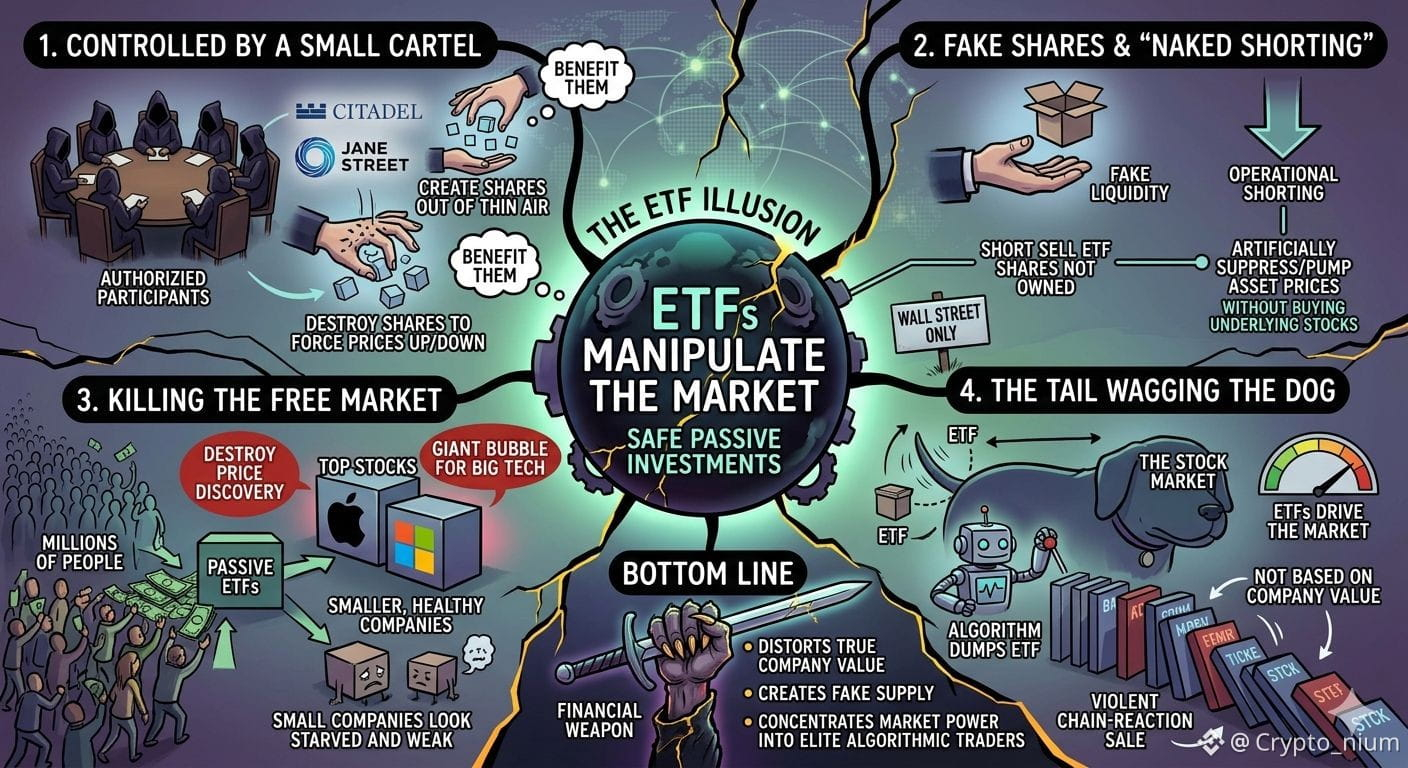
The ETF Illusion: Why ETFs Manipulate the Market
Most people think Exchange-Traded Funds (ETFs) are safe, passive investments. In reality, the ETF system is a highly engineered tool that Wall Street uses to control and manipulate asset prices.
1. Controlled by a Small Cartel
A handful of giant trading firms (like Citadel and Jane Street) run the ETF market. They are called Authorized Participants. They have the unique power to create new ETF shares out of thin air or destroy them to force prices up or down whenever it benefits them.
2. Fake Shares and "Naked Shorting"
ETFs create fake liquidity. These big trading firms are legally allowed to short sell ETF shares they do not actually own. This is called operational shorting. It allows Wall Street to artificially suppress or pump the price of assets without buying the real underlying stocks.
3. Killing the Free Market
Passive ETFs destroy real price discovery. When millions of people buy an S&P 500 ETF, money flows automatically into top stocks like Apple or Microsoft, regardless of whether those companies are doing well. This creates a giant bubble for big tech while starving smaller, healthy companies of cash.
4. The Tail Wagging the Dog
ETFs were made to track the stock market, but now they drive the market. When an algorithm dumps a massive ETF, it forces a violent chain-reaction sale of hundreds of individual stocks at the exact same time. Stocks no longer trade on company value; they move purely based on ETF trading flows.
An ETF is not a passive basket of stocks. It is a financial weapon that distorts the true value of companies, creates fake supply, and concentrates total market power into the hands of a few elite algorithmic traders.
#BitcoinDropsBelow$60KWorstWeekSinceJuly2024
$BTC $ETH
100
·
--
When a trader liquidates where his money goes to?
When a trader is liquidated in a leveraged or margin trade, their lost margin (collateral) does not just vanish. It is redistributed to cover the loss of the borrowed funds and offset the opposing side of the market.
Funds are distributed in the following order:
The Exchange or Broker: The funds you used to open the trade (your margin) are kept to cover the losses you incurred.
Liquidation Fees: A portion is automatically deducted as a penalty fee to compensate the trading platform (e.g., Binance) for facilitating and executing the emergency closure.
Counterparties & Liquidity Providers: For every liquidated trade (like a failed long), there is a trader on the opposing side who correctly bet in the opposite direction (like a short). Your losses directly fund their profits.
Insurance Funds: If your losses are extreme or the market suffers a flash crash, the exchange’s insurance fund absorbs the difference to keep the platform solvent.
184
·
--
Summary of Donald Trump Visit to China
Donald Trump’s two-day visit to China was mostly about keeping the peace between the world’s two biggest economies. While both sides smiled and signed some big business deals, they did not solve their deepest disagreements about trade, technology, or global conflicts.
🤝 What Happened During the Visit
Lots of Pageantry: China's President gave Trump a grand welcome with military bands, a tour of the ancient Temple of Heaven, and private talks in a historic garden compound.
Big Business Deals: Trump brought top American tech bosses (like Elon Musk and Tim Cook) and announced deals for China to buy U.S. goods like beef, soybeans, and Boeing airplanes.
Warnings Over Taiwan: President Xi gave a strict warning that any wrong moves regarding Taiwan could lead to a military clash.
Talks on Iran: With a war in Iran hurting global oil supplies, both leaders agreed they want to keep shipping lanes safe, but China did not promise to stop buying Iranian oil.
⚖️ The Final Result
The meeting did not fix the long-term rivalry between the U.S. and China. Its main success was simply slowing down the tension and making sure the two countries keep talking instead of starting a trade war.
538
·
--
Absolutely, accounts on which we have full control
Absolutely, accounts on which we have full control


Richard Teng
·
--
Wallets are the new bank accounts.
The financial system is being rebuilt, and it's happening on-chain. ⛏️
The financial system is being rebuilt, and it's happening on-chain. ⛏️
5
·
--
Accumulate a little to make a lot: Don't underestimate every small gain, as it will add up to wealth.
$BTC $ETH $XRP
Accumulate a little to make a lot: Don't underestimate every small gain, as it will add up to wealth.
$BTC $ETH $XRP
$BTC $ETH $XRP
139
·
--

Статья
🚀The Evolution of Altseason: Myth Vs Reality, Data, History, and Why 2026 is Different 🚀Is Altcoin Season a myth or an inevitable phase of the crypto market cycle? For years, traders have chased the dream of a "rising tide that lifts all boats." But as the market matures, the rules of Altseason are being completely rewritten.
📜 A Brief History of Altseasons
Historically, the crypto market has experienced two massive, industry-wide altcoin seasons:
Season 1 (2017–2018): The ICO Era
Driven by the Initial Coin Offering (ICO) boom, retail frenzy pushed Bitcoin Dominance (BTC.D) down from 96% to an all-time low of 36%. Nearly every asset with a whitepaper surged.Season 2 (2020–2021): The DeFi & Meme Expansion
Triggered by low central bank interest rates, liquidity exploded into Decentralized Finance (DeFi), Layer-1 chains, and high-momentum meme coins. The total altcoin market cap increased by an astounding $1.5 trillion.
📊 The Data Behind the "Rotation"
Altseason is not just a feeling—it is a mathematically tracked market phenomenon. Capital typically moves through a highly specific liquidity pipeline. According to platforms like the Blockchain Center Altcoin Season Index, a true altseason officially triggers when 75% of the top 50 cryptocurrencies outperform Bitcoin over a rolling 90-day period.
💡 Myth vs. Reality in 2026
The classic expectation of a cyclical, universal altcoin pump is changing. Let's break down the facts:
The Myth: “Every token in your wallet will pump together.”The Reality: The market has become highly fragmented. With thousands of new tokens launching across separate ecosystems, capital efficiency dominates. We now see structural, narrative-driven mini-seasons (e.g., AI tokens, localized Memecoin spikes, or specific Layer-1 expansions) rather than a uniform market rise.The Myth: “Altcoins are safe long-term holds.”The Reality: Most altcoins from previous cycles never recover their old all-time highs. They are highly speculative, momentum-driven assets that decay if developer or community attention shifts.
🔍 Crucial Indicators to Monitor Right Now
If you are hunting for early signs of capital rotation, monitor these charts on TradingView:
Bitcoin Dominance (BTC.D): Historically, a drop in BTC.D signals that profits are migrating into riskier assets. In early 2026, BTC.D broke past the 60% threshold, highlighting Bitcoin's massive strength in the current macro climate. A sharp rejection at these high levels is what altcoin bulls want to see.The TOTAL3 Chart: This chart tracks the total crypto market capitalization excluding Bitcoin and Ethereum. Watching for structural breakouts on TOTAL3 tells you if fresh capital is entering the alternative markets.Stablecoin Inflow Dynamics: Rising supplies of USDT and USDC on exchanges indicate "dry powder" waiting to buy dips or chase momentum.
🛠️ Final Takeaway for Traders
Do not wait for a 2017 or 2021 carbon copy. Position early in projects featuring solid fundamentals, institutional or community liquidity, and strong cultural narrative alignment.
#Altseason #CryptoTrading #BitcoinDominance #BinanceSquare
🚀The Evolution of Altseason: Myth Vs Reality, Data, History, and Why 2026 is Different 🚀
Is Altcoin Season a myth or an inevitable phase of the crypto market cycle? For years, traders have chased the dream of a "rising tide that lifts all boats." But as the market matures, the rules of Altseason are being completely rewritten.
📜 A Brief History of Altseasons
Historically, the crypto market has experienced two massive, industry-wide altcoin seasons:
Season 1 (2017–2018): The ICO Era
Driven by the Initial Coin Offering (ICO) boom, retail frenzy pushed Bitcoin Dominance (BTC.D) down from 96% to an all-time low of 36%. Nearly every asset with a whitepaper surged.Season 2 (2020–2021): The DeFi & Meme Expansion
Triggered by low central bank interest rates, liquidity exploded into Decentralized Finance (DeFi), Layer-1 chains, and high-momentum meme coins. The total altcoin market cap increased by an astounding $1.5 trillion.
📊 The Data Behind the "Rotation"
Altseason is not just a feeling—it is a mathematically tracked market phenomenon. Capital typically moves through a highly specific liquidity pipeline. According to platforms like the Blockchain Center Altcoin Season Index, a true altseason officially triggers when 75% of the top 50 cryptocurrencies outperform Bitcoin over a rolling 90-day period.
💡 Myth vs. Reality in 2026
The classic expectation of a cyclical, universal altcoin pump is changing. Let's break down the facts:
The Myth: “Every token in your wallet will pump together.”The Reality: The market has become highly fragmented. With thousands of new tokens launching across separate ecosystems, capital efficiency dominates. We now see structural, narrative-driven mini-seasons (e.g., AI tokens, localized Memecoin spikes, or specific Layer-1 expansions) rather than a uniform market rise.The Myth: “Altcoins are safe long-term holds.”The Reality: Most altcoins from previous cycles never recover their old all-time highs. They are highly speculative, momentum-driven assets that decay if developer or community attention shifts.
🔍 Crucial Indicators to Monitor Right Now
If you are hunting for early signs of capital rotation, monitor these charts on TradingView:
Bitcoin Dominance (BTC.D): Historically, a drop in BTC.D signals that profits are migrating into riskier assets. In early 2026, BTC.D broke past the 60% threshold, highlighting Bitcoin's massive strength in the current macro climate. A sharp rejection at these high levels is what altcoin bulls want to see.The TOTAL3 Chart: This chart tracks the total crypto market capitalization excluding Bitcoin and Ethereum. Watching for structural breakouts on TOTAL3 tells you if fresh capital is entering the alternative markets.Stablecoin Inflow Dynamics: Rising supplies of USDT and USDC on exchanges indicate "dry powder" waiting to buy dips or chase momentum.
🛠️ Final Takeaway for Traders
Do not wait for a 2017 or 2021 carbon copy. Position early in projects featuring solid fundamentals, institutional or community liquidity, and strong cultural narrative alignment.
#Altseason #CryptoTrading #BitcoinDominance #BinanceSquare
1
1
182
·
--
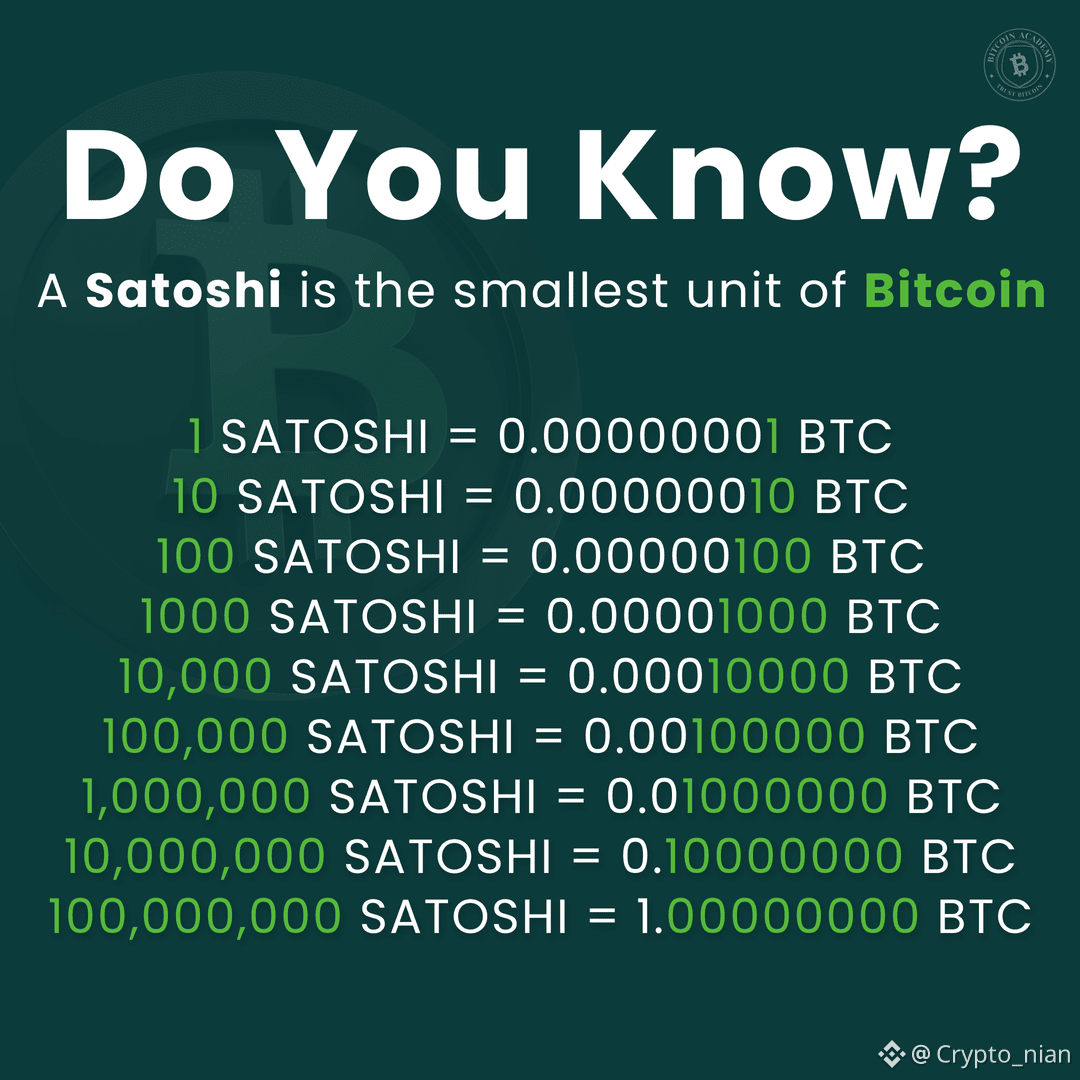
🚀 What if 1 Satoshi = $1 USD? 🤯
Let’s do the math on what it actually takes to get there! 👇
The Price Tag: 1 Bitcoin equals 100,000,000 Satoshis.
The BTC Target: Bitcoin must hit $100,000,000 per coin.
The Market Cap: Total market value must reach $2.1 Quadrillion.
To put that in perspective, that is over 40 times the entire global liquid money supply! 🌍💰
🔮 Is It Actually Possible?
Strictly speaking, mathematically yes but practically, it is highly improbable.
Here is what would need to happen for this hyperbitcoinization reality:
Total Fiat Collapse: Global hyperinflation must completely devalue the US Dollar.
Global Reserve Status: Bitcoin becomes the undisputed single global currency.
Extreme Scarcity: Massive institutional and nation-state hoarding locks up all supply.
What do you think? Will we ever see a $1 Satoshi in our lifetime?
#Bitcoin #Satoshi #NakamotoQ1Revenue500PercentGrowth #BullRun
180
·
--
🚨The Make-or-Break Moment: What Happens to Crypto If the Clarity Act Fails? 🚨The clock is ticking. Bipartisan negotiations just hit a massive roadblock over late-stage conflict-of-interest rules. If the U.S. Digital Asset Market Clarity Act fails to clear the Senate Banking Committee markup today, the market is bracing for an immediate, high-stakes structural shift.
1. The Immediate Price Shock: A Volatility Wave 📉
Markets hate uncertainty. Because Bitcoin has been riding a wave of institutional optimism up to the $80,800-$81,000 range, a definitive failure today will trigger an aggressive "buy the rumor, sell the news" reversal.
The Correction: Analysts warn of a localized 20% to 35% liquidation wave across major altcoins as excessive leverage gets wiped out.
The Trap: Assets like XRP risk getting locked into a stagnant, horizontal range for the rest of 2026, pricing out the "regulatory premium" traders were betting on.
2. "Regulation by Enforcement" Stays Alive 🏛️
Without this bill, we do not get clear statutory definitions separating the SEC and CFTC. Instead of clear laws, the industry goes back to fighting costly, ongoing courtroom battles. Institutional allocators who require bulletproof compliance will likely pause aggressive capital deployment, starving the market of long-term liquidity.
3. The Great Capital Flight Out of the U.S. ✈️
If the U.S. misses this window, comprehensive market structure reform likely gets delayed until 2030 due to upcoming midterm elections.
Where will the money go?
Capital, developers, and Layer-1 foundations will aggressively migrate to Europe (under MiCA) and Asia, where finalized legislative playbooks already provide a safe environment to build.
4. Stablecoin Yield Deadlock 💵
The highly anticipated compromise that would allow active transaction rewards and on-chain staking incentives collapses with the bill. Domestic stablecoins will remain restricted, making it harder for on-chain ecosystems to compete with high traditional interest rates.
💡 The Silver Lining: Is It a Buy Signal?
Remember: Crypto is global. While a U.S. legislative failure causes immediate short-term pain, it does not change the global adoption curve. Historically, deep regulatory liquidations offer the ultimate generational buying opportunities for long-term holders.
If the bill fails to move past committee before the May 21 Memorial Day recess, the White House's July 4 signing target is officially dead.
Keep your risk management tight and your stablecoins ready.
$BTC $ETH $XRP
🚨The Make-or-Break Moment: What Happens to Crypto If the Clarity Act Fails? 🚨
The clock is ticking. Bipartisan negotiations just hit a massive roadblock over late-stage conflict-of-interest rules. If the U.S. Digital Asset Market Clarity Act fails to clear the Senate Banking Committee markup today, the market is bracing for an immediate, high-stakes structural shift.
1. The Immediate Price Shock: A Volatility Wave 📉
Markets hate uncertainty. Because Bitcoin has been riding a wave of institutional optimism up to the $80,800-$81,000 range, a definitive failure today will trigger an aggressive "buy the rumor, sell the news" reversal.
The Correction: Analysts warn of a localized 20% to 35% liquidation wave across major altcoins as excessive leverage gets wiped out.
The Trap: Assets like XRP risk getting locked into a stagnant, horizontal range for the rest of 2026, pricing out the "regulatory premium" traders were betting on.
2. "Regulation by Enforcement" Stays Alive 🏛️
Without this bill, we do not get clear statutory definitions separating the SEC and CFTC. Instead of clear laws, the industry goes back to fighting costly, ongoing courtroom battles. Institutional allocators who require bulletproof compliance will likely pause aggressive capital deployment, starving the market of long-term liquidity.
3. The Great Capital Flight Out of the U.S. ✈️
If the U.S. misses this window, comprehensive market structure reform likely gets delayed until 2030 due to upcoming midterm elections.
Where will the money go?
Capital, developers, and Layer-1 foundations will aggressively migrate to Europe (under MiCA) and Asia, where finalized legislative playbooks already provide a safe environment to build.
4. Stablecoin Yield Deadlock 💵
The highly anticipated compromise that would allow active transaction rewards and on-chain staking incentives collapses with the bill. Domestic stablecoins will remain restricted, making it harder for on-chain ecosystems to compete with high traditional interest rates.
💡 The Silver Lining: Is It a Buy Signal?
Remember: Crypto is global. While a U.S. legislative failure causes immediate short-term pain, it does not change the global adoption curve. Historically, deep regulatory liquidations offer the ultimate generational buying opportunities for long-term holders.
If the bill fails to move past committee before the May 21 Memorial Day recess, the White House's July 4 signing target is officially dead.
Keep your risk management tight and your stablecoins ready.
$BTC $ETH $XRP
91
Войдите, чтобы посмотреть больше материала
Присоединяйтесь к пользователям криптовалют по всему миру на Binance Square
⚡️ Получайте новейшую и полезную информацию о криптоактивах.
💬 Нам доверяет крупнейшая в мире криптобиржа.
👍 Получите достоверные аналитические данные от верифицированных создателей контента.
Эл. почта/номер телефона
В тренде
UniswapA16zSeekDeFiExemptionFromIllinoisCryptoTax
Просмотров: 37,905
891 обсуждают
#CryptoTax 🚨 CRYPTO MARKET & REGULATORY UPDATE #HKDollarStablecoinHKDAPToLaunchOnSolana
#uniswapa16zseekdefiexemptionfromillinoiscryptotax UNISWAP, a16z & DeFi Education Fund Challenge Illinois Crypto Tax Rules
October 30, 2026 | Market Volatility & Industry Developments
📊 1. MARKET SNAPSHOT
Crypto markets are showing mixed signals, with selected assets posting sharp gains while several major cryptocurrencies remain under pressure.
📈 Top reported gainers
SOPH: +60.81% — $0.00238
BEAMX: +37.94% — $0.004701
SKDDB: +16.81% — $9.38
📉 Notable reported losers
INTWUSDT: −61.09% — $6.72
AKEUSDT: −31.47% — $0.013989
SNXXUSDT: −30.71% — $6.43
🔎 Major crypto assets under pressure
DOGE: −5.06%
PEPE: −4.91%
SUI: −4.83%
NEAR: −3.28%
XRP: −3.13%
Uniswap Labs, Andreessen Horowitz (a16z), and the DeFi Education Fund (DEF) are pushing for exemptions from Illinois’
#Uniswap #a16z #DeFi #CryptoRegulation #Illinois # #Web3 #BinanceSquare
#HKDollarStablecoinHKDAPToLaunchOnSolana #HKDAP #Stablecoin #CryptoNews #Blockchain #DeFi #DigitalPayments
⚖️ 3. UNISWAP, a16z & ILLINOIS CRYPTO TAX RULES
Uniswap Labs, Andreessen Horowitz (a16z), and the DeFi Education Fund are associated with efforts to seek exemptions proposed Illinois crypto tax requirements.
The debate highlights a key question: How should tax-reporting obligations apply to decentralized that may not operate like traditional financial intermediaries?
The outcome could influence DeFi compliance, developer obligations, and the future regulatory environment.
#BinanceSquare #CryptoNews #HKDAP #Stablecoin #Uniswap #a16z #DeFi #CryptoTax
CHASEPA SULUXù
·Лайков: 2
·Просмотров: 398
HKDollarStablecoinHKDAPToLaunchOnSolana
Просмотров: 27,329
575 обсуждают
$1.5BInLeveragedCryptoBetsLiquidated
Просмотров: 56,487
268 обсуждают