

Bit _Tycoon 786
15k Публикации

Bit _Tycoon 786
 Square Verified+
Отправить жалобу
Заблокировать пользователя
Building wealth, one sat at a time | Sharing my crypto journey...
Открытая сделка
Трейдер с регулярными сделками
1.3 г
19 подписок(и/а)
39.3K+ подписчиков(а)
38.5K+ понравилось
Посты
Портфель
Все
Цитирования
Активно
·
--
Рост
$TUT (Tutorial) is trading at $0.02044, up 15.94% over the past 24 hours. The 15-minute chart shows a strong recovery from $0.01883, followed by a sharp move toward the $0.02082 high. Price has pulled back from that peak and is now attempting to stabilize near $0.02044.
The immediate resistance is $0.02048–$0.02082. A sustained move above $0.02082 could support further upside, while failure to reclaim this zone may lead to consolidation. On the downside, $0.02004 is the first level to watch, followed by $0.01961. A deeper pullback could bring the $0.01917 area into focus.
Reported 24-hour trading volume stands at approximately 5.14 million USDT, alongside a 15.94% price increase. Momentum has improved, but the recent rally also raises the risk of short-term profit-taking. Holding above $0.02004 would help preserve the recovery structure; a break below it would weaken the near-term setup. Confirmation around these levels is more useful than chasing the latest move.
{spot}(TUTUSDT)
$UNI
{spot}(UNIUSDT)
$NOM
{spot}(NOMUSDT)
#CanMicrosoftDeliverOnAI #CanGoogleDefindItsCore #EarningsSeason #FOMCWatch #SolanaETFsPostWorstDaySinceDecember
$TUT (Tutorial) is trading at $0.02044, up 15.94% over the past 24 hours. The 15-minute chart shows a strong recovery from $0.01883, followed by a sharp move toward the $0.02082 high. Price has pulled back from that peak and is now attempting to stabilize near $0.02044.
The immediate resistance is $0.02048–$0.02082. A sustained move above $0.02082 could support further upside, while failure to reclaim this zone may lead to consolidation. On the downside, $0.02004 is the first level to watch, followed by $0.01961. A deeper pullback could bring the $0.01917 area into focus.
Reported 24-hour trading volume stands at approximately 5.14 million USDT, alongside a 15.94% price increase. Momentum has improved, but the recent rally also raises the risk of short-term profit-taking. Holding above $0.02004 would help preserve the recovery structure; a break below it would weaken the near-term setup. Confirmation around these levels is more useful than chasing the latest move.
$UNI
$NOM
#CanMicrosoftDeliverOnAI #CanGoogleDefindItsCore #EarningsSeason #FOMCWatch #SolanaETFsPostWorstDaySinceDecember
A) $0.01961
B) $0.02004
C) $0.02082
D) $0.02092
15 ч. осталось
3
827
·
--
Рост
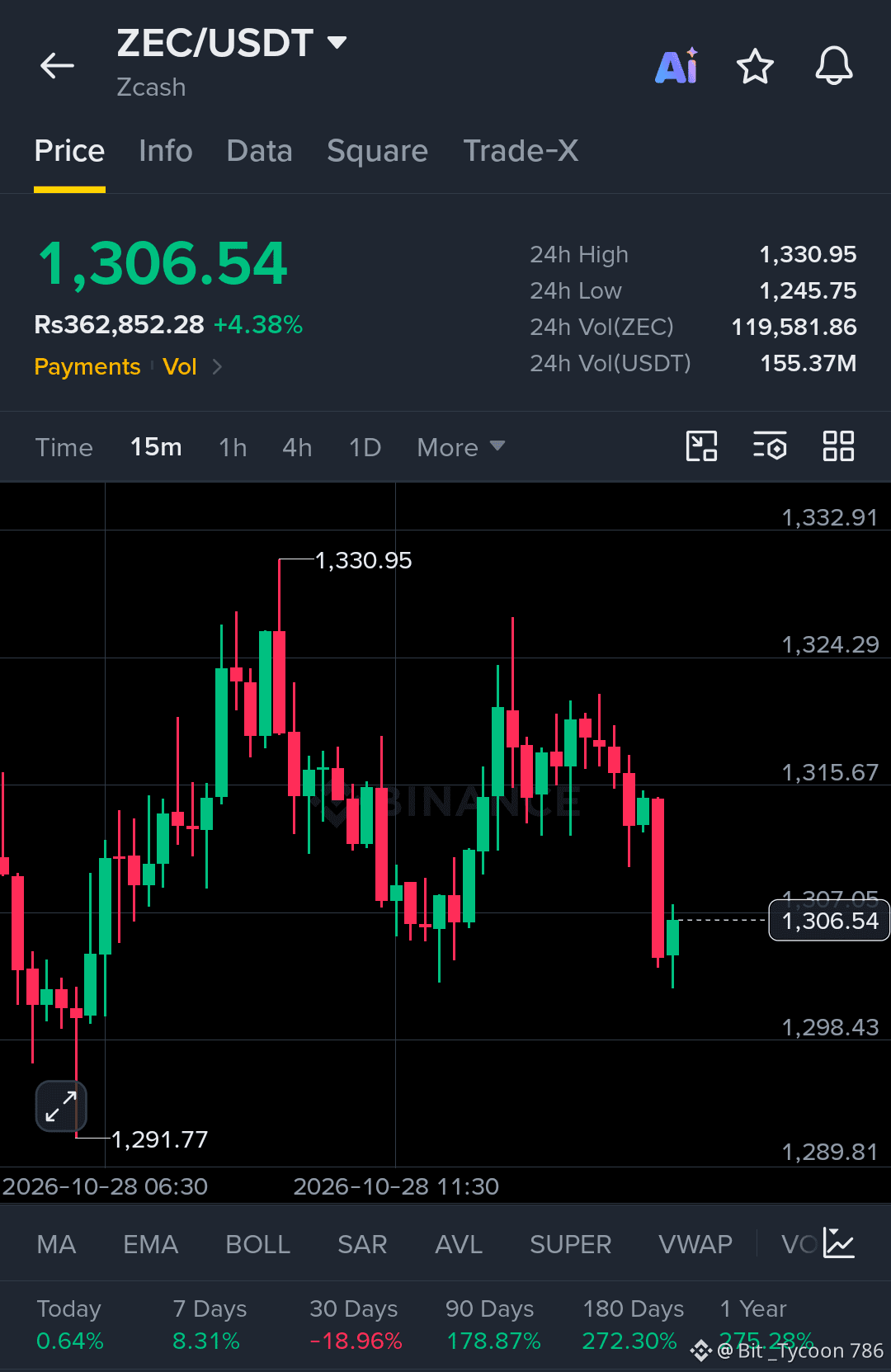
$ZEC (Zcash) is trading at $1,306.54, up 4.38% over the past 24 hours, but the 15-minute chart shows short-term buying pressure fading after rejection near $1,331. Price has pulled back sharply from the $1,315–$1,320 area and is attempting a modest recovery near $1,306.
The immediate level to watch is $1,307. A move back above this zone, followed by a reclaim of $1,315–$1,316, could open another attempt toward $1,324 and the recent high near $1,331. On the downside, $1,298 is the nearest visible support, while $1,292 marks the recent chart low.
ZEC's 24-hour USDT volume stands at approximately $155.37 million, indicating active trading. However, volume alone does not confirm the next direction. Buyers need to reclaim nearby resistance to strengthen the recovery; a break below $1,298 would increase the risk of another move lower. For now, confirmation around support and resistance matters more than chasing the bounce.
{spot}(ZECUSDT)
$NOM
{spot}(NOMUSDT)
$UNI
{spot}(UNIUSDT)
#CanMicrosoftDeliverOnAI #CanGoogleDefindItsCore #EarningsSeason #KOSPISurges6.63%BackAbove6000 #FOMCWatch
$ZEC (Zcash) is trading at $1,306.54, up 4.38% over the past 24 hours, but the 15-minute chart shows short-term buying pressure fading after rejection near $1,331. Price has pulled back sharply from the $1,315–$1,320 area and is attempting a modest recovery near $1,306.
The immediate level to watch is $1,307. A move back above this zone, followed by a reclaim of $1,315–$1,316, could open another attempt toward $1,324 and the recent high near $1,331. On the downside, $1,298 is the nearest visible support, while $1,292 marks the recent chart low.
ZEC's 24-hour USDT volume stands at approximately $155.37 million, indicating active trading. However, volume alone does not confirm the next direction. Buyers need to reclaim nearby resistance to strengthen the recovery; a break below $1,298 would increase the risk of another move lower. For now, confirmation around support and resistance matters more than chasing the bounce.
$NOM
$UNI
#CanMicrosoftDeliverOnAI #CanGoogleDefindItsCore #EarningsSeason #KOSPISurges6.63%BackAbove6000 #FOMCWatch
81
·
--
Рост
🚨 CAN GOOGLE DEFINE ITS CORE IDENTITY IN THE AGE OF AI?
Google built its empire on search. People came to Google to find answers, explore ideas, discover websites, and learn about the world.
But now, AI is changing the way people search for information.
Instead of clicking through websites, users can simply ask AI a question and get an instant answer. That shift puts Google in a difficult position. The company must protect its search business while building the next generation of AI tools.
And the challenge goes much deeper than technology.
Google now has to balance several major businesses: Search, YouTube, Android, Google Cloud, advertising, and its growing AI ecosystem. Each one plays an important role, but the big question is how they will fit together in an AI-first world.
Will Google remain the place where people search for information, or will it become the assistant that finds, understands, and delivers everything they need?
There is also a bigger concern. If AI answers replace traditional search clicks, how will publishers, websites, and advertisers adapt? And can Google change its business model without weakening the system that made it successful?
Google has the talent, infrastructure, data, and resources to compete. But having the technology is one thing. Defining a clear identity for the future is another.
The next chapter will not be decided by who launches the most AI features. It will be decided by who earns people's trust, becomes part of their daily lives, and creates lasting value.
The real question is simple: Can Google redefine its core before AI redefines the internet?
#CanGoogleDefindItsCore #FOMCWatch #EarningsSeason

1
82
·
--
Рост
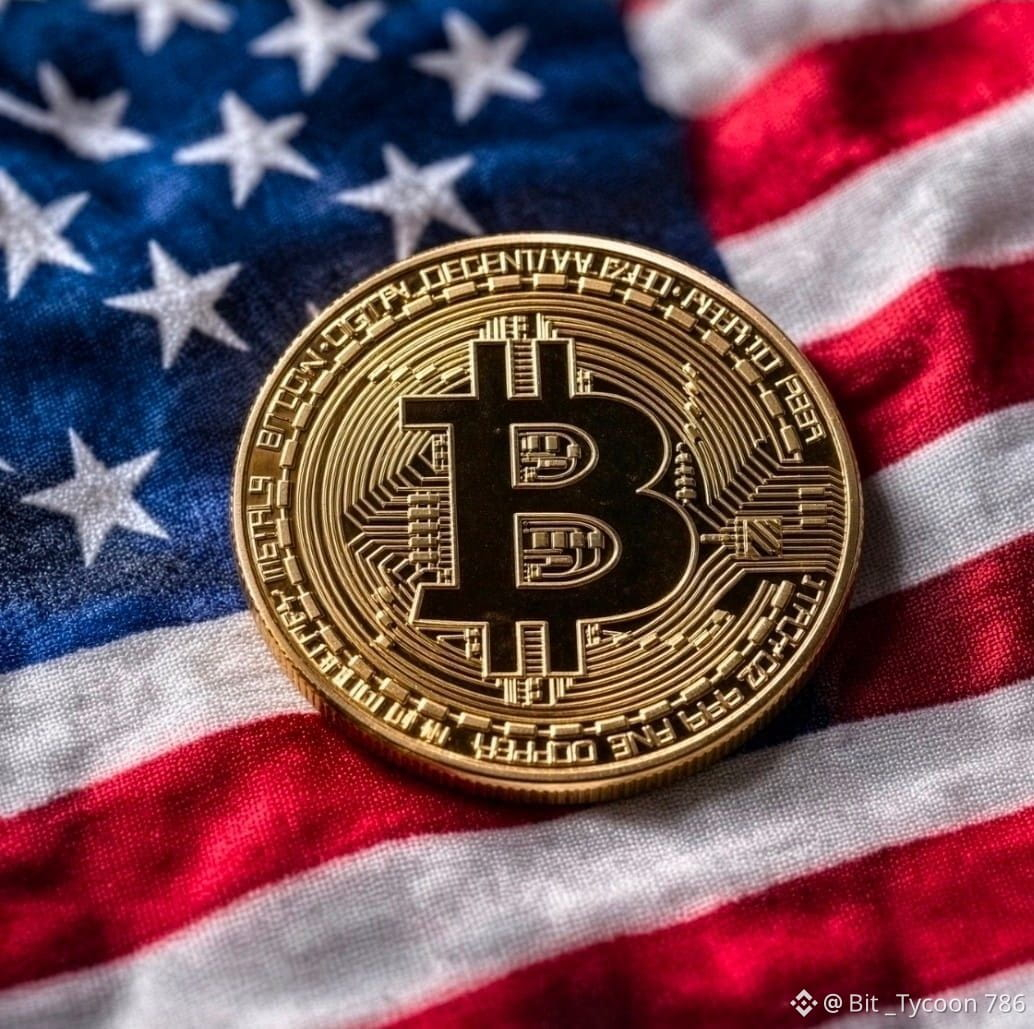
#FOMCWatch 🚨 FED DAY: VOLATILITY ALERT!
🇺🇸 2:00 PM ET — Rate Decision
Current: 3.75%–4.00%
Forecast: 3.75%–4.00%
🔻 HIKE: Bearish shock
⚡ HOLD: Market reaction depends on Powell-style guidance and expectations
🚀 CUT: Potential bullish surge
🎙️ 2:30 PM ET — Chair Warsh’s press conference!
Crypto could see sharp moves in either direction. Watch BTC, liquidity, and the Fed’s tone. One statement can change the entire market setup.
#CanGoogleDefindItsCore
2
1
2.3k
·
--
Рост
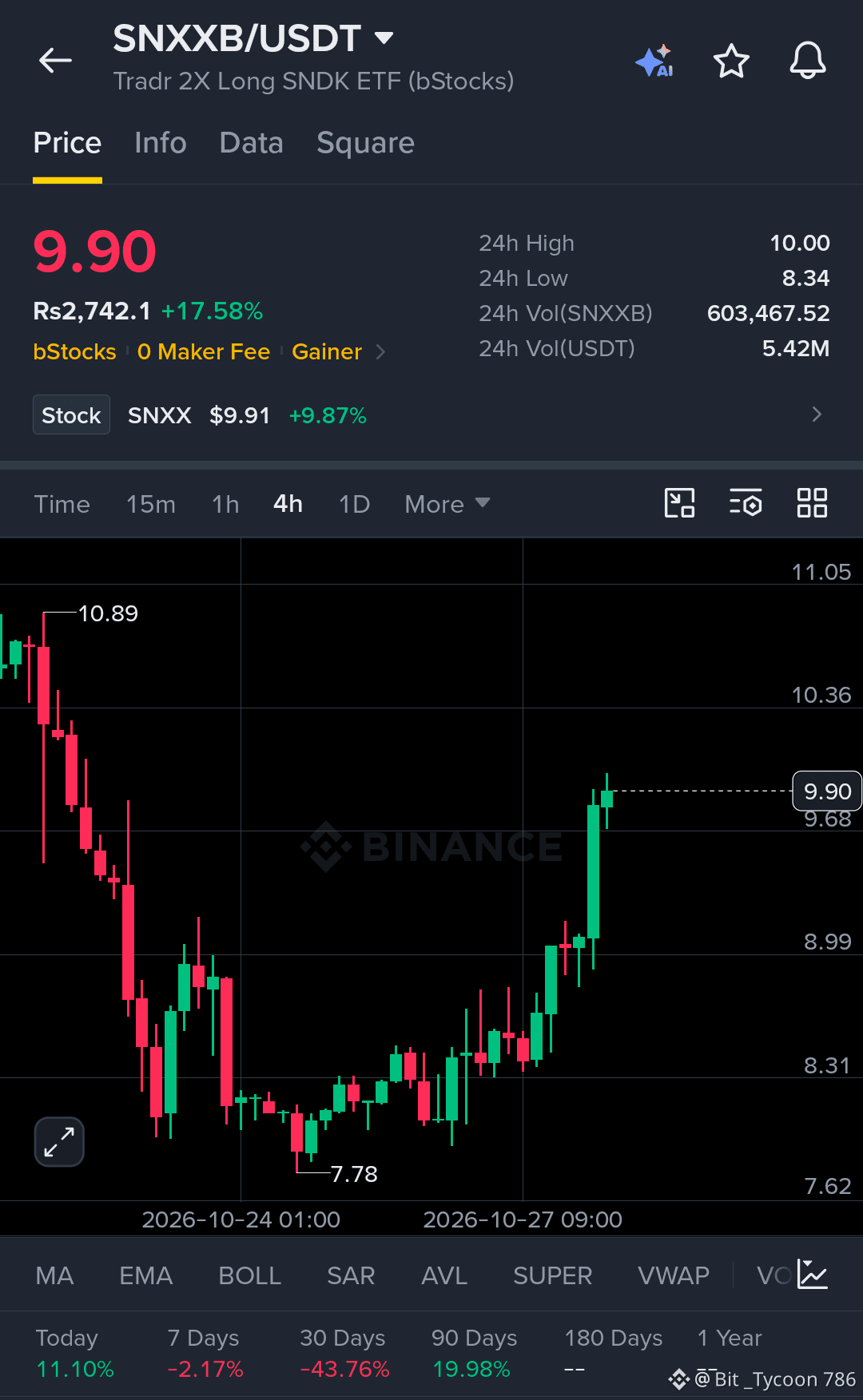
$SNXXB is showing a strong recovery after falling to the $7.78 area. The 4-hour chart now shows a sharp move toward $9.90, putting price close to the $10.00 resistance zone. Buyers have regained short-term momentum, but holding above the recent breakout area will be important for continuation.
The immediate level to watch is $9.68. If SNXXB maintains support above this zone, another attempt at $10.00 could follow, with a sustained break potentially opening room toward $10.36. However, rejection near $10.00 could trigger a pullback toward $9.00 or the $8.30 support region.
SNXXB is up 17.58% over 24 hours, with reported trading volume of 5.42 million USDT. The recovery is notable, but after such a steep move, confirmation matters more than chasing the current price. Watch the $9.68 support and $10.00 resistance for the next directional signal.
{spot}(SNXXBUSDT)
#CanMicrosoftDeliverOnAI #CanGoogleDefindItsCore #FOMCWatch #MoodysAssignsRLUSDA2LongTermDepositRating #OSMOPlansToBurn100MTokensFromCommunityPool
$SNXXB is showing a strong recovery after falling to the $7.78 area. The 4-hour chart now shows a sharp move toward $9.90, putting price close to the $10.00 resistance zone. Buyers have regained short-term momentum, but holding above the recent breakout area will be important for continuation.
The immediate level to watch is $9.68. If SNXXB maintains support above this zone, another attempt at $10.00 could follow, with a sustained break potentially opening room toward $10.36. However, rejection near $10.00 could trigger a pullback toward $9.00 or the $8.30 support region.
SNXXB is up 17.58% over 24 hours, with reported trading volume of 5.42 million USDT. The recovery is notable, but after such a steep move, confirmation matters more than chasing the current price. Watch the $9.68 support and $10.00 resistance for the next directional signal.
#CanMicrosoftDeliverOnAI #CanGoogleDefindItsCore #FOMCWatch #MoodysAssignsRLUSDA2LongTermDepositRating #OSMOPlansToBurn100MTokensFromCommunityPool
96
Статья
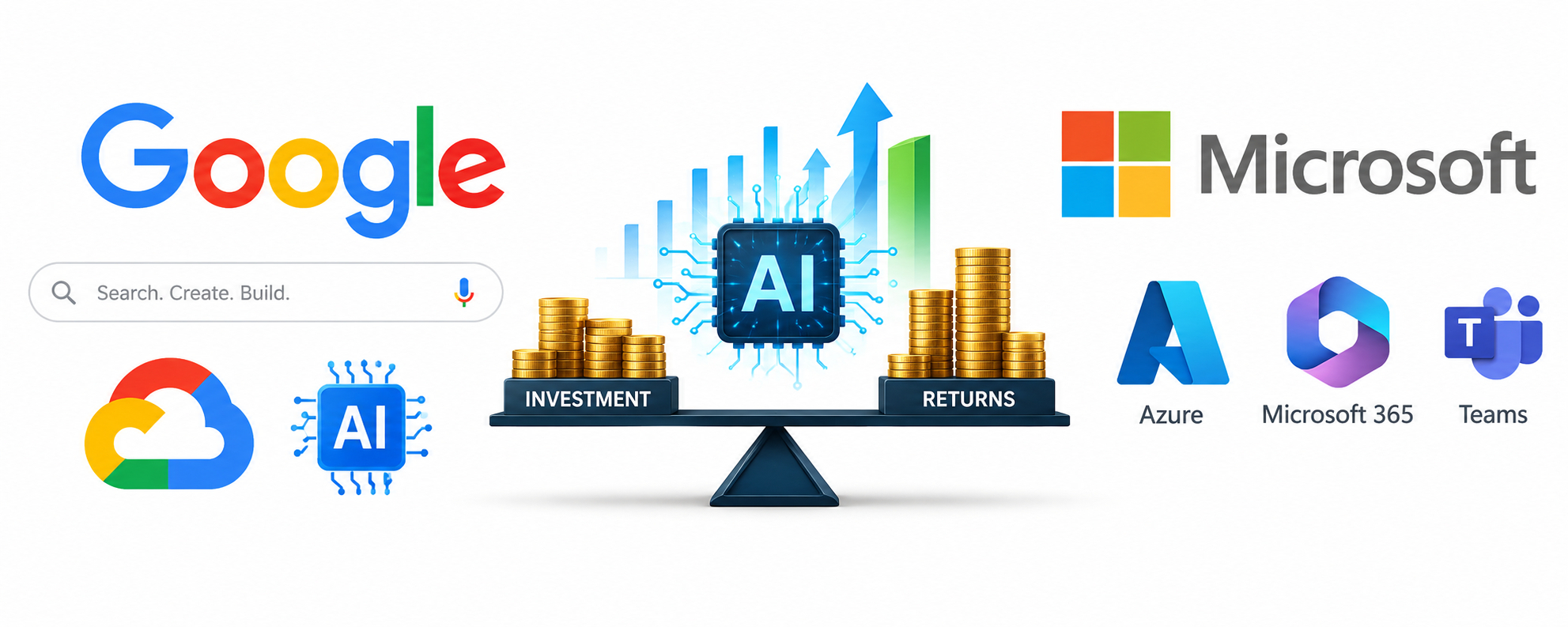
oogle & Microsoft Earnings: The AI Profitability Test BeginsGoogle and Microsoft enter this earnings session with one big question hanging over them: how much money can they actually make from the AI boom?
Both companies are spending heavily to build the infrastructure behind artificial intelligence, and investors want to see more than impressive technology or ambitious promises. They want proof that all this investment is turning into real revenue, stronger profits and sustainable growth.
Google has a business that millions of people use every day, often without thinking twice about it. From searching for products to watching YouTube videos, its services remain deeply connected to everyday life. But the way people find information is changing. AI tools can now answer questions, compare options and summarize information without requiring users to click through multiple search results. That creates new opportunities for Google, but it also raises questions about the future of its traditional advertising business.
Google Cloud could help balance that pressure. Businesses need computing power, storage and AI infrastructure to build their own products, and Google is competing for a growing share of that demand. Strong cloud growth would give investors another reason to believe the company can expand beyond its core search business. Still, revenue growth is only part of the picture. Building and operating data centers costs serious money, and investors will want to know whether that spending is producing worthwhile returns.
Microsoft faces a similar challenge, although its position is different. Its software is already part of everyday business operations, giving it a direct route to introduce AI tools to companies that want employees to work more efficiently. An AI assistant that helps prepare reports, analyze documents or write code has genuine value when it saves time and improves results. The real question is whether customers see enough benefit to keep paying for these services and expand their use.
Azure is central to that story. As businesses develop and deploy AI applications, they need more computing capacity, creating an opportunity for Microsoft to grow its cloud business. But meeting that demand requires investment in data centers, chips, electricity and other infrastructure. If costs rise too quickly, strong revenue growth may not translate into the kind of profits investors expect.
That is why this earnings session could produce some surprising stock reactions. A company can beat analysts' estimates and still see its shares fall if management signals slower growth, higher spending or weaker margins ahead. Markets are looking beyond the latest quarter and trying to work out whether today's AI investments will generate enough money in the years to come.
The expectations are already substantial. Before the reports, analyst estimates put Alphabet's quarterly revenue around $128 billion and Microsoft's around $90.6 billion. These are forecasts, not confirmed results, and even a small difference between expectations and actual performance could influence the market's reaction.
For Google, I would pay close attention to search advertising, Google Cloud growth and the cost of expanding its AI capabilities. For Microsoft, Azure demand, paid AI adoption and cash flow deserve particular attention. The details in management's outlook may matter just as much as the earnings figures themselves.
Both companies have strong businesses and clear opportunities, but neither gets a free pass simply because AI is attracting enormous investment. Investors need evidence that customers are willing to pay for these services and that the revenue can grow without costs eating away at the returns.
My view is that Google and Microsoft both have a credible chance of delivering solid results, but the bigger question is which company can demonstrate the clearest path from AI investment to lasting profitability. A strong earnings report would be encouraging. A strong report backed by convincing guidance and better visibility into future returns would be far more meaningful.
This is where the market's attention should stay. The AI race is no longer just about who can build the most powerful technology. It is about who can turn that technology into a business that consistently makes money.
The next set of results may offer a clearer answer, but the real test will be what happens after the headlines fade.
This is pre-earnings market commentary based on analyst expectations available on October 28, 2026. Forecasts are not confirmed results, and this article is for informational purposes only.
#EarningsSeason #CanGoogleDefindItsCore #FOMCWatch
$UNI $ZEC $BANK
oogle & Microsoft Earnings: The AI Profitability Test Begins
Google and Microsoft enter this earnings session with one big question hanging over them: how much money can they actually make from the AI boom?
Both companies are spending heavily to build the infrastructure behind artificial intelligence, and investors want to see more than impressive technology or ambitious promises. They want proof that all this investment is turning into real revenue, stronger profits and sustainable growth.
Google has a business that millions of people use every day, often without thinking twice about it. From searching for products to watching YouTube videos, its services remain deeply connected to everyday life. But the way people find information is changing. AI tools can now answer questions, compare options and summarize information without requiring users to click through multiple search results. That creates new opportunities for Google, but it also raises questions about the future of its traditional advertising business.
Google Cloud could help balance that pressure. Businesses need computing power, storage and AI infrastructure to build their own products, and Google is competing for a growing share of that demand. Strong cloud growth would give investors another reason to believe the company can expand beyond its core search business. Still, revenue growth is only part of the picture. Building and operating data centers costs serious money, and investors will want to know whether that spending is producing worthwhile returns.
Microsoft faces a similar challenge, although its position is different. Its software is already part of everyday business operations, giving it a direct route to introduce AI tools to companies that want employees to work more efficiently. An AI assistant that helps prepare reports, analyze documents or write code has genuine value when it saves time and improves results. The real question is whether customers see enough benefit to keep paying for these services and expand their use.
Azure is central to that story. As businesses develop and deploy AI applications, they need more computing capacity, creating an opportunity for Microsoft to grow its cloud business. But meeting that demand requires investment in data centers, chips, electricity and other infrastructure. If costs rise too quickly, strong revenue growth may not translate into the kind of profits investors expect.
That is why this earnings session could produce some surprising stock reactions. A company can beat analysts' estimates and still see its shares fall if management signals slower growth, higher spending or weaker margins ahead. Markets are looking beyond the latest quarter and trying to work out whether today's AI investments will generate enough money in the years to come.
The expectations are already substantial. Before the reports, analyst estimates put Alphabet's quarterly revenue around $128 billion and Microsoft's around $90.6 billion. These are forecasts, not confirmed results, and even a small difference between expectations and actual performance could influence the market's reaction.
For Google, I would pay close attention to search advertising, Google Cloud growth and the cost of expanding its AI capabilities. For Microsoft, Azure demand, paid AI adoption and cash flow deserve particular attention. The details in management's outlook may matter just as much as the earnings figures themselves.
Both companies have strong businesses and clear opportunities, but neither gets a free pass simply because AI is attracting enormous investment. Investors need evidence that customers are willing to pay for these services and that the revenue can grow without costs eating away at the returns.
My view is that Google and Microsoft both have a credible chance of delivering solid results, but the bigger question is which company can demonstrate the clearest path from AI investment to lasting profitability. A strong earnings report would be encouraging. A strong report backed by convincing guidance and better visibility into future returns would be far more meaningful.
This is where the market's attention should stay. The AI race is no longer just about who can build the most powerful technology. It is about who can turn that technology into a business that consistently makes money.
The next set of results may offer a clearer answer, but the real test will be what happens after the headlines fade.
This is pre-earnings market commentary based on analyst expectations available on October 28, 2026. Forecasts are not confirmed results, and this article is for informational purposes only.
#EarningsSeason #CanGoogleDefindItsCore #FOMCWatch
$UNI $ZEC $BANK
1
4
418
·
--
Рост
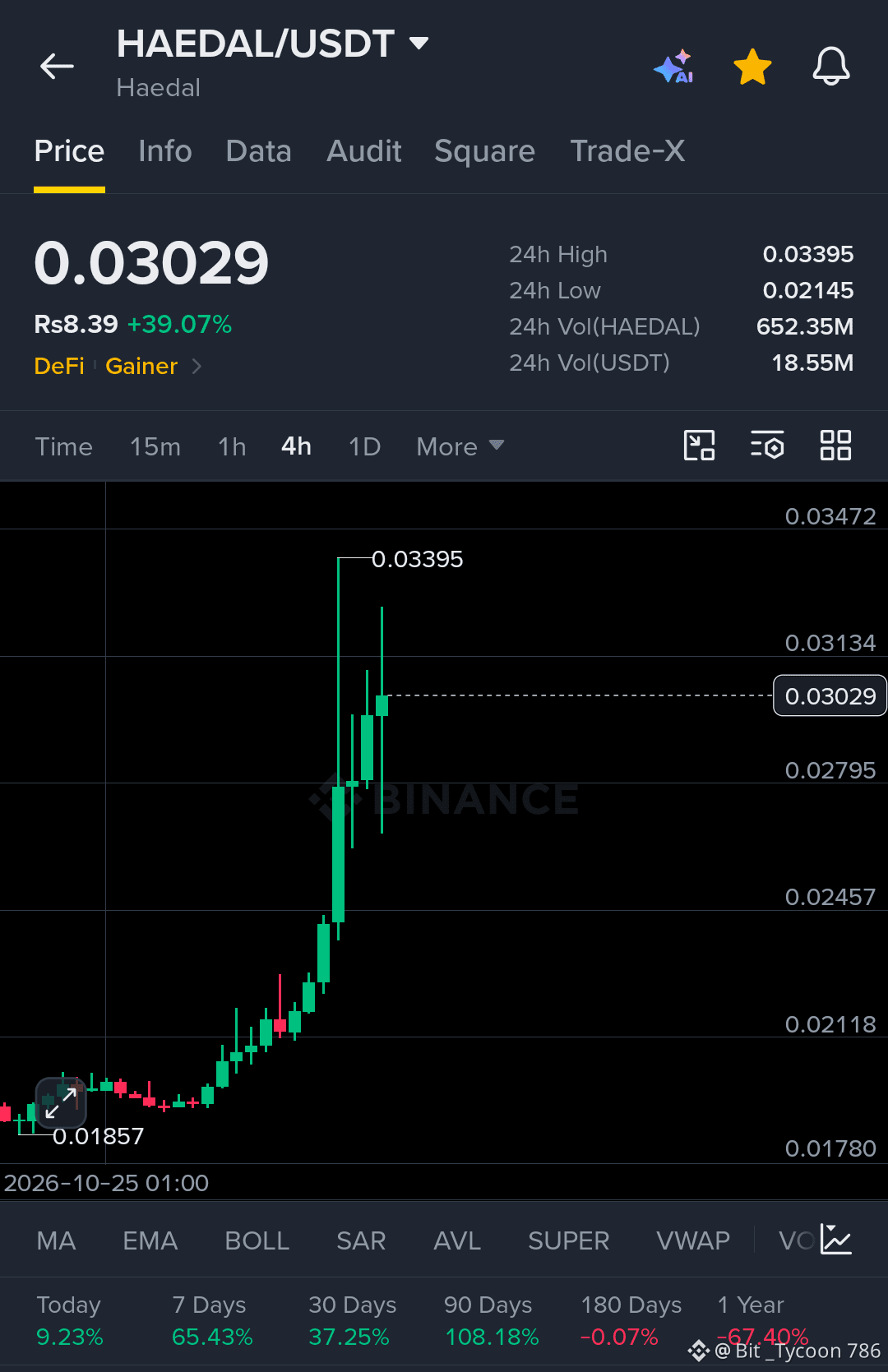
$HAEDAL is showing strong bullish momentum, up 39.07% as price climbs toward the 24-hour high of 0.03395 USDT.
After a sharp breakout from the 0.02100 zone, HAEDAL is trading around 0.03029. The 4H chart shows aggressive buying pressure, but the long upper wicks signal potential profit-taking near resistance.
Key Levels
- Entry Zone: 0.02850–0.03000
- Stop Loss: 0.02720
- TP1: 0.03130
- TP2: 0.03390
- TP3: 0.03600
- Resistance: 0.03395
- Support: 0.02795
A sustained move above 0.03134 could set up another test of the recent high. Failure to hold 0.02795 may trigger a deeper pullback. After such a rapid rally, chasing price carries elevated risk.
Wait for confirmation, manage position size, and respect the stop loss.
Risk managed. Eyes on the targets. Let’s go $HAEDAL
{spot}(HAEDALUSDT)
#BitmineAdds10452ETH #ThailandLaunchesWORPTStablecoinToQRPaymentApp #OSMOPlansToBurn100MTokensFromCommunityPool #CanGoogleDefindItsCore #CanMicrosoftDeliverOnAI
$HAEDAL is showing strong bullish momentum, up 39.07% as price climbs toward the 24-hour high of 0.03395 USDT.
After a sharp breakout from the 0.02100 zone, HAEDAL is trading around 0.03029. The 4H chart shows aggressive buying pressure, but the long upper wicks signal potential profit-taking near resistance.
Key Levels
- Entry Zone: 0.02850–0.03000
- Stop Loss: 0.02720
- TP1: 0.03130
- TP2: 0.03390
- TP3: 0.03600
- Resistance: 0.03395
- Support: 0.02795
A sustained move above 0.03134 could set up another test of the recent high. Failure to hold 0.02795 may trigger a deeper pullback. After such a rapid rally, chasing price carries elevated risk.
Wait for confirmation, manage position size, and respect the stop loss.
Risk managed. Eyes on the targets. Let’s go $HAEDAL
#BitmineAdds10452ETH #ThailandLaunchesWORPTStablecoinToQRPaymentApp #OSMOPlansToBurn100MTokensFromCommunityPool #CanGoogleDefindItsCore #CanMicrosoftDeliverOnAI
145
·
--
Рост
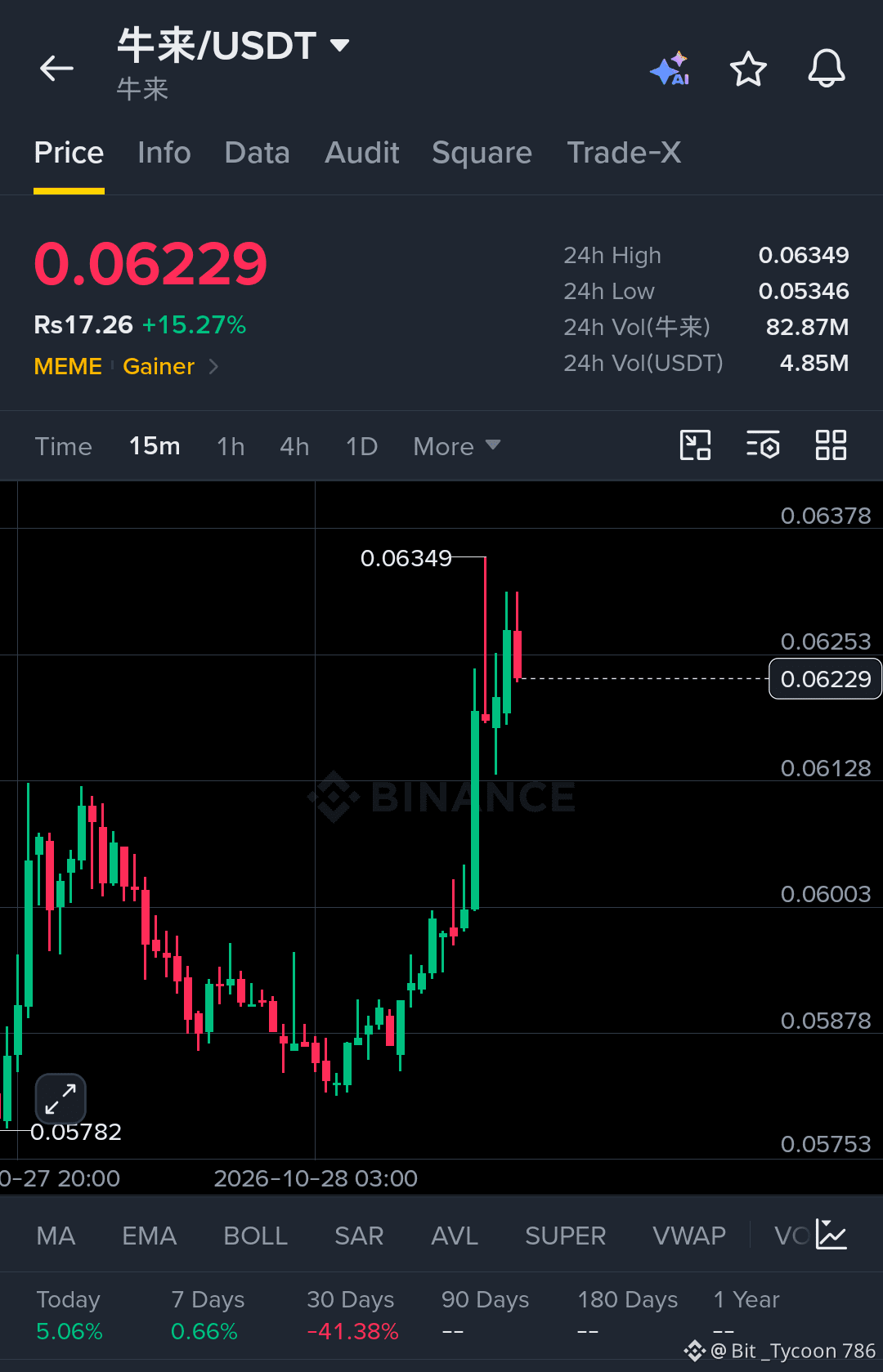
$牛来 (NIULAI) is showing short-term bullish momentum, up 15.27% as price pushes toward the 24-hour high at 0.06349 USDT.
Price is currently trading around 0.06229 after a strong breakout from the 0.06000 zone. Buyers have taken control, but the latest rejection near resistance suggests some profit-taking may emerge.
Key levels to watch:
- Resistance: 0.06349
- Support: 0.06128
- Major support: 0.06003
A clean break above 0.06349 could open the door to further upside. If price loses 0.06128, a deeper pullback becomes possible. Watch volume and candle closes for confirmation rather than chasing the move.
The trend is improving, but volatility remains high. Let price confirm its next direction before entering.
{spot}(牛来USDT)
#CanMicrosoftDeliverOnAI #CanGoogleDefindItsCore #FOMCWatch #OSMOPlansToBurn100MTokensFromCommunityPool #ThailandLaunchesWORPTStablecoinToQRPaymentApp
$牛来 (NIULAI) is showing short-term bullish momentum, up 15.27% as price pushes toward the 24-hour high at 0.06349 USDT.
Price is currently trading around 0.06229 after a strong breakout from the 0.06000 zone. Buyers have taken control, but the latest rejection near resistance suggests some profit-taking may emerge.
Key levels to watch:
- Resistance: 0.06349
- Support: 0.06128
- Major support: 0.06003
A clean break above 0.06349 could open the door to further upside. If price loses 0.06128, a deeper pullback becomes possible. Watch volume and candle closes for confirmation rather than chasing the move.
The trend is improving, but volatility remains high. Let price confirm its next direction before entering.
#CanMicrosoftDeliverOnAI #CanGoogleDefindItsCore #FOMCWatch #OSMOPlansToBurn100MTokensFromCommunityPool #ThailandLaunchesWORPTStablecoinToQRPaymentApp
165
·
--
Рост
$TUT is pushing a strong bullish rally, up 15.51% in 24 hours, with price approaching the $0.01996 resistance. Buyers remain aggressive, but a breakout needs confirmation before the next leg higher.
Entry: $0.01945–$0.01970
Stop Loss: $0.01910
TP1: $0.02010
TP2: $0.02050
TP3: $0.02100
Bullish trigger: A strong 15m close above $0.01996 with volume expansion.
Rejection risk: Failure to break resistance could trigger a pullback toward $0.01949 and $0.01888.
Momentum is strong, but after a sharp rally, volatility and profit-taking risk are elevated. Avoid chasing a breakout without confirmation.
Risk managed. Eyes on the targets. Let's go
{spot}(TUTUSDT)
$BANK
{spot}(BANKUSDT)
$TUSD
{spot}(TUSDUSDT)
$TUT is pushing a strong bullish rally, up 15.51% in 24 hours, with price approaching the $0.01996 resistance. Buyers remain aggressive, but a breakout needs confirmation before the next leg higher.
Entry: $0.01945–$0.01970
Stop Loss: $0.01910
TP1: $0.02010
TP2: $0.02050
TP3: $0.02100
Bullish trigger: A strong 15m close above $0.01996 with volume expansion.
Rejection risk: Failure to break resistance could trigger a pullback toward $0.01949 and $0.01888.
Momentum is strong, but after a sharp rally, volatility and profit-taking risk are elevated. Avoid chasing a breakout without confirmation.
Risk managed. Eyes on the targets. Let's go
$BANK
$TUSD
A) $0.01910
B) $0.01996
C) $0.02010
D) $0.01888
4
1 ч. осталось
1
666
·
--
Рост
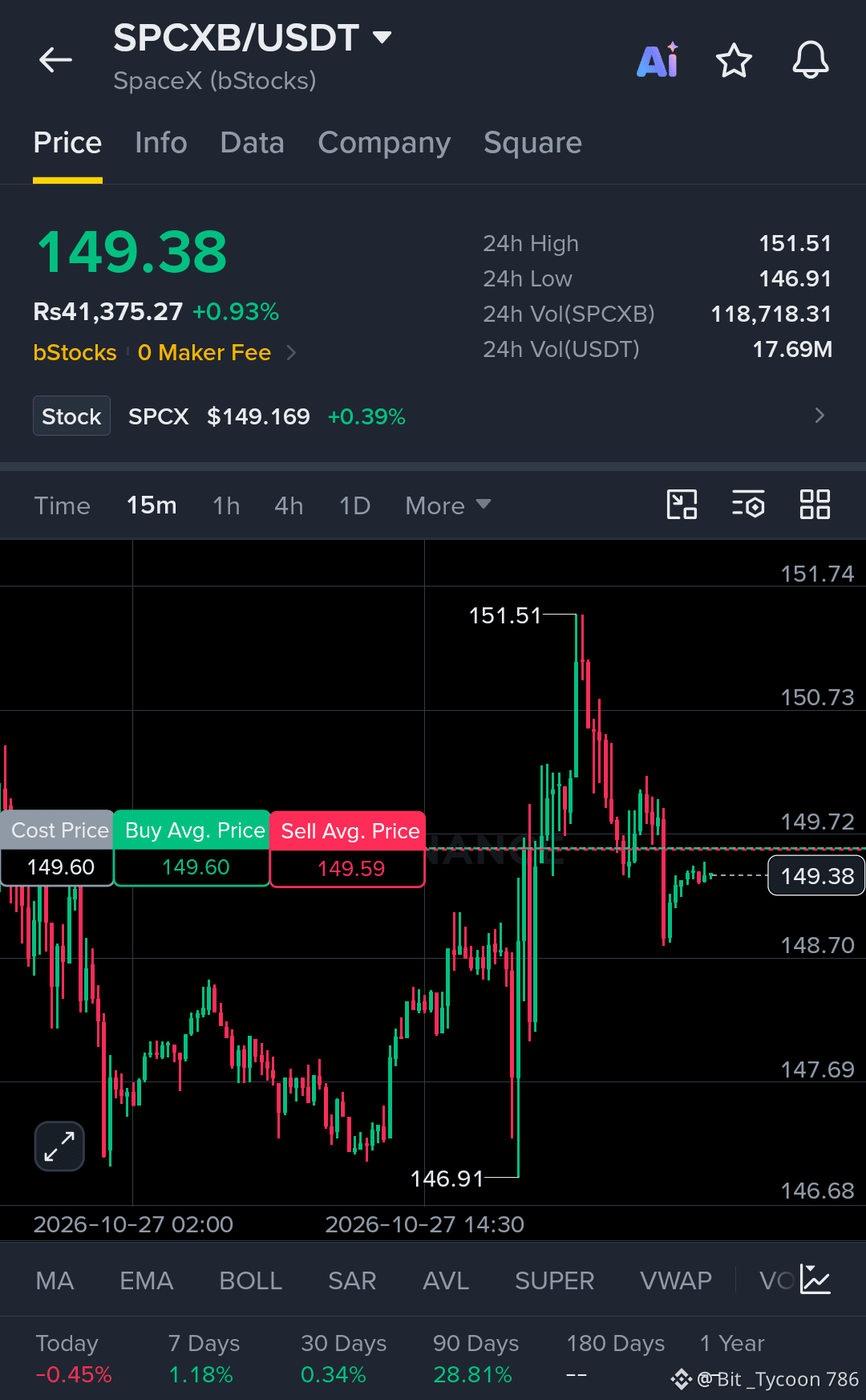
$SPCXB is consolidating after a sharp rejection from $151.51. Buyers recovered from the $148.70 area, but price must reclaim $149.72 to rebuild bullish momentum and challenge resistance again.
Entry: $149.20–$149.45
Stop Loss: $148.65
TP1: $149.90
TP2: $150.70
TP3: $151.45
Bullish trigger: A strong 15m close above $149.72 with rising volume.
Rejection risk: Failure to reclaim resistance could send price back toward $148.70 and potentially $147.70.
Momentum is mixed after the pullback. Wait for confirmation, manage position size, and avoid chasing volatile candles.
Risk managed. Eyes on the targets. Let's go $SPCXB
{spot}(SPCXBUSDT)
#CanMicrosoftDeliverOnAI #CanGoogleDefindItsCore #FOMCWatch #ThailandLaunchesWORPTStablecoinToQRPaymentApp #BitmineAdds10452ETH
$SPCXB is consolidating after a sharp rejection from $151.51. Buyers recovered from the $148.70 area, but price must reclaim $149.72 to rebuild bullish momentum and challenge resistance again.
Entry: $149.20–$149.45
Stop Loss: $148.65
TP1: $149.90
TP2: $150.70
TP3: $151.45
Bullish trigger: A strong 15m close above $149.72 with rising volume.
Rejection risk: Failure to reclaim resistance could send price back toward $148.70 and potentially $147.70.
Momentum is mixed after the pullback. Wait for confirmation, manage position size, and avoid chasing volatile candles.
Risk managed. Eyes on the targets. Let's go $SPCXB
#CanMicrosoftDeliverOnAI #CanGoogleDefindItsCore #FOMCWatch #ThailandLaunchesWORPTStablecoinToQRPaymentApp #BitmineAdds10452ETH
81
·
--
Рост
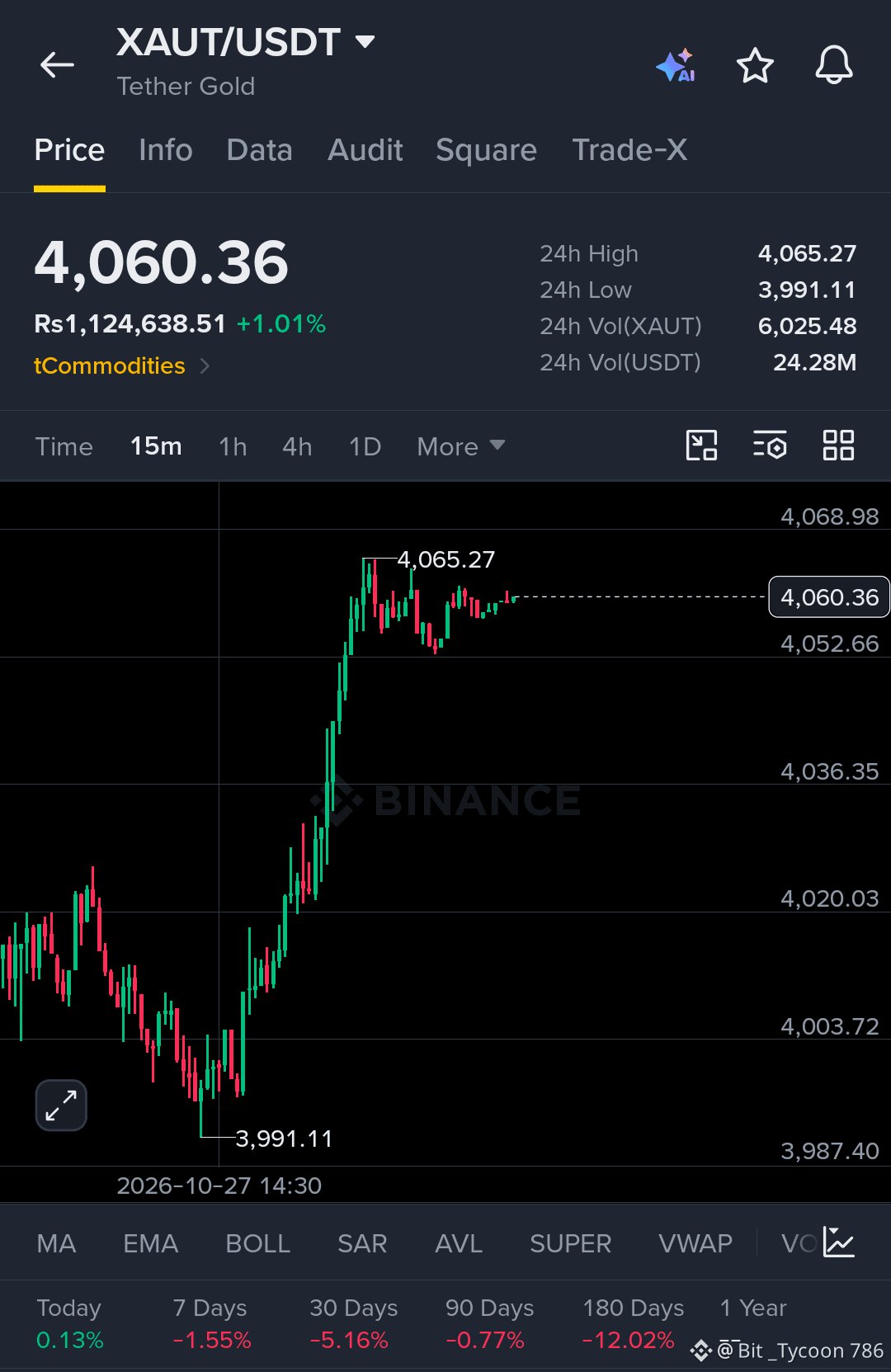
$XAUT is holding near $4,060 after a powerful breakout from the $4,020 zone. Buyers remain in control, but price is consolidating just below the $4,065 resistance. The next move needs confirmation.
Entry: $4,055–$4,061
Stop Loss: $4,048
TP1: $4,068
TP2: $4,078
TP3: $4,090
Bullish scenario: A clean 15m close above $4,065 with strong volume could extend the rally.
Rejection scenario: Failure to break resistance may pull price back toward $4,052 and $4,036 support.
Wait for confirmation instead of chasing the spike. Protect your capital if momentum fades.
Risk managed. Eyes on the targets. Let's go $XAUT
{spot}(XAUTUSDT)
#CanMicrosoftDeliverOnAI #CanGoogleDefindItsCore #FOMCWatch #ThailandLaunchesWORPTStablecoinToQRPaymentApp #SouthKoreaConsidersEducationTaxOnCryptoExchanges
$XAUT is holding near $4,060 after a powerful breakout from the $4,020 zone. Buyers remain in control, but price is consolidating just below the $4,065 resistance. The next move needs confirmation.
Entry: $4,055–$4,061
Stop Loss: $4,048
TP1: $4,068
TP2: $4,078
TP3: $4,090
Bullish scenario: A clean 15m close above $4,065 with strong volume could extend the rally.
Rejection scenario: Failure to break resistance may pull price back toward $4,052 and $4,036 support.
Wait for confirmation instead of chasing the spike. Protect your capital if momentum fades.
Risk managed. Eyes on the targets. Let's go $XAUT
#CanMicrosoftDeliverOnAI #CanGoogleDefindItsCore #FOMCWatch #ThailandLaunchesWORPTStablecoinToQRPaymentApp #SouthKoreaConsidersEducationTaxOnCryptoExchanges
87
·
--
Рост
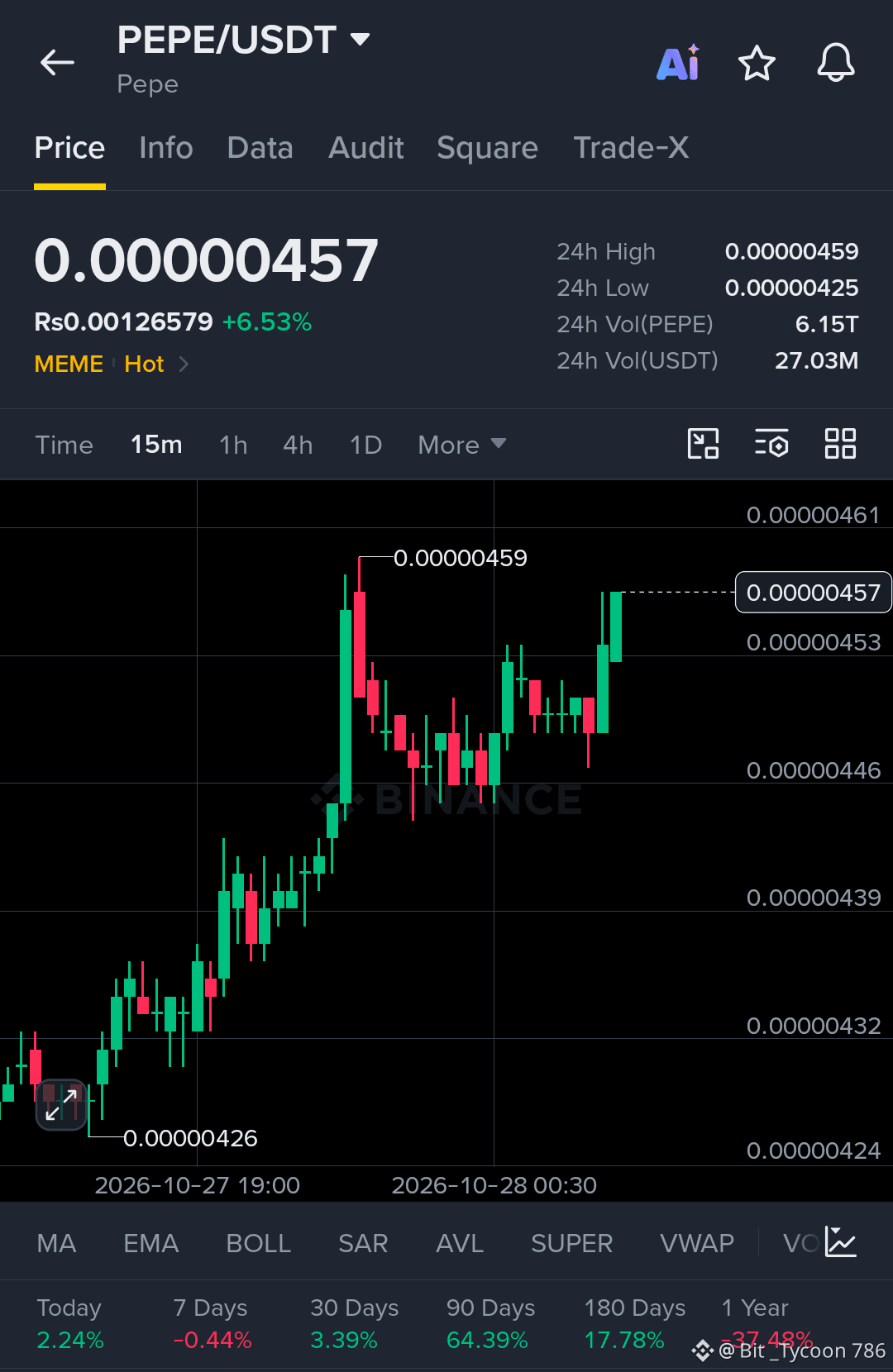
$PEPE is building bullish momentum after reclaiming $0.00000453, with buyers pushing price back toward the $0.00000459 resistance. A clean breakout could trigger another leg higher.
Entry: $0.00000452–$0.00000457
Stop Loss: $0.00000447
TP1: $0.00000462
TP2: $0.00000468
TP3: $0.00000475
The 15m structure favors bullish continuation, but resistance is close. Watch for a candle close above $0.00000459 with volume confirmation. Rejection could send PEPE back toward $0.00000446 support.
Risk managed. Eyes on the targets. Let's go $PEPE
{spot}(PEPEUSDT)
#CanMicrosoftDeliverOnAI #CanGoogleDefindItsCore #FOMCWatch #ThailandLaunchesWORPTStablecoinToQRPaymentApp #BitmineAdds10452ETH
$PEPE is building bullish momentum after reclaiming $0.00000453, with buyers pushing price back toward the $0.00000459 resistance. A clean breakout could trigger another leg higher.
Entry: $0.00000452–$0.00000457
Stop Loss: $0.00000447
TP1: $0.00000462
TP2: $0.00000468
TP3: $0.00000475
The 15m structure favors bullish continuation, but resistance is close. Watch for a candle close above $0.00000459 with volume confirmation. Rejection could send PEPE back toward $0.00000446 support.
Risk managed. Eyes on the targets. Let's go $PEPE
#CanMicrosoftDeliverOnAI #CanGoogleDefindItsCore #FOMCWatch #ThailandLaunchesWORPTStablecoinToQRPaymentApp #BitmineAdds10452ETH
91
·
--
Рост
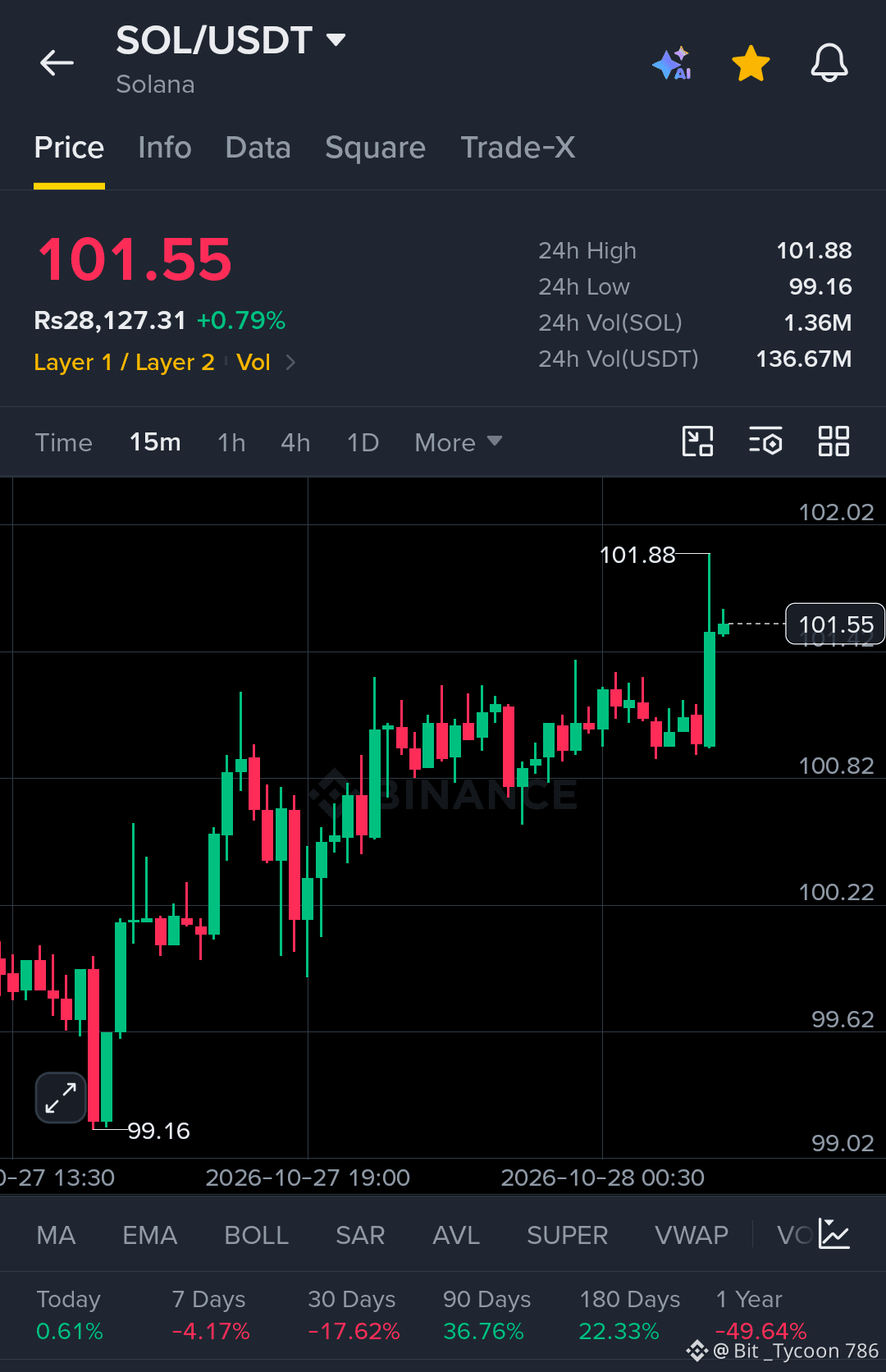
$SOL is pushing into resistance with bullish momentum after a steady recovery. Price has surged toward $101.88, and a confirmed breakout could open the door to another move higher.
**Entry:** $101.20–$101.55
**Stop Loss:** $100.70
**TP1:** $102.00
**TP2:** $102.60
**TP3:** $103.40
Buyers have the short-term advantage, but resistance is close. Watch for a clean 15m close above $101.88 with volume confirmation. A rejection could send SOL back toward $100.82 support.
Risk managed. Eyes on the targets. Let's go $SOL
{spot}(SOLUSDT)
#CanMicrosoftDeliverOnAI #CanGoogleDefindItsCore #FOMCWatch #ThailandLaunchesWORPTStablecoinToQRPaymentApp #OCCUrgesCommunityBanksToEnterStablecoinPayments
$SOL is pushing into resistance with bullish momentum after a steady recovery. Price has surged toward $101.88, and a confirmed breakout could open the door to another move higher.
**Entry:** $101.20–$101.55
**Stop Loss:** $100.70
**TP1:** $102.00
**TP2:** $102.60
**TP3:** $103.40
Buyers have the short-term advantage, but resistance is close. Watch for a clean 15m close above $101.88 with volume confirmation. A rejection could send SOL back toward $100.82 support.
Risk managed. Eyes on the targets. Let's go $SOL
#CanMicrosoftDeliverOnAI #CanGoogleDefindItsCore #FOMCWatch #ThailandLaunchesWORPTStablecoinToQRPaymentApp #OCCUrgesCommunityBanksToEnterStablecoinPayments
58
·
--
Рост
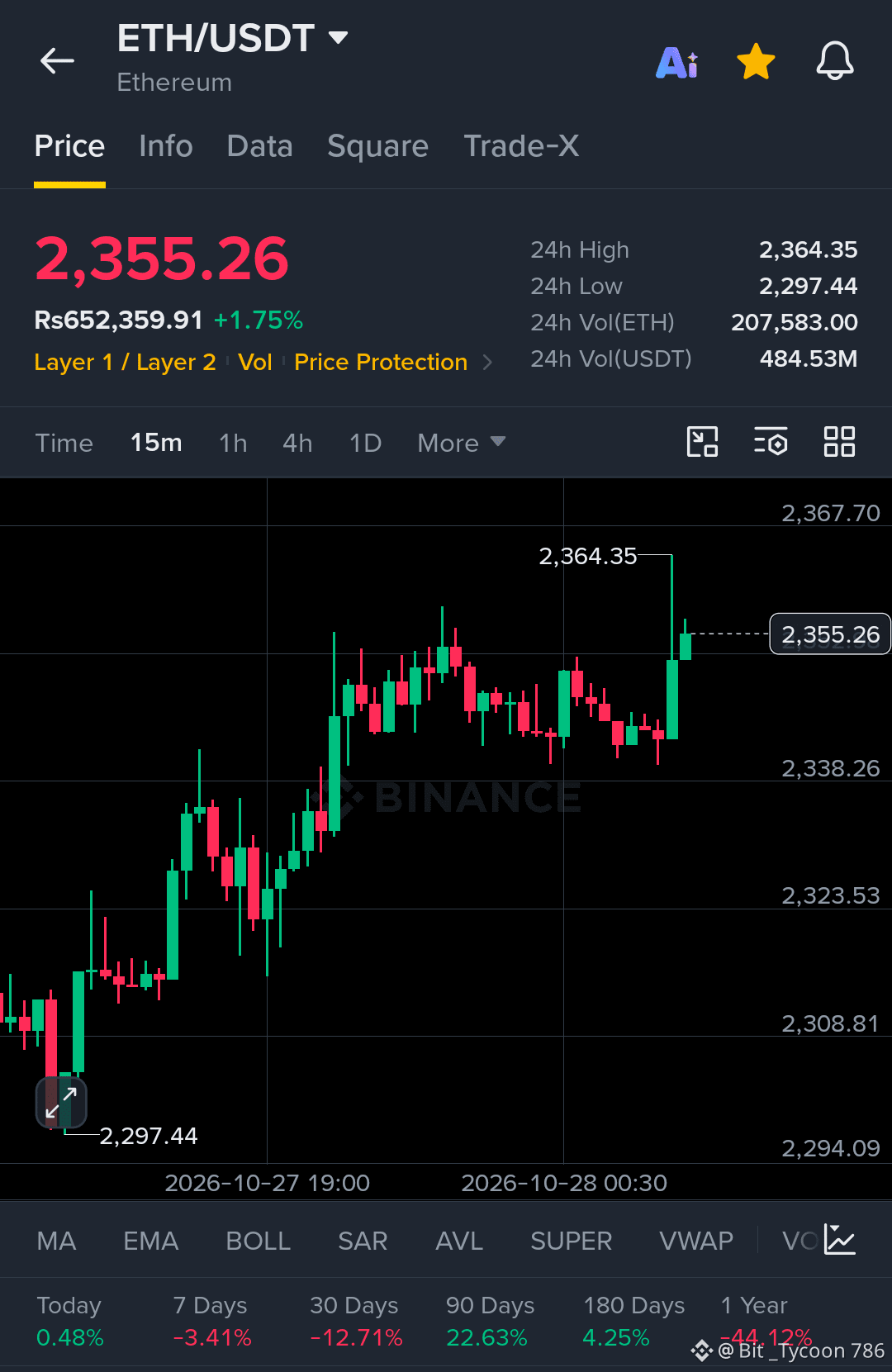
$ETH is building bullish momentum after reclaiming the $2,350 zone. Buyers are pushing toward $2,364 resistance, and a confirmed breakout could trigger another leg higher.
Entry: $2,348–$2,355
Stop Loss: $2,338
TP1: $2,364
TP2: $2,375
TP3: $2,390
The 15m structure favors a potential continuation, but resistance is close. Watch for a clean candle close above $2,364 with volume confirmation. A failed breakout could send price back toward support.
Risk managed. Eyes on the targets. Let's go $ETH
{spot}(ETHUSDT)
#CanMicrosoftDeliverOnAI #CanGoogleDefindItsCore #FOMCWatch #ThailandLaunchesWORPTStablecoinToQRPaymentApp #BitmineAdds10452ETH
$ETH is building bullish momentum after reclaiming the $2,350 zone. Buyers are pushing toward $2,364 resistance, and a confirmed breakout could trigger another leg higher.
Entry: $2,348–$2,355
Stop Loss: $2,338
TP1: $2,364
TP2: $2,375
TP3: $2,390
The 15m structure favors a potential continuation, but resistance is close. Watch for a clean candle close above $2,364 with volume confirmation. A failed breakout could send price back toward support.
Risk managed. Eyes on the targets. Let's go $ETH
#CanMicrosoftDeliverOnAI #CanGoogleDefindItsCore #FOMCWatch #ThailandLaunchesWORPTStablecoinToQRPaymentApp #BitmineAdds10452ETH
1
71
·
--
Рост
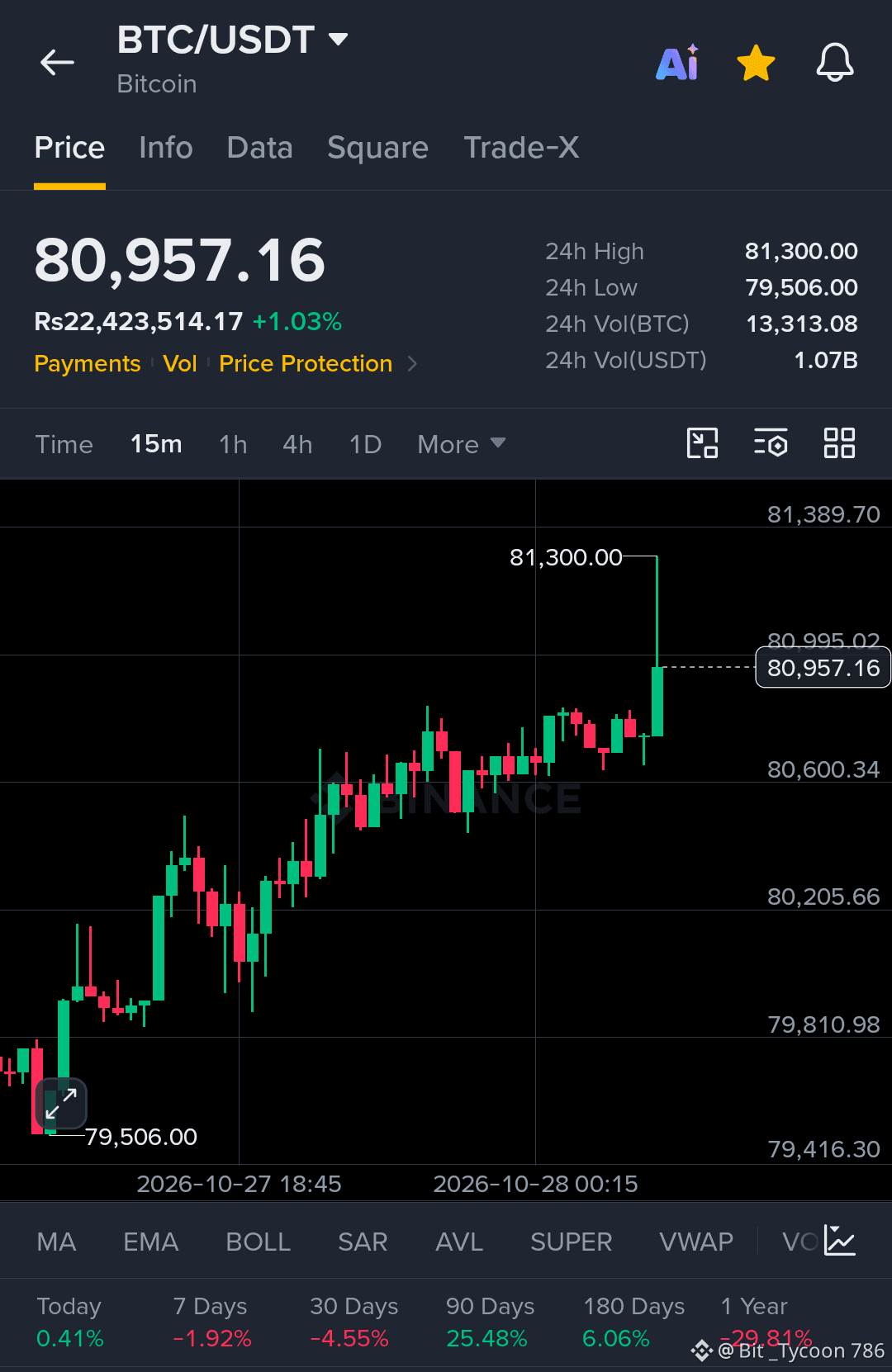
$BTC is pushing higher with strong buyer momentum, climbing toward the $81,300 resistance zone. The 15m chart shows bullish continuation, but a confirmed breakout is needed before the next leg up.
Entry: $80,800–$81,000
Stop Loss: $80,450
TP1: $81,300
TP2: $81,700
TP3: $82,200
Buyers are in control for now. A clean break above $81,300 could open the door to further upside, while rejection may trigger a short-term pullback. Watch volume and candle closes before entering.
Risk managed. Eyes on the targets. Let's go $BTC
{spot}(BTCUSDT)
#CanMicrosoftDeliverOnAI #CanGoogleDefindItsCore #FOMCWatch #ThailandLaunchesWORPTStablecoinToQRPaymentApp #BitmineAdds10452ETH
$BTC is pushing higher with strong buyer momentum, climbing toward the $81,300 resistance zone. The 15m chart shows bullish continuation, but a confirmed breakout is needed before the next leg up.
Entry: $80,800–$81,000
Stop Loss: $80,450
TP1: $81,300
TP2: $81,700
TP3: $82,200
Buyers are in control for now. A clean break above $81,300 could open the door to further upside, while rejection may trigger a short-term pullback. Watch volume and candle closes before entering.
Risk managed. Eyes on the targets. Let's go $BTC
#CanMicrosoftDeliverOnAI #CanGoogleDefindItsCore #FOMCWatch #ThailandLaunchesWORPTStablecoinToQRPaymentApp #BitmineAdds10452ETH
2
133
·
--
Рост
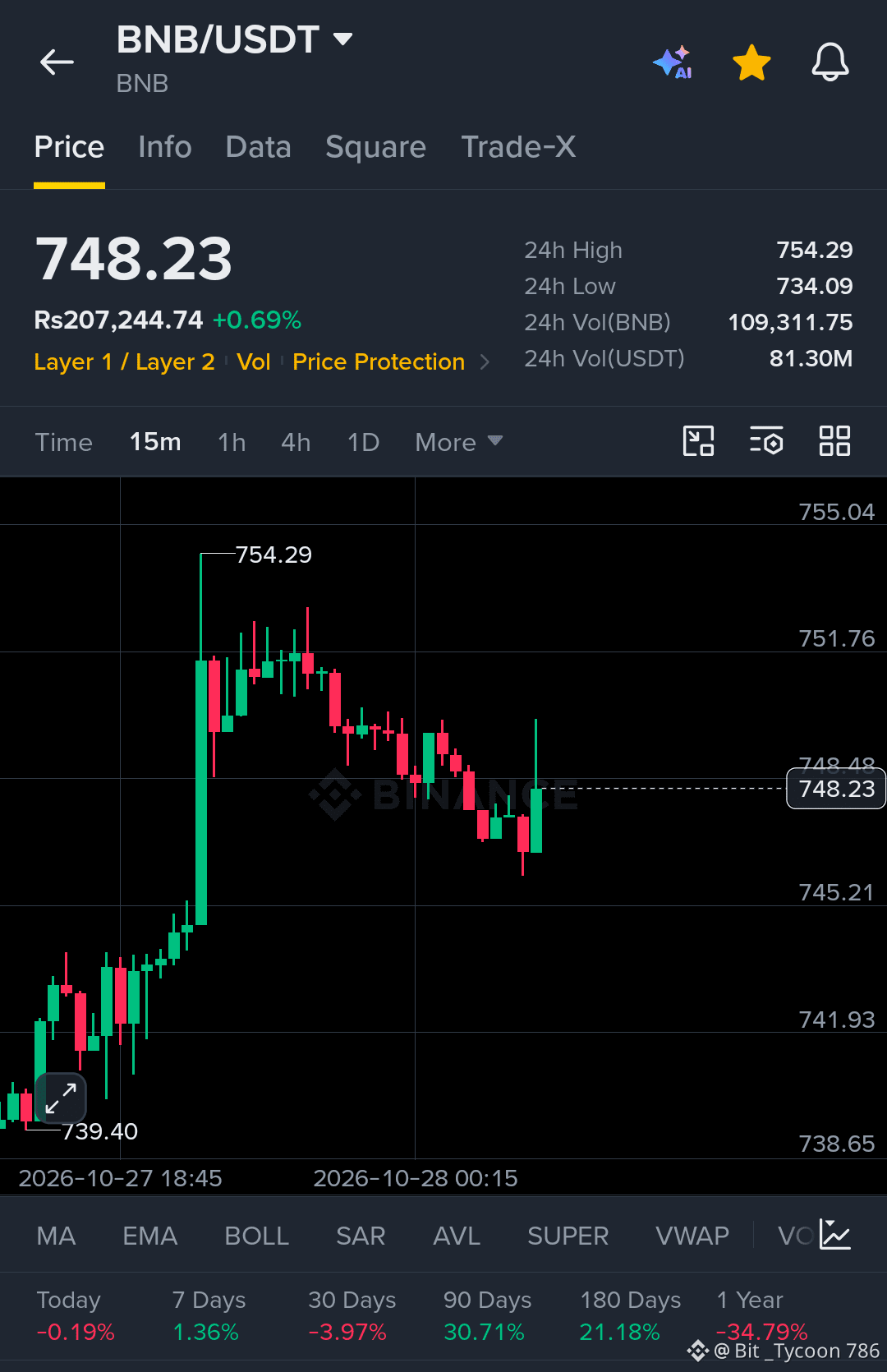
$BNB is attempting a bullish rebound after pulling back from $754.29 resistance. Buyers are defending the $746–$748 zone, but a clean breakout above $751.80 is needed to confirm renewed momentum.
Entry: $747.00–$749.00
Stop Loss: $744.50
TP1: $751.50
TP2: $754.00
TP3: $758.00
Momentum is recovering, but rejection near resistance remains a risk. Watch for a strong 15m candle close and volume confirmation before entering.
Risk managed. Eyes on the targets. Let's go $BNB
{spot}(BNBUSDT)
#CanMicrosoftDeliverOnAI #CanGoogleDefindItsCore #FOMCWatch #BitmineAdds10452ETH #SouthKoreaConsidersEducationTaxOnCryptoExchanges
$BNB is attempting a bullish rebound after pulling back from $754.29 resistance. Buyers are defending the $746–$748 zone, but a clean breakout above $751.80 is needed to confirm renewed momentum.
Entry: $747.00–$749.00
Stop Loss: $744.50
TP1: $751.50
TP2: $754.00
TP3: $758.00
Momentum is recovering, but rejection near resistance remains a risk. Watch for a strong 15m candle close and volume confirmation before entering.
Risk managed. Eyes on the targets. Let's go $BNB
#CanMicrosoftDeliverOnAI #CanGoogleDefindItsCore #FOMCWatch #BitmineAdds10452ETH #SouthKoreaConsidersEducationTaxOnCryptoExchanges
1
38
·
--
Рост
TRUMP’S OIL WARNING HAS MARKETS ON HIGH ALERT!
Rising tensions with Iran could push oil prices higher, reigniting inflation fears and putting global markets under pressure. But any breakthrough toward peace could trigger a sharp oil pullback.
The next move depends on geopolitics: escalation could fuel another energy shock, while de-escalation could bring much-needed relief.
Will peace cool oil prices, or will uncertainty keep markets burning?
$BMT $TRUMP $BIRB

1
254
·
--
Рост
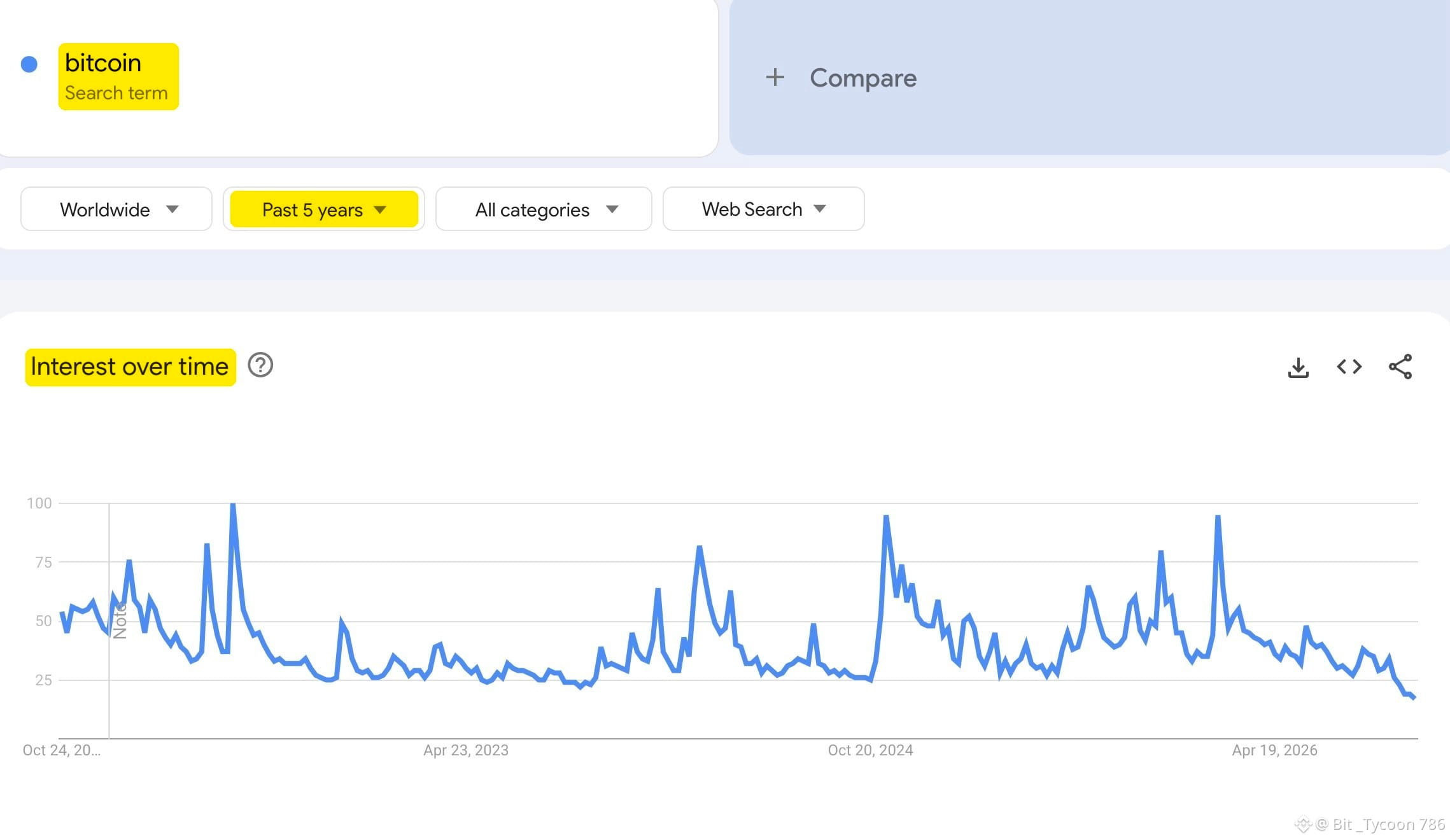
BITCOIN: RETAIL IS LOSING INTEREST, BUT I'M GETTING MORE BULLISH.
Google searches for Bitcoin have reportedly hit a 5-year low. Retail attention is fading, and market hype is cooling down.
But low attention doesn't automatically mean a bear market. Sometimes, the biggest opportunities emerge when nobody is watching.
When the crowd stops caring, I'm watching closely.
The real question is whether smart money is accumulating before attention returns.
$BTC — Stay patient. Watch the levels. Let the market confirm the move.
52

Статья
$XRP: What Could Really Shape Its Future?XRP has been part of the crypto conversation for years, but the reasons people watch it go beyond daily price movements. Its connection to cross-border payments, the development of the XRP Ledger, and Ripple's work in financial technology give it a different story from many other digital assets.
Still, there is a difference between having a useful technology and building lasting demand for a cryptocurrency. For XRP, that difference is worth paying attention to.
More Than Just Fast Transactions
The XRP Ledger was designed to move value quickly and at a relatively low cost. Transactions typically settle within seconds, making the network suitable for applications where speed and efficiency matter.
One of XRP's most discussed use cases is international payments. Sending money across borders can involve several intermediaries, currency conversions, and funds sitting in accounts while transactions are processed. XRP can potentially help bridge two currencies, allowing value to move between them without requiring payment providers to hold pre-funded balances in every market.
That is a practical idea, especially for businesses that handle payments across different countries.
But technology alone does not guarantee adoption. Financial institutions need reliable liquidity, competitive pricing, and a clear reason to change the systems they already use. XRP's long-term opportunity depends on whether it can deliver those benefits consistently.
Ripple's Success Doesn't Automatically Mean XRP Will Rise
Ripple and XRP are closely connected, but they serve different roles.
Ripple is a company that develops financial technology and payment services. XRP is the digital asset used on the XRP Ledger, an open-source blockchain that supports payments, asset transfers, and other applications.
Why does this distinction matter? Because Ripple can grow its business without every product directly creating demand for XRP.
A new partnership might strengthen Ripple's position in the financial industry, but investors still need to ask what that development means for the token itself. Does it increase XRP usage? Does it create demand for liquidity? Does it bring more users into the network?
These are more useful questions than simply counting announcements.
RLUSD Could Help Expand the Ecosystem
Ripple's dollar-pegged stablecoin, RLUSD, adds another dimension to its digital asset strategy.
Unlike XRP, which fluctuates in market value, RLUSD is designed to maintain a value close to one US dollar. That makes it potentially useful for businesses and users who want to transfer dollar-denominated value without taking on the same price volatility.
The two assets can serve different purposes. RLUSD may suit transactions where stability is the priority, while XRP can be useful when its liquidity and bridge-asset capabilities offer an advantage.
If more businesses begin using Ripple's infrastructure, the broader ecosystem could benefit. However, greater RLUSD adoption does not automatically translate into greater demand for XRP. The connection depends on how these products are used in practice.
For investors, the details matter more than the headline.
Institutional Interest Is Worth Watching
Institutional participation could become an important part of XRP's future, particularly as financial firms explore blockchain payments, digital asset custody, and tokenized financial products.
There have also been efforts to make blockchain wallets easier to integrate into applications, potentially allowing users to send and receive digital assets without dealing with the technical complexity themselves.
This kind of development could make digital payments more accessible. But there is still a difference between launching infrastructure and attracting regular users.
The real test will be whether businesses continue using these services, whether transaction volumes represent meaningful economic activity, and whether that activity creates demand for XRP.
Adoption is not just about getting attention. It is about becoming useful enough that people keep coming back.
Supply Remains Part of the Equation
XRP has a maximum supply of 100 billion tokens. Unlike Bitcoin, it does not rely on mining rewards to introduce newly created coins into circulation.
A portion of XRP has been managed through escrow arrangements, with scheduled releases making token distribution an ongoing subject of market discussion.
These releases do not mean every token is sold immediately. Some may be retained, distributed for other purposes, or returned to escrow. Even so, investors should pay attention to changes in circulating supply and the behavior of large holders.
Price ultimately reflects the balance between buyers and sellers. If demand grows enough to absorb available supply, XRP can gain strength. If selling pressure increases while demand fades, the price can struggle even when the network continues to develop.
A large maximum supply does not automatically make an asset cheap, just as a limited supply does not guarantee rising prices.
Regulation Could Make a Difference
Regulation has been an important part of XRP's history, particularly because of the legal dispute between Ripple and the US Securities and Exchange Commission.
For institutions, legal clarity can influence whether they are comfortable trading, holding, or using a digital asset. Clearer rules may reduce uncertainty, while new restrictions or unfavorable legal developments could weigh on confidence.
Investors should distinguish between proposed policies, official guidance, court decisions, and rules that have actually taken effect. They are not interchangeable.
Regulatory progress can remove obstacles, but it cannot guarantee demand or protect XRP from market volatility.
What Could Move XRP Higher?
A stronger outlook would likely require several things to happen together.
More genuine payment activity could strengthen XRP's practical role. Deeper liquidity could make it easier for larger participants to trade and settle transactions. New applications and tokenized assets could bring more activity to the XRP Ledger.
$BANK
Consistent institutional investment and a favorable broader crypto market could provide additional support.
However, a price rally driven mainly by excitement can fade quickly if buyers do not continue entering the market. The stronger signal would be sustained demand supported by improving liquidity, meaningful network usage, and healthy market structure.
The Risks Are Still Real
XRP operates in a competitive environment. Stablecoins, traditional payment networks, and other blockchain projects are all trying to solve similar problems in different ways.
There is also no guarantee that growth on the XRP Ledger will create proportional demand for XRP. Some applications may rely on other assets, limiting the direct economic benefit to token holders.
Large-holder selling, changes in regulation, weak institutional flows, and broader crypto-market declines can all put pressure on the price.
These risks do not mean XRP lacks potential. They simply mean that potential and proven results should not be treated as the same thing.
What Should Investors Watch?
Rather than relying on ambitious price predictions, it makes more sense to follow the indicators that reveal whether XRP's position is actually improving.
$ZEC
- Real payment usage: Is XRP being used for meaningful transfers, or is activity mainly speculative?
- Institutional demand: Are investment products attracting consistent capital?
- Liquidity: Can larger transactions be completed efficiently?
- Supply trends: How are circulating supply and large-holder balances changing?
- Network development: Are new applications attracting active, returning users?
- Price and volume: Are rallies supported by continued buying interest?
- Regulation: Are new developments reducing uncertainty or introducing additional risks?
No single measure provides a complete answer. Together, they offer a more realistic picture of $XRP 's progress.
Final Thoughts
XRP has a clear purpose within the wider discussion about digital payments and financial infrastructure. The XRP Ledger offers technology for moving value, while Ripple's work in payments and stablecoins could help expand the range of applications built around that infrastructure.
But investors should look beyond partnerships and positive headlines. What matters most is whether the ecosystem attracts lasting users and whether that growth translates into meaningful demand for XRP.
That is the part of the story worth following closely.
XRP may have room to grow, but its future will depend on execution, competition, liquidity, regulation, and broader market conditions. The opportunity is there; the long-term results still need to prove themselves.
This article is for informational purposes only and is not financial advice. Cryptocurrency investments carry significant risk, and prices can move sharply in either direction.
#XRP
$XRP: What Could Really Shape Its Future?
XRP has been part of the crypto conversation for years, but the reasons people watch it go beyond daily price movements. Its connection to cross-border payments, the development of the XRP Ledger, and Ripple's work in financial technology give it a different story from many other digital assets.
Still, there is a difference between having a useful technology and building lasting demand for a cryptocurrency. For XRP, that difference is worth paying attention to.
More Than Just Fast Transactions
The XRP Ledger was designed to move value quickly and at a relatively low cost. Transactions typically settle within seconds, making the network suitable for applications where speed and efficiency matter.
One of XRP's most discussed use cases is international payments. Sending money across borders can involve several intermediaries, currency conversions, and funds sitting in accounts while transactions are processed. XRP can potentially help bridge two currencies, allowing value to move between them without requiring payment providers to hold pre-funded balances in every market.
That is a practical idea, especially for businesses that handle payments across different countries.
But technology alone does not guarantee adoption. Financial institutions need reliable liquidity, competitive pricing, and a clear reason to change the systems they already use. XRP's long-term opportunity depends on whether it can deliver those benefits consistently.
Ripple's Success Doesn't Automatically Mean XRP Will Rise
Ripple and XRP are closely connected, but they serve different roles.
Ripple is a company that develops financial technology and payment services. XRP is the digital asset used on the XRP Ledger, an open-source blockchain that supports payments, asset transfers, and other applications.
Why does this distinction matter? Because Ripple can grow its business without every product directly creating demand for XRP.
A new partnership might strengthen Ripple's position in the financial industry, but investors still need to ask what that development means for the token itself. Does it increase XRP usage? Does it create demand for liquidity? Does it bring more users into the network?
These are more useful questions than simply counting announcements.
RLUSD Could Help Expand the Ecosystem
Ripple's dollar-pegged stablecoin, RLUSD, adds another dimension to its digital asset strategy.
Unlike XRP, which fluctuates in market value, RLUSD is designed to maintain a value close to one US dollar. That makes it potentially useful for businesses and users who want to transfer dollar-denominated value without taking on the same price volatility.
The two assets can serve different purposes. RLUSD may suit transactions where stability is the priority, while XRP can be useful when its liquidity and bridge-asset capabilities offer an advantage.
If more businesses begin using Ripple's infrastructure, the broader ecosystem could benefit. However, greater RLUSD adoption does not automatically translate into greater demand for XRP. The connection depends on how these products are used in practice.
For investors, the details matter more than the headline.
Institutional Interest Is Worth Watching
Institutional participation could become an important part of XRP's future, particularly as financial firms explore blockchain payments, digital asset custody, and tokenized financial products.
There have also been efforts to make blockchain wallets easier to integrate into applications, potentially allowing users to send and receive digital assets without dealing with the technical complexity themselves.
This kind of development could make digital payments more accessible. But there is still a difference between launching infrastructure and attracting regular users.
The real test will be whether businesses continue using these services, whether transaction volumes represent meaningful economic activity, and whether that activity creates demand for XRP.
Adoption is not just about getting attention. It is about becoming useful enough that people keep coming back.
Supply Remains Part of the Equation
XRP has a maximum supply of 100 billion tokens. Unlike Bitcoin, it does not rely on mining rewards to introduce newly created coins into circulation.
A portion of XRP has been managed through escrow arrangements, with scheduled releases making token distribution an ongoing subject of market discussion.
These releases do not mean every token is sold immediately. Some may be retained, distributed for other purposes, or returned to escrow. Even so, investors should pay attention to changes in circulating supply and the behavior of large holders.
Price ultimately reflects the balance between buyers and sellers. If demand grows enough to absorb available supply, XRP can gain strength. If selling pressure increases while demand fades, the price can struggle even when the network continues to develop.
A large maximum supply does not automatically make an asset cheap, just as a limited supply does not guarantee rising prices.
Regulation Could Make a Difference
Regulation has been an important part of XRP's history, particularly because of the legal dispute between Ripple and the US Securities and Exchange Commission.
For institutions, legal clarity can influence whether they are comfortable trading, holding, or using a digital asset. Clearer rules may reduce uncertainty, while new restrictions or unfavorable legal developments could weigh on confidence.
Investors should distinguish between proposed policies, official guidance, court decisions, and rules that have actually taken effect. They are not interchangeable.
Regulatory progress can remove obstacles, but it cannot guarantee demand or protect XRP from market volatility.
What Could Move XRP Higher?
A stronger outlook would likely require several things to happen together.
More genuine payment activity could strengthen XRP's practical role. Deeper liquidity could make it easier for larger participants to trade and settle transactions. New applications and tokenized assets could bring more activity to the XRP Ledger.
$BANK
Consistent institutional investment and a favorable broader crypto market could provide additional support.
However, a price rally driven mainly by excitement can fade quickly if buyers do not continue entering the market. The stronger signal would be sustained demand supported by improving liquidity, meaningful network usage, and healthy market structure.
The Risks Are Still Real
XRP operates in a competitive environment. Stablecoins, traditional payment networks, and other blockchain projects are all trying to solve similar problems in different ways.
There is also no guarantee that growth on the XRP Ledger will create proportional demand for XRP. Some applications may rely on other assets, limiting the direct economic benefit to token holders.
Large-holder selling, changes in regulation, weak institutional flows, and broader crypto-market declines can all put pressure on the price.
These risks do not mean XRP lacks potential. They simply mean that potential and proven results should not be treated as the same thing.
What Should Investors Watch?
Rather than relying on ambitious price predictions, it makes more sense to follow the indicators that reveal whether XRP's position is actually improving.
$ZEC
- Real payment usage: Is XRP being used for meaningful transfers, or is activity mainly speculative?
- Institutional demand: Are investment products attracting consistent capital?
- Liquidity: Can larger transactions be completed efficiently?
- Supply trends: How are circulating supply and large-holder balances changing?
- Network development: Are new applications attracting active, returning users?
- Price and volume: Are rallies supported by continued buying interest?
- Regulation: Are new developments reducing uncertainty or introducing additional risks?
No single measure provides a complete answer. Together, they offer a more realistic picture of $XRP 's progress.
Final Thoughts
XRP has a clear purpose within the wider discussion about digital payments and financial infrastructure. The XRP Ledger offers technology for moving value, while Ripple's work in payments and stablecoins could help expand the range of applications built around that infrastructure.
But investors should look beyond partnerships and positive headlines. What matters most is whether the ecosystem attracts lasting users and whether that growth translates into meaningful demand for XRP.
That is the part of the story worth following closely.
XRP may have room to grow, but its future will depend on execution, competition, liquidity, regulation, and broader market conditions. The opportunity is there; the long-term results still need to prove themselves.
This article is for informational purposes only and is not financial advice. Cryptocurrency investments carry significant risk, and prices can move sharply in either direction.
#XRP
1
153
·
--
Рост
Торговля за 30 дней $NIL 288.1 USDT
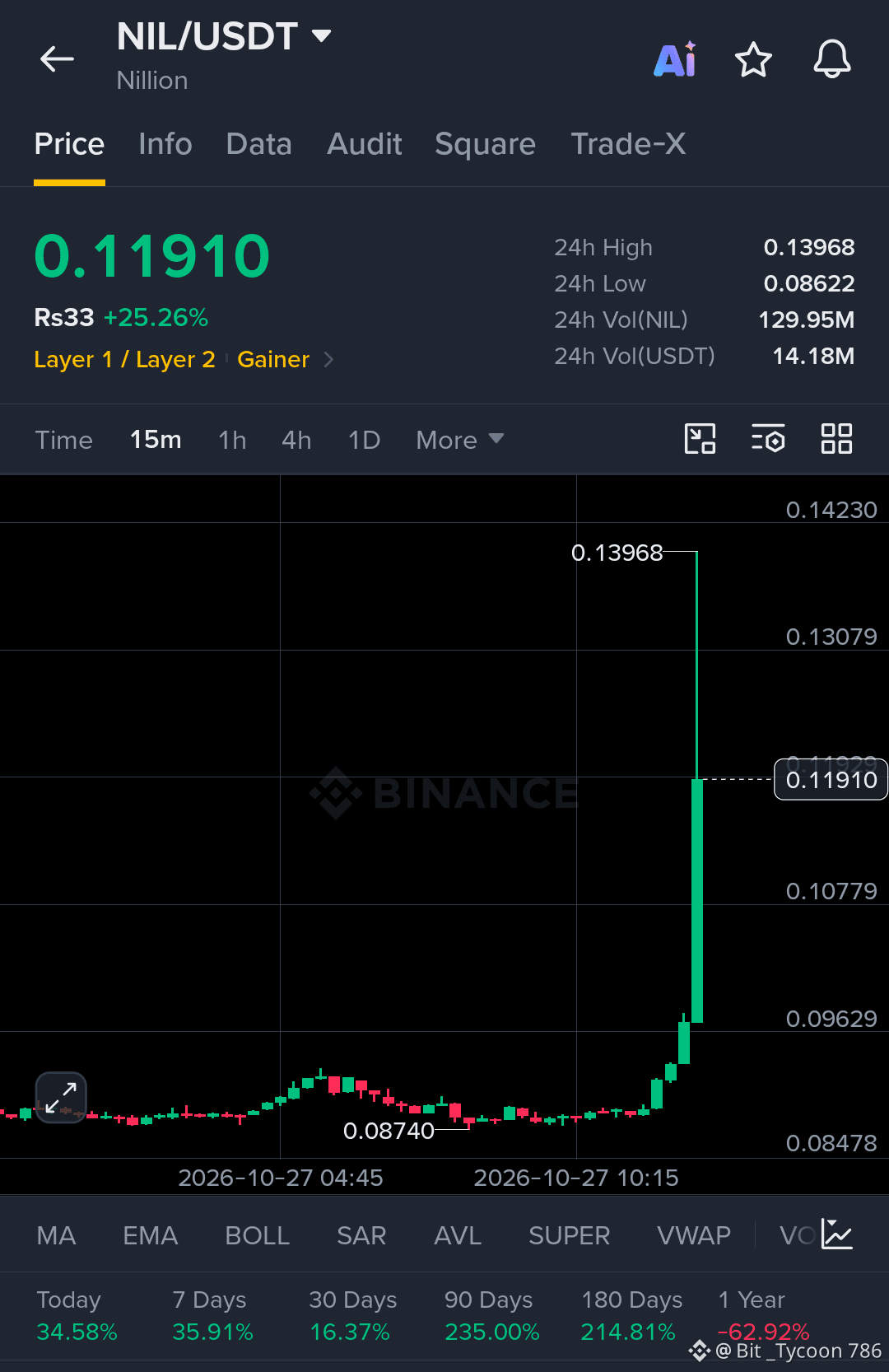
$NIL (Nillion) is up 25.26% to $0.11910, with a sharp breakout pushing price from a prolonged consolidation near $0.087–$0.096 to an intraday high of $0.13968.
The move comes with elevated trading activity, but the long upper wick signals selling pressure near the high. Holding above $0.107–$0.096 could support further consolidation; a sustained move back toward $0.130–$0.140 would need renewed buying volume. After such a rapid rally, volatility and pullback risk remain elevated.
{spot}(NILUSDT)
#BinancePick #EarningsSeason #BitmineAdds10452ETH #AkashSelectsSolanaAsMigrationTarget
$NIL (Nillion) is up 25.26% to $0.11910, with a sharp breakout pushing price from a prolonged consolidation near $0.087–$0.096 to an intraday high of $0.13968.
The move comes with elevated trading activity, but the long upper wick signals selling pressure near the high. Holding above $0.107–$0.096 could support further consolidation; a sustained move back toward $0.130–$0.140 would need renewed buying volume. After such a rapid rally, volatility and pullback risk remain elevated.
#BinancePick #EarningsSeason #BitmineAdds10452ETH #AkashSelectsSolanaAsMigrationTarget
2
134
Войдите, чтобы посмотреть больше материала
Присоединяйтесь к пользователям криптовалют по всему миру на Binance Square
⚡️ Получайте новейшую и полезную информацию о криптоактивах.
💬 Нам доверяет крупнейшая в мире криптобиржа.
👍 Получите достоверные аналитические данные от верифицированных создателей контента.
Эл. почта/номер телефона
В тренде
CanMicrosoftDeliverOnAI
Просмотров: 436,691
3,287 обсуждают
Earnings Season Session 3: Will Google & Microsoft Beat Earnings Expectations?
Binance Square Official
·Лайков: 146
·Просмотров: 79.5k
CanGoogleDefindItsCore
Просмотров: 270,908
2,314 обсуждают
EarningsSeason
Просмотров: 5.9M
29,383 обсуждают