

#riverusdt
riverusdt
Просмотров: 1.4M
4,810 обсуждают
Популярные
Новые

Частичная правда

Статья
River (RIVER) Explained: The Chain-Abstraction Stablecoin Powering satUSD1. Introduction
For years, DeFi has been trapped by the same problem: liquidity is scattered across dozens of blockchains, and moving value between them requires bridges, wrapped tokens, and multiple gas fees. River (RIVER) is built to solve exactly that. It is a chain-abstraction stablecoin protocol that lets users lock collateral on one blockchain and mint its native stablecoin — satUSD — on an entirely different chain, without relying on traditional bridges or wrapped assets. With a peak total value locked (TVL) above $800 million and backing from TRON founder Justin Sun, River has become one of the most closely watched infrastructure plays in the multi-chain DeFi space.
2. What Is River (RIVER)?
River is a next-generation DeFi protocol whose core product is satUSD, an omni-CDP stablecoin. CDP stands for Collateralized Debt Position — the same model used by MakerDAO’s DAI — but River’s version is “omni” because the collateral and the minted stablecoin can live on different blockchains.
In practice, this means a user can deposit BTC, ETH, BNB, or liquid staking tokens (LSTs) on Chain A, and mint satUSD natively on Chain B — while the underlying collateral never leaves its original chain. The protocol coordinates this using LayerZero’s cross-chain messaging layer, so there is no bridge to trust, no wrapped token to track, and no fragmented liquidity pool.
RIVER is the governance and incentive token of this system. It is not a stablecoin itself — it is the asset that gives holders a stake in how the protocol is governed and how value flows through it.
3. How River Works: Omni-CDP and satUSD
River’s architecture rests on three pillars:
① Multi-chain minting. satUSD is minted through the omni-CDP module. Supported collateral includes BTC, ETH, BNB, and LSTs. The protocol uses LayerZero’s lzSend and lzReceive messaging functions to synchronize collateral positions, debt states, and token issuance across networks in real time.
② Native cross-chain liquidity via OFT. satUSD implements the OFT (Omnichain Fungible Token) standard, which keeps a consistent total supply and uniform value across every chain it exists on. Instead of moving wrapped versions of the stablecoin, satUSD transfers natively via LayerZero — with low fees and minimal latency.
③ DeFi composability. Once minted, satUSD can be used as a stable trading pair on DEXs, supplied as liquidity, or deployed into yield strategies — all without selling the underlying collateral.
4. Key Use Cases of RIVER
RIVER is a governance and incentive token, and its utility is directly tied to the satUSD system:
· Protocol governance. Stakers vote on collateral types and risk settings in the Omni-CDP, Smart Vault and Prime Vault parameters, chain expansion, satUSD incentive emissions, and treasury usage.
· Staking with voting multipliers. RIVER can be locked for epochs ranging from 3 to 24 months. The multiplier scales from 1× at 3 months to 24× at 24 months — for example, 1,000 RIVER staked for 12 months equals 8,000 voting power.
· Yield boosting and fee reductions. Staked RIVER boosts returns on satUSD+ via veRIVER, enhances LP rewards, and reduces minting, redemption, and swap fees.
· Priority access. Stakers get priority access to limited campaigns and high-tier rewards, and may participate in governance-related airdrops.
5. Tokenomics & Supply
· Total supply: 100,000,000 RIVER (fixed).
· Circulating supply: approximately 19.6 million to 37.19 million, depending on the data source and snapshot date — meaning roughly 20% to 37% of max supply is in circulation.
· Allocation: Community 32%, Ecosystem 24%, Team 18%, Investors 15%, Liquidity 11%.
· Vesting: Investor tokens carry a 3-month cliff, 10% unlock at month 4, a 6-month cliff, then 24-month linear vesting. Core contributor tokens carry a 12-month cliff.
· Airdrop model: River uses a Dynamic Airdrop Conversion 3.0 system — a recurring, seasonal incentive model where users earn River Pts through ecosystem activity and convert them into Staked RIVER. The conversion rate adjusts block-by-block based on real-time activity.
6. Recent Developments & Ecosystem
River’s growth accelerated sharply in 2026:
· $8 million strategic investment from Justin Sun (TRON). Announced in January 2026, the funding supports deploying River’s chain-abstraction stablecoin infrastructure on TRON. The centerpiece is satUSD mintable 1:1 with USDT, USDD, or USD1, with integration into TRON DeFi stack including SUN.io pools and JUST lending.
· Sui Network partnership. River formed a strategic alliance with Sui to create a cross-ecosystem “liquidity layer,” with satUSD settling natively on Sui — described by the teams as “liquidity teleportation”.
· Multi-chain footprint. River now integrates with more than 10 chains, including Ethereum, BNB Chain, Base, Arbitrum, Solana, and Sui, with over 150,000 active users.
· Exchange access. RIVER trades on Binance (including Binance Alpha) as well as Bybit, OKX, Bitget, KuCoin, MEXC, HTX, Gate, and BingX.
· Seasonal incentives. River’s Season 6 is live, with new product releases, RIVER staking, and governance as the core earning mechanisms.
· All-time high. RIVER reached $87.05 on January 26, 2026, following a nearly 1,900% rally in the preceding 30 days.
7. Why River Matters
River sits at the intersection of two of the most important narratives in DeFi: stablecoins and chain abstraction. Stablecoins are the largest real-world use case in crypto, but they remain fragmented across chains. River’s answer — mint natively where you need liquidity, without bridges — attacks both the security risk of bridge hacks and the capital inefficiency of wrapped assets. With institutional backers, a multi-chain footprint, and a governance token that directly controls protocol risk parameters, RIVER is a case study in how infrastructure tokens accrue utility beyond speculation.
$RIVER __@RiverdotInc ___#RIVERUSDT
This article is for educational purposes only and does not constitute financial advice, an investment recommendation, or an offer to buy or sell any asset. Crypto assets are highly volatile. Always do your own research (DYOR)
River (RIVER) Explained: The Chain-Abstraction Stablecoin Powering satUSD
1. Introduction
For years, DeFi has been trapped by the same problem: liquidity is scattered across dozens of blockchains, and moving value between them requires bridges, wrapped tokens, and multiple gas fees. River (RIVER) is built to solve exactly that. It is a chain-abstraction stablecoin protocol that lets users lock collateral on one blockchain and mint its native stablecoin — satUSD — on an entirely different chain, without relying on traditional bridges or wrapped assets. With a peak total value locked (TVL) above $800 million and backing from TRON founder Justin Sun, River has become one of the most closely watched infrastructure plays in the multi-chain DeFi space.
2. What Is River (RIVER)?
River is a next-generation DeFi protocol whose core product is satUSD, an omni-CDP stablecoin. CDP stands for Collateralized Debt Position — the same model used by MakerDAO’s DAI — but River’s version is “omni” because the collateral and the minted stablecoin can live on different blockchains.
In practice, this means a user can deposit BTC, ETH, BNB, or liquid staking tokens (LSTs) on Chain A, and mint satUSD natively on Chain B — while the underlying collateral never leaves its original chain. The protocol coordinates this using LayerZero’s cross-chain messaging layer, so there is no bridge to trust, no wrapped token to track, and no fragmented liquidity pool.
RIVER is the governance and incentive token of this system. It is not a stablecoin itself — it is the asset that gives holders a stake in how the protocol is governed and how value flows through it.
3. How River Works: Omni-CDP and satUSD
River’s architecture rests on three pillars:
① Multi-chain minting. satUSD is minted through the omni-CDP module. Supported collateral includes BTC, ETH, BNB, and LSTs. The protocol uses LayerZero’s lzSend and lzReceive messaging functions to synchronize collateral positions, debt states, and token issuance across networks in real time.
② Native cross-chain liquidity via OFT. satUSD implements the OFT (Omnichain Fungible Token) standard, which keeps a consistent total supply and uniform value across every chain it exists on. Instead of moving wrapped versions of the stablecoin, satUSD transfers natively via LayerZero — with low fees and minimal latency.
③ DeFi composability. Once minted, satUSD can be used as a stable trading pair on DEXs, supplied as liquidity, or deployed into yield strategies — all without selling the underlying collateral.
4. Key Use Cases of RIVER
RIVER is a governance and incentive token, and its utility is directly tied to the satUSD system:
· Protocol governance. Stakers vote on collateral types and risk settings in the Omni-CDP, Smart Vault and Prime Vault parameters, chain expansion, satUSD incentive emissions, and treasury usage.
· Staking with voting multipliers. RIVER can be locked for epochs ranging from 3 to 24 months. The multiplier scales from 1× at 3 months to 24× at 24 months — for example, 1,000 RIVER staked for 12 months equals 8,000 voting power.
· Yield boosting and fee reductions. Staked RIVER boosts returns on satUSD+ via veRIVER, enhances LP rewards, and reduces minting, redemption, and swap fees.
· Priority access. Stakers get priority access to limited campaigns and high-tier rewards, and may participate in governance-related airdrops.
5. Tokenomics & Supply
· Total supply: 100,000,000 RIVER (fixed).
· Circulating supply: approximately 19.6 million to 37.19 million, depending on the data source and snapshot date — meaning roughly 20% to 37% of max supply is in circulation.
· Allocation: Community 32%, Ecosystem 24%, Team 18%, Investors 15%, Liquidity 11%.
· Vesting: Investor tokens carry a 3-month cliff, 10% unlock at month 4, a 6-month cliff, then 24-month linear vesting. Core contributor tokens carry a 12-month cliff.
· Airdrop model: River uses a Dynamic Airdrop Conversion 3.0 system — a recurring, seasonal incentive model where users earn River Pts through ecosystem activity and convert them into Staked RIVER. The conversion rate adjusts block-by-block based on real-time activity.
6. Recent Developments & Ecosystem
River’s growth accelerated sharply in 2026:
· $8 million strategic investment from Justin Sun (TRON). Announced in January 2026, the funding supports deploying River’s chain-abstraction stablecoin infrastructure on TRON. The centerpiece is satUSD mintable 1:1 with USDT, USDD, or USD1, with integration into TRON DeFi stack including SUN.io pools and JUST lending.
· Sui Network partnership. River formed a strategic alliance with Sui to create a cross-ecosystem “liquidity layer,” with satUSD settling natively on Sui — described by the teams as “liquidity teleportation”.
· Multi-chain footprint. River now integrates with more than 10 chains, including Ethereum, BNB Chain, Base, Arbitrum, Solana, and Sui, with over 150,000 active users.
· Exchange access. RIVER trades on Binance (including Binance Alpha) as well as Bybit, OKX, Bitget, KuCoin, MEXC, HTX, Gate, and BingX.
· Seasonal incentives. River’s Season 6 is live, with new product releases, RIVER staking, and governance as the core earning mechanisms.
· All-time high. RIVER reached $87.05 on January 26, 2026, following a nearly 1,900% rally in the preceding 30 days.
7. Why River Matters
River sits at the intersection of two of the most important narratives in DeFi: stablecoins and chain abstraction. Stablecoins are the largest real-world use case in crypto, but they remain fragmented across chains. River’s answer — mint natively where you need liquidity, without bridges — attacks both the security risk of bridge hacks and the capital inefficiency of wrapped assets. With institutional backers, a multi-chain footprint, and a governance token that directly controls protocol risk parameters, RIVER is a case study in how infrastructure tokens accrue utility beyond speculation.
$RIVER __@Riverdotinc ___#RIVERUSDT
This article is for educational purposes only and does not constitute financial advice, an investment recommendation, or an offer to buy or sell any asset. Crypto assets are highly volatile. Always do your own research (DYOR)
MEKLH:
satUSD
6
2
499

RIVER just punched a fresh low, looks ready to keep sliding. Momentum’s turning bearish fast.
🔴 $RIVER SHORT 📉
Entry → $1.0080-$1.0100
Stop → $1.0393 (-3.0%)
TP1 → $0.993865 (+1.5%)
TP2 → $0.958550 (+5.0%)
R/R 1:1.7 • Confidence 64%
We got a CHoCH on the 15‑min chart, CVD backing the sell pressure, and a fresh FVG right under price. An OB sits right above the swing high, and the liquidity sweep took out the last buy stop. POI confluence hits with the OB‑FVG overlap, making the short look solid.
A 3.0% stop is a bit tight, so stick to 2‑3× leverage.
Take half at the first target, then ride the rest.
DYOR — this isn't financial advice, size your risk accordingly 🙏
$RIVER #RIVERUSDT #SMC #TradingSignals #Write2Earn
11

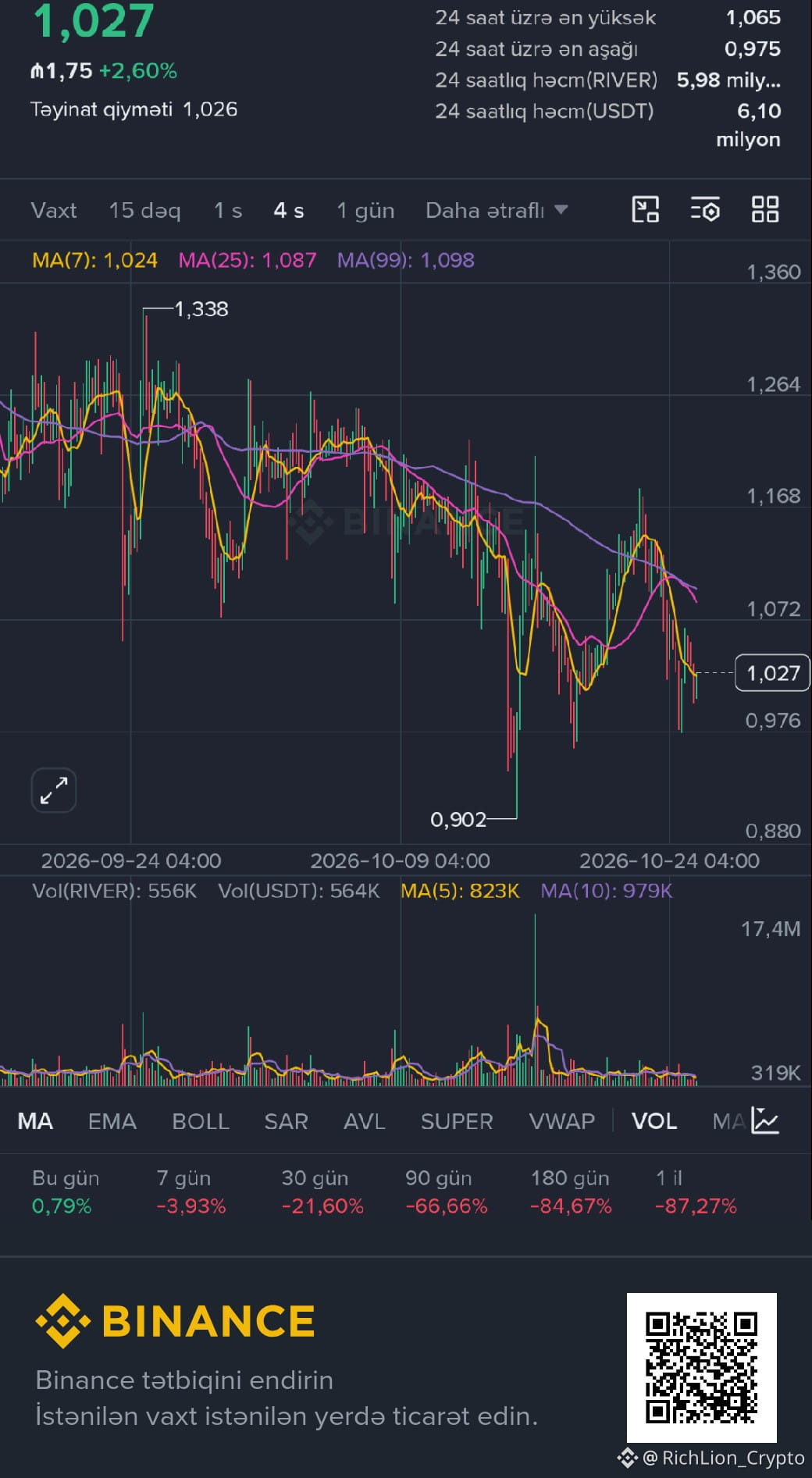
🔥 $RIVER dibdən qalxır!
Qiymət: 1,027 (+2,6%)
24s dib: 0,975 → alıcılar burada sərt cavab verdi 💪
📍 Giriş: 1,020–1,030
🛑 Stop: 0,965
🎯 Hədəf 1: 1,065
🎯 Hədəf 2: 1,087–1,098 (MA25 + MA99 zonası)
🎯 Hədəf 3: 1,168
MA(7) artıq qiymətin altına keçir. 1,098-i keçsə, trend dönə bilər 🚀
#RIVER #RIVERUSDT #Binance #Futures
Qiymət: 1,027 (+2,6%)
24s dib: 0,975 → alıcılar burada sərt cavab verdi 💪
📍 Giriş: 1,020–1,030
🛑 Stop: 0,965
🎯 Hədəf 1: 1,065
🎯 Hədəf 2: 1,087–1,098 (MA25 + MA99 zonası)
🎯 Hədəf 3: 1,168
MA(7) artıq qiymətin altına keçir. 1,098-i keçsə, trend dönə bilər 🚀
#RIVER #RIVERUSDT #Binance #Futures
103

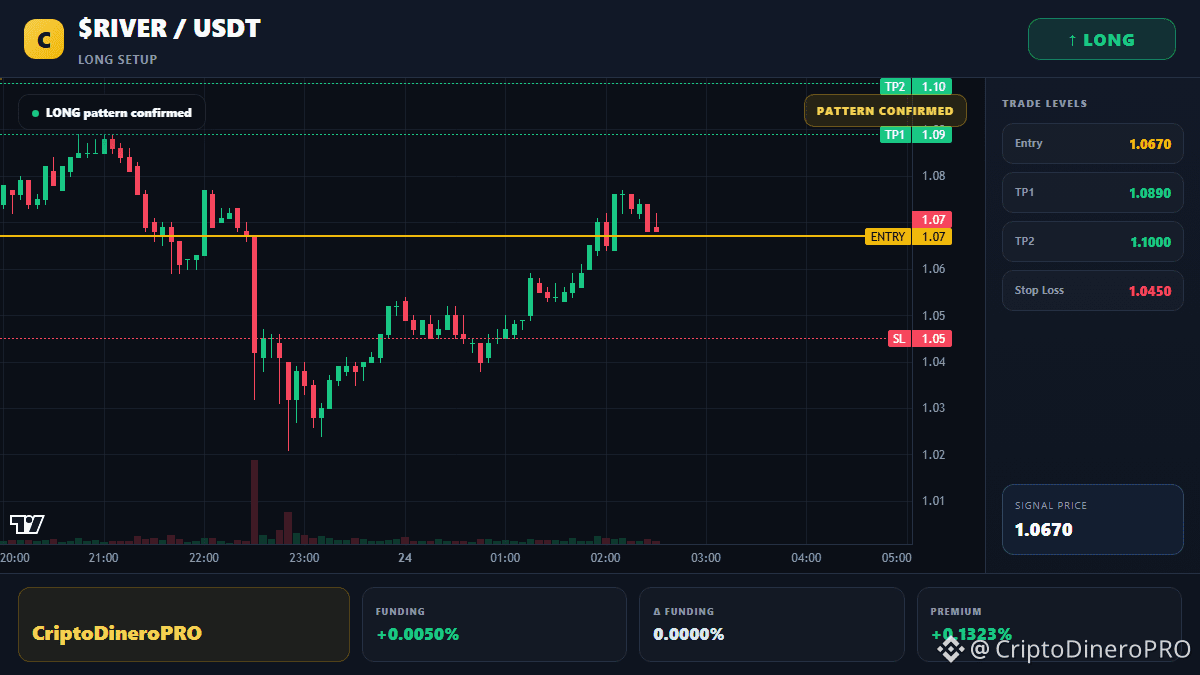
$RIVER - Bullish Breakout 📈
{future}(RIVERUSDT)
📍 Entry: 1.0670
🛑 Stop Loss: Below 1.0450
🎯 Targets:
• TP1: 1.0890
• TP2: Above 1.1000
DYOR.
#RIVER #RIVERUSDT
$RIVER - Bullish Breakout 📈
📍 Entry: 1.0670
🛑 Stop Loss: Below 1.0450
🎯 Targets:
• TP1: 1.0890
• TP2: Above 1.1000
DYOR.
#RIVER #RIVERUSDT
📍 Entry: 1.0670
🛑 Stop Loss: Below 1.0450
🎯 Targets:
• TP1: 1.0890
• TP2: Above 1.1000
DYOR.
#RIVER #RIVERUSDT
13

$RIVER: THE NEXT BIG CRYPTO EXPLOSION?🚨 $RIVER — THE SLEEPING GIANT IS ON YOUR RADAR? 🌊🔥
What if the market is ignoring a coin that deserves attention? 👀
I'm watching $RIVER closely. The next move could surprise traders, but will bulls take control? 📈🐂
💎 REAL HOLDERS, WHERE ARE YOU?
Comment your RIVER target below! 👇🔥
🚀 RIVER TO THE MOON or 📉 MORE DOWNSIDE?
#RIVER #RIVERUSDT #Crypto #BinanceSquare
{future}(RIVERUSDT)
$RIVER: THE NEXT BIG CRYPTO EXPLOSION?
🚨 $RIVER — THE SLEEPING GIANT IS ON YOUR RADAR? 🌊🔥
What if the market is ignoring a coin that deserves attention? 👀
I'm watching $RIVER closely. The next move could surprise traders, but will bulls take control? 📈🐂
💎 REAL HOLDERS, WHERE ARE YOU?
Comment your RIVER target below! 👇🔥
🚀 RIVER TO THE MOON or 📉 MORE DOWNSIDE?
#RIVER #RIVERUSDT #Crypto #BinanceSquare
5
665

🥛 Sự mập mờ thiếu minh bạch tạo nên môi trường đầu tư vô cùng độc hại bẩn thỉu.
💰 SHORT $RIVER
Entry: 1.065
TP: 1.0117 | SL: 1.171
🧬 Tính bất biến của sổ cái là nền móng cho niềm tin tuyệt đối.
📈 Sự hình thành của nến Rising Three Methods tiếp diễn xu hướng tăng.
💡 Đừng bao giờ đầu tư số tiền mà bạn không thể chấp nhận mất đi hoàn toàn.
🌈 Mong hạnh phúc và lợi nhuận luôn song hành trong cuộc sống của bạn.
#RIVERUSDT $RIVERUSDT
112

·
--
Рост
🟢 $RIVER #RİVER
Entry 1.1580 to 1.1660
Targets 1.1810 1.2010 1.2240
Stop 1.1380 #RIVERUSDT
Buyers are gaining strength; a breakout of 1.1682 will open the way for further growth.
$RIVER
{future}(RIVERUSDT)
🟢 $RIVER #RİVER
Entry 1.1580 to 1.1660
Targets 1.1810 1.2010 1.2240
Stop 1.1380 #RIVERUSDT
Buyers are gaining strength; a breakout of 1.1682 will open the way for further growth.
$RIVER
Entry 1.1580 to 1.1660
Targets 1.1810 1.2010 1.2240
Stop 1.1380 #RIVERUSDT
Buyers are gaining strength; a breakout of 1.1682 will open the way for further growth.
$RIVER
2
242


·
--
Падение
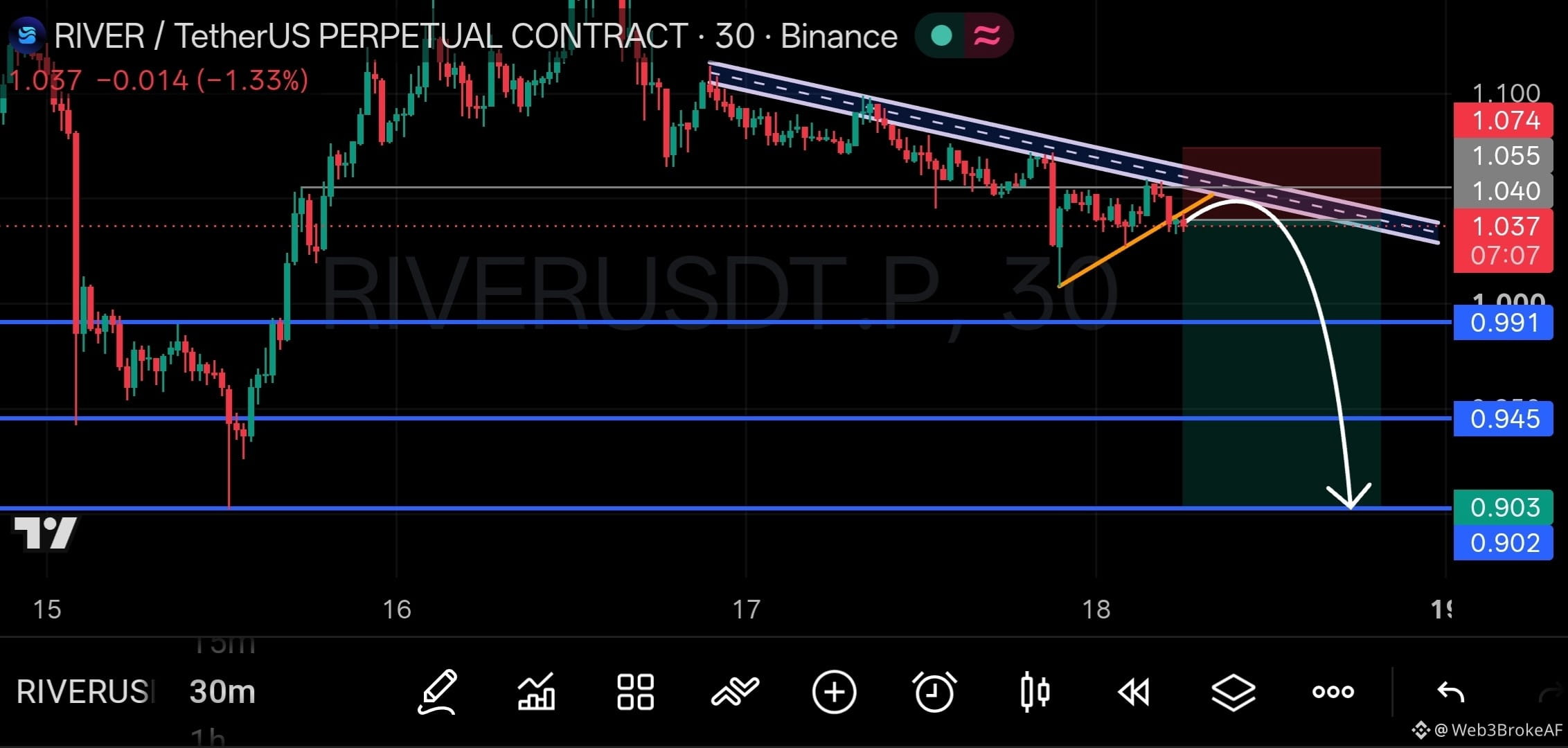
🔴 Trade Signal: Short $RIVER 📉
Entry: $1.02 - $1.04
TP:
$0.991
$0.945
$0.902
SL: $1.074
{future}(RIVERUSDT)
No Upside strength left as price is currently dominating higher lows structure continuosly as the descending trendline is rejecting the upside attempt. I have shprted this coin currently with heavy quantities and my SL is just above the recent supply zone aiming for the bottom Liquidity. 💸
RIVER #RIVERUSDT
🔴 Trade Signal: Short $RIVER 📉
Entry: $1.02 - $1.04
TP:
$0.991
$0.945
$0.902
SL: $1.074
No Upside strength left as price is currently dominating higher lows structure continuosly as the descending trendline is rejecting the upside attempt. I have shprted this coin currently with heavy quantities and my SL is just above the recent supply zone aiming for the bottom Liquidity. 💸
RIVER #RIVERUSDT
237
RIVER is carving a tight channel near its 20‑day high, eyeing fresh upside as buyers tighten.
━━━━━━━━━━━━━━━━━━━━━
🟢 $RIVER LONG 📈
━━━━━━━━━━━━━━━━━━━━━
📍 Entry Range: $1.0879 – $1.0901
🛑 Stop Loss: $1.0563 (-3.0%)
🎯 TP1: $1.1053 (+1.5%)
🏆 TP2: $1.1435 (+5.0%)
⚡ R/R Ratio: 1:1.7
📊 Confidence: 64%
━━━━━━━━━━━━━━━━━━━━━
A change of character broke the downtrend, and the order block sits right on a fair‑value gap while volume spikes confirm the push. The liquidity sweep cleared the last sell wall and the CVD turned bullish, giving a solid POI where OB and FVG overlap.
A 3% stop is fairly tight; keep leverage at or below 5x to stay safe.
Take half profit around the first target as price hits the nearest resistance.
Not financial advice — always manage your own risk 🙏
$RIVER #RIVERUSDT #CPIWatch #TradingSignals #Write2Earn
━━━━━━━━━━━━━━━━━━━━━
🟢 $RIVER LONG 📈
━━━━━━━━━━━━━━━━━━━━━
📍 Entry Range: $1.0879 – $1.0901
🛑 Stop Loss: $1.0563 (-3.0%)
🎯 TP1: $1.1053 (+1.5%)
🏆 TP2: $1.1435 (+5.0%)
⚡ R/R Ratio: 1:1.7
📊 Confidence: 64%
━━━━━━━━━━━━━━━━━━━━━
A change of character broke the downtrend, and the order block sits right on a fair‑value gap while volume spikes confirm the push. The liquidity sweep cleared the last sell wall and the CVD turned bullish, giving a solid POI where OB and FVG overlap.
A 3% stop is fairly tight; keep leverage at or below 5x to stay safe.
Take half profit around the first target as price hits the nearest resistance.
Not financial advice — always manage your own risk 🙏
$RIVER #RIVERUSDT #CPIWatch #TradingSignals #Write2Earn
14
🍱 Sự rút tay bài bản của tay to mang lại sự đổ vỡ không thể cứu vãn cho đường chart.
🌋 SHORT $RIVER
Entry: 1.069
TP: 1.0155 | SL: 1.175
🇹 Sự kết hợp giữa Tokenomics và Game theory tạo ra các mô hình bền.
📊 Chỉ báo Schaff Trend Cycle cho thấy chu kỳ tăng mới đã bắt đầu rồi.
🕯️ Mỗi cây nến đỏ là một bài học, mỗi cây nến xanh là một thành quả.
🌈 Hy vọng bạn sẽ luôn là người nhận được những giá trị tốt đẹp nhất từ sàn.
#RIVERUSDT $RIVERUSDT
109
RIVER is testing the 0.0455 resistance after a 2.8% pullback. Sellers are defending the level.
🔴 $RIVER SHORT 📉
Entry → $1.0769-$1.0791
Stop → $1.1103 (-3.0%)
TP1 → $1.0618 (+1.5%)
TP2 → $1.0241 (+5.0%)
R/R 1:1.7 • Confidence 65%
The CHoCH broke the prior swing low, exposing a fair value gap that aligns with the order block at 0.0452, creating a POI where the OB and FVG overlap. Price is now on a down‑trend micro‑structure, making the short target realistic.
A 3.0% stop is relatively tight; use no more than 5x leverage to keep margin safe.
Take half at the first target around 0.0438 to lock in profit.
As always: manage your risk, this is not financial advice 🙏
$RIVER #RIVERUSDT #CPIWatch #TradingSignals #Write2Earn
21
·
--
Падение
🔴 $RIVER #RIVERUSDT
Entry 1.133 to 1.145
Targets 1.119 1.104 1.087
St 1.158
The advantage remains with the sellers: the price stays below recent highs, and the decline has not yet been retraced.
$RIVER
{future}(RIVERUSDT)
🔴 $RIVER #RIVERUSDT
Entry 1.133 to 1.145
Targets 1.119 1.104 1.087
St 1.158
The advantage remains with the sellers: the price stays below recent highs, and the decline has not yet been retraced.
$RIVER
Entry 1.133 to 1.145
Targets 1.119 1.104 1.087
St 1.158
The advantage remains with the sellers: the price stays below recent highs, and the decline has not yet been retraced.
$RIVER
1
123

·
--
Рост
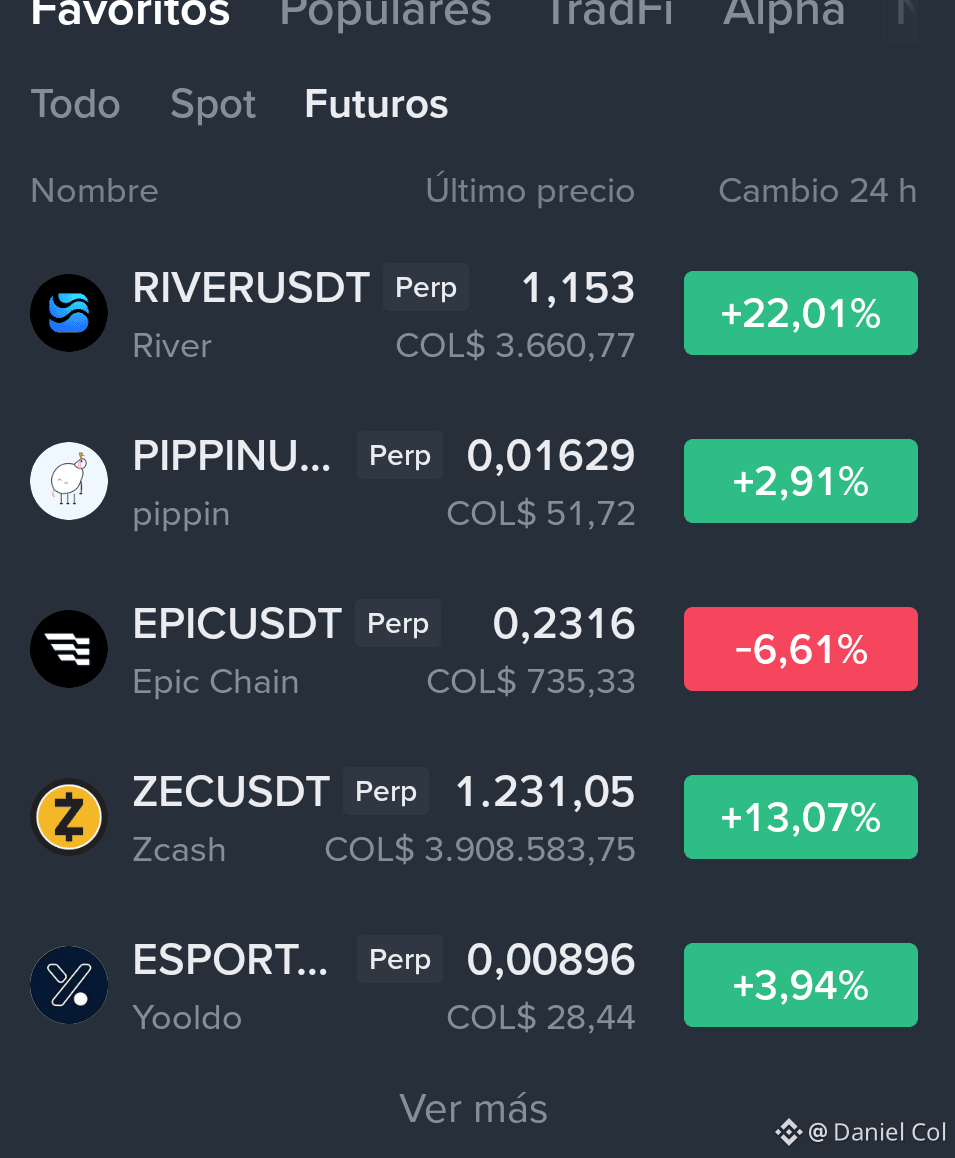
🌊 ¡RIVER Y ZCASH DESATADOS! La lista de favoritos no perdona 🔥⚡
¡Menuda sorpresa para los que siguen de cerca estas altcoins! 💥
🚀 RIVERUSDT rompe la barrera con un potente +22,01%
⚡ ZECUSDT (Zcash) reacciona con violencia positiva: +13,07%
🔴 EPICUSDT entra en corrección (-6,61%), ¿zona de recarga? 👀
Los movimientos explosivos están ocurriendo fuera del radar del inversionista promedio. 🧠💡
👇 ¿Cuáles de estas monedas tienes marcadas con la estrella de favoritos?
#Zcash #RiverUsdt #BinanceTrading #Altcoins $RIVER
{future}(RIVERUSDT)
$PIPPIN $ZEC
🌊 ¡RIVER Y ZCASH DESATADOS! La lista de favoritos no perdona 🔥⚡
¡Menuda sorpresa para los que siguen de cerca estas altcoins! 💥
🚀 RIVERUSDT rompe la barrera con un potente +22,01%
⚡ ZECUSDT (Zcash) reacciona con violencia positiva: +13,07%
🔴 EPICUSDT entra en corrección (-6,61%), ¿zona de recarga? 👀
Los movimientos explosivos están ocurriendo fuera del radar del inversionista promedio. 🧠💡
👇 ¿Cuáles de estas monedas tienes marcadas con la estrella de favoritos?
#Zcash #RiverUsdt #BinanceTrading #Altcoins $RIVER
$PIPPIN $ZEC
2
236

🚨 RIVER is pushing toward a critical breakout zone. Is $1.20 the next target?
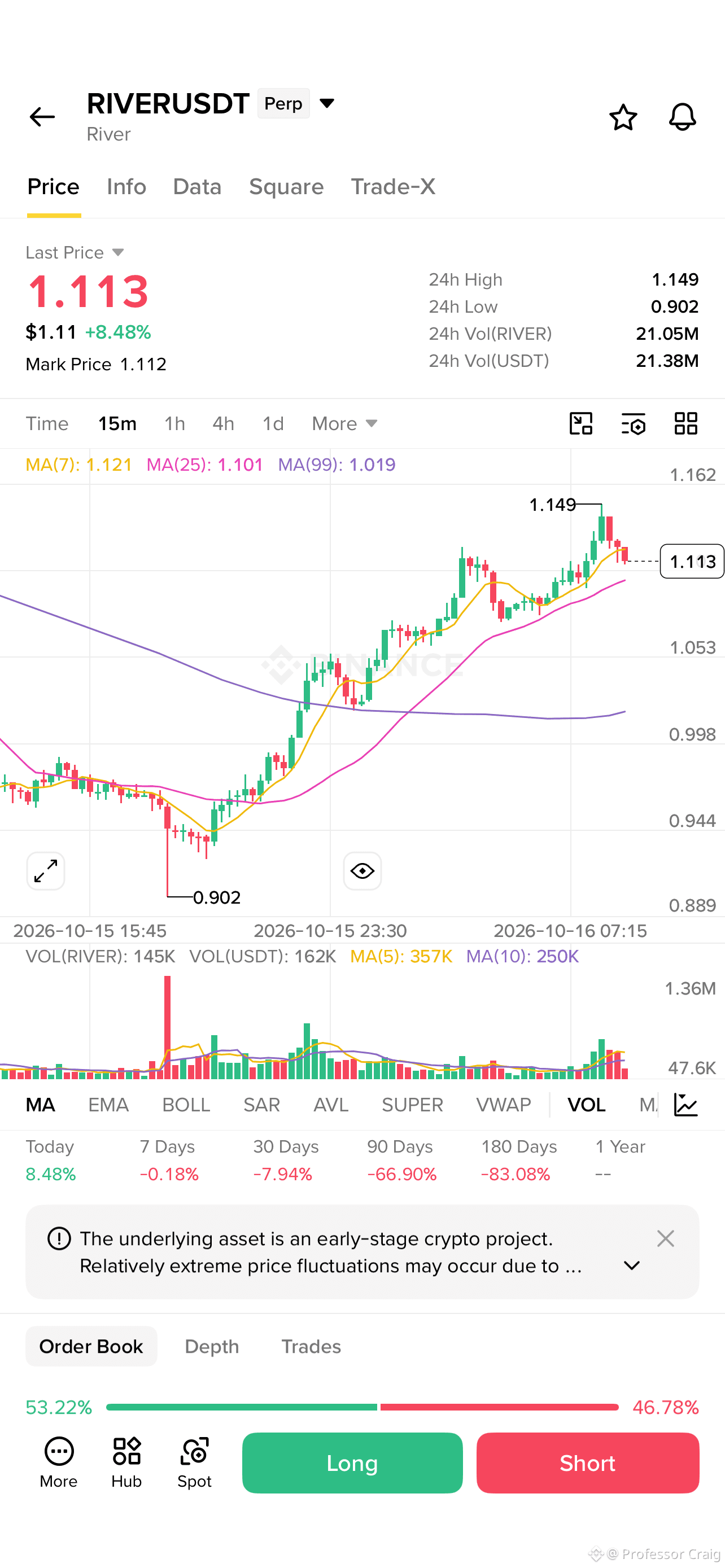
$RIVER is trading around $1.113, up 8.48% today, after recovering strongly from the $0.902 low. The 15-minute chart shows a clear bullish structure, with higher highs and higher lows supported by rising moving averages. Buyers have taken control of the short-term trend, and the recent move toward $1.149 shows that momentum is building.
The key level now is $1.149. A strong breakout above this resistance could open the door toward $1.18–$1.20, with further upside possible if buying volume continues to expand. The moving averages also support the bullish picture: MA(25) is around $1.101, while MA(99) sits near $1.019. As long as RIVER holds above the $1.10 area, bulls have a solid short-term advantage. However, rejection near $1.149 could trigger a pullback toward $1.10 or even $1.08 before the next move. RIVER remains highly volatile, so chasing the current price after a sharp rally carries risk.
My view: RIVER looks bullish in the short term, and $1.149 is the breakout level that matters most. Can buyers push it toward $1.20, or will sellers defend resistance again?
Are you bullish or bearish on $RIVER from here?
{future}(RIVERUSDT)
#riverusdt #RİVER
🚨 RIVER is pushing toward a critical breakout zone. Is $1.20 the next target?
$RIVER is trading around $1.113, up 8.48% today, after recovering strongly from the $0.902 low. The 15-minute chart shows a clear bullish structure, with higher highs and higher lows supported by rising moving averages. Buyers have taken control of the short-term trend, and the recent move toward $1.149 shows that momentum is building.
The key level now is $1.149. A strong breakout above this resistance could open the door toward $1.18–$1.20, with further upside possible if buying volume continues to expand. The moving averages also support the bullish picture: MA(25) is around $1.101, while MA(99) sits near $1.019. As long as RIVER holds above the $1.10 area, bulls have a solid short-term advantage. However, rejection near $1.149 could trigger a pullback toward $1.10 or even $1.08 before the next move. RIVER remains highly volatile, so chasing the current price after a sharp rally carries risk.
My view: RIVER looks bullish in the short term, and $1.149 is the breakout level that matters most. Can buyers push it toward $1.20, or will sellers defend resistance again?
Are you bullish or bearish on $RIVER from here?
#riverusdt #RİVER
2
822
🥂 Tự do tài chính chính là phần thưởng cao quý và xứng đáng nhất dành cho những ai dám nghĩ, dám làm và dám kiên trì.
🚀 LONG $RIVER
Entry: 1.104
TP: 1.159 | SL: 0.993
🌟 Sự hợp tác giữa các ông lớn công nghệ và blockchain tăng uy tín.
📊 Chỉ số Standard Deviation thấp cho thấy đà tăng đang rất bền bỉ sàn.
🛡️ Một kế hoạch giao dịch chi tiết là tấm khiên bảo vệ tài khoản bạn.
🌸 Mong bạn gặt hái được nhiều trái ngọt từ sự kiên trì và nỗ lực của mình.
#RIVERUSDT $RIVERUSDT
64

·
--
📉 $RIVER /USDT — SHORT SIGNAL
Trade Plan (Futures)
Direction: 🔴 SHORT
Entry Zone: $0.960 – $0.980
Stop Loss (SL): $1.015
TP1: $0.940
TP2: $0.920
TP3: $0.900
Trade here $RIVER
{future}(RIVERUSDT)
📊 Analysis:
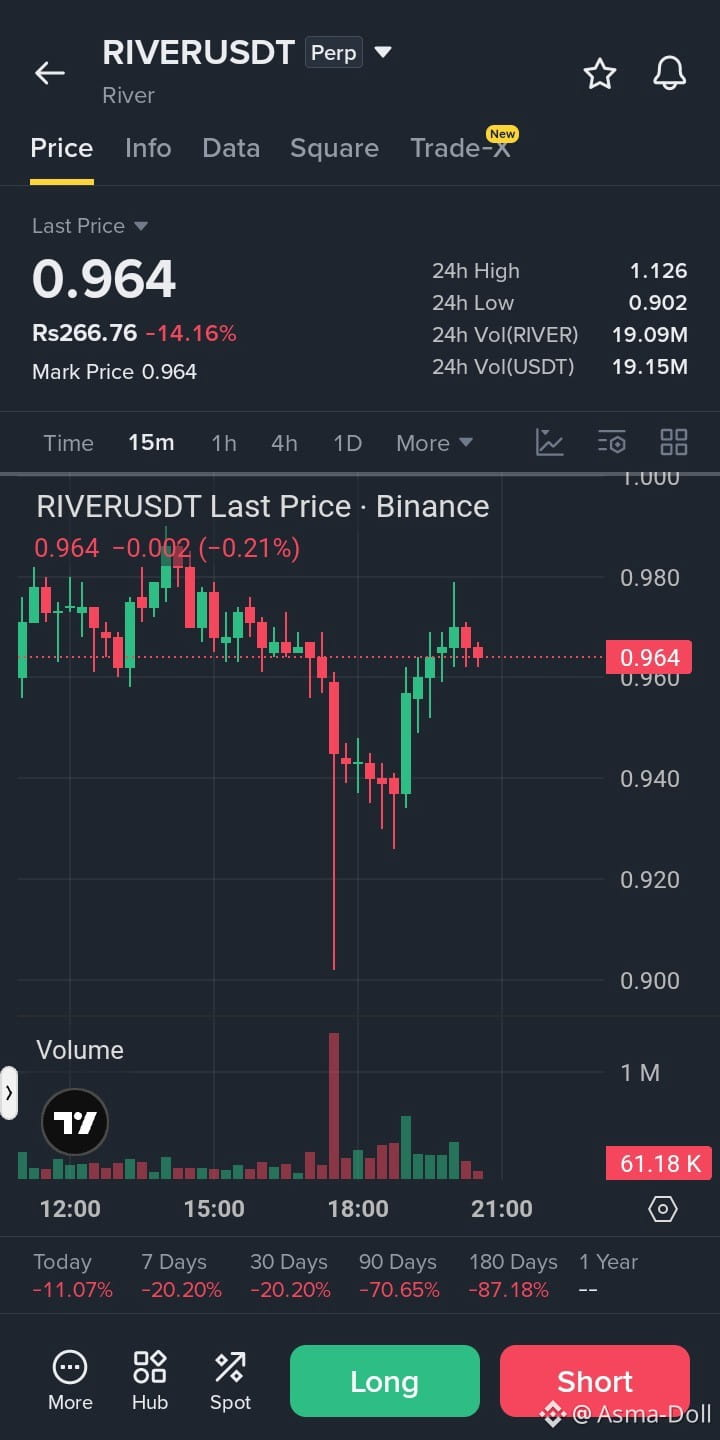
Current Price: $0.964 (-14.16%)
Strong rejection from the $1.126 high.
Price is trading near support at $0.902.
7-day performance: -20.20%.
90-day performance: -70.65%.
Overall trend is bearish, but a short-term bounce is possible near support.
✅ Confirmation:
Wait for a clean break below $0.950 with strong selling volume.
Breakdown below $0.902 could signal further downside.
Avoid chasing a short if price bounces sharply.
⚖️ Risk-to-Reward (approx.):
TP1: 0.44R
TP2: 0.80R
TP3: 1.16R
R is the initial risk per unit based on a $0.970 entry and $1.015 stop. TP1 offers a low reward relative to risk, so consider waiting for a better entry.
⚠️ Risk Warning: This setup is based only on the supplied chart data. Support can trigger a sharp rebound; confirm the breakdown before entering and manage leverage carefully.
#RIVERUSDT #CryptoSignals #ShortSignal #BinanceFutures #RiskManagement
📉 $RIVER /USDT — SHORT SIGNAL
Trade Plan (Futures)
Direction: 🔴 SHORT
Entry Zone: $0.960 – $0.980
Stop Loss (SL): $1.015
TP1: $0.940
TP2: $0.920
TP3: $0.900
Trade here $RIVER
📊 Analysis:
Current Price: $0.964 (-14.16%)
Strong rejection from the $1.126 high.
Price is trading near support at $0.902.
7-day performance: -20.20%.
90-day performance: -70.65%.
Overall trend is bearish, but a short-term bounce is possible near support.
✅ Confirmation:
Wait for a clean break below $0.950 with strong selling volume.
Breakdown below $0.902 could signal further downside.
Avoid chasing a short if price bounces sharply.
⚖️ Risk-to-Reward (approx.):
TP1: 0.44R
TP2: 0.80R
TP3: 1.16R
R is the initial risk per unit based on a $0.970 entry and $1.015 stop. TP1 offers a low reward relative to risk, so consider waiting for a better entry.
⚠️ Risk Warning: This setup is based only on the supplied chart data. Support can trigger a sharp rebound; confirm the breakdown before entering and manage leverage carefully.
#RIVERUSDT #CryptoSignals #ShortSignal #BinanceFutures #RiskManagement
1
3
12
🥐 Biểu đồ giá uốn cong lao dốc, biểu tượng cho xu hướng suy thoái không thể ngăn cản.
🥇 SHORT $RIVER
Entry: 0.965
TP: 0.916 | SL: 1.0615
⚡ Tốc độ giao dịch mạng lưới tăng mạnh nhờ giải pháp Layer 2.
🔍 Vùng cân bằng giá đã được thiết lập lại ở mức cao hơn trước đây.
📚 Sách là người thầy vĩ đại, thị trường là người thầy thực tế nhất bạn.
💎 Chúc bạn luôn giữ vững bản lĩnh và gặt hái nhiều thành quả lớn.
#RIVERUSDT $RIVERUSDT
33
RIVER just broke the recent swing high, looks like it’s gearing up for a fresh move. The price is sitting right on the bullish order block.
🟢 $RIVER LONG 📈
Entry $1.1189-$1.1211 | SL $1.0864 (-3.0%) | TP1 $1.1368 (+1.5%) | TP2 $1.1760 (+5.0%) | R/R 1:1.7 | Conf 64%
We got a CHoCH on the chart, the CVD is screaming buying pressure, and a fresh FVG lines up with the OB, giving a clean liquidity sweep. The structure is now higher low to higher high, so the trade feels legit.
A 3.0% stop is a bit tight, so stick with low leverage like 2x to keep risk in check.
Take half off the table when you hit the first target, then ride the rest.
DYOR — this isn't financial advice, size your risk accordingly 🙏
$RIVER #RIVERUSDT #CPIWatch #TradingSignals #Write2Earn
30
📒 Một thế giới tài chính mới đầy tiềm năng đang mở rộng cửa, chào đón những tư duy nhạy bén và táo bạo.
🏹 LONG $RIVER
Entry: 1.15
TP: 1.207 | SL: 1.035
📂 Sự quan tâm từ các quỹ đầu tư quốc gia là động lực tăng giá dài.
📉 Áp lực bán tại vùng đỉnh cũ đã suy giảm rõ rệt theo khối lượng.
💎 Hãy luôn trân trọng những gì bạn đang có trong khi nỗ lực vì những gì bạn.
🍀 Chúc bạn một ngày giao dịch thật bùng nổ và đầy rẫy những tin vui nhé.
#RIVERUSDT $RIVERUSDT
98
RIVER is tightening its range after a sharp rally, and the market’s eyes are on the next breakout. Volume is piling up as buyers test the last swing high.
🟢 $RIVER LONG 📈
Entry $1.1419-$1.1441 | SL $1.1087 (-3.0%) | TP1 $1.1601 (+1.5%) | TP2 $1.2002 (+5.0%) | R/R 1:1.7 | Conf 65%
A clear change of character appeared on the 1‑hour chart as price broke below the prior swing low, confirming a bearish shift. The cumulative volume delta turned positive, backing the move, while a fair‑value gap lines up with a previous order block, creating a point of interest where supply sits. With the confluence of CHoCH, CVD, FVG and OB, the structure now points to a short swing toward the next support.
A 3.0% stop is fairly tight on this setup, so a modest 2‑3x leverage keeps risk manageable.
Consider taking half profit at the first target around 1.7 R/R before letting the rest run.
As always: manage your risk, this is not financial advice 🙏
$RIVER #RIVERUSDT #septembercpiwatch #TradingSignals #Write2Earn
14
Войдите, чтобы посмотреть больше материала
Присоединяйтесь к пользователям криптовалют по всему миру на Binance Square
⚡️ Получайте новейшую и полезную информацию о криптоактивах.
💬 Нам доверяет крупнейшая в мире криптобиржа.
👍 Получите достоверные аналитические данные от верифицированных создателей контента.
Эл. почта/номер телефона
В тренде
1
#$1.5BInLeveragedCryptoBetsLiquidated
Просмотров: 1,907
35 обсуждают
2
#KOSPIFalls3.53%BackBelow6000
Просмотров: 4,651
155 обсуждают
3
#USMidtermElections
Просмотров: 111,230
1,406 обсуждают
4
#StrategySTRCReaches$99.95ForFirstTimeIn165Days
Просмотров: 1,772
54 обсуждают
5
#BinanceWillListPredictPREDICT
Просмотров: 27,675
603 обсуждают
6
#SwitzerlandFirstSpotBitcoinETFExpectedToTradeInNovember
Просмотров: 1,193
68 обсуждают
7
#StrategyReports$21BQ3OperatingProfit
Просмотров: 1,255
41 обсуждают
8
#TwoAddressesHoldingAbout1.28BUSDTFrozen
Просмотров: 13,910
334 обсуждают
9
#FirstDigitalBlacklistsAttackerAddressHoldingAbout3.4MFDUSD
Просмотров: 488
16 обсуждают
10
#BitcoinDropsBelow$80K
Просмотров: 69,730
168 обсуждают