

#cryptomacro
cryptomacro
Просмотров: 397,723
2,013 обсуждают
Популярные
Новые

·
--
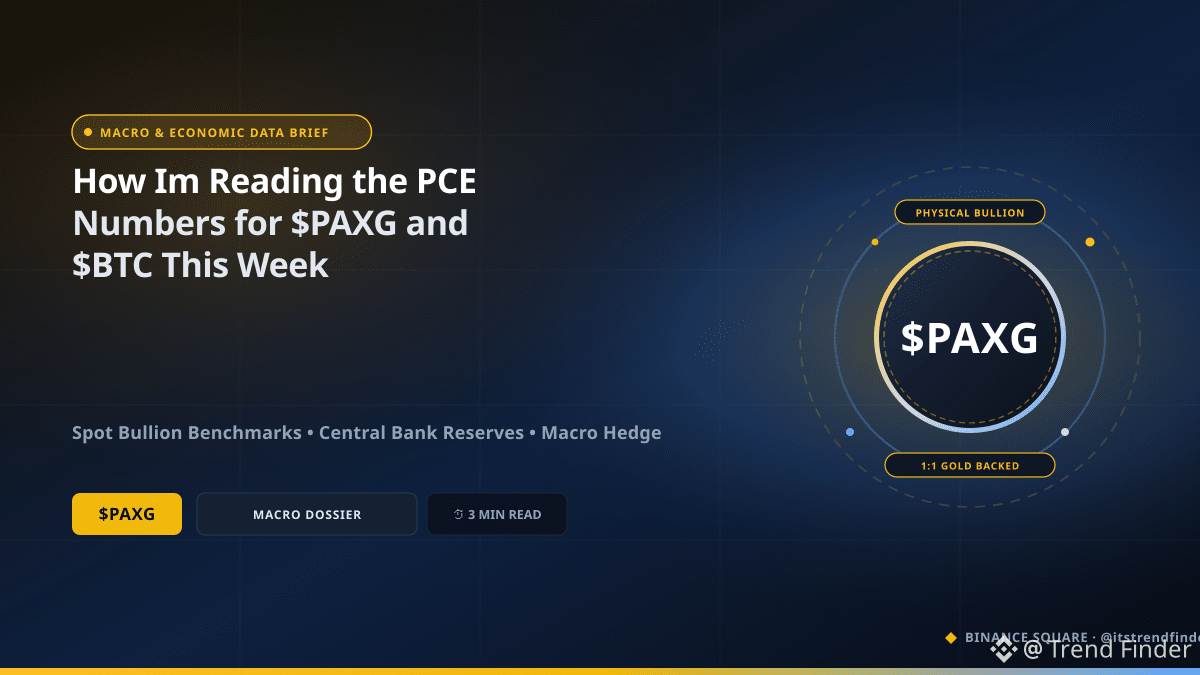
How I'm Reading the PCE Numbers for $PAXG and BTC This Week
Whenever a major macro release like US Core PCE Price Index (Federal Reserve Preferred Inflation Gauge) (Release Window: 12:30 UTC (6:00 PM IST) — Bureau of Economic Analysis) comes onto the radar, social media turns into a guessing game. On my desk, I prefer to ignore the noise and focus strictly on the actual macro numbers driving institutional liquidity across PAXG near 4023.4 and BTC.
Here is the exact macro setup going into the print:
• Previous official data: Previous Core PCE: 2.6% YoY (0.2% MoM)
• Current Wall Street consensus: Consensus Forecast: 2.6% YoY (0.2% MoM) | Personal Spending: +0.4% MoM
• Implied orderbook volatility window: ±2.5% to ±4.0% volatility expansion across BTC, ETH, and SOL
The two variables I am tracking most closely right now are core pce yoy & mom print vs market consensus and personal income & consumer spending growth velocity. Core PCE directly anchors Federal Reserve real interest rate policy and macro risk-asset appetite.
Historically, the first 5 to 15 minutes after a PCE release are dominated by algorithmic liquidity sweeps on both sides of the book. Instead of front-running the headline number, I am watching how the Dollar Index (DXY), US 2Y/10Y yields, and spot ETF orderflow on PAXG absorb the move once the initial wick settles.
What is your game plan for this PCE window — staying flat until the macro dust clears or tracking spot inflows live? Let me know in the comments 👇
#BinanceSquare #CryptoMacro
1
·
--
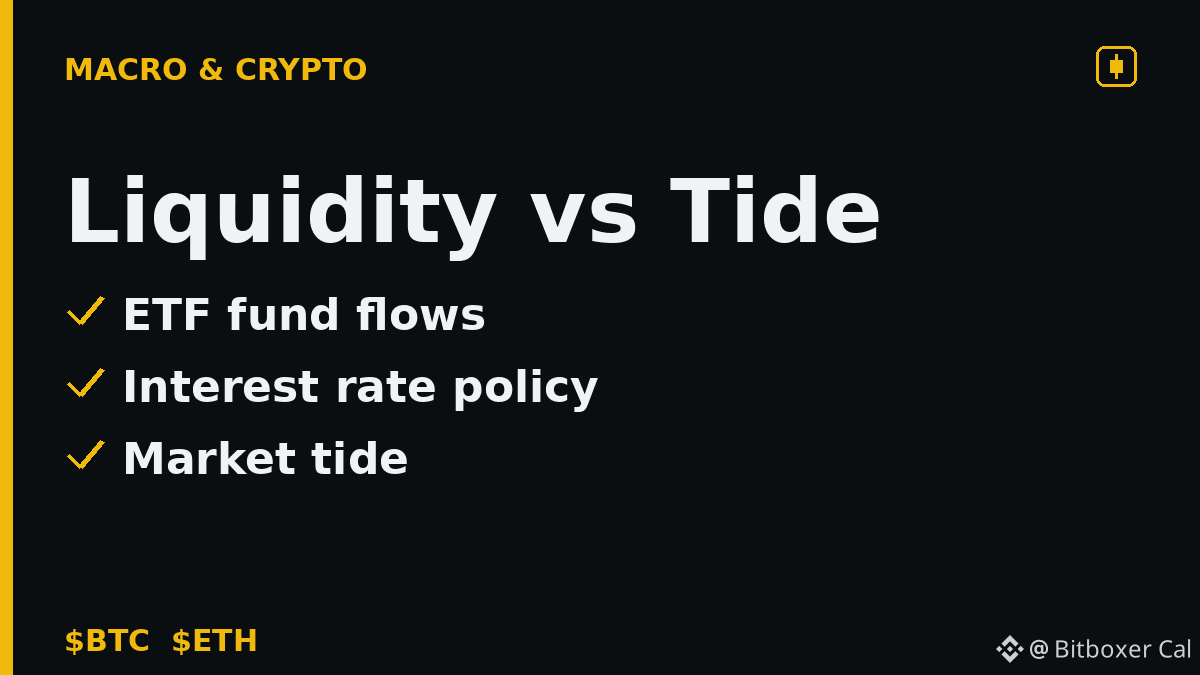
Everyone thinks $BTC spot ETF inflows are a magic button for instant price pumps.
In reality, these flows are just ripples while macro shifts are the actual tide. Don't get distracted by the daily noise; watch Federal Reserve policy meetings if you want to see where the market is really heading.
$BTC $ETH #CryptoMacro #BitcoinEducation #SafeHaven
In reality, these flows are just ripples while macro shifts are the actual tide. Don't get distracted by the daily noise; watch Federal Reserve policy meetings if you want to see where the market is really heading.
$BTC $ETH #CryptoMacro #BitcoinEducation #SafeHaven
97

Статья
The entire system breaks down if Token Inflation Rate + Systemic Leverage Cost > Global Net M2 ExpanI’ve been staring at CME FedWatch for 3 straight hours... and honestly, I think we’re analyzing macro liquidity completely backwards. 🤔
Not sure if it’s just me, but every time rate odds shift by even 5%, everyone on Twitter rushes to call the top or bottom on $BTC. But watching live orderbook depth right now is making me second-guess the entire consensus.
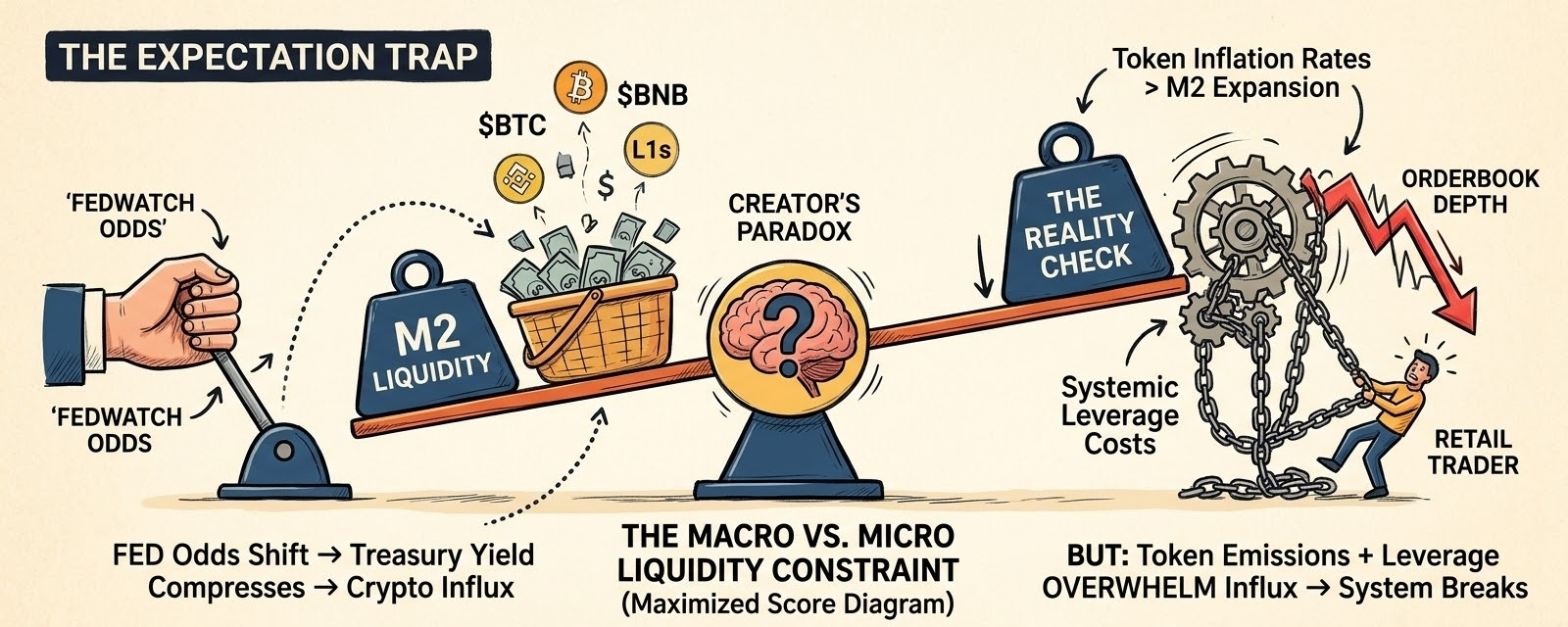
Here is the actual mechanism loop playing out under the hood:
FedWatch probability swings don't push retail into spot buying—they trigger programmatic yield rotation. Right now, risk-free treasury yields (3.75%–4.00%) act as a massive liquidity vacuum.
Institutions don't allocate to crypto just because rate cut odds rise. Capital stays locked in treasuries until rate cut probability crosses a strict economic threshold where Risk-Free Treasury Yield < Expected Crypto Volatility Premium.
Only when that threshold breaks does the loop trigger: Treasury yield compression ➔ forced capital rotation ➔ orderbook depth expansion across major assets like $BNB and core L1s. 💡
But here’s the brutal economic constraint that keeps me up... 📉
The entire system breaks down if Token Inflation Rate + Systemic Leverage Cost > Global Net M2 Expansion.
Let that sink in for a second.
If macro liquidity expands via rate cuts, but local crypto token emission schedules and structural leverage overhead absorb that capital faster than it enters, the rate cut changes absolutely nothing. In fact, if risk-free rates drop while systemic crypto leverage is already maxed out, rate cuts don't trigger a bull run—they trigger a catastrophic orderbook depth gap and a forced wipeout. 🚨
Wait... actually, this leaves us with a mind-bending contradiction:
We’re all aggressively pricing in Fed rate cuts as the ultimate bullish catalyst, but the exact moment cuts happen, it confirms underlying macro economic weakness—which traditionally forces funds to deleverage risk assets first before deploying new capital.
So are we actually positioning for a real liquidity wave... or are we just front-running our own narrative cope while sitting directly in a liquidity trap?
I’m struggling to reconcile this for Q4. Something in this setup feels fundamentally broken. 🧠
#FedWatch #FOMC #Write2Earn #CryptoMacro
Disclaimer: Not financial advice. Always DYOR.#FedWatch
The entire system breaks down if Token Inflation Rate + Systemic Leverage Cost > Global Net M2 Expan
I’ve been staring at CME FedWatch for 3 straight hours... and honestly, I think we’re analyzing macro liquidity completely backwards. 🤔
Not sure if it’s just me, but every time rate odds shift by even 5%, everyone on Twitter rushes to call the top or bottom on $BTC. But watching live orderbook depth right now is making me second-guess the entire consensus.
Here is the actual mechanism loop playing out under the hood:
FedWatch probability swings don't push retail into spot buying—they trigger programmatic yield rotation. Right now, risk-free treasury yields (3.75%–4.00%) act as a massive liquidity vacuum.
Institutions don't allocate to crypto just because rate cut odds rise. Capital stays locked in treasuries until rate cut probability crosses a strict economic threshold where Risk-Free Treasury Yield < Expected Crypto Volatility Premium.
Only when that threshold breaks does the loop trigger: Treasury yield compression ➔ forced capital rotation ➔ orderbook depth expansion across major assets like $BNB and core L1s. 💡
But here’s the brutal economic constraint that keeps me up... 📉
The entire system breaks down if Token Inflation Rate + Systemic Leverage Cost > Global Net M2 Expansion.
Let that sink in for a second.
If macro liquidity expands via rate cuts, but local crypto token emission schedules and structural leverage overhead absorb that capital faster than it enters, the rate cut changes absolutely nothing. In fact, if risk-free rates drop while systemic crypto leverage is already maxed out, rate cuts don't trigger a bull run—they trigger a catastrophic orderbook depth gap and a forced wipeout. 🚨
Wait... actually, this leaves us with a mind-bending contradiction:
We’re all aggressively pricing in Fed rate cuts as the ultimate bullish catalyst, but the exact moment cuts happen, it confirms underlying macro economic weakness—which traditionally forces funds to deleverage risk assets first before deploying new capital.
So are we actually positioning for a real liquidity wave... or are we just front-running our own narrative cope while sitting directly in a liquidity trap?
I’m struggling to reconcile this for Q4. Something in this setup feels fundamentally broken. 🧠
#FedWatch #FOMC #Write2Earn #CryptoMacro
Disclaimer: Not financial advice. Always DYOR.#FedWatch
1
167

#FedWatch
The market is pricing a hike, not a cut
Dec 9, 2026 FOMC
• Hike to 4.00%–4.25%: ~83.5%
• Hold at 3.75%–4.00%: ~16.5%
• Cut: 0%
Jan 27, 2027 FOMC
• Hold at 3.75%–4.00%: ~9.8%
• 4.00%–4.25% (one hike): ~56.3%
• 4.25%–4.50% (two hikes): ~33.8%
Why it matters for crypto:
• Rate-hike pricing raises the cost of leverage and usually strengthens the dollar, a headwind for $BTC and $ETH.
• January pricing shows the market sees more than a one-off hike. That affects positioning more than December alone.
• A 16.5% hold probability is not nothing. One soft CPI or PCE print can move these odds fast.
My read: FedWatch measures futures pricing, not Fed intent. Odds can shift 20+ points in a week, so don't size positions on one snapshot.
Are you positioned for a December hike, or fading it? 👇
#fomc #bitcoin #CryptoMacro
100

在周四的亚洲交易时段,美元兑日元USD/JPY震荡反弹至158.00附近,收复了前一交易日的部分跌幅。避险资金流出推高汇价,市场焦点全面转向周五即将召开的日本央行货币政策会议。
技术面上,避险情绪降温主要受到AI科技板块业绩超预期的提振,芯片巨头SK海力士强劲的三季报带动了全球风险资产偏好回升。尽管市场普遍预期日本央行本次将按兵不动,但在持续通胀压力下,行长植田和男若释放12月加息信号,将彻底重构日元的中期底部支撑。
从资产联动来看,避险资金从日元和避险国债中撤出,推动美债收益率反弹并支撑美元企稳。不过日元在G10货币中下半年的韧性显著提升,随着套息交易风险偏好改善,资金正积极寻找低估值的高贝塔资产进行轮动。
对于加密市场而言,避险情绪的消退直接激活了场内的Risk-on偏好,$BTC 在关键支撑位展现出极强的买盘承接力。只要日本央行不出现超预期的激进紧缩,全球科技与流动性环境的修复将为加密资产开辟新一轮向上突破的技术空间。📈
#USDJPY #BankOfJapan #CryptoMacro
230
澳大利亚统计局今日公布最新通胀数据,9月未季调CPI同比上涨4.3%,高于市场预期的4.1%及前值4.0%。同时,第三季度CPI环比上涨1.3%,较上季度的0.6%大幅攀升,显示价格压力在第三季度明显加速上行。
从技术与宏观周期来看,这一超预期的通胀读数打破了此前的下行趋势线。虽然通胀反弹可能推迟澳洲联储的宽松节奏,但从基本面看,强劲的内需数据展现了亚太经济体的基本面韧性,支撑风险资产中长期底背离修复的逻辑。
金融市场上,澳元短线获得买盘支撑并在关键支撑位企稳反弹。由于加息周期尾声的宏观定调整体未改,市场对流动性环境的抗风险能力显著增强,美元指数承压震荡为大宗商品及整体风险偏好提供了回暖窗口。
对加密市场而言,通胀数据带来的短线情绪波动已被快速消化,多头结构依然稳固。随着市场逐步定价宏观基本面的韧性,外部流动性预期改善将持续利好以 $BTC 为首的风险资产走出震荡上行形态。🚀
#AustraliaCPI #InflationData #CryptoMacro
111

·
--
Cục Thống kê Úc vừa công bố báo cáo Chỉ số Giá tiêu dùng (CPI) tháng 9 và quý 3 với các con số đồng loạt vượt kỳ vọng. Cụ thể, CPI năm tháng 9 tăng lên mức 4,3% so với dự báo 4,1%, trong khi CPI quý 3 tăng mạnh 1,3% so với quý trước.
Dữ liệu nóng hơn dự kiến cho thấy áp lực giá cả vẫn đang duy trì ở mức cao và khó hạ nhiệt. Điều này tạo thêm áp lực buộc Ngân hàng Trung ương Úc (RBA) phải duy trì định hướng chính sách tiền tệ thắt chặt trong thời gian tới.
Thị trường tài chính nói chung phản ứng với việc đồng AUD nhận được lực nâng nhờ kỳ vọng lãi suất neo cao. Việc lạm phát dai dẳng tại các nền kinh tế lớn cũng khiến tâm lý nhà đầu tư toàn cầu trở nên thận trọng hơn đối với các kênh đầu tư rủi ro.
Đối với thị trường crypto, bối cảnh thanh khoản thắt chặt toàn cầu tiếp tục là yếu tố kìm hãm đà bứt phá ngắn hạn. $BTC và các tài sản số có thể sẽ duy trì xu hướng tích lũy khi dòng vốn lớn vẫn ưu tiên quản trị rủi ro. 📊
#Inflation #InterestRates #CryptoMacro
172

·
--
🌍 The Global Pressure Cooker: Why Crypto’s $82K Trap Feels Different This Time 🧵
We are witnessing a bizarre economic paradox. Crude oil is spiking past $111 a barrel as Middle East tensions escalate. U.S. 10-year Treasury yields are stubbornly teasing the 5% zone. The IMF is flashing warnings of a deeply fragmented global economy. Yet, Bitcoin ($BTC ) is hovering tenaciously near $82,000.
The macro landscape is boiling over. Are we looking at a flight to safety, or a final liquidity trap before the upcoming Federal Reserve rate decision on October 28?
Let’s unpack the raw, unedited reality of where our money is actually going right now 👇
1️⃣ The Geopolitical Premium: Oil vs. Digital Gold 🛢️ ➔ ⚡
Historically, major geopolitical friction meant a massive capital flight to gold and cash. This month, we've seen a different trend line:
The Energy Crutch: The threat to shipping lanes in the Strait of Hormuz has sent shockwaves through energy markets.
The Bitcoin Paradox: Instead of tanking, $BTC has largely absorbed the macro stress. It is proving that in a world where physical supply chains can be disrupted overnight, permissionless, digital ledger space is increasingly viewed as an alternative survival asset.
2️⃣ The "Uptober" Illusion: Existing Capital vs. New Money 📉
Don't fall blindly for the hype. On-chain data from Glassnode reveals a critical underlying trend:
No Fresh Lifeline: Most of the recent push back toward $82k isn't driven by an influx of brand-new retail dollars.
The Squeeze: It’s internal liquidity—existing market participants paying higher prices to protect their positions.
Without sustained ETF inflows or systemic rate cuts, the market remains highly exposed to flash liquidations, much like the $51.59M wipeout we just witnessed in a single hour.
#CryptoMacro #Bitcoin #DeFi #Geopolitics #DYOR
{spot}(ICPUSDT)
{spot}(UNIUSDT)
{spot}(PEPEUSDT)
🌍 The Global Pressure Cooker: Why Crypto’s $82K Trap Feels Different This Time 🧵
We are witnessing a bizarre economic paradox. Crude oil is spiking past $111 a barrel as Middle East tensions escalate. U.S. 10-year Treasury yields are stubbornly teasing the 5% zone. The IMF is flashing warnings of a deeply fragmented global economy. Yet, Bitcoin ($BTC ) is hovering tenaciously near $82,000.
The macro landscape is boiling over. Are we looking at a flight to safety, or a final liquidity trap before the upcoming Federal Reserve rate decision on October 28?
Let’s unpack the raw, unedited reality of where our money is actually going right now 👇
1️⃣ The Geopolitical Premium: Oil vs. Digital Gold 🛢️ ➔ ⚡
Historically, major geopolitical friction meant a massive capital flight to gold and cash. This month, we've seen a different trend line:
The Energy Crutch: The threat to shipping lanes in the Strait of Hormuz has sent shockwaves through energy markets.
The Bitcoin Paradox: Instead of tanking, $BTC has largely absorbed the macro stress. It is proving that in a world where physical supply chains can be disrupted overnight, permissionless, digital ledger space is increasingly viewed as an alternative survival asset.
2️⃣ The "Uptober" Illusion: Existing Capital vs. New Money 📉
Don't fall blindly for the hype. On-chain data from Glassnode reveals a critical underlying trend:
No Fresh Lifeline: Most of the recent push back toward $82k isn't driven by an influx of brand-new retail dollars.
The Squeeze: It’s internal liquidity—existing market participants paying higher prices to protect their positions.
Without sustained ETF inflows or systemic rate cuts, the market remains highly exposed to flash liquidations, much like the $51.59M wipeout we just witnessed in a single hour.
#CryptoMacro #Bitcoin #DeFi #Geopolitics #DYOR

1
311

美国总统特朗普最新表态称,美方可能针对伊朗采取进一步的军事行动。这一言论再度加剧了中东局势的紧张氛围,表明地缘政治博弈正进入高度不确定的危险阶段。
在当前全球宏观环境下,美伊对抗升级直接威胁到中东关键航道与能源设施的安全。市场此前普遍预期局势可能出现阶段性缓和,但最新强硬表态打破了这种乐观预期,能源供应中断的尾部风险显著上升。
地缘危机恶化正在重塑传统资产的风险溢价,避险情绪迅速蔓延。原油价格面临强劲的上行脉冲,推升通胀反弹预期,进而可能迫使美债收益率与美元维持高位震荡,全面压制风险资产的估值修复空间。
对于加密市场而言,宏观流动性收紧与避险情绪升温构成双重阻力。$BTC 等核心资产短期内更倾向于跟随风险偏好回落而承压,投资者需警惕剧烈波动带来的去杠杆风险。
#Geopolitics #OilMarkets #CryptoMacro
在当前全球宏观环境下,美伊对抗升级直接威胁到中东关键航道与能源设施的安全。市场此前普遍预期局势可能出现阶段性缓和,但最新强硬表态打破了这种乐观预期,能源供应中断的尾部风险显著上升。
地缘危机恶化正在重塑传统资产的风险溢价,避险情绪迅速蔓延。原油价格面临强劲的上行脉冲,推升通胀反弹预期,进而可能迫使美债收益率与美元维持高位震荡,全面压制风险资产的估值修复空间。
对于加密市场而言,宏观流动性收紧与避险情绪升温构成双重阻力。$BTC 等核心资产短期内更倾向于跟随风险偏好回落而承压,投资者需警惕剧烈波动带来的去杠杆风险。
#Geopolitics #OilMarkets #CryptoMacro
471
·
--
Why the Upcoming NFP Print Matters So Much for $SUI Liquidity
Whenever a major macro release like US Non-Farm Payrolls (NFP), Unemployment Rate & Average Hourly Earnings (Pre-NFP Initial Jobless Claims Today + US NFP Release Tomorrow at 12:30 UTC (6:00 PM IST)) comes onto the radar, social media turns into a guessing game. On my desk, I prefer to ignore the noise and focus strictly on the actual macro numbers driving institutional liquidity across SUI near 0.9853 and BTC.
Here is the exact macro setup going into the print:
• Previous official data: Previous NFP: 142K Jobs Added | Unemployment Rate: 4.2% | Avg Hourly Earnings: +0.4% MoM (3.8% YoY)
• Current Wall Street consensus: Consensus Forecast: 145K–150K Jobs | Unemployment Rate Forecast: 4.2% | Wage Growth Forecast: +0.3% MoM
• Implied orderbook volatility window: ±3.5% to ±6.0% high-velocity institutional orderbook expansion at 12:30 UTC release
The two variables I am tracking most closely right now are headline non-farm payrolls (nfp) jobs added vs 145k–150k consensus forecast and us unemployment rate (u-3) tick vs 4.2% threshold & prior month revisions. Labor market cooling vs resilience dictates Fed rate-cut velocity, DXY strength, and institutional ETF inflows.
Historically, the first 5 to 15 minutes after a NFP release are dominated by algorithmic liquidity sweeps on both sides of the book. Instead of front-running the headline number, I am watching how the Dollar Index (DXY), US 2Y/10Y yields, and spot ETF orderflow on SUI absorb the move once the initial wick settles.
What is your game plan for this NFP window — staying flat until the macro dust clears or tracking spot inflows live? Let me know in the comments 👇
#BinanceSquare #CryptoMacro
1
4
·
--
My Desk Breakdown Ahead of NFP: What the Numbers Mean for $PAXG & BTC
Whenever a major macro release like US Non-Farm Payrolls (NFP), Unemployment Rate & Average Hourly Earnings (Release Window: Friday 12:30 UTC (6:00 PM IST) — US Bureau of Labor Statistics) comes onto the radar, social media turns into a guessing game. On my desk, I prefer to ignore the noise and focus strictly on the actual macro numbers driving institutional liquidity across PAXG near 4131.7 and BTC.
Here is the exact macro setup going into the print:
• Previous official data: Previous NFP: 142K Jobs Added | Unemployment Rate: 4.2% | Avg Hourly Earnings: +0.4% MoM (3.8% YoY)
• Current Wall Street consensus: Consensus Forecast: 145K–150K Jobs | Unemployment Rate Forecast: 4.2% | Wage Growth Forecast: +0.3% MoM
• Implied orderbook volatility window: ±3.5% to ±6.0% high-velocity institutional orderbook expansion at 12:30 UTC release
The two variables I am tracking most closely right now are headline non-farm payrolls (nfp) jobs added vs 145k–150k consensus forecast and us unemployment rate (u-3) tick vs 4.2% threshold & prior month revisions. Labor market cooling vs resilience dictates Fed rate-cut velocity, DXY strength, and institutional ETF inflows.
Historically, the first 5 to 15 minutes after a NFP release are dominated by algorithmic liquidity sweeps on both sides of the book. Instead of front-running the headline number, I am watching how the Dollar Index (DXY), US 2Y/10Y yields, and spot ETF orderflow on PAXG absorb the move once the initial wick settles.
What is your game plan for this NFP window — staying flat until the macro dust clears or tracking spot inflows live? Let me know in the comments 👇
#BinanceSquare #CryptoMacro
2
韩国央行(Bank of Korea)在10月22日的最新政策会议上正式宣布,维持基准利率在3.00%不变。这一决定完全符合此前市场主流预期,也结束了该行在7月和8月连续加息的紧缩节奏。
从技术面和宏观流动性来看,此次按兵不动标志着亚太主要经济体的紧缩周期正进入实质性平台期。随着通胀上行压力放缓,政策利率见顶信号确立,极大缓解了区域内资本外流与汇率波动的极端风险。
金融市场上,风险资产的折现率压力得到显著释放,韩国国债收益率曲线上行势头受阻。流动性预期的企稳为全球风险偏好修复打开了空间,美元指数面临短期阻力。
对于加密市场而言,亚太流动性企稳为风险资产构筑了坚实的底部支撑。$BTC 在关键技术支撑位展现出强劲韧性,宏观政策转入观望期往往是资金重新回流高Beta风险资产的技术性买入信号。📈
#BankOfKorea #InterestRates #CryptoMacro
从技术面和宏观流动性来看,此次按兵不动标志着亚太主要经济体的紧缩周期正进入实质性平台期。随着通胀上行压力放缓,政策利率见顶信号确立,极大缓解了区域内资本外流与汇率波动的极端风险。
金融市场上,风险资产的折现率压力得到显著释放,韩国国债收益率曲线上行势头受阻。流动性预期的企稳为全球风险偏好修复打开了空间,美元指数面临短期阻力。
对于加密市场而言,亚太流动性企稳为风险资产构筑了坚实的底部支撑。$BTC 在关键技术支撑位展现出强劲韧性,宏观政策转入观望期往往是资金重新回流高Beta风险资产的技术性买入信号。📈
#BankOfKorea #InterestRates #CryptoMacro
131

·
--
美国财政部最新公布的20年期国债拍卖结果显示,中标利率创下了自1986年1月以来的历史新高。这一极具历史指标意义的数据出炉后,迅速吸引了全球宏观交易员的目光。
长端美债收益率飙升至数十年高位,主要反映出市场对美国长期通胀预期和财政赤字供给压力的重新定价。投资者对长期限资产要求更高的风险溢价,这也显示出市场对未来高利率环境或将持续更久的预期正在升温。
从传统金融市场来看,长端无风险利率的走高通常会直接对风险资产的估值模型造成压制,同时美元指数和借贷成本面临潜在支撑。美股成长板块及高杠杆资产在面对高借贷成本时往往表现得更为谨慎,流动性分流效应逐步显现。
对于加密市场而言,宏观资金成本的抬升让整体流动性处于多空拉锯状态。$BTC 和主流山寨币短期内可能在避险情绪与利率博弈间继续震荡寻找平衡,投资者需要密切留意后续流动性指标的走向。⚖️
#USbonds #InterestRates #CryptoMacro
BTC-2,88%
TLTETF+0,28%
188

·
--
One macro signal crypto traders consistently underweight: the DXY.
The US Dollar Index and $BTC have shown a persistent inverse relationship — not perfect, but structural. When global dollar liquidity tightens (DXY rising, real rates climbing), risk assets compress. When the dollar weakens, crypto cycles historically find their legs.
Here is why it matters beyond chart correlation:
1. Most crypto assets are priced in USD. A stronger dollar shrinks purchasing power for global buyers and pressures emerging-market capital flows that historically fund altcoin speculation.
2. Dollar strength reflects Fed policy. Tight monetary conditions (higher real rates) raise the opportunity cost of holding non-yielding or high-volatility assets. The 2022 bear market coincided almost exactly with the fastest dollar rally in decades.
3. Stablecoin supply is dollar-denominated. When the dollar is expensive globally, stablecoin inflows slow — and stablecoin supply is the dry powder that fuels $ETH and $BNB DeFi demand.
4. When DXY rolls over, watch for capital rotation into hard assets and high-beta risk. History suggests crypto absorbs that rotation faster than equities.
The trade insight: before asking "is Bitcoin going up," ask "is the dollar going down?" Global liquidity conditions precede crypto price cycles more reliably than most on-chain signals.
Macro sets the tide. On-chain tells you how to swim in it.
#Bitcoin #CryptoMacro #DeFi #CryptoInsights #BinanceSquare
30

·
--
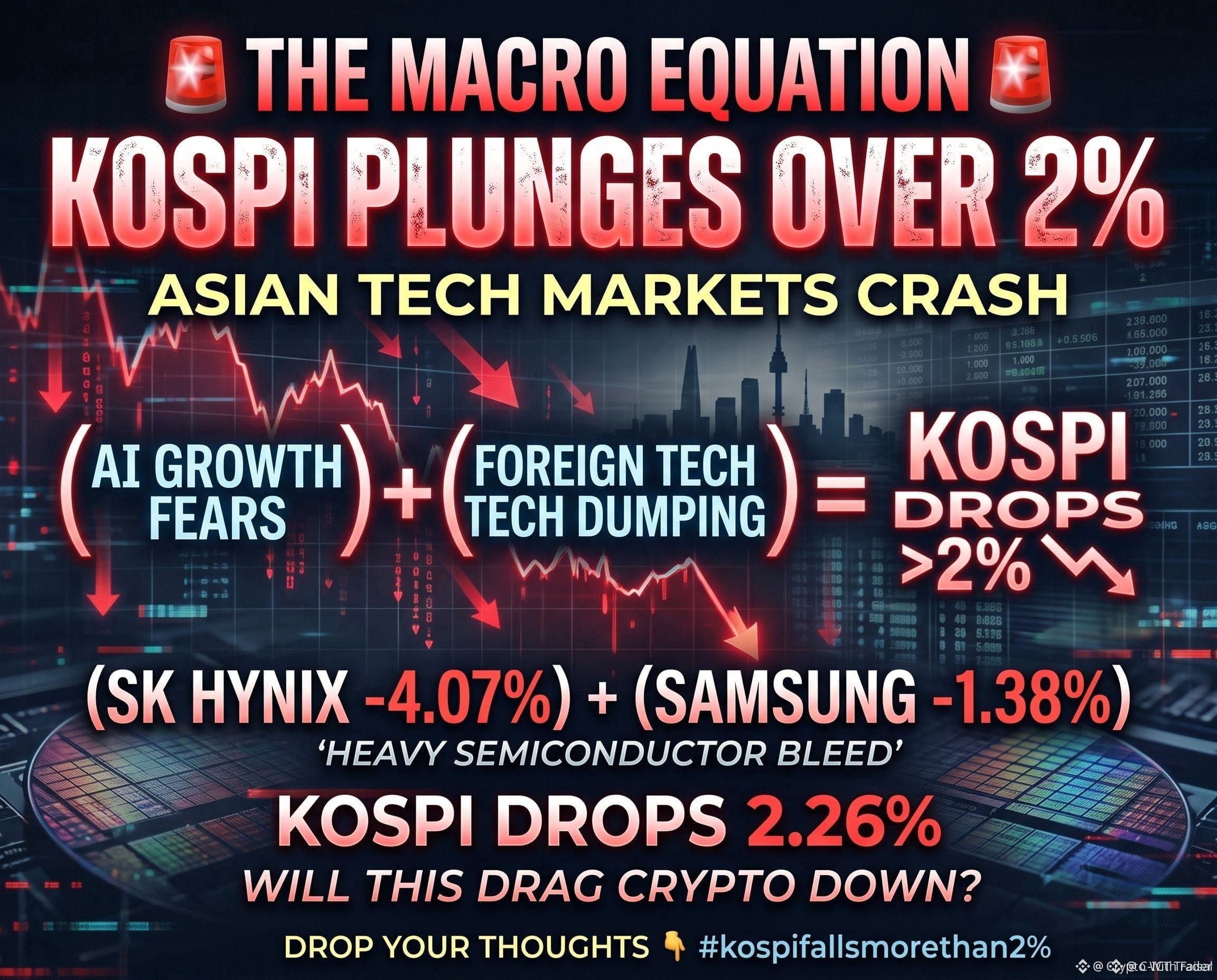
🚨 MACRO TECH LIQUIDATION SPILLS OVER: WILL $WLD ABSORB THE ASIAN MARKET SHOCK? 📉
Foreign institutional capital executed aggressive de-risking at the Asian open, driving the KOSPI down 2.26% to 5,637 as semiconductor giants took a heavy hit. 📊 When traditional equities reassess the artificial intelligence narrative, cross-market liquidity imbalances quickly cascade into high-beta assets like $WLD . 🌊
💡 Smart money recognizes that broad macro contagion frequently triggers localized inefficiency fills rather than outright trend failure. Institutional order flow will reveal whether buyers step in to defend key demand territory or allow price to sweep discount liquidity. 🔍
🤔 Do you expect crypto to decouple and absorb this sell-side pressure, or is another liquidity sweep imminent? 👇
⚠️ Not financial advice. Always manage your risk. 🛡️
🏷️ #WLD #MarketStructure #CryptoMacro #OrderFlow
🎯 🦈
7

Former President Donald Trump announced on Truth Social the enactment of "THE GREAT BIG BEAUTIFUL BILL" with congressional Republican support, describing it as the largest tax cut package in American history. Key provisions include eliminating taxes on tips, overtime pay, and Social Security benefits for seniors, alongside repealing the federal estate tax.
This aggressive fiscal expansion marks a dramatic shift in economic policy compared to prior fiscal projections. Broad tax exemptions on consumer earnings could substantially inject disposable income into households, though it simultaneously raises long-term federal deficit and inflation concerns.
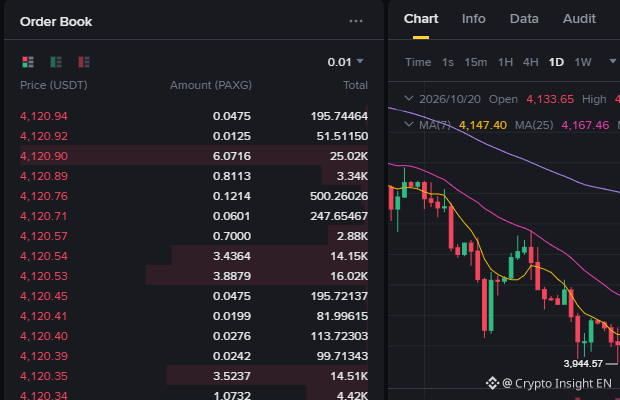
Traditional markets reacted with mixed sentiment toward future debt issuance and interest rate paths. Spot gold broke through support at $4,120 per ounce, sliding 0.59% intraday as investors adjusted portfolio hedging strategies amid fiscal updates.
For digital assets, significant tax relief tends to expand domestic retail liquidity over time. Increased discretionary cash flow historically bolsters high-beta asset inflows, potentially reinforcing upside momentum across crypto markets like $BTC and broad risk assets.
#FiscalPolicy #TaxCuts #CryptoMacro
1
221
·
--
Most crypto analysts track Bitcoin halving dates, ETH upgrades, and protocol launches. Very few track the one variable that actually sets the ceiling for every rally: global dollar liquidity.
The mechanism is straightforward. When the Fed, ECB, and PBoC are simultaneously expanding balance sheets, dollar liquidity rises. Risk appetite inflates across every asset class — and crypto, being the highest-beta risk asset in the world, captures a disproportionate share of that expansion. When central banks tighten in sync, liquidity contracts, and crypto contracts faster than almost anything else.
This isn't a coincidence. $BTC, $ETH, and $SOL don't have earnings calls or GDP reports. Their marginal valuation is almost purely a function of how much capital is looking for return and how much of that capital is willing to tolerate volatility.
The practical implication: before sizing any position, check the macro backdrop. M2 money supply trends, real yields, and dollar index direction are more reliable cycle inputs than most on-chain metrics. The 2021 peak arrived exactly when global M2 peaked. The 2022 bottom arrived when rate hike expectations peaked.
But liquidity is the tide. Without it, even the best fundamentals don't translate to price.
Trade the asset. Respect the tide.
#CryptoMacro #Bitcoin #DeFi #CryptoInvesting #MarketCycle
Most crypto analysts track Bitcoin halving dates, ETH upgrades, and protocol launches. Very few track the one variable that actually sets the ceiling for every rally: global dollar liquidity.
The mechanism is straightforward. When the Fed, ECB, and PBoC are simultaneously expanding balance sheets, dollar liquidity rises. Risk appetite inflates across every asset class — and crypto, being the highest-beta risk asset in the world, captures a disproportionate share of that expansion. When central banks tighten in sync, liquidity contracts, and crypto contracts faster than almost anything else.
This isn't a coincidence. $BTC , $ETH , and $SOL don't have earnings calls or GDP reports. Their marginal valuation is almost purely a function of how much capital is looking for return and how much of that capital is willing to tolerate volatility.
The practical implication: before sizing any position, check the macro backdrop. M2 money supply trends, real yields, and dollar index direction are more reliable cycle inputs than most on-chain metrics. The 2021 peak arrived exactly when global M2 peaked. The 2022 bottom arrived when rate hike expectations peaked.
But liquidity is the tide. Without it, even the best fundamentals don't translate to price.
Trade the asset. Respect the tide.
#CryptoMacro #Bitcoin #DeFi #CryptoInvesting #MarketCycle
120
中国国家统计局今日正式公布最新经济数据,第三季度GDP同比增长4.5%,不仅高于前值的4.3%,亦优于市场普遍预期的4.4%。与此同时,9月份规模以上工业增加值同比增长5.5%,社会消费品零售总额同比增长1.1%,城镇调查失业率微降至5.2%,多项关键宏观指标均出现企稳回升迹象。
尽管整体数据边际改善,但细究结构仍需保持审慎。零售销售虽然优于预期的0.6%,但1.1%的增速绝对值依然偏低,显示内需消费动能修复依然脆弱。工业产出成为托底经济的主力,但外部需求不确定性与全球高利率环境依然对未来制造业的可持续扩张构成压制。
宏观层面上,略超预期的数据在短期内缓和了市场对全球第二大经济体硬着陆的极端悲观情绪,对大宗商品和亚洲区域流动性形成一定支撑。然而,由于整体反弹力度相对温和,并未实质性改变全球投资者对新兴市场及高风险资产的防御姿态。
对于加密货币市场而言,中国宏观数据的短期韧性难以直接转化为流动性红利。在美联储维持紧缩基调的背景下,全球避险偏好依然占据主导,$BTC 等数字资产在缺乏增量流动性注入的情况下,仍将面临震荡与估值压制风险,投资者切忌过早博弈宏观反转。
#ChinaGDP #EconomicData #CryptoMacro
74

·
--
🚨 IRAN COULD REOPEN HORMUZ IN 6 DAYS. IS BITCOIN READY?
Just as oil markets brace for another supply shock, Tehran is reminding Washington that a diplomatic exit still exists.
🇮🇷 Iran's Foreign Minister Abbas Araqchi says the Strait of Hormuz could reopen within SIX DAYS if the US accepts Tehran's conditions.
The proposal isn't new. It dates back to September.
But the timing matters.
🛢 Brent closed Friday at $109.86, up 3.7% on the day.
Now two opposing forces are shaping the outlook:
🔴 ESCALATION
Tanker attacks and shipping disruptions keep energy prices under pressure.
🟢 DE-ESCALATION
An agreement could restore shipping flows and reduce the geopolitical risk premium.
And here's where $BTC and $ETH enter the picture.
Lower oil prices could ease inflation expectations, reduce pressure on bond yields and improve conditions for risk assets.
But there's a catch.
Washington hasn't accepted Iran's conditions. Nuclear negotiations remain a major obstacle.
💡 MY TAKE:
This is NOT a peace deal. It's a diplomatic opening that could change market expectations if negotiations progress.
I'm watching oil, DXY, Treasury yields and BTC's reaction when traditional markets reopen.
A confirmed shift in those markets would matter more than the headline itself.
🔥 What comes first?
Oil above $120 or a deal that sends Bitcoin higher?
#Hormuz #OilMarketShock #CryptoMacro

PanBas
·
--
Падение🚨 TWO OIL TANKERS HIT MINES? THE REAL RISK IS BIGGER THAN OIL.
Iran’s Revolutionary Guards claim two tankers struck naval mines in the Strait of Hormuz on October 17.
According to Iranian state media, each vessel was carrying approximately 2 million barrels of crude oil.
⚠️ Important: Reuters reports that these claims have NOT been independently verified.
But the broader shipping threat is real.
UKMTO confirmed two separate tanker attack reports near Saudi Arabia on October 16, including one involving an RPG fired from a small boat.
Here’s why crypto traders should care. 👇
🛢 Oil supply disruption risk rises.
📈 Sustained energy inflation could complicate Fed rate cuts.
💵 Higher yields and tighter financial conditions could pressure risk assets.
$BTC and $ETH may face another macro stress test.
But there is a competing scenario: diplomatic progress, additional oil supply or weaker demand could offset the geopolitical risk premium.
MY TAKE:
The headline alone is not a trading signal.
The real confirmation will come from oil prices, US Treasury yields, DXY and whether BTC holds up while traditional markets reprice the risk.
If oil surges but BTC refuses to break down, that divergence deserves attention.
What do you expect first: another oil spike or a crypto relief rally? 👇
#Hormuz #OilShock #CryptoMacro
346
·
--
The macro case for crypto is often framed as "Bitcoin vs inflation." The real driver is simpler and more powerful: global dollar liquidity.
When the Federal Reserve cuts rates and the dollar weakens, two things happen simultaneously. First, the cost of holding non-yielding or lower-yielding assets falls — reducing the opportunity cost of owning $BTC or $ETH. Second, global liquidity expands: a weaker dollar loosens financial conditions for every country holding dollar-denominated debt, releasing capital that flows toward higher-risk, higher-return assets.
This is why BTC price cycles have tracked global M2 money supply with a 3–6 month lag more consistently than they track halving anniversaries alone. The halving compresses supply. Liquidity expansion creates the demand that prices the compressed supply.
The playbook for what follows a rate-cut cycle: dollar softens → EM capital constraints ease → institutional risk appetite rises → BTC absorbs first → ETH and $SOL follow as the ecosystem captures fee revenue and developer activity → broader risk allocation.
None of this unfolds linearly. Macro liquidity turns are slow; crypto markets are fast. The result is front-running followed by consolidation, often mistaken for a failed thesis.
The edge is watching dollar index direction and global M2 trend — not rate-cut headlines, which the market has already priced.
#Bitcoin #CryptoMacro #Altcoins #CryptoMarkets #DeFi
The macro case for crypto is often framed as "Bitcoin vs inflation." The real driver is simpler and more powerful: global dollar liquidity.
When the Federal Reserve cuts rates and the dollar weakens, two things happen simultaneously. First, the cost of holding non-yielding or lower-yielding assets falls — reducing the opportunity cost of owning $BTC or $ETH . Second, global liquidity expands: a weaker dollar loosens financial conditions for every country holding dollar-denominated debt, releasing capital that flows toward higher-risk, higher-return assets.
This is why BTC price cycles have tracked global M2 money supply with a 3–6 month lag more consistently than they track halving anniversaries alone. The halving compresses supply. Liquidity expansion creates the demand that prices the compressed supply.
The playbook for what follows a rate-cut cycle: dollar softens → EM capital constraints ease → institutional risk appetite rises → BTC absorbs first → ETH and $SOL follow as the ecosystem captures fee revenue and developer activity → broader risk allocation.
None of this unfolds linearly. Macro liquidity turns are slow; crypto markets are fast. The result is front-running followed by consolidation, often mistaken for a failed thesis.
The edge is watching dollar index direction and global M2 trend — not rate-cut headlines, which the market has already priced.
#Bitcoin #CryptoMacro #Altcoins #CryptoMarkets #DeFi
50
Войдите, чтобы посмотреть больше материала
Присоединяйтесь к пользователям криптовалют по всему миру на Binance Square
⚡️ Получайте новейшую и полезную информацию о криптоактивах.
💬 Нам доверяет крупнейшая в мире криптобиржа.
👍 Получите достоверные аналитические данные от верифицированных создателей контента.
Эл. почта/номер телефона
В тренде
1
#FedWatch
Просмотров: 16.3M
39,293 обсуждают
2
#EarningsSeason
Просмотров: 6.4M
31,998 обсуждают
3
#USMidtermElections
Просмотров: 34,529
566 обсуждают
4
#BitcoinDropsBelow$80K
Просмотров: 23,155
100 обсуждают
5
#BoEOpensConsultationOnTokenizedCollateralForClearing
Просмотров: 397
22 обсуждают
6
#BrazilCryptoExchangesMustApplyForLicensesByFriday
Просмотров: 26,790
470 обсуждают
7
#ICEPartnersWithTradeXYZToBringPerpetualContractsToUS
Просмотров: 676
15 обсуждают
8
#SolidusLabsReportsSuspected$170MSpoofingOnHyperliquidOilContracts
Просмотров: 1,510
25 обсуждают
9
#StanDruckenmillerBecomesInvestorInTradeXYZ
Просмотров: 21,091
423 обсуждают
10
#RussiaProposedNonCustodialWalletLimitsExcludeIntlSettlements
Просмотров: 1,913
39 обсуждают