

#brazilvirtualassetlicensedeadlinedrawsabout40firms
brazilvirtualassetlicensedeadlinedrawsabout40firms
Популярные
Новые

💎 THE FUTURE OF DIGITAL ASSETS NEEDS RESPONSIBLE FINANCE!
Brazil's licensing deadline highlights an important shift toward stronger oversight of crypto businesses.
More accountability and clearer operating standards can help users make better-informed choices.
Let's promote an investment culture built on ethical cash management, transparent transactions, genuine asset ownership, and risk awareness.
No leverage. No interest-based strategies. Just responsible spot investing!
$BTC $BNB $ETH
#brazilvirtualassetlicensedeadlinedrawsabout40firms
1
350
·
--
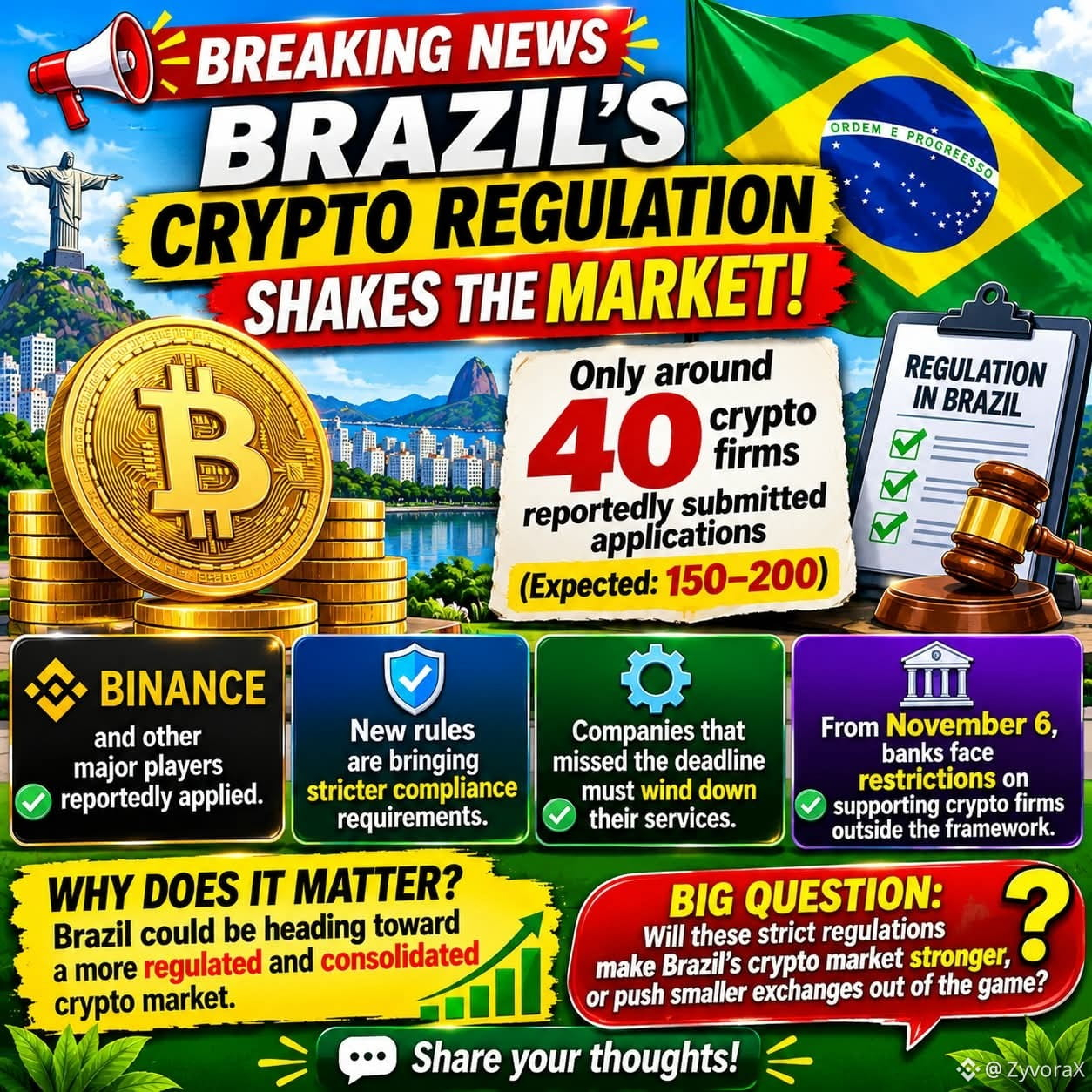
#BrazilVirtualAssetLicenseDeadlineDrawsAbout40Firms 🚨 BRAZIL'S CRYPTO LICENSE DEADLINE SHOCKS THE MARKET! 🇧🇷
Brazil's new crypto regulations are creating a major shake-up! 🌐
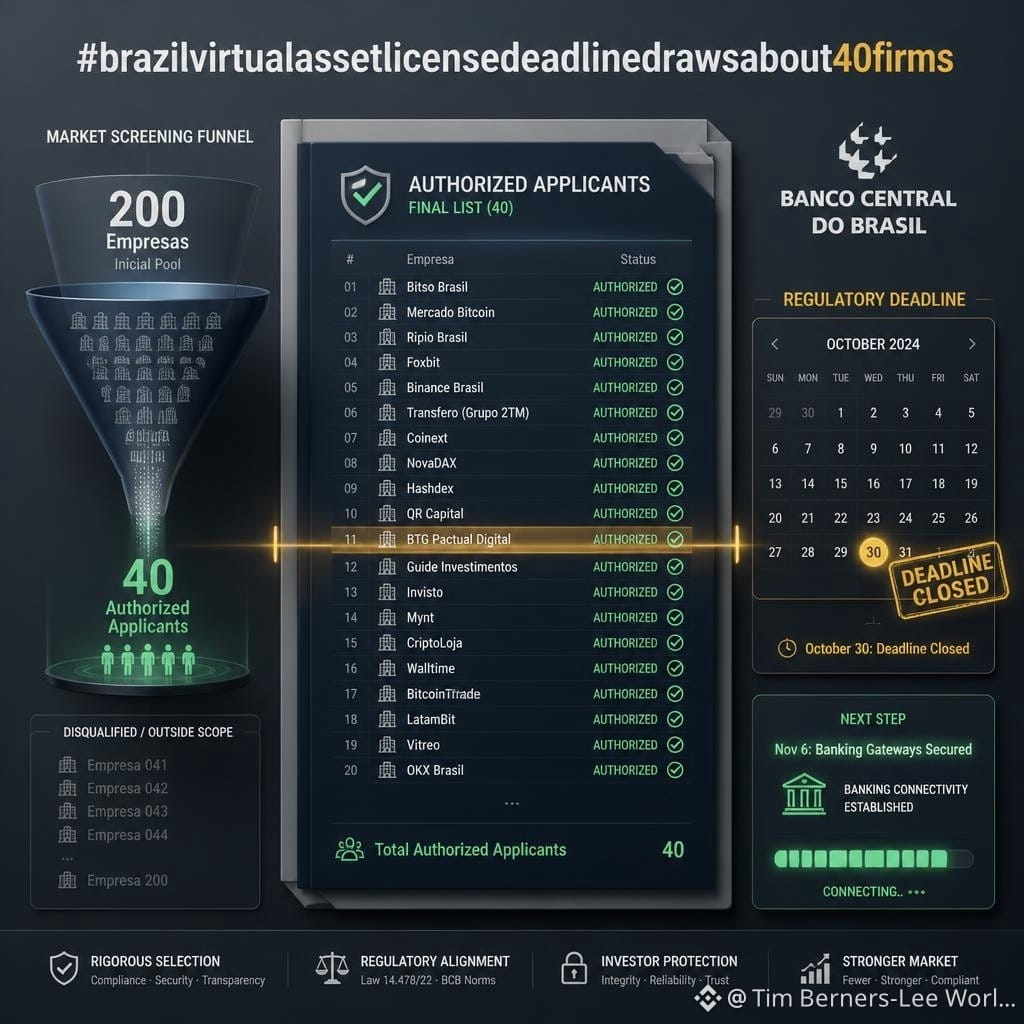
Only around 40 crypto firms reportedly submitted applications before the October 30, 2026 deadline, far below the expected 150–200 companies.
WATCH THE TRADE👇
$BTC
🔥 WHAT'S HAPPENING?
✅ Binance and other major players reportedly applied.
✅ New rules are bringing stricter compliance requirements.
✅ Companies that missed the deadline must wind down their services within the transition period.
✅ From November 6, banks face restrictions on supporting crypto firms outside the regulatory framework.
📊 WHY DOES IT MATTER?
Brazil could be heading toward a more regulated and consolidated crypto market, with fewer providers and stronger compliance requirements.
💬 BIG QUESTION:
Will these strict regulations make Brazil's crypto market stronger, or push smaller exchanges out of the game?
👇 Share your thoughts!
#Brazil #CryptoNews #Bitcoin
CLICK TO BELOW TRADE 👇
$BTC $BNB
{future}(BNBUSDT)
{future}(BTCUSDT)
#BrazilVirtualAssetLicenseDeadlineDrawsAbout40Firms 🚨 BRAZIL'S CRYPTO LICENSE DEADLINE SHOCKS THE MARKET! 🇧🇷
Brazil's new crypto regulations are creating a major shake-up! 🌐
Only around 40 crypto firms reportedly submitted applications before the October 30, 2026 deadline, far below the expected 150–200 companies.
WATCH THE TRADE👇
$BTC
🔥 WHAT'S HAPPENING?
✅ Binance and other major players reportedly applied.
✅ New rules are bringing stricter compliance requirements.
✅ Companies that missed the deadline must wind down their services within the transition period.
✅ From November 6, banks face restrictions on supporting crypto firms outside the regulatory framework.
📊 WHY DOES IT MATTER?
Brazil could be heading toward a more regulated and consolidated crypto market, with fewer providers and stronger compliance requirements.
💬 BIG QUESTION:
Will these strict regulations make Brazil's crypto market stronger, or push smaller exchanges out of the game?
👇 Share your thoughts!
#Brazil #CryptoNews #Bitcoin
CLICK TO BELOW TRADE 👇
$BTC $BNB
141
📊 40 FIRMS, ONE BIG MESSAGE: COMPLIANCE MATTERS!
Brazil's crypto licensing process shows how digital finance is evolving.
Clearer licensing requirements can encourage accountability, improve market confidence, and support long-term industry development.
For investors, this is a reminder to check platforms carefully and understand the assets they purchase.
Smart research beats blind speculation!
$BNB $ETH $LINK
#brazilvirtualassetlicensedeadlinedrawsabout40firms
1
91

·
--
#BrazilVirtualAssetLicenseDeadlineDrawsAbout40Firms
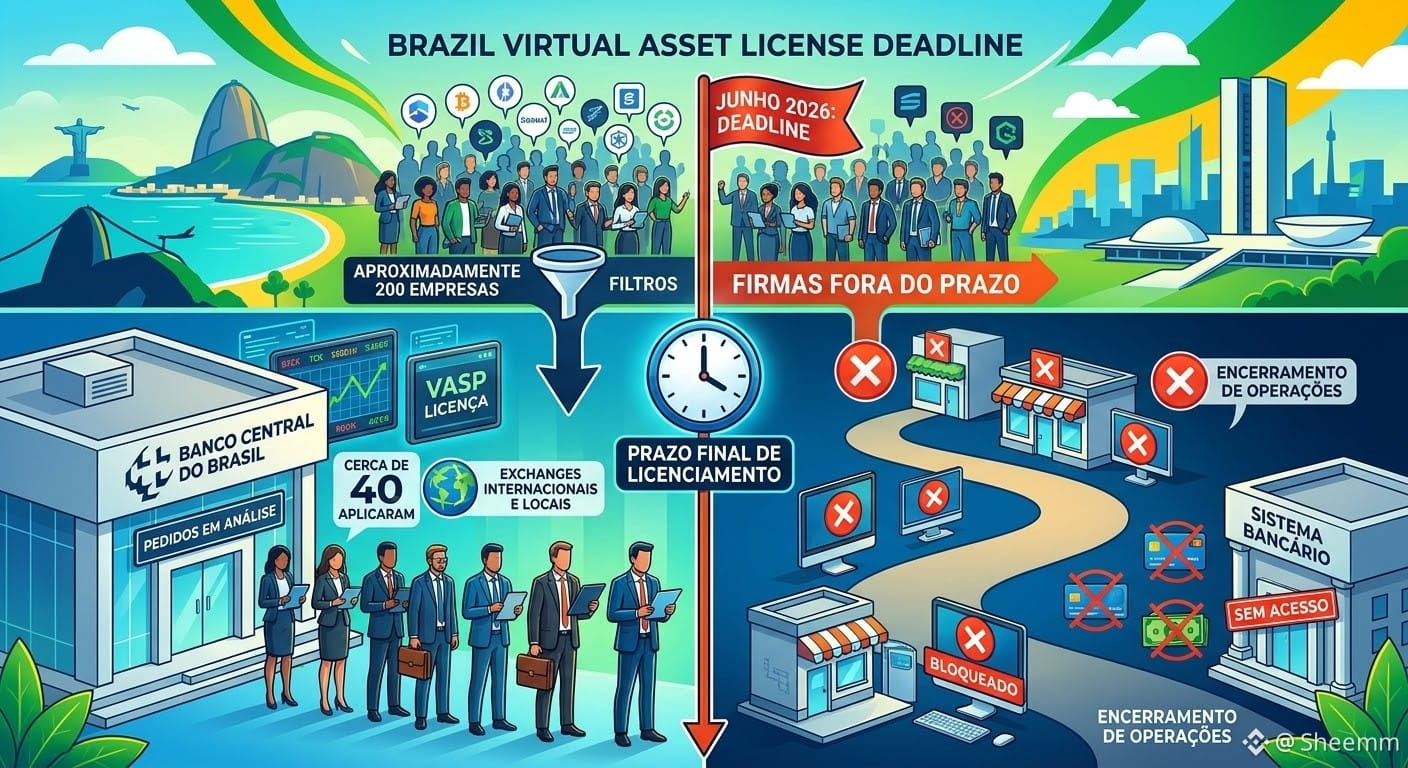
Brazil's central bank licensing deadline for virtual asset service providers (VASPs) has passed, a significant milestone for the country's crypto market. Out of an earlier estimate of nearly 200 firms, roughly 40, including major international exchanges, have applied. This initial cohort now enters a review period while those that missed the window face winding down operations and will lose access to the local banking system. The shift marks a strong move towards a regulated, institutionalized digital asset ecosystem in Latin America's largest economy.
$TAGG.ETF
{etf_us}(TAGG.ETF)
$TA
{alpha}(560x539ae81a166e5e80aed211731563e549c411b140)
$TAKE
{alpha}(560xe747e54783ba3f77a8e5251a3cba19ebe9c0e197)
#BinanceSquareFamily
#BrazilVirtualAssetLicenseDeadlineDrawsAbout40Firms
Brazil's central bank licensing deadline for virtual asset service providers (VASPs) has passed, a significant milestone for the country's crypto market. Out of an earlier estimate of nearly 200 firms, roughly 40, including major international exchanges, have applied. This initial cohort now enters a review period while those that missed the window face winding down operations and will lose access to the local banking system. The shift marks a strong move towards a regulated, institutionalized digital asset ecosystem in Latin America's largest economy.
$TAGG.ETF
$TA
$TAKE
#BinanceSquareFamily
3
298
🇧🇷 BRAZIL'S CRYPTO LICENSING RACE IS HEATING UP!
Around 40 crypto firms reportedly applied before Brazil's virtual asset licensing deadline.
This development highlights the growing importance of regulatory compliance, transparency, and accountability in digital finance.
Clearer rules can help investors evaluate platforms and make more informed decisions.
Build confidence through research, genuine spot ownership, and responsible investing!
$BTC $ETH $BNB
#brazilvirtualassetlicensedeadlinedrawsabout40firms
10
🛡️ CRYPTO TRUST STARTS WITH TRANSPARENCY!
Brazil's virtual asset licensing deadline has brought around 40 firms into the spotlight.
A stronger compliance framework can encourage better operational standards and improve investor awareness.
This may support healthier crypto participation and more responsible investment decisions.
Choose researched assets, transparent transactions, and interest-free spot investing.
$BTC $XRP $ADA
#brazilvirtualassetlicensedeadlinedrawsabout40firms
15

·
--
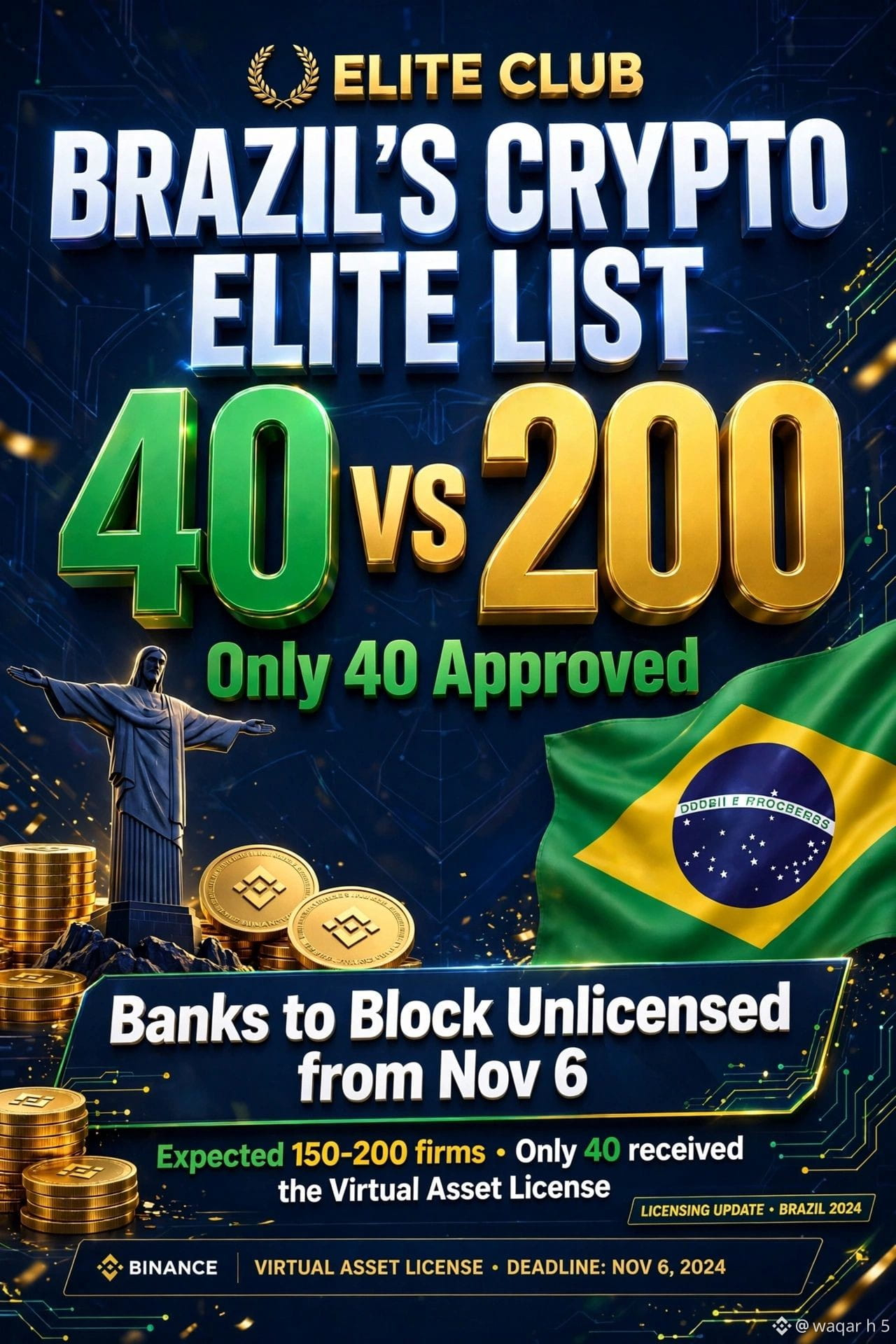
🚨 BRAZIL JUST CREATED A CRYPTO ELITE CLUB 🇧🇷
Only 40 firms survived. 160+ firms KICKED OUT.
Brazil's Virtual Asset License deadline closed on Oct 30 — Expected 150-200 firms, only ∼40 applied 5f2d
What happens now?
✅ Binance, Itaú & B3 are IN — they will keep operating while Central Bank reviews
❌ Others have 30 days to wind down and EXIT Brazil
💥 From Nov 6, banks will BLOCK all transactions for unlicensed firms — fiat access GONE 5f2d
Why only 40? Daily custody reports to Central Bank, monthly proof-of-reserves, 3 years audited balance sheets, AML audits. Most small exchanges couldn't afford it 5f2d
Brazil did R$505B in crypto volume in 2025 — Now that volume will be concentrated in just 40 licensed players.
This is not a ban, this is consolidation. Bullish for compliant giants.
Who do you think is in the Top 40? 👇
#brazilcrypto #VASP #Binance #CryptoRegulation #BrazilVirtualAssetLicenseDeadlineDrawsAbout40Firms
66

🇧🇷 Brazil’s Crypto License Window Closes with Focused Field.
Brazil’s Central Bank deadline for virtual asset service provider licenses drew applications from roughly 40 firms, well below earlier estimates. Those that applied may continue operating while reviews proceed, creating a clearer path for compliant players.
This selective process supports a more robust and transparent market as unlicensed operators prepare to exit. Stronger regulatory standards help build lasting confidence among users and institutions in the region’s growing digital asset sector.
$BNB #CoinVahini #CryptoRegulation #BrazilCrypto #BrazilVirtualAssetLicenseDeadlineDrawsAbout40Firms
46

·
--
#BrazilVirtualAssetLicenseDeadlineDrawsAbout40Firms
🇧🇷 Brazil's Crypto License Deadline Draws Far Fewer Firms
📅 Central Bank filing window closed October 30
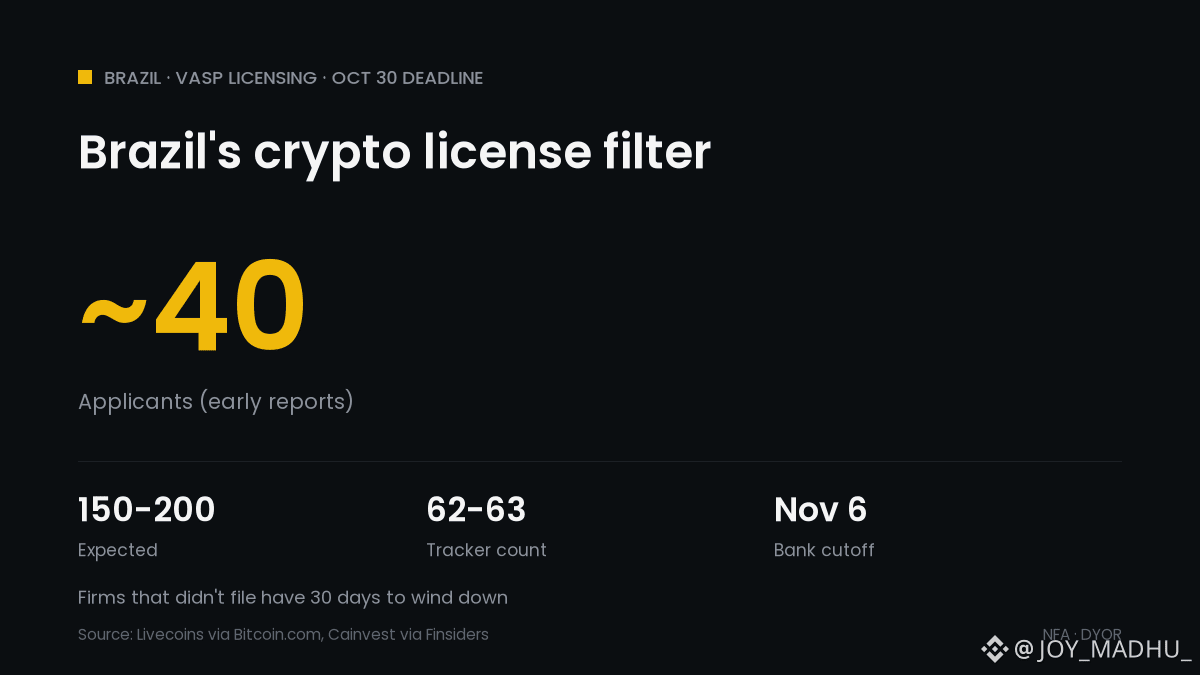
📊 Early reports: about 40 applicants vs 150 to 200 expected
🔍 Private tracker Cainvest later counted 62 to 63, incl. Binance, OKX, Bybit, Coinbase
⚠️ Non-filers have 30 days to wind down
🏦 From November 6, banks can't serve unauthorized providers
📜 Daily custody reports, monthly proof of reserves, 3 years of audits
What it means for crypto: fewer, larger and more supervised platforms. More trust, but less competition, and new entrants may wait up to two years.
Is consolidation good for Brazil's crypto users? 👇
$BTC $BNB
#CryptoNews #Brazil #Regulation #BrazilVirtualAssetLicenseDeadlineDrawsAbout40Firms
128

Brazil's deadline for virtual asset service providers to obtain a license is fast approaching, with approximately 40 firms expected to comply. This regulatory move signifies a significant step towards formalizing the crypto landscape in Latin America's largest economy. The licensing framework aims to enhance transparency, combat illicit activities, and provide greater investor protection within the burgeoning digital asset market. This development could lead to increased institutional confidence and potentially attract further investment into the region's crypto sector, fostering a more mature and regulated environment for innovation and growth.
Disclaimer: This content is for informational purposes only and does not constitute investment advice.
#BrazilVirtualAssetLicenseDeadlineDrawsAbout40Firms $BTC $ETH
Disclaimer: This content is for informational purposes only and does not constitute investment advice.
#BrazilVirtualAssetLicenseDeadlineDrawsAbout40Firms $BTC $ETH
121
Статья
Brazil’s VASP Licensing Reality Check#BrazilVirtualAssetLicenseDeadlineDrawsAbout40Firms 🇧🇷 Brazil’s VASP Licensing Reality Check: Lower Applicant Count, Higher Compliance Bar
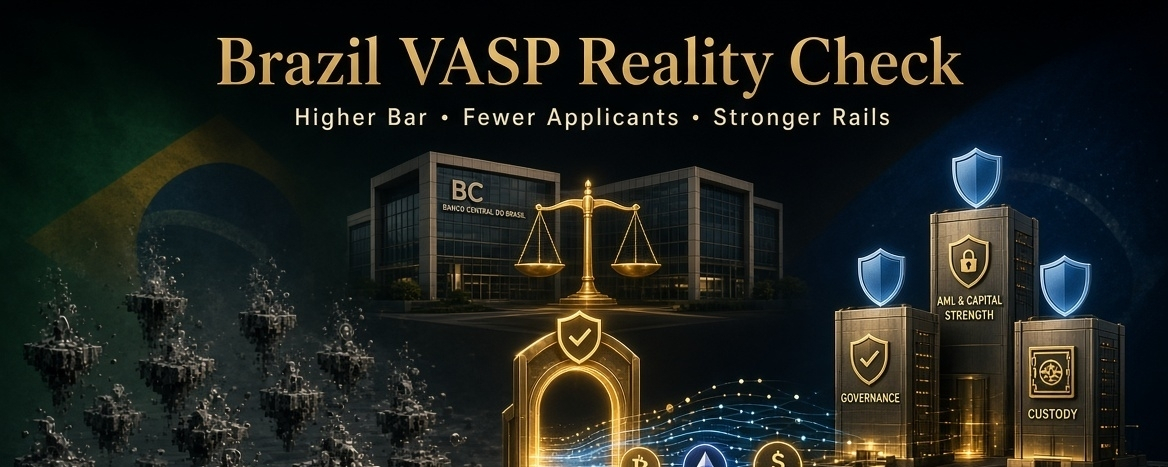
🇧🇷 Brazil’s crypto market is entering a decisive regulatory transition. Reports indicate that roughly 40 virtual-asset service providers (VASPs) submitted license applications to the Central Bank of Brazil (BCB), well below early market expectations of 150–200 firms. The applicant count should be treated as a reported industry estimate rather than a final BCB-published registry, but the direction is clear: the new framework is likely to favor firms with established compliance, governance, capital, custody, and operational infrastructure.
Brazil’s framework is built around BCB Resolutions 519, 520, and 521, published on November 10, 2025 and effective from February 2, 2026. The package creates an authorization regime for VASPs, establishes operating rules, and brings certain crypto and stablecoin activities into Brazil’s foreign-exchange and international-capital framework.
🟨 What the rules mean for VASPs
The BCB recognizes three operating modalities:
👉 Intermediary: facilitates or intermediates crypto transactions for clients.
👉 Custodian: safeguards virtual assets or cryptographic credentials on behalf of clients.
👉 Broker: combines intermediation and custody functions.
This classification matters because a provider offering multiple services can face requirements linked to each activity—not merely the label it chooses. BCB materials describe brokerage as the combination of intermediation and custody.
The regulatory burden extends beyond licensing. Firms must build out anti-money-laundering and counter-terrorist-financing controls, governance, cybersecurity, internal controls, auditability, customer-protection processes, and supervisory reporting. Public descriptions of the framework place minimum capital requirements in a range of approximately R$10.8 million to R$37.2 million, depending on the activities and associated risk profile.
Stablecoins now carry an FX and cross-border compliance dimension
BCB Resolution 521 is especially important for stablecoins. It integrates specified virtual-asset activities into the foreign-exchange market and addresses cases subject to Brazil’s international-capital rules. The BCB states that covered activities include:
👉 international payments or transfers using virtual assets;
👉 transfers of virtual assets to settle obligations arising from international card or electronic-payment use;
👉 transfers involving self-custody wallets;
👉 purchases, sales, or exchanges of fiat-referenced virtual assets—i.e., stablecoins.
The regulatory focus is the transaction’s economic function, not only whether it travels through a bank transfer or an on-chain wallet. A stablecoin movement that effectively transfers value across borders may therefore trigger more robust identification, recordkeeping, monitoring, reporting, and AML/CFT expectations.
For the market, this makes stablecoins less of a purely domestic crypto-trading instrument and more of a regulated cross-border value-transfer channel when used in international contexts.
🟨 Why the reported 40 applications matter ⁉️
If the reported applicant count is directionally accurate, it points to a possible market-consolidation phase:
👉 Higher barriers to entry: capital, authorization, security, AML/CFT, audit, and local-governance requirements can be difficult for small or lightly structured providers to meet.
👉 Potential liquidity fragmentation: if providers discontinue Brazilian services or scale back product scope, users may temporarily see fewer local access points, fewer fiat rails, or more concentrated liquidity.
👉 Greater importance of regulated rails: bank and payment-institution access becomes more valuable for providers that are authorized or actively in the authorization process.
👉 Institutional credibility effect: clearer supervision can improve confidence among banks, payment partners, corporate users, and institutional participants—but compliance costs may also pressure margins.
👉 Stablecoin workflow redesign: providers handling cross-border stablecoin use may need stronger customer and counterparty identification, transaction-purpose controls, monitoring systems, and reporting architecture.
📊 Statistical perspective
Using the reported midpoint expectation of 175 firms—the midpoint of the stated 150–200 range—an applicant base of 40 firms would represent about 22.86% of that expectation. Relative to the low-end estimate of 150, it would be about 26.67%; relative to 200, about 20.00%.
That does not prove that the remaining providers have exited. Some may be outside scope, restructuring, awaiting clarification, operating through licensed partners, or absent from public reporting. Still, it highlights the scale of the compliance filter now facing Brazil’s crypto sector.
🧠 Market impact and sentiment
Near-term sentiment: cautiously constructive, with operational uncertainty.
👷 Constructive factors: formal authorization, stronger custody and governance expectations, and clearer stablecoin/FX treatment may support confidence in compliant providers over time.
💀 Risk factors: high fixed compliance costs, unclear self-custody-wallet handling, transfer-process questions, and uncertainty around firms unable to secure authorization could create short-term friction.
👉 For local crypto access: the likely outcome is not necessarily lower crypto demand, but a shift toward providers able to maintain compliant banking, Pix, custody, and reporting infrastructure.
👉 For stablecoins: demand may remain resilient because of their role in trading and cross-border value movement, but compliance-sensitive flows could become more formalized and operationally constrained.
Bottom line: Brazil is moving from a relatively open operating environment toward a supervised VASP market where authorization status, capital strength, custody controls, and cross-border compliance become major competitive differentiators. The framework may improve market quality over time, but the transition can also reduce the number of active providers and create temporary uncertainty around local fiat and stablecoin access. This is regulatory analysis, not a prediction of price performance or investment advice.
$BTC $ETH $QNT
{spot}(BTCUSDT)
{spot}(ETHUSDT)
{spot}(QNTUSDT)
#BinanceProcesses$4.65BWithdrawals #WithdrawalsBack: 15 networks live #BTCPayServerUrgesOperatorsToShutDownInstances #BankOfKoreaSurveysFinancialFirmsOnVirtualAssetRisks
Brazil’s VASP Licensing Reality Check
#BrazilVirtualAssetLicenseDeadlineDrawsAbout40Firms 🇧🇷 Brazil’s VASP Licensing Reality Check: Lower Applicant Count, Higher Compliance Bar
🇧🇷 Brazil’s crypto market is entering a decisive regulatory transition. Reports indicate that roughly 40 virtual-asset service providers (VASPs) submitted license applications to the Central Bank of Brazil (BCB), well below early market expectations of 150–200 firms. The applicant count should be treated as a reported industry estimate rather than a final BCB-published registry, but the direction is clear: the new framework is likely to favor firms with established compliance, governance, capital, custody, and operational infrastructure.
Brazil’s framework is built around BCB Resolutions 519, 520, and 521, published on November 10, 2025 and effective from February 2, 2026. The package creates an authorization regime for VASPs, establishes operating rules, and brings certain crypto and stablecoin activities into Brazil’s foreign-exchange and international-capital framework.
🟨 What the rules mean for VASPs
The BCB recognizes three operating modalities:
👉 Intermediary: facilitates or intermediates crypto transactions for clients.
👉 Custodian: safeguards virtual assets or cryptographic credentials on behalf of clients.
👉 Broker: combines intermediation and custody functions.
This classification matters because a provider offering multiple services can face requirements linked to each activity—not merely the label it chooses. BCB materials describe brokerage as the combination of intermediation and custody.
The regulatory burden extends beyond licensing. Firms must build out anti-money-laundering and counter-terrorist-financing controls, governance, cybersecurity, internal controls, auditability, customer-protection processes, and supervisory reporting. Public descriptions of the framework place minimum capital requirements in a range of approximately R$10.8 million to R$37.2 million, depending on the activities and associated risk profile.
Stablecoins now carry an FX and cross-border compliance dimension
BCB Resolution 521 is especially important for stablecoins. It integrates specified virtual-asset activities into the foreign-exchange market and addresses cases subject to Brazil’s international-capital rules. The BCB states that covered activities include:
👉 international payments or transfers using virtual assets;
👉 transfers of virtual assets to settle obligations arising from international card or electronic-payment use;
👉 transfers involving self-custody wallets;
👉 purchases, sales, or exchanges of fiat-referenced virtual assets—i.e., stablecoins.
The regulatory focus is the transaction’s economic function, not only whether it travels through a bank transfer or an on-chain wallet. A stablecoin movement that effectively transfers value across borders may therefore trigger more robust identification, recordkeeping, monitoring, reporting, and AML/CFT expectations.
For the market, this makes stablecoins less of a purely domestic crypto-trading instrument and more of a regulated cross-border value-transfer channel when used in international contexts.
🟨 Why the reported 40 applications matter ⁉️
If the reported applicant count is directionally accurate, it points to a possible market-consolidation phase:
👉 Higher barriers to entry: capital, authorization, security, AML/CFT, audit, and local-governance requirements can be difficult for small or lightly structured providers to meet.
👉 Potential liquidity fragmentation: if providers discontinue Brazilian services or scale back product scope, users may temporarily see fewer local access points, fewer fiat rails, or more concentrated liquidity.
👉 Greater importance of regulated rails: bank and payment-institution access becomes more valuable for providers that are authorized or actively in the authorization process.
👉 Institutional credibility effect: clearer supervision can improve confidence among banks, payment partners, corporate users, and institutional participants—but compliance costs may also pressure margins.
👉 Stablecoin workflow redesign: providers handling cross-border stablecoin use may need stronger customer and counterparty identification, transaction-purpose controls, monitoring systems, and reporting architecture.
📊 Statistical perspective
Using the reported midpoint expectation of 175 firms—the midpoint of the stated 150–200 range—an applicant base of 40 firms would represent about 22.86% of that expectation. Relative to the low-end estimate of 150, it would be about 26.67%; relative to 200, about 20.00%.
That does not prove that the remaining providers have exited. Some may be outside scope, restructuring, awaiting clarification, operating through licensed partners, or absent from public reporting. Still, it highlights the scale of the compliance filter now facing Brazil’s crypto sector.
🧠 Market impact and sentiment
Near-term sentiment: cautiously constructive, with operational uncertainty.
👷 Constructive factors: formal authorization, stronger custody and governance expectations, and clearer stablecoin/FX treatment may support confidence in compliant providers over time.
💀 Risk factors: high fixed compliance costs, unclear self-custody-wallet handling, transfer-process questions, and uncertainty around firms unable to secure authorization could create short-term friction.
👉 For local crypto access: the likely outcome is not necessarily lower crypto demand, but a shift toward providers able to maintain compliant banking, Pix, custody, and reporting infrastructure.
👉 For stablecoins: demand may remain resilient because of their role in trading and cross-border value movement, but compliance-sensitive flows could become more formalized and operationally constrained.
Bottom line: Brazil is moving from a relatively open operating environment toward a supervised VASP market where authorization status, capital strength, custody controls, and cross-border compliance become major competitive differentiators. The framework may improve market quality over time, but the transition can also reduce the number of active providers and create temporary uncertainty around local fiat and stablecoin access. This is regulatory analysis, not a prediction of price performance or investment advice.
$BTC $ETH $QNT
#BinanceProcesses$4.65BWithdrawals #WithdrawalsBack: 15 networks live #BTCPayServerUrgesOperatorsToShutDownInstances #BankOfKoreaSurveysFinancialFirmsOnVirtualAssetRisks
2
342
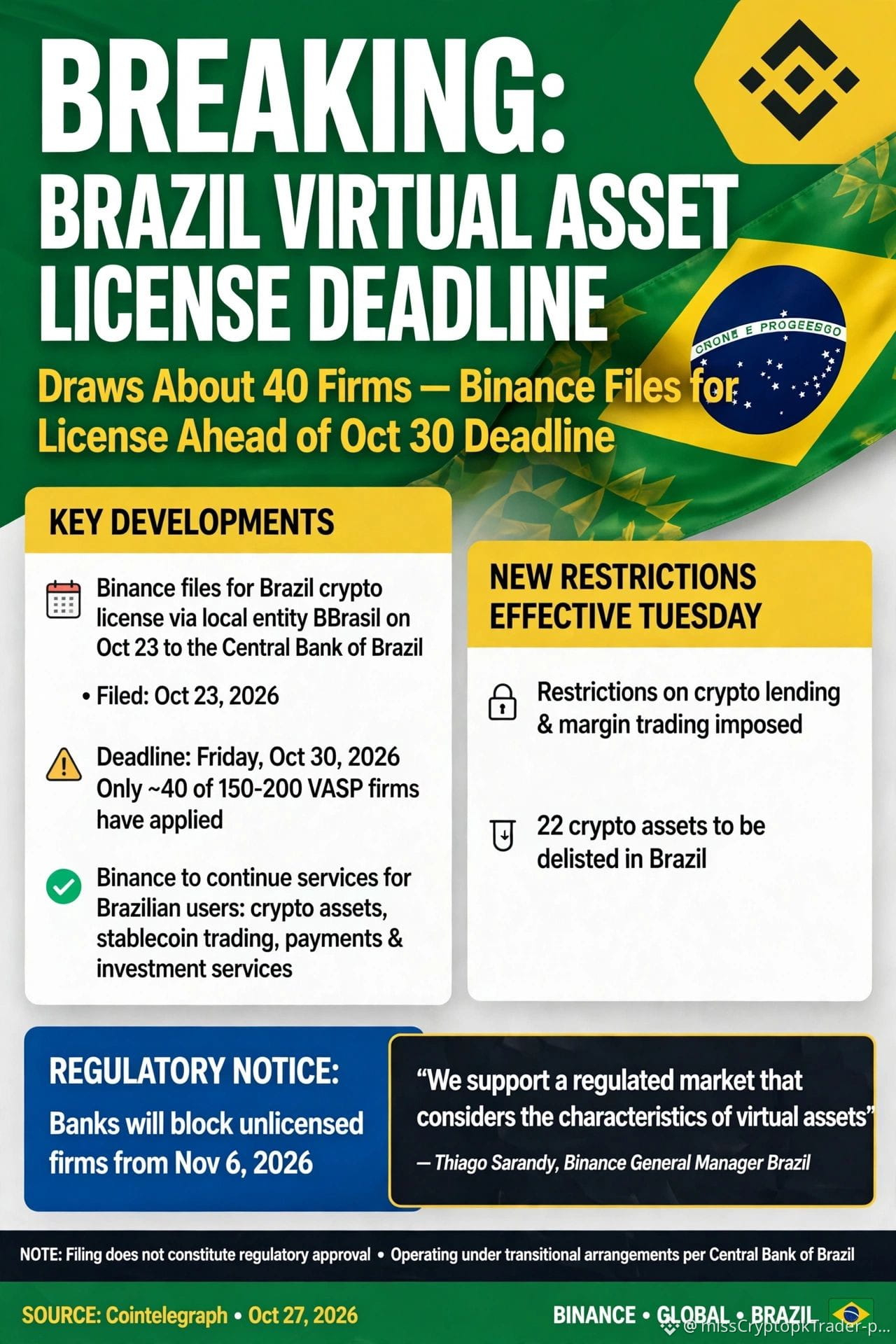
#BrazilVirtualAssetLicenseDeadlineDrawsAbout40Firms
🇧🇷 Binance files for Brazil crypto license ahead of Oct 30 deadline!
📅 Filed: Oct 23, 2026 via local entity BBrasil to Central Bank of Brazil
📉 Market Shakeout: Only ∼40 of 150-200 VASP firms applied — most exiting
✅ Binance to continue: crypto assets, stablecoin trading, payments & investment services for Brazilian users
New Restrictions (Effective Tuesday):
- Crypto lending & margin trading restricted
- 22 crypto assets to be delisted in Brazil
Quote: "We support a regulated market that considers the characteristics of virtual assets, so that access to technology and innovation continues to advance" — Thiago Sarandy, Binance GM Brazil
⚠️ Note: Filing does NOT = approval. Firms operating under transitional arrangements. From Nov 6, banks will block unlicensed firms.
$BNB #Brazil #Binance #VASP #CryptoNewss
2
167

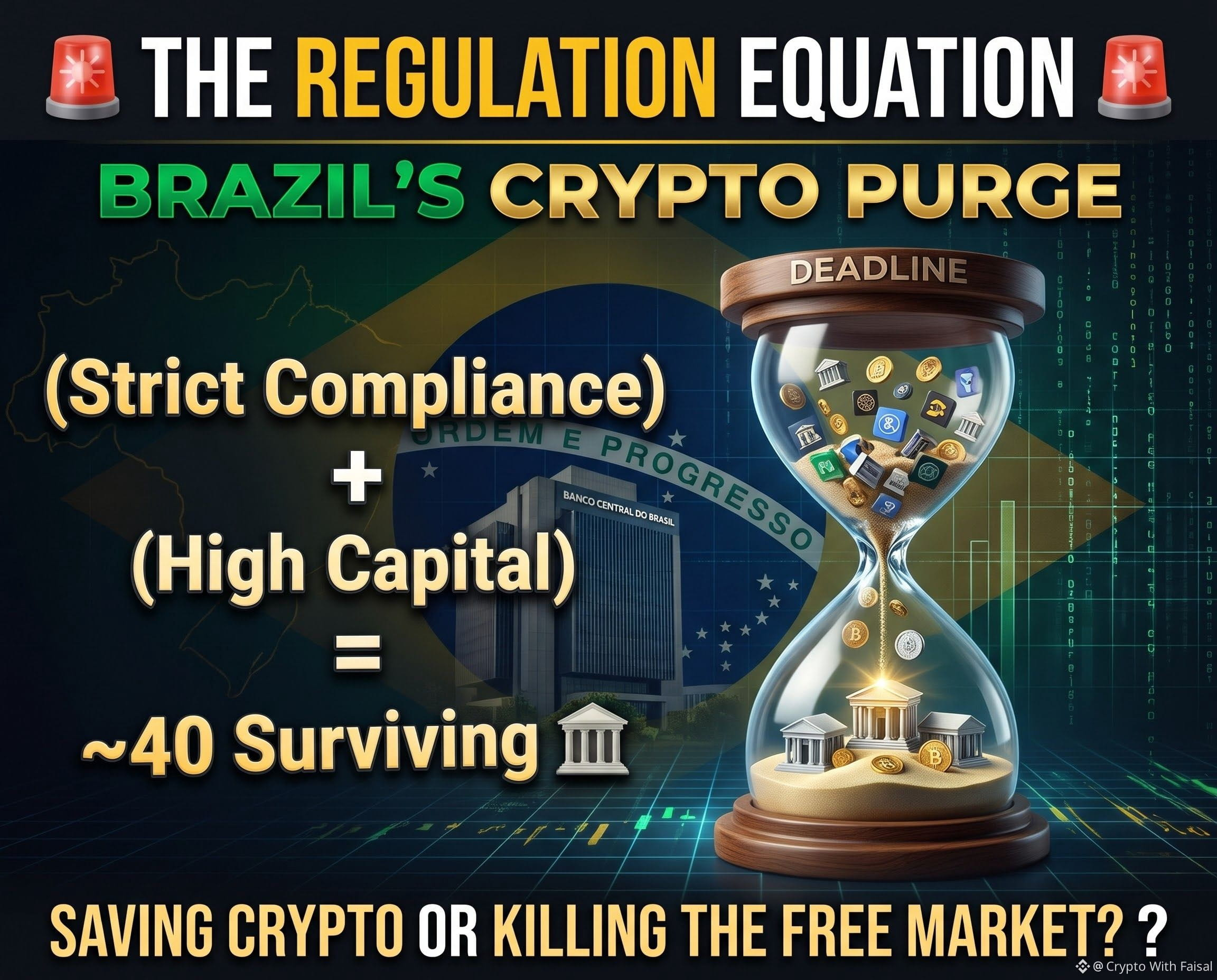
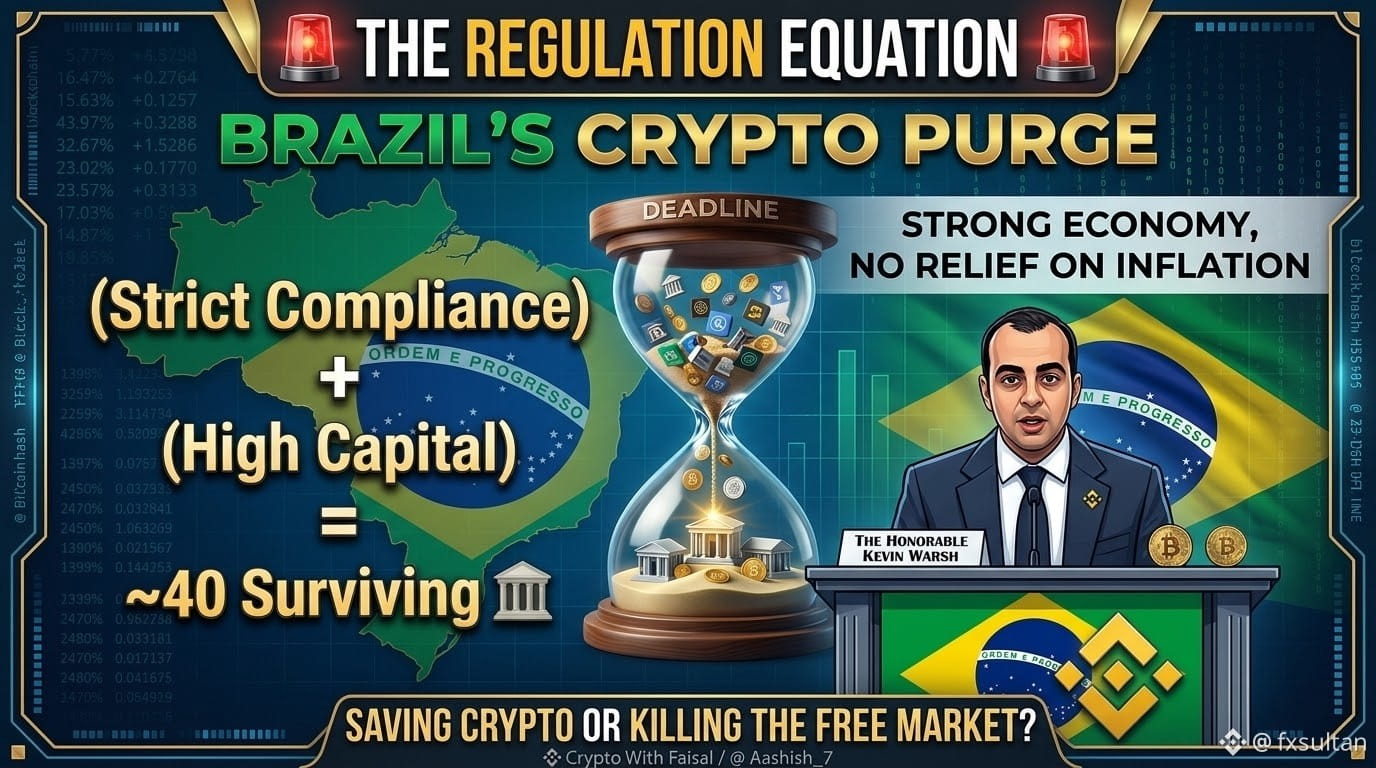
🚨 THE REGULATION EQUATION: Brazil's Purge 🚨
#brazilvirtualassetlicensedeadlinedrawsabout40firms
Let's break down this deadline using math 🧮👇
(Strict Compliance) + (High Capital) = ~40 Firms Surviving 🏛️
The Asset Input:
(The Catalyst) = Banco Central do Brasil (BCB) closed its Phase 1 VASP licensing window on Oct 30. Roughly 40 firms applied, facing severe hurdles like R10.8M–R37M in minimum capital.
The Key Deliverable:
(The Fallout) ➔ These applicants can keep operating during the BCB review, which may take up to 2 years. For non-filers, it's over. By Nov 6, local banks must sever all ties with unauthorized platforms.
The Breakdown:
With mandatory asset segregation and strict AML laws enforced, Brazil is actively filtering out weak hands to build an institutional-grade market.
Are these regulations saving crypto, or killing the free market? ❓👇💬
$BTC
{future}(BTCUSDT)
$BNB
{future}(BNBUSDT)
$ESPORTS
{future}(ESPORTSUSDT)
🚨 THE REGULATION EQUATION: Brazil's Purge 🚨
#brazilvirtualassetlicensedeadlinedrawsabout40firms
Let's break down this deadline using math 🧮👇
(Strict Compliance) + (High Capital) = ~40 Firms Surviving 🏛️
The Asset Input:
(The Catalyst) = Banco Central do Brasil (BCB) closed its Phase 1 VASP licensing window on Oct 30. Roughly 40 firms applied, facing severe hurdles like R10.8M–R37M in minimum capital.
The Key Deliverable:
(The Fallout) ➔ These applicants can keep operating during the BCB review, which may take up to 2 years. For non-filers, it's over. By Nov 6, local banks must sever all ties with unauthorized platforms.
The Breakdown:
With mandatory asset segregation and strict AML laws enforced, Brazil is actively filtering out weak hands to build an institutional-grade market.
Are these regulations saving crypto, or killing the free market? ❓👇💬
$BTC
$BNB
$ESPORTS
2
5k

·
--
📰 Бразилия: с 6 ноября банки ограничат операции с криптопровайдерами без разрешения
30 октября в стране завершился переходный срок подачи заявок для уже работающих криптосервисов. По постановлению Центробанка Бразилии, с 6 ноября банкам и платёжным организациям запрещено проводить операции с провайдерами вне разрешённого регулятором режима.
По оценке Livecoins на 29 октября, около 40 организаций фигурировали в процессе оформления — это не 40 выданных лицензий. Для клиентов важнее статус конкретной площадки, чем само число заявок.
#BrazilVirtualAssetLicenseDeadlineDrawsAbout40Firms
4

La date limite pour demander une licence crypto au Brésil vient d’expirer et seuls une quarantaine de poids lourds ont déposé une demande, au lieu des 150 à 200 attendus.
Cette liste de 40 acteurs comprend de grandes plateformes d’échange, des banques traditionnelles, des sociétés de technologie de paiement et, surtout, B3 (la Bourse officielle du Brésil). La purge commence : ceux qui n’ont pas déposé de demande auront 30 jours pour plier bagage et quitter le Brésil. À partir du 6/11, toute banque qui osera collaborer avec une plateforme « clandestine » sera immédiatement sanctionnée.
Le point essentiel : le marché brésilien se dote d’un cadre réglementaire plus strict. L’arrivée de poids lourds comme la Bourse B3 ou les banques montre que le secteur crypto y passe du « marché noir » au secteur réglementé, plus sûr, mais la concurrence sera plus féroce.
Que doivent faire les traders ?
➊ Vérifiez les portefeuilles et plateformes que vous utilisez pour voir s’ils disposent d’une licence au Brésil et éviter qu’ils soient gelés.
➋ Profitez de l’occasion pour accumuler des actifs à mesure que le marché se légalise.
➌ Ceci ne constitue pas un conseil financier.
#BrazilVirtualAssetLicenseDeadlineDrawsAbout40Firms
$SOPH
{future}(SOPHUSDT)
$LYN
{future}(LYNUSDT)
$OGN
{future}(OGNUSDT)
La date limite pour demander une licence crypto au Brésil vient d’expirer et seuls une quarantaine de poids lourds ont déposé une demande, au lieu des 150 à 200 attendus.
Cette liste de 40 acteurs comprend de grandes plateformes d’échange, des banques traditionnelles, des sociétés de technologie de paiement et, surtout, B3 (la Bourse officielle du Brésil). La purge commence : ceux qui n’ont pas déposé de demande auront 30 jours pour plier bagage et quitter le Brésil. À partir du 6/11, toute banque qui osera collaborer avec une plateforme « clandestine » sera immédiatement sanctionnée.
Le point essentiel : le marché brésilien se dote d’un cadre réglementaire plus strict. L’arrivée de poids lourds comme la Bourse B3 ou les banques montre que le secteur crypto y passe du « marché noir » au secteur réglementé, plus sûr, mais la concurrence sera plus féroce.
Que doivent faire les traders ?
➊ Vérifiez les portefeuilles et plateformes que vous utilisez pour voir s’ils disposent d’une licence au Brésil et éviter qu’ils soient gelés.
➋ Profitez de l’occasion pour accumuler des actifs à mesure que le marché se légalise.
➌ Ceci ne constitue pas un conseil financier.
#BrazilVirtualAssetLicenseDeadlineDrawsAbout40Firms
$SOPH
$LYN
$OGN
115

#brazilvirtualassetlicensedeadlinedrawsabout40firms El cierre del plazo de solicitud de licencias ante el Banco Central de Brasil establece un antes y un después para la industria de activos virtuales en el cono sur, transformando un mercado masivo y fragmentado en un entorno altamente concentrado y de grado institucional. El hecho de que solo el 20% de los operadores estimados decidiera someterse al escrutinio del BCB no refleja un desinterés en la mayor economía de la región, sino las altísimas barreras de entrada impuestas por el nuevo marco normativo de la Ley 14.478/2022. Con requisitos de capital mínimo que oscilan entre los 10.8 y los 37.2 millones de reales (hasta 6.9 millones de dólares) según el modelo de negocio, las plataformas medianas y de perfil minorista regional se han visto forzadas a abandonar la competencia directa o a estructurar alianzas de marca blanca con los operadores dominantes. $BNB $BTC
{future}(BTCUSDT)
{future}(BNBUSDT)
#brazilvirtualassetlicensedeadlinedrawsabout40firms El cierre del plazo de solicitud de licencias ante el Banco Central de Brasil establece un antes y un después para la industria de activos virtuales en el cono sur, transformando un mercado masivo y fragmentado en un entorno altamente concentrado y de grado institucional. El hecho de que solo el 20% de los operadores estimados decidiera someterse al escrutinio del BCB no refleja un desinterés en la mayor economía de la región, sino las altísimas barreras de entrada impuestas por el nuevo marco normativo de la Ley 14.478/2022. Con requisitos de capital mínimo que oscilan entre los 10.8 y los 37.2 millones de reales (hasta 6.9 millones de dólares) según el modelo de negocio, las plataformas medianas y de perfil minorista regional se han visto forzadas a abandonar la competencia directa o a estructurar alianzas de marca blanca con los operadores dominantes. $BNB $BTC
AmzadPulse:
yes
3
1
3
3.8k
🚨 معادلة التنظيم: تطهير البرازيل 🚨 #brazilvirtualassetlicensedeadlinedrawsabout40firms
لنحلّل هذا الموعد النهائي باستخدام الرياضيات 👇🧮
📐 (امتثال صارم) + (رأس مال كبير) = نحو 40 شركة صامدة 🏛️💪
🚪 مدخل الأصول:
⚡ (العامل المحفّز) = أغلق البنك المركزي البرازيلي (BCB) نافذة ترخيص مقدّمي خدمات الأصول الافتراضية في المرحلة الأولى في 30 أكتوبر 📅🔒. تقدّمت نحو 40 شركة بطلبات 📝، وتواجه عقبات جسيمة 🧱، مثل الحد الأدنى لرأس المال 💰 الذي يتراوح بين 10.8 مليون و37 مليون ريال برازيلي 🇧🇷.
🎯 النتيجة الرئيسية:
✅ (التداعيات) ← يمكن لمقدّمي الطلبات مواصلة العمل أثناء مراجعة البنك المركزي البرازيلي 🔍، التي قد تستغرق ما يصل إلى عامين ⏳.
❌ أما من لم يتقدّموا بطلبات، فقد انتهى الأمر بالنسبة إليهم 🚫🪦. وبحلول 6 نوفمبر 📅، يتعيّن على البنوك المحلية قطع جميع علاقاتها بالمنصات غير المرخّصة 🏦✂️.
🏁 خلاصة الأمر:
🧼 مع تطبيق الفصل الإلزامي للأصول 🔐 وقوانين صارمة لمكافحة غسل الأموال ⚖️، تعمل البرازيل على استبعاد الجهات الأضعف 🗑️ لبناء سوق بمعايير مؤسسية 🏢📈.
هل تنقذ هذه اللوائح العملات المشفّرة، أم تقضي على السوق الحرة؟ 💬👇❓
$BTC $BNB $ESPORTS
{future}(ESPORTSUSDT)
{spot}(BNBUSDT)
{spot}(BTCUSDT)
🚨 معادلة التنظيم: تطهير البرازيل 🚨 #brazilvirtualassetlicensedeadlinedrawsabout40firms
لنحلّل هذا الموعد النهائي باستخدام الرياضيات 👇🧮
📐 (امتثال صارم) + (رأس مال كبير) = نحو 40 شركة صامدة 🏛️💪
🚪 مدخل الأصول:
⚡ (العامل المحفّز) = أغلق البنك المركزي البرازيلي (BCB) نافذة ترخيص مقدّمي خدمات الأصول الافتراضية في المرحلة الأولى في 30 أكتوبر 📅🔒. تقدّمت نحو 40 شركة بطلبات 📝، وتواجه عقبات جسيمة 🧱، مثل الحد الأدنى لرأس المال 💰 الذي يتراوح بين 10.8 مليون و37 مليون ريال برازيلي 🇧🇷.
🎯 النتيجة الرئيسية:
✅ (التداعيات) ← يمكن لمقدّمي الطلبات مواصلة العمل أثناء مراجعة البنك المركزي البرازيلي 🔍، التي قد تستغرق ما يصل إلى عامين ⏳.
❌ أما من لم يتقدّموا بطلبات، فقد انتهى الأمر بالنسبة إليهم 🚫🪦. وبحلول 6 نوفمبر 📅، يتعيّن على البنوك المحلية قطع جميع علاقاتها بالمنصات غير المرخّصة 🏦✂️.
🏁 خلاصة الأمر:
🧼 مع تطبيق الفصل الإلزامي للأصول 🔐 وقوانين صارمة لمكافحة غسل الأموال ⚖️، تعمل البرازيل على استبعاد الجهات الأضعف 🗑️ لبناء سوق بمعايير مؤسسية 🏢📈.
هل تنقذ هذه اللوائح العملات المشفّرة، أم تقضي على السوق الحرة؟ 💬👇❓
$BTC $BNB $ESPORTS
1
3.2k

·
--
Падение
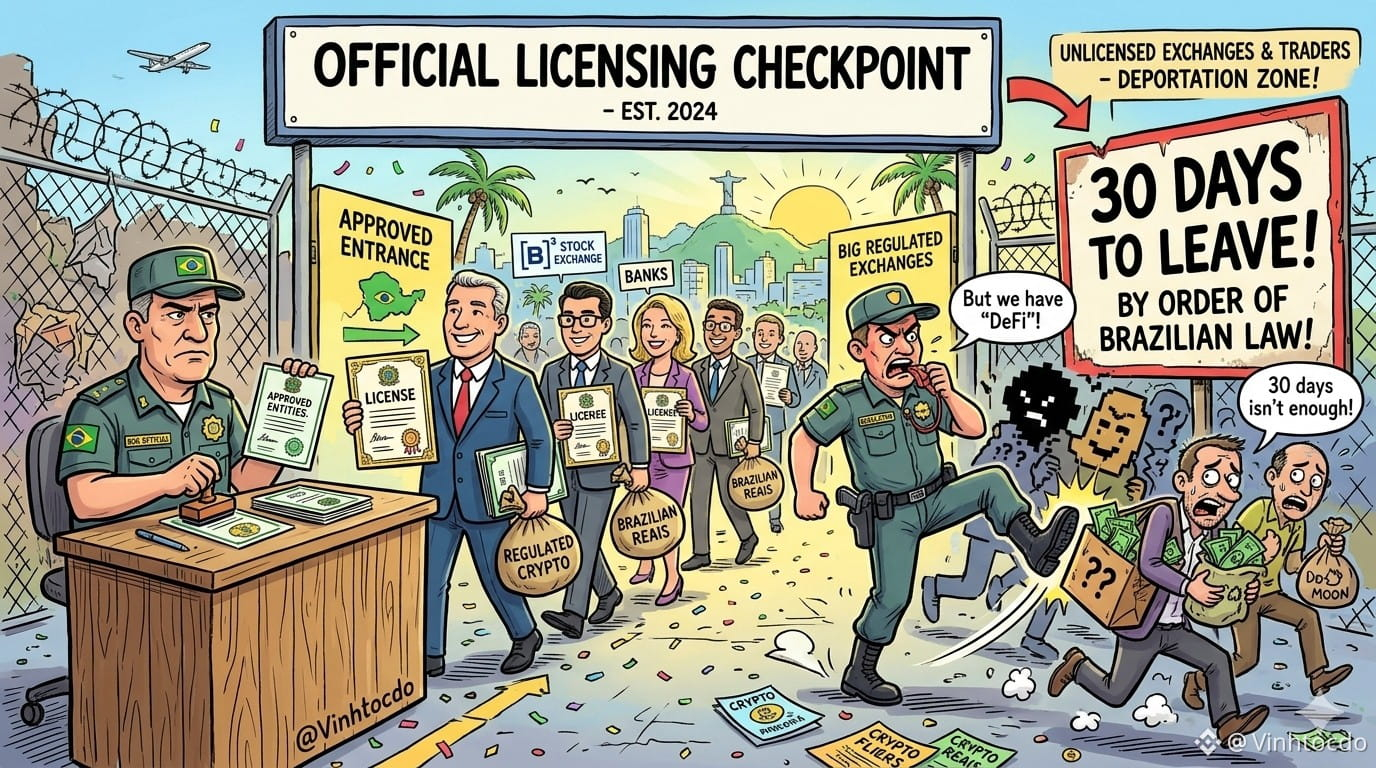
Hạn chót xin giấy phép crypto tại Brazil vừa khép lại và chỉ có khoảng 40 ông lớn nộp đơn, thay vì con số 150-200 như kỳ vọng.
Danh sách 40 gương mặt này bao gồm các sàn giao dịch lớn, các ngân hàng truyền thống, công ty công nghệ thanh toán và đặc biệt là B3 (Sàn giao dịch chứng khoán chính thức của Brazil). Cuộc thanh trừng bắt đầu: Ai không nộp đơn sẽ có 30 ngày để cuốn gói khỏi Brazil. Kể từ 6/11, ngân hàng nào ho he bắt tay với sàn "lậu" là bị phạt ngay.
Vấn đề cốt lõi: Thị trường Brazil đang siết chặt pháp lý. Việc các ông lớn như sàn chứng khoán B3 hay các ngân hàng nhảy vào cho thấy cuộc chơi crypto tại đây đang chuyển dịch từ "chợ đen" sang chính quy, an toàn nhưng cuộc cạnh tranh sẽ khốc liệt hơn.
Trader phải làm gì?
➊ Rà soát lại ví/sàn đang dùng xem có giấy phép ở Brazil không để tránh bị đóng băng.
➋ Tận dụng cơ hội gom hàng khi thị trường được hợp pháp hóa.
➌ Đây không phải lời khuyên tài chính!
Đăng ký Binance ngay để giao dịch an toàn:
Mã giới thiệu: VINHTOCDO
Link: [https://www.binance.com/register?ref=VINHTOCDO](https://www.binance.com/register?ref=VINHTOCDO)
Click giao dịch bên dưới để ủng hộ tôi:
$BTC
{future}(BTCUSDT)
$SOL
{future}(SOLUSDT)
$BNB
{future}(BNBUSDT)
#BrazilVirtualAssetLicenseDeadlineDrawsAbout40Firms #brazilcrypto #CryptoRegulation #B3Exchange #CryptoCompliance #Web3Brazil #VINHTOCDO
Hạn chót xin giấy phép crypto tại Brazil vừa khép lại và chỉ có khoảng 40 ông lớn nộp đơn, thay vì con số 150-200 như kỳ vọng.
Danh sách 40 gương mặt này bao gồm các sàn giao dịch lớn, các ngân hàng truyền thống, công ty công nghệ thanh toán và đặc biệt là B3 (Sàn giao dịch chứng khoán chính thức của Brazil). Cuộc thanh trừng bắt đầu: Ai không nộp đơn sẽ có 30 ngày để cuốn gói khỏi Brazil. Kể từ 6/11, ngân hàng nào ho he bắt tay với sàn "lậu" là bị phạt ngay.
Vấn đề cốt lõi: Thị trường Brazil đang siết chặt pháp lý. Việc các ông lớn như sàn chứng khoán B3 hay các ngân hàng nhảy vào cho thấy cuộc chơi crypto tại đây đang chuyển dịch từ "chợ đen" sang chính quy, an toàn nhưng cuộc cạnh tranh sẽ khốc liệt hơn.
Trader phải làm gì?
➊ Rà soát lại ví/sàn đang dùng xem có giấy phép ở Brazil không để tránh bị đóng băng.
➋ Tận dụng cơ hội gom hàng khi thị trường được hợp pháp hóa.
➌ Đây không phải lời khuyên tài chính!
Đăng ký Binance ngay để giao dịch an toàn:
Mã giới thiệu: VINHTOCDO
Link: https://www.binance.com/register?ref=VINHTOCDO
Click giao dịch bên dưới để ủng hộ tôi:
$BTC
$SOL
$BNB
#BrazilVirtualAssetLicenseDeadlineDrawsAbout40Firms #brazilcrypto #CryptoRegulation #B3Exchange #CryptoCompliance #Web3Brazil #VINHTOCDO
4
429
·
--
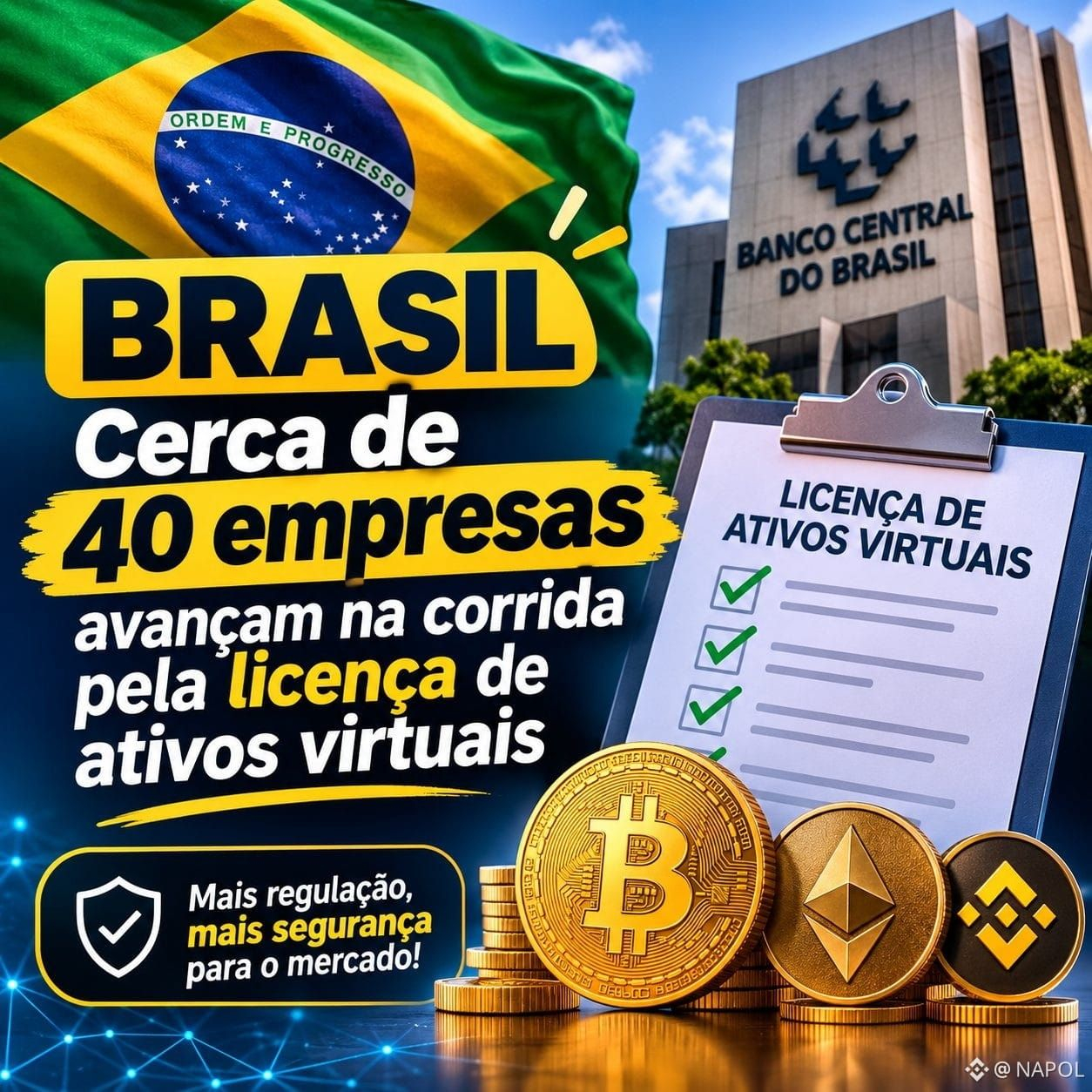
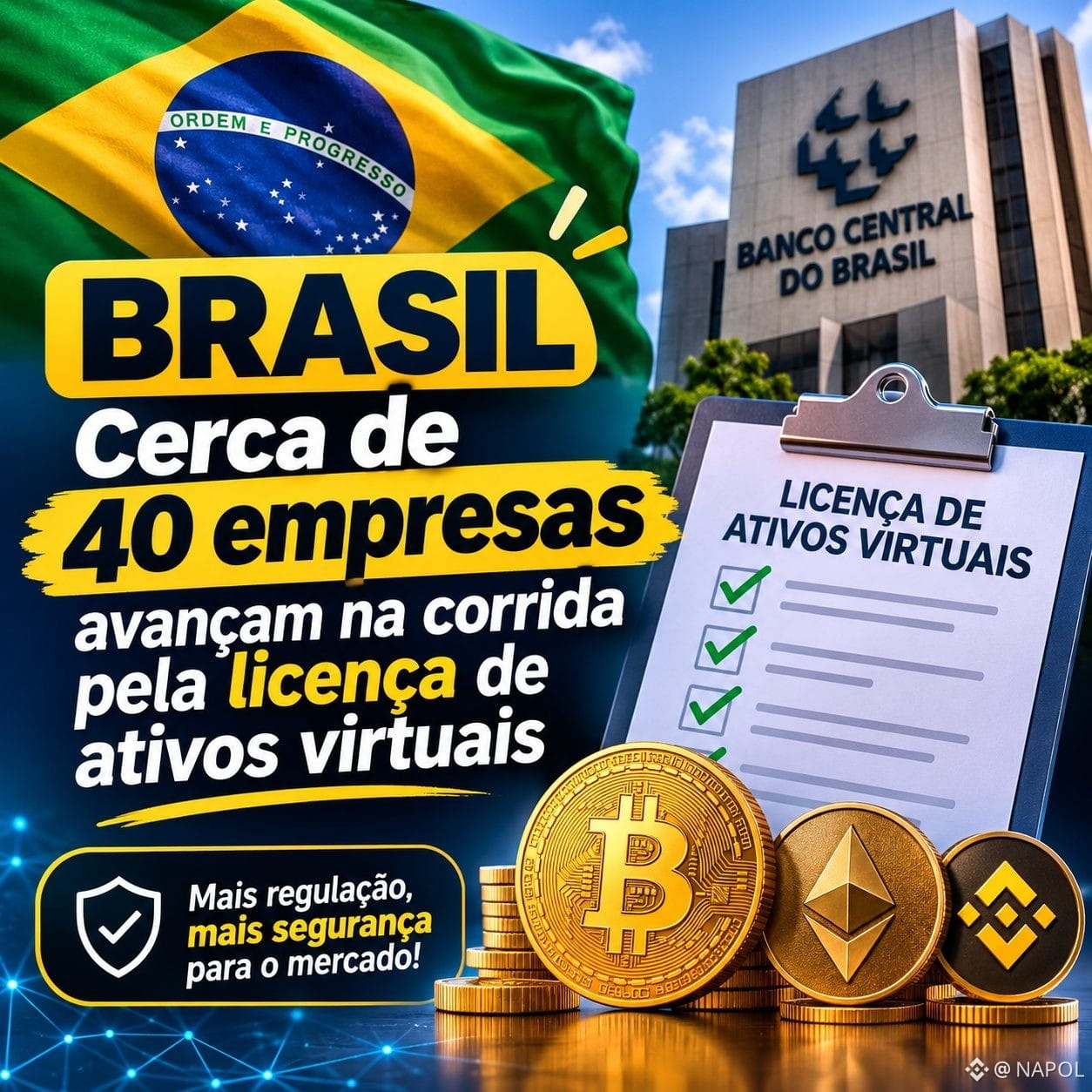
#BrazilVirtualAssetLicenseDeadlineDrawsAbout40Firms 🇧🇷 Brasil: cerca de 40 empresas avançam na corrida pela licença de ativos virtuais
O prazo para que empresas do setor de criptomoedas solicitassem autorização para continuar operando no Brasil terminou em 30 de outubro. Relatos iniciais apontam que aproximadamente 40 empresas apresentaram pedidos, um número bem abaixo das expectativas do mercado.
A nova regulamentação do Banco Central representa uma mudança importante para o setor. As empresas precisarão cumprir exigências mais rigorosas de segurança, transparência, governança e prevenção à lavagem de dinheiro.
As empresas que solicitaram autorização dentro do prazo poderão continuar prestando seus serviços enquanto aguardam a análise. Já aquelas que não entraram com o pedido terão que organizar o encerramento de suas atividades.
Minha visão: esse movimento pode acelerar a profissionalização do mercado brasileiro de criptomoedas. Embora regras mais rígidas aumentem os custos e dificultem a entrada de empresas menores, também podem fortalecer a confiança dos investidores e trazer mais segurança para o ecossistema.
O Brasil está entrando em uma nova fase do mercado cripto, e os próximos meses serão decisivos para definir quem estará preparado para continuar crescendo. 🚀
Nota de precisão: o Banco Central ainda não divulgou um total oficial de pedidos. As estimativas publicadas divergem, portanto, os cerca de 40 devem ser tratados como número aproximado, não confirmado oficialmente.
#INNOVATION #Bank #Brasil #cryptouniverseofficial
$SOPH $HOT $INIT
2
266
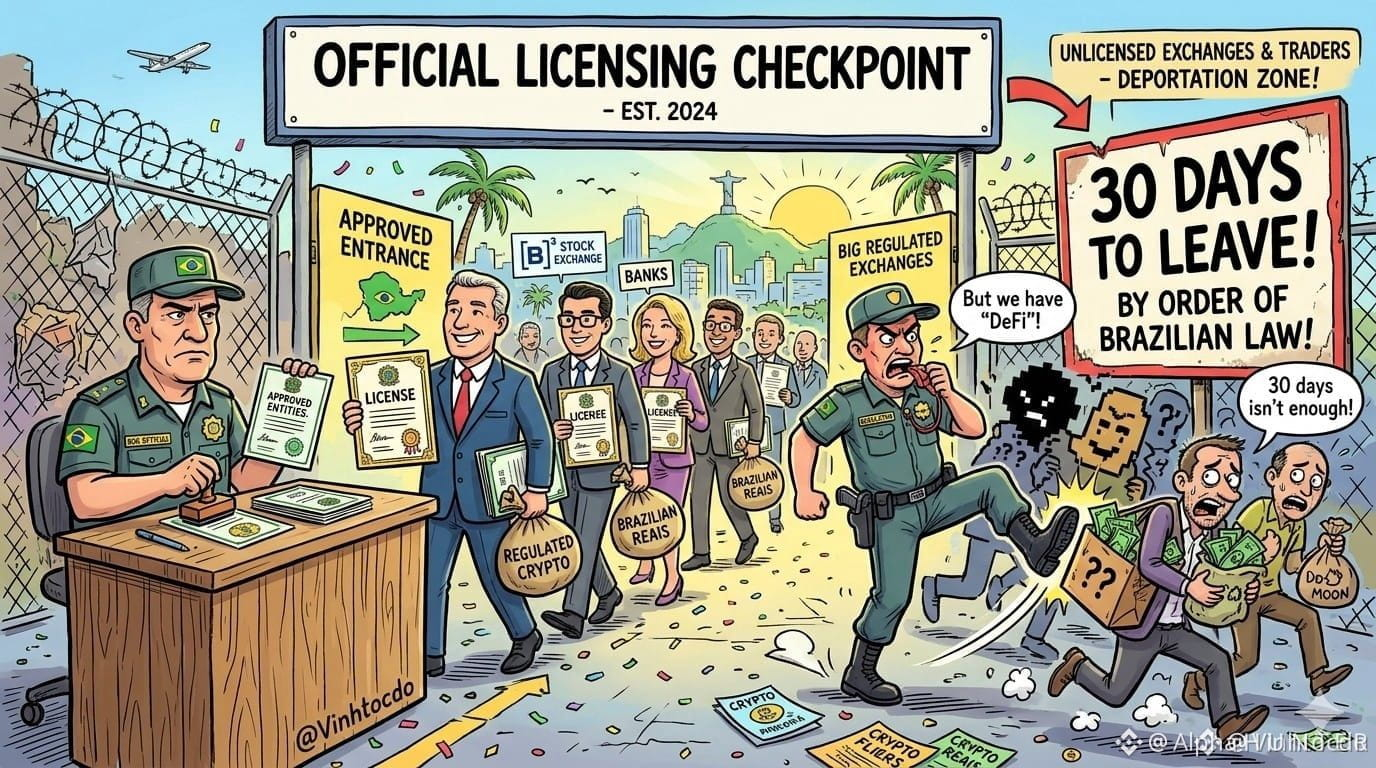
#brazilvirtualassetlicensedeadlinedrawsabout40firms La clôture de la période de dépôt des demandes de licence auprès de la Banque centrale du Brésil marque un tournant pour le secteur des actifs virtuels dans le Cône Sud, transformant un marché vaste et fragmenté en un environnement très concentré et de niveau institutionnel. Le fait que seuls 20 % des opérateurs estimés aient décidé de se soumettre à l’examen de la BCB ne traduit pas un manque d’intérêt pour la plus grande économie de la région, mais plutôt les très fortes barrières à l’entrée imposées par le nouveau cadre réglementaire de la loi 14.478/2022. Avec des exigences de capital minimum allant de 10.8 à 37.2 millions de réaux (jusqu’à 6.9 millions de dollars), selon le modèle économique, les plateformes de taille moyenne et celles ciblant le marché de détail à l’échelle régionale ont été contraintes de renoncer à la concurrence directe ou de nouer des partenariats en marque blanche avec les opérateurs dominants.
$ESPORTS
{future}(ESPORTSUSDT)
$SOPH
{future}(SOPHUSDT)
$LYN
{future}(LYNUSDT)
#brazilvirtualassetlicensedeadlinedrawsabout40firms La clôture de la période de dépôt des demandes de licence auprès de la Banque centrale du Brésil marque un tournant pour le secteur des actifs virtuels dans le Cône Sud, transformant un marché vaste et fragmenté en un environnement très concentré et de niveau institutionnel. Le fait que seuls 20 % des opérateurs estimés aient décidé de se soumettre à l’examen de la BCB ne traduit pas un manque d’intérêt pour la plus grande économie de la région, mais plutôt les très fortes barrières à l’entrée imposées par le nouveau cadre réglementaire de la loi 14.478/2022. Avec des exigences de capital minimum allant de 10.8 à 37.2 millions de réaux (jusqu’à 6.9 millions de dollars), selon le modèle économique, les plateformes de taille moyenne et celles ciblant le marché de détail à l’échelle régionale ont été contraintes de renoncer à la concurrence directe ou de nouer des partenariats en marque blanche avec les opérateurs dominants.
$ESPORTS
$SOPH
$LYN
$ESPORTS
$SOPH
$LYN
1
3.5k
Войдите, чтобы посмотреть больше материала
Присоединяйтесь к пользователям криптовалют по всему миру на Binance Square
⚡️ Получайте новейшую и полезную информацию о криптоактивах.
💬 Нам доверяет крупнейшая в мире криптобиржа.
👍 Получите достоверные аналитические данные от верифицированных создателей контента.
Эл. почта/номер телефона
В тренде
1
#BinanceRestores28FiatWithdrawals
Просмотров: 335
56 обсуждают
2
#BinanceProcesses$4.65BWithdrawals
Просмотров: 59,361
257 обсуждают
3
#BitcoinDropsBelow$78K
Просмотров: 415
24 обсуждают
4
#EthereumSurpasses$2300
Просмотров: 3,488
60 обсуждают
5
#BitcoinSpotETFsPost$203MWeeklyOutflow
Просмотров: 4,212
39 обсуждают
6
#SouthKoreanLawmakerProposesReviewOfAllListedDigitalAssets
Просмотров: 1,623
41 обсуждают
7
#SolanaMobileRemovesMaliciousSKRClaimApp
Просмотров: 207
37 обсуждают
8
#BrazilVirtualAssetLicenseDeadlineDrawsAbout40Firms
Просмотров: 27,110
480 обсуждают
9
#BTCPayServerUrgesOperatorsToShutDownInstances
Просмотров: 20,873
384 обсуждают
10
#BankOfKoreaSurveysFinancialFirmsOnVirtualAssetRisks
Просмотров: 672
22 обсуждают