

Zavian Era
8.5k Публикации

Zavian Era
Since 2018 | Full time Crypto Trader & Analyst | NVD Manager | Web3 Researcher
8.4K+ подписок(и/а)
20.5K+ подписчиков(а)
34.4K+ понравилось
Посты
Портфель
Все
Цитирования
Видео
Активно
PINNED

长风Nova
·
--
Рост🧧🧧2026.10.01 币圈今日行情|大盘企稳!土狗机会集中爆发(附隐藏捡钱攻略)
🔥🔥🔥🔥🔥
今日整体盘面非常健康,BTC站稳83000+高位横盘震荡。DeFi板块率先发力回暖,行情不再是大饼独涨,生态新币遍地机会!
🔥🔥🔥🔥🔥
很多人天天冲土狗、高频swap打新,只顾着追涨吃肉,却漏掉了钱包里躺平的几笔隐形巨款!90%玩币的人都没领干净,全部整理好手把手教程👇👇👇
_____________________________
🔥第一笔:SOL租金回收(Sol链必领)
每次新买一个土狗代币,链上都会锁定0.002SOL左右存储押金!
代币卖空后账户不会解压
长期高频打狗的兄弟,几十个僵尸账户叠加,不知不觉被锁大量SOL!
✅领取入口:币安钱包→更多→底部工具栏→SOL租金回收,一键秒领
🔥第二笔:FLAP平台积压分红
FLAP生态分红代币有4U门槛,不满4U不会自动到账,一直积压在平台账户!
高频打新、换手频繁的玩家,后台积压几百U未兑现分红都是常态,白白放着不吃利息!
✅领取方式:钱包DApp进入Flap官网→连接钱包→右上角一键申领
🔥第三笔:Four.meme & 罗宾链全平台分红
Four.meme、罗宾链Flap、StockDotFun、RobinBag、CME各大发射台,持仓代币全部自带交易分红!
无需质押、持币自动累积,卖出代币后历史分红依旧可以领取
很多人打完土狗就跑,彻底遗忘这笔躺赚收益,日积月累差距巨大
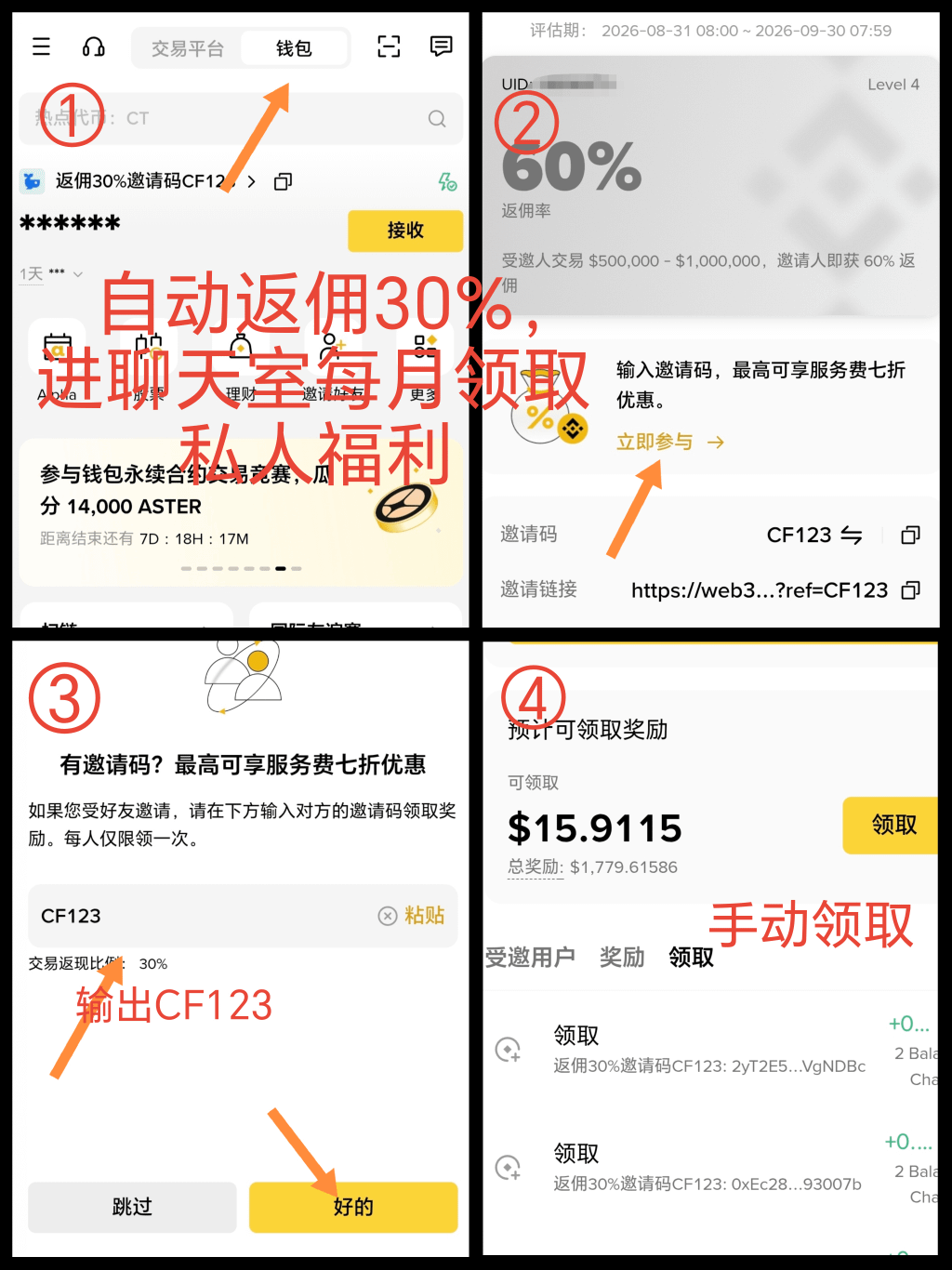
🔥第四笔:永久30%交易手续费返佣
币安钱包填写专属邀请码 CF123
30%交易服务费自动返还!
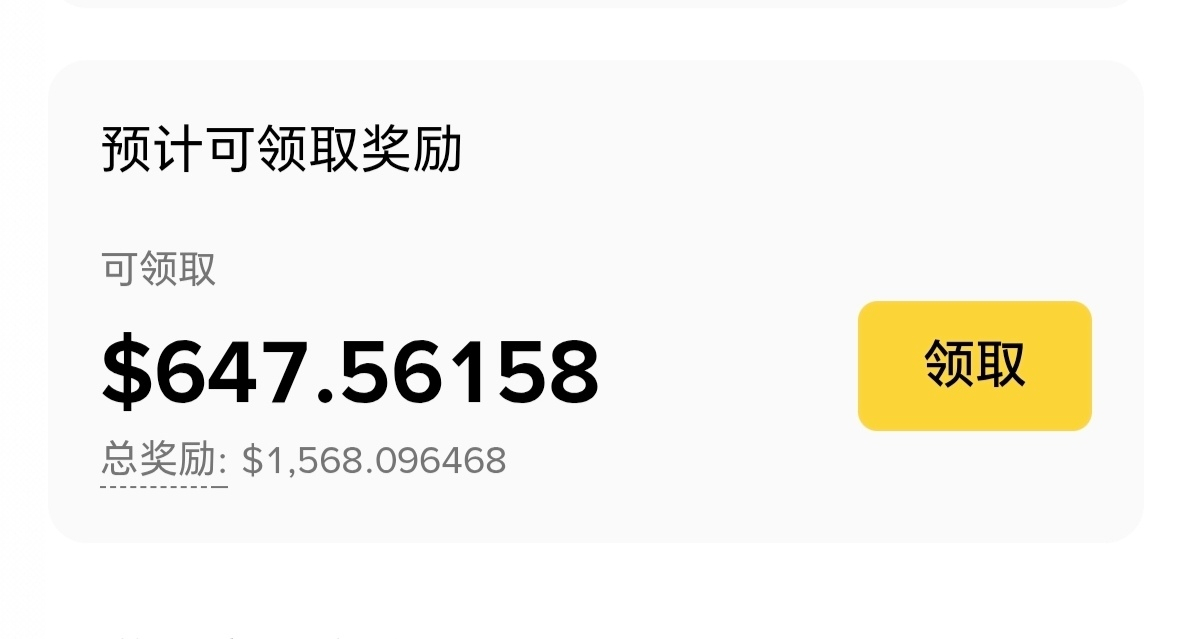
所有链上swap、土狗交易、生态交互全部累计返佣,需要手动在邀请页面领取,长期玩币轻松攒出几百U隐形收益
✅领取方式:钱包首页→邀请好友→填写CF123
🔥🔥🔥🔥🔥
看不懂操作、不会批量领分红的,直接进我主页聊天室,全程答疑✅
🔥🔥🔥🔥🔥
今日整体盘面非常健康,BTC站稳83000+高位横盘震荡。DeFi板块率先发力回暖,行情不再是大饼独涨,生态新币遍地机会!
🔥🔥🔥🔥🔥
很多人天天冲土狗、高频swap打新,只顾着追涨吃肉,却漏掉了钱包里躺平的几笔隐形巨款!90%玩币的人都没领干净,全部整理好手把手教程👇👇👇
_____________________________
🔥第一笔:SOL租金回收(Sol链必领)
每次新买一个土狗代币,链上都会锁定0.002SOL左右存储押金!
代币卖空后账户不会解压
长期高频打狗的兄弟,几十个僵尸账户叠加,不知不觉被锁大量SOL!
✅领取入口:币安钱包→更多→底部工具栏→SOL租金回收,一键秒领
🔥第二笔:FLAP平台积压分红
FLAP生态分红代币有4U门槛,不满4U不会自动到账,一直积压在平台账户!
高频打新、换手频繁的玩家,后台积压几百U未兑现分红都是常态,白白放着不吃利息!
✅领取方式:钱包DApp进入Flap官网→连接钱包→右上角一键申领
🔥第三笔:Four.meme & 罗宾链全平台分红
Four.meme、罗宾链Flap、StockDotFun、RobinBag、CME各大发射台,持仓代币全部自带交易分红!
无需质押、持币自动累积,卖出代币后历史分红依旧可以领取
很多人打完土狗就跑,彻底遗忘这笔躺赚收益,日积月累差距巨大
🔥第四笔:永久30%交易手续费返佣
币安钱包填写专属邀请码 CF123
30%交易服务费自动返还!
所有链上swap、土狗交易、生态交互全部累计返佣,需要手动在邀请页面领取,长期玩币轻松攒出几百U隐形收益
✅领取方式:钱包首页→邀请好友→填写CF123
🔥🔥🔥🔥🔥
看不懂操作、不会批量领分红的,直接进我主页聊天室,全程答疑✅


Shaheen 69
·
--
LearnWithShaheen69
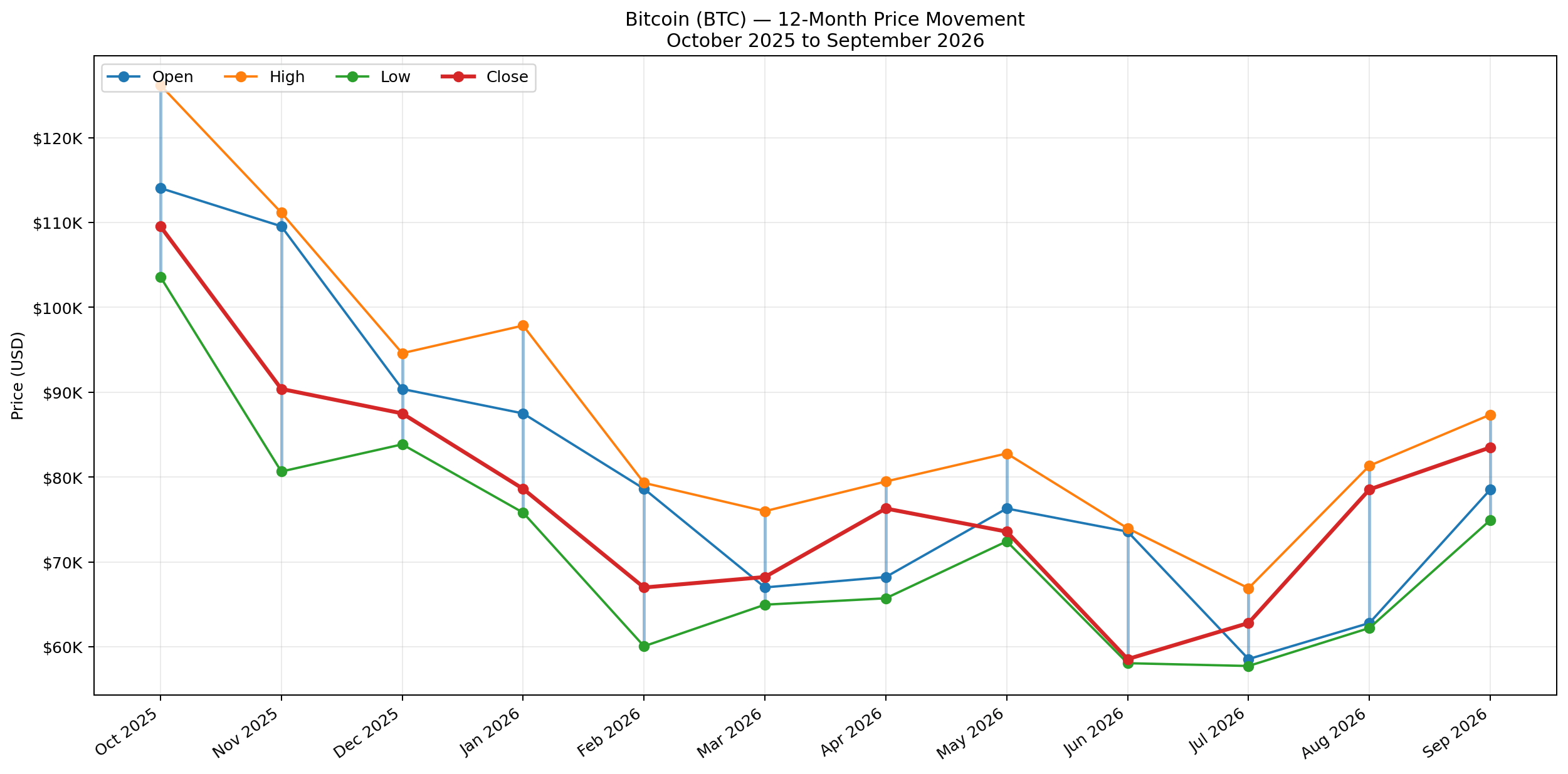
📊 BTC’s 1-Year Journey: From $126K ATH to $57K Low
Bitcoin’s one-year journey is a strong reminder of market volatility. From around $114K in October 2025 to an ATH near $126K, followed by a major correction, BTC showed how quickly sentiment can change.
My lesson: Don’t put your entire portfolio into one trade. Keep some funds in reserve, protect profits, use proper position sizing, and avoid emotional decisions. Markets will always give another opportunity—protecting your capital should come first.
$BTC
📊 BTC’s 1-Year Journey: From $126K ATH to $57K Low
Bitcoin’s one-year journey is a strong reminder of market volatility. From around $114K in October 2025 to an ATH near $126K, followed by a major correction, BTC showed how quickly sentiment can change.
My lesson: Don’t put your entire portfolio into one trade. Keep some funds in reserve, protect profits, use proper position sizing, and avoid emotional decisions. Markets will always give another opportunity—protecting your capital should come first.
$BTC

Bilverse
·
--
🚨 BILVERSEARMY — THE RED PACKET IS LIVE! 🔴🧧
We’re dropping a MASSIVE ETH GIVEAWAY for all the followers ⚡️💎
Claiming is simple:
1️⃣ Follow me
2️⃣ Like this post ❤️
3️⃣ Comment “ETH” below 👇
That’s it. You’re in! 🫡🔥
Let’s make some noise and show the world what #BilverseArmy is all about. 🚀
RED PACKET ACTIVATED. 🧧🔴 ETH LOADING…
#ETH #RedPacketMission #Bilverse #Giveaway
We’re dropping a MASSIVE ETH GIVEAWAY for all the followers ⚡️💎
Claiming is simple:
1️⃣ Follow me
2️⃣ Like this post ❤️
3️⃣ Comment “ETH” below 👇
That’s it. You’re in! 🫡🔥
Let’s make some noise and show the world what #BilverseArmy is all about. 🚀
RED PACKET ACTIVATED. 🧧🔴 ETH LOADING…
#ETH #RedPacketMission #Bilverse #Giveaway


ENTRY HUNTER⁷⁸⁹
·
--
$SOL REDBOX FOR ALL!! LOVE you guys!
REPOST the Post !!! & JOIN my chat group for more exciting REWARDS !!!!
$TRB will go 24-27
$APT will go 0.94
TREND is our friend !!
#AminulIYI
REPOST the Post !!! & JOIN my chat group for more exciting REWARDS !!!!
$TRB will go 24-27
$APT will go 0.94
TREND is our friend !!
#AminulIYI


Jamal 656
·
--
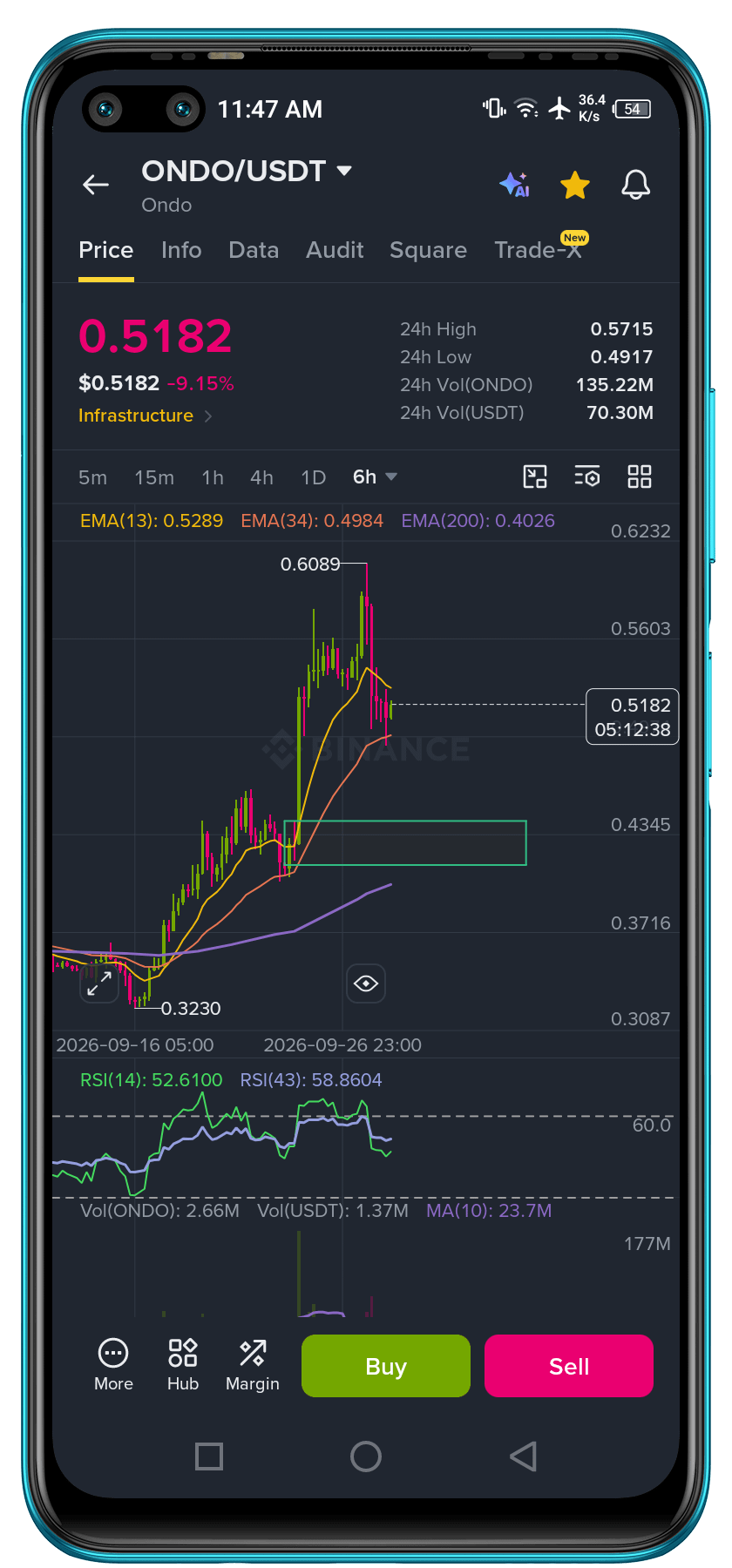
Fresh spot entry0.4250
$ONDO
Ans:g
#ONDO/USDT
$ONDO
Ans:g
#ONDO/USDT

Mahi_玛希BNB
·
--
РостBNB Market Watch — Holding the Higher Zone
BNB is showing steady price action around the $780 area, with Binance market data currently showing BNB near $778 and slightly positive over the last 24 hours.
After moving from the lower $700s earlier this month, BNB has remained above the levels seen in mid-September. Recent trading data also shows increased volatility around the $760–$800 zone, making price action and volume worth watching.
The next move will depend on whether buyers can maintain momentum while the broader crypto market remains active. 📊
Watching: $BNB $ETH $NVDAB 👀🔥
#BNB #BNBChain #cryptotrading #BinanceSquare #CryptoCommunity #writetoearn
BNB is showing steady price action around the $780 area, with Binance market data currently showing BNB near $778 and slightly positive over the last 24 hours.
After moving from the lower $700s earlier this month, BNB has remained above the levels seen in mid-September. Recent trading data also shows increased volatility around the $760–$800 zone, making price action and volume worth watching.
The next move will depend on whether buyers can maintain momentum while the broader crypto market remains active. 📊
Watching: $BNB $ETH $NVDAB 👀🔥
#BNB #BNBChain #cryptotrading #BinanceSquare #CryptoCommunity #writetoearn
king Gulfam
·
--
Рост#EarningsSeason
@ZEC @BNC @NEAR
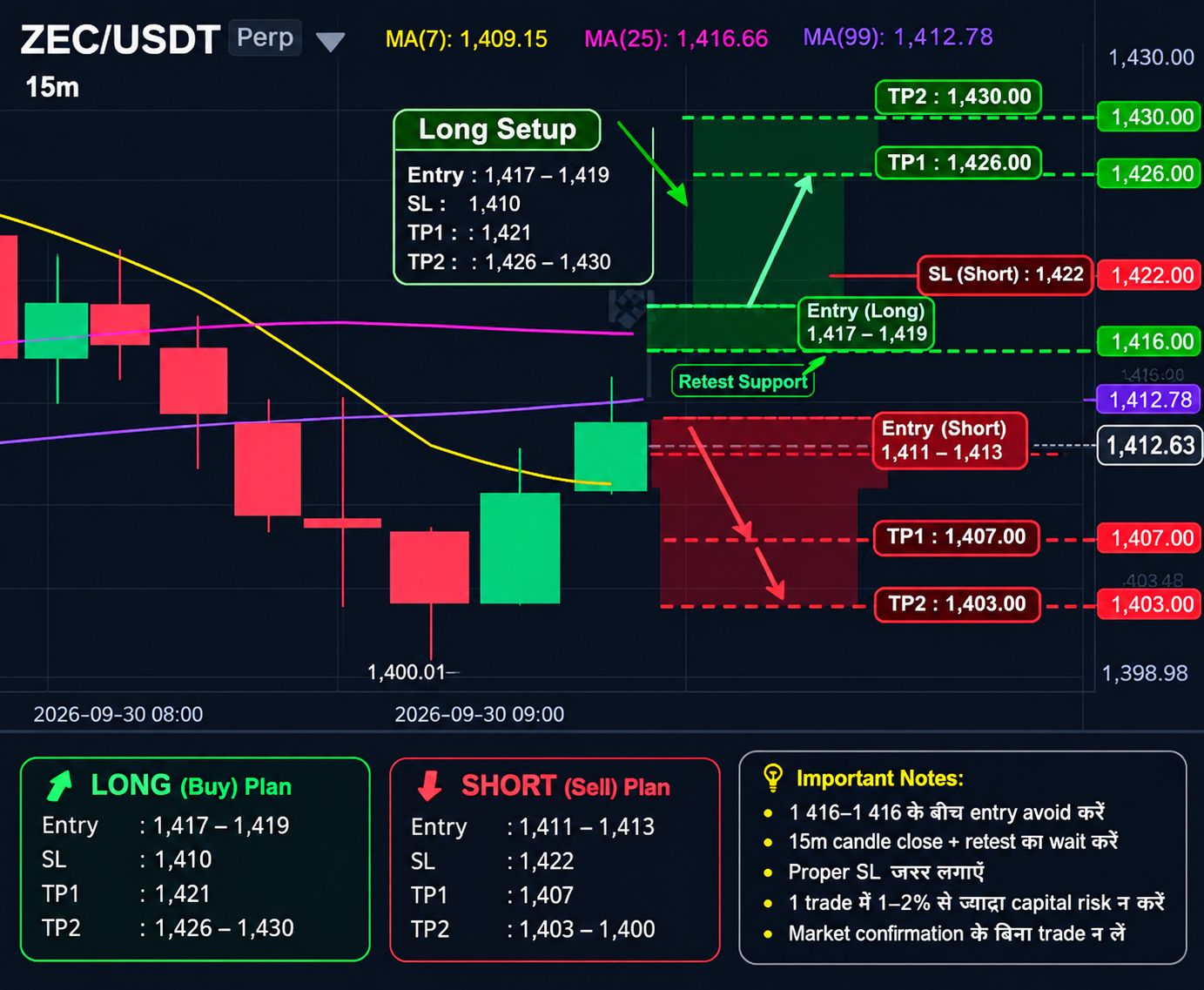
$ZEC
🟢 Long setup:
1416.7 ke upar 15m candle close ho aur retest hold kare →
Entry: 1417–1419
SL: 1410
TP1: 1421
TP2: 1426–1430
🔴 Short setup:
1416–1421 zone se strong rejection aaye aur price 1412 ke neeche close kare →
Entry: 1411–1413
SL: 1422
TP1: 1407
TP2: 1403–1400
Abhi 1412–1416 ke beech mein entry avoid karna better hai, kyunki price moving averages ke beech फँसा हुआ है.
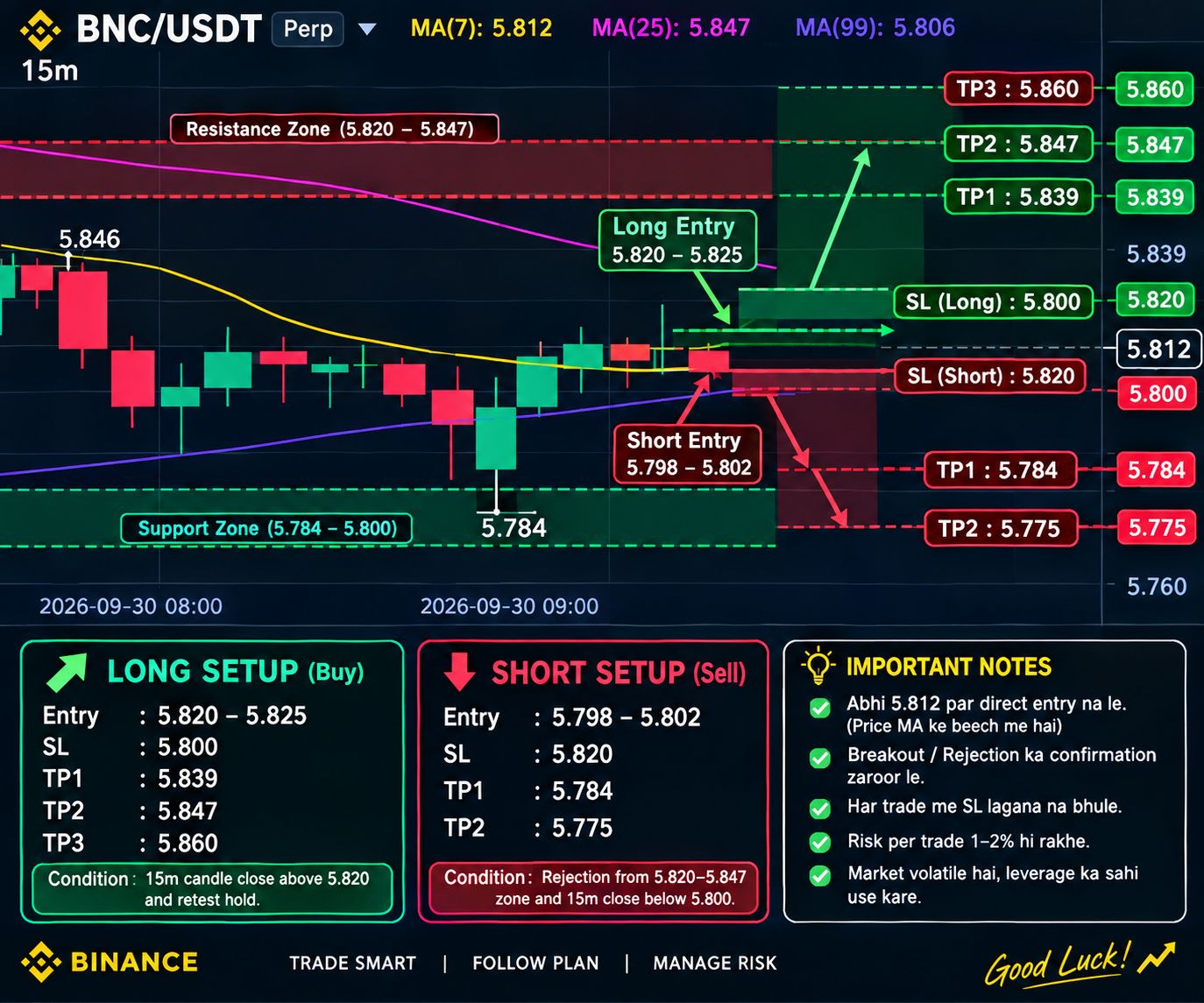
$BNC
🟢 LONG — confirmation ke baad
Agar 15m candle 5.820 ke upar close kare aur retest hold kare:
Entry: 5.820–5.825
SL: 5.800
TP1: 5.839
TP2: 5.847
TP3: 5.860
🔴 SHORT — rejection ke baad
Agar 5.820–5.847 zone se rejection aaye aur price 5.800 ke neeche 15m close kare:
Entry: 5.798–5.802
SL: 5.820
TP1: 5.784
TP2: 5.775
$NEAR
LONG setup:
Entry: 5.00 ke upar 15m candle close + retest
SL: 4.94
TP1: 5.03
TP2: 5.08–5.12
SHORT setup:
Agar 4.98–5.00 se strong rejection mile
Entry: 4.96–4.98
SL: 5.04
TP1: 4.93
TP2: 4.89
@ZEC @BNC @NEAR
$ZEC
🟢 Long setup:
1416.7 ke upar 15m candle close ho aur retest hold kare →
Entry: 1417–1419
SL: 1410
TP1: 1421
TP2: 1426–1430
🔴 Short setup:
1416–1421 zone se strong rejection aaye aur price 1412 ke neeche close kare →
Entry: 1411–1413
SL: 1422
TP1: 1407
TP2: 1403–1400
Abhi 1412–1416 ke beech mein entry avoid karna better hai, kyunki price moving averages ke beech फँसा हुआ है.
$BNC
🟢 LONG — confirmation ke baad
Agar 15m candle 5.820 ke upar close kare aur retest hold kare:
Entry: 5.820–5.825
SL: 5.800
TP1: 5.839
TP2: 5.847
TP3: 5.860
🔴 SHORT — rejection ke baad
Agar 5.820–5.847 zone se rejection aaye aur price 5.800 ke neeche 15m close kare:
Entry: 5.798–5.802
SL: 5.820
TP1: 5.784
TP2: 5.775
$NEAR
LONG setup:
Entry: 5.00 ke upar 15m candle close + retest
SL: 4.94
TP1: 5.03
TP2: 5.08–5.12
SHORT setup:
Agar 4.98–5.00 se strong rejection mile
Entry: 4.96–4.98
SL: 5.04
TP1: 4.93
TP2: 4.89


Bilverse
·
--
🧧 $ETH believers, where you at? 👀🔥
Markets test your conviction.
Real communities strengthen it. 🧡
If you’ve been building, supporting, and holding through the highs & lows, this one’s for you.
🎁 $ETH Red Packet is BACK!
💬 Comment “5000”
❤️ Like + Repost
✅ Follow @Bilverse
No complicated quests.
Just a little ETH love for the community. 🧧
Still bullish? 🚀
#ETH #Bilverse #RedPacketMission
Markets test your conviction.
Real communities strengthen it. 🧡
If you’ve been building, supporting, and holding through the highs & lows, this one’s for you.
🎁 $ETH Red Packet is BACK!
💬 Comment “5000”
❤️ Like + Repost
✅ Follow @Bilverse
No complicated quests.
Just a little ETH love for the community. 🧧
Still bullish? 🚀
#ETH #Bilverse #RedPacketMission

CZ_ANUU
·
--
hello🙋♂️🙋♂️🙋♂️
how are you friends
how are you friends
Цитируемый контент удален

Цитируемый контент удален

Golden soumi
·
--
The wait is over! Time for a Binance Square Crypto Quiz and a chance to win $TRX! 🎁
Can you solve this chemical equation? The first person to provide the correct answer in the comments wins the reward!
Question: Complete the following chemical equation:
2H₂ + O₂ → ______?
How to enter the giveaway:
✅ Follow this account for more crypto updates.
✅ Like and Share this post to spread the word.
✅ Comment your exact answer below.
Get your science brains on and drop your answers now! 🚀#binance $TRX #Giveway @Jackkkk00999 looks this question ⁉️😉
Can you solve this chemical equation? The first person to provide the correct answer in the comments wins the reward!
Question: Complete the following chemical equation:
2H₂ + O₂ → ______?
How to enter the giveaway:
✅ Follow this account for more crypto updates.
✅ Like and Share this post to spread the word.
✅ Comment your exact answer below.
Get your science brains on and drop your answers now! 🚀#binance $TRX #Giveway @Jackkkk00999 looks this question ⁉️😉

Цитируемый контент удален
Войдите, чтобы посмотреть больше материала